Neither Imitate Nor Hate

they-live

By Micah White

Source: OccupyWallSt.org

As righteous people, how can we live in a world that is poisonous to our souls, harmful to our minds and at odds with our ideals?

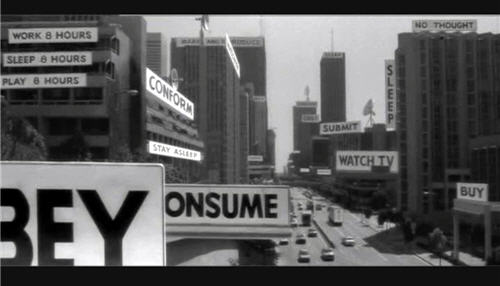
Common sense counsels us that we have only two options: either imitate or hate the world. But if we remain stuck within this binary opposition, we will lose ourselves: if we imitate the world we sacrifice our spirit; if we hate the world we succumb to being reactionary and lose the positive passion that grounds our affirmation. What then can we do? This is the question that Seneca, the great Stoic sage, posed nearly two millennia ago. And his answer speaks to today’s struggle of being true to oneself in a corporatist society.

Roman imperial culture was as ruinous to Seneca’s ideals as endgame corporatism is to ours. In a well-known letter to his friend Lucilius, Seneca writes that exposure to crowds and the entertainment they consume ought to be avoided because within the crowd we lose our inner resolve for living a good life. “To consort with the crowd is harmful,” Seneca writes in Letter VII of Epistulae morales ad Lucilium, “[because] there is no person who does not make some vice attractive to us, or stamp it upon us, or taint us unconsciously therewith. Certainly, the greater the mob with which we mingle, the greater the danger.” To prove his point, Seneca tells of his experience watching a gladiator death-match and returning home feeling “more greedy, more ambitious, more voluptuous and even more cruel and inhuman” than before.

In our era, Seneca’s observation will often be rejected on the presumption that his critique of mass culture is based on an aristocratic or antidemocratic philosophy. Proponents of this position will argue that Seneca’s dislike of crowds is due only to a prejudice toward common people and that his position is therefore not worthy of consideration. But this argument misses the deep philosophical insight that Seneca opens for us—there is a correlation between the culture that surrounds us and our inner life. If Seneca is correct then each of us has a legitimate reason to be concerned about involuntary exposure to violence, pornography, and lies because these cultural forms are destructive to our spirit. In other words, Seneca’s stoic philosophy provides another way to understand spiritual insurrection.

The pressing concern is how to resist the dominant culture in such a way that our ideals remain intact and our will to fight stays strong. And it is on this question that Seneca is most articulate. For Seneca, we must be on our guard at all times. He writes: “much harm is done by a single case of indulgence or greed; the familiar friend, if he be luxurious, weakens and softens us imperceptibly; the neighbor, if he be rich, rouses our covetousness; the companion, if he be slanderous, rubs off some of his rust upon us, even though we be spotless and sincere. What then do you think the effect will be on character, when the world at large assaults it!” But Seneca refuses to accept that we ought to either imitate or loathe the world.

Instead, Seneca proposes that we develop a parallel culture in which we commune among ourselves to strengthen our opposition to the dominant culture. Seneca’s counsel is simple: “Withdraw into yourself, as far as you can. Associate with those who will make a better person of you. Welcome those whom you yourself can improve.” While this advice seems simple, it is actually the most difficult to accept because it foregoes the principles of mass participation and mass culture that underlie the majority of contemporary politics.

It would be a mistake to assume that what Seneca has in mind is a politics of neutral moderation. For a stoic, moderation fails to address the root cause of society’s ills. Instead, the art of stoicism is to live within the tension of two extremes without seeking the middle path of unprincipled moderation. Stoicism challenges us to live an affirmation amidst the world as it is, to maintain our inner resolve in the face of temptation and to teach resistance by way of personal example. It is a difficult task for which Seneca offers only one suggestion: decrease your desire.

Seneca writes that the key to attaining happiness, pleasure, riches and anything else of value is, paradoxically, to lower our desires. He relates the story of Epicurus who when asked by Idomeneus how to make his friend Pythocles rich replied, “If you wish to make Pythocles rich, do not add to his store of money, but subtract from his desires.” This wisdom does not only apply to wealth, Seneca argues, and he goes on to give further examples of what Epicurus could have said: “‘if you wish to make Pythocles honourable, do not add to his honours, but subtract from his desires’; ‘if you wish Pythocles to have pleasure for ever, do not add to his pleasures, but subtract from his desires’; ‘if you wish to make Pythocles an old man, filling his life to the full, do not add to his years, but subtract from his desires.’” And I think Seneca would agree if we were to add one of our own to the list and say that if you wish to make a spiritual insurrection, do not wait for many people to join, instead subtract from your desires.

Seneca challenges us to imagine a positive cultural movement that is built on the shared practice of a radical decrease in desire. He suggests that we first build small friendship networks of resistance that are impervious to the influences of mass culture because their highest ideal is a life without consumption. Seneca encourages us to be like the wise man, who when asked why he devotes his life to a philosophy that may reach only a handful of people replied, “I am content with few, content with one, content with none at all.”

— Micah White, PhD lives on the north coast of Oregon. Follow him at @BeingMicahWhite. A version of this article originally appeared in Adbusters

Occupy Activist Cecily McMillan Sentenced to 3 Months in Jail, 5 Years Probation

Cecily McMillan being arrested as the NYPD clears Zuccotti Park during a six-month memorial celebration of the Occupy Movement in March 2012

Cecily McMillan being arrested as the NYPD clears Zuccotti Park during a six-month memorial celebration of the Occupy Movement in March 2012

By Dave Lindorff

Source: This Can’t Be Happening

Occupy activist Cecily McMillan, convicted on May 5 of second-degree felony assault of a New York cop whom she and witnesses claimed had grabbed her breast from behind, bruising it, stood her ground before her sentence was rendered, refusing the judge’s insistence that she should “take responsibility for her conduct.”

Risking the possibility that Judge Ronald Zwiebel might sentence her to the maximum seven years for the charge she was convicted of, McMillan would only apologize for what she termed “the accident” of involuntarily throwing back her elbow when grabbed by behind from someone she could not even see. Insisting to the judge that she lived in accordance to the “law of love,” she said, in her pre-sentencing statement, “Violence is not permitted. This being the law that I live by, I can say with certainty that I am innocent of the crime I have been convicted of… I cannot confess to a crime that I did not commit. I cannot throw away my dignity in return for my freedom.”

It was a bold and risky stand for the 25-year-old New School for Social Research graduate student to take, given the high sentencing stakes. In the end, though, the judge, — who during the trial had blocked her defense from presenting key evidence that she had acted in her own defense against being groped by a cop (for example the police officer’s record of brutality and corruption), while allowing the prosecution to present evidence and statements normally not considered permissible in a trial (such as presenting to the jury evidence about an arrest of McMillan that had not yet been tried or adjudicated) — sentenced her to only a short term in jail.

She still has a five-year felony probationary sentence, which leaves her a convicted felon, a serious impediment to employment, and one that could leave her subject to limitations on her freedom of movement for five years.

McMillan’s many supporters nonetheless hailed the short sentence, which could see her released in as little as 60 days, as a victory, one which many attributed to the massive outpouring of support she has received since her arrest, during her trial, and since especially since her conviction. That support has included a jailhouse visit by two members of Pussy Riot, who condemned her conviction and jailing, a letter of of support from the president of the New School, support from five members of the New York City Council (but so far not a word from New York City’s supposedly leftist and former activist Mayor Bill De Blasio), an online petition signed by over 167,000 people, and an unusual letter from nine of the 12 jurors in her case calling on the judge not to sentence her to any jail time.

McMillan’s attorney Martin Stolar, said he was “relieved” that her sentence was not two years, but also said that he had appealed the conviction to the state’s Court of Appeal.

The 5/14 episode of the “This Can’t Be Happening” podcast featuring McMillan’s attorney Martin Stolar and Lucy Parks, a member of her support team at JusticeforCecily.com, who provide more background about the case.

http://s51.podbean.com/pb/731f8f8398fd122e92501fb18648dbdc/537ae434/data1/blogs18/661545/uploads/ThisCantBeHappening_051414.mp3

May Day

tumblr_mm4ek4kbR81rju234o1_500

May Day has a long history of being a culturally significant day for a number of reasons. In ancient Europe it was a time of Pagan festivities celebrating the first day of summer. It’s the day the Illuminati was founded by Adam Weishaupt in 1776 and happens to be the birthday of radical labor activist Mother Jones (in 1830) and mystical Christian theorist Pierre Teilhard de Chardin (in 1881). May Day continues to be celebrated around the world as a day of struggle for worker’s rights. More facts about the importance of May Day to Labor history and our current situation are presented in the following article:

What’s Left of May Day?

By Nathan Schneider

Source: Al Jazeera

On May 1, 1933, the Catholic journalist and activist Dorothy Day went to New York’s Union Square to distribute copies of the first issue of her newspaper The Catholic Worker. As she made her way through the crowd, she had a ready audience of thousands: men in coats, ties, and hats — as low-wage workers and radicals apparently used to dress — gathered around a maze of signs for labor unions, fraternal societies, and parties representing the various varieties of socialism then on offer. These groups disagreed in every way they could think to, but they shared the square regardless. For decades, in the U.S. and around the world, May Day was International Workers’ Day, commemorating protesters killed in Haymarket Square, Chicago, during the 1886 strike for an eight-hour workday. It also had earlier roots as a spring holiday of maypoles and flower baskets.

Dorothy Day was only one among many at Union Square trying to suggest a way out of the economic crisis of the time. This was well into the Great Depression, when the breadlines and the legions of unemployed people posed an existential threat to American capitalism; skirmishes between fed-up workers and abusive employers were common and often bloody. Day proposed a synthesis of Christian love and communist solidarity, militant pacifism in pursuit of “a society where it is easier to be good.” The Catholic Worker quickly became the script for a new religious and political movement. Within months, circulation grew from a first run of 2,500 copies to 10 times that, and it reached 150,000 before Day’s pacifist convictions caused subscriptions to drop during the lead-up to World War II. Each May Day, New York’s Catholic Workers still celebrate the birth of their movement with a communal supper and singing.

May Day to Law Day

Since the presidency of Grover Cleveland, authorities have made a point of replacing May Day with the more innocuous observance of Labor Day in September — a time for barbecues, sales and last-ditch beach trips. Dwight Eisenhower declared May 1 to be Law Day, an almost universally ignored opportunity to celebrate the rule of law. But immigrants, who still have connections to countries where May Day is celebrated, continue to use the first of May to claim their rights. In 2006, millions took part in the “day without an immigrant” strikes, and it is immigrants — impatient for meaningful reform from Washington — who will rally at Union Square today. But as May Day comes and goes each year, many in the United States don’t even notice.

Two years ago was an exception. In the fall of 2011, Occupy Wall Street captured the world’s attention with its village-like encampments in public squares and slogans against economic injustice. After a wave of police raids evicted nearly all of the encampments in late fall, Occupy activists started planning for the following May Day. They even started talking about a general strike.

The idea of a mass strike was something of a novelty: most of the core Occupy activists, like most young people nowadays, had never had the chance to join a union at work. The fierce kind of labor organizing visible at Union Square in 1933 was long ago repressed or domesticated during the Cold War’s witch hunts. The Occupiers, therefore, had to rely on their imaginations. They studied the history of May Days past and debated what a general strike in the 21st century could look like. The kind of strike they discussed in those meetings in New York was only partly a matter of pickets and labor songs; what they really wanted on the “day without the 99%” was to turn the city (and the Internet) into a canvas, a gigantic work of art painted by everybody — causing chilling economic disruption alongside proof that a better world is possible. “I’m totally in love with the general strike,” one organizer said during a planning meeting in January 2012. “To me, it’s analogous to seeing the face of God.”

Out of reach

When May Day came, pickets swarmed around midtown in the morning by the dozen. They merged with hundreds of guitarists marching south from Bryant Park, playing and singing in unison as an “Occupy Guitarmy,” past the classes of the “Free University” at Madison Square Park. They arrived at Union Square to find fellow activists dancing around a maypole, weaving together ribbons inscribed with the grievances from one of the movement’s early documents. Throughout the square, union members and immigrants’ groups rallied together, thanks to months of marathon planning meetings led by Occupiers. Around 30,000 people marched from Union Square to the financial district, chanting into the exhaust of the NYPD scooters hemming them in on either side. Four police helicopters hovered overhead.

I walked part of the way with an elderly nun, one who’d been going to protests since Dorothy Day was leading them. “When did it become like this?” she kept asking as she marveled at the level of police intimidation at a peaceful march. The day amounted to more than what May Day has typically been, but far short of what the Occupiers had dreamed of. The march did not repeat itself the year after. The world remained untransformed. There was no measurable general strike.

But perhaps there should have been.

The eight-hour day that the Chicago strikers sought in 1886 is still out of reach for many Americans. Many of us are forced to work overtime or multiple jobs just to make ends meet. The economist Thomas Piketty has revealed how profoundly wealth inequality is widening and deepening; a recent study, meanwhile, documents the vastly outsize influence of a wealthy few on U.S. politics — which we see reflected in the absence of policies to confront crises from mass incarceration to climate change.

Replacing May Day with Labor Day was part of a decades-long effort to stifle the vibrancy of populist movements. And Labor Day is not enough. As inequality widens and our democracy weakens, we are losing the spirit of May Day, and suffering the consequences. Occupy’s May Day didn’t catch on as some hoped, but what it aspired to was right: an organized population powerful enough to confront an entrenched elite, and hopeful enough to celebrate democracy in the streets.


Nathan Schneider is the author of “Thank You, Anarchy: Notes From the Occupy Apocalypse” and “God in Proof: The Story of a Search From the Ancients to the Internet.” He has written about religion and resistance for Harper’s, The Nation, The New York Times, The Chronicle of Higher Education and elsewhere, and is an editor of two online publications, Killing the Buddha and Waging Nonviolence.


Jeremy Hammond Speaks Out on FBI Entrapment

Jeremy Hammond Photo: Jim Newberry, FreeHammond.com

Jeremy Hammond Photo: Jim Newberry, FreeHammond.com

By Sparrow Media and Jeremy Hammond

[NEW YORK, NY] Jeremy Hammond, a 28-year-old political activist, was sentenced today to 10 years in prison after pleading guilty to participating in the Anonymous hack into the computers of the private intelligence firm Strategic Forecasting (Stratfor). The Ceremonial Courtroom at the Federal Court for the Southern District of New York was filled today with an outpouring of support by journalists, activists and other whistleblowers who see Jeremy Hammond’s actions as a form of civil disobedience, motivated by a desire to protest and expose the secret activities of private intelligence corporations.

The hearing opened with arguments as to what sections of the court record will remain redacted after sentencing. While Jeremy’s attorneys initially erred on the side of caution in previous memorandums and kept large pieces of the record redacted, both the defense and prosecution agreed this morning that many of the sections should now be made available for public view. The prosecution, however took stiff exception to portions of the court record being made public that indicate victims, specifically foreign governments, that Jeremy allegedly hacked under the direction of Hector “Sabu” Monsegur, the FBI informant at the helm of Jeremy’s alleged actions. Judge Preska ordered that the names of these foreign governments remain sealed.

Jeremy’s counsel, Sarah Kunstler, who is 9 months pregnant and due to give birth today, delivered a passionate testimonial as to the person that Jeremy is, and the need for people like Jeremy during this era of exponential changes in our socio-political landscape. (Read Sarah Kunstler’s complete argument HERE) She was followed by co-counsel, Susan Kellman, who wept as she recalled her own experiences reading the hundreds of letters from supporters to the court detailing Jeremy Hammond’s unbridled selflessness and enthusiastic volunteerism. She pointed out that it was this same selflessness that motivated Jeremy’s actions in this case. She closed her testimony by underscoring that, “The centerpiece of our argument is a young man with high hopes and unbelievably laudable expectations in this world.”

Susan was followed by Jeremy Hammond himself, who gave a detailed, touching and consequential allocution to the court. The following is Jeremy’s statement to the court. We have redacted a portion [marked in red] upon the orders of Judge Preska. While we believe the public has a right to know the redacted information therein, we refuse to publish information that could adversely effect Jeremy or his counsel.

JEREMY HAMMOND’S SENTENCING STATEMENT | 11/15/2013

Good morning. Thank you for this opportunity. My name is Jeremy Hammond and I’m here to be sentenced for hacking activities carried out during my involvement with Anonymous. I have been locked up at MCC for the past 20 months and have had a lot of time to think about how I would explain my actions.

Before I begin, I want to take a moment to recognize the work of the people who have supported me. I want to thank all the lawyers and others who worked on my case: Elizabeth Fink, Susan Kellman, Sarah Kunstler, Emily Kunstler, Margaret Kunstler, and Grainne O’Neill. I also want to thank the National Lawyers Guild, the Jeremy Hammond Defense Committee and Support Network, Free Anons, the Anonymous Solidarity Network, Anarchist Black Cross, and all others who have helped me by writing a letter of support, sending me letters, attending my court dates, and spreading the word about my case. I also want to shout out my brothers and sisters behind bars and those who are still out there fighting the power.

The acts of civil disobedience and direct action that I am being sentenced for today are in line with the principles of community and equality that have guided my life. I hacked into dozens of high profile corporations and government institutions, understanding very clearly that what I was doing was against the law, and that my actions could land me back in federal prison. But I felt that I had an obligation to use my skills to expose and confront injustice—and to bring the truth to light.

Could I have achieved the same goals through legal means? I have tried everything from voting petitions to peaceful protest and have found that those in power do not want the truth to be exposed. When we speak truth to power we are ignored at best and brutally suppressed at worst. We are confronting a power structure that does not respect its own system of checks and balances, never mind the rights of it’s own citizens or the international community.

My introduction to politics was when George W. Bush stole the Presidential election in 2000, then took advantage of the waves of racism and patriotism after 9/11 to launch unprovoked imperialist wars against Iraq and Afghanistan. I took to the streets in protest naively believing our voices would be heard in Washington and we could stop the war. Instead, we were labeled as traitors, beaten, and arrested.

I have been arrested for numerous acts of civil disobedience on the streets of Chicago, but it wasn’t until 2005 that I used my computer skills to break the law in political protest. I was arrested by the FBI for hacking into the computer systems of a right-wing, pro-war group called Protest Warrior, an organization that sold racist t-shirts on their website and harassed anti-war groups. I was charged under the Computer Fraud and Abuse Act, and the “intended loss” in my case was arbitrarily calculated by multiplying the 5000 credit cards in Protest Warrior’s database by $500, resulting in a total of $2.5 million.My sentencing guidelines were calculated on the basis of this “loss,” even though not a single credit card was used or distributed – by me or anyone else. I was sentenced to two years in prison.

While in prison I have seen for myself the ugly reality of how the criminal justice system destroys the lives of the millions of people held captive behind bars. The experience solidified my opposition to repressive forms of power and the importance of standing up for what you believe.

When I was released, I was eager to continue my involvement in struggles for social change. I didn’t want to go back to prison, so I focused on above-ground community organizing. But over time, I became frustrated with the limitations, of peaceful protest, seeing it as reformist and ineffective. The Obama administration continued the wars in Iraq and Afghanistan, escalated the use of drones, and failed to close Guantanamo Bay.

Around this time, I was following the work of groups like Wikileaks and Anonymous. It was very inspiring to see the ideas of hactivism coming to fruition. I was particularly moved by the heroic actions of Chelsea Manning, who had exposed the atrocities committed by U.S. forces in Iraq and Afghanistan. She took an enormous personal risk to leak this information – believing that the public had a right to know and hoping that her disclosures would be a positive step to end these abuses. It is heart-wrenching to hear about her cruel treatment in military lockup.

I thought long and hard about choosing this path again. I had to ask myself, if Chelsea Manning fell into the abysmal nightmare of prison fighting for the truth, could I in good conscience do any less, if I was able? I thought the best way to demonstrate solidarity was to continue the work of exposing and confronting corruption.

I was drawn to Anonymous because I believe in autonomous, decentralized direct action. At the time Anonymous was involved in operations in support of the Arab Spring uprisings, against censorship, and in defense of Wikileaks. I had a lot to contribute, including technical skills, and how to better articulate ideas and goals. It was an exciting time – the birth of a digital dissent movement, where the definitions and capabilities of hacktivism were being shaped.

I was especially interested in the work of the hackers of LulzSec who were breaking into some significant targets and becoming increasingly political. Around this time, I first started talking to Sabu, who was very open about the hacks he supposedly committed, and was encouraging hackers to unite and attack major government and corporate systems under the banner of Anti Security. But very early in my involvement, the other Lulzsec hackers were arrested, leaving me to break into systems and write press releases. Later, I would learn that Sabu had been the first one arrested, and that the entire time I was talking to him he was an FBI informant.

Anonymous was also involved in the early stages of Occupy Wall Street. I was regularly participating on the streets as part of Occupy Chicago and was very excited to see a worldwide mass movement against the injustices of capitalism and racism. In several short months, the “Occupations” came to an end, closed by police crackdowns and mass arrests of protestors who were kicked out of their own public parks. The repression of Anonymous and the Occupy Movement set the tone for Antisec in the following months – the majority of our hacks against police targets were in retaliation for the arrests of our comrades.

I targeted law enforcement systems because of the racism and inequality with which the criminal law is enforced. I targeted the manufacturers and distributors of military and police equipment who profit from weaponry used to advance U.S. political and economic interests abroad and to repress people at home. I targeted information security firms because they work in secret to protect government and corporate interests at the expense of individual rights, undermining and discrediting activists, journalists and other truth seekers, and spreading disinformation.

I had never even heard of Stratfor until Sabu brought it to my attention. Sabu was encouraging people to invade systems, and helping to strategize and facilitate attacks. He even provided me with vulnerabilities of targets passed on by other hackers, so it came as a great surprise when I learned that Sabu had been working with the FBI the entire time.

On December 4, 2011, Sabu was approached by another hacker who had already broken into Stratfor’s credit card database. Sabu, under the watchful eye of his government handlers, then brought the hack to Antisec by inviting this hacker to our private chatroom, where he supplied download links to the full credit card database as well as the initial vulnerability access point to Stratfor’s systems.

I spent some time researching Stratfor and reviewing the information we were given, and decided that their activities and client base made them a deserving target. I did find it ironic that Stratfor’s wealthy and powerful customer base had their credit cards used to donate to humanitarian organizations, but my main role in the attack was to retrieve Stratfor’s private email spools which is where all the dirty secrets are typically found.

It took me more than a week to gain further access into Stratfor’s internal systems, but I eventually broke into their mail server. There was so much information, we needed several servers of our own in order to transfer the emails. Sabu, who was involved with the operation at every step, offered a server, which was provided and monitored by the FBI. Over the next weeks, the emails were transferred, the credit cards were used for donations, and Stratfor’s systems were defaced and destroyed. Why the FBI would introduce us to the hacker who found the initial vulnerability and allow this hack to continue remains a mystery.

As a result of the Stratfor hack, some of the dangers of the unregulated private intelligence industry are now known. It has been revealed through Wikileaks and other journalists around the world that Stratfor maintained a worldwide network of informants that they used to engage in intrusive and possibly illegal surveillance activities on behalf of large multinational corporations.

After Stratfor, I continued to break into other targets, using a powerful “zero day exploit” allowing me administrator access to systems running the popular Plesk webhosting platform. Sabu asked me many times for access to this exploit, which I refused to give him. Without his own independent access, Sabu continued to supply me with lists of vulnerable targets. I broke into numerous websites he supplied, uploaded the stolen email accounts and databases onto Sabu’s FBI server, and handed over passwords and backdoors that enabled Sabu (and, by extension, his FBI handlers) to control these targets.

These intrusions, all of which were suggested by Sabu while cooperating with the FBI, affected thousands of domain names and consisted largely of foreign government websites, including those of XXXXXXX, XXXXXXXX, XXXX, XXXXXX, XXXXX, XXXXXXXX, XXXXXXX and the XXXXXX XXXXXXX. In one instance, Sabu and I provided access information to hackers who went on to deface and destroy many government websites in XXXXXX. I don’t know how other information I provided to him may have been used, but I think the government’s collection and use of this data needs to be investigated.

The government celebrates my conviction and imprisonment, hoping that it will close the door on the full story. I took responsibility for my actions, by pleading guilty, but when will the government be made to answer for its crimes?

The U.S. hypes the threat of hackers in order to justify the multi billion dollar cyber security industrial complex, but it is also responsible for the same conduct it aggressively prosecutes and claims to work to prevent. The hypocrisy of “law and order” and the injustices caused by capitalism cannot be cured by institutional reform but through civil disobedience and direct action. Yes I broke the law, but I believe that sometimes laws must be broken in order to make room for change.

In the immortal word of Frederick Douglas, “Power concedes nothing without a demand. It never did and it never will. Find out just what any people will quietly submit to and you have found out the exact measure of injustice and wrong which will be imposed upon them, and these will continue till they are resisted with either words or blows, or both. The limits of tyrants are prescribed by the endurance of those whom they oppress.”

This is not to say that I do not have any regrets. I realize that I released the personal information of innocent people who had nothing to do with the operations of the institutions I targeted. I apologize for the release of data that was harmful to individuals and irrelevant to my goals. I believe in the individual right to privacy – from government surveillance, and from actors like myself, and I appreciate the irony of my own involvement in the trampling of these rights. I am committed to working to make this world a better place for all of us. I still believe in the importance of hactivism as a form of civil disobedience, but it is time for me to move on to other ways of seeking change. My time in prison has taken a toll on my family, friends, and community. I know I am needed at home. I recognize that 7 years ago I stood before a different federal judge, facing similar charges, but this does not lessen the sincerity of what I say to you today.

It has taken a lot for me to write this, to explain my actions, knowing that doing so — honestly — could cost me more years of my life in prison. I am aware that I could get as many as 10 years, but I hope that I do not, as I believe there is so much work to be done.

STAY STRONG AND KEEP STRUGGLING!

To schedule interviews with Jeremy Hammond’s attorneys and supporters following today’s sentencing please contact Andy Stepanian, 631.291.3010, andy@sparrowmedia.net.

The Jeremy Hammond Defense Committee is a coalition of family members, activists, lawyers, and other supporters who are working together to protect free speech and to support Jeremy Hammond. The committee’s goal is to provide information to the public and the press, to organize events related to Jeremy’s case, and to support Jeremy while he is in jail. For more information, please visit http://freejeremy.net.


sparrow donate