
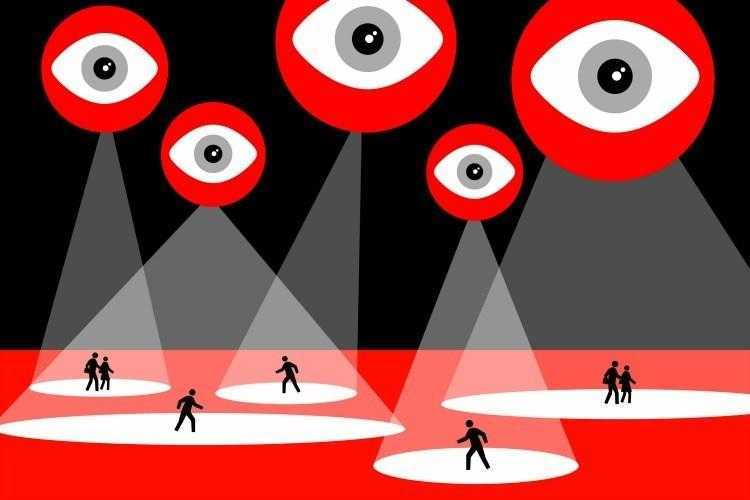
2024 Is the New 1984: Big Brother and the Rise of the Security Industrial Complex

By John & Nisha Whitehead

Source: The Rutherford Institute

“Big Brother is Watching You.”―George Orwell, 1984

2024 is the new 1984.

Forty years past the time that George Orwell envisioned the stomping boot of Big Brother, the police state is about to pass off the baton to the surveillance state.

Fueled by a melding of government and corporate power—the rise of the security industrial complex—this watershed moment sounds a death knell for our privacy rights.

An unofficial fourth branch of government, the Surveillance State came into being without any electoral mandate or constitutional referendum, and yet it possesses superpowers, above and beyond those of any other government agency save the military.

It operates beyond the reach of the president, Congress and the courts, and it marches in lockstep with the corporate elite who really call the shots in Washington, DC.

This is the new face of tyranny in America: all-knowing, all-seeing and all-powerful.

Tread cautiously.

Empowered by advances in surveillance technology and emboldened by rapidly expanding public-private partnerships between law enforcement, the Intelligence Community, and the private sector, the Surveillance State is making the fictional world of 1984, Orwell’s dystopian nightmare, our looming reality.

1984 portrays a global society of total control in which people are not allowed to have thoughts that in any way disagree with the corporate state. There is no personal freedom, and advanced technology has become the driving force behind a surveillance-driven society. Snitches and cameras are everywhere. People are subject to the Thought Police, who deal with anyone guilty of thought crimes. The government, or “Party,” is headed by Big Brother who appears on posters everywhere with the words: “Big Brother is watching you.”

Indeed, in our present age of ubiquitous surveillance, there are no private lives.

Everything is increasingly public.

What we are witnessing, in the so-called name of security and efficiency, is the creation of a new class system comprised of the watched (average Americans such as you and me) and the watchers (government bureaucrats, technicians and private corporations).

We now find ourselves in the unenviable position of being monitored, managed and controlled by our technology, which answers not to us but to our government and corporate rulers.

This is the fact-is-stranger-than-fiction lesson that is being pounded into us on a daily basis.

In this way, 1984, which depicted the ominous rise of ubiquitous technology, fascism and totalitarianism, has become an operation manual for the omnipresent, modern-day surveillance state.

There are roughly one billion surveillance cameras worldwide and that number continues to grow, thanks to their wholehearted adoption by governments (especially law enforcement and military agencies), businesses, and individual consumers.

Surveillance cameras mounted on utility poles, traffic lights, businesses, and homes. Ring doorbells. GPS devices. Dash cameras. Drones. Store security cameras. Geofencing and geotracking. FitBits. Alexa. Internet-connected devices. 

Stingray devices, facial recognition technology, body cameras, automated license plate readers, gunshot detection, predictive policing software, AI-enhanced video analytics, real-time crime centers, fusion centers: all of these technologies and surveillance programs rely on public-private partnerships that together create a sticky spiderweb from which there is no escape.

With every new surveillance device we welcome into our lives, the government gains yet another toehold into our private worlds.

As the cost of these technologies becomes more affordable for the average consumer, an effort underwritten by the tech industry and encouraged by law enforcement agencies and local governing boards, which in turn benefit from access to surveillance they don’t need to include in their budgets, big cities, small towns, urban, suburban and rural communities alike are adding themselves to the surveillance state’s interconnected grid.

What this adds up to for government agencies (that is, FBI, NSA, DHS agents, etc., as well as local police) is a surveillance map that allows them to track someone’s movements over time and space, hopscotching from doorbell camera feeds and business security cameras to public cameras on utility poles, license plate readers, traffic cameras, drones, etc.

It has all but eliminated the notion of privacy enshrined in the  Fourth Amendment and radically re-drawn the line of demarcation between our public and private selves.

The police state has become particularly adept at sidestepping the Fourth Amendment, empowered by advances in surveillance technology and emboldened by rapidly expanding public-private partnerships between law enforcement, the Intelligence Community, and the private sector.

Over the past 50-plus years, surveillance has brought about a series of revolutions in how governments govern and populations are policed to the detriment of us all. Cybersecurity expert Adam Scott Wandt has identified three such revolutions.

The first surveillance revolution came about as a result of government video cameras being installed in public areas. There were a reported 51 million surveillance cameras blanketing the United States in 2022. It’s estimated that Americans are caught on camera an average of 238 times every week (160 times per week while driving; 40 times per week at work; 24 times per week while out running errands and shopping; and 14 times per week through various other channels and activities). That doesn’t even touch on the coverage by surveillance drones, which remain a relatively covert part of police spying operations.

The second revolution occurred when law enforcement agencies started forging public-private partnerships with commercial establishments like banks and drug stores and parking lots in order to gain access to their live surveillance feeds. The use of automatic license plate readers (manufactured and distributed by the likes of Flock Safety), once deployed exclusively by police and now spreading to home owners associations and gated communities, extends the reach of the surveillance state that much further afield. It’s a win-win for police budgets and local legislatures when they can persuade businesses and residential communities to shoulder the costs of the equipment and share the footage, and they can conscript the citizenry to spy on each other through crowdsourced surveillance.

The third revolution was ushered in with the growing popularity of doorbell cameras such as Ring, Amazon’s video surveillance doorbell, and Google’s Nest Cam.

Amazon has been particularly aggressive in its pursuit of a relationship with police, enlisting them in its marketing efforts, and going so far as to hosting parties for police, providing free Ring doorbells and deep discounts, sharing “active camera” maps of Ring owners, allowing access to the Law Enforcement Neighborhood Portal, which enables police to directly contact owners for access to their footage, and coaching police on how to obtain footage without a warrant.

Ring currently partners with upwards of 2,161 law enforcement agencies and 455 fire departments, and that number grows exponentially every year. As Vice reports, “Ring has also heavily pursued city discount programs and private alliances with neighborhood watch groups. When cities provide free or discounted Ring cameras, they sometimes create camera registries, and police sometimes order people to aim Ring cameras at their neighbors, or only give cameras to people surveilled by neighborhood watches.”

In November 2022, San Francisco police gained access to the live footage of privately owned internet cameras as opposed to merely being able to access recorded footage. No longer do police even have to request permission of homeowners for such access: increasingly, corporations have given police access to footage as part of their so-called criminal investigations with or without court orders.

The fourth revolutionary shift may well be the use of facial recognition software and artificial intelligence-powered programs that can track people by their biometrics, clothing, behavior and car, thereby synthesizing the many strands of surveillance video footage into one cohesive narrative, which privacy advocates refer to as 360 degree surveillance.

While the guarantee of safety afforded by these surveillance nerve centers remains dubious, at best, there is no disguising their contribution in effecting a sea change towards outright authoritarianism.

For instance, as an in-depth investigative report by the Associated Press concludes, the very same mass surveillance technologies that were supposedly so necessary to fight the spread of COVID-19 are now being used to stifle dissent, persecute activists, harass marginalized communities, and link people’s health information to other surveillance and law enforcement tools.

As the AP reports, federal officials have also been looking into how to add “‘identifiable patient data,’ such as mental health, substance use and behavioral health information from group homes, shelters, jails, detox facilities and schools,” to its surveillance toolkit.

These cameras—and the public-private eyes peering at us through them—are re-engineering a society structured around the aesthetic of fear and, in the process, empowering “people to not just watch their neighborhood, but to organize as watchers,” creating not just digital neighborhood watches but digital gated communities.

Finally, there is a repressive, suppressive effect to surveillance that not only acts as a potentially small deterrent on crime but serves to monitor and chill lawful First Amendment activity.

As Matthew Feeney warns in the New York Times, “In the past, Communists, civil rights leaders, feminists, Quakers, folk singers, war protesters and others have been on the receiving end of law enforcement surveillance. No one knows who the next target will be.

No one knows, but it’s a pretty good bet that the surveillance state will be keeping a close watch on anyone seen as a threat to the government’s chokehold on power.

After all, as I make clear in my book Battlefield America: The War on the American People and in its fictional counterpart The Erik Blair Diaries, the Surveillance State never sleeps.
Why Orwell matters

His defence of freedom flies in the face of all that is woke and regressive today.

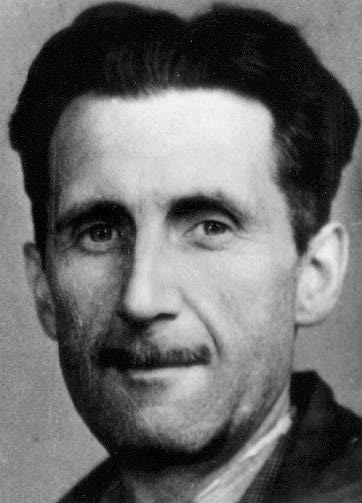
George Orwell aka Eric Blair (25 June 1903 – 21 January 1950)

By Bruno Waterfield

Source: Spike Online

Most people think that George Orwell was writing about, and against, totalitarianism – especially when they encounter him through the prism of his great dystopian novel, Nineteen Eighty-Four.

This view of Orwell is not wrong, but it can miss something. For Orwell was concerned above all about the particular threat posed by totalitarianism to words and language. He was concerned about the threat it posed to our ability to think and speak freely and truthfully. About the threat it posed to our freedom.

He saw, clearly and vividly, that to lose control of words is to lose control of meaning. That is what frightened him about the totalitarianism of Nazi Germany and Stalinist Russia – these regimes wanted to control the very linguistic substance of thought itself.

And that is why Orwell continues to speak to us so powerfully today. Because words, language and meaning are under threat once more.

Totalitarianism in Orwell’s time

The totalitarian regimes of Nazi Germany and Stalin’s Soviet Union represented something new and frightening for Orwell. Authoritarian dictatorships, in which power was wielded unaccountably and arbitrarily, had existed before, of course. But what made the totalitarian regimes of the 20th century different was the extent to which they demanded every individual’s complete subservience to the state. They sought to abolish the very basis of individual freedom and autonomy. They wanted to use dictatorial powers to socially engineer the human soul itself, changing and shaping how people think and behave.

Totalitarian regimes set about breaking up clubs, trade unions and other voluntary associations. They were effectively dismantling those areas of social and political life in which people were able to freely and spontaneously associate. The spaces, that is, in which local and national culture develops free of the state and officialdom. These cultural spaces were always tremendously important to Orwell. As he put it in his 1941 essay, ‘England Your England’: ‘All the culture that is most truly native centres round things which even when they are communal are not official – the pub, the football match, the back garden, the fireside and the “nice cup of tea”.’

Totalitarianism may have reached its horrifying zenith in Nazi Germany and Stalin’s USSR. But Orwell was worried about its effect in the West, too. He was concerned about the Sovietisation of Europe through the increasingly prominent and powerful Stalinist Communist Parties. He was also worried about what he saw as Britain’s leftwing ‘Europeanised intelligentsia’, which, like the Communist Parties of Western Europe, seemed to worship state power, particularly in the supranational form of the USSR. And he was concerned above all about the emergence of the totalitarian mindset, and the attempt to re-engineer the deep structures of mind and feeling that lie at the heart of autonomy and liberty.

Orwell could see this mindset flourishing among Britain’s intellectual elite, from the eugenics and top-down socialism of Fabians, like Sidney and Beatrice Webb and HG Wells, to the broader technocratic impulses of the intelligentsia in general. They wanted to remake people ‘for their own good’, or for the benefit of the race or state power. They therefore saw it as desirable to force people to conform to certain prescribed behaviours and attitudes. This threatened the everyday freedom of people who wanted, as Orwell put it, ‘the liberty to have a home of your own, to do what you like in your spare time, to choose your own amusements instead of having them chosen for you from above’.

In the aftermath of the Second World War, this new intellectual elite started to gain ascendancy. It was effectively a clerisy – a cultural and ruling elite defined by its academic achievements. It had been forged through higher education and academia rather than through traditional forms of privilege and wealth, such as public schools.

Orwell was naturally predisposed against this emergent clerisy. He may have attended Eton, but that’s where Orwell’s education stopped. He was not part of the clerisy’s world. He was not an academic writer, nor did he position himself as such. On the contrary, he saw himself as a popular writer, addressing a broad, non-university-educated audience.

Moreover, Orwell’s antipathy towards this new elite type was long-standing. He had bristled against the rigidity and pomposity of imperial officialdom as a minor colonial police official in Burma between 1922 and 1927. And he had always battled against the top-down socialist great and good, and much of academia, too, who were often very much hand in glove with the Stalinised left.

The hostility was mutual. Indeed, it accounts for the disdain that many academics and their fellow travellers continue to display towards Orwell today.

The importance of words

Nowadays we are all too familiar with this university-educated ruling caste, and its desire to control words and meaning. Just think, for example, of the way in which our cultural and educational elites have turned ‘fascism’ from a historically specific phenomenon into a pejorative that has lost all meaning, to be used to describe anything from Brexit to Boris Johnson’s Tory government – a process Orwell saw beginning with the Stalinist practice of calling Spanish democratic revolutionaries ‘Trotsky-fascists’ (which he documented in Homage to Catalonia (1938)).

Or think of the way in which our cultural and educational elites have transformed the very meanings of the words ‘man’ and ‘woman’, divesting them of any connection to biological reality. Orwell would not have been surprised by this development. In Nineteen Eighty-Four, he shows how the totalitarian state and its intellectuals will try to suppress real facts, and even natural laws, if they diverge from their worldview. Through exerting power over ideas, they seek to shape reality. ‘Power is in tearing human minds to pieces and putting them together in new shapes of your own choosing’, says O’Brien, the sinister party intellectual. ‘We control matter because we control the mind. Reality is inside the skull… You must get rid of these 19th-century ideas about the laws of nature.’

In Nineteen Eighty-Four, the totalitarian regime tries to subject history to similar manipulation. As anti-hero Winston Smith tells his lover, Julia:

‘Every record has been destroyed or falsified, every book has been rewritten, every picture has been repainted, every statue and street and building has been renamed, every date has been altered. And that process is continuing day by day and minute by minute. History has stopped. Nothing exists except an endless present in which the Party is always right.’

As Orwell wrote elsewhere, ‘the historian believes that the past cannot be altered and that a correct knowledge of history is valuable as a matter of course. From the totalitarian point of view history is something to be created rather than learned.’

This totalitarian approach to history is dominant today, from the New York Times’ 1619 Project to statue-toppling. History is something to be erased or conjured up or reshaped as a moral lesson for today. It is used to demonstrate the rectitude of the contemporary establishment.

But it is language that is central to Orwell’s analysis of this form of intellectual manipulation and thought-control. Take ‘Ingsoc’, the philosophy that the regime follows and enforces through the linguistic system of Newspeak. Newspeak is more than mere censorship. It is an attempt to make certain ideas – freedom, autonomy and so on – actually unthinkable or impossible. It is an attempt to eliminate the very possibility of dissent (or ‘thoughtcrime’).

As Syme, who is working on a Newspeak dictionary, tells Winston Smith:

‘The whole aim… is to narrow the range of thought. In the end we shall make thoughtcrime literally impossible, because there will be no words in which to express it. Every year fewer and fewer words, and the range of consciousness always a little smaller… Has it ever occurred to you, Winston, that by the year 2050, at the very latest, not a single human being will be alive who could understand such a conversation as we are having now?’

The parallels between Orwell’s nightmarish vision of totalitarianism and the totalitarian mindset of today, in which language is policed and controlled, should not be overstated. In the dystopia of Nineteen Eighty-Four, the project of eliminating freedom and dissent, as in Nazi Germany or Stalinist Russia, was backed up by a brutal, murderous secret police. There is little of that in our societies today – people are not forcibly silenced or disappeared.

However, they are cancelled, pushed out of their jobs, and sometimes even arrested by the police for what amounts to thoughtcrime. And many more people simply self-censor out of fear of saying the ‘wrong’ thing. Orwell’s concern that words could be erased or their meaning altered, and thought controlled, is not being realised in an openly dictatorial manner. No, it’s being achieved through a creeping cultural and intellectual conformism.

The intellectual turn against freedom

But then that was always Orwell’s worry – that intellectuals giving up on freedom would allow a Big Brother Britain to flourish. As he saw it in The Prevention of Literature (1946), the biggest danger to freedom of speech and thought came not from the threat of dictatorship (which was receding by then) but from intellectuals giving up on freedom, or worse, seeing it as an obstacle to the realisation of their worldview.

Interestingly, his concerns about an intellectual betrayal of freedom were reinforced by a 1944 meeting of the anti-censorship organisation, English PEN. Attending an event to mark the 300th anniversary of Milton’s Areopagitica, Milton’s famous 1644 speech making the case for the ‘Liberty of Unlicenc’d Printing’, Orwell noted that many of the left-wing intellectuals present were unwilling to criticise Soviet Russia or wartime censorship. Indeed, they had become profoundly indifferent or hostile to the question of political liberty and press freedom.

‘In England, the immediate enemies of truthfulness, and hence of freedom of thought, are the press lords, the film magnates, and the bureaucrats’, Orwell wrote, ‘but that on a long view the weakening of the desire for liberty among the intellectuals themselves is the most serious symptom of all’.

Orwell was concerned by the increasing popularity among influential left-wing intellectuals of ‘the much more tenable and dangerous proposition that freedom is undesirable and that intellectual honesty is a form of anti-social selfishness’. The exercise of freedom of speech and thought, the willingness to speak truth to power, was even then becoming seen as something to be frowned upon, a selfish, even elitist act.

An individual speaking freely and honestly, wrote Orwell, is ‘accused of either wanting to shut himself up in an ivory tower, or of making an exhibitionist display of his own personality, or of resisting the inevitable current of history in an attempt to cling to unjustified privilege’.

These are insights which have stood the test of time. Just think of the imprecations against those who challenge the consensus. They are dismissed as ‘contrarians’ and accused of selfishly upsetting people.

And worst of all, think of the way free speech is damned as the right of the privileged. This is possibly one of the greatest lies of our age. Free speech does not support privilege. We all have the capacity to speak, write, think and argue. We might not, as individuals or small groups, have the platforms of a press baron or the BBC. But it is only through our freedom to speak freely that we can challenge those with greater power.

Orwell’s legacy

Orwell is everywhere today. He is taught in schools and his ideas and phrases are part of our common culture. But his value and importance to us lies in his defence of freedom, especially the freedom to speak and write.

His outstanding 1946 essay, ‘Politics and the English Language’, can actually be read as a freedom manual. It is a guide on how to use words and language to fight back.

Of course, it is attacked today as an expression of privilege and of bigotry. Author and commentator Will Self cited ‘Politics and the English Language’ in a 2014 BBC Radio 4 show as proof that Orwell was an ‘authoritarian elitist’. He said: ‘Reading Orwell at his most lucid you can have the distinct impression he’s saying these things, in precisely this way, because he knows that you – and you alone – are exactly the sort of person who’s sufficiently intelligent to comprehend the very essence of what he’s trying to communicate. It’s this the mediocrity-loving English masses respond to – the talented dog-whistler calling them to chow down on a big bowl of conformity.’

Lionel Trilling, another writer and thinker, made a similar point to Self, but in a far more insightful, enlightening way. ‘[Orwell] liberates us’, he wrote in 1952:

‘He tells us that we can understand our political and social life merely by looking around us, he frees us from the need for the inside dope. He implies that our job is not to be intellectual, certainly not to be intellectual in this fashion or that, but merely to be intelligent according to our lights – he restores the old sense of the democracy of the mind, releasing us from the belief that the mind can work only in a technical, professional way and that it must work competitively. He has the effect of making us believe that we may become full members of the society of thinking men. That is why he is a figure for us.’

Orwell should be a figure for us, too – in our battle to restore the democracy of the mind and resist the totalitarian mindset of today. But this will require having the courage of our convictions and our words, as he so often did himself. As he put it in The Prevention of Literature, ‘To write in plain vigorous language one has to think fearlessly’. That Orwell did precisely that was a testament to his belief in the public just as much as his belief in himself. He sets an example and a challenge to us all.