
By Rob Williams
Source: Project Censored
The following is a critical book review of Kathleen Hall Jamieson’s Cyberwar: How Russian Hackers and Trolls Helped Elect A President – What We Don’t, Can’t, And Do Know (Oxford: Oxford University Press, 2018).
“Russia hacked the 2016 US election!”
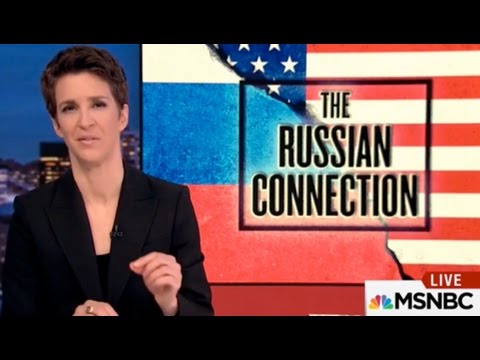
Since November 2016, the US “news” chatterati – pundits and poets, priests, prognosticators and politicians – have repeated this statement ad nauseum. The #RussiaGate story has become a commonly-accepted article of faith amongst the US neoliberal faithful – disgruntled Clintonistas, bereaved “Bernie Bros,” US news flaks, and anyone else who dislikes the current occupant of the White House. If the “Russia hacked the 2016 US election” meme warriors had a high-viz US standard bearer, it would probably be popular MSNBC performance artist Rachel “All Russia, All The Time” Maddow, who serves up the #RussiaGate sauce with reckless abandon to high TeeVee viewer ratings, earning somewhere between $30 and $40 K daily in salary. (LINK to RM mashup here).
And now, we have a scholarly book published by Oxford University Press with an epic title – Cyberwar: How Russian Hackers and Trolls Helped Elect A President – What We Don’t, Can’t, And Do Know – that purports to prove that Russia’s cyber-meddling helped sabotage the HRC campaign, swinging the 2016 US presidential election in favor of DJT.
To approach Cyberwar, first consider everything on the table re: the 2016 US presidential election.
Here‘s just a short list.
Witness the two most unpopular presidential candidates in US political history (one of whom confidently encouraged the other to run, convinced she could beat him); massive and well-documented bipartisan digital vote count manipulation (“electile dysfunction”) courtesy the 2002 “Help America Vote Act” (Orwell would be impressed); the grotesque (human) nature of Donald J Trump and Republicans’ comical attempts to first displace and then eventually come to terms with his 2016 candidacy; the complete corruption of the national Democratic Party leadership, which did everything it could to crown HRC the Dem standard bearer, from systematically undermining insurgent Vermont “progressive” Bernie Sanders’ presidential bid (read the 110 page report “Democracy Lost” for detailed descriptions of how the DNC manipulated 2016 Democratic primary outcomes in 11 swing states) to diverting DNC fundraising – millions of dollars collected from the pockets of ordinary Americans – away from so-called “down ballot” local office races and into HRC presidential campaign coffers during the heated months of 2016.
There’s so much more, but I’ll simply stop there.
Rather than looking in the 2016 mirror, however, US blames…Russians?
To be clear, I approached Cyberwar with an open mind. I am a big fan of the book’s author, distinguished US media scholar Kathleen Hall Jamieson (KHJ), longtime badass in the world of political communications scholarship, and current Elizabeth Ware Packard Professor at the Annenberg School for Communication at the University of Pennsylvania and the Director of the Annenberg Public Policy Center. Jamieson’s got street cred. However, after a close read and re-read of KHJ’s new book, including all the footnotes, Cyberwar left me unconvinced by its “more or less” central conclusion – “Russia trolled and hacked the 2016 US election, sorta!” In fact, I’d suggest that Cyberwar is a deeply problematic book, a fascinating scholarly study in “manufacturing consent” – the term Edward Herman and Noam Chomsky borrowed from Walter Lippman to title their 1988 book of the same name – describing how US elites “massage” US news channels like the New York Times, “filtering” into public view the “news” stories most beneficial to their strategic goals, while downplaying or censoring other worthy “news” stories of significance.
To fully understand my critique of Cyberwar, start with Jamieson’s credulous acceptance of “facts” provided by the US “intelligence community” (my new favorite Orwellian trope) re: the Russian government’s “interference” to advance her Cyberwar case. More on that in a moment. In the meantime, here is KHJ’s central Cyberwar claim, summarized in a single long sentence, slightly paraphrased for brevity, from her book’s conclusion: “In the run up to the 2016 US presidential election, Russian trolls and hackers carried out a strategically systematic and ultimately successful communications campaign to discredit Democratic presidential candidate Hillary Rodham Clinton and support Republican presidential candidate Donald J. Trump through sufficiently widespread messaging that focused on issues compatible with Trump’s strategic needs, addressing constituencies he had to mobilize and demobilize, by employing persuasive, visually evocative and well-targeted content that was amplified in swing states through sharing, liking, and commenting.” (p. 203).
It’s a mouthful, I know, and when you read it over a few times, removing both Clinton and Trump’s names, you quickly realize that this is what ANY strategic political campaign using digital tools –Cyberspace’s unique power and reach – would set out to do to try and win any election, anywhere. Russian president Vladimir Putin himself concedes that Russia wages “campaigns of political influence” wherever and whenever they can, just as the US and other powerful countries do and have done for decades, using as many communications tools as they can leverage.
So – how does Jamieson set out to prove Russian Cyberwar? She divides her book into four parts.
Part One of Jamieson’s book explores “who did it, why, and what research says about it might matter.” Here, KHJ flags the Internet Research Agency (IRA), a Russian troll farm, and introduces the reader to her previous ground-breaking work on communications effects research – how techniques like agenda-setting, framing, priming and “contagion creation” have worked over time to influence US voter decisions, and thus, perhaps, election outcomes. Big caveat here, that KHJ leaves unacknowledged. To wit – presumably, Russian “trolls” share the same primary goal as ALL trolls on the Internet, namely, maximizing audience engagement (and thus profit) through the creation and deployment of relevant content, with their chief “currency” being click-throughs, likes, shares, retweets, etc.
In Part Two of Cyberwar, Jamieson looks at what she calls “the prerequisites of [Russian] troll influence.” “Were the extent and virality of Russian social media content and the nature, coverage, and exposure of Russian-hacked Democratic materials,” she asks, “sufficient and sufficiently persuasive to plausibly affect the outcome of an election decided in three states by about 78,000 votes?” (p. 65). Hint – her final answer is a circumspectly strong “maybe.”
Part Three of Cyberwar finds KHJ considering “how the Russians affected the news and debate agendas in the last month of the presidential campaign.” Here, Jamieson looks at how “Russian hacked content” (her words) transformed the nature of US news coverage surrounding HRC in the month before the 2016 election, with a particular focus on the “drip drip drip” impact of “WikiLeak’d” emails illegally obtained from Democratic National Committee (DNC) servers, as well as FBI director James Comey’s role, during October 2016, in reopening the investigation into “newly-found” HRC emails, which KHJ argues helped shape public impressions around HRC for undecided US voters in the days just before the election.
Jamieson uses Cyberwar Part Four to provide a brief summary of “what we don’t, can’t, and do know about how Russian hackers and trolls helped elect Donald Trump.” “My case that the uses of Russian-hacked (emphasis added) Democratic materials influenced voters is built on scholars’ understandings of the effects of linguistic priming, media agenda setting, and framing the susceptibilities of late deciders, the dispositions of those who view both candidates unfavorably, the effects of imbalances in the amount of negative information available about alternative candidates, and scholarship on how debates affect voter attitudes,” Jamieson concludes. “It is scaffolded on evidence that the hacked content not only altered the media and debate agendas but also increased the negative press about Clinton. And it is bolstered by the possibility that Russian access and anticipated use of illegally gotten or fabricated Democratic content shaped a key decision by FBI director Comey.” (210)
To be fair, Cyberwar is an engaging read. Jamieson is a fine scholarly writer, and she has a field day digging into the aesthetics of individual Russian troll farm memes – complete with pictures. (The “Army Of Jesus” Facebook page, purportedly created by Russian trolls, features a boxing glove clad HRC sporting devil horns engaged in a fierce arm-wrestling match with Aryan Jesus himself. Hilarious.) KHJ also does a credible job tracing the evolution of the US news narrative around HRC in the weeks leading up to the 2016 election, showing how pivotal moments may have influenced voter perceptions about both HRC and DJT.
However! Individual Russian troll farm memes and evolving US “news” media coverage negatively impacting HRC do NOT a strategic Kremlin-led messaging campaign make.
Cyberwar continually flirts with a central question (which has become a story routinely told by US “news” media outlets) – “Was Russian troll farming some sort of Kremlin-staged strategic cyber-op?” – without ever really answering it. The result is a book-length begging of this very important question, and here we come to the primary problem with Cyberwar– and it’s a whopper. Jamieson build her case for the Russian “tanking” of HRC’s candidacy on two central assumptions, both unproven.
Assumption #1: Jamieson implicitly asserts in Cyberwar that the Russians “hacked” into the Democratic National Committee (DNC) computer servers (as well as other hacks) and obtained digital copies of thousands of what became publicly damning emails from members of the DNC leadership team – Clinton campaign advisor John Podesta, HRC herself, and others – and then (by extension) tried to leverage the contents of these stolen documents for months in US social media spaces (and, by extension, influenced the shaping of US news narratives about HRC.) Interestingly, KHJ sneaks in “Russia hacked” and “Russian-stolen Democratic content” language into the last third of her book, without directly addressing this BIG rhetorical move or providing any proof that the Russians did so. Instead, she appears to implicitly draw on “evidence” for Russian hacking provided by the US “intelligence community” – former FBI director turned Trump special prosecutor Bob Mueller, former director of national intelligence James Clapper, and former National Security Agency director Michael Hayden chief among them. (Mueller, Clapper, Hayden – three US government officials who have all been less than honest with the American people, and I’m being generous.)
The counternarrative to the “Russia hacked into the DNC computers” story? Information was “leaked” from inside the DNC, not hacked from the outside. How might we know? Former NSA cryptographer Bill Binney, former CIA official Ray McGovern, and many other members of the 2003-founded Veteran Intelligence Professionals for Sanity (VIPS) argue that, based on their review of computer bit rate information, the stolen DNC content traveled at bandwidth rates too high to have been an external “hack,” but rather an internal “leak.” The reality? We’ll never know for sure, because the DNC refused to hand over their compromised computer servers to the FBI, instead contracting with Crowd Strike, a private US cybersecurity firm, to ascertain affirmative Russian hacking involvement (#Surprise!). For interested readers, NSA whistleblower Bill Binney discusses his “leak versus hack” conclusions on this recent episode of Brass Check TV between 1:27 – 1:37 here.
Assumption #2: In Cyberwar, Jamieson implies that WikiLeaks closely collaborated with the Russian government, or at the very least (it’s a bit hard to tell from her lack of analysis here), Putin used WikiLeaks as its public relations machine to destroy HRC’s reputation and elevate DJT as a presidential candidate. In other words, from his Ecuadorian embassy prison, Assange was in close cahoots with Putin, Cyberwar implies, or at the very least, Assange served as a “useful idiot” for the Kremlin. Here again, KHJ offers no proof, other than continually flagging the usual suspects, Russian troll farmers and hackers, as well as other sources such as the popular RT (formerly Russia Today) news channel for alleged disinformation shenanigans, such as broadcasting an exclusive in-depth interview between independent British journalist John Pilger and WikiLeaks’ co-founder Julian Assange on November 6, 2016, two days before the election.
Side note – this interview, entitled “Secret World of US Election,” is fascinating (see here).
RT/Russia Today now carries a variety of US news shows hosted by US news journalists now unable to find access to the US airwaves, individuals like former MSNBC journalist Ed Schultz (now deceased), former US talk show host Larry King, and Pulitzer Prize winning former New York Times foreign correspondent Chris Hedges. Ironically, RT’s news content is often much more in-depth than any stories provided by the US corporate commercial TeeVee channels – watch any episode of Chris Hedges’ “On Contact,” for example, to hear perspectives on US politics you’ll rarely find on any other US news channel. On December 31, 2018, RT aired an episode of Larry King’s program talking with longtime Russia expert and War With Russia? author Stephen Cohen, and the show begins with King parroting the “Russia interfered in the US election” meme, a claim Cohen respectfully disputes before launching into a cogent and thoughtful analysis of the importance of a 21st century US-Russia “partnership” (not “friendship”) instead of more US/NATO aggression on Russia’s borders, and how DJT’s overtures to Russia have been continually hamstrung by US political and media elites. Here’s a link for further listening. It bears repeating, and King and Cohen discuss this at some length, that Cohen’s point of view re: Russia is now considered “radical” in US policy-making circles, despite the Cold War between the US and Russia having been officially over for thirty years.
Back to WikiLeaks and the organization’s alleged conspiring with the Kremlin. Suffice to say, as the world’s first truly “stateless” news organization, WikiLeaks’ role as a powerful platform for publishing information provided by corporate and state insiders-turned-whistleblowers has been consistently credible and accurate, as well as proving a colossal PITA for US political and economic elites on all sides of the aisle. And yes, Assange and WikiLeaks have reserved special ire for the Clintons, and indeed, Assange admitted to actively working with the DJT campaign in the months leading up to the 2016 US presidential election. To implicitly blame the Russians for WikiLeaks’ behavior, however, as KHJ does in Cyberwar, is disingenuous at best.
Here’s a single example of this troublesome conflation based on faulty assumptions from page 149 pf KHJ’s Cyberwaranalysis: In early October 2016, Jamieson asserts, “a DHS-ODNI intelligence report confirmed that the Russians were behind the hacking of the DNC…and a first tranche of Russian-hacked Podesta emails was WikiLeak’d.” She then goes on to detail (rightly in my estimation) the damning impact of these documents on US news coverage of HRC’s campaign. But read her sentence above again to understand the broad leaps she is making, which go well beyond Russian troll farmers.
And here is the rub. At day’s end, Jamieson’s case for Russian Cyberwar squarely rests on these two assumptions, both unproven. The result? KHJ makes mountains out of molehills – amateurish Russian troll farming on Facebook and Twitter, and (maybe?) a “campaign of influence targeting HRC” is transmogrified, in her implicit final analysis AND by uncritical coverage of her Cyberwar book in the popular US news media, into Putin’s Russian government strategically penetrating to the very heart of the US electoral process, “gaming” the outcome against HRC and in favor of DJT. In this tense geopolitical moment, when corporate for-profit and “deep state” US “news” media mouthpieces supporting the Empire’s “full-spectrum dominance” of planet Earth on the Pentagon’s behalf are blindly thrashing about looking for someone (or some country) to blame, Cyberwar only adds fuel to the fires of the #RussiaGate hysteria.
Bigger picture? Even more troublesome for any American who still believes in the transformative power of free, open, and democratic discourse are the ways in which the two-year-old #RussiaGate tale is now being leveraged by US elites here in the “Homeland.” “Behavioral microtargeting,” a digital communications strategy pioneered in 2016 by UK-based Cambridge Analytica CEO Alexander Nix, Trump chief strategist Steve Bannon, and Facebook (unwittingly?) through “data breaches” of 50 million (with an M) Facebook user accounts, is now being used in state and local political races around the US as a viable political strategy. Social media censorship, meanwhile, is emerging as a strategic US synergistic state/corporate response to so-called “fake news” – witness neoliberal think tank Atlantic Council’s recent collaboration with Facebook to “purge” more than 800 “suspect” Facebook accounts, or Google’s “algorithmic censorship,” gaming its algorithm to marginalize US news outlets – TruthDig, Alternet, TruthOut, WWSA – critical of the US imperial status quo, or the complete purging of controversial independent analyst and so-called “conspiracy theorist” Alex Jones from pretty much ALL mainstream (read corporate) US digital platforms – all happened within the past year. And, as US comedienne Michelle Wolf pointed out at the annual Washington Press Club banquet last spring, MOUNDS of money are being made by US neoliberal “news” outlets – clicks, ratings, book sales – through this sort of Trump-bashing and fear-mongering, while pressing issues impacting the lives of ordinary Americans – “still no clean water in Flint, Michigan!” – are completely ignored. #RussiaGate, in sum, is now a rationale for demonizing, marginalizing, and censoring any US individual or organization that does not tow the #RussiaGate party line.
Despite the US news-induced hysteria surrounding the #RussiaGate tale, voices of reason persist. Most prominent include Rolling Stone investigative journalist Matt Taibbi, LA-based nightclub comedian Jimmy Dore (who regularly covers the excesses of the #RussiaGate story with his comedic colleagues on is popular YouTube channel “The Jimmy Dore Show”), and Nation reporter Aaron Maté, whose December 28, 2018 article calls BS on the #Russiagate nonsense. The complete title of Maté’s article? “New Studies Show Pundits Are Wrong About Russian Social-Media Involvement in US Politics – Far from being a sophisticated propaganda campaign, it was small, amateurish, and mostly unrelated to the 2016 election.” (read Maté’s piece here). Maté, who has covered the #RussiaGate story extensively since 2016, provides in-depth analysis of two new reports alleging Russian cyber meddling – one produced by the University of Oxford’s Computational Propaganda Research Project and the other by the US consulting corporation with deep ties to the national security state, New Knowledge. I encourage interested readers to take the time to read his story.
Maté’s conclusion, meanwhile, is worth quoting here at length:
Based on all of this data, we can draw this picture of Russian social-media activity: It was mostly unrelated to the 2016 election; microscopic in reach, engagement, and spending; and juvenile or absurd in its content. This leads to the inescapable conclusion, as the New Knowledge study acknowledges, that “the operation’s focus on elections was merely a small subset” of its activity. They qualify that “accurate” narrative by saying it “misses nuance and deserves more contextualization.” Alternatively, perhaps it deserves some minimal reflection that a juvenile social-media operation with such a small focus on elections is being widely portrayed as a seismic threat that may well have decided the 2016 contest.
Indeed.
Would that Kathleen Hall Jamieson was not a bit more “nuanced” in “contextualizing” her Cyberwar analysis.
What to do? The best answer is critical media literacy education – moving beyond partisan politics and moral panics to more thoughtfully engage these important political questions in open dialogue and debate.
Until we do so, we will continue to be enthralled by the #RussiaGate tale, with potentially deleterious geopolitical consequences. (Again, Cohen’s interview with Larry King is a good starting place).
To wit, in Pogo’s famous phrase – “we have met the enemy and he is US.”

 After the Crash