By Margaret Kimberly
Source: Black Agenda Report
“The world of private dollars played a role in consigning thousands of people to death.”
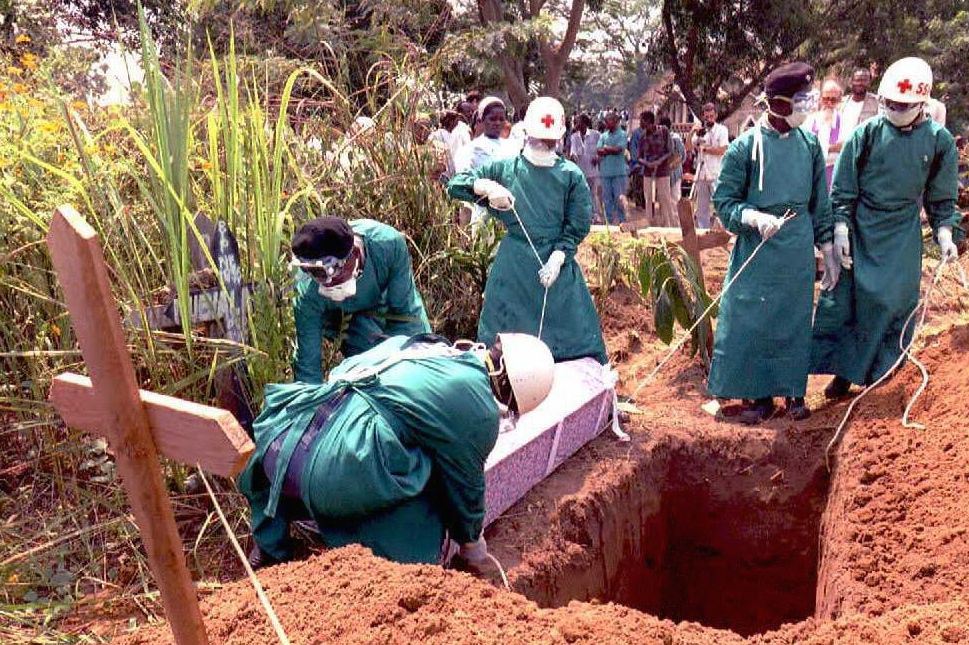
Sierra Leone has waved the white flag in the face of Ebola Virus Disease (EVD). Its meager infrastructure has buckled under the onslaught of a disease which could have been curtailed. The announcement that infected patients will be treated at home because there is no longer the capacity to treat them in hospitals is a surrender which did not have to happen. Not only did Europe and the United States turn a blind eye to sick and dying Africans but they did so with the help of an unlikely perpetrator.
The World Health Organization is “the directing and coordinating authority for health within the United Nations system.” Its very name implies that it takes direction from and serves the needs of people all over the world but the truth is quite different. The largest contributor to the WHO budget is not a government. It is the Bill and Melinda Gates Foundation which provides more funding than either the United States or the United Kingdom. WHO actions and priorities are no longer the result of the consensus of the world’s people but top down decision making from wealthy philanthropists.
The Bill and Melinda Gates Foundation may appear to be a savior when it provides $300 million to the WHO budget, but those dollars come with strings attached. WHO director general Dr. Margaret Chan admitted as much when she said, “My budget [is] highly earmarked, so it is driven by what I call donor interests.” Instead of being on the front line when a communicable disease crisis appears, it spends its time administering what Gates and his team have determined is best.
The Ebola horror continues as it has for the last ten months in Guinea, Liberia and Sierra Leone. The cruelty of the world’s lack of concern for Africa and all Africans in the diaspora was evident by the inaction of nations and organizations that are supposed to respond in times of emergencies. While African governments and aid organizations sounded the alarm the WHO did little because its donor driven process militates against it. The world of private dollars played a role in consigning thousands of people to death.
Critics of the Gates Foundation appeared long before this current Ebola outbreak. In 2008 the WHO’s malaria chief, Dr. Arata Kochi, complained about the conflicts of interest created by the foundation. In an internal memo leaked to the New York Times he complained that the world’s top malaria researchers were “locked up in a ‘cartel’ with their own research funding being linked to those of others within the group.” In other words, the standards of independent peer reviewed research were cast aside in order to please the funder.
Private philanthropy is inherently undemocratic. It is a top down driven process in which the wealthy individual tells the recipient what they will and will not do. This is a problematic system for charities of all kinds and is disastrous where the health of world’s people is concerned. Health care should be a human right, not a charity, and the world’s governments should determine how funds to protect that right are spent. One critic put it very pointedly. “…the Gates Foundation, Bill & Melinda Gates, do not believe in the public sector, they do not believe in a democratic, publically owned, publically accountable system.”
There is little wonder why the Ebola outbreak caught the WHO so flat footed as they spent months making mealy mouthed statements but never coordinating an effective response. The Gates foundation is the WHO boss, not governments, and if they weren’t demanding action, then the desperate people affected by Ebola weren’t going to get any.
Privatization of public resources is a worldwide scourge. Education, pensions, water, and transportation are being taken out of the hands of the public and given to rich people and corporations. The Ebola crisis is symptomatic of so many others which go unaddressed or improperly addressed because no one wants to bite the hands that do the feeding.
The Bill and Melinda Gates Foundation has pledged an additional $50 million to fight the current Ebola epidemic but that too is problematic, as Director General Chan describes. “When there’s an event, we have money. Then after that, the money stops coming in, then all the staff you recruited to do the response, you have to terminate their contracts.” The WHO should not be lurching from crisis to crisis, SARS, MERS, or H1N1 influenza based on the whims of philanthropy. The principles of public health should be carried out by knowledgeable medical professionals who are not dependent upon rich people for their jobs.
The Gates are not alone in using their deep pockets to confound what should be publicly held responsibilities. Facebook founder Mark Zuckerberg announced that he was contributing $25 million to fight Ebola. His donation will go to the Centers for Disease Control Foundation. Most Americans are probably unaware that such a foundation even exists. Yet there it is, run by a mostly corporate board which will inevitably interfere with the public good. The WHO and its inability to coordinate the fight against Ebola tells us that public health is just that, public. If the CDC response to Ebola in the United States fails it may be because it falls prey to the false siren song of giving private interests control of the people’s resources and responsibilities.
Margaret Kimberley’s Freedom Rider column appears weekly in BAR, and is widely reprinted elsewhere. She maintains a frequently updated blog as well as at http://freedomrider.blogspot.com. Ms. Kimberley lives in New York City, and can be reached via e-Mail at Margaret.Kimberley(at)BlackAgendaReport.com.

 After the Crash