

The New Abnormal: Authoritarian Control Freaks Want to Micromanage Our Lives

By By John & Nisha Whitehead

Source: The Rutherford Institute

“Man is born free but everywhere is in chains.”—Jean-Jacques Rousseau

Authoritarian control freaks out to micromanage our lives have become the new normal or, to be more accurate, the new abnormal when it comes to how the government relates to the citizenry.

This overbearing despotism, which pre-dates the COVID-19 hysteria, is the very definition of a Nanny State, where government representatives (those elected and appointed to work for us) adopt the authoritarian notion that the government knows best and therefore must control, regulate and dictate almost everything about the citizenry’s public, private and professional lives.

Indeed, it’s a dangerous time for anyone who still clings to the idea that freedom means the right to think for yourself and act responsibly according to your best judgment.

This tug-of-war for control and sovereignty over our selves impacts almost every aspect of our lives, whether you’re talking about decisions relating to our health, our homes, how we raise our children, what we consume, what we drive, what we wear, how we spend our money, how we protect ourselves and our loved ones, and even who we associate with and what we think.

As Liz Wolfe writes for Reason, “Little things that make people’s lives better, tastier, and less tedious are being cracked down on by big government types in federal and state governments.”

You can’t even buy a stove, a dishwasher, a showerhead, a leaf blower, or a lightbulb anymore without running afoul of the Nanny State.

In this way, under the guise of pseudo-benevolence, the government has meted out this bureaucratic tyranny in such a way as to nullify the inalienable rights of the individual and limit our choices to those few that the government deems safe enough.

Yet limited choice is no choice at all. Likewise, regulated freedom is no freedom at all.

Indeed, as a study by the Cato Institute concludes, for the average American, freedom has declined generally over the past 20 years. As researchers William Ruger and Jason Sorens explain, “We ground our conception of freedom on an individual rights framework. In our view, individuals should be allowed to dispose of their lives, liberties, and property as they see fit, so long as they do not infringe on the rights of others.”

The overt signs of the despotism exercised by the increasingly authoritarian regime that passes itself off as the United States government (and its corporate partners in crime) are all around us: censorship, criminalizing, shadow banning and de-platforming of individuals who express ideas that are politically incorrect or unpopular; warrantless surveillance of Americans’ movements and communications; SWAT team raids of Americans’ homes; shootings of unarmed citizens by police; harsh punishments meted out to schoolchildren in the name of zero tolerance; community-wide lockdowns and health mandates that strip Americans of their freedom of movement and bodily integrity; armed drones taking to the skies domestically; endless wars; out-of-control spending; militarized police; roadside strip searches; privatized prisons with a profit incentive for jailing Americans; fusion centers that spy on, collect and disseminate data on Americans’ private transactions; and militarized agencies with stockpiles of ammunition, to name some of the most appalling.

Yet as egregious as these incursions on our rights may be, it’s the endless, petty tyrannies—the heavy-handed, punitive-laden dictates inflicted by a self-righteous, Big-Brother-Knows-Best bureaucracy on an overtaxed, overregulated, and underrepresented populace—that illustrate so clearly the degree to which “we the people” are viewed as incapable of common sense, moral judgment, fairness, and intelligence, not to mention lacking a basic understanding of how to stay alive, raise a family, or be part of a functioning community.

When the dictates of petty bureaucrats carry greater weight than the individual rights of the citizenry, we’re in trouble, folks.

Federal and state governments have used the law as a bludgeon to litigate, legislate and micromanage our lives through overregulation and overcriminalization.

This is what happens when bureaucrats run the show, and the rule of law becomes little more than a cattle prod for forcing the citizenry to march in lockstep with the government.

Overregulation is just the other side of the coin to overcriminalization, that phenomenon in which everything is rendered illegal, and everyone becomes a lawbreaker.

You don’t have to look far to find abundant examples of Nanny State laws that infantilize individuals and strip them of their ability to decide things for themselves. Back in 2012, then-New York Mayor Michael Bloomberg infamously proposed a ban on the sale of sodas and large sugary drinks in order to guard against obesity. Other localities enacted bans on texting while jaywalking, wearing saggy pants, having too much mud on your car, smoking outdoors, storing trash in your car, improperly sorting your trash, cursing within earshot of others, or screeching your tires.

Yet while there are endless ways for the Nanny State to micromanage our lives, things become truly ominous when the government adopts mechanisms enabling it to monitor us for violations in order to enforce its many laws.

Nanny State, meet the all-seeing, all-knowing Surveillance State and its sidekick, the muscle-flexing Police State.

You see, in an age of overcriminalization—when the law is wielded like a hammer to force compliance to the government’s dictates whatever they might be—you don’t have to do anything “wrong” to be fined, arrested or subjected to raids and seizures and surveillance.

You just have to refuse to march in lockstep with the government.

As policy analyst Michael Van Beek warns, the problem with overcriminalization is that there are so many laws at the federal, state and local levels—that we can’t possibly know them all.

“It’s also impossible to enforce all these laws. Instead, law enforcement officials must choose which ones are important and which are not. The result is that they pick the laws Americans really must follow, because they’re the ones deciding which laws really matter,” concludes Van Beek. “Federal, state and local regulations — rules created by unelected government bureaucrats — carry the same force of law and can turn you into a criminal if you violate any one of them… if we violate these rules, we could be prosecuted as criminals. No matter how antiquated or ridiculous, they still carry the full force of the law. By letting so many of these sit around, just waiting to be used against us, we increase the power of law enforcement, which has lots of options to charge people with legal and regulatory violations.”

This is the police state’s superpower: empowered by the Nanny State, it has been vested with the authority to make our lives a bureaucratic hell.

Indeed, if you were unnerved by the rapid deterioration of privacy under the Surveillance State, prepare to be terrified by the surveillance matrix that will be ushered in by the Nanny State working in tandem with the Police State.

The government’s response to COVID-19 saddled us with a Nanny State inclined to use its draconian pandemic powers to protect us from ourselves.

The groundwork laid with COVID-19 is a prologue to what will become the police state’s conquest of a new, relatively uncharted, frontier: inner space, specifically, the inner workings (genetic, biological, biometric, mental, emotional) of the human race.

Consider how many more ways the government could “protect us” from ourselves under the guise of public health and safety.

For instance, under the guise of public health and safety, the government could use mental health care as a pretext for targeting and locking up dissidents, activists and anyone unfortunate enough to be placed on a government watch list.

When combined with advances in mass surveillance technologies, artificial intelligence-powered programs that can track people by their biometrics and behavior, mental health sensor data (tracked by wearable data and monitored by government agencies such as HARPA), threat assessments, behavioral sensing warnings, precrime initiatives, red flag gun laws, and mental health first-aid programs aimed at training gatekeepers to identify who might pose a threat to public safety, these preemptive mental health programs could well signal a tipping point in the government’s efforts to penalize those engaging in so-called “thought crimes.”

This is how it begins.

On a daily basis, Americans are already relinquishing (in many cases, voluntarily) the most intimate details of who we are—their biological makeup, our genetic blueprints, and our biometrics (facial characteristics and structure, fingerprints, iris scans, etc.)—in order to navigate an increasingly technologically-enabled world.

Having conditioned the population to the idea that being part of society is a privilege and not a right, such access could easily be predicated on social credit scores, the worthiness of one’s political views, or the extent to which one is willing to comply with the government’s dictates, no matter what they might be.

COVID-19 with its talk of mass testing, screening checkpoints, contact tracing, immunity passports, and snitch tip lines for reporting “rule breakers” to the authorities was a preview of what’s to come.

We should all be leery and afraid.

At a time when the government has a growing list—shared with fusion centers and law enforcement agencies—of ideologies, behaviors, affiliations and other characteristics that could flag someone as suspicious and result in their being labeled potential enemies of the state, it won’t take much for any of us to be considered outlaws or terrorists.

After all, the government likes to use the words “anti-government,” “extremist” and “terrorist” interchangeably. The Department of Homeland Security broadly defines extremists as individuals “that are mainly antigovernment, rejecting federal authority in favor of state or local authority, or rejecting government authority entirely.”

At some point, being an individualist will be considered as dangerous as being a terrorist.

When anything goes when it’s done in the name of national security, crime fighting and terrorism, “we the people” have little to no protection against SWAT team raids, domestic surveillance, police shootings of unarmed citizens, indefinite detentions, and the like, whether or  not you’ve done anything wrong.

In an age of overcriminalization, you’re already a criminal.

All the government needs is proof of your law-breaking. They’ll get it, too.

Whether it’s through the use of surveillance software such as ShadowDragon that allows police to watch people’s social media activity, or technology that uses a home’s WiFi router and smart appliances to allow those on the outside to “see” throughout your home, it’s just a matter of time.

As I make clear in my book Battlefield America: The War on the American People and in its fictional counterpart The Erik Blair Diaries, it’s no longer a question of whether the government will lock up Americans for defying one of its numerous mandates but when.
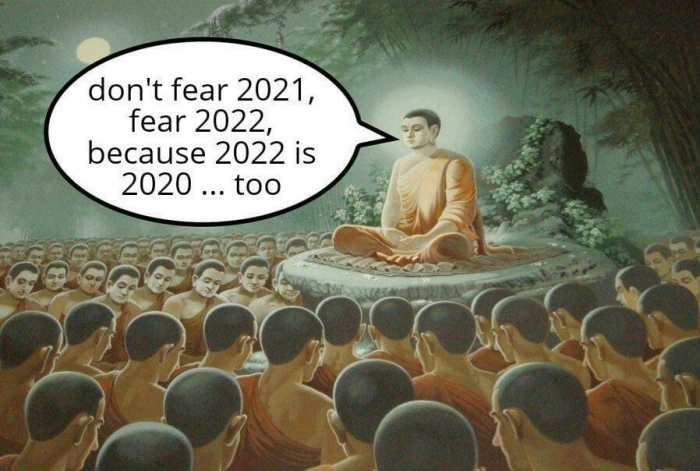
Resolution for 2022: Dare to Build Your Own Opinions and Then Defend Them!

By Alfred De Zayas

Source: CounterPunch

– Sapere aude!, Horace

Anyone who has followed the political culture in the US, Canada, UK, EU over the past twenty years must have realized that a war on epistemology, on truth, on semantics is going on.  We witness the hijacking of concepts like democracy, freedom, peace, patriotism, human rights — and their instrumentalization for domestic and geopolitical purposes.  We observe a process of language destruction not unlike what Orwell foresaw in his sadly visionary book 1984.  “Newspeak” is not the future, it is now, hic et nunc. We recognize it in the jargon of political correctness, the language and practice of the “cancel culture”.

The military-industrial-financial complex in the US, Canada, UK, EU is hell bent on full spectrum cognitive control and inundates the population with plausible “narratives” based on fake news, fake history, fake law, fake diplomacy and fake democracy. We are literally swimming in an ocean of lies – but, remarkably, most people are not conscious of the fact that they are systematically manipulated by governments, corporate media, compliant think tanks and universities. The power of “political correctness” surrounds us in direct and subliminal ways. Most accept it as the “new normal”, as long as they continue having Hollywood entertainment and lots of sports on television. The classical panem et circensis (Juvenal).

A particularly worrisome phenomenon is the gradual emergence of a “human rights industry” that systematically subverts and weaponizes human rights.  The holistic approach to civil, political, economic, social and cultural rights advocated by Eleanor Roosevelt has been quietly denatured, dismantled, discarded.  We see how the “industry” transforms the individual and collective entitlement to assistance, protection, respect and solidarity — based on our common human dignity  — into a hostile arsenal to target competitors and political adversaries.

In the stockpile of weaponized human rights, the technique of “naming and shaming” has become a sort of ubiquitous Kalashnikov. Yet, experience shows that naming and shaming fails to alleviate the suffering of victims and only satisfies the strategic aims of certain governments, non-governmental organizations and of a burgeoning clique of human rights operatives in government, academia and even in international organizations.  Allegations of real and putative human rights violations have proven politically very useful to destabilize rivals, denouncing and demonizing them.  To this end the deliberate use of double-standards, the maximation of human rights violations by a targeted country and the negation or suppression of evidence of violations by our own governments or by our allies, prepares the population to accept patently unjust and illegal actions to prepare “regime change” elsewhere.  Precisely this kind of indoctrination of the population through evidence-free allegations and hyperbole paves the way to barbarism e.g.  the aggression against Iraq in 2003 and against Libya in 2011, to name only two emblematic examples.

The Iraq invasion, which UN Secretary General Kofi Annan repeatedly called an “illegal war” found the support of a “coalition of the willing” – 43 States that turned their backs on the UN Charter and on international law, with the support of many university pundits and the corporate media.  One could affirm without fear of contradiction that the Iraq war constituted an international revolt, an assault on the international order established under the UN Charter and a negation of the Nuremberg Principles.

The Iraq war was preceded by a public relations and disinformation scheme of “naming and shaming”, a concerted campaign about the non-existent weapons of mass destruction, about the extraordinary criminality of Saddam Hussein, who a few years earlier had done the Pentagon’s bidding in the US proxy war against Iran.  Barely eight years later, in 2011, alleged human rights violations were again invoked to denounce Muammar al-Gaddafi for the sole purpose of destabilizing Libya, imposing undemocratic “regime change” and facilitating the looting of Libya’s natural resources.  This occurred in flagrant violation of the customary international law principle of non-intervention in the internal affairs of sovereign States, also contained in treaties and stipulated in the 1986 Judgment of the International Court of Justice in the Military and Paramilitary Activities in and against Nicaragua case[1].

Many rapporteurs of the UN Human Rights Council, European Commission and Inter-American commission also make use of “naming and shaming”, a  strategy that rests on the false premise that the “namer” somehow possesses moral authority and that the “named” will recognize this moral superiority and act accordingly. Theoretically this could function if the “namer” were to practice “naming and shaming” uniformly, in a non-selective manner. Alas, the technique frequently backfires, because the “namer” has many skeletons in the closet and engages in blatant double-standards. Such intellectual dishonesty usually stiffens the resistance of the “named” party, who will be even less inclined to take any measures to remedy the alleged violations.

Another technique of norm-warfare is what is termed “lawfare”, whereby the apparatus of the administration of justice, both civil and criminal, is complicit in the subversion of the rule of law.  We witness how domestic and international criminal law are instrumentalized to demonize certain persons and not others. A self-respecting judge would not betray the profession by playing this kind of game — but some do – as we have seen in the US, UK, Sweden and Ecuador in the Julian Assange case.  The book by UN Rapporteur on Torture Professor Nils Melzer (Switzerland), originally published in German and now being released in English translation (by the author himself) The Trial of Julian Assange  (Verso, New York 2022)[2]  reveals the breakdown of the rule of law in the US, UK, Sweden and Ecuador – a tour de force, far more serious than Emile Zola’s J’accuse in 1898 during the Dreyfus Affaire in France. Instead of safeguarding the ethos of the rule of law, these political judges corrupt it (remember Roland Freisler in Hitler’s infamous Volksgerichtshof!) thus undermining the credibility of the entire system. Quis custodiet ipsos custodes (Juvenal).  This is a crucial question of constitutional law.  Who will guard over the guardians? The corruption of the rule of law by those courts that engage in “lawfare” is far more serious than many will admit, because it is precisely the administration of justice that must be the gatekeeper of truth and equity, the defender of the weak and most vulnerable.  The deliberate corruption of the administration of justice to target political or economic rivals leaves us powerless against tyranny.

Under certain conditions, “naming and shaming” as we know it from politicians, rapporteurs and the media, raise issues of additionalviolations of human rights and the rule of law, contravening Arts. 6, 7, 9, 10, 14, 17, 18, 19 and 26 of the International Covenant on Civil and Political Rights, and could reach the threshold of what is termed “hate speech” under Art. 20 ICCPR.

Experience shows that “naming and shaming” is an ineffective instrument of change. States and ngo’s would do well to revisit Matthew VII, 3-5 and replace the obsolete “naming and shaming” technique by good faith proposals and constructive recommendations, accompanied by the offer of advisory services and technical assistance so as to concretely help the victims on the ground. Sowing honesty and friendship is necessary if we expect to reap cooperation and progress in human rights terms. What is most needed today is mature diplomacy, result-oriented negotiations, a culture of dialogue and mediation, instead of a petulant culture of posturing, grandstanding, intransigence and holier-than-thou pretence.

The arsenal of weaponized human rights also includes non-conventional wars such as economic wars and sanctions regimes, ostensibly justified because of the alleged human rights violations of the targeted State. The result is that, far from helping the victims, entire populations are held hostage –victims not only of violations by their own governments, but also of “collective punishment” by the sanctioning State(s). This can entail crimes against humanity under article 7 of the Statute of the International Criminal Court, when as a consequence food security is impacted, medicines and medical equipment are rendered scarce or are available only at exorbitant prices. Demonstrably, economic sanctions kill[3]. It is particularly disgraceful how several non-governmental organizations including  Amnesty International and Human Rights Watch have preferred to focus on real and alleged violations of civil and political rights by Venezuela’s Nicolas Maduro and forgotten the fundamental human rights of the Venezuelan people and the fact that tens of thousands of Venezuelans have already perished as a direct result of illegal unilateral coercive measures and financial blockades, as we know from independent reports, including the 2019 report “Collective Punishment” by Professor Jeffrey Sachs (Colombia) and Mark Weisbrot (Center for Economic and Policy Research)[4] .

Another grotesque example of weaponization of human rights principles is reflected in UN Security Council Resolution 1973 concerning humanitarian assistance to the Libyan population. This resolution was promptly hijacked by NATO to wage an all-out war on Libya, leading to the assassination of Libya’s head of State, Muammar Gadaffi in 2011. Ten years later the country is still in civil war and chaos, but the natural resources are safely in the hands of Western economic interests. More recently, in February 2019, USAID and the National Endowment for Democracy organized  “humanitarian assistance” for Venezuela and placed an impostor with no constitutional legitimacy, the pretender Juan Guaidó, as the leader who would bring this humanitarian assistance to Venezuela. The operation failed. This was followed by a real coup d’état attempt in April 2019, which again failed, and yet another attempt in May 2020, the Operation Gideon, which similarly failed.  The violations by the US and accomplices of fundamental norms of international law – and common decency – were breathtaking.  And yet, the New York Times, Washington Post, CNN, Fox, etc. whitewashed these operations and sided with the putschists – invoking “principles” such as “democracy”, “humanitarian intervention” and “responsibility to protect”.  Hypocrisy had indeed come a long way.

Yet another form of weaponizing values is the grotesque undermining of peace and human rights by Committees that award such prizes.  A notorious disgrace is the undermining of the last will and testament of Alfred Nobel, who genuinely wanted to promote peace and human rights.  If one regards the laureates over the past years, we realize that most of them do not come within the testamentary purpose.  These days the laureates are not genuine pacifists like Henri Dunant or Bertha von Suttner.  They are chosen for purely political purposes – not to advance peace and dialogue, but to denounce certain governments (in 2021 the Philippines and Russia) and to promote a geopolitical model over another.  This is totally against the letter and spirit the Nobel Peace Prize. The best book on the subject is by the Norwegian lawyer Fredrik Heffermehl, The Nobel Peace Prize – What Nobel really wanted.

And let us not forget the politicization and weaponization of sports.  We are being manipulated into thinking that boycotting the Beijing Olympics is a good and honourable thing.  It is not.  It is an oxymoron, a public relations stunt.

What can we average citizens do?  First and foremost we must know the facts.  And because the corporate media lies to us, we must pro-actively get the information.  Thanks to the internet, it is still possible to access information that we do not get in the New York Times (“all the news that’s fit to print”), Washington Post, CNN and Fox.  We must demand transparency and accountability from our democratically elected leaders, when instead of formulating constructive solutions to problems they engage in confrontational politics.  We must demand that our elected officials learn the habits of collaboration and compromise, enable true competition by guaranteeing a level playing field for everyone, both domestically and internationally. Our politicians, the media and the university pundits should embrace a new paradigm:  competition in solidarity.  I incorporate these thoughts into my 25 Principles of International Order,presented to the UN Human Rights Council in 2018.[5]

Here our New Year’s Resolutions:

1. Sapere aude (Horace). Get the facts and act thereon.

2. Pushback against the hybrid war being waged by governments and the media. Demand truth from the government and the private sector. Only on the basis of correct information can the citizen exercise his democratic rights.

3. Pushback against the war being waged against whistleblowers, true human rights defenders. Demand the immediate release of Julian Assange. Recognize the contribution of Edward Snowden to the survival of true American values.

4. Pushback against Orwellian newspeak and “political correctness”. Refuse to retreat into self-censorship.

5. Pushback against the military-industrial-financial complex

In 2022 let us  commit to listen more to others, practice self-criticism and intellectual honesty, stop instrumentalizing values for short-term political gain.

Let us reject the weaponization of everything.

Notes.

[1] https://www.icj-cij.org/en/case/70/judgments

[2] https://www.transcend.org/tms/2021/11/the-trial-of-julian-assange-a-book-by-nils-melzer/

[3] https://undocs.org/A/HRC/39/47/Add.1

[4] https://cepr.net/report/economic-sanctions-as-collective-punishment-the-case-of-venezuela/

[5] https://www.claritypress.com/product/building-a-just-world-order/