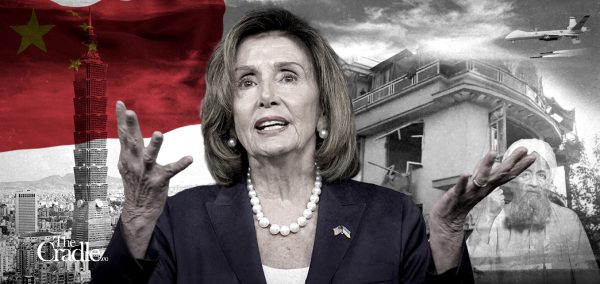
How a Missile in Kabul Connects to a Speaker in Taipei

By Pepe Escobar

Source: The Unz Review

This is the way the “Global War on Terror” (GWOT) ends, over and over again: not with a bang, but a whimper.

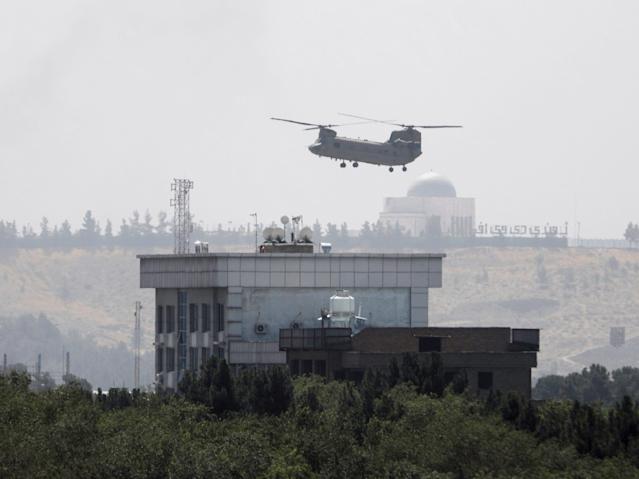
Two Hellfire R9-X missiles launched from a MQ9 Reaper drone on the balcony of a house in Kabul. The target was Ayman Al-Zawahiri with a $25 million bounty on his head. The once invisible leader of ‘historic’ Al-Qaeda since 2011, is finally terminated.

All of us who spent years of our lives, especially throughout the 2000s, writing about and tracking Al-Zawahiri know how US ‘intel’ played every trick in the book – and outside the book – to find him. Well, he never exposed himself on the balcony of a house, much less in Kabul.

Another disposable asset

Why now? Simple. Not useful anymore – and way past his expiration date. His fate was sealed as a tawdry foreign policy ‘victory’ – the remixed Obama ‘Osama bin Laden moment’ that won’t even register across most of the Global South. After all, a perception reigns that George W. Bush’s GWOT has long metastasized into the “rules-based,” actually “economic sanctions-based” international order.

Cue to 48 hours later, when hundreds of thousands across the west were glued to the screen of flighradar24.com (until the website was hacked), tracking “SPAR19” – the US Air Force jet carrying House Speaker Nancy Pelosi – as it slowly crossed Kalimantan from east to west, the Celebes Sea, went northward parallel to the eastern Philippines, and then made a sharp swing westwards towards Taiwan, in a spectacular waste of jet fuel to evade the South China Sea.

No “Pearl Harbor moment”

Now compare it with hundreds of millions of Chinese who are not on Twitter but on Weibo, and a leadership in Beijing that is impervious to western-manufactured pre-war, post-modern hysteria.

Anyone who understands Chinese culture knew there would never be a “missile on a Kabul balcony” moment over Taiwanese airspace. There would never be a replay of the perennial neocon wet dream: a “Pearl Harbor moment.” That’s simply not the Chinese way.

The day after, as the narcissist Speaker, so proud of accomplishing her stunt, was awarded the Order of Auspicious Clouds for her promotion of bilateral US-Taiwan relations, the Chinese Foreign Minister issued a sobering comment: the reunification of Taiwan with the mainland is a historical inevitability.

That’s how you focus, strategically, in the long game.

What happens next had already been telegraphed, somewhat hidden in a Global Times report. Here are the two key points:

Point 1: “China will see it as a provocative action permitted by the Biden administration rather than a personal decision made by Pelosi.”

That’s exactly what President Xi Jinping had personally told the teleprompt-reading White House tenant during a tense phone call last week. And that concerns the ultimate red line.

Xi is now reaching the exact same conclusion reached by Russian President Vladimir Putin earlier this year: the United States is “non-agreement capable,” and there’s no point in expecting it to respect diplomacy and/or rule of law in international relations.

Point 2 concerns the consequences, reflecting a consensus among top Chinese analysts that mirrors the consensus at the Politburo: “The Russia-Ukraine crisis has just let the world see the consequence of pushing a major power into a corner… China will steadily speed up its process of reunification and declare the end of US domination of the world order.”

Chess, not checkers

The Sinophobic matrix predictably dismissed Xi’s reaction to the fact on the ground – and in the skies – in Taiwan, complete with rhetoric exposing the “provocation by American reactionaries” and the “uncivilized campaign of the imperialists.”

This may be seen as Xi playing Chairman Mao. He may have a point, but the rhetoric is pro forma. The crucial fact is that Xi was personally humiliated by Washington and so was the Communist Party of China (CPC), a major loss of face – something that in Chinese culture is unforgivable. And all that compounded with a US tactical victory.

So the response will be inevitable, and it will be classic Sun Tzu: calculated, precise, tough, long-term and strategic – not tactical. That takes time because Beijing is not ready yet in an array of mostly technological domains. Putin had to wait years for Russia to act decisively. China’s time will come.

For now, what’s clear is that as much as with Russia-US relations last February, the Rubicon has been crossed in the US-China sphere.

The price of collateral damage

The Central Bank of Afghanistan bagged a paltry $40 million in cash as ‘humanitarian aid’ soon after that missile on a balcony in Kabul.

So that was the price of the Al-Zawahiri operation, intermediated by the currently US-aligned Pakistani intelligence agency, the Inter-Services Intelligence (ISI). So cheap.

The MQ-9 Reaper drone carrying the two Hellfire R9X that killed Al-Zawahiri had to fly over Pakistani airspace – taking off from a US base in the Persian Gulf, traversing the Arabian Sea, and flying over Balochistan to enter Afghanistan from the south. The Americans may have also got human intelligence as a bonus.

A 2003 deal, according to which Islamabad facilitates air corridors for US military flights, may have expired with the American withdrawal debacle last August, but could always be revived.

No one should expect a deep dive investigation on what exactly the ISI – historically very close to the Taliban – gave to Washington on a silver platter.

Dodgy dealings

Cue to an intriguing phone call last week between the all-powerful Chief of Staff of the Pakistani Army, Gen Qamar Javed Bajwa, and US deputy Secretary of State Wendy Sherman. Bajwa was lobbying for the International Monetary Fund (IMF) to release a crucial loan at the soonest, otherwise Pakistan will default on its foreign debt.

Were deposed former Prime Minister Imran Khan still in power, he would never have allowed that phone call.

The plot thickens, as Al-Zawahiri’s Kabul digs in a posh neighborhood is owned by a close advisor to Sirajuddin Haqqani, head of the “terrorist” (US-defined) Haqqani network and currently Taliban Interior Minister. The Haqqani network, needless to add, was always very cozy with the ISI.

And then, three months ago, we had the head of ISI, Lieutenant General Nadeem Anjum, meeting with Biden’s National Security Advisor Jake Sullivan in Washington – allegedly to get their former, joint, covert, counter-terrorism machinery back on track.

Once again, the only question revolves around the terms of the “offer you can’t refuse” – and that may be connected to IMF relief. Under these circumstances, Al-Zawahiri was just paltry collateral damage.

Sun Tzu deploys his six blades

Following Speaker Pelosi’s caper in Taiwan, collateral damage is bound to multiply like the blades of a R9-X missile.

The first stage is the People’s Liberation Army (PLA) already having engaged in live fire drills, with massive shelling in the direction of the Taiwan Strait out of Fujian province.

The first sanctions are on too, against two Taiwanese funds. Export of sable to Taiwan is forbidden; sable is an essential commodity for the electronics industry – so that will ratchet up the pain dial in high-tech sectors of the global economy.

Chinese CATL, the world’s largest fuel cell and lithium-ion battery maker, is indefinitely postponing the building of a massive $5 billion, 10,000-employee factory that would manufacture batteries for electric vehicles across North America, supplying Tesla and Ford among others.

So the Sun Tzu maneuvering ahead will essentially concentrate on a progressive economic blockade of Taiwan, the imposition of a partial no-fly zone, severe restrictions of maritime traffic, cyber warfare, and the Big Prize: inflicting pain on the US economy.

The War on Eurasia

For Beijing, playing the long game means the acceleration of the process involving an array of nations across Eurasia and beyond, trading in commodities and manufactured products in their own currencies. They will be progressively testing a new system that will see the advent of a BRICS+/SCO/Eurasia Economic Union (EAEU) basket of currencies, and in the near future, a new reserve currency.

The Speaker’s escapade was concomitant to the definitive burial of the “war on terror” cycle and its metastasis into the “war on Eurasia” era.

It may have unwittingly provided the last missing cog to turbo-charge the complex machinery of the Russia-China strategic partnership. That’s all there is to know about the ‘strategic’ capability of the US political ruling class. And this time no missile on a balcony will be able to erase the new era.
The Empire Does Not Forgive

The Americans, like the British and the Soviets before them, dug their own graveyard in Afghanistan.

By Chris Hedges

Source: ScheerPost.com

The Carthaginian general Hannibal, who came close to defeating the Roman Republic in the Second Punic War, committed suicide in 181 BC in exile as Roman soldiers closed in on his residence in the Bithynian village of Libyssa, now modern-day Turkey. It had been more than thirty years since he led his army across the alps and annihilated Roman legions at the Battle of Trebia, Lake Trasimene and Cannae, considered one of the most brilliant tactical victories in warfare which centuries later inspired the plans of the German Army Command in World War I when they invaded Belgium and France. Rome was only able to finally save itself from defeat by replicating Hannibal’s military tactics. 

It did not matter in 181 BC that there had been over 20 Roman emperors since Hannibal’s invasion. It did not matter that Hannibal had been hunted for decades and forced to perpetually flee, always just beyond the reach of Roman authorities. He had humiliated Rome. He had punctured its myth of omnipotence. And he would pay. With his life. Years after Hannibal was gone, the Romans were still not satisfied. They finished their work of apocalyptic vengeance in 146 BC by razing Carthage to the ground and selling its remaining population into slavery. Cato the Censor summed up the sentiments of empire: Carthāgō dēlenda est (Carthage must be destroyed). Nothing about empire, from then until now, has changed.

Imperial powers do not forgive those who expose their weaknesses or make public the sordid and immoral inner workings of empire. Empires are fragile constructions. Their power is as much one of perception as of military strength. The virtues they claim to uphold and defend, usually in the name of their superior civilization, are a mask for pillage, the exploitation of cheap labor, indiscriminate violence, and state terror.

The current American empire, damaged and humiliated by the troves of internal documents published by WikiLeaks, will, for this reason, persecute Julian Assange for the rest of his life. It does not matter who is president or which political party is in power. Imperialists speak with one voice. The killing of thirteen U.S. troops by a suicide bomber at the Hamid Karzai International Airport in Kabul on Thursday evoked from Joe Biden the full-throated cry of all imperialists: “To those who carried out this attack … we will not forgive, we will not forget, we will hunt you down and make you pay.” This was swiftly followed by two drone strikes in Kabul against suspected members of the Islamic State in Khorasan Province, ISKP (ISIS-K), which took credit for the suicide bombing that left some 170 dead, including 28 members of the Taliban.

The Taliban, which defeated U.S. and coalition forces in a 20-year war, is about to be confronted with the wrath of a wounded empire. The Cuban, Vietnamese, Iranian, Venezuelan and Haitian governments know what comes next. The ghosts of Toussaint Louverture, Emilio Aguinaldo, Mohammad Mossadegh, Jacobo Arbenz, Omar Torrijos, Gamal Abdul Nasser, Juan Velasco, Salvador Allende, Andreas Papandreou, Juan Bosh, Patrice Lumumba, and Hugo Chavez know what comes next. It isn’t pretty. It will be paid for by the poorest and most vulnerable Afghans. 

The faux pity for the Afghan people, which has defined the coverage of the desperate collaborators with the U.S. and coalition occupying forces and educated elites fleeing to the Kabul airport, begins and ends with the plight of the evacuees. There were few tears shed for the families routinely terrorized by coalition forces or the some 70,000 civilians who were obliterated by U.S. air strikes, drone attacks, missiles, and artillery, or gunned down by nervous occupying forces who saw every Afghan, with some justification, as the enemy during the war. And there will be few tears for the humanitarian catastrophe the empire is orchestrating on the 38 million Afghans, who live in one of the poorest and most aid-dependent countries in the world.

Since the 2001 invasion the United States deployed about 775,000 military personnel to subdue Afghanistan and poured $143 billion into the country, with 60 percent of the money going to prop up the corrupt Afghan military and the rest devoted to funding economic development projects, aid programs and anti-drug initiatives, with the bulk of those funds being siphoned off by foreign aid groups, private contractors, and outside consultants.

Grants from the United States and other countries accounted for 75 percent of the Afghan government budget. That assistance has evaporated. Afghanistan’s reserves and other financial accounts have been frozen, meaning the new government cannot access some $9.5 billion in assets belonging to the Afghan central bank. Shipments of cash to Afghanistan have been stopped. The International Monetary Fund (IMF) announced that Afghanistan will no longer be able to access the lender’s resources.

Things are already dire. There are some 14 million Afghans, one in three, who lack sufficient food. There are two million Afghan children who are malnourished. There are 3.5 million people in Afghanistan who have been displaced from their homes. The war has wrecked infrastructure. A drought destroyed 40 percent of the nation’s crops last year. The assault on the Afghan economy is already seeing food prices skyrocket. The sanctions and severance of aid will force civil servants to go without salaries and the health service, already chronically short of medicine and equipment, will collapse. The suffering orchestrated by the empire will be of Biblical proportions. And this is what the empire wants.

UNICEF estimates that 500,000 children were killed as a direct result of sanctions on Iraq.  Expect child deaths in Afghanistan to soar above that horrifying figure. And expect the same imperial heartlessness Madeline Albright, then the U.S. Ambassador to the United Nations, exhibited when she told “60 Minutes” correspondent Lesley Stahl that the deaths of half a million Iraqi children because of the sanctions was “worth it.” Or the heartlessness of Hillary Clinton who joked “We came, we saw, he died,” when informed of Libyan leader Muammar Qaddafi’s brutal death. Or the demand by Democratic Senator Zell Miller of Georgia who after the attacks of 9/11 declared, “I say, bomb the hell out of them. If there’s collateral damage, so be it.” No matter that the empire has since turned Libya along with Afghanistan, Iraq, Syria, and Yemen into cauldrons of violence, chaos, and misery. The power to destroy is an intoxicating drug that is its own justification.

Like Cato the Censor, the U.S. military and intelligence agencies are, if history is any guide, at this moment planning to destabilize Afghanistan by funding, arming, and backing any militia, warlord or terrorist organization willing to strike at the Taliban. The CIA, which should exclusively gather intelligence, is a rogue paramilitary organization that oversees secret kidnappings, interrogation at black sites, torture, manhunts, and targeted assassinations across the globe. It carried out commando raids in Afghanistan that killed a large number of Afghan civilians, which repeatedly sent enraged family members and villagers into the arms of the Taliban. It is, I expect, reaching out to Amrullah Saleh, who was Ashraf Ghani’s vice president and who has declared himself “the legitimate caretaker president” of Afghanistan. Saleh is holed up in the Panjashir Valley.  He, along with warlords Afgand Massoud, Mohammad Atta Noor and Abdul Rashid Dostum, are clamoring to be armed and supported to perpetuate conflict in Afghanistan.

“I write from the Panjshir Valley today, ready to follow in my father’s footsteps, with mujahideen fighters who are prepared to once again take on the Taliban,” Ahmad Massoud wrote in an opinion piece in The Washington Post. “The United States and its allies have left the battlefield, but America can still be a ‘great arsenal of democracy,’ as Franklin D. Roosevelt said when coming to the aid of the beleaguered British before the U.S. entry into World War II,” he went on, adding that he and his fighters need “more weapons, more ammunition and more supplies.”

These warlords have done the bidding of the Americans before. They will do the bidding of the Americans again. And since the hubris of empire is unaffected by reality, the empire will continue to sow dragon’s teeth in Afghanistan as it has since it spent $9 billion—some estimates double that figure—to back the mujahedeen that fought the Soviets, leading to a bloody civil war between rival warlords once the Soviets withdrew in 1989 and the ascendancy in 1996 of the Taliban.

The cynicism of arming and funding the mujahedeen against the Soviets exposes the lie of America’s humanitarian concerns in Afghanistan. One million Afghan civilians were killed in the nine-year conflict with the Soviets, along with 90,000 mujahedeen fighters, 18,000 Afghan troops, and 14,500 Soviet soldiers.  But these deaths, along with the destruction of Afghanistan, were “worth it” to cripple the Soviets.

Jimmy Carter’s national security advisor, Zbigniew Brzezinski, along with the Pakistan’s Inter-Services Intelligence (ISI) agency, oversaw the arming of the most radical Islamic mujahedeen groups fighting the Soviet occupation forces, leading to the extinguishing of the secular, democratic Afghan opposition. Brzezinski detailed the strategy, designed as he said to give the Soviet Union its Vietnam, taken by the Carter administration following the 1979 Soviet invasion to prop up the Marxist regime of Hafizullah Amin in Kabul:

We immediately launched a twofold process when we heard that the Soviets had entered Afghanistan. The first involved direct reactions and sanctions focused on the Soviet   Union, and both the State Department and the National Security Agency prepared long lists of sanctions to be adopted, of steps to be taken to increase the international costs to the Soviet Union of their actions. And the second course of action led to my going to Pakistan a month or so after the Soviet invasion of Afghanistan, for the purpose of coordinating with the Pakistanis a joint response, the purpose of which would be to   make the Soviets bleed for as much and as long as is possible; and we engaged in that effort in a collaborative sense with the Saudis, the Egyptians, the British, the Chinese, and we started providing weapons to the Mujaheddin, from various sources again — for example, some Soviet arms from the Egyptians and the Chinese. We even got Soviet arms from the Czechoslovak communist government, since it was obviously susceptible to material incentives; and at some point we started buying arms for the Mujahedeen from the Soviet army in Afghanistan, because that army was increasingly corrupt.

The clandestine campaign to destabilize the Soviet Union by making it “bleed for as much and as long as is possible” was carried out, like the arming of the contra forces in Nicaragua, largely off the books. It did not, as far as official Washington was concerned, exist, a way to avoid the unwelcome scrutiny of covert operations carried out by the Church Committee hearings in the 1970s that made public the three decades of CIA-backed coups, assassinations, blackmail, intimidation, dark propaganda, and torture. The Saudi government agreed to match the U.S. funding for the Afghan insurgents. The Saudi involvement gave rise to Osama bin Laden and Al Qaeda, which fought with the mujahedeen. The rogue operation, led by Brzezinski, organized secret units of assassination teams and paramilitary squads that carried out lethal attacks on perceived enemies around the globe. It trained Afghan mujahedeen in Pakistan and China’s Xinjiang province. It shifted the heroin trade, used to fund the insurgency, from southeast Asia to the border between Afghanistan and Pakistan.

This pattern of behavior, which destabilized Afghanistan and the region, is reflexive in the military and the intelligence community. It will, without doubt, be repeated now in Afghanistan, with the same catastrophic results. The chaos these intelligence agencies create becomes the chaos that justifies their existence and the chaos that sees them demand more resources and ever greater levels of violence.

All empires die. The end is usually unpleasant. The American empire, humiliated in Afghanistan, as it was in Syria, Iraq, and Libya, as it was at the Bay of Pigs and in Vietnam, is blind to its own declining strength, ineptitude, and savagery. Its entire economy, a “military Keynesianism,” revolves around the war industry. Military spending and war are the engine behind the nation’s economic survival and identity. It does not matter that with each new debacle the United States turns larger and larger parts of the globe against it and all it claims to represent. It has no mechanism to stop itself, despite its numerous defeats, fiascos, blunders and diminishing power, from striking out irrationally like a wounded animal. The mandarins who oversee our collective suicide, despite repeated failure, doggedly insist we can reshape the world in our own image. This myopia creates the very conditions that accelerate the empire’s demise.

The Soviet Union collapsed, like all empires, because of its ossified, out-of-touch rulers, its imperial overreach, and its inability to critique and reform itself. We are not immune from these fatal diseases. We silence our most prescient critics of empire, such as Noam Chomsky, Angela Davis, Andrew Bacevich, Alfred McCoy, and Ralph Nader, and persecute those who expose the truths about empire, including Julian Assange, Edward Snowden, Daniel Hale, and John Kiriakou. At the same time a bankrupt media, whether on MSNBC, CNN or FOX, lionizes and amplifies the voices of the inept and corrupt political, military and intelligence class including John Bolton, Leon Panetta, Karl Rove, H.R. McMaster and David Petraeus, which blindly drives the nation into the morass.

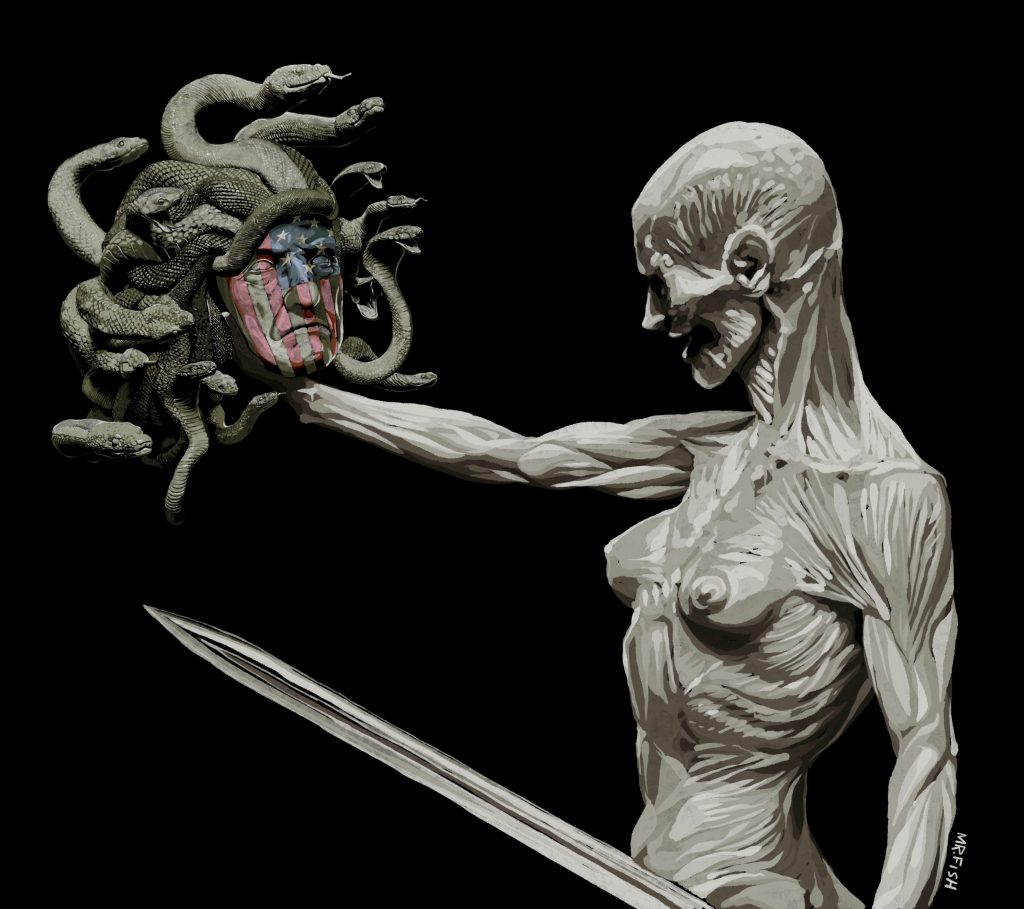
Chalmers Johnson in his trilogy on the fall of the American empire – “Blowback,” “The Sorrows of Empire” and “Nemesis” – reminds readers that the Greek goddess Nemesis is “the spirit of retribution, a corrective to the greed and stupidity that sometimes governs relations among people.” She stands for “righteous anger,” a deity who “punishes human transgression of the natural, right order of things and the arrogance that causes it.” He warns that if we continue to cling to our empire, as the Roman Republic did, “we will certainly lose our democracy and grimly await the eventual blowback that imperialism generates.”

“I believe that to maintain our empire abroad requires resources and commitments that will inevitably undercut our domestic democracy and, in the end, produce a military dictatorship or its civilian equivalent,” Johnson writes. “The founders of our nation understood this well and tried to create a form of government – a republic – that would prevent this from occurring. But the combination of huge standing armies, almost continuous wars, military Keynesianism, and ruinous military expenses have destroyed our republican structure in favor of an imperial presidency. We are on the cusp of losing our democracy for the sake of keeping our empire. Once a nation is started down that path, the dynamics that apply to all empires come into play – isolation, overstretch, the uniting of forces opposed to imperialism, and bankruptcy. Nemesis stalks our life as a free nation.”

If the empire was capable of introspection and forgiveness, it could free itself from its death spiral. If the empire disbanded, much as the British empire did, and retreated to focus on the ills that beset the United States it could free itself from its death spiral. But those who manipulate the levers of empire are unaccountable. They are hidden from public view and beyond public scrutiny. They are determined to keep playing the great game, rolling the dice with lives and national treasure. They will, I expect, preside gleefully over the deaths of even more Afghans, assuring themselves it is worth it, without realizing that the gallows they erect are for themselves.  

Did the US Support the Growth of ISIS-K in Afghanistan?

Regional players have long accused the US of supporting the group with midnight helicopter transport into Afghanistan.

By Alexander Rubinstein

Source: Mint Press News

The list of governments, former government officials, and organizations in the region that have accused the US of supporting ISIS-K is expansive and includes the Russian government, the Iranian government, Syrian government media, Hezbollah, an Iraqi state-sponsored military outfit and even former Afghan President Hamid Karzai, who called the group a “tool” of the United States as journalist Ben Norton recently noted, characterizing Karzai as “a former US puppet who later turned against the US, and knows many of its secrets.”

So what exactly is ISIS-K and what is it’s history? After ISIS’s Afghanistan variant became a household name overnight following a suicide bombing at Kabul’s airport that killed more than 170 people and wounded more than 200, the group’s history demands renewed scrutiny.

Back in May, I tweeted that “I must not be the only one expecting a so-called ‘rise of ISIS’ in Afghanistan in the near future…”

I wrote this because mass-casualty terrorist attacks are repeatedly used as justification by the United States for continuing its occupations of foreign countries: the “counterterrorism mission,” or the “terrorist threat.” And it has been a long time since the Taliban has taken credit for any such acts.

In fact, all the way back in August 2016 — a little over five years ago — Taliban spokesman Zabihullah Mujahid told Iranian media that “In cooperation with the nation, [the Taliban] has prevented the terrorist group from gaining a foothold in Afghanistan.”

The strongest argument in favor of a US withdrawal put forward by the Biden Administration is that the United States completed its counter-terrorism mission in Afghanistan. The attack by “ISIS-K” on the Kabul airport collapses this argument, and so it benefits those who would prefer to see Afghanistan permanently occupied by the US.

It’s also not the actions of a calculating terrorist group: why commit mass violence at such a critical juncture? Why do it when all eyes are on Afghanistan and many in the Pentagon, in NATO, are looking for any excuse to invade again?

CNN’s Clarissa Ward was even able to interview a “senior ISIS-K commander” two weeks before the attack who made these points. The “commander” told CNN that the group was “lying low and waiting for its moment to strike.”

While the US-backed government was still in power in Kabul, the ISIS-K “commander” told Ward that “it’s no problem for him to get through checkpoints and come right into the capital.” He even let the CNN crew film his entrance into the city.

In the absurd interview, CNN sat in a hotel room with the supposed ISIS-K leader and protected his identity. Ward asked him comically upfront questions like “are you interested, ultimately, in carrying out international attacks?”

In response to a question about their plans for expansion in Afghanistan following a US withdrawal, the “commander” said “instead of currently operating, we have turned to recruiting only, to utilize the opportunity and to do our recruitment. But when the foreigners and people of the world leave Afghanistan, we can restart our operations.”

What changed?

This is not to say definitively that the ISIS-K attack was a false flag, but there are many holes in the narrative that demand scrutiny. It is worth noting here that the US is in charge of security at the airport until August 31, while the Taliban controls the surrounding area.

Moreover, the United States had advanced knowledge of the attack. “Because of security threats outside the gates of Kabul airport, we are advising US citizens to avoid traveling to the airport and to avoid airport gates at this time,” read an August 25 security alert on the US Embassy in Afghanistan website. “US citizens who are at the Abbey Gate, East Gate, or North Gate now should leave immediately.”

Britain and Australia issued similar warnings of a “high threat of a terrorist attack” and a “very high threat of a terrorist attack” respectively.

The following day, a suicide bomber blew himself up and killed scores of people. Additionally, US forces reportedly gunned down a large number of people as well. “Many we spoke to, including eyewitnesses, said significant numbers of those killed were shot dead by US forces in the panic after the blast,” tweeted BBC correspondent Secunder Kermani, who reported from the area.

The very next day after the attack, the United State Central Command announced that “US military forces conducted an over-the-horizon counterterrorism operation today against an ISIS-K planner. The unmanned airstrike occurred in the Nangarhar Province of Afghanistan.”

In short, the US knew an attack was coming, the attack happened, and then within 24 hours the US announced that they killed the perpetrator, saying “initial indications are that we killed the target.”

Then on Saturday, US forces demolished a CIA base in the country.

These facts give us more questions than answers. Why was the US unable to prevent the attack? Giving the military and intelligence community the benefit of doubt that they didn’t know who was going to attack and therefore could not have prevented it, how did they figure it out so quickly after the attack? If it was the CIA, which is more than likely, who provided this information, why is the military destroying CIA infrastructure that could plausibly play a role in helping to figure such things out? This is an especially troubling question considering that less than a few hours before the New York Times reported that US troops destroyed a CIA base, President Biden said that military commanders informed him that another attack on the airport is “highly likely” in the next 24-26 hours.

Long Running Accusations of Support

Researcher and commentator Hadi Nasrallah noted on Friday that the leader of the Middle East resistance group Hezbollah “said that the US have been using helicopters to save ISIS terrorists from complete annihilation in Iraq and transporting them to Afghanistan to keep them as insurgents in Central Asia against Russia, China and Iran.”

Hezbollah is not the first player in the area to make the accusation of the US setting up a ratline via helicopter flights to Afghanistan for ISIS: Russia and Iran, which borders Afghanistan, have been for some time.

As Hadi Nasrallah noted, Syra and Iraq have said more or less the same, with Syrian state media SANA saying in 2017 reporting that “US helicopters transported between 40 and 75 ISIS militants from Hasakah, North Syria to an ‘unknown area.’”

As Hadi Nasrallah pointed out, “the same thing was reported for years in Iraq by the [Iraqi Popular Mobilization Forces] along with reports that US helicopters dropped aid for ISIS.”

Back in 2017 and 2018, Iranian and Russian officials had questions of their own. Chief of Iranian General Staff Major General Mohammad Hossein Baqeri accused the US of “relocating members of the Daesh (ISIS or ISIL) terrorist group to Afghanistan after their defeats in Iraq and Syria” in early February of 2018.

“The Americans point to (the existence) of tensions in the southwest Asia region as an excuse for their presence in the region,” Major General Baqeri told reporters.

The following month, Mohammad Javad Zarif, the longtime foreign minister of Iran who departed from the post earlier this year, said “we see intelligence, as well as eyewitness accounts, that Daesh fighters, terrorists, were airlifted from battle zones, rescued from battle zones, including recently from the prison of Haska [Meyna].”

Iran and Russia have “consistently allege[d]” that unmarked helicopters were flying into regions of Afghanistan where ISIS had a foothold. But as Javad Zarif pointed out in March 2018, “this time, it wasn’t unmarked helicopters. They were American helicopters, taking Daesh out of Haska prison. Where did they take them? Now, we don’t know where they took them, but we see the outcome. We see more and more violence in Pakistan, more and more violence in Afghanistan, taking a sectarian flavor.”

As the US government propaganda outlet Voice of America wrote at the time in 2018, “the terrorist group uses Nangarhar as its main base to launch attacks elsewhere in Afghanistan.” This is the same province the US struck with an unmanned drone the day following the attack on the airport.

As Voice of America noted, the National Security Advisor of the recently-collapsed Afghanistan government offered Russian and Iranian delegates “joint investigations into allegations of unmarked helicopters flying IS[IS] fighters to battle zones in the country.”

In February 2018, Russian Foreign Minister Sergei Lavrov implored the US to answer the question.

“We still expecting from our American colleagues an answer to the repeatedly raised questions, questions that arose on the basis of public statements made by the leaders of some Afghan provinces, that unidentified helicopters, most likely helicopters to which NATO in one way or another is related, fly to the areas where the insurgents are based, and no one has been able to explain the reasons for these flights yet,” Lavrov said. “In general [the United States] tries to avoid answers to these legitimate questions.”

Later that month, Lavrov had more to say on the issue: “According to our data, the IS[IS] presence in northern and eastern Afghanistan is rather serious. There are already thousands of gunmen.”

“We are alarmed as, unfortunately, the US and NATO military in Afghanistan makes every effort to silence and deny [ISIS’s presence in Afghanistan],” he added.

These mysterious dead-of-night helicopter flights even raised the eyebrows of the fallen US puppet government. All the way back in May 2017, a local official in the Sar-e-Pul province said two military helicopters landed in the dead of night.

“According to the report we have received from the 2nd Battalion of the Afghan National Army, which fights on the first line of the battle in Sar-e-Pul, two military helicopters landed in a stronghold of the enemy at 8pm last Thursday,” Mohammad Zahir Wahdat, the governor of the province, told Afghan media.

Following Lavrov’s comments in 2018, General John Nicholson, the commander of NATO’s mission in Afghanistan, said that Russia was exaggerating the threat of ISIS in Afghanistan. “We see a narrative that’s being used that grossly exaggerates the number of Isis [Islamic State group] fighters here,” Gen. Nicholson told the BBC. “This narrative then is used as a justification for the Russians to legitimize the actions of the Taliban.

This talking point was reinforced by Navy Captain Tom Gresbeck, the public affairs director of NATO’s Afghanistan mission, who said that US forces have “no evidence of any significant migration of IS-K foreign fighters. We see local fighters who switch allegiances to join ISIS for various reasons, but the Russian narrative grossly exaggerates the numbers of ISIS fighters that are in the country.”

It appears that this week, the United States may be forced to eat its words.

Everything points to Thierry Meyssan being right today

By challenging the official version of the 9/11 attacks, Thierry Meyssan opened a worldwide debate. But the essence of his book on the subject was a political science study predicting the evolution of the United States after these crimes. The problem is not how the attacks were committed, but why the US reacted that day by violating its own Constitution, why it implemented in the following days very deep reforms of its institutions that changed its nature. Thierry Meyssan had predicted the transformation of the American Empire that we are seeing with the planning of the fall of Kabul. Everything he predicted has been confirmed over the last twenty years.

By Thierry Meyssan

Source: VoltaireNet.org

At the end of 2001, I published a series of articles on the attacks of September 11, 2001, followed by a book in March 2002 [1]. The book was translated into 18 languages and opened a worldwide debate questioning the veracity of the official US narrative. However, the international press refused to discuss my arguments and launched a campaign accusing me of “amateurism” [2], “conspiracy theory” [3], and “denial” [4].

Above all, the US authorities and their supporters reduced my work to the first few pages of my book: the challenge to the official version of the attacks. But it is a work of political science aimed at denouncing what these false-flag attacks would make possible: the surveillance of Western populations and the endless war in the wider Middle East. In this article, I will therefore review what has been learned about these attacks over the past 20 years, but more importantly, I will check whether my predictions from 2002 were correct or not.

THE BLACK HOLE OF 9/11

If we are asked what happened on 9/11, we will all visualise the Twin Towers and the Pentagon. We have forgotten many other things, such as the insider trading in the shares of the affected airlines, the fire in the Old Eisenhower Building, or the collapse of a third tower in the World Trade Center.

What is most astonishing is that almost no one remembers that at 10am, Richard Clarke triggered the ’Continuity of Government Plan’ [5]. At that very moment, President Bush and Congress were suspended from office and placed under military protection. President Bush was taken to an air base in Nebraska where the CEOs of the upper floors of the Twin Towers had been since the previous evening [6]; and Congress to the Greenbrier megabunker. Power fell into the hands of the “Continuity Government”. It was in the Raven Rock Mountain megabunker (’Site R’) [7]. Power was not returned to the civilians until the end of the day.

Who exactly were the members of this ’Continuity Government’ and what did they do during the time they were in power? We still don’t know. The members of Congress who asked the question were not allowed to hold a session of their assembly on the subject.

Please understand that until we have clarification, the 9/11 controversy will continue. The procedure implemented on September 11 was designed by President Eisenhower at a time when nuclear war was feared. If he, the Speakers and a majority of Congress were killed, there would be no constitutional powers. The military would logically have to assume the continuity of government. But this was obviously not the case on that day. Not one elected official was dead. The transfer of power was therefore unconstitutional. It was strictly speaking a coup d’état.

THE ATTACKS OF SEPTEMBER 11

In my book and afterwards, I hypothesised about what really happened on that day. But this is irrelevant to my point. The people who perpetrated this crime wanted to create a shock comparable to Pearl Harbor, as the members of the Project for a New American Century wrote earlier, so that they could change the way the United States lives and functions. So they told us a tall tale that we swallowed without flinching. But :

• To this day, there is no evidence of the 19 designated hijackers on board the hijacked planes. They were not on the lists of passengers on board the planes released by the airlines on the same day. The videos of the hijackers at the airport were not taken in New York, but at other airports where they were transiting.

• To date, there is no evidence that the 35 telephone communications between passengers on the hijacked flights and the ground existed [8]. This applies both to the conversation attributed to the brave passenger who allegedly attacked the hijackers on UA 93, and to the conversation testified to by US Solicitor General Theodore Olson with his wife on AA 77. In contrast, at the trial of Zacarias Moussaoui (accused of being the 20th hijacker who would not have boarded the plane), the FBI testified that none of the planes had phones in the armrests, that passengers should have used mobile phones, that cell phones at the time could not work at altitudes above 5,000 feet, and that the records provided by the phone companies did not show any of the communications mentioned – including that of Attorney General Olson.

• To date, there is no physical explanation for the collapse of three of the World Trade Center towers onto their own footprints (i.e. vertically). The Twin Towers were hit by two planes, but were not shaken. However, their fuel would have run down the vertical beams and melted them. A third tower was destabilised by the fall of the first two to its side. It too would have collapsed, not laterally, but vertically. It should be noted that no explanation was given for the lateral explosions heard by the firemen and widely filmed, nor for the vertical beams that were severed and not melted; two pieces of evidence attesting not to an accidental but to a controlled demolition. It should also be noted that no collapse of skyscrapers has ever been observed, either before or after 9/11, following a large-scale fire… and that no one has learned the lessons of this attack and therefore changed the way such buildings are constructed to prevent such a catastrophe. Finally, the photographs taken by firefighters of “pools” of molten steel and those taken by FEMA (the disaster management agency) of the melting rocks in which the foundations were built are inexplicable according to the official version.

• To date, there is no evidence that an airliner hit the Pentagon. Already the next day, the fire brigade had given a press conference at the Pentagon during which they had attested that they had not found anything suggestive of a plane. The authorities, who had issued a vengeful statement against my book, announced that they had collected many parts of the plane and reconstructed it in a hangar. Then they stopped communicating on this subject. Moreover, the families of the passengers of the plane in question, after having been scandalised by my words, changed their minds when they were given back funeral urns, claiming to have identified the bodies of their relatives thanks to their fingerprints (which would have been totally destroyed during fires at those temperatures). Some refused to sign the confidentiality agreement offered to them in exchange for large compensation payments.

WIDESPREAD SURVEILLANCE OF WESTERN POPULATIONS

In the days following the attacks, the Bush Administration had Congress vote on an anti-terrorist code, known as the USA Patriot Act. This is a very large piece of legislation that had been drafted over the previous two years by the Federalist Society (of which Solicitor General Theodor Olson and Attorney General John Ashcroft were members). It suspends the Bill of Rights in cases of terrorism.

At the time of the formation of the United States, there were two opposing groups. The first, around Alexander Hamilton, drafted the Constitution to set up a system comparable to the British monarchy, but with governors instead of nobles. The second, around Thomas Jefferson and James Madison, only accepted the Constitution after it had been amended to prevent the use of Reason of State. These 10 amendments are called the Bill of Rights. Their suspension challenges the balance on which the United States was founded. It gives power to the first group, the descendants of the ’Pilgrim Fathers’, the Puritans exiled from England. President Bush is a direct descendant of one of the 41 signatories of the “Mayfower Pact” (1620).

In order to implement the USA Patriot Act, a new department was created, the Homeland Security Department, which brings together various existing agencies. It has a political police force capable of spying on any citizen. According to the Washington Post, which revealed this in 2011, it has hired 835,000 civil servants, 112,000 of whom are secretly employed [9], making the United States the most Orwellian country on the planet. The way this department works was revealed in 2013 by Edward Snowden. Snowden not only provided information about the NSA’s foreign eavesdropping system, but also about domestic mass surveillance in the US. He now lives as a political refugee in Russia.

This system, although less documented, is gradually spreading to all Western states, through the ’Five Eyes’ [10] and Nato.

THE “ENDLESS WAR”: FROM 9/11 TO THE FALL OF KABUL

A month and a half after the attacks, Secretary of Defense Donald Rumsfeld created the Office of Force Transformation, which he entrusted to Admiral Arthur Cebrowski. The idea was to change the very function of the Armed Forces. The Rumsfeld/Cebrowski doctrine [11] is a reform as important as the creation of the Pentagon after the 1929 crisis. This time, it is about adapting to financial capitalism. From now on, the United States will no longer try to win wars, but on the contrary to make them last as long as possible; this is what President Bush’s expression “endless war” means. Their aim will be to destroy local state structures so that natural wealth can be exploited without having to endure political control; as Colonel Ralph Peters summed it up: “Stability is America’s enemy” [12].

This is exactly what has just happened in Afghanistan. The war started there just after 9/11. It was only supposed to last a few weeks, but it never stopped. The Taliban victory that we have just witnessed was organised by the United States itself in order to make the conflict last even longer. That is why President Biden has just said that the US did not go into Afghanistan to build a state, as it did in Germany and Japan after the Second World War. Joe Biden had, during his meeting in Geneva with Vladimir Putin, rejected the endless war. However, he has just relaunched it, aligning himself with the Rumsfeld/Cebrowski doctrine like Barack Obama.

None of the conflicts that began after 9/11 have ended. On the contrary, instability has taken hold in Iraq, Libya, Syria, Yemen and Lebanon. One can of course call these conflicts “civil wars” and accuse their leaders of being “dictators”, or explain nothing at all, but the fact remains that they were stable before Western intervention and that Gaddafi’s Libya and Aoun’s Lebanon were US allies when their misfortunes began.

Vice President Cheney had set up a secret group in the White House to design the development of the National Energy Policy. He was convinced that oil would run out in the medium term. This is why the United States destroyed states in order to be able to exploit their oil in the long term, but not now. Moreover, the Rumsfeld/Cebrowski doctrine states that one should not fight globalised powers such as Russia and China. On the contrary, they should be given access to the natural resources they have conquered, but they should be forced to pay royalties to the US in order to exploit them.

By publishing a number of internal US military reports, Julian Assange has not revealed any sensitive information. But all these documents show that the Pentagon has never been interested in winning the post-9/11 wars. Assange was persecuted to the point of insanity.

To wage these wars, the Pentagon secretly created clandestine Special Forces: 60,000 soldiers without uniforms [13]. They are capable of assassinating anyone in any country without leaving any trace. Bob Woodward revealed the “Global Attack Matrix” operation, decided three days after the attacks [14]. Wayne Madsen published the names of the first victims in Papua, Nigeria, Indonesia and Lebanon [15].

CONCLUSION

All my predictions have been verified over the last 20 years. Unfortunately, few people have seen how the world has changed. Most refuse to make the connection between the revelations of one side and those of the other and to see the responsibility of the Western democracies for the crimes committed in the wider Middle East.

The problem remains the same: we cannot admit that the criminal is close to us.

Translation
Roger Lagassé

[1L’Effroyable imposture, Thierry Meyssan, Carnot (2002). Second edition, revised and corrected L’Effroyable imposture suivie du Pentagate prefaced by General Leonid Ivashov (who was acting chief of the general staff of the Russian armed forces on September 11, 2001), Demi-Lune, 2006. English Version : The Big Lie. Version en español : La Gran Impostura.

[2] According to my detractors, I had not been at the scene, as a ” true journalist ” would have had to. But the United States had banned access to the three “crime scenes” for reasons of ” national security ” and for years no journalist, from absolutely no media, had access to them. So the reproach of ” amateurism ” would have to apply not only to me but also to all the journalists who repeated the official version.

[3] The adjective ” conspiratorial ” began to be used in the 1960s to designate those who questioned the official thesis of the lone sniper who supposedly assassinated President Kennedy and denounced that what he did was a conspiracy. possible that assassination.

[4] Indeed, I deny the official version of the attacks of September 11, 2001. But the term ” denialism ” actually alludes to an extreme right-wing current – whose ideas I have always fought – that denies the will of the Nazis to perpetrate the genocide of the Jews in Europe.

[5Against All Enemies, Inside America’s War on Terror, Richard Clarke, Free Press, 2004.

[6] Like every year, Warren Buffet – who was then the richest man in the world – gave a charity dinner in Nebraska. But, something that had never happened before, that day the annual dinner was not organized in a large hotel but … in a military base. The invited company bosses had given their New York employees the day off, which explains the relatively low death toll in the collapse of the Twin Towers.

[7A Pretext for War: 9/11, Iraq and the abuse of America’s intelligence agencies, James Bamford, Anchor Books (2004).

[8] «¿Quién inventó las falsas llamadas telefónicas desde los aviones secuestrados el 11 de Septiembre?», por Giulietto Chiesa, Megachip-Globalist (Italia) , Red Voltaire , 28 de julio de 2013.

[9Top Secret America : The Rise of the New American Security State, Dana Priest & William M. Arkin, Little, Brown and Company (2011).

[10] The “Five Eyes” or Five Eyes is the name of the alliance of services for eavesdropping and interception of global communications in which Australia, Canada, the United States, New Zealand and the United Kingdom participate. in 1941 by the Atlantic Charter.

[11] “The Rumsfeld/Cebrowski doctrine”, by Thierry Meyssan, Translation Roger Lagassé, Voltaire Network, 25 May 2021.

[12] “Stabiliy American’s Ennemy”, col. Ralph Peters, Parameters #31-4 (winter 2001).

[13] “Exclusive : Inside the Military’s Secret Undercover Army”, William M. Arkin, Newsweek, May 17, 2021.

[14] Saturday, September 15, At Camp David, Advise and Dissent, Bob Woodward & Dan Balz, Washington Post, January 31, 2002.

[15] «J’accuse – Bush’s Death Squads», Wayne Madsen, Makingnews.com, January 31, 2002.

7 lies about Afghanistan

A scene of panic at Kabul airport as former CIA collaborators try to escape the revenge of the Afghan people.

In covering the fall of Kabul, the Western media are mindlessly repeating seven lies of Western propaganda. By misrepresenting the history of Afghanistan, they mask the crimes committed in that country and make it impossible to foresee the fate that Washington has written for it. And if the Taliban were not the most wicked…

By Thierry Meyssan

Source: Voltairenet.org

French President Emmanuel Macron and US President Joe Biden addressed their nation on the capture of Kabul by the Taliban on August 15, 2021.

1.- THE AFGHAN WAR IS NOT A RESPONSE TO 9/11, IT WAS PLANNED BEFORE THE ATTACKS

According to these two politicians, the sole purpose of the US invasion of Afghanistan in 2001 was to “pursue those who attacked us on September 11, 2001, and to ensure that al-Qaeda could not use Afghanistan as a base for further attacks. » [1]

Joseph Goebbels, the Propaganda Minister of the Third Reich, is said to have said that “A lie repeated ten times remains a lie; repeated ten thousand times, it becomes the truth.” But the facts are stubborn and, whatever Mr Macron and Mr Biden may think, the 2001 war was decided in mid-July 2001, when the Berlin negotiations between the United States and the United Kingdom on the one hand and the Taliban, not the Afghan government, on the other failed. Pakistan and Russia were observers at these secret talks. The Taliban delegation entered Germany in violation of the UN Security Council’s travel ban. After the failure of these negotiations, Pakistani Foreign Minister Naiz Naik returned to his country and sounded the alarm. Pakistan then looked for new allies. It offered China a gateway to the Indian Ocean (what we see today with the ’Silk Road’). The United States and the United Kingdom began to amass their troops in the area: 40,000 men in Egypt and almost the entire British fleet in the Arabian Sea. It was only after this arrangement was put in place that the attacks of September 11th took place.

2. AL-QAEDA IS NOT A THREAT FOR THE ANGLO-SAXONS, BUT AN INSTRUMENT

According to President Biden: “Our mission to reduce the terrorist threat of al-Qaeda in Afghanistan and to kill Osama bin Laden has been a success.

However, it was the director of France’s foreign secret services, Alexandres de Marenches, who proposed to his US counterpart within the framework of the Pinay Circle [2] to provoke a Soviet intervention in Afghanistan in order to trap them there [3]. President Carter’s National Security Advisor, Zbigniew Brzeziński, sought out anti-communist billionaire Osama Bin Laden in Beirut and asked him to lead Arab mercenaries in a terrorist campaign against the Afghan communist government [4]. Bin Laden was in Beirut to meet with former Lebanese President Camille Chamoun, a member of the World Anti-Communist League [5]. Washington chose Bin Laden for two reasons: First, he was a member of a secret society, the Muslim Brotherhood, which allowed him to recruit fighters; second, he was one of the heirs to the largest construction company in the Arab world. As such, he had the men and know-how to turn the underground rivers of the Hindu Kush into military communication routes.

Later, the same Osama bin Laden served as a military adviser to the Bosnian president, Alija Izetbegović, in 1992-94. His fighters followed him there. They abandoned the name “Mujahideen” for the “Arab Legion”. His camp was visited by Russian commandos, who were taken prisoner there. However, before they were arrested, they had time to search his command room and found that all the military documents were written in English and not in Arabic. [6]

Later still, Osama Bin Laden used his fighters for one-off operations. He solicited them by choosing them according to his needs from his “roster”, in Arabic “Al-Qaeda” (القاعدة).

It is therefore indisputable that Osama Bin Laden was for many years an agent of the United States. However, the latter claim that he turned against them, which nothing, absolutely nothing, proves. In any case, Osama bin Laden was seriously ill. He needed daily care in a sterile room. He was therefore taken care of in the American hospital in Dubai in July 2001, as revealed by Le Figaro [7]. This information was denied by the said hospital, but was confirmed to me by Sheikh Khalifa bin Zayed Al Nahyane (the current President of the United Arab Emirates) who assured me that he had visited him there in the presence of the local CIA chief of staff. Finally, Osama bin Laden was treated at the military hospital in Rawalpindi (Pakistan) [8] where he died in December 2001. His funeral took place in Afghanistan, attended by two representatives of the British MI6 who wrote a report on the matter.

Also indisputably opposing the theory that Osama bin Laden had turned against his CIA employers was the fact that until 1999 – i.e. after the attacks attributed to him against the Khobar Towers in Saudi Arabia and the US embassies in Nairobi (Kenya) and Dar es Salaam (Tanzania) – he had a public relations office in London. It was from this office that he launched his Call to Jihad against Jews and Crusaders.

The fact that for ten years we have heard and seen recordings of people claiming to be Osama Bin Laden only deceives those who want to believe: the Swiss experts of the Dalle Molle Institute of Perceptive Artificial Intelligence, which at the time was used by the big banks in sensitive cases, were formal. These recordings are forgeries (including the one released by the Pentagon in which he claims responsibility for the 9/11 attacks) and do not correspond to the real Bin Laden. If facial and voice recognition was a speciality at the time, it is now a common technique. You can check for yourself with software that is available everywhere.

After Bin Laden’s death, Ayman al-Zawahiri became the emir of Al Qaeda. He still holds this position. The latter – who had supervised the assassination of Egyptian President Anwar Sadat – lived for several years after 2001 in the US embassy in Baku (Azerbaijan). [9] He was, at least in that period, the only person who could be considered a terrorist. He was, at least during this period, protected by the US Marines. His current whereabouts are unknown, but there is no reason to believe that he is no longer under US protection.

3- THE US DOES NOT FOCUS ON “COUNTER-TERRORISM”, BUT FUNDS AND ARMS TERRORISM

President Biden explained at length, during his speech on the fall of Kabul, that the United States was not there to build states, but only to fight terrorism.

The phrase ’fight against terrorism’ has been repeated for twenty years, but that does not make it more meaningful. Terrorism is not a flesh-and-blood opponent. It is a method of combat. All the world’s armies can use it in certain circumstances. During the Cold War, the two blocs used it extensively against each other.

Since President George W. Bush (the son) declared the ’war on terror’ (i.e. the ’war on war’), the use of this military technique has been increasing. Westerners first think of attacks in a few large cities, but the worst has been achieved with the creation of small terrorist states in the wider Middle East up to the sinister ’Islamic State of the Levant’ (Daesh) and now the Islamic Emirate of Afghanistan.

Afghans, Iraqis, Libyans and Syrians initially believed the US narrative of events, but they are under no illusion. After 20 years of war, they have understood that the United States does not want to do any good. Washington does not fight terrorism, but creates, finances and arms groups that practice terrorism.

4- THE TALIBAN DID NOT FIGHT A WAR, THEY TOOK WHAT THE US GAVE THEM

Presidents Macron and Biden are playing dumb about the Taliban’s “takeover of Kabul”. According to them, “Afghan political leaders have given up and fled the country. The Afghan army has collapsed, sometimes without even trying to fight. But how did they flee, if not with Western military aircraft? And the Afghan army did not “sometimes seek to fight”, it was the other way round: it only “sometimes” sought to fight. The Afghan borders were among the most secure in the world. US soldiers recorded everyone’s identity with electronic means, including iris recognition.

The Afghan army consisted of 300,000 men – more than the French armies – who were very well trained by the US, France and others. It was over-equipped with sophisticated equipment. All its infantry had body armour and night vision systems. It had a very capable air force. In contrast, the Taliban has no more than 100,000 men, which is three times less. They are hooligans in sandals and armed with Kalashnikovs. They had no air force – they suddenly have one today with trained pilots from who knows where -. If there had been fighting, they would have been defeated for sure.

The regime change was decided under President Donald Trump. It was to take place on May 1st. But President Joe Biden changed that timetable to change history. He used the delay to set up military bases in the neighbouring countries and send at least 10,000 mercenaries. He has mobilised the Turkish army, which is already present in the country, but which no one is talking about. The latter has already recruited at least 2,000 jihadists living in Idleb (Syria) and continues to hire them.

It is important to remember that during the war against the Soviets, the Turkish president, Recep Tayyip Erdoğan, was already a member of the Muslim Brotherhood and the leader of a militia, the Millî Görüş (the one that today opens mosques in Germany and France). It was in this double capacity that he came to kneel before Gulbuddin Hekmatyar, the Afghan leader of the Muslim Brotherhood and future Prime Minister. Hekmatyar subsequently pledged allegiance to al-Qaeda, which did not prevent him from running in the 2019 Afghan presidential election under US protection.

The allies began repatriating their nationals several months ago. They thought they would have time before September 11th, or at worst before midnight on August 30th. But Washington decided otherwise by choosing August 15th, the date of India’s bank holidays. This was a warning to New Delhi, which does not appreciate the fact that President Ghani’s Pashtuns are being replaced by those of Emir Akhundzada, even though they support other ethnic groups.

The scenes of panic we saw at Kabul airports reminded us of those in Saigon during the US defeat in Vietnam. It is indeed quite the same. The Afghans clinging to the aircraft are not mostly translators from Western embassies, but agents of “Operation Omega” set up under President Obama [10] . They are members of the Khost Protection Force (KPF) and the National Directorate of Security (NDS), counter-insurgency auxiliaries, like the Vietnamese of “Operation Phoenix”. They were responsible for torturing and killing Afghans opposed to the foreign occupation. They committed so many crimes that the Taliban were like choirboys [11].

Soon we will see a completely different landscape in Afghanistan.

5. THE US DID NOT LOSE AFGHANISTAN TO CHINA, BUT FORCED CHINESE COMPANIES TO ACCEPT ITS PROTECTION

The US has not lost anything in Afghanistan because it does not want to establish peace there. They don’t care about the one million deaths they have caused there in 20 years. They just want that region to be unstable, that no government can control the exploitation of the natural resources there. They want companies, from whatever developed country, to be able to exploit them only by accepting their protection.
This is the Hollywood-popularised scheme of the globalised world, protected by a compound, with special forces going abroad to monitor exploitation sites in wilderness areas.

This strategy was developed by Donald Rumsfeld, George W. Bush’s Secretary of Defense, and Admiral Arthur Cebrowski, who had already computerized the US military. On September 11, 2001, it became the way of thinking of the US military staff. It was popularised by Cebrowski’s deputy, Thomas Barnett, in his book The Pentagon’s New Map [12].

It was this paradigm shift that President Bush called ’War Without End’. By this he meant that the US would forever be fighting terrorism, or rather forever instrumenting terrorist groups to prevent political organisation in these regions.

Yes, Chinese companies are already mining in Afghanistan, but from now on they will have to pay a price to the US or be subjected to terrorist attacks. So what if it’s a racket?

6- WESTERNERS DO NOT DEFEND THE ENLIGHTENMENT AGAINST OBSCURANTISM, BUT RATHER INSTRUMENTALISE IT

The first lady of the United States, Laura Bush, made us all cry by telling us the story of little girls massacred by the Taliban because they dared to wear nail polish. But the truth is quite different.

When President Carter, Zbigniew Brzeziński and Alexandre de Marenches supported the Afghan Islamists in 1978, they were fighting the communists who were opening schools for girls. Because for them the fight against the USSR’s allies came before human rights. Similarly today, President Biden and his Secretary of State Antony Blinken support the Taliban because, for them, controlling access to the natural wealth of the wider Middle East comes before human rights. And they are doing the same in Iraq, Libya and Syria.

The US has not only supported Islamists in war-torn countries. For example, it put General Muhammad Zia-ul-Haq, a member of the Muslim Brotherhood, in power in Pakistan to use his country as a rear base for anti-Soviet fighters. He overthrew democracy, hanged President Zulfikar Ali Bhutto and re-established Sharia law. President Bhutto’s daughter, Benazir Bhutto, who was Pakistan’s prime minister in the 1990s, was also assassinated by the Taliban.

There is no need to go back over the crimes of the Western counter-insurgency, the panic of their collaborators at Kabul airports is enough.

If Islamism and secularism have been used to manipulate the Afghans and to smoke out the West, political life in Afghanistan is not based on these concepts, but first and foremost on ethnic divisions. There are about fifteen of them, the largest of which, the Pashtuns, are also strongly represented in Pakistan. It is still a tribal country and not yet a nation. Other ethnic groups are supported by other countries in the region because they are also present there.

7- FRANCE HAS NOT ALWAYS SUPPORTED US CRIMES IN AFGHANISTAN, BUT ONLY SINCE PRESIDENT SARKOZY

According to President Emmanuel Macron: “President Jacques Chirac, as early as October 2001, decided that France should participate in international action, in solidarity with our American friends and allies who had just suffered a terrible attack on their soil. With a clear objective: to combat a terrorist threat that was directly targeting our territory and that of our allies from Afghanistan, which had become the sanctuary of Islamist terrorism”. [13]

It is a distracting way to erase a characteristic French conflict. In October 2001, President Chirac violently opposed the participation of the French army in the Anglo-Saxon occupation of Afghanistan. He only authorised deployment under UN Security Council Resolution 1386. The French soldiers were indeed under the orders of Nato, but as part of the International Security and Assistance Force (ISAF). They were only involved in reconstruction assistance. They did not take prisoners, but eventually arrested fighters and immediately handed them over to the Afghan government. It was President Nicolas Sarkozy who changed this status and made France complicit in the crimes of the United States. It is because of this change that France is currently exfiltrating members of the Khost Protection Force (KPF) and the National Directorate of Security (NDS). And it will probably pay the price.

Biden Could Have Spared Afghanistan and US 6 Months of Pointless War by Just Ending It

By Dave Lindorff

Source: This Can’t Be Happening!

There are two things I suppose everyone would agree are true about the remarkable events of the past several weeks in Afghanistan.

One is that we are witnessing the latest  major loss in a string of wars and “incursions” that the US has lost since the end of World War II. The other is that the entire  two-decade-long, $2.3-trillion US invasion, war and occupation of  one of the poorest countries in the world, was an abject failure from the beginning.

Officially, the US invaded Afghanistan because its ruling Taliban government had allegedly permitted Al Qaeda, a shadowy jihadist fighting organization founded by the Saudi Osama Bin Laden (with CIA assistance), to establish several training camps there where he purportedly plotted the 9-11 attacks on the World Trade Center, the Pentagon and perhaps the Capitol building or White House.

The attack, by some 20,000 US Special Forces troops backed by US air power, smashed the camps (and a lot of other things and people), but most of the Al Qaeda forces, including Bin Laden, escaped to the mountains of Tora Bora. The US had rejected a Taliban offer to surrender Bin Laden to a “third country”, a deal which could have eliminated the need for the ensuing war, but the Bush/Cheney administration would not accept the terms:  a halt to the bombing of the country, and  presentation of evidence that Bin Laden had been behind the attacks on the US.

In any event, once Bin Laden and his band were surrounded, trapped in caves on a mountain in eastern Afghanistan, the US pulled troops out and started sending many of them to Kuwait and other Persian Gulf countries in preparation for a second larger war against Iraq, which was portrayed fraudulently as having been involved in 9-11 and as having plans to develop “weapons of mass destruction.”   Bin Laden and his men were forgotten.

The US forces in Afghanistan were ordered to abandon the original mission of killing or capturing Bin Laden and destroying Al Qaeda, and instead proceeded to drive the Taliban out of the capital of Kabul and other Afghan cities into the countryside and neighboring Pakistan. At which point the war became the US vs. the Taliban, and the Taliban became, in US and complicit US media parlance, “insurgents.” From their own vantage point, they were patriots and Islamists battling the evil US occupier of the country and the puppet government the Great Satan”  had installed.

For the next 19 years, the US, with the most powerful military the world has ever known, has fought futilly against a  force of  tens of thousands of rag-tag Kalashnikov-toting Taliban fighters, gradually losing control of most of the rural parts of the vast country, and unable to protect the cities from bombings, assassinations of officials, and the occasional overrunning of various provincial cities.

For 20 years, top military brass and advisors with ties to the US arms industry, lied that the US was “winning” the war in Afghanistan, all the while knowing the whole thing was a fool’s errand that could only end with the Taliban eventually returning to power. For the military, the war was a way to earn battle credits, get promotions, and for higher officers, to end up on arms industry boards of directors. For the Arms industry, the war was a bottomless pot of money. For American troops it was a pointless hell-hole, and for the Afghan people an endless slaughter.

To his credit, President Biden did one thing right. He called an end to the bloody 20-year stalemate.  He for sure could have handled it better. Had he simply admitted upon taking office that the US had made a terrible mistake and immediately sued for peace with the Taliban, whom everyone involved knew would eventually be back in power in Kabul one way or another once the US left, more than half a year of bloody fighting and bombing could have been avoided entirely. Instead, Biden continued the war, making it his own, but announcing a pull-out that would be completed on the fake symbolic date of September 11. (Fake because no Taliban  or Afghan was involved in the 9-11 attacks!) Given that ridiculously long timetable and the continued US air strikes on the Taliban in the meantime, the Taliban opted to push the US out. Understandably, they did not believe that Biden was any more sincere about ending the war and leaving their country than were presidents Bush, Obama or Trump before him.

All kinds of justifications have been given over the years for the US staying in Afghanistan for two decades of war:   women would be oppressed under the Taliban; the Taliban would replace Afghanistan’s puppet “democratic” government with a theocratic autocracy; if the US left, Iran, or Russia or China would gain influence there; if the US left, Afghanistan would again be a haven for terrorists threatening the US; and of course that old standby when all else failed — that the US had to stand firm lest the world think the US was weak.

None of these excuses held up on inspection. Women were always oppressed in Afghanistan,  were oppressed even when the US was there in force, and would inevitably be oppressed as they are in most islamic countries that the US considers allies (think Saudi Arabia, Kuwait, Egypt, etc.). Afghanistan is bordered by Iran, China and Pakistan and by countries where Russia wields considerable influence. Of course those countries, as well as india, would compete for control in Afghanistan. As for becoming a haven for terrorists, there are plenty of those already, many created by the chaos sown by meddling US military forces as in Syria, Sudan, Somalia, Niger, Libya, Yemen and Colombia, for example.  And cutting and running in Afghanistan, which the US is doing now, as it did in Vietnam in 1975, would have been nothing new had the US done it sooner, instead of waiting to be shown the door. What would have been new would have been admitting the war was a mistake and leaving through negotiations instead of being humiliatingly driven out as now, yet again.

The American people should be outraged about this two-decade fiasco. Instead we’re being treated to all manner of nonsense in our supposedly free and independent media,  attacking Biden for “losing” Afghanistan. The focus of criticism is on how Biden handled the ending of the war, not as it should be, on who got the US involved in the first place (Bush, Cheney and virtually the entirety of Democrats and Republicans in Congress), and who kept us there (President Obama with the support of Democrats and Republicans in Congress, and  Trump, again with the support of Democrats and Republicans, and a media that played along with the charade that Afghanistan was an existential threat to America).

Will there be any effort to assign blame for those who caused this catastrophe? Any atonement or reparations to the people of Afghanistan for how we’ve tortured them and their country for decades (going back to when President Jimmy Carter began arming and training jihadi fighters to overthrow the country’s Russian-backed communist government (which was at least gave women equal rights and educated them)?

No of course not. The US doesn’t do soul searching, or historical re-examination,never admits it was wrong and certainly never pays reparations for its crimes.

Thankfully, the US puppet regime in Kabul collapsed like a house of cards, and so the Taliban won’t have to fight to enter that last unliberated city of five million. Now maybe Afghanis can have peace again. They may be stuck with a medieval  theocratic government again, but they’ve been there before. Life will go on, and they’ll have to work it out themselves.  It’s not our business, and our way of “fixing” things for other countries is generally to create a bloody mess and then leave,  and doesn’t work anyhow.

That is the lesson the world is gradually learning, even if the US and its people won’t.

The Struggle for Peace in Afghanistan: Is Community Engagement the Key?

By Robert J. Burrowes

I have just read a superb book by Mark Isaacs, an Australian who has documented several years of effort by a group of incredibly committed young people in Afghanistan to build peace in that war-torn country the only way it can be built: by learning, living and sharing peace.

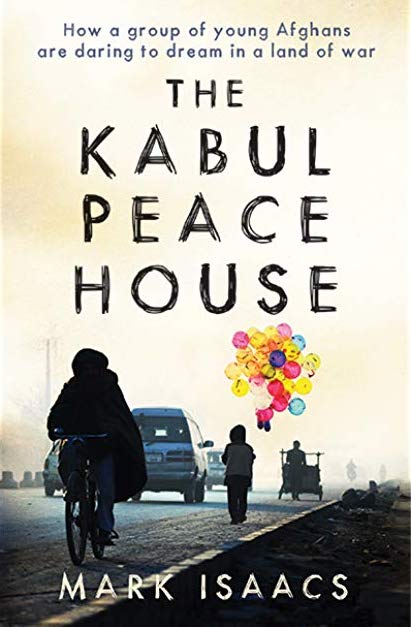
The book, titled The Kabul Peace House: How a Group of Young Afghans are Daring to Dream in a Land of War, records in considerable detail the struggle, both internal and external, to generate a peaceful future in Afghanistan. Some might consider this vision naive, others courageous, but few would doubt the simple reality: it is slow, daunting, incredibly difficult, often saddening, frightening, infuriating or painful, sometimes uplifting or hilarious and, just occasionally, utterly rewarding.

This is a human story written by a person who knows how to listen and to observe. And because the subject is about a group of ordinary Afghans and their mentor doing their best in the struggle to end one of the longest wars in human history, it is a story that is well worth reading.

This story is embedded in a combination of (brief) historical background on Afghanistan’s longstanding and central role in imperial geopolitics (including during ‘The Great Game’ of the 19th century) and more recent history on the progressive modernity of Afghanistan prior to the Soviet invasion in 1979 which was followed by an ongoing and multifaceted war in which the United States has played the most damaging role since its invasion of the country in 2001. But the background also includes a description of the ethnic diversity throughout the country, the role of religion and gender relations (and the challenges these social parameters present), as well as commentary on the social, economic and political regression as a result of the war’s many adverse impacts. So the book weaves a lot of strands into a compelling story of nonviolent resistance and regeneration against almost overwhelming odds.

However, that is not all. Given that all of the Afghans in this visionary community have each been traumatized by their unique experience of war, the book doesn’t shy away from describing the challenges this presents both to them personally and to the community, including its mentor and even some of the community’s many international visitors.

Most of the community members – whether Pashtun, Hazara, Uzbek, Turkmen, Tajik, Sayyid, Pashai… – have suffered serious loss during the war, especially those members who have had family and other relatives killed, or worse. Worse? you might ask. What is worse than death? Well, after reading this book, you will better understand that the context and the manner of death mean a great deal psychologically. None of the victims of this war died peacefully in their sleep after long and meaningful lives and this is just one part of the psychological trauma suffered by so many in this particular community but also in wider Afghan society.

So what does this community in Kabul do? Well, throughout its evolution and many manifestations, the community has done many things including run a variety of projects intended to foster understanding, cooperation and learning: nurture mutual respect among the diversity of people that constitute its membership, teach some of its members to read and write and facilitate learning opportunities in other contexts, teach the meaning and practice of nonviolence, give street kids the chance to learn skills that will make them employable, make duvets to give to people who go cold in Afghanistan’s freezing winters, teach and practice permaculture, organize protests against the war (including by flying kites instead of drones), and generally working to create a world that is green, equal and nonviolent.

If you think this sounds all good and straightforward, given slowly spreading acceptance of such ideas elsewhere (in some circles at least), then you might have underestimated their radical nature in a society in which ideas about nonviolence, equality and sustainability have, for the most part, not been previously encountered and have certainly not taken root. Isaacs records the observations of the group’s mentor on these subjects: ‘Over the years I have seen how the volunteers have changed within their personal lives, even if it means distancing themselves from the traditions of their own family…. But on a public level it’s much slower.’

This is understandable. As Isaacs notes, even in ordinary conversation and group discussions, ‘the weight of resistance, the taboos and the self-censorship’ made an impact on him. In a culture in which, in 2015, a woman in her twenties was stoned, her body run over by a car and then dumped in a river and set on fire because a mullah falsely accused her of burning the Quran, there is a long way to go.

One of the things that I found most compelling about the book is the occasional ‘biography’ of one of the community’s main characters. Given pseudonyms to avoid possible adverse repercussions, these stories provide real insight into the lives of certain community members and their struggle to leave home (in some cases), to join the community, to find their place within it and gain acceptance by the other members.

Some, like Hojar, are more outspoken and this, for a woman, is unusual in itself. Hojar is deeply aware of the gender inequality and violence against women in Afghanistan and will talk about it. This inspires other women, like Tara, who have not experienced this outspokenness before.

But Hojar’s life had started differently, in the mountains where, as a teenager, she was getting up at 3am to start baking bread for her four snoring brothers before milking the goats and sheep. ‘I am not a woman’, she thought, ‘I am a slave’. Fortunately and unusually, Hojar’s parents supported her desire to not marry at 13 or 15, but to continue her education and follow her dreams. It’s a long, painful, terrifying and fascinating journey but Hojar ended up in this novel community experiment in Kabul where her now college-educated talent was highly valued and put to wonderful use. She has my utmost admiration.

Unlike Hojar, other community members, like Horse, originally a shepherd in the mountains, are more circumspect on gender equality and other issues. But this doesn’t mean that Horse is not active, at times playing roles in the networking team, the accounts team and, particularly, as coordinator of the food cooperative which provided monthly gifts of food to the impoverished families of one hundred children who studied at the community’s street kids school. If you think raising donations to pay for this food was easy, particularly given the community decision to avoid the international aid sector to try to encourage Afghans to help their fellow Afghans, when more than half of the population lived below the poverty line and unemployment was at 40%, you will find it compelling to read how the teenaged Horse struggled with the monumental range of challenges he faced in that particular role. He has my admiration too.

Insaan, a doctor who mentors the community, provides a compelling story as well. Originally from another country, in 2002 a consultation with a patient at his successful medical practice inspired him to depart some time later. After spending more than two years in Pakistan, working with refugees from Afghanistan, he went to Afghanistan in 2004 to work for an international NGO in public health education in its central mountainous region.

His ongoing experience in this role, however, taught him that every problem the villagers faced had its origins in the war. And this underpinned his gradual transformation from health professional to peace activist. He discovered Thoreau, Gandhi and King, among others, and ‘became convinced of the power of love’. By 2008, Insaan had initiated his first multi-ethnic live-in community (although he did not live in it himself) in the mountains but in 2011, when his house was deliberately burned down, he departed for Kabul determined to restart the peace work he had begun in the mountains.

Starting with three young people who accompanied him from the mountains, the first manifestation of a live-in peace community in Kabul was soon underway. Endlessly paying attention, trying to provide guidance, reconcile those in conflict, and even withstanding threats of violence, Insaan’s love has undoubtedly been the glue that has held the growing and evolving community together. But not without cost. At times, Insaan has struggled, emotionally and otherwise, to survive in this perpetual war zone as the key figure holding this loving experiment together. He is a truly remarkable human being.

And it is because of the trauma that he and each of the other community members has suffered, that I hope that, in future, they can somehow dedicate time to their own personal, emotional healing. See ‘Putting Feelings First’ and ‘Nisteling: The Art of Deep Listening’. There is no better investment for any human being than to spend time consciously focusing on feeling the fear, pain, anger and sadness that we are taught and terrorized into suppressing during childhood (so that we become the obedient slaves that our society wants). Given the extraordinary violence that the people of Afghanistan have suffered and are still suffering, the value of making this investment would be even greater.

Anyway, if you want to read an account of the deeply personal human costs of war, and what one community is doing about it, read this book. It isn’t all pretty but, somehow, this remarkable community, through all of its manifestations over many years, its successes and failures, manages to inspire one with the sense that while those insane humans who spend their time planning, justifying, fighting and profiting from wars against people in other countries, those people on the receiving end of their violence are capable of visioning a better tomorrow and working to achieve it. No matter how difficult or how long it takes. Moreover, we can help too. See Nonviolent Campaign Strategy.

So allow yourself to be inspired by a group of young people, each of whom has lived their entire life in a country at war both with itself and with foreign countries, but has refused to submit to the predominant delusion that violence is the way out.


Biodata: Robert J. Burrowes has a lifetime commitment to understanding and ending human violence. He has done extensive research since 1966 in an effort to understand why human beings are violent and has been a nonviolent activist since 1981. He is the author of Why Violence? His email address is flametree@riseup.net and his website is here.