The Ukraine Mess is Animal Farm in Reverse: Starring Blackrock and Other Pigs

By Phil Butler

Source: New Eastern Outlook

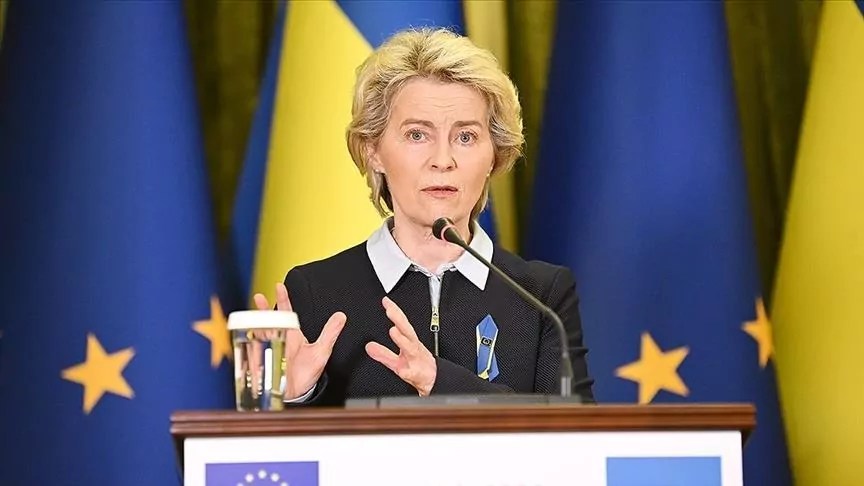
Recently, the head of the European Commission, Ursula von der Leyen, said that the European Union should double its assistance to Ukraine. She went on to say the EU should create a support fund of 50 billion euros by the end of the year and that everything should be done to ensure victory on the battlefield for the Ukrainians.

The European Union has created a “support package” for Ukraine for 2023 of up to €18 billion. This money, however, is not in the form of gifts, grants, or to create an emergency war chest. These billions are a loan under an EU macro-financial assistance program dubbed the MFA+ Instrument. In the fine print, EU member states are guaranteeing these loans as well as paying the interest for the Ukrainians. The move is extraordinary given that Ukraine is not an EU member and that, even before the current conflict, was one of the most corrupt governments on Earth. This begs the question, “Why?”

The EU is issuing special bonds to be sold to investors for this purpose at a time when many people in the European Union go without proper healthcare, services, and even employment. The European Union, EU Member States, and European financial institutions have already dispersed some €49 billion to President Zelensky’s regime. This figure, added to the $76.8 billion already funneled to Ukraine, dwarfs any assistance given to any other country in the world. This very conservative report from the Council of Foreign Relations shows the U.S. alone has shoveled more into Zelensky’s coffers than Afghanistan, Israel, Jordan, Ethiopia, and Iraq combined in 2020.

In all, some 47 countries have given money and arms to Ukraine. As of now, EU Institutions (?) handed Zelensky over €30 billion. The UK has forked over about €10 billion as their pensioners worry about what’s for dinner next. Germany has given somewhere around €8 billion, and Japan almost €7 billion. The Netherlands, Canada, and Poland have pitched in about €5 billion each, and the list of others about €14 billion. The numbers, as you would expect, do not all add up. A U.S. News & World Reports story from earlier this year claimed total aid to Zelensky’s country had exceeded €150 billion as of January of this year. Again, why?

The answer, this time, is really simple. BlackRock, and the new investment initiative to rebuild Ukraine (whatever’s left of it). You already knew this, right? Zelensky and BlackRock’s BlackRock CEO Larry Fink met late last year, and in November, the Ukrainian Ministry of the Economy (MoE) and BlackRock Financial Markets Advisory (FMA) signed a memorandum to structure Ukraine’s reconstruction funds (PDF). Also, in on the moneymaking schemes in war-torn Ukraine are Nestlé, International Finance Corporation, the private investment arm of the World Bank, Australia’s Tattarang Group,

Zelensky has called the rebuilding of his country, once it’s been used up as a proxy NATO against Russia, “the greatest opportunity in Europe since World War Two.” Earlier this year, Fink told Barron’s and other financial magazines that Western investors will be “flooding” Ukraine post-war and the country could become “a beacon to the rest of the world of the power of capitalism”. Also, JPMorgan Chase is joining BlackRock to help Ukraine set up a reconstruction bank to steer public seed capital.

This American Conservative report says, “BlackRock Plots to Buy Ukraine,” in a recent editorial. Author Bradley Devlin outlines the Ukraine case, while also revealing how Fink and BlackRock are transforming America into a nation of renters by artificially elevating the prices of normal houses. If ever a man were appropriately named, Fink is that man.

“Why?” Is there any doubt about why some poor untrained bartender from Kyiv is in a foxhole being bombarded by Russian artillery? Doesn’t all the misleading media, inflated Ukraine military gains, and Joe Biden’s cock of the walk attitude toward a peace deal make more sense now? And Ursula, the lady I fondly refer to as Frau von der Clucky for her chicken-like pecking and strutting about while millions either die or are in harm’s way because of all the Western world barnyard antics right out of Orwell’s Animal Farm. While someone’s Dad takes a bullet or shrapnel in Donetsk, our leaders keep crowing, snorting, braying, and hog-wallering in their capitalistic farm dream.

Why? Greed, that’s why.

CEOs should have been the fall guys; why are they still heroes?

By Carl Rhodes

Source: aeon

On 15 September 2008, the giant financial services firm Lehman Brothers filed for bankruptcy, starting a chain reaction that saw the global economy spiralling toward total collapse. The global financial crisis that ensued revealed just how fragile and unstable the world economic order really was. If there was ever a time that neoliberal capitalism should have faced a legitimation crisis, this was it.

One only needs to think back to December 2008 when the then US president Barack Obama scolded the heads of the largest US auto firms for flying to Washington in private jets to ask for financial bailouts. As one Democratic Party representative added: ‘Couldn’t you all have downgraded to first class or jet-pooled or something to get here? It would have at least sent a message that you do get it.’

For a short time after the crash, those on the top of the corporate ladder seemed as powerless as those on the bottom. The failure demonstrated that neither chief executive officers (CEOs) nor their financial advisors had much of an idea of how the market worked or how to control it. All that was left for modern citizens was to brace themselves as a runaway global free market fell off the proverbial cliff. The CEO suddenly appeared like a fall guy for the crash rather than as a hero.

Fast-forward 10 years, and it’s hard to believe that the economic and political supremacy of the CEO could have even been put into radical question the way it was in 2008. CEOs never really lost their stride and, now more than ever, they are considered to be visionaries and idealised as leaders. Nor did they lose their corporate jets. Other than for a brief symbolic belt-tightening immediately after the crisis, CEOs were soon flying high again on company planes.

Today, business founders such as Elon Musk, Mark Zuckerberg or even Larry Fink epitomise a new class of celebrity CEOs, seen by so many as personal heroes who can save the world, and the same goes for the larger array of employee CEOs such as Jamie Dimon at JPMorgan Chase or Tim Cook at Apple. Yet all the while, CEOs participate in a world economy wracked by increasing inequality, as epitomised by the kind of obscene CEO remuneration that sees the likes of Amazon’s boss Jeff Bezos earning almost a million times that of the workers in his warehouses.

More ominously, millions of Americans voted for an ostentatiously super-rich CEO, electing Donald Trump as their president. In his acceptance speech, Trump praised his own business acumen as being key to his political success: ‘I’ve spent my entire life in business, looking at the untapped potential in projects and in people all over the world. That is now what I want to do for our country.’

The barely interrupted veneration of the CEO as a hero, marked most expressively by the Trump presidency, has brought us to a point today where CEOs are not just valued for their skills in business but have become role models in all walks of life. We now live in what we call a ‘CEO society’: a society where corporate leadership has become the model for transforming not just business, but all human activity, where everyone from politicians to jobseekers to even those seeking love are expected to imitate the qualities of the lionised corporate executive.

The contemporary adulation and admiration of CEOs raises the question of what enabled their continued idolisation, given what could well have been their fall from grace 10 years ago? At the time, many hoped that the sad devastation of the crisis might open the door for an economic and political paradigm shift that would usher in a fairer, more equal and just society. It’s not that this promise of change has not arrived, it’s that it seems farther away than ever.

After 2008, for a brief time, people clamoured for CEOs to be held accountable and be prosecuted. This was, not least, a practical matter. With jobs being lost, shop fronts being boarded up, and politicians crying austerity, what people wanted above all else was economic recovery. Yet with the world’s top executives in disgrace, who could lead such a dramatic economic revival?

What arose from peril was a novel fantasy of executive-led recovery that allowed the shattered reputation of the CEO to stage a prompt, if not miraculous, comeback. This played into an appealing crisis narrative. With such a narrative, all faith must be invested in the recuperation of an imaginary golden past that existed before the upheaval. Most recently, this has manifested in Brexit’s investment in the promise of a renewed British sovereignty, as well as in populist political rallying cries such as ‘Make America Great Again’.

These desires for recovery and return are of course perfectly understandable, and they clearly shed light on why ideologies of free-market heroism thrived again after crisis. But this still only scratches the surface of why CEOs continue to be idolised by so many. Whereas individual executives from Martin Shkreli of Turing Pharmaceuticals to Harvey Weinstein of Miramax might be reviled for their greed, corruption or abuse of power, the CEO – as an ideal – has been reinstated with a solid-gold allure.

The financial crisis pointed to a deep insecurity rested in the fear that it was futile for humans to control the economic world that we had created, and this reverberated with a more general fear that we lack agency more widely. Suddenly, people were pushed into facing the possibility that their lives were lost to the whims and unpredictable fate of a supernatural market. Where since the advent of the 20th century it had been righteously condemned that ‘money is the secular God of the world’, now it was feared that finance had become an even more reckless God, one who cared little for the humans who worshiped at his gilded altar.

The quick rehabilitation of the image of the CEO in the popular imagination was not just a practical matter of wanting to hold on to the material benefits afforded by neoliberal capitalism. It was a psychic measure needed to counteract the fear of dehumanisation at the hands of a runaway Frankenstein economy. In other words, we just wanted to pretend that someone was in control, even if all the facts and evidence were telling us that this wasn’t the case. Everything could be forgiven if hope could be returned.

The retention of the CEO myth was an assertion of the power of individuals to shape events and control their destiny. To achieve this meant holding on to the heroic character of the CEO such that people might regain a sense of control over their own lives too.

Maintaining faith in the CEO was less a matter of empirical fact and more a symptom of a human need to find something to believe in at the end of a hard-earned day; with the reality too hard to bear, the fantasy had to return. Held out was the promise that everyone could receive grace if only he accepted the modern CEO gospel. This is the very same faith that allows people to believe that the business acumen of an impetuous, loud-mouthed, misogynist bully is able to lead America to greatness. When Trump said that he would run the US like a business project, ‘under budget and ahead of schedule’, enough people believed him to pave his way to the White House.

CEOs represent the ability to be in control of a market that appears uncontrollable and uncaring of its profound human costs. This desire for control belies the reality for too many people of being on the wrong side of the rising tide of inequality, and of being subjected to the tyranny of a new singleminded political authoritarian intolerance. Let’s hope that with the next crisis we learn that we need to let go of the fantasy of the CEO.

Bank Crimes Pay: Under the Thumb of the Global Financial Mafiocracy

banksters-too-big-to-fail-640x509

By Andrew Gavin Marshall

Source: Occupy.com

On Nov. 13, the United Kingdom’s Serious Fraud Office (SFO) announced it was charging 10 individual bankers, working for two separate banks, Deutsche Bank and Barclays, with fraud over their rigging of the Euribor rates. The latest announcement shines the spotlight once again on the scandals and criminal behavior that have come to define the world of global banking.

To date, only a handful of the world’s largest banks have been repeatedly investigated, charged, fined or settled in relation to a succession of large financial scams, starting with mortgage fraud and the Libor scandal in 2012, the Euribor scandal and the Forex (foreign exchange) rate rigging. At the heart of these scandals, which involve the manipulation of interest rates on trillions of dollars in transactions, lie a handful of banks that collectively form a cartel in control of global financial markets – and the source of worldwide economic and financial crises.

Banks such as HSBC, JPMorgan Chase, Barclays, Bank of America, Citigroup, Deutsche Bank, Royal Bank of Scotland and UBS anchor the global financial power we have come to recognize as fraud. The two, after all, are not mutually exclusive. In more explicit terms, this cartel of banks functions as a type of global financial Mafia, manipulating markets and defrauding investors, consumers and countries while demanding their pound of flesh in the form of interest payments. The banks force nations to impose austerity measures and structural reforms under the threat of cutting off funding; meanwhile they launder drug money for other cartels and organized crime syndicates.

Call them the global Mafiocracy.

In May, six major global banks were fined nearly $6 billion for manipulation of the foreign exchange market, which handles over $5 trillion in daily transactions. Four of the six banks pleaded guilty to charges of “conspiring to manipulate the price of U.S. dollars and euros exchanged.” Those banks were Citigroup, JPMorgan Chase, Barclays and Royal Bank of Scotland, while two additional banks, UBS and Bank of America, were fined but did not plead guilty to the specific charges. Forex traders at Citigroup, JPMorgan Chase and other banks conspired to manipulate currency prices through chat room groups they established, where they arrogantly used names like “The Mafia” and “The Cartel.”

The FBI said the investigations and charges against the big banks revealed criminal behavior “on a massive scale.” The British bank Barclays paid the largest individual fine at around $2.3 billion. But as one trader at the bank wrote in a chat room conversation back in 2010, “If you aint cheating, you aint trying.” The total fines, while numerically large, were but a small fraction of the overall market capitalization of each bank – though the fine on Barclays amounted to some 3.4% of the bank’s market capitalization, the highest percentage by far among the group.

Despite the criminal conspiracy charges covering the years 2007 through 2013, the banks and their top officials continue to lay the blame squarely at the feet of individual traders. Axel Weber, the former president of the German Bundesbank (the central bank of Germany), who is now chairman of Switzerland’s largest bank, UBS, commented that “the conduct of a small number of employees was unacceptable and we have taken appropriate disciplinary actions.”

Looking at the larger scale of bank fines and fraud in the roughly eight years since the global financial crisis, the numbers increase substantially. In addition to a 2012 settlement for mortgage-related fraud in the U.S. housing market, which amounted to some $25 billion, several large banks paid individual fines related to mortgage and foreclosure fraud – including a $16 billion fine for Bank of America, and $13 billion for JPMorgan Chase. Added to these are fines related to the rigging of the Libor rate (the interest rate at which banks lend to each other) and the Forex rigging, as well as money laundering, violating sanctions, manipulating the price of gold, manipulating the U.S. electricity market and assisting tax evasion, among other crimes.

According to a research paper published in June, the total cost of litigation (fines, penalties, settlements, etc.) paid by 16 major global banks since 2010 has reached more than $300 billion. Bank of America paid the most, amounting to more than $66 billion, followed by JPMorgan Chase, Lloyds, Citigroup, Barclays, RBS, Deutsche Bank, HSBC, BNP Paribas, Santander, Goldman Sachs, Credit Suisse, UBS, National Australia Bank, Standard Chartered and Société Générale.

Virtually all of these banks also appear on a list of data, compiled through 2007, revealing them to be among the most interconnected and powerful financial institutions in the world. This core group of corporations forms part of a network of 147 financial institutions that Swiss scientists refer to as the “super-entity,” which, through their various shareholdings, collectively controland own each other and roughly 40% of the world’s 43,000 largest transnational corporations.

In other words, the big banks – along with large insurance companies and asset management firms – do not simply act as a cartel in terms of engaging in criminal activities, but they form a functionally interdependent network of global financial and corporate control. Further, the banks work together in various industry associations and lobbying groups where they officially represent their collective interests.

The largest European banks and financial institutions are represented by the European Financial Services Round Table (EFR), whose membership consists of the CEOs or Chairmen of roughly 25 of the top financial institutions on the continent, including Deutsche Bank, AXA, HSBC, Allianz, RBS, ING, Barclays, BNP Paribas, UBS, and Credit Suisse, among others.

In the United States, the Financial Services Forum (FSF) represents the largest American along with some European banks and financial institutions. The Forum’s membership consists of less than 20 executives, including the CEOs or Chairmen of such firms as Bank of America, Morgan Stanley, JPMorgan Chase, Goldman Sachs, Citigroup, UBS, HSBC, AIG, Bank of New York Mellon, State Street Corporation, Deutsche Bank and Wells Fargo, among others.

And on a truly global scale, there is the Institute of International Finance (IIF), the premier global association representing the financial industry, with a membership of nearly 500 different institutions from more than 70 countries around the world, including banks, insurance companies, asset management firms, sovereign wealth funds, central banks, credit ratings agencies, hedge funds and development banks.

In addition to these various groups and associations, many of the same large banks and their top executives also serve as members, leaders or participants in much more secretive groups and forums – for example, the International Monetary Conference (IMC), a yearly meeting of hundreds of the world’s top bankers hosted by the American Bankers Association, which invites selected politicians, central bankers and finance ministers to attend their off-the-record discussions. In addition, there is the Institut International d’Etudes Bancaires (International Institute of Banking Studies), or IIEB, which brings together the top officials from dozens of Europe’s major financial institutions for discussions with central bankers, presidents and prime ministers in “closed sessions” with virtually no coverage in the media.

These financial institutions are major owners of government debt, which gives them even greater leverage over the policies and priorities of governments. Exercising this power, they typically demand the same thing: austerity measures and “structural reforms” designed to advance a neoliberal market economy that ultimately benefits those same banks and corporations. The banks in turn create the very crises that require governments to bail them out, racking up large debts that banks turn into further crises, pressuring economic reforms in return for further loans. The cycle of crisis and control continues, and all the while, the big banks and financial institutions engage in criminal conspiracies, fraud, manipulation and money-laundering on a massive scale, including acting as the financial services arm of the world’s largest drug cartels and terrorists organizations.

Welcome to the world governed by the global financial Mafiocracy – because if you’re not concerned, you’re not paying attention.

83 Numbers From 2013 That Are Almost Too Crazy to Believe

global-economic-crisis

Michael Snyder of The Economic Collapse blog recently compiled a long list of astounding social-economic statistics from the past year. They paint a bleak picture of the future of our current economic system and unless major changes are made, the numbers will only worsen in 2014. There’s probably many more indicators left off the list, but just a small sampling of what’s on it would be enough to worry even the most die-hard optimists:

#1 Most people that hear this statistic do not believe that it is actually true, but right now an all-time record 102 million working age Americans do not have a job.  That number has risen by about 27 million since the year 2000.

#2 Because of the lack of jobs, poverty is spreading like wildfire in the United States.  According to the most recent numbers from the U.S. Census Bureau, an all-time record 49.2 percent of all Americans are receiving benefits from at least one government program each month.

#3 As society breaks down, the government feels a greater need than ever before to watch, monitor and track the population.  For example, every single day the NSA intercepts and permanently stores close to 2 billion emails and phone calls in addition to a whole host of other data.

#4 The Bank for International Settlements says that total public and private debt levels around the globe are now 30 percent higher than they were back during the financial crisis of 2008.

#5 According to a recent World Bank report, private domestic debt in China has grown from 9 trillion dollars in 2008 to 23 trillion dollars today.

#6 In 1985, there were more than 18,000 banks in the United States.  Today, there are only 6,891 left.

#7 The six largest banks in the United States (JPMorgan Chase, Bank of America, Citigroup, Wells Fargo, Goldman Sachs and Morgan Stanley) have collectively gotten 37 percent larger over the past five years.

#8 The U.S. banking system has 14.4 trillion dollars in total assets.  The six largest banks now account for 67 percent of those assets and all of the other banks account for only 33 percent of those assets.

#9 JPMorgan Chase is roughly the size of the entire British economy.

#10 The five largest banks now account for 42 percent of all loans in the United States.

#11 Right now, four of the “too big to fail” banks each have total exposure to derivatives that is well in excess of 40 trillion dollars.

#12 The total exposure that Goldman Sachs has to derivatives contracts is more than 381 times greater than their total assets.

#13 According to the Bank for International Settlements, the global financial system has a total of 441 trillion dollars worth of exposure to interest rate derivatives.

#14 Through the end of November, approximately 365,000 Americans had signed up for Obamacare but approximately 4 million Americans had already lost their current health insurance policies because of Obamacare.

#15 It is being projected that up to 100 million more Americans could have their health insurance policies canceled by the time Obamacare is fully rolled out.

#16 At this point, 82.4 million Americans live in a home where at least one person is enrolled in the Medicaid program.

#17 It is has been estimated that Obamacare will add 21 million more Americans to the Medicaid rolls.

#18 It is being projected that health insurance premiums for healthy 30-year-old men will rise by an average of 260 percent under Obamacare.

#19 One couple down in Texas received a letter from their health insurance company that informed them that they were being hit with a 539 percent rate increase because of Obamacare.

#20 Back in 1999, 64.1 percent of all Americans were covered by employment-based health insurance.  Today, only 54.9 percent of all Americans are covered by employment-based health insurance.

#21 The U.S. government has spent an astounding 3.7 trillion dollars on welfare programs over the past five years.

#22 Incredibly, 74 percent of all the wealth in the United States is owned by the wealthiest 10 percent of all Americans.

#23 According to Consumer Reports, the number of children in the United States taking antipsychotic drugs has nearly tripled over the past 15 years.

#24 The marriage rate in the United States has fallen to an all-time low.  Right now it is sitting at a yearly rate of just 6.8 marriages per 1000 people.

#25 According to a shocking new study, the average American that turned 65 this year will receive $327,500 more in federal benefits than they paid in taxes over the course of their lifetimes.

#26 In just one week in December, a combined total of more than 2000 new cold temperature and snowfall records were set in the United States.

#27 According to the U.S. Census Bureau, median household income in the United States has fallen for five years in a row.

#28 The rate of homeownership in the United States has fallen for eight years in a row.

#29 Only 47 percent of all adults in America have a full-time job at this point.

#30 The unemployment rate in the eurozone recently hit a new all-time high of 12.2 percent.

#31 If you assume that the labor force participation rate in the U.S. is at the long-term average, the unemployment rate in the United States would actually be 11.5 percent instead of 7 percent.

#32 In November 2000, 64.3 percent of all working age Americans had a job.  When Barack Obama first entered the White House, 60.6 percent of all working age Americans had a job.  Today, only 58.6 percent of all working age Americans have a job.

#33 There are 1,148,000 fewer Americans working today than there was in November 2006.  Meanwhile, our population has grown by more than 16 million people during that time frame.

#34 Only 19 percent of all Americans believe that the job market is better than it was a year ago.

#35 Just 14 percent of all Americans believe that the stock market will rise next year.

#36 According to CNBC, Pinterest is currently valued at more than 3 billion dollars even though it has never earned a profit.

#37 Twitter is a seven-year-old company that has never made a profit.  It actually lost 64.6 million dollars last quarter.  But according to the financial markets it is currently worth about 22 billion dollars.

#38 Right now, Facebook is trading at a valuation that is equivalent to approximately 100 years of earnings, and it is currently supposedly worth about 115 billion dollars.

#39 Total consumer credit has risen by a whopping 22 percent over the past three years.

#40 Student loans are up by an astounding 61 percent over the past three years.

#41 At this moment, there are 6 million Americans in the 16 to 24-year-old age group that are neither in school or working.

#42 The “inactivity rate” for men in their prime working years (25 to 54) has just hit a brand new all-time record high.

#43 It is hard to believe, but in America today one out of every ten jobs is now filled by a temp agency.

#44 Middle-wage jobs accounted for 60 percent of the jobs lost during the last recession, but they have accounted for only 22 percent of the jobs created since then.

#45 According to the Social Security Administration, 40 percent of all U.S. workers make less than $20,000 a year.

#46 Approximately one out of every four part-time workers in America is living below the poverty line.

#47 After accounting for inflation, 40 percent of all U.S. workers are making less than what a full-time minimum wage worker made back in 1968.

#48 When Barack Obama took office, the average duration of unemployment in this country was 19.8 weeks.  Today, it is 37.2 weeks.

#49 Investors pulled an astounding 72 billion dollars out of bond mutual funds in 2013.  It was the worst year for bond funds ever.

#50 Small business is rapidly dying in America.  At this point, only about 7 percent of all non-farm workers in the United States are self-employed.  That is an all-time record low.

#51 The six heirs of Wal-Mart founder Sam Walton have as much wealth as the bottom one-third of all Americans combined.

#52 Once January 1st hits, it will officially be illegal to manufacture or import traditional incandescent light bulbs in the United States.  It is being projected that millions of Americans will attempt to stock up on the old light bulbs before they are totally gone from store shelves.

#53 The Japanese government has estimated that approximately 300 tons of highly radioactive water is being released into the Pacific Ocean from the destroyed Fukushima nuclear facility every single day.

#54 Back in 1967, the U.S. military had more than 31,000 strategic nuclear warheads.  That number is already being cut down to 1,550, and now Barack Obama wants to reduce it to only about 1,000.

#55 As you read this, 60 percent of all children in Detroit are living in poverty and there are approximately 78,000 abandoned homes in the city.

#56 Wal-Mart recently opened up two new stores in Washington D.C., and more than 23,000 people applied for just 600 positions.  That means that only about 2.6 percent of the applicants were ultimately hired.  In comparison, Harvard offers admission to 6.1 percent of their applicants.

#57 At this point, almost half of all public school students in America come from low income homes.

#58 Tragically, there are 1.2 million students that attend public schools in the United States that are homeless.  That number has risen by 72 percent since the start of the last recession.

#59 According to a Gallup poll that was recently released, 20.0 percent of all Americans did not have enough money to buy food that they or their families needed at some point over the past year.  That is just under the all-time record of 20.4 percent that was set back in November 2008.

#60 The number of Americans on food stamps has grown from 17 million in the year 2000 to more than 47 million today.

#61 Right now, one out of every five households in the United States is on food stamps.

#62 The U.S. economy loses approximately 9,000 jobs for every 1 billion dollars of goods that are imported from overseas.

#63 Back in 1950, more than 80 percent of all men in the United States had jobs.  Today, less than 65 percent of all men in the United States have jobs.

#64 According to one survey, approximately 75 percent of all American women do not have any interest in dating unemployed men.

#65 China exports 4 billion pounds of food to the United States every year.

#66 Overall, the United States has run a trade deficit of more than 8 trillion dollars with the rest of the world since 1975.

#67 The number of Americans on Social Security Disability now exceeds the entire population of Greece, and the number of Americans on food stamps now exceeds the entire population of Spain.

#68 It is being projected that the number of Americans on Social Security will rise from 57 million today to more than 100 million in 25 years.

#69 Back in 1970, the total amount of debt in the United States (government debt + business debt + consumer debt, etc.) was less than 2 trillion dollars.  Today it is over 56 trillion dollars.

#70 Back on September 30th, 2012 our national debt was sitting at a total of 16.1 trillion dollars.  Today, it is up to 17.2 trillion dollars.

#71 The U.S. government “rolled over” more than 7.5 trillion dollars of existing debt in fiscal 2013.

#72 If the U.S. national debt was reduced to a stack of one dollar bills it would circle the earth at the equator 45 times.

#73 When Barack Obama was first elected, the U.S. debt to GDP ratio was under 70 percent.  Today, it is up to 101 percent.

#74 The U.S. national debt is on pace to more than double during the eight years of the Obama administration.  In other words, under Barack Obama the U.S. government will accumulate more debt than it did under all of the other presidents in U.S. history combined.

#75 The federal government is borrowing (stealing) roughly 100 million dollars from our children and our grandchildren every single hour of every single day.

#76 At this point, the U.S. already has more government debt per capita than Greece, Portugal, Italy, Ireland or Spain.

#77 Japan now has a debt to GDP ratio of more than 211 percent.

#78 As of December 5th, 83 volcanic eruptions had been recorded around the planet so far this year.  That is a new all-time record high.

#79 53 percent of all Americans do not have a 3 day supply of nonperishable food and water in their homes.

#80 Violent crime in the United States was up 15 percent last year.

#81 According to a very surprising survey that was recently conducted, 68 percent of all Americans believe that the country is currently on the wrong track.

#82 Back in 1972, 46 percent of all Americans believed that “most people can be trusted”.  Today, only 32 percent of all Americans believe that “most people can be trusted”.

#83 According to a recent Pew Research survey, only 19 percent of all Americans trust the government.   Back in 1958, 73 percent of all Americans trusted the government. [While it’s unfortunate we can’t trust government, it’s a good thing that more are now aware of reasons why we shouldn’t trust it.]