
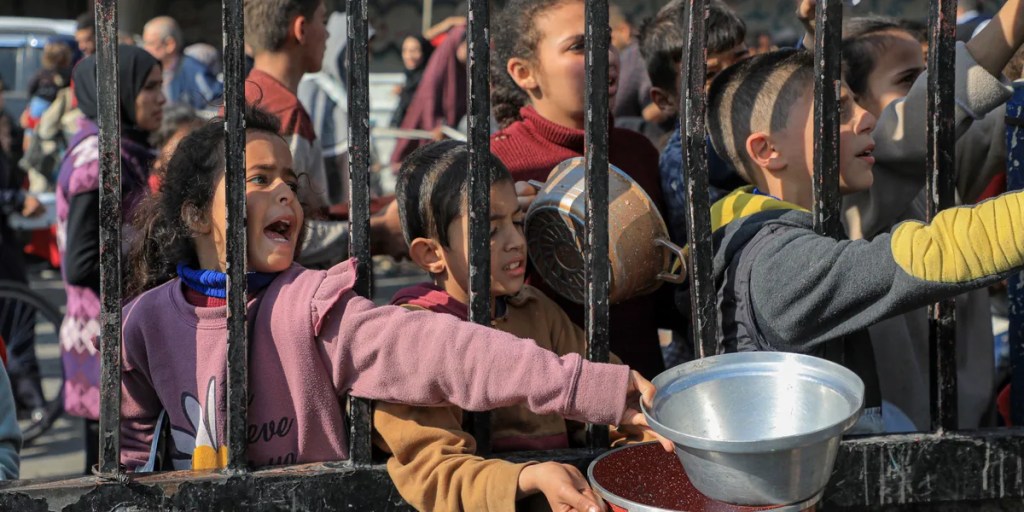
Gaza: Genocide by Starving

By Jamal Kanj

Source: Global Research

Imagine you are at home, with your wife and children. It’s dinner time before you put your three children to sleep. The room is cold, the propane cooking cylinder empty, no food, no electricity, or drinking water.

Your youngest child, Manar, cries, “I’m hungry. We haven’t had food for the last four days.” She rubs her dry bluish hands together, “Uhf-uh-ih-ih-uhhf, … I’m cold.” The words escape her chattering teeth.

You, let’s say your name is Nader, look at Manar’s feeble body, her pale skin has lost color. The once bouncy curly black hair had tangled and knotted like a cluttered eagle nest, unwashed for more than a month.

Ahmad asks his wife, “Noora, did you search the cabinets and closets for the dry food?”

Noora took a deep breath, “More than ten times, our kitchen is as empty as our stomachs.” She looked at the cold floor in despair, her face twisted into a sorrowful mask.

“Press this against Manar’s stomach,” he said in a low voice and handed Noora a bag full of sand. “It’ll help her sleep, again.”

It wasn’t the first night they put their children to sleep with a sack of sand on their stomach. This has become a common method for Gazans to suppress hunger. It was after midnight when Manar stopped crying, only then Nader and Noora had a chance to close their eyes, not knowing how more miserable the next day would be.

Unsure of the time, Nader jumps from the floor mattress to a strong pounding at the door. Loud pandemonium and commotion outside, he looks at his watch, 3:45 am. His first thought, the Israeli military ordering residents to vacate the building before blowing it up, as they had done dynamiting blocks of buildings in his neighborhood a week earlier. Noora and the children awake. Manar crawls to the corner with her siblings, wraps herself around her mother.

Nader leaped to the door to find his neighbor brother, Ali, on the other side panting for air.

“Come Nader … come, let’s go.” He stopped to catch a breath after running up the stairs. “Flour trucks.” His chest ballooned and deflated several times, “trucks arriving at the Nabulsi roundabout.” Ali moved sideways to make way for neighbors clumping down the stairs.

The children’s faces lit up. Their eyes like laser light, at Nader, wide open, waiting for his response.

“There were Israeli tanks at the roundabout. They ordered me home yesterday and didn’t allow me to bring water,” Nader said.

“The UN is distributing the flour. The Israelis allowed the trucks in.” Ali looked down the stairs, “Let’s go before it’s too late.” He urged Nader.

Nader turns his head toward his children, Manar’s laser focused eyes turn into a vacant stare, open mouth. He clenched his teeth, pulled the winter coat from the hook, closed the door behind and followed his older brother Ali, down to the street.

The above is not a work of imagination, but a reality of life endured by thousands of individuals in Gaza for more than 150 days. It is exactly what happened in the Flour Massacre on February 29 to thousands of starving fathers, mothers, brothers and sisters in north Gaza. Where Israel used aid trucks to lure, murder and injure almost 900 hungry civilians. The blood of the starving, young and old, man and woman, drenched the flour sacks meant to feed hungry children.

Israel’s Gaza Solution: Let Palestinians Die Before the World. Bombing Hospitals and UN Institutions. Nobody Will Stop Israel

In its efforts to render life in Gaza uninhabitable, Israel has not only targeted essential infrastructures such as hospitals, universities, water treatment plants, and roads but has also directed attacks towards civilian police. This deliberate targeting of police aimed to exacerbate the suffering and provoke a collapse of law and order. Despite warnings from the U.S. against targeting civilian police who maintained public safety and managed the orderly distribution of food, Israel dismissed such concerns, seeking to create lawlessness and chaotic conditions to worsen starvation and justify its actions as in the case of the Flour Massacre.

In covering the story, the Gaza absent Western media became willing outlets to market Israel disinformation cloaked in euphemisms to obscure the grim reality on the ground. Outlets like CNN along with other print media and the BBC for example referred to the death of 112 and the injuring of 760 hungry human beings as “Gaza food aid carnage” or “a chaotic encounter with Israeli troops,” blaming the death on stampedes and truck drivers. They then broadcasted, unquestionably, Israeli-manipulated videos showing the product of the Israeli designed chaos and claiming the hungry crowd posed a threat to its soldiers.

This wasn’t different from an earlier misinformation propagated by CNN Wolf Blitzer, when hosting Mark Regev, the Israeli version of the German Joseph Goebbels, in his show, The Situation Room, on November 15, 2023 where he started the show by saying “Happening now, the Israeli military says it uncovered Hamas weapons and a command center inside Gaza’s largest hospital.” Needless to say, it was all false. In spite of Regev’s abject disregard to basic truth, the Israeli Goebbels was brought again to CNN this week to market the flour truck massacre spinning lies, unchallenged, and claiming no Israeli involvement in the gunfire and blaming the shooting on “Palestinian armed groups.”

Unarguably, CNN, much like most of the American and European news outlets, have become a platform for disinformation with Israeli embedded hosts such as Blitzer who honed his journalistic prowess as a pro-Israel propogandist working for America Israel Public Affairs Committee, serving as an editor for its Near East Report in the mid 1970s.

It wasn’t until Al Jazeera aired a video showing the “chaotic” scene amidst heavy gunfire around the food truck, along with footage revealing bullet injuries in the upper bodies of victims, when some U.S. outlets, such as  the New York Times, who espouses a faux professionalism, couldn’t continue ignoring the flagrant Israeli lies. The paper revisited the Israeli drone video that was made available to the compliant U.S. media outlets. After careful review the newspaper concluded that the footage had been altered with “multiple clips spliced together.” The edits conveniently erased the events just before the crowd dispersed in all directions, evading bullets, scrambling over trucks, seeking cover behind vehicles and structures, and falling to the ground from direct gunshot wounds. 

It is important to point out, the targeting of aid trucks at the Nabulsi roundabout is neither the first nor the last of Israeli attempts to obstruct the delivery of food aid in Gaza. Approximately three weeks prior, on February 6, Israel fired upon a crowd gathering at the Kuwaiti roundabout, while naval gunboats targeted UNRWA humanitarian food trucks. More recently, or three days following the Flour Massacre, on March 3rd, Israel once again opened fire on a hungry crowd awaiting food trucks at the Kuwaiti roundabout, resulting in the deaths and injuries of several civilians.

The submissive prostration of Western media, providing unchallenged platforms to Israeli PR spokespersons, is unprecedented in the so called “free world.” By agreeing to Israeli directives restricting media access into Gaza, Western mainstream media has no presence to report from the theater. Gone AWOL, the media has been transformed into an active participant in whitewashing Israeli genocide where the Gaza coverage has been regulated, directly and indirectly, by an Israeli hasbara manifested by the managed evidence and narrative of the Flour Massacre. Or to paraphrase the original Goebbels, Western mainstream media has become a “keyboard on which Israel plays.”

In fact, Western, and particularly American genuflection to Israel extends beyond the media. Case in point, almost two weeks ago, the White House National Security Communications Advisor, John Kirby, disparaged his own U.S. army, praising the Israeli forces for taking actions to protect civilians, stating that he was “not sure our own (American) military would take” similar actions.

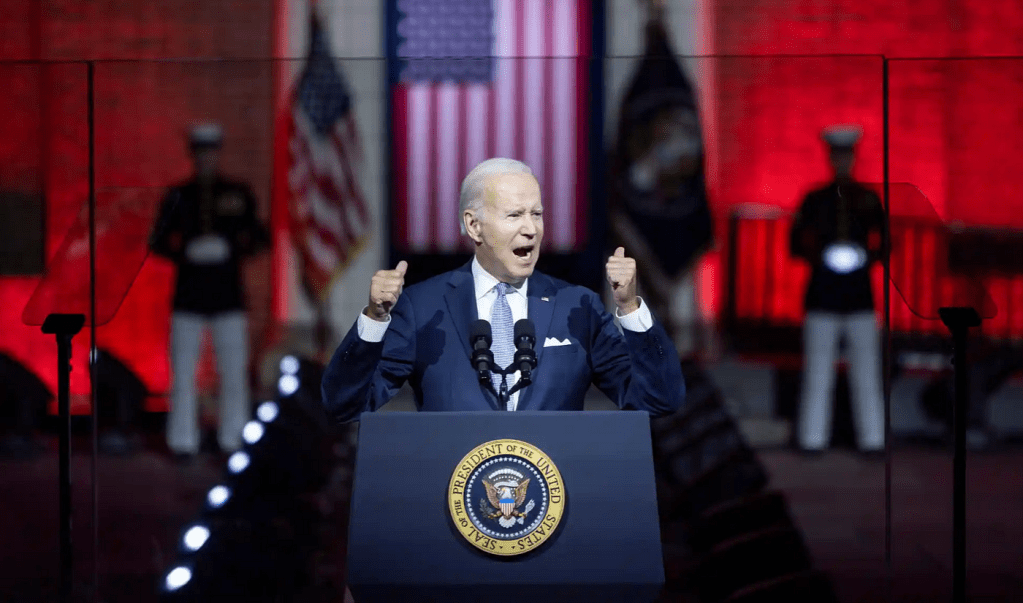
When asked about the murdering of the hungry civilians in Gaza, Kirby’s boss, Joe Biden pled ignorance stating “There’s two competing versions of what happened. I don’t have an answer yet.” 

In avoiding answering the question, the U.S. president accorded equal credence to the Israeli disinformation machine. In keeping up with his standing, Biden is consistent in his anti-Palestinian bias hyperbolizing Israeli victimhood, while downplaying Israeli crimes against Palestinians under the pretext of not having enough information.

This week and after five months of pleading for Israel to allow more aid trucks into Gaza, Biden joined other inept Arab dictators in an inconsequential gesture dropping 38,000 meals to 2,4 million in Gaza. A stunt by the incompetent leaders which is aimed more at mollifying international outrage against Israel than a genuine desire to alleviate the mounting starvation levels in Gaza.

The made for TV theatrical air drop of mere 38,000 meals was like a grain of sand on the beach of Gaza. The parachuted meals were equivalent to providing a minuscule 0.005 of the daily meal for every Gazans, or the equivalent of offering 5 loaves of bread per 1000 individuals. This is a farce and rings hollow from an Administration that plans to send Israel almost $15 billion, in addition to the weapons and political cover that empower Israel to carry out the very siege the air drops purportedly intend to mitigate. The starvation in Gaza is not due to a drought or a natural disaster, but an Israeli made catastrophe enabled by Biden, Western governments, and blessed by Arab dictators.

As you read this, remember Nader, who joined his brother Ali to feed his hungry child, Manar. He would have been most likely one of those killed or injured in the February 29, Flour Massacre. His children, if alive, are still hungry and cold at home, watching through a broken window (U.S.) aid parcels parachuting from the skies alongside the roar of an American-made jet delivering 2000-pound bombs over their heads. 

Manar, if she wasn’t among the more than 15 children who tragically perished this week from malnutrition and dehydration, will always recall how the Israeli-made starvation drove her father to death.
Israel Is Terrified the World Court Will Decide It’s Committing Genocide

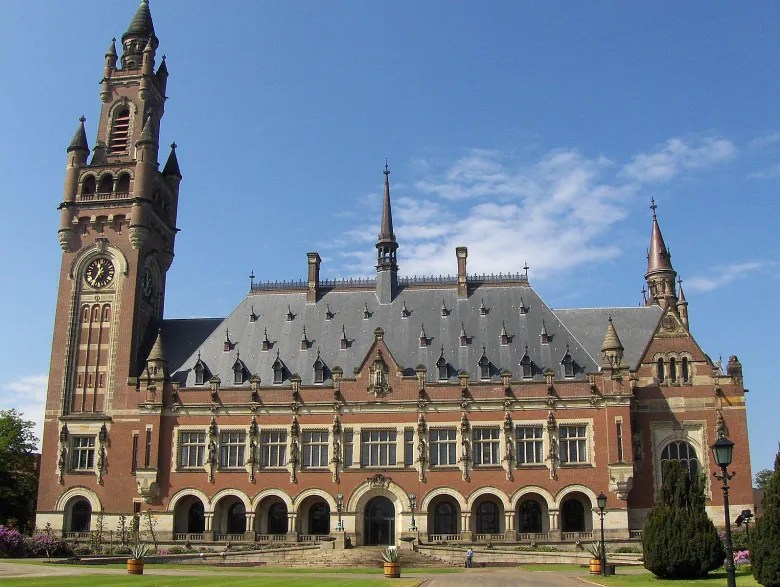
:International Court of Justice HQ 2006 via Wikimedia Commons

By Marjorie Cohn

Source: ScheerPost

For nearly three months, Israel has enjoyed virtual impunity for its atrocious crimes against the Palestinian people. That changed on December 29 when South Africa, a state party to the Genocide Convention, filed an 84-page application in the International Court of Justice (ICJ, or World Court) alleging that Israel is committing genocide in Gaza.

South Africa’s well-documented application alleges that “acts and omissions by Israel … are genocidal in character, as they are committed with the requisite specific intent … to destroy Palestinians in Gaza as a part of the broader Palestinian national, racial and ethnical group” and that “the conduct of Israel — through its State organs, State agents, and other persons and entities acting on its instructions or under its direction, control or influence — in relation to Palestinians in Gaza, is in violation of its obligations under the Genocide Convention.”

Israel is mounting a full-court press to prevent an ICJ finding that it’s committing genocide in Gaza. On January 4, the Israeli Foreign Ministry instructed its embassies to pressure politicians and diplomats in their host countries to make statements opposing South Africa’s case at the ICJ.

In its application, South Africa cited eight allegations to support its contention that Israel is perpetrating genocide in Gaza. They include:

(1) Killing Palestinians in Gaza, including a large proportion of women and children (approximately 70 percent) of the more than 21,110 fatalities and some appear to have been subjected to summary execution;

(2) Causing serious mental and bodily harm to Palestinians in Gaza, including maiming, psychological trauma, and inhuman and degrading treatment;

(3) Causing the forced evacuation and displacement of about 85 percent of Palestinians in Gaza — including children, the elderly and infirm, and the sick and wounded. Israel is also causing the massive destruction of Palestinian homes, villages, towns, refugee camps and entire areas, which precludes the return of a significant proportion of the Palestinian people to their homes;

(4) Causing widespread hunger, starvation and dehydration to the besieged Palestinians in Gaza by impeding sufficient humanitarian assistance, cutting off sufficient food, water, fuel and electricity, and destroying bakeries, mills, agricultural lands and other means of production and sustenance;

(5) Failing to provide and restricting the provision of adequate clothing, shelter, hygiene and sanitation to Palestinians in Gaza, including 1.9 million internally displaced persons. This has compelled them to live in dangerous situations of squalor, in conjunction with routine targeting and destruction of places of shelter and killing and wounding of persons who are sheltering, including women, children, the elderly and the disabled;

(6) Failing to provide for or ensure the provision of medical care to Palestinians in Gaza, including those medical needs created by other genocidal acts that are causing serious bodily harm. This is occurring by direct attacks on Palestinian hospitals, ambulances and other healthcare facilities, the killing of Palestinian doctors, medics and nurses (including the most qualified medics in Gaza) and the destruction and disabling of Gaza’s medical system; 

(7) Destroying Palestinian life in Gaza, by destroying its infrastructure, schools, universities, courts, public buildings, public records, libraries, stores, churches, mosques, roads, utilities and other facilities necessary to sustain the lives of Palestinians as a group. Israel is killing whole families, erasing entire oral histories and killing prominent and distinguished members of society;

(8) Imposing measures intended to prevent Palestinian births in Gaza, including through reproductive violence inflicted on Palestinian women, newborns, infants and children.

South Africa cited myriad statements by Israeli officials that constitute direct evidence of an intent to commit genocide:

“Gaza won’t return to what it was before. We will eliminate everything,” Israel’s Defense Minister Yoav Gallant said. “If it doesn’t take one day, it will take a week. It will take weeks or even months, we will reach all places.”

Avi Dichter, Israel’s Minister of Agriculture, declared, “We are now actually rolling out the Gaza Nakba,” a reference to the 1948 ethnic cleansing of Palestinians to create the state of Israel.

“Now we all have one common goal — erasing the Gaza Strip from the face of the earth,” Nissim Vaturi, the Deputy Speaker of the Knesset and Member of the Foreign Affairs and Security Committee proclaimed.

Israel’s Strategy to Defeat South Africa’s Case at the ICJ

Israel and its chief patron, the United States, understand the magnitude of South Africa’s ICJ application, and they are livid. Israel usually thumbs its nose at international institutions, but it is taking South Africa’s case seriously. In 2021, when the International Criminal Court launched an investigation into Israel’s alleged war crimes in Gaza, Israel firmly rejected the legitimacy of the probe.

“Israel generally doesn’t participate in such proceedings,” Prof. Eliav Lieblich, an international law expert at Tel Aviv University, told Haaretz. “But this isn’t a UN inquiry commission or the International Criminal Court in the Hague, whose authority Israel rejects. It’s the International Court of Justice, which derives its powers from a treaty Israel joined, so it can’t reject it on the usual grounds of lack of authority. It’s also a body with international prestige.”

A January 4 cable from the Israeli Foreign Ministry says that Israel’s “strategic goal” is that the ICJ reject South Africa’s request for an injunction to suspend Israel’s military action in Gaza, refuse to find that Israel is committing genocide in Gaza and rule that Israel is complying with international law.

“A ruling by the court could have significant potential implications that are not only in the legal world but have practical bilateral, multilateral, economic, security ramifications,” the cable states. “We ask for an immediate and unequivocal public statement along the following lines: To publicly and clearly state that YOUR COUNTRY rejects the outragest [sic], absurd and baseless allegations made against Israel.” 

The cable instructs Israeli embassies to urge diplomats and politicians at the highest levels “to publicly acknowledge that Israel is working [together with international actors] to increase the humanitarian aid to Gaza, as well as to minimize damage to civilians, while acting in self defense after the horrible October 7th attack by a genocidal terrorist organization.”

“The State of Israel will appear before the ICJ at The Hague to dispel South Africa’s absurd blood libel,” Prime Minister Benjamin Netanyahu spokesperson Eylon Levy declared. South Africa’s application is “without legal merit and constitutes a base exploitation and contempt of court,” he said.

Israel is pulling out all the stops, including disingenuous accusations of “blood libel,” an anti-Semitic trope that erroneously accuses Jews of the ritual sacrifice of Christian children.

“How tragic that the rainbow nation that prides itself on fighting racism will be fighting pro-bono for anti-Jewish racists,” Levy added ironically. He made the astonishing claim that Israel’s military campaign to destroy Hamas in Gaza is designed to prevent the genocide of the Jews.

As the old adage goes, when you’re being run out of town, get in front of the crowd and act like you’re leading the parade.

The Biden regime rose to defend its staunch ally Israel. U.S. National Security Council spokesman John Kirby lambasted South Africa’s ICJ application as “meritless, counterproductive and completely without any basis in fact whatsoever.” Kirby claimed, “Israel is not trying to wipe the Palestinian people off the map. Israel is not trying to wipe Gaza off the map. Israel is trying to defend itself against a genocidal terrorist threat,” echoing Israel’s preposterous assertion.

Kirby’s contention that Israel is trying to prevent genocide is particularly absurd, given the fact that since Hamas killed 1,200 Israelis on October 7, Israeli forces have killed at least 22,100 Gazans, about 9,100 of whom are children. At least 57,000 persons have been wounded and at least 7,000 are reported missing. Untold numbers of people are trapped beneath the rubble.

Provisional Measures Against Israel Can Have Immediate Impact

South Africa is requesting that the ICJ order provisional measures (interim injunction) in order to “protect against further, severe and irreparable harm to the rights of the Palestinian people under the Genocide Convention.” South Africa is also asking the court “to ensure Israel’s compliance with its obligations under the Genocide Convention not to engage in genocide, and to prevent and to punish genocide.”

The provisional measures South Africa seeks include ordering Israel to “immediately suspend its military operations in and against Gaza” and to cease and desist from killing and causing serious bodily or mental harm to Palestinians, inflicting on them conditions of life intended to destroy them in whole or in part, and imposing measures to prevent Palestinian births. South Africa wants the ICJ to order that Israel stop expelling and forcibly displacing Palestinians and depriving them of food, water, fuel, and medical supplies and assistance.

The judicial arm of the United Nations, the ICJ is composed of 15 judges elected for a nine-year term by the UN General Assembly and the Security Council. It is not a criminal tribunal like the International Criminal Court; rather it resolves disputes between countries.

If a party to the Genocide Convention believes that another party has failed to comply with its obligations, it can take that country to the ICJ to determine its responsibility. This was done in the case of Bosnia v. Serbia, in which the Court found that Serbia violated its duties to prevent and punish genocide under the Convention.

The obligations in the Genocide Convention are erga omnes partes, that is, obligations owed by a state towards all the states parties to the Convention. The ICJ has stated, “In such a convention the contracting States do not have any interests of their own; they merely have, one and all, a common interest, namely, the accomplishment of those high purposes which are the raison d’être of the Convention.”

Article 94 of the UN Charter says that all parties to a dispute must comply with the decisions of the ICJ and if a party fails to do so, the other party may go to the UN Security Council for the enforcement of the decision.

An average ICJ case from start to finish can last several years (it was nearly 15 years from the time that Bosnia first filed its case against Serbia in 1993 to the issuance of the final judgment on the merits in 2007). However, a case can have an immediate impact. The filing of a case in the ICJ sends a strong message to Israel that the international community will not tolerate its actions and seeks to hold it accountable.

Provisional measures can be issued quickly. For example, the ICJ ordered measures 19 days after the Bosnian case was initiated. Provisional measures are binding on the party against whom they are ordered, and compliance with them can be monitored by both the ICJ and the Security Council.

Judgments on the merits rendered by the ICJ in disputes between parties are binding on the parties involved. Article 94 of the United Nations Charter provides that “each Member of the United Nations undertakes to comply with the decision of [the Court] in any case to which it is a party.” The judgments of the court are final; there is no appeal.

Public hearings on South Africa’s request for provisional measures will take place on January 11 and 12 at the ICJ which is located in the Peace Palace in The Hague, Netherlands. The hearings will be livestreamed from 4:00-6:00 a.m. Eastern/1:00-3:00 a.m. Pacific on the Court’s website and on UN Web TV. The court could order provisional measures within a week after the hearings.

Other States Parties to the Genocide Convention Can Join South Africa’s Case

Other states parties to the Genocide Convention can either request permission to intervene in the case filed by South Africa or file their own applications against Israel in the ICJ. South Africa’s application identifies several countries that have referred to Israel’s genocide in Gaza. They include Algeria, Bolivia, Brazil, Colombia, Cuba, Iran, Palestine, Türkiye, Venezuela, Bangladesh, Egypt, Honduras, Iraq, Jordan, Libya, Malaysia, Namibia, Pakistan and Syria.

On January 5, Quds News Network tweeted, “Jordan’s minister of Foreign Affairs, Ayman Safadi, announces that his country backs South Africa’s genocide case against Israel in the ICJ. He added that the Jordanian government is working on a legal file to follow up on the case. Turkey, Malaysia, and the Organization of Islamic Cooperation (OIC) had announced that they back the case too.”

The newly formed International Coalition to Stop Genocide in Palestine, endorsed by more than 600 groups throughout the world, has convened to urge states parties to invoke the Genocide Convention.

The coalition contends, “Declarations of Intervention in support of South Africa’s invocation of the Genocide Convention against Israel will increase the likelihood that a positive finding of the crime of genocide will be enforced by the United Nations such that actions will be taken to end all acts of genocide and those who are responsible for the acts will be held accountable.”

During the first week of January, delegations of “grassroots diplomats,” spearheaded by CODEPINK, World Beyond War and RootsAction, mounted a campaign across the United States urging nations to submit Declarations of Intervention in South Africa’s case against Israel in the ICJ. Activists traveled to 12 cities, visiting UN missions, embassies and consulates from Colombia, Pakistan, Bolivia, Bangladesh, the African Union, Ghana, Chile, Ethiopia, Turkey, Belize, Brazil, Denmark, France, Honduras, Ireland, Spain, Greece, Mexico, Italy, Haiti, Belgium, Kuwait, Malaysia and Slovakia.

“This is the rare case where collective social pressure urging governments to support the South African case can be a sharp turning point for Palestine,” said Lamis Deek, a Palestinian attorney based in New York, whose firm convened the Palestinian Assembly for Liberation’s Commission on War Crimes Justice, Reparations, and Return. “We need more states to file supporting interventions — and we need the court to feel the watchful eye of the masses so as to withstand what will be extreme U.S. political pressure on the Court.”

Suzanne Adely, president of the National Lawyers Guild, noted, “The increasing global isolation of Israel and the U.S. and their European allies is an indicator that this is a key moment for popular movements to move their governments in the direction of taking these steps and being on the right side of history.” Indeed, since October 7, millions of people throughout the world have marched, protested and demonstrated in support of Palestinian liberation.

RootsAction and World Beyond War have created a template that organizations and individuals can use to urge other states parties to the Genocide Convention to file a Declaration of Intervention in South Africa’s genocide case against Israel in the ICJ.

Righting a wrong: Burying decades of US-led wars

Today’s global conflicts – whether in Eastern Europe, West Asia, or East Asia – are spawned by a fading US hegemon desperately clinging to power.

By Mohamad Hasan Sweidan

Source: The Cradle

“One era is ending, a new one is beginning, and the decisions that we make now will shape the future for decades to come.”

With these words, US Secretary of State Antony Blinken defined the “turning point” of the American era, the transition from one world order to another. 

“In this pivotal time, America’s global leadership is not a burden. It’s a necessity to safeguard our freedom, our democracy, and our security,” Blinken said in his address to the Johns Hopkins School of Advanced International Studies (SAIS) in September. 

Official US documents, including last year’s National Security Strategy, underscore Washington’s conviction that waiting is a luxury it cannot afford; that it “will act decisively” to maintain its global leadership. As such, the US involvement in conflicts in Ukraine and Gaza, as well as the militarization in Southeast Asia, must be seen through this lens of international dynamics.

Broadly, tensions in Africa and Asia are interconnected with the west’s frenzied initiatives to maintain a dominant position and decisive role in the new multipolar order.

From Eastern Europe to West Asia 

Since the outbreak of war in Ukraine, the US has strategically tied its support for Kyiv to the defense of the “rules-based order.”

With clichéd sound bites, President Joe Biden characterized the conflict as “a battle between democracy and autocracy, between liberty and repression, between a rules-based order and one governed by brute force.”

Many Atlanticist leaders echo the sentiment that unwavering support for Ukraine aims to deter Russia from challenging a world order where the west holds sway.

Most prominently, German Chancellor Olaf Scholz articulated this perspective in his Foreign Affairs article published in early 2023 titled The Global Zeitenwende, (“an epochal tectonic shift”) in which he posits that Russian President Vladimir Putin is challenging a world order where Washington is a decisive power.

Scholz emphasizes the need for collective action by those who believe in a rules-based world order, even cooperating with countries that do not embrace democratic institutions but endorse the US-led principles for global governance. That western rules-based paradigm, it should be noted, is one in which international law and the UN Charter have long been discarded in favor of power and advantage.

Today, those dueling visions are playing out in the Ukraine war: a confrontation between the west seeking to maintain its global superiority and Russia striving to disrupt this dominance. Moscow’s rationale for the war is to prevent NATO from expanding to Russia’s borders, as confirmed by the western military alliance’s Secretary-General Jens Stoltenberg.

Similarly, the war in Gaza must be seen through this international lens, with Israel representing western interests in West Asia and any harm to the occupation state viewed inherently as a blow to US influence in the region. 

As Washington stands at this crucial turning point, according to Blinken, the cost of a blow to Israel is deemed too high, underscoring the resolute US defense of its global influence in the devastated towns and cities of Gaza.

Neo-colonial maneuvers

There are important nuances between these two US-backed wars, however: Ukraine is seen as a tool used by Washington to achieve its interests, while Israel is considered an American interest in itself. That Biden once famously asserted that the US would need to create an Israel if it did not exist illustrates its status as a neo-colonial outpost, protecting western interests in the region. 

This also explains the noticeable shift in US interest away from Eastern Europe to West Asia after the Palestinian resistance breached the occupied territories on 7 October to target military personnel and take prisoners. The deliberate shift of American attention from one war zone to the other was neatly exemplified by the Washington Post’s swift removal of the ‘War in Ukraine’ tab from its homepage. 

As previously mentioned by The Cradle, “Israel’s ongoing war on the Gaza Strip is best understood to be a US-backed one,” one that is being fought to safeguard US influence and interests in West Asia. However, the maneuvering room for Washington’s allies is shrinking dramatically. Unlike the diverse strategic options West Asian countries explored during the Ukraine war, Gaza offers no such latitude. It is fundamentally Washington’s war, demanding collective mobilization to defend the US position.

It is also telling that the US-led multination task force, Operation Guardian of Prosperity in the Red Sea, is already facing major set-backs since its recent inception, with some members pulling out and others choosing to remain unnamed.

White House National Security Council Strategic Communications Coordinator John Kirby had to awkwardly caveat the secrecy like this: “There are some countries that have agreed to participate and be part of the operation in the Red Sea, but they have to decide how much they want that to be public. And I’m going to leave it to them so that they can describe it somehow, because not everyone wants to be public.”

For example, the role of NATO member Turkiye has transformed into that of an energy transmission station for Israel, while the UAE, Saudi Arabia and Jordan serve as a transit bridge for goods bound for the occupation state that Yemen prevents from passing through the Red Sea.

Notably, shipments from Turkiye to Israel surged to 355 after 7 October, with many linked to the Justice and Development Party (AKP) and individuals close to Turkish President Recep Tayyip Erdogan, including his son Buraq. Even Egypt, restricted to allowing aid trucks through the Rafah crossing, could not facilitate aid to Palestinians without US approval.

How conflict spreads

In international relations, there are two main theories that address the relationship between power and the spread of peace. The first is the hegemonic stability theory which posits that the international order is likely to remain stable when one country is the dominant global power. The proponents of this theory believe that the existence of a single hegemon deters all powers in the world and prevents them from spreading tension.

However, given the reality that the United States has dominated a conflict-ridden global order for four decades, it can be argued that the presence of the hegemon did not lead to global stability. Rather, the dominant was the major source and catalyst for spreading tension around the world. It is sufficient to look at the distribution of US bases in the world and the proliferation of military agreements signed by Washington to understand how the US consistently provokes rivals and challengers, and creates strife.

The second is the balance of power theory, in which states seek to protect themselves by preventing any country from acquiring enough military power to control all other nations. If one power dominates – such as the United States – the theory predicts that weaker countries will unite in a defense alliance. 

According to this theory, a balance of power between competing states or alliances raises the cost of tension for everyone and ensures stability in the world. Thus, achieving peace today requires a rise in the level of power among Washington’s rivals, power which will provide the deterrence required to limit the spread of tensions around the world. Increasing the capabilities of Washington’s rivals is now a key requirement for all peaceful peoples and nations. And according to the balance of power theory, uniting against Israel is the most successful way to stabilize West Asia and its environs today.

Post-unipolar realities 

As the war in Gaza is unequivocally an American war, a vertical division emerges in West Asia, dividing those siding with Palestine and the Resistance Axis from those aligning with Israel and the Zionist project. Washington’s allies cannot stay neutral as the US leads the battle directly. 

This clarifies the positions of Saudi Arabia, Jordan, the UAE, Egypt, Turkiye, and other West Asian countries choosing to align with the US at the expense of Palestinian interests.

Observing Washington’s policies reveals global tensions spurred on by the pursuit of US influence. From Eastern Europe to West Asia and Southeast Asia, the US works to counter Eurasian powers Russia and China, and other influential countries, such as Iran and North Korea.

Since the end of the Cold War, Washington’s unipolar moment has resulted in more wars and destruction imaginable in decades often characterized as ones marked by peace. A more stable world order necessitates the achievement of a global balance of power by weakening the US and empowering new rising powers. Thus, peace and stability in West Asia hinges on the weakening of Israel, a colonial project so intricately tied to Washington’s hegemonic agenda.

News Video Roundup

1/27  Luke Rudkowski of We Are Change interviews Gerald Celente on a variety of topics including economic turmoil, bitcoin and revolution:

1/28 An informative primer from James Corbett on the use of propaganda, false dichotomies and “divide and conquer” tactics by the ruling elite to keep the public powerless:

1/28 Ben Swann on the Grocery Manufacturers Association’s lobbying efforts to create a Federal Ban on GMO labeling:

1/28 Seattle Councilmember Kshama Sawant’s exceptional response to Obama’s State of the Union address:

1/28 An inspiring scene from the underrated “musical documentary” The American Ruling Class (2005) posted by the filmmakers in memory of Pete Seeger: