Global Economic War Is Coming And The Threat To The US Dollar Is Real

By Brandon Smith

Source: Alt-Market.us

In a recent statement posted to social media, Tucker Carlson explained succinctly his many reasons for traveling to Russia to interview President Vladimir Putin. His decision, mired in an avalanche of outrage from leftist media talking heads and a multitude of western politicians, was inspired by Carlson’s concern that Americans have been misdirected by corporate propaganda leaving the public completely uneducated on the war in Ukraine and what tensions with the East might lead to.

I agree. In fact, I don’t think the majority of Americans have a clue what the real consequences of a global war with Russia and its allies would look like. Even if the conflict never resulted in shots fired and stayed confined to the realm of economic warfare, the US and most of Europe would be devastated by the effects.

Carlson specifically mentioned dangers to the status of the US dollar, and I suspect this comment probably mystified a great number of people. Most of the population cannot fathom the idea of a US dollar implosion set in motion by a foreign dump of the greenback as the world reserve currency. They really do believe the dollar is invincible.

The most delusional people are, unfortunately, those within mainstream economic circles. They just can’t seem to grasp that the west is in the midst of financial collapse already, and war would accelerate the effects to levels not seen since the Great Depression.

I have been warning about this outcome for many years. I think I have made my position clear in the past; I suspect the conflict between east and west has been carefully engineered over the course of a decade or more, and Russia is not innocent in this affair.

Russia has consistently collaborated with globalist institutions including the International Monetary Fund in the effort to create a new “global reserve currency system.” In other words, the interests of Russia and the globalists do indeed intersect in a number of ways and the war in Ukraine has not necessarily changed that.  Time Magazine even complained last year about the IMF issuing positive reports about Russia’s economy – They thought the organization was going to repeat the false NATO narrative that Russia was in the midst of fiscal implosion.  Instead, the IMF essentially praised Russia’s resiliency in the face of sanctions.

As I noted in 2014 in my article ‘False East/West Paradigm Hides Rise Of Global Currency’ in reference to the burgeoning war with Ukraine.

I would remind pro-Putin cheerleaders that Putin and the Kremlin first pushed for the IMF to take control of the Ukrainian economy, and the IMF is now demanding that Ukraine fight Russia in exchange for financial support. This might seem like irony to more foolhardy observers; but to those who are aware of the false East/West paradigm, it is all the part of a greater plan for consolidation of power.”

I also argued that:

“I have warned for quite some time that the development of East/West tensions would be used as a cover for a collapse of the dollar system. I have warned that among the American media this collapse would be blamed on an Eastern dump of foreign exchange reserves and treasuries, resulting in a global domino-effect ending U.S. world reserve status.”

From the moment Ukrainian President Viktor Yanukovych was deposed (many argue that this was done with the help of western intel agencies) the agenda for WWIII was set in motion. Both sides seemed to create the circumstances by which a conflagration was unavoidable.

Russia, strangely, supported the intervention of the IMF to secure Ukraine’s economy. The IMF then asserted that Ukraine would have to fight Russia to keep control of the Donbas or risk losing the financial aid that was keeping the country alive. Is this irony, or is there something else going on here?

NATO started arming Ukraine, and Ukraine used those arms to slaughter civilians in the Donbas. The eastern population wanted to join with Russia, and Ukraine had no intention of allowing this (IMF funding was on the line). In the meantime, the government began openly discussing the official inclusion of Ukraine into NATO. Russia then invaded, taking the Donbas. Now the entire region is a powder keg and both sides are ready to light the fuse.

But let’s look at this situation as if there was no globalist involvement in facilitating the crisis, just for a moment as an exercise in critical thinking…

If I had to pick a side that is “more right” in their position, it would have to be Russia, but not for the reasons many leftists might imagine when conservatives defend Russia.  The bottom line is that the left blindly follows establishment dictates while the rest of us are at least willing to look at the situation from both sides (which is the same thing Tucker Carlson is doing, and he’s being accused of treason for it).

Imagine if China was working to create a military alliance with Mexico with the potential for the Chinese military to stage long range weapons and soldiers on the American southern border? Imagine the chaos that this would cause in the US (maybe they would finally secure the border)? That’s what Russia was facing with Ukraine. Hell, America almost initiated global nuclear war when the Soviets staged missiles in Cuba in 1962. Military operations so close to the borders of major national powers are not a joke.

This was exact rationale for the war on Ukraine cited by Putin in his discussion with Tucker Carlson, and it makes sense.  Again, if we look at the events without the prospect of globalist interference.  But what if we start to consider who benefits the most from this war?

I certainly don’t trust Putin, but that doesn’t negate the Orwellian behavior of European and American political leaders. There is something going on here beyond the typical mechanisms of geopolitical brinkmanship. The conflict has wide ranging consequences and only serves the goals of a select group of elites.  I suspect elements of both Russia and NATO governments are either knowingly or unwittingly serving these interests.

It is undeniable. It is a verifiable reality – Many of our political leaders and elitist institutions are corrupt beyond comprehension. They are seeking an authoritarian reformation, a “great economic reset” and they are triggering multiple conflicts around the world. We saw the mask come off during covid. These people are not merely misguided; they are monsters, and they are hungry. It’s not beyond them to conjure a worldwide calamity and sacrifice the west like a goat on the altar to get the total centralization they desire.

The East/West paradigm plays into this plan perfectly. The BRICS nations are poised to drop the dollar as world reserve; some have already done so in bilateral trade. Make no mistake, if the conflict in Ukraine (and other parts of the world like Syria or Iran) continues to escalate nations like China will move to dump their dollar holdings just as Russia did. As the largest importer/exporter in the world, many countries would follow China’s lead and shift into a basket of currencies instead of the dollar for international trade.

What does this mean?

The dollar, which has been hyperinflated through more than a decade of Federal Reserve QE money printing, has continued to remain stable only because it is the world reserve and the petro-currency. Foreign banks hold trillions in US currency in overseas coffers for this very reason. With the loss of reserve status, an endless river of dollars will then flood back into the US as foreign investors diversify away from the Fed note. Result? Massive inflationary collapse.

This is what’s at stake. This is what Tucker Carlson was referring to, and far too many in America just don’t get it. Globalists benefit because this is what they have been working towards for decades – The deconstruction of US society and the economy so that the “old world order” can be replaced with their “new world order” of Central Bank Digital Currencies.  An IMF one-world currency basket and a host of other highly unpleasant socialist changes would swiftly follow.

The BRICS might be working with the IMF because they see the dethroning of the dollar as an opportunity to gain greater influence over international trade.  Or, maybe they are controlled opposition and they are scrambling for a seat at the NWO table.  In the end, the fall of the dollar would be a watershed moment for the formation of a global currency system.

And the best part for globalists is, they will be seen as the “heroes” when it’s all over. They spent the better part of the last century setting up America for economic failure through their devaluation of the dollar and the creation of a national debt trap. The system was going to break anyway, but now they can divert all blame to war and the “arrogance of nation states” and then come to the rescue with their dystopian digital money.

An east/west conflict opens the door to the Great Reset.  It is, in a lot of ways, the core of the Reset.  Everything in the new world order agenda relies on it.  Right now, the only thing holding back the tide is the public’s general refusal to fight. No one is interested in going overseas to die in a meaningless battle for Ukraine (Zelensky is truly delusional if he thinks Americans will shed blood in his trenches – Even a draft would be an utter failure). No one is interested in starting WWIII, whether it be nuclear or just economic.

I think the establishment’s outrage over Tucker Carlson interviewing Putin is based on their fear that western audiences are already skeptical of the motives behind the conflict and an unfiltered discussion on the war might galvanize this feeling.  The notion of war is becoming harder and harder for the establishment to sell.

This, however, does not negate the ability of NATO or Russia in expanding the crisis beyond Ukraine into other regions or into financial subterfuge (again, keep your eyes on Syria and Iran). Ultimately, they want us to choose sides, but only from the list of sides they approve. Liberty minded groups in the west need to choose our OWN side and fight for our own interests. It can’t be about NATO vs Russia, it has to be about free people vs the globalists. This is the only way these disaster events will ever end.

ECOWAS Fiery Talk Towards Niger Loses Its Edge After Biden Talks With Its President

Biden’s little chat with Tinubu says a lot about the realities of what is going to happen and what can happen on the ground.

By Martin Jay

Source: Strategic Culture Foundation

Three interesting facets of news over Niger appear to be doing the rounds. Firstly, that a terrorist group in Nigeria has openly appealed to the Nigerian President – who also happens to be the ECOWAS leader – to avoid at all costs a military intervention in Niger; secondly, that Joe Biden took the initiative to meet the same gentleman Bola Ahmed Tinubu in the corridors of the United Nations, hinting that huge amounts of U.S. investment could be directed towards Nigeria if Tinubu played ball; and thirdly, that just recently, the stakes were raised in Niger when its junta announced that it had invited the armies of both Mali and Burkina Faso onto its soil to help defend themselves against an “intervention” which ECOWAS has threatened was on the cards only days earlier.

But Biden’s little chat with Tinubu says a lot about the realities of what is going to happen and what can happen on the ground as clearly his administration does not want another proxy war between East and West on its hands before the re-election run up next year. The question of whether the U.S. would support ECOWAS militarily has been answered by Biden’s bribe to the Nigerian president. It’s not going to happen.

Tinubu, who is certainly the man at the centre of events, gives the impression in interviews that he is under great pressure from ECOWAS members to intervene, but he is the one cooling tempers and looking for a diplomatic solution. And yet, his comments to the press seem to have been written by the U.S. state department such is the proximity of his office and the U.S. administration – debunking the myth of how much ECOWAS is influenced by France (given that the majority of the countries are former French colonies). The Nigerian president’s role as ECOWAS chief is under the spotlight.

What does he really want? Are his objectives focussed more on Nigeria rather than the bloc?

Joe Biden’s offer of a fresh injection of investment from U.S. firms hasn’t seemed to hit the mark. It seems that Tinubu is after even faster and even easier cash.

Tinubu said that African democracies are “currently under assault by anti-democratic forces within and outside the continent”, which is really state department jargon for “the Russians are coming”.

He then called on the “American-backed development finance and multilateral institutions, which were designed to support war-torn Europe after World War II, to adopt a swift and comprehensive reform to meet the developmental requirements of young democracies in Africa”.

The translation isn’t too cryptic. Can the U.S. intervene and, also, while they’re at it, pump our central bank full of never-never-pay soft loans from IMF and World bank? Cheers!

Neither Biden nor Tinubu though seem to be bothered about the possibility of a fourth francophone African country falling into the hands of Mother Russia. Mali and Burkina Faso, who both can be assumed to be vassals of Russia have shown great solidarity with Niger which has lost no time kicking the French out and becoming a major pain in the arse for western elites who are confused about the events and want to oversimplify the nuances. “We lost Niger to the Russians” may be the well worn cliché although the facts on the ground and more complicated. There certainly seems in Niger to be an endearment towards the new junta’s government but Russia’s role so far is unclear.

About the only thing that Putin and Biden agree on is they don’t want a war in Niger.

It’s easy to forget though that Niger was a key player in ECOWAS and that many of its members placed great importance on Niger’s front line assault on Islamic groups in the region – which, if given more freedoms, could cause havoc right across West Africa but in particular in neighbouring Nigeria.

For the moment though, the so-called pressure from ECOWAS is unlikely to manifest itself beyond chest beating. ECOWAS members may have the hunger for intervention but they don’t have the guts for a war, which neither the U.S. or Russia will bankroll, so sobriety is likely to take over the narrative in the coming days. The war in Ukraine, the abysmal foreign policy blunders of Biden, the deluded arrogance of Macron and the emergence of BRICS have all contributed to the current crisis in Africa as the old relationship with the West is put to the test, with disastrous consequences. The only thing left of Obama’s “soft power” idea he conjured up in 2015 after his humiliation in Syria is a suitcase full of cash for a corrupt West African leader to share with his cabal. Pretty pathetic.

The BRICS Reshape the Global Geopolitical Map

By Manuel F. Diaz

Source: InfoBrics.org

Thirty years ago, pluripolarity was far from a reality in a world that had been under U.S. hegemony since the collapse of the Soviet Union in 1991. Today, however, humanity is taking important steps toward forming a plural geopolitics whose protagonists are the emerging countries that challenge Western power.

The turning point towards a new form of integration, which will generate a new world political balance, occurred in 2009 when Brazil, Russia, India, and China held the first BRIC summit.

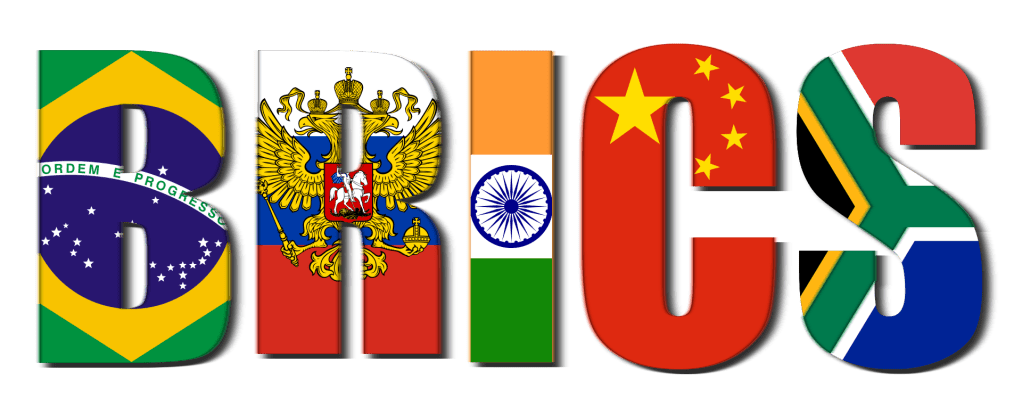
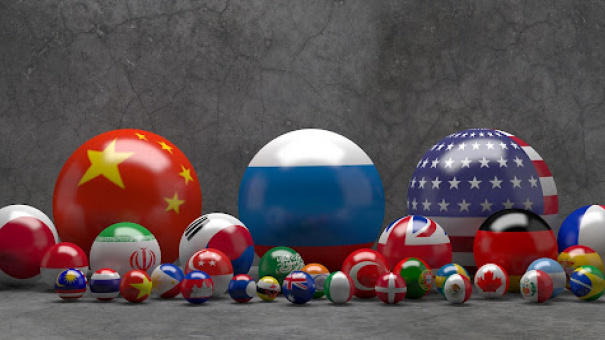
After the incorporation of South Africa to this group in 2010, the BRICS has generated such real prospects that other nations with productive capacity and diversified economies have expressed interest in joining. Among them are Saudi Arabia, Algeria, Argentina, the United Arab Emirates, and Mexico.

In the article “Can the BRICS Trump the IMF and the World Bank?,” Palestinian-American journalist Ramzy Baroud noted that “one of the biggest opportunities and challenges” the BRICS now faces is expanding its membership while maintaining its current growth.

Recent financial reports revealed that the BRICS have the world’s largest gross domestic product (GDP) and that economic bloc contributes 31.5 percent of global GDP, while the Group of Seven (G7) stuck at 30.7 percent.

The International Monetary Fund (IMF) and the World Bank (WB) are known for providing financial support to developing countries under conditions that, under the pretext of defending human rights or democracy, seek to favor the privatization of public goods and the opening of domestic markets for Western foreign investors.

Due to these politically-driven conditionalities, the struggle for alternatives to the IMF-WB mechanisms becomes a political task. The Global South requires international institutions that are not interested in indirectly manipulating or controlling national economies.

That is the call for the BRICS to evolve towards integration schemes that go beyond the exclusively economic realm, although the basis of the fight against the U.S.-controlled institutions is the formation of an alternative economy.

Recently, the BRICS placed a capital of US$50 billion for the launch of their New Development Bank (NDB), which will be chaired by former Brazilian president Dilma Rousseff.

This happened at a time when presidents Xi Jinping (China) and Lula da Silva (Brazil) showed a shared interest in influencing the peaceful solution of the Ukrainian conflict.

Under these circumstances, to argue that the BRICS are a group with purely economic interests is to ignore much of the its history.

“The timing of the BRICS expansion, the stern political discourse of its members, potential members and allies, the repeated visits by top Russian and Chinese diplomats to Africa and other regions of the Global South, etc… indicate that the BRICS have become the new geopolitical, economic and diplomatic platform for the countries of the South,” said Baroud.

Meanwhile, the Western powers, whose economies are struggling to stay afloat, are closely and suspiciously watching the changes taking place in the Global South at the hands of the BRICS.

Toxic Contagion – Funds, Food and Pharma

By Colin Todhunter

Source: Off-Guardian

In 2014, the organisation GRAIN revealed that small farms produce most of the world’s food in its report Hungry for land: small farmers feed the world with less than a quarter of all farmland.

The report Small-scale Farmers and Peasants Still Feed the World (ETC Group, 2022) confirmed this.

Small farmers produce up to 80% of the food in the non-industrialised countries. However, they are currently squeezed onto less than a quarter of the world’s farmland. The period 1974-2014 saw 140 million hectares – more than all the farmland in China – being taken over for soybean, oil palm, rapeseed and sugar cane plantations.

GRAIN noted that the concentration of fertile agricultural land in fewer and fewer hands is directly related to the increasing number of people going hungry every day. While industrial farms have enormous power, influence and resources, GRAIN’s data showed that small farms almost everywhere outperform big farms in terms of productivity.

In the same year, policy think tank the Oakland Institute released a report stating that the first years of the 21 century will be remembered for a global land rush of nearly unprecedented scale. An estimated 500 million acres, an area eight times the size of Britain, were reported bought or leased across the developing world between 2000 and 2011, often at the expense of local food security and land rights.

Institutional investors, including hedge funds, private equity, pension funds and university endowments, were eager to capitalise on global farmland as a new and highly desirable asset class.

This trend was not confined to buying up agricultural land in low-income countries. Oakland Institute’s Anuradha Mittal argued that there was a new rush for US farmland. One industry leader estimated that $10 billion in institutional capital was looking for access to this land in the US.

Although investors believed that there is roughly $1.8 trillion worth of farmland across the US, of this between $300 billion and $500 billion (2014 figures) is considered to be of “institutional quality” – a combination of factors relating to size, water access, soil quality and location that determine the investment appeal of a property.

In 2014, Mittal said that if action is not taken, then a perfect storm of global and national trends could converge to permanently shift farm ownership from family businesses to institutional investors and other consolidated corporate operations.

WHY THIS MATTERS

Peasant/smallholder agriculture prioritises food production for local and national markets as well as for farmers’ own families, whereas corporations take over fertile land and prioritise commodities or export crops for profit and markets far away that tend to cater for the needs of more affluent sections of the global population.

In 2013, a UN report stated that farming in rich and poor nations alike should shift from monocultures towards greater varieties of crops, reduced use of fertilisers and other inputs, increased support for small-scale farmers and more locally focused production and consumption of food. The report stated that monoculture and industrial farming methods were not providing sufficient affordable food where it is needed.

In September 2020, however, GRAIN showed an acceleration of the trend that it had warned of six years earlier: institutional investments via private equity funds being used to lease or buy up farms on the cheap and aggregate them into industrial-scale concerns. One of the firms spearheading this is the investment asset management firm BlackRock, which exists to put its funds to work to make money for its clients.

BlackRock holds shares in a number of the world’s largest food companies, including Nestlé, Coca-Cola, PepsiCo, Walmart, Danone and Kraft Heinz and also has significant shares in most of the top publicly traded food and agriculture firms: those which focus on providing inputs (seeds, chemicals, fertilisers) and farm equipment as well as agricultural trading companies, such as Deere, Bunge, ADM and Tyson (based on BlackRock’s own data from 2018).

Together, the world’s top five asset managers – BlackRock, Vanguard, State Street, Fidelity and Capital Group – own around 10–30% of the shares of the top firms in the agrifood sector.

The article Who is Driving the Destructive Industrial Agriculture Model? (2022) by Frederic Mousseau of the Oakland Institute showed that BlackRock and Vanguard are by far the biggest shareholders in eight of the largest pesticides and fertiliser companies: Yara, CF Industries Holdings K+S Aktiengesellschaft, Nutrien, The Mosaic Company, Corteva and Bayer.

These companies’ profits were projected to double, from US$19 billion in 2021 to $38 billion in 2022, and will continue to grow as long as the industrial agriculture production model on which they rely keeps expanding. Other major shareholders include investment firms, banks and pension funds from Europe and North America.

Through their capital injections, BlackRock et al fuel and make huge profits from a globalised food system that has been responsible for eradicating indigenous systems of production, expropriating seeds, land and knowledge, impoverishing, displacing or proletarianizing farmers and destroying rural communities and cultures. This has resulted in poor-quality food and illness, human rights abuses and ecological destruction.

SYSTEMIC COMPULSION

Post-1945, the Rockefeller Chase Manhattan bank with the World Bank helped roll out what has become the prevailing modern-day agrifood system under the guise of a supposedly ‘miraculous’ corporate-controlled, chemical-intensive Green Revolution (its much-heralded but seldom challenged ‘miracles’ of increased food production are nothing of the sort; for instance, see the What the Green Revolution Did for India and New Histories of the Green Revolution).

Ever since, the IMF, the World Bank and the WTO have helped consolidate an export-oriented industrial agriculture based on Green Revolution thinking and practices. A model that uses loan conditionalities to compel nations to ‘structurally adjust’ their economies and sacrifice food self-sufficiency.

Countries are placed on commodity crop production treadmills to earn foreign currency (US dollars) to buy oil and food on the global market (benefitting global commodity traders like Cargill, which helped write the WTO trade regime – the Agreement on Agriculture), entrenching the need to increase cash crop cultivation for exports.

Today, investment financing is helping to drive and further embed this system of corporate dependency worldwide. BlackRock is ideally positioned to create the political and legislative framework to maintain this system and increase the returns from its investments in the agrifood sector.

The firm has around $10 trillion in assets under its management and has, according to William Engdahl, positioned itself to effectively control the US Federal Reserve, many Wall Street mega-banks and the Biden administration: a number of former top people at BlackRock are in key government positions, shaping economic policy.

So, it is no surprise that we are seeing an intensification of the lop-sided battle being waged against local markets, local communities and indigenous systems of production for the benefit of global private equity and big agribusiness.

For example, while ordinary Ukrainians are currently defending their land, financial institutions are supporting the consolidation of farmland by rich individuals and Western financial interests. It is similar in India (see the article The Kisans Are Right: Their Land Is at Stake) where a land market is being prepared and global investors are no doubt poised to swoop.

In both countries, debt and loan conditionalities on the back of economic crises are helping to push such policies through. For instance, there has been a 30+ year plan to restructure India’s economy and agriculture. This stems from the country’s 1991 foreign exchange crisis, which was used to impose IMF-World Bank debt-related ‘structural adjustment’ conditionalities. The Mumbai-based Research Unit for Political Economy locates agricultural ‘reforms’ within a broader process of Western imperialism’s increasing capture of the Indian economy.

Yet ‘imperialism’ is a dirty word never to be used in ‘polite’ circles. Such a notion is to be brushed aside as ideological by the corporations that benefit from it. Instead, what we constantly hear from these conglomerates is that countries are choosing to embrace their entry and proprietary inputs into the domestic market as well as ‘neoliberal reforms’ because these are essential if we are to feed a growing global population. The reality is that these firms and their investors are attempting to deliver a knockout blow to smallholder farmers and local enterprises in places like India.

But the claim that these corporations, their inputs and their model of agriculture is vital for ensuring global food security is a proven falsehood. However, in an age of censorship and doublespeak, truth has become the lie and the lie is truth. Dispossession is growth, dependency is market integration, population displacement is land mobility, serving the needs of agrifood corporations is modern agriculture and the availability of adulterated, toxic food as part of a monoculture diet is feeding the world.

And when a ‘pandemic’ was announced and those who appeared to be dying in greater numbers were the elderly and people with obesity, diabetes and cardio-vascular disease, few were willing to point the finger at the food system and its powerful corporations,   practices and products that are responsible for the increasing prevalence of these conditions (see campaigner Rosemary Mason’s numerous papers documenting this on Academia.edu). Because this is the real public health crisis that has been building for decades.

But who cares? BlackRock, Vanguard and other institutional investors? Highly debatable because if we turn to the pharmaceuticals industry, we see similar patterns of ownership involving the same players.

A December 2020 paper on ownership of the major pharmaceuticals companies, by researchers Albert Banal-Estanol, Melissa Newham and Jo Seldeslachts, found the following (reported on the website of TRT World, a Turkish news media outlet):

Public companies are increasingly owned by a handful of large institutional investors, so we expected to see many ownership links between companies — what was more surprising was the magnitude of common ownership… We frequently find that more than 50 per cent of a company is owned by ‘common’ shareholders who also own stakes in rival pharma companies.”

The three largest shareholders of Pfizer, J&J and Merck are Vanguard, SSGA and BlackRock.

In 2019, the Centre for Research on Multinational Corporations reported that payouts to shareholders had increased by almost 400 per cent — from $30 billion in 2000 to $146 billion in 2018. Shareholders made $1.54 trillion in profits over that 18-year period.

So, for institutional investors, the link between poor food and bad health is good for profit. While investing in the food system rakes in enormous returns, you can perhaps double your gains if you invest in pharma too.

These findings predate the 2021 documentary Monopoly: An Overview of the Great Reset, which also shows that the stock of the world’s largest corporations are owned by the same institutional investors. ‘Competing’ brands, like Coke and Pepsi, are not really competitors, since their stock is owned by the same investment companies, investment funds, insurance companies and banks.

Smaller investors are owned by larger investors. Those are owned by even bigger investors. The visible top of this pyramid shows only Vanguard and Black Rock.

A 2017 Bloomberg report states that both these companies in the year 2028 together will have investments amounting to $20 trillion.

While individual corporations – like Pfizer and Monsanto/Bayer, for instance – should be (and at times have been) held to account for some of their many wrongdoings, their actions are symptomatic of a system that increasingly leads back to the boardrooms of the likes of BlackRock and Vanguard.

Prof Fabio Vighi of Cardiff University says:

Today, capitalist power can be summed up with the names of the three biggest investment funds in the world: BlackRock, Vanguard and State Street Global Advisor. These giants, sitting at the centre of a huge galaxy of financial entities, manage a mass of value close to half the global GDP, and are major shareholders in around 90% of listed companies.”

These firms help shape and fuel the dynamics of the economic system and the globalised food regime, ably assisted by the World Bank, the IMF, the WTO and other supranational institutions. A system that leverages debt, uses coercion and employs militarism to secure continued expansion.

The Impending Economic Collapse – A Cause of Current Conflict

By Phil Butler

Source: New Eastern Outlook

Brazil’s Luiz Inacio Lula da Silva has called on BRICS nations to create an alternative to replace the dollar in foreign trade. Other experts suggest President Joe Biden’s policies will destroy America’s middle class for good. The news comes when China and Russia strengthen ties with Brazil and Latin America. Brazil’s leader questioned the institution of the U.S. dollar as the world’s trade currency in the first place and asked why each country could not trade in its currency.

This brings to the forefront the historical moment when the gold standard was abolished in favor of the current system. When President Richard Nixon moved to abolish the gold standard as a commitment mechanism, his administration ushered in decades of relative volatility and made hard currency.

The exchange of gold was severely curtailed through the Bretton Woods international monetary agreement of 1944. When the International Monetary Fund was established, the U.S. Dollar became the most potent currency in the world. Initially, the role of the IMF was only to assist with international transactions, but as we see today, that institution has far overstepped its original purpose. Today, the IMF is a leverage arm for the United States and a few European nations to fund countries/regimes that align with its policy. The U.S., for instance, has an almost 20% share of contributions to the fund.

The primary purpose of remaining off the gold standard is that the government can print money endlessly, with two primary goals. First, a massive defense budget and needless proxy wars would not be possible if the United States were on the gold standard. Secondly, the people who control the central banks cannot extract interest on national debts that are currently out of control. So, the fiat currency supposedly backed by the “full faith and credit” of the government, the dollar, is worth what lying politicians and finance ministers say it is.

One look at the worldwide bond market reveals a disturbing imbalance. The U.S., which now has over $51 trillion in outstanding debt, has borrowed more to finance wars and programs than China, Japan, Germany, Italy, France, the U.K., and Canada combined. The American taxpayer is responsible for almost 40% of all the foreign debt in the world. And the outlook for the short and long-term future could be better.

President Joe Biden wants to borrow even more when his administration conducts a proxy war against Russia in Ukraine. With billions flowing into Europe’s most corrupt country, Americans are on the precipice of an economic catastrophe not seen since the Great Depression.

According to the Bipartisan Policy Center in Washington and the Congressional Budget Office, the government will no longer be able to pay everyone — including bondholders, Social Security recipients, and federal employees — sometime this summer or early this fall. A New York Times report from late March outlines the situation. But the problem is far worse than many experts suggest. No matter which way lawmakers move, the U.S. has almost insurmountable fiscal issues. The ramifications will be dire whether or not they raise the debt limit. And if the BRICS countries go off the dollar as a trade currency… Well.

Many experts predict that American greenbacks won’t be worth the printed paper if the world stops using the U.S. dollar as its world currency reserve. Moreover, if the dollar loses its value significantly, every American who owes a credit card loan or a home mortgage will find it ten times harder to pay off those debts.

To make matters worse, millions of jobs will be sacrificed for the Federal Reserve to get any financial stability. Analysis from RSM International shows that the central banks must “induce” a recession to get America’s economic situation in check. And the dollar being made useless by the larger world community was not a factor in their analysis.

The bottom line is if we were still on the gold standard, this would be fine. The gold standard reduced the risks of such economic crises and recessions. Income levels were higher when we were on the bullion-backed system. More importantly, the gold standard created hard limits on printing money and limiting military spending. For more intuition on this, this Barron’s report reveals how our current failing system came into being. The information also serves as a crystal ball for what will happen.

As confidence in the dollar wanes and U.S. policy overseas gets more aggressive toward BRICS nations and others, the tipping point of the American hegemony draws closer.

Hunger Profiteers, Granny Killers, and Skin-Deep Morality

By Colin Todhunter

Source: Dissident Voice

Today, a fifth (278 million) of the African population are undernourished, and 55 million of that continent’s children under the age of five are stunted due to severe malnutrition.  

In 2021, an Oxfam review of IMF COVID-19 loans showed that 33 African countries were encouraged to pursue austerity policies. Oxfam and Development Finance International also revealed that 43 out of 55 African Union member states face public expenditure cuts totalling $183 billion over the next few years. 

As a result, almost three-quarters of Africa’s governments have reduced their agricultural budgets since 2019, and more than 20 million people have been pushed into severe hunger. In addition, the world’s poorest countries were due to pay $43 billion in debt repayments in 2022, which could otherwise cover the costs of their food imports. 

Last year, Oxfam International Executive Director Gabriela Bucher stated that there was a terrifying prospect that in excess of a quarter of a billion more people would fall into extreme levels of poverty in 2022 alone. That year, food inflation rose by double digits in most African countries.  

By September 2022, some 345 million people across the world were experiencing acute hunger, a number that has more than doubled since 2019. Moreover, one person is dying of hunger every four seconds. From 2019 to 2022, the number of undernourished people grew by 150 million

Billions of dollars’ worth of arms continue to pour into Ukraine from the NATO countries as US neocons pursue their goal of regime change in Russia and balkanisation of that country. 

Yet people in those NATO countries are experiencing increasing levels of hardship. The US has sent almost 80 billion dollars to Ukraine, while 30 million low-income people across the US are on the edge of a ‘hunger cliff’ as a portion of their federal food assistance is taken away. In 2021, it was estimated that one in eight children were going hungry in the US. In England, 100,000 children have been frozen out of free school meals.  

Due to the disruptive supply chain effects of the conflict in Ukraine, speculative trading that drives up food prices, the impact of closing down the global economy under the guise of COVID and the inflationary impacts of pumping trillions of dollars into the financial system between September 2019 and March 2020, people are being driven into poverty and denied access to sufficient food. 

Matters are not helped by issues that have long plagued the global food system: cutbacks in public subsidies to agriculture, WTO rules that facilitate cheap, subsidised imports which undermine or wipe out indigenous agriculture in poorer countries and loan conditionalities, resulting in countries ‘structurally adjusting’ their agri sectors thereby eradicating food security and self-sufficiency – consider that Africa has been transformed from a net food exporter in the 1960s to a net food importer today.  

Great game food geopolitics continue and result in elite interests playing with the lives of hundreds of millions who are regarded as collateral damage. Policies, underpinned by neoliberal dogma masquerading as economic science and necessity, which are designed to create dependency and benefit a handful of multi-billionaires and global agribusiness corporations who, ably assisted by the World Bank, IMF and WTO, now preside over an increasingly centralised food regime. 

Many of these corporations have engaged in rampant profiteering at a time when people across the world are experiencing rising food inflation. For instance, 20 corporations in the grain, fertiliser, meat and dairy sectors delivered $53.5 billion to shareholders in the fiscal years 2020 and 2021. At the same time, the UN estimates that $51.5 billion would be enough to provide food, shelter and lifesaving support for the world’s 230 million most vulnerable people. 

As a paper in the journal Frontiers noted in 2021, these corporations form part of a powerful alliance of multinational corporations, philanthropies and export-oriented countries who are subverting multilateral institutions of food governance. Many who are involved in this alliance are co-opting the narrative of ‘food systems transformation’ as they anticipate new investment opportunities and seek total control of the global food system. 

This type of ‘transformation’ is more of the same wrapped in a climate emergency narrative in an attempt to move food and farming further towards an ecomodernist techno-dystopia controlled by big agribusiness and big tech, as described in the article “The Netherlands: Template for Ecomodernism’s Brave New World.” 

A ‘brave new world’ where a concoction of genetically engineered items, synthetic food and ultra-processed products will do more harm than good – but will certainly boost the bottom line of the pharmaceutical corporations.  

While securing further dominance over the global food system and undermining food security in the process, global agribusiness frames this as ‘feeding the world’. 

The model these corporations promote not only creates food insecurity but also produces death and illness.   

Former Professor of Medicine Dr Paul Marik recently stated

If you believe the narrative, Type 2 diabetes is a progressive metabolic disease that’ll result in cardiac complications. You’re going to lose your legs. You’re going to have kidney disease, and the only treatment is expensive pharma drugs. That is completely false. It’s a lie.

It is projected that by the end of this decade half of the world’s population are going to be obese and over 20% to 25% will have Type 2 diabetes.   

According to Marik, the bottom line is Type 2 diabetes is a metabolic disease due to bad lifestyle and really bad eating habits: 

“We eat all the time. We snack all the time. This is part of the food industry’s goal. Processed food, starch, becomes an addiction. Most of us are glucose addicted and it’s, in fact, more addictive than cocaine. It creates this vicious cycle of insulin resistance.” 

He adds that if you’re insulin resistant, this prevents leptin and the other hormones acting on your brain, so you’re continually hungry: 

“If you are continually hungry, you eat more, which causes more insulin resistance. It causes this vicious cycle of overeating carbohydrates…” 

This is the nature of the modern food system. Cheap processed ingredients, low-nutrient value, highly addictive and maximum profits. A system that is being imposed or has already been imposed on countries whose populations once had healthy, unadulterated diets (see Obesity, malnutrition and the globalisation of bad food – theecologist.org). 

Over the past 60 years in Western nations, there have been fundamental changes in the quality of food. In 2007, nutritional therapist David Thomas in “A Review of the 6th Edition of McCance and Widdowson’s the Mineral Depletion of Foods Available to Us as a Nation” noted a precipitous change towards convenience and pre-prepared foods containing saturated fats, highly processed meats and refined carbohydrates, often devoid of vital micronutrients yet packed with a cocktail of chemical additives including colourings, flavourings and preservatives. 

Aside from the negative impacts of Green Revolution cropping systems and practices, Thomas proposed that these changes are significant contributors to rising levels of diet-induced ill health. He added that ongoing research clearly demonstrates a significant relationship between deficiencies in micronutrients and physical and mental ill health. 

Increasing prevalence of diabetes, childhood leukaemia, childhood obesity, cardiovascular disorders, infertility, osteoporosis and rheumatoid arthritis, mental illnesses and so on have all been shown to have some direct relationship to diet, specifically micronutrient deficiency, and pesticide use

It is clear that we have a deeply unjust and unsustainable food system that causes environmental devastation, illness and malnutrition, among other things. People often ask: So, what’s the solution? The solutions have been made clear time and again and involve a genuine food transition towards agroecology.  

Unlike the co-opted version of ‘food transition’ being promoted, agroecology offers concrete, practical solutions to many of the world’s problems that move beyond (but which are linked to) agriculture. Agroecology challenges the prevailing moribund doctrinaire economics of a neoliberalism that drives a failing system. Well-known academics like Raj Patel and Eric Holtz-Gimenez have written extensively on the potential of agroecology. And its benefits are clear

In finishing, let us consider the skin-deep morality pedalled throughout the COVID period. During COVID, the official narrative was underpinned by emotive slogans like ‘protect lives’ and ‘keep safe’. Those who refused the COVID jab were labelled ‘granny killers’ and ‘irresponsible’. All presided over by government politicians who too often failed to obey their own COVID rules.  

Meanwhile, while having terrorised the public with a health crisis narrative, they continue to collude with powerful agrifood corporations that destroy health courtesy of their practices. They continue to facilitate a system that serves the needs of global agricapital and ruthless investors like BlackRock’s Larry Fink who secure massive profits from a monopolistic food system (Fink also invests in the pharma sector – one of the biggest beneficiaries of a sickening global food regime) that by its very nature creates illness, malnutrition and hunger.    

The COVID narrative was imbued with the notion of moral responsibility. The people who sold it to the masses have no morality. Like the UK’s former health minister and COVID rule breaker Matt Hancock (see Matt Hancock’s Car Crash Interview), they are willing to sell their soul (or influence) to the highest bidder – in Hancock’s case, a £10,000 wage demand for a day’s ‘consultancy’ as a sitting politician or a few hundred thousand to bolster his ego, bank balance and image on a celebrity TV programme.  

In a corrupted and corrupting society, the rewards could be even higher for the likes of Hancock when he leaves office (a health minister who helped traumatise the population while doing nothing to hold the health-damaging agribusiness corporations to account). But with a long line of well-rewarded fraudsters to choose from, we already know that.

In a Multipolar World, the Idea of a New World Order Dies

By Timothy Alexander Guzman

Source: Silent Crow News

When former US President and war criminal George W. Bush and his neocon regime launched their anti-terrorism campaign after the September 11th attacks, he declared that “Every nation, in every region, now has a decision to make. Either you are with us, or you are with the terrorists.”  Western threats against the Global South continues today.  In the recent Munich Security Conference 2023, German Foreign Minister Annalena Baerbock said that “Neutrality is not an option, because then you are standing on the side of the aggressor,” she continued “and this is a plea we are also giving next week to the world again:  Please take a side, a side for peace, a side for Ukraine, a side for the humanitarian international law, and these times this means also delivering ammunition so Ukraine can defend itself.”  Most of the world does not agree with Western leaders that Russia is the aggressor in this conflict.  Ukraine goal is to become a member of NATO which would be a threat to Russia’s security concerns right on its borders.  As history shows, it was Ukraine who has bombed the Donbas region for more than 8 years which includes the areas of Donetsk and Luhansk killing more than 8,000 people with the help of US-NATO forces whose sole purpose is to destroy Russia.  This is the work of the Western powers who want nothing more than to contain Russia’s rise as a major player on the world stage.        

Not only Russia has been a victim of Western aggression, many countries in the Global South has also witnessed endless wars, coups and regime change operations with western-backed color revolutions since the end of World War II.  Since the war started in Ukraine, it is only now that the mainstream media is starting to take notice that the Global South is starting to rebel against Western powers on many levels at least according to France24.com, ‘Ukraine war exposes splits between Global North and South’ reflects on the current situation that “a tectonic chasm appears to have split the Global North from the Global South. Confronted with the sort of aggression and territorial expansionism that the postwar world order was designed to avert, the Western alliance, also called the Global North, has overcome competition and rivalries to maintain unity.” The West defeated their “competition and rivalries” by bombing countries back to the stone age like they did to Iraq and Libya.  It is well known that Saddam Hussein and Muammar Gaddafi wanted to change course in how their countries conducted business with the rest of the world by abandoning the use of US dollars in favor of other currencies.  In the case of Iraq, the US and its allied partners were also doing Israel a favor in destroying an adversary.  So, a shift has taken place with “more than 70 years after the end of World War II, several countries of Asia, Africa, the Middle East, and South America that were “emerging” for decades have essentially emerged on the world stage” forming what is now known as the ‘Global South.’

The war in Ukraine has changed everything for the globalists insane vision for humanity, now they accuse Russia of being the aggressor for expanding its footprint in Ukraine but ignoring the 8-year bombing campaign in the Donbas region by the Ukrainian forces with NATO’s assistance.  Did the US and in most cases their NATO allies “avert” their own “aggressive” wars against Vietnam, Iraq, or Libya?  As for “territorial expansion” doesn’t the US, France, and other Western powers still have colonies around the world?  The US also illegally occupies northern Syria and Iraq with military bases, and that is a form of territorial expansion. 

Newsweek published an interesting opinion piece by Michael Gfoeller and David H. Rundell, ‘Nearly 90 Percent of the World Isn’t Following Us on Ukraine | Opinion’ says that there is a growing anti-Western sentiment in the Global South:

Alliances that were created in part to counter Western economic and political influence are expanding. Egypt, Saudi Arabia, and Turkey have announced their interest in joining the BRICS (Brazil, Russia, India, China, and South Africa). The Shanghai Cooperative Organization currently links China, Russia, India, and Pakistan, among others. Iran plans to join this month while Bahrain, Egypt, Saudi Arabia, and Qatar are likely to become “dialogue partners,” or candidate members.

Additionally, China’s ambitious Belt and Road Initiative is tying many African nations to Beijing with cords of trade and debt. Russia is also reaching out in the form of Foreign Minister Sergey Lavrov, who recently addressed his 22 Arab League counterparts in Cairo before touring a number of African countries.

If that’s not enough to give the West pause, Moscow is again on the offensive in Latin America, strengthening its military relationships with Nicaragua, Venezuela, and Cuba. The two powerhouses of that region, Brazil, and Mexico, have pointedly refused to back Western sanctions against Russia

Gfoeller and Rundell admit on a mainstream media news magazine that dollarsare tools of economic warfare from imposing crippling sanctions to asset seizures on countries who don’t follow Washington’s orders, but it is only an opinion piece, obviously not an article that will make the front-page news:  

The dollar’s reserve currency status remains a pillar of the global economic order, but trust in that order has been damaged. Economic sanctions have weaponized parts of the international banking and insurance sectors including the SWIFT fund transfer system. Assets have been seized and commodity contracts canceled. Calls for de-dollarization have become louder. When Russia demanded energy payments in rubles, yuan or UAE Dirhams, China and India complied.

These concerns are generating considerable anti-Western sentiment across much of the Global South. While a nuclear-armed Russia shows no willingness to end a war its leaders cannot afford to lose; the West is rapidly losing the rest and thus undermining the very rules-based international order it has sought to create. Our most promising solution to this dilemma is likely to be some sort of diplomatic compromise

Yes, it’s true the dynamics of the world order has changed dramatically since the day US President George H.W. Bush (whose father Prescott Bush, a founder of the Union Banking Corporation, an investment bank that had ties to a German businessman, Fritz Thyssen who supported the Nazis) gave a speech on the invasion of Iraq on January 16th, 1991.  Here is part of what he said:

This is an historic moment. We have in this past year made great progress in ending the long era of conflict and cold war. We have before us the opportunity to forge for ourselves and for future generations a new world order—a world where the rule of law, not the law of the jungle, governs the conduct of nations. When we are successful—and we will be—we have a real chance at this new world order, an order in which a credible United Nations can use its peacekeeping role to fulfill the promise and vision of the U.N.’s founders

They had passed the test then, today, it’s a different story, the world is tired of Western hypocrisy, of its continuous wars and CIA-backed coups against their governments who don’t always agree with their prescriptions for democracy.  However, the idea of a new world order did not begin with Bush Sr, it began after the creation of the League of Nations after World War I when US President Woodrow Wilson called for a new world order to enhance global security and democracy.  But the idea of forming a new world order or globalist empire to impose a rules-based order should be a forgone conclusion, they don’t work, and they are destructive.  Globalist power structures or empires eventually destroy themselves from within, so, is it worth it for the regime in power?  Some people would also say that Russia and China want to rule the world.  They don’t, they know managing an empire is immoral, extremely costly, and incredibly ridicules to rule a world full of different ideas, cultures, ethnicities, and languages.  They know that diplomacy, respect, and trade is a better option for the sake of humanity.  Now, does it mean that in a multipolar world, future wars will be prevented? Not necessarily, but at least it’s worth a try given the fact that the US and its Western allies have created nothing but wars and chaos since the end of World War II and now we are at a point that this world order-based system is about to unleash a devastating war involving nuclear weapons.    

Since World War II, it has been the US at the forefront who has been building a world order based on its hegemonic projections to control every nation on earth.  China’s Ministry of Foreign Affairs decided to take the gloves off and publish, ‘US Hegemony and Its Perils’ which exposes how the US has used its superpower status including its economic, financial, political, and military machine to create their ‘hegemonic playbook:

The United States has developed a hegemonic playbook to stage “color revolutions,” instigate regional disputes, and even directly launch wars under the guise of promoting democracy, freedom and human rights. Clinging to the Cold War mentality, the United States has ramped up bloc politics and stoked conflict and confrontation. It has overstretched the concept of national security, abused export controls and forced unilateral sanctions upon others. It has taken a selective approach to international law and rules, utilizing or discarding them as it sees fit, and has sought to impose rules that serve its own interests in the name of upholding a “rules-based international order.”

This report, by presenting the relevant facts, seeks to expose the U.S. abuse of hegemony in the political, military, economic, financial, technological, and cultural fields, and to draw greater international attention to the perils of the U.S. practices to world peace and stability and the well-being of all peoples

China is not seeking to become the next empire as the mainstream media is warning about especially FOX news and others.  In 2018, Dr. Chandra Muzaffar, a Malaysian political scientist and activist wrote ‘China, A New Imperial Power? asked in his introduction “Is China a new imperial power threatening some of the developing economies in Asia and Africa?”  He said that “this is a perception that is being promoted through the media by certain China watchers in universities and think-tanks mainly in the West, various politicians and by a segment of the global NGO community.”  One of the red flags for US and European media networks was that China was offering unpayable loans to poor countries in what was and still is considered a “debt trap” at least to the China war hawks in Washington.  Dr. Muzaffar explains why the West is wrong about China’s debt trap concerning one of the countries who accepted a loan and that is Pakistan:

Pakistan has taken loans from China for projects under the China Pakistan Economic Corridor (CPEC). The US 50 billion CPEC is a network of infrastructure projects that are currently under construction throughout Pakistan that will connect China’s Xinjiang province with Gwadar port in Pakistan’s Balochistan province. A number of these projects will strengthen Pakistan’s energy sector which is vital for its economic growth. They will help to reduce its severe trade deficit. Debt servicing of CPEC loans which will only start this year amounts to less than 80 million.

Pakistan’s largest creditors are not China, but Western countries and multilateral lenders led by the IMF and international commercial banks. Its foreign debt “is expected to surpass 95 billion this year and debt servicing is projected to reach 31 billion by 2022-2023.” There is evidence to show that its creditors “have been actively meddling in Pakistan’s fiscal policies and its sovereignty through debt rescheduling programs and the conditionalities attached to IMF loans”

He also says that the majority of Africa’s long-term debt has been managed by the International Monetary Fund (IMF) and the World Bank but says that “many African states have Chinese debt. This in itself is not a problem — provided loans are utilized for the public good. In this regard, infrastructure financing under the Belt and Road Initiative (BRI) — building ports, railways and fiber-optic cables — appears to be a major component of China’s involvement in Africa.” 

Djibouti had excepted 1.4 billion from China that allowed China to build its first military base.  Western bureaucrats and military officials claimed that China is expanding its empire in Africa according to a report by the US Naval Institute (USNI) on what U.S. Africa Commander Army Gen. Stephen Townsend told the House Armed Services Committee back in April 2021 “that the People’s Liberation Army was expanding its existing naval installation adjacent to a Chinese-owned commercial deep-water port and also seeking other military basing options elsewhere on the continent” and that “Their first overseas military base, their only one, is in Africa, and they have just expanded that by adding a significant pier that can even support their aircraft carriers in the future. Around the continent they are looking for other basing opportunities.” Dr. Muzaffar reminds us that “It should be noted at the same time that Djibouti also hosts the largest US military base in Africa” However, he also makes the case that China’s rise is economic in nature while the West continues its neocolonial agenda:

Djibouti aside, Chinese ventures in Africa have been almost totally economic. The quid pro quo for the Chinese it is true has been access to the continent’s rich natural resources. But it is always access, never control. Control over the natural resources of the nations they colonised was the driving force behind 19th century Western colonialism. Control through pliant governments and, in extreme cases, via regime change continues to be a key factor in the West’s — especially the US’s — quest for hegemony over Africa and the rest of the contemporary world.

It is because China’s peaceful rise as a global player challenges that hegemony that the centres of power in the West are going all out to denigrate and demonise China. Labelling China as a new imperial or colonial power is part of that vicious propaganda against a nation, indeed a civilisation that has already begun to change the global power balance. It is a change — towards a more equitable distribution of power — that is in the larger interest of humanity. For that reason, the people of the world should commit themselves wholeheartedly to the change that is embracing all of us

China understands what invading empires are capable of since they were invaded themselves by Japan’s Imperial forces during World War II which was a horrible occupation that led to the countless deaths and the destruction of Chinese society.  The Soviets also lived through the horrors of Hitler’s invading forces.  Maintaining an empire is immoral and costly, so rising powers such as China, Russia or India are not interested in controlling and occupying any sovereign countries for their political or economic gain.   

A Multipolar World is Inevitable as the UN Vote to Condemn Russia Invasion Fails  

Western nations and their allies including the US, European Union, Canada, Australia, UK, Japan, South Korea, Taiwan, and other puppet governments represent more than 1 billion people which has been held together under a rules-based unipolar world order, as for the Global South, it accounts for more than 6 billion people.  Regarding the war in Ukraine, many countries who are part of the Global South abstained from voting for a UN General Assembly on March 2nd, 2022, to condemn Russia’s invasion including 17 African countries.  The East African ‘17 African countries abstain from UN vote to condemn Russia invasion’ said that more than 35 countries had decided to abstain from voting to condemn Russia’s invasion of Ukraine “Some 35 countries abstained from the vote, including Russia and China, and African states – Burundi, Senegal, South Sudan, South Africa, Uganda, Mali and Mozambique.”  Algeria, Bolivia, Cuba, Iran, Iraq, Laos, Mozambique, Nicaragua, Pakistan, South Africa, and Vietnam also Abstained shows that the tide is turning against the West.  Those who voted against the resolution was Belarus, Eritrea, North Korea, and Syria.  Times are changing indeed. 

The European branch of Carnegie Endowment for International Peace or Carnegieeurope.eu published an article by Senior fellow Stefan Lehne ‘After Russia’s War Against Ukraine: What Kind of World Order?’ began his piece with the European Union’s foreign affairs chief, Josep Borrell and his comments on the difference between Europe and the rest of the world or as Borrell called the “jungle” earned protests and was criticized for it.  Borrel said that “the best combination of political freedom, economic prosperity and social cohesion that humankind has been able to build” as he compared Europe to the Global South by saying that “most of the world is a jungle and the jungle could invade the garden.”  Lehne tried to justify Borrell’s comments by saying that “this was likely a reference to Robert Kagan’s 2018 book, The Jungle Grows Back: America and Our Imperiled World.” Lehne said that Kagan’s book “amounts to a stark warning about the consequences of a U.S. retreat from its global responsibilities. Kagan writes that without determined American leadership, nations would revert to traditional patterns of behavior and the world would relapse into disorder, darkness, and chaos.”  So according to the European establishment and evidently, Robert Kagan who is the husband of Victoria Nuland who supported the coup in Ukraine back in 2014, only Europe and the US can lead the global population into a just, prosperous future even though they are responsible for many of the problems the world faces today.  The fact is that Western powers support and sometimes participate in continues wars, maintain colonial possessions, impose economic and political sanctions against those who did not follow orders to offering poor nations loans from globalist institutions such as the World Bank or the IMF that can never be repaid to organizing regime change and coups against governments they don’t like.  This is not to say that there are a handful of countries in the Global South who will betray their people for political or economic gain who will join the West if the opportunity arises such as the Brazilian president, Lula De Silva.  Overall, it is the West who has created most of the disorder, darkness, and chaos around the world in the first place. 

As for Russia, Lehne says that “Russia turned into an aggressive revisionist power.”  But he fails to mention that the actions by US-NATO forces politically and militarily caused Russia to become aggressive.  “As demonstrated by Russia’s war in Georgia in 2008, its annexation of Crimea and intervention in the Donbas in 2014, and its invasion of Ukraine in 2022, the leadership in Moscow is determined to reverse some of the losses of the 1990s, increase Russia’s territory, and establish robust zones of influence.”  So now Russia wants to expand its territory?  So after, Ukraine the Russians will invade Poland, Finland, perhaps Italy, maybe Spain?    

I disagree with Lehne’s conclusion that “Globalization has slowed but will not be completely reversed.”  The Global South is already reversing the stranglehold of Western powers on many levels.  One good example is what is happening in the African country of Burkina Faso as the government demanded that French troops withdraw from the country during rising tensions between both governments according to an africanews.com in a recent article ‘Burkina Faso confirms demanding France to withdraw troops’ reported that “The Burkina Faso government clarified on Monday that it has asked ex-colonial ruler France to pull its troops out of the insurgency-hit country within a month.”  France has more than 400 special forces troops in what is called the junta-ruled nation.  Spokesman Jean-Emmanuel Ouedraogo told Radio-Television du Burkina that“We are terminating the agreement which allows French forces to be in Burkina Faso,” government.”  He said that diplomatic relations will not end despite increasing tensions between both governments, but that is just one example.  Stepan Lehne believes that economic interdependence and international communications will need Western institutions and that is why he believes that the “the current multilateral system inherited from the postwar period will therefore survive.”  Lehne does see the reality that the world order is becoming irrelevant in the years to come “But the commitment to its rules will continue to diminish, and power politics and transactional dealmaking will often prevail.” 

The US-NATO Agenda: Balkanize Russia and Then Go to War Against China

As we all know, the US-NATO alliance is waging a proxy war in Ukraine to destabilize Russia. The ultimate goal is to balkanize Russia as they did to the former Yugoslavia.  Washington’s war hawks both Democrat and Republican, long dreamed of breaking up Russia to prevent it from becoming a rising political and economic power on the world stage.  Russia hater Zbigniew Brzezinski, a former US national security advisor to President, Jimmy Carter, a professor at Columbia University and a member of the Council of Foreign Relations (CFR) and the Bilderberg group wrote ‘The Grand Chessboard: American Primacy and Its Geostrategic Imperatives’ which was published in 1998 clearly stated that “It is imperative that no Eurasian challenger emerges, capable of dominating Eurasia and thus of also challenging America.”

As for the rise of China, the US is in the stages of planning for a war.   On January 28th, 2023, Reuter’s published ‘U.S. four-star general warns of war with China in 2025’ that “A four-star U.S. Air Force general said in a memo that his gut told him the United States would fight China in the next two years” General Mike Minihan, who heads the Air Mobility Command said, “I hope I am wrong,” he continued “My gut tells me will fight in 2025.”  The bottom line is that the US and European bureaucrats, international bankers, corporations, intelligence agencies and their Military-Industrial Complex known as the MIC all fear a multipolar world and that’s why the talk of war with Russia and China is a major part of their agenda. 

A joint statement between Russia and China was released on February 4th, here is part of the statement:

The sides support the deepened strategic partnership within BRICS, promote the expanded cooperation in three main areas: politics and security, economy and finance, and humanitarian exchanges. In particular, Russia and China intend to encourage interaction in the fields of public health, digital economy, science, innovation and technology, including artificial intelligence technologies, as well as the increased coordination between BRICS countries on international platforms. The sides strive to further strengthen the BRICS Plus/Outreach format as an effective mechanism of dialogue with regional integration associations and organizations of developing countries and States with emerging markets

The West fears the BRICS coalition and their potential to draw in the rest of the Global South.  Speaking of the Global South, an interesting analysis by the Bennet Institute for Public Policy’ sponsored by the University of Cambridge called the ‘War in Ukraine widens global divide in public attitudes to US, China and Russia – report’ suggests that the Global South and their support for China, Russia or both has increased significantly: 

However the report also identifies a zone of illiberal and undemocratic societies, stretching from East Asia through the Middle East and out towards West Africa, characterised by the exact opposite trend: populations that have steadily increased support for China, Russia, or both, in recent years. 

Among the 1.2 billion people who inhabit the world’s liberal democracies, three-quarters (75%) now hold a negative view of China, and 87% a negative view of Russia, according to the report, published today by the University’s Centre for the Future of Democracy (CFD).

Yet among the 6.3 billion who live in the world’s remaining 136 countries, the opposite is the case – with 70% of people feeling positively towards China and 66% towards Russia.  The analysis includes significant public opinion data from emerging economies and the Global South, and suggests this divide is not just economic or strategic but based in personal and political ideology

Is the Idea of a New World Order Dead?  

The Multipolar world is becoming a reality for Washington, Brussels, and the rest of their allies as their relevance is starting to diminish in the coming years, but Washington and its NATO lapdogs are willing to launch World War III against Russia and China and whoever they consider an enemy even if it means starting a nuclear war so that their world order remains relevant.  Is the West willing to risk a nuclear war for the sake of their world order even if it kills them in the process?  In the case of a nuclear war, where will the Western bureaucrats, bankers, corporate leaders, and their families run to?  Patagonia, Argentina? perhaps to one of the small islands in the pacific, maybe Fiji?  These Western leaders do not care about their citizens, they are psychopaths who are power hungry, and they will do anything they can to remain in power even if it means that their own lives will be at risk in the event of a nuclear war between the east and the west.  

Hopefully, the West will come to its senses and try to make peace with the rest of the world and abandon its idea of globalism, but from what we see in the war in Ukraine and their saber-rattling with China over Taiwan, they won’t.  Globalist David Rockefeller once said that “We are on the verge of a global transformation. All we need is the right major crisis and the Nations will accept the New World Order!” well, Rockefeller must be rolling in his grave because the world is experiencing a different kind of crisis that is challenging the economic, political, and military landscape that has been in place for centuries.    

Will there be problems and conflicts in a Multipolar world? maybe, anything is possible, but it is fair to say that the world needs something different because from what has happened in the last 500 years with Britain, France, Spain, and the Netherlands and centuries later, the US as global rulers, they only led the world to endless wars and bloodshed, so it’s time for a change.  What the world needs a new system where diplomacy, respect, and trade is the rule of law rather than wars, regime change, economic sanctions, interfering in foreign elections, biological warfare, and political assassinations.  A Multipolar world has the chance to establish a balanced landscape where no Western power can dictate its rules-based order to its former colonies and to the rest of the planet, a new landscape where even the thought of a nuclear war becomes unthinkable, and that’s the kind of world we all want. 

Not Letting a Good Tragedy Go to Waste, Banking Elite Use FTX Fraud, Crypto Crash to Push CBDCs

CBDCs mean the total death of any economic freedom the public has left…

By Tyler Durden

Source: The Free Thought Project

Central bankers and international corporate financiers have long been pretending to hate the very concept of cryptocurrencies like Bitcoin and Etherium while at the same time investing heavily in blockchain technologies and infrastructure. The purpose of the ruse is not clear, but more than likely it was an attempt at mass reverse psychology – “We don’t like crypto and digital currencies because we supposedly have no control over them; free market proponents should embrace them blindly because that is how you will beat us.”

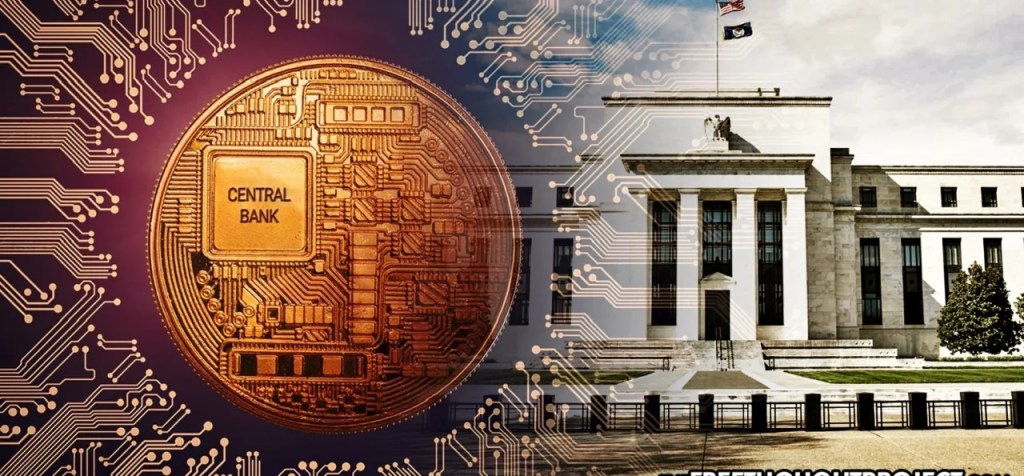
In the meantime, while major banking firms are investing billions into various blockchain products, central banks and global institutions like the BIS and IMF have been developing their own systems. In fact, the BIS notes with enthusiasm that around 90% of central banks around the world are already in the process of adopting CBDCs.

But why would anyone want to use government and establishment bank controlled cryptocurrencies when they have access to Bitcoin and dozens of other coins that are supposedly independent? Why trade freedom for more centralization?

First, existing cryptocurrencies are not as free as many people believe, with ample government tracking of blockchain transactions in place for years, the notion of the completely anonymous crypto user is a bit of a fantasy, and the idea that a product such as Bitcoin is going to “bring down” the central banks is becoming less realistic by the year.

Second, the crypto market is highly unstable in part because it is still very limited. While crypto use in America is higher than most other countries with around 12% of people using it as an investment (not as a currency), the rest of the world is mostly uninterested with an estimated global footprint of around 4%. Of that 4% only a handful of people actually own the majority of the market; these people are known as “whales” and they have the ability to tip the market up or down with little effort.

This happens in many other trade commodities and paper currencies also. The point is, crypto is not immune to manipulation.

Third, crypto is enticing to people because of the quick profits that can be had, but massive losses are also a danger. The overall crypto market has plunged by $2 trillion in the past year alone – Over 60% of its value. The implosion of huge trading companies like FTX also undermines the stability of the market and usually it’s the average investor that ends up suffering the consequences.

All of these factors and more can be used by banking elites as a rationale for the implementation of CBDCs and global regulation of crypto trading. And, if the bloodbath in existing coins continues, people may even welcome CBDCs as a “safe” investment or currency system.

The investment losses in blockchain products along with the scandals in exchanges is a rather convenient opportunity for the banking establishment to promote their own currencies as a replacement. In the wake of the FTX event, multiple international banks including JP Morgan and Goldman Sachs have called for government regulation and a shift over to CBDCs.

The US House has scheduled hearings on FTX with an emphasis on regulation. In Europe, globalist Christine Lagarde and the ECB are calling for global cooperation on monitoring and controlling cryptocurrencies. Lagarde wants a “digital Euro” to take the place of existing coins and blames FTX and the larger market losses on lack of oversight.

Numerous crypto analysts are also demanding regulation, calling crypto “broken and useless” until governments step in to mediate (control) trade. This is the exact opposite of what crypto activists originally intended over a decade ago when Bitcoin was in its infancy, and digital trade back then was sold as some kind of revolution against the banking oligarchy. However, it’s easy to see where this is all going.

It means even more pervasive centralization. With paper currencies at least there is true anonymity, but with CBDCs the existence of the blockchain ledger precludes any and all privacy in trade. Not only that, but the institutional ability to cut off people from their wealth and economic access is going to be profound. If you think corporate and government led cancel culture is bad now, just wait until they can freeze your digital accounts at a moment’s notice because of something you said on social media. And, in a cashless society there are few alternatives beyond some kind of black market.

CBDCs mean the total death of any economic freedom the public has left, and central banks are exploiting disasters like FTX to make that death happen even faster.