Were the Atomic Bombings of Hiroshima and Nagasaki a War Crime and a Crime Against Humanity?

This August 6, 1945 file photo shows the destruction from the explosion of an atomic bomb in Hiroshima Japan AP-Photo-File

By Rossen Vassilev Jr.

Source: Global Research

74 Years Ago, the first atomic bomb was dropped on Hiroshima on August 6, 1945

Was President Harry Truman “a murderer,” as the renowned British analytic philosopher Gertrude Elizabeth Anscombe once charged? Were the atomic bombings of Hiroshima and Nagasaki indeed a war crime and a crime against humanity, as she and other academic luminaries have publicly claimed? A Distinguished Professor of Philosophy and Ethics at Oxford and Cambridge, who was one of the 20th century’s most gifted philosophers and recognizably the greatest woman philosopher in history, Dr. Anscombe openly called President Truman a “war criminal” for his decision to have the Japanese cities of Hiroshima and Nagasaki leveled by atomic bombs in August 1945 (Rachels & Rachels 127). According to another academic critic, the late American historian Howard Zinn, at least 140,000 Japanese civilians were “turned into powder and ash” in Hiroshima. Over 70,000 civilians were incinerated in Nagasaki, and another 130,000 residents of the two cities died of radiation sickness in the next five years (Zinn 23).

The two most often cited reasons for President Truman’s controversial decision were to shorten the war and to save the lives of “between 250,000 and 500,000” American soldiers who could have possibly died in battle had the U.S. military had to invade the home islands of Imperial Japan. Truman reportedly claimed that

“I could not bear this thought and it led to the decision to use the atomic bomb” (Dallek 26).

But Dr. Gertrude Anscombe, who along with her husband, Dr. Peter Geach, Professor of Philosophical Logic and Ethics, were the 20th century’s foremost philosophical champions of the doctrine that moral rules are absolute, did not buy this morally callous argument:

“Come now: if you had to choose between boiling one baby and letting some frightful disaster befall a thousand people—or a million people, if a thousand is not enough—what would you do? For men to choose to kill the innocent as a means to their ends is always murder” (Rachels & Rachels 128-129).

In 1956, Professor Anscombe and other prominent faculty members of Oxford University openly protested the decision of university administrators to grant Truman an honorary degree in gratitude for America’s wartime help. She even wrote a pamphlet, explaining that the former U.S. President was “a murderer” and “a war criminal” (Rachels & Rachels 128).

In the eyes of many contemporaries of Elizabeth Anscombe, the atomic bombings of Hiroshima and Nagasaki violated famous philosophical-ethical norms such as the “Sanctity of Human Life,” the “Wrongfulness of Killing,” and also that “it is wrong to use people as means to other people’s ends.” Former President Herbert Hoover was another early critic, openly declaring that

“The use of the atom bomb, with its indiscriminate killing of women and children, revolts me” (Alperovitz The Decision 635).

Even President Truman’s own Chief of Staff, the five-star Admiral William D. Leahy (the most senior U.S. military officer during the war) made no secret of his strong disapprobation of the atomic bombings:

“It is my opinion that the use of this barbarous weapon at Hiroshima and Nagasaki was of no material assistance in our war against Japan. The Japanese were already defeated and ready to surrender because of the effective sea blockade and the successful bombing with conventional weapons…. My own feeling is that in being the first to use it, we had adopted an ethical standard common to the barbarians of the Dark Ages…. I was not taught to make war in that fashion, and wars cannot be won by destroying women and children” (Claypool 86-87, emphasis added).

The apologists for President Truman, on the other hand, seem to be using the quasi-Utilitarian “Benefits Argument” to justify the barbaric use of a devastating weapon of mass destruction, which killed hundreds of thousands of innocent civilians in the two targeted Japanese cities even though (contrary to Truman’s many public pronouncements at that time) there had been no military troops, no heavy weaponry, or even any major war-related industries in either city. Because nearly the entire adult male population of both Hiroshima and Nagasaki had been drafted by the Japanese military, it was mostly women, children, and old men who fell victims to fiery death from the sky. The excuse that Truman himself repeatedly offered was:

“The dropping of the bombs stopped the war, saved millions of lives” (Alperovitz Atomic Diplomacy 10).

He even boasted that he had “slept like a baby” the night after signing the final order to use the atomic bombs against Japan (Rachels & Rachels 127). But what Truman was saying in self-justification was far from being the truth—let alone the whole truth.

Unleashing a nuclear Frankenstein

At the urging of a fellow nuclear physicist—the anti-Nazi Hungarian émigré Leo SzilardAlbert Einstein wrote a letter to President Franklin D. Roosevelt on August 2, 1939, recommending that the U.S. government should start work on a powerful atomic device as a defensive deterrent to Nazi Germany’s possible acquisition and use of nuclear weaponry (Ham 103-104). But when the top-secret Manhattan Project finally got off the ground in early 1942, the U.S. military obviously had other, much more offensive plans regarding the future targets of America’s A-bombs. While at least 67 other Japanese cities, including the capital Tokyo, were reduced to rubble by daily conventional firebombing, including the use of napalm and other incendiaries, Hiroshima and Nagasaki had been deliberately spared for the sole purpose of testing the destructiveness of the new atomic device (Claypool 11).

An even more important reason for employing the bomb was to scare Stalin, who had turned quickly from “Old Uncle Joe” at the time of the FDR presidency into “the Red Menace” in the eyes of Truman and his top advisers. President Truman had quickly abandoned FDR’s policy of cooperation with Moscow, replacing it with a new policy of hostile confrontation with Stalin, in which America’s newly-acquired monopoly over nuclear armaments would be exploited as an aggressive tool of Washington’s anti-Soviet diplomacy (Truman’s so-called “atomic diplomacy”). Fully two months before Hiroshima and Nagasaki, the same Leo Szilard had met privately with Truman’s Secretary of State, James F. Byrnes, and had tried unsuccessfully to persuade him that the nuclear weapon should not be used to destroy helpless civilian targets such as Japan’s cities. According to Dr. Szilard,

“Mr. Byrnes did not argue that it was necessary to use the bomb against the cities of Japan in order to win the war…. Mr. Byrnes’s view [was] that our possessing and demonstrating the bomb would make Russia more manageable in Europe” (Alperovitz Atomic Diplomacy 1, 290).

The Truman Administration had, in fact, postponed the Potsdam meeting of the Big Three until July 17, 1945—one day after the successful Trinity test of the first A-bomb at the Alamogordo testing range in New Mexico—to give Truman extra diplomatic leverage in negotiating with Stalin (Alperovitz Atomic Diplomacy 6). In Truman’s own words, the atom bomb “would keep the Russians straight” and “put us in a position to dictate our own terms at the end of the war” (Alperovitz Atomic Diplomacy 54, 63).

At this point, the Truman Administration was no longer interested in having Moscow’s Red Army liberate Northern China (Manchuria) from Japanese military occupation (as FDR, Churchill, and Stalin had jointly agreed at the Yalta Conference in February 1945)—let alone invade or capture Imperial Japan itself. Quite to the contrary. Publicly deploring the “political-diplomatic rather than military motives” behind Truman’s decision to nuke Japan, Albert Einstein complained that “a great majority of scientists were opposed to the sudden employment of the atom bomb. I suspect that the affair was precipitated by a desire to end the war in the Pacific by any means before Russia’s participation” (Alperovitz The Decision 444). Winston Churchill privately told his Foreign Secretary, Anthony Eden,at the Potsdam Conference that

“It is quite clear that the United States do not at the present time desire Russian participation in the war against Japan” (Claypool 78).

Not even Tokyo’s last-minute desperate offer (made during and after the Potsdam Conference) to surrender if the Allies promised not to prosecute Japan’s god-like emperor or remove him from office—could prevent this deadly decision, even though Truman “had indicated a willingness to maintain the emperor on the throne” (Dallek 25).

Therefore, sparing the lives of American GIs was hardly one of Truman’s more convincing arguments. In early 1945, FDR and Army General Dwight Eisenhower, Supreme Commander of the Allied Forces in Europe, had together decided to leave the capture of Berlin to Soviet Marshal Georgi Zhukov‘s battle-hardened troops in order to avoid heavy American casualties. After officially declaring war on Tokyo on August 8, 1945, and having destroyed the Japanese military forces in Manchuria, Stalin’s Red Army prepared to invade and occupy Japan’s home islands—which certainly would have saved the lives of thousands of U.S. servicemen about whom Truman seemed so vocally concerned. But following Nazi Germany’s unconditional surrender in May 1945, Truman had come to share Winston Churchill’s famous revisionist assessment that “We have slain the wrong swine.”

It is not even clear whether Tokyo finally surrendered on August 14 due to the two U.S. nuclear attacks carried out on August 6 and August 9, respectively (after which there were practically no more Japanese cities left to destroy nor any more U.S. A-bombs to drop)—or because of the threat of Soviet invasion and occupation after Moscow had entered the war against the Empire of Japan. Just days before the Soviet declaration of war, the Japanese ambassador to Moscow had cabled Foreign Minister Shigenori Togo in Tokyo that Moscow’s entry into the war would spell a total disaster for Japan:

“If Russia…should suddenly decide to take advantage of our weakness and intervene against us with force of arms, we would be in a completely hopeless situation. It is clear as day that the Imperial Army in Manchukuo [Manchuria] would be completely unable to oppose the Red Army which has just won a great victory and is superior to us on all points” (Barnes).

To nuke or not to nuke

General Eisenhower was later quoted as stating his conviction that it had not been “necessary” militarily to use the bomb to force Japanese surrender:

“Japan was, at that very moment, seeking some way to surrender with a minimum loss of ‘face’…it wasn’t necessary to hit them with that awful thing” (Alperovitz Atomic Diplomacy 14).

In private, Eisenhower repeated his objections to his direct boss, Truman’s Secretary of War Henry L. Stimson:

“I had been conscious of a feeling of depression and so I voiced to him my strong misgivings, first on the basis of my belief that Japan was already defeated and that dropping the bomb was completely unnecessary, and secondly because I thought that our country should avoid shocking world opinion by the use of a weapon whose employment was, I thought, no longer mandatory as a measure to save American lives” (Alperovitz Atomic Diplomacy 14).

Admiral William F. Halsey, commander of the U.S. Third Fleet (which conducted the bulk of naval operations against the Japanese in the Pacific during the entire war), agreed that there was “no military need” to employ the new weapon, which was used only because the Truman Administration had a “toy and they wanted to try it out…. The first atomic bomb was an unnecessary experiment…. It was a mistake to ever drop it” (Alperovitz The Decision 445). Indeed, it was quite “certain” at the time that a totally devastated Japan, which was on the verge of internal collapse, would have surrendered within weeks, if not days, without the atomic bombings of Hiroshima and Nagasaki or even without the Soviet declaration of war against Tokyo. As the official U.S. Strategic Bombing Survey concluded at the end of the war, “certainly prior to 31 December 1945, and in all probability prior to 1 November 1945, Japan would have surrendered even if the atomic bombs had not been dropped, even if Russia had not entered the war, and even if no invasion had been planned or contemplated” (Alperovitz Atomic Diplomacy 10-11).

Major General Curtis E. Lemay, commander of the U.S. Twenty-first Bomber Command which had conducted the massive conventional bombing campaign against wartime Japan and dropped the atomic bombs on Hiroshima and Nagasaki, stated publicly: “I felt there was no need to use them [atomic weapons]. We were doing the job with incendiaries. We were hurting Japan badly…. We went ahead and dropped the bombs because President Truman told me to do it…. All the atomic bomb did was, in all probability, save a few days” (Alperovitz The Decision 340).

The fateful decision to drop the two atomic bombs code-named “Little Boy” and “Fat Man” on Japan may have been made a little bit more morally acceptable for Truman by the daily carpet bombing of German and Japanese cities throughout the war, including the firebombings of Hamburg, Dresden, and Tokyowhich had nearly wiped out their civilian populations. The declared goal of these relentless city-busting air raids was to destroy the morale and the will to fight of the German and Japanese people and thus shorten the war. But many years after the war Dr. Howard Zinn (himself a B-17 co-pilot and bombardier who had flown dozens of bombing missions against Nazi Germany) sadly mused: “No one seemed conscious of the irony—that one of the reasons for the general indignation against the fascist powers was their history of indiscriminate bombing of civilian populations” (Zinn 37). But, in fact, Secretary of War Henry Stimson, Admiral William Leahy, and Army General Douglas MacArthur were no less disturbed by what they saw as the barbarity of the “terror” air campaign, with Stimson privately fearing that the U.S. would “get the reputation for outdoing Hitler in atrocities” (Ham 63).

Clearly, Japan was defeated and was preparing to surrender before the bomb was used, whose main—if not the only—purpose was to intimidate the Soviet Union. But there had been several viable alternatives, some of which were discussed prior to the atomic bombings. The Under Secretary of the Navy, Ralph Bard, had become convinced that “the Japanese war was really won” and was so disturbed by the prospect of using atom bombs against defenseless civilians that he secured a meeting with President Truman, at which he unsuccessfully pressed his case “for warning the Japanese of the nature of the new weapon” (Alperovitz Atomic Diplomacy 19). Admiral Lewis L. Strauss, Special Assistant to the Secretary of the Navy, who replaced Bard after the latter’s angry resignation, also believed that “the war was very nearly over. The Japanese were nearly ready to capitulate.” That is why Admiral Strauss insisted that the atom bomb should be demonstrated in a way that would not kill large numbers of civilians, proposing that “…a satisfactory place for such a demonstration would be a large forest of cryptomeria trees not far from Tokyo” (Alperovitz Atomic Diplomacy 19). General George C. Marshall, U.S. Army Chief of Staff, was equally opposed to the bomb being used on civilian areas, arguing instead that

“…these weapons might be used against straight military objectives such as a large naval installation and then if no complete result was derived from the effect of that…we ought to designate a number of large manufacturing areas from which people would be warned to leave —telling the Japanese that we intend to destroy such centers…. Every effort should be made to keep our record of warning clear…. We must offset by such warning methods the opprobrium which might follow from an ill-considered employment of such force” (Alperovitz Atomic Diplomacy 20).

General Marshall also insisted that instead of surprising the Russians with the first use of the atom bomb, Moscow should be invited to send observers to the Alamogordo nuclear test. Many of the scientists working for the Manhattan Project likewise urged that a demonstration be arranged first, including a possible nuclear explosion at sea in close proximity to Japan’s coast, so that the bomb’s destructive power would be made clear to the Japanese before it was used against them. But, like the U.S. military’s dissenting views, the nuclear scientists’ opposition was never considered seriously by the Truman Administration (Alperovitz Atomic Diplomacy 20-21).

Conclusion

As a result of Truman’s immoral decision to use nuclear explosives against the “Japs” (a derogatory name for the Japanese commonly used in public in wartime America, including by President Truman himself), well over 200,000 civilians were instantly cremated and many thousands died later of radiation sickness. J. Robert Oppenheimer, scientific director of the Manhattan Project and “father” of the U.S. atom bomb, declared that Truman’s decision was “a grievous error,” because now “we have blood on our hands” (Claypool 17). Howard Zinn agreed with Dr. Oppenheimer’s judgment, remarking that “much of the argument defending the atomic bombings has been based on a mood of retaliation, as if the children of Hiroshima had bombed Pearl Harbor…. Did American children deserve to die because of the U.S. massacre of Vietnamese children at My Lai?” (Zinn 59).

The controversial General Curtis Lemay, who had opposed the two atomic blasts, later confided to former Secretary of Defense Robert McNamara (who had worked for Lemay during the war, helping select Japanese targets for the American firebombing raids): “If we’d lost the war, we’d all have been prosecuted as war criminals” (Schanberg). Given the unjustifiable and unnecessary use of such an inhumane and indiscriminate weapon of mass destruction as the atomic bombs dropped on Hiroshima and Nagasaki, Professor Elizabeth Anscombe called President Truman a murderer and a war criminal. Until the day she died, Dr. Anscombe believed that Truman should have been put on trial for having committed some of the worst war crimes and crimes against humanity during WWII.


Sources

Alperovitz, Gar. Atomic Diplomacy: Hisroshima and Potsdam. The Use of the Atomic Bomb and the American Confrontation with Soviet Power. London and Boulder, CO: Pluto Press. 1994. Print.

—-. The Decision to Use the Atomic Bomb. New York: Vintage Books. 1996. Print.

Barnes, Michael. “The Decision to Use the Atomic Bomb: Arguments Against.” Web. 14 Apr. 2019.
Claypool, Jane. Hisroshima and Nagasaki. New York and London: Franklin Watts, 1984. Print.

Dallek, Robert. Harry S. Truman. New York: Times Books, 2008. Print.

Ham, Paul. Hiroshima Nagasaki: The Real Story of the Atomic Bombings and Their Aftermath. New York: St. Martin’s Press. 2011. Print.

Rachels, James, and Stuart Rachels. The Elements of Moral Philosophy (8th edition). McGraw-Hill Education, 2015. Print.

Schanberg, Sydney. “Soul on Ice.” The American Prospect, October 27, 2003. Web. 14 Apr. 2019.

Zinn, Howard. The Bomb. San Francisco, CA: City Lights Books, 2010. Print.

The U.S. is ruled by the worst among us

By Carla Binion

Source: Intrepid Report

Is it possible for the human race to evolve beyond war, extreme income inequality, corporate money’s control of political systems, and other anti-democratic trends? Some people say even hoping for such evolution is too idealistic, even impossible. Others have said if humanity doesn’t evolve it will soon self-destruct. Martin Luther King once said society has to begin to either “love or perish.”

The U.S. today is rapidly becoming more an oligarchy than a democratic republic, and this oligarchy is polluting the environment, siphoning money from the poor and middle class, and dismantling civil liberties and democracy at an ever-accelerating pace. This trend won’t end well.

As our politicians hurtle downhill, the U.S. will experience many disasters and an eventual fatal crash. Many citizens feel their corrupt politicians of both major parties have taken so much power that the people can’t possibly play a significant role in improving the U.S. political system today.

Ordinary Americans often say we oppose our government’s perpetual wars, regressive tax system, extreme income inequality and other ills, but many say it would be impossible to reform the present system. I think meaningful change is possible based on what history has shown us.

The world has always included people who think it’s possible for the human race to evolve and others who say fundamental change isn’t possible. We’ve always had war and greedy politicians. Still, in some parts of the world at given moments in time, human beings have taken sudden leaps and left behind certain inhumane practices. If that weren’t true, we’d still have rampant blood sacrifices, witch burning and the same widespread use of slavery in the same areas of the world where they once existed.

Today some populations still practice those things, but many have evolved beyond them. The changes that happened started with a sort of “tipping point” where enough people acknowledged that a social ill such as slavery should end.

The more enlightened views, anti-slavery, anti witch-burning, etc., picked up speed, and the public took action to move beyond the old way. In a sense, the condoning of slavery, etc., became obsolete and unthinkably cruel. There is no reason to cling to the belief that the U.S. today can’t make perpetual illegal war and other egregious political abuses obsolete.

During the 1860s in the U.S. more and more people began to acknowledge slavery was unacceptable and started to challenge the power structure. Once the public conscience was awakened, people organized abolitionist groups, created the Underground Railroad, and spoke out publicly. Influential writers such as Ralph Waldo Emerson and Henry David Thoreau spoke out often against slavery. A slave, Frederick Douglass, wrote prolifically and gave passionate speeches.

If those abolitionists and writers had not believed a big leap in human evolution was possible, they would never have made the effort to organize or speak out. Their action started with their confidence that abolishing slavery was possible, and it’s not that they didn’t know what they were up against.

In his May 11, 1847, speech before the American Anti-Slavery Society, “The Right to Criticize American Institutions,” Frederick Douglass talked about the country’s entrenched pro-slavery power structure. He acknowledged that the U.S. government was then so committed to maintaining the atrocities of slavery for financial reasons that he would need to appeal to authorities outside the government to help end slavery.

There are relevant parallels in America today. People who want to help end our country’s continual illegal wars and corporate money’s control of our political system are in a position similar to the one Douglass described.

Douglass said, “Where, pray, can we go to find moral power in this nation, sufficient to overthrow Slavery? To what institution, to what party shall we apply for aid? . . . [Slavery] is such a giant crime, so darkening to the soul, so blinding in its moral influence, so well calculated to blast and corrupt all the human principles of our nature . . . that the people among whom it exists have not the moral power to abolish it. Shall we go to the Church for this influence? We have heard its character described. Shall we go to politicians or political parties.”

He added that instead of helping end slavery, the church, politicians, press and political parties were “voting supplies for Slavery—voting supplies for the extension, the stability, the perpetuation of slavery in this land.”

Today, U.S. politicians, press, political parties and most spiritual leaders keep voting for (by supporting or passively tolerating) perpetual war, income inequality and other injustices. Average citizens who see we need to evolve beyond these maladies feel they have nowhere to turn, just as Douglass did.

However, in the same speech, Douglass also said that although the pro-slavery government was very powerful, there was one thing it couldn’t resist. He said, “Americans may tell of their ability, and I have no doubt they have it, to keep back the invader’s hosts . . . of its capacity to build its ramparts so high that no foe can hope to scale them . . . but, sir, there is one thing it cannot resist, come from what quarter it may. It cannot resist truth. You cannot build your forts so strong, nor your ramparts so high, nor arm yourself so powerfully, as to be able to withstand the overwhelming moral sentiment against slavery now flowing into this land.”

It turns out he was right. It wasn’t that public opinion alone ended slavery, but it was a game-changing factor, just as strong public sentiment against the Vietnam War played an important role in its resolution.

At various points in history, when the people reached a tipping point and became fed up with given injustices, they started to be vocal and organize to move humanity in a healthier direction. Their collective efforts did change things for the better. Humanity evolved.

Even though U.S. politicians have unprecedented power to do evil and squelch dissent, the public can step up its efforts to speak, write and organize to help us evolve beyond perpetual war, devastating income disparity, and the country’s anti-democratic drift. Writers and other public figures can help by clarifying what is going on and urging the few politicians with conscience to join us in finding solutions.

Throughout history the big evolutionary leaps, including moves away from slavery in certain parts of the world, started with the widespread public attitude that change was both imperative and possible. It is imperative and possible for the U.S. to change its war-for-profit paradigm and its condoning and allowing the other government corruption covered here.

A fitting excerpt from the Declaration of Independence says: “Mankind are more disposed to suffer, while evils are sufferable than to right themselves by abolishing the forms to which they are accustomed.” People will put up with a large amount of abuse from their government before they make any effort to change it for the better.

It could be the U.S. public hasn’t yet reached a tipping point and will give in to a feeling of powerlessness. There is never a shortage of “can’t do” dialogue, and the pessimists have a point. We’re faced with daunting challenges.

However, as one of my favorite “lefties,” the late historian Howard Zinn once said, “To be hopeful in bad times is not being foolishly romantic. It is based on the fact that human history is a history not only of competition and cruelty but also of compassion, sacrifice, courage, kindness.

“What we choose to emphasize in this complex history will determine our lives. If we see only the worst, it destroys our capacity to do something. If we remember those times and places—and there are so many—where people have behaved magnificently, it energizes us to act, and raises at least the possibility of sending this spinning top of a world in a different direction. And if we do act, in however small a way, we don’t have to wait for some grand Utopian future. The future is an infinite succession of presents, and to live now as we think human beings should live, in defiance of all that is bad around us, is itself a marvelous victory.”

Can humanity evolve beyond continual war and rule by the worst among us? Yes and no. We can do it if enough of us begin to see we need this evolution in order for our species to survive, and if we start to believe change is doable and take action. We can’t evolve, and probably won’t survive, if most of us stay in denial about the need for change, give in to a sense of powerlessness and do nothing. Frederick Douglass’s idea that powerful evil political forces can be overcome via the truth and public moral sentiment, and Martin Luther King’s view that humanity must ultimately either love or perish, are keys to sorting out which path we should take.


“Breaking the Fear Factor”: Opposing War, Financial Fraud and State Terrorism, Dismantling Propaganda

4501e162f2a86d1f455bb5d8a1814139

By Peter Koenig

Source: Global Research

We are living in a (western) world dominated by neoliberal dictators, criminals and crooks. And many of us, impregnated with the human idiocy, as so well described by  Andre Vltcheck (The West Spreads Intellectual Idiocy) are every day deeper and deeper immersed into fear – fear of action, fear of what’s next – fear of losing our comfort zone. The western propaganda machine paid for by the corporate and financial oligarchy through the presstitute media is constantly indoctrinating the little we have left of our free-thinking brains.

Fear is everywhere. People who are afraid can easily be manipulated. People who are afraid obey. The system needs people who don’t resist. Renegades are potential drone targets. The Big Constant that pervades our western world with ambitions to also infiltrate Asia – is terrorism. Man-made terrorism – or better – elite-made terrorism; George Orwell would have called it Big Brother-made terrorism; terrorism with a particular purpose: spreading fear and submission.

On Friday, 21 August 2015, on a train from Amsterdam to Paris, according to the New York Times, “a heavily armed gunman opened fire aboard a packed high-speed train, traveling from Amsterdam to Paris [….] wounding several passengers before he was tackled and subdued” by two American military servicemen (on leave), who were helped by a third American. According to French officials, they “averted a mass killing.”- The gunman was armed with an automatic pistol, an AK47 and a knife (NYT annotation: AK47 is Al Qaeda’s preferred weapon). The Americans were coincidentally and suitably near to subdue the shooting 26 year-old Moroccan, a convenient Arab, who was taken into custody when the train stopped in Arras, France, just beyond the French-Belgian border. No doubt, he will be squeezed for confession. He may try to escape – and then may be shot death. Amen.

The French anti-terrorist unit took immediately charge of the investigation. The unit is known to work in utmost secrecy. Whatever news comes out of it is most likely ‘cooked’ to suit the system.

The NYT proclaims that the three Americans saved the train from a massacre. Nobody was killed. Just one of the American heroes was injured. Hollande thanked Obama for the brave Americans’ exemplary behavior and for preventing a train carnage. Propaganda all over. In America we trust – is dogma number one; dogma number two is – there is no save place on earth.

Fear everywhere, but America is there to help. Danger lingers at every corner. A terrorist may be just next door. Just give yourself up to Big Brother and he won’t let you down.

The first step towards sub-doing fear is asking yourself: Who invented and fabricated terrorism in the first place? In countries and entire regions ravaged by Washington incited wars and conflicts, terrorism is the expression of hopelessness, of wrath – of fighting back, when there is nothing left to lose. Look at the Middle East. A battlefield of nations destroyed by years of war – people living in ruins, in miserable squalor; some escape – and become the endless and EU loathed stream of refugees. According to the UN High Commissioner, there are more than 50 million refugees worldwide.

People take-up arms in self-defense. The west calls them terrorists. A term popularized by the media. A term that instills fear. – Imagine a world where the Judeo-Christian aggressors would suddenly see the light and stop spreading wars and conflicts and subjugating the world – peace would break out and settle in – terrorism, one of the key reasons for fear, would have no purpose to persist – fear would die, trust and solidarity would grow. The empires worst enemy: solidarity, friendship, and trust among people.

All wars and conflicts are multi-purpose. They boost the elite-dominated war industry; in the US more than 50% of GDP; they help dominate and subjugate people, exploit their resources, and are trailblazing a path towards Full Spectrum Dominance – world hegemony. They also help one of the ‘elite’s’ key objective – depopulating the world, so the elite may live longer with the ever scarcer resources of our gradually depleted planet. Reducing world population is a key objective of the Bilderberg Society – voiced by Henry Kissinger already in the 1960s. Recently I overheard one buddy telling another: I hate wars; but the only good thing about wars is – they reduce world population.

That is the horrendous level of immorality and greed to which humanity has sunk. – We the over-fed west may not get enough in an ‘overpopulated world’ (sic), therefore let’s reduce the human stock by killing off the under-people.

According to FAO – the UN Food and Agriculture Organization – with the current available agricultural technology Mother Earth could aliment at least 12 billion people, almost double of today’s world population. Fear and greed decimate our rational thinking. The me-me-me of abject western consumerism – and the fear of losing it – overwhelms our innate sense of human solidarity.

Remember the infamous Christmas Day 2009 ‘underwear bomber’ on a Northwest Airliner approaching Detroit wanting to detonate a plastic bomb sewed into his undies? He was suitably identified as a Nigerian Al Qaeda fighter and also conveniently and par hazard filmed by a passenger in the back row — This was such an amateurish attempt to spread fear, that after a short while even the media didn’t want to lose their ‘credibility’ (sic) and shut up.

Is there ever a thought among the fearful that such terrorists might be ‘planted’ by those who are served by the fear they cause?

A former CIA official recently admitted that virtually all so-called terror acts in the US and most of those in other parts of the world since (and including – added by me) 9/11 are false flags. With every false flag, the system can tighten its grip on the population under the pretext of ‘protection and security’. The populace literally asks for it – please protect us, please come to our houses, put them upside down and see whether there are terrorists hiding in our closets… that’s how the Boston people reacted after the April 2013 false-flag Marathon bombing.

Since 9/11 US citizens have lost more than 90% of their civil rights; first through the Patriot Act, then by subsequent extensions of police ‘protective measures’. Most US citizens are not even aware of the power they gave up to the police which has now the authority to invade people’s homes at will, without search warrant or explanation and then find anything justifying the arrest and indefinite confinement without trial of an inconvenient person. The ‘suspects’ are mostly Muslims. These days it’s easy selling to the brainwashed western world a Muslim as a criminal or terrorist.

Yet, the Boston Marathon false flag was of such low grade that anybody with a little bit of reason left, could recognize that the bombs were detonated by special forces with the mere purpose of implanting the notion that even a relatively progressive thinking university town like Boston is in danger of terrorism. Therefore let’s control the people, let’s not this ‘intellectual Boston crowd’ choose its own ways, abandoning the sinking ship. All sheep must be kept together in false solidarity, of course.

The two Chechnyan brothers were pre-identified, they had no clue what may eventually happen to them. They conveniently had a police record, maybe fabricated, to also hurt Russia, hitting two flies with the same stone. The Chechnyan ‘malfeasance’ could easily be sold to the public. One of the two alleged suspects was killed – and silenced – in an artificially created ‘shootout’. The other one is in solidarity confinement and is not allowed to talk, not even in court – condemned to die – soon to be silenced too.

Public events henceforth project fear. – People, please stand up against police and state-sponsored violence and terrorism! – Analyze for yourselves! Don’t believe the lies spread by the mainstream media. Yes, it takes a little effort, seeking out the truth and reading the news on internet – Global Research, Information Clearing House, Sputnik News, VNN, RT, TeleSUR, PressTV, CounterPunch, New Easter Outlook, The Saker – and many more – but it is one of the few chances you have to see the light and stand up for your rights – and get rid of fear.

The Boston false flag bombing, was followed by a similar horror event in Paris, in January this year. The Hebdo Charlie and related supermarket assault killed 17 people. It was opportunely planned at a notoriously anti-Muslim cartoon magazine, executed by CIA-Mossad forces in full connivance with the French secret service

(see http://www.globalresearch.ca/paris-charlie-the-shock-doctrine-par-excellence/5424960).

Two plus one ‘suspects’ with previous police records, were pre-identified. One of them ‘forgets or loses’ casually his ID in the get-away car – the only link the police has to the ‘terrorists’ – they find two, kill them at sight – so they won’t talk anymore. – The third related alleged assassin of a Jewish supermarket at the outskirts of Paris awaited the same fate: death by a police barrage of bullets. A blurred amateur video (maybe by now taken off internet) shows how a hand-cuffed individual is thrown before the wolves outside of the supermarket, to be riddled mercilessly with bullets. Nobody to talk. The truth remains ugly propaganda – propaganda for the system – a system that prevails over and feeds on terrorism. Millions of people, dulled by the event, walked the streets of European cities, solemnly parading placards lettered with “I am Charlie” — millions of people submitted – and still do – to a miserable lie – spreading and perpetuating fear.

Hollande had a justification to tighten the grip around France and within Paris – police everywhere, reducing civil liberties just a tad more – orders from the Washington masters. Being a nominal ‘socialist’ (sic), the emperor doesn’t quite trust him – as he may resent having been forced by the White House to abrogate his country’s lucrative sale of two Mistral type amphibious assault ships to Russia. To dampen any lingering sympathy for Russian President Putin, Hollande had to be reined in; and the spineless French leader (sic) did indeed cave in.

Fear is everywhere. European politicians are all afraid they may be in the crosshairs of the CIA or Pentagon or other US mercenary hit men if they don’t behave. A couple of days ago it was reported that Hollande is now also planning preventive drone assassinations, mimicking his brother-in-crime, Peace Nobel Laureate, Barack Obama. Imagine! – How far can you sink to lick – ehhh – the naked toes of the naked emperor. How far has our western civilization sunk in only the last 30 years – the onset of neoliberalism!

Fear commands everyone – almost. Fear is the public enemy number One – but it can be overcome – with courage, an open mind and foremost an awakened consciousness.

People feel reasonably happy. They feel protected. They gladly trade their civil rights for police and military protection. Terrorism is horrible and it is so unpredictable. It lurks everywhere. And nobody dares to question these bloody fabricated horror events. Nobody dares ask: what motivates the terrorists? How come their number has increased exponentially in the last 15 years? Terror sows more terror. Fear disseminates more fear. More fear facilitates more oppression and manipulation of people – and eventually more terrorism.

Take the massive flood of refugees engulfing Europe. The EU laments the ‘refugee crisis; seemingly not realizing that they helped making it. The Eurocrats cannot deal with the overwhelming influx of refugees. They use the bought media to make people afraid of them. The refugees come from these Arab countries the west is fighting for ‘freedom and democracy’. They are dark-skinned, poor and no-good. They steal our jobs, food and women. The human touch and solidarity of westerners has been annihilated long ago – by the neoliberal doctrine – that knows no mercy, only profit and power. Western powers don’t want these poor homeless beggars within their frontiers. What to do with them? They are a costly nuisance. Most of them are Muslims anyway. There is no space for them.

Would it ever occur to one of those high-flying, arrogant never elected Maastricht politicians to ask ‘why is this onslaught of refugees increasing by the day?’ – They may find the answer in front of their nose, in case they still have some left-over ticking brains. We, Europeans, in full complicity with war-mongering hegemonic Washington have helped destroy their countries, their economies, their jobs, torn apart their families, killed their children, have bombed their very homes to ashes – now they come to seek help from us. These poor people have no choice but asking their hangmen for a bit of mercy, for some crumbs of bread, for some rudimentary shelter. The raped seeks alms from the rapist. It’s the Stockholm syndrome. – Its fear from dying. Maybe the criminals who almost killed them have some humanity left, a bit of mercy – please.

What makes them tick – these criminal hegemonic politicians? Why are they so inhumanly selfish, greedy and violent? The public at large is afraid to even ask. Asking could produce answers that may derange one’s comfort zone. Better don’t ask and follow the rules. Let fear continue to rule.

The NYT also reports, “Stock prices around the world continued to plunge on Friday, threatening to end one of the longest bull runs in the history of the United States stock market.” Fear of losing money is spread. Such ‘market’ fluctuations, as most of us know, have little to do with ‘markets’, be it share or money markets. Money is fabricated by a mouse-click of a bank dishing out debt. Markets are manipulated by banks and political powers for monetary profit and political gains – and to sow fear – fear that something horrendously drastic may happen, may affect our fragile economy – and may foremost affect our stolen well-being. Yes, stolen. Our western riches have been stolen during hundreds of years of abject, murderous colonization of the southern hemisphere. And we continue colonizing them with our modern weapon – MONEY. When banks spread fear, it is to steal the money, pension funds, social systems from us, their faithful clients. Stealing from abroad is not enough.

Rather than fearfully shutting up – wake up! Dare stand up fellow citizen – against the white collar onslaught of fraud and exploitation, against corruption of our elitist neoliberal system! Get rid of those deceiving politicians – the scum of greed and power. Expose them. Neutralize them.

The US as well as the European Commission just enacted laws, allowing banks, effective immediately – to ‘rescue’ themselves by so-called ‘bail-ins’ – meaning, a bank that has overstretched and over-speculated itself into bankruptcy may literally save itself by stealing the money from its depositors and shareholders. – Why does such an edict – not really a law because those who designed the rule are unelected Eurocrats – not prompt an immediate run on the banks? – Why does nobody even protest? – Because people don’t know? Maybe. But Fear – sheer fear from being punished for ‘disobedience’ – is a better explanation.

Instead, our fear makes us trust that such ‘bail-ins’ will always happen to others. We so easily forget what happened only two years ago, in March 2013 to the people of Cyprus, when their deposits were decimated by the infamous ‘haircut’, administered by the highly indebted Cypriot banks, by order of the BCE, with full complicity of the Cypriot elites, who first transferred their fortunes abroad. It was like a trial run. How much would the populace swallow without (too much) protesting? – It worked. The rule is now institutionalized – and nobody says beep. – For fear that worse may follow? – Or for sheer comfort of not moving our butts.

The famous late Howard Zinn said civil disobedience is our – as in ‘we the people’ – strongest weapon against corporate and state injustice and abuse. Today’s version of this wisdom might be for the 99.99% of us, the people, to organize and infiltrate the reigning criminal system and breaking it down from within. Much like did and do the State Department funded Washington-based thinktanks (sic) – initiating the deadly and destructive ‘Arab Spring’, intruding and subverting the European Parliament with bought proxies and fake NGOs – and what they attempt to do in Russia and China, albeit unsuccessfully.

Back to the NYT article on the plunge of the US stock exchange. Finger-pointing of the guilty is of the order. The fear factor has to be substantiated and enhanced by fault of an ‘outsider’ – in this case China – which according to the NYT has ‘unexpectedly’ devalued its currency, a sign of a troubled economy and a bleak outlook for the economy of other large ‘developing countries’.

Let’s fear the Evil East. – No good may come from the east. The NYT has of course no explanation of truth. Namely that the Chinese Yuan had been artificially over-valued under pressure of the US, and kept within a 2% band of fluctuation by the Chinese authorities. This was also in line with China’s huge dollar reserves, some 1.6 trillion dollars. Relaxation of the fluctuation – letting the rate slide naturally to an expected 3% margin, would not only make China more competitive, but might enhance the currency’s international standing to eventually becoming a new currency in the IMF’s basket constituting the SDRs, or Special Drawing Rights. The SDR is an international virtual money that may be lent to countries which so desire, hence, better balancing the currency exchange risk of the loan. The current SDR basket is composed of only four ‘world’ currencies; the US dollar, the British Pound, the Euro and the Japanese Yen.

If the Yuan can keep its own by floating against other major currencies, chances are it may be admitted by the west-dominated IMF as the fifth currency to the SDR basket, thereby opening the door for the Chinese Yuan to become a major official world reserve currency. Washington may not like it, but may have little choice preventing the currency of the world’s strongest economy to become an officially admitted reserve currency.

Fear may also be the main reason for the Greek Tsipras Government 180 degree U-turn after the 62% NO vote on July 5 – No to austerity, No to more strangulation by the infamous troika – European Central Bank (ECB), European Commission (EC) and the International Monetary Fund (IMF). Not Germany, not the troika, are Greece’s strongest enemies; fear is. The Syriza government was pressured, blackmailed, coerced – and possibly even corrupted – into accepting an even more nefarious austerity package than the one against which Greeks voted with an overwhelming NO. If indeed enacted, the new debt commitment of € 86 billion will drive Greece’s debt to GDP ratio way above 200 % – and not one euro will flow into Greece’s economy, her social system, fighting unemployment, bringing back public hospitals, schools, water and electricity.

The Syriza Tsipras Government has committed an illegal act against Greece’s own Constitution which puts the people above parliament and above the executive – as a true democracy should. Tsipras’ anti-democratic act could be undone any time by a simple decision of the Supreme Court. According to international standards, Greece’s accumulated debt is fully illegal and could be erased by a mouse click, the same way it was created. Any contract – in this case debt – concluded under duress, coercion, corruption and / or blackmail does not stand up before an international court of law. This must have been known to the Tsipras government. Yet, Tsipras and his inner circle went to Brussels to ‘negotiate’ ignoring this chance. Instead they sold out their country to the banksters, let themselves be humiliated, ridiculed in the face of their own people, let alone the rest of the world.

Fear was most likely the engine for Tsipras’ behavior. Many of his Syriza colleagues left the government coalition. Ministers who didn’t agree with his politics were fired. He preferred succumbing to fear – fear of the potential wrath that might emanate from the corrupt and criminal EU; from greedy Germany whose neoliberalism is rapidly taking on the colors of Nazism. – German supremacy over Europe – again? – Maybe there were death-threats involved, who knows. It is common practice when power and resources are at stake.

However, a true leader has no fear. He or she stands tall with the moral and ethical obligation to defend the interests of the people who elected him or her. As did Hugo Chavez, Fidel Castro, Rafael Correa, Evo Morales, Cristina Kirchner, Lula, Dilma Rousseff and many more.

Traveling recently all over Greece fear was visible everywhere. When asked, why their inaction in the face of this shameful treason of their PM – no protests, the streets remained calm – the answer was almost uniformly – we are afraid. Afraid of what? Of the police; they shoot at us with rubber bullets, with water cannons – and we don’t know when the military will intervene.

In Delphi, the very town where democracy was born some 2,500 years ago, a shop owner confessed, democracy is dead, not only in Greece – but in Europe, in the world. With this backdrop, a new military takeover was according to him not far-fetched. The Tsipras betrayal was a boon for the rightwing, the Nazi-like ‘Golden Dawn’ – a perfect backing for a new military regime.

After the 1967 US-supported so-called Coup of the Colonels, Greece suffered seven years of a most repressive right wing military dictatorship, where full obedience was of the order, where people disappeared, where the communist party was forbidden and communists were prosecuted and killed, where anything resembling left-wing literature was censured, during which miniskirts, pop-music, long hair, the peace sign and the like were prohibited. This repressive regime has deeply marked the Greek population. They are afraid it may return. They are aware of their country’s vulnerability due to its importance for Washington, hosting the southern-most strategic NATO base. Any deviation of the Washington made and EC imposed rule may bring back the military horror – reminiscent of Costa Cavras’ 1969 extraordinary docudrama “Z”.

Now, the Tsipras Government has resigned – for fear of the domestic consequences of its actions? – A new interim government is to be prepared before the announced 20 September election. Will the radical break-away Syriza faction, the new Unity Party, be able to form a viable coalition and gather the necessary trust to win the coming September elections?

Will Greece after all be able to break the paralyzing streak of fear?

Will Greece set the new standard of fearlessness for the rest of Europe to follow? – Will Greece dare to go the only practical way – exit the unviable euro – go back to her drachma and revamp their economy with public banking for the benefit of the Greek people? – I trust Greece will dare take back her sovereignty, breaking the all-permeating Fear Factor and become a flagship of courage for Europe and for the world.

Peter Koenig is an economist and geopolitical analyst. He is also a former World Bank staff and worked extensively around the world in the fields of environment and water resources. He writes regularly for Global Research, ICH, RT, Sputnik News, TeleSur, The Vineyard of The Saker Blog, and other internet sites. He is the author of Implosion – An Economic Thriller about War, Environmental Destruction and Corporate Greed – fiction based on facts and on 30 years of World Bank experience around the globe. He is also a co-author of The World Order and Revolution! – Essays from the Resistance . 

Howard Zinn on Optimism for Revolutionary Change

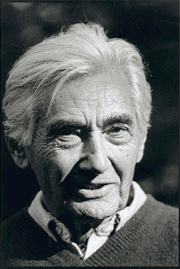
zinnportrait

Today marks the birthday of historian/author/playwright/activist Howard Zinn (8/24/1922 – 1/27/2010). He is best known for his groundbreaking and influential A People’s History of the United States but was also a tireless voice for the oppressed and disenfranchised across the globe for most of his life and beyond (through writings, recorded words and continuing efforts of those he inspired). In honor of his life and work, I’d like to share this inspiring excerpt from his book A Power Governments Cannot Suppress which remains as relevant as ever:

A Marvelous Victory

In this world of war and injustice, how does a person manage to stay socially engaged, committed to the struggle, and remain healthy without burning out or becoming resigned or cynical?

I am totally confident not that the world will get better, but that we should not give up the game before all the cards have been played. The metaphor is deliberate; life is a gamble. Not to play is to foreclose any chance of winning. To play, to act, is to create at least a possibility of changing the world.

There is a tendency to think that what we see in the present moment will continue. We forget how often we have been astonished by the sudden crumbling of institutions, by extraordinary changes in people’s thoughts, by unexpected eruptions of rebellion against tyrannies, by the quick collapse of systems of power that seemed invincible.

What leaps out from the history of the past hundred years is its utter unpredictability. A revolution to overthrow the czar of Russia in that most sluggish of semi feudal empires not only startled the most advanced imperial powers but took Lenin himself by surprise and sent him rushing by train to Petrograd. Who would have predicted the bizarre shifts of World War II-the Nazi-Soviet pact (those embarrassing photos of von Ribbentrop and Molotov shaking hands), and the German army rolling through Russia, apparently invincible, causing colossal casualties, being turned back at the gates of Leningrad, on the western edge of Moscow, in the streets of Stalingrad, followed by the defeat of the German army, with Hitler huddled in his Berlin bunker, waiting to die?

And then the postwar world, taking a shape no one could have drawn in advance: The Chinese Communist revolution, the tumultuous and violent Cultural Revolution, and then another turnabout, with post-Mao China renouncing its most fervently held ideas and institutions, making overtures to the West, cuddling up to capitalist enterprise, perplexing everyone.

No one foresaw the disintegration of the old Western empires happening so quickly after the war, or the odd array of societies that would be created in the newly independent nations, from the benign village socialism of Nyerere’s Tanzania to the madness of Idi Amin’s adjacent Uganda. Spain became an astonishment. I recall a veteran of the Abraham Lincoln Brigade telling me that he could not imagine Spanish Fascism being overthrown without another bloody war. But after Franco was gone, a parliamentary democracy came into being, open to Socialists, Communists, anarchists, everyone.

The end of World War II left two superpowers with their respective spheres of influence and control, vying for military and political power. Yet they were unable to control events, even in those parts of the world considered to be their respective spheres of influence. The failure of the Soviet Union to have its way in Afghanistan, its decision to withdraw after almost a decade of ugly intervention, was the most striking evidence that even the possession of thermonuclear  weapons does not guarantee domination over a determined population.

The United States has faced the same reality. It waged a full-scale war in Indochina, conducting the most brutal bombardment of a tiny peninsula in world history, and yet was forced to withdraw. In the headlines every day we see other instances of the failure of the presumably powerful over the presumably powerless, as in Bolivia and Brazil, where grassroots movements of workers and the poor have elected new presidents pledged to fight destructive corporate power.

Looking at this catalogue of huge surprises, it’s clear that the struggle for justice should never be abandoned because of the apparent overwhelming power of those who have the guns and the money and who seem invincible in their determination to hold on to it. That apparent power has, again and again, proved vulnerable to human qualities less measurable than bombs and dollars: moral fervor, determination, unity, organization, sacrifice, wit, ingenuity, courage, patience-whether by blacks in Alabama and South Africa, peasants in El Salvador, Nicaragua, and Vietnam, or workers and intellectuals in Poland, Hungary, and the Soviet Union itself. No cold calculation of the balance of power need deter people who are persuaded that their cause is just.

I have tried hard to match my friends in their pessimism about the world (is it just my friends?), but I keep encountering people who, in spite of all the evidence of terrible things happening everywhere, give me hope. Wherever I go, I find such people, especially young people, in whom the future rests. And beyond the handful of activists there seem to be hundreds, thousands, more who are open to unorthodox ideas. But they tend not to know of one another’s existence, and so, while they persist, they do so with the desperate patience of Sisyphus endlessly pushing the boulder up the mountain. I try to tell each group that they are not alone, and that the very people who are disheartened by the absence of a national movement are themselves proof of the potential for such a movement.

Revolutionary change does not come as one cataclysmic moment (beware of such moments!) but as an endless succession of surprises, moving zigzag toward a more decent society. We don’t have to engage in grand, heroic actions to participate in the process of change. Small acts, when multiplied by millions of people, can quietly become a power no government can suppress, a power that can transform the world.

Even when we don’t “win,” there is fun and fulfillment in the fact that we have been involved, with other good people, in something worthwhile. We need hope. An optimist isn’t necessarily a blithe, slightly sappy whistler in the dark of our time. To be hopeful in bad times is not being foolishly romantic. It is based on the fact that human history is a history not only of competition and cruelty but also of compassion, sacrifice, courage, kindness.

What we choose to emphasize in this complex history will determine our lives. If we see only the worst, it destroys our capacity to do something. If we remember those times and places-and there are so many-where people have behaved magnificently, it energizes us to act, and raises at least the possibility of sending this spinning top of a world in a different direction. And if we do act, in however small a way, we don’t have to wait for some grand utopian future. The future is an infinite succession of presents, and to live now as we think human beings should live, in defiance of all that is bad around us, is itself a marvelous victory.

The Mother’s Day Proclamation

170px-Julia_Ward_Howe-_History_of_Woman_Suffrage_volume_2_page_793

The piece commonly known as the Mother’s Day Proclamation was originally titled “Appeal to Womanhood Throughout the World” written in 1870 by Julia Ward Howe in response to the American Civil War and Franco-Prussian War. In 1872 Howe proposed an official observance of a “Mother’s Day for Peace” on June 2 of every year but was unsuccessful. Mother’s Day as we know it in the US today was established by Ann Jarvis in 1908. Her campaign was inspired by her efforts to honor her recently deceased mother Ann Reeves Jarvis, a peace activist who cared for wounded soldiers on both sides of the Civil War and created Mother’s Day Work Clubs to improve public health. In honor of Mother’s Day and the remarkable women who founded it, the following is the full text of Julia Howe’s “Appeal to Womanhood Throughout the World”:

Arise, then, women of this day! Arise all women who have hearts,
whether our baptism be that of water or of fears!

Say firmly: “We will not have great questions decided by
irrelevant agencies. Our husbands shall not come to us, reeking
with carnage, for caresses and applause. Our sons shall not be
taken from us to unlearn all that we have been able to teach
them of charity, mercy and patience.

We women of one country will be too tender of those of another
country to allow our sons to be trained to injure theirs. From
the bosom of the devastated earth a voice goes up with our own.
It says “Disarm, Disarm! The sword of murder is not the balance
of justice.”

Blood does not wipe our dishonor nor violence indicate possession.
As men have often forsaken the plow and the anvil at the summons
of war, let women now leave all that may be left of home for a
great and earnest day of counsel. Let them meet first, as women,
to bewail and commemorate the dead.

Let them then solemnly take counsel with each other as to the
means whereby the great human family can live in peace, each
bearing after their own time the sacred impress, not of Caesar,
but of God.

In the name of womanhood and of humanity, I earnestly ask that a
general congress of women without limit of nationality may be
appointed and held at some place deemed most convenient and at
the earliest period consistent with its objects, to promote the
alliance of the different nationalities, the amicable settlement
of international questions, the great and general interests of peace.

For more information on the history of Mother’s Day, visit the Zinn Education Project.

Message of Peace

Last Monday (Sept. 2), the White House received a letter calling for peace in Syria from Venezuelan President Nicolas Maduro on behalf of Venezuela and “independent voices who love humanity”. Not surprisingly, no mention of the letter was made by corporate media but many of us are aware of it thanks to foreign and independent media such as the Venezuela News Agency and Axis of Logic. Though the letter seems to be speaking to the public persona of Obama and not the reality of who he really is, it could be interpreted as idealistic or ironic; a way of highlighting the differences between the two. Maduro also uses a number of memorable quotes to support his argument from activists such as Simon Bolivar, Susan Sontag, Malcolm X, John Lennon, Howard Zinn and Martin Luther King.

Via: Axis of Logic:

What we do in pursuit of lasting peace and stability of any nation on the planet will never be enough, because the wellbeing of a people exalts us while their pain diminishes us to the vilest inhumanity.

We, from the love of peace that the Venezuelan people cultivate, reject war and say no to bombs, desolation and death. That is our hope, the same that fed the soul of Martin Luther King when he said:”If I knew that the world would end tomorrow, I, today would still plant a tree”. This tree is the one we want to flourish in these tense and ominous times.

I aspire and hope that the call that I have made to you in this letter, Mr. President, doesn’t fall on empty ears. I aspire and hope that you rectify and proceed to stop the war machine that has already been set up. I aspire and I hope that you stop the beating of the funeral drums of war on Syria. I pray for it to be so.

Peace in Syria and the world!

No War!

Nicolas Maduro

Chavez lives, the homeland continues!

Read the complete letter here: http://axisoflogic.com/artman/publish/Article_66001.shtml