A Brief History of Nicaragua

IMG_4398

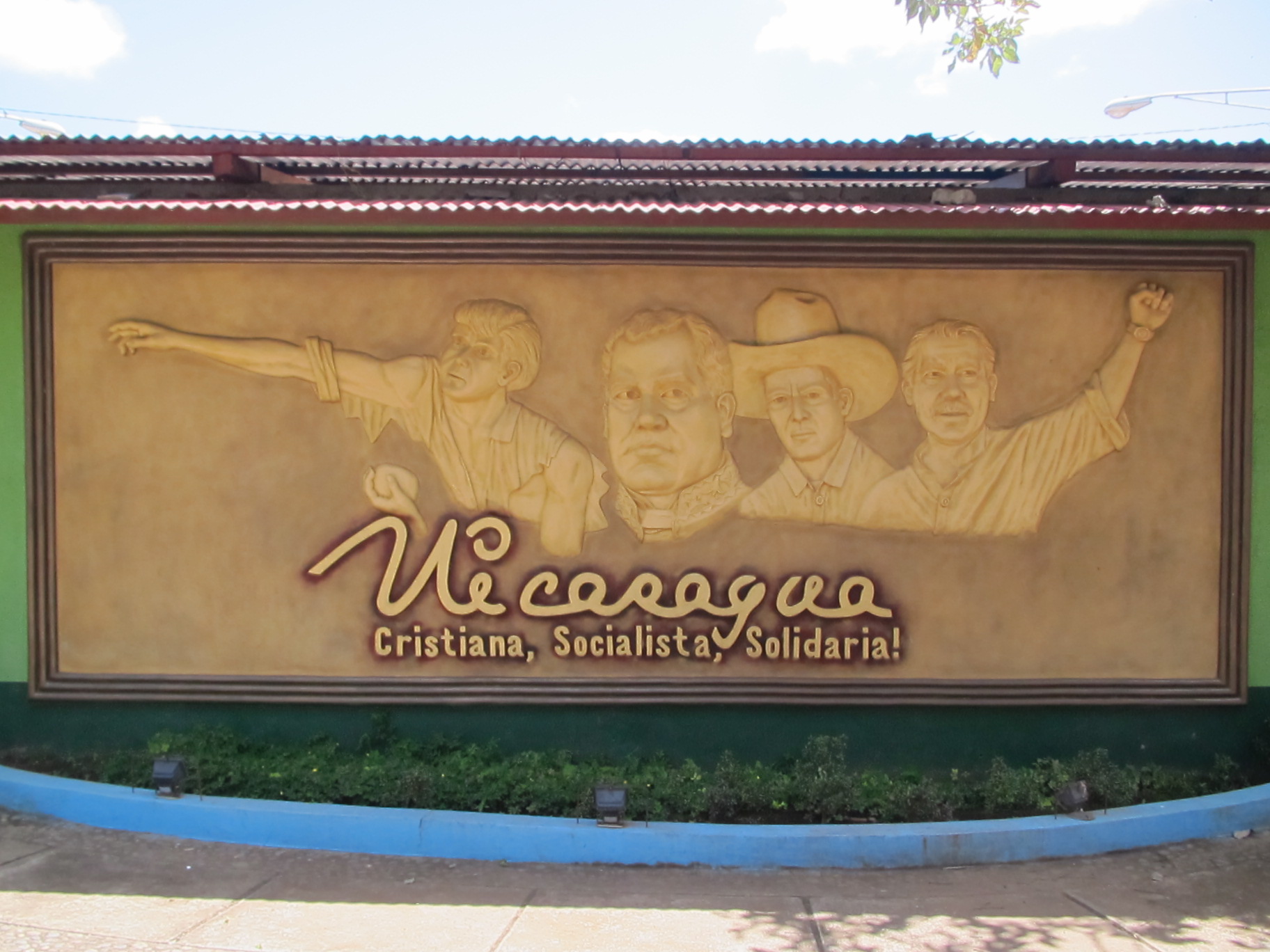
To have even a basic understanding of Nicaraguan culture it’s important to first know a little about the land’s history. In the Pre-Columbian era, the region now called Nicaragua was inhabited by several tribes culturally related to Aztec and Maya civilizations. Not long after Christopher Columbus first reached Nicaragua in 1502, an attempt was made to conquer the region by Gil González Dávila in the 1520s. On April 17, 1523, Dávila first met with Cacique Diriangen, leader of the Dirian peoples. Dávila gave the tribe a three day deadline to become Christians but rather than comply Diriangen led an attack, making him the first known resistance fighter of Nicaragua.
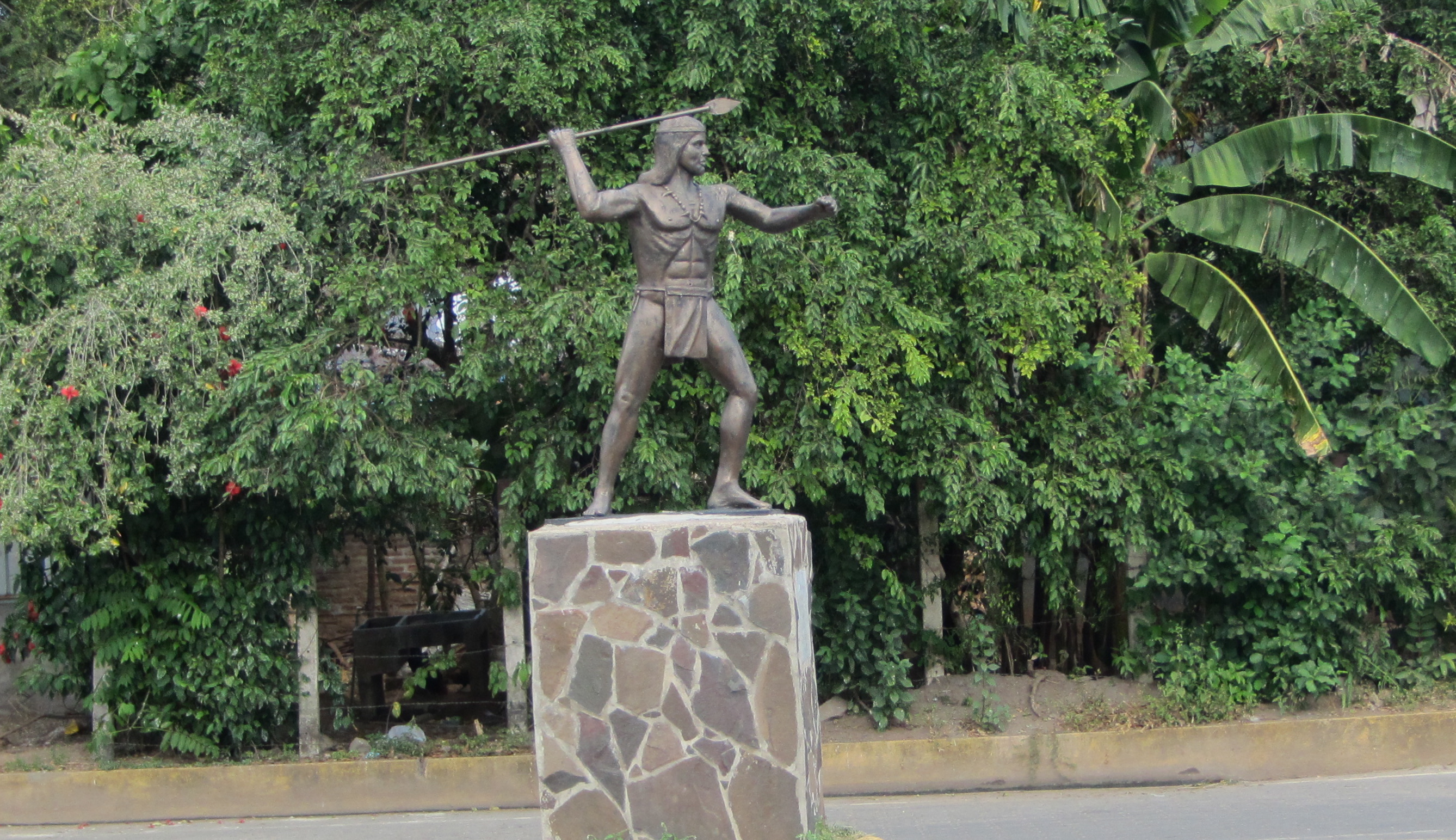
A statue of Diriangen at the entrance to the town of Diria.

A statue of Diriangen at the entrance to the town of Diria.

During over 300 years of colonization, countless indigenous people died of diseases, rival conquistadors waged war on each other, Caribbean pirates raided cities along Lake Nicaragua, British forces fought the Spanish in Nicaragua during a sub-conflict of the the Seven Years’ War, and in 1610 Momotombo volcano erupted, destroying the old capital city of León. In 1838, Nicaragua became an independent republic. Within a few decades, during a power struggle between León and Granada, filibusterer William Walker was hired by the government of León to fight on their side but he exploited the region’s instability and briefly established himself as President of Nicaragua before being forced out of the country a few years later. Three decades of conservative rule followed, during which the U.S. began formulating plans to build a canal across Nicaragua (which may soon become a reality with funding from Chinese corporations). However, when the U.S. shifted their plans to Panama, President Jose Santos Zelaya attempted to negotiate with European partners. Because of the potential threat Zelaya posed to U.S. hegemony and his ambitions to unite the Central American nations, the U.S. government compelled him to resign with the threat of military force and funding of conservative opposition groups, replacing him with a series of puppet regimes. Attempting to prevent insurrection, Nicaragua was occupied by U.S. Marines from 1912 to 1933. From 1927 (the start of Somoza’s rise to power though the National Guard), national hero Augusto César Sandino led a guerrilla war against the conservative government and the U.S. Marines. Shortly after a peace agreement was reached with a newly elected Sacasa administration, the Marines left Nicaragua and the head of the National Guard, Anastasio Somoza García ordered Sandino’s assassination. Sandino was killed by National Guard troops on February 21, 1934. His body was hidden and never found. In 1937 Somoza ousted the Sacasa government in a rigged election.
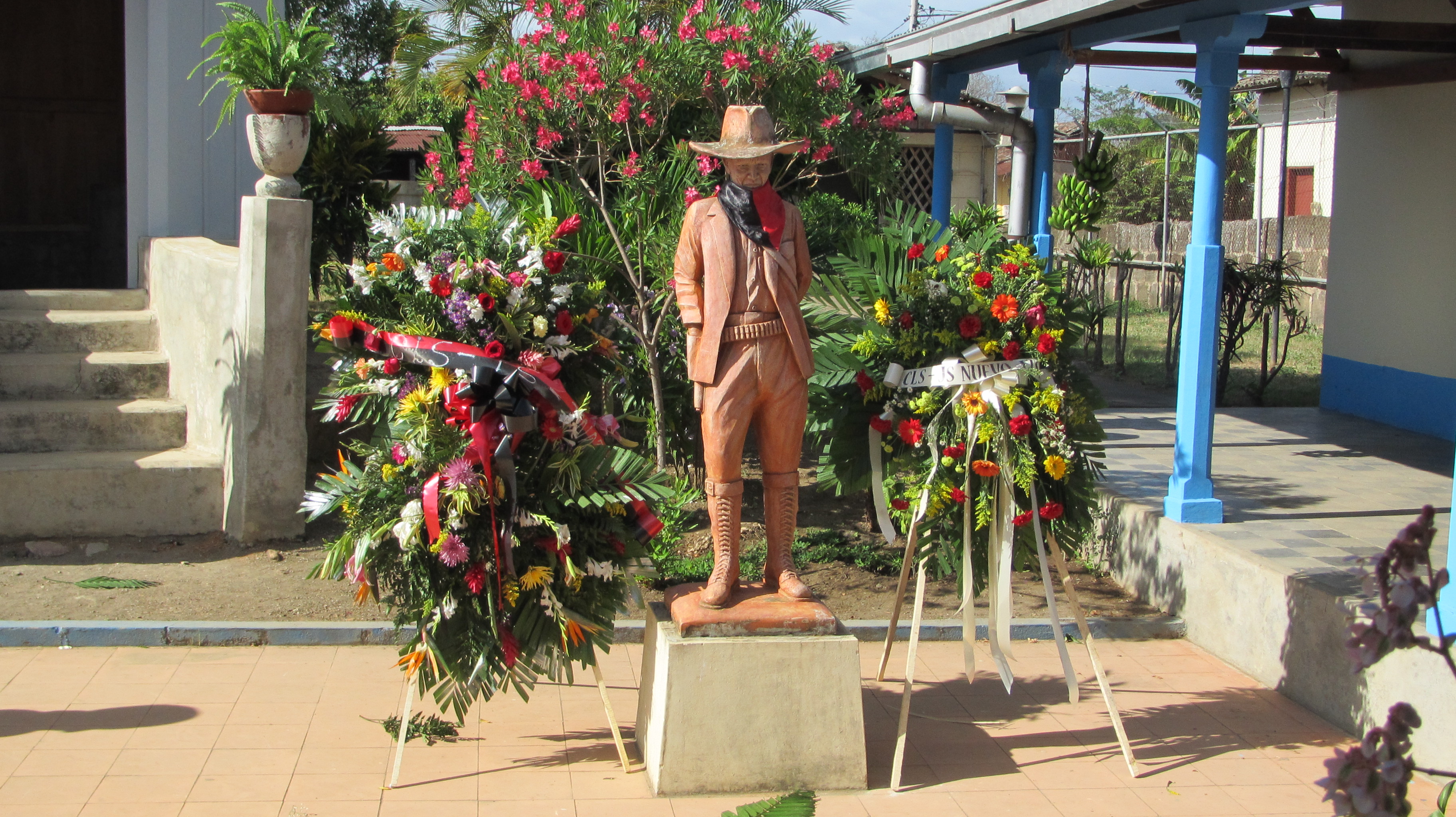
A statue of Sandino at the Augusto C. Sandino Library, a museum located in the house where he grew up in the town of Niquinohomo (Valley of the Warriors).

A statue of Sandino at the Augusto C. Sandino Library, a museum located in the house where he grew up in the town of Niquinohomo (Valley of the Warriors).

The Somoza regime was Nicaragua’s longest lasting hereditary military dictatorship, having ruled for 43 years. The father of the dynasty, Anastasio Somoza García, was famously called “our son of a bitch” by FDR and was assassinated by 27 year old poet Rigoberto López Pérez in León in 1956. In response to increasingly corrupt and reactionary policies of the Somoza government, Carlos Fonseca, Silvio Mayorga, and Tomás Borge led the formation of the Sandinista National Liberation Front (Frente Sandinista de Liberación Nacional or FSLN, named after and inspired by Augusto Sandino) in 1961. In 1972 a major earthquake hit Managua killing 6000 people, injuring tens of thousands and leaving hundreds of thousands homeless. President Anastasio Somoza Debayle mishandled the situation by failing to distribute essential aid and supplies. When it was later revealed that the government was siphoning relief money for personal gain, popularity and membership of the FSLN greatly increased. Hundreds of Chilean refugees also joined their ranks after a CIA-backed coup assassinated Chilean president Salvador Allende in 1973 and installed the dictator Augusto Pinochet the following year.
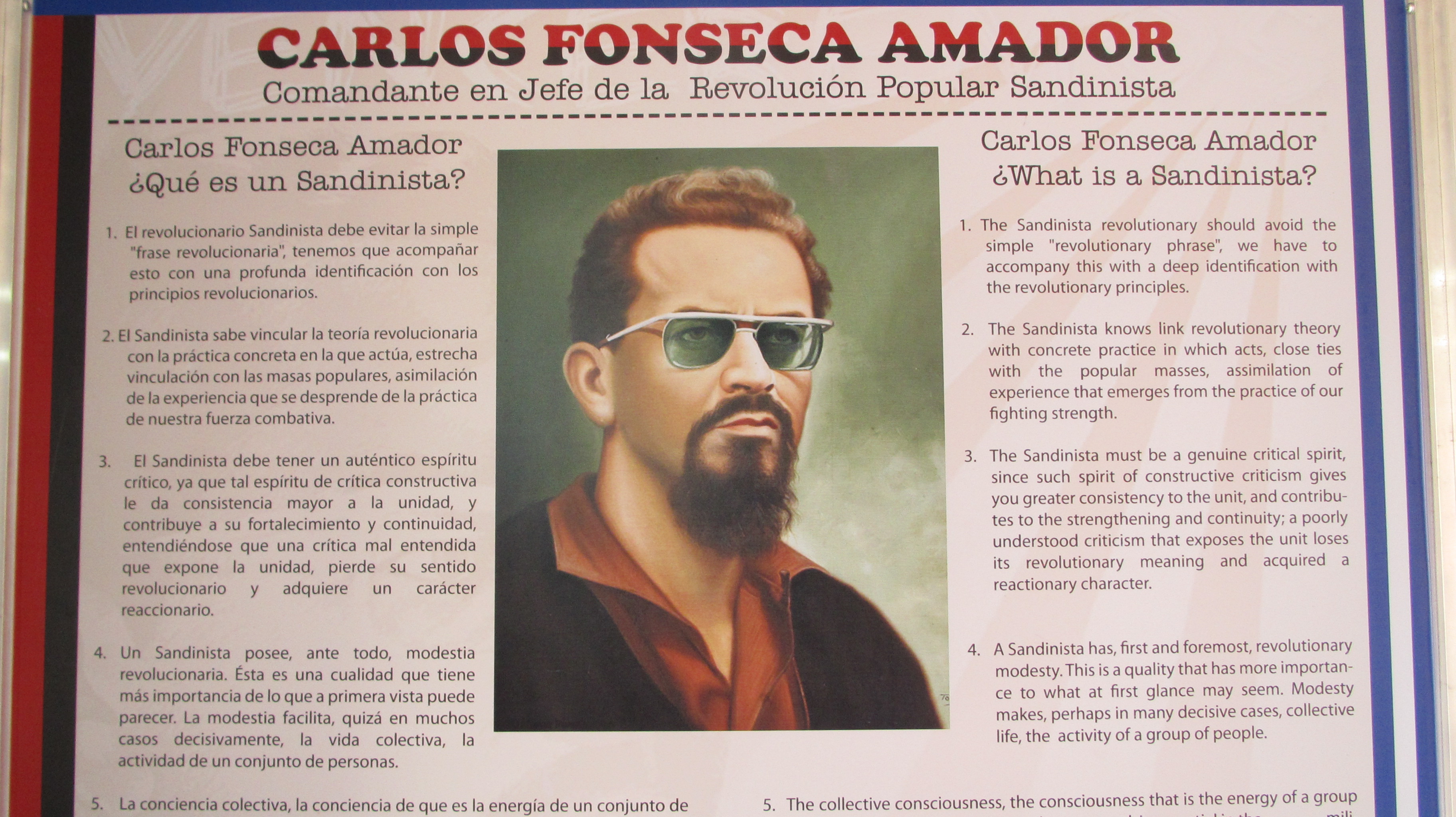
A display at the Carlos Fonseca Museum in Matagalpa.

A display at the Carlos Fonseca Museum in Matagalpa.

When Pedro Joaquin Chamorro, editor of the national newspaper and critic of Somoza, was assassinated by the government on January 10, 1978, a mass insurrection was triggered. By the end of Summer, armed youths took over Matagalpa while factions of the FSLN and civilian recruits had the National Guard under siege in Managua, Masaya, León, Chinandega and Estelí. On July 19, 1979, FSLN forces entered the capital and officially assumed power. Just two days before, Anastasio Somoza Debayle resigned and fled to Miami. He was killed a year later by a rocket attack from members of the Argentinian Revolutionary Workers Party while in exile in Paraguay.

Though the Sandinista government inherited a country in ruins and over a billion dollars in debt, they had an ambitious platform which included:

  • nationalization of property owned by the Somozas and their supporters
  • improved rural and urban working conditions
  • free unionization for all workers, both urban and rural
  • price fixing for commodities of basic necessity
  • improved public services, housing conditions, education
  • abolition of torture, political assassination and the death penalty
  • protection of democratic liberties
  • equality for women
  • non-aligned foreign policy

The Sandinistas had early successes with their education and literacy programs but were soon hindered by emerging conflicts with counter-revolutionary Contra forces heavily financed, armed and trained by the CIA. Investigations into the Iran-Contra scandal revealed some of the funding was acquired through arms sales to Iran and drug shipments to U.S. inner cities (read Gary Webb’s Dark Alliance for more about this). Despite strong support for the opposition by the U.S., the FSLN’s Daniel Ortega won the 1984 elections. Less than a year later the Reagan administration implemented a complete embargo on U.S. trade with Nicaragua that would last five years. By the late 80s, the continuing Contra campaign was notorious for human rights violations, corruption and terrorism. In August 1987, Costa Rican president Oscar Arias Sanchez created a peace accord which led to a ceasefire signed by Contra and Sandinista representatives a year later. Disillusioned by conflict and economic strife (made worse by Reagan’s embargo), Nicaraguan voters elected conservative administrations throughout the 1990s and early 2000s but seeing little improvement and much corruption, they reelected FSLN member Daniel Ortega in 2006 and 2011. So far, there has not yet been radical reforms that corporate investors feared and that more radical liberals hoped for, but Ortega has maintained a skepticism towards capitalism while simultaneously maintaining relations with the U.S. and rivals such as Iran, Libya and Venezuela.

As for how the average Nicaraguan feels about their current situation, opinions seem to vary but I plan to share some of the impressions I got in a future post.

Nick Margerrison on Revolutionary Self-Help

meditation-6

Last week Nick Margerrison posted a follow-up to his inspiring essay, The Global Awakening published last year on Disinfo.com. In Improve Yourself First, he reminds us of the importance of inner development as a means to avoid violent revolutions which replace one form of tyranny with another. He also makes the connection between today’s internet-based self-improvement movement and how printed culture facilitated the age of enlightenment. In his words: “the most important revolutionary aspect of the printed page: it allowed people to learn how to improve themselves and change the way they thought. This is the driving force behind any meaningful long term social change ever experienced in any society“. For these reasons, authoritarians love censorship, controlling what people think and controlling how to think.

Based on trends he has observed, he writes “the entire notion of a hierarchical dictatorship is coming apart” in part because “leaders lead by controlling information and the communications revolution makes this impossible.” Furthermore, “victory in the oncoming ‘war on information’ is beyond their power, no matter how hard they try, just like the ‘war on drugs’. The Western World’s massive financial difficulties limit their ambitions for now but make no mistake, the internet is causing them to lose their grip on reality.

As an antidote, he encourages the practice of questioning ideas requiring others to follow orders and suggestions (even his own). In other words, thinking critically and independently, which an uncensored internet facilitates. The true path for a revolution in Margerrison’s view begins with self improvement and learning “not what to think but how to thinkThe biggest most important changes that you can make to your world are the ones you can make right now to yourself and the way you think.” In his long-term view, the more people who take up the challenge of self improvement, the less unlikely the wider changes needed in society will be. By making such personal efforts in myriad ways, “we might well all move in different directions but the definition of the word “revolution” will move away from something which involves violence and brings long term suffering.”

“All Wars Are Based on Deception” – Sun Tzu

I’ve been thinking of Sun Tzu’s line from “The Art of War” a lot lately because of the blatant lies about Syria currently being pushed by U.S. government officials and the corporate media. The quote is just as true today as it was in ancient China. Another quote that applies to our current situation is “Those who don’t know history are condemned to repeat it.” (Edmund Burke). There’s much truth to that, but it’s only part of the story. I would add that those who profit most from major historical events such as wars and stock market crashes are motivated to recreate the conditions to repeat them. And those who only learn the winner’s version of history and are ignorant of the truth are more likely to be okay with it and let it happen. That’s why I encourage everyone to read an important article by Michael Rivero called “Fake Terror – The Road to War and Dictatorship”. It outlines how lies and deception were used to start wars from 70 BC Rome to America in the 1990s (though the lying has ramped up quite a bit since then) . Even wars we think of as being “good wars” like World War 2 are not exempt, as explained in this excerpt from the article:

Roosevelt needed an enemy, and if America would not willingly attack that enemy, then one would have to be maneuvered into attacking America, much as Marcus Licinius Crassus has maneuvered Spartacus into attacking Rome.

…The first step was to place oil and steel embargoes on Japan, using Japan’s wars on the Asian mainland as a reason. This forced Japan to consider seizing the oil and mineral rich regions in Indonesia. With the European powers militarily exhausted by the war in Europe, the United States was the only power in the Pacific able to stop Japan from invading the Dutch East Indies, and by moving the Pacific fleet from San Diego to Pearl Harbor, Hawaii, Roosevelt made a pre-emptive strike on that fleet the mandatory first step in any Japanese plan to extend its empire into the “southern resource area”.

…To enrage the American people as much as possible, Roosevelt needed the first overt attack by Japan to be as bloody as possible, appearing as a sneak attack much as the Japanese had done to the Russians. From that moment up until the attack on Pearl Harbor itself, Roosevelt and his associates made sure that the commanders in Hawaii, General Short and Admiral Kimmel, were kept in the dark as much as possible about the location of the Japanese fleet and its intentions, then later scapegoated for the attack. (Congress recently exonerated both Short and Kimmel, posthumously restoring them to their former ranks).

But as the Army board had concluded at the time, and subsequent de-classified documents confirmed, Washington DC knew the attack was coming, knew exactly where the Japanese fleet was, and knew where it was headed.

On November 29th, Secretary of State Hull showed United Press reporter Joe Leib a message with the time and place of the attack, and the New York Times in its special 12/8/41 Pearl Harbor edition, on page 13, reported that the time and place of the attack had been known in advance!

The much repeated claim that the Japanese fleet maintained radio silence on its way to Hawaii was a lie. Among other intercepts still held in the Archives of the NSA is the UNCODED message sent by the Japanese tanker Shirya stating, “proceeding to a position 30.00 N, 154.20 E. Expect to arrive at that point on 3 December.” (near HI)

Read the complete article here: http://whatreallyhappened.com/WRHARTICLES/ARTICLE5/index.php

Workers of the World…Relax

Though written more than 20 years ago, this essay by Bob Black is more relevant today than ever. It is possible to find personally fulfilling and rewarding work that allows for a decent standard of living, but is far too rare and inaccessible for too many people within the current dominant system. From “The Abolition of Work” :

But modern work has worse implications. People don’t just work, they have “jobs.” One person does one productive task all the time on an or-else basis. Even if the task has a quantum of intrinsic interest (as increasingly many jobs don’t) the monotony of its obligatory exclusivity drains its ludic potential. A “job” that might engage the energies of some people, for a reasonably limited time, for the fun of it, is just a burden on those who have to do it for forty hours a week with no say in how it should be done, for the profit of owners who contribute nothing to the project, and with no opportunity for sharing tasks or spreading the work among those who actually have to do it. This is the real world of work: a world of bureaucratic blundering, of sexual harassment and discrimination, of bonehead bosses exploiting and scapegoating their subordinates who—by any rational-technical criteria – should be calling the shots. But capitalism in the real world subordinates the rational maximization of productivity and profit to the exigencies of organizational control.

The degradation which most workers experience on the job is the sum of assorted indignities which can be denominated as “discipline.” Foucault has complexified this phenomenon but it is simple enough. Discipline consists of the totality of totalitarian controls at the workplace—surveillance, rotework, imposed work tempos, production quotas, punching-in and -out, etc. Discipline is what the factory and the office and the store share with the prison and the school and the mental hospital. It is something historically original and horrible. It was beyond the capacities of such demonic tators of yore as Nero and Genghis Khan and Ivan the Terrible. For all their bad intentions they just didn’t have the machinery to control their subjects as thoroughly as modern despots do. Discipline is the distinctively diabolical modern mode of control, it is an innovative intrusion which must be interdicted at the earliest opportunity.

Work makes a mockery of freedom. The official line is that we all have rights and live in a democracy. Other unfortunates who aren’t free like we are have to live in police states. These victims obey orders or-else, no matter how arbitrary. The authorities keep them under regular surveillance. State bureaucrats control even the smaller details of everyday life. The officials who push them around are answerable only to the higher-ups, public or private. Either way, dissent and disobedience are punished. Informers report regularly to the authorities. All this is supposed to be a very bad thing.

Read the entire essay here: http://deoxy.org/endwork.htm