NATO prolongs the Ukraine proxy war, and global havoc

With diplomacy thwarted, the US and its allies plan for “open-ended” military and economic warfare against Russia, no matter the costs at home and abroad.

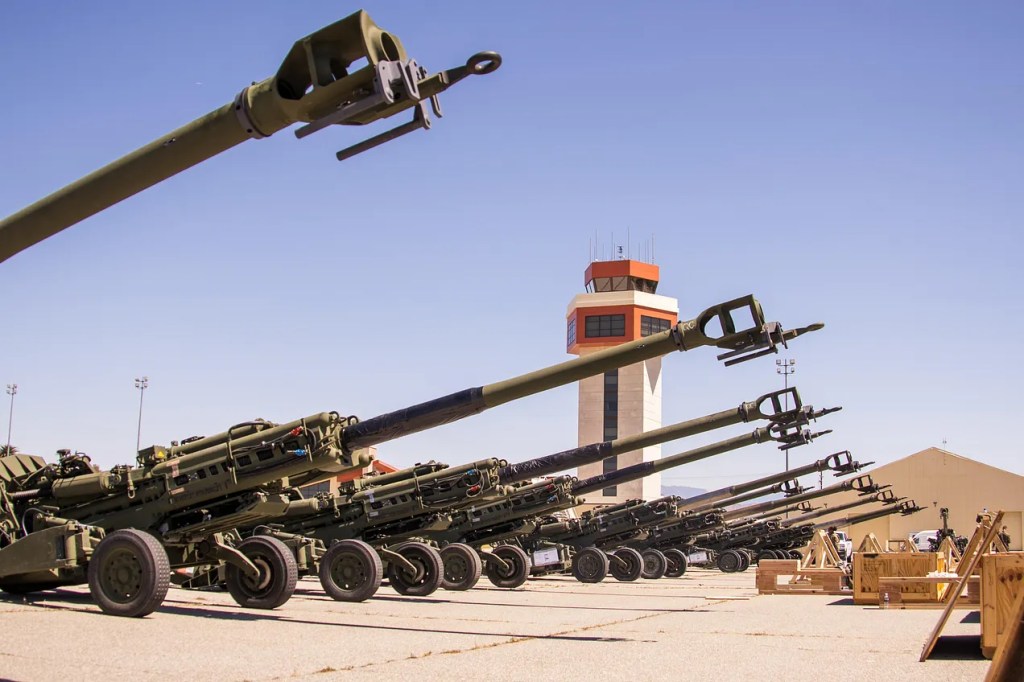
(US Dept. of Defense)

By Aaron Maté

Source: Aaron Mate Substack

Russia has announced plans to mobilize an additional 300,000 troops for the war in Ukraine. In his speech unveiling the expanded war effort, Vladimir Putin vowed to achieve his main goal of the “liberation of Donbas,” and issued a thinly veiled nuclear threat in the process. The move comes days ahead of planned referendums in breakaway Ukrainian areas to formalize Russian annexation.

Russia’s escalation ensures that the fighting is entering an even more dangerous phase. While Russia bears legal and moral responsibility for its invasion, recent developments underscore that NATO leaders have shunned opportunities to prevent further catastrophe and chosen instead to fuel it.

Putin’s announcement comes just after the Ukrainian military’s routing of Russian forces from Kharkiv, which relied extensively on US planning, weaponry and intelligence, sparked triumphant declarations that the tide has turned.

According to The Atlantic’s Anne Applebaum, “Americans and Europeans need to prepare for a Ukrainian victory,” one so overwhelming that it may well bring “about the end of Putin’s regime.”

Beyond the chorus of emboldened neoconservatives, Western officials are less sanguine.

“Certainly it’s a military setback” for Russia, a US official said of the Kharkiv retreat to the Washington Post. “I don’t know if I could call it a major strategic loss at this point.” Germany’s defense chief, General Eberhard Zorn, said that while Ukraine “can win back places or individual areas of the frontlines,” overall, its forces can “not push Russia back over a broad front.”

Whether or not it marked a major strategic loss for Russia, the battle in Kharkiv is already a major victory for NATO leaders seeking to prolong their proxy war in Ukraine and economic warfare next door.

Ukraine’s expulsion of Russian forces in the northeast, the New York Times reports, has “amplified voices in the West demanding that more weapons be sent to Ukraine so that it could win.”

“Despite Ukrainian forces’ startling gains in the war against Russia,” the Washington Post adds, “the Biden administration anticipates months of intense fighting with wins and losses for each side, spurring U.S. plans for an open-ended campaign with no prospect for a negotiated end in sight.”

As has been apparent since the Ukraine crisis erupted, US planning for open-ended proxy warfare against Russia has led it to sabotage any prospect of a negotiated end.

The US rejection of diplomacy around Ukraine has been newly substantiated by former White House Russia expert Fiona Hill. Citing “multiple former senior U.S. officials,” Hill reports that in April of this year “Russian and Ukrainian negotiators appeared to have tentatively agreed on the outlines of a negotiated interim settlement.” Under this framework, Russia would withdraw to its pre-invasion position, while Ukraine would pledge not to join NATO “and instead receive security guarantees from a number of countries.”

In confirming that US officials were aware of this tentative agreement, Hill bolsters previous news that Washington’s junior partner in London was enlisted to thwart it. As Ukrainian media reported, citing sources close to Ukrainian President Volodymyr Zelensky, UK Prime Minister Boris Johnson traveled to Kiev in April and relayed the message that Russia “should be pressured, not negotiated with.” Johnson also informed Zelensky that “even if Ukraine is ready to sign some agreements on [security] guarantees with Putin,” his Western patrons “are not.” The talks promptly collapsed.

In his speech announcing the expanded war effort, Putin invoked this episode. After the invasion began, he said, Ukrainian officials “reacted very positively to our proposals… After certain compromises were reached, Kyiv was actually given a direct order to disrupt all agreements.”

Having undermined the prospect of a negotiated peace in the war’s early weeks, proxy warriors in Washington are openly celebrating their success.

“I like the structural path we’re on here,” Republican Senator Lindsey Graham recently declared. “As long as we help Ukraine with the weapons they need and the economic support, they will fight to the last person.”

Graham’s avowed willingness to expend every “last person” in Ukraine to fight Russia is in line with a broader US strategy that views the entire world as subordinate to its war aims. As the Washington Post reported in June, the White House is willing to “countenance even a global recession and mounting hunger” in order to hand Russia a costly defeat. In Ukraine, this now means also countenancing the threat of nuclear disaster, as the crisis surrounding the Zaporizhzhia nuclear power plant has laid bare.

The prevailing willingness to sacrifice civilian well-being extends to the US public, as National Security Advisor Jake Sullivan has newly made clear. Appearing at the Aspen Security Conference, Sullivan was asked if he is worried about the “American people’s staying power” on the Ukraine proxy war, amid “criticism that we’re spending billions and billions to support Ukraine, and not spending it here.”

 “Fundamentally not,” Sullivan responded. “It’s very important for Putin to understand what exactly he’s up against from the point of view of the United States’ staying power.” That staying power, Sullivan explained, was cemented in the $40 billion war funding measure overwhelmingly approved by Congress (including every self-identified progressive Democrat) in May.

“That can go on, just on the basis of what we have already had allocated to us and resources for a considerable period of time,” Sullivan vowed. “And then, I strongly believe that there will be bipartisan support in the Congress to re-up those resources should it become necessary.”

To policymakers like Sullivan, there is not only an endless pool of money to “re-up” the war, but a “fundamentally” indifferent posture toward the taxpayers footing the bill.

Despite Biden’s reported scolding of Defense Secretary Lloyd Austin for admitting that the US goal in Ukraine is to leave Russia “weakened,” Sullivan – speaking before a friendly Beltway crowd — also forgot to stick to the script.

The US “strategic objective” in Ukraine, Sullivan explained, is to “ensure that Russia’s invasion of Ukraine… is a strategic failure for Putin,” and that “Russia pay a longer-term price in terms of the elements of its national power.” This would teach a “lesson,” he added, “to would-be aggressors elsewhere.”

By “would-be aggressors elsewhere”, Sullivan naturally precludes the US and its allies, whose aggression is not only permitted but promoted under the US-led “rules-based international order.”

President Biden has made that clear by abandoning his pledge to make Saudi Arabia a “pariah” state, notwithstanding its murderous (US-backed) aggression in Yemen. The regular aggression by US ally Israel against Gaza and Syria also continues unabated. The United Nations just reported that an Israeli strike on the Damascus international airport in June – one of hundreds of Israeli bombings on Syria that go largely ignored — “led to considerable damage to infrastructure” and “meant the suspension of U.N. deliveries of humanitarian assistance” to Syrians in need for nearly two weeks. As of this writing, the latest Israeli strike killed five Syrian soldiers, eliciting no Western media and political protest. It is more accurate to describe Israeli aggression on Syria as a joint Israeli-US effort, given that the US reviews and approves the strikes.

Allied NATO leaders are also vocally countenancing the Ukraine proxy war’s costs on their domestic populations. In response to the European sanctions, Russia has now halted gas deliveries to the EU via the key Nord Stream 1 pipeline. Having previously relied on Russia for close to 40 percent of its gas needs, European industries are facing layoffs, factory closures, and higher energy bills that “are pushing consumers to near poverty,” the Financial Times reports.

“People want to end the war because they cannot bear the consequences, the costs,” the EU’s Josep Borell observed this month. While ending the war might appeal to some, it does not interest the EU’s top diplomat. “This mentality must be overcome,” Borell declared. “The offensive on the northeastern front helps with that.”

Europe, NATO chief Jens Stoltenberg recently wrote, may even face “civil unrest,” as economies contract and temperatures drop, but “for Ukraine’s future and for ours, we must prepare for the winter war and stay the course.”

“No matter what my German voters think, I want to deliver to the people of Ukraine,” Germany’s Foreign Minister Annalena Baerbock told a conference in Prague last month. During the upcoming winter, Baerbock acknowledged, “we will be challenged as democratic politicians. People will go in the street and say ‘We cannot pay our energy prices’.” While pledging to help people “with social measures,” Baerbock insisted that the European Union’s sanctions on Russia will remain. “The sanctions will stay also in wintertime, even if it gets really tough for politicians,” she said.

Whereas Western leaders appear confident they can manage civil unrest at home, they face additional resistance abroad. In Africa, a leaked report from the European Union’s envoy to the continent warns that African nations are blaming the EU’s Russia sanctions for food shortages. The report also cautions that “the EU is seen as fueling the conflict,” in Ukraine, “not as a peace facilitator.”

Rather than address these African concerns, the envoy’s office proposes a “more transactional… approach” in which the EU makes “clear” that its “willingness” to “maintain higher levels” of foreign aid “will depend on working based on common values and a joint vision,” – in short, on Africa falling in line.

That is undoubtedly the US policy, as UN Ambassador Linda Thomas-Greenfield made clear last month. After promising a “listening tour,” Thomas-Greenfield instead came to Africa with a dictate and an outright threat. “Countries can buy Russian agricultural products, including fertilizer and wheat,” she decreed. But “if a country decides to engage with Russia” and break US sanctions, “they stand the chance of having actions taken against them.” That Africa faces a food security crisis, with hundreds of millions going hungry, is apparently of lower importance.

While Western sanctions on Russia wreak havoc worldwide, the architects in Washington seem only perturbed by their failure, so far, to inflict the intended levels of suffering on Russian civilians. “We were expecting” that US sanctions “would totally crater the Russian economy” by now, a disappointed senior US official told CNN.

Other US officials are leaving room for hope. “There’s going to be long-term damage done to the Russian economy and to generations of Russians as a result of this,” CIA Director William Burns told a cybersecurity conference this month. Burns’ long-term forecast of harming “generations of Russians” is based on extensive planning. As one US official explained it to CNN, when the sanctions were designed, Biden officials not only “wanted to keep pressure on Russia over the long term as it waged war on Ukraine,” but also “wanted to degrade Russia’s economic and industrial capabilities.” Accordingly, “we’ve always seen this as a long-term game.”

The “long-term game” of trying to destroy Russia’s economy and immiserate “generations” of its citizens is accompanied by increasing plans for a long-term fight. The Biden administration plans to formally name the US military mission in Ukraine – such as in prior campaigns like Operation Desert Storm — while also appointing a general to oversee the effort. The naming, the Wall Street Journal observes, is “significant bureaucratically, as it typically entails long-term, dedicated funding.”

The US plan for a long-term military and economic campaign against Russia is being implemented despite the awareness that Ukraine could face far worse.

“Some American officials express concern that the most dangerous moments are yet to come,” the New York Times reports. To date, “Putin has avoided escalating the war in ways that have, at times, baffled Western officials.” Unlike US military campaigns in Iraq, Russia “has made only limited attempts to destroy critical infrastructure or to target Ukrainian government buildings.”

“The current moment draws attention to a tension that underlies America’s strategy for the war,” the Washington Post observes, “as officials channel massive military support to Ukraine, fueling a war with global consequences, while attempting to remain agnostic about when and how Kyiv might strike a deal to end it.”

These rare admissions not only contradict the typical portrayal of a genocidal Russia that is used to justify the proxy war, but capture the underlying policy driving it. More than six months in, US officials are aware that Russia has “avoided escalating the war” and targeting “critical infrastructure,” – to the point where these same officials are “baffled” by Russian restraint. Despite this, their policy centers on “fueling” this same war, while remaining “agnostic” about ending it.

War being fluid – and US-led military support for Ukraine ever-expanding – it is of course possible that Ukraine will continue to defy expectations and drive out the invading Russian forces.

What the latest developments on and off the battlefield make undoubtedly clear is that NATO states are willing to use Ukraine for as long as it takes to achieve the stated aim of leaving Russia “weakened” or even achieving regime change, no matter the damage knowingly inflicted on Ukrainians, Russians, the Global South, and their own citizens.

War Propaganda About Ukraine Starting to Wear Thin

By Chay Bowes

Source: Covert Action

More and More Are Seeing Through the Lies

As Amnesty International confirms the inconvenient truths, which many independent journalists and political observers already knew, about the Ukrainian army’s behavior in Donbass, it’s worth examining how manipulating the truth has become—not only an everyday occurrence but a central element of the West’s proxy war in Ukraine.

An increasing number of mainstream journalists, commentators and ordinary individuals who had rushed to “Stand with Ukraine ” are finding the inconvenient truths about the Zelensky regime and its Army harder and harder to ignore.

It was the icon of American democracy, President Abraham Lincoln that said “You can fool part of the people some of the time, you can fool some of the people all of the time, but you cannot fool all the people all of the time.” Of course, even though Lincoln’s astute observation has been widely misquoted, it certainly has a particular resonance when we consider the recent misadventures and persistent foreign policy failures of his beloved United States.

Most particularly are American efforts to maintain an increasingly skeptical public’s support for its faltering and hugely costly geopolitical ambitions in Ukraine.

So far it hasn’t been too difficult to package a message for general consumption, a drive-through narrative if you will, that is easily accessible and digestible by a trusting public, particularly when that same public has been globally denied key factual insights into the background of a long running complex conflict into which they have been seduced as blindfolded supporters.

The current crisis in Ukraine is however different; it has seen the pro-Western media machine cultivate and disseminate disinformation, propaganda and fake news on a previously unseen scale. While the U.S. and its NATO allies prosecute their proxy conflict on the ground, in the air, and at sea, another illicit battle is being fought on social media, TV and radio.

Of course, propaganda and the winning of “hearts and minds” is nothing new when it comes to conflict. As far back as the 19th century Governments were aware of how important the narrative was at home, they actively sought to suppress details which they thought may be offensive or unhelpful to the home audience.

In the second Boer war in South Africa (1899-1902), when the British Army’s colonial war was failing it resorted to imprisoning Boer Women and children in vast ill equipped concentration camps where a stunning 26,000 of them would die from starvation, ill treatment and disease. The British actively considered creating a publicity campaign to hide the true horror of the hellish camps, including false reports and newspaper stories.

Again, during World War I the gruesome details of mass casualties in the horrendous and inhumane trenches of the western front were also sterilized and minimized for the home audience. As far as the public were concerned the Kaiser was the killer, the Germans ate Belgian babies and the repulsive Teutonic octopus had to be stopped at all costs.

Of course, the fact that the entire conflict was about imperial power, commerce and competition between the three grandchildren of the British Queen Victoria was conveniently ignored. In July 1916 British newspaper reports on the Battle of the Somme, one of the bloodiest battles in human history, famously read “Our casualties are not heavy,” an utterly misleading headline which sounds disturbingly familiar today.

When we consider Americas most recent large-scale military misadventures in Afghanistan, Iraq, Syria and Libya these ill-advised and bloody failures have yet again been portrayed as the “good guys against the bad guys”, it’s the Cowboys against the Indians, the dangerous and untrustworthy Muslim savages against the very existence of Western civilisation.

The immeasurable human suffering that these wars have visited on the innocent populations seldom features. American complicity and responsibility for creating the very problems they now seek to “solve” is bizarrely entirely ignored in its client media.

Today’s conflict in Ukraine is no exception, a similar narrative is peddled with the historical truths about where conflict grew from remaining unreported. Some of the most critical facts relating to Ukraine are routinely and conveniently rendered invisible by the mainstream media, such as when this civil war began and most crucially, who paid for and built the scaffolding on which it is now burning.

It is of course unpopular in any instance to swim against the flow of the tide, to be the child suggesting the emperor has no clothes, and to challenge “realities” that have been broadly accepted by a trusting public. Despite the gross imbalance in the presentation of the facts, up to now at least dissent was something accepted as a privilege of western democratic society, that freedom of speech and opinion is however in grave danger, particularly if it is based on inconvenient truths.

The “Absolute Truth”

When it comes to Ukraine a new, dangerous and lavishly funded weapon in the counter truth war has been deployed by western governments and media, I call it “Absolute Truth”. The Absolute truth doesn’t tolerate any challenges, when its allegations are proven false those realities are suppressed and ignored.

It immediately and efficiently targets any dissent from the prescribed narrative and brands challengers as “enemies,” “foreign agents,” or “useful idiots.” Critically there is no room for debate of any kind, there is no analysis of facts, there is only their Absolute Truth.   

Should a journalist, State or individual question this Absolute Truth or merely suggest an objective analysis of the facts they are immediately and brutally marginalised and then targeted for retribution. This determined and choreographed punishment can range from the loss of a job to the isolation of an entire nation with threats of violence commonplace.

The fact that the West’s “Absolute Truth” narrative relies implicitly on mass censorship and the wholesale destruction of freedom of speech is apparently irrelevant to its architects and disciples, if these pillars of liberal democracy must be abandoned in this war against the facts, so be it.

Absolute truth also has a selective attitude when it comes to the behavior of its idols, when Mr Zelensky’s election with the assistance, cash and muscle of a corrupt oligarch is highlighted this is ignored, when his antidemocratic banning of all opposition and the imprisonment of its leaders comes up, its fine. if the Absolute Truth requires the acceptance and deployment of brutal Nazi militias against civilians, (previously designated by the west as terrorists) that is again entirely acceptable.

Indeed, the Absolute truth brigade have a magical ability to erase history, assign hero status to mass murders (Stepan Bandera) and demonise those that defeated Nazism in Europe. The Absolute Truth now defines the narrative, the facts do not, facts and independent evidence will be selectively deployed if at all, those that challenge this are immediately designated as collaborators, war mongers and enemies of democracy.

Another sinister element of the cult of Absolute Truth is the reluctance to correct the record or admit when you get it wrong, from the “massacre” at Snake Island that never happened to the fake headlines about the Mariupol maternity hospital to name but a few, there is never any attempt to correct the record which begs the question how sincere were the allegations in the first place?

Interestingly, when the internationally respected Amnesty international bravely countered the Absolute truth with indisputable facts, it was itself attacked by an increasingly paranoid Zelensky. There is now a distinct element of “the boy who cried wolf” about Zelensky’s persistent and now routine allegations of genocide, targeting of civilians and the apparent desire to “erase Ukraine from the map”.

Any cursory examination of the facts around the Ukrainian Army’s “counter terrorist” operation against its own people in 2014 in Donbas would suggest it was an increasingly radicalised Ukrainian military that first assaulted the ethnic Russian populations in the east in 2014.

As NATOs exceptionally costly and increasingly destructive proxy war against Russia grinds on, the prospect of any military victory for Ukraine fades almost hourly, the likelihood that Russia will seek settlement also fades by the day, any incentive to do so now strategically valueless.

Western support for Zelensky’s seemingly rudderless and incompetent regime is privately wavering as the impact of ham-fisted sanctions against Russia threatens social cohesion in Europe and America alongside a global energy crisis.

Promised counter offensives in the south have not materialized, the much vaunted “Million-man army” has failed to appear and yet again, the American and European press that presented this as fact have not rowed back on their outlandish claims.

The harsh reality of war is seemingly lost on the “absolute Truth” brigade who are happy to “stand with Ukraine” but will never stand in Ukraine.

The western public are a fickle audience, given the lack of initial scrutiny generally applied to the mainstream narrative on Ukraine it’s likely that as more of the inconvenient truths about Zelensky, his junta and the realities of this conflict appear, more and more westerns will be creeping into their yards in the dead of night to take down their hastily hoisted Ukrainian flags.

Contrary to the best efforts of those that have funded, molded and justified this proxy war the truth has a habit of resurfacing. It will be impossible to “manage” the oncoming tide of reality that will gush out of Ukraine as the western powers refocus on their self-inflicted domestic troubles this winter, Zelensky himself may become the fall guy for the failed NATO escapade in Ukraine.

That’s the thing about those inconvenient facts, they keep persisting under the surface, the truth doesn’t have a sell by date, and it is patient, the memory of the countless dead demands it to be.

And of course, as good old Abraham Lincoln said, “You can fool part of the people some of the time, you can fool some of the people all of the time, but you cannot fool all the people all of the time.”

The Drums of War Beat Louder

Illustration by Shutterstock – edited by Büşra Öztürk.

By Paul Craig Roberts

Source: PaulCraigRoberts.org

My forebodings/predictions about the Kremlin’s limited go-slow war in Ukraine are proving correct.  Putin and Russia are demonized.  Unprecedented sanctions amounting to piracy and theft have been imposed on Russia. The US and Europe are joining the war as de facto combatants. More countries are joining NATO with the result being the prospect of more US missile bases on Russia’s borders. The Western media controls the narrative, which is Russia is losing and can be defeated with more many billions of dollars from the US and more weapons that enrich the US military/security complex.  Why any Russian government would expose itself to this and so many chances for miscalculation that ends in WW III is a mystery.  What did the Kremlin imagine it was achieving by creating a situation that exposed Rusaia to many months of war propaganda, punishment, and Western preparations for wider war?

What peace needed was a quick decisive Russian victory that demonstrated extraordinary military power that completely stopped any further Western provocations of Russia.  But the Kremlin was too liberal-minded to do what was neccessary. Consequently the Kremlin made a strategic error, dropped the ball and has failed to protect Russia from provocations that are leading to WW III.

Instead, the Kremlin filled with liberal delusions long discarded in the West decided to show a good side by limiting itself to the rescue of the Donbass Russians.  This gave the West all it needed to present Russia as a military incompetent upstart.  Among the Kremlin’s errors, the Kremlin overlooked that Ukraine’s distress from the limited Russian intervention created an opportunity for Poland to claim former Polish territories in western Ukraine where there are no Russian troops engaged. It is possible that the Polish government, disinformed by Western media’s picture of Russian military failure in Ukraine, will occupy western Ukraine as preparation to reclaiming it as Russia did Crimea and now Donbass.  As Russia will have eastern and southern Ukraine, the country could simply disappear as Poland resurrects greater Poland. In its history, Ukraine has either been part of Poland’s empire or part of Russia.

If Poland moves into western Ukraine as it is tempted to do, opportunities for Polish-Russian conflict arise.  As Poland is a NATO member, Washington has given Poland, as the British government did with World War II’s “Polish Guarantee,” the power to start a world war.

The Polish government has a penchant for emotional decisons, not responsible decisions. Just as the Polish military dictatorship thought the “British Guarantee” protected them, causing them to spurn Hitler’s demand for the return of German territory stripped from Germany in the Versailles Treaty despite President Wilson’s “guarantee” of no territorial losses, the Polish government thinks today that NATO membership protects Poland from Russian retaliation.

The government in Warsaw does not comprehand that the “NATO Guarantee” is worth no more than the British Government’s guarantee that launched WW II.

The governments that comprise the Western World have given Poland, once again, the decision whether there is to be a World War.

This deplorable and unsettling fact stares us in the face, but no Western media, not even online media, acknowledges it.

The situation that exists today is that either Russia and China must accept US hegemony or the neoconservaties will push Russia and China into war with the West. The hegemonic ambition of the neoconservatives is inconsistent with a peaceful world.

Sit back and watch Europe commit suicide

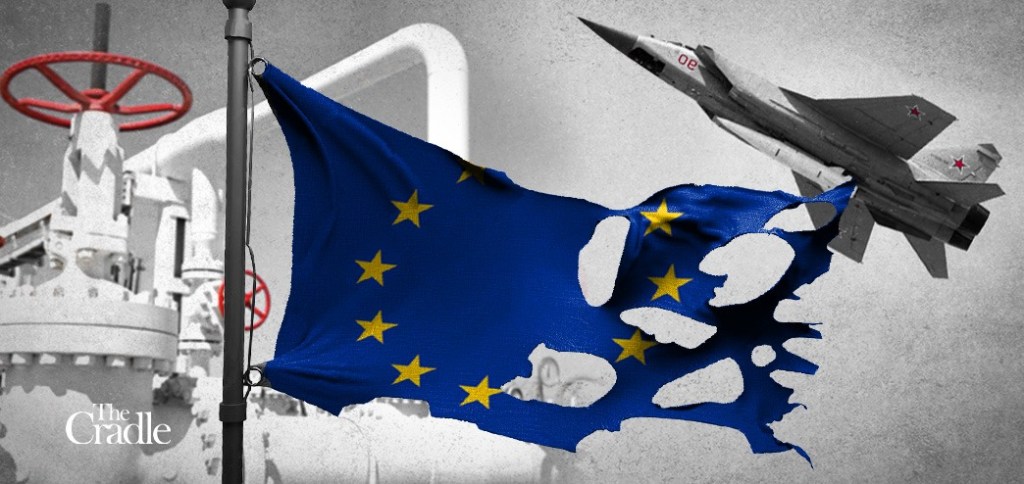
Washington’s competition with rising power Russia is so fierce, it is willing to sacrifice Europe.Photo Credit: The Cradle

If the US goal is to crush Russia’s economy with sanctions and isolation, why is Europe in an economic free fall instead?

By Pepe Escobar

Source: The Cradle

The stunning spectacle of the European Union (EU) committing slow motion hara-kiri is something for the ages. Like a cheap Kurosawa remake, the movie is actually about the US-detonated demolition of the EU, complete with the rerouting of some key Russian commodities exports to the US at the expense of Europeans.

It helps to have a 5th columnist actress strategically placed – in this case astonishingly incompetent European Commission head Ursula von der Lugen – with her vociferous announcement of a crushing new sanctions package: Russian ships banned from EU ports; road transportation companies from Russia and Belarus prohibited from entering the EU; no more coal imports (over 4.4 billion euros a year).

In practice, that translates into Washington shaking down its wealthiest western clients/puppets. Russia, of course, is too powerful to directly challenge militarily, and the US badly needs some of its key exports, especially minerals. So, the Americans will instead nudge the EU into imposing ever-increasing sanctions that will willfully collapse their national economies, while allowing the US to scoop everything up.

Cue to the coming catastrophic economic consequences felt by Europeans in their daily life (but not by the wealthiest five percent): inflation devouring salaries and savings; next winter energy bills packing a mean punch; products disappearing from supermarkets; holiday bookings almost frozen. France’s Le Petit Roi Emmanuel Macron – perhaps facing a nasty electoral surprise – has even announced: “food stamps like in WWII are possible.”

We have Germany facing the returning ghost of Weimar hyperinflation. BlackRock President Rob Kapito said, in Texas,“for the first time, this generation is going to go into a store and not be able to get what they want.” African farmers are unable to afford fertilizer at all this year, reducing agricultural production by an amount capable of feeding 100 million people.

Zoltan Poszar, former NY Fed and US Treasury guru, current Credit Suisse grand vizir, has been on a streak, stressing how commodity reserves – and, here, Russia is unrivaled – will be an essential feature of what he calls Bretton Woods III (although, what’s being designed by Russia, China, Iran and the Eurasia Economic Union is a post-Bretton Woods).

Poszar remarks that wars, historically, are won by those who have more food and energy supplies, in the past to power horses and soldiers; today to feed soldiers and fuel tanks and fighter jets. China, incidentally, has amassed large stocks of virtually everything.

Poszar notes how our current Bretton Woods II system has a deflationary impulse (globalization, open trade, just-in-time supply chains) while Bretton Woods 3 will provide an inflationary impulse (de-globalization, autarky, hoarding of raw materials) of supply chains and extra military spending to be able to protect what will remain of seaborne trade.

The implications are of course overwhelming. What’s implicit, ominously, is that this state of affairs may even lead to WWIII.

Rublegas or American LNG?

The Russian roundtable Valdai Club has conducted an essential expert discussion on what we at The Cradle have defined as  Rublegas – the real geoeconomic game-changer at the heart of the post-petrodollar era. Alexander Losev, a member of the Russian Council for Foreign and Defense Policy, offered the contours of the Big Picture. But it was up to Alexey Gromov, Chief Energy Director of the Institute of Energy and Finance, to come up with crucial nitty-gritty.

Russia, so far, was selling 155 billion cubic meters of gas to Europe each year. The EU rhetorically promises to get rid of it by 2027, and reduce supply by the end of 2022 by 100 billion cubic meters. Gromov asked “how,” and remarked, “any expert has no answer. Most of Russia’s natural gas is shipped over pipelines. This cannot simply be replaced by Liquified Natural Gas (LNG).”

The risible European answer has been “start saving,” as in “prepare to be worse off” and “reduce the temperature in households.” Gromov noted how, in Russia, “22 to 25 degrees in winter is the norm. Europe is promoting 16 degrees as ‘healthy’, and wearing sweaters at night.”

The EU won’t be able to get the gas it needs from Norway or Algeria (which is privileging domestic consumption). Azerbaijan would be able to provide at best 10 billion cubic meters a year, but “that will take 2 or 3 years” to happen.

Gromov stressed how “there’s no surplus in the market today for US and Qatar LNG,” and how prices for Asian customers are always higher. The bottom line is that “by the end of 2022, Europe won’t be able to significantly reduce” what it buys from Russia: “they might cut by 50 billion cubic meters, maximum.” And prices in the spot market will be higher – at least $1,300 per cubic meter.

An important development is that “Russia changed the logistical supply chains to Asia already.” That applies for gas and oil as well:  “You can impose sanctions if there’s a surplus in the market. Now there’s a shortage of at least 1.5 million barrels of oil a day. We’ll be sending our supplies to Asia – with a discount.” As it stands, Asia is already paying a premium, from 3 to 5 dollars more per barrel of oil.

On oil shipments, Gromov also commented on the key issue of insurance: “Insurance premiums are higher. Before Ukraine, it was all based on the Free on Board (FOB) system. Now buyers are saying ‘we don’t want to take the risk of taking your cargo to our ports.’ So they are applying the Cost, Insurance and Freight (CIF) system, where the seller has to insure and transport the cargo. That of course impacts revenues.”

An absolutely key issue for Russia is how to make the transition to China as its key gas customer. It’s all about the Power of Siberia 2, a new 2600-km pipeline originating in the Russian Bovanenkovo and Kharasavey gas fields in Yamal, in northwest Siberia – which will reach full capacity only in 2024. And, first, the interconnector through Mongolia must be built – “we need 3 years to build this pipeline” – so everything will be in place only around 2025.

On the Yamal pipeline, “most of the gas goes to Asia. If the Europeans don’t buy anymore we can redirect.” And then there’s the Arctic LNG 2 project – which is even larger than Yamal: “the first phase should be finished soon, it’s 80 percent ready.” An extra problem may be posed by the Russian “Unfriendlies” in Asia: Japan and South Korea. LNG infrastructure produced in Russia still depends on foreign technologies.

That’s what leads Gromov to note that, “the model of mobilization-based economy is not so good.” But that’s what Russia needs to deal with at least in the short to medium term.

The positives are that the new paradigm will allow “more cooperation within the BRICS (the emerging economies of Brazil, Russia, India, China and South Africa that have been meeting annually since 2009);” the expansion of the International North South Transportation Corridor (INSTC); and more interaction and integration with “Pakistan, India, Afghanistan and Iran.”

Only in terms of Iran and Russia, swaps in the Caspian Sea are already in the works, as Iran produces more than it needs, and is set to increase cooperation with Russia in the framework of their strengthened strategic partnership.

Hypersonic geoeconomics

It was up to Chinese energy expert Fu Chengyu to offer a concise explanation of why the EU drive of replacing Russian gas with American LNG is, well, a pipe dream. Essentially the US offer is “too limited and too costly.”

Fu Chengyu showed how a lengthy, tricky process depends on four contracts: between the gas developer and the LNG company; between the LNG company and the buyer company; between the LNG buyer and the cargo company (which builds vessels); and between the buyer and the end user.

“Each contract,” he pointed out, “takes a long time to finish. Without all these signed contracts, no party will invest – be it investment on infrastructure or gas field development.” So actual delivery of American LNG to Europe assumes all these interconnected resources are available – and moving like clockwork.

Fu Chengyu’s verdict is stark: this EU obsession on ditching Russian gas will provoke “an impact on global economic growth, and recession. They are pushing their own people – and the world. In the energy sector, we will all be harmed.”

It was quite enlightening to juxtapose the coming geoeconomic turbulence – the EU obsession in bypassing Russian gas and the onset of Rublegas – with the real reasons behind Operation Z in Ukraine, completely obscured by western media and analysts.

A US Deep State old pro, now retired, and quite familiar with the inner workings of the old OSS, the CIA precursor, all the way to the neocon dementia of today, provided some sobering insights:

“The whole Ukraine issue is over hypersonic missiles that can reach Moscow in less than four minutes. The US wants them there, in Poland, Romania, Baltic States, Sweden, Finland. This is in direct violation of the agreements in 1991 that NATO will not expand in Eastern Europe. The US does not have hypersonic missiles now but should – in a year or two. This is an existential threat to Russia. So they had to go into the Ukraine to stop this.  Next will be Poland and Romania where launchers have been built in Romania and are being built in Poland.”

From a completely different geopolitical perspective, what’s really telling is that his analysis happens to dovetail with Zoltan Poszar’s geoeconomics: “The US and NATO are totally belligerent. This presents a real danger to Russia. The idea that nuclear war is unthinkable is a myth. If you look at the firebombing of Tokyo against Hiroshima and Nagasaki, more people died in Tokyo than Hiroshima and Nagasaki. These cities were rebuilt. The radiation goes away and life can restart. The difference between firebombing and nuclear bombing is only efficiency. NATO provocations are so extreme, Russia had to place their nuclear missiles on standby alert. This is a gravely serious matter. But the US ignored it.”

Waltzing to Armageddon

The Dr. Strangeloves, like zombies rising from the mass graves they created around the globe, are once again stoking new campaigns of industrial mass slaughter.

By Chris Hedges

Source: Information Clearing House

The Cold War, from 1945 to 1989, was a wild Bacchanalia for arms manufacturers, the Pentagon, the C.I.A., the diplomats who played one country off another on the world’s chess board, and the global corporations able to loot and pillage by equating predatory capitalism with freedom. In the name of national security, the Cold Warriors, many of them self-identified liberals, demonized labor, independent media, human rights organizations, and those who opposed the permanent war economy and the militarization of American society as soft on communism. 

That is why they have resurrected it.

The decision to spurn the possibility of peaceful coexistence with Russia at the end of the Cold War is one of the most egregious crimes of the late 20th century. The danger of provoking Russia was universally understood with the collapse of the Soviet Union, including by political elites as diverse as Henry Kissinger and George F. Kennan, who called the expansion of NATO into Central Europe “the most fateful error of American policy in the entire post-Cold War era.” 

This provocation, a violation of a promise not to expand NATO beyond the borders of a unified Germany, has seen Poland, Hungary, the Czech Republic, Bulgaria, Estonia, Latvia, Lithuania, Romania, Slovakia, Slovenia, Albania, Croatia, Montenegro and North Macedonia inducted into the Western military alliance.

This betrayal was compounded by a decision to station NATO troops, including thousands of U.S. troops, in Eastern Europe, another violation of an agreement made by Washington with Moscow. The Russian invasion of Ukraine, perhaps a cynical goal of the Western alliance, has now solidified an expanding and resurgent NATO and a rampant, uncontrollable militarism. The masters of war may be ecstatic, but the potential consequences, including a global conflagration, are terrifying. 

Peace has been sacrificed for U.S. global hegemony. It has been sacrificed for the billions in profits made by the arms industry. Peace could have seen state resources invested in people rather than systems of control. It could have allowed us to address the climate emergency. But we cry peace, peace, and there is no peace. Nations frantically rearm, threatening nuclear war. They prepare for the worst, ensuring that the worst will happen. 

So, what if the Amazon is reaching its final tipping point where trees will soon begin to die off en masse? So what if land ice and ice shelves are melting from below at a much faster rate than predicted? So what if temperatures soar, monster hurricanes, floods, droughts, and wildfires devastate the earth? In the face of the gravest existential crisis to beset the human species, and most other species, the ruling elites stoke a conflict that is driving up the price of oil and turbocharging the fossil fuel extraction industry. It is collective madness.

The march towards protracted conflict with Russia and China will backfire. The desperate effort to counter the steady loss of economic dominance by the U.S. will not be offset by military dominance. If Russia and China can create an alternative global financial system, one that does not use the U.S. dollar as the world’s reserve currency, it will signal the collapse of the American empire. The dollar will plummet in value. Treasury bonds, used to fund America’s massive debt, will become largely worthless. The financial sanctions used to cripple Russia will be, I expect, the mechanism that slays Americans, if not immolation in thermonuclear war.

Washington plans to turn Ukraine into Chechnya or the old Afghanistan, when the Carter administration, under the influence of the Svengali-like National Security Advisor Zbigniew Brzezinski, equipped and armed the radical jihadists that would morph into the Taliban and al Qaeda in the fight against the Soviets. It will not be good for Russia. It will not be good for the United States. It will not be good for Ukraine, as making Russia bleed will require rivers of Ukrainian blood.

Pandora’s Box of Evils

The decision to destroy the Russian economy, to turn the Ukrainian war into a quagmire for Russia and topple the regime of Vladimir Putin will open a Pandora’s box of evils. Massive social engineering — look at Afghanistan, Iraq, Syria, Libya or Vietnam — has its own centrifugal force. It destroys those who play God.

The Ukrainian war has silenced the last vestiges of the Left. Nearly everyone has giddily signed on for the great crusade against the latest embodiment of evil, Vladimir Putin, who, like all our enemies, has become the new Hitler.

The United States will give $13.6 billion in military and humanitarian assistance to Ukraine, with the Biden administration authorizing an additional $200 million in military assistance. The 5,000-strong EU rapid deployment force, the recruitment of all Eastern Europe, including Ukraine, into NATO, the reconfiguration of former Soviet bloc militaries to NATO weapons and technology have all been fast tracked.

Germany, for the first time since World War II, is massively rearming. It has lifted its ban on exporting weapons. Its new military budget is twice the amount of the old budget, with promises to raise the budget to more than 2 percent of GDP, which would move its military from the seventh largest in the world to the third, behind China and the United States.

NATO battlegroups are being doubled in size in the Baltic states to more than 6,000 troops. Battlegroups will be sent to Romania and Slovakia. Washington will double the number of U.S. troops stationed in Poland to 9,000. Sweden and Finland are considering dropping their neutral status to integrate with NATO.

This is a recipe for global war. History, as well as all the conflicts I covered as a war correspondent, have demonstrated that when military posturing begins, it often takes little to set the funeral pyre alight. One mistake. One overreach. One military gamble too many. One too many provocations. One act of desperation.

Russia’s threat to attack weapons convoys to Ukraine from the West; its air strike on a military base in western Ukraine, 12 miles from the Polish border, which is a staging area for foreign mercenaries; the statement by Polish President Andrzej Duda that the use of weapons of mass destruction, such as chemical weapons, by Russia against Ukraine, would be a “game-changer” that could force NATO to rethink its decision to refrain from direct military intervention — all are ominous developments pushing the alliance closer to open warfare with Russia.

Once military forces are deployed, even if they are supposedly in a defensive posture, the bear trap is set. It takes very little to trigger the spring. The vast military bureaucracy, bound to alliances and international commitments, along with detailed plans and timetables, when it starts to roll forward, becomes unstoppable. It is propelled not by logic but by action and reaction, as Europe learned in two world wars.

Staggering Hypocrisy

The moral hypocrisy of the United States is staggering. The crimes Russia is carrying out in Ukraine are more than matched by the crimes committed by Washington in the Middle East over the last two decades, including the act of preemptive war, which under post-Nuremberg laws is a criminal act of aggression. Only rarely is this hypocrisy exposed as when U.S. Ambassador to the United Nations Linda Thomas-Greenfield told the body:

“We’ve seen videos of Russian forces moving exceptionally lethal weaponry into Ukraine, which has no place on the battlefield. That includes cluster munitions and vacuum bombs which are banned under the Geneva Convention.”

Hours later, the official transcript of her remark was amended to tack on the words “if they are directed against civilians.” This is because the U.S., which like Russia never ratified the Convention on Cluster Munitions treaty, regularly uses cluster munitions. It used them in Vietnam, Laos, Cambodia, and Iraq. It has provided them to Saudi Arabia for use in Yemen. Russia has yet to come close to the tally of civilian deaths from cluster munitions delivered by the U.S. military.

The Dr. Strangeloves, like zombies rising from the mass graves they created around the globe, are once again stoking new campaigns of industrial mass slaughter. No diplomacy. No attempt to address the legitimate grievances of our adversaries. No check on rampant militarism. No capacity to see the world from another perspective. No ability to comprehend reality outside the confines of the binary rubric of good and evil. No understanding of the debacles they orchestrated for decades. No capacity for pity or remorse.

Elliott Abrams worked in the Reagan administration when I was reporting from Central America. He covered up atrocities and massacres committed by the military regimes in El Salvador, Guatemala, Honduras and by the U.S.-backed Contra forces fighting the Sandinistas in Nicaragua. He viciously attacked reporters and human rights groups as communists or fifth columnists, calling us “un-American” and “unpatriotic.” He was convicted for lying to Congress about his role in the Iran-Contra affair. During the administration of George W. Bush, he lobbied for the invasion of Iraq and tried to orchestrate a U.S. coup in Venezuela to overthrow Hugo Chávez.
“There will be no substitute for military strength, and we do not have enough,” writes Abrams for the Council on Foreign Relations, where he is a senior fellow:

“It should be crystal clear now that a larger percentage of GDP will need to be spent on defense. We will need more conventional strength in ships and planes. We will need to match the Chinese in advanced military technology, but at the other end of the spectrum, we may need many more tanks if we have to station thousands in Europe, as we did during the Cold War. (The total number of American tanks permanently stationed in Europe today is zero.) Persistent efforts to diminish even further the size of our nuclear arsenal or prevent its modernization were always bad ideas, but now, as China and Russia are modernizing their nuclear weaponry and appear to have no interest in negotiating new limits, such restraints should be completely abandoned. Our nuclear arsenal will need to be modernized and expanded so that we will never face the kinds of threats Putin is now making from a position of real nuclear inferiority.”

Putin played into the hands of the war industry. He gave the warmongers what they wanted. He fulfilled their wildest fantasies. There will be no impediments now on the march to Armageddon. Military budgets will soar. The oil will gush from the ground. The climate crisis will accelerate.

China and Russia will form the new axis of evil. The poor will be abandoned. The roads across the earth will be clogged with desperate refugees. All dissent will be treason. The young will be sacrificed for the tired tropes of glory, honor and country. The vulnerable will suffer and die.

The only true patriots will be generals, war profiteers, opportunists, courtiers in the media and demagogues braying for more and more blood. The merchants of death rule like Olympian gods. And we, cowed by fear, intoxicated by war, swept up in the collective hysteria, clamor for our own annihilation.

Flattening the curve or flattening the global poor? How Covid lockdowns obliterate human rights and crush the most vulnerable

By Stavroula Pabst and Max Blumenthal

Source: The Grayzone

Marketed as life-saving public health measures, lockdowns triggered death and economic devastation on a global scale while doing little to slow the spread of Covid-19. Now, they’re back with a vengeance.

In October 2021, it seemed as though the lockdowns that still paralyzed societies from Australia to New Zealand and Singapore were coming to an end, as these countries threw in the “Zero-COVID” towel following a year and a half of rolling restrictions and closures.

But with COVID-19 cases rising in Europe, several countries are implementing lockdowns all over again, often with clearly punitive motivations. 

This November, Austria’s government announced that police would enforce a lockdown exclusively against unvaccinated citizens. Following days of massive protests, the policy was extended to everyone, with steep fines and even prison sentences to be imposed on those who refuse to comply, and a compulsory vaccination requirement tacked on for good measure.

Next door in Germany, where a new lockdown was announced this December for unvaccinated people, barring them from almost all public places except for pharmacies and supermarkets, Berlin is also weighing a vaccination mandate for all. One German constitutional lawyer has even proposed that refusers of the jab “be brought before the vaccinator by the police.”

Though statewide lockdowns have eased in Australia, the country is constructing internment camps for those who test positive for Covid, along with their Covid-negative “close contacts.” Harley Hodgson, an Australian held for 14 days in one such camp despite repeatedly testing negative for Covid, said of her experience: “You feel like you’re in prison. You feel like you’ve done something wrong. It’s inhumane what they’re doing.”

Initially marketed to the public as a means to “flatten the curve” and “slow the spread,” lockdowns now represent one of the most draconian aspects of the perverse New Normal that has metastasized amid an atmosphere of seemingly endless emergency. 

While much of the public accepted such restrictions during the early days of the pandemic, they are now met with increasing resistance by citizens around the world who have suffered from economic devastation, homelessness, suicidal ideation, social isolation, domestic violence, addiction and the cancellation of routine medical procedures as a result of lockdowns.  

The public health justification for these non-pharmaceutical interventions has not only been discredited in the eyes of millions across the globe, but by an array of scientific studies and data demonstrating that they likely caused more deaths than they prevented.

The lethal impact of lockdowns was particularly pernicious in the Global South, where hundreds of millions of the world’s most vulnerable people were driven into a cascading humanitarian crisis. As the World Food Program warned in 2020, “135 million people on earth are marching towards the brink of starvation” as a result of their economies shutting down to supposedly inhibit the spread of COVID-19.

In his book, The Covid Consensus, professor of African history at King’s College Toby Green chronicled the misery, migration outflow and mass death spawned by lockdowns imposed on populations from Africa to Latin America.

“Lockdowns were not a policy that made any sense in societies where many people live largely outside, and SARS-CoV-2 is a virus that circulates inside,” Green told The Grayzone. “Moreover, they made no sense in regions such as Africa where the population is much younger than in rich countries – they merely saw a massive shift of health burden from the global rich to the global young and poor.”

For most people on the planet, the economic and psychological harm experienced during the past 19 months was not the result of the pandemic per se, but of emergency-order restrictions governments imposed on them and justified as public health measures. In the Global North, such costly efforts did little more than delay the inevitable spread of COVID-19 while transferring wealth into the hands of Big Tech oligarchs who constitute the pandemic’s real “winners.” 

Though public health scholars and some officials warned that lockdowns would do possibly irreparable damage to the global economy while only deepening the public health crisis, the politics of the Trump era enabled supporters of harsh restrictions to caricature critics as dangerous right-wing extremists.

“Discussion of the inevitable harm of lockdowns has been almost totally forbidden by most of the mainstream media and academia, while the left followed the lead of the Democratic Party, doing all it could to marginalize any discussion of the collateral damage of these measures,” Christian Parenti, professor of economics at the City University of New York and author of several books about policing and mass surveillance, commented to The Grayzone. “Any questioning of lockdown measures was cast as right wing, even fascist. But mostly the left just ignored the emerging facts, particularly regarding the carnage caused in the Global South.”

One of the most outspoken among the public health scholars sounding the alarm about the social cost of sweeping restrictions was Dr. Jay Bhattacharya, a professor of medicine at  Stanford University. As a co-author of the Great Barrington Declaration, which advocated a strategy of focused protection instead of hard lockdown, Bhattacharya and his colleagues were subjected to social media censorship and mainstream media attacks.

“Lockdowns provided the illusion of control over a virus that was present in parts of the world and spreading far earlier than most officials believed,” Bhattacharya told The Grayzone. He added, “Much of the evidence that people have developed to argue that lockdowns work come from modelling studies that have proved incredibly inaccurate.” 

Indeed, the initial inspiration for locking down the UK and parts of the US derived from a bunk model of projected fatalities that has since been discredited. 

Lockdowns were inspired by bogus modelling by unqualified academics

On March 16, 2020, as the global consensus formed around implementing restrictions in some form, a professor from London’s Imperial College delivered a presentation to the British government that would prove pivotal. That academic, Neil Ferguson, introduced a model asserting that if the UK did not impose a harsh lockdown, 500,000 citizens would die of Covid-19 that year; and if it took only moderate steps to restrict public life, as Prime Minister Boris Johnson planned, 260,000 would die. 

In either case, Ferguson insisted, the national healthcare system would be overwhelmed and the economy irreparably damaged. Within a week, Johnson’s government accepted Ferguson’s fatalistic model and locked down hard. 

Around the same time, the Trump White House received a paper from Ferguson that envisioned a catastrophic death toll. His model predicted fatalities at a 25% higher rate than the CDC’s already stark projection: 2.2 million dead in the first year unless the US instituted lockdowns. 

“What had the biggest impact in the model is social distancing, small groups, not going in public in large groups,” Dr. Deborah Birx, a leader of Trump’s coronavirus task force, referring to the Imperial College projection. The New York Times reported on March 16, the day the Trump administration received Ferguson’s paper: “White House Takes New Line After Dire Report On Death Toll.”

While Ferguson’s modelling succeeded in inspiring harsh lockdowns, it ultimately brought him public embarrassment. First, the professor was caught breaking the quarantine he personally inspired to enjoy a tryst with his lover – a married woman who complained that the lockdown “strained” her relationship with the professor. Then, as time went on, it became clear that Ferguson’s models had exaggerated the Covid-19 fatality rate by a factor of at least four. 

“Yes, my prediction was off,” he admitted to the Times of London in August 2021. But by then, the damage was done.

This was not the first time Ferguson’s numbers had proven to be wildly off the mark. Back in 2001, Ferguson projected that as many as 50,000 could die from Mad Cow Disease. After a panicked government slaughter of some 6.5 million cattle, the mass death failed to come to fruition. (Only about 2,800 have died from Mad Cow in three decades). 

In 2005, Ferguson was at it again, predicting up to 200 million global deaths from the bird flu. In the end, only a few hundred people died. Then in 2009, Ferguson warned that 65,000 could die from the swine flu in the UK alone. But when the dust cleared, he and his team were off by a factor of over 1000

So why did governments across the Atlantic trust a serial exaggerator who appeared to have no formal training in epidemiology or computer modelling, and whose codes were buggier than a locust infestation

Before briefings from Ferguson, leaders from Whitehall to Washington were already in a panic over the onset of the novel coronavirus. A haze of reporting in early 2020 made the coronavirus appear more deadly than it turned out to be, with some reports suggesting the fatality rate could rise to as high as seven percent

Although it is now known that COVID-19 does not kill the vast majority of people it infects, with Infection Fatality Rates (IFR) of .15 percent overall and .05 percent for persons under 70, the confusion and uncertainty led many public health officials to act quickly. In reality, the coronavirus is a less lethal disease that spreads easily, making it harder to contain with human interventions.

Further, according to Toby Green of King’s College in London, British public health officials were easily seduced by the tech-centric presentation of academics like Ferguson.

“Let’s remember that in the UK, where Ferguson’s model first had its influence, Dominic Cummings, Boris Johnson’s advisor on Covid-19, had already written about the importance of a data-driven approach to policy,” Green explained. “Matt Hancock, the health minister, was also highly integrated into the tech sector through his family, which runs a tech business. So a computer-driven model [like Ferguson’s] was appealing.” 

Somehow, the technocrats placed in charge of Covid-19 policy across the Atlantic demonstrated little concern for how the lockdowns they suddenly imposed would impact the economic and social wellbeing of the citizens they were supposed to protect.

A bonanza for tech oligarchs, “the equivalent of smoking 15 cigarettes a day” for the less fortunate

In the United States, lockdowns and various rolling restrictions triggered an economic catastrophe for working and poor people across the country, pushing those already on the financial precipice over the brink.

In the US in 2020, 40 percent of people making under $40,000 annually lost work, and almost three million women were driven out of the workforce due to an inability to balance work and caregiving and virtual learning obligations for children who could no longer attend in-person school or daycare. Dozens of airlines failed, and at least 200,000 small-businesses were shuttered

Increased unemployment benefits and stimulus checks had a salutary effect on the economic well-being of average Americans, seeing personal savings rise 8 percent between 2019 and summer of 2021. But even if American poverty did not immediately surge, it may yet do so, now that stimulus checks, generous unemployment benefits, and the eviction moratorium have all been terminated by the administration of President Joe Biden. 

As lockdowns drove inequality in the US, millions skipped routine medical care such as childhood vaccinations and cancer screenings, because the Centers for Disease Control (CDC) recommended that hospitals suspend non-essential and elective procedures. In May 2021, almost ten million routine screenings were missed in the United States, while other preventative health visits declined on a mass scale due to elective procedure suspensions, which may also lead to worsening public health problems in the long-term.

Due to the CDC’s recommendations, 1.4 million medical workers lost their jobs in April 2020. One medical record company estimated that screening for breast, colorectal, and cervical cancers dropped by 80% to 90% during March and April of 2020 compared to the same months in 2019. Now, the US is struggling with a surge of cancers and other ailments that went undetected because of overzealous and overly broad lockdowns. 

While average Americans paid a heavy price for the restrictions, Big Tech oligarchs quickly emerged as the pandemic’s winners. In 2020, billionaires increased their wealth by 54 percent. In fact, the top 1% of U.S. households now officially control more money than the entire middle class, or the middle 60 percent of households by income, in the US. 

While the pandemic response has adversely affected working people and small businesses worldwide, lifting restrictions is in fact against major corporate interests: Amazon’s stock even fell seven percent in July as re-openings stalled pandemic-related online buying. 

As lockdowns took their psychological toll on the US population, opioid-related deaths surged to record levels – up 30% from the previous year across the country and up 40% in 10 states. The sharpest rise in deaths occurred in Black Americans, along with those aged 35 to 44. 

Lockdowns and excessive closures have also contributed to an international rise in domestic violence

Despair rose in a significant way with the crisis: according to the CDC, 25.5 percent of survey respondents aged 18-24 reported seriously considering suicide within the previous 30 days by the end of June 2020. The same study indicated adults were more than twice as likely to report considering suicide when compared to those surveyed before the onset of coronavirus.

Professor Stephen Reicher, a behavioral scientist who advised the UK government on Covid policy, commented: “The problem with lockdown is isolation; being cut off from people is bad for you psychologically and physically. It is the equivalent of smoking 15 cigarettes a day.”

The impact of restrictions on young people, adolescents and babies who are at very little risk of illness with serious COVID-19, with a one in 50,000 chance of hospitalization and a two in one million chance of death for children, cannot be overstated. Babies and young infants, after all, require regular socialization and interaction for healthy development. Many of them, however, were only able to visit their closest family members over the past year and a half. Ultimately, extended periods of social isolation or loneliness can negatively impact a young individual’s health even decades later.

The overall outlook for young people, as suggested by the 2020 CDC study referenced above, is and remains grim. In Las Vegas, Nevada, schools opened in December of 2020 after an unprecedented 18 adolescent suicides were recorded in the district since March of the same year. And in the state of Victoria, Australia, about 340 teenagers each week were hospitalized due to mental health emergencies as of August 2021.

For many among the urban laptop class, including a large swath of the hyper-online Western left which still clamors for national school closures and demands lockdowns in the face of a handful of new cases (while crudely painting critics of official Covid policy as Nazis), quarantine orders merely enforced an already sedentary lifestyle that revolves around Zoom meetings, ordered food and Amazon deliveries. The restrictions further eliminated tedious commutes to work while providing those able to work remotely with the satisfying sense that staying home was a bold act of social solidarity.  

Under this spectacular arrangement, which assumed individual behavior could slow down or contribute to the spread of a virus, isolation was framed as a moral choice that led many of those willingly confined to their homes to fear or vilify a working class that frequently provided them with vital services. And while non-pharmaceutical interventions have generally proven futile against COVID-19, the stentorian demands to socially distance and attendant shaming of those who fail to obey has done little more than generate hostility between friends, families, and communities.

“Lockdowns are a luxury of the rich,” Bhattacharya said, “and affect a certain class of people at the expense of others. A lockdown doesn’t mean all of society stops and we all sit in cages alone while we wait for the fires to go away. The poor and working class, many of them vulnerable and older, are asked to risk themselves, while another class of people stays at home protected.”

This was particularly true in the Global South, where class divisions are clearly drawn and most people live dangerously close to the poverty line.

Lockdowns drive debt, dependency and death across the Global South

The legacy of colonialism and imperialism has split the world economy into a “core” of wealthy economies and a periphery of poor economies that are largely dependent on exporting cheap raw materials and low-value added manufactured goods. When the wealthy core economies locked down in 2020, international trade contracted, triggering a violent economic whiplash in developing countries as their earnings from exports and tourism suddenly collapsed. 

As a result, developing country debt has risen from an average of about 40 percent of overall GDP to over 60 percent. Throughout 2020, developing economies were forced to pay out 194 billion to their creditors, even as their economies contracted dramatically. This forced poor countries to cut deeply into social spending to maintain debt servicing from institutions like the International Monetary Fund (IMF). 

Since the COVID-19 pandemic was declared, the IMF has doled out “Covid funds” to 85 countries around the world. An analysis by Oxfam found that 85% of the 107 loans provided to these countries require them to impose austerity until well into the future to pay them back. Now, devastating impacts on future health and social spending in poor countries is practically inevitable.

With surging unemployment, reduced incomes, and fewer social services, the populations of poor countries in the Global South have experienced massive increases in hunger.

As early as July 2020, the Associated Press reported that an additional 10,000 children were dying of hunger every month “due to the virus.” In fact, the deaths were the result of governments’ choice to lock down. Indeed, the coronavirus has had very little effect on the health of children, except indirectly through bad policy. Thus, millions of children across the Global South who were not hungry in 2019 are hungry today because of the lockdowns.

In all, about 2.37 billion people – or about 30 percent of the world population and 320 million more people than in the previous year – did not have access to adequate food at some point during 2020. 

As Nash Landesman reported for The Grayzone, extensive lockdowns with little social support by the US-backed government of Colombia led to mass unemployment, evictions, and widespread hunger throughout 2020, especially in working class neighborhoods of Bogotá, where residents placed red flags outside their homes to signal their sense of despair. 

Mexicans similarly protested lockdown measures, with one vendor affixing a sign to her stall reading: “Mexico is NOT Europe. If you don’t work, you don’t eat.”

And in Honduras, which has been ruled for over a decade by a corrupt US-backed government installed through a military coup, citizens facing food and water shortages due to lockdown took to the streets in protest in March 2020, encountering heavy police repression. The protests continued into September, with drivers blocking roads to demand compensation for wages lost during the forced quarantine. 

In India, meanwhile, where GDP shrank a record 7.3 percent from March 2020 to March 2021, a study of Uttar Pradesh state households found incomes contracting about 75 percent. Anthropologist Dr. Chandana Mathur of Maynooth University reported that the strict, yet poorly planned lockdowns in India kept millions of migrant workers away from income sources, forcing them into homes that were thousands of kilometers away from work or simply non-existent

Just two days before the March 2020 lockdown, many transportation services in India ground to a halt, stranding and starving thousands of people at a time when strict stay-at-home rules were declared. To enforce the orders, police brutally beat those considered insufficiently compliant. One estimate found that about 1,000 people died from March to July 2020 due to the displacement.

In fact, mass suffering was anticipated by some governments and experts when the restrictions began. In March 2020, a cost-benefit analysis by the Dutch government’s Ministry of Economic Affairs and Climate Policy concluded health damage from lockdown would be six times greater than the benefit. Similarly, a 2020 Actuarial Society of South Africa model posited that a lockdown in the country may lead to 29 times more deaths than the restrictions can prevent

And indeed, when lockdowns and other stringent interventions were applied in South Africa, many suffered enormously. Researchers estimate that 47 percent of South Africans ran out of money for food in April 2020. While rates of deprivation have decreased, estimates of hunger in the country remained steady at 17 percent of households throughout April and May 2021. 

South Africans also faced a decrease in overall life expectancy due to other restriction-perpetuated factors, such as an increase in HIV and tuberculosis related health issues thanks to treatment stoppages, outbreaks of other infectious diseases especially associated with malnutrition, poverty and suspension of relevant vaccination programs, and interruptions in maternal and infant care.

Despite such excessive restrictions in the country, which previously included a curfew, a ban on gatherings and even on alcohol sales, some estimates found that 80 percent of South Africans were still infected with COVID-19

A recently published study by researchers at the University of Johannesburg and the University of the Free State, COVID-19 in South Africa, found that “no changes in the shape of the [epidemiological] curve can be attributed to the introduction or easing of any regulation at [the current time].”

Instead of flattening the proverbial curve, restrictions induced economic and social deterioration which killed millions in the name of public health, while depriving an entire generation of the global poor of the right to education.

Lockdowns brutalized the world’s poor while depriving generations of education

For governments across the world, Covid provided an opportunity to pummel their most vulnerable residents, as well as those who dissented from the official order. As Amnesty International’s European bureau stated in a detailed but under-acknowledged June 2020 report, “The police enforcement of lockdowns disproportionately impacted poorer areas, which often have a higher proportion of residents from minority ethnic groups.” 

Among Amnesty’s most disturbing findings was that police searches of Black Britons rose by a full third in the first month of the pandemic; Roma populations across Eastern Europe were placed under militarized quarantines and cut off from food supplies, causing deprivation on a mass scale; homelessness surged across the continent, and refugees and minority residents were subjected to police brutality on a regular basis. 

Throughout 2020 in New York City, Black and Latino residents received a whopping 80% of police summonses for supposedly violating social distancing measures, leading civil rights groups including a local chapter of Black Lives Matter to complain that Covid restrictions were being exploited to bring back dreaded “stop and frisk” policies.

In Greece, such measures have been exploited to target refugees, migrants, and others living on the margins of society. Greek authorities have even fined refugees arriving by boat to Chios island 5000 euros each for not providing proof of negative coronavirus tests in late August 2021.

Many refugees that I, Stavroula, am personally acquainted with in Greece avoided spending time outside during the country’s six month lockdown from November 2020 to May 2021 out of fear of arrest and deportation. The lockdowns, which often confined people to a few miles from their home, and which imposed curfews as early as 6pm, required everyone to possess a government-issued identification and a text message or written note explaining their reason for being in public. 

Penalties for violating the restrictions could mean fines of 300 euros, about half a monthly salary in the country, which could financially ruin many Greeks. For those in the country without papers, not having the required documentation during an encounter with police could even lead to deportation. 

Across the globe, tens of thousands of people, mostly poor and working class, have been arrested for violating quarantine and been locked up in crowded unsanitary jails where Covid infections run rampant. 

In Washington DC’s municipal jail, 1500 inmates were held in de facto solitary confinement for over 400 days without basic services throughout 2020 and early 2021. Though most inmates had already contracted COVID-19, developing durable natural immunity to the virus, the lockdown was justified on the grounds of “slowing the spread.” 

“An overwhelming majority of the jail’s inmates are Black, and many have not yet been found guilty of the crimes for which they were arrested,” the Washington Post noted.

Similarly, St Louis city jail was the site of four prisoner uprisings since December 2020, with inmates forced into de facto solitary confinement for over a year with no trials. “People currently incarcerated…are tired of living in fear of COVID-19 and not being brought to trial,” one prisoner stated.

School-aged children and students around the world also suffered enormously under the weight of closures, particularly those in impoverished communities. In Uganda, citizens have spent large parts of the past two year under various forms of lockdown, with schools and recreation centers closed under orders of the US-backed leader Gen. Yoweri Museveni. 

“An entire generation of our children is being plunged into the bottomless abyss of illiteracy and ignorance. I saw a docile wasted generation of young defenseless victims of Gen. Museveni’s warped COVID-19 directives loitering about and dwindling in hopelessness,” wrote dissident Kakwenza Bashaija after a visit to eastern Uganda.

The New York Times reported this November that Uganda’s ongoing school closures have consigned the county’s youth to possibly lifelong poverty. With educational institutions still off limits, the Times wrote, “young women, abandoning hopes of going to school, are getting married and starting families instead. School buildings are being converted into businesses or health clinics. Teachers are quitting, and disillusioned students are taking menial jobs like selling fruit or mining for gold.”

Poor and working class youth across the United States experienced similar educational setbacks as closures forced them out of the classroom. In the state of Virginia, for example, math achievement scores in 2021 were down by over 40% for eighth graders in comparison to 2018-19. Less than half of Black students from third to sixth grade were able to pass reading tests, while the math scores of disabled youth declined precipitously. 

Glen Youngkin, a Republican who ran for governor in Virginia this year, highlighted these dismaying figures and slammed school closures in his closing campaign message. By capitalizing on the pent-up anger of parents in the state’s swing districts, Youngkin scored a surprise victory against a seasoned and well-funded opponent in a heavily Democratic state. 

Meanwhile, in the Democratic bastion of New Jersey, incumbent Governor Phil Murphy nearly lost to a lesser known Republican challenger who hammered him over his support for some of the most stringent lockdown measures in the country. Murphy was walloped in Atlantic County, home of the Atlantic City resort and casino city where lockdowns pushed one third of small businesses into permanent collapse. 

As the Biden administration considers new restrictions for US travelers, including placing the unvaccinated on a domestic no-fly list, the impact of lockdown policies has helped disrupt the international supply chain, driving inflation and shortages in suppliesgasoline, and even certain food items

With the US government collaborating desperately with major corporations and retailers to repair the existing supply bottlenecks, some in the media class have urged convenience-accustomed Americans to simply lower their expectations.

While these lockdowns were implemented to supposedly blunt the impact of a public health danger, mainstream media have generally avoided a discussion of how well they mitigated the perceived crisis or of the severe social and economic harm they did to working people. 

Despite the mass job loss, economic destruction, and increased hunger that non-pharmaceutical interventions have inflicted on the global population, the effectiveness of efforts such as lockdownscurfewsschool closures, and the constant PCR testing of healthy people are dubious at best.

Unpacking the misconception lockdowns work against COVID-19

Many credited lockdowns in ChinaGreeceVietnam, and Australia with early COVID successes, contributing to a widespread perception that lockdowns are vital to saving lives, and, therefore, a compassionate choice. Such reasoning has led governments internationally to proceed with lengthy closures of daily life.

According to Dr. Bhattacharya, these policies might be appropriate to halt the spread of a given virus depending on its profile and status. “There are diseases that are incredibly deadly, but not particularly infectious, where quarantining and sharp lockdowns locally can be quite effective,” Bhattacharya explained. “For instance, we limited the Ebola [virus] outbreaks in this way.”

Could COVID-19 have been addressed through sharp interventions as Ebola was? The answer depends in part on the properties of the virus, such as how deadly it is and how and how easily it spreads. Oftentimes, more lethal diseases spread less easily than their weaker counterparts, and that’s because the host will either die or know what they have and isolate themselves accordingly, thus halting transmission. Despite significantly higher fatality rates (25-90%, depending on the outbreak) in relation to COVID-19, Ebola is less infectious than other diseases and does not spread through the air: in fact, it typically dies within thirty seconds outside bodily fluids. 

In contrast, COVID-19 is a respiratory virus that likely spreads through aerosol transmission. Echoing the now-discredited modelling from the Imperial College of London, media coverage from early 2020 made the coronavirus appear more deadly than it turned out to be, with some reports suggesting the fatality rate could rise to as high as seven percent. In reality, the coronavirus is a less lethal disease that spreads easily, making it harder to contain with human interventions.

Because COVID-19 is a seasonal virus that tends to flourish in winter, much like the flu, early COVID “victors” like New Zealand and Australia were fortunate to get hit with it during their respective summers. They also are geographically isolated. The rest of the world was not so lucky.  

Drawing on studies of virus prevalence in California urban areas in March 2020, for example, Bhattacharya concluded it was “too late” for the coronavirus measures that state officials issued to help eliminate the virus, with about 3-4% of survey respondents reporting they already had COVID-19 antibodies.

Such numbers suggest that the virus was present much earlier in many parts of the world than originally believed, rendering subsequent preventive pandemic measures futile in eliminating or slowing the virus despite their stringency. In other words, based on the nature of its spread and its widespread establishment in many communities, the virus had already taken root in an irreversible way.

“You don’t get up to 2 to 4 percent disease spread [of COVID-19] unless you’ve had it spreading for a while,” Bhattacharya said in reference to the California seroprevalence study. “That means 96 percent of the population [at the time was] still susceptible to the virus, and far from endemic. But way too far gone to actually have hope that any lockdowns will stop the disease.”

Despite the tendency to resort to them when cases rise, the evidence of lockdowns’ effectiveness in inhibiting the spread of coronavirus is threadbare. 

Peru, which boasts the world’s highest COVID-19 death rate despite imposing hard lockdowns, was a case in point. Meanwhile, Greece locked down in November 2020 at around 2,500-3,000 cases daily, only to open again for tourism six months later with similar case numbers. Then there was Belarus, a country of over 9 million which did not lock down or introduce a mask mandate, and boasted one of Europe’s lowest COVID death rates all the way up to the Delta surge in Eastern Europe. 

The International Monetary Fund, or IMF, reportedly offered Belarusian President Aleksandr Lukashenko $940 million in COVID assistance on the condition that he imposed harsh pandemic restrictions. Lukashenko said he refused, proclaiming, “the IMF continues to demand from us quarantine measures, isolation, and a curfew. This is nonsense. We will not dance to anyone’s tune.”

By June 2021, only a minority of Belarusian citizens told pollsters they favored more COVID-19 restrictions.

Despite their widespread utilization as a non-pharmaceutical intervention against COVID-19, the shaky evidence for lockdowns does not end with anecdotes and country-specific strategies: dozens of academic and scientific studies call into question their efficacy or otherwise argue that the social, economic, and health related harms they pose significantly outweigh the risks. Their conclusions include the following (thread compiled by twitter user @the_brumby):

  • In Did Lockdown Work? An Economist’s Cross-Country Comparison, Aarhus University Economics Professor Christian Bjørnskov writes that after “[u]sing two indices from the Blavatnik Centre’s Covid 19 policy measures and comparing weekly mortality rates from 24 European countries in the first halves of 2017-2020, and addressing policy endogeneity in two different ways, I find no clear association between lockdown policies and mortality development.”
  • Medical researchers and doctors Rabail Chaudhry, MD, Justyna Bartoszko, MD and Sheila Riazi, MD (University of Toronto Department of Anesthesiology and Pain Medicine), George Dranitsaris, MD (University of Ioannina Department of Hematology) and Talha Mubashir, MD (previously University of Toronto Department of Anesthesiology and Pain Medicine, now at the University of Texas McGovern Medical School Department of Anesthesiology) write in A country level analysis measuring the impact of government actions, country preparedness and socioeconomic factors on COVID-19 mortality and related health outcomes that “government actions such as border closures, full lockdowns, and a high rate of COVID-19 testing were not associated with statistically significant reductions in the number of critical cases or overall mortality.”
  • In Stay-at-home policy is a case of exception fallacy: an internet-based ecological study, academics and researchers at Brazil-based institutions, including the Federal University of Rio Grande do Sul, R. F. Savaris, G. Pumi, J. Dalzochio & R. Kunst address early data favoring lockdowns and stay-at-home policies through an analysis of mathematical models and data from 87 regions worldwide. In “yielding 3,741 pairwise comparisons for linear regression analysis[they] were not able to explain if COVID-19 mortality is reduced by staying at home in ~ 98% of the comparisons.”
  • In Covid-19 Mortality: A Matter of Vulnerability Among Nations Facing Limited Margins of Adaptation, French medical researchers Quentin De Larochelambert, Andy Marc, Juliana Antero, Eric Le Bourg and University of Paris Professor of Physiology Jean-François Toussaint write that the “[s]tringency of the measures settled to fight pandemia, including lockdown, did not appear to be linked with death rate.” Instead, they conclude that nations with stagnating life expectancies and high rates of income and non-communicable disease —in other words, existing characteristics of a nation’s demographics— faced higher mortality rates regardless of government interventions.
  • And in Government mandated lockdowns do not reduce Covid-19 deaths: implications for evaluating the stringent New Zealand response, University of Waikato Economics Professor John Gibson concludes that “Lockdowns do not reduce Covid-19 deaths…[t]he apparent ineffectiveness of lockdowns suggests that New Zealand suffered large economic costs for little benefit in terms of lives saved.”

These dozens of studies are consistent with pre-COVID-19 pandemic literature emphasizing the ineffectiveness of non-pharmaceutical interventions like lockdowns. 

“Almost all [pre-pandemic planning guides before the coronavirus] emphasized respect for civil rights, disrupting societies as little as possible, protecting the vulnerable, and not spreading panic,” said Dr. Bhattacharya. “The lockdowns and the media narrative and the public health narrative of March 2020 violated all those principles.”

In a 2006 paper, Disease Mitigation Measures in the Control of Pandemic Influenza, academics at the Center for Biosecurity of the University of Pittsburgh Medical Center (now known as the John Hopkins Center for Health Security) in Baltimore, Maryland, wrote: “Experience has shown that communities faced with epidemics or other adverse events respond best and with the least anxiety when the normal social functioning of the community is least disrupted.”

Documents as recent as the 2019 World Health Organization (WHO) guide, Non-pharmaceutical public health measures for mitigating the risk and impact of epidemic and pandemic influenza, furthermore, state that the “evidence base on the effectiveness of [Non-Pharmaceutical Interventions] in community settings is limited, and the overall quality of evidence was very low for most interventions.”

While already-existing pandemic literature naturally could not make COVID-19 specific recommendations, a well-established understanding of the general ineffectiveness of non-pharmaceutical interventions for respiratory viruses largely went unheeded as media and government-driven fear gripped the population in early 2020. Everyday people paid and continue to pay the price.

“Making poor people a lot poorer” and shortening life spans

While they may not be effective at limiting the spread of coronavirus, lockdowns are effective at destroying the economy, people’s livelihoods, and perhaps the social fabric itself as individuals grow used to remaining distant from friends, coworkers, family and community.

And while income and education losses, extensive isolation, and other COVID-related disruptions are devastating in the short-term, they also can inflict long-term adverse impacts on the length and quality of life, even decades later. 

Childhood years are vital to shaping an adult’s overall well being, and adverse events that elicit extended stress responses throughout one’s youth can have significant impacts on lifespan, and risk of mental health issues and chronic physical health issues in the long term. 

Long-term unemployment, a common phenomenon during COVID-19, can also shorten life expectancy, with Daniel Sullivan and Till von Wachter concluding in 2009 that mortality rates are 50 to 100 percent higher for individuals the year after involuntary income loss, and 10 to 15 percent higher overall for the next 20 years of life. 

Consistent stress itself, certainly exacerbated by ongoing coronavirus restrictions, can also trigger or exacerbate long-term health problems. Highlighting such issues in detail in COVID-19: Rethinking the Lockdown Groupthink, University of Alberta Clinical Professor in the Department of Pediatrics Dr. Ari Joffe concluded that aggressive interventions such as lockdowns will cost society far more WELLBY, or Well-Being-Years, than foregoing them over time.

Generally, extreme restrictions hit marginalized populations and working class people the hardest, especially in places where many were employed informally, and must therefore leave their homes illegally to work during stay-at-home orders. Fines for breaking restrictions and curfews are often prohibitive, moreover, and fail to address that many people are inadequately housed and cannot consistently follow such rules. 

Even the WHO has appealed against lockdowns, acknowledging the strain lockdowns place on the disadvantaged. “We really do appeal to all world leaders, stop using lockdown as your primary method of control,” WHO COVID-19 envoy Dr. David Nabarro told British broadcaster Andrew Neil. “Lockdowns have just one consequence that you must never ever belittle, and that is making poor people an awful lot poorer.”

As the logic behind “stopping the spread” through indefinite lockdowns is questioned even by top public health authorities, the policy has reappeared with a vengeance in Europe, where it has been weaponized against non-compliant populations and to intimidate citizens into line with government policy. A winter of lockdowns, coercion and threats begins

The government of Austria triggered waves of national protest this November when it became the first in the world to announce a lockdown exclusively imposed on unvaccinated people. Just days before resigning, then-Austrian Chancellor Alexander Schallenberg said he aimed to establish a “threatening backdrop” for those who refused to take the jab, promising that “Christmas will be uncomfortable” for them.

Days later, Schallenberg extended the lockdown to all citizens, imposing fines of up to $1660 for anyone who violates the restriction, per violation, and announced a policy of compulsory vaccination for all. For those unable to pay fines for remaining unvaccinated, their refusal “can be converted into a prison sentence,” as The Guardian reported. Those who did not take the jab by December 12 would remain under lockdown, underscoring the punitive agenda behind the policy.

Slovakia followed Austria’s lead, imposing a lockdown on unvaccinated citizens on November 18 before it expanded the policy to the entire population. The next country to impose an unvaccinated-only lockdown is Germany, where public health officials blame a “pandemic of the unvaccinated” for the fourth wave of COVID-19 cases. “Probably by the end of this winter, as is sometimes cynically said, pretty much everyone in Germany will be vaccinated, cured or dead,” remarked German Minister of Health Jens Spahn.

However, in Portugal, which has run out of people to vaccinate due to the country’s near-total uptake, infections are also surging, prompting the government to declare a state of emergency and impose a new bevy of restrictions. And in Gibraltar, officially the most jabbed place on the planet, with a 99% vaccination rate, authorities cancelled official Christmas festivities following a surge of COVID-19 cases. The news confirmed a November 2021 study from the US CDC that found that vaccinated people are “no less infectious” than those who are unvaccinated.

Just as the failure of vaccines to prevent the spread of COVID-19 became apparent, international media began filling up with panicked headlines about a terrifying new variant. Labeled “Omicron” by the World Health Organization on November 26, 2021, the variant reportedly originated in southern Africa. The doctor who discovered the variant has said all cases tend to be mild so far. According to the government of Botswana, it arrived thanks to four fully vaccinated travelers

Among the first prominent public health pundits to hype the supposed danger of Omicron was Tom Peacock, a virologist from the Imperial College of London’s department of infectious diseases – a wing of the same Bill Gates-sponsored institution responsible for the discredited models that influenced the UK and US government’s first lockdowns by grossly overestimating the death toll from COVID-19.

Even before the threat from the so-called Omicron variant is known, the US and EU have enacted new restrictions which are certain to ravage the already weathered economies of southern Africa. On November 26, the Biden administration issued a ban on flights from South Africa, Botswana, Zimbabwe, Namibia, Lesotho, Eswatini, Mozambique, and Malawi. (At the time of publication, several of these countries have yet to register a single Omicron case).

“We are now entering a world where borders close for every variant,” Toby Green, author of The Covid Consensus, commented to The Grayzone. “It’s quite clear that Western governments and media don’t care at all about lives and livelihoods in poor countries. Tour guides, hotel porters, restaurateurs, those who depend on international conferences and study abroad visits – a large proportion of service industries in the Global South – will be devastated. And who benefits? Service industries in rich countries, where the profiteering of the last 20 months will get spent.”

For millions at the mercy of the new wave of restrictions, a dark winter has just begun.

A PANDEMIC OF AUTHORITARIANISM

By Alastair Crooke

Source: Waking Times

What we see is an attempt to impose an idealised technical managerialism onto a complex, rather than pursue real solutions to problems.

Change happens quickly and often unpredictably. Yet the unpredictable part seemingly is all about physics. Imagine, dropping one grain of sand after another onto a table. A pile soon develops. Eventually, just one grain starts an avalanche. Most of the time, it’s a small one. But sometimes the pile just slides and disintegrates entirely.

Well, in 1987, three physicists began to play the sand pile game in their lab, seeking an answer to what it is that triggers the typical avalanche? After a huge number of tests, they found there is no typical number of grains that does it.

To find out why such unpredictability should show up in their sand pile game, the physicists next coloured it according to its steepness. Where it was relatively flat and stable, they coloured it green; where steep and, in avalanche terms, ‘ready to go’, they coloured it red.

They found that at the outset, the pile looked mostly green, but that, as the pile grew, the green became infiltrated with ever more red. With more grains, the scattering of red danger fingers grew until a dense skeleton of red instability ran through the pile. Here then was a clue to its peculiar behaviour: a grain falling on a red spot can, by domino-like action, cause sliding at other nearby red spots.

Afghanistan was intended to be a showcase for western technical managerialism – an empirical petri-dish in which to prove the historical inevitability of technocracy. Its doctrine held that free markets somehow obviated the need for politics; that big data and ‘expert’ managerialism in markets (in markets extended to ‘everything’, that is), were the crux to re-setting the world in a better way (i.e. the Build Back Better meme). It was, in a word, postulated on data predictability.

Existential political and social questions in this doctrine however, were to be nuanced through ‘Third Wayism’ (i.e. left unsolved – or fudged with easy answers, and easy money).

Or … ‘regulated’ into compliance. The answer to social problematics was Cloud Computing of mass data. With enough input on past human choices, it is believed that experts can precisely predict human behaviour, which then can be ‘nudged’ in the direction that our élites wish it to go. Nudge behavioural psychology, of course, is about control – not active thinking.

Yet unpredictably, this ‘world class’ managerial team in Kabul, so consumed by the notion of technocracy and mass data management, produced a project so rotten and corrupt (gaming the system) that it collapsed in eleven days. Many Americans and Europeans have barely recovered from the shock, and remain in denial.

So, back to the sand pile: When the red spots come to riddle the sand pile, the consequences of the next grain become fiendishly unpredictable, the physicists discovered. It might trigger only a few tumblings, or it might instead set off a cataclysmic chain reaction involving millions. The sand pile seemed to have configured itself into a hypersensitive and peculiarly unstable condition, in which the next falling grain could trigger a response of any size whatsoever.

Physics is saying we have systemic instability at a certain point of accumulation. Our technocrats deny it, and therefore will be unable to foresee even such a possibility. Their creed is the model.

There are many subtleties and twists in the story, but the basic message is simple: The peculiar and exceptionally unstable organization of the critical state does indeed seem to explain why our highly complex world, at large, seems so susceptible to unpredictable upheavals. So much for AI and big data’s predictions – In the end, it was the landing of the Taliban ‘red grain’ that triggered an unpredicted, lightning cascade.

The question must be: Will this trigger any chain reaction? Maybe not, yet there are several other ‘fingers of instability’ in the western sand pile which should be coloured ‘grain red’, and – judged in avalanche terms – may be poised to cascade.

One such is the ‘vaccination’ (or gene therapy): The mRNA ‘vaccine’ doesn’t stop infection, nor does it stop the spread of the virus. A fully vaccinated person can catch the virus and spread it to others. There’s new evidence that double-vaxxed individuals build up huge viral loads in their noses and sinuses, causing them to become super-spreaders, and infect others. The unvaccinated therefore, have as much to fear in terms of catching the disease from the vaccinated as the other way around.

Israel is providing a useful case study in the effectiveness – or lack thereof – of vaccines. Israel is one of the most heavily vaxxed countries in the world, with nearly 80% of the population fully vaccinated and almost 100% of the elderly. But now Israel is experiencing a massive increase in infections (and of serious cases), mainly among the fully vaxxed.

There are ample reasons not to receive countless millions of mRNA spike-proteins into one’s circulatory system – including being recovered from Covid, and having stronger antibody protection than the vaccinated. Yet, the latter are being treated as lepers. And governments, like that of PM Draghi in Italy, continue trying to impose ever stringent vaccine mandates and other forms of authoritarian control. ‘Pandemic authoritarianism’ will do nothing to slow the spread of the disease. It may even adversely repercuss – as it has in Israel – to create a graver problem. What it will do however, is to tear an already tense society apart – particularly when set against the background of deteriorating economies.

It is all reminiscent of the managerialist control efforts of an earlier ‘war’ (the equally failed) Great War On Terror, launched in the wake of 9/11, when a different, yet supposedly, ‘morally justified’ form of mass public control and surveillance was instituted – with the wider, awkward facts of counter-terrorism policy simply edited out from an already anxiety-ridden and de-sensitised audience.

Today, there is an ongoing debate about whether we are going to ‘beat’ Covid in the way the general public conceives of these things. Scientists – not the ones you hear most from – always made clear that vaccines would not stop Covid in its tracks if, like other similar such viruses, the latter mutated into something more dangerous, and transmissible.

The latter would constitute a variant which vaccination might actually accelerate, in a process known as antibody-dependent enhancement (ADE) (on which the jury is still out). There is a popular misconception that – at some critical threshold of vaccination – Covid just ‘goes away’. The science however, (Draghi aside) suggests that a happy outcome arguably will only happen were new variants to become milder, like a ‘flu.

In Afghanistan, where a ‘managerialist’ Pentagon had for 20 years, until the very eleventh hour, one General after another, repeating the mantra lie that all was fine: Plenty of ‘progress’ evident in Afghanistan. ‘Progress’ always was there – until it wasn’t. Until the state’s collapse. It was in essence a defeat driven by data addiction, at the expense of the ‘real’.

So, in this other ‘field’ of Covid, we find the similar approach: Vaccine ‘progress’ will be achieved, if not with two, then three, and now four shots (in Israel) – until it isn’t. And with that, another ‘grain’ will settle on a red finger of instability.

This issue is doubly pertinent, because just as Covid is not ‘sorted’, neither is the economy.  Anyone with a smattering of economics, might have also seen in advance that QE would never achieve its key goals. It is the quintessence of high tech (financial) managerialism. Central banks may keep saying they have achieved their goals (like the Generals calling ‘progress’ in Afghanistan), but the slump in productivity and the rise in inflation, and the shift to a reductive gig economy, all make it abundantly clear this is wishful thinking. It seems, we are now told that only trillion-dollar fiscal spends can halt the rot … Or, like vaccines, potentially with more and more shots, though possible ADE makes infections increase. Again, real solutions are edited out.

The Telegraph’s International Business Editor, Ambrose Evans-Pritchard, sees another red-grain finger of instability running through the sand pile:

“Germany’s long-simmering anger with the European Central Bank (ECB) is again coming to the boil. It is hard to justify perennial [QE] and negative rates when German inflation is near 4pc – and rising. Political realities are forcing the ECB … to prepare for bond tapering sooner than it wants … in order to head off a bust-up with Europe’s anchor power [Germany].

“[This means] it will have to start pulling away the shield that has protected the high-debt Club Med states from market forces for almost seven years, and that has conveniently covered their entire borrowing requirements under the cloak of “monetary policy”. It is this monetary tightening in conjunction with parallel moves by the U.S. Federal Reserve that poses the chief risk to overheated global asset markets, not the virus’ Delta variant.

What is different this time [from past German grumblings], is that inflation can be felt everywhere – gefühlte Inflation – and parts of the German economy are patently overheating … German irritation should not be underestimated: The German Centre for European Economic Research (ZEW) this week published an extraordinary paper, more or less alleging that ECB governors from the high-debt states are exploiting QE in order to bail out their own insolvent governments – and doing so in violation of EU treaty law”.

Events are nearing the point where Germany must either challenge this process, or accept that it has lost control of the Euro, and together with other northern ‘frugal’ Euro-states, pull out.

The ramifications deriving from the paradigmatic blow given by the Taliban to the Western technocratic vision; to Europe at its sudden discovery that America does not have Europe’s back; to inflation felt everywhere; to the QE impasse (that interest rates above 2% would kill the western economy); to geopolitical rejection of the western liberal model – arguably all these run through what happens next with Covid, and the mass resort to the imposition of ‘virtuous’ authoritarianism.

There is, in the end, nothing more than one common single thread running through all these fingers of instability: It is the attempt to impose an idealised technical managerialism onto a complex, critical-state reality, rather than pursue real solutions to problems – and the resort to behavioural control psychology to conceal the rot beneath, and compel compliance.

So, we are now poised at a critical state of what Paul McCulley calls ‘stable disequilibrium’ – where all actors work to maximize their personal outcome, and reduce their exposure to fingers of instability. But the longer the game runs, says McCulley, the more likely it is to end in a violent avalanche, as the fingers of instability have more time to build, and, eventually, the state of stable disequilibrium goes critical.

Which finger goes first? Unpredictability again – any grain falling on a red spot can, by domino-like action, cause sliding at other nearby red spots.

The Road to Totalitarianism

By CJ Hopkins

Source: Consent Factory, Inc.

People can tell themselves that they didn’t see where things have been heading for the last 17 months, but they did. They saw all the signs along the way. The signs were all written in big, bold letters, some of them in scary-looking Germanic script. They read …

“THIS IS THE ROAD TO TOTALITARIANISM.”

I’m not going to show you all those signs out again. People like me have been pointing them out, and reading them out loud, for 17 months now. Anyone who knows anything about the history of totalitarianism, how it incrementally transforms society into a monstrous mirror image of itself, has known since the beginning what the “New Normal” is, and we have been shouting from the rooftops about it.

We have watched as the New Normal transformed our societies into paranoid, pathologized, authoritarian dystopias where people now have to show their “papers” to see a movie or get a cup of coffee and publicly display their ideological conformity to enter a supermarket and buy their groceries.

We have watched as the New Normal transformed the majority of the masses into hate-drunk, hysterical mobs that are openly persecuting “the Unvaccinated,” the official “Untermenschen” of the New Normal ideology.

We have watched as the New Normal has done precisely what every totalitarian movement in history has done before it, right by the numbers. We pointed all this out, each step of the way. I’m not going to reiterate all that again.

I am, however, going to document where we are at the moment, and how we got here … for the record, so that the people who will tell you later that they “had no clue where the trains were going” will understand why we no longer trust them, and why we regard them as cowards and collaborators, or worse.

Yes, that’s harsh, but this is not a game. It isn’t a difference of opinion. The global-capitalist ruling establishment is implementing a new, more openly totalitarian structure of society and method of rule. They are revoking our constitutional and human rights, transferring power out of sovereign governments and democratic institutions into unaccountable global entities that have no allegiance to any nation or its people.

That is what is happening … right now. It isn’t a TV show. It’s actually happening.

The time for people to “wake up” is over. At this point, you either join the fight to preserve what is left of those rights, and that sovereignty, or you surrender to the “New Normal,” to global-capitalist totalitarianism. I couldn’t care less what you believe about the virus, or its mutant variants, or the experimental “vaccines.” This isn’t an abstract argument over “the science.” It is a fight … a political, ideological fight. On one side is democracy, on the other is totalitarianism. Pick a fucking side, and live with it.

Anyway, here’s where we are at the moment, and how we got here, just the broad strokes.

It’s August 2021, and Germany has officially banned demonstrations against the “New Normal” official ideology. Other public assemblies, like the Christopher Street Day demo (pictured below), one week ago, are still allowed. The outlawing of political opposition is a classic hallmark of totalitarian systems. It’s also a classic move by the German authorities, which will give them the pretext they need to unleash the New Normal goon squads on the demonstrators tomorrow.

In Australia, the military has been deployed to enforce total compliance with government decrees … lockdowns, mandatory public obedience rituals, etc. In other words, it is de facto martial law. This is another classic hallmark of totalitarian systems.

In France, restaurant and other business owners who serve “the Unvaccinated” will now be imprisoned, as will, of course, “the Unvaccinated.” The scapegoating, demonizing, and segregating of “the Unvaccinated” is happening in countries all over the world. France is just an extreme example. The scapegoating, dehumanizing, and segregating of minorities — particularly the regime’s political opponents — is another classic hallmark of totalitarian systems.

In the UK, Italy, Greece, and numerous other countries throughout the world, this pseudo-medical social-segregation system is also being introduced, in order to divide societies into “good people” (i.e., compliant) and “bad” (i.e., non-compliant). The “good people” are being given license and encouraged by the authorities and the corporate media to unleash their rage on the “the Unvaccinated,” to demand our segregation in internment camps, to openly threaten to viciously murder us. This is also a hallmark of totalitarian systems.

And that, my friends, is where we are.

We didn’t get here overnight. Here are just a few of the unmistakable signs along the road to totalitarianism that I have pointed out over the last 17 months.

June 2020 … The New (Pathologized) Totalitarianism.

August 2020 … The Invasion of the New Normals.

October 2020 … The Covidian Cult.

November 2020 … The Germans Are Back!

March 2021 … The New Normal (Phase 2).

March 2021 … The “Unvaccinated” Question.

May 2021 … The Criminalization of Dissent.

June 2021 … Manufacturing New Normal “Reality.

And now, here we are, where we have been heading all along, clearly, unmistakably heading … directly into The Approaching Storm, or possibly global civil war. This isn’t the end of the road to totalitarianism, but I’m pretty sure we are in the home stretch. It feels like things are about to get ugly. Very ugly. Extremely ugly. Those of us who are fighting to preserve our rights, and some basic semblance of democracy, are outnumbered, but we haven’t had our final say yet … and there are millions of us, and we are wide awake.

So pick a side, if you haven’t already. But, before you do, maybe look back at the history of totalitarian systems, which, for some reason, never seem to work out for the totalitarians, at least not in the long run. I’m not a professional philosopher or anything, but I suspect that might have something to do with some people’s inextinguishable desire for freedom, and our willingness to fight for it, sometimes to the death.

This kind of feels like one of those times.

Sorry for going all “Braveheart” on you, but I’m psyching myself up to go get the snot beat out of me by the New Normal goon squads tomorrow, so I’m a little … you know, overly emotional.

Seriously, though, pick a side … now … or a side will be picked for you.