America is in the midst of an epidemic of historic proportions.
The contagion being spread like wildfire is turning communities into battlegrounds and setting Americans one against the other.
Normally mild-mannered individuals caught up in the throes of this disease have been transformed into belligerent zealots, while others inclined to pacifism have taken to stockpiling weapons and practicing defensive drills.
This plague on our nation—one that has been spreading like wildfire—is a potent mix of fear coupled with unhealthy doses of paranoia and intolerance, tragic hallmarks of the post-9/11 America in which we live and the constantly shifting crises that keep the populace in a state of high alert.
Everywhere you turn, those on both the left- and right-wing are fomenting distrust and division. You can’t escape it.
We’re being fed a constant diet of fear: fear of a virus, fear of the unmasked, fear of terrorists, fear of illegal immigrants, fear of people who are too religious, fear of people who are not religious enough, fear of extremists, fear of the government, fear of those who fear the government. The list goes on and on.
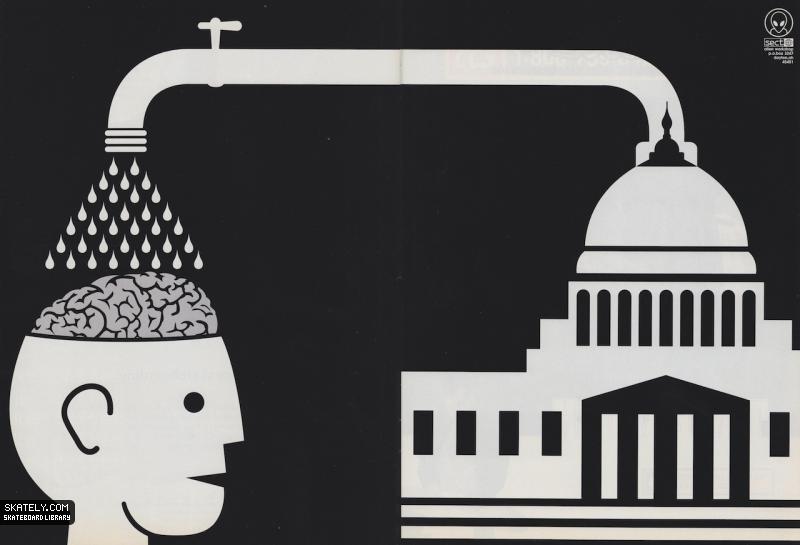
The strategy is simple yet effective: the best way to control a populace is through fear and discord.
Confound them, distract them with mindless news chatter and entertainment, pit them against one another by turning minor disagreements into major skirmishes, and tie them up in knots over matters lacking in national significance.
Most importantly, divide the people into factions, persuade them to see each other as the enemy and keep them screaming at each other so that they drown out all other sounds. In this way, they will never reach consensus about anything and will be too distracted to notice the police state closing in on them until the final crushing curtain falls.
This is how free people enslave themselves and allow tyrants to prevail.
This Machiavellian scheme has so ensnared the nation that few Americans even realize they are being manipulated into adopting an “us” against “them” mindset. Instead, fueled with fear and loathing for phantom opponents, they agree to pour millions of dollars and resources into political elections, militarized police, spy technology, endless wars, COVID-19 mandates, etc., hoping for a guarantee of safety that never comes.
All the while, those in power—bought and paid for by lobbyists and corporations—move their costly agendas forward, and “we the suckers” get saddled with the tax bills and subjected to pat downs, police raids and round-the-clock surveillance.
Turn on the TV or flip open the newspaper on any given day, and you will find yourself accosted by reports of government corruption, corporate malfeasance, militarized police, marauding SWAT teams, and egregious assaults on the rights of the citizenry.
America has already entered a new phase, one in which communities are locked down, employees are forced to choose between keeping their jobs or exercising their freedoms, children are arrested in schools, military veterans are forcibly detained by government agents, and law-abiding Americans are finding their movements tracked, their financial transactions documented and their communications monitored.
These threats are not to be underestimated.
Yet even more dangerous than these violations of our basic rights is the language in which they are couched: the language of fear. It is a language spoken effectively by politicians on both sides of the aisle, shouted by media pundits from their cable TV pulpits, marketed by corporations, and codified into bureaucratic laws that do little to make our lives safer or more secure.
Fear, as history shows, is the method most often used by politicians to increase the power of government.
So far, these tactics are working.
An atmosphere of fear permeates modern America.
Each successive crisis in recent years (a COVID-19 pandemic, terrorism, etc.)—manufactured or legitimate—has succeeded in reducing the American people to what commentator Dan Sanchez refers to as “herd-minded hundreds of millions [who] will stampede to the State for security, bleating to please, please be shorn of their remaining liberties.”
“I am not terrified of the terrorists; i.e., I am not, myself, terrorized. Rather, I am terrified of the terrorized; terrified of the bovine masses who are so easily manipulated by terrorists, governments, and the terror-amplifying media into allowing our country to slip toward totalitarianism and total war…
“I do not irrationally and disproportionately fear Muslim bomb-wielding jihadists or white, gun-toting nutcases. But I rationally and proportionately fear those who do, and the regimes such terror empowers. History demonstrates that governments are capable of mass murder and enslavement far beyond what rogue militants can muster. Industrial-scale terrorists are the ones who wear ties, chevrons, and badges. But such terrorists are a powerless few without the supine acquiescence of the terrorized many. There is nothing to fear but the fearful themselves…
“Stop swallowing the overblown scaremongering of the government and its corporate media cronies. Stop letting them use hysteria over small menaces to drive you into the arms of tyranny, which is the greatest menace of all.”
As history makes clear, fear leads to fascistic, totalitarian regimes.
It’s a simple enough formula. National crises, global pandemics, reported terrorist attacks, and sporadic shootings leave us in a constant state of fear. Fear prevents us from thinking. The emotional panic that accompanies fear actually shuts down the prefrontal cortex or the rational thinking part of our brains. In other words, when we are consumed by fear, we stop thinking.
A populace that stops thinking for themselves is a populace that is easily led, easily manipulated and easily controlled.
· The government is managed by a powerful leader (even if he or she assumes office by way of the electoral process). This is the fascistic leadership principle (or father figure).
· The government assumes it is not restrained in its power. This is authoritarianism, which eventually evolves into totalitarianism.
· The government ostensibly operates under a capitalist system while being undergirded by an immense bureaucracy.
· The government through its politicians emits powerful and continuing expressions of nationalism.
· The government has an obsession with national security while constantly invoking terrifying internal and external enemies.
· The government establishes a domestic and invasive surveillance system and develops a paramilitary force that is not answerable to the citizenry.
· The government and its various agencies (federal, state, and local) develop an obsession with crime and punishment. This is overcriminalization.
· The government becomes increasingly centralized while aligning closely with corporate powers to control all aspects of the country’s social, economic, military, and governmental structures.
· The government uses militarism as a center point of its economic and taxing structure.
· The government is increasingly imperialistic in order to maintain the military-industrial corporate forces.
The parallels to modern America are impossible to ignore.
“Every industry is regulated. Every profession is classified and organized,” writes Jeffrey Tucker. “Every good or service is taxed. Endless debt accumulation is preserved. Immense doesn’t begin to describe the bureaucracy. Military preparedness never stops, and war with some evil foreign foe, remains a daily prospect.”
For the final hammer of fascism to fall, it will require the most crucial ingredient: the majority of the people will have to agree that it’s not only expedient but necessary. In times of “crisis,” expediency is upheld as the central principle—that is, in order to keep us safe and secure, the government must militarize the police, strip us of basic constitutional rights and criminalize virtually every form of behavior.
Not only does fear grease the wheels of the transition to fascism by cultivating fearful, controlled, pacified, cowed citizens, but it also embeds itself in our very DNA so that we pass on our fear and compliance to our offspring.
It’s called epigenetic inheritance, the transmission through DNA of traumatic experiences.
For example, neuroscientists have observed how quickly fear can travel through generations of mice DNA. As The Washington Postreports:
In the experiment, researchers taught male mice to fear the smell of cherry blossoms by associating the scent with mild foot shocks. Two weeks later, they bred with females. The resulting pups were raised to adulthood having never been exposed to the smell. Yet when the critters caught a whiff of it for the first time, they suddenly became anxious and fearful. They were even born with more cherry-blossom-detecting neurons in their noses and more brain space devoted to cherry-blossom-smelling.
Now consider the ramifications of inherited generations of fears and experiences on human beings. As the Postreports, “Studies on humans suggest that children and grandchildren may have felt the epigenetic impact of such traumatic events such as famine, the Holocaust and the Sept. 11, 2001, terrorist attacks.”
Fear has been a critical tool in past fascistic regimes, and it now operates in our contemporary world—all of which raises fundamental questions about us as human beings and what we will give up in order to perpetuate the illusions of safety and security.
In the words of psychologist Erich Fromm:
[C]an human nature be changed in such a way that man will forget his longing for freedom, for dignity, for integrity, for love—that is to say, can man forget he is human? Or does human nature have a dynamism which will react to the violation of these basic human needs by attempting to change an inhuman society into a human one?
For a long time we’ve been taught that evolution is a process that is happening to us. Thankfully we’re living in times where the human race is finally getting a grasp on the fact that we’re actually actively involved in how we evolve as a species.
As humans, our bodies are constantly changing in response to the environment around us. Our muscles change according to whether we choose to use them or not. The enzymes in our digestive system change in response to the foods we choose to eat. Our endocrine system is in a constant feedback loop with our emotions which can change dramatically according to what’s happening in the world around us. As Dr Bruce Lipton put it, “the cell is a carbon-based ‘computer chip’ that reads the environment”, and the field of epigenetics teaches us that our DNA changes in quality – again, according to our environment.
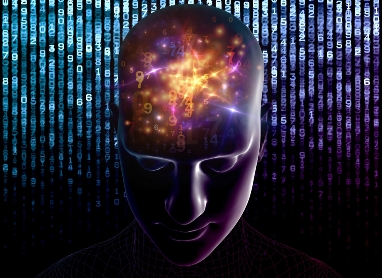
When science talks about ‘environmental influence’ it seems to imply ‘all that which is outside ourselves’. It’s easy to overlook the fact that that our conscious choices about which environmental factors we engage with are part of what shapes the way our bodies restructure. We are part of the environment that influences our own development; our free will lets us choose and change the environment. We participate in our own evolution during our lifetime and what we do in our own lives can also affect future generations. In this way, personal evolution is collective evolution, and nowhere is personal evolution more apparent than how we are capable of rewiring our own brain.
How Reprogramming the Mind Is Helpful To Us
Humans work really well with routines. We repeat the same pattern over and over, and through neuroplasticity our brain wires itself so that it doesn’t have to think too much about that task anymore, it just runs that established electrical pathway. To riff off Noel Burch, it’s like when we learn to drive a car: we move from unconscious incompetence ‘I don’t know how bad at this I’m going to be’; to conscious competence ‘I now know how bad I am at this’; to conscious competence ‘OK, I can do this but I have to keep my mind on the job’; to unconscious competence ‘I can wind the window down, change the radio, turn a corner and change gears all at the same time, without even thinking about it’.
We program ourselves all the time with repetition, so we don’t have to waste energy engaging isolated focus on every task. The question is whether these are routines we are choosing for ourselves or that have been imposed on us? If they are imposed, are they helpful to us both personally and as a species?
When Are We Most Easily Able To Wire And Re-wire Our Mind?
During early childhood our brains are wiring themselves for the first time. While this process slows after the intense surge of development in first few years, our brains are still establishing the wiring we will largely use for the rest of our life throughout childhood. When we hit our teenage years we experience the second surge of new wiring and there is an opportunity for patterns to be created during this time that can setup behaviours for years to come. After this period, neuroplasticity still occurs but it just isn’t as fluid as it was before. So you can teach an old dog new tricks, it’s just a slower process.
The problem here is that our subconscious is overhearing everything our conscious mind is hearing, and is therefore to a being programmed by whatever influence we’re being exposed to. The Jesuits knew this 400 years ago. They would boast:
“Give me a child until it’s seven, it will belong to the church for the rest of its life.’” – Dr Bruce Lipton, paraphrasing Jesuit priests.
We Are Always Programming Ourselves
I like to imagine the subconscious mind is like an autopilot system. It is overhearing everything we ever think or say, and it’s mission (in the background and whenever possible) is to guide us towards whatever we want… or at least whatever it thinks we want according to what it overhears. An extra level of challenge is introduced when we imagine that the conscious mind has the capacity for judgment its higher expression – discernment. The subconscious, however, doesn’t have that ability. When it is overhearing everything you think and every word you say it simply hears the topic, not the context. ‘I don’t want to be fat’ with the judgment of ‘I don’t want’ removed becomes the topic only: ‘be fat’. The subconscious ‘overhears’ the topic of what is active in your conscious mind and it is listening for repetition. This is how it figures out for how ready we need to be for that particular thought process.
Repetition Is The Key. Repetition Is The Key.
If we lift weights we are using repetition to say to the muscles, ‘be ready for this, we may need to do this at any moment, so restructure yourself’. Scientists have found the fastest way to get fit is to do interval sprints, which is basically a physical way of saying to the body through repetition ‘you need to restructure yourself so we can sprint at top speed at any time, at the drop of a hat’. Rest, get your breath back and sprint again, over and over. This repetition tells the body that it’s a high priority to restructure and be ready for this at all times. My observation is that the same appears to be true for our brain. When our subconscious overhears our thoughts and words and there is repetition, there is an increased likelihood of neural rewiring. After all – neurons that fire together wire together.
The path of least resistance
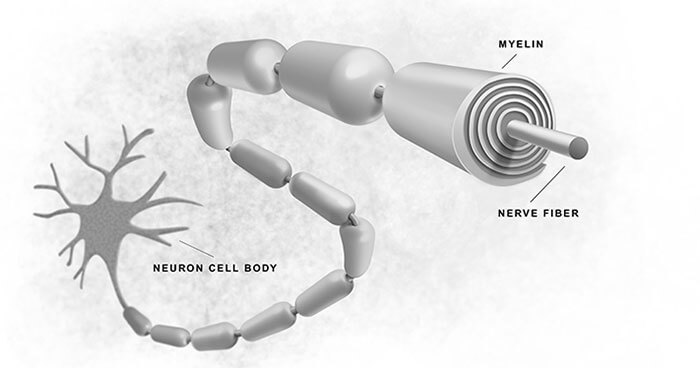
When attempting to re-wire an old habit or behaviour pattern, it is useful to remember the old adage from high school science: electricity follows the path of least resistance. Imagine the old pattern as a well-established electrical pathway in your brain. As you put conscious focus into creating a new electrical pathway to replace the old pattern, you make that new electrical pathway fatter. As soon as you stop putting conscious focus into running the new behaviour pattern the electricity will revert to the old cable for as long as it is the fatter of the two cables, as that is the path of least resistance. As soon as the day comes when the new electrical pathway is thicker than the old one you have a new program in your autopilot system, that will now run on it’s own without you needing to focus conscious intention on it. You have reached a level of conscious competence. According to Dan Coyle a key to making the consciously chosen wiring stick is holding the intention that ‘I want to know this for the rest of my life’. Coyle suggests this causes the brain to coat the new electrical pathway in the brain with myelin insulation, making it much more permanent.
Taking care with the programs we allow our subconscious to overhear
As stated earlier, our autopilot system is taking direction from everything you’re experiencing – which includes the media we watch, the people we surround ourselves with and more. For this reason, one of the most powerful things we can do is exercise discernment around the kind of experiences we expose ourselves to, and their level of intensity and repetition.
“It is easier to build strong children than to repair broken men.” – Frederick Douglass
More importantly is the need for extra care in exercising this discernment on behalf of the children in our care and teaching this discernment to teenagers as, in both cases they are in a heightened state of neuroplasticity and are more susceptible to influence. To be clear, I am by no means advocating prudishness or avoidance of the truth, just a higher level of awareness of how we are either consciously or inadvertently being programmed all the time.
In the video below Bruce Lipton speaks passionately on this very subject, citing this discernment on behalf of our children as a clear solution to war and conflict.
It’s delicate confronting these priests of the golden bull They preach from the pulpit of the bottom line Their minds rustle with million dollar bills You say Silver burns a hole in your pocket And Gold burns a hole in your soul Well, uranium burns a hole in forever It just gets out of control. – Buffy Sainte-Marie, “The Priests of the Golden Bull”1
What if we told you that humanity is being driven to the brink of extinction by an illness? That all the poverty, the climate devastation, the perpetual war, and consumption fetishism we see all around us have roots in a mass psychological infection? What if we went on to say that this infection is not just highly communicable but also self-replicating, according to the laws of cultural evolution, and that it remains so clandestine in our psyches that most hosts will, as a condition of their infected state, vehemently deny that they are infected? What if we then told you that this ‘mind virus’ can be described as a form of cannibalism. Yes, cannibalism. Not necessarily in the literal flesh-eating sense but rather the idea of consuming others—human and non-human—as a means of securing personal wealth and supremacy.
You may dismiss this line of thinking as New Age woo-woo or, worse, a lefty conspiracy theory. But this approach of viewing the transmission of ideas as a key determinant of the emergent reality is increasingly validated by various branches of science, including evolutionary theory, quantum physics, cognitive linguistics, and epigenetics.
The history of this infection is long, strange, and dark. But it leads to hope.
Viruses of the Mind
The New World fell not to a sword but to a meme. ~ Daniel Quinn2
One of the most well-accepted scientific theories that helps explain the power of idea-spreading is memetics.
Memes are to culture what genes are to biology: the base unit of evolution. The term was originally coined by the evolutionary biologist Richard Dawkins in his 1976 book, The Selfish Gene. Dawkins writes, “I think that a new kind of replicator has recently emerged . . . It is still drifting clumsily about in its primeval soup, but already it is achieving evolutionary change at a rate which leaves the old gene panting far behind.” He goes on, “Examples of memes are tunes, ideas, catch-phrases, clothes fashions, ways of making pots or of building arches. Just as genes propagate themselves in the gene pool by leaping from body to body via sperms or eggs, so memes propagate themselves in the meme pool by leaping from brain to brain, via a process which, in the broad sense, can be called imitation.”3
One of the high priests of rationalism, the scientific method, and atheism, is also the father of the meme of ‘memes.’ However, like all memes or ideas, there can be no ownership in a traditional sense, only the entanglement that quantum physics reminds us characterizes our intra-actions.4
Of course, similar notions of how ideas move between us have been around in Western traditions for centuries. Plato was the first to fully articulate this through his Theory of Forms, which argues that non-physical forms—i.e., Ideas—represent the perfect reality from which material reality is derived.
Modern articulations of the Theory of Forms can be seen in Pierre Teilhard de Chardin’s idea of the Noosphere (the sphere of human thought) and Carl Jung’s Collective Unconscious, where structures of the unconscious are shared among beings of the same species. For Jung, the idea of the marauding cannibal would first be an archetype that manifests in the material world through the actions of those who channel or embody it.
For those who prefer their science more empirical, the growing field of epigenetics provides some intellectual concrete. Epigenetics studies changes in organisms caused by modification of gene expression rather than any physical alteration of the gene itself. In other words, how traits vary from generation to generation is not solely a question of material biology but is partly determined by environmental and contextual factors that affected our ancestors.5
The Wetiko Virus
We did not think of the great open plains, the beautiful rolling hills, and the winding streams with tangled growth as “wild.” Only to the White man was nature a “wilderness” and only to him was the land infested by “wild” animals and “savage” people. To us it was tame. Earth was bountiful and we were surrounded with the blessings of the Great Mystery. Not until the hairy man from the east came and with brutal frenzy heaped injustices upon us and the families we loved was it “wild” for us. ~ Luther Standing Bear, Land of the Spotted Eagle6
Many spiritual traditions, including Buddhism, Sufism (the mystical branch of Islam), Taoism, Gnosticism, as well as many Indigenous cultures, have long understood the mind-based nature of creation. These worldviews have at their core a recognition of the power of thought-forms to determine the course of physical events.
Various First Nations traditions of North America have specific and long established lore relating to cannibalism and a term for the thought-form that causes it: wetiko. We believe understanding this offers a powerful way of understanding the deepest roots of our current global polycrisis.
Wetiko is an Algonquin word for a cannibalistic spirit that is driven by greed, excess, and selfish consumption (in Ojibwa it is windigo, wintiko in Powhatan). It deludes its host into believing that cannibalizing the life-force of others (others in the broad sense, including animals and other forms of Gaian life) is a logical and morally upright way to live.
Wetiko short-circuits the individual’s ability to see itself as an enmeshed and interdependent part of a balanced environment and raises the self-serving ego to supremacy. It is this false separation of self from nature that makes this cannibalism, rather than simple murder. It allows—indeed commands—the infected entity to consume far more than it needs in a blind, murderous daze of self-aggrandizement. Author Paul Levy, in an attempt to find language accessible for Western audiences, describes it as ‘malignant egophrenia’—the ego unchained from reason and limits, acting with the malevolent logic of the cancer cell. We will use the term wetiko as it is the original, and reminds us of the wisdom to be found in Indigenous cultures, for those who have the ears to hear.
Wetiko can describe both the infection and the body infected; a person can be infected by wetiko or, in cases where the infection is very advanced, can personify the disease: ‘a wetiko.’ This holds true for cultures and systems; all can be described as being wetiko if they routinely manifest these traits.
In his now classic book Columbus and Other Cannibals, Native American historian Jack D. Forbes describes how there was a commonly-held belief among many Indigenous communities that the European colonialists were so chronically and uniformly infected with wetiko that it must be a defining characteristic of the culture from which they came. Examining the history of these cultures, Forbes laments, “Tragically, the history of the world for the past 2,000 years is, in great part, the story of the epidemiology of the wetiko disease.”7
We would presumably all agree that behavior of the European colonialists in North America can be described as cannibalistic. Their drive for conquest and material accumulation was a violent act of consumption. The engine of the invading culture suckedin lives and resources of millions of others and turned them into wealth and power for themselves. The figures are still disputed, but it is safe to place the numbers killed in the tens of millions, certainly one of the most brutal genocides in history. And the impact on non-human life was equally vast. Moreover, it was all done with a moral certainty that all destruction was justified in the name of ‘progress’ and ‘civilization.’
This framing belies the extent of the wetiko infection in the invader culture. So blinded were they by self-referential ambition that they could not see other life as being as important as their own. They could not see past ideological blinders to the intrinsic value of life or the interdependent nature of all things, despite this being the dominant perspective of the Indigenous populations they encountered. Their ability to see and know in ways different from their own was, it seems, amputated.
This is not an anti-European rant. This is the description of a disease whose vector was determined by deep patterns of history, including those that empowered Europeans to drive ‘global exploration’ as certain technologies emerged.
The wetiko meme has almost certainly existed in individuals since the dawn of humanity. It is, after all, a sickness that lives through and is born from the human psyche. But the origin of wetikocultures is more identifiable.
Memes can spread at the speed of thought but they usually require generations to change the core characteristics of cultures. What we can say is that the fingerprints of wetiko-like beliefs can be traced at least as far back as the Neolithic revolution, when humans in the Fertile Crescent first learned to dominate their environment by what author Daniel Quinn calls ‘totalitarian agriculture’ — i.e., settled agricultural practices that produce more food than is strictly needed for the population, and that see the destruction of any living entity that gets in the way of that (over-)production—be it other humans, ‘pests’ or landscaping—as not only legitimate but moral.
This early form of wetiko-logic received an amplifying power of indescribable magnitude with the arrival of Christianity. “Let us make mankind . . . rule over the fish in the sea and the birds in the sky, over the livestock and all the wild animals, and over all the creatures that move along the ground,” said an authority no less than God in Genesis 1:26. After 8,000 years of totalitarian agriculture spreading slowly across the region, it is perhaps not surprising that the logic finds voice in the holy texts that emerged there. Regardless, it was driven across Europe at the point of Roman swords in the two hundred years after Christ’s death. It is no coincidence that, in order for Christianity to become dominant, the existing pagan belief-system, with its understanding of humanity’s place within rather than above nature, had to be all but annihilated.8
The point is that the epidemiology of wetiko has left clear indicators of its lineage. And although it cannot be pathologized along geographic or racial lines, the cultural strain we know today certainly has many of its deepest roots in Europe. It was, after all, European projects—from the Enlightenment to the Industrial Revolution, to colonialism, imperialism, and slavery—that developed the technology that opened up the channels that facilitated the spread of wetiko culture all around the world. In this way, we are all heirs and inheritors of wetiko colonialism.
We are all host carriers of wetiko now.
Wetiko Capitalism: Removing the Veils of Context
I don’t know who discovered water, but I can tell you it wasn’t a fish.
~ Attributed to Marshall McLuhan
When Western anthropologists first started to study wetiko, they believed it to be only a disease of the individual and a literal form of flesh-eating cannibalism.9 On both counts, as discussed, their understanding was, if not wrong, certainly limited. They did, however, accurately isolate two traits that are relevant for thinking about cultures: (1) the initial act, even when driven by necessity, creates a residual, unnatural desire for more; and (2) the host carrier, which they called the ‘victim,’ ended up with an ‘icy heart’— i.e., their ability for empathy and compassion was amputated.
The reader can probably already sense from the two traits mentioned above the wetiko nature of modern capitalism. Its insatiable hunger for finite resources; its disregard for the pain of groups and cultures it consumes; its belief in consumption as savior; its overriding obsession with its own material growth; and its viral spread across the surface of the planet. It is wholly accurate to describe neoliberal capitalism as cannibalizing life on this planet. It is not the only truth—capitalism has also facilitated an explosion of human life and ingenuity—but when taken as a whole, capitalism is certainly eating through the life-force of this planet in service of its own growth.
Of course, capitalism is a human conception and so we can also say that we are phenomenal hosts of the wetiko mind virus. To understand what makes us such, it is useful to consider a couple of the traits that guide the evolution of human cultures.
We have decades of evidence from social science describing just what highly contextual beings we are. Almost all aspects of our behavior, including our moral judgments and limits, are significantly shaped in response to the cultural signifiers that surround us. The Good Samaritan studies, for example, show that even when people are primed with the idea of altruism, they will walk by others in need when they are in a rush or some other contextual variable changes.10 And the infamous Stanley Milgram experiments show how a large majority of people are capable of shocking another human to a point they know can cause death simply because an authority figure in a white lab coat insists they do so.11
We really are products of our environment, and so it should be taken as inevitable that those who live in a wetiko culture will manifest, to one degree or other, wetiko beliefs and behaviors.
Looking through the broader contextual lens, we must also account for the self-perpetuating nature of complex systems. Any living network that becomes sufficiently complex will become self-organizing, and from that point on will demonstrate an instinct to survive. In practical terms, this means that it will distribute its resources to support behavior that best mimics its own logic and ensures its survival.12
In other words, any system that is sufficiently infected by wetiko logic will reward cannibalistic behavior. Or, in Jack Forbes’ evocative language, “Those who squirm upwards [in a wetiko system] are, or become, wetiko, and they only perpetuate the system of corruption or oppression. Thus the communist leaders in the Soviet Union under Stalin were at least as vicious, deceitful and exploitative as their czarist predecessors. They obtained ‘power’ without changing their wetiko culture.”13
This ensures that the essential logic of cultures spreads down through generations as well as across them. And it explains why they self-organize resources to maintain a high degree of continuity in distributions of power, when those distributions efficiently serve their survival and growth. When this continuity is interrupted or broken, revolutions occur and the system is put under threat.
However, as the above quote suggests, the disruption must happen at the right level. Merely trading one wetiko for another at the top of an otherwise unchanged wetiko infrastructure (as in the case of Stalin replacing the czars or, more contemporarily, Obama replacing Bush) is largely pointless. At best, it might result in the softening of the cruelest edges of a wetiko machine. At worse, it does nothing except distract us from seeing the true infection.
The question, then, for anyone interested in excising the wetiko infection from a culture is, where is it? In one respect, because it is a psychic phenomenon that lives in potential in all of us, it is non-local. But this, though ultimately important to understand, is not the whole truth. It is also true that there is a conceptual place where the most powerful wetiko logic is held, and that, at least in theory, makes it vulnerable.
In the same way that a colony of bees will instinctively house its queen in the deepest chambers of the hive, so a complex adaptive system buries its most important operating logic furthest from the forces that can challenge them. This means two things: first, it means siting the logic in the deep rules that govern the whole. Not just this national economy or that, this government or that, but the mother system—the global operating system. And second, it means making these rules feel as intractable and inevitable as possible.
So what is this deep logic of the global operating system?
It comes in two parts. First, there is the ultimate purpose, which we might call the Prime Directive, which is to increase capital.
We often dress this up in a narrative that says capital generation is not the end but the means, the engine of progress. This makes the idea of dethroning it feel dangerous and even contrary to common sense. But the truth is, we have created a system that artificially treats money as sacred. At this point in capitalism’s history, life is controlled by, more than it controls, the forces of capital. The clue is really in the name. But if you need further proof, look no further than how we define and measure progress: GDP. More on that below.
Then, there is the logic for how we, the living components of this system, should behave, which we would summarize with the following epithet:
Selfishness is rational and rationality is everything; therefore selfishness is everything.14
This dictates that if we all prioritize ourselves and maximize our own material wealth, an invisible hand (ah, what a seductive meme!) will create an equilibrium state and life everywhere will be made better. We are pitted against each other in a form of distributed fascism where we cocoon ourselves in the immediate problems of our own circumstances and consume what we can. We then couch this behavior in the benign language of family matters, national interests, job creation, GDP growth, and other upstanding endeavors.
Put these two parts of the puzzle together and it’s easy to see why the banker who generates excess capital receives vast rewards and is labelled ‘productive’ and ‘successful,’ almost regardless of the damage s/he causes. Those who are less ‘successful’ at producing excess capital, meanwhile, are rewarded far less, regardless of the life-affirming good they may be doing. Nurses, mothers, teachers, journalists, activists, scientists—all receive far less reward because they are less efficient at obeying the Prime Directive and may even be countermanding the ‘self-interest’ operating principle. And as for those who are actually poor—well, they are effortlessly labelled not just as practical but also moral failures.
This infection is so far advanced that the system now requires exponential capital growth. The World Bank tells us that we have to grow the global economy by at least 3 percent per year to avoid recession.15 Let’s think about what this means. Global GDP in 2014 (the last full year of data) was roughly USD $78 trillion.16 We grew that pie by 2.4% in 2015, which resulted in the commodification and subsequent consumption of roughly another $2 trillion in human labor and natural resources. That’s roughly the size of the entire global economy in 1970. It took us from the dawn of civilization to 1970 to reach $2 trillion in global GDP, and now we need that just in the differential so the entire house of cards doesn’t crumble. In order to achieve this rate of growth year-on-year, we are destroying our planet, ensuring mass species extinction, and displacing millions of our brothers and sisters (who we commonly refer to as ‘poor people’) from around the world.
So when people tell us that the market knows best, or technology will save us, or philanthrocapitalism will redistribute opportunities (pace Bill Gates), we have to understand that all of these seemingly common sense truisms are embedded in a broader operating system, a wetikonomy, with all that that means. And the more they are presented as ‘unchangeable,’ the more often we’re told, ‘there is no alternative,’ the more we should question. There is actually a beautiful irony in the fact that, when we know what we’re up against, such statements are our signposts for where to look.
It is not that we are against markets, technology, or philanthropy — they can all be wonderful, in the right context—but we are against how they are being used as alibis to excuse the insanity of the wetiko paradigm that they are inseparable from. We are reminded of Jack Forbes’ heavy words; “It is not logical to allow the wetikos to carry out their evil acts and then to accept their assessment of the nature of human life. For after all, the wetiko possess a bias created by their own evil lives, by their own amoral or immoral behavior. And too, if I am correct, they were, and are, also insane.”17
Information Tribalism, starring Terence McKenna, Marshall McLuhan and Alan Watts.
Seeing Wetiko: Antidote Logic
Launch your meme boldly and see if it will replicate—just like genes replicate, and infect, and move into the organism of society. And, believing as I do, that society operates on a kind of biological economy, then I believe these memes are the key to societal evolution. But unless the memes are released to play the game, there is no progress. ~ Terence McKenna, Memes, Drugs and Community18
You might just be a black Bill Gates in the making. ~ Beyoncé, Formation19
A key lesson of meme theory is that when we are conscious of the memetic viruses we are less likely to adhere to them blindly. Conscious awareness is like sunlight through the cracks of a window.
Thus, one of the starting points for healing is the simple act of ‘seeing wetiko’ in ourselves, in others, and in our cultural infrastructure. And once we see, we can name, which is critical because words and language are a central battleground. To quote McKenna again:
The world is not made of quarks, electromagnetic wave packets, or the thoughts of God. The world is made of language.. Earth is a place where language has literally become alive. Language has invested matter; it is replicating and defining and building itself. And it is in us.20
His last line is critical for exploring our own agency in the replication of wetiko. We are all entangled in the unfolding of reality that is happening both to and through us. In place of traditional certainties and linear cause-and-effect logic, we can recast ourselves “as spontaneously responsive, moving, embodied living beings—within a reality of continuously intermingling, flowing lines or strands of unfolding, agential activity, in which nothing (no thing) exists in separation from anything else, a reality within which we are immersed both as participant agencies and to which we also owe significant aspects of our own natures.”21
If wetiko exists, it is because it exists within us. It is also entangled with the broader superstructure, relationships, and choice architecture that we are confronted with within a neoliberal system on the brink of collapse.
Forbes reminds us that we cannot ‘fight’ wetiko in any traditional sense: “One of the tragic characteristics of the wetiko psychosis is that it spreads partly by resistance to it. That is, those who try to fight wetiko sometimes, in order to survive, adopt wetiko values.
Thus, when they ‘win,’ they lose.”22 A lot of reform-based initiatives, from the sharing economy to micro-lending have succumbed to the co-optation and retaliation of wetiko capitalism.
However, once we are in the mode of seeingwetiko, we can hack the cultural systems that perpetuate its logic. It is not difficult to figure out where to start. Following the money usually leads us to the core pillars of wetiko machinery. Those of us that are within these structures, from the corporate media to philanthropy to banking to the UN, have access to the heart of the wetiko monster.
For those of us on the outside, we can organize our lives in radically new ways to undermine wetiko structures. The simple act of gifting undermines the neoliberal logic of commodification and extraction. Using alternative currencies undermines the debt–based money system. De-schooling and alternative education models can help decolonize and de-wetikoize the mind. Helping to create alternative communities outside the capitalist system supports the infrastructure for transition. And direct activism such as debt resistance can weaken the wetiko virus, if done with the right intention and state of consciousness.
By contracting new relationships with others, with Nature, and with ourselves, we can build a new complex of entanglements and thought-forms that are fused with post-wetiko, post-capitalist values.
We have to simultaneously go within ourselves and the deep recesses of our own psyches while changing the structure of the system around us. Holding a structural perspective and an unapologetic critique of modern capitalism—i.e., holding a constellational worldview that sees all oppression as connected—serves our ability to see the alternatives, and indeed, all of us, as intricately connected.
Plato believed that ideas are the ‘eyes of the soul.’ Now that the veils obscuring wetiko are starting to be lifted, let us give birth to, and become, living antigens, embracing the polyculture of ideas that are challenging the monoculture of wetikocapitalism. Let us be pollinators of new memetic hives built on altruism, empathy, inter-connectedness, reverence, communality, and solidarity, defying the subject-object dualities of Cartesian/Newtonian/Enlightenment logic. Let us reclaim our birth right as sovereign entities, free of deluded beliefs in market systems, invisible hands, righteous greed, chosen ones, branded paraphernalia, techno utopianism and even the self-salvation of the New Age. Let us dance with thought-forms through a deeper understanding of ethics, knowing, and being,23 and the intimate awareness that our individual minds and bodies are a part of the collective battleground for the soul of humanity, and indeed, life on this planet. And let us re-embrace the ancient futures of our Indigenous ancestors that represent the only continuous line of living in symbiosis with Mother Nature. The dissolution of wetiko will be as much about remembering as it will be about creation.
Endnotes
1 These are lyrics from a song entitled “The Priests of the Golden Bull” by the Na-
tive Canadian singer/songwriter Buffy Sainte-Marie from her 1992 album entitled Coincidence and Likely Stories. The authors believe this was their first encounter
with the memetic mind virus of wendigo (a version of wetiko). This will all make sense at the end of this article.
2 Quinn, D. Beyond civilization: Humanity’s next great adventure. Broadway Books (2008), p. 50.
3 Dawkins, R. The selfish gene. Oxford University Press (1990).
4 ‘Intra-action’ is a neologism created by Karan Barad and described in her book, Meeting the Universe Halfway (2007). Barad writes about intra-action, rather than interaction, to illustrate how entanglement precedes thingness. In other words, there are no things as such, just relationships—and these ongoing relational dynamics are co-responsible for how things emerge.
5 Recent research, for example, has shown how the grandchildren of Holocaust survivors have different stress hormone profiles than those from otherwise very similar circumstances but whose grandparents did not suffer through the Holocaust. Rodriguez, T. “Descendants of Holocaust survivors have altered stress hormones,” Scientific American (March 2015), accessed at: http://www.scientificamerican.com/article/descendants-of-holocaust-survivors-have-altered-stress-hormones/
6 Luther Standing Bear. Land of the spotted eagle. Bison Books (2006).
7 Forbes, Jack D. Columbus and other cannibals: The wetiko disease of exploitation, imperialism and terrorism. Seven Stories Press (2008), p.46.
8 See Not in His Image (2006) by John Lamb Lash for a comprehensive account of the systematic annihilation of paganism by the new Christian religion.
9 Cooper, J.M. “The Cree Witiko Psychosis” in Primitive Man, Vol. 6, No. 1 (Jan., 1933), pp. 20-24: The George Washington University Institute for Ethnographic Research.
10 Darley, J. M., and Batson, C.D. “From Jerusalem to Jericho: A study of situational and dispositional variables in Helping Behavior.” Journal of Personality and Social Psychology (1973), Vol. 27, Number 1, pp. 100-108.
11 See https://en.wikipedia.org/wiki/Milgram_experiment.
12 Capra F, Luisi P, A systems view of life: A unifying vision. Cambridge (2014), Chapter 8.
13 Forbes, Jack D. Columbus and other cannibals: The wetiko disease of exploitation, imperialism and terrorism. Seven Stories Press (2008), p.46.
14 A version of this argument was originally published on Occupy.com by the authors in a two-part essay entitled “Capitalism is Just a Story and Other Dangerous Thoughts.” See more at: http://www.occupy.com/article/capitalism-just-story-and-other-dangerous-thoughts-part-i#sthash.INKCFdNs.dpuf.
15 For example, see this forecast report by the World Bank: http://www.worldbank.org/content/dam/Worldbank/GEP/GEP2016a/Global-Economic-Prospects-January-2016-Global-Outlook.pdf
16 See http://databank.worldbank.org/data/download/GDP.pdf
17 Forbes, Jack D. Columbus and other cannibals: The wetiko disease of exploitation, imperialism and terrorism. Seven Stories Press (2008), p.37.
18 See https://www.youtube.com/watch?v=NO6-1sqQme0
19 These lyrics are from Beyoncé’s song “Formation,” which was originally debuted at the 2015 Super Bowl. For a critical analysis, see Dianca London’s article entitled Beyoncé’s capitalism, masquerading as radical change.
20 McKenna, T. The archaic revival: Speculations on psychedelic mushrooms, the Amazon, virtual reality, UFOs, evolution, shamanism, the rebirth of the goddess, and the end of history. Harper Collins (1992).
21 John Shotter, “Agential realism, social constructionism, and our living relations to our surroundings: Sensing similarities rather than seeing patterns’’ Theory and Psychology, 2014.
22 Forbes, Jack D. Columbus and other cannibals: The wetiko disease of exploitation, imperialism and terrorism. Seven Stories Press (2008), p.61.
23 Karan Barad talks about the confluence of ethics, knowing, and being as an ‘onto-ethico-politico-epistemology.’ Ontology refers to what is in the world. Epistemology is about how we know what is in the world. And ethics is how we should engage in the world. These are not separate, but emerge materially in an ongoing dynamic. The nature of reality and the nature of knowledge are entangled—not fixed or final or determinate— and thus cannot be divorced from power and what we find valuable or just.


 After the Crash