
Our Financial System Is Optimized for Sociopaths and Exploitation

By Charles Hugh Smith

Source: Of Two Minds

We live in a peculiar juncture of history in which truth has been banished as a threat to the maximization of private gain, i.e. the hyper-pursuit of self-interest. Evidence that supports a causal chain has been replaced by cherry-picked data that supports a self-serving narrative: both the evidence and narrative are manufactured to serve the interests of the few at the expense of the many.

In this juncture of history, evidence is easily disputed because the process of manufacturing self-serving evidence has been perfected. Indeed, self-serving evidence is now a commodity which can be purchased wholesale: rig the sample size, massage the data statistically, conjure up a context that serves to frame the evidence in a slippery self-interested fashion, omit disinterested evidence and contexts, top with arcane math and voila, evidence and narrative are presented as “facts” rather than what they really are, an elaborate, well-staged con designed to maximize the private gains of the few by exploiting the many.

Organizing the entire system to serve the pathological greed of the few is best served by devaluing truth to mere opinion and causal chains to mere narratives. In this juncture of history, truth has been revealed as a chimera; there is only opinion, and all opinions are equal. Opinions are beliefs, and all beliefs are equal. All narratives are equal. All questions boil down to values: values are all equally detached, free-floating and of the same value: zero.

This con has reached perfection in our financial system, which is now optimized for exploitation and sociopaths. As Nassim Taleb has explained (referencing Adam Smith), markets only function if there are rules which are imposed equally on all participants. In our financial system, there are two sets of rules: one which we can summarize as anything goes for the super-wealthy and the well-connected, and another set for everyone else.

Shear the sheep of billions, pay a modest fine–and if all your bets go bad, get bailed out because you’re too important to fail. Sneak a few thousand out of the credit union, go to prison. Sell a financial product that’s designed to go bust as low-risk, oh well, buyer beware, haha, that’s just the free market at work. Sell a nickel bag of drugs, get a tenner in the Gulag.

Two sets of rules: one simulacrum of rules for the rich–just another con, really–and punitive rules for everyone else.

Since evidence, causal chains and values have all been devalued, there is no longer any recognition that the desire for gain–greed–can be either exploitive or beneficial to the many. If your greed drives you to make a product that is faster, better, cheaper, more durable and efficient than what’s currently available, your gain is the result of an advance that serves the interests of the many.

If your desire for gain leads you to misrepresent a shoddy product designed to fail (subprime mortgages, Landfill Economy products) or you raise the price because you can, your greed serves your interests at the expense of the many. This is the acme of exploitation. Kleptocrats and sociopaths, rejoice!

This system is optimized for exploitation, as the exploiters can exploit the many without the many even recognizing they’ve been stripmined. We no longer have the means to differentiate fraud from fact or exploitation from rules-based markets.

This landscape of wide-open exploitation and debauchery is Heaven on Earth for sociopaths who not only do not see any difference between gains skimmed at others’ expense and gains earned by providing a superior product / service, they revel in exploiting the system and every participant: employees, partners, suppliers, depositors, borrowers and customers.

But in this desert of exploitation and the supremacy of self-interest, some things remain true and others remain false. Some truths remain self-evident. As I have shown here many times, we can look at the hourly wages and cost of essentials in 1980, 1990, 2000, 2010 and the present and calculate how many hours of labor it took to pay for essentials such as rent, property taxes, healthcare, childcare, taxes, education, etc. These calculations reveal that the purchasing power of wages has declined for decades. This evidence cannot be made to vanish by declaring it opinion, belief or a “different set of values”–it is fact.

If we measure prosperity by how much labor can buy, all but the top few wage earners are less prosperous today. The evidence and causal chain are self-evident. The self-interested few who have reaped the vast majority of the economy’s gains can hire shills to argue that since TVs now require fewer hours of labor to buy, we’re all better off, but these obfuscations are nothing more than distractions designed to divert our attention from the mechanisms of exploitation that are operating 24/7 beneath the ceaseless churn of “news” and “market action.”

Let’s call this financial system what it really is: the MetaPerverse, a conjured world of self-serving cons that is optimized for exploitation, the perversion of justice, infinite inequality and the stripmining of the many to the benefit of the few, all securely protected by a cloud of confusion in which everything is equally valueless and truth no longer exists. All that remains is a babble of competing cons.

Europe Is Killing Itself With Its Russian Sanctions

By Paul Craig Roberts

Source: PaulCraigRoberts.org

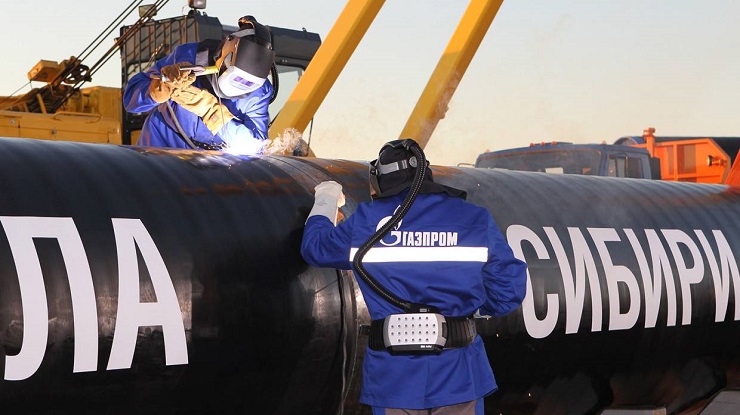
The sharp rise in natural gas price in Europe is entirely due to Western hysteria and stupidity. According to the EU’s own data, Europe is dependent on Russia for 46% of its natural gas. In the face of such extraordinary dependency on Russian energy, the moronic European “leaders” are falling all over themselves imposing impotent sanctions on Russia.  The idiotic German Chancellor actually punished the German people for Russia’s recognition of the Donbass republics by “cancelling” the Nord 2 pipeline.  This foolish act was a prime reason for the hysteria that has caused a sharp rise in prices.  The price rise helps Russia–if she continues to supply Europe with energy.  It hurts Europe and whoever financed the Nord 2 pipeline. If the pipeline sits not operating, it cannot produce a revenue stream to service the capital invested in the pipeline.  I do not know who financed the pipeline. If it was Germany, then the chancellor’s sanctions on Russia have twice injured the Germans.

The EU’s 46% dependency on Russian natural gas is independent of the Nord 2 pipeline, the opening of which has been on hold due to Washington’s pressure on Germany. Therefore, the rise in gas price is not due to a reduction of supply, but due to speculation that Russia will reduce or cut off supply. Europe is served by other pipelines.  What if Russia responds to the EU’s “sanctions” by closing the pipelines that deliver 46% of Europe’s natural gas?  What would Europe’s fate be?

Russia has accepted sanctions without replying in kind.  Perhaps it is time for Russia to impose sanctions to teach the West a lesson.

In my opinion there is no reason for Russia to deplete its own energy resources by sharing them with its European enemies.  Perhaps the Russian government’s idea was that energy sales would be a source of foreign exchange earnings and that providing Europe with energy was in the interest of good relations with the West.

Now that the West has demonstrated that the West has no interest in good relations with Russia there is no point in the Russian energy sales.  As I pointed out ( https://www.paulcraigroberts.org/2022/02/22/russia-and-china-should-go-their-own-way/ ) Russia has no need for foreign exchange.  The Russian central bank can finance Russian economic development with no need of foreign involvement.  Russia’s holdings of instruments denominated in dollars or euros would just be confiscated by sanctions.

To summarize:  Europe brought the high energy price on itself with its thoughtless sanctions; the high prices benefit Russia and hurt Europe; Russia should consider turning off all natural gas to Europe and conserve its energy source for its own and China’s development.

Europe is nothing but a thorn in Russia’s side, a collection of Washington’s puppets.  Russia owes Europe nothing. 

Sino-Russia Energy Deals to Defeat US/NATO Expansionism

By Salman Rafi Sheikh

Source: New Eastern Outlook

While the recent meeting between Russia’s Vladimir Putin and China’s Xi in Beijing may not in itself be an extra-ordinary event, its significance against the backdrop of the on-going tussle between Russia and the US/NATO is quite unmistakable – not only for Russia itself, but for the US/NATO as well. Even though Russia does not really need China’s help to defend its sovereignty militarily or otherwise, it remains that China’s open support for Russia’s stance against the US plan to push NATO into Ukraine as a geo-political tool does debunk the US propaganda of Russian “isolation.” More than anything else, China’s growing strategic alliance allows Russia a great opportunity to withstand possible Western sanctions, or European decision to reduce its supply of gas from Russia. But co-operation in one field is often not possible without co-operation in other fields. That’s why the long joint statement issued after the meeting laid a lot of stress on jointly opposing Western plans to destabilise regions adjacent to mainland China and Russia i.e., Ukraine, Taiwan, and Hong Kong. As the sides reiterated:

“The sides oppose further enlargement of NATO and call on the North Atlantic Alliance to abandon its ideologized cold war approaches, to respect the sovereignty, security and interests of other countries, the diversity of their civilizational, cultural and historical backgrounds, and to exercise a fair and objective attitude towards the peaceful development of other States.”

While the fact that both Russia and China oppose Western expansionism both via NATO or anti-China AUKUS (Australia, United Kingdom and United States) treaty has already unsettled Western echelons of power, it is the growing co-operation between Russia and China in the energy sector that is most likely to defeat US designs vis-à-vis forcing Russia to submit. This is particularly significant given that the US is particularly interested in hurting Russia’s gas and oil sales. US President Biden recently said this, while standing next to his German counterpart, without mincing any words only recently on February 7:

“What everybody forgets here is Russia needs to be able to sell that gas and sell that oil.  Russia relies — a significant part of Russia’s budget — it’s the only thing they really have to export.  And if, in fact, it’s cut off, then they’re going to be hurt very badly, as well.  And it’s of consequence to them as well.  This is not just a one-way street.”

Moscow is, obviously, not unaware of this design. When Putin visited Beijing, he did not just attend the Winter Olympics; in fact, Putin signed a billion dollar oil and gas deal with Beijing. “Our oilmen have prepared very good new solutions on hydrocarbon supplies to the People’s Republic of China,” Putin said in Beijing. Besides the new deal, China also promised to ramp up Russia’s Far East exports. A new 30-year contract to supply 10 billion cubic meters (bcm) per year to China from Russia’s Far East was signed. With China supporting Russia’s stance on Ukraine, China’s increasing purchase of Russian oil and gas sent a powerful signal to the world that both superpowers will be taking care of each other’s interests against the combined strength of predatory western alliance, making their claims of punishing Russia hollow.

The announcement also comes against the backdrop of US claims that they – US and its allies – have a wide range of “tools” at their disposal to punish any state, including China, if they try to “backfill US exports controls” imposed on Russia. As Ned Price of the White House recently claimed in his press briefing:

“Putin knows that this would be of massive consequence to his country and to his economy. This – a closer relationship with the PRC, a closer relationship between Russia and the PRC – is not going to make up for that; it is not going to account for that. One final point. We have – and when I say we I mean collectively, the United States and our allies and partners – we have an array of tools that we can deploy if we see foreign companies, including those in China, doing their best to backfill U.S. export control actions, to evade them, to get around them.”

China’s deal, therefore, very clearly defies US threats, showing how the politics of sanctions – which is Washington’s favourite geo-political “tool” – cannot really deter states like China and Russia, who, too, posses enough “tools” to stage a counter-attack. The oil & gas deals are a manifestation of that counter-attack.

Even as many political pundits in the West have highlighted, the US plan against Russia cannot work unless Washington can first wean China away. The fact that Washington’s ties with Beijing are as bad as with Moscow means that Washington does not have enough geo-political capacity to dictate policies and decisions by really isolating Russia. Although it might still impose sanctions, China is unlikely to be bothered by them, thus defeating Washington’s plan to inflict an unacceptable level of damage on Russia, which also already has US$640 billion in foreign exchange reserves to withstand western sanctions.

But, as mentioned above, the real factor bothering the West is not what Russia can or might do in the wake of a conflict around Ukraine; the real factor is the almost absolute convergence between Russia and China on almost all issues of global politics – a fact duly highlighted via the said joint statement. This statement is not about their bi-lateral relations; in fact, it is an elaborate commentary on the challenges they are facing from the West and how these very challenges have transformed and elevated their ties to a level not known in the contemporary era.

Therefore, in the wake of US/European pressure on Russia and Moscow’s massive new deals with China means the Biden administration will now have to come up with a new plan to defeat Russia, or altogether drop its project. With Russia now clearly able to diversify its oil and gas deals away from Europe, the question is: can Europe itself do without Russia and without facing any economic backlash? It was only last week the UK government announced a whooping 54 per cent increase in domestic energy bills, causing a political outcry against the Johnson administration. The unnecessary war in Russia is already starting to bite back the war-wagers themselves.

How Empires Die

By Charles Hugh Smith

Source: Of Two Minds

From a systems perspective, nation-states and empires arise when they are superior solutions to security compared to whatever arrangement they replace: feudalism, warlords, tribal confederations, etc.

States and empires fail when they are no longer the solution, they are the problem. As the book The Upside of Down: Catastrophe, Creativity, and the Renewal of Civilization explains, when the dissolution of the state / empire becomes the pain-reducing solution, the inhabitants withdraw their support and the empire loses its grip and expires.

As I explain in my new book, Global Crisis, National Renewal, states and markets are problem-solving structures. These structures solve problems by optimizing adaptability and beneficial synergies that reinforce one another as evolutionary advances.

The rise of the middle class is an example of beneficial synergies: as this new class gains access to credit, expertise, trade, enterprise and pricing power for their labor, they have the means to transform their labor into capital by saving earnings and investing the capital in assets, new enterprises, etc. which then generate income from capital which fuels synergistic increases in credit, expertise, assets and income from investments.

States / empires fail and expire when they elevate the fatal synergies created by self-serving elites. Rather than encourage the dynamics of adaptation–competition, transparency, accountability, experimentation and dissent– the elites suppresses these forces as threats to their monopolies, cartels and wealth.

Stripped of adaptability and beneficial synergies, the state / empire is no longer able to solve problems. It becomes the problem which cannot be resolved.

A key dynamic fueling fatal synergies is the hubristic confidence that low-cost abundance is a birthright bestowed by the state /empire, so resources can be endlessly squandered on excess and extremes of consumption and waste. The state / empire no longer focuses on securing the material sources of security (food, energy, etc.) or the accountability, competition, dissent and transparency required to solve systemic problems.

Instead, the state / empire dissolves into divisive camps seeking to protect their petty fiefdoms and expanding their wealth at the expense of the populace. The super-wealthy build $500 million yachts and palaces, politicians trade on their positions to accumulate fortunes, and corruption replaces governance.

Markets spiral into fatal synergies as low quality products and services, speculative excess, extremes of grotesque consumption and blood-soaked entertainment become “growth industries” while blackouts dim electrical grids and store shelves empty of essentials.

The market solution to everyone already owning everything is to engineer planned obsolescence into every product and form service-sector cartels that then strip services to the bone to juice profits, a.k.a. the crapification of all goods and services.

The state / empire also fails to maintain basic security and functions such as tax collection and a fair enforcement. Petty crimes are exploited by those in power (civil forfeiture) while resistance to the state is severely punished. There are two legal systems, one for the commoners and another for the elite.

The state / empire protects those profiting from the status quo and then calls this profiteering a “solution.” But this profiteering doesn’t solve any problems; it is the problem, as self-serving profiteering protects its privileges by corrupting the state, finance and the economy.

For its part, the market seeks to maximize profits in excesses of consumption, predatory lending (student loans), the wholesale destruction of quality by monopolies and cartels and extremes of speculation.Maximizing profits by any means available has no moral foundation; predatory student loans are profitable, obscure medical billing is profitable, selling products designed to fail is profitable, declaring software outdated is profitable, deceiving consumers is profitable, and so on, in an endless array of shoddy, unhealthy products, rapacious services, fraudulent overcharges, etc.

Since problems go unresolved, things fall apart and the masses veer into extremes of derangement and magical thinking: fanaticism is substituted for friendship, cults abound, common ground vanishes and all the failures of the system are papered over with Bread and Circuses, free money, gaudy entertainments and lifeless displays of conspicuous consumption that reveal the decay and degradation.

Protecting the few stripmining the system at the expense of the many is not problem-solving. It adds a layer of problems that the state /empire is incapable of resolving. Ossified, sclerotic, self-serving, corrupt, focused on virtue-signaling and the appearance of tackling problems rather than actually solving problems because some sacred cow would lose its privileges and income stream, the state / empire is the problem, not the solution.

When the state / empire loses the ability to recognize and solve core problems of security and fairness, it will be replaced by another arrangement that is more adaptable and adept at solving problems. Artifice, fantasy, magical thinking, excuses and absurd cover stories are not part of problem-solving. Problems can only be solved if reality is faced directly.

When reality is unacceptable because it negatively impacts those stripmining the system for private gain, the state / empire is already on its fatal spiral to collapse.

Can a Nation Prosper as its Institutions Fail?

By Charles Hugh Smith

Source: Of Two Minds

Economists focus on what can be easily measured: sales, profits, prices, tax revenues, etc. Since the decay and failure of institutions isn’t easily quantified, this decay doesn’t register in the realm of economics. Since it isn’t measured, it doesn’t exist.

But institutional decay and failure is all too real, and it begs the question: how can a society and economy thrive if its core institutions fail? The short answer is they cannot thrive, as institutions are the foundations of the social and economic orders.

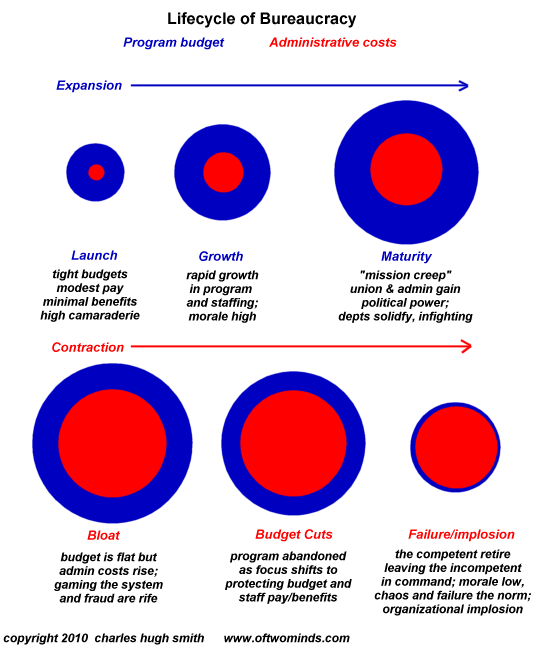
As I explain in my new book, Global Crisis, National Renewal, the conventional view has a naive faith that “great leaders” can reverse institutional rot. This faith overlooks the systemic sources of institutional decay and failure which are outlined in the graphic below, The Lifecycle of Bureaucracy, a.k.a. institutions.

Leaders are constrained by the nature of centralized organizations and the incentive structure that slowly shifts from rewarding efforts to further the institution’s core mission to self-service and protecting an ossified, failing institution from outside scrutiny and reform.

As Samo Burja explains in his insightful essay, Why Civilizations Collapse, those inside institutions are by design so compartmentalized that few (if any) even recognize the institution is failing. As long as everything is glued together in each little compartment, no one grasps the entire institution has lost its way. And since no one recognizes it, no one attempts to save it.

Institutions end up advancing caretaker managers who excel at the political game of rising to the top of a sprawling institution. When the decay (or budget cuts) finally trigger a crisis, the institution has been stripped of visionaries with a bold grasp of what’s needed to restore the focus on the core mission and institute new incentives. The bold leaders quit in disgust or were sent to bureaucratic Siberia as potential threats to the status quo.

The problem is institutions fail by the very nature of their centralized design. The organization is centralized so directives flow down the chain of command, and every branch is compartmentalized to limit the power of each department and employee to disrupt the orderly flow of top-down directives.

Within this compartmentalized, top-down structure, the incentives are to follow procedures rather than get results. The rewards go to those who dutifully follow procedures rather than to those who raise the alarm about the loss of transparency, effectiveness and focus on fulfilling the mission.

The path of least resistance is to protect the existing structure and add more compartments, i.e. “mission creep.” Rather than focus on the dissipation of resources and the decline of the core mission, leaders add “feel good” missions and PR promotions of phony reforms and initiatives that bleed more resources from the core mission.

Consider the institution of democracy, which has been corrupted into an invitation-only auction of state favors and rentier skims. Democracies have another fatal flaw: politicians win re-election by promising virtually everyone something for nothing: more benefits and entitlements and lower taxes. The gap between higher costs and declining revenues will be filled by government borrowing.

All this additional borrowing will supposedly be paid by the magic of “growth”, which will expand tax revenues at a rate that exceeds the cost of borrowing.

But demographics, resource depletion and the diminishing returns of a consumer economy fueled by rapidly expanding public and private debt have sapped “growth” in fundamental ways. Ironically, borrowing and spending more to spur “growth” only hastens the diminishing returns of increasing debt to fund consumption today.

Democracies are thus optimized for rapid “growth” and are ill-suited to transition to DeGrowth, i.e. less of everything for the vast majority of the citizenry as resources become scarce and debt eats the economy alive. (DeGrowth could work to everyone’s benefit, which is the point of Global Crisis, National Renewal.)

Central banking is another failing institution. When faced with fiscal crises, central states/banks inevitably succumb to the temptation to print/borrow currency in whatever sums are needed to fill the shortfall of the moment, i.e. political expediency. This profligate creation of currency seems to be magic at first; everyone accepts the “new money” at the current value. But eventually gravity takes hold and the currency’s purchasing power declines, as the real economy (the production of goods and services) grows at rates far below the expansion of credit and currency.

Even the greatest empires in human history have been unable to resist the “easy” solution of devaluing currency as the means of fulfilling all the promises that were made in more prosperous times.

The progression of centralized power slowly but surely replaces the self-organizing, resilient, decentralized structures of civil society with tightly bound hierarchical centralized structures that are increasingly ineffective, increasingly costly and increasingly fragile, i.e. increasingly prone to failure or collapse.

The irony of institutional decay and failure is everyone inside is so busy following procedures that nobody notices the decay until the whole worm-eaten structure collapses. Look no farther than financialized asset bubbles, healthcare and education for examples of institutions in run-to-failure decline.

We are in effect so busy arranging the beach umbrellas per our instructions that we don’t notice the approaching tsunami. Can a nation prosper as its institutions decay and collapse? Only in the fantasies and magical thinking of the delusional.

The Fed Has Triggered A Stagflationary Disaster That Will Hit Hard This Year

By Brandon Smith

Source: Alt-Market.US

I don’t think I can overstate the danger that the U.S. economy is in right now as we enter 2022. While most people are caught up in the ongoing drama of Covid-19, a REAL threat looms over the nation in the form of a stagflationary tidal wave. The mainstream media is attempting to place the blame on “supply chain disruptions,” but this is a misrepresentation of the issue.

The two factors are indeed intertwined, but the reality is that inflation is the cause of supply chain disruptions, not the result of supply chain disruptions. If we look at the underlying stats for price rises in essential products we can get a clearer picture.

Before I get into my argument, I really want to stress that this is a precarious time and I suggest that people prepare accordingly. In just the past few months I have seen personal expenses rise at least 20% overall, and I’m sure it’s the same or worse for most of you. Stocking necessities and safe-haven investments with intrinsic value like physical precious metals are a good choice for protecting whatever buying power your dollars have left…

Higher prices everywhere

The Consumer Price Index (CPI) is officially at the highest levels in 40 years. CPI measurements often diminish the scale of the problem because they do not include things like food, energy and housing which are core expenses for the public. CPI calculations have also been “adjusted” over the past few decades by the government to express a more positive view on inflation. If we look at the inflation numbers at Shadowstats, calculated according to the same methods they used in the 1980’s, we see a dramatic increase in CPI which paints a more dire (but more accurate) picture.

U.S. food prices have spiked to levels not seen since 2008 at the onset of the credit and derivatives collapse that brought about tens of trillions of dollars in Federal Reserve bailouts.

If we look beyond the 2008 crisis, food costs do not see a similar jump until the 1980s. Rising food prices in the US are often obscured by creative accounting and “shrinkflation” (shrinking packages and rising prices), but if we look at global food prices the average is a 30% jump in the past year.

Rental and home prices have also gone into the stratosphere. Rental costs went up around 18% in 2021, and this is an extension of a trend that has been prevalent for the past decade. Prices have been rising for a while, it’s just that now the avalanche has accelerated.

Home prices are currently out of the range of most new potential home buyers. Values jumped 16% in the past year alone, with the average property costing $408,000. Home sales continue to remain elevated compared to two years ago despite inflating prices for one reason and one reason only – the mass migration of Americans away from the draconian mandates and bureaucracy of blue states into more conservative states.

I live in Montana, a primary destination for people relocating, and from my experience the majority of these people are conservatives seeking to escape the vaccine and lockdown mandates in places like California, New York and Illinois. They see the writing on the wall and they are trying to get ahead of the economic and social calamity that will surely befall such states.

I would also note that home sales have finally begun to flatten in the past six months but prices are not dropping, which is a trend that I think needs to be explored further because it illustrates the larger issue of stagflation.

When inflation becomes stagflation

Understand that prices are not just rising because of increased demand (demand is starting to fall in many sectors), prices are rising because of increased money supply and dollar devaluation which is not yet being reflected in the Dollar Index.

Take a look at U.S. GDP and you will see that for the past several years it has tracked in tandem with price inflation. Obviously, if prices inflate then this means people are spending more, which then leads to higher U.S. GDP; it’s like magic, right? In other words, inflation makes it seem as though U.S. GDP is always improving.

However, this has not been the case in the past couple of years.

Official GDP has flattened despite the fact that U.S. money supply and inflation have rocketed higher. What does this mean? I believe it is a sign of stagflation and a reckoning in 2022. If we examine inflation adjusted GDP numbers from Shadowstats we see that GDP has declined rather aggressively in the past couple of years.

We can also see odd tendencies in oil and gasoline prices. While it’s true that gas prices have been higher in the past, this does not address the full context of the situation. U.S. travel spending has declined 12% since 2019 and airline travel has dropped at least 21% in the past year. Average gasoline usage dropped after 2019 and still has not recovered. Yet, gas prices continue to rise? In other words, travel demand is stagnant but prices are INCREASING – this is another signal of inflationary pressures and dollar devaluation. Oil is priced in dollars globally, and therefore any inflation in the dollar will be readily visible in oil. This would help explain why pandemic paranoia and reduced travel have not caused gas prices to drop.

If the current momentum continues the majority of necessities in the U.S. will not be affordable for most people by next year. We are looking at a fast-moving decline in production along with a swift explosion in prices. In other words, a stagflationary disaster.

This is the Federal Reserve’s fault

I and many other alternative economists have been warning about the inevitable inflation/stagflation crisis for years, but the most important factor to understand is WHO is responsible this event?

The mainstream financial media is going to protect the government and the Federal Reserve at all costs during this breakdown. They are going to blame Covid, the lockdowns here and overseas as well as the supply chain bottleneck.

The Fed is the true culprit, though.

While there have been many American Presidents and other politicians that have supported the Fed in its inflationary activities, the central bank itself needs to be held accountable for the downturn that is about to occur. This is a process that started back at the founding of the Fed, but spread like cancer after the crash of 2008 and the introduction of 12+ years of stimulus and bailout measures along with near-zero interest rates.

The inflationary end-game

The pandemic is the perfect cover for the inflationary end game. In 2008 the response to the crisis was to print and pump dollars into banks and corporations in the U.S. and around the globe. This money supply was held in corporate coffers and in central banks overseas, which slowed the effects of inflation. This set the precedent for subversive stimulus policies by giving the Fed a blank check to do whatever it wanted.

In 2020, the Fed created trillions more but this time the money was injected directly into the U.S. economy through Covid stimulus checks, PPP loans and other measures. In the alternative economic field we call this “helicopter money.” These dollars triggered a massive retail buying spree in 2020, but with more dollars in the economy chasing less goods prices are now spiking much higher.

The big discussion today is whether or not the Fed will taper their asset purchases, reduce their balance sheet and raise interest rates to counter inflation?

The fact is it won’t matter; inflation/stagflation will continue or even accelerate as the Fed tapers. With a taper comes the threat of a flattening yield curve in Treasury bonds as well as the danger of bonds and dollars being dumped by foreign investors and central banks. If the trillions upon trillions of dollars being held overseas come flooding back into the U.S., inflation will continue at its current pace or erupt even higher. In fact, the world’s ownership of dollars reached a 26-year low recently. The global transition away from the dollar, toward inflation-resistant investments, has already begun.

This is not a policy error

I explained this Catch-22 threat in my recent article The Fed’s Catch-22 Taper Is a Weapon, Not a Policy Error. In that essay I outline the Fed’s documented history of creating economic disasters that conveniently end up benefiting their friends in the international banks.

I also explained (with evidence) how the Federal Reserve actually takes its marching orders from the Bank for International Settlements, a globalist institution which along with the International Monetary Fund and World Economic Forum is openly seeking a one-world economic system and one-world currency system.

I do not believe that the Fed’s actions are a product of ignorance or stupidity or basic greed. I do not believe the Fed is scrambling to keep the U.S. economy afloat. I believe according to the evidence that the Fed knows exactly what it is doing. The pandemic offers a perfect scapegoat for an engineered crash of the U.S. economy which the Fed is trying to facilitate.

Why? Because the more desperate people are financially, the easier they are to buy off with false promises and a loaf of bread. They are easier to control. On top of that, with the U.S. economy reduced to second- or third-world status, it is easier to sell the public on the predetermined solution – total global centralization and far less freedom.

As the stagflationary crash plays out, never forget who was really the cause of the public’s suffering. In the fog of national crisis it is easy for the establishment to shift blame and responsibility and to cloud the truth. The inflation calamity is about to get much worse, and as it does we need to rally newly awakened people to take action against the central bankers and globalists behind it.

Politics Is Dead, Here’s What Killed It

By Charles Hugh Smith

Source: Of Two Minds

Representational democracy–a.k.a. politics as a solution to social and economic problems–has passed away. It did not die a natural death. Politics developed a cancer very early in life (circa the early 1800s), caused by wealth outweighing public opinion. This cancer spread slowly but metastasized in the past few decades, spreading to every nook and cranny of our society and economy as “democracy” devolved into an invitation-only auction of elections and political favors.

Politics might have had a fighting chance but three forces betrayed the nation and its citizenry.

1. The Federal Reserve transferred trillions of dollars of unearned wealth into the feeding troughs of the super-wealthy and corporations, vastly increasing the wealth the top 0.01% had to buy elections and favors. The Federal Reserve cloaked its treachery with jargon– quantitative easing, stimulus, etc.–and then stabbed the nation’s representational democracy in the back.

2. The Supreme Court betrayed the nation’s representative democracy by labeling corporations buying elections and political favors a form of “free speech.” (Please don’t hurt yourself laughing too hard.) The Supreme Court’s equating wealth buying elections and favors with individual citizens’ sacrosanct right of free speech was a knife in the back of the nation and its citizenry.

3. The two political parties betrayed their traditional voter bases to kneel at the altar of corporate / elite wealth, wealth which bought elections and political favors. The Democrats, traditional champions of the workforce in the 20th century, abandoned workers in favor of serving their corporate masters, masking their betrayal with fine-sounding phrases.

The Republican Party, traditionally promoters of Big Business (Wall Street, banks, mega-corporations), had maintained a narrow but crucial interest in trust-busting (limiting monopolies) to defend free enterprise and small business from the predations of monopolies and cartels. Those days are long past; just as the Democratic Party tossed the working class overboard to the sharks, the Republican Party walked small business off the gangplank right into the voracious jaws of cartels and globalized, financialized corporate sharks.

To cloak their betrayal and treachery, the parties have pursued a divide-and-conquer distraction game, pushing half the nation into one-size-fits-all “enemies lists” with labels that have lost all meaning other than as means to promote divisiveness and rancor: Liberal and Conservative, socialist and capitalist, etc.

It’s not the citizenry who are “deplorable,” it’s the parties’ corporate-derriere-kissing toadies, lackeys, apparatchiks, purveyors of propaganda, enforcers, apologists, sycophants, grifters and “leaders” who manage to greatly increase their private wealth while “serving the public” (heh).

These three betrayals of public trust and representational democracy caused the demise of politics as a solution to social and economic problems. “Politics” has been stripped to its essence: an invitation-only auction of elections and political favors. The price to watch from the rear of the auction is $1 million; to actually place a bid, the minimum is $10 million, but the winning bids are generally much higher.

(Lobbying, campaign contributions, bogus think-tanks, and philanthro-capitalist foundations are all part of the auction funding.)

Here’s “politics” in America now: come with mega-millions or don’t even bother to show up. Choose which “enemies list” you want to be on; there’s not much choice. And don’t forget to put a flower on the grave of representational democracy.

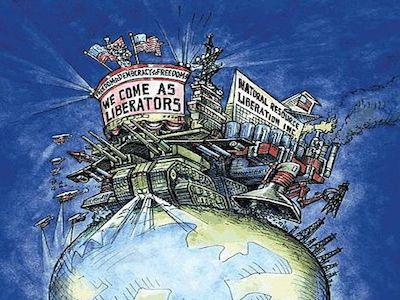
Another Nail in the U.S. Empire’s Coffin… Biden Signs $770 Billion War Budget

By Timothy Alexander Guzman

Source: Silent Crow News

As this year ends, U.S. President Joe Biden signed into law military spending of $770 billion. That’s just for the next year alone. The scale of wastefulness and bloated corruption is eye-watering. It eclipses what the United States is willing to invest for overhauling its badly neglected civilian infrastructure and for combating the coronavirus pandemic that has killed far more people in the U.S. than in any other nation.

If there is one thing that portends a historic collapse of U.S. global power it is its pathological addiction to militarism that is hemorrhaging vital resources.

What is also amazing is how this gargantuan deformity in economic planning is presented as somehow rational and normal by the Western media.

Three decades after the Cold War officially ended, the U.S. is setting a new record high for annual expenditure on its armed forces.

Biden’s budget – his first as president – exceeds the record set by the previous Trump administration for military largesse of $740 billion.

So much for wishing humanity peace and prosperity – as is the international tradition at this time of year – when the U.S. allocates such a grotesque amount of resources to the means of war and annihilation.

This obscene expenditure is not in any way conceivably a “defense budget” as it is termed in Orwellian newspeak. It is a dreadful and despicable war budget.

The United States spends more on its military than the next 11 top nations combined. Compared with China ($250bn) the U.S. budget is nearly three times bigger. The U.S. spends over 12 times more than Russia ($60bn) on its armed forces.

Those figures alone tell beyond any doubt which nation is the ultimate aggressor. Yet, farcically, the Western corporate media in Orwellian fashion portray China and Russia as the aggressors against whom the United States is “defending’ the rest of the world.

Biden’s 2022 National Defense Authorization Act (NDAA), as it is formally titled, devotes billions more to devising new nuclear weapons and to provoke China and Russia. Camouflaged with Orwellian rhetoric, there is some $7 billion for the “Pacific Deterrence Initiative” and $4 billion for the “European Defense Initiative”.

The Biden administration has committed a further $300 million in military support for Ukraine over the next year. This is on top of the $2.5 billion in arms that Washington has plowed into Ukraine since the CIA-backed coup d’état in Kiev in 2014 which brought to power a Russophobic regime.

Next week, U.S. and Russian officials are to hold negotiations in Geneva to deescalate tensions over Ukraine and Europe generally. It is blindingly obvious that the crisis over security has been created by the United States pushing a policy of militarizing Europe against Russia in the form of expanding the NATO alliance all the way to Russia’s borders.

With twisted logic, Moscow is accused of “threatening” Ukraine and European security even though its troops are on Russian soil and it is American weapons that are encroaching on Russia’s territory.

The inordinate military spending by the United States year after year is proof of the source of international tensions.

When the Cold War supposedly ended in 1991 following the demise of the Soviet Union, there was a reasonable expectation around the world for a “peace dividend” to ensue. That is, whereby Cold War militarism would at last give way to peaceful economic development and cooperation. How lamentable the disappointment!

The inescapable fact is that the U.S. economy is a war-driven system. The military-industrial complex at the heart of American capitalism is dependent on massive taxpayer-funded financial subvention. If an economy is driven for war, then it follows that conflicts and wars are inevitable. This is why, 30 years after the supposed end of the Cold War, the United States is closer to starting a war with Russia and China than ever before.

In an insightful interview this week, former United Nations diplomat Alfred Maurice de Zayas condemned what he called the “universal provocation” of the US “war budget”. De Zayas points out that the United States is preeminently guilty of undermining global peace and security. Its relentless militarism compels other nations to spend excessively on defense in order to counter the threat posed by the United States. Both China and Russia have long-proposed multilateralism and “win-win” cooperation. Neither of these nations has threatened the United States. It is always the U.S. with its mixture of paranoia and hubris that constantly portrays others as enemies and existential dangers. Again, that is due to the need for justifying the abomination of American military orgy year after year.

The truth is the United States has been at war against the rest of the world since at least the end of the Second World War. For most of that period, the Cold War, Washington cited the threat of Soviet and Chinese communism. It waged wars in dozens of countries on every continent killing tens of millions of people purportedly in the “defense of democracy and the free world”. How godawful ridiculous is that?

The Cold War was supposed to have ended, yet the U.S. continues its remorseless warmongering. It retreated from Afghanistan this year after two decades of futile war, only to now wind up tensions with Russia and China. The pretexts and excuses change over the decades, but the fundamental story remains the same: the United States is at war with the rest of the world in the vain ambition of exerting hegemonic domination. Arguably, that’s an essential definition of fascism.

But it’s not just against the rest of the world that the U.S. rulers are waging war. They are waging war against their own American citizens. The Washington elite of both parties (comprising the de facto War Party) whistle through a military budget funded by taxpayers that dwarves anything the federal government is prepared to spend on societal infrastructure and decent human development.

Far above any other nation, the U.S. has a pandemic killing nearly 850,000 people so far and there is no end in sight. U.S. rulers refuse to allocate more financial help to the population to defeat the pandemic yet they are planning to spend billions on offensive weapons systems to threaten Russia and China.

The hideously perverse priorities of the United States as demonstrated by its wanton militarism are a portent and ultimate cause of its historic failure. It is a vile disgrace that the apparent solution to its inherent contradictions is to start a catastrophic war. Fortunately, Russia and China are strong enough militarily to not let that happen. And so the outcome we will witness more of over the coming year will be the United States cratering from its own internal corruption.