The beach was pure perfection. March’s sunshine warmed the wintry air. Cobalt waves lapped the shore with soothing persistence. Yet my soul started stirring and I became aware of a deep emotional discomfort — a yearning for peace of mind that not even the ocean could deliver. The infinite beauty of the moment reminded me of the fragility of the world, and the avoidable suffering that it contains.
I suppose it was, in some ways, a manifestation of the dissonance I’ve been feeling lately. The news tells devastating stories of war and environmental crises, yet here I am, in paradise. My nervous system knows there’s danger, but my physical reality says otherwise. It’s becoming harder and harder to enjoy and appreciate my utopia, because it’s harder and harder to ignore the externalized costs its creation and maintenance require.
In To Paradise, Hanya Yanagihara’s dystopia is grim and disarmingly familiar — a near-future New York City, in a world ravaged by pandemics, where the US has fought, and lost, a war with China. The protagonist and narrator, Charlie, ostensibly suffered intellectual damage from experimental treatment for a virus during childhood. Pliant and accepting, she describes her life and its quotidian horrors with a seeming lack of emotion and imagination. Yanagihara encourages us to join Charlie’s family and colleagues in underestimating her, while subtly providing evidence to undermine those assumptions.
Since finishing the book I haven’t been able to stop thinking about this dystopia. Through masterful structuring, Yanagihara takes us on a journey from the present day to the future, showing how we arrive at dystopia via a series of events that are unimaginable until the moment they occur, and are then readily assimilated to become the new normal. Through it all, people remain fundamentally unchanged, driven by love, ambition, and the drive to escape suffering.
Back in the real world, life is imitating art. My longed-for post-pandemic paradise has been destroyed by war in Ukraine. Yet even as I write those words I recognize the dissonance. I feel in my body that individual happiness is incomplete while others experience avoidable suffering. I’m also aware that apocalypse is not a future to be feared, avoided or prepared for, but a lived reality for the majority of the world’s inhabitants, past, present and (at this rate) future — from the devastation wrought by slavery, war, and colonialism, to environmental destruction and the unfolding climate catastrophe.
Post Growth Fellow, Monika Bielskyte, frames the concept of utopia vs dystopia as a false binary informed by multiple biases and centuries of injustice. After all, “Haven’t most utopias been someone else’s dystopias, and vice versa?” Bielskyte calls out utopias as exclusionary, colonialist projects that perpetuate “the gaze and the experience of privilege.”
Utopian Futures are generally envisaged as so “perfect” that they can only exist by prodigiously leapfrogging all of the most urgent inequities of the present. Consequently, they are mostly closed to critical inquiry. Utopian imaginings pertain to communicating a peaceful and magically post-austerity world, yet somehow the peace of such a future is always peace without justice.
Bielskyte also criticizes dystopian futures as “despair escapism, and excuses for inaction and further consumption.” I find myself guilty of this to some extent — I savored Yanagihara’s dystopia, basking in the art of it. Yet dystopias can contain wisdom and lessons:
This is not to say that, historically, dystopian warnings, especially by authors of marginalized backgrounds, have not been extraordinarily prescient and valuable. For example, if our policy makers would have heeded the lessons of Octavia Butler’s The Parable Of The Sower (1993), we could have diminished or at least been better prepared for some of the most disheartening aspects of the last decade: the disinformation warfare-driven resurgence of inequality, alienation, xenophobia, racism, fascism, and biosphere collapse. Butler’s dystopia rings true in 2021 PRECISELY because the systems of oppression she critiques remain. Further, her embodied experiences as a Black woman, impoverished and disenfranchised early in her writing career, positioned her to see the broader societal implications of these injustices because she and those in her community were already living in these dystopias (*Ash Baccus-Clark).
As dystopia descends in real life (my life), casting a shadow over the last remaining patches of light, it’s time to finally stop pretending. When you look at capitalism’s fragile foundations and false premises, these economic, environmental, and geopolitical collapses are inevitable. The current global socio-economic system is founded on extraction and exploitation. The west has built its utopia by creating multiple dystopias, across time and space.
I’ve been asking myself lately how to honor life and find joy in its myriad gifts while acknowledging the uncertainty, fear, sadness, and loss that are its price. My instinct is to run and hide, to hold my breath and wait for ‘things to get back to normal’ — in other words, for my utopia to be restored — yet all the while I’m doing that I’m missing what life there is left, and with it any opportunity to have agency over the future.
As I continue to discover in my work at the Post Growth Institute, arguing that the current system is the only option represents a massive failure of imagination. Who’s to say we can’t maintain and develop what’s working while reframing or removing what’s not? Taking this approach requires a shift to a worldview beyond binaries.
Buddhist and deep ecologist Joanna Macy has shown that accepting our profound losses and grieving for them offers a way through shutdown and despair, towards activism and the building of hopeful, meaningful alternatives. As an alternative to the dystopia-utopia dichotomy, Bielskyte proposes Protopia, a blueprint for action based on continuous dialog that centers previously marginalized perspectives and “explores visions of embodied HOPE, futures wherein we have come together, as imperfect as our condition is.”
Imagination and speculation are not the only tools available. As several Post Growth Fellows point out, the dystopias created by capitalism also contain real-life narratives of agency and the existence of alternatives, some of which predate the current economic system and some of which are responses to it. Shrishtee Bajpai, outlines some examples from Africa, Latin America, and Southeast Asia in her article about the Global Tapestry of Alternatives; and Yusra Bitar, explores glimpses of systemic, post-carbon alternatives that are emerging in Lebanon in the wake of the country’s economic and political collapse.
These stories reveal the privilege and pretension of trying to avoid the cascading collapse of the current system. In looking to people and communities who have faced their own version of dystopia, I see power and possibility in the agency and alternatives that exist beyond the binary. Like Yanagihara’s Charlie, between the lines there is resilience, not resignation. It’s in accepting the end of my utopia, as difficult as it is, that I can find peace of mind — and the space to start dreaming of Protopia.
The Russian ruble is sitting pretty right now, having regained its pre-sanctions value and set to become a major commodity currency.Photo Credit: The Cradle
Rublegas is the commodity currency du jour and it isn’t nearly as complicated as NATO pretends. If Europe wants gas, all it needs to do is send its Euros to a Russian account inside Russia.
Saddam, Gaddafi, Iran, Venezuela – they all tried but couldn’t do it. But Russia is on a different level altogether.
The beauty of the game-changing, gas-for-rubles, geoeconomic jujitsu applied by Moscow is its stark simplicity.
Russian President Vladimir Putin’s presidential decree on new payment terms for energy products, predictably, was misunderstood by the collective west. The Russian government is not exactly demanding straightforward payment for gas in rubles. What Moscow wants is to be paid at Gazprombank in Russia, in its currency of choice, and not at a Gazprom account in any banking institution in western capitals.
That’s the essence of less-is-more sophistication. Gazprombank will sell the foreign currency – dollars or euros – deposited by their customers on the Moscow Stock Exchange and credit it to different accounts in rubles within Gazprombank.
What this means in practice is that foreign currency should be sent directly to Russia, and not accumulated in a foreign bank – where it can easily be held hostage, or frozen, for that matter.
All these transactions from now on should be transferred to a Russian jurisdiction – thus eliminating the risk of payments being interrupted or outright blocked.
It’s no wonder the subservient European Union (EU) apparatus – actively engaged in destroying their own national economies on behalf of Washington’s interests – is intellectually unequipped to understand the complex matter of exchanging euros into rubles.
Gazprom made things easier this Friday, sending official notifications to its counterparts in the west and Japan.
Putin himself was forced to explain in writing to German Chancellor Olaf Scholz how it all works.
Once again, very simple: Customers open an account with Gazprombank in Russia. Payments are made in foreign currency – dollars or euros – converted into rubles according to the current exchange rate, and transferred to different Gazprom accounts.
Thus it is 100 percent guaranteed that Gazprom will be paid.
That’s in stark contrast to what the United States was forcing the Europeans to do: pay for Russian gas in Gazprom accounts in Europe, which would then be instantly frozen. These accounts would only be unblocked with the end of Operation Z, Russia’s military ops in Ukraine.
Yet the Americans want the war to go on indefinitely, to “bog down” Moscow as if this was Afghanistan in the 1980s, and have strictly forbidden the Ukrainian Comedian in front of a green screen somewhere – certainly not Kiev – to accept any ceasefire or peace deal.
So Gazprom accounts in Europe would continue to be frozen.
As Scholz was still trying to understand the obvious, his economic minions went berserk, floating the idea of nationalizing Gazprom’s subsidiaries – Gazprom Germania and Wingas – in case Russia decides to halt the gas flow.
This is ridiculous. It’s as if Berlin functionaries believe that Gazprom subsidiaries produce natural gas in centrally heated offices across Germany.
The new rubles-for-gas mechanism does not in any way violate existing contracts. Yet, as Putin warned, existing contracts may indeed be stopped: “If such [ruble] payments are not made, we will consider this to be the buyers’ failure to perform commitments with all ensuing implications.”
Kremlin spokesman Dmitri Peskov was adamant that the mechanism will not be reversed under the current, dire circumstances. Still that does not mean that the gas flow would be instantly cut off. Payment in rubles will be expected from ‘The Unfriendlies’ – a list of hostile states that includes mostly the US, Canada, Japan and the EU – in the second half of April and early May.
For the overwhelming majority of the Global South, the overarching Big Picture is crystal clear: an Atlanticist oligarchy is refusing to buy the Russian gas essential to the wellbeing of the population of Europe, while fully engaged in the weaponization of toxic inflation rates against the same population.
Beyond Rublegas
This gas-for-rubles mechanism – call it Rublegas – is just the first concrete building block in the construction of an alternative financial/monetary system, in tandem with many other mechanisms: ruble-rupee trade; the Saudi petroyuan; the Iran-Russia SWIFT- bypassing mechanism; and the most important of all, the China-Eurasia Economic Union (EAEU) design of a comprehensive financial/monetary system, with the first draft to be presented in the next few days.
After the predictable initial stages of denial, the EU – actually, Germany – must face reality. The EU depends on steady supplies of Russian gas (40 percent) and oil (25 percent). The sanction hysteria has already engineered certified blowback.
Natural gas accounts for 50 percent of the needs of Germany’s chemical and pharmaceutical industries. There’s no feasible replacement, be it from Algeria, Norway, Qatar or Turkmenistan. Germany is the EU’s industrial powerhouse. Only Russian gas is capable of keeping the German – and European – industrial base humming and at very affordable prices in case of long-term contracts.
Disrupt this set up and you have horrifying turbulence across the EU and beyond.
The inimitable Andrei Martyanov has summed it up this way: “Only two things define the world: the actual physical economy, and military power, which is its first derivative. Everything else are derivatives but you cannot live on derivatives.”
The American turbo-capitalist casino believes its own derivative “narrative” – which has nothing to do with the real economy. The EU will eventually be forced by reality to move from denial to acceptance. Meanwhile, the Global South will be fast adapting to the new paradigm: the Davos Great Reset has been shattered by the Russian Reset.
Most Americans don’t realize this, but we truly have entered historic territory. As you will see below, the inflation crisis of 2022 has now escalated to a level that is beyond anything that we experienced during the horrible Jimmy Carter era of the 1970s. If you are old enough to have been alive back then, you probably remember the constant headlines about inflation. And you also probably remember that it seemed like the impotent administration in power in Washington was powerless to do anything about it. In other words, it was a lot like what we are going through today. Unfortunately for us, this new economic crisis is still only in the very early chapters.
Of course the mainstream media would like us to believe that what we are experiencing today is not even close to what Americans went through in the late 1970s and early 1980s. According to CNN, the U.S. inflation rate hit a peak of 14.6 percent in the first half of 1980…
The inflation rate hit a record high of 14.6% in March and April of 1980. It helped to lead to Carter’s defeat in that fall’s election. It also led to some significant changes in the US economy.
Compared to that, the numbers we have been given in early 2022 seem rather tame. On Tuesday, we learned that the official rate of inflation in the U.S. hit 8.5 percent in the month of March…
Prices that consumers pay for everyday items surged in March to their highest levels since the early days of the Reagan administration, according to Labor Department data released Tuesday.
The consumer price index, which measures a wide-ranging basket of goods and services, jumped 8.5% from a year ago on an unadjusted basis, above even the already elevated Dow Jones estimate for 8.4%.
8.5 percent is much lower than 14.6 percent, and so to most people it would seem logical to conclude that we are still a long way from the kind of nightmarish crisis that our nation endured during the waning days of the Carter administration.
But is that the truth?
In reality, we can’t make a straight comparison between the official rate of inflation in 2022 and the official rate of inflation in 1980. The way that the inflation rate is calculated has been changed more than 20 times since 1980, and every time it was changed the goal was to make the official rate of inflation appear to be lower.
What we really need is an apples-to-apples comparison; fortunately, John Williams over at shadowstats.com has done the math for us.
According to Williams, if the inflation rate was still calculated the way that it was back in 1980, the official rate of inflation would be somewhere around 17 percent right now.
17 percent!
That means that the inflation that we are seeing now is even worse than anything that Americans went through during the Jimmy Carter era.
And government figures for individual categories seem to confirm that inflation is now wildly out of control. For example, the price of gasoline has risen by 48 percent over the past year…
The price of gasoline rose by 48.0 percent from March 2021 to March 2022, according to numbers released today by the Bureau of Labor Statistics.
In just one month—from February to March—the seasonally adjusted price of gasoline went up 18.3 percent.
Vehicle prices have escalated to absurd levels as well. If you can believe it, the average retail selling price of a used vehicle at CarMax has risen by 39.7 percent in just 12 months…
CarMax experienced a slowdown in fourth-quarter used car sales volume as its average retail selling price jumped 39.7% year-over-year to $29,312, an increase of approximately $8,300 per unit.
And I discussed yesterday, home prices in the United States have jumped 32.6 percent over the past two years.
We have entered a full-blown inflationary nightmare, and the Biden administration is trying to blame Vladimir Putin for it.
Needless to say, that is extremely disingenuous of Biden, because prices were already skyrocketing even before the war in Ukraine started.
But it is true that the war is making economic problems even worse all over the globe, and that isn’t going to end any time soon.
A couple of weeks ago there was a bit of optimism that some sort of a ceasefire agreement could be reached, but now there appears to be no hope that there will be one any time soon.
On Tuesday, Putin told the press that peace talks have reached “a dead end”…
Talks with Ukraine have reached “a dead end,” Russian President Vladimir Putin said in fresh Tuesday remarks. “We will not stop military operations in Ukraine until they succeed.” He explained that Ukraine has “deviated” from agreements and any possible prior progress reached during the Istanbul meetings, according to state-run RIA.
The strong remarks aimed at both Kiev and the West were given during a joint presser with his Belarusian counterpart Alexander Lukashenko. He further hailed that the military operations is still going “according to plan,” Bloomberg reports, however while admitting to the domestic population that “Russian logistics and payment systems remain a weakness and the long-term impact of western measures could be more painful.” But he also said the county has withstood the economic “blitzkrieg” from the West.
Ukrainian President Volodymyr Zelensky named recognition of the annexation of the Crimea region as one of his red lines for Moscow in any potential peace talks with Russian President Vladimir Putin to end war between the two countries.
Russia annexed the southern region of Crimea in 2014. Russian-backed separatists and forces, as well Ukrainian soldiers, have since been fighting in the eastern region of Ukraine.
Russia will never, ever willingly give Crimea back to Ukraine.
Anyone who thinks otherwise is simply being delusional.
So unless someone changes their tune, this war between Russia and Ukraine is going to keep going until someone achieves total victory.
And that could take a really long time.
Meanwhile, global food supplies will get tighter and tighter, and global economic conditions will continue to rapidly deteriorate.
And so what happens if another “black swan event” or two hits us later in 2022?
We are so vulnerable right now, and it wouldn’t take much at all to push us over the edge and into an unprecedented worldwide crisis of epic proportions.
“We are now speeding down the road of wasteful spending and debt, and unless we can escape we will be smashed in inflation.”—Herbert Hoover
This is financial tyranny.
The U.S. government—and that includes the current administration—is spending money it doesn’t have on programs it can’t afford, and “we the taxpayers” are the ones who must foot the bill for the government’s fiscal insanity.
We’ve been sold a bill of goods by politicians promising to pay down the national debt, jumpstart the economy, rebuild our infrastructure, secure our borders, ensure our security, and make us all healthy, wealthy and happy.
None of that has come to pass, and yet we’re still being loaded down with debt not of our own making.
Now the Biden administration is proposing a $5.8 trillion spending budget that notably includes $813 billion for national defense, $30 billion to “fund the police,” and a plan to reduce the national deficit by roughly $1 trillion over 10 years through additional tax hikes.
The U.S. ranks as the 12th most indebted nation in the world, with much of that debt owed to the Federal Reserve, large investment funds and foreign governments, namely, Japan and China.
Essentially, the U.S. government is funding its very existence with a credit card.
In 2021, we paid more than $562 billion in interest on that public debt, which according to journalist Rob Garver, “is more than the annual budget of every individual federal agency except for the Treasury, the Department of Health and Human Services (which manages the Medicare and Medicaid government health insurance programs), and the Department of Defense.”
According to the Committee for a Reasonable Federal Budget, the interest we’ve paid on this borrowed money is “nearly twice what the federal government will spend on transportation infrastructure, over four times as much as it will spend on K-12 education, almost four times what it will spend on housing, and over eight times what it will spend on science, space, and technology.”
Clearly, the national debt isn’t going away anytime soon, especially not with government spending on the rise and interest payments making up such a large chunk of the budget.
Still, the government remains unrepentant, unfazed and undeterred in its wanton spending.
Indeed, the national deficit (the difference between what the government spends and the revenue it takes in) remains at more than $1.5 trillion.
If Americans managed their personal finances the way the government mismanages the nation’s finances, we’d all be in debtors’ prison by now.
Despite the government propaganda being peddled by the politicians and news media, however, the government isn’t spending our tax dollars to make our lives better.
We’re being robbed blind so the governmental elite can get richer.
We’re not living the American dream. We’re living a financial nightmare.
In the eyes of the government, “we the people, the voters, the consumers, and the taxpayers” are little more than pocketbooks waiting to be picked.
“We the people” have become the new, permanent underclass in America.
Consider: The government can seize your home and your car (which you’ve bought and paid for) over nonpayment of taxes. Government agents can freeze and seize your bank accounts and other valuables if they merely “suspect” wrongdoing. And the IRS insists on getting the first cut of your salary to pay for government programs over which you have no say.
We have no real say in how the government runs, or how our taxpayer funds are used, but we’re being forced to pay through the nose, anyhow.
We have no real say, but that doesn’t prevent the government from fleecing us at every turn and forcing us to pay for endless wars that do more to fund the military industrial complex than protect us, pork barrel projects that produce little to nothing, and a police state that serves only to imprison us within its walls.
If you have no choice, no voice, and no real options when it comes to the government’s claims on your property and your money, you’re not free.
It didn’t take long, however—a hundred years, in fact—before the American government was laying claim to the citizenry’s property by levying taxes to pay for the Civil War. As the New York Times reports, “Widespread resistance led to its repeal in 1872.”
Determined to claim some of the citizenry’s wealth for its own uses, the government reinstituted the income tax in 1894. Charles Pollock challenged the tax as unconstitutional, and the U.S. Supreme Court ruled in his favor. Pollock’s victory was relatively short-lived. Members of Congress—united in their determination to tax the American people’s income—worked together to adopt a constitutional amendment to overrule the Pollock decision.
On the eve of World War I, in 1913, Congress instituted a permanent income tax by way of the 16th Amendment to the Constitution and the Revenue Act of 1913. Under the Revenue Act, individuals with income exceeding $3,000 could be taxed starting at 1% up to 7% for incomes exceeding $500,000.
It’s all gone downhill from there.
Unsurprisingly, the government has used its tax powers to advance its own imperialistic agendas and the courts have repeatedly upheld the government’s power to penalize or jail those who refused to pay their taxes.
While we’re struggling to get by, and making tough decisions about how to spend what little money actually makes it into our pockets after the federal, state and local governments take their share (this doesn’t include the stealth taxes imposed through tolls, fines and other fiscal penalties), the government continues to do whatever it likes—levy taxes, rack up debt, spend outrageously and irresponsibly—with little thought for the plight of its citizens.
To top it all off, all of those wars the U.S. is so eager to fight abroad are being waged with borrowed funds. As The Atlantic reports, “U.S. leaders are essentially bankrolling the wars with debt, in the form of purchases of U.S. Treasury bonds by U.S.-based entities like pension funds and state and local governments, and by countries like China and Japan.”
Of course, we’re the ones who will have to repay that borrowed debt.
For instance, American taxpayers have been forced to shell out more than $5.6 trillion since 9/11 for the military industrial complex’s costly, endless so-called “war on terrorism.” That translates to roughly $23,000 per taxpayer to wage wars abroad, occupy foreign countries, provide financial aid to foreign allies, and fill the pockets of defense contractors and grease the hands of corrupt foreign dignitaries.
Mind you, that staggering $6 trillion is only a portion of what the Pentagon spends on America’s military empire.
Most recently, in response to Russia’s military aggression against Ukraine, the Biden Administration approved $13.6 billion in military and humanitarian aid for Ukraine, with an additional $200 million for immediate military assistance.
As Dwight D. Eisenhower warned in a 1953 speech, this is how the military industrial complex will continue to get richer, while the American taxpayer will be forced to pay for programs that do little to enhance our lives, ensure our happiness and well-being, or secure our freedoms.
This is no way of life.
Yet it’s not just the government’s endless wars that are bleeding us dry.
We’re also being forced to shell out money for surveillance systems to track our movements, money to further militarize our already militarized police, money to allow the government to raid our homes and bank accounts, money to fund schools where our kids learn nothing about freedom and everything about how to comply, and on and on.
It’s tempting to say that there’s little we can do about it, except that’s not quite accurate.
There are a few things we can do (demand transparency, reject cronyism and graft, insist on fair pricing and honest accounting methods, call a halt to incentive-driven government programs that prioritize profits over people), but it will require that “we the people” stop playing politics and stand united against the politicians and corporate interests who have turned our government and economy into a pay-to-play exercise in fascism.
Unfortunately, we’ve become so invested in identity politics that pit us against one another and keep us powerless and divided that we’ve lost sight of the one label that unites us: we’re all Americans.
Trust me, we’re all in the same boat, folks, and there’s only one real life preserver: that’s the Constitution and the Bill of Rights.
The Constitution starts with those three powerful words: “We the people.”
There is power in our numbers.
As I make clear in my book Battlefield America: The War on the American People and in its fictional counterpart The Erik Blair Diaries, that remains our greatest strength in the face of a governmental elite that continues to ride roughshod over the populace. It remains our greatest defense against a government that has claimed for itself unlimited power over the purse (taxpayer funds) and the sword (military might).
Where we lose out is when we fall for the big-talking politicians who spend big at our expense.
Spring is always convulsive, with new things heaving into life. Under every dead leaf, something stirs and seeks light, the old must make way for the new, and to some degree the earth is not quite the same place as it was the last time it turned, though the scene looks superficially familiar. Winter’s torpor is, at least, a cold comfort, but springtime’s warmth and movement rattle the nerves. Things unseen shift ominously beneath us. Everything is pending and tending, and nothing is resolved.
Having wrecked its latest business model —hypertrophic financial fakery — Western Civ stumbles into the blinding new reality that it takes real stuff to run an economy, and that money itself is not an adequate replacement for the stuff. The trillions supposedly vested, for instance, in stock market valuations mostly represent mere wishes and promises, and for what? Why, for more money — which responds by losing value, so that we’re racing ever faster toward a receding horizon.
The net result: a world with less available stuff and plenty of money that’s increasingly worthless in pursuit of stuff. It isn’t long before people recognize the disutility of both conditions. The idea that we can fix this problem with central bank digital money is hilarious. When faced with less available stuff, resorting to “money” ever more abstracted from any relation to stuff only puts you in thrall to more empty wishes and promises when this is exactly the moment to be less in thrall and more in touch.
America has had enough of being in thrall, especially to figures and forces dedicated to our destruction. This spring is the beginning of a national life with less stuff, including, looks like, stuff to eat. That will sure enough put folks in touch with something real, and then they will naturally have to do something about it. Centralized control of the population via trackable digital money is the last thing that will avail in the face of hunger and desperation. In fact, that is just another set of empty wishes and promises.
The reality is that centralized government, such as the one in Washington DC, is less and less in control of anything — except the manufactured pretense that it can fix the problems of less stuff and decaying money. The federal government is increasingly impotent, unable to discharge its basic obligations to preserve public order and safety. Its previous attempt to fix something was the response to Covid-19, which has culminated in the fiasco of the mRNA vaccines, now pending and tending toward an astounding wave of early deaths among those in thrall to the transparently dishonest promises of officialdom (“safe and effective”).
That’s the trouble with thrall. It narrows the field-of-vision so badly, you can’t see what’s coming at you indirectly, like: hardship and death. The country has been in serious trouble for more than a decade. Cavalcades of bad choices — and then lying to ourselves about these bad choices — has shoved us well over the edge of our cherished expectations. One way out, then, is to simply refuse to remain in thrall to officialdom and the manufactured bullshit that is its only product.
We are lately in thrall to the melodrama in Ukraine, largely engineered by figures and forces in our own government and for their own ends, which look suspiciously at odds with the nation’s actual interests (the nation being us, its people). Perhaps this illustrates the widening gulf between the slouching beast government has become and the people trying to operate their lives and destinies under it. No food for you, no fertilizers for future food for you, no spare parts for you, no free speech for you, no social or economic role for you, no health for you, and (watch it, now!) soon no life for you.
Collectively going crazy has been a luxury we can’t afford anymore. You fell for RussiaGate and it kept you in thrall for years. You fell for the Adam Schiff orchestrated Ukraine phone call impeachment gambit. You fell for the Covid scare and the dangerously defective vaccines forced on you. You fell for the fraud-drenched election of the empty vessel known as “Joe Biden.” Don’t fall for the invitation to World War Three.
Russia means business in its historic sphere of influence. It’s none of our business, and we’re only making it worse for the Ukrainian people by pretending it’s our business with the false promise of our support. The only thing that matters to us about Ukraine just now is that we’re standing in the way of useful negotiations to end the conflict there and egging on various other countries in Europe to aggravate the situation.
It’s been a fine distraction from everything else that is slipping away in our own country, including the loss of liberty, the right to a livelihood, the need for legitimate meaning, the value of our money, our respect for the law, the ability to speak our minds, and our duty and obligations to each other. Our government is not interested in supporting any of that, and we might doubt that it even could anymore if it wanted to. It only wants to keep you in a state of abject thrall while it fritters away our posterity.
Speaking at a White House business convention on 21st March 2022 the US President, Joe Biden, said:
We are at an inflection point, I believe, in the world economy [. . .] it occurs every three of four generations. [. . .] Now is a time when things are shifting, there’s going to be a new world order out there, and we’ve got to lead it and we’ve got to unite the rest of the free world in doing it.
This caused a bit of a storm because Biden, once again, used the term “New World Order” (NWO). We are told that there is no identifiable globalist project called the NWO. Apparently, the only people who think such a project exists are “conspiracy theorists.” These people are all antesemites, can’t be trusted and absolutely must not be heard, or something like that.
In his 1992 article for the Wall Street Journal titled, How I Learned To Love The New World Order, Biden spoke about “America’s proper role in the new world order.” His latest statement indicates that his concern lingers, on this occasion with good reason. The US position as nominal leaders of the NWO is under threat from Russia and China.
Politicians, oligarchs and other alleged “leading voices” keep talking about the NWO. Every time they mention it the mainstream media (MSM) immediately spring into action, eager to “dispel the myths” or “set the record straight”, defining the term for us. Why do they feel the need to keep doing this? Why are the establishment and their media so sensitive about the term “new world order?”
The NWO Is Not an Antisemitic Trope
The “new world order” is a phrase that gets flung around by all sorts of people for a variety of reasons. It is occasionally expressed in distinctly antisemitic terms.
Some people believe that the NWO is a “Jewish plot to enslave humanity.” Very few people, who have researched and studied the NWO, share this view. It is not supported by the evidence.
Nonetheless, the false allegations of antisemitism applied to anyone who talks about the NWO provides a very useful canard which “debunkers” consistently deploy. As the historian Prof. Antony C. Sutton pointed out in his exploration of Wall Street and The Bolshevik Revolution:
The persistence with which the Jewish-conspiracy myth has been pushed suggests that it may well be a deliberate device to divert attention from the real issues and the real causes. [. . .] What better way to divert attention from the real operators than by the medieval bogeyman of anti-Semitism?
The mainstream media (MSM) role is to confuse and mislead the public. They do not want the people to know what the NWO really is. They hide its history and generally deny its existence, but if that fails they will exploit the Holocaust to bolster their disinformation.
Antisemitism means “hostility to or prejudice against Jewish people.” That hostility and prejudice led to the Holocaust. Falsely accusing people of antisemitism, simply to undermine their arguments, dilutes its true meaning. Doing so shows a lack of respect for the victims of the Holocaust and a casual disregard for Jewish people and their history.
The MSM insist that when US Presidents talk about the NWO they are simply referring to changes in the behavioural norms, regulations and laws that broadly shape international relations. This may be the case, but that doesn’t alter the fact that the NWO has a precise historical meaning.
Given that it is a heavily charged term, is it likely that senior politicians, foreign policy strategists and national leaders would routinely use it unwittingly, without understanding what it means? Perhaps so in some cases but not in all. It is clear than many presidents, prime ministers and geoplitical experts have referred to the NWO in its proper context.
The Term “New World Order” As Propaganda
In a typical example of MSM disinformation, the UK’s Independent newspaper attempted to cover up Biden’s slip by trotting-out the usual denials and obfuscations. They claimed that Biden was simply referring to the “shifting sands of geopolitical relations.”
The Independent did not divulge the reality of the NWO to their readers. Instead it relied upon the tired slurs and allegations traditionally used to discredit those who discuss the NWO. The Independent alleged:
[P]ost-war paranoia tapped into much more ancient social anxieties about the possibility of shadowy secret covens engaging in evil [. . .] The Illuminati, the model for all subsequent sinister behind-closed-doors cabals feared by conspiracy theorist [. . .] traces its origins to the German Enlightenment of the 18th century. Belief in such a group plotting insurrection to realise its “new world order” first gained real prominence in the US among anti-government extremists in the 1990s. [. . .] The movement brings together American right-wing militant instincts with Christian fundamentalist doom prophecies [. . .] and has exploded over the last three decades in tandem with the growth of the internet. [. . .] Conspiracy theories have now become a form of mass entertainment on social media. [. . .] [Z]ealots, bored in lockdown during the pandemic, blended ancient anti-Semitic smears with quest narrative mythologies and pop cultural borrowings to worrying ends.
The so-called “newspaper” followed all of the state approved propaganda to the letter. Mixing genuine history—yes, the Illuminati really did exist—with total gibberish—there is no “movement” of NWO-exposing “extremists”—the Independent managed to fuse “conspiracy theory” with “right-wing” extremism and antisemitism. This is the standard approach to NWO denialism.
By linking the whole hodgepodge together, in a word-salad of misdirection and innuendo, the Independent were able to deliver their essential message: people who talk about the NWO do not trust government and questioning government can only lead to “worrying ends.”
The Independent didn’t offer any evidence to substantiate its conclusion, but informing readers wasn’t the point of the article. Claiming that NWO investigators are all antisemites who believe in “lizard men” allows the reader to safely discount the historians and geopolitical analysts, who have published NWO research, as crazy people.
According to the Independent, no one would even bother talking about the NWO were it not for the Internet. By claiming that questioning government policy online is “extremism,” the Independent offered its support for the government’s proposed censorship of the Internet.
Ironically, the best NWO historians published their work long before the Internet was invented. As pointed out, in one of the many contradictions in the Independent’s article, the NWO was a hot topic of conversation decades before we took to our keyboards and devices.
Introducing The New World Order
Contrary to the opinions of propagandists and debunkers, the NWO is a defined globalist project. The objective is to establish global governance. It was inaugurated more than 100 years ago and it has undergone numerous changes over subsequent generations.
While it wields immense political influence it is not “all powerful.” The NWO is tyrannical and oppressive by nature, hence the need for subterfuge and concealment. Its architects cannot simply enforce their dictatorship and expect to get away with it. We would resist, and if we did so in sufficient numbers there’s not much the NWO could do about it.
Therefore we need to be controlled by other means. Education, society, culture, economics, party politics, finance, applied psychology, behaviour modification, censorship, propaganda, war and crisis management are all used to manoeuvre us into accepting the NWO’s policy agendas. We persistently fall into this trap because we imagine our “elected” leaders are making the ‘big’ decisions: they’re not.
The New World Order (NWO) is an idea that was first proposed by Cecil Rhodes’ Round Table Movement. It was envisaged as a secret system of global governance led by an anglo trans-Atlantic alliance. It didn’t stay “secret” for very long.
Not only have politicians and the leaders of industry, commerce and finance frequently spoken about it, it has also been thoroughly exposed by historians and researchers. Perhaps most notably by Professors Carroll Quigley and Antony C. Sutton.
Even in the early 20th Century, when it was first devised, the concept of the NWO wasn’t a particularly novel idea. It was simply an attempt, by a Western hegemonic power-bloc, to establish global dominion. It is an extension of the age-old game of empires.
Rhodes’ NWO project was itself built upon pre-existing global power structures. The Venetian bankers and the other private enterprises, such as the British East India Company, had already surpassed nation states in terms of their resources, wealth and global political control. Rhodes’ vision was to convert this private financial power, which he possessed in abundance, into one, cohesive system of global rule.
The NWO model, which emerged after Rhodes’ death in 1902, immediately came unstuck. Rhodes was a British imperialist who, alongside his fellow Brits, bemoaned the loss of “their” American colony. The NWO was supposed to re-assert British control in the US, with the city of London ruling Wall Street. This is not how the US contingent viewed the burgeoning trans-Atlantic alliance and it is they who would soon come to the fore. Internecine struggles have been a consistent feature of the NWO throughout its history.
It was led from the centre by “the Society of the Elect” who would oversee, and be protected, by the first ring of power called “the Association of Helpers.” Consecutive rings were then established, affording NWO control of financial institutions, multinational corporations, governments, intelligence agencies and militaries, etc.
Only the members of the “Society” and the “Association” had a full grasp of the entire NWO project. Conceptualisation of the whole system, among the members of each subsequent ring, progressively diminished as their positions moved away from the centre of power. NWO controlled assets, placed in key administrative, academic, military, media or political roles, only knew enough to be able to perform their required tasks and report accurately back to their handlers.
There’s Nothing “New” about the NWO
Tyrants have always sought to impose their authority upon as many people as possible. Just like Sumerian kings or Roman emperors, the leaders of the NWO sought exactly the same despotism, though on a grander scale. As technology has advanced the goal of centralised authority over a global governance structure has become more attainable.
While the manipulation and control techniques have advanced, the goal hasn’t changed. This ambition is as old as civilisation itself. There have always been people who wish to rule and many more who are content to be ruled.
Our collective obedience to authority guarantees tyranny. The NWO is by no means the first kleptocracy to have cultivated and exploited our compliance.
Like all the empires that preceded it, from its inception the proposed NWO was designed to take the form of a public-private partnership between government and an immensely wealthy “Superclass.” Often these individuals and family dynasties came from the world of international finance or banking, but leading industrialists and media moguls were also prominent.
They formed the hand behind the throne. As Prof. Quigley noted in 1966:
There really is a “world system of financial control in private hands” that is “able to dominate the political system of each country and the economy of the world.” [. . .] They now control every major international institution, every major multinational and transnational corporation both public and private, every major domestic and international banking institution, every central bank, every nation-state on earth, the natural resources on every continent and the people around the world through complicated inter-locking networks that resemble giant spider webs. [. . .] They were responsible for World War I, World War II, [. . .] They have created periods of inflation and deflation in order to confiscate and consolidate the wealth of the world. [. . .] This wealth is now being used to construct and maintain the World Empire that is in the last stages of development. [. . .] The chief architects of this new World Empire are planning another war—World War III—to eliminate any vestiges of political, economic or religious freedom from the face of the earth. They will then completely control the earth and its natural resources.
Elected politicians, and the governments they formed, were always the junior partners in this network. Many were hand picked for their malleability, predisposition to corruption or loyalty to the NWO project. With the intelligence and security agencies thoroughly co-opted, the deep state—the “state within the state” or “shadow state”—flourished.
The Party Political system was permitted because it ensured that electorates could never derail the NWO project. They could be placated with a misplaced sense of democratic oversight. Party politics also kept the masses occupied and distracted, leaving the NWO to get on with business unhindered .
Policy agendas were set and then political puppets were installed to sell the desired policies to the people, no matter who they voted for. Quigley explained the NWO’s approach to party based, representative democracy:
The argument that the two parties should represent opposed ideals and policies, one, perhaps, of the Right and the other of the Left, is [. . .] a foolish idea acceptable only to the doctrinaire and academic thinkers. Instead, the two parties should be almost identical, so the American people can ‘throw the rascals out’ at any election without leading to any profound or extreme shifts in policy.
The Leaders of the New World Order
The self-proclaimed leaders of the NWO are drawn from the so-called “Superclass.” Their only distinguishing attributes are immense private wealth, a ruthless willingness to act and an unshakeable belief in their divine right to rule.
The “old money” dynasties, sometimes referred to as the Black Nobility, have maintained their financial and monetary control for nearly a thousand years. They have been joined, in recent centuries, by banking families, industrialists and latterly the “new money” from the post WWII entrepreneurial, billionaire set.
The notion of a “Superclass” was proposed by Prof. David Rothkopf. As a member of the deep state think-tanks the Council on Foreign Relations (CFR) and the Carnegie Endowment for International Peace (CEIP), among others, Rothkopf was well positioned to be personally acquainted with the robber barons he eulogised:
We’re not looking at just the wealthy; we’re looking at power. And so, the definition that we used was people who influence the lives of millions across borders on a regular basis. [. . .] It’s a tiny, tiny fraction of the people of the planet Earth. [. . .] [T]he really defining characteristics of this group is the nature of the networks, that networking is the force multiplier in any kind of power structure[.]
The “people who influence the lives of millions across borders on a regular basis” have gone by many names. “The Rhodes Crowd,” “All Souls Group,” “the Cliveden set,” “the Pilgrims” and many more. Today we often refer to them as oligarchs, thought leaders or stakeholders. No one elected Rothkopf’s “Superclass” to power.
Their wealth is often inherited from their forefathers’ war profits, often it’s the product of nepotism or profits accrued from more recent military interventions. Others have enriched themsleves from the exploitation of slave labour, rigged markets, resource theft, the drug trade, financial crime or usury, etc. The “parasite class” is a more accurate description.
The New World Order Today
It isn’t clear if the “Society of the Elect” or the “Association of Helpers” still remain. What can be said is that the current global management network is a compartmentalised, authoritarian structures. Everything first proposed by Rhodes’ pilgrims remains on track and appears to be nearing completion.
The NWO has been through several iterations and has been re-marketed in different forms. The COVID-19 pseudopandemic has seen the World Economic Forum’s Great Reset come to public attention. This is simply a new brand for the NWO as the WEF makes its bid to be the central pillar of the Global Public-Private-Partnership (G3P). The G3P represents the current management structure of the NWO.
The proposed operating system for NWO global governance is Technocracy. There are a number of key elements which, once installed, will end the last vestiges of human freedom and place the world’s population under the totalitarian control of the technocrats. In turn, the technocrats will serve the interests of the parasite class, not humanity.
Democracy will continue in name only, reassuring the masses for a while, in the form of a communitarian “civil society.” Government, working in partnership with private corporations, will encourage civil society groups to “debate” policies. Every single one of those policies will be pre-selected by the technocratic state (Technate). The apparent political choice will remain an illusion.
The global economy is currently being transformed as new markets are created. As outlined in the 1992 UN Agenda 21 document (section 8.41), the “basis for action” has already been established. A global accountancy system for all business will use stakeholder capitalism metrics to rate assets, ensuring “the integration of sustainability into economic management.”
The rating mechanisms, such as environmental, social and governance ratings (ESG’s), will enable centralised global economic planning. It will determine which ventures receive or do not receive investment. Favoured corporate partners within the G3P will do very well, as long as they promote G3P goals. Those who don’t will go bankrupt without question.
The ratings system provides a “better measurement of the crucial role of the environment as a source of natural capital.” Natural Asset Companies will transform forests into ‘carbon sequestration services’ and natural water sources into ‘human settlement resource services,’ or some such thing.
By claiming that they own nature, the G3P will create new markets worth a projected $4 quadrillion. Thereby removing oil, as the base commodity of value, and replacing it with nature (natural assets). This transformation is called “sustainable development.” It has nothing to do with environmentalism or combatting “climate change.”
The notion of uniting all of humanity to work together to solve the “climate crisis” is a contrivance to facilitate global governance. It was fabricated in the late 1980’s and early 1990’s by the globalist think-tanks that set the world’s policy agendas.
The Club of Rome, the think-tank which greatly influenced the nascent WEF, took credit for imagining the perfect global crisis. In their 1991 publications The First Global Revolution, on page 75 under the heading “the common enemy of humanity is Man,” the Club of Rome wrote:
In searching for a common enemy against whom we can unite, we came up with the idea that pollution, the threat of global warming, water shortages, famine and the like, would fit the bill. [. . .] All these dangers are caused by human intervention in natural processes, and it is only through changed attitudes and behaviour that they can be overcome. The real enemy then is humanity itself.
This statement expresses two of the parasite class’ core beliefs. The assumed legitimacy of their claim to rule, which enables them to imagine they have the right to “designate” a global enemy, and their shared commitment to population control. They herd us like cattle, as they decide how to change our attitudes and behaviour to suit their objectives.
The International Monetary and Financial System (IMFS) has also undergone a transformation. With the introduction of Central Bank Digital Currency (CBDC) it will be revolutionised. CBDC currency will be issued by central banks as their liability. They are solely responsible for that liability. CBDC will always be their money.
CBDC is electronic money, it is therefore programmable money. This means the central banks will have complete control over every unit of CBDC currency. Whether it is in your wallet or not, it is the central bank’s money and they will permit or deny every transaction you make with it.
For example, the decisions you currently make about where you travel have already been restricted by the global policy response to a fake pandemic. If CBDC is fully adopted, you will no longer have any choice at all.
CBDC will enable your central bank’s AI algorithm to decide where you can go and when. If CBDC becomes the only form of currency available to us, none of us, no matter how much money we think we have, will have any financial freedom.
In order for Technocracy to operate, every citizen must be continually surveilled and controlled by the state (Technate). The technology capable of doing this is already being distributed globally as part of the so-called Fourth Industrial Revolution (4ID).
The Internet of Things (IoT) will see every device that we use report that use back to the Technate’s data centres. The Internet of Bodies (IoB) will enhance the Technates ability to monitor us in real time. Combined with the Digital-ID, that every nation is rushing towards, the surveillance and control of every individual “global citizen” will be centrally managed at the global governance level.
The New World Order, under the current management structure of the Global Public-Private Partnership, is nearing completion. It is a truly global system of governance. There are no leading governments anywhere on Earth opposed to it. All are racing ahead to adopt it with equal enthusiasm.
The Way Forward For The NWO
With Russia’s recent military operation in Ukraine, it has been suggested by some that the Russian and Chinese governments are not prepared to accept the imposition of the NWO. We can only be guided by their major policy statements and their actions. If these are anything to go by, both governments are fully on-board with the NWO agenda.
Both Russia and China are absolutely committed to sustainable development, Digital ID, 4ID, COVID biosecurity and vaccine-passports. Russia is ahead of most Western nations with regards to CBDC and China has surpassed Russia, having already started to use CBDC on a significant scale.
On 4th February Presidents Vladimir Putin and Xi Jinping issued a joint statement on the future relationship between Russia and China. It read, in part:
Today, the world is going through momentous changes, and humanity is entering a new era of rapid development and profound transformation. [. . .] of the global governance architecture and world order. [. . .] The ongoing pandemic of the new coronavirus infection poses a serious challenge to the fulfilment of the UN 2030 Agenda for Sustainable Development. [. . .] In order to accelerate the implementation of the UN 2030 Agenda for Sustainable Development, the sides call on the international community to take practical steps in key areas of cooperation such as poverty reduction, food security, vaccines and epidemics control, financing for development, climate change, sustainable development, including green development, industrialization, digital economy, and infrastructure connectivity. [. . .] [We] will further increase cooperation in the development and manufacture of vaccines. [. . .] Russia and China intend to encourage interaction in the fields of public health, digital economy, science, innovation and technology, including artificial intelligence technologies [. . .] Particular emphasis will be placed on the fight against the novel coronavirus infection pandemic and economic recovery, digitalization of a wide range of different spheres of life.
There is no evidence to suggest that either Russia or China wish to derail the objectives of the WEF’s Great Reset. On the contrary, the evidence points towards Russia and China as perhaps the most enthusiastic and aggressive advocates for the NWO agenda. China is the world’s first Technate and Russia is a major WEF partner, most notably on cybersecurity.
Much has been made of the WEF’s decision to distance itself from Russia and sanctioned individuals. Notably this is a “temporary” freeze and smacks more of political expediency and PR, rather than any genuine severance.
There is no aspect of the NWO, G3P managed agenda that either Russia or China stand against. Their joint statement read like a Great Reset checklist.
Perhaps this is all a cunning deception. Part of a “secret plot” by Russia and China to fight the NWO. However, it looks far more like a pact between two powers bidding for political leadership of the NWO.
There is no doubt that the NWO was conceived as a project of Western based oligarchs. In the post WWII era it has bared its teeth on the geopolitical stage as the “international rules-based order.” This unipolar order, centred around the G7 group of nations, with the US led NATO alliance providing the muscle, has been dominant within the Global Public-Private Partnership (G3P).
Russia’s military intervention in Ukraine, and the G7/NATO alliance response to it, appears to be a watershed moment. Together, Russia and China are challenging the G7 clique with a BRICS based, G20 focused, multipolar model. It seems they are determined to seize primacy within the G3P management structure.
As a paid spokesperson for the G7 rules-based order, Joe Biden anxiously observed “there’s going to be a new world order out there, and we’ve got to lead it.” The US-led alliance’s problem is that Russia and China, in league with their BRICS partners, are pursuing exactly the same objective.
In an article I published in April of 2018, titled World War III Will Be An Economic War, I outlined a number of factors that portend a large scale conflict between East and West and why this war would be mainly economic in nature. I investigated how this conflict would actually benefit globalists and globalist institutions seeking to bring down multiple nations’ economies while hiding the engineered crisis behind a wall of geopolitical chaos and noise.
The goal? To convince the masses that national sovereignty is a plague that only leads to widespread death, and that the “solution” is a one-world system – conveniently managed by the globalists, of course. That is to say, more centralization is always offered as the solution to every problem.
Furthermore, the war itself acts as cover for the inflationary collapse that our central bank and government has created. We are already seeing fraud propagandists like White House Press Secretary Jen Psaki attempting to mislead the public into believing all our current inflation problems stem from the Ukraine war. This claim requires some impressive mental gymnastics and an epic level of ignorance, but Psaki seems to have no shame about her role as a soulless Goebbels-like figure.
One issue which I used to get a lot of arguments over was the idea that countries like Russia and China would end up so closely aligned. People claimed there were too many disparities and that the countries would ultimately turn on each other in the middle of a financial crisis.
Well, it’s four years later and now we’re going to see if that is true or not. So far, it looks like I was correct.
My position has long been that certain nations have been preparing for a collapse of the U.S. dollar as the world reserve currency (the primary currency used in the majority of trade around the world). My belief is that America’s top economic position is actually an incredible weakness; the dollar’s hegemony is not a strength, but an Achilles heel. If the dollar was to lose reserve status, the whole of the U.S. economy and parts of the global economy would implode, leaving behind only those who prepared – those who saw the writing on the wall and planned ahead.
The Dollar Crash Coalition
There are four nations that have been actively positioning for the crash of the dollar and they include: China, Russia, India, Brazil (five if you count the limited involvement of part South Africa). These countries are also known as the BRICS. The BRICS are rarely mentioned in the mainstream media anymore, but there was a time around a decade ago when they were discussed regularly.
My fascination with the BRICS back then was primarily due to their odd trade behaviors. Specifically, their bilateral agreements which cut out the dollar as the reserve currency, and the fact that they were stockpiling tons upon tons of gold.
It was as if they had some kind of inside information that an economic conflict or disaster was coming, and they were getting ready to decouple from the dollar and the global supply chain.
Today, as the Ukraine war rages, there is constant hype about the union of nations opposed to Russia’s invasion to the point that the narrative has become bizarre. There is an incredible level of cultism in the mainstream media right now encouraging a mindless mob response. They have been trying to drum up something very similar to a behavioral vortex that many of us in conservative circles have seen thousands of times in the past few years: Western media is weaponizing cancel culture against Russia.
It’s not just a general admonition of the Kremlin or of Putin, that would be normal. Rather, it’s an outright dismissal of anything remotely related to Russia, from bar owning dummies throwing away all their vodka (even though most of it is not made in Russia), to the International Cat Federation banning certain cats from competitions because they are Russian bred.
This is pure childish insanity, but again, we’ve seen this before with cancel culture in the US.
The thinking is utterly collectivist and goes a little something like this:
“We shall shun them from the hive and isolate them. We will erase their existence and rewrite their identity and history. Then we will punish them by taking away their ability to survive economically until they submit and conform to the directives of the gatekeepers, who shall remain nameless.”
That said, as most conservatives know, cancel culture is a failed strategy. Despite the international push to cancel Russia and media claims that Russia is now “completely isolated and alone,” the narrative is apparently designed more to con the masses, not intimidate the Kremlin. They are, in fact, not isolated at all. And, guess which countries are staunchly refusing to support actions and sanctions against the Ukraine invasion?
That’s right, the other members of the BRICS.
China has outright refused to accommodate any sanctions and is directly working with Russia to alleviate trade issues. As I’ve been pointing out for ten years, they’ve been preparing for this moment. Hell, if the rest of the world doesn’t want Russian exports and oil, China will certainly buy them.
India is eerily silent on Ukraine, despite endless pressure from the U.S.
Both Brazil and South Africa have taken neutral stances on Ukraine and continue to trade with Russia. It would appear that the cancellation of Russia has already failed before it really began.
The narrative only serves a purpose in that it gives the western public two false impressions:
It makes the people think that cancel culture on an international scale is working and that Russia will soon fold when the opposite is true.
It tricks people into thinking that all the risk is on the Russian side when, in reality, most of the risk is on the western side. This will make the inevitable economic disaster all the more frightening when it occurs.
Personally, I don’t have any affinity for either side of the Ukraine conflict. I feel empathy for the Ukrainian people, but certainly not the Ukrainian government and their globalist partners. I also have no love for Putin and his many friends in the globalist World Economic Forum.
That said, even if you think one side is right and the other side is wrong, one cannot deny that the cancel culture mentality of the west is going to lead to an epic disaster. What people don’t seem to understand is that this calamity will hurt the U.S. and Europe just as much as it hurts Russia, if not more so.
The Economic Weaponry Of Fortress Asia
The close economic relationship between Russia and China is fast building towards a “Fortress Asia” which guarantees a certain amount of insulation from global instability.
Russia exports a surprising number of raw materials that many countries rely on, from fertilizers to industrial metals like nickel and aluminum. But, their biggest export by far is energy in the form of oil and natural gas. Europe in particular is utterly dependent on Russia for between 40% to 50% of its heating and electricity. Cuts to Russian energy exports would devastate Europe in a year’s time and it’s unlikely other exporters would be able to fill the void in the near term, at least not without huge price increases.
According to the IEA, Russia is the third largest oil producer in the world behind Saudi Arabia and the U.S. and it is the largest exporter to global markets. Sanctions on Russian oil would mean a massive shift in supply and multiple markets rushing to fill the gap.
Just the threat of cuts to Russian oil caused large overnight price spikes in gasoline in the U.S. and Europe. Brent crude prices skyrocketed from $90 a barrel to $130 a barrel in a matter of a couple weeks.
I don’t think it will stop there, either. I expect crude prices to climb into the $200 per barrel range and gas prices to jump to around $7 a gallon before increased U.S. shale pumping helps balance out the supply (and this is a best case scenario). Some of the price will be due to speculation, but ultimately without Russian oil prices will remain high even if the war in Ukraine ends.
And here is where we get to a key aspect of this scenario which I don’t think many people are taking into account. It does not matter if Russia pulls out of Ukraine, and it certainly doesn’t matter if Ukraine surrenders. The economic side of the war will continue, and it will only escalate.
Retaliation In Economic Warfare
Beyond oil and energy the combined influence of the BRICS has the power to dramatically disrupt the U.S. dollar’s world reserve status. China alone holds trillions in dollars and U.S. treasuries which it can dump on the market anytime it pleases. China is the world’s largest exporter and most nations including the U.S. rely on Chinese manufacturing. This is why China’s draconian Covid shutdowns have caused a constant strain on the global supply chain. Around 20% of imports to the US come from China, including over 97% of our antibiotics.
The BRICS in combination control a vast swath of the export and manufacturing markets. They don’t even need to dump the dollar in trade, all they have to do is say they prefer a basket of currencies like the International Monetary Fund (IMF)’s Special Drawing Rights. The dollar’s value would collapse, and that would be in the midst of already rising inflation.
Another interesting development from the economic war is the increasing calls for crypto and digital currency solutions. I would note that it’s not just the BRICS who are refusing to go against Russia; there is also the matter of globalist institutions like the IMF and the Bank for International Settlements (BIS). Not surprisingly, Russia’s membership in these world banking platforms remains secure. Russia continues to hold billions in IMF SDRs. Both institutions have been calling for the implementation of a global digital currency system (which obviously they would control).
If the world economic war continues at its current trajectory, it is only a matter of time before trade sanctions turn into currency attacks. This is where the U.S. will be hurt the most.
It is perhaps not so coincidental that the globalists have staged themselves to benefit. With no world reserve currency established and an inflationary crisis raging, they will attempt to swoop in to “save the day” and assert that they have the perfect solution: A global digital currency system based on blockchain technology but tied to the IMF’s SDR basket system and administered by them.
In other words, with all the inflation present in national currencies, the IMF will offer the public a digital currency or cryptocurrency that promises them more stability. The inflationary crisis in confidence will be used to push people into a digital system which has no privacy and can be used to control them by denying them access on a whim, much like how the Chinese social credit system operates.
Ukraine is only the first domino in a long chain that is meant to lead to a one-world economic system centralized into the hands of the money elites.
There are ways to disrupt it, and the plan may not succeed at all, but there’s no avoiding the economic pain that will be caused in the meantime. All that we can do is accept that World War III is upon us and the weapons will be economic rather than nuclear.
But nobody thought that it would happen this fast.
Empires often follow the course of a Greek tragedy, bringing about precisely the fate that they sought to avoid. That certainly is the case with the American Empire as it dismantles itself in not-so-slow motion.
The basic assumption of economic and diplomatic forecasting is that every country will act in its own self-interest. Such reasoning is of no help in today’s world. Observers across the political spectrum are using phrases like “shooting themselves in their own foot” to describe U.S. diplomatic confrontation with Russia and allies alike.
For more than a generation the most prominent U.S. diplomats have warned about what they thought would represent the ultimate external threat: an alliance of Russia and China dominating Eurasia. America’s economic sanctions and military confrontation has driven them together, and is driving other countries into their emerging Eurasian orbit.
American economic and financial power was expected to avert this fate. During the half-century since the United States went off gold in 1971, the world’s central banks have operated on the Dollar Standard, holding their international monetary reserves in the form of U.S. Treasury securities, U.S. bank deposits and U.S. stocks and bonds. The resulting Treasury-bill Standard has enabled America to finance its foreign military spending and investment takeover of other countries simply by creating dollar IOUs. U.S. balance-of-payments deficits end up in the central banks of payments-surplus countries as their reserves, while Global South debtors need dollars to pay their bondholders and conduct their foreign trade.
This monetary privilege – dollar seignorage – has enabled U.S. diplomacy to impose neoliberal policies on the rest of the world, without having to use much military force of its own except to grab Near Eastern oil.
The recent escalation U.S. sanctions blocking Europe, Asia and other countries from trade and investment with Russia, Iran and China has imposed enormous opportunity costs – the cost of lost opportunities – on U.S. allies. And the recent confiscation of the gold and foreign reserves of Venezuela, Afghanistan and now Russia, along the targeted grabbing of bank accounts of wealthy foreigners (hoping to win their hearts and minds, along with recovery of their sequestered accounts), has ended the idea that dollar holdings or those in its sterling and euro NATO satellites are a safe investment haven when world economic conditions become shaky.
So I am somewhat chagrined as I watch the speed at which this U.S.-centered financialized system has de-dollarized over the span of just a year or two. The basic theme of my Super Imperialism has been how, for the past fifty years, the U.S. Treasury-bill standard has channeled foreign savings to U.S. financial markets and banks, giving Dollar Diplomacy a free ride. I thought that de-dollarization would be led by China and Russia moving to take control of their economies to avoid the kind of financial polarization that is imposing austerity on the United States. But U.S. officials are forcing them to overcome whatever hesitancy they had to de-dollarize.
I had expected that the end of the dollarized imperial economy would come about by other countries breaking away. But that is not what has happened. U.S. diplomats have chosen to end international dollarization themselves, while helping Russia build up its own means of self-reliant agricultural and industrial production. This global fracture process actually has been going on for some years now, starting with the sanctions blocking America’s NATO allies and other economic satellites from trading with Russia.For Russia, these sanctions had the same effect that protective tariffs would have had.
Russia had remained too enthralled by free-market ideology to take steps to protect its own agriculture or industry. The United States provided the help that was needed by imposing domestic self-reliance on Russia (via sanctions). When the Baltic states lost the Russian market for cheese and other farm products, Russia quickly created its own cheese and dairy sector – while becoming the world’s leading grain exporter.
Russia is discovering (or is on the verge of discovering) that it does not need U.S. dollars as backing for the ruble’s exchange rate. Its central bank can create the rubles needed to pay domestic wages and finance capital formation. The U.S. confiscations thus may finally lead Russia to end neoliberal monetary philosophy, as Sergei Glaziev has long been advocating in favor of MMT.
The same dynamic undercutting ostensible U.S aims has occurred with U.S. sanctions against the leading Russian billionaires. The neoliberal shock therapy and privatizations of the 1990s left Russian kleptocrats with only one way to cash out on the assets they had grabbed from the public domain. That was to incorporate their takings and sell their shares in London and New York. Domestic savings had been wiped out, and U.S. advisors persuaded Russia’s central bank not to create its own ruble money.
The result was that Russia’s national oil, gas and mineral patrimony was not used to finance a rationalization of Russian industry and housing. Instead of the revenue from privatization being invested to create new Russian means of protection, it was burned up on nouveau-riche acquisitions of luxury British real estate, yachts and other global flight-capital assets. But the effect of making the Russian dollar, sterling and euro holdings hostage has been to make the City of London too risky a venue in which to hold their assets. By imposing sanctions on the richest Russians closest to Putin, U.S. officials hoped to induce them to oppose his breakaway from the West, and thus to serve effectively as NATO agents-of-influence. But for Russian billionaires, their own country is starting to look safest.
For many decades now, the Federal Reserve and Treasury have fought against gold recovering its role in international reserves. But how will India and Saudi Arabia view their dollar holdings as Biden and Blinken try to strong-arm them into following the U.S. “rules-based order” instead of their own national self-interest? The recent U.S. dictates have left little alternative but to start protecting their own political autonomy by converting dollar and euro holdings into gold as an asset free of political liability of being held hostage to the increasingly costly and disruptive U.S. demands.
U.S. diplomacy has rubbed Europe’s nose in its abject subservience by telling its governments to have their companies dump the Russian assets for pennies on the dollar after Russia’s foreign reserves were blocked and the ruble’s exchange rate plunged. Blackstone, Goldman Sachs and other U.S. investors moved quickly to buy up what Shell Oil and other foreign companies were unloading.
Nobody thought that the postwar 1945-2020 world order would give way this fast. A truly new international economic order is emerging, although it is not yet clear just what form it will take. But “prodding the Bear” with the U.S./NATO confrontation with Russia has passed critical-mass level. It no longer is just about Ukraine. That is merely the trigger, a catalyst for driving much of the world away from the US/NATO orbit.
The next showdown may come within Europe itself. Nationalist politicians could seek to lead a break-away from the over-reaching U.S. power-grab over its European and other Allies, trying in vain to keep them dependent on U.S.-based trade and investment. The price of their continuing obedience is to impose cost-inflation on their industry while relinquishing their democratic electoral politics in subordination to America’s NATO proconsuls.
These consequences cannot really be deemed “unintended.” Too many observers have pointed out exactly what would happen – headed by President Putin and Foreign Secretary Lavrov explaining just what their response would be if NATO insisted in backing them into a corner while attacking Eastern Ukrainian Russian-speakers and moving heavy weaponry to Russia’s Western border. The consequences were anticipated. The neocons in control of U.S. foreign policy simply didn’t care. Recognizing its concerns was deemed to make one a Putinversteher.
European officials did not feel uncomfortable in telling the world about their worries that Donald Trump was crazy and upsetting the apple cart of international diplomacy. But they seem to have been blindsided at the Biden Administration’s resurgence of visceral Russia-hatred by Secretary of State Blinken and Victoria Nuland-Kagan. Trump’s mode of expression and mannerisms may have been uncouth, but America’s neocon gang has much more globally threatening confrontation obsessions. For them, it was a question of whose reality would emerge victorious: the “reality” that they believed they could make, or economic reality outside of U.S. control.
What foreign countries have not done for themselves – replacing the IMF, World Bank and other arms of U.S. diplomacy – American politicians are forcing them to do. Instead of European, Near Eastern and Global South countries breaking away out of their own calculation of their long-term economic interests, America is driving them away, as it has done with Russia and China. More politicians are seeking voter support by asking whether they would be better served by new monetary arrangements to replace dollarized trade, investment and even foreign debt service.
The energy and food price squeeze is hitting Global South countries especially hard, coinciding with their own Covid-19 problems and the looming dollarized debt service coming due. Something must give. How long will these countries impose austerity to pay foreign bondholders?
How will the U.S. and European economies cope in the face of their sanctions against imports of Russian gas and oil, cobalt, aluminum, palladium and other basic materials? American diplomats have made a list of raw materials that their economy desperately needs and which therefore are exempt from the trade sanctions being imposed. This provides Mr. Putin a handy list of pressure points to use in reshaping world diplomacy, in the process helping European and other countries break away from the Iron Curtain that America has imposed to lock its satellites into dependence on high-priced U.S. supplies.
But the final breakaway from NATO’s adventurism must come from within the United States itself. As this year’s midterm elections approach, politicians will find a fertile ground in showing U.S. voters that the price inflation led by gasoline and energy is a policy byproduct of the Biden administration blocking Russian oil and gas exports. Gas is needed not only for heating and energy production, but to make fertilizer, of which there already is a world shortage. This is exacerbated by blocking Russian and Ukrainian grain exports, sending U.S. and European food prices soaring.
Trying to force Russia to respond militarily and thereby looking bad to the rest of the world is turning out to be a stunt aimed simply at demonstrating Europe’s need to contribute more to NATO, buy more U.S. military hardware and lock itself deeper into trade and monetary dependence on the United States. The instability that this has caused is turning out to have the effect of making the United States look as threatening as Russia.




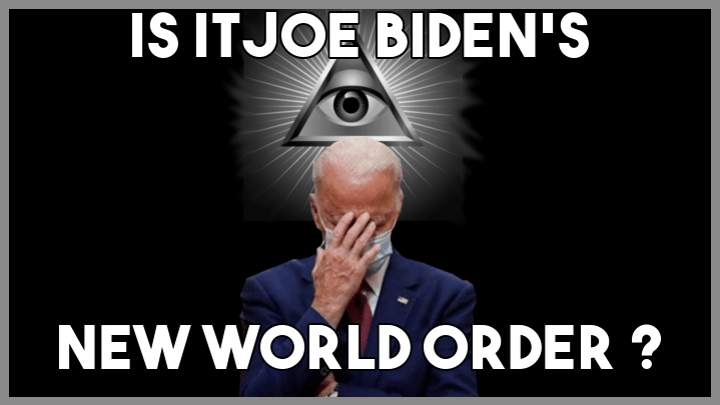


 After the Crash