Wealth Identity Politics: Billionaires Acting Like A Persecuted Minority Is Peak Capitalism

By Caitlin Johnstone

Source: CaitlinJohnstone.com

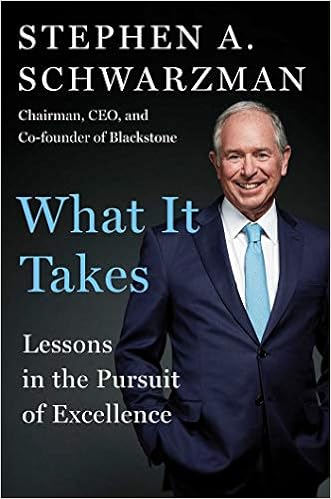
“I guess maybe Bernie Sanders shouldn’t exist,” said billionaire Steve Schwarzman while seated in a library building named after billionaire Steve Schwarzman and promoting a book with billionaire Steve Schwarzman’s face on it.

According to Bloomberg this humble response from the always modest billionaire Steve Schwarzman came in response to a question posed by an audience member about a Sanders tweet in which the Vermont Senator said that billionaires should not exist. The comment was reportedly met with enthusiastic applause.

Blackstone CEO Schwarzman, who has previously compared tax increases on the wealthy to the Nazi invasion of Poland, is an oligarch by any reasonable definition. As one of America’s top individual campaign donors he is immensely influential; his plutocratic power is so deeply interwoven with the highest levels of government that his book’s 14 pages of acknowledgements describe cuddly relationships with a who’s-who of top US officials, including the last five presidents. According to a recent report by The Intercept, two Brazilian firms owned by Schwarzman “are significantly responsible for the ongoing destruction of the Amazon rainforest, carnage that has developed into raging fires that have captivated global attention.”

It is very telling that this oligarch sees an equivalence between (A) saying that an elite class should not control such vast amounts of wealth and (B) saying actual people should not exist. What this tells us is that Schwarzman sees being a billionaire as a fundamental part of his identity, making the idea that he shouldn’t control billions of dollars indistinguishable from saying that he himself should not exist. From his point of view he’s just doing the same thing that Sanders is doing: Bernie’s saying the thing that Schwarzman is shouldn’t exist, and Schwarzman is saying that Bernie himself shouldn’t exist. To him they’re the same.

This statement gives us a bit of insight into the way billionaires see themselves as fundamentally different than the rest of us, forming an egoic identity construct out of being a billionaire in the same way a medieval king would form an egoic identity construct out of that position. This anti-billionaire rhetoric is perceived as an attack on their very identity, which is why they are spinning it as though Sanders is calling for the elimination of actual people.

Predictably, Fox News is now trotting out billionaires to defend themselves from this outrageous billionairephobic bigotry, with Home Depot founder and major Republican Party donor Ken Langone receiving a warmly sycophantic reception from Fox’s Mornings with Maria.

“What the hell has he done for the little people?” Langone asked his host Maria Bartiromo. “What jobs has he created?”

Langone went on to detail all the many jobs he’s “created” (read: how many people he’s needed to hire to help him reap lucrative profits from an already existing demand) without bothering to explain what hoarding billions of dollars in offshore accounts has to do with job creation. Exponents of the “billionaires create jobs” argument always avoid this glaring plot hole like the plague.

Again, we see in Langone’s emotional response two things: that he sees ordinary citizens as “the little people” innately different from himself, and that he perceives the push toward greater economic equality as an existential threat.

“If you go back to 1933, with different words, this is what Hitler was saying in Germany,” Langone has said of the rising pushback against wealth and income inequality. “You don’t survive as a society if you encourage and thrive on envy or jealousy.”

These outbursts are reminiscent of one we saw a couple of years ago on an MSNBC interview with resort tycoon Stephen Cloobeck, who expressed outrage at the way progressives are using “the millionaire or billionaire word” to discuss issues with class and economic justice, saying he’d instructed Democratic Party leaders to bring a stop to this rhetoric or lose plutocratic funding.

“It is very, very disturbing when I hear the millionaire or billionaire word,” Cloobeck said, as though he was uttering an ethnic slur for an oppressed minority and not a conventional label for a class that effectively owns the US government. “And I’ve told them to stop it. Knock it off.”

We’re seeing this hilarious conflation of economic justice with the persecution of minorities and the elimination of actual human beings more and more often, so we should probably come up with a name for it. I’d like to propose that we label this phenomenon “wealth identity politics”, and it is capitalism’s dumbest turn yet.

It’s especially dumb because the billionaire class has already proven with its actions that it cannot exist without actively working to manipulate governments in a way that undeniably subverts democracy and the will of the people. The debate over whether or not billionaires should exist is long settled. They should not.

A few million dollars will buy you a nice car, a nice house and some nice clothes. A few billion dollars will buy you the ability to control public narratives using media ownership, lobbyists and think tanks, thereby manipulating entire governments and international affairs. Believing that it makes sense to have an elite class which controls this much wealth and power is exactly as stupid as believing it makes sense to have a total monarchy.

Billionaires should not exist, for the same reason that kings and pharaohs should not exist. The leadership of our world should not belong to a class of highly mediocre people who have nothing noteworthy between their ears apart from a knack for accumulating dollars. The ability to amass wealth is not a valid basis upon which to determine who leads us. Our fate as a species should be in all our hands.
The Corporate Liberal in America

hillary-clinton-winking-AP-640x480

By Jason Hirthler

Source: CounterPunch

“I have almost reached the regrettable conclusion that the Negro’s greatest stumbling block in his stride toward freedom is not the White Citizen’s Counciler or the Ku Klux Klanner, but the white moderate, who is more devoted to ‘order’ than to justice.”

— Martin Luther King, Jr., Letter from a Birmingham Jail

Whether seated in Congress or exiting a voting booth, a corporate liberal is someone who supports anything progressive that does not challenge corporate power. In practice, this means corporate liberals will fight for progressive identity politics. If it has to do with race, sexual orientation, and gender, it generally doesn’t challenge corporate power. Major corporations support progressive positions on those issues, too. Corporate liberals march for gay rights and the larger LGBTQ community itself. They support feminism. They support reproductive rights. They support African-American protests against police brutality—up to the point where they become threatening to the establishment. (Bill Clinton did initiate the prison industrial complex that unduly incarcerates huge numbers of minorities.)

This support is all to the good. Tremendous progress has been made by popular protest of the devastating prejudices that have for years denied individual rights. But when their elected Democrats undermine economic justice, promote imperial warfare, and refuse to seriously address climate change, corporate liberals just look the other way. As Joe Clifford noted in his piece on Bernie Sanders, being a corporate liberal also means rejecting, “…a ban on fracking, a proposal to oppose TPP, the $15 per hour minimum wage proposal, a call for single-payer health care, and a statement of opposition to the illegal Israeli occupation.” These proposals, courageously put forward by James Zogby, Bill Mckibben, Cornell West and the rest of the Sanders contingent at the recent Democratic Platform Committee meeting in Washington, were all struck down. In a beautiful expression of moral courage, West refused to back the platform in its final iteration, saying,

“[If] we can’t say a word about [Trans-Pacific Partnership], if we can’t talk about Medicare for all explicitly, if the greatest prophetic voice dealing with impending ecological catastrophe can hardly win a vote and if we can’t even acknowledge occupation as something that’s real in the lives of a slice of humanity … it just seems to me there’s no way in good conscience I can say take it to the next stage.”

Yada Yada Yada

Words like these have no effect on the corporate liberal. If there’s a centimeter’s difference between their Democratic platform and the diseased corpus of Republican anarchism, the corporate conscience is salved. A corporate liberal is the one that puts “occupation” in quotes. A corporate liberal never makes the perfect the enemy of the good. A corporate liberal believes in reform, in humanitarian warfare, in the responsibility to protect, and in The New York Times front page. A corporate liberal supports all of this, though reform may be glacial, though good wars may slay millions, though interventions may undermine sovereignty, and though The Times may be rife with half-truth. It makes no difference, so long as reform is better than rollback, Barack’s slaughter is numerically less than Dubya’s, and The Washington Post is marginally more truthful than FOX News. As long as you can trust Erin Burnett more than Bill O’Reilly, it makes no difference that we will move further and further to the right, picking up steam until we barrel straight into corporate fascism. So long as the corporate liberal sits to the left of the patrician publican, he has some claim on the progressive mandate. Or so he says. Yet the best way to repel fascism, and realize that progressive mandate, is by joining a movement headed left, rather than a party moving right.

Nothing Forbidden

As Alan Nasser elucidates, there is nothing intolerable in the lesser evilism of the corporate liberal. He will endure—or more likely, watch others endure—intolerable realities while maintaining the unblinking rectitude of the blind ideologue. Author Chris Hedges writes that capitalism is “plunging us into a state of neo-feudalism, perpetual war, ecological disaster, and a dystopian nightmare.” But this, too, is not intolerable. We must accept it in order to ensure that the real nightmare—whomever happens to be running on the Republican ticket—is barred from the White House forever.

We must tolerate whatever Democrats do because they are better than Republicans. Even if that means, as it surely has and surely will, for all the identity groups corporate liberals support, a deteriorating quality of life. Lower incomes, higher unemployment. Bigger debts, bullshit jobs. Higher infant mortality, higher heart disease. More inequality, less social support. Less social support, more incarceration. More suicide, more alcoholism, more drug abuse, more debt, more stress, more unhappiness. And, if one is aware enough, the consciousness of having—perhaps unwittingly at the time—for more slaughter of brown people abroad, and the deliberate aggression against nuclear powers that will raise the prospect of nuclear extermination for millions. The Democrats have no such mandate, but the corporate liberal gives them the power to pretend they do. These are the wages of neoliberalism and imperialism, enabled by the logic of the lesser evil.

Like Dr. King, Karl Marx understood the major threat was not the fanatic on the fringe, but the moderate in the middle. The real threat is not the extremist, who will burn out by necessity if not already burned down by the moderate herd. It is the moderate herd that threatens to permit the intolerable through gradualism. Incremental genocide. Slow-motion regime change. The soft coup. The generational heist of millions of working class jobs. The decade-long liquidation of working class home equity. The century-long evisceration of labor rights. The hidden decades of disinformation campaigns that conflate freedom with free markets. Marx said, “Our task is that of ruthless criticism, and much more against ostensible friends than against open enemies.” He understood what King did, which is part of the reason why they are two of the most revolutionary figures of the last couple of centuries of Western civilization.

Too Much to Lose

Corporate liberals rehearse Manichean pieties about good and evil locked in a dualistic embrace, fighting to the death. There are no third parties in this vision. It is a necessary dualism. Hence the occasional need to undermine democracy to save it, as Hillary’s campaign demonstrated through repeated voting irregularities and financial chicanery engineered through her DNC front. It’s just simpler that way. For a political party of millionaires backed by billionaires, it just doesn’t do to disturb the status quo, rock the boat, upset the apple cart, shake the foundations, incite protest, disturb our creature comforts, move us out of our comfort zone, spark rebellion, overthrow the system, or change the world.

Is lesser evilism an elaborate rationale for preserving the status quo? Lenin said you can’t make a revolution in white gloves, and there are plenty of corporate liberals paying lip service to progress while glad-handing its well-heeled antagonists. That is why, in the end, corporate liberals are anti-revolutionaries. They would rather save capitalism than endure a potentially messy transition to socialism. Leave the revolution to Universal Studios and stubble-cheeked Third World rebels in hand-knitted berets. Social reforms in capitalist countries seem to happen like they did in South Africa, where identity politics achieve astounding successes, and calls for economic justice are swallowed up in the celebratory din. This is because corporate power cares deeply about economic power, but couldn’t care less about your sexual identity. For corporations—even if the executive board morally supports it—the gay community is ultimately another target market, a rich source of disposable income to be mined.

The least oppressed in any electorate always seem to be the greatest obstacle to change. Always willing to put justice on layaway. Always arguing for incrementalism, which strikes me as a luxury of the leisure class. Social progress will have little impact on them anyway, but paying lip service to its values will burnish their reputation. The discomfiting appearance of Bernie Sanders disturbed the polished script rehearsed by the Hillary camp for years. It was her turn, the first female president, upholding the rights of the vulnerable and achieving hard-won incremental gains through patience, hard work, and political acumen. For a moment, the Hillary faithful looked harried, wrong-footed, and exposed to the will of the mob. But now that the dodgy primaries are done, and Bernie has scampered back to the warmth of the herd, we can return to the language of compromise and the lesser evil. Had Bernie broke with the party he refused to technically join for 40 years, joined Jill Stein on the Green ticket, garnered support from voices like Kshama Sawant and movements like Socialist Alternative and Black Lives Matter, he could have founded a serious alternative to the mercenary duopoly. But he fell for the ruse of internal reform. But not everyone does. King continued in his Birmingham letter to discuss the white moderate, saying he was the one,

“… who prefers a negative peace which is the absence of tension to a positive peace which is the presence of justice; who constantly says: “I agree with you in the goal you seek, but I cannot agree with your methods of direct action”; who paternalistically believes he can set the timetable for another man’s freedom; who lives by a mythical concept of time and who constantly advises the Negro to wait for a “more convenient season.” Shallow understanding from people of good will is more frustrating than absolute misunderstanding from people of ill will. Lukewarm acceptance is much more bewildering than outright rejection.”

Sound familiar? King’s white moderate and Marx’s ostensible friend is our corporate liberal. Same spin, different decade. The corporate liberal is an embodiment of the idea that political parties are the graveyards of movements. Hedges himself wrote a book called, “Death of the Liberal Class” five years ago. It should’ve been the elegy before the interment of the Democratic Party as a serious option in electoral politics. Yet here we are, about to anoint another corporate liberal to the highest seat in the land. In that case, consider this article yet another epitaph awaiting its headstone. Let’s hope it’s not a long wait. Voices like Sawant’s and the momentum of movements like BLM give us reason to think it won’t be.

Jason Hirthler is a veteran of the communications industry and author of The Sins of Empire: Unmasking American Imperialism. He lives in New York City and can be reached at jasonhirthler@gmail.com.

Full Text of TPP Released to Public… And It’s Horrible

TPP-protest-sign-from-Petrovich-lawn1-e1384352291139

‘We now have concrete evidence that the Trans-Pacific Partnership threatens our families, our communities, and our environment.’

By Jon Queally

Source: Commondreams

It’s a disaster for people, the planet, democracy, and the future of the global economy.

That was the immediate assessment of informed critics as world governments, including the United States, on Thursday morning made the full text of the controversial Trans Pacific Partnership Agreement (TPP) available to the public for the first time.

Though a tightly held secret throughout the years-long negotiating process, publication of the entire text (available online here) confirms the deal’s many woeful inadequacies which had been gleaned from leaked drafts and public statements by those privy to its contents.

“The TPP is a disaster for jobs, and environment and our democracy. It is the latest stage in the corporate capture of our society,” said Nick Dearden, executive director of Global Justice Now, in response to the full text.

The enormous so-called “free trade” deal between 12 Pacific Rim nations, he continued, “has less to do with selling more goods, than with rewriting the rules of the global economy is favor of big business. Like the North American Free Trade Agreement (NAFTA), 20 years ago, it will be very good for the very richest, and a disaster for everything and everyone else. NAFTA entrenched inequality and caused massive job losses in the USA, and TPP is turbo-charged NAFTA.”

Based on its initial assessment of the text, Sierra Club said—just as predicted—the TPP would threaten the health of communities, the environment, and global climate.

“We now have concrete evidence,” said Michael Brune, the group’s executive director, “that the Trans-Pacific Partnership threatens our families, our communities, and our environment. It’s no surprise that the deal is rife with polluter giveaways that would undermine decades of environmental progress, threaten our climate, and fail to adequately protect wildlife because big polluters helped write the deal.”

Now parked for all to see and review on the website of the U.S. Trade Representative, the deal itself is over 2,000 pages long, broken into 30 separate chapters and various indexes and appendixes.

Released one month after the final deal was secured at a final negotiating meeting in Atlanta, Georgia, the publication of the text in the U.S. begins a 90-day review period before Congress.

The good news, said Dearden, is that the TPP can still be stopped and that civil society groups in all of the countries involved will use the coming weeks and months to mobilize against its passage. “We’ll be doing all we can to support the huge swathe of trade unions, campaigners, activists and consumer groups  in all those countries fighting TPP in the coming months.”

In the U.S., said Brune, environmental groups like his will be marching and lobbying alongside allies from labor and economic justice groups to make sure lawmakers vote the deal down. “Congress must stand up for American jobs, clean air and water, and a healthy climate by rejecting the toxic Trans-Pacific Partnership.”