DEA Literally Steals $16,000 From 22-Year-Old for No Reason

Jenski06c

By Cassius Methyl

Source: Antimedia

Joseph Rivers was a 22-year-old aspiring music video producer from outside of Detroit who managed to painstakingly save $16,000 for a music venture.

He was on an Amtrak train moving to Los Angeles to pursue his dream when his life’s savings were stolen from him.

According to the Albuquerque Journal, “A DEA agent boarded the train at the Albuquerque Amtrak station and began asking various passengers, including Rivers, where they were going and why. When Rivers replied that he was headed to LA to make a music video, the agent asked to search his bags. Rivers complied.”

His $16,000 was in a bank envelope found by DEA agents. He tried to explain that he had problems withdrawing money from out of state banks in the past and that he was moving to Los Angeles. The feds did not believe him.

Joseph called his mother to corroborate his story. The feds didn’t believe her either.

He was charged with no crime, nothing on him was ‘suspicious’, but the DEA took his money and never gave it back.

All of the sudden Joseph Rivers’ progress in life was crushed by the state.

“We don’t have to prove that the person is guilty,” an Albuquerque DEA agent said. “It’s that the money is presumed to be guilty.”

So far this year, DEA agents have stolen over 38 million dollars in cash and goods from people assumed to be guilty.

In 2014, they collected $3.9 billion in civil asset seizures. Only $679 million of the money and assets were deemed “criminal”.

Be careful where you take your cash. You could get robbed by some people on the street, or federal agents in an unmarked vehicle. The only difference is you can’t defend yourself from a federal agent without being killed or incarcerated.


Columbians Tired of US Planes Dumping Tons of Monsanto’s Roundup on Them to Fight the Drug War

monsanto-columbian-drug-war

By Matt Agorist

Source: Free Thought Project

For over two decades now, US planes have been dumping tons of pesticides over Columbian coca fields. America’s immoral and asinine policy of the War on Drugs has perpetuated the aerial spraying of Monsanto’s Roundup over rural areas of Columbia since 1994.

Originally the Columbian government wholeheartedly supported the ridiculous notion of mass killing all vegetation in attempt to cull the drug trade. However, it is no longer a secret that the health effects of long-term exposure to glyphosate are less than desirable.

Just last month, the World Health Organization was forced to admit that glyphosate is “probably carcinogenic to humans.”

The recent acceptance by the mainstream that Monsanto’s Roundup causes a slew of negative health effects has sparked fear and infighting among the Columbian government.

According to the AFP,

Health Minister Alejandro Gaviria said last week that Colombia should “immediately suspend” spraying — a move vehemently opposed by Defense Minister Juan Carlos Pinzon, who said it would “give criminals the upper hand.”

The row erupted just as US Deputy Secretary of State Antony Blinken paid a visit to Colombia, which the United States sees as one of its closest allies in the region.

The politicians who are fear-mongering about stopping the program are likely scared of losing the hundreds of millions in funds received annually from the US to combat the cultivation of this plant.

Daniel Mejia, the head of Colombia’s Center for Research on Security and Drugs explained why they are worried about the program. “We carried out a study that showed fumigating caused dermatological and respiratory problems and provoked miscarriages,” he said.

Even if dumping massive amount of carcinogenic pesticides from airplanes was a good idea, it’s not effective. According to the United Nations Office on Drugs and Crime, this program has aided Colombia in reducing its coca fields from more than 140,000 hectares (346,000 acres) in 2001 to 48,000 hectares in 2013. However, they conveniently left out the increase seen last year. The amount of land under coca cultivation in Colombia jumped 39 percent in 2014 to 112,000 hectares (about 27,000 acres), according to the Office of National Drug Control Policy.

Cocaine trafficking in Latin American region has caused a slew violence and turmoil, including the Columbian civil war. However, this turmoil is a direct result of prohibition spearheaded by the United States.

Columbia never had a cocaine trafficking problem until the US-funded war on drugs began its destructive path across South America.

During the 1980s, Peru, Bolivia and Colombia were responsible for 65%, 25% and 10% of the world’s coca production respectively. By 2000, however, the US “war on drugs” in neighboring Andean countries had turned Colombia into the world’s largest cocaine producer by far, representing 90% of the total, according to a report from the from the Woodrow Wilson International Center for Scholars.

The coca plant is one of the most beneficial and astonishingly resilient plants in the world. Resistant to drought and disease, coca needs no irrigation and the alkaloids it contains provide a myriad of medicinal uses. From its analgesic effects to digestive aid, coca’s positive influence in medicine is vast.

The plant has played an important role in history dating back to the Pre-Inca period.

According to a study published by Harvard University in 1975, (Nutritional Value of Coca Leaf (Duke, Aulick, Plowman 1975)) chewing 100 grams of coca is enough to satisfy the nutritional needs of an adult for 24 hours. Thanks to the calcium, proteins, vitamins A and E, and other nutrients it contains, the plant offers even better possibilities to the field of human nutrition than it does to that of medicine, where it is commonly used today.

However, the state cares not about the benefit of such a plant, only that it can be turned into a white powdery substance and snorted to stimulate long and often nonsensical conversations. Instead of cultivating the plant for its benefits, the immoral war on drugs drops carcinogens from airplanes to stop its growth.

The president of Columbia, Juan Manuel Santos, is avoiding any stance on the aerial spraying program whatsoever. According to the AFP, his staff said the final authority on the matter is the National Narcotics Council, which falls under the Justice Ministry. In the meantime, however, the spraying continues.

Baltimoreans Pushed to Their Limits

Suspect_Dies_Baltimore.JPEG-01b3c_c0-199-4709-2943_s561x327

By David S. D’Amato

Source: Center for a Stateless Society

We speak of the blowback that results from American foreign policy, the senseless, heinous acts of terror that represent an unfocused and irrational rebellion against American imperialism. We understand that calling it what it is, blowback — pointing out the causal relationship between American foreign policy and terrorism — is not an attempt to exculpate the people who commit these crimes. Looking for a motive that may aid in explaining these horrors is not looking for an excuse.

Similarly, the Baltimore rioters have found themselves on the losing end of a set of government policies that have consolidated wealth and foreclosed economic opportunities for independence and self-sufficiency. While so many Americans have been railing against welfare recipients, worried about the effects of food stamps on the federal budget, top American companies have worked closely with government for generations, guaranteeing the corporate welfare and special privileges that define the U.S. economic system.

The truth is that corporate capitalism has hung these rioting Baltimoreans out to dry, the American Dream being to them no more than a cruelly sarcastic joke, forever out of reach, mocking them. The prevailing story depicts the urban poor largely as the victims of “the free market,” dependent on a helping hand from government, be it education, job training, or just the bare necessities. In this story, government intervenes to file the sharp edges off of unbridled free market competition.

The problem with this story is that is recasts government in a role it has never actually played for poor and working class people — least of all black Americans. In real life, the state has intervened not to protect the economically powerless and penniless, but to serve to the needs of capital, to fence off resources and restrict opportunities in order to subject people to the control of a few giant employers. This coercive, state-driven process has nothing to do with a principled, libertarian free market today, and it never has in the past.

The result has been a permanent underclass, condemned to live in ghettos under quasi-military occupation, surrounded by violent crime that is the direct product of a failed war on drugs. And while the people who live in these communities are demonstrably no more likely to possess contraband than anyone else, they are far more likely to be stopped and frisked, arrested, and even murdered by increasingly militarized police officers.

The problems in Baltimore are historical and systemic. Everyone agrees that rioting, looting, and the wanton destruction of private property are senseless acts that ultimately can’t help anyone or create positive social change. We must nevertheless ask why these people in Baltimore feel so helpless, so abandoned and frustrated by the “proper channels,” that they find it is necessary to lash out and express themselves in this way.

Systematic state violence has left Baltimore communities barren, crying out for justice and opportunity. Anarchists believe that the dormant power of self-organization, cooperation and trade, once truly freed from aggression and meddling, is all the poor need to thrive. Through the anger and sadness coming out of Baltimore, it’s important not to lose sight of the larger, underlying issues.

Infuriating Video Shows City Official Calling Vietnam Vet “The Enemy” for His Use of Medical Pot

images

By Matt Agorist

Source: The Free Thought Project

Maricopa County, AZ — A video was submitted to the Free Thought Project Sunday, which illustrates the brutal insanity of the state’s War on Drugs.

The video was taken during a heated debate on whether or not to legalize marijuana in Arizona. Maricopa County Attorney, Bill Montgomery, and Attorney Marc Victor went head to head on the topic of prohibition. Victor advocated to end prohibition and Montgomery held the position to continue locking people in cages for a plant.

At the end of the nearly 2 hour long debate, the two debaters took questions from the audience. That is when Vietnam veteran Don Ream stood up to explain to Montgomery how calling people who use marijuana for medicine, “Pot Heads,” was offensive.

Ream explained how he has been a patient for four years, and he is off all of his pharmaceutical medicine. All he uses for his symptoms is his medical marijuana. He then politely invited Mr. Montgomery to come and learn about the benefits of the substance and how safe marijuana actually is.

As Ream began to close his statement, Montgomery took to the podium ready to fire back.

“There is a difference between medical application of marijuana and recreational use of the substance,” said Montgomery, who is an attorney, not a doctor.

Ream then admitted that he uses his marijuana recreationally as well.

“Well, then you’re violating the law, and I have no respect for you,” Montgomery said. “I have no respect for someone who would try to claim that you served this country and took an oath to uphold the Constitution and protect against all enemies foreign and domestic – because you’re an enemy.”

Montgomery was then met with several “Boos” from the audience.

How exactly does ingesting a plant make you an enemy?

The person who wants to ingest a substance for medical or recreational reasons is not the criminal. However, the person that would kidnap, cage, or kill someone because they have a different lifestyle is a villain on many fronts.

The only “enemy” in the interchange below is the person who would deprive someone of their freedom by using government violence to enforce their personal preference. Shame on you Bill Montgomery.

Never Before Has Our Approach to Drugs Improved So Much, So Fast

Hemp_for_victory_1942

We’re winning: More progress has been made toward enlightened drug policies and treatment in the past five years than in the previous 25. Here’s an advocacy agenda to take us even closer to the future we need.

By Maia Szalavitz

Source: Substance.com

There has never been a more exciting time to be writing and thinking about drugs and addiction. For most of the ‘80s through the ‘00s, policy and treatment debates were stagnant, with all sides taking hardened positions and often repeating the same tired talking points. But now change is in the air and those who would like to see reform have a chance to make a real difference. By looking at where we’ve come from, we can see where we need to go.

Until 2011 or 2012, the war on drugs, while much bemoaned, was simply a fact of life, with pretty much everyone agreeing both about its failure and, simultaneously, about the impossibility of doing anything significantly different because of the “tough on crime” arms race between the Republicans and Democrats.

The science didn’t matter: No one seemed to care that marijuana was objectively less harmful than alcohol or tobacco or that our drug laws originated both in the time of Jim Crow and, quite explicitly, as a way of oppressing people of color by other means. In fact, merely stating these facts, as I did many times, would often get me in trouble with editors who wanted to “balance” them with a prohibitionist claim to prove that the publication was “objective”! No one ever seemed to consider balance when a drug warrior made a demonstrably untrue statement.

It didn’t matter that the data on needle exchange was overwhelmingly in favor—and that no study had ever found that it encouraged drug use or prolonged addiction. A quote by someone who was ideologically opposed had to be obtained, even though they had no data to back their concerns about these programs to prevent infection with HIV and hepatitis C “sending the wrong message.”

The failure of drug enforcement either to prevent or to reduce “drug epidemics” and the ineffectiveness of incarceration at fighting addiction was irrelevant, too, even as the necessity of such punitive efforts was simply accepted without question.

Nor did it matter that harsh, confrontational treatment was known both to backfire and to be incredibly common—Dr. Drew, Intervention, Beyond Scared Straight and similar shows even portrayed it as exemplary.

At the same time, 12-step supporters were adamant that their way was the only way—or at least the best way. Drug warriors were convinced that criminalization of both possession and sales was the only way to avoid addiction Armageddon—and even many people in recovery bought into the idea that law enforcement must always play a role in policies related to illegal drugs.

In 2000, for instance, during the fight over California’s Proposition 36, which gives drug users three chances at treatment before jail becomes a sentencing option, the Betty Ford Center was among the opponents. Speaking for a coalition that included the rehab, actor and sobriety advocate Martin Sheen wrote in an op-ed, “Without accountability and consequences, drug abusers have little incentive to change their behavior or take treatment seriously.” (He didn’t explain how Betty Ford gets alcoholics, whose drug is legal, to comply with care.) But Prop 36 passed anyway, an early sign of the drug war’s waning hold.

And so, even when reforms would actually send patients to rehabs, treatment providers remained firmly aligned with drug warriors on the necessity of harsh criminalization, while they begged for crumbs of financing from the abundant table of law enforcement and argued that treatment is better than jail.

Now, though, the winds have shifted. Four states and Washington, DC, have legalized recreational use of marijuana. President Obama has directed the justice department not to interfere with these experiments and said last week, “My suspicion is that you are going to see other states start looking at this.” California, which rejected recreational legalization as recently as 2010, may pass it in an expected 2016 ballot initiative. National polls show majority support for legalization.

Neither Colorado nor Washington—the first two states to legalize—has seen anything near the predicted disaster in the first year after the passage of the law. In fact, in Colorado, crime is down, auto fatalities are down and teen use is stable or declining. (Because Washington took longer to implement its regime, good statistics aren’t yet available).

All of this is excellent news for reformers. So what should be next on the agenda? Here are a few things I’d like to see, which I think could build on the increased openness to more effective policy:

1. Over-the-counter naloxone

Naloxone, an opioid antagonist that can reverse opioid overdose, is now widely available to first responders and, through many harm reduction agencies, to friends and families of people at risk. No adverse effects have been reported; just more and more lives saved. The FDA should make naloxone available over the counter, and sales should be subsidized or prices capped to make it affordable. This safe, effective lifesaver should be in every first-aid kit.

2. Expand access to medication-assisted treatment

As I noted recently, it’s outrageous that any doctor who discovers that a patient has an opioid problem can’t simply prescribe the most effective treatment: maintenance with Suboxone or methadone. Federal limits on the number of patients a doctor can have on maintenance and laws that literally ghettoize methadone treatment should be repealed. Insurance limits on prescribing also should be challenged: These exist for no other medical condition.

3. Decriminalize personal possession of all drugs

Now that even once-staunch prohibitionists like Kevin Sabet no longer argue strongly for arrest and incarceration of those who possess marijuana, why does it still make sense for heroin, cocaine or other illegal drugs?

82% of all drug arrests are for possession, and half of these are for marijuana. According to the ACLU, the US spends $3.1 billion annually arresting and adjudicating marijuana possession cases, and at least as much is likely to be spent on the other half of possession arrests for all other drugs. And yet no data suggests that arresting drug users for possession fights addiction or reduces crime: In fact, addicted people often get worse due to incarceration, with very little treatment available in jail.

Moreover, Portugal’s 10-plus-year experience of complete decriminalization has found it to be associated with less crime, more treatment and less disease. What’s not to like? The World Health Organization recently came out in favor of decriminalization. Drug reformers should not make marijuana arrests the only focus of their abolition campaign. Arrests for use are expensive, harmful and ineffective: They need to stop.

5. Reform treatment

People with addiction and their loved ones are often shocked at what occurs in treatment: Evidence-based care is so hard to find that even leading addiction researcher and former deputy drug czar Tom McLellan didn’t know where to turn when his son needed help in 2009. Anne Fletcher’s Inside Rehab, David Sheff’s Clean and this 2012 report from the Center on Addiction and Substance Abuse all demonstrate the need for better accountability from treatment providers.

To start, private and public insurers should simply refuse to pay for treatment that is little more than indoctrination into 12-step groups, which can be had for free at many church basements. Instead, treatment time should be devoted to evidence-based therapies like motivational interviewing and cognitive behavioral therapy, which aren’t free—and provider reimbursement should be based on results, respectful and empathetic care and genuine fidelity to evidence-based therapies.

And this isn’t a change that only opponents of 12-step programs should favor. Even those who are helped by the steps know that such treatment clearly violates the Eighth Tradition, which states that AA should be “forever nonprofessional” and that the 12th-step work of trying to bring others into the program should be unpaid. Both 12-step groups and treatment will ultimately be better off disentangled.

5. Reframe addiction

As I’ve argued here before, addiction is better characterized as a learning or developmental disorder than as a brain disease. While those who support the brain disease concept see it as a way of reducing stigma, in actual fact, this idea can increase fear and hatred of addicts because the notion of “brain damage” suggests permanence and poor odds for recovery.

What addiction actually does in the brain is similar to what love does—it strongly wires in new memories and pushes us to seek certain experiences. This is not “damage” or “destruction.” When we understand addiction as one more type of neurodiversity—not always a disability, sometimes even a source of strength—we’ll really cut stigma.

Also, it’s impossible to fight stigma while the legal system enforces it: The whole point of criminalizing drug possession is to stigmatize it. Without changing both criminalization and the view of addiction as the only disease treated by prayer and repentance, stigma reduction won’t get very far.

There’s much more, of course, but these are areas where real progress can be made. Never before have I seen more openness in this area: Now people who used to blanch at the words “harm reduction” are singing its praises and those who were once horrified by needle exchange are calling for naloxone. We still have a long way to go—and there’s always the chance of backlash—but as Martin Luther King, Jr., put it, “The arc of the moral universe is long, but it bends towards justice.”

Maia Szalavitz is the nation’s leading neuroscience and addiction journalist, and a columnist at Substance.com. She has contributed to Time, The New York Times, Scientific American Mind, the Washington Post and many other publications. She has also published five books, including Help at Any Cost: How the Troubled-Teen Industry Cons Parents and Hurts Kids (Riverhead, 2006), and is currently finishing her sixth, Unbroken Brain, which examines why seeing addiction as a developmental or learning disorder can help us better understand, prevent and treat it. Her previous column for Substance.com was about how to treat people who need, but misuse, opiate painkillers in a more helpful and enlightened way.

5 Myths About Marijuana–Debunked

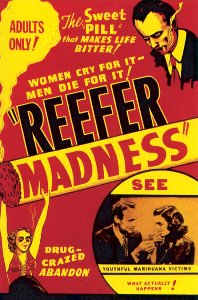
ReeferMadnessPoster

The more research is released, the more legalization makes sense.

By Owen Poindexter

Source: Alternet

Back in the 1930s, the arguments to criminalize cannabis were bizarre and openly racist. The anti-pot crusader Harry Anslinger made all sorts of over-the-top claims, such as, “Marihuana is a short cut to the insane asylum. Smoke marihuana cigarettes for a month and what was once your brain will be nothing but a storehouse of horrid specters.”

Nowadays more than 100 million Americans say they’ve smoke pot, millions use cannabis regularly to treat illnesses and it is as legal as alcohol in two U.S. states. However, it remains illegal under federal law largely due to scare tactics ingrained in our society, which date back even prior to Anslinger.

Today, pot legalization opponents try a little harder to sound reasonable, but their claims don’t do much better than Anslinger’s under scrutiny. Recent studies have picked apart the justifications for criminalizing marijuana. Here are five of the most popular arguments against cannabis legalization that are easily undermined by objective data.

1. Pot leads to crime. If alcohol prohibition taught us anything it’s that prohibition itself leads to crime, not what is prohibited. While cannabis has shaken the psychotic Reefer Madness reputation over the years, the association between weed and crime is still alive and well in certain realms of the media, which are happy to present data without appropriate statistical caveats.

As for the studies that carefully and objectively examine their data, they find no association between cannabis and crime. A recent study in the journal PLOS One found that in states that legalized medical marijuana between 1990 and 2006 the crime rate either remained the same or decreased.

Another study looked at the Lambeth borough of London, which depenalized cannabis for 13 months in 2001-2002. The study found that this actually reduced other types of crime, because Lambeth police could focus their energy elsewhere.

These results fit with common sense. Cannabis has a range of effects on mood and behavior, but they don’t include violence, impulsivity or other traits that would turn otherwise law-abiding citizens into criminals.

2. The gateway theory. The gateway theory has long been the stock response of marijuana opponents to the notion that cannabis itself isn’t that bad for you. They falsely claim it leads to harder stuff, and insist that what starts with a joint ends with a heroin needle.

While it’s true that most users of hard drugs used marijuana and alcohol first, that doesn’t prove that cannabis use leads to harder drugs. Correlation does not equal causality—most heroin users have worn jeans at some point in their lives, but it’s unlikely that one leads to another.

But is it at least plausible that cannabis use creates a bridge to experimenting with more dangerous chemicals? The research says no.

A RAND Institute study using data collected from 1982-1994 found that drug use patterns in American youths can be explained without resorting to a gateway effect. People who are interested in mind-altering substances are likely to have tried pot, as it is the most popular and available illicit drug. This and other circumstantial factors related to drug availability and how old someone was when they first used cannabis were sufficient to explain drug use patterns. Since then, numerous peer-reviewed studies have been published, supporting RAND’s basic conclusions.

Holland provides a good natural experiment in the effects of cannabis use, as marijuana has been legal there for citizens since 1976. A RAND Corporation study from 2011, titled What Can We Learn From The Dutch Coffee Shop Experience? found no causal relationship between using cannabis and harder drugs. In fact, because legalization meant that people went to a coffee shop, not a dealer, to get high, RAND found that legal cannabis likely reduced rates of harder drug use.

3. Cannabis has no medicinal purpose. Even though it has been slain many times over at this point, this idea is worth mentioning because cannabis is still listed as a Schedule I substance by the U.S. government, which implies that the official federal stance is that it has no medical use and is “dangerous.” However, just the opposite is true according to the actual facts. Almost half the states in the U.S. already have some kind of medical marijuana law (20 plus Washington D.C.) and many more are likely to legalize medical marijuana in this year’s elections.

Cannabis has been shown to effectively treat a slew of conditions including seizure disorders ( often quite dramatically), glaucoma, and symptoms related to chemotherapy. There is even evidence it can reduce certain types of cancerous tumors.

This is all well known and well documented, and yet cannabis remains a Schedule I drug. While it’s hard to find anyone who will still defend this policy, it remains the law of the land, and a major stumbling block on the path to reform.

4. Marijuana is addictive. The addiction claim has been contained over time, but never fully eradicated. Cannabis faces some guilt by association. How could alcohol, tobacco, heroin and cocaine all be clearly addictive and yet weed somehow isn’t?

Furthermore, with words like stoner and pothead in the lexicon, our culture has a firm grasp of the weed-dependent stereotype. When we think of marijuana addiction, an image comes to mind. He (usually a he), smokes pot and eats all day, is smelly and unshaven, watches too much TV and/or plays too many video games, and has a crappy job if he has a job at all. And sure, a lot of people actually do know someone like that, but the research show that, that someone is probably choosing their lifestyle rather than trapped in it by an actual addiction.

Regardless of how the addiction myth has stuck around, it is just that: a myth. The most commonly cited study on cannabis dependence declared that 4% of Americans 15-54 are dependent on cannabis. That’s compared to 24% who are dependent on tobacco and 14% on alcohol. Among users, they found that 9% of cannabis users who try it get hooked, as compared to 32% for tobacco and 15% for alcohol.

So cannabis seems to show some propensity for dependence, but for every dependent user, there are 10 who don’t develop that sort of issue, and this rate is better than that of popular legal drugs.

Furthermore, even the 9% figure is likely inflated. A subject in the oft-cited study was deemed “dependent” if they answered yes to at least three of seven questions. The survey included questions that would take a very different meaning with legal drugs than illegal, such as if “a great deal of time was spent in activities necessary to get the substance, taking the substance, or recovering from its effects.”

This study was conducted in the 1990s, before any state had recognized the medical use of cannabis, and acquiring it regularly involved considerable effort. Because of this, it’s not hard to imagine that users would experience “important social, occupational, or recreational activities given up or reduced because of use,” which was another criterion for dependence. It is quite possible the survey mistook habitual use for dependence in some cases.

We can be sure that cannabis is significantly less habit-forming than alcohol, and especially tobacco, and the degree to which people become dependent is probably overstated.

5. Pot makes users lazy. This idea is the most persistent: we rarely question the cultural belief that getting high saps one’s motivation. If there is any truth to that, it has been difficult to find in studies. What seems to be going on instead is that about 5-6% of the population has “amotivational syndrome,” and there is no significant difference in this between cannabis users and everyone else. One study looked at daily pot smokers and compared them to people who never touch pot. This found no significant difference between the two groups. There was a small difference in “subjective well-being” (how happy the subject says he or she is) favoring non-smokers, but the study authors ascribed much of this to medical conditions some of the subjects were taking cannabis to mitigate.

More than anything, the idea that stoners are lazy seems to be confirmation bias. We shrug off the examples that contradict that notion as special cases and nod sagely when our suspicions are confirmed. Furthermore, we fail to group unmotivated non-users with unmotivated users.

***

As the stigma against cannabis research has disappeared and more good data has been made available, the arguments against legalization have fallen. If cannabis is a plant with legitimate medical uses, does not lead to crime or harder drugs, is not addictive and doesn’t make you lazy, what argument for prohibition remains?

If there are still legitimate reasons to keep cannabis criminalized, let’s talk about them, but if not, let’s cut out a major revenue stream of Mexico’s vicious drug cartels, grant easy access to medicine for people who need it, provide a major boost to our economy, and legalize already.


Owen Poindexter is a freelance writer. See his work at owenpoindexter.com and follow him @owenpoindexter.

After Legalization, Why Can’t People’s Prior Pot Convictions Be Wiped Clean?

marijuana_legal_gavel_620x350

In states where marijuana is now legal, many people still have small-scale possession convictions on their records. Advocates for “expungement” face uphill battles, from Washington state to Washington, DC

By Jake Thomas

Source: Substance.com

Marijuana won in November’s midterm elections, with Oregon, Alaska and the District of Columbia joining Colorado and Washington in legalizing it. But it’s a bittersweet victory for people who have a prior cannabis conviction for doing something that is now legal in their state. For now, efforts to clear pot marks from people’s records in states that have legalized the drug are facing uphill battles.

“It’s pretty much ruined my life at this point,” Aaron Pickel (below), who was busted in Oregon for carrying two to three pounds of pot-infused edibles, told the Oregonian. “I’ve tried pretty hard to find work, and when you’re going against people who have nothing on their record and you do, you’re not going to get it.” Pickel’s California medical marijuana card didn’t get him out of the charges. Although he was slapped with only a $200 fine and no jail time, the 33-year-old now has a felony rap—and stays in his mother’s spare bedroom.

People who have been convicted of misdemeanor and lesser charges for possessing the drug often have a hard time securing housing, jobs and education. Proponents of “expungement”—wiping records clean—argue that the voters of these states made it clear that possessing small amounts of marijuana should not be illegal and therefore people who have prior convictions should get a second chance. Opponents argue that people should abide by laws until they are changed.

The expungement debate does not address the plight of people currently serving time for nonviolent cannabis crimes, however. The ballot measures that legalized pot allow people to carry only small amounts—in the case of Oregon’s Measure 91, up to an ounce. Before the passage of these measures, these amounts wouldn’t be cause to lock someone up in prison—in Oregon, it resulted in a violation and a fine. Someone would need to possess up to four ounces to be charged with a felony. Carrying four ounces is still illegal under Measure 91.

“I’ve tried pretty hard to find work, and when you’re going against people who have nothing on their record and you do, you’re not going to get it,” said Aaron Pickel, who was busted in Oregon for carrying several cookies and other pot-infused edibles.

There were 8 million marijuana-related arrests in the US between 2001 and 2010, according to a 2013 American Civil Liberties Union report. Nearly 36,000 people were arrested in 2010 alone in states and jurisdictions that have recently legalized pot. What’s worse, African-Americans, who already face discrimination in housing, employment and education, make up a disproportionate number of arrests. Nationally, they were 3.7 times as likely to be arrested for marijuana possession than whites in 2010, even though they used marijuana at similar rates.

“There are thousands of people in Washington state who have a misdemeanor marijuana conviction, and it hangs over their head when they apply for jobs or housing or education, and giving them a second chance will remove that obstacle,” says Washington state Rep. Joe Fitzgibbon, a Democrat, who introduced a bill in 2013 that would have cleared the records of people with misdemeanor marijuana convictions.

Fitzgibbon’s legislation ended up stuck in committee. He says that lawmakers apparently want to let the dust settle from pot becoming legal two years ago before further tinkering with marijuana laws. But he got pushback from the state prosecutors’ association, which opposes prior-conviction expungement.

A similar bill failed in the state legislature in Colorado, where pot was also legalized in 2012. But a ruling by the Colorado court of appeals in March could provide limited relief for people with pot convictions. The ruling stemmed from a 2010 court case that involved a woman who was charged with child abuse along with possessing methamphetamine and marijuana. Her lawyer, Brian Emeson, says that he was in the process of appealing her methamphetamine charge when the state legalized marijuana, so he appealed her pot charge as well. The court granted the appeal on the pot charge, removing it from her record.

“Thousands of people in Washington state have a misdemeanor marijuana conviction, and it hangs over their head when they apply for jobs or housing or education, and giving them a second chance will remove that obstacle,” said state Rep. Joe Fitzgibbon.

The ruling only affects people who have an active appeal for a pot possession charge, Emeson says. He estimates that number is anywhere from about a dozen to a hundred. He expects the Colorado supreme court to take up the issue next year and possibly reverse the appeals court ruling.

Emeson says that he was able to separate the marijuana charge from the others in his case, characterizing them as “relatively not that bad.” Emeson acknowledges that child abuse is a serious charge, but he says that courts often see much worse. “It’s impossible for people to ignore really, really bad facts in a case.”

Efforts to provide relief to people with prior pot convictions are likely to be complicated by other crimes on their records. “Most people convicted of marijuana are convicted of other things that are still illegal,” says Sam Kamin, a professor of constitutional law at the University of Denver and one of the nation’s leading experts in marijuana regulation. Their crimes, not surprisingly, often involve possession or trafficking of large amounts of pot or other drugs.

Oregon lawmakers will begin grappling with this problem when they meet in the new year to discuss the implementation of the state’s pot legalization measure, says state Sen. Floyd Prozanski, a Democrat who chairs the senate’s judiciary committee. Prozanski says he does not expect any “blanket bills” that will provide automatic expungement.

People convicted of certain felonies and misdemeanors in Oregon can already petition to have their records expunged after a certain period of time has lapsed. Prozanski says that any effort to provide relief to people with pot convictions will rely on the state’s existing expungement process. Lawmakers may update the expungement process in response to marijuana becoming legal.

However, as in Colorado and Washington state, lawmakers will be mainly focused on implementing legal marijuana, Prozanski says. “[Expungement] is sort of secondary issue to the implementation of Measure 91.”

The situation for people with prior convictions is different in Washington, DC, says Mason Tvert, communications director for the Marijuana Policy Project. In October, the city council passed a bill that would allow people convicted of all crimes and misdemeanors that have become legal to have their records sealed.

“It’s astonishing that some congressional members are so concerned about blocking DC from enacting [its legalization measure]. If cartels and gangs had lobbyists on the Hill, preventing marijuana regulation would be their top legislative priority,” said  the Marijuana Policy Project‘s Mason Tvert.

The District of Columbia had the highest overall marijuana possession arrest rate in the country in 2010. African-Americans are eight times more likely to be arrested for pot than their white counterparts, according to the ACLU.

However, both this bill and the measure that legalized marijuana require approval by the incoming Republican Congress, which has not been sympathetic to marijuana legalization or people convicted of pot crimes. Some have already said they will oppose DC’s legalization measure. “I will consider using all resources available to a member of Congress to stop this action,” Rep. Andy Harris, a Maryland Republican, told the Washington Post.

Making good on that threat, congressional Republicans and Democrats struck a deal on Tuesday to fund the federal government through September that includes provisions upending Initiative 71’s legalization of pot, according to the Washington Post. At press time, advocates were debating whether or not the language in the bill offers a loophole allowing the will of DC voters to go forward.

How this mess will ensnare efforts of people to expunge their prior pot convictions remains to be seen. “There’s some uncertainty surrounding the effect the provision will have on the measure. It could end up being a situation in which the courts will decide,” Tvert wrote in an email. “With all of the issues facing the country, it’s astonishing that some congressional members are so concerned about blocking DC from enacting a widely supported local policy. If cartels and gangs had lobbyists on the Hill, preventing marijuana regulation would be their top legislative priority.”

Pro-pot politicians in a few other states are already taking steps to expunge peoples’ old marijuana convictions should the drug be legalized. One Maryland lawmaker has proposed legislation that would erase any prior marijuana-related offense that becomes legal. A candidate in last year’s Democratic primary for Pennsylvania governor called for legalizing pot and expunging records of people convicted of possessing it.

But one of the biggest victories for advocates of expunging peoples’ past drug records came in the 2014 midterm election in a state where pot legalization wasn’t even on the ballot. California voters approved Measure 47, which automatically and retroactively downgraded some nonviolent felonies, many of them drug-related, to misdemeanors. Some 10,000 people are eligible for immediate release, including many who have been jailed for drug misdemeanors—and, once again, a disproportionate number are African-Americans.

Jake Thomas is a reporter in Spokane, Washington. He has written for the Portland MercuryStreet Roots and numerous other publications. His website is here. He tweets at @jakethomas2009. This is his first piece for Substance.com.