
Human Extinction by 2026? A Last Ditch Strategy to Fight for Human Survival

By Robert J. Burrowes

There is almost unanimous agreement among climate scientists and organizations – that is, 97% of over 10,000 climate scientists and the various scientific organizations engaged in climate science research – that human beings have caused a dramatic increase in the amount of carbon dioxide, methane and nitrous oxide released into Earth’s atmosphere since the pre-industrial era and that this is driving the climate catastrophe that continues to unfold. For the documentary evidence on this point see, for example, ‘Quantifying the consensus on anthropogenic global warming in the scientific literature’, ‘Consensus on consensus: a synthesis of consensus estimates on human-caused global warming’ and ‘Scientists Agree: Global Warming is Happening and Humans are the Primary Cause’.

However, there is no consensus regarding the timeframe in which this climate catastrophe will cause human extinction. This lack of consensus is primarily due to the global elite controlling the public perception of this timeframe with frequent talk of ‘the end of the century’ designed to allow ongoing profit maximization through ‘business as usual’ for as long as possible. Why has this happened?

When evidence of the climate catastrophe (including the pivotal role of burning fossil fuels) became incontrovertible, which meant that the fossil fuel industry’s long-standing efforts to prevent action on the climate catastrophe had finally ended, the industry shifted its focus to arguing that the timeframe, which it presented as ‘end of the century’, meant that we could defer action (and thus profit-maximization through business as usual could continue indefinitely). Consequently, like the tobacco, sugar and junk food industries, the fossil fuel industry has employed a range of tactics to deflect attention from their primary responsibility for a problem and to delay action on it.

These well-worn tactics include suggesting that the research is incomplete and more research needs to be done, funding ‘research’ to come up with ‘evidence’ to counter the climate science, employing scholars to present this ‘research’, discrediting honest climate scientists, infiltrating regulatory bodies to water down (or reverse) decisions and recommendations that would adversely impact profits, setting up ‘concerned’ groups to act as ‘fronts’ for the industry, making generous political donations to individuals and political parties as well as employing lobbyists.

As a result of its enormous power too, the global elite has been able to control much of the funding available for climate science research and a great deal of the information about it that is made widely available to the public, particularly through its corporate media. For this reason, the elite wields enormous power to shape the dialogue in relation to both the climate science and the timeframe.

Therefore, and despite the overwhelming consensus noted above, many climate scientists are reluctant to be fully truthful about the state of the world’s climate or they are just conservative in their assessments of the climate catastrophe. For example, eminent climate scientist Professor James Hansen referred to ‘scientific reticence’ in his article ‘Scientific reticence and sea level rise’, scientists might be conservative in their research – for example, dependence upon historical records leads to missing about one-fifth of global warming since the 1860s as explained in ‘Reconciled climate response estimates from climate models and the energy budget of Earth’ – and, in some cases, governments muzzle scientists outright. See ‘Scientist silencing continues for federally-funded research’. But many of the forces working against full exposure of the truth are explained in Professor Guy McPherson’s article ‘Climate-Change Summary and Update’.

However, in contrast to the elite-managed mainstream narrative regarding the climate timeframe, there is a group of courageous and prominent climate scientists who offer compelling climate science evidence that human beings, along with millions of other species, will be extinct by 2026 (and perhaps as early as 2021) in response to a projected 10 degree celsius increase in global temperatures above the pre-industrial level by that date. See ‘Will humans be extinct by 2026?’

Before outlining the essence of this article, it is worth noting that the website on which it is posted is ‘Arctic News’ and the editors of this site post vital articles on the world’s climate by highly prominent climate scientists, such as Professor Peter Wadhams (Emeritus Professor of Polar Ocean Physics at Cambridge University and author of A Farewell to Ice: A Report from the Arctic), Dr Andrew Glikson (an Earth and paleoclimate scientist who is a visiting fellow at the Australian National University), Professor Guy McPherson who has written extensively and lectures all over the world on the subject, and ‘Sam Carana’, the pseudonym used by a group of climate scientists concerned to avoid too many adverse impacts on their research, careers and funding by declaring themselves publicly but nevertheless committed to making the truth available for those who seek it.

So, in a few brief points, let me summarize the evidence and argument outlined in the article ‘Will humans be extinct by 2026?’


The Climate Science of Destruction of the Biosphere

In the Arctic, there is a vast amount of carbon stored in soils that are now still largely frozen; this frozen soil is called permafrost. But as Arctic temperatures continue to rise and the permafrost thaws, in response to the warming that has occurred already (and is ongoing) by burning fossil fuels and farming animals for human consumption, much of this carbon will be converted into carbon dioxide or methane and released into the atmosphere. There is also a vast amount of methane – in the form of methane hydrates and free gas – stored in sediments under the Arctic Ocean seafloor. As temperatures rise, these sediments are being destabilized and will soon result in massive eruptions of methane from the ocean floor. ‘Due to the abrupt character of such releases and the fact that many seas in the Arctic Ocean are shallow, much of the methane will then enter the atmosphere without getting broken down in the water.’

Adversely impacting this circumstance is that the sea ice continues to retreat as the polar ice cap melts in response to the ongoing temperature increases. Because sea ice reflects sunlight back into Space, as the ice retreats more sunlight hits the (dark-colored) ocean (which absorbs the sunlight) and warms the ocean even more. This causes even more ice melt in what becomes an ongoing self-reinforcing feedback loop that ultimately impacts worldwide, such as triggering huge firestorms in forests and peatlands in North America and Russia.

More importantly, however, without sea ice, storms develop more easily and because they mix warm surface waters with the colder water at the bottom of shallow seas, reaching cracks in sediments filled with ice which acts as a glue holding the sediment together, the ice melt destabilizes the sediments, which are vulnerable to even small differences in temperature and pressure that are triggered by earthquakes, undersea landslides or changes in ocean currents.

As a result, huge amounts of methane can erupt from the seafloor of the Arctic Ocean and once this occurs, it will further raise temperatures, especially over the Arctic, thus acting as another self-reinforcing feedback loop that again makes the situation even worse in the Arctic, with higher temperatures causing even further methane releases, contributing to the vicious cycle that precipitates ‘runaway global warming’.

‘These developments can take place at such a speed that adaptation will be futile. More extreme weather events can hit the same area with a succession of droughts, cold snaps, floods, heat waves and wildfires that follow each other up rapidly. Within just one decade [from 2016], the combined impact of extreme weather, falls in soil quality and air quality, habitat loss and shortages of food, water, shelter and just about all the basic things needed to sustain life can threaten most, if not all life on Earth with extinction.’

The article goes on to outline how the 10 degree increase (above the pre-industrial level) by 2026 is likely to occur. It will involve further carbon dioxide and methane releases from human activity (particularly driving cars and other vehicles, flying in aircraft and eating animal products, as well as military violence), ongoing reduction of snow and ice cover around the world (thus reflecting less sunlight back into Space), an increase in the amount of water vapor (a greenhouse gas) in the atmosphere, a falling away of ‘aerosol masking’ (which has helped reduce the impact of emissions so far) as emissions decline, as well as methane eruptions from the ocean floor. If you would like to read more about this and see the graphs and substantial documentation, you can do so in the article cited above: ‘Will humans be extinct by 2026?’


The Ecology of Destruction of the Biosphere

Not that these scientists, who focus on the climate, discuss it but there are other human activities adversely impacting Earth’s biosphere which also threaten near-term extinction for humans, particularly given their synergistic impacts.

For example, recent research has drawn attention to the fact that the ‘alarming loss of insects will likely take down humanity before global warming hits maximum velocity…. The worldwide loss of insects is simply staggering with some reports of 75% up to 90%, happening much faster than the paleoclimate record rate of the past five major extinction events’. Without insects ‘burrowing, forming new soil, aerating soil, pollinating food crops…’ and providing food for many bird species, the biosphere simply collapses. See ‘Insect Decimation Upstages Global Warming’.

Moreover, apart from ongoing destruction of other vital components of Earth’s life support system such as the rainforests – currently being destroyed at the rate of 80,000 acres each day: see ‘Measuring the Daily Destruction of the World’s Rainforests’ – and oceans – see ‘The state of our oceans in 2018 (It’s not looking good!)’ – which is generating an extinction rate of 200 species (plants, birds, animals, fish, amphibians, insects and reptiles) each day with another 26,000 species already identified as ‘under threat’ – see ‘Red list research finds 26,000 global species under extinction threat’ – some prominent scholars have explained how even these figures mask a vital component of the rapidly accelerating catastrophe of species extinctions: the demise of local populations of a species. See ‘Biological annihilation via the ongoing sixth mass extinction signaled by vertebrate population losses and declines’.

In addition, relying on our ignorance and our complicity, elites kill vast areas of Earth’s biosphere through war and other military violence – see, for example, the Toxic Remnants of War Project and the film ‘Scarred Lands & Wounded Lives’ – subject it to uncontrolled releases of radioactive contamination – see Fukushima Radiation Has Contaminated The Entire Pacific Ocean And It’s Going To Get Worse’ – and use geoengineering to wage war on Earth’s climate, environment and ultimately ourselves. See, for example, ‘Engineered Climate Cataclysm: Hurricane Harvey’ and ‘The Ultimate Weapon of Mass Destruction: “Owning the Weather” for Military Use’.

Separately from all of this, we live under the unending threat of nuclear war.

This is because insane political and corporate elites are still authorizing and manufacturing more of these highly profitable weapons rather than dismantling them all (as well as conventional weapons) and redirecting the vast resources devoted to ongoing military killing (US$1.7 trillion annually: see ‘Global military spending remains high at $1.7 trillion’) to environmental restoration and programs of social uplift.

By the way, if you think the risk of nuclear war can be ignored, you might find this recent observation sobering. In a review of (former US nuclear war planner) Daniel Ellsberg’s recent book The Doomsday Machine: Confessions of a Nuclear War Planner, Earth and paleoclimate scientist Dr Andrew Glikson summarized the book as follows: ‘This, then, is the doomsday machine. Not simply the existence of fission weapons or unspeakably destructive hydrogen bombs, but the whole network rigged together: thousands of them on hair-trigger alert, command and control equipment built in the 1970s and ’80s, millions of lines of antique code sitting on reels of magnetic tape or shuffled around on floppy discs even now. An architecture tended by fallible and deeply institutionalized human beings.’ See ‘Two Minutes To Mid-Night: The Global Nuclear Suicide Machine’.

So, irrespective of whether elites or their agents or even we acknowledge it, Earth’s biosphere is under siege on many fronts and, very soon now, Earth will not support life. Any honest news source routinely reports one or another aspect of the way in which humans are destroying the Earth and perhaps suggests courses of action to respond powerfully to it. This, of course, does not include the insane global elite’s corporate media, which functions to distract us from any semblance of the truth.


How did all this happen?

How did human beings end up in a situation that human extinction is likely to occur within eight years (even assuming we can avert nuclear war)? And is there any prospect of doing enough about it now to avert this extinction?

To answer the first question briefly: We arrived at this juncture in our history because of a long sequence of decisions, essentially made by elites to expand their profit, power and privilege, and which they then imposed on us and which we did not resist powerfully enough. For a fuller explanation, see ‘Strategy and Conscience: Subverting Elite Power So We End Human Violence’.

In any case, the key questions now are simply these: Is it too late to avert our own extinction? And, if not, what must we do?

Well, I am not going to dwell on it but some scientists believe it is too late: we have already passed the point of no return. Professor Guy McPherson is one of these scientists, with a comprehensive explanation and a great deal of evidence to support it in his long and heavily documented article ‘Climate-Change Summary and Update’.

So, the fundamental question is this: If we assume (highly problematically I acknowledge) that it is possible to avert our own extinction by 2026, what must we do?

Because we need to address, in a strategic manner, the interrelated underlying causes that are driving the rush to extinction, let me first identify one important symptom of these underlying causes and then the underlying structural and behavioral causes themselves. Finally, let me invite your participation in (one or more aspects of) a comprehensive strategy designed to address all of this.

As in the past, at least initially, the vast bulk of the human population is not going to respond to this crisis in any way. We need to be aware of this but not let it get in our way. There is a straightforward explanation for it.

Fear or, far more accurately, unconscious terror will ensure that the bulk of the human population will not investigate or seriously consider the scientific evidence in relation to the ongoing climate catastrophe, despite its implications for them personally and humanity generally (not to mention other species and the biosphere). Moreover, given that climate science is not an easy subject with which to grapple, elite control of most media in relation to it (including, most of the time, by simply excluding mention of key learning from the climate scientists) ensures that public awareness, while reasonably high, is not matched by knowledge, which is negligible.

As a result, most people will fearfully, unintelligently and powerlessly accept the delusions, distractions and denial that are promulgated by the insane global elite through its various propaganda channels including the corporate media, public relations and entertainment industries, as well as educational institutions. This propaganda always includes the implicit message that people can’t (and shouldn’t) do anything in response to the climate catastrophe (invariably and inaccurately, benignly described as ‘climate change’).

A primary way in which the corporate media reports the issue but frames it for a powerless response is to simply distribute ‘news’ about each climate-related event without connecting it either with other climate-related events or even mentioning it as yet another symptom of the climate catastrophe. Even if they do mention these connections, they reliably mention distant dates for phenomena like ‘heatwaves’ repeating themselves and an overall ‘end of century’ timeframe to preclude the likelihood that any sense of urgency will arise.

The net outcome of all this, as I stated above, is that the bulk of the human population will not respond to the crisis in the short term (as it hasn’t so far) with most of what limited response there is confined to powerlessly lobbying elite-controlled governments.

However, as long as you consider responding – and by responding, I mean responding strategically – and then do respond, you become a powerful agent of change, including by recruiting others through your example.

But before I present the strategy, let me identify the major structural and behavioral causes that are driving the climate catastrophe and destruction of the biosphere, and explain why some key elements of this strategy are focused on tackling these underlying causes.


The Political Economy of Destruction of the Biosphere

The global elite ensures that it has political control of the biosphere as well as Space by using various systems, structures and processes that it largely created (over the past few centuries) and now controls, including the major institutions of governance in the world such as national governments and key international organizations like the United Nations. For further information, see ‘Strategy and Conscience: Subverting Elite Power So We End Human Violence’.

It does this, for example, so that it can economically utilize, via the exploitative mechanisms of capitalism and its corporations (which the elite also created), domains of the biosphere rich in resources, particularly fossil fuels, strategic minerals and fresh water. The elite will use any means – including psychological manipulation, propaganda issued by its corporate media, national educational institutions, legal systems and extraordinary military violence – to achieve this outcome whatever the cost to life on Earth. See ‘Profit Maximization Is Easy: Invest In Violence’.

In short, the global elite is so insane that its members believe that killing and exploiting fellow human beings and destroying the biosphere are simply good ways to make a profit. Of course, they do not perceive us as fellow human beings; they perceive and treat us as a great deal less. This is why, for example, the elite routinely uses its military forces to attack impoverished and militarily primitive countries so that they can steal their resources. See ‘The Global Elite is Insane Revisited’.

But they are happy to steal from those of us living in western economies too, with Professor Barbara G. Ellis issuing the latest warning about yet another way this could easily happen. See Depositors – Not Taxpayers – Will Take the Hit for the Next “2008” Crash Because Major Banks May Use the “Bail-In” System’.

Anyway, because of elite control of governments, it is a waste of time lobbying politicians if we want action on virtually all issues that concern us, particularly the ‘big issues’ that threaten extinction, such as the climate catastrophe, environmental destruction and war (especially the threat of nuclear war). While in very limited (and usually social) contexts (such as issues in relation to the right of women to abortions or rights for the LGBTQIA communities), when it doesn’t significantly adversely impact elite priorities, gains are sometimes made (at least temporarily) by mobilizing sufficient people to pressure politicians. This has two beneficial outcomes for elites: it keeps many people busy on ‘secondary issues’ (from the elite perspective) that do not impact elite profit, power and privilege; and it reinforces the delusion that democracy ‘works’.

However, in the contexts that directly impact elite concerns (such as their unbridled exploitation of the biosphere for profit), politicians serve their elite masters, even to the extent that any laws that might appear to have been designed to impede elite excesses (such as pollution generated by their activities) are readily ignored if necessary, with legal penalties too insignificant to deter phenomenally wealthy corporations. See ‘The Rule of Law: Unjust and Violent’.

Of course, if any government does not obey elite directives, it is overthrown. Just ask any independently-minded government over the past century. For a list of governments overthrown by the global elite using its military and ‘intelligence’ agencies since World War II, see William Blum’s book Killing Hope: U.S. Military and CIA Interventions Since World War II or, for just the list, see ‘Overthrowing other people’s governments: The Master List’.

How does the elite maintain this control over political, economic, military, legal and social structures and processes?


The Sociology of Destruction of the Biosphere

As explained in the literature on the sociology of knowledge, reality is socially constructed. See the classic work The Social Construction of Reality: A Treatise in the Sociology of Knowledge. That is, if an individual is born or introduced into a society in which particular institutions are in control and behaviors such as chronic over-consumption, unlimited profit-making, rampant exploitation of the environment and grotesque violence against (at least some) people are practiced, then the typical individual will accept the existence of these institutions and adopt the behaviors of the people around them even though the institutions and behaviors are dysfunctional and violent.

But while the sociology of knowledge literature recognizes that children ‘must be “taught to behave” and, once taught, must be “kept in line”’ to maintain the institutional order, this literature clearly has no understanding of the nature and extent of the violence to which each child is actually subjected in order to achieve the desired ‘socialization’. This terrorization, as I label it, is so comprehensive that the typical child quickly becomes incapable of using their own intellectual and emotional capacities, including conscience and courage, to actually evaluate any institution or behavior before accepting/adopting it themselves. Obviously then, they quickly become too terrified to overtly challenge dysfunctional institutions and behaviors as well.

Moreover, as a result of this ongoing terrorization, inflicted by the significant adults (and particularly the parents) in the child’s life, the child soon becomes too (unconsciously) afraid to resist the behavioral violence that is inflicted on them personally in many forms, as outlined briefly in the next section, so that they are ‘taught to behave’ and are ‘kept in line’.

In response to elite-driven imperatives then, such as ‘you are what you own’ to encourage very profitable over-consumption, most people are delusionarily ‘happy’ while utterly trapped behaving exactly as elites manipulate them – they are devoid of the psychological capacity to critique and resist – and the elite-preferred behavior quickly acquires the status of being ‘the only and the right way to behave’, irrespective of its dysfunctionality.

In essence: virtually all humans fearfully adopt dysfunctional social behaviors such as over-consumption and profit-making at the expense of the biosphere, rather than intelligently, conscientiously and courageously analyzing the total situation (including the moral and ecological dimensions of it) and behaving appropriately in the context.

Given the pervasiveness and power of elite institutions, ranging from those mentioned above to the corporate media and psychiatry – see ‘Defeating the Violence of Psychiatry’ – resistance to violent socialization (of both children and adults) requires considerable awareness, not to mention courage.

And so our fear makes virtually all of us succumb to the socialization pressure (that is, violence) to accept existing institutions and participate in widespread social behaviors (such as over-consumption) that are dysfunctional and violent.


The Psychology of Destruction of the Biosphere

This happens because each child, from birth, is terrorized (again: what we like to call ‘socialized’) until they become a slave willing to work and, in industrialized countries at least, to over-consume as directed.

Under an unrelenting regime of ‘visible’, ‘invisible’ and ‘utterly invisible’ violence, each child unconsciously surrenders their search in pursuit of their own unique and powerful destiny and succumbs to the obedience that every adult demands. Why do adults demand this? Because the idea of a powerful child who courageously follows their own Self-will terrifies adults. So how does this happen?

Unfortunately, far too easily and, strange though it may seem, it is not just the ‘visible’ violence (such as hitting, screaming at and sexually abusing) that we normally label ‘violence’ that causes the main damage, although this is extremely damaging. The largest component of damage arises from the ‘invisible’ and ‘utterly invisible’ violence that we adults unconsciously inflict on children during the ordinary course of the day. Tragically, the bulk of this violence occurs in the family home and at school. See ‘Why Violence?’ and Fearless Psychology and Fearful Psychology: Principles and Practice.

So what is ‘invisible’ violence? It is the ‘little things’ we do every day, partly because we are just ‘too busy’. For example, when we do not allow time to listen to, and value, a child’s thoughts and feelings, the child learns to not listen to themSelf thus destroying their internal communication system. When we do not let a child say what they want (or ignore them when they do), the child develops communication and behavioral dysfunctionalities as they keep trying to meet their own needs (which, as a basic survival strategy, they are genetically programmed to do).

When we blame, condemn, insult, mock, embarrass, shame, humiliate, taunt, goad, guilt-trip, deceive, lie to, bribe, blackmail, moralize with and/or judge a child, we both undermine their sense of Self-worth and teach them to blame, condemn, insult, mock, embarrass, shame, humiliate, taunt, goad, guilt-trip, deceive, lie, bribe, blackmail, moralize and/or judge.

The fundamental outcome of being bombarded throughout their childhood by this ‘invisible’ violence is that the child is utterly overwhelmed by feelings of fear, pain, anger and sadness (among many others). However, mothers, fathers, teachers, religious figures and other adults also actively interfere with the expression of these feelings and the behavioral responses that are naturally generated by them and it is this ‘utterly invisible’ violence that explains why the dysfunctional behavioral outcomes actually occur.

For example, by ignoring a child when they express their feelings, by comforting, reassuring or distracting a child when they express their feelings, by laughing at or ridiculing their feelings, by terrorizing a child into not expressing their feelings (for instance, by screaming at them when they cry or get angry), and/or by violently controlling a behavior that is generated by their feelings (for example, by hitting them, restraining them or locking them into a room), the child has no choice but to unconsciously suppress their awareness of these feelings.

However, once a child has been terrorized into suppressing their awareness of their feelings (rather than being allowed to have their feelings and to act on them) the child has also unconsciously suppressed their awareness of the reality that caused these feelings. This has many outcomes that are disastrous for the individual, for society and for the biosphere because the individual will now easily suppress their awareness of the feelings that would tell them how to act most functionally in any given circumstance and they will progressively acquire a phenomenal variety of dysfunctional behaviors, including some that are violent towards themself, others and/or the Earth.

Moreover, terrorizing the child has many flow-on effects. For example, once you terrorise a child into accepting certain information about themself, other people or the state of the world, the child becomes unconsciously fearful of dealing with new information, especially if this information is contradictory to what they have been terrorized into believing. As a result, the child will unconsciously dismiss new information out of hand.

In short, the child has been terrorized in such a way that they are no longer capable of learning (or their learning capacity is seriously diminished by excluding any information that is not a simple extension of what they already ‘know’). This is one important explanation why some people are ‘climate deniers’ and most others do nothing in response to the climate catastrophe. See ‘The Psychology of Denial’.

Consequently, under this onslaught of terror and violence, the child surrenders their own unique Self and takes on their socially constructed delusional identity which gives them relief from being terrorized while securing the approval they crave to survive.

So if we want to end violence against the biosphere, we must tackle this fundamental cause. Primarily, this means giving everyone, child and adult alike, all of the space they need to feel, deeply, what they want to do, and to then let them do it (or to have the emotional responses they naturally have if they are prevented from doing so).

For some insight into the critical role that school plays in reducing virtually all children to wage slaves for employment in some menial or ‘professional’ role or as ‘cannon fodder’ for the military, while stripping them of the capacity to ask penetrating questions about the very nature of society and their own role in it, see ‘Do We Want School or Education?’

In summary, given that human society is so dysfunctional, beginning with the fact that human beings do not know how to parent or educate their children to nurture their unique and extraordinary potential, humans face a monumental challenge, in an incredibly short timeframe, to have any chance of survival.

And we are going to have to fix a lot more things than just our destruction of the biosphere if we are to succeed, given that ecologically destructive behavior and institutions have their origin in dysfunctional psychology, societies and political economy.

To reiterate however, it is our (often unconscious) fear that underpins every problem. Whether it is the fear getting in the way of our capacity to intelligently analyze the various structures and behaviors that generate the interrelated crises in which we now find ourselves or the fear undermining our courage to act powerfully in response to these crises, acknowledging and dealing with our fear is the core of any strategy for survival.


So what’s the plan?

Let’s start with you. If you consider the evidence in relation to destruction of our biosphere, essentially one of two things will happen. Either you will be powerful enough, both emotionally and intellectually, to grapple with this evidence and you will take strategic action that has ongoing positive impact on the crisis or your (unconscious) fear will simply use one of its lifelong mechanisms to remove awareness of what you have just read from your mind or otherwise delude you, such as by making you believe you are powerless to act differently or that you are ‘doing enough already’. This immobilizing fear, whether or not you experience it consciously, is a primary outcome of the terrorization to which you were subjected as a child.

So, if you sense that improving your own functionality – so that you can fully access your emotional responses, conscience and courage – is a priority, try ‘Putting Feelings First’.

If you already feel able to act powerfully in response to this multi-faceted crisis, in a way that will have strategic impact, you are invited to consider joining those participating in The Flame Tree Project to Save Life on Earth, which outlines a simple plan for people to systematically reduce their consumption, by at least 80%, involving both energy and resources of every kind – water, household energy, transport fuels, metals, meat, paper and plastic – while dramatically expanding their individual and community self-reliance in 16 areas, so that all environmental concerns are effectively addressed. You might also consider signing the online pledge of ‘The People’s Charter to Create a Nonviolent World’.

If you are interested in nurturing children to live by their conscience and to gain the courage necessary to resist elite violence fearlessly, while living sustainably despite the entreaties of capitalism to over-consume, then you are welcome to make ‘My Promise to Children’. To reiterate: capitalism and other dysfunctional political, economic, military, legal and social structures only thrive because our dysfunctional parenting robs children of their conscience and courage, among many other qualities, while actively teaching them to over-consume as compensation for having vital emotional needs denied. See ‘Love Denied: The Psychology of Materialism, Violence and War’.

If you are interested in conducting or participating in a campaign to halt our destruction of the biosphere (or any other manifestation of violence for that matter) you are welcome to consider acting strategically in the way that the extraordinary activist Mohandas K. Gandhi did. Whether you are engaged in a peace, climate, environment or social justice campaign, the 12-point strategic framework and principles are the same. See Nonviolent Campaign Strategy.

The two strategic aims and a core list of strategic goals to end war and to end the climate catastrophe, for example, are identified in Campaign Strategic Aims’ and, using these examples, it is a straightforward task to identify an appropriate set of strategic goals for your local environment campaign. As an aside, the strategic framework to defend against a foreign invading power or a political/military coup, to liberate your country from a dictatorship or a foreign occupation, or to defeat a genocidal assault is explained in Nonviolent Defense/Liberation Strategy.

If you would like a straightforward explanation of ‘Nonviolent Action: Why and How it Works’ and an introduction to what it means to think strategically, try reading about the difference between ‘The Political Objective and Strategic Goal of Nonviolent Actions’.

If you anticipate violent repression by a ruthless opponent, consider planning and implementing any nonviolent action according to the explanation in ‘Nonviolent Action: Minimizing the Risk of Violent Repression’.

Finally, if you are going to do nothing in response to this crisis, make it a conscious decision to do nothing. This is far preferable to unconsciously and powerlessly doing nothing by never even considering the evidence or by simply deluding yourself. It also allows you to consciously revise your decision at some point in future if you so wish.


Conclusion

The evidence in relation to destruction of the Earth’s biosphere, leading to ongoing and rapid degradation of all ecosystems and their services, is readily available and overwhelming. The many and varied forms of destruction are having synergistic impact. An insignificant amount of the vast evidence in relation to this destruction is sampled above.

There is a notable group of prominent climate scientists who present compelling evidence that human extinction will occur by 2026 as a result of a projected 10 degree celsius increase in global temperatures above the pre-industrial level by this date. The primary document for this is noted above and this document, together with the evidence it cites, is readily available to be read and analyzed by anyone.

Largely separately from the climate catastrophe (although now increasingly complicated by it), Earth’s sixth mass extinction is already advancing rapidly as we destroy habitat and, on our current trajectory, all species will soon enter the fossil record.

Why? Because we live in a world in which the political, economic, military, legal and social structures and processes of human society are utterly incapable of producing either functional human beings or governance mechanisms that take into account, and respect, the ecological realities of Earth’s biosphere.

So, to reiterate: We are on the fast-track to extinction. On the current trajectory, assuming we can avert nuclear war, some time between 2021 and 2026 the last human will take their final breath.

Our only prospect of survival, and it still has only a remote chance of succeeding, is that a great number of us respond powerfully now and keep mobilizing more people to do so.

If you do absolutely nothing else, consider rearranging your life to exclude all meat from your diet, stop traveling by car and aircraft, substantially reduce your water consumption by scaling down your ownership of electronic devices (which require massive amounts of water to manufacture), and only eat biodynamically or organically grown whole food.

And tell people why you are doing so.

This might give those of us who fight strategically, which can include you if you so choose, a little more time to overturn the structural and remaining behavioral drivers of extinction which will require a profound change in the very nature of human society, including all of its major political, economic, military, legal and social institutions and processes (most of which will need to be abolished).

If this sounds ‘radical’, remember that they are about to vanish anyway. Our strategy must be to replace them with functional equivalents, all of which are readily available (with some briefly outlined in the various documents mentioned in the plan above).

‘It won’t happen’, you might say? And, to be candid, I sincerely believe that you are highly probably right. I have spent a lifetime observing, analyzing, writing about and acting to heal dysfunctional and violent human behavior and, for that reason, I am not going to delude myself that anything less than what I have outlined above will achieve the outcome that I seek: to avert human extinction. But I am realistic.

The insane individuals who control the institutions that are driving extinction will never act to avert it. If they were sane enough to do so, they would have been directing and coordinating these institutions in taking action for the past 40 years. This is why we must resist them strategically. Moreover, I am only too well aware that the bulk of the human population has been terrorized into powerlessness and won’t even act. But our best chance lies in offering them our personal example, and giving them simple and various options for responding effectively.

It is going to be a tough fight for human survival, particularly this late in the ‘game’. Nevertheless, I intend to fight until my last breath. I hope that you will too.


Biodata: Robert J. Burrowes has a lifetime commitment to understanding and ending human violence. He has done extensive research since 1966 in an effort to understand why human beings are violent and has been a nonviolent activist since 1981. He is the author of ‘Why Violence?’ http://tinyurl.com/whyviolence His email address is flametree@riseup.net and his website is here. http://robertjburrowes.wordpress.com

Robert J. Burrowes
P.O. Box 68
Daylesford, Victoria 3460
Australia

Email: flametree@riseup.net

Websites:
Nonviolence Charter
Flame Tree Project to Save Life on Earth
‘Why Violence?’
Feelings First
Nonviolent Campaign Strategy
Nonviolent Defense/Liberation Strategy
Anita: Songs of Nonviolence
Robert Burrowes
Global Nonviolence Network

Soylent Burgers and Cockroach Milk

wICCXTa

Source: The Hipcrime Vocab

“The profitability of production cannot expand indefinitely. Any increase in the quantity of soil, water, minerals, or plants put into a particular production process per unit of time constitutes intensification. It has been the burden of this book to show that intensification inevitably leads to declining efficiencies. That declining efficiencies have adverse effects upon the average standard of living cannot be doubted.’
-MARVIN HARRIS, ‘Cannibals and Kings’

This comment made me chuckle: “The futurology future is starting to look worse than the collapse future.” This was on Reddit in response to an article about cockroaches providing the “milk of the future”:

Scientists think cockroach milk could be the superfood of the future (Science Alert)

This really does seem like The Onion at this point. Someone suggested that Reddit’s collapse and futurology boards should merge at some point. Believe it or not, they aren’t all that far apart.

We’ve already been treated to an endless litany of articles about how insect ranching will provide the protein of the future. Then there’s the meat grown in a petri-dish, and the nutrition shake cheekily named Soylent scarfed down by the Silicon Valley crowd so they can cram in a few more hours of work after popping their Ritalin. Now people are questioning whether the government should step in and force us to eat less meat.

And yet we are still simultaneously told that overpopulation and resource depletion are not a problem, and that more growth is good.

This is progress???

One of the things I’ve written about over the years is this idea that technological innovations are inherently good. But it’s clear what’s really going on: desperately trying to maintain the status quo in the face of increasing population pressure and declining resources. There’s a technical term for this: intensification.

Marvin Harris, whose works serve as a guidepost for this blog, warned us that intensification always leads to lower living standards for the majority of people in the long run, while only benefiting a tiny handful. This is a law of history. Over the years, I’ve tried to point out the difference between true innovation which solves problems or allows us to do things we could not do before, and intensification, which is essentially squeezing blood from a stone. In the former category are things like antibiotics and radio, which solve problems (killer infections) or allow us to do new things (communicate globally). In the latter category are things like electric cars (attempting to keep the unsustainable automobile infrastructure alive) and aquaculture (to make up for stripping the oceans bare of wild fish).

For the majority of people, there is no difference, since both are “growth” and growth is always good, full stop. GDP, the yardstick by which we measure progress in the modern world (which even its creator warned us against) is agnostic as to the source of growth, whether it is producing more food to feed hungry people or asthma inhalers to deal with the lung irritants from air pollution.

People tend to forget we’ve been here before.

Back during the Ice Age (late Pleistocene), we H. sapiens lived primarily off of herds of large fauna, especially reindeer, mammoth and bison. This was supplemented with wild salmon in season. The fattiest parts of the animal were the most prized and sought after. Bones were cracked and boiled to extract the grease. Most calories came from nutrient-dense meat and fat, while plants were consumed for their beneficial vitamins and minerals (plants are less calorie dense).

Then the large fauna started to die off. They died off due to a double-blow of a changing climate and increasing human predation. Scientists debate about which was the primary cause, but it’s pretty clear that whenever humans showed up in a pristine environment, the large animals went extinct shortly thereafter. Many of these animals had survived previous climatic changes, so it’s doubtful that climate change alone was responsible. Skeletons riddled with spear points provide more damning evidence for our species.

In response, we launched a broad spectrum revolution – using our omnivorous diet to exploit a wider variety of foodstuffs, particularly plant foods. This began with acorns and pistachios, but soon moved to grass seeds, sedges and pulses. Meanwhile, the prey animals got smaller and smaller, from reindeer and bison, to gazelles and fallow deer, to hares and waterfowl. Instead of the nutritious and diverse food sources of their ancestors, we became more and more dependent upon eating pulverized grass seeds, obtained at the cost of backbreaking labor for harvesting, threshing and grinding.

The human population became mostly vegetarian by necessity, and remained so for roughly the next 8,000 or so years. The problem is, a vegetarian diet doesn’t provide a lot of necessary vitamins, minerals and nutrients for optimal health. Today’s vegetarians can choose from a plethora of foods year round that simply weren’t available to ancient people. They don’t have to worry about what is in season and have the entire world as their larder. In the past, however, the vast majority of people ended up subsisting on a diet of weak beer and gruel. Regular meat consumption became a privilege restricted to the wealthy upper classes, while everyone else went begging. Hunting, an activity once done by all humans everywhere since time immemorial, became the exclusive provenance of kings and princes – society’s rulers. While it is true that too much meat can be detrimental to health, too little is perhaps even more damaging. Humans are meat-eaters, and a certain level of fat and protein is required for optimal health. The protein in grains and legumes is incomplete (the body needs 22 different types of amino acids to function properly; adults can synthesize 13 of those internally, but the other 9 must be obtained from food), and there are no fats (the human brain is over 60 percent fat). Grains produce an over-abundance of omega-6 fatty acids, poisonous lectins to prevent their consumption, have low nutrient density, and high acidity. They are actually a terrible thing to base a primate diet around. But we had no other choice, thanks to intensification.

And this is dramatically reflected by the skeletons of ancient peoples, who show major signs of malnutrition, disease, and stunted growth. At the same time, arthritis and other signs of wear and tear make their appearance on the bones of people who now have to spend hours a day grinding grain in a saddle quern rather than fishing and chasing after wild animals. This gruel also breaks down into simple sugars in the mouth during digestion, meaning that cavities and premature tooth decay became endemic as well.

As population pressure grew, grains, pulses and sedges, once “unpalatable” dietary supplements cultivated by hunter-gatherers for times of extreme scarcity or fermentation into medicinal beverages, became the chief dietary staple for most people. At the same time, humans found themselves preyed upon by a new class of predator: their own kind, which continues unabated to this day.

In order to keep large herbivores from going totally extinct, we embarked upon what Harris called “the greatest conservation project in history”: animal domestication. Meanwhile, cheap carbohydrates from grain are what kept most of the human population alive from day-to-day for thousands of years, such that “bread” is synonymous in all ancient cultures with “food.”

All this came from attempting to exploit resources more intensively from our environment in the face of increasing population pressure.

This sad tale, memorably spun by Jared Diamond some years ago, reflects Harris’ principle: intensification inevitably leads to benefits for the few; misery and oppression for the many.

During periods of deintensifcation, we actually recovered some of the losses. This was due to either 1.) a reduced population or 2.) new lands and resources opened up for exploitation. For example, signs of health improve after the Black Death in Europe for the survivors, due to the reduced population pressure. There were more resources to go around per head. Also, the opening up of the new lands due to colonization (and the dieoff of the native peoples), brought vast new areas of virgin land under cultivation. This led to more wealth, as well as political freedoms. Serfdom waned after the black death, and the American Revolution put Enlightenment principles of representative democracy and justice into practice. Perhaps the most dramatic result came from the harnessing of millions of years of stored sunlight in fossil fuels, combined with the scientific method. This allowed many more people a higher standard of living, even in the face of increasing population and intensifying resource use. It was during this period that “economics” became the guiding principle of our civilization, and it chalked up all benefits to “institutions”–typically capitalist market institutions–rather than a temporary superabundance of energy and resources.

Thomas Jefferson once noted that the Americans in the room were all a head taller than their European counterparts. That’s what happens when you have plenty for everybody. The first Europeans in North America also noted how much taller the Native Americans were. As this article notes, in the past, Americans ate more meat than today, and were healthier as well:

How Americans Used to Eat (The Atlantic)

Eventually, the Malthusian cycle kicked in again. Population grew, the empty spaces filled up, and the frontier was closed. Increasing competition caused wages and purchasing power to drop. People gradually lost what self-sufficiency they had, allowing the elites to consolidate power. People once again began working longer, harder, for less. Sound familiar?

We intensified again – in order to keep up with the demand for meat, we crowded animals together into feedlots in unsanitary conditions and fed them cheap corn (maize), which they are not adapted to eat. To cope with the inevitable sickness which resulted, we pumped the animals full of antibiotics (which has a side effect of increasing growth). It is these miserable and tortured animals which most of us are forced to eat now, thanks to intensification.

However, domesticated meat is less nutritious than the wild variety. The Omega-3/Omega-6 profile is altered, and there are less antioxidants. Omega-6 fatty acids reduce inflammation, which is increasingly being pinpointed as the root cause of just about every disease you care to name, from autoimmune diseases, to Alzheimer’s, to arthritis, to chronic pain, depression, and cancer. At the same time, it’s been shown that grains actually increase inflammation, and are implicated in a host of metabolic diseases:

This Is Your Brain on Gluten (The Atlantic)

While grass-fed, hormone-free beef is still available, it costs more, meaning it is restricted to those with high incomes, just like in the past. And hunting is still primarily an elite sport for the rich in many places (especially outside North America). Just like in the past, the poor people trapped in “food deserts” feed themselves with cheap carbohydrates, now in the form of processed corn and sugar products made by the industrial food system, while the wealthy can purchase boutique ‘lifestyle” products at Whole Paycheck Foods.Malnutrition now takes the form of obesity as well as starvation, although much of the non-industrialized world still deals with empty bellies, stunted growth and vitamin deficiencies, including many of those who produce export crops for the West. That’s on top of poverty and pollution.

When we scraped the oceans clean of fish and poisoned our air and waterways due to industrial pollutants (e.g. mercury ash is a side effect of coal power generation) we turned to fish farming, (aquaculture) – one of the favorite high-tech “innovations” of the futurist crowd. But farmed fish are nutritionally inferior to wild ones. Wild fish travel widely and get their food from a great variety of sources. This means that they have a much better Omega-3 fatty acid profile (which prevents inflammation and helps brain growth). But farmed fish have to be fed. This means their diet is far more restricted, and hence their meat less nutritious (more Omega-6’s). In fact, salmon needs to be fed a pill in order to turn them pink so that consumers will buy them since their meat does not develop its natural color from their diet. As Spencer Wells notes in Pandora’s Seed, were now doing for fish what we did for ungulates some 8000 years ago: a desperate attempt to preserve what remains. Farmed fish is replacing wild fish in supermarkets. As with grass-fed meat, the wild variety is now sold at a premium affordable only to those with high incomes (sound familiar)?

In each and every case, intensification had led to far more work for ultimately inferior products. This is always the result of intensification in the long run.

We are constantly told we can’t go back to hunting and gathering (even if we wanted to). Why is that? What’s left unsaid is the reason: too many people and too much environmental degradation as the result of 6-8,000 years of intensification, which also brought about disease, governments, wars, taxes, poverty, inequality, and so on. Now we’re told we’ve got to eat less meat (which means more grains), live in small, tightly sealed houses, use less water, take shorter showers, and so forth. In essence, that we will “innovate” our way to success. But all of these are signs of lower living standards. And no wonder: seven billion-plus people, all quarters of the earth occupied and brought under the plow, rain forests being chopped down, the most easily accessible fossil fuels plateauing, toxic pollution of the air, land and water, overpumping of ground water, and the stable climate of the Holocene threatened by carbon levels. Intensification caused all of these things; it is not the solution. The next phase of intensification isn’t going to lead to better living standards any more than the last few rounds. Yet we’ve been tricked into thinking it will, because we don’t realize that fossil fuels are what are ultimately responsible for our current living standards (us Westerners, that is), not intensification. And even then, given the levels of stress, overwork, social dysfunction, health maladies and mental disease in industrialized societies, we might be tempted to wonder if even our living standards are all that great to begin with.

Furthermore, we are told that a healthy diet centered around pastured meat, plants and nuts is just not possible because it’s too damaging to the environment, or too “expensive.” That is, “we” need to “feed the world!” But according to the elites (the ones who benefit from intensification, remember) the answer isn’t less people, or curtailing economic growth. No, instead it’s new “innovations” that are profitable to the parasitical corporate owners of this planet: lab-grown meat, hydroponics, vertical gardens, meal-replacement shakes, protein powder from ground-up crickets, steel-and-glass human anthills. “The futurology future is starting to look worse than the collapse future.” Maybe that’s because the collapse future has more room to grow actual real food, live in a house you built yourself with your friends and family, spend time in nature, work less, play more, and get in touch with what we really are, deep down, instead of what industrial society wants to mold us to be.

Now, for the record, I have no problem with eating bugs. The Permaculturist in me says we should exploit all sources for sustenance in our environment such that they work together in a sustainable, harmonious way in line with the earth’s natural ecosystems. Raising insects, as we now do with bees, makes sense. And, yes, the overconsumption of Americans is grotesque and makes us unhappy, and we’d be better off ditching it (which I already do voluntarily). So to be clear: what I am criticizing is not eating insects or deriving milk from cockroaches per se. Nor am I defending the overconsumption produced by status-driven consumer capitalism. Rather, I am critiquing the idea that these futurology trends are signs of progress rather than collapse. Which is why r/collpase and r/futurology increasingly appear to be turning into the same thing.

P.S This comment nails it.


Life on Earth is Dying

deadearth

By Robert J. Burrowes

On the day that you read this article, 200 species of life on Earth (plants, birds, animals, fish, amphibians, insects, reptiles) will cease to exist. Tomorrow, another 200 species will vanish forever.

The human onslaught to destroy life on Earth is unprecedented in Earth’s history. Planet Earth is now experiencing its sixth mass extinction event and Homo sapiens sapiens is the cause. Moreover, this mass extinction event is accelerating and is so comprehensive in its impact
that the piecemeal measures being taken by the United Nations, international agencies and governments constitute a tokenism that is breathtaking in the extreme.

And it is no longer the case that mainly ‘invisible’ species are
vanishing: those insects, amphibians and small animals about which you had never even heard, assuming they have been identified and given a name by humans.

You and I are on the brink of driving to extinction some of the most iconic species alive today. For a photo gallery of threatened species, some of which are ‘critically endangered’, see ‘World’s wildlife being pushed to the edge by humans – in pictures‘.

If you want to read more about some aspects of the extinction threat, you can do so in these recent reports: ‘World Wildlife Crime Report: Trafficking in protected species‘ and ‘2016 Living Planet Report‘ which includes these words: ‘The main statistic from the report … shows a 58% decline between 1970 and 2012. This means that, on average, animal populations are roughly half the size they were 42 years ago.’

And if you want to read just one aspect of what is happening in the world’s oceans, this recent UN report will give you something to ponder:
New UN report finds marine debris harming more than 800 species, costing countries millions‘.

Of course, some of what is happening is related to the ongoing climate catastrophe and there isn’t any good news on that front. See ‘What’s Happening in the Arctic is Astonishing‘.

But not everything that is going badly wrong is well known either. Did you know that we are destroying the Earth’s soil? See ‘Only 60 Years of Farming Left If Soil Degradation Continues‘.

And did you realise that even nitrogen is now a huge problem too? See ‘Scientists shine a spotlight on the overlooked menace of nitrogen‘.

Of course, military violence has devastating consequences on the Earth’s ecosystems too, destroying land, water and atmosphere (not to mention killing human beings) in the fight over resources. You will get no joy from the article ‘Iraq’s oil inferno – government inaction in the face of eco-terrorism
or the website of the Toxic Remnants of War Project. But every single aspect of military spending is ultimately used to destroy. It has no other function.

While 2.5 billion human beings do not have enough to eat. See ‘One in three people suffers malnutrition at global cost of $3.5 trillion a year‘.

As you read all this, you might say ‘Not me’! But you are wrong. You don’t have to be an impoverished African driven to killing elephants for their tusks so that you can survive yourself. You don’t have to be a farmer who is destroying the soil with synthetic poisons. You don’t have to be a soldier who kills and destroys or a person who works for a corporation that, one way to another, forces peasants off their land.

You just have to be an ‘ordinary’ person who pays your military taxes and consumes more than your share of world resources while participating without challenge in the global system of violence and exploitation managed by the global elite.

‘Why is this?’ you might ask.

This is because the primary driver of the human-induced mass extinction is not such things as some people hunting a particular lifeform to extinction, horrendous though this is. In fact, just two things drive most species over the edge: our systematic destruction of land habitat – forests, grasslands, wetlands, peatlands, mangroves… – in our endless effort to capture more of the Earth’s wild places for human use (whether it be residential, commercial, mining, farming or military) and our destruction of waterways and the ocean habitat by dumping into them radioactive contaminants, carbon dioxide, a multitude of poisons and chemical pollutants, and even plastic.

And do you know what drives this destruction of land and water habitats? Your demand for consumer products, all of which are produced by using land and water habitats, and the resources derived from them, often far from where you live. The most basic products, such as food and clothing, are produced on agricultural land, sometimes created by destroying rainforests, or taken from the ocean (where overfishing has savagely depleted global fish stocks). But in using these resources, we have ignored the needs of the land, oceans and the waterways for adequate regenerative inputs and recovery time.

We also participate, almost invariably without question or challenge, in the inequitable distribution of resources that compels some impoverished people to take desperate measures to survive through such means as farming marginal land or killing endangered wildlife.

So don’t sit back waiting for some miracle by the United Nations, international agencies or governments to solve this problem. It cannot happen for the simple reason that these organizations are all taking action within the existing paradigm that prioritizes corporate profit and military violence over human equity and ecological sustainability.

Despite any rhetoric to the contrary, they are encouraging
overconsumption by industrialized populations and facilitating the inequitable distribution of income and wealth precisely because this benefits those who control these organizations, agencies and governments: the insane corporate elites who are devoid of the capacity to see any value beyond the ‘bottom line’. See ‘The Global Elite is Insane‘.

If you want action on the greatest challenge human beings have ever faced – to avert our own extinction by learning to live in harmony with our biosphere and equity with our fellow humans – then I encourage you to take personal responsibility.

If you do, you need to act. At the simplest level, you can make some difficult but valuable personal choices. Like becoming a vegan or vegetarian, buying/growing organic/biodynamic food, and resolutely refusing to use any form of poison or to drive a car or take an airline flight.

But if you want to take an integrated approach, the most powerful way you can do this is to systematically reduce your own personal consumption while increasing your self-reliance. Anita McKone and I have mapped out a fifteen-year strategy for doing this in ‘The FlameTree Project to Save Life on Earth‘. You might also consider signing the online pledge of ‘The People’s Charter to Create a Nonviolent World‘  which obviously includes nonviolence towards our fellow species.

One of the hidden tragedies of modern human existence is that we have been terrorized into believing that we are not personally responsible. See ‘The Delusion “I Am Not Responsible“‘.

For a fuller explanation, see ‘Why Violence?‘ and ‘Fearless Psychology and Fearful Psychology: Principles and Practice‘.

It isn’t true but few people feel powerful enough to make a difference.

And every time you decide to do nothing and to leave it to someone else,  you demonstrate why no-one else should do anything either.

Extinction beckons. What will you do?


Biodata: Robert J. Burrowes has a lifetime commitment to understanding and ending human violence. He has done extensive research since 1966 in an effort to understand why human beings are violent and has been a nonviolent activist since 1981. He is the author of ‘Why Violence?‘ His email address is flametree@riseup.net and his website is at http://robertjburrowes.wordpress.com


Robert J. Burrowes
P.O. Box 68
Daylesford
Victoria 3460
Australia
Email: flametree@riseup.net

Websites:
Nonviolence Charter
Flame Tree Project to Save Life on Earth
‘Why Violence?’
Nonviolent Campaign Strategy
Nonviolent Defense/Liberation Strategy
Anita: Songs of Nonviolence
Robert Burrowes
Global Nonviolence Network
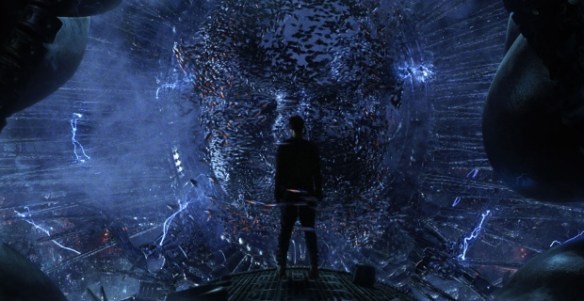
Fear our new robot overlords: This is why you need to take artificial intelligence seriously

Matrix-Machines-Best-Movie-AI

Killer computers determined to kill us? Nope. Forget “Terminator” — there’s something more specific to worry about

By Phil Torres

Source: Salon

There are a lot of major problems today with tangible, real-world consequences. A short list might include terrorism, U.S.-Russian relations, climate change and biodiversity loss, income inequality, health care, childhood poverty, and the homegrown threat of authoritarian populism, most notably associated with the presumptive nominee for the Republican Party, Donald Trump.

Yet if you’ve been paying attention to the news for the past several years, you’ve almost certainly seen articles from a wide range of news outlets about the looming danger of artificial general intelligence, or “AGI.” For example, Stephen Hawking has repeatedly expressed that “the development of full artificial intelligence could spell the end of the human race,” and Elon Musk — of Tesla and SpaceX fame — has described the creation of superintelligence as “summoning the demon.” Furthermore, the Oxford philosopher and director of the Future of Humanity Institute, Nick Bostrom, published a New York Times best-selling book in 2014 called Superintelligence, in which he suggests that the “default outcome” of building a superintelligent machine will be “doom.”

What’s with all this fear-mongering? Should we really be worried about a takeover by killer computers hell-bent on the total destruction of Homo sapiens? The first thing to recognize is that a Terminator-style war between humanoid robots is not what the experts are anxious about. Rather, the scenarios that keep these individuals awake at night are far more catastrophic. This may be difficult to believe but, as I’ve written elsewhere, sometimes truth is stranger than science fiction. Indeed, given that the issue of AGI isn’t going anywhere anytime soon, it’s increasingly important for the public to understand exactly why the experts are nervous about superintelligent machines. As the Future of Life Institute recently pointed out, there’s a lot of bad journalism about AGI out there. This is a chance to correct the record.

Toward this goal, step one is to realize is that your brain is an information-processing device. In fact, many philosophers talk about the brain as the hardware — or rather, the “wetware” — of the mind, and the mind as the software of the brain. Directly behind your eyes is a high-powered computer that weighs about three pounds and has roughly the same consistency as Jell-o. It’s also the most complex object in the known universe. Nonetheless, the rate at which it’s able to process information is much, much slower than the information-processing speed of an actual computer. The reason is that computers process information by propagating electrical potentials, and electrical potentials move at the speed of light, whereas the fastest signals in your brain travel at around 100 miles per second. Fast, to be sure, but not nearly as fast as light.

Consequently, an AGI could think about the world at speeds many orders of magnitude faster than our brains can. From the AGI’s point of view, the outside world — including people — would move so slowly that everything would appear almost frozen. As the theorist Eliezer Yudkowsky calculates, for a computer running a million times faster than our puny brains, “a subjective year of thinking would be accomplished for every 31 physical seconds in the outside world, and a millennium would fly by in eight-and-a-half hours.”

Already, then, an AGI would have a huge advantage. Imagine yourself in a competition against a machine that has a whole year to work through a cognitive puzzle for every 31 seconds that you spend trying to think up a solution. The mental advantage of the AGI would be truly profound. Even a large team of humans working together would be no match for a single AGI with so much time on its hands. Now imagine that we’re not in a puzzle-solving competition with an AGI but a life-and-death situation in which the AGI wants to destroy humanity. While we struggle to come up with strategies for keeping it contained, it would have ample time to devise a diabolical scheme to exploit any technology within electronic reach for the purpose of destroying humanity.

But a diabolical AGI isn’t — once again — what many experts are actually worried about. This is a crucial point that the Harvard psychologist Steven Pinker misses in a comment about AGI for the website Edge.org. To quote Pinker at length:

“The other problem with AGI dystopias is that they project a parochial alpha-male psychology onto the concept of intelligence. Even if we did have superhumanly intelligent robots, why would they want to depose their masters, massacre bystanders, or take over the world? Intelligence is the ability to deploy novel means to attain a goal, but the goals are extraneous to the intelligence itself: being smart is not the same as wanting something. History does turn up the occasional megalomaniacal despot or psychopathic serial killer, but these are products of a history of natural selection shaping testosterone-sensitive circuits in a certain species of primate, not an inevitable feature of intelligent systems.” Pinker then concludes with, “It’s telling that many of our techno-prophets can’t entertain the possibility that artificial intelligence will naturally develop along female lines: fully capable of solving problems, but with no burning desire to annihilate innocents or dominate the civilization.”

Unfortunately, such criticism misunderstands the danger. While it’s conceptually possible that an AGI really does have malevolent goals — for example, someone could intentionally design an AGI to be malicious — the more likely scenario is one in which the AGI kills us because doing so happens to be useful. By analogy, when a developer wants to build a house, does he or she consider the plants, insects, and other critters that happen to live on the plot of land? No. Their death is merely incidental to a goal that has nothing to do with them. Or consider the opening scenes of The Hitchhiker’s Guide to the Galaxy, in which “bureaucratic” aliens schedule Earth for demolition to make way for a “hyperspatial express route” — basically, a highway. In this case, the aliens aren’t compelled to destroy us out of hatred. We just happen to be in the way.

The point is that what most theorists are worried about is an AGI whose values — or final goals — don’t fully align with ours. This may not sound too bad, but a bit of reflection shows that if an AGI’s values fail to align with ours in even the slightest ways, the outcome could very well be, as Bostrom argues, doom. Consider the case of an AGI — thinking at the speed of light, let’s not forget — that is asked to use its superior intelligence for the purpose of making humanity happy. So what does it do? Well, it destroys humanity, because people can’t be sad if they don’t exist. Start over. You tell it to make humanity happy, but without killing us. So it notices that humans laugh when we’re happy, and hooks up a bunch of electrodes to our faces and diaphragm that make us involuntarily convulse as if we’re laughing. The result is a strange form of hell. Start over, again. You tell it to make us happy without killing us or forcing our muscles to contract. So it implants neural electrodes into the pleasure centers of everyone’s brains, resulting in a global population in such euphoric trances that people can no longer engage in the activities that give life meaning. Start over — once more. This process can go on for hours. At some point it becomes painfully obvious that getting an AGI’s goals to align with ours is going to be a very, very tricky task.

Another famous example that captures this point involves a superintelligence whose sole mission is to manufacture paperclips. This sounds pretty benign, right? How could a “paperclip maximizer” pose an existential threat to humanity? Well, if the goal is to make as many paperclips as possible, then the AGI will need resources to do this. And what are paperclips composed of? Atoms — the very same physical stuff out of which your body is composed. Thus, for the AGI, humanity is nothing more than a vast reservoir of easily accessible atoms, atoms, atoms. As Yudkowsky eloquently puts it, “The [AGI] does not hate you, nor does it love you, but you are made out of atoms which it can use for something else.” And just like that, the flesh and bones of human beings are converted into bendable metal for holding short stacks of paper.

At this point, one might think the following, “Wait a second, we’re talking about superintelligence, right? How could a truly superintelligent machine be fixated on something so dumb as creating as many paperclips as possible?” Well, just look around at humanity. By every measure, we are by far the most intelligent creatures on our planetary spaceship. Yet our species is obsessed with goals and values that are, when one takes a step back and peers at the world with “new eyes,” incredibly idiotic, perplexing, harmful, foolish, self-destructive, other-destructive, and just plain weird.

For example, some people care so much about money that they’re willing to ruin friendships, destroy lives and even commit murder or start wars to acquire it. Others are so obsessed with obeying the commandments of ancient “holy texts” that they’re willing to blow themselves up in a market full of non-combatants. Or consider a less explicit goal: sex. Like all animals, humans have an impulse to copulate, and this impulse causes us to behave in certain ways — in some cases, to risk monetary losses and personal embarrassment. The appetite for sex is just there, pushing us toward certain behaviors, and there’s little we can do about the urge itself.

The point is that there’s no strong connection between how intelligent a being is and what its final goals are. As Pinker correctly notes above, intelligence is nothing more than a measure of one’s ability to achieve a particular aim, whatever it happens to be. It follows that any level of intelligence — including superintelligence — can be combined with just about any set of final goals — including goals that strike us as, well, stupid. A superintelligent machine could be no less infatuated with obeying Allah’s divine will or conquering countries for oil as some humans are.

So far, we’ve discussed the thought-speed of machines, the importance of making sure their values align with ours, and the weak connection between intelligence and goals. These considerations alone warrant genuine concern about AGI. But we haven’t yet mentioned the clincher that makes AGI an utterly unique problem unlike anything humanity has ever encountered. To understand this crucial point, consider how the airplane was invented. The first people to keep a powered aircraft airborne were the Wright brothers. On the windy beaches of North Carolina, they managed to stay off the ground for a total of 12 seconds. This was a marvelous achievement, but the aircraft was hardly adequate for transporting goods or people from one location to another. So, they improved its design, as did a long lineage of subsequent inventors. Airplanes were built with one, two, or three wings, composed of different materials, and eventually the propeller was replaced by the jet engine. One particular design — the Concorde — could even fly faster than the speed of sound, traversing the Atlantic from New York to London in less than 3.5 hours.

The crucial idea here is that the airplane underwent many iterations of innovation. Problems that arose in previous designs were improved upon, leading to increasingly safe and reliable aircraft. But this is not the situation we’re likely to be in with AGI. Rather, we’re likely to have one, and only one, chance to get all the problems mentioned above exactly right. Why? Because intelligence is power. For example, we humans are the dominant species on the planet not because of our long claws, sharp teeth and bulky musculatures. The key difference between Homo sapiens and the rest of the Animal Kingdom concerns our oversized brains, which enable us to manipulate and rearrange the world in incredible ways. It follows that if an AGI were to exceed our level of intelligence, it could potentially dominate not only the biosphere, but humanity as well.

Even more, since creating intelligent machines is an intellectual task, an AGI could attempt to modify its own code, a possibility known as “recursive self-improvement.” The result could be an exponential intelligence explosion that, before one has a chance to say “What the hell is happening?,” yields a super-super-superintelligent AGI, or a being that towers over us to the extent that we tower over the lowly cockroach. Whoever creates the first superintelligent computer — whether it’s Google, the U.S. government, the Chinese government, the North Korean government, or a lone hacker in her or his garage — they’ll have to get everything just right the first time. There probably won’t be opportunities for later iterations of innovation to fix flaws in the original design, if there are any. When it comes to AGI, the stakes are high.

It’s increasingly important for the public to understand the nature of thinking machines and why some experts are so worried about them. Without a grasp of these issues, claims like “A paperclip maximizer could destroy humanity!” will sound as apocalyptically absurd as “The Rapture is near! Save your soul while you still can!” Consequently, organizations dedicated to studying AGI safety could get defunded or shut down, and the topic of AGI could become the target of misguided mockery. The fact is that if we manage to create a “friendly” AGI, the benefits to humanity could be vast. But if we fail to get things right on the first go around, the naked ape could very well end up as a huge pile of paperclips.


Phil Torres is the founder of the X-Risks Institute and author of The End: What Science and Religion Tell Us About the Apocalypse. He’s on Twitter @xriskology.

The Other Dieoffs

pc15

By Chad Hill

Source: The Hipcrime Vocab

Last week I realized that there were a few subtleties left out of my (rather depressing) topic. I argued that America was doing more than just throwing its working class under the bus; it was actively trying to eliminate of them. Meanwhile, the media, especially that tailored to the richest twenty percent of news consumers, is consistently waxing ecstatic on how this is the “best, richest, most peaceful time, ever,” because Facebook, even though most of us Americans are living in communities that are in an advanced state of decay, if not outright collapse.

The point I wanted to make is that the dieoff is happening not only at the end of life as we saw last week, but also at the beginning. By this I mean that it’s simply too expensive to have kids anymore.  Lowered birthrates are a sort of “stealth dieoff” among the lower classes, and the upper ones too.

Now, lowered birthrates is certainly something I can get behind, but I would rather it have come from choice rather than economic necessity. I realize that not everyone is like me, and for some, the desire to breed is unstoppable. The rich are perennially complaining that the poor are having children they can’t afford, a very Anglo-Saxon complaint that goes back several hundred years. Of course, the poor will continue to breed no matter what because a child costs nothing to produce, and if their ancestors hadn’t behaved the same way after all, they wouldn’t be here. The idea that poverty will stop the poor and indigent from breeding has a poor track record, especially with the numbers of poor and indigent consistently rising. All it means is that more children will be born in poverty, and we now know that there are a host of behavioral and epigenetic consequences of that. Most certainly, the fallout from that will once again be placed on individual failure rather than social circumstance.

Scientists Find Alarming Deterioration In DNA Of The Urban Poor (HuffPo)

The number of kids in the US would be shrinking if it weren’t for immigrants. Americans are castigated for having children they can’t afford, with entire communities, especially rural ones, bereft of well-paying jobs. Meanwhile people in these communities see a massive influx immigrants with huge families working in all the blue collar occupations that they used to do. Is it any wonder that anti-immigrant demagoguery is a political winner in decaying Middle America? Corporate America felt they could keep a lid on this situation forever, even as they cynically stoked this reactionary fervor to delegitimize the very idea of the common good to gain tax benefits and hide the stealth takeover of government. Now they cannot control the demon they have unleashed. The nihilistic philosophy purveyed by the Right of every man for himself has reaped a whirlwind that even they can no longer control. It was only a matter of time before someone hijacked it and used it for their own personal ends.

This article is from the British newspaper The Guardian, but is just as relevant to the United States:

These hurdles to the world of adulthood continue to be a great source of sadness and anxiety, and I’m not alone. For swathes of people in their 20s and 30s, who largely thought they would be at least a bit sorted by now, achieving the adult lives they want seems a distant fantasy. Spiralling property prices coupled with the fetishisation of housing as an investment – expressed through buy-to-let properties and often poor rental conditions – means secure housing is off the table for many of us as we continue to subsidise our much richer landlords…The recession, unstable and unreliable unemployment, low pay compounded by a pensions shortfall and an ageing population, have all led to a situation in which many members of my generation feel not only short-changed, but helpless when it comes to building some semblance of a stable family life. While our generational predecessors, the baby boomers, reaped the rewards of free university education and affordable property prices, we have been disproportionately affected by austerity…

Jealousy towards baby boomers is an everyday occurrence. You’ll be sitting in a bar with friends and hear them lament the fact that their parents had bought a house by the time they were 27. .. Generation Y – or millennials, if you must – are still often portrayed as existing in a state of perpetual kidulthood; we’re Peter Pans who never want to grow up. Yet many of us are desperate to do so.

Unaffordable housing and living costs are often portrayed as a “London problem”. “Why not simply move?” detractors say, as though career opportunity, family ties or personal finances are not an issue. Yet I spoke to people in their 20s and 30s from all over the UK, and many felt the same way: that their chances of getting to the point where they are stable enough to settle down and have children are slim to none. Many of them feel great sadness about this, not only because they look to their parents’ generation and see opportunities they’ve never had, but because a gulf is opening within our own generation – between those who can start a family or whose parents can help them get on the property ladder, and those who can’t….

The more people I spoke to, the more apparent it became that this is not just about generational divides, but about class. Interviewees were forever mentioning friends or acquaintances who had been privileged enough to buy, while those from low-income backgrounds lost out.

‘Babies? An impossible dream’: the millennials priced out of parenthood (Guardian)

The decay of America’s working class is often chalked up sort of a moral turpitude, and this is depicted as something that emerged as a fallout of the permissive 1960’s, despite the fact that it more exactly coincides with the shuttering of factories all over the country than the flower children. The lower classes are consistently depicted by the media as stupid and lazy, and thus deserving of their plight. Meanwhile, the wealthy are depicted as increasingly hard-working and morally upstanding, constantly either studying for another certification or working to the point of exhaustion, and pushing their sheltered, overprivileged children to study hard and get into a good college so they can keep up with the Joneses. Yet at the same time, these poor, working class white Americans are held up as moral exemplars of the nation; the “Real Americans,” in contrast to the swarthy, godless, libertine city-dwellers living it up on welfare. Middle Americans get the mixed message that they are morally superior than the lazy, dark-skinned masses in the cities (where most of the economic activity takes place), at the same time as their communities are being overtaken by violence, family breakdown and chronic drug abuse. It’s a rather schizophrenic view, to say the least.

I recently read this comment on Disinfo :

Viewing this site without Adblocking software is quite the experience. Right now, I’ve got two professional wrestling ads and an ad for Kohls up top. Down at the bottom:

“The way Kim Kardashian lost her virginity is disgusting!”
“25 sexy girls who don’t hide that they’re bisexual!”
“14 selfies taken right before death!”
“20 unseemly moments caught on Walmart security cameras!”
“24 stars who forgot to wear underwear in public!”
Something about ultimate female fighter Ronda Rousey.

It’s like the server is emanating from “Idiocracy,” targeting the oh so coveted “13 Year Old Boy Who Jacks Off 23 Times a Day” demographic.

When I click on the banners, I’m brought to a site running so many simultaneous video ads that my computer freezes. “Gee, thanks! Say, could I perhaps buy something from you?”

This is in reply to a Matt Taibbi article, America is too dumb for TV news.

It’s our fault. We in the media have spent decades turning the news into a consumer business that’s basically indistinguishable from selling cheeseburgers or video games. You want bigger margins, you just cram the product full of more fat and sugar and violence and wait for your obese, over-stimulated customer to come waddling forth.

The old Edward R. Murrow, eat-your-broccoli version of the news was banished long ago. Once such whiny purists were driven from editorial posts and the ad people over the last four or five decades got invited in, things changed. Then it was nothing but murders, bombs, and panda births, delivered to thickening couch potatoes in ever briefer blasts of forty, thirty, twenty seconds.

What we call right-wing and liberal media in this country are really just two different strategies of the same kind of nihilistic lizard-brain sensationalism. The ideal CNN story is a baby down a well, while the ideal Fox story is probably a baby thrown down a well by a Muslim terrorist or an ACORN activist. Both companies offer the same service, it’s just that the Fox version is a little kinkier.

And this coming not long after “Black Friday,” in which we are treated to scenes from all over the country of herds of people camping out outside in the freezing cold on one of our few holidays outside the blank, cinderblock boxes of suburban wasteland, so that they can trample themselves to death to secure a new big-screen TV, video game or juicer.

It does seem like Idiocracy, which was theoretically a parody movie, is increasingly an accurate depsiction of our society right now. We currently have a reality TV star running for president. What else is Donald Trump but our very own President Camacho?

Idiocracy is now. How much further can society plummet?

On this news website, chronicling just one area (upstate New York), every article was a depiction of the horror show that Middle America has become:

Mother hid dead body of 11-year-old daughter missing for over a year in freezer, police say

Rome police: Teen shot girlfriend’s baby after trying to stand with loaded gun

Man checks into Syracuse hospital with gunshot wound, but won’t say what happened

Armed Arizona man threatens Islamic community in Upstate NY

In Louisiana, a ‘picture-perfect’ family of 4 is dead in murder-suicide

Mississippi Man Guns Down Waffle House Waitress After She Asks Him Not to Smoke (Alternet)

Citing mass shootings, Upstate NY sheriff urges citizens to carry guns

This is not the sign of a healthy society. This is a society in the grip of madness. This is the other dieoff.

America is one giant tapestry of scam artistry. From pedophiles in Congress, to hedge-funders jacking the price of drugs, to shaking down taxpayers to fund sports stadiums for billionaires, to gutting finance laws, everywhere you turn there is a scam where someone is either trying to rip someone off, or is getting ripped off. And those who are getting ripped off are busily looking to get in on the hustle where they take advantage of someone else below them. It’s a society of predators and prey. And we think this is somehow normal. How much longer can a society like this last?

Isn’t it time we start acknowledging that this is what capitalism is. I mean inherently. It’s the law of the jungle. It’s every man for himself. It’s the “survival of the fittest.” It’s everyone jockeying for some sort of advantage, every minute of every day, morality be damned. It’s a society dedicated to nothing else besides getting every last dollar from the next guy by any means possible. It’s appealing to the lowest and basest instincts in humanity. Yet we’re told that “naked self interest” is natural and is the sole engine of prosperity, and that extreme inequality drives us to “achieve” by the pseudoscience of economics, and most of us appear to believe it.

This is the society we’ve made for ourselves. Are your proud of it? So is it any wonder there’s a backlash, whether from religious fundamentalists or radical political ideologies like Trumpism?

…on the free market it is legal and customary to instrumentalize our fellow human beings, violating their dignity because our goal is not to protect it. Our goal is to gain personal advantage, and in many cases this can be achieved more easily if we take advantage of others and violate their dignity…What is decisive is my attitude and my priority: am I interested in the greatest good and the preservation of the dignity of all, which is something which affects me automatically and which I benefit from as well, or am I primarily interested in my own welfare and my own advantage, which others might, but will not necessarily draw benefit from? If we pursue our own advantage as our supreme goal, the customary practice is to use others as means to achieve this goal and to take advantage of them accordingly.

If we must constantly fear that our fellow human beings will take advantage of us in the market as soon as they are in a position to do so, something else will be systematically destroyed: trust. Some economists say this doesn’t matter because the economy focuses completely on efficiency. But such a view must be disputed, for trust is the highest social and cultural good we know. Trust is what holds societies together from the inside – not efficiency!..The interim conclusion to be drawn is radical: so long as a market economy is based on pursuit of profit and competition and the mutual exploitation that results from it, it is reconcilable with neither human dignity nor liberty. It systematically destroys societal trust in the hope that the efficiency it yields will surpass that achieved by any other form of economy.

10 Moral Crises That Have Resulted From Unfettered, Free Market Capitalism (Alternet)

This comment to a Barbara Ehrenreich piece at Naked Capitalism describes one major reason the white working classes, especially who have bought into the “rugged individualism” ethos, are being skinned alive by this economic system.

I believe this analysis is missing a very important component. True, historically poor whites have experiences somewhat more privileged conditions than minorities (admittedly even today they still do), but that traditional privilege has simultaneously caused them to be somewhat more fragile, less resilient than other oppressed groups. Poor whites are more atomized, isolated people in America. They do not have, nor have access to, the same cohesive social structures that have tended to develop among minorities as a survival mechanism against white oppression in the past.

I don’t say that as a theory, but rather as experienced reality. In the trailer park my family still lives in minority groups tend be gregarious and social among themselves (and honestly among others as well if one were inclined to invite himself as I often was). From my experience they were mostly psychologically stable and had a good ability to roll with the punches. The poor whites on the other hand were near universally drug addicts and thieves, and even when they did (or do–they’re still there I mean) form (weak) social bonds they’d nevertheless steal from each other or rat each other out to the police regardless. This was something I never saw happen among minorities (though I’m sure it does happen; I just didn’t see it at all).

Anyway to continue on, I believe that our economic system is in decline across the board, and that everyone’s wealth and prosperity are taking a hit on average (and the poor are getting the worst of it, as is common in collapsing societies–as I believe I understood from Jared Diamond’s work as well as a Sciencedaily anthropology article I read a while back). This being the case, I put the two together and come up with the idea that poor whites simply do not have the social frameworks, that were previously forged by oppression among the minorities, required to survive a declining society–and thus are dying off.

http://www.nakedcapitalism.com/2015/12/america-to-working-class-whites-drop-dead.html#comment-2520049

Which coincides with my observations.

Of course there are no social bonds in a society where it’s every man for himself trying to gain personal advantage. Humans were not meant to live like this. The endgame of such a society is Colin Turnbull’s description of the Ik in Uganda, also brought about by a rapid onset of scarcity and deracination. We’re doing the elite’s dirtywork ourselves. They don’t have to massacre us if they can get us to massacre each other.

Meanwhile, among the “meritocratic elite” winners, things are not looking so rosy either:

The rich middle- and high-school kids Luthar and her collaborators have studied show higher rates of alcohol and drug abuse on average than poor kids, and much higher rates than the national norm. They report clinically significant depression or anxiety or delinquent behaviors at a rate two to three times the national average. Starting in seventh grade, the rich cohort includes just as many kids who display troubling levels of delinquency as the poor cohort, although the rule-breaking takes different forms. The poor kids, for example, fight and carry weapons more frequently, which Luthar explains as possibly self-protective. The rich kids, meanwhile, report higher levels of lying, cheating, and theft.

One of the two major causes of distress, Luthar found, was the “pressure to excel at multiple academic and extracurricular pursuits.” …From their answers, Luthar constructed a profile of elite American adolescents whose self-worth is tied to their achievements and who see themselves as catastrophically flawed if they don’t meet the highest standards of success. Because a certain kind of success seems well within reach, they feel they have to attain it at all costs—a phenomenon she refers to as “I can, therefore I must.” Middle-class kids, she told me, generally do not live with the expectation that they should go to Stanford or earn $200,000 a year. “If I’ve never been to the moon,” she said of middle-class families, “why would I expect my kids to go there?” The yardstick for the children of the meritocratic elite is different, and it can intimidate as much as it can empower.

The second major cause of distress that Luthar identified was perhaps more surprising: Affluent kids felt remarkably isolated from their parents….

Since Levine wrote The Price of Privilege, she’s watched the stress in the Bay Area and in affluent communities all over the country become more pervasive and more acute. What disturbs her most is that the teenagers she sees no longer rebel. A decade ago, she used to referee family fights in her office, she told me, where the teens would tell their parents, “This is bad for me! I’m not doing this.” Now, she reports, the teenagers have no sense of agency. They still complain bitterly about all the same things, but they feel they have no choice. Many have also fallen prey to what Levine calls a “mass delusion” that there is but one path to a successful life, and that it is very narrow. Adolescents no longer typically identify parents or peers as the greatest source of their stress, Levine says. They point to school. But that itself may suggest a submission of sorts—the unquestioned adoption of parental norms.

The Silicon Valley Suicides (The Atlantic)

One of the reason the children of the elites feel such a sense of anxiety is by design. We’ve made sure that anyone who doesn’t make it into the “cognitive elite” now lives a life of persistent humiliation, desperation and scarcity, constantly trying to stay one step ahead of the debt collectors and predatory law enforcement. And now they can’t even afford to have a family, as we saw above. Add to that the fact that the social safety net is being gutted every day because it is “unaffordable,” even as the pool of jobs is inexorably shrinking. Is it any wonder they’re being driven to neurosis, even to the point of taking their own lives?

It’s yet another dieoff.

So who exactly is thriving in a society like this? Because I can’t find anyone. Yet we’re constantly told by economists that this is just the “natural” evolution of society, as inevitable as the phases of the moon or the law of gravity. There is simply nothing to be done but stomp down on the pedal of more growth and innovation. Really?

Can there be any doubt after reading stories like those above, that something is seriously wrong? for those of us who don’t live in gated communities, or the rarefied communities in Manhattan, Washington D.C. or Los Angeles where all of our media originates, we can see this with our own two eyes. We see the dysfunction around us. Yet the media constantly denies it. It’s dedicated to stoking our fears and insecurities to push product. Can there be any surprise that people in this frightened and decaying nation are turning to someone like Trump who ignores the economists and promises to “make us great again?” It was only a matter of time before someone did it.

Now, you might accuse me of cherry-picking the sordid and sensationalist stories above. I collected them last week entirely by happenstance intending to write about them, but in the interim, something else happened that you may have heard about. As cynical as I am, even my breath is constantly getting taken away.

I once wrote that mass-shootings will become so common in America that the media won’t even bother to cover them anymore. One remarkable thing about the massacre in San Bernardino was that it managed to completely obscure the other gun massacre that took place on the very same day! And it pushed coverage off of the religious fundamentalist massacre at an abortion clinic less than a week before. In other words, there are so many gun massacres that the media cant even cover them all!

Of the 30,000-plus people killed by firearms each year in the United States, more than 11,000 of those are homicides. That means there are more than 30 gun-related murders daily.

The San Bernardino massacre marked the 353rd mass shooting in America this year alone, according to the Mass Shooting Tracker, which defines a mass shooting where at least four people are either injured or killed.

“You have 14 people dead in California, and that’s a horrible tragedy. But likely 88 other people died today from gun violence in the United States,” Everytown for Gun Safety’s Ted Alcorn told the New York Times.

In 2015 to date, according to the Gun Violence Archive, 12,223 people have died as a result of gun violence in America, while another 24,722 people have been injured.
“We’re having a mass shooting every day, it’s just happening under the radar,” Jon Vernick, co-director of the Johns Hopkins Centre for Gun Policy and Research, told news.com.au.

New York Daily News front cover divides America: ‘God Isn’t Fixing This’ (news.com.au)

Legislation that was unobjectionable to the George W. Bush administration—laws that would simply prevent people on the FBI’s consolidated terrorist watch list from buying guns or explosives—are voted down in Congress. A physician, running for president, say,  “I never saw a body with bullet holes that was more devastating than taking the right to arm ourselves away.” And 185,345 background checks to buy guns were processed on Black Friday alone—a new record. According to the FBI, “The previous high for receipts were the 177,170 received on 12/21/2012—a week after Adam Lanza killed 26 people at Sandy Hook Elementary School in Newtown, Conn.” Mass killings turn out to be extremely good news for the gun industry. 

Beyond the frequency and the brutality and the futility of effecting changes, maybe this is a statistic worth noting. As Joshua Holland writes: “Perhaps the most frightening thing we know about gun violence comes from a study conducted by researchers at Duke, Harvard, and Columbia that was published earlier this year in the journal Behavioral Sciences and the Law. It found that almost one in 10 Americans who have access to guns are also prone to impulsive outbursts of rage. Among this group are almost 4 million people who carry their guns around in public and say they ‘have tantrums or angry outbursts,’ ‘get so angry [that they] break or smash things’ and lose their temper and ‘get into physical fights.’ ” This is not about mental illness; it’s about anger, violence, and fear. And in no small part because of mass shootings, we become more angry, violent, and more fearful all the time. 

And while we read the same articles, and make the same phone calls, and buy more guns, and grow more frightened, one other thing does change. Our schools go into lockdown. More and more. Thursday in Denver (“reports … of an armed person at the school”). Thursday in Pleasant Grove, Utah (“after a student reported another student with a gun”). Thursday in Chicago. Thursday in Palm Beach, Florida. Thursday in Dallas. Thursday in Savannah, Georgia. Thursday (and two other days this week) in Cambridge, Massachusetts. Friday in Philadelphia. Wait, what? Kids bring guns to schools? In what universe does this surprise us? For our children, a world of daily shootings and daily lockdowns is the way they will have been raised. For them, as a friend who lives near one of Thursday’s lockdowns puts it, “It’s not if. It’s when.”

Mass Shootings are Changing Us (Slate)

The irony is that, when it comes to real resources, America is one of the best placed societies in the world. We waste upwards of forty percent of our food and energy on a daily basis. While we do import oil, this is mainly due to our profligate ways rather than true scarcity or “need.” Our population density compared to land area is the envy of Europe, much less places like India, China and Nigeria. We have the resources to give people a much higher standard of living in an industrial decline situation than much of the world, it’s just that our frontier growth mentality and bootstrap ideals dictate that life must be a hard struggle, and that allowing the rich to accumulate massive fortunes is somehow not only morally, but also practically, ideal.

I feel somewhat fortunate that I understood from an early age that the American lifestyle is toxic just be observing the lives of people around me. I never bought into the bullshit, and it seems like the people who did are the ones who are struggling, particularly mentally. My circumstances are somewhat similar to this woman from the article cited above:

Some might argue that expectations are now simply too high. Thea, 26, certainly thinks so. “I come from a working-class background, so, while I have had some financial help from my parents when I’ve been desperate – I’m talking a couple of hundred quid a month – the onus has always been on me to achieve and get where I want to be in life. I’ve not had anything ‘handed’ to me, like a house or substantial amount of money that would help me settle down in future.”

But it doesn’t bother her too much. “My upbringing and background have helped me accept my current situation. Despite not having much money as a kid – we never went abroad, for example – I never felt I missed out on anything. I do think my expectations of what constitute necessities – foreign holidays, owning a house or car – are lower than those of some of my peers who had more middle-class upbringings.”

Thea has never wanted children and, as an only child, knows that she will inherit her parents’ house when they die. “I think the country, as far as wages, property, poverty and my generation actually being able to build secure finances, is in an absolute state and something undoubtedly needs to be done. But I also think part of the problem is that so many people go to uni now: it devalues a degree (I don’t have one) and doesn’t guarantee anyone a job. So you’re left with broke, unemployed twentysomethings in debt.”

In my office context, I saw countless examples of people pursuing the “American Dream” of going deep into debt for a fancy degree, clawing their way up the career ladder by working 80-hour weeks and hitting the links, marrying someone from a suitable class background, pumping out the babies immediately thereafter, and moving out of their cozy, walkable neighborhoods to a bloated starter mansion out in the distant exurban wastelands, with the requisite hour-plus commute to be in a good school district (and moving another ten miles out with every raise or promotion). This is the good life? Really? I had no intention (or even opportunity) to get into the competition of who has the bigger house, or whose kids have the best SAT scores, or any of that nonsense. Being born on the bottom with no family has its advantages. You don’t have to be a hermit to not buy into this society’s bullshit, you just have to think for yourself, something most people are conditioned never to do, because if they did the whole thing might fall apart.

But then, again it’s all falling apart anyway.