Saturday Matinee: Goodbye 20th Century

MV5BOTQ2MTU1NzU5Nl5BMl5BanBnXkFtZTYwMTc4NDg4._V1_SX640_SY720_

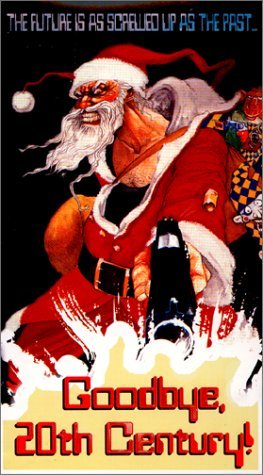
“Goodbye 20th Century” (1998) is a twisted but ambitious Macedonian film (directed by Darko Mitrevski and Aleksandar Popovski) connecting three allegorical tales from different eras. In the first segment, a man cursed with immortality in a post-apocalyptic world encounters a trickster who may hold the key to ending his existence. A shorter segment follows depicting the tragic first wedding captured on film in 190o. The film concludes in 1999 when a man in a Santa suit’s interruption of a military wake has violent consequences for all involved.

For English subtitles, click on the “cc” button near the bottom right corner of the video window.

Saturday Matinee: The Color of Life

vermillion_011

“The Color of Life” (2002) is a feature-length compilation of some of the oddest of the many odd moments from cult Japanese late night comedy/variety program “Vermilion Pleasure Night”. Recurring skits featured on the show include NSFW English language and cooking educational programs, an alien trapped on a starship resembling a Japanese studio apartment and antics of families of zombies, mannequins and human Barbie dolls. Interspersed through the film and television episodes are surrealistic musical and/or animated segments.

For English subtitles, click on the “cc” button near the bottom right corner of the video window.

Saturday Matinee: Duck, You Sucker! (aka A Fistful of Dynamite)

duck

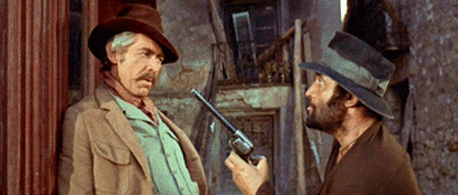
Most people know director Sergio Leone for his classic collaborations with Clint Eastwood on the “Man With No Name” trilogy of westerns or his later epics, “Once Upon a Time in the West” and “Once Upon a Time in America”. Fewer are familiar with the film he directed between the “Once Upon a Time” films, “Duck, You Sucker!” (1971). Its relative obscurity in the U.S. could partly be attributed to the horrible marketing from its American distributor United Artists.

The film’s title and advertising may have misled viewers to think they were in for a lighthearted comedy. It does have comedic moments but also contained scenes of massacres, some of which was edited out. For the film’s initial U.S. release it was trimmed by over half an hour because of violent and politically subversive content. Leone reportedly believed “Duck, You Sucker!” to be a common American colloquialism and so was probably not aware of the title’s slapstick tone. Not long after its release the film was reissued as “A Fistful of Dynamite” to cash in on the Clint Eastwood westerns which were popular at the time. Many were probably disappointed to discover that Eastwood wasn’t in the film. To add to the confusion, the title “Once Upon a Time…the Revolution” was used for some European releases to associate it with Leone’s previous film “Once Upon a Time in the West”.

Though “Duck You Sucker!” is not quite on par with Leone’s more well-known westerns such as “The Good, the Bad and the Ugly” and “Once Upon a Time in the West”, it’s still a great film though unfairly underrated. It contains many elements of classic Leone films such as beautiful panoramas, tense showdowns, extreme close-ups, morally complex characters, and a memorable soundtrack by Ennio Morricone. Similar to some of his earlier works, “Duck, You Sucker!” is at heart a philosophical action film exploring morality, honor, friendship, betrayal, idealism, pragmatism, redemption and the consequences of violence.

Update: Looks like MGM pulled it from YouTube, but the film is still available here: http://www.metacafe.com/watch/7555695/rod_steiger_james_coburn_duck_you_sucker_legendado/

http://www.dailymotion.com/video/x21vzyh_a-fistful-of-dynamite-1971_shortfilms

Saturday Matinee: Bad Boy Bubby

Screen shot 2011-01-10 at 15.08.57

In “Bad Boy Bubby” (1993), an Australian film by writer/director Rolf de Heer, Nicholas Hope gives a brilliant performance as Bubby, a man who’s been kept confined and abused physically and emotionally by his mother for 35 years. He eventually escapes and has a number of chance encounters which reveal different aspects of himself and society. The first portion of the film is the most brutal, but as Bubby ventures out into the world the film’s tone lightens a bit and becomes more of a traditional (yet still twisted) dark comedy. Bad Boy Bubby is definitely not for all tastes and is initially difficult to watch, but is ultimately rewarding for its uniformly great performances, writing and direction.

Saturday Matinee: What to Do in Case of Fire?

3b6ef1ef605e7

“What to Do in Case of Fire?” (2001) opens with a montage of young anarchist squatters fighting police, making propaganda films, and constructing a homemade bomb in Berlin circa 1987. They plan to blow up a vacant mansion but the bomb is a dud, until thirteen years later when it injures a real estate broker and potential buyer in a fluke accident.

Only two of the original members of the anarchist collective, Tim and Hotte, are still squatting in the same communal housing since the 80s and are unable to prevent police from confiscating filmed evidence in a raid triggered by the bomb incident. Because all members of the collective are potentially linked to the bombing, Tim and Hotte scramble to track down former comrades and formulate an action plan before the evidence is examined. The reunion of old friends, including those who’ve settled into traditional family life or sold out for corporate jobs, stirs up a host of interpersonal conflicts which they must resolve in order to work together to remain free.

Though the film does at times seem to fall back on lazy stereotypes of anarchists, it at least puts them in a human light. Even less radical viewers could relate to certain struggles the protagonists are faced with, such as trying to balance freedom and security, being “successful” versus upholding one’s ideals, and coming to terms with friendships that change over time. It would have been interesting had the film delved deeper into Berlin’s anarchist and squatters movements, in my opinion, but it’s nevertheless a charming and fun mix of comedy, drama and heist genres.

Note: to activate English subtitles on the video, click on the Closed Captions (CC) icon on the bottom right corner while video is playing, click on the box that says “Portuguese (Brazil)”, click “Translate Captions”, click on “Afrikaans”, then you should be able to scroll down until you can click on “English”. The subtitle feature might not be available on some portable devices.

Saturday Matinee: Battle Royale

battleroyale_spotlight-e1293591661834

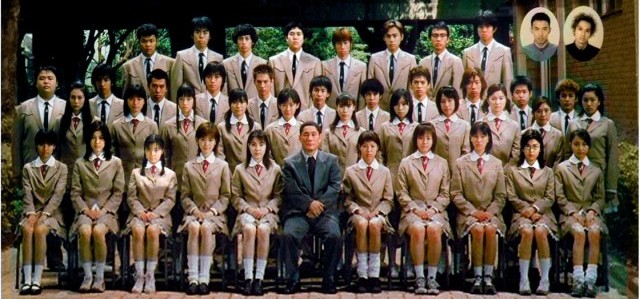
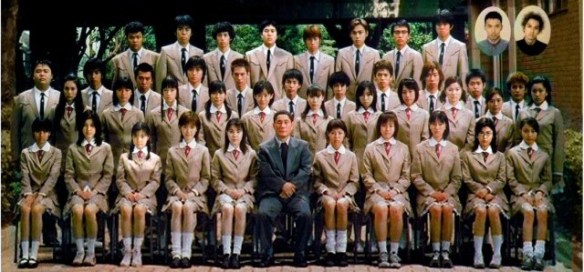
With the recent release of the Hunger Games sequel, it seems fitting to feature a cult classic that may have been the inspiration for that series: “Battle Royale”. Released in 2000, it was Kinji Fukasaku’s final film, a director previously best known for his “Battles Without Honor and Humanity” series of Yakuza films. Kinji died of cancer shortly after filming the first scene of the sequel, “Battle Royale 2: Requiem”, which was completed by his son Kenta in 2003. Battle Royale takes place in a dystopian society whose government regularly forces a class of high school students to participate in a deathmatch on a small island until just one survivor is left.  Each student is given a bag containing food, water, a compass, a map of the island, and a randomly selected weapon. The students are also outfitted with surveillance collars that can track their movements and detonate if they wander into “danger zones” or refuse to cooperate.

Though the film is at times physically and emotionally brutal, it works effectively as a parable for the way youth are cynically manipulated by society and the different approaches people take dealing with tyranny. When Kinji Fukasaku first read the novel his film was based on, it resonated with him because of traumatic personal experiences. As he related in a Director’s statement for Battle Royale:

I immediately identified with the 9th graders in the novel, Battle Royale. I was fifteen when World War II came to an end. By then, my class had been drafted and was working in a munitions factory.

In July 1945, we were caught up in artillery fire. Up until then, the attacks had been air raids and you had a chance of escaping from those. But with artillery, there was no way out. It was impossible to run or hide from the shells that rained down. We survived by diving for cover under our friends.

After the attacks, my class had to dispose of the corpses. It was the first time in my life I’d seen so many dead bodies. As I lifted severed arms and legs, I had a fundamental awakening … everything we’d been taught in school about how Japan was fighting the war to win world peace, was a pack of lies. Adults could not be trusted.

The emotions I experienced then–an irrational hatred for the unseen forces that drove us into those circumstances, a poisonous hostility towards adults, and a gentle sentimentality for my friends–were a starting point for everything since. This is why, when I hear reports about recent outbreaks of teenage violence and crimes, I cannot easily judge or dismiss them.

This is the point of departure for all my films. Lots of people die in my films. They die terrible deaths. But I make them this way because I don’t believe anyone would ever love or trust the films I make, any other way.

BATTLE ROYALE, my 60th film, returns irrevocably to my own adolescence. I had a great deal of fun working with the 42 teenagers making this film, even though it recalled my own teenage battleground.

Watch the full film here.

Saturday Matinee: The Blade

qt7-blade

Director Tsui Hark is truly a visionary pioneer of Hong Kong cinema. He was one of the first in the Hong Kong film industry to use Hollywood-style special effects in “Zu Warriors From the Magic Mountain” (1983) and pushed the envelope again with extensive CGI effects for the sequel “The Legend of Zu” (2001). He helped launch Jet Li’s career with his “Once Upon a Time in China” trilogy and was the producer of one of director John Woo’s earliest blockbusters “A Better Tomorrow” (1986). However, for most of the 90s Tsui Hark’s career was in a slump because of a series of failed attempts to break into the U.S. market and an economic downturn of the Hong Kong film industry. One of the films Hark released during this period was “The Blade” (1995). Though it bombed at the box-office, it’s now widely recognized as one of his greatest achievements (so far).

Like many idiosyncratic cult films, The Blade wasn’t palatable to general audiences and was dismissed as a failure upon release. Such films are usually ahead of their time, needing more time to be discovered by fans or for cultural sensibilities to change. The Blade’s unremittingly grim setting and pessimistic tone may have frightened off film-goers who in the mid 90s were drawn more towards lighthearted fare but it’s a quality that makes it stand out today and gives it an oddly contemporary feel. Feudal China has never seemed so brutal and forbidding (yet exotic and multicultural). It’s a fully realized world full of tribalism, hedonism, feral creatures, small pockets of civilization, crude weapons and an unforgiving social and natural environment, not unlike the post-apocalyptic scenario of The Road Warrior.

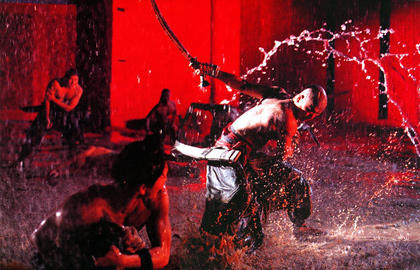
Other characteristics that contribute to The Blade’s cult status are its archetypal characters, highly stylized art direction, impressionistic photography reminiscent of Wong Kar Wai films, and unforgettable scenes (including one of cinema’s most frenzied and viscerally powerful showdowns). Though its storyline is pretty standard for a wuxia martial arts film, its subtext contains an abundance of philosophical questions about the nature of morality, violence, religion, sex, commerce, disability, pedagogy and memory among other things. The Blade has never had an official DVD release in the U.S. but fortunately this subtitled version was uploaded to YouTube last year:

Saturday Matinee: The Holy Mountain

images

There was once a time when seeking out cult movies was a challenge, involving a combination of dedicated effort and luck to hear about them and to actually be able to see them. Even learning what exactly is a cult film was not so common. Today, with internet communities that thrive on niche interests and novelty, most of us have an idea of what they are. For those who don’t there’s always wikipedia, but it used to be knowledge gained mostly through word of mouth or books discovered in stores or libraries like Midnight Movies by Stuart Samuels and Cult Movies by Danny Peary. To watch such films one had to be lucky enough to live near video stores or independent theaters managed by the right kinds of people (weirdos) or be able to visit such places on trips. Obscure or pirated videotapes could sometimes be ordered by mail through catalogs and magazines or found at comic conventions. Sometimes college campuses would also have small screenings organized by student film societies. Once in a blue moon, some of these films would even air on late night network or cable television.

To do my small part to carry on the cult movie tradition I will feature old and new examples of such films every Saturday that can be viewed in their entirety on YouTube. The first is “The Holy Mountain”, which is appropriate because the director, Alejandro Jodorowsky also created “El Topo”, one of the early acknowledged cult classics.