What Happened To The Truth Movement?

Over the years many aspects of the “truth movement” have devolved into an insufferable dumpster fire. But we can still salvage it.

By Benny Wills

Source: The Free Thought Project

From 2004 – 2016, I felt like I was a part of something special. I was participating in an “awakening.” The world was changing. Consciousness was shifting. The hidden hand was being exposed and all secrets were being revealed!

Right?

Or maybe it was wishful thinking.

9/11 happened. And for the next decade and a half, people all over the world began to question the events of that day. Then, major events in general. It was the beginning of an uprising. A revolution!

Right…?

Something else emerged during that time. Social media.

Social media has its upsides and downsides. Mostly upsides. But the downsides have serious ramifications. Specifically on communication.

Social media brings us together and tears us apart.

2001: A Truth Odyssey

By 2001, almost everyone was online and connected to the internet. But it was still in its infancy.

The iPhone didn’t exist. There was no YouTube, Facebook, Instagram, or Twitter. Even MySpace wasn’t around yet.

We had access to the internet, but we had no idea what we were in store for.

As the internet expanded, so did our ability to share information.

Alternative perspectives, counter-narratives, and “conspiracy theories” became more accessible. For the first time (possibly) in history, “official stories” were being challenged in real time. With evidence to support claims.

I was dubious about 9/11 as it was happening. Not because of the internet. Not because I was a conspiracy theorist. But because I hated George Bush. As a born and raised Democrat, I didn’t trust him. I was staunchly anti-war (and still am), and I knew America’s response to the attacks was going to be insane.

A few years later, someone shared a documentary with me called Loose Change. A film deconstructing the 9/11 narrative. My mind was blown, and it was off to the races.

Down, Down, Down The Rabbit Hole.

YouTube hit the scene in 2005. I used it strictly for conspiracy-related research.

Conspiracy content blew up online. A truth movement had begun. The masses were on the verge of waking up, well, en masse.

Right?!?!

Divide & Conquer

Fast forward to 2024. I have good news and bad news.

The good news is that more people are questioning things than ever. Distrust in anything mainstream is at an all time high.

The bad news:

Societal division is worse than it’s ever been. In my lifetime anyway. It’s hard to even call it division because division implies splitting into two halves.

This is a direct result of thumb-typed communication. (Generation Text.)

These days, most people prefer texting, emailing, or commenting over direct engagement. We yearn for human connection, but we’ve patterned ourselves to avoid it as much as possible. (I’m speaking generally, of course.)

Confronting someone is uncomfortable. But confrontation is a necessary part of human interaction. It’s a key component in solving conflict or avoiding it altogether. But since it can be terrifying, people today have the easy-out of typing instead of speaking.

Typed communication lacks empathy. It’s indirect. Impersonal. It’s both a barrier and a shield.

So people say things to each other online that they would never say out loud. They rip each other apart over the slightest differences of opinion. Many (especially YouTube commenters) hide behind avatars and pseudonyms to say whatever they want with no accountability.

Basically, everyone has free rein to be an asshole with zero repercussions.

Worst of all, no one is listening to each other anymore.

We haven’t just been divided; we’ve been fractalized into smithereens.

Awake Vs. Woke

The “awake” crowd is as insufferable as the “woke” one. Change my mind.

Mean-spirited mudslinging and public shaming are the online norm.

Checking the timeline on Facebook, for instance, is a disheartening experience.

It’s a daily mélange of proselytizing, bickering, and judging others. The sentiment is “my way or the highway.”

“I’m right, and you’re wrong. And not only are you wrong, you’re also a stupid idiot.”

Many on the alternative or “conspiracy” side of things have fallen into the same trap as the “sheep” they condemn.

Arrogant allegiance to ideas, beliefs, and opinions.

Critical Thinking

At the height of the truth movement in the 2010s, there was an emphasis on critical thinking. The Trivium was making a comeback.

Grammar, logic, and rhetoric

In that order. 
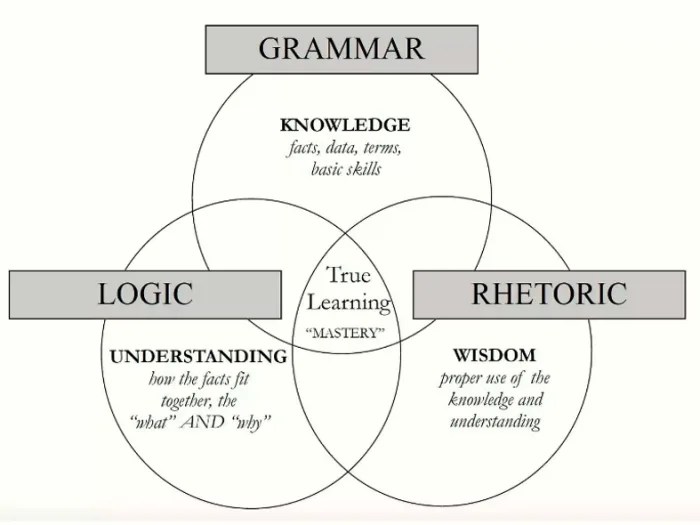
More often than not, online communication is rhetoric without grammar and logic to back it up.

Sweeping generalizations abound.

  • Accusations
  • Declarations
  • Proclamations
  • & Polarizing opinions disguised as facts

But opinions are not facts. (And you are not your opinions.)

“A great many people think they are thinking when they are merely rearranging their prejudices.” – William James

Social media algorithms are designed to keep you in a feedback loop.

A lot of people use their (typed) voice online to “speak the truth.” But they’re preaching to the choir in an echo chamber.

There’s camaraderie to be found in this. Which is good. But the likelihood of their rantings reaching those who (they feel) need to hear them is small.

The aggression that comes through many posts is ugly and derogatory.

Anger

Anger is a powerful emotion. But it’s like fire. It can warm your house or burn it down.

“Heat not a furnace for your foe so hot that it do singe yourself.” – William Shakespeare

Many people lean on anger to convey their conviction about a topic. They use it to stress the importance of something. But more often than not, it’s ineffective.

Anger is best utilized when it’s the seed preceding something more interesting.

In other words, anger alone is a weak emotion for personal expression.

When anger sparks an idea, and that idea is built upon with clarity and care, the expression of that idea has the power to shift someone’s perspective.

Many of my poems and JoyCamp videos came from an angry place. But anger is nowhere to be found in the final product.

Some think I’m too soft in my approach. Well, they’re welcome to think whatever they want. I’ve learned through trial and error that bluntly and angrily stating “the truth” is a fool’s errand. People don’t want to hear it, no matter how right or passionate you are.

Use anger like clay and sculpt it.

I tried anger in my 20s, and it got me nowhere. If anything, it only made situations worse. Speaking loudly and angrily puts more distance between your conversation partner and the point you want them to understand.

I’m committed to the truth and helping others discover it for themselves. Over the course of 15 years, I developed a nuanced approach to communication that actually works. One that I’ve taught to hundreds of people in my Parrhesia program (now called Free Your Speech).

If you didn’t pull the trigger on Parrhesia when I was offering it live, you can still purchase the course itself.

>>Free Your Speech: The Art of Communication

I’ve dropped the price to $149. It’s an election year. It’s probably worth your while.

Logic

It’s agonizing to witness your friends, family, and society at large fall into what you perceive as traps.

What’s painfully obvious to you is beyond absurd or ridiculous to them. And no matter how much you try to convince them otherwise, they double down on their commitment to the trap.

People are not logical. They’re emotional and motivated by fear, comfort, and ego.

“No one can possibly behave above his own level of understanding. Don’t expect people to do any better than they are compelled to do at their present level. Your problem is assuming that they should and could behave better. Understand this and annoyance disappears. As you gradually awaken you will feel the urge to share your discovery with others. Because you will find others in various stages of receptivity, remember this: Never give more than others can understand and appreciate in the moment. This is cosmic law. To try and give what others cannot receive is like tossing a ball against a brick wall—it bounces back to strike you. Jesus explained this law by saying that we should not cast our pearls before swine; that is, before those whose comprehension of truth makes them indifferent or hostile about it.” – François Fénelon

This is the cornerstone of my communication philosophy and approach.

The Real Awakening

There is no truth movement. There never was. There is only your journey to discovering what the truth is.

Pick your lane and choose your battles wisely.

Worry less about the world and other people’s opinions.

Concern yourself with what you’re capable of. Challenge your comfort zone. And focus your efforts on how you can help.

The most exciting rabbit hole is YOU.

Until next time.

Much love,

Benny

PS- Build Bridges
Philosophy cannot resolve the question ‘How should we live?’

By Dave Ellis

Source: aeon

The question How should we live? is one that many ask in a crisis, jolted out of normal patterns of life. But that question is not always a simple request for a straightforward answer, as if we could somehow read off the ‘correct’ answer from the world.

This sort of question can be like a pain that requires a response that soothes as much as it resolves. It is not obvious that academic philosophy can address such a question adequately. As the Australian philosopher Raimond Gaita has suggested, such a question emerges from deep within us all, from our humanity, and, as such, we share a common calling in coming to an answer. Academia often misses the point here, ignoring the depth, and responding as if problems about the meaning of life were logical puzzles, to be dissolved or dismissed as not real problems, or solved in a single way for all time. True, at various times philosophers such as Gilbert Ryle and more recently Mikel Burley have called for a revision of academia’s approach towards these sorts of questions, for a ‘thickened’ or expanded conception. But, while improving our awareness of their complexity and diversity, such approaches still fail to address the depth that their human origin provides.

The presence of a humanness, or a depth, to these sorts of questions comes not just from the context in which they’re asked, but also from their origin, their speaker. They are real questions for real people, and shouldn’t be dismissed with a logical flourish or treated like an interesting topic for a seminar. I would laugh if I heard a computer ask How should we live? after beating it at chess, but I would cry to hear a wife ask her husband, on the death of their son, How should we live? Although the same words have been uttered, these questions have a different form: the mother’s question contains a qualitative depth, a humanness that isn’t there in the computer’s question. We must acknowledge this if we want to find an answer to the specific question she asked with such poignancy.

The computer is a thing that cannot meaningfully ask those sorts of questions; in contrast, it’s offensive to call a person a ‘thing’. Only a human can ask that sort of question within this sort of context. We would hear the mother’s words and say that they contain a depth that’s revealing something perhaps previously hidden about herself; the computer’s question isn’t even said to be shallow. It seems to have nothing of that sort to reveal about itself whatsoever, like a parrot repeating the words it has been taught without the complexity of the human context that gives them their usual meaning. This isn’t to say that computers won’t one day be intelligent, ‘conscious’ or ‘sentient’, or that human language is ‘private’; it’s closer to the Wittgensteinian remark that: ‘If a lion could talk, we could not understand him.’

This means that the form that a language takes reflects the complex social context of the life of the speaker, and the degree to which I share a similar form of life with the speaker is the same degree to which I can meaningfully understand the utterance. The ‘life’ of the computer, we suppose, is either one-dimensional due to it lacking depth or, even if it has depth, it would be uncommunicable through human language, because, simply put, we and they differ so much. The humanness that provides the depth to our language is simply inaccessible to silicon chips and copper wires, and vice versa.

This depth to the human condition is part of what we mean when we speak of our humanity, spirit or soul, and anyone who wishes to question or explore this aspect of the human condition must do so in a form of language that can access and replicate its depth. We call those sorts of languages spiritual. But this way of speaking shouldn’t be taken literally. It doesn’t mean that spirits, souls and God exist, or that we must believe in their literal existence in order to use this sort of language.

Questions about the meaning of life and others of a similar kind are often misconstrued by those too ready to think of them as straightforward requests for an objective true answer.

Consider, for example, what atheists mean by ‘soul’ when they refute the cognitive proposition that asserts the literal existence of souls, in comparison with what I mean when I describe slavery as soul-destroying. If atheists were to argue that slavery cannot be soul-destroying because souls don’t exist, then I would say that there’s a meaning here that’s lost on them by being overly literal. If the statement ‘Slavery is soul-destroying’ is forced into a purely cognitive form, then not only does it misrepresent what I mean to say, it actively prevents me from ever saying it. I want to express something that represents the depth of the sort of experience I’m having: this isn’t a matter of making an implied statement about whether or not souls exist – it’s not affected by the literal existence or non-existence of souls. This sort of meaning to spiritual language is found at a different dimension to where cognitivists look, irrespective of their atheism, and this is achieved through our capacity to embed a dimension of depth to the form of our language through the non-cognitive process of expressing, describing and evoking our sense of humanity within one another.

When considering how to answer the question How should we live?, we should first reflect on how it is being asked – is it a cognitive question looking for a literal matter-of-fact answer, or is it also in part a non-cognitive spiritual remark in answer to a particular human, and particularly human, situation? This question, so often asked by us in times of crisis and despair, or love and joy, expresses and indeed defines our sense of humanity.

Why Do Some Men Rape?


By Robert J. Burrowes

A recent report from Equality Now titled ‘The World’s Shame: The Global
Rape Epidemic‘ offered a series of recommendations for strengthened laws to deter and
punish sexual violence against women and girls.

However, there is substantial evidence that legal approaches to dealing
with violence in any context are ineffective. For example, the empirical
evidence on threats of punishment (that is, violence) as deterrence and
the infliction of punishment (that is, violence) as revenge reveals
variable impact and context dependency, which is readily apparent
through casual observation. There are simply too many different reasons
why people break laws in different contexts. See, for example, ‘Crime
Despite Punishment‘.

Moreover, given the overwhelming evidence that violence is rampant in
our world and that the violence of the legal system simply contributes
to and reinforces this cycle of violence, it seems patently obvious that
we would be better off identifying the cause of violence and then
designing approaches to address this cause and its many symptoms
effectively. And reallocating resources away from the legal and prison
systems in support of approaches that actually work.

So why do some men rape?

All perpetrators of violence, including rapists, suffered enormous
violence during their own childhoods. This violence will have usually
included a great deal of ‘visible’ violence (that is, the overt physical
violence that we all readily identify) but, more importantly, it will
have included a great deal of ‘invisible’ and ‘utterly invisible’
violence as well: the violence perpetrated by adults against children
that is not ordinarily perceived as violent. For a full explanation, see
Why Violence?‘ and ‘Fearless Psychology and Fearful Psychology: Principles and Practice‘.

This violence inflicts enormous damage on a child’s Selfhood leaving
them feeling terrified, self-hating and powerless, among other horrific
feelings. However, because we do not allow children the emotional space
to feel their emotional responses to our violence, these feelings of
terror, self-hatred and powerlessness (among a multitude of others),
become deeply embedded in the child’s unconscious and drive their
behaviour without their conscious awareness that they are doing so.

So what is ‘invisible’ violence? It is the ‘little things’ we do every
day, partly because we are just ‘too busy’. For example, when we do not
allow time to listen to, and value, a child’s thoughts and feelings, the
child learns to not listen to themSelf thus destroying their internal
communication system. When we do not let a child say what they want (or
ignore them when they do), the child develops communication and
behavioural dysfunctionalities as they keep trying to meet their own
needs (which, as a basic survival strategy, they are genetically
programmed to do).

When we blame, condemn, insult, mock, embarrass, shame, humiliate,
taunt, goad, guilt-trip, deceive, lie to, bribe, blackmail, moralize
with and/or judge a child, we both undermine their sense of Self-worth
and teach them to blame, condemn, insult, mock, embarrass, shame,
humiliate, taunt, goad, guilt-trip, deceive, lie, bribe, blackmail,
moralize and/or judge.

The fundamental outcome of being bombarded throughout their childhood by
this ‘invisible’ violence is that the child is utterly overwhelmed by
feelings of fear, pain, anger and sadness (among many others). However,
parents, teachers and other adults also actively interfere with the
expression of these feelings and the behavioural responses that are
naturally generated by them and it is this ‘utterly invisible’ violence
that explains why the dysfunctional behavioural outcomes actually occur.

For example, by ignoring a child when they express their feelings, by
comforting, reassuring or distracting a child when they express their
feelings, by laughing at or ridiculing their feelings, by terrorizing a
child into not expressing their feelings (e.g. by screaming at them when
they cry or get angry), and/or by violently controlling a behaviour that
is generated by their feelings (e.g. by hitting them, restraining them
or locking them into a room), the child has no choice but to
unconsciously suppress their awareness of these feelings.

However, once a child has been terrorized into suppressing their
awareness of their feelings (rather than being allowed to have their
feelings and to act on them) the child has also unconsciously suppressed
their awareness of the reality that caused these feelings. This has many
outcomes that are disastrous for the individual, for society and for
nature because the individual will now easily suppress their awareness
of the feelings that would tell them how to act most functionally in any
given circumstance and they will progressively acquire a phenomenal
variety of dysfunctional behaviours, including some that are violent
towards themselves, others and/or the Earth.

So what is happening psychologically for the rapist when they commit the
act of rape? In essence, they are projecting the (unconsciously
suppressed) feelings of their own victimhood onto their rape victim.
That is, their fear, self-hatred and powerlessness, for example, are
projected onto the victim so that they can gain temporary relief from
these feelings. Their fear, temporarily, is more deeply suppressed.
Their self-hatred is projected as hatred of their victim. Their
powerlessness is temporarily relieved by a sense of being in control,
which they were never allowed to be, and feel, as a child. And similarly
with their other suppressed feelings. For example, a rapist might blame
their victim for their dress: a sure sign that the rapist was endlessly,
and unjustly, blamed as a child and is (unconsciously) angry about that.

The central point in understanding violence is that it is psychological
in origin and hence any effective response must enable the suppressed
feelings (which will include enormous rage at the violence they
suffered) to be safely expressed. For an explanation of what is
required, see ‘Nisteling: The Art of Deep Listening’ which is referenced
in ‘My Promise to Children’.

The legal system is simply a socially endorsed structure of violence and
it uses violence, euphemistically labeled ‘punishment’, in a perverse
attempt to terrorise people into controlling their behaviours or being
treated violently in revenge by the courts if they do not. This approach
is breathtakingly ignorant and unsophisticated in the extreme and a
measure of how far we are from responding powerfully to the pervasive
problem of violence in our world. See ‘The Rule of Law: Unjust and
Violent’  and ‘Punishment is Violent and Counterproductive’.

So what are we to do?

Well we can continue to lament violence against women (just as some
lament other manifestations of violence such as war, exploitation and
destruction of the environment, for example) and use the legal system to
reinforce the cycle of violence by inflicting more violence as
‘punishment’.

Or we can each, personally, address the underlying cause of all
violence.

It might not be palatable to acknowledge and take steps to address your
own violence against children but, until you do, you will live in a
world in which the long-standing and unrelenting epidemic of violence
against children ensures that all other manifestations of human violence
continue unchecked. And our species becomes extinct.

If you wish to participate in the worldwide effort to end human
violence, you might like to make ‘My Promise to Children’ outlined in
the article cited above and to sign the online pledge of ‘The People’s
Charter to Create a Nonviolent World‘.

You might also support initiatives to devote considerable societal
resources to providing high-quality emotional support (by those expert
at nisteling) to those who survive rape. This support cannot be provided
by a psychiatrist. See ‘Defeating the Violence of Psychiatry‘. Nisteling
will enable those who have suffered from trauma to heal fully and
completely, but it will take time.

Importantly, the rapist needs this emotional support too. They have a
long and painful childhood from which they need a great deal of help to
recover. It is this healing that will enable them to accurately identify
the perpetrators of the violence they suffered and about whom they have
so many suppressed (and now projected) feelings which need to be felt
and safely expressed.

You need a lot of empathy and the capacity to nistel to address violence
in this context meaningfully and effectively. You also need it to raise
compassionate and powerful children in the first place.


Biodata: Robert J. Burrowes has a lifetime commitment to understanding
and ending human violence. He has done extensive research since 1966 in
an effort to understand why human beings are violent and has been a
nonviolent activist since 1981. He is the author of ‘Why Violence?
His email address is flametree@riseup.net
and his website is at http://robertjburrowes.wordpress.com


Robert J. Burrowes
P.O. Box 68
Daylesford
Victoria 3460
Australia
Email: flametree@riseup.net

Websites:
Nonviolence Charter
Flame Tree Project to Save Life on Earth
‘Why Violence?’
Nonviolent Campaign Strategy
Nonviolent Defense/Liberation Strategy
Anita: Songs of Nonviolence
Robert Burrowes
Global Nonviolence Network