Why You Should Stop Trusting ‘The Experts’

We’re constantly told to “trust the experts”, but that is phenomenally bad advice.
By Jeremy R. Hammond

Source: JeremyRHammond.com

“Trust the experts,” we are constantly being told, whatever the topic of discussion. The problem with this advice is that the so-called “experts” are frequently wrong, sometimes as a result of plain incompetence and other times because it is their function to propagandize rather than to educate.

For instance, I got my start doing citizen journalism speaking out against the US government’s planned war on Iraq. In 2002 and early 2003, the government claimed that Iraq had stockpiles of chemical and biological weapons, active weapons manufacturing programs, and an active nuclear program aimed at producing a nuclear bomb. Mainstream media outlets like the New York Times uncritically parroted the government’s claims. All the “expert” analysts and commentators towed the official line.

When I would point out to people that there was no credible evidence to support the government’s claims that Iraq had weapons of mass destruction (WMD) and that the documentary record rather indicated that Iraq had been disarmed of the weapons it produced during the 1980s with the support of the US government, I was frequently confronted with the idea that we should trust the expert intelligence analysts because surely government policymakers must have classified information supporting their case that they just couldn’t share with the public.

Later, when the Central Intelligence Agency (CIA) issued its official report acknowledging that Iraq had indeed been disarmed by UN inspectors by 1991 and never restarted its weapons programs, a whole new propaganda narrative was developed to whitewash how the US government lied to the American people and the world. We were then fed the myth that there had been an “intelligence failure”, the truth being that the government had successfully waged a disinformation campaign against the public for the purpose of manufacturing consent for an illegal war of aggression that left Iraq devastated, with negative ripple effects throughout the Middle East, including the war’s precipitation of the rise of the Islamic State of Iraq and Syria (ISIS).

Another example is the housing bubble that precipitated the 2008 financial crisis. The mainstream “experts” insisted that there was no bubble, that the economy was rolling along nicely. Right up to the bubble’s peak, Federal Reserve Chairman Ben Bernanke refused to see it. In the New York Times, throughout the 2000s, Keynesian economist Paul Krugman lauded the Fed’s inflationary monetary policy that was the principal cause of the housing bubble only to ludicrously blame the bubble on the forces of the free market after it burst.

Meanwhile, free market economists schooled in the ideas of Austrian economics, so called because its founders and early luminaries hailed from Austria, were accurately warning how the Fed’s policy of maintaining artificially low interest rates—meaning rates below where they would otherwise be if determined by the market rather than by a roomful of policymakers—was fueling a housing bubble that would cause economic devastation when it inevitably burst. Congressman Ron Paul famously warned about this as early as 2001, yet we were consistently told by the mainstream “experts” that we shouldn’t listen to him or other advocates of liberty in the marketplace.

The preposterousness of the mainstream narrative was so overwhelming, it prompted me to write a book titled Ron Paul vs. Paul Krugman: Austrian vs. Keynesian Economics in the Financial Crisis, which ended up getting a rave review by none other than Barron’s. Gene Epstein, the former Economics and Books editor for Barron’s said of it:

Any work of economics that can make you laugh is at least worth a look. If in less than 100 pages it also informs you about a subject of great importance, it might just qualify as a must-read. Jeremy Hammond, a political journalist self-taught in economics and a writer of rare skill, has produced such a book…. This short work conveys more insight into the causes and cures of business cycles than most textbooks, and more about the recent business cycle than most volumes of much greater length.

Once again, we could see that there is a whole class of “experts” whose primary function was not to truly educate us about how the economy functions but to manufacture consent for the existence of central banking—the Fed being a government-legislated private monopoly over the currency supply.

That episode also once again illustrates how any non-expert willing to commit the time to self-education can easily see through the lies and deceptions propagated by the “experts”.

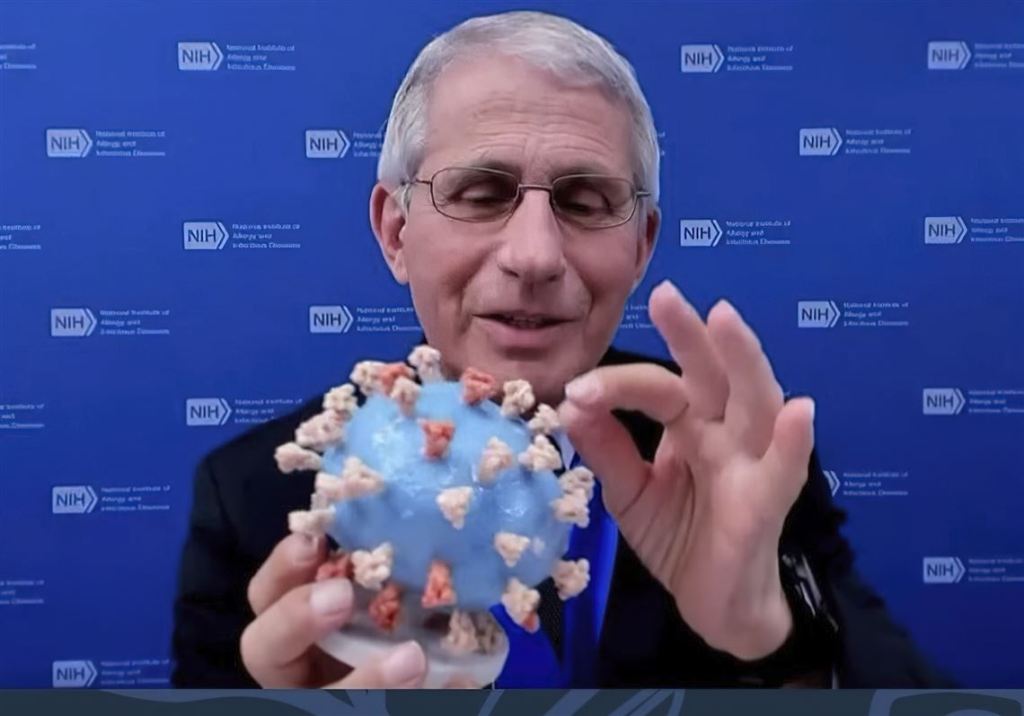
Arguably, there is no more perfect example of how the “experts” get things completely wrong than the governmental responses to the COVID‑19 pandemic. While I and others fervently opposed the lockdown measures from the start on the grounds that they would do more harm than good, the thought-controlling media insisted that we must trust the government’s “experts” like Dr. Anthony Fauci. We should “follow the science” we were told, while Fauci claimed to be science incarnate, deeming himself beyond reproach by proclaiming that to criticize him was to attack science itself.

Predictably, the proclaimed benefits of lockdowns never manifested in the data while the harms have been devastating, with negative consequences being disproportionately borne by children, who are at the lowest risk from SARS‑CoV‑2 infection.

I was also warning people since March 2020 that the endgame of the lockdown measures was coerced mass vaccination, which was dubbed a “conspiracy theory” by the mainstream media but nevertheless came to pass.

While all the “experts” in the so-called “public health” establishment were proclaiming that widespread acceptance of the mRNA COVID‑19 vaccines would end the pandemic by conferring herd immunity, dissident voices like my own were being censored for telling the truth that there was no scientific evidence that the vaccines would induce durable sterilizing immunity that would prevent infection and transmission of the virus.

I was also warning since very early into the mass vaccination campaign that the policy goal of getting everyone vaccinated could prolong the pandemic and worsen outcomes in the long-term because of the immunologic phenomenon of “original antigenic sin” and the opportunity cost of superior natural immunity. These warnings, too, proved prescient as we now know from the available scientific evidence that the mRNA COVID‑19 vaccines do result in an “immune imprinting” so that vaccinated individuals are stuck generating a suboptimal immune response to circulating SARS‑CoV‑2 variants.

After it became obvious from the data that the vaccines failed to prevent infection and transmission of the virus, the media went so far in their efforts to defend the criminal regime of lockdowns and coerced mass vaccination by gaslighting us and absurdly denying that the COVID‑19 vaccines were sold to the public on the basis of lies.

We’re also supposed to trust doctors, but my own household’s experience with the medical establishment led us to the opposite conclusion. The doctors were not just unhelpful; they were less than useless. Especially in my wife’s case, listening to them caused more harm than good. In fact, it wasn’t until we learned to stop listening to the doctors and started trusting our own judgment that my wife and I both found a path to healing from the respective health problems we used to have (leaky gut in my case and mercury toxicity from dental amalgams in my wife’s).

Throughout the time that I was seeking help from the so-called “health care” system, I was repeatedly confronted by doctors whose ignorance was matched only by their arrogance and condescension. I ultimately bypassed the doctors by researching our symptoms directly in the medical literature; we diagnosed ourselves and successfully treated the root cause of our respective symptoms (taking steps to heal my gut and getting the mercury fillings safely removed followed by a two-year mercury detox regimen, respectively).

The supposed “experts” with an “MD” after their name were far more interested in lazily pushing pharmaceutical products on us to treat symptoms than in doing their job to try to figure out what the root cause was, much less in figuring out treatments aimed at addressing the underlying cause.

So, the next time you hear someone telling you to place your trust in the “experts”, emphasize the foolishness of placing blind faith in supposed authorities in lieu of doing one’s own research and thinking for oneself, and remind the person how the “experts” are frequently nothing more than professional propagandists serving a given political or financial agenda.

Silicon Valley Bank Crisis: The Liquidity Crunch We Predicted Has Now Begun

A worker, middle, tells customers that the Silicon Valley Bank headquarters is closed on Friday, March 10, 2023, in Santa Clara, California. Silicon Valley Bank was shut down on Friday morning by California regulators and was put in control of the U.S. Federal Deposit Insurance Corporation. (Justin Sullivan/Getty Images/TNS)

By Brandon Smith

Source: Alt-Market.us

There has been an avalanche of information and numerous theories circulating the past few days about the fate of a bank in California know as SVB (Silicon Valley Bank). SVB was the 16th largest bank in the US until it abruptly failed and went into insolvency on March 10th. The impetus for the collapse of the bank is tied to a $2 billion liquidity loss on bond sales which caused the institution’s stock value to plummet over 60%, triggering a bank run by customers fearful of losing some or most of their deposits.

There are many fine articles out there covering the details of the SVB situation, but what I want to talk about more is the root of it all. The bank’s shortfalls are not really the cause of the crisis, they are a symptom of a wider liquidity drought that I predicted here at Alt-Market months ago, including the timing of the event.

First, though, let’s discuss the core issue, which is fiscal tightening and the Federal Reserve. In my article ‘The Fed’s Catch-22 Taper Is A Weapon, Not A Policy Error’, published in December of 2021, I noted that the Fed was on a clear path towards tightening into economic weakness, very similar to what they did in the early 1980s during the stagflation era and also somewhat similar to what they did at the onset of the Great Depression. Former Fed Chairman Ben Bernanke even openly admitted that the Fed caused the depression to spiral out of control due to their tightening policies.

In that same article I discussed the “yield curve” being a red flag for an incoming crisis:

…The central bank is the largest investor in US bonds. If the Fed raises interest rates into weakness and tapers asset purchases, then we may see a repeat of 2018 when the yield curve started to flatten. This means that short term treasury bonds will end up with the same yield as long term bonds and investment in long term bonds will fall.”

As of this past week the yield curve has been inverted, signaling a potential liquidity crunch. Both Jerome Powell (Fed Charman) and Janet Yellen (Treasury Secretary) have indicated that tightening policies will continue and that reducing inflation to 2% is the goal. Given the many trillions of dollars the Fed has pumped into the financial system in the past decade as well as the overall weakness of general economy, it would not take much QT to crush credit markets and by extension stock markets.

As I also noted in 2021:

We are now at that stage again where price inflation tied to money printing is clashing with the stock market’s complete reliance on stimulus to stay afloat. There are some that continue to claim the Fed will never sacrifice the markets by tapering. I say the Fed does not actually care, it is only waiting for the right time to pull the plug on the US economy.”

But is that time now?  I expanded on this analysis in my article ‘Major Economic Contraction Coming In 2023 – Followed By Even More Inflation’, published in December of 2022. I noted that:

This is the situation we are currently in today as 2022 comes to a close. The Fed is in the midst of a rather aggressive rate hike program in a “fight” against the stagflationary crisis that they created through years of fiat stimulus measures. The problem is that the higher interest rates are not bringing prices down, nor are they really slowing stock market speculation. Easy money has been too entrenched for far too long, which means a hard landing is the most likely scenario.”

I continued:

In the early 2000s the Fed had been engaged in artificially low interest rates which inflated the housing and derivatives bubble. In 2004, they shifted into a tightening process. Rates in 2004 were at 1% and by 2006 they rose to over 5%. This is when cracks began to appear in the credit structure, with 4.5% – 5.5% being the magic cutoff point before debt became too expensive for the system to continue the charade. By 2007/2008 the nation witnessed an exponential implosion of credit…”

Finally, I made my prediction for March/April of 2023:

Since nothing was actually fixed by the Fed back then, I will continue to use the 5% funds rate as a marker for when we will see another major contraction…The 1% excise tax added on top of a 5% Fed funds rate creates a 6% millstone on any money borrowed to finance future buybacks. This cost is going to be far too high and buybacks will falter. Meaning, stock markets will also stop, and drop. It will likely take two or three months before the tax and the rate hikes create a visible effect on markets. This would put our time frame for contraction around March or April of 2023.”

We are now in the middle of March and it appears that the first signs of liquidity crisis are bubbling to the surface with the insolvency of SVB and the shuttering of another institution in New York called Signature Bank.

Everything is tied back to liquidity. With higher rates, banks are hard-pressed to borrow from the Fed and companies are hard-pressed to borrow from banks. This means companies that were hiding financial weakness and exposure to bad investments using easy credit no longer have that option. They won’t be able to artificially support operations that are not profitable, they will have to abandon stock buybacks that make their shares appear valuable and they will have to initiate mass layoffs in order to protect their bottom line.

SVB is not quite Bear Stearns, but it is likely a canary in the coal mine, telling us what is about to happen on a wider scale. Many of their depositors were founded in venture capital fueled by easy credit, not to mention all the ESG related companies dependent on woke loans. That money is gone – It’s dead. Those businesses are quietly but quickly crumbling which also conjured a black hole for deposits within SVB. It’s a terribly destructive cycle. Surely, there are numerous other banks in the US in the same exact position.

I believe this is just the beginning of a liquidity and credit crisis that will combine with overt inflation to produce perhaps the biggest economic crash America has ever seen. SVB’s failure may not be THE initiator, only one among many. I suspect that in this scenario larger US banks may avoid the kind of credit crash that we saw with Bear Stearns and Lehman Brothers in 2008. But, contagion could still strike multiple mid-sized banks and the effects could be similar in a short period of time.

With all the news flooding the wire on SVB it’s easy to forget that all of this boils down to a single vital issue: The Fed’s stimulus measures created an economy utterly addicted to easy and cheap liquidity. Now, they have taken that easy money away. In light of the SVB crash, will the central bank reverse course on tightening, or will they continue forward and risk contagion?

For now, Janet Yellen and the Fed have implemented a limited backstop and a guarantee on deposits at SVB and Signature. This will theoretically prevent a “haircut” on depositor accounts and lure retail investors with dreams of endless stimulus.  It is a half-measure, though – Central bankers have to at least look like they are trying. 

SVB’s assets sit at around $200 billion and Signature’s assets are around $100 billion, but what about interbank exposure and what about the wider implications?  How many banks are barely scraping by to meet their liquidity obligations, and how many companies have evaporating deposits?  The backstop will do nothing to prevent a major contagion.

There are many financial tricks that might slow the pace of a credit crash, but not by much.  And, here’s the kicker – Unlike in 2008, the Fed has created a situation in which there is no escape. If they do pivot and return to systemic bailouts, stagflation will skyrocket even more. If they don’t use QE, then banks crash, companies crash and even bonds become untenable, which puts the world reserve status of the Dollar under threat. What does that lead to? More stagflation. In either case, rapidly rising prices on most necessities will be the consequence.

How long will this process take? It all depends on how the Fed responds. They might be able to drag the crash out for a few months with various stop-gaps. If they go back to stimulus then the banks will be saved along with equities (for a while) but rising inflation will suffocate consumers in the span of a year and companies will still falter. My gut tells me that they will rely on contained interventions but will not reverse rate hikes as many analysts seem to expect.

The Fed will goose markets up at times using jawboning and false hopes of a return to aggressive QE or near-zero rates, but ultimately the trend of credit markets and stocks will be steady and downward.  Like a brush fire in a wind storm, once the flames are sparked there is no way to put things back the way they were.  If their goal was in fact a liquidity crunch, well, mission accomplished.  They have created that exact scenario.  Read my articles linked above to understand why they might do this deliberately.

In the meantime, it appears that my predictions on timing are correct so far. We will have to wait and see what happens in the coming weeks. I will keep readers apprised of events as new details unfold.  The situation is rapidly evolving.

It’s A Fact That Needs Repeating: The Federal Reserve Is A Suicide Bomber

By Brandon Smith

Source: Alt-Market.us

For many years now I have been examining the policies and behaviors of the Federal Reserve because they are in fact the most powerful institution in the US, with far more influence over the fate of America than any single president or branch of government. They have the power to end the economic life of our country in a matter of moments. They hold their finger on the button of multiple financial nuclear bombs, and to this day there are people that still pretend as if they are a mere moderating presence subservient to the White House or Congress.

This is a fallacy proven by history and the admissions from central bankers own mouths. The Fed answers to no one in our government. They answer to a different set of masters, and the blame for the consequences of their policies falls to them and their cohorts.

Last year I published an article titled ‘The Fed’s Catch-22 Taper Is A Weapon, Not A Policy Error.’ In that article I predicted that the Fed would embark on a hiking spree on interest rates in response to inflationary/stagflationary events. I noted that:

We are now at that stage again where price inflation tied to money printing is clashing with the stock market’s complete reliance on stimulus to stay afloat. There are some that continue to claim the Fed will never sacrifice the markets by tapering. I say the Fed does not actually care, it is only waiting for the right time to pull the plug on the US economy.”

At the time I received a lot of resistance to the idea. The usual argument was: “The fed will never raise rates and put stock markets at risk. Why would they destroy the golden goose?”

This position showcases a common misconception about the central bank and its purpose. You see, a lot of people think the Fed exists to keep the US economy afloat, and specifically to keep stock markets afloat. This is incorrect. Every single policy of the Fed since its inception has been a long train of abuses designed to slowly and scientifically whittle down the US economy and bring it to the point of extinction.

The next most common argument is: “Wouldn’t the fed sabotaging the economy eventually destroy them as well?”

The answer is YES, and they don’t care. If you have read my previous work on this issue then you know that the Fed is inexorably tied to the Bank for International Settlements (the “central bank of central banks”) and that they call the shots in terms of coordinated global banking initiatives. The BIS is a globalist institution, not an American one, and its agenda is ideologically globalist in nature. The Fed is a servant of globalism; and if the US economy or our currency need to be brought down through a controlled demolition in order to make the globalist dream of a one world socialist “Utopia” come true, that is exactly what the Fed will do.

I was able to predict that the Fed would continue onward with its interest rate hikes and hawkish position only because I acknowledge what the Fed really is: A suicide bomber. And, they have decided the time is ripe to hike interest rates into economic weakness, just like they did at the onset of the Great Depression.

At the beginning of the Depression the Fed increased interest rates after years of artificially stimulating markets with low cost debt. This prolonged the deflationary crash for many years after. It was not until decades later when former Fed chair Ben Bernanke gave a speech celebrating economist Milton Friedman’s 90th birthday that a central bank official finally admitted that the organization was culpable for the Depression debacle.

In short, according to Friedman and Schwartz, because of institutional changes and misguided doctrines, the banking panics of the Great Contraction were much more severe and widespread than would have normally occurred during a downturn.

Let me end my talk by abusing slightly my status as an official representative of the Federal Reserve. I would like to say to Milton and Anna: Regarding the Great Depression. You’re right, we did it. We’re very sorry. But thanks to you, we won’t do it again.” – Ben Bernanke, 2002

What Ben Bernanke did not admit to was that the engineered deflationary crisis greatly benefited the allies of the Fed – The international corporate bankers. Companies like JP Morgan and Chase National were suddenly in a prime position to seize unlimited power in the US.

So, they’ve done it before, why wouldn’t they do it again?

The next argument that I hear constantly is that the Fed is “ignorant” and they don’t know what they are doing. This is nonsense. Jerome Powell knows EXACTLY what he is doing, and here is the proof – In October of 2012 the Fed held a meeting in which Powell warned that markets and corporations had become addicted to the Fed’s easy money policies. If they decided to taper their stimulus measures and raise rates, there would be potentially disastrous blowback. Powell argued that:

“…I think we are actually at a point of encouraging risk-taking, and that should give us pause. Investors really do understand now that we will be there to prevent serious losses. It is not that it is easy for them to make money but that they have every incentive to take more risk, and they are doing so. Meanwhile, we look like we are blowing a fixed-income duration bubble right across the credit spectrum that will result in big losses when rates come up down the road. You can almost say that that is our strategy.” – Jerome Powell

As he admitted, it is indeed their strategy. Powell was not the Fed chairman at the time, so he may not have been aware of the full agenda, but he is certainly aware now. Why would Powell undertake the exact policy action he once warned would result in a full spectrum implosion of the credit bubble? Probably because he was told to.

Powell knows the history of the Great Depression and he knows what will happen when the Fed raises rates into economic weakness and he is doing it anyway. He already tried a test run of rate hikes back in 2018 and the results were not hard to figure out; markets began to tank. We should never forget that the central banks are fully cognizant of the effects of their endeavors. As I stated back in February:

The rate hikes of 2018 were a test run for a more aggressive and deliberately engineered crisis down the road. The Fed has its own agenda, it does not care about protecting U.S. markets, nor does it even care about protecting the U.S. economy in general.

I hold that the Fed is a weapon for social and political change within America and part of its job is to greatly reduce the standard of living of the population while making it appear as if this decline is a “natural” consequence of the U.S. System.”

This leads us to the final question – What happens next?

That’s easy to answer: The fed continues to hike rates well into next year and will not reverse course or capitulate and return to stimulus. The dovish predictions were wrong. The people that said the Fed would not raise rates were wrong. The people that said the Fed would never remove support from stock markets were wrong. This process is ongoing and the effects will grow as the months pass, but those that were hoping for a manic return to the days of bailouts and QE are going to be deeply disappointed.

This is a stagflationary crash, and as such we are going to experience the worst of both deflationary and inflationary worlds. Prices will remain high while GDP goes negative. Sales will decline and jobs will decline as we enter into the end of this year. There is no way around this. The Fed will have all kinds of theories and misdirections on why these things are happening, and they will try to distract the public as much as possible in the meantime.

What the Fed will never do is admit that a crash is happening until it is too late for people to act. They will never warn the populace of the dangers and they will never tell people to prepare. Watch as they tap dance and tell the public that all the pain is “transitory.” Then, watch as the dust settles and they tell people that “no one could have seen this coming.” It’s all very predictable, because it’s all been done before.

The US economy has not recovered and will not recover

6a00d83451d87169e2014e8c142d89970d

By Paul Craig Roberts

Source: Intrepid Report

The US economy died when middle class jobs were offshored and when the financial system was deregulated.

Jobs offshoring benefitted Wall Street, corporate executives, and shareholders, because lower labor and compliance costs resulted in higher profits. These profits flowed through to shareholders in the form of capital gains and to executives in the form of “performance bonuses.” Wall Street benefitted from the bull market generated by higher profits.

However, jobs offshoring also offshored US GDP and consumer purchasing power. Despite promises of a “New Economy” and better jobs, the replacement jobs have been increasingly part-time, lowly-paid jobs in domestic services, such as retail clerks, waitresses and bartenders.

The offshoring of US manufacturing and professional service jobs to Asia stopped the growth of consumer demand in the US, decimated the middle class, and left insufficient employment for college graduates to be able to service their student loans. The ladders of upward mobility that had made the United States an “opportunity society” were taken down in the interest of higher short-term profits.

Without growth in consumer incomes to drive the economy, the Federal Reserve under Alan Greenspan substituted the growth in consumer debt to take the place of the missing growth in consumer income. Under the Greenspan regime, Americans’ stagnant and declining incomes were augmented with the ability to spend on credit. One source of this credit was the rise in housing prices that the Federal Reserve’s low interest rate policy made possible. Consumers could refinance their now higher-valued home at lower interest rates and take out the “equity” and spend it.

The debt expansion, tied heavily to housing mortgages, came to a halt when the fraud perpetrated by a deregulated financial system crashed the real estate and stock markets. The bailout of the guilty imposed further costs on the very people that the guilty had victimized.

Under Fed Chairman Bernanke, the economy was kept going with Quantitative Easing, a massive increase in the money supply in order to bail out the “banks too big to fail.” Liquidity supplied by the Federal Reserve found its way into stock and bond prices and made those invested in these financial instruments richer. Corporate executives helped to boost the stock market by using the companies’ profits and by taking out loans in order to buy back the companies’ stocks, thus further expanding debt.

Those few benefitting from inflated financial asset prices produced by Quantitative Easing and buy-backs are a much smaller percentage of the population than was affected by the Greenspan consumer credit expansion. A relatively few rich people are an insufficient number to drive the economy.

The Federal Reserve’s zero interest rate policy was designed to support the balance sheets of the mega-banks and denied Americans interest income on their savings. This policy decreased the incomes of retirees and forced the elderly to reduce their consumption and/or draw down their savings more rapidly, leaving no safety net for heirs.

Using the smoke and mirrors of under-reported inflation and unemployment, the US government kept alive the appearance of economic recovery. Foreigners fooled by the deception continue to support the US dollar by holding US financial instruments.

The official inflation measures were “reformed” during the Clinton era in order to dramatically understate inflation. The measures do this in two ways. One way is to discard from the weighted basket of goods that comprises the inflation index those goods whose price rises. In their place, inferior lower-priced goods are substituted.

For example, if the price of New York strip steak rises, round steak is substituted in its place. The former official inflation index measured the cost of a constant standard of living. The “reformed” index measures the cost of a falling standard of living.

The other way the “reformed” measure of inflation understates the cost of living is to discard price rises as “quality improvements.” It is true that quality improvements can result in higher prices. However, it is still a price rise for the consumer as the former product is no longer available. Moreover, not all price rises are quality improvements; yet many prices rises that are not can be misinterpreted as “quality improvements.”

These two “reforms” resulted in no reported inflation and a halt to cost-of-living adjustments for Social Security recipients. The fall in Social Security real incomes also negatively impacted aggregate consumer demand.

The rigged understatement of inflation deceived people into believing that the US economy was in recovery. The lower the measure of inflation, the higher is real GDP when nominal GDP is deflated by the inflation measure. By understating inflation, the US government has overstated GDP growth.

What I have written is easily ascertained and proven; yet the financial press does not question the propaganda that sustains the psychology that the US economy is sound. This carefully cultivated psychology keeps the rest of the world invested in dollars, thus sustaining the House of Cards.

John Maynard Keynes understood that the Great Depression was the product of an insufficiency of consumer demand to take off the shelves the goods produced by industry. The post-WW II macroeconomic policy focused on maintaining the adequacy of aggregate demand in order to avoid high unemployment. The supply-side policy of President Reagan successfully corrected a defect in Keynesian macroeconomic policy and kept the US economy functioning without the “stagflation” from worsening “Philips Curve” trade-offs between inflation and employment. In the 21st century, jobs offshoring has depleted consumer demand’s ability to maintain US full employment.

The unemployment measure that the presstitute press reports is meaningless as it counts no discouraged workers, and discouraged workers are a huge part of American unemployment. The reported unemployment rate is about 5%, which is the U-3 measure that does not count as unemployed workers who are too discouraged to continue searching for jobs.

The US government has a second official unemployment measure, U-6, that counts workers discouraged for less than one-year. This official rate of unemployment is 10%.

When long term (more than one year) discouraged workers are included in the measure of unemployment, as once was done, the US unemployment rate is 23%. (See John Williams, shadowstats.com)

Fiscal and monetary stimulus can pull the unemployed back to work if jobs for them still exist domestically. But if the jobs have been sent offshore, monetary and fiscal policy cannot work.

What jobs offshoring does is to give away US GDP to the countries to which US corporations move the jobs. In other words, with the jobs go American careers, consumer purchasing power and the tax base of state, local, and federal governments. There are only a few American winners, and they are the shareholders of the companies that offshored the jobs and the executives of the companies who receive multi-million dollar “performance bonuses” for raising profits by lowering labor costs. And, of course, the economists, who get grants, speaking engagements, and corporate board memberships for shilling for the offshoring policy that worsens the distribution of income and wealth. An economy run for a few only benefits the few, and the few, no matter how large their incomes, cannot consume enough to keep the economy growing.

In the 21st century US economic policy has destroyed the ability of real aggregate demand in the US to increase. Economists will deny this, because they are shills for globalism and jobs offshoring. They misrepresent jobs offshoring as free trade and, as in their ideology, free trade benefits everyone, claim that America is benefitting from jobs offshoring. Yet, they cannot show any evidence whatsoever of these alleged benefits. (See my book, The Failure of Laissez Faire Capitalism and Economic Dissolution of the West.)

As an economist, it is a mystery to me how any economist can think that a population that does not produce the larger part of the goods that it consumes can afford to purchase the goods that it consumes. Where does the income come from to pay for imports when imports are swollen by the products of offshored production?

We were told that the income would come from better-paid replacement jobs provided by the “New Economy,” but neither the payroll jobs reports nor the US Labor Department’s projections of future jobs show any sign of this mythical “New Economy.”

There is no “New Economy.” The “New Economy” is like the neoconservatives promise that the Iraq war would be a six-week “cake walk” paid for by Iraqi oil revenues, not a $3 trillion dollar expense to American taxpayers (according to Joseph Stiglitz and Linda Bilmes) and a war that has lasted the entirety of the 21st century to date, and is getting more dangerous.

The American “New Economy” is the American Third World economy in which the only jobs created are low productivity, low paid nontradable domestic service jobs incapable of producing export earnings with which to pay for the goods and services produced offshore for US consumption.

The massive debt arising from Washington’s endless wars for neoconservative hegemony now threaten Social Security and the entirety of the social safety net. The presstitute media are blaming not the policy that has devastated Americans, but, instead, the Americans who have been devastated by the policy.

Earlier this month I posted readers’ reports on the dismal job situation in Ohio, Southern Illinois, and Texas. In the March issue of Chronicles, Wayne Allensworth describes America’s declining rural towns and once great industrial cities as consequences of “globalizing capitalism.” A thin layer of very rich people rule over those “who have been left behind”—a shrinking middle class and a growing underclass. According to a poll last autumn, 53 percent of Americans say that they feel like strangers in their own country.

Most certainly these Americans have no political representation. As Republicans and Democrats work to raise the retirement age in order to reduce Social Security outlays, Princeton University experts report that the mortality rates for the white working class are rising. The US government will not be happy until no one lives long enough to collect Social Security.

The United States government has abandoned everyone except the rich.

In the opening sentence of this article, I said that the two murderers of the American economy were jobs offshoring and financial deregulation. Deregulation greatly enhanced the ability of the large banks to financialize the economy. Financialization is the diversion of income streams into debt service. When debt service absorbs a large amount of the available income, the economy experiences debt deflation. The service of debt leaves too little income for purchases of goods and services and prices fall.

Michael Hudson, whom I recently wrote about, is the expert on financialization. His book, Killing the Host, which I recommended to you, tells the complete story. Briefly, financialization is the process by which creditors capitalize an economy’s economic surplus into interest payments to themselves. Perhaps an example would be a corporation that goes into debt in order to buy back its shares. The corporation achieves a temporary boost in its share prices at the cost of years of interest payments that drain the corporation of profits and deflate its share price.

Michael Hudson stresses the conversion of the rental value of real estate into mortgage payments. He emphasizes that classical economists wanted to base taxation not on production, but on economic rent. Economic rent is value due to location or to a monopoly position. For example, beachfront property has a higher price because of location. The difference in value between beachfront and non-beachfront property is economic rent, not a produced value. An unregulated monopoly can charge a price for a service that is higher than the price that would bring that service unto the market.

The proposal to tax economic rent does not mean taxing you on the rent that you pay your landlord or taxing your landlord on the rent that you pay him such that he ceases to provide the housing. By economic rent Hudson means, for example, the rise in land values due to public infrastructure projects such as roads and subway systems. The rise in the value of land opened by a new road and housing and in commercial space along a new subway line is not due to any action of the property owners. This rise in value could be taxed in order to pay for the project instead of taxing the income of the population in general. Instead, the rise in land values raises appraisals and the amount that creditors are willing to lend on the property. New purchasers and existing owners can borrow more on the property, and the larger mortgages divert the increased land valuation into interest payments to creditors. Lenders end up as the major beneficiaries of public projects that raise real estate prices.

Similarly, unless the economy is financialized to such an extent that mortgage debt can no longer be serviced, when central banks lower interest rates property values rise, and this rise can be capitalized into a larger mortgage.

Another example would be property tax reductions and legislation such as California’s Proposition 13 that freeze in whole or part the property tax base. The rise in real estate values that escape taxation are capitalized into larger mortgages. New buyers do not benefit. The beneficiaries are the lenders who capture the rise in real estate prices in interest payments.

Taxing economic rent would prevent the financial system from capitalizing the rent into debt instruments that pay interest to the financial sector. Considering the amount of rents available to be taxed, taxing rents would free production from income and sales taxation, thus lowering consumer prices and freeing labor and productive capital from taxation.

With so much of land rent already capitalized into debt instruments shifting the tax burden to economic rent would be challenging. Nevertheless, Hudson’s analysis shows that financialization, not wage suppression, is the main instrument of exploitation and takes place via the financial system’s conversion of income streams into interest payments on debt.

I remember when mortgage service was restricted to one-quarter of household income. Today mortgage service can eat up half of household income. This extraordinary growth crowds out the production of goods and services as less of household income is available for other purchases.

Michael Hudson and I bring a total indictment of the neoliberal economics profession, “junk economists” as Hudson calls them.

Financial turmoil and increasing risks of a severe worldwide economic recession in 2016-17

images

By Rodrigue Tremblay

Source: Dissident Voice

“May you live in interesting times.”—Popular curse, purported to be a translation of a traditional Chinese curse

“The sources of deflation are not a mystery. Deflation is in almost all cases a side effect of a collapse of aggregate demand—a drop in spending so severe that producers must cut prices on an ongoing basis in order to find buyers. Likewise, the economic effects of a deflationary episode, for the most part, are similar to those of any other sharp decline in aggregate spending—namely, recession, rising unemployment, and financial stress.”—Ben S. Bernanke (1953- ), on November 21, 2002

“I’m about to repeat what I said at this time last year and the year before . . . Sooner or later a crash is coming and it may be terrific. The vicious circle will get in full swing and the result will be a serious business depression. There may be a stampede for selling which will exceed anything that the Stock Exchange has ever witnessed. Wise are those investors who now get out of debt.”—Roger Babson (1875-1967), on September 5, 1929

The onset of 2016 has been most chaotic for global financial markets with, so far, a severe stock market correction. As a matter of fact, the first month of 2016 has witnessed the most severe drop in financial stocks ever, with the MSCI All-Country World Stock Index, which measures major developed and emerging stock markets, dropping more than 20 percent, as compared to early 2015. For sure, there will be oversold rallies in the coming weeks and months, but one can expect more trouble ahead.

Many commentators are saying that the epicentre of this unfolding financial and economic crisis is in China, with the Shanghai Composite Index beginning to plummet at the beginning of the year. In my view, reality is more complex and even though China’s financial and economic problems are contributing to the collapse in commodity prices, the epicenter of the crisis is still in Washington D.C.

That is because the current unfolding crisis is essentially a continuation of the 2007-08 financial crisis which has been temporarily suspended and pushed into the future by the U.S. central bank, the Fed, with its aggressive and unorthodox monetary policy of multiple rounds of quantitative easing (QE), i.e., buying huge quantities of financial assets from commercial mega-banks and other institutions, including mortgage-backed securities, with newly created money. As a consequence, the Fed’s balance sheet went from a little more than one trillion dollars in 2008 to some four and a half trillion dollars when the quantitative easing program was ended in October 2014. Other central banks have followed the Fed example, especially the central bank of Japan and the European central bank, which also adopted quantitative easing policies in monetizing large amounts of financial assets.

Why did the Bernanke Fed adopt such an aggressive monetary policy in 2008? Essentially for three reasons: First, the lame-duck Bush administration in 2008 was clueless about what to do with the financial crisis that had started with the de facto failure of Bear Stearns in the spring of 2008 and of Merrill Lynch in early September 2008, culminating on September 15, 2008, with the failure of the large global investment bank of Lehman Brothers. So the U.S. central bank felt that it had to step in. In fact, it financed the merger of the two first failed mega-banks with the JPMorgan Chase bank and the Bank of America respectively. (For different reasons, it did not intervene in the same way when the Lehman Brothers bank failed.)

Secondly, bankers who have a huge influence in the way the Fed is managed did not want the U.S. government to nationalize the American mega-banks in financial difficulties, as it had done in 1989 when the George H.W. Bush administration established the government-owned Resolution Trust Corporation (RTC) to take over some 747 insolvent savings and loans thrift banks.

Thirdly, the Bernanke Fed was very worried that the 2007-08 banking crisis would lead to a Japanese-style deflation that would wreak havoc with an overleveraged economy. The hope was to avoid a devastating debt-deflation economic depression like the one suffered in the 1930s.

By injecting so much liquidity in the system, the Bernanke Fed created a gigantic financial bubble in stocks and bonds, even though the real economy has grown at a somewhat languishing 2 percent growth rate. Stock prices went into the stratosphere while interest rates fell as bond prices rose. Last December 16, the Fed announced officially that it will no longer blow into the financial balloons and that it was raising short-term interest rates for the first time since the financial crisis, setting the target range for the federal funds rate to between 1/4 to 1/2 percent. This was a signal that the financial party was over. And what’s more, this means that the stock market and the bond market will once again go in different directions, as a reflection of the state of the real economy, no matter what the Fed does.

Since 2008, the U.S. Fed has painted itself into a financial corner from which I personally felt it would be difficult to extricate itself. Indeed, it would be extremely difficult to correct the financial bubbles it has created—as an unintended consequence of salvaging the mega-banks in creating trillions of free money—without damaging the real economy of production and employment. If global stock markets collapse and if price deflation accelerates, making it more difficult to service the debt of consumers, corporations, and government alike, a repeat on a larger scale of what has happened in Japan over the last twenty-five years can be feared. This, at the very least, could lead to a global economic recession in 2016-17. If we go back in history, it could also be a repeat of the 1937-38 crash and recession, eight years after the crash and financial crisis of 1929-32.

One thing can be made clear: The creation of the Fed in 1913, as a semi-public American central bank, has not prevented the occurrence of financial crises. It has, however, been a boon to large banks because it has served as an instrument to socialize their losses.

Stay tuned.


Dr. Rodrigue Tremblay is an international economist and author, whose last two books are The Code for Global Ethics, Prometheus Books, 2010; and The New American Empire, Infinity Publishing, 2003. He can be reached at: rodrigue.tremblay@yahoo.com.