
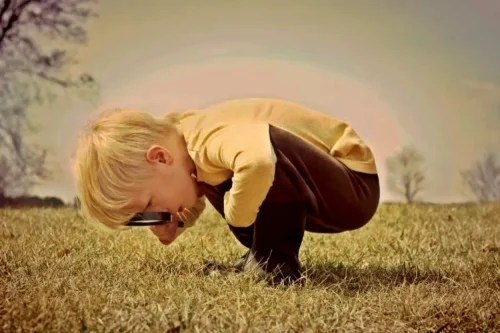
Pandemic? Great Reset? How about… a beginner’s mind?

By Mickey Z.

Source: Dissident Voice

“In the beginner’s mind there are many possibilities. In the expert’s, there are few.” 1

Has there ever been a more urgent time to embrace many possibilities? This age of pervasive uncertainty and division may well be very fertile ground for questioning our assumptions and interrogating our beliefs. In fact, we just might be living in the ideal time to accept that there are limitless ways to perceive even the most contentious issues.

Expert vs. Beginner

The expert’s mind is over-secure in its prowess. Such a mentality may promote shortsighted habits like confirmation bias. Many “authorities” will only seek out (read: cherry-pick) information that validates and justifies their behavior because expertise — real or imagined — causes us to grow less curious.

If we already feel well-versed in a topic, we tend to pay less attention to it. We ask fewer questions. This is a stifling choice even if we know 95 percent of what there is to know about a particular subject. Ideally, this is when we should be paying more attention to it in order to discern the nuances that remain to be learned.

Conversely, the beginner’s mind is ever-hungry for input — regardless of its source or its tendency to reinforce existing beliefs. In the beginner’s mind, there are fewer limits and fewer expectations. There is much more room for revelation and awe. Nothing is taken for granted and even the tiniest detail has the potential to inspire reverence.

The beginner’s mind is basically the polar opposite of today’s social media algorithms, mainstream news headlines, and popular political discourse.

3 (of the many) Benefits of a Beginner’s Mind

Creativity

Habits and structure can be incredibly useful. They can also become an obstacle to innovation. A beginner’s mind encourages us to approach familiar problems with a fresh perspective. This mindset often results in the exploration of avenues that an expert would casually dismiss as “been there, done that.”

Gratitude

A beginner’s mind awakens each morning, ready to wipe the slate clean and start anew. From this fresh perspective, it feels more natural to identify and appreciate your blessings.

Mindfulness

Seeing the world like a beginner prevents you from “going through the motions.” There is a clearer understanding that the present is all you have. The past is where guilt and regret dwell. In the future may lie apprehension and anxiety. Right here, right now, the moment is enough.

How to Rediscover a Beginner’s Mind

By its very definition, there are an infinite number of ways to occupy a beginner’s mind. To follow are some basic guidelines but think of them like Bruce Lee’s finger pointing a way to the moon. As Lee urged, “Don’t concentrate on the finger or you’ll miss all that heavenly glory.”2

1. Reject your ego’s need to be an expert

Eavesdrop on a conversation at the local supermarket. Even better, scroll (without reacting) through most threads on social media. You’ll see and hear so many people pretending they know“what’s really happening” and “what’s gonna happen.” Your ego craves the status of being right. The beginner in you would rather open-mindedly look for reality than be deemed an expert at anything.

2. Slow down

As touched on above, we must avoid going through the motions. Whenever possible, slow down to question and explore. Take your time to learn — even from the most unlikely of sources.

3. Channel your inner child

Re-introduce yourself to some of your closest childhood friends: wonder, mischief, and playfulness. Reject the cynical adult premise of “same shit, different day.”

4. See with new eyes

In the words of Marcel Proust: “The real voyage of discovery consists not in seeking new landscapes, but in having new eyes.”3 Practically speaking, your quest for new eyes can begin with simple exercises like treating your hometown as if you were a tourist and seeing what you can discover.

5. Embrace nonsense 

As Gary Zukav, author of Dancing Wu Li Masters: An Overview of the New Physics, (1979)posits: “Nonsense is nonsense only when we have not yet found that point of view from which it makes sense.”

6. Meditation

Perhaps the most time-worn path to a beginner’s mind is the practice of mindful meditation. Whether you choose a spiritual or secular approach, even ten minutes a day of meditation will expand your consciousness.

The child is in me still and sometimes not so still.4

There is no one right way to inhabit a beginner’s mind. After all, it is not a destination. It’s all about the process, the learning, and those moments of epiphany made possible by not closing off your options… so re-activate your inner child.

Keep re-evaluating what you believe before your perceptions can grow ossified. Don’t limit your explorations by choosing in advance what it is you wish to find. Turn your truth over and over, again and again. Avoid accumulating old answers. Instead, dedicate far more of your time to conjuring up new questions. Through it all, let compassion serve as your compass.

The experts [sic] have gotten us into this mess.

It’s time to give beginners their opportunity to shine.

  1. Shunryu Suzuki, Prologue Zen Mind, Beginner’s Mind, (1973). []
  2. Bruce Lee, Enter the Dragon, 1973. []
  3. The Captive. (La Prisonnière, the fifth volume of Remembrance of Things Past), 1923. []
  4. Fred Rogers, (2003). The World According to Mister Rogers: Important Things to Remember, p. 45, Hachette UK. []

Spaciousness: How to Free Your Mind and Stop Living Reactively

By Jordan Bates

Source: High Existence

“Between stimulus and response there is a space. In that space is our power to choose our response. In our response lies our growth and our freedom.”

— Viktor Frankl

‘Spaciousness’ is a Buddhist concept that has been profoundly useful and liberating for me.

Perhaps it will prove nourishing for you as well.

Spaciousness feels like having more space in your mind. 

It feels like widening the space between stimulus and response, such that you can stop living in reaction and begin responding skillfully to reality.


David Chapman on Spacious Freedom

A couple years ago while perusing David Chapman’s remarkable work, I happened upon an intriguing post on ‘Spacious Freedom.’ [1]

Reading it, I was struck by the clarity and conciseness with which David articulated the powerfully liberating Buddhist concept of ‘spaciousness.’

The post was one of the most concentrated doses of wisdom I’ve ever absorbed, and I’d like to share its essence with you.

I’ll let David take over:

“‘Spaciousness’ is freedom from fixed meanings. Spaciousness liberates you from automatic interpretations, and from habitual responses.

Lacking spaciousness, here is the pattern of life:

  1. Something happens
  2. You perceive the event
  3. You immediately interpret it, based on some familiar framework of meaning-making
  4. An emotion arises in response to the meaning you have given
  5. The energy of the emotion demands action
  6. You do something that seems mandatory based on the emotional interpretation

This is unnecessarily limited at steps 3 and 6:

  • There may be other ways to interpret the event. And it may not be helpful to interpret it at all.
  • There may be other ways to react to the emotional energy. And it may not be helpful to react at all.

Spaciousness is an attitude: the willingness to suspend the process of meaning-making. Spaciousness is the willingness to allow unknowing, uncertainty, confusion, ambiguity, meaninglessness.

Spaciousness values astonishment, perplexity, and groundlessness. Spaciousness gives experience a quality of freshness: every situation appears unique, not merely as another instance of a familiar category.”

Spaciousness is closely related to cultivating a Beginner’s Mind: a mind that is wide open, non-rigid, non-dogmatic, ready to receive the raw, vivid reality of each moment without immediately judging, filtering, and categorizing it based on preexisting beliefs.

Non-reactive spacious awareness is freedom. The experience of gaining spaciousness is the experience of increasingly feeling that you can choose how to interpret events and choose how to respond to emotional energy, rather than being a slave to habitual patterns.

It is not easy to attain a state of wide-open spaciousness, but it is easy to begin walking the path of cultivating more spaciousness.

You can do this simply by beginning to observe yourself closely. Observe how your automatic reactions and habitual interpretations create your reality. Observe how it would be possible to create a different reality by loosening your grip on your default reactions.

A Story: Flat Tire

Let’s say a person’s car suddenly gets a flat tire.

A person deep in self-pity and resentment will reactively start telling themselves a story like: “God dammit, why does this shit always happen to me? I swear this universe just fucking hates me. Everything is out to get me. Fuck, fuck, fuck. Nothing goes my way.” 

This will reinforce their habitual response to reality—that of viewing themselves as a pitiable victim and scanning their environment for evidence to confirm this story.

A spacious, awakened, deeply peaceful person, on the other hand, might respond internally like this: “Ah, I see that this is happening now. Okay. I’ll have to change the tire and will be running a bit later than expected. This could be a fine chance to get some fresh air, appreciate the setting sun, maybe meditate a little. Perhaps this change of timing will have some happy results; we never know what things are good for, after all.”

This simple example illustrates how our state of being and mode of perception create our reality. The very same situation can be experienced as night-and-day different by two people in dramatically different states of being.

This points to the possibility of liberation; it suggests the massive quantity of suffering we can transcend by cultivating a spacious way of being.


Stop Creating “Good” and “Bad”

“… the very search for pleasure is the cause of pain.”

— Sri Nisargadatta Maharaj, I Am That

A wise woman told me that the root of all our problems is the mental process of judging some experiences as “good” and others as “bad,” some as desirable and others as undesirable.

This dichotomy becomes a torture chamber.

To cultivate spaciousness, I find it useful to practice not judging events, experiences, emotions as ‘good’ or ‘bad,’ desirable or undesirable. 

Practice seeing whatever is happening as simply ‘what is happening now,’ and trust that whatever is happening is workable, manageable, and likely contains hidden lessons or gemstones.

“Accept — then act. Whatever the present moment contains, accept it as if you had chosen it. Always work with it, not against it. Make it your friend and ally, not your enemy. This will miraculously transform your whole life.”

— Eckhart Tolle, The Power of Now

As you begin to practice this, you’ll find that it’s very difficult, as we’re heavily conditioned to dichotomize the content of our reality into that which is desirable and that which is undesirable.

When we do this, though, we suffer. A lot. If one feels anger, fear, or guilt, yet remains neutral about these things and simply experiences them, they wouldn’t be so difficult. They may even be useful; they may teach us about ourselves. There is nothing wrong with experiencing negativity; this is a universal aspect of the human experience.

But when we experience such things and immediately condemn ourselves for experiencing them, grit our teeth and resist them, and concoct a self-judging story about them that we keep replaying in our minds, we pour kerosene on the fire and make everything feel exponentially worse.

A spacious person will still experience pain in life, as this is unavoidable; but they will suffer far less by responding more skillfully to their pain. 


Stop Thinking and End Your Problems

Nothing is inherently a problem; the mind makes it so. 

This is why, 2,500 years ago, Lao Tzu wrote in the Tao Te Ching“Stop thinking and end your problems.” 

To be sure, we need to think sometimes, but the vast majority of humanity’s mental activity is not helpful; it’s often downright insidious.

When you begin to watch closely, you increasingly notice how the mind is the source of all “problems.”

When you drop your narratives about reality and focus on the sensory data of this moment, “problems” dissolve.

The essence of meditation is to come into a state of deep presence and see clearly the traps of the monkey mind by observing its neurotic movements with openness, gentleness, non-judgment, compassion, and humor. This practice increases spaciousness.

One can do this through forms of sitting meditation, such as focus meditation: Dropping one’s mental stories about reality and simply following the breath, or repeating a mantra, or focusing on the energy of aliveness coursing through the body. The mind will doubtlessly try to pull you away; this is perfectly okay; this is how you learn to see its funny tricks; you simply smile at it then return to the breath, mantra, the aliveness of the body, or another object of focus.

Or, you can practice choiceless awareness: Simply sitting in open awareness, watching thoughts, feelings, phenomena arise but not clinging to them, not choosing one thing over another, allowing all things to drift past like leaves on the breeze. This becomes easier when you begin to see that you are not your thoughts.

One can also practice cultivating spaciousness at any time in day to day life, by observing closely how your conditioned mental-emotional system reacts to reality, conjures up over-dramatic stories about it, and gets you in trouble by ‘hooking’ you into this drama.

You can then practice dropping your stories and simply feeling the energy in your body, allowing it to be just what it is without judging it, and watching it gradually run its course and dissolve. Through this process you begin to un-learn your automatic interpretations/reactions. A lighter way of being becomes possible. 


Parting Words: Spacious Flow

“Flow with whatever may happen, and let your mind be free: Stay centered by accepting whatever you are doing. This is the ultimate.”

— Chuang Tzu

Much more could be said about spaciousness, but hopefully this introduction has been useful and curiosity-inducing for you.

Meditation—gently observing the mind and non-judgmentally feeling whatever you are feeling—is the key to unlocking ever greater degrees of spaciousness.

If you feel drawn to dive deeper into meditation, I highly recommend reading The Power of Now by Eckhart Tolle; Letting Go by David Hawkins; and taking our self-liberation course, 30 Challenges to Enlightenment

I’ll leave you with one of my favorite Zen stories. I have a tattoo on my arm that says “we’ll see,” a reference to this story. Ponder how the protagonist in this story embodies spaciousness:

A farmer had only one horse. One day, his horse ran away.

His neighbors said, “I’m so sorry. This is such bad news. You must be so upset.”

The man just said, “We’ll see.”

A few days later, his horse came back with twenty wild horses following. The man and his son corralled all twenty-one horses.

His neighbors said, “Congratulations! This is such good news. You must be so happy!”

The man just said, “We’ll see.”

One of the wild horses kicked the man’s only son, breaking both his legs.

His neighbors said, “I’m so sorry. This is such bad news. You must be so upset.”

The man just said, “We’ll see.”

The country went to war, and every able-bodied young man was drafted to fight. The war was terrible and killed every young man, but the farmer’s son was spared, since his broken legs prevented him from being drafted.

His neighbors said, “Congratulations! This is such good news. You must be so happy!”

The man just said, “We’ll see.”

Cheers to non-reactive spacious awareness.

Cheers to freedom.

Cheers to flow.

Cheers to peace.

Go forth and be spacious.