The modern food system is being shaped by the capitalist imperative for profit. Aside from losing their land to global investors and big agribusiness concerns, people are being sickened by corporations and a system that thrives on the promotion of ‘junk’ (ultra-processed) food laced with harmful chemicals and cultivated with the use of toxic agrochemicals.
It’s a highly profitable situation for investment firms like BlackRock, Vanguard, State Street, Fidelity and Capital Group and the food and agribusiness conglomerates they invest in. But BlackRock and others are not just heavily invested in the food industry. They also profit from illnesses and diseases resulting from the food system by having stakes in the pharmaceuticals sector as well. For them, it’s a win-win situation.
Lobbying by agrifood corporations and their well-placed, well-funded front groups ensures this situation prevails. They continue to capture policy-making and regulatory space at international and national levels and promote the (false) narrative that without their products the world would starve.
They are now also pushing a fake-green, ecomodernist agenda and rolling out their new proprietary technologies in order to further entrench their grip on a global food system that produces poor food, illness, environmental degradation, dependency and dispossession.
The prevailing globalised agrifood model is built on unjust trade policies, the leveraging of sovereign debt to benefit powerful interests, population displacement and land dispossession. It fuels export-oriented commodity monocropping and regional food insecurity.
This model is responsible for increasing rates of illness, nutrient-deficient diets, a narrowing of the range of food crops, chemical runoffs, increasing levels of farmer indebtedness and the eradication of biodiversity. And it relies on a policy paradigm that privileges urbanisation, global markets and agrifood corporations’ needs ahead of rural communities, local markets, on-farm resources and food sovereignty.
In addition, there are also the broader geopolitical aspects of food and agriculture in a post-COVID world characterised by food inflation, hardship and multi-trillion-dollar global debt.
There are huge environmental, political, social and health issues that stem from how much of our food is currently produced and consumed. A paradigm shift is required.
That book contains substantial sections on the agrarian crisis in India and issues affecting the agriculture sector. Aruna Rodrigues — prominent campaigner and lead petitioner in the GMO Mustard Public Interest Litigation in the Supreme Court of India — stated the following about the book:
This is graphic, a detailed horror tale in the making for India, an exposé on what is planned, to hand over Indian sovereignty and food security to big business.”
‘Sickening Profits’ continues in a similar vein. By describing situations in Ukraine, India, the Netherlands and elsewhere, it is another graphic horror tale in the making that is being intensified across the globe. The question is: Can it be stopped?
Small farmers produce up to 80% of the food in the non-industrialised countries. However, they are currently squeezed onto less than a quarter of the world’s farmland. The period 1974-2014 saw 140 million hectares – more than all the farmland in China – being taken over for soybean, oil palm, rapeseed and sugar cane plantations.
GRAIN noted that the concentration of fertile agricultural land in fewer and fewer hands is directly related to the increasing number of people going hungry every day. While industrial farms have enormous power, influence and resources, GRAIN’s data showed that small farms almost everywhere outperform big farms in terms of productivity.
In the same year, policy think tank the Oakland Institute released a report stating that the first years of the 21 century will be remembered for a global land rush of nearly unprecedented scale. An estimated 500 million acres, an area eight times the size of Britain, were reported bought or leased across the developing world between 2000 and 2011, often at the expense of local food security and land rights.
Institutional investors, including hedge funds, private equity, pension funds and university endowments, were eager to capitalise on global farmland as a new and highly desirable asset class.
This trend was not confined to buying up agricultural land in low-income countries. Oakland Institute’s Anuradha Mittal argued that there was a new rush for US farmland. One industry leader estimated that $10 billion in institutional capital was looking for access to this land in the US.
Although investors believed that there is roughly $1.8 trillion worth of farmland across the US, of this between $300 billion and $500 billion (2014 figures) is considered to be of “institutional quality” – a combination of factors relating to size, water access, soil quality and location that determine the investment appeal of a property.
In 2014, Mittal said that if action is not taken, then a perfect storm of global and national trends could converge to permanently shift farm ownership from family businesses to institutional investors and other consolidated corporate operations.
WHY THIS MATTERS
Peasant/smallholder agriculture prioritises food production for local and national markets as well as for farmers’ own families, whereas corporations take over fertile land and prioritise commodities or export crops for profit and markets far away that tend to cater for the needs of more affluent sections of the global population.
In 2013, a UN report stated that farming in rich and poor nations alike should shift from monocultures towards greater varieties of crops, reduced use of fertilisers and other inputs, increased support for small-scale farmers and more locally focused production and consumption of food. The report stated that monoculture and industrial farming methods were not providing sufficient affordable food where it is needed.
In September 2020, however, GRAIN showed an acceleration of the trend that it had warned of six years earlier: institutional investments via private equity funds being used to lease or buy up farms on the cheap and aggregate them into industrial-scale concerns. One of the firms spearheading this is the investment asset management firm BlackRock, which exists to put its funds to work to make money for its clients.
BlackRock holds shares in a number of the world’s largest food companies, including Nestlé, Coca-Cola, PepsiCo, Walmart, Danone and Kraft Heinz and also has significant shares in most of the top publicly traded food and agriculture firms: those which focus on providing inputs (seeds, chemicals, fertilisers) and farm equipment as well as agricultural trading companies, such as Deere, Bunge, ADM and Tyson (based on BlackRock’s own data from 2018).
Together, the world’s top five asset managers – BlackRock, Vanguard, State Street, Fidelity and Capital Group – own around 10–30% of the shares of the top firms in the agrifood sector.
The article Who is Driving the Destructive Industrial Agriculture Model? (2022) by Frederic Mousseau of the Oakland Institute showed that BlackRock and Vanguard are by far the biggest shareholders in eight of the largest pesticides and fertiliser companies: Yara, CF Industries Holdings K+S Aktiengesellschaft, Nutrien, The Mosaic Company, Corteva and Bayer.
These companies’ profits were projected to double, from US$19 billion in 2021 to $38 billion in 2022, and will continue to grow as long as the industrial agriculture production model on which they rely keeps expanding. Other major shareholders include investment firms, banks and pension funds from Europe and North America.
Through their capital injections, BlackRock et al fuel and make huge profits from a globalised food system that has been responsible for eradicating indigenous systems of production, expropriating seeds, land and knowledge, impoverishing, displacing or proletarianizing farmers and destroying rural communities and cultures. This has resulted in poor-quality food and illness, human rights abuses and ecological destruction.
SYSTEMIC COMPULSION
Post-1945, the Rockefeller Chase Manhattan bank with the World Bank helped roll out what has become the prevailing modern-day agrifood system under the guise of a supposedly ‘miraculous’ corporate-controlled, chemical-intensive Green Revolution (its much-heralded but seldom challenged ‘miracles’ of increased food production are nothing of the sort; for instance, see the What the Green Revolution Did for India and New Histories of the Green Revolution).
Ever since, the IMF, the World Bank and the WTO have helped consolidate an export-oriented industrial agriculture based on Green Revolution thinking and practices. A model that uses loan conditionalities to compel nations to ‘structurally adjust’ their economies and sacrifice food self-sufficiency.
Countries are placed on commodity crop production treadmills to earn foreign currency (US dollars) to buy oil and food on the global market (benefitting global commodity traders like Cargill, which helped write the WTO trade regime – the Agreement on Agriculture), entrenching the need to increase cash crop cultivation for exports.
Today, investment financing is helping to drive and further embed this system of corporate dependency worldwide. BlackRock is ideally positioned to create the political and legislative framework to maintain this system and increase the returns from its investments in the agrifood sector.
The firm has around $10 trillion in assets under its management and has, according to William Engdahl, positioned itself to effectively control the US Federal Reserve, many Wall Street mega-banks and the Biden administration: a number of former top people at BlackRock are in key government positions, shaping economic policy.
So, it is no surprise that we are seeing an intensification of the lop-sided battle being waged against local markets, local communities and indigenous systems of production for the benefit of global private equity and big agribusiness.
For example, while ordinary Ukrainians are currently defending their land, financial institutions are supporting the consolidation of farmland by rich individuals and Western financial interests. It is similar in India (see the article The Kisans Are Right: Their Land Is at Stake) where a land market is being prepared and global investors are no doubt poised to swoop.
In both countries, debt and loan conditionalities on the back of economic crises are helping to push such policies through. For instance, there has been a 30+ year plan to restructure India’s economy and agriculture. This stems from the country’s 1991 foreign exchange crisis, which was used to impose IMF-World Bank debt-related ‘structural adjustment’ conditionalities. The Mumbai-based Research Unit for Political Economy locates agricultural ‘reforms’ within a broader process of Western imperialism’s increasing capture of the Indian economy.
Yet ‘imperialism’ is a dirty word never to be used in ‘polite’ circles. Such a notion is to be brushed aside as ideological by the corporations that benefit from it. Instead, what we constantly hear from these conglomerates is that countries are choosing to embrace their entry and proprietary inputs into the domestic market as well as ‘neoliberal reforms’ because these are essential if we are to feed a growing global population. The reality is that these firms and their investors are attempting to deliver a knockout blow to smallholder farmers and local enterprises in places like India.
But the claim that these corporations, their inputs and their model of agriculture is vital for ensuring global food security is a proven falsehood. However, in an age of censorship and doublespeak, truth has become the lie and the lie is truth. Dispossession is growth, dependency is market integration, population displacement is land mobility, serving the needs of agrifood corporations is modern agriculture and the availability of adulterated, toxic food as part of a monoculture diet is feeding the world.
And when a ‘pandemic’ was announced and those who appeared to be dying in greater numbers were the elderly and people with obesity, diabetes and cardio-vascular disease, few were willing to point the finger at the food system and its powerful corporations, practices and products that are responsible for the increasing prevalence of these conditions (see campaigner Rosemary Mason’s numerous papers documenting this on Academia.edu). Because this is the real public health crisis that has been building for decades.
But who cares? BlackRock, Vanguard and other institutional investors? Highly debatable because if we turn to the pharmaceuticals industry, we see similar patterns of ownership involving the same players.
A December 2020 paper on ownership of the major pharmaceuticals companies, by researchers Albert Banal-Estanol, Melissa Newham and Jo Seldeslachts, found the following (reported on the website of TRT World, a Turkish news media outlet):
Public companies are increasingly owned by a handful of large institutional investors, so we expected to see many ownership links between companies — what was more surprising was the magnitude of common ownership… We frequently find that more than 50 per cent of a company is owned by ‘common’ shareholders who also own stakes in rival pharma companies.”
The three largest shareholders of Pfizer, J&J and Merck are Vanguard, SSGA and BlackRock.
In 2019, the Centre for Research on Multinational Corporations reported that payouts to shareholders had increased by almost 400 per cent — from $30 billion in 2000 to $146 billion in 2018. Shareholders made $1.54 trillion in profits over that 18-year period.
So, for institutional investors, the link between poor food and bad health is good for profit. While investing in the food system rakes in enormous returns, you can perhaps double your gains if you invest in pharma too.
These findings predate the 2021 documentary Monopoly: An Overview of the Great Reset, which also shows that the stock of the world’s largest corporations are owned by the same institutional investors. ‘Competing’ brands, like Coke and Pepsi, are not really competitors, since their stock is owned by the same investment companies, investment funds, insurance companies and banks.
Smaller investors are owned by larger investors. Those are owned by even bigger investors. The visible top of this pyramid shows only Vanguard and Black Rock.
A 2017 Bloomberg report states that both these companies in the year 2028 together will have investments amounting to $20 trillion.
While individual corporations – like Pfizer and Monsanto/Bayer, for instance – should be (and at times have been) held to account for some of their many wrongdoings, their actions are symptomatic of a system that increasingly leads back to the boardrooms of the likes of BlackRock and Vanguard.
Today, capitalist power can be summed up with the names of the three biggest investment funds in the world: BlackRock, Vanguard and State Street Global Advisor. These giants, sitting at the centre of a huge galaxy of financial entities, manage a mass of value close to half the global GDP, and are major shareholders in around 90% of listed companies.”
These firms help shape and fuel the dynamics of the economic system and the globalised food regime, ably assisted by the World Bank, the IMF, the WTO and other supranational institutions. A system that leverages debt, uses coercion and employs militarism to secure continued expansion.
In 2021, an Oxfam review of IMF COVID-19 loans showed that 33 African countries were encouraged to pursue austerity policies. Oxfam and Development Finance International also revealed that 43 out of 55 African Union member states face public expenditure cuts totalling $183 billion over the next few years.
As a result, almost three-quarters of Africa’s governments have reduced their agricultural budgets since 2019, and more than 20 million people have been pushed into severe hunger. In addition, the world’s poorest countries were due to pay $43 billion in debt repayments in 2022, which could otherwise cover the costs of their food imports.
Last year, Oxfam International Executive Director Gabriela Bucher stated that there was a terrifying prospect that in excess of a quarter of a billion more people would fall into extreme levels of poverty in 2022 alone. That year, food inflation rose by double digits in most African countries.
By September 2022, some 345 million people across the world were experiencing acute hunger, a number that has more than doubled since 2019. Moreover, one person is dying of hunger every four seconds. From 2019 to 2022, the number of undernourished people grew by 150 million.
Billions of dollars’ worth of arms continue to pour into Ukraine from the NATO countries as US neocons pursue their goal of regime change in Russia and balkanisation of that country.
Yet people in those NATO countries are experiencing increasing levels of hardship. The US has sent almost 80 billion dollars to Ukraine, while 30 million low-income people across the US are on the edge of a ‘hunger cliff’ as a portion of their federal food assistance is taken away. In 2021, it was estimated that one in eight children were going hungry in the US. In England, 100,000 children have been frozen out of free school meals.
Due to the disruptive supply chain effects of the conflict in Ukraine, speculative trading that drives up food prices, the impact of closing down the global economy under the guise of COVID and the inflationary impacts of pumping trillions of dollars into the financial system between September 2019 and March 2020, people are being driven into poverty and denied access to sufficient food.
Matters are not helped by issues that have long plagued the global food system: cutbacks in public subsidies to agriculture, WTO rules that facilitate cheap, subsidised imports which undermine or wipe out indigenous agriculture in poorer countries and loan conditionalities, resulting in countries ‘structurally adjusting’ their agri sectors thereby eradicating food security and self-sufficiency – consider that Africa has been transformed from a net food exporter in the 1960s to a net food importer today.
Great game food geopolitics continue and result in elite interests playing with the lives of hundreds of millions who are regarded as collateral damage. Policies, underpinned by neoliberal dogma masquerading as economic science and necessity, which are designed to create dependency and benefit a handful of multi-billionaires and global agribusiness corporations who, ably assisted by the World Bank, IMF and WTO, now preside over an increasingly centralised food regime.
Many of these corporations have engaged in rampant profiteering at a time when people across the world are experiencing rising food inflation. For instance, 20 corporations in the grain, fertiliser, meat and dairy sectors delivered $53.5 billion to shareholders in the fiscal years 2020 and 2021. At the same time, the UN estimates that $51.5 billion would be enough to provide food, shelter and lifesaving support for the world’s 230 million most vulnerable people.
As a paper in the journal Frontiers noted in 2021, these corporations form part of a powerful alliance of multinational corporations, philanthropies and export-oriented countries who are subverting multilateral institutions of food governance. Many who are involved in this alliance are co-opting the narrative of ‘food systems transformation’ as they anticipate new investment opportunities and seek total control of the global food system.
This type of ‘transformation’ is more of the same wrapped in a climate emergency narrative in an attempt to move food and farming further towards an ecomodernist techno-dystopia controlled by big agribusiness and big tech, as described in the article “The Netherlands: Template for Ecomodernism’s Brave New World.”
A ‘brave new world’ where a concoction of genetically engineered items, synthetic food and ultra-processed products will do more harm than good – but will certainly boost the bottom line of the pharmaceutical corporations.
While securing further dominance over the global food system and undermining food security in the process, global agribusiness frames this as ‘feeding the world’.
The model these corporations promote not only creates food insecurity but also produces death and illness.
Former Professor of Medicine Dr Paul Marik recently stated:
If you believe the narrative, Type 2 diabetes is a progressive metabolic disease that’ll result in cardiac complications. You’re going to lose your legs. You’re going to have kidney disease, and the only treatment is expensive pharma drugs. That is completely false. It’s a lie.
It is projected that by the end of this decade half of the world’s population are going to be obese and over 20% to 25% will have Type 2 diabetes.
According to Marik, the bottom line is Type 2 diabetes is a metabolic disease due to bad lifestyle and really bad eating habits:
“We eat all the time. We snack all the time. This is part of the food industry’s goal. Processed food, starch, becomes an addiction. Most of us are glucose addicted and it’s, in fact, more addictive than cocaine. It creates this vicious cycle of insulin resistance.”
He adds that if you’re insulin resistant, this prevents leptin and the other hormones acting on your brain, so you’re continually hungry:
“If you are continually hungry, you eat more, which causes more insulin resistance. It causes this vicious cycle of overeating carbohydrates…”
Over the past 60 years in Western nations, there have been fundamental changes in the quality of food. In 2007, nutritional therapist David Thomas in “A Review of the 6th Edition of McCance and Widdowson’s the Mineral Depletion of Foods Available to Us as a Nation” noted a precipitous change towards convenience and pre-prepared foods containing saturated fats, highly processed meats and refined carbohydrates, often devoid of vital micronutrients yet packed with a cocktail of chemical additives including colourings, flavourings and preservatives.
Aside from the negative impacts of Green Revolution cropping systems and practices, Thomas proposed that these changes are significant contributors to rising levels of diet-induced ill health. He added that ongoing research clearly demonstrates a significant relationship between deficiencies in micronutrients and physical and mental ill health.
Increasing prevalence of diabetes, childhood leukaemia, childhood obesity, cardiovascular disorders, infertility, osteoporosis and rheumatoid arthritis, mental illnesses and so on have all been shown to have some direct relationship to diet, specifically micronutrient deficiency, and pesticide use.
It is clear that we have a deeply unjust and unsustainable food system that causes environmental devastation, illness and malnutrition, among other things. People often ask: So, what’s the solution? The solutions have been made clear time and again and involve a genuine food transition towards agroecology.
Unlike the co-opted version of ‘food transition’ being promoted, agroecology offers concrete, practical solutions to many of the world’s problems that move beyond (but which are linked to) agriculture. Agroecology challenges the prevailing moribund doctrinaire economics of a neoliberalism that drives a failing system. Well-known academics like Raj Patel and Eric Holtz-Gimenez have written extensively on the potential of agroecology. And its benefits are clear.
In finishing, let us consider the skin-deep morality pedalled throughout the COVID period. During COVID, the official narrative was underpinned by emotive slogans like ‘protect lives’ and ‘keep safe’. Those who refused the COVID jab were labelled ‘granny killers’ and ‘irresponsible’. All presided over by government politicians who too often failed to obey their own COVID rules.
Meanwhile, while having terrorised the public with a health crisis narrative, they continue to collude with powerful agrifood corporations that destroy health courtesy of their practices. They continue to facilitate a system that serves the needs of global agricapital and ruthless investors like BlackRock’s Larry Fink who secure massive profits from a monopolistic food system (Fink also invests in the pharma sector – one of the biggest beneficiaries of a sickening global food regime) that by its very nature creates illness, malnutrition and hunger.
The COVID narrative was imbued with the notion of moral responsibility. The people who sold it to the masses have no morality. Like the UK’s former health minister and COVID rule breaker Matt Hancock (see Matt Hancock’s Car Crash Interview), they are willing to sell their soul (or influence) to the highest bidder – in Hancock’s case, a £10,000 wage demand for a day’s ‘consultancy’ as a sitting politician or a few hundred thousand to bolster his ego, bank balance and image on a celebrity TV programme.
In a corrupted and corrupting society, the rewards could be even higher for the likes of Hancock when he leaves office (a health minister who helped traumatise the population while doing nothing to hold the health-damaging agribusiness corporations to account). But with a long line of well-rewarded fraudsters to choose from, we already know that.
In March 2022, UN Secretary-General Antonio Guterres warned of a “hurricane of hunger and a meltdown of the global food system” in the wake of the crisis in Ukraine.
Guterres said food, fuel and fertiliser prices were skyrocketing with supply chains being disrupted and added this is hitting the poorest the hardest and planting the seeds for political instability and unrest around the globe.
We see an abundance of food but skyrocketing prices. The issue is not food shortage but speculation on food commodities and the manipulation of an inherently flawed global food system that serves the interests of corporate agribusiness traders and suppliers of inputs at the expense of people’s needs and genuine food security.
The war in Ukraine is a geopolitical trade and energy conflict. It is largely about the US engaging in a proxy war against Russia and Europe by attempting to separate Europe from Russia and imposing sanctions on Russia to harm Europe and make it further dependent on the US.
Economist Professor Michael Hudson recently stated that ultimately the war is against Europe and Germany. The purpose of the sanctions is to prevent Europe and other allies from increasing their trade and investment with Russia and China.
Neoliberal policies since the 1980s have hollowed out the US economy. With its productive base severely weakened, the only way for the US to maintain hegemony is to undermine China and Russia and weaken Europe.
Hudson says that, beginning a year ago, Biden and the US neocons attempted to block Nord Stream 2 and all (energy) trade with Russia so that the US could monopolise it itself.
Despite the ‘green agenda’ currently being pushed, the US still relies on fossil fuel-based energy to project its power abroad. Even as Russia and China move away from the dollar, the control and pricing of oil and gas (and resulting debt) in dollars remains key to US attempts to retain hegemony.
The US knew beforehand how sanctions on Russia would play out. They would serve to divide the world into two blocks and fuel a new cold war with the US and Europe on one side with China and Russia being the two main countries on the other.
US policymakers knew Europe would be devastated by higher energy and food prices and food importing countries in the Global South would suffer due to rising costs.
It is not the first time the US has engineered a major crisis to maintain global hegemony and a spike in key commodity prices that effectively trap countries into dependency and debt.
In 2009, Andrew Gavin Marshall described how in 1973 – not long after coming off the gold standard – Henry Kissinger was integral to manipulating events in the Middle East (the Arab-Israeli war and the ‘energy crisis’). This served to continue global hegemony for the US, which had virtually bankrupted itself due to its war in Vietnam and had been threatened by the economic rise of Germany and Japan.
Kissinger helped secure huge OPEC oil price rises and thus sufficient profits for Anglo-American oil companies that had over-leveraged themselves in North Sea oil. He also cemented the petrodollar system with the Saudis and subsequently placed African nations, which had embarked on a path of (oil-based) industrialisation, on a treadmill of dependency and debt due to the spike in oil prices.
It is widely believed that the high-priced oil policy was aimed at hurting Europe, Japan and the developing world.
Today, the US is again waging a war on vast swathes of humanity, whose impoverishment is intended to ensure they remain dependent on the US and the financial institutions it uses to create dependency and indebtedness – the World Bank and IMF.
Hundreds of millions will experience (are experiencing) poverty and hunger due to US policy. These people (the ones that the US and Pfizer et al supposedly cared so much about and wanted to get a jab into each of their arms) are regarded with contempt and collateral damage in the great geopolitical game.
Contrary to what many believe, the US has not miscalculated the outcome of the sanctions placed on Russia. Michael Hudson notes energy prices are increasing, benefiting US oil companies and US balance of payments as an energy exporter. Moreover, by sanctioning Russia, the aim is to curtail Russian exports (of wheat and gas used for fertiliser production) and for agricultural commodity prices to therefore increase. This too will also benefit the US as an agricultural exporter.
This is how the US seeks to maintain dominance over other countries.
Current policies are designed to create a food and debt crisis for poorer nations especially. The US can use this debt crisis to force countries to continue privatising and selling off their public assets in order to service the debts to pay for the higher oil and food imports.
This imperialist strategy comes on the back of ‘COVID relief’ loans which have served a similar purpose. In 2021, an Oxfam review of IMF COVID-19 loans showed that 33 African countries were encouraged to pursue austerity policies. The world’s poorest countries are due to pay $43 billion in debt repayments in 2022, which could otherwise cover the costs of their food imports.
Oxfam and Development Finance International have also revealed that 43 out of 55 African Union member states face public expenditure cuts totalling $183 billion over the next five years.
The closure of the world economy in March 2020 (‘lockdown’) served to trigger an unprecedented process of global indebtedness.
Conditionalities mean national governments will have to capitulate to the demands of Western financial institutions. These debts are largely dollar-denominated, helping to strengthen the US dollar and US leverage over countries.
The US is creating a new world order and needs to ensure much of the Global South remains in its orbit of influence rather than ending up in the Russian and especially Chinese camp and its belt road initiative for economic prosperity.
Post-COVID, this is what the war in Ukraine, sanctions on Russia and the engineered food and energy crisis are really about.
Back in 2014, Michael Hudson stated that the US has been able to dominate most of the Global South through agriculture and control of the food supply. The World Bank’s geopolitical lending strategy has transformed countries into food deficit areas by convincing them to grow cash crops – plantation export crops – not to feed themselves with their own food crops.
The oil sector and agribusiness have been joined at the hip as part of US geopolitical strategy.
The dominant notion of ‘food security’ promoted by global agribusiness players like Cargill, Archer Daniel Midland, Bunge and Louis Dreyfus and supported by the World Bank is based on the ability of people and nations to purchase food. It has nothing to do with self-sufficiency and everything to do with global markets and supply chains controlled by giant agribusiness players.
Along with oil, the control of global agriculture has been a linchpin of US geopolitical strategy for many decades. The Green Revolution was exported courtesy of oil-rich interests and poorer nations adopted agri-capital’s chemical- and oil-dependent model of agriculture that required loans for inputs and related infrastructure development.
It entailed trapping nations into a globalised food system that relies on export commodity mono-cropping to earn foreign exchange linked to sovereign dollar-denominated debt repayment and World Bank/IMF ‘structural adjustment’ directives. What we have seen has been the transformation of many countries from food self-sufficiency into food deficit areas.
And what we have also seen is countries being placed on commodity crop production treadmills. The need for foreign currency (US dollars) to buy oil and food entrenches the need to increase cash crop production for exports.
The World Trade Organization’s Agreement on Agriculture (AoA) set out the trade regime necessary for this type of corporate dependency that masquerades as ‘global food security’.
This is explained in a July 2022 report by Navdanya International – Sowing Hunger, Reaping Profits – A Food Crisis by Design – which notes international trade laws and trade liberalisation has benefited large agribusiness and continue to piggyback off the implementation of the Green Revolution.
The report states that US lobby and trade negotiations were headed by former Cargill Investors Service CEO and Goldman Sachs executive – Dan Amstutz – who in 1988 was appointed chief negotiator for the Uruguay round of GATT by Ronald Reagan. This helped to enshrine the interests of US agribusiness into the new rules that would govern the global trade of commodities and subsequent waves of industrial agriculture expansion.
The AoA removed protection of farmers from global market prices and fluctuations. At the same time, exceptions were made for the US and the EU to continue subsidising their agriculture to the advantage of large agribusiness.
Navdanya notes:
“With the removal of state tariff protections and subsidies, small farmers were left destitute. The result has been a disparity in what farmers earn for what they produce, versus what consumers pay, with farmers earning less and consumers paying more as agribusiness middlemen take the biggest cut.”
‘Food security’ has led to the dismantling of food sovereignty and food self-sufficiency for the sake of global market integration and corporate power.
We need look no further than India to see this in action. The now repealed recent farm legislation in India was aimed at giving the country the ‘shock therapy’ of neoliberalism that other countries have experienced.
The ‘liberalising’ legislation was in part aimed at benefiting US agribusiness interests and trapping India into food insecurity by compelling the country to eradicate its food buffer stocks – so vital to the nation’s food security – and then bid for food on a volatile global market from agribusiness traders with its foreign reserves.
The Indian government was only prevented from following this route by the massive, year-long farmer protest that occurred.
The current crisis is also being fuelled by speculation. Navdanya cites an investigation by Lighthouse Reports and The Wire to show how speculation by investment firms, banks and hedge funds on agricultural commodities are profiting off rising food prices. Commodity future prices are no longer linked to actual supply and demand in the market but are based purely on speculation.
Archer Daniels Midland, Bunge, Cargill and Louis Dreyfus and investment funds like Black Rock and Vanguard continue to make huge financial killings, resulting in the price of bread almost doubling in some poorer countries.
The cynical ‘solution’ promoted by global agribusiness to the current food crisis is to urge farmers to produce more and seek better yields as if the crisis is that of underproduction. It means more chemical inputs, more genetic engineering techniques and suchlike, placing more farmers in debt and trapped in dependency.
It is the same old industry lie that the world will starve without its products and requires more of them. The reality is that the world is facing hunger and rising food prices because of the system big agribusiness has instituted.
And it is the same old story – pushing out new technologies in search of a problem and then using crises as justification for their rollout while ignoring the underlying reasons for such crises.
Navdanya sets out possible solutions to the current situation based on principles of agroecology, short supply lines, food sovereignty and economic democracy – policies that have been described at length in many articles and official reports over the years.
As for fighting back against the onslaught on ordinary people’s living standards, support is gathering among the labour movement in places like the UK. Rail union leader Mick Lynch is calling for a working class movement based on solidarity and class consciousness to fight back against a billionaire class that is acutely aware of its own class interests.
For too long, ‘class’ has been absent from mainstream political discourse. It is only through organised, united protest that ordinary people will have any chance of meaningful impact against the new world order of tyrannical authoritarianism and the devastating attacks on ordinary people’s rights, livelihoods and standards of living that we are witnessing.
Who Owns the World? A handful of mega corporations — private investment companies — dominate every aspect of our lives; everything we eat, drink, wear or use in one way or another.
These investment firms are so enormous, they control the money flow worldwide.
While there appear to be hundreds of competing brands on the market, like Russian nesting dolls, larger parent companies own multiple smaller brands. In reality, all packaged food brands, for example, are owned by a dozen or so larger parent companies. (Feature photo: A rare photo of The Federal Reserve Board of Governors)
These parent companies, in turn, are owned by shareholders, and the largest shareholders are the same in all of them: Vanguard and Blackrock, writes Dr. Joseph Mercola, osteopathic physician, best-selling author and recipient of multiple awards in the field of natural health.
No matter what industry you look at, the top shareholders, and therefore decision makers, are the same: Vanguard, Blackrock, State Street and/or Berkshire Hathaway. In virtually every major company, you find these names among the top 10 institutional investors.
These major investment firms are in turn owned by their own set of shareholders. One of the most amazing things about this scheme is that the institutional investors also own each other.
They’re all shareholders in each other’s companies. At the very top are Vanguard and Blackrock. Blackrock’s largest shareholder is Vanguard, which does not disclose the identity of its shareholders due to its unique structure.
Who Owns the World? Until recently, it appeared economic competition had been driving the rise and fall of small and large companies across the U.S. Supposedly, PepsiCo is Coca Cola’s competitor, Apple and Android vie for your loyalty and drug companies battle for your health care dollars. However, all of that turns out to be an illusion.
Since the mid-1970s, two corporations — Vanguard and Blackrock — have gobbled up most companies in the world, effectively destroying the competitive market on which America’s strength has rested, leaving only false appearances behind.
Indeed, the global economy may be the greatest illusionary trick ever pulled over the eyes of people around the world. To understand what’s really going on, watch Tim Gielen’s hour-long documentary, “MONOPOLY: Who Owns the World?” above.
Corporate Domination
Who Owns the World? As noted by Gielen, who narrates the film, a handful of mega corporations — private investment companies — dominate every aspect of our lives; everything we eat, drink, wear or use in one way or another. These investment firms are so enormous, they control the money flow worldwide. So, how does this scheme work?
While there appear to be hundreds of competing brands on the market, like Russian nesting dolls, larger parent companies own multiple smaller brands. In reality, all packaged food brands, for example, are owned by a dozen or so larger parent companies.
Pepsi Co. owns a long list of food, beverage and snack brands, as does Coca-Cola, Nestle, General Mills, Kellogg’s, Unilever, Mars, Kraft Heinz, Mondelez, Danone and Associated British Foods. Together, these parent companies monopolize the packaged food industry, as virtually every food brand available belongs to one of them.
These companies are publicly traded and are run by boards, where the largest shareholders have power over the decision making. This is where it gets interesting, because when you look up who the largest shareholders are, you find yet another monopoly.
While the topmost shareholders can change from time to time, based on shares bought and sold, two companies are consistently listed among the top institutional holders of these parent companies: The Vanguard Group Inc. and Blackrock Inc.
Pepsi and Coca-Cola — An Example
Who Owns the World? For example, while there are more than 3,000 shareholders in Pepsi Co., Vanguard and Blackrock’s holdings account for nearly one-third of all shares. Of the top 10 shareholders in Pepsi Co., the top three, Vanguard, Blackrock and State Street Corporation, own more shares than the remaining seven.
Now, let’s look at Coca-Cola Co., Pepsi’s top competitor. Who owns Coke? As with Pepsi, the majority of the company shares are held by institutional investors, which number 3,155 (as of the making of the documentary).
As shown in the film, three of the top four institutional shareholders of Coca-Cola are identical with that of Pepsi: Vanguard, Blackrock and State Street Corporation. The No. 1 shareholder of Coca-Cola is Berkshire Hathaway Inc.
These four — Vanguard, Blackrock, State Street and Berkshire Hathaway — are the four largest investment firms on the planet. “So, Pepsi and Coca-Cola are anything but competitors,” Gielen says. And the same goes for the other packaged food companies. All are owned by the same small group of institutional shareholders.
Big Tech Monopoly
Who Owns the World? The monopoly of these investment firms isn’t relegated to the packaged food industry. You find them dominating virtually all other industries as well. Take Big Tech, for example. Among the top 10 largest tech companies we find Apple, Samsung, Alphabet (parent company of Google), Microsoft, Huawei, Dell, IBM and Sony.
Here, we find the same Russian nesting doll setup. For example, Facebook owns Whatsapp and Instagram. Alphabet owns Google and all Google-related businesses, including YouTube and Gmail.
It’s also the biggest developer of Android, the main competitor to Apple. Microsoft owns Windows and Xbox. In all, four parent companies produce the software used by virtually all computers, tablets and smartphones in the world. Who, then, owns them? Here’s a sampling:
Facebook — More than 80% of Facebook shares are held by institutional investors, and the top institutional holders are the same as those found in the food industry: Vanguard and Blackrock being the top two, as of the end of March 2021. State Street Corporation is the fifth biggest shareholder
Apple — The top four institutional investors are Vanguard, Blackrock, Berkshire Hathaway and State Street Corporation
Microsoft — The top three institutional shareholders are Vanguard, Blackrock and State Street Corporation
You can continue going through the list of tech brands — companies that build computers, smart phones, electronics and household appliances — and you’ll repeatedly find Vanguard, Blackrock, Berkshire Hathaway and State Street Corporation among the top shareholders.
Who Owns the World? A famous David Rockefeller quote, the dream of a global political and economic structure – one world.
Same Small Group Owns Everything Else Too
Who Owns the World? The same ownership trend exists in all other industries. Gielen offers yet another example to prove this statement is not an exaggeration:
“Let’s say we want to plan a vacation. On our computer or smart phone, we look for a cheap flight to the sun through websites like Skyscanner and Expedia, both of which are owned by the same group of institutional investors [Vanguard, Blackrock and State Street Corporation].
We fly with one of the many airlines [American Airlines, Air France, KLM, United Airlines, Delta and Transavia] of which the majority of the shares are often owned by the same investors …
The airline we fly [on] is in most cases a Boeing or an Airbus. Again, we see the same [institutional shareholders]. We look for a hotel or an apartment through Bookings.com or AirBnB.com. Once we arrive at our destination, we go out to dinner and we write a review on Trip Advisor. The same investors are at the basis of every aspect of our journey.
And their power goes even much further, because even the kerosene that fuels the plane comes from one of their many oil companies and refineries. Just like the steel that the plane is made of comes from one of their many mining companies.
This small club of investment companies, banks and mutual funds, are also the largest shareholders in the primary industries, where our raw materials come from.”
The same goes for the agricultural industry that the global food industry depends on, and any other major industry. These institutional investors own Bayer, the world’s largest seed producer; they own the largest textile manufacturers and many of the largest clothing companies.
They own the oil refineries, the largest solar panel producers and the automobile, aircraft and arms industries. They own all the major tobacco companies, and all the major drug companies and scientific institutes too. They also own the big department stores and the online marketplaces like eBay, Amazon and AliExpress.
They even own the payment methods we use, from credit card companies to digital payment platforms, as well as insurance companies, banks, construction companies, telephone companies, restaurant chains, personal care brands and cosmetic brands.
No matter what industry you look at, the top shareholders, and therefore decision makers, are the same: Vanguard, Blackrock, State Street and/or Berkshire Hathaway. In virtually every major company, you find these names among the top 10 institutional investors.
Who Owns the Investment Firms of the World?
Who Owns the World? Diving deeper, we find that these major investment firms are in turn owned by their own set of shareholders. One of the most amazing things about this scheme is that the institutional investors — and there are many more than the primary four we’ve focused on here — also own each other. They’re all shareholders in each other’s companies.At the top of the pyramid — the largest Russian doll of all — we find Vanguard and Blackrock.
“Together, they form an immense network that we can compare to a pyramid,” Gielen says. Smaller institutional investors, such as Citibank, ING and T. Rowe Price, are owned by larger investment firms such as Northern Trust, Capital Group, 3G Capital and KKR.
Those investors in turn are owned by even larger investment firms, like Goldman Sachs and Wellington Market, which are owned by larger firms yet, such as Berkshire Hathaway and State Street. At the top of the pyramid — the largest Russian doll of all — we find Vanguard and Blackrock.
“The power of these two companies is something we can barely imagine,” Gielen says. “Not only are they the largest institutional investors of every major company on earth, they also own the other institutional investors of those companies, giving them a complete monopoly.”
Gielen cites data from Bloomberg, showing that by 2028, Vanguard and BlackRock are expected to collectively manage $20 trillion-worth of investments. In the process, they will own almost everything on planet Earth.
BlackRock — The Fourth Branch of Government
Who Owns the World? Bloomberg has also referred to BlackRock as the “fourth branch of government,” due to its close relationship with the central banks. BlackRock actually lends money to the central bank, the federal reserve, and is their principal adviser.
Dozens of BlackRock employees have held senior positions in the White House under the Bush, Obama and Biden administrations. BlackRock also developed the computer system that the central banks use.
While Larry Fink is the figurehead of BlackRock, being its founder, chairman and chief executive officer, he’s not the sole decision maker, as BlackRock too is owned by shareholders. Here we find yet another curiosity, as the largest shareholder of BlackRock is Vanguard.
Who Owns the World? “This is where it gets dark,” Gielen says. Vanguard has a unique structure that blocks us from seeing who the actual shareholders are. “The elite who own Vanguard don’t want anyone to know they are the owners of the most powerful company on earth.” Still, if you dig deep enough, you can find clues as to who these owners are.
The owners of the wealthiest, most powerful company on Earth can be expected to be among the wealthiest individuals on earth. In 2016, Oxfam reported that the combined wealth of the richest 1% in the world was equal to the wealth of the remaining 99%. In 2018, it was reported that the world’s richest people get 82% of all the money earned around the world in 2017.
In reality, we can assume that the owners of Vanguard are among the 0.001% richest people on the planet. According to Forbes, there were 2,075 billionaires in the world as of March 2020. Gielen cites Oxfam data showing that two-thirds of billionaires obtained their fortunes via inheritance, monopoly and/or cronyism.
“This means that Vanguard is in the hands of the richest families on earth,” Gielen says. Among them we find the Rothschilds, the DuPont family, the Rockefellers, the Bush family and the Morgan family, just to name a few.
Many belong to royal bloodlines and are the founders of our central banking system, the United Nations and just about every industry on the planet.
Gielen goes even further in his documentary, so I highly recommend watching it in its entirety. I’ve only summarized a small piece of the whole film here.
A Financial Coup D’etat
Speaking of the central bankers, I recently interviewed finance guru Catherine Austin Fitts, and she believes it’s the central bankers that are at the heart of the global takeover we’re currently seeing. She also believes they are the ones pressuring private companies to implement the clearly illegal COVID jab mandates. Their control is so great, few companies have the ability to take a stand against them.
“I think [the central bankers] are really depending on the smart grid and creepy technology to help them go to the last steps of financial control, which is what I think they’re pushing for,” she said.
“What we’ve seen is a tremendous effort to bankrupt the population and the governments so that it’s much easier for the central bankers to take control. That’s what I’ve been writing about since 1998, that this is a financial coup d’etat.
Now the financial coup d’etat is being consolidated, where the central bankers just serve jurisdiction over the treasury and the tax money. And if they can get the [vaccine] passports in with the CBDC [central bank digital currency], then it will be able to take taxes out of our accounts and take our assets. So, this is a real coup d’etat.”
The UK government’s Behavioural Insights Team helped to push the public towards accepting the COVID narrative, restrictions and lockdowns. It is now working on ‘nudging’ people towards further possible restrictions or at least big changes in their behaviour in the name of ‘climate emergency’. From frequent news stories and advertisements to soap opera storylines and government announcements, the message about impending climate catastrophe is almost relentless.
Part of the messaging includes blaming the public’s consumption habits for a perceived ‘climate emergency’. At the same time, young people are being told that we only have a decade or so (depending on who is saying it) to ‘save the planet’.
Setting the agenda are powerful corporations that helped degrade much of the environment in the first place. But ordinary people, not the multi-billionaires pushing this agenda, will pay the price for this as living more frugally seems to be part of the programme (‘own nothing and be happy’). Could we at some future point see ‘climate emergency’ lockdowns, not to ‘save the NHS’ but to ‘save the planet’?
A tendency to focus on individual behaviour and not ‘the system’ exists.
But let us not forget this is a system that deliberately sought to eradicate a culture of self-reliance that prevailed among the working class in the 19th century (self-education, recycling products, a culture of thrift, etc) via advertising and a formal school education that ensured conformity and set in motion a lifetime of wage labour and dependency on the products manufactured by an environmentally destructive capitalism.
A system that has its roots in inflicting massive violence across the globe to exert control over land and resources elsewhere.
In his 2018 book The Divide: A Brief Guide to Global Inequalities and its solutions, Jason Hickel describes the processes involved in Europe’s wealth accumulation over a 150-year period of colonialism that resulted in tens of millions of deaths.
By using other countries’ land, Britain effectively doubled the size of arable land in its control. This made it more practical to then reassign the rural population at home (by stripping people of their means of production) to industrial labour. This too was underpinned by massive violence (burning villages, destroying houses, razing crops).
Hickel argues that none of this was inevitable but was rooted in the fear of being left behind by other countries because of Europe’s relative lack of land resources to produce commodities.
This is worth bearing in mind as we currently witness a fundamental shift in our relationship to the state resulting from authoritarian COVID-related policies and the rapidly emerging corporate-led green agenda. We should never underestimate the ruthlessness involved in the quest for preserving wealth and power and the propensity for wrecking lives and nature to achieve this.
Commodification of nature
Current green agenda ‘solutions’ are based on a notion of ‘stakeholder’ capitalism or private-public partnerships whereby vested interests are accorded greater weight, with governments and public money merely facilitating the priorities of private capital.
A key component of this strategy involves the ‘financialisation of nature’ and the production of new ‘green’ markets to deal with capitalism’s crisis of over accumulation and weak consumer demand caused by decades of neoliberal policies and the declining purchasing power of working people. The banking sector is especially set to make a killing via ‘green profiling’ and ‘green bonds’.
According to Friends of the Earth (FoE), corporations and states will use the financialisation of nature discourse to weaken laws and regulations designed to protect the environment with the aim of facilitating the goals of extractive industries, while allowing mega-infrastructure projects in protected areas and other contested places.
Global corporations will be able to ‘offset’ (greenwash) their activities by, for example, protecting or planting a forest elsewhere (on indigenous people’s land) or perhaps even investing in (imposing) industrial agriculture which grows herbicide-resistant GMO commodity crop monocultures that are misleadingly portrayed as ‘climate friendly’.
Offsetting schemes allow companies to exceed legally defined limits of destruction at a particular location, or destroy protected habitat, on the promise of compensation elsewhere; and allow banks to finance such destruction on the same premise.
This agenda could result in the weakening of current environmental protection legislation or its eradication in some regions under the pretext of compensating for the effects elsewhere. How ecoservice ‘assets’ (for example, a forest that performs a service to the ecosystem by acting as a carbon sink) are to be evaluated in a monetary sense is very likely to be done on terms that are highly favourable to the corporations involved, meaning that environmental protection will play second fiddle to corporate and finance sector return-on-investment interests.
As FoE argues, business wants this system to be implemented on its terms, which means the bottom line will be more important than stringent rules that prohibit environmental destruction.
Saving capitalism
The envisaged commodification of nature will ensure massive profit-seeking opportunities through the opening up of new markets and the creation of fresh investment instruments.
Capitalism needs to keep expanding into or creating new markets to ensure the accumulation of capital to offset the tendency for the general rate of profit to fall (according to writer Ted Reese, it has trended downwards from an estimated 43% in the 1870s to 17% in the 2000s). The system suffers from a rising overaccumulation (surplus) of capital.Reese notes that, although wages and corporate taxes have been slashed, the exploitability of labour continued to become increasingly insufficient to meet the demands of capital accumulation. By late 2019, the world economy was suffocating under a mountain of debt. Many companies could not generate enough profit and falling turnover, squeezed margins, limited cashflows and highly leveraged balance sheets were prevalent. In effect, economic growth was already grinding to a halt prior to the massive stock market crash in February 2020.
In the form of COVID ‘relief’, there has been a multi-trillion bailout for capitalism as well as the driving of smaller enterprises to bankruptcy. Or they have being swallowed up by global interests. Either way, the likes of Amazon and other predatory global corporations have been the winners.
New ‘green’ Ponzi trading schemes to offset carbon emissions and commodify ‘ecoservices’ along with electric vehicles and an ‘energy transition’ represent a further restructuring of the capitalist economy, resulting in a shift away from a consumer oriented demand-led system.
It essentially leaves those responsible for environmental degradation at the wheel, imposing their will and their narrative on the rest of us.
Global agribusiness
Between 2000 and 2009, Indonesia supplied more than half of the global palm oil market at an annual expense of some 340,000 hectares of Indonesian countryside. Consider too that Brazil and Indonesia have spent over 100 times more in subsidies to industries that cause deforestation than they received in international conservation aid from the UN to prevent it.
These two countries gave over $40bn in subsidies to the palm oil, timber, soy, beef and biofuels sectors between 2009 and 2012, some 126 times more than the $346m they received to preserve their rain forests.
India is the world’s leading importer of palm oil, accounting for around 15% of the global supply. It imports over two-thirds of its palm oil from Indonesia.
Until the mid-1990s, India was virtually self-sufficient in edible oils. Under pressure from the World Trade Organization (WTO), import tariffs were reduced, leading to an influx of cheap (subsidised) edible oil imports that domestic farmers could not compete with. This was a deliberate policy that effectively devastated the home-grown edible oils sector and served the interests of palm oil growers and US grain and agriculture commodity company Cargill, which helped write international trade rules to secure access to the Indian market on its terms.
Indonesia leads the world in global palm oil production, but palm oil plantations have too often replaced tropical forests, leading to the killing of endangered species and the uprooting of local communities as well as contributing to the release of potential environment-damaging gases. Indonesia emits more of these gases than any country besides China and the US, largely due to the production of palm oil.
The issue of palm oil is one example from the many that could be provided to highlight how the drive to facilitate corporate need and profit trumps any notion of environmental protection or addressing any ‘climate emergency’. Whether it is in Indonesia, Latin America or elsewhere, transnational agribusiness – and the system of globalised industrial commodity crop agriculture it promotes – fuels much of the destruction we see today.
Even if the mass production of lab-created food, under the guise of ‘saving the planet’ and ‘sustainability’, becomes logistically possible (which despite all the hype is not at this stage), it may still need biomass and huge amounts of energy. Whose land will be used to grow these biomass commodities and which food crops will they replace? And will it involve that now-famous Gates’ euphemism ‘land mobility’ (farmers losing their land)?
Microsoft is already mapping Indian farmers’ lands and capturing agriculture datasets such as crop yields, weather data, farmers’ personal details, profile of land held (cadastral maps, farm size, land titles, local climatic and geographical conditions), production details (crops grown, production history, input history, quality of output, machinery in possession) and financial details (input costs, average return, credit history).
Is this an example of stakeholder-partnership capitalism, whereby a government facilitates the gathering of such information by a private player which can then use the data for developing a land market (courtesy of land law changes that the government enacts) for institutional investors at the expense of smallholder farmers who find themselves ‘land mobile’? This is a major concern among farmers and civil society in India.
Back in 2017, agribusiness giant Monsanto was judged to have engaged in practices that impinged on the basic human right to a healthy environment, the right to food and the right to health. Judges at the ‘Monsanto Tribunal’, held in The Hague, concluded that if ecocide were to be formally recognised as a crime in international criminal law, Monsanto could be found guilty.
The tribunal called for the need to assert the primacy of international human and environmental rights law. However, it was also careful to note that an existing set of legal rules serves to protect investors’ rights in the framework of the WTO and in bilateral investment treaties and in clauses in free trade agreements. These investor trade rights provisions undermine the capacity of nations to maintain policies, laws and practices protecting human rights and the environment and represent a disturbing shift in power.
The tribunal denounced the severe disparity between the rights of multinational corporations and their obligations.
While the Monsanto Tribunal judged that company to be guilty of human rights violations, including crimes against the environment, in a sense we also witnessed global capitalism on trial.
Global conglomerates can only operate as they do because of a framework designed to allow them to capture or co-opt governments and regulatory bodies and to use the WTO and bilateral trade deals to lever influence. As Jason Hickel notes in his book (previously referred to), old-style colonialism may have gone but governments in the Global North and its corporations have found new ways to assert dominance via leveraging aid, market access and ‘philanthropic’ interventions to force lower income countries to do what they want.
The World Bank’s ‘Enabling the Business of Agriculture’ and its ongoing commitment to an unjust model of globalisation is an example of this and a recipe for further plunder and the concentration of power and wealth in the hands of the few.
Brazil and Indonesia have subsidised private corporations to effectively destroy the environment through their practices. Canada and the UK are working with the GMO biotech sector to facilitate its needs. And India is facilitating the destruction of its agrarian base according to World Bank directives for the benefit of the likes of Corteva and Cargill.
The TRIPS Agreement, written by Monsanto, and the WTO Agreement on Agriculture, written by Cargill, was key to a new era of corporate imperialism. It came as little surprise that in 2013 India’s then Agriculture Minister Sharad Pawar accused US companies of derailing the nation’s oil seeds production programme.
Powerful corporations continue to regard themselves as the owners of people, the planet and the environment and as having the right – enshrined in laws and agreements they wrote – to exploit and devastate for commercial gain.
Partnership or co-option?
It was noticeable during a debate on food and agriculture at the United Nations Climate Change Conference in Glasgow that there was much talk about transforming the food system through partnerships and agreements. Fine-sounding stuff, especially when the role of agroecology and regenerative farming was mentioned.
However, if, for instance, the interests you hope to form partnerships with are coercing countries to eradicate their essential buffer food stocks then bid for such food on the global market with US dollars (as in India) or are lobbying for the enclosure of seeds through patents (as in Africa and elsewhere), then surely this deliberate deepening of dependency should be challenged; otherwise ‘partnership’ really means co-option.
Similarly, the UN Food Systems Summit (UNFSS) that took place during September in New York was little more than an enabler of corporate needs. The UNFSS was founded on a partnership between the UN and the World Economic Forum and was disproportionately influenced by corporate actors.
Those granted a pivotal role at the UNFSS support industrial food systems that promote ultra-processed foods, deforestation, industrial livestock production, intensive pesticide use and commodity crop monocultures, all of which cause soil deterioration, water contamination and irreversible impacts on biodiversity and human health. And this will continue as long as the environmental effects can be ‘offset’ or these practices can be twisted on the basis of them somehow being ‘climate-friendly’.
Critics of the UNFSS offer genuine alternatives to the prevailing food system. In doing so, they also provide genuine solutions to climate-related issues and food injustice based on notions of food sovereignty, localisation and a system of food cultivation deriving from agroecological principles and practices. Something which people who organised the climate summit in Glasgow would do well to bear in mind.
Current greenwashed policies are being sold by tugging at the emotional heartstrings of the public. This green agenda, with its lexicon of ‘sustainability’, ‘carbon neutrality’, ‘net-zero’ and doom-laden forecasts, is part of a programme that seeks to restructure capitalism, to create new investment markets and instruments and to return the system to viable levels of profitability.
“Although gene therapy has never cured a disease across the board, it’s extraordinarily safe and effective, because we say it is.”
The COVID vaccine is a gene treatment. RNA is injected into the body, for the purpose of forcing cells to manufacture a protein. The promise? Protection against a purported virus.
The first generation of Monsanto crops followed the same pattern. Genes were injected into plants. Like a vaccine, its purpose was protection; in this case, against Monsanto’s own herbicide poison, Roundup.
The overall health of the crops and the human body were reduced. The nutritive value of the crops diminished; super-weeds on the GMO farms flourished. The huge number of adverse effects from the vaccine testify to expanding human damage.
The Monsanto genes in the plants drifted. They were found in non-GMO plants, in soil bacteria, and human gut bacteria.
The RNA in the vaccine and/or its products appear to have shed and drifted from person to person, given the large numbers of reports from unvaccinated women who, after coming into contact with vaccinated persons, experienced interrupted patterns of menstruation, bleeding, and miscarriages.
As I wrote the other day, Pfizer’s own warnings about its COVID vaccine include pregnant women coming into the proximity of vaccinated persons (“inhalation, skin contact” mentioned).
Both GMO crops and the GMO vaccine are imposed, top-down, on the population, from corporate giants who are reaping massive profits. Continuing propaganda campaigns are designed to convince famers and the general population to accept and celebrate the dangerous GMO crops and the GMO vaccine.
Governments protect and run interference for the companies who produce the GMO crops and the vaccine.
Bill Gates is an ardent supporter, publicist, and funder of GMO crops and GMO vaccines. He keeps asserting, like a psychotic baron living in a castle on top of a mountain, that the crops and the vaccine will save the world.
Many critics of the GMO vaccine are unaware of (or have forgotten about) the dangers of GMO crops. And many critics of GMO crops fail to realize (or are afraid to criticize) the dangers of the COVID GMO vaccine.
Huge numbers of people in the general public blithely accept the (fake) science surrounding GMO crops and the GMO vaccine. “The experts must know what they’re talking about.”
The patents on both GMO crops and the GMO vaccine are jealously guarded by the corporations who control them. In both cases, ignorant people are calling for these patents to be made into open-source information—unaware that both technologies are highly dangerous and destructive.
The general field of genetics research—of which these crops and vaccines are products—is filled with liars, who claim their experimental work is safe and foolproof, when in fact the literature is rife with examples of ripple effects. The introduction of genes into organisms creates many unpredictable changes in genomes. “We have everything under control”—the battle cry of vaccine and crop researchers.
Agriculture and the human body are both viewed, from the ivory tower, as deficient and diseased, in need of genetic alteration.
Overall, genetic tinkering is a disaster already happening.
Ethical scientists who want to put moratoria on this research are being sidelined and ignored.
Manic technocrats see genetic modification as the massive gateway into a Brave New World, where humans are divided into gen-rich and gen-poor classes, from birth. From before birth.
Here are two mind-bending quotes from admired experts:
Lee Silver, Princeton University molecular biologist, predicts our future:
“The GenRich—who account for ten percent of the American population—all carry synthetic genes. All aspects of the economy, the media, the entertainment industry, and the knowledge industry are controlled by members of the GenRich class…”
“Naturals work as low-paid service providers or as laborers. [Eventually] the GenRich class and the Natural class will become entirely separate species with no ability to crossbreed, and with as much romantic interest in each other as a current human would have for a chimpanzee.”
“Many think that it is inherently unfair for some people to have access to technologies that can provide advantages while others, less well-off, are forced to depend on chance alone, [but] American society adheres to the principle that personal liberty and personal fortune are the primary determinants of what individuals are allowed and able to do.”
“Indeed, in a society that values individual freedom above all else, it is hard to find any legitimate basis for restricting the use of repro-genetics. I will argue [that] the use of reprogenetic technologies is inevitable. [W]hether we like it or not, the global marketplace will reign supreme.”
As shocking as Lee Silver’s assessment is, it’s mild when put up against the pronouncement of Gregory Stock, former director of the program in Medicine, Technology, and Society at the UCLA School of Medicine:
“Even if half the world’s species were lost [during genetic experiments], enormous diversity would still remain. When those in the distant future look back on this period of history, they will likely see it not as the era when the natural environment was impoverished, but as the age when a plethora of new forms—some biological, some technological, some a combination of the two—burst onto the scene. We best serve ourselves, as well as future generations, by focusing on the short-term consequences of our actions rather than our vague notions about the needs of the distant future.”
But don’t worry, be happy. Anthony Fauci, who has a direct pipeline to God, tells us the COVID vaccine is extraordinarily safe and effective. That’s all we need to know. I’ll take the Pfizer, the Moderna, and two AstraZeneca to go. Gift wrap? No, they’re for me. Just put the vials and syringes in a brown bag. I’ll shoot up while I watch the news on CNN. Their experts are reassuring…
We are currently seeing an acceleration of the corporate consolidation of the entire global agrifood chain. The high-tech/data conglomerates, including Amazon, Microsoft, Facebook and Google, have joined traditional agribusiness giants, such as Corteva, Bayer, Cargill and Syngenta, in a quest to impose a certain type of agriculture and food production on the world.
Of course, those involved in this portray what they are doing as some kind of humanitarian endeavour – saving the planet with ‘climate-friendly solutions’, helping farmers or feeding the world. This is how many of them probably do genuinely regard their role inside their corporate echo chamber. But what they are really doing is repackaging the dispossessive strategies of imperialism as ‘feeding the world’.
FAILED GREEN REVOLUTION
Since the Green Revolution, US agribusiness and financial institutions like the World Bank and the International Monetary Fund have sought to hook farmers and nation states on corporate seeds and proprietary inputs as well as loans to construct the type of agri infrastructure that chemical-intensive farming requires.
Monsanto-Bayer and other agribusiness concerns have since the 1990s been attempting to further consolidate their grip on global agriculture and farmers’ corporate dependency with the rollout of genetically engineered seeds, commonly known as GMOs (genetically modified organisms).
In the 1980s, the chemical corporations started to look at genetic engineering and patenting of seed as new sources of super profits. They took farmers varieties from the public gene banks, tinkered with the seed through conventional breeding or genetic engineering, and took patents.”
Shiva talks about the Green Revolution and seed colonialism and the pirating of farmers seeds and knowledge. She says that 768,576 accessions of seeds were taken from farmers in Mexico alone:
…taking the farmers seeds that embodies their creativity and knowledge of breeding. The ‘civilising mission’ of Seed Colonisation is the declaration that farmers are ‘primitive’ and the varieties they have bred are ‘primitive’, ‘inferior’, ‘low yielding’ and have to be ‘substituted’ and ‘replaced’ with superior seeds from a superior race of breeders, so called ‘modern varieties’ and ‘improved varieties’ bred for chemicals.”
It is now clear that the Green Revolution has been a failure in terms of its devastating environmental impacts, the undermining of highly productive traditional low-input agriculture and its sound ecological footing, the displacement of rural populations and the adverse impacts on village communities, nutrition, health and regional food security.
Aside from various studies that have reported on the health impacts of chemical-dependent crops (Dr Rosemary Mason’s many reports on this can be accessed on the academia.edu website), ‘New Histories of the Green Revolution’ (2019) debunks the claim that the Green Revolution boosted productivity; ‘The Violence of the Green Revolution’ (1991) details (among other things) the impact on rural communities; Bhaskar Save’s open letter to Indian officials in 2006 discusses the ecological devastation of the Green Revolution and in a 2019 paper in the Journal of Experimental Biology and Agricultural Sciences, Parvez et al note that native wheat varieties in India have higher nutrition content than the Green Revolution varieties (many such crop varieties were side-lined in favour of corporate seeds that were of lower nutritional value).
These are just a brief selection of peer-reviewed and ‘grey’ literature which detail the adverse impacts of the Green Revolution.
GMO VALUE CAPTURE
As for GM crops, often described as Green Revolution 2.0, these too have failed to deliver on the promises made and, like the 1.0 version, have often had devastating consequences.
The arguments for and against GMOs are well documented, but one paper worth noting appeared in the journal Current Science in 2018. Along with PC Kesavan, MS Swaminathan – regarded as the father of the Green Revolution in India – argued against introducing GM crops to India and cited various studies about the failings of the GMO project.
Regardless, the industry and its well-funded lobbyists and bought career scientists continue to spin the line that GM crops are a marvellous success and that the world needs even more of them to avoid a global food shortage. GM crops are required to feed the world is a well-worn industry slogan trotted out at every available opportunity. Just like the claim of GM crops being a tremendous success, this too is based on a myth.
There is no global shortage of food. Even under any plausible future population scenario, there will be no shortage as evidenced by scientist Dr Jonathan Latham in his recent paper ‘The Myth of a Food Crisis’.
However, new gene drive and gene editing techniques have now been developed and the industry is seeking the unregulated commercial release of products that are based on these methods.
It does not want plants, animals and micro-organisms created with gene-editing to be subject to safety checks, monitoring or consumer labelling. This is concerning given the real dangers that these techniques pose.
Many peer-reviewed research papers now call into question industry claims about the ‘precision’, safety and benefits of gene-edited organisms and can be accessed on the GMWatch.org website.
It really is a case of old wine in new bottles.
And this is not lost on a coalition of 162 civil society, farmers and business organisations which has called on Vice-President of the European Commission Frans Timmermans to ensure that new genetic engineering techniques continue to be regulated in accordance with existing EU GMO standards.
The coalition argues that these new techniques can cause a range of unwanted genetic modifications that can result in the production of novel toxins or allergens or in the transfer of antibiotic resistance genes. The open letter adds that even intended modifications can result in traits which could raise food safety, environmental or animal welfare concerns.
The European Court of Justice ruled in 2018 that organisms obtained with new genetic modification techniques must be regulated under the EU’s existing GMO laws. However, there has been intense lobbying from the agriculture biotech industry to weaken the legislation, aided by the Gates Foundation.
The coalition states that various scientific publications show that new techniques of genetic modification allow developers to make significant genetic changes, which can be very different from those that happen in nature.
In addition to these concerns, a new paper from Chinese scientists, ‘Herbicide Resistance: Another Hot Agronomic Trait for Plant Genome Editing’, says that, in spite of claims from GMO promoters that gene editing will be climate-friendly and reduce pesticide use, what we can expect is just more of the same – GM herbicide-tolerant crops and increased herbicide use.
The industry wants its new techniques to be unregulated, thereby making gene-edited GMOs faster to develop, more profitable and hidden from consumers when purchasing items in stores. At the same time, the costly herbicide treadmill will be reinforced for farmers.
None of this is meant to imply that new technology is bad in itself. The issue is who owns and controls the technology and what are the underlying intentions. By dodging regulation as well as avoiding economic, social, environmental and health impact assessments, it is clear that the industry is first and foremost motivated by value capture and profit and contempt for democratic accountability.
This is patently clear if we look at the rollout of Bt cotton in India which served the bottom line of Monsanto but brought dependency, distress and no durable agronomic benefits for many of India’s small and marginal farmers. Prof A P Gutierrez argues that Bt cotton has effectively placed these farmers in a corporate noose.
Monsanto sucked hundreds of millions of dollars in profit from these cotton farmers, while industry-funded scientists are always keen to push the mantra that rolling out Bt cotton in India uplifted their conditions.
Those who promote this narrative remain wilfully ignorant of the challenges (documented in the 2019 book by Andrew Flachs – ‘Cultivating Knowledge: Biotechnology, Sustainability and the Human Cost of Cotton Capitalism in India‘) these farmers face in terms of financial distress, increasing pest resistance, dependency on unregulated seed markets, the eradication of environmental learning, the loss of control over their productive means and the biotech-chemical treadmill they are trapped on (this last point is precisely what the industry intended).
When assessing the possible impacts of GMO agriculture, it was with good reason that, in their 2018 paper, Swaminathan and Kesavan called for:
able economists who are familiar with and will prioritise rural livelihoods and the interests of resource-poor small and marginal farmers rather than serve corporate interests and their profits”.
WHAT CAN BE DONE?
Whether through all aspects of data control (soil quality, consumer preferences, weather, etc), e-commerce monopolies, corporate land ownership, seed biopiracy and patenting, synthetic food or the eradication of the public sector’s role in ensuring food security and national food sovereignty (as we could see in India with new farm legislation), Bill Gates and his corporate cronies seek to gain full control over the global food system.
Smallholder peasant farming is to be eradicated as the big-tech giants and agribusiness impose lab-grown food, GM seeds, genetically engineered soil microbes, data harvesting tools and drones and other ‘disruptive’ technologies.
We could see farmerless industrial-scale farms being manned by driverless machines, monitored by drones and doused with chemicals to produce commodity crops from patented GM seeds for industrial ‘biomatter’ to be processed and constituted into something resembling food.
The displacement of a food-producing peasantry (and the subsequent destruction of rural communities and local food security) was something the Gates Foundation once called for and cynically termed “land mobility”.
Technocratic meddling has already destroyed or undermined agrarian ecosystems that draw on centuries of traditional knowledge and are increasingly recognised as valid approaches to secure food security, as outlined in Food Security and Traditional Knowledge in India in the Journal of South Asian Studies, for instance.
The report outlines two different futures. If Gates and the global mega-corporations have their way, we will see the entire food system being controlled by data platforms, private equity firms and e-commerce giants, putting the food security (and livelihoods) of billions at the mercy of AI-controlled farming systems.
The other scenario involves civil society and social movements – grassroots organisations, international NGOs, farmers’ and fishers’ groups, cooperatives and unions – collaborating more closely to transform financial flows, governance structures and food systems from the ground up.
The report’s lead author, Pat Mooney, says that agribusiness has a very simple message: the cascading environmental crisis can be resolved by powerful new genomic and information technologies that can only be developed if governments unleash the entrepreneurial genius, deep pockets and risk-taking spirit of the most powerful corporations.
Mooney notes that we have had similar messages based on emerging technology for decades but the technologies either did not show up or fell flat and the only thing that grew were the corporations.
He says:
In return for trillions of dollars in direct and indirect subsidies, the agribusiness model would centralise food production around a handful of untested technologies that would lead to the forced exodus of at least a billion people from hundreds of millions of farms. Agribusiness is gambling on other people’s food security.”
Although Mooney argues that new genuinely successful alternatives like agroecology are frequently suppressed by the industries they imperil, he states that civil society has a remarkable track record in fighting back, not least in developing healthy and equitable agroecological production systems, building short (community-based) supply chains and restructuring and democratising governance systems.
As stated in the report, the thrust of any ’Long Food Movement’ strategy is that short-termism is not an option: civil society groups need to place multiple objectives and actions on a 25-year roadmap and not make trade-offs along the way – especially when faced with the neoliberal-totalitarianism of Gates et al who will seek to derail anything or anyone regarded as a threat to their aims.
The report ‘A Long Food Movement: Transforming Food Systems by 2045’ can be accessed here.



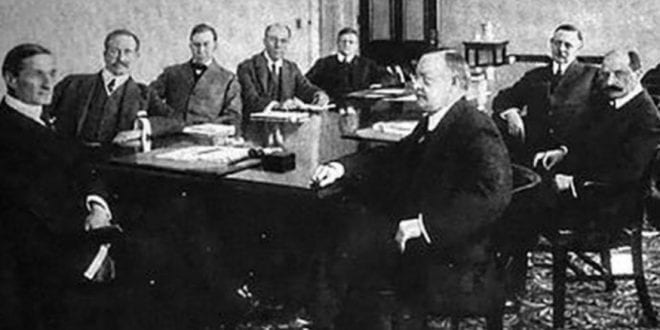
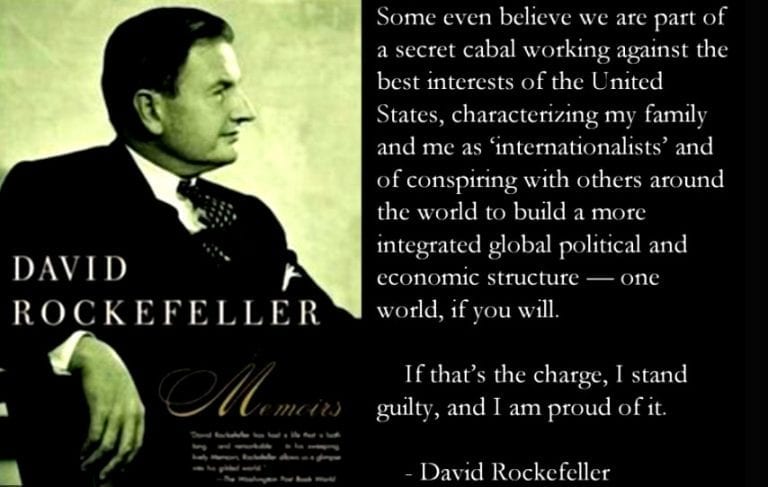
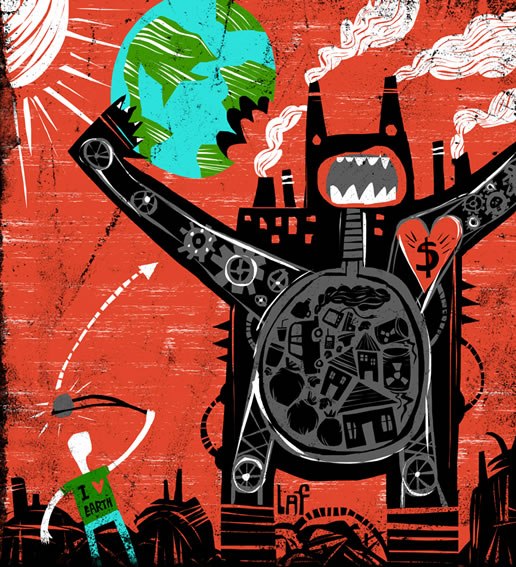

 After the Crash