The Lies End Now: “Most Transparent Administration Ever” Is No More: White House To Delete Its FOIA Regulations

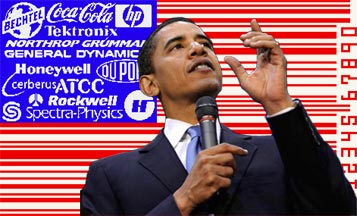
corporate_obama32

By Tyler Durden

Source: Zero Hedge

Back on October 28, 2009, then White House press secretary Robert Gibbs said the following:

… understanding what this President has done is institute the very toughest ethics and transparency rules of any administration in history…  I think the President has returned to a stance of transparency and ethics that hasn’t been matched by any other White House.

… the President believes strongly in transparency… that transparency in that way in the best policy

… understand that what the President campaigned on – toughening our ethics rules, making more transparent our transparency policy – was something that he was passionate about and is proud of the progress that we’ve made in ensuring that.

And here is the president himself: “We have put in place the toughest ethics and transparency laws of any administration in history.”

Lies, lies, and nothing but lies. The lies end now.

As reported moments ago, the White House is voiding a federal regulation that subjects its Office of Administration to the Freedom of Information Act, or FOIA  (incidentally the same act that discovered none of Hillary Clinton’s “personal” government-business emails since they were not even stored on government property!) which as USA Today explains, makes “official a policy under Presidents Bush and Obama to reject requests for records to that office.”

And just like that the lie of Obama’s transparency is over, and it couldn’t come at a worse time for the democratic party, just as its top contender for the 2016 presidential race is struggling to emerge from a cover-up scandal which reeks of intentional hiding of classified documentation from the public (or worse). Going forward it will no longer be Hillary Clinton who will be mocked and ridiculed for her total impunity when it comes to public accountability and transparency, but the “most untransparent” president as well.

The White House said the cleanup of FOIA regulations is consistent with court rulings that hold that the office is not subject to the transparency law. The office handles, among other things, White House record-keeping duties like the archiving of e-mails.

Actually, Obama really couldn’t have picked worse timing because not only does it come hot on the heels of clintonemail.com, but the announcement also is taking place on National Freedom of Information Day and during a national debate over the preservation of Obama administration records. It’s also Sunshine Week, an effort by news organizations and watchdog groups to highlight issues of government transparency. Almost as if the president of the US is openly mocking the public, making it clear he is accountable to no one (except of course for a few mega corporations: see: The Best “Democracy” Money Can Buy: For Every Dollar Spent Influencing US Politics, Corporations Get $760 Back)

“The irony of this being Sunshine Week is not lost on me,” said Anne Weismann of the liberal Citizens for Responsibility and Ethics in Washington, or CREW.

“It is completely out of step with the president’s supposed commitment to transparency,” she said. “That is a critical office, especially if you want to know, for example, how the White House is dealing with e-mail.”

But who wants to know that? Can’t the peasants just pay attention to the rigged all time high in the Apple Sachs Non-industrial Average and just leave the troubled leader of the free world alone?

The irony here is that with this act, Obama is now becoming even less transparent than the loathed by the left Bush dynasty:

Unlike other offices within the White House, which were always exempt from the Freedom of Information Act, the Office of Administration responded to FOIA requests for 30 years. Until the Obama administration, watchdog groups on the left and the right used records from the office to shed light on how the White House works.


“This is an office that operated under the FOIA for 30 years, and when it became politically inconvenient, they decided they weren’t subject to the Freedom of Information Act any more,” said Tom Fitton of the conservative Judicial Watch.


That happened late in the Bush administration, when CREW sued over e-mails deleted by the White House — as many as 22 million of them, by one accounting. The White House at first began to comply with that request, but then reversed course.


“The government made an argument in an effort to throw everything and the kitchen sink into the lawsuit in order to stop the archiving of White House e-mails,” said Tom Blanton, the director of the National Security Archive at George Washington University, which has used similar requests to shed light on foreign policy decisions.

As USA Today further explains, the rule change means that there will no longer be a formal process for the public to request that the White House voluntarily disclose records as part of what’s known as a “discretionary disclosure.” Records released by the Office of Administration voluntarily include White House visitor logs and the recipe for beer brewed at the White House.

“You have a president who comes in and says, I’m committed to transparency and agencies should make discretionary disclosures whenever possible, but he’s not applying that to his own White House,” Weismann said.

Why wait until now? The White House did not explain why it waited nearly six years to formally acknowledge the court ruling in its regulations.

Because accountability, that’s why. No really: “In the notice to be published Tuesday, the White House said it was not allowing a 30-day public comment period, and so the rule will be final.”

Well, at least Obama has a sense of humor as he brings the country ever closer to the police state so well forecast by George Orwell: “It’s a little tone deaf to do this on Sunshine Week, even if it’s an administrative housecleaning,” said Rick Blum, coordinator of the Sunshine in Government initiative for the Reporters Committee for Freedom of the Press.”

And the punchline: the notice that will be published in Tuesday’s Federal Register, and in which the White House says it’s removing regulations on how the Office of Administration complies with Freedom of Information Act Requests based on “well-settled legal interpretations” is hosted on a cloud server run… by Amazon.

The (Not-So) Secret History of Saint Patrick’s Day

saintpatrickBy Christopher Knowles

Source: The Secret Sun

March 17 is the day generally believed to be the death of St. Patrick, the British-born missionary who is credited with converting Ireland to Christianity. And as I wrote in one of my first posts on this blog:

In Egyptian mythology, Osiris was killed on the 17th day of Athyr, the third month of the ancient calendar.
3/17 is also the date of a Masonically-created holiday, St. Patrick’s Day. The story has it that the holiday was established by high level Freemason, George Washington, allegedly to reward Irish soldiers in the Continental Army. But “St. Paddy’s” has traditionally been a very minor Saint’s day in Ireland. Considering that the day has become America’s defacto Bacchanal (which takes us back to Osiris) it’s worth noting some of the parallels of this day with Solar mythology.

• Osiris was believed to be the source of barley, which was used for brewing beer in Egypt.

• It’s customary to wear green on St. Patrick’s Day and Osiris was known as the “Green Man”

• The root word of Patrick is pater, the Latin word meaning father. Osiris is the father in the Egyptian Trinity.

Since then, I’ve been looking into the curious origin of this holiday and have found out some very interesting facts…

• This one’s a shocker- St. Patrick’s Day was originally celebrated by Protestant Loyalists in the British Army:

Their first meeting and dinner to honor St. Patrick was an expression of their Protestant faith as well as their intention to bond with fellow Irish émigrés. Their 1775 meeting included British soldiers of Irish extraction. All proceeded, or marched, to the King’s Chapel to hear a sermon devoted to the occasion, and then continued on to a dinner in King Street. British soldiers were still the big show of the first St. Patrick’s Day parade in New York City in 1762.

The first celebration in New York City was in 1756, at the Crown and Thistle tavern. Philadelphia held its first St. Patrick’s Day parade in 1771. General George Washington issued a proclamation during the Revolutionary War, declaring March 17, 1780 a holiday for the Continental Army, then stationed in Morristown, New Jersey, in honor of the many soldiers of Irish ancestry and those born in Ireland. It was reported that this was the first holiday granted the troops in two years. Washington’s remark that the proclamation was “as an act of solidarity with the Irish in their fight for independence,” was possibly the origins of St. Patrick’s Day in America as an expression of Irish nationalism as much as Irish heritage or of honoring a Christian saint.

Since many lodges in Revolutionary-era America were chartered under the Grand Lodge of Ireland, I’m willing to bet those Irish soldiers were predominantly Freemasons (remember this is pre-Morgan Affair, when Freemasons were hardcore). To show how much a Masonic enterprise the American Revolution was, here’s a list of the Freemasonic Generals in the Continental Army:

• Up until very recently, St. Patrick’s Day was not a big deal in Ireland itself:

In modern-day Ireland, St. Patrick’s Day has traditionally been a religious occasion. In fact, up until the 1970s, Irish laws mandated that pubs be closed on March 17. Beginning in 1995, however, the Irish government began a national campaign to use St. Patrick’s Day as an opportunity to drive tourism and showcase Ireland to the rest of the world. Last year, close to one million people took part in Ireland ‘s St. Patrick’s Festival in Dublin, a multi-day celebration featuring parades, concerts, outdoor theater productions, and fireworks shows.

• Modern Saint Patrick’s Day shares both a date and a mandate with a far, far older holiday:

St. Patrick’s Day is also frequently a time for drinking. It used to be that this tradition was strung out for at least five days, the so-called seachtain na Gaeilage or “Irish week.”

That may stem from Roman times, when March 17 started the festival of the Bacchanalia, a celebration to the deity Bacchus, to whom wine was sacred. In olden years long gone by, the Irish drank mead, made from fermented honey. You might do better today with a stout Guinness, preferably dyed green.

• The Bacchanalia are well-documented in the historical record:

The bacchanalia were wild and mystic festivals of the Roman and Greek god Bacchus. Introduced into Rome from lower Italy by way of Etruria (c. 200 BC), the bacchanalia were originally held in secret and only attended by women. The festivals occurred on three days of the year in the grove of Simila near the Aventine Hill, on March 16 and March 17. Later, admission to the rites was extended to men and celebrations took place five times a month. According to Livy, the extension happened in an era when the leader of the Bacchus cult was Paculla Annia – though it is now believed that some men had participated before that.

• Of course, Bacchus/Dionysus is just the Greco-Roman reinterpretation of Osiris. And drinking of beer was sacred to the followers of Osiris, the Green Man:

In Egypt, beer was regarded as food. In fact, the old Egyptian hieroglyph for “meal” was a compound of those for “bread” and “beer”. This “bread-beer meal” plus a few onions and some dried fish was the standard diet of the common people along the Nile at the time. Beer came in eight different types in Egypt. Most were made from barley, some from emmer, and many were flavored with ginger or honey. The best beers were brewed to a color as red as human blood. The Egyptians distinguished between the different beers by their alcoholic strength and dominant flavor.None other than the god of the dead, Osiris, was hailed as the guardian of beer, because to him grain – both emmer and barley – were sacred. The Egyptians believed that grain had sprung spontaneously from Osiris’ mummy, as a gift to mankind and as a symbol of life after death. This was sufficient justification for the god-like pharaohs to turn brewing into a state monopoly and strictly license brewing rights to entrepreneurs and priests. Many temples eventually opened their own breweries and pubs, all in the service of the gods. The port of Pelusium at the mouth of the Nile became a large brewing center, and trading in beer became big business.

• This admixture of Egyptian festivities, Irish nationalism and Freemasonry might seem outrageous to some, but in fact it was part and parcel of Celtic culture before the rise of the Roman Church. Namely in the…

… religion of the Druids, as before said, was the same as the religion of the ancient Egyptians. The priests of Egypt were the professors and teachers of science, and were styled priests of Heliopolis, that is, of the City of the Sun. The Druids in Europe, who were the same order of men, have their name from the Teutonic or ancient German language; the German being anciently called Teutones. The word Druid signifies a wise man. In Persia they were called Magi, which signifies the same thing.

St. Patrick himself was believed to have driven the Druids of out of Ireland, but in fact druidry was merely incorporated into Celtic Christianity, which was distinct from other varieties and would remain so until forcibly changed on orders from Rome.

• And it seems that the festival of the death of Osiris shares much in common with another holiday that the Irish brought to America:

This universal illumination of the houses on one night of the year suggests that the festival may have been a commemoration not merely of the dead Osiris but of the dead in general, in other words, that it may have been a night of All Souls. For it is a widespread belief that the souls of the dead revisit their old homes on one night of the year; and on that solemn occasion people prepare for the reception of the ghosts by laying out food for them to eat, and lighting lamps to guide them on their dark road from and to the grave. Herodotus, who briefly describes the festival, omits to mention its date, but we can determine it with some probability from other sources. Thus Plutarch tells us that Osiris was murdered on the seventeenth of the month Athyr, and that the Egyptians accordingly observed mournful rites for four days from the seventeenth of Athyr.

And what of the corned beef and cabbage? In late antiquity the Apis bull was identified with Osiris. The Apis bull would be sacrificed and eaten in ritual feasts. Cabbage is grown in the winter months in Egypt and was used to control intoxication at feasts.

So it’s official: all of our modern holidays in America are simply covert repackagings of ancient pagan festivals and the increasingly popular St. Patrick’s Day is no different.

The Church took the Bacchanalia away from the Irish and replaced it with a boring religious holiday and the old-school Freemasons used that to bring the Bacchanalia back, which we now understand traces back to Osiris. And Osiris brings us back to the ancient astronauts, which the later adaptations like Bacchus do not.

Welcome to the New Atlantis.

Colluders in Crude: The Oily Politics of How the Obama Administration Sided with BP Over the American People

gulf-oil-spill17

By Stuart H. Smith

Source: WhoWhatWhy

The explosion and sinking of the Deepwater Horizon oil rig on April 21, 2010,  was the largest accidental marine oil spill in the history of the petroleum industry. The resulting devastation to human health and the environment continues to this day. A new Florida State University study, published on Jan. 20 in the journal Environmental Science & Technology, reports that up to 10 million gallons of crude oil “missing” from the spill settled at the bottom of the Gulf of Mexico, imperiling wildlife and marine ecosystems.

Stuart H. Smith, an environmental plaintiff attorney who served as lead counsel on more than 100 oil pollution cases and has won major litigation against oil giants Chevron and ExxonMobil, came to represent thousands of claimants against BP. He saw from the inside how BP and the American government really responded to the crisis. This article is adapted from his book, Crude Justice: How I Fought Big Oil and Won, and What You Should Know about the New Environmental Attack on America (BenBella Books, 2015). 

…

I am a first-hand witness to the Obama administration’s complicity in putting the interests of a foreign company above and beyond the health and safety of American workers.

The tragedy began on April 21, 2010, with the explosion and fire on British Petroleum’s Deepwater Horizon oil rig in the Gulf of Mexico off the Louisiana coast. It killed 11 workers and caused a leak that would ultimately spew nearly five million barrels of oil into the Gulf.

Denying Workers Protective Gear

BP hired workers to clean up the spill, but no one was publicly addressing what the prolonged exposure to oil—which is laden with carcinogens such as benzene—might do to them. There was little talk about the threat of volatile organic compounds (VOCs) in the air along the Gulf Coast, even for workers traveling to the edge of the spill in boats and removing oil from the beaches. Cleanup crews were attaching oil-catching booms to their shrimp boats and driving their boats directly through the oil slicks to corral and collect the oil spilling from BP’s broken well—and largely tackling their jobs without serious protective gear, because BP had not supplied it.

“BP knew that providing protective equipment would be an admission that the oil exposure was dangerous and sought to avoid that at all costs,” says Marylee Orr, the founder and longtime executive director of the Louisiana Environmental Action Network (LEAN), a leading environmental group in the state.

It wasn’t long before the fishermen began reporting headaches, vomiting, nausea, dizziness, and chest pains.

In early June, two key Democratic members of Congress—Minnesota Representative James Oberstar, then-chairman of the House Transportation and Infrastructure Committee, and New York Representative Jerrold Nadler, a senior committee member—sent a letter to the EPA and the Department of Labor demanding that Gulf workers be provided with “proper protective equipment, including respirators.”

Incredibly, the Obama administration said “no.”

David Michaels, assistant secretary in the Labor Department, who oversaw the Occupational Safety and Health Administration, told the Wall Street Journal that their tests showed “minimal” risk from exposure to airborne toxins—despite the fact that EPA’s air monitors along the Gulf Coast were picking up substantial airborne VOC readings from the spill, and despite scores of alarming medical reports from cleanup workers.

Protecting BP Stockholders

Around the same time, President Barack Obama was on the phone to the British prime minister. David Cameron was in a tizzy because so many English pensioners had their retirement money tied up in BP stock.

“The president made clear that he had no interest in undermining BP’s value,” Cameron’s office announced after the phone call.

Indeed, on June 16, 2010—one month before the leaking well had been capped and the full extent of the damage could be investigated—the White House announced an unprecedented deal with BP in which the oil company would finance a relief fund of up to $20 billion.

This escrow fund was good politics—$20 billion sounded impressive to the average voter—but would prove to be music to the ears of BP’s board. Historically, such escrow funds had been effective means for companies to limit their liability. They were tools for persuading vulnerable people in desperate need to sign away their legal rights to recover full compensation for the damages they’d suffered.

Sure enough, just before Christmas 2010, Kenneth Feinberg, who’d been appointed to oversee the fund, made a blatant attempt to boost the number of cases the fund could say were “settled” by offering the spill’s victims one-time bonus payments of $5,000 for individuals and $25,000 for businesses, contingent upon his settlement terms.

In fact, the $20 billion fund had set a preliminary target for damage claims that would turn out to be tens of billions of dollars less than the actual damages. Moreover, the agreement allowed BP to secure the fund using future productions from its leases in the Gulf of Mexico as collateral, exempting all of BP’s holdings elsewhere.  This locked the federal government into a partnership with BP, forcing it to continue to allow its offshore drilling in the Gulf to pay back the claims.

Hiding the Oil, Spreading the Toxins

In the early days of the spill, BP began unleashing gallons of a toxic chemical called Corexit.  Corexit was able to get rid of the thick black oily plumes on the water’s surface that had been visible for miles across the Gulf and were becoming such a public relations disaster on the nightly TV news.

But Corexit wasn’t solving the oil problem, only the PR problem.  Corexit was merely hiding the oil and spreading toxins over a larger area. This created even greater risks for the cleanup workers—risks they had not been trained to deal with.

Weeks after the spill, LEAN’s Marylee Orr pressed for admission to the main command centers, to which her NGO was supposed to have access. Eventually she and other Gulf environmental activists got a private meeting with a top federal official—EPA administrator and Louisiana native Lisa Jackson. They argued that the feds needed to force BP to stop spraying Corexit in the Gulf and produced evidence that Corexit was merely masking the oil and dispersing toxins over a bigger area.

(Hugh Kaufman, longtime EPA employee and whistleblower, said government officials were well aware of the hazards of Corexit, telling an interviewer that “in the Exxon Valdez case, people who worked with dispersants, most of them are dead now.  The average death age is around 50.”)

At first it seemed like Jackson was listening to their plea. A short time later, in late May, the EPA and the Coast Guard issued a joint order to BP telling the company to “eliminate” surface spraying of Corexit—unless the firm got a waiver from the Coast Guard because of exceptional circumstances.

You can guess how that all played out. BP asked for and routinely got a waiver from the Coast Guard to spray Corexit—day after day, including nine days in a row immediately after Lisa Jackson’s “order,” and ultimately 74 times over 54 days. An estimated million gallons of the toxic dispersant were deployed in the Gulf after the government’s supposed command to eliminate much of its use.

Later, independent laboratory tests performed for me confirmed what the experts had feared about the Corexit spraying: dispersing the oil actually meant taking the toxic elements of the oil from the surface, where they were highly concentrated but weren’t harming marine life below, and spreading them deep into Gulf waters.  Our lab tests showed toxic pollution of water at levels 35 times higher than before the oil was dispersed.

Claiming “Gulf Seafood Is Safe”

Early on, the federal government’s public relations initiative was in full gear. On June 14—54 days into the crisis of the oil spill—President Obama came down to the Florida Panhandle and decreed that he was launching “a comprehensive, coordinated, and multiagency initiative” to make sure the catch from the Gulf waters was safe to eat.  “Now,” he said into the bank of cameras, “I had some of that seafood for lunch, and it was delicious….So let me be clear. Seafood from the Gulf today is safe to eat.  But we need to make sure that it stays that way.”

In essence, Obama was telling Americans to eat first and ask questions later.  But how could the president assure the public that seafood was safe to eat when, as he acknowledged, in-depth testing hadn’t yet even been carried out?”

At the Pentagon, a massive order for shrimp, crab cakes, and pre-packaged jambalaya was placed and sold at base commissaries around the world.  The executive chef at the White House bought and served more than 2,000 pounds of shrimp and other Gulf goodies at an array of holiday parties for Barack and Michelle Obama and their guests, commenting: “We at the White House are so happy to play our part in reminding Americans that Gulf seafood is not only safe but delicious.”

Around the Gulf, news accounts quoted fishermen who were reeling in red snapper with sores and lesions—some the size of a 50 cent piece—the likes of which they had never seen before.  Crab fishermen were reporting that their hauls had dropped by 70% and that the few crabs they did pull up suffered similar lesions and disease.  It made sense. Red snapper were bottom feeders—eating the shrimp and crabs that live on the sea floor—and independent scientists had already shown that oil from the leaking BP rig was coating the bottom of the Gulf.

Practicing Faulty and Deceptive Testing

In late 2010, the government stated that it had tested more than 10,000 seafood samples from the Gulf and found no evidence of problems. But the vast majority of those tests were what the National Oceanic and Atmospheric Administration called “sensory testing,” and what you and I might call a smell test. This test was hardly adequate for finding traces of hydrocarbons that are odorless, yet highly toxic.

Moreover, in conducting the smell tests, specimens that were clearly oiled in the spill or possibly diseased were tossed aside, skewing the lab results. When the seafood that would have produced the worst numbers was transferred to trash buckets, the polynuclear aromatic hydrocarbon numbers looked a lot better.

In addition, according to the government testing structure, the “safe” consumption level for a grown man is four shrimp a week.  Who the hell living on the Gulf of Mexico eats only four shrimp per week?

Conducting his own test analysis, Paul Orr, Marylee’s son and the unofficial river keeper for the lower Mississippi, gathered samples of shrimp, crab, and finfish from 20 different locations in the Gulf off the Louisiana and Mississippi coastlines. His results showed high levels of total petroleum hydrocarbons, including in seafood from areas that had been declared safe for fishing. Testing by other independent environmentalists showed high levels of cadmium, a long-lasting carcinogen.

Alleging “Swimming Is Safe”

The seafood shilling was just the beginning.

The government also issued reports that beaches were safe for swimming. President Obama dramatized this, allowing a photo of him swimming with his daughter—in an unimpacted bay, of course—along the Florida Panhandle coast.

The passage of time did not diminish the assault on the beaches.  Tropical Storm Lee washed tar balls and patches of asphalt-like gunk up and down the Gulf in 2011, as did Hurricane Isaac in the summer of 2012.  In 2013, more than three years after the BP catastrophe, a blob of oil from the Macondo field that was roughly half the size of a football field came ashore in Grand Terre Island off the coast of Louisiana.

Attempting to Bar Independent Testing

The U.S. government seemed to have two agendas—both of them bad.  One was siding with large commercial fishing operations in the Gulf, whose livelihood depended on public confidence in the safety of their catch, and not with the broader U.S. public of seafood consumers.  The other was to get the PR nightmare of BP out of the headlines.

Almost immediately after the spill, the FAA implemented a temporary flight restriction across the entire eastern Gulf of Mexico that continued for months.  They refused to let the media get anywhere close to the offshore slicks. The Coast Guard turned the entire zone over to private security goons hired by BP who would not let anyone near the spill to photograph and take samples. BP’s guards blocked many of the roads leading to oil-gunked beaches. Never before had America ceded its sovereign police power to a corporation, and a foreign one at that.

Key governmental agencies involved in the Gulf Coast recovery seemed to be working harder to prevent independent scientists from doing their own testing than they were in conducting their own rigorous studies.

As a Big Oil litigator, I knew that the fastest way to lose an environmental law case was to rely on industry or government data, which rarely painted the full picture. It was critical to perform your own testing using your own experts.  I’d never had an environmental case where the government was on the side of the victim.

***

To prove toxic exposure and resulting damages in the BP disaster, I hired Dr. William Sawyer, a top Florida-based research toxicologist with 30 years of experience, and Worcester Polytechnic civil engineer Marco Kaltofen, considered one of the top engineers in the field, who described himself as “specializing in when things go really bad.”

Marco and William decided that the best approach to overcoming the restricted access was simply to look and act like they belonged.  “We dressed the way the BP guys dressed,” Marco told me later.   “We had the story, we had the business cards and lab notebook and all the equipment.  And you just go out there and you mix it up.”

Soon the BP cleanup contractors were giving Marco and his coworker access to their refreshment tent.

“I got a Louisiana oysterman’s license,” Marco said. “I would get out to these sites and they would say, ‘I’m sorry—you can’t be collecting specimens out here.’  I’d say, ‘I got a Louisiana scientific collection permit,’ and I would get BP escorts when I produced this document.  It looked really official—it said I could collect oysters around this area….It had dates, stamps….”

From that, Marco collected a treasure trove of shellfish and marine life, as well as water, sand, and spilled oil.

Marco and William’s initial data showed alarming levels of toxic hydrocarbons, first in the Gulf water columns, and then in seafood. Even before they issued a formal report, they posted some of their raw data on the Internet.

That’s when they started receiving phone calls from staffers on the president’s commission investigating the oil spill.

“There was a grave concern as to why we were finding contamination,” William recalled, “and then the questions were geared toward whether we had sampling permits.”

Instead of expressing concern about the danger that might be posed to American consumers from eating oil-contaminated seafood, federal investigators were questioning whether Marco and William had permits to collect the samples.

It was only after a TV news crew investigated the calls and a New Orleans-area congressman called for a full-blown investigation that the Oil Spill Commission pulled a 180-degree turn.  One staffer even tried to explain that the calls to Marco and his associate had gone out because the commission had been impressed with their work.

Much later, our team learned about some of the intense pressure that was taking place behind the scenes.  At the same time that we were pressing for a more open investigation of environmental impact, in-fighting was ensuing between other independent scientists, who were finding equally troubling data, and government officials, who were finding ways to cover up the discoveries. The Reuters news agency learned that wildlife biologists who’d been hired by the National Marine Fisheries Service to document an “unusual marine event”—the dramatic rise in dolphin deaths—were told they couldn’t make their findings known because it was part of a law enforcement probe into the BP spill.

Denying Evidence

Mounting evidence revealed that oil-spill cleanup workers and other Gulf residents were suffering respiratory illnesses, skin rashes, and other more serious maladies.  But federal authorities insisted that the rise in such ailments was merely a coincidence. Donald Boesch, a member of Obama’s Oil Spill Commission, summed up their response: “We were charged with being evidence-driven, and the fact is, we’ve asked for and sought out evidence that the oil spill is the proximate cause of these health problems, and we just haven’t found it.”

But all Boesch had to do was walk into any of the doctors’ crowded waiting rooms and health clinics scattered across the Gulf region.

Dr. Michael Robichaux of Mathews, Louisiana, on the Gulf Coast, was among those examining the ailing cleanup workers and other coastal residents. At first the doctor was dubious that the ailments were linked to the workers’ and residents’ exposure to BP’s oil and Corexit. But after he began treating them, he converted and became an evangelist for their cause.  Of the 113 patients he treated who had been exposed to toxic pollution, he wrote that about 100 of them had severe chronic health effects, to the point that many were unable to work. “It appears that the interests of a large, foreign corporation have superseded the needs of thousands of Americans who reside along the coast of the Gulf of Mexico,” Dr. Robichaux told U.S. District Judge Carl Barbier.

Settlement Deals

In May 2012, BP announced that it had reached a settlement deal—estimated at the time to be worth $7.8 billion—with a circle of well-connected tort lawyers called the Plaintiffs Steering Committee on behalf of the Gulf Coast residents and small businesses.  Joining a handful of other lawyers, I appeared before Judge Barbier that September to object to the proposed deal.  How, we asked, could a proper price be fixed on the damage caused by BP when new oil kept coming ashore, as had happened when Hurricane Isaac hit the Gulf Coast just days before the courtroom arguments?  We also argued that the deal was woefully inadequate, both for those who had been made ill and for many coastal businesses.

We didn’t win that skirmish, but other penalties for the British oil giant are finally adding up. In early 2015, a federal judge was nearing a final ruling on civil penalties against BP under the federal Clean Water Act, which could reach some $13.7 billion.

To date, my firm has successfully handled claims against BP for about three quarters of our thousands of clients.  Hundreds of them remain, fighting for their fair share.

The extreme efforts of a Big Oil giant to avoid liability for its actions have been sadly familiar to me.  But the actions of the U.S. government to side with a huge multinational corporation against the health and safety of American workers are unconscionable.

Adapted from CRUDE JUSTICE:  How I Fought Big Oil and Won, And What You Should Know About the New Environmental Attack on America by Stuart H. Smith (BenBella Books, 2015). 

Podcast Roundup

3/11: Srini Rao has an interesting conversation with animal rights activist Peter Young covering community activism, communication, survival tips, and his former life as a fugitive on the “Unmistakable Creative” podcast.

https://sitebuilderio.s3.amazonaws.com/unmistakablecreative/audios/012b5fac-3695-42b3-9a2d-ffd7d4d7f213/lessons-in-communication-from-a-fugitive-peter-young.mp3

3/11: On the latest “Guns and Butter”, Bonnie Faulkner interviews John Whitehead of  the Rutherford Institute. They discuss aspects of  “Police State America” including the Corporate State, American Legislative Exchange Council (ALEC), Offices of Inspector General (OIG), SWAT Teams, No-Knock Raids, the Schoolhouse to Jailhouse Track, the New York Prototype, MRAPs, Operation Vigilant Eagle, Atlas Four Androids, TSA and VIPR Teams, the Google/NSA connection and Fusion Centers.

http://archives.kpfa.org/data/20150311-Wed1300.mp3

3/11: Host Dave Lindorff discusses the recent coup plan disrupted by police in Venezuela with veteran journalist Alfredo Lopez — a story largely blacked out or mocked as bogus by the US corporate media despite solid evidence of a plot, and of US involvement in that plot on “This Can’t Be Happening”. Lindorff and Lopez, who are colleagues on the news site thiscantbehappening.net, also talk about why President Obama on Tuesday declared Venezuela an “unusual and extraordinary national security threat” to the US, and what that declaration means to Venezuela and Latin America.

http://s36.podbean.com/pb/0c1337348a3a2a92b0bdb73308121756/5503328c/data1/blogs18/661545/uploads/ThisCantBeHappening_031115.mp3

3/12: On the first of their recent “Media Roots” podcasts, Robbie and Abby Martin discuss the ending of the RT program “Breaking the Set”, the establishment’s Cold War resurrection, and the splintering of the left over Obama’s military policies. The second program features an interview with Mark Weisbrot, co-director of the Center for Economic and Policy Research, on current U.S. government actions against Venezuela.

Saturday Matinee: Wax or the Discovery of Television Among the Bees

wax

“Wax or the Discovery of Television Among the Bees” (1991) is an experimental indie film written/produced/directed by and starring David Blair. The convoluted plot involving Mesopotamian bees, ghosts in the machine, cities of the dead, the Trinity site, the tower of Babel, and a Supranormal Film Society trying to capture footage of the dead is reminiscent of the visions of William S. Burroughs (who makes a cameo appearance in the film). According to wikipedia, Wax is the first independent feature film to have been edited on a digital non-linear system and the first film to have been re-formatted as hypertext and posted on the internet.

US War on ISIS a Trojan Horse

obama-isis-cia

In America’s coming war, don’t be surprised if everything in Syria is destroyed except ISIS.

By Ulson Gunnar

Source: Land Destroyer Report

In August of 2013, even as the words came out of US President Barack Obama’s mouth regarding an “impending” US military strike against the Syrian state, the impotence of American foreign policy loomed over him and those who wrote his speech for him like an insurmountable wall.  So absurd was America’s attempt to once again use the canard of “weapons of mass destruction” to justify yet another military intervention, that many believed America’s proxy war in Syria had finally reached its end.

The counterstroke by Russia included Syria’s immediate and unconditional surrendering of its chemical weapons arsenal, and with that, so evaporated America’s casus belli.

Few would believe if one told them then, that in 2015, that same discredited US would be routinely bombing Syrian territory and poised to justify the raising of an entire army of terrorists to wage war within Syria’s borders, yet that is precisely what is happening. President Obama has announced plans to formally increase military force in Iraq and Syria “against ISIS,” but of course includes building up huge armies of “rebels” who by all other accounts are as bad as ISIS itself (not to mention prone to joining ISIS’ ranks by the thousands).

All it took for this miraculous turn in fortune was the creation of “ISIS,” and serial provocations committed by these Hollywood-style villains seemingly engineered to reinvigorate America’s justification to militarily intervene more directly in a war it itself started in Syria beginning in 2011.

ISIS could not be a more effective part of America’s plans to overthrow the Syrian government and destroy the Syrian state if it had an office at the Pentagon.

Having failed to achieve any of its objectives in Syria, it inexplicably “invaded” Iraq, affording the US military a means of “easing into” the conflict by first confronting ISIS in Iraq, then following them back across the border into Syria. When this scheme began to lose its impact on public perception, ISIS first started executing Western hostages including several Americans. When the US needed the French on board, ISIS executed a Frenchman. When the US needed greater support in Asia, two Japanese were beheaded. And just ahead of President Obama’s recent attempt to formally authorize the use of military force against “ISIS,” a Jordanian pilot was apparently burned to death in a cage in an unprecedented act of barbarity that shocked even the most apathetic.

The theatrics of ISIS parallel those seen in a Hollywood production. This doesn’t mean ISIS didn’t really burn to death a Jordanian pilot or behead scores of hostages. But it does mean that a tremendous amount of resources and planning were put into each murder, except apparently, the effect it would have of rallying the world behind the US and its otherwise hopelessly stalled efforts to overturn the government of Syria.

Could ISIS have built a set specifically to capture dramatic shots like a flame trail passing the camera on its way to the doomed Jordanian pilot, planned crane shots, provided matching uniforms for all the extras on their diabolical movie set, but failed to consider the target audience and how they would react to their production? Could they have, just by coincidence, given exactly what the United States needed to continue its war on Syria in 2015 when it otherwise had effectively failed in 2013?

The answer is obviously no. ISIS’s theatrics were designed specifically to accomplish this. ISIS itself is a fictional creation. In reality the legions of terrorists fighting across the Arab World under the flag of “ISIS” are the same Al Qaeda militants the US, Saudi Arabia and others in an utterly unholy axis have been backing, arming and exploiting in a variety of ways for decades.

Just as the “Islamic State” in Iraq was exposed as a fictional cover for what was also essentially Al Qaeda (as reported by the NYT in their article, “Leader of Al Qaeda group in Iraq was fictional, U.S. military says“), ISIS too is just the latest and greatest re-visioning yet.

The fighters are real. Their atrocities are real. The notion that they’ve sprung out of the dunes of Syria and Iraq, picked their weapons from local date trees and have managed to wage war regionally against several collective armies is entirely fantasy. Required to maintain ISIS’ ranks would be billions in constant support. These are billions ISIS simply cannot account for from hostage ransoms and black market oil alone. The only source that could prop ISIS up for as long as it has allegedly existed and to the extent it allegedly exists, is a state or collection of states intentionally sponsoring the terrorist enterprise.

Those states are of course the chief benefactors of ISIS’ atrocities, and we can clearly see those benefactors are the US and its partners both in Europe and in the Middle East. The US would claim that the threat of ISIS necessitates them to intervene militarily in Syria (when lies about WMDs were flatly rejected by the American and international public). Of course, before the serial headline atrocities ISIS committed, the US attempted to sell this same lie but without affect. Now that sufficient blood has been split and the public sufficiently riled, the US is once again trying to move forward its agenda.

Don’t be surprised, if the US manages to succeed, that everything in Syria is left destroyed except for ISIS. A Hollywood villain this popular and effective is surely destined for a sequel in neighboring Iran or southern Russia, coincidentally where the US would like to create strife and carnage the most.

Ulson Gunnar, a New York-based geopolitical analyst and writer especially for the online magazine “New Eastern Outlook”.