Evidence points to another Snowden at the NSA

NSA-CIA-Edward-Snowden

By James Bamford

Source: Reuters

In the summer of 1972, state-of-the-art campaign spying consisted of amateur burglars, armed with duct tape and microphones, penetrating the headquarters of the Democratic National Committee. Today, amateur burglars have been replaced by cyberspies, who penetrated the DNC armed with computers and sophisticated hacking tools.

Where the Watergate burglars came away empty-handed and in handcuffs, the modern- day cyber thieves walked away with tens of thousands of sensitive political documents and are still unidentified.

Now, in the latest twist, hacking tools themselves, likely stolen from the National Security Agency, are on the digital auction block. Once again, the usual suspects start with Russia – though there seems little evidence backing up the accusation.

In addition, if Russia had stolen the hacking tools, it would be senseless to publicize the theft, let alone put them up for sale. It would be like a safecracker stealing the combination to a bank vault and putting it on Facebook. Once revealed, companies and governments would patch their firewalls, just as the bank would change its combination.

A more logical explanation could also be insider theft. If that’s the case, it’s one more reason to question the usefulness of an agency that secretly collects private information on millions of Americans but can’t keep its most valuable data from being stolen, or as it appears in this case, being used against us.

In what appeared more like a Saturday Night Live skit than an act of cybercrime, a group calling itself the Shadow Brokers put up for bid on the Internet what it called a “full state-sponsored toolset” of “cyberweapons.” “!!! Attention government sponsors of cyberwarfare and those who profit from it !!!! How much would you pay for enemies cyberweapons?” said the announcement.

The group said it was releasing some NSA files for “free” and promised “better” ones to the highest bidder. However, those with loosing bids “Lose Lose,” it said, because they would not receive their money back. And should the total sum of the bids, in bitcoins, reach the equivalent of half a billion dollars, the group would make the whole lot public.

While the “auction” seemed tongue in cheek, more like hacktivists than Russian high command, the sample documents were almost certainly real. The draft of a top-secret NSA manual for implanting offensive malware, released by Edward Snowden, contains code for a program codenamed SECONDDATE. That same 16-character string of numbers and characters is in the code released by the Shadow Brokers. The details from the manual were first released by The Intercept last Friday.

The authenticity of the NSA hacking tools were also confirmed by several ex-NSA officials who spoke to the media, including former members of the agency’s Tailored Access Operations (TAO) unit, the home of hacking specialists.

“Without a doubt, they’re the keys to the kingdom,” one former TAO employee told the Washington Post. “The stuff you’re talking about would undermine the security of a lot of major government and corporate networks both here and abroad.” Another added, “From what I saw, there was no doubt in my mind that it was legitimate.”

Like a bank robber’s tool kit for breaking into a vault, cyber exploitation tools, with codenames like EPICBANANA and BUZZDIRECTION, are designed to break into computer systems and networks. Just as the bank robber hopes to find a crack in the vault that has never been discovered, hackers search for digital cracks, or “exploits,” in computer programs like Windows.

The most valuable are “zero day” exploits, meaning there have been zero days since Windows has discovered the “crack” in their programs. Through this crack, the hacker would be able to get into a system and exploit it, by stealing information, until the breach is eventually discovered and patched. According to the former NSA officials who viewed the Shadow Broker files, they contained a number of exploits, including zero-day exploits that the NSA often pays thousands of dollars for to private hacking groups.

The reasons given for laying the blame on Russia appear less convincing, however. “This is probably some Russian mind game, down to the bogus accent,” James A. Lewis, a computer expert at the Center for Strategic and International Studies, a Washington think tank, told the New York Times. Why the Russians would engage in such a mind game, he never explained.

Rather than the NSA hacking tools being snatched as a result of a sophisticated cyber operation by Russia or some other nation, it seems more likely that an employee stole them. Experts who have analyzed the files suspect that they date to October 2013, five months after Edward Snowden left his contractor position with the NSA and fled to Hong Kong carrying flash drives containing hundreds of thousands of pages of NSA documents.

So, if Snowden could not have stolen the hacking tools, there are indications that after he departed in May 2013, someone else did, possibly someone assigned to the agency’s highly sensitive Tailored Access Operations.

In December 2013, another highly secret NSA document quietly became public. It was a top secret TAO catalog of NSA hacking tools. Known as the Advanced Network Technology (ANT) catalog, it consisted of 50 pages of extensive pictures, diagrams and descriptions of tools for every kind of hack, mostly targeted at devices manufactured by U.S. companies, including Apple, Cisco, Dell and many others.

Like the hacking tools, the catalog used similar codenames. Among the tools targeting Apple was one codenamed DROPOUTJEEP, which gives NSA total control of iPhones. “A software implant for the Apple iPhone,” says the ANT catalog, “includes the ability to remotely push/pull files from the device. SMS retrieval, contact-list retrieval, voicemail, geolocation, hot mic, camera capture, cell-tower location, etc.”

Another, codenamed IRATEMONK, is, “Technology that can infiltrate the firmware of hard drives manufactured by Maxtor, Samsung, Seagate and Western Digital.”

In 2014, I spent three days in Moscow with Snowden for a magazine assignment and a PBS documentary. During our on-the-record conversations, he would not talk about the ANT catalog, perhaps not wanting to bring attention to another possible NSA whistleblower.

I was, however, given unrestricted access to his cache of documents. These included both the entire British, or GCHQ, files and the entire NSA files.

But going through this archive using a sophisticated digital search tool, I could not find a single reference to the ANT catalog. This confirmed for me that it had likely been released by a second leaker. And if that person could have downloaded and removed the catalog of hacking tools, it’s also likely he or she could have also downloaded and removed the digital tools now being leaked.

In fact, a number of the same hacking implants and tools released by the Shadow Brokers are also in the ANT catalog, including those with codenames BANANAGLEE and JETPLOW. These can be used to create “a persistent back-door capability” into widely used Cisco firewalls, says the catalog.

Consisting of about 300 megabytes of code, the tools could easily and quickly be transferred to a flash drive. But unlike the catalog, the tools themselves – thousands of ones and zeros – would have been useless if leaked to a publication. This could be one reason why they have not emerged until now.

Enter WikiLeaks. Just two days after the first Shadow Brokers message, Julian Assange, the founder of WikiLeaks, sent out a Twitter message. “We had already obtained the archive of NSA cyberweapons released earlier today,” Assange wrote, “and will release our own pristine copy in due course.”

The month before, Assange was responsible for releasing the tens of thousands of hacked DNC emails that led to the resignation of the four top committee officials.

There also seems to be a link between Assange and the leaker who stole the ANT catalog, and the possible hacking tools. Among Assange’s close associates is Jacob Appelbaum, a celebrated hacktivist and the only publicly known WikiLeaks staffer in the United States – until he moved to Berlin in 2013 in what he called a “political exile” because of what he said was repeated harassment by U.S. law enforcement personnel. In 2010, a Rolling Stone magazine profile labeled him “the most dangerous man in cyberspace.”

In December 2013, Appelbaum was the first person to reveal the existence of the ANT catalog, at a conference in Berlin, without identifying the source. That same month he said he suspected the U.S. government of breaking into his Berlin apartment. He also co-wrote an article about the catalog in Der Spiegel. But again, he never named a source, which led many to assume, mistakenly, that it was Snowden.

In addition to WikiLeaks, for years Appelbaum worked for Tor, an organization focused on providing its customers anonymity on the Internet. But last May, he stepped down as a result of “serious, public allegations of sexual mistreatment” made by unnamed victims, according to a statement put out by Tor. Appelbaum has denied the charges.

Shortly thereafter, he turned his attention to Hillary Clinton. At a screening of a documentary about Assange in Cannes, France, Appelbaum accused her of having a grudge against him and Assange, and that if she were elected president, she would make their lives difficult. “It’s a situation that will possibly get worse” if she is elected to the White House, he said, according to Yahoo News.

It was only a few months later that Assange released the 20,000 DNC emails. Intelligence agencies have again pointed the finger at Russia for hacking into these emails.

Yet there has been no explanation as to how Assange obtained them. He told NBC News, “There is no proof whatsoever” that he obtained the emails from Russian intelligence. Moscow has also denied involvement.

There are, of course, many sophisticated hackers in Russia, some with close government ties and some without. And planting false and misleading indicators in messages is an old trick. Now Assange has promised to release many more emails before the election, while apparently ignoring email involving Trump. (Trump opposition research was also stolen.)

In hacktivist style, and in what appears to be phony broken English, this new release of cyberweapons also seems to be targeting Clinton. It ends with a long and angry “final message” against “Wealthy Elites . . . breaking laws” but “Elites top friends announce, no law broken, no crime commit[ed]. . . Then Elites run for president. Why run for president when already control country like dictatorship?”

Then after what they call the “fun Cyber Weapons Auction” comes the real message, a serious threat. “We want make sure Wealthy Elite recognizes the danger [of] cyberweapons. Let us spell out for Elites. Your wealth and control depends on electronic data.” Now, they warned, they have control of the NSA’s cyber hacking tools that can take that wealth away. “You see attacks on banks and SWIFT [a worldwide network for financial services] in news. If electronic data go bye-bye where leave Wealthy Elites? Maybe with dumb cattle?”

Snowden’s leaks served a public good. He alerted Americans to illegal eavesdropping on their telephone records and other privacy violations, and Congress changed the law as a result. The DNC leaks exposed corrupt policies within the Democratic Party.

But we now have entered a period many have warned about, when NSA’s cyber weapons could be stolen like loose nukes and used against us. It opens the door to criminal hackers, cyber anarchists and hostile foreign governments that can use the tools to gain access to thousands of computers in order to steal data, plant malware and cause chaos.

It’s one more reason why NSA may prove to be one of Washington’s greatest liabilities rather than assets.


About the Author

James Bamford is the author of The Shadow Factory: The Ultra-Secret NSA From 9/11 to the Eavesdropping on America. He is a columnist for Foreign Policy magazine.


Corporate Media Guard Secrets of Western 1% in Panama Leak – Wage Info War on Russia/China

A Mossack Fonseca law firm logo is pictured in Panama City April 3, 2016. REUTERS/Carlos Jasso

A Mossack Fonseca law firm logo is pictured in Panama City April 3, 2016. REUTERS/Carlos Jasso

By

Source: The Free Thought Project

While it seems the Panama Papers are a genuine attempt at exposing rampant corruption of the world’s corporate-political uber-elite, a closer inspection reveals a likely Western geopolitical power play utilizing the latest techniques in information warfare.

The 11.5 million documents that were stolen from Mossack Fonseca were leaked to Suddeutsche Zeitung, which then turned to the International Consortium of Investigative Journalists to investigate the documents.

This process created a dynamic where control of the information resides in the hands of corporate mainstream media, thus allowing them to cherry pick stories they deem “newsworthy” – this exclusive access is troubling.

The reason this exclusive access is troubling becomes apparent when one recalls the infamous incident where The Guardian physically smashed the copies of the Snowden files in their possession upon the command of MI6 and the British government.

Had the Mossack Fonseca documents been turned over to WikiLeaks, the information would have been released en mass, as to allow for a publicly searchable database that would allow for anyone to search the documents in detail.

The immediate initial reporting on the Panama Papers has been curiously focused on Russian President Putin and Chinese President Xi Jinping, the leaders of two countries that have been recently labeled as strategic threats by Washington – with explicit implications that both of their leaders are corrupt.

Coincidentally, the U.S. has been working to actively “contain” both of these states – actively hedging against Russian influence in Syria and Ukraine, as well as actively engaging in an “Asian pivot” strategically designed to usurp a rising China and maintain U.S. hegemony.

And while there are some pro-Western interests revealed thus far, such as holdings by British Prime Minister David Cameron’s father, Ukrainian President Petro Poroshenko and Saudi Arabian King Salman, the vast amount of the reporting has focused on the usual suspects demonized by the West.

Curiously, there is no mention of any Western corporations or billionaires – the primary customers of Mossack Fonseca – in any of the articles written on the leak thus far, with The Guardian ominously stating that “much of the leaked material will remain private.”

With so much power residing in the hands of journalists, it begs the question; who or what is behind the International Consortium of Investigative Journalists?

The International Consortium of Investigative Journalists was launched by the Center for Public integrity – a group heavily funded by Putin arch-nemesis George Soros. Soros has been implicated in being a hidden hand behind numerous revolutions across the world.

Other groups that provide funding include:

Rockefeller Family Fund
Open Society Foundation (Soros)
Carnegie Endowment
Ford Foundation
W K Kellogg Foundation

The simple fact that information is being kept out of the public’s reach seems to speak clearly to the fact that this leak is most likely being perpetrated with an agenda to destabilize certain powerful states that are working to create a more multipolar world i.e. (Russia and China) at the expense of U.S. hegemony.

While there is no mistaking the corruption within every state apparatus on earth, curiously these leaks seem to focus heavily on those the U.S. political elite has established as threats. Perhaps there is more to come that will bring to light the corruption of the West as well… but until then, it looks to be a geopolitical hit job by the West — with a few sacrificial lambs thrown in to cause reasonable doubt.


The Top 5 Moves That the 1% Uses to Maintain Dominance

By George Lakey

Source: Waking Times

How Do You Beat the 1 Percent? Start by Learning Their Favorite Moves… 

Gandhi confronted a number of adversaries in his day, including a world empire. He sometimes called them “a worthy opponent” — one that used shrewd strategy to try to defeat his movement. Even though Gandhi was deeply concerned with ethical issues, he didn’t think that taking a moral stand excused him from the need to strategize. That meant paying attention to the moves coming at him.

In keeping with my last two columns on this subject (see part one and part two), here are five more of the economic elite’s favorite moves, as it seeks to maintain dominance in the United States and elsewhere.

Create a lesser-of-two-evils choice

When the nonviolent campaign against the Keystone XL pipeline upset the “done deal” between Canada and the United States, a flurry of discussion took place among environmentalists. A prominent expert took to the airwaves to argue that, since the Alberta tar sands oil was going to be extracted anyway, wouldn’t it be better to have it transported by pipeline rather than dangerous railcars?

Many liberals bought her argument, overlooking the assumption beneath it: “the Alberta tar sands oil is going to be extracted anyway.” They (and the environmental expert) fell into the trap; they failed to notice that the very framing of choices supported the elite’s goal and created an environmental disaster.

The current energy debate in Philadelphia is over whether to accept a new vision of the region as a fossil fuel “energy hub,” enlarging pipelines for Marcellus Shale natural gas and North Dakota fracked oil, gearing up Philadelphia’s refineries and tanker shipping, and stimulating petrochemical manufacturing. Here the framing is: Would you rather create new jobs and expand our tax base to support our schools through this exciting vision, or stick with the status quo left by past deindustrialization?

At the moment, the Philadelphia climate justice campaign fights for traction because the choice appears to be between the lesser of two evils. There’s not a vivid climate-friendly vision for economic development with an abundance of green jobs. U.S. political culture habituates the public to “lesser-of-two-evils” choices, and overlooks the question: who sets up this framing? If we follow the money the answer is obvious, and raises the next question: Why leave vision work to the 1 percent?

For a long time the 1 percent has supported a division of labor for the two major political parties. The Republicans focus on meanness and repression, while the Democrats focus on compromise with progressive movements and co-optation. This division of labor works well for the economic elite, because they win no matter what party is in power. The track record of the Democrats, even when they control both houses of Congress and the White House, supports the ever-increasing wealth and control of the elite, while distracting movements from more effective options for exerting grassroots power.

Interestingly, the division of labor between the parties grows sharper as the 1 percent faces the potential political dynamite of a growing wealth gap. At times when income distribution in the United States is a bit closer to equality, bipartisanship in Congress is frequent. When income inequality becomes more extreme, the parties distance themselves from each other. Partisan polarization generates drama, as we saw during the health reform days early in the Obama administration. The healthcare reform coalition carefully avoided drama, disregarding the lessons of the civil rights movement on what actually works to bring about major change. The vacuum was filled by Tea Party Republicans, whose drama of course upstaged the reformers and resulted in the loss of a public option in the Affordable Care Act. Tens of millions of Americans still have no health insurance, while the private health care industry reaps additional profits paid by taxpayers.

The emotion of drama comes from somewhere. The Republicans give voice to the growing fear and anger of millions who feel, and are, oppressed. While it’s odd to hear millionaire white male Republicans speechify about how pushed around and marginalized they are, the narrative plays well among white, middle class older men who now recognize their relative powerlessness.

Extreme and outrageous behavior among Republican office-holders is helpful to the Democrats, who look ever more rational and “grown-up” even while failing to deliver major gains for labor, women and environmentalists.

On the ground, this means that any progressive grassroots campaign that looks as though it has legs can expect overtures from Democratic Party operatives to “help.” It feels great, especially for people who have been marginalized, to “have a seat at the table.”

Results are something else. In Wisconsin, a powerful grassroots direct action campaign resisting the 1 percent’s attack on labor was co-opted a few years ago by the Democratic Party, and went down to defeat. On the macro level, anyone can spend 20 minutes on the Internet comparing the United States with the Nordic countries to see how allowing ourselves to be co-opted has worked out for us.

Make it vertical, then lop off the bottom rungs

This move beguiles middle class groups committed to measurement and the rational use of scarce resources. In Pennsylvania, a historic system of 14 state universities exists separate from the better-known Pennsylvania State University. One of the 14, for a variety of reasons, is booming, giving the opportunity for the elite to apply its verticalizing strategy: first “reward” the prospering one by loosening its link to the other 14. This step encourages a couple of others to seek the same status, over time supporting the urge to rank the 14 from “best to worst.” It then becomes easier to abandon the “worst-performing” schools. Fitting into the racist narrative is that the oldest historically black college in the country, Cheyney State University, will be on the chopping block. (Full disclosure: I’m a graduate of Cheyney.)

Verticalizing not only enhances competition and back-stabbing, usually a good thing in the eyes of the 1 percent, but produces an attractive (to them) bottom line: less overall public funding going to the schools that are left standing.

Set up a study commission

This move has enormous appeal as long as we forget about the reality of power. The governmentally-sponsored study commission is a graveyard for good ideas that threaten the economic elite. It also drains off the talent and brains of progressive intellectuals who could instead be working for a people’s movement, generating the vision that such movements too often lack.

Discredit the truth-tellers

Like the other strategy tools employed by the 1 percent, this move does not always work. The failure of this move in the case of Edward Snowden is instructive. Enough people stood up to defend Snowden as a whistle-blower such that the combined machinery of media and the White House didn’t fully work. This shows why activists should be careful not to exaggerate the power of the economic elite. When a radical voice is attacked, activists need to be ready to go on the offensive. At the height of the anti-Communist hysteria in the 1950s, for instance, U.S. civil libertarians in Philadelphia rented the Academy of Music and filled its 3,000 seats for a speech by a U.S. Communist Party leader who had been indicted as a criminal for violating the Smith Act.

There are many ways to counter the economic elite, depending on the specifics of the situation, but all are enhanced by preparation and going on the offensive. Not everyone who cares about justice loves strategy, but those who have a knack for it can join progressive movements and lend a hand.


About the Author

George Lakey co-founded Earth Quaker Action Group which just won its five-year campaign to force a major U.S. bank to give up financing mountaintop removal coal mining. Along with college teaching he has led 1,500 workshops on five continents and led activist projects on local, national, and international levels. Among many other books and articles, he is author of “Strategizing for a Living Revolution” in David Solnit’s book Globalize Liberation (City Lights, 2004). His first arrest was for a civil rights sit-in and most recent was with Earth Quaker Action Team while protesting mountain top removal coal mining.


Pentagon Admits that Israel is a Nuclear Power

netanyahu_un_bomb_cartoon_2012_09_28

By Vladimir Platov

Source: Land Destroyer

In early February, the Pentagon declassified reports on Israel’s nuclear weapons program which was carried out until 1987. According to these documents, Israeli scientists were capable of producing a hydrogen bomb by that time. Although these facts were largely ignored by the Western media, some analysts have noticed that the declassification of these secret reports suspiciously coincided with the recent, rapidly deteriorating relationship between the US and Israel. As Tel Aviv started a massive campaign of criticism aimed at the Obama administration, both in the US media and worldwide, the Pentagon’s revelations were quick to follow. It is also noteworthy that only the facts on the Israeli nuclear weapons program were declassified, while information regarding similar activities of NATO allies (in particular Italy, France, and West Germany) remained locked up.

The 386 page report “Сritical technology assessment in Israel and Nato nations,” was prepared in 1987 by the Institute for Defense Analyses (IDA) and examined the capabilities Israel had already had at that time to produce nuclear weapons. In particular, the study underlines the fact that Israel’s secret laboratories, engaged in the development of an atomic bomb, were on par with the key research nuclear arsenals of the US: Los Alamos, Lawrence Livermore and Oak Ridge National Laboratory.

According to this report, by the mid-80s Israeli experts were at the same stage of research and development of various nuclear weapons the hydrogen bomb in particular, reached by American scientists between 1955-1960. IDA experts were courageous enough to recognize that in certain areas the Israelis have even surpassed their American colleagues of the time, in particular those working in the “Raphael” Israeli secret lab, who had managed to propose unconventional ways of achieving nuclear fission that would have allowed them to create their own version of the hydrogen bomb.

Under these conditions, one should revisit The Sunday Times article “Revealed: The Secrets of Israel’s Nuclear Arsenal” that was published on October 5, 1986. This article was based on the revelations of an Israeli nuclear scientist – Mordechai Vanunu – who disclosed the secrets of the Israeli nuclear program.

This 31 year-old Israeli expert on nuclear weapons had, by 1986, already been working for 10 years in a secret atomic center, Machon 2, that was built under the Negev desert and from the mid-60s had already been producing nuclear weapons. Then, facts and pictures that were presented by Mordechai to international experts caught them by surprise. They had to admit that by the mid-80s Israel became the sixth nuclear power after the United States, Soviet Union, Britain, France and China, although it did its best to conceal this information. Even by that time the Israeli nuclear potential was much higher than that of India, Pakistan and South Africa, which were also suspected of developing nuclear weapons.

According to this whistle-blowing Israeli scientist, by the mid-80s the Jewish state had secret capabilities of plutonium production for more than 20 years, which would eventually reach over the years to the level of 40 kilograms annually, which is enough to produce 10 nuclear bombs. During the 80s, Israel also came into possession of equipment necessary for the production of thermonuclear devices. In particular, a French built reactor with a capacity of 26 megawatts was upgraded by Israeli scientists to reach a capacity of 150 megawatts, which allowed Israel to engage in the production of plutonium.

Nuclear specialists, which were commenting on this article in the The Sunday Times, confirmed that by 1986 Israel could have had 100-200 nuclear bombs.

This information provides a reasonable understanding of Israel’s commitment to maintaining a nuclear monopoly in the Middle East at whatever cost by blocking their potential adversaries from acquiring nuclear weapons. In particular, Tel Aviv recklessly launched air strikes on the Osirak nuclear reactor in Iraq on June 7, 1981, and is now followed by a likewise negative approach toward the Iranian nuclear program.

In light of these publications and official US recognition of Israel as a nuclear power that has been in possession of nuclear devices for more than half a century, it is imperative for international players to begin a discussion of this issue in the UN, forcing Israel to sign the Treaty on the Non-Proliferation of Nuclear Weapons and taking the shipment of such weapons in and out Tel Aviv under rigid international control.

Colluders in Crude: The Oily Politics of How the Obama Administration Sided with BP Over the American People

gulf-oil-spill17

By Stuart H. Smith

Source: WhoWhatWhy

The explosion and sinking of the Deepwater Horizon oil rig on April 21, 2010,  was the largest accidental marine oil spill in the history of the petroleum industry. The resulting devastation to human health and the environment continues to this day. A new Florida State University study, published on Jan. 20 in the journal Environmental Science & Technology, reports that up to 10 million gallons of crude oil “missing” from the spill settled at the bottom of the Gulf of Mexico, imperiling wildlife and marine ecosystems.

Stuart H. Smith, an environmental plaintiff attorney who served as lead counsel on more than 100 oil pollution cases and has won major litigation against oil giants Chevron and ExxonMobil, came to represent thousands of claimants against BP. He saw from the inside how BP and the American government really responded to the crisis. This article is adapted from his book, Crude Justice: How I Fought Big Oil and Won, and What You Should Know about the New Environmental Attack on America (BenBella Books, 2015). 

I am a first-hand witness to the Obama administration’s complicity in putting the interests of a foreign company above and beyond the health and safety of American workers.

The tragedy began on April 21, 2010, with the explosion and fire on British Petroleum’s Deepwater Horizon oil rig in the Gulf of Mexico off the Louisiana coast. It killed 11 workers and caused a leak that would ultimately spew nearly five million barrels of oil into the Gulf.

Denying Workers Protective Gear

BP hired workers to clean up the spill, but no one was publicly addressing what the prolonged exposure to oil—which is laden with carcinogens such as benzene—might do to them. There was little talk about the threat of volatile organic compounds (VOCs) in the air along the Gulf Coast, even for workers traveling to the edge of the spill in boats and removing oil from the beaches. Cleanup crews were attaching oil-catching booms to their shrimp boats and driving their boats directly through the oil slicks to corral and collect the oil spilling from BP’s broken well—and largely tackling their jobs without serious protective gear, because BP had not supplied it.

“BP knew that providing protective equipment would be an admission that the oil exposure was dangerous and sought to avoid that at all costs,” says Marylee Orr, the founder and longtime executive director of the Louisiana Environmental Action Network (LEAN), a leading environmental group in the state.

It wasn’t long before the fishermen began reporting headaches, vomiting, nausea, dizziness, and chest pains.

In early June, two key Democratic members of Congress—Minnesota Representative James Oberstar, then-chairman of the House Transportation and Infrastructure Committee, and New York Representative Jerrold Nadler, a senior committee member—sent a letter to the EPA and the Department of Labor demanding that Gulf workers be provided with “proper protective equipment, including respirators.”

Incredibly, the Obama administration said “no.”

David Michaels, assistant secretary in the Labor Department, who oversaw the Occupational Safety and Health Administration, told the Wall Street Journal that their tests showed “minimal” risk from exposure to airborne toxins—despite the fact that EPA’s air monitors along the Gulf Coast were picking up substantial airborne VOC readings from the spill, and despite scores of alarming medical reports from cleanup workers.

Protecting BP Stockholders

Around the same time, President Barack Obama was on the phone to the British prime minister. David Cameron was in a tizzy because so many English pensioners had their retirement money tied up in BP stock.

“The president made clear that he had no interest in undermining BP’s value,” Cameron’s office announced after the phone call.

Indeed, on June 16, 2010—one month before the leaking well had been capped and the full extent of the damage could be investigated—the White House announced an unprecedented deal with BP in which the oil company would finance a relief fund of up to $20 billion.

This escrow fund was good politics—$20 billion sounded impressive to the average voter—but would prove to be music to the ears of BP’s board. Historically, such escrow funds had been effective means for companies to limit their liability. They were tools for persuading vulnerable people in desperate need to sign away their legal rights to recover full compensation for the damages they’d suffered.

Sure enough, just before Christmas 2010, Kenneth Feinberg, who’d been appointed to oversee the fund, made a blatant attempt to boost the number of cases the fund could say were “settled” by offering the spill’s victims one-time bonus payments of $5,000 for individuals and $25,000 for businesses, contingent upon his settlement terms.

In fact, the $20 billion fund had set a preliminary target for damage claims that would turn out to be tens of billions of dollars less than the actual damages. Moreover, the agreement allowed BP to secure the fund using future productions from its leases in the Gulf of Mexico as collateral, exempting all of BP’s holdings elsewhere.  This locked the federal government into a partnership with BP, forcing it to continue to allow its offshore drilling in the Gulf to pay back the claims.

Hiding the Oil, Spreading the Toxins

In the early days of the spill, BP began unleashing gallons of a toxic chemical called Corexit.  Corexit was able to get rid of the thick black oily plumes on the water’s surface that had been visible for miles across the Gulf and were becoming such a public relations disaster on the nightly TV news.

But Corexit wasn’t solving the oil problem, only the PR problem.  Corexit was merely hiding the oil and spreading toxins over a larger area. This created even greater risks for the cleanup workers—risks they had not been trained to deal with.

Weeks after the spill, LEAN’s Marylee Orr pressed for admission to the main command centers, to which her NGO was supposed to have access. Eventually she and other Gulf environmental activists got a private meeting with a top federal official—EPA administrator and Louisiana native Lisa Jackson. They argued that the feds needed to force BP to stop spraying Corexit in the Gulf and produced evidence that Corexit was merely masking the oil and dispersing toxins over a bigger area.

(Hugh Kaufman, longtime EPA employee and whistleblower, said government officials were well aware of the hazards of Corexit, telling an interviewer that “in the Exxon Valdez case, people who worked with dispersants, most of them are dead now.  The average death age is around 50.”)

At first it seemed like Jackson was listening to their plea. A short time later, in late May, the EPA and the Coast Guard issued a joint order to BP telling the company to “eliminate” surface spraying of Corexit—unless the firm got a waiver from the Coast Guard because of exceptional circumstances.

You can guess how that all played out. BP asked for and routinely got a waiver from the Coast Guard to spray Corexit—day after day, including nine days in a row immediately after Lisa Jackson’s “order,” and ultimately 74 times over 54 days. An estimated million gallons of the toxic dispersant were deployed in the Gulf after the government’s supposed command to eliminate much of its use.

Later, independent laboratory tests performed for me confirmed what the experts had feared about the Corexit spraying: dispersing the oil actually meant taking the toxic elements of the oil from the surface, where they were highly concentrated but weren’t harming marine life below, and spreading them deep into Gulf waters.  Our lab tests showed toxic pollution of water at levels 35 times higher than before the oil was dispersed.

Claiming “Gulf Seafood Is Safe”

Early on, the federal government’s public relations initiative was in full gear. On June 14—54 days into the crisis of the oil spill—President Obama came down to the Florida Panhandle and decreed that he was launching “a comprehensive, coordinated, and multiagency initiative” to make sure the catch from the Gulf waters was safe to eat.  “Now,” he said into the bank of cameras, “I had some of that seafood for lunch, and it was delicious….So let me be clear. Seafood from the Gulf today is safe to eat.  But we need to make sure that it stays that way.”

In essence, Obama was telling Americans to eat first and ask questions later.  But how could the president assure the public that seafood was safe to eat when, as he acknowledged, in-depth testing hadn’t yet even been carried out?”

At the Pentagon, a massive order for shrimp, crab cakes, and pre-packaged jambalaya was placed and sold at base commissaries around the world.  The executive chef at the White House bought and served more than 2,000 pounds of shrimp and other Gulf goodies at an array of holiday parties for Barack and Michelle Obama and their guests, commenting: “We at the White House are so happy to play our part in reminding Americans that Gulf seafood is not only safe but delicious.”

Around the Gulf, news accounts quoted fishermen who were reeling in red snapper with sores and lesions—some the size of a 50 cent piece—the likes of which they had never seen before.  Crab fishermen were reporting that their hauls had dropped by 70% and that the few crabs they did pull up suffered similar lesions and disease.  It made sense. Red snapper were bottom feeders—eating the shrimp and crabs that live on the sea floor—and independent scientists had already shown that oil from the leaking BP rig was coating the bottom of the Gulf.

Practicing Faulty and Deceptive Testing

In late 2010, the government stated that it had tested more than 10,000 seafood samples from the Gulf and found no evidence of problems. But the vast majority of those tests were what the National Oceanic and Atmospheric Administration called “sensory testing,” and what you and I might call a smell test. This test was hardly adequate for finding traces of hydrocarbons that are odorless, yet highly toxic.

Moreover, in conducting the smell tests, specimens that were clearly oiled in the spill or possibly diseased were tossed aside, skewing the lab results. When the seafood that would have produced the worst numbers was transferred to trash buckets, the polynuclear aromatic hydrocarbon numbers looked a lot better.

In addition, according to the government testing structure, the “safe” consumption level for a grown man is four shrimp a week.  Who the hell living on the Gulf of Mexico eats only four shrimp per week?

Conducting his own test analysis, Paul Orr, Marylee’s son and the unofficial river keeper for the lower Mississippi, gathered samples of shrimp, crab, and finfish from 20 different locations in the Gulf off the Louisiana and Mississippi coastlines. His results showed high levels of total petroleum hydrocarbons, including in seafood from areas that had been declared safe for fishing. Testing by other independent environmentalists showed high levels of cadmium, a long-lasting carcinogen.

Alleging “Swimming Is Safe”

The seafood shilling was just the beginning.

The government also issued reports that beaches were safe for swimming. President Obama dramatized this, allowing a photo of him swimming with his daughter—in an unimpacted bay, of course—along the Florida Panhandle coast.

The passage of time did not diminish the assault on the beaches.  Tropical Storm Lee washed tar balls and patches of asphalt-like gunk up and down the Gulf in 2011, as did Hurricane Isaac in the summer of 2012.  In 2013, more than three years after the BP catastrophe, a blob of oil from the Macondo field that was roughly half the size of a football field came ashore in Grand Terre Island off the coast of Louisiana.

Attempting to Bar Independent Testing

The U.S. government seemed to have two agendas—both of them bad.  One was siding with large commercial fishing operations in the Gulf, whose livelihood depended on public confidence in the safety of their catch, and not with the broader U.S. public of seafood consumers.  The other was to get the PR nightmare of BP out of the headlines.

Almost immediately after the spill, the FAA implemented a temporary flight restriction across the entire eastern Gulf of Mexico that continued for months.  They refused to let the media get anywhere close to the offshore slicks. The Coast Guard turned the entire zone over to private security goons hired by BP who would not let anyone near the spill to photograph and take samples. BP’s guards blocked many of the roads leading to oil-gunked beaches. Never before had America ceded its sovereign police power to a corporation, and a foreign one at that.

Key governmental agencies involved in the Gulf Coast recovery seemed to be working harder to prevent independent scientists from doing their own testing than they were in conducting their own rigorous studies.

As a Big Oil litigator, I knew that the fastest way to lose an environmental law case was to rely on industry or government data, which rarely painted the full picture. It was critical to perform your own testing using your own experts.  I’d never had an environmental case where the government was on the side of the victim.

***

To prove toxic exposure and resulting damages in the BP disaster, I hired Dr. William Sawyer, a top Florida-based research toxicologist with 30 years of experience, and Worcester Polytechnic civil engineer Marco Kaltofen, considered one of the top engineers in the field, who described himself as “specializing in when things go really bad.”

Marco and William decided that the best approach to overcoming the restricted access was simply to look and act like they belonged.  “We dressed the way the BP guys dressed,” Marco told me later.   “We had the story, we had the business cards and lab notebook and all the equipment.  And you just go out there and you mix it up.”

Soon the BP cleanup contractors were giving Marco and his coworker access to their refreshment tent.

“I got a Louisiana oysterman’s license,” Marco said. “I would get out to these sites and they would say, ‘I’m sorry—you can’t be collecting specimens out here.’  I’d say, ‘I got a Louisiana scientific collection permit,’ and I would get BP escorts when I produced this document.  It looked really official—it said I could collect oysters around this area….It had dates, stamps….”

From that, Marco collected a treasure trove of shellfish and marine life, as well as water, sand, and spilled oil.

Marco and William’s initial data showed alarming levels of toxic hydrocarbons, first in the Gulf water columns, and then in seafood. Even before they issued a formal report, they posted some of their raw data on the Internet.

That’s when they started receiving phone calls from staffers on the president’s commission investigating the oil spill.

“There was a grave concern as to why we were finding contamination,” William recalled, “and then the questions were geared toward whether we had sampling permits.”

Instead of expressing concern about the danger that might be posed to American consumers from eating oil-contaminated seafood, federal investigators were questioning whether Marco and William had permits to collect the samples.

It was only after a TV news crew investigated the calls and a New Orleans-area congressman called for a full-blown investigation that the Oil Spill Commission pulled a 180-degree turn.  One staffer even tried to explain that the calls to Marco and his associate had gone out because the commission had been impressed with their work.

Much later, our team learned about some of the intense pressure that was taking place behind the scenes.  At the same time that we were pressing for a more open investigation of environmental impact, in-fighting was ensuing between other independent scientists, who were finding equally troubling data, and government officials, who were finding ways to cover up the discoveries. The Reuters news agency learned that wildlife biologists who’d been hired by the National Marine Fisheries Service to document an “unusual marine event”—the dramatic rise in dolphin deaths—were told they couldn’t make their findings known because it was part of a law enforcement probe into the BP spill.

Denying Evidence

Mounting evidence revealed that oil-spill cleanup workers and other Gulf residents were suffering respiratory illnesses, skin rashes, and other more serious maladies.  But federal authorities insisted that the rise in such ailments was merely a coincidence. Donald Boesch, a member of Obama’s Oil Spill Commission, summed up their response: “We were charged with being evidence-driven, and the fact is, we’ve asked for and sought out evidence that the oil spill is the proximate cause of these health problems, and we just haven’t found it.”

But all Boesch had to do was walk into any of the doctors’ crowded waiting rooms and health clinics scattered across the Gulf region.

Dr. Michael Robichaux of Mathews, Louisiana, on the Gulf Coast, was among those examining the ailing cleanup workers and other coastal residents. At first the doctor was dubious that the ailments were linked to the workers’ and residents’ exposure to BP’s oil and Corexit. But after he began treating them, he converted and became an evangelist for their cause.  Of the 113 patients he treated who had been exposed to toxic pollution, he wrote that about 100 of them had severe chronic health effects, to the point that many were unable to work. “It appears that the interests of a large, foreign corporation have superseded the needs of thousands of Americans who reside along the coast of the Gulf of Mexico,” Dr. Robichaux told U.S. District Judge Carl Barbier.

Settlement Deals

In May 2012, BP announced that it had reached a settlement deal—estimated at the time to be worth $7.8 billion—with a circle of well-connected tort lawyers called the Plaintiffs Steering Committee on behalf of the Gulf Coast residents and small businesses.  Joining a handful of other lawyers, I appeared before Judge Barbier that September to object to the proposed deal.  How, we asked, could a proper price be fixed on the damage caused by BP when new oil kept coming ashore, as had happened when Hurricane Isaac hit the Gulf Coast just days before the courtroom arguments?  We also argued that the deal was woefully inadequate, both for those who had been made ill and for many coastal businesses.

We didn’t win that skirmish, but other penalties for the British oil giant are finally adding up. In early 2015, a federal judge was nearing a final ruling on civil penalties against BP under the federal Clean Water Act, which could reach some $13.7 billion.

To date, my firm has successfully handled claims against BP for about three quarters of our thousands of clients.  Hundreds of them remain, fighting for their fair share.

The extreme efforts of a Big Oil giant to avoid liability for its actions have been sadly familiar to me.  But the actions of the U.S. government to side with a huge multinational corporation against the health and safety of American workers are unconscionable.

Adapted from CRUDE JUSTICE:  How I Fought Big Oil and Won, And What You Should Know About the New Environmental Attack on America by Stuart H. Smith (BenBella Books, 2015). 

The Untold Story Behind Why I Am a Narco News Journalist

GaryWebb2003SAJ

By Bill Conroy

Source: Narco News

“Authenticity Is Not the Easiest Path … But It’s The Only Path That Leads Forward” — Al Giordano

Narco News on July 9 will celebrate its fourteenth anniversary at a bash in the Big Apple. For me, it also will be a tenth anniversary fiesta. I started reporting and writing for Narco News in 2004.

Until now, though, I have never been able to tell fully the story of why I hooked up with Al Giordano and Narco News in the first place, because I was employed by a company that I felt would not appreciate the story being told in real time, as it really happened.

Recently, I stepped down from my position as editor-in-chief for one of the business newspapers owned by that company, American City Business Journals, for reasons I outlined in a past story I penned for Narco News, which can be found here.

Given I no longer work for ACBJ, and am no longer dependent on a paycheck from them to help feed young children — since my four kids now ten years later are adults — I am finally at liberty to tell the story without fear of job-ending retaliation from an employer.

And it’s an important story, I feel, one that needs to be in the public record for journalists who might decide to pursue an authentic path and need to understand the consequences — and the far more substantial benefits.

It all started with a story about an FBI agent who went undercover, posing as a “businessman” in a successful effort to infiltrate Chinese crime syndicates. Those criminal organizations, as it turns out, can be a path into the highest reaches of government power. In this case, they gave the FBI spy access to China’s intelligence apparatus, allowing him to gather intel and cultivate human assets for U.S. intelligence agencies.

It was an extremely dangerous, deep-cover assignment for the FBI agent, named Lok Lau, who was required to exist inside the criminal underworld for years.

Once Lau had completed his mission, however, the US government ignored his resulting Post Traumatic Stress Disorder [PTSD] and difficulty in re-entering normal society. Consequently, the FBI eventually fired Lau for poor performance, prompting him to file a lawsuit in federal court in California alleging wrongful termination and discrimination.

From a declaration filed by Lau in his civil rights case:

The assignment was extraordinarily dangerous and stressful. I was cut off from my family and friends, and the [FBI] “handlers” did not remain constant. I later learned I was not treated as other undercover agents were treated and should have been provided support, emotional, financial and human to ease my stress and anxiety. I was literally on guard 24 hours a day, and I knew my death could come at anytime. The outside world, including my family, knew nothing of what I did or how. In fact, even though I was an FBI Agent, my badge was kept at the field office and I could not even see it or my FBI credentials.

From an amicus curiae brief filed in Lau’s case:

… From a reading of the record, it is not difficult to discern that Lau was involved in espionage activities, kidnappings, trading in human slavery, illegal immigration, murder, torture, kidnapping, extortion, hostage taking and any number of other criminal activities that involved crimes against humanity, then and now, in his undercover work. Lau “penetrated” the Chinese Triads, the Tong and other Chinese Organized Crime Organizations that trade in all of these things as a way of life. There is no way that Lau could have performed his undercover so well that he received awards and other forms of recognition were that not so.

As part of that lawsuit, Lau put into the public record in 2003 certain pleadings that the US government — then controlled by President George W. Bush and Attorney General John Ashcroft — deemed not fit for public consumption, because they revealed too much detail about Lau’s spying mission on China, which remains to this day a highly classified operation.

Unfortunately for me, I had already obtained and made public the details of Lau’s court pleadings in a newspaper article for the San Antonio Business Journal. The US government attorneys handling Lau’s lawsuit found out about my story, and what I knew, because I did the proper journalistic thing and called them for comment.

And so, on the Friday that my Texas-based newspaper was published (after going to press two days earlier, on Wednesday), the Assistant US Attorney defending the Department of Justice against Lau’s charges of discrimination and wrongful termination filed pleadings with a federal court in California asking the judge in the case to retroactively classify portions of Lau’s pleadings. The government attorney in her motion also asked the judge to order that all copies of those pleadings in existence be returned to the FBI — going so far as to demand that “an FBI computer specialist be permitted to remove the specific files containing classified information from [any] unauthorized computer.”

Needless to say, ACBJ (the parent company of my San Antonio newspaper) was not happy about that, since if the judge issued the requested order, then the government could have seized not only my computer, but also any computer in ACBJ’s 40-newspaper chain that they thought might be housing the documents — potentially shutting down the company for a time. That wouldn’t be good for business, nor is crossing the Department of Justice and FBI, in general, good for career security in corporate America, even in the journalism world.

So I was about to get thrown under the bus by my employer, and likely the Bush administration, as I saw it, and the lawyering around the matter behind the scenes led me to believe that would be the result as well.

So I turned to two people I respected to help me out: Gary Webb, author of the Dark Alliance newspaper series that exposed US-sponsored drug-trafficking; and Al Giordano, whose Narco News online investigative publication, then only a bit more than three years old, had exposed the executive of a major bank as a drug trafficker — and emerged victorious in the resulting legal challenge waged by his bank to suppress that information.

I figured these two authentic journalists — whom I had only to that point corresponded with via email (and an occasional phone call in Webb’s case) — would have a trick or two up their sleeves when confronted with a challenge from corrupt power.

And they did.

Each asked me to email to them the court pleadings the US government attorneys and FBI were seeking to classify and remove from my computer. At that point, the documents were still technically in the public record because the judge had not yet ruled on the DOJ attorney’s motion to classify and purge Lok Lau’s pleadings.

I complied with Webb and Giordano’s requests, and within hours of me sending them the court documents via email, the pleadings were spread around the world via the Internet.

As a result, the judge in the case, in an Oct. 15, 2003, ruling, determined that he did not have the power to seize all copies of Lok Lau’s pleadings existing outside of the “court’s possession” (which included the copies on my computers, and now thousands of computers worldwide). In other words, the judge knew, to paraphrase an old nursery rhyme, that “Humpty Dumpty had a great fall”, via the Internet, and his court did not have the power to put “Humpty Dumpty back together again.”

So, in the end, authentic journalism won — well, sort of that is.

After the dust had settled, I received word through my boss that ACBJ’s corporate brass wanted me to cease and desist all investigative reporting at the San Antonio Business Journal.

Following is an excerpt from an email I sent to Webb and Giordano in early December 2003 — a few weeks after publishing what turned out to be the final investigative story in the Business Journal on the Lok Lau case:

My corporate office in Charlotte came calling. They’ve shut me down — from the highest level of the company.

I’m to do no more investigative reporting on the feds. I can only speculate on the real reason, but the one put forward is that the stories aren’t business reporting, in essence. (This is curious as I’ve been writing these stories — Customs, FBI, DEA, Homeland Security — for 4 years now and have won numerous “that ‘a boy” awards, including two from my own company.)

… I suspect the recent Lau FBI spy stuff, and the threat to take our computers, put the corporate blue bloods over the top.

… I expect I’ll be down for a bit, but will resurface somehow, somewhere. So keep in touch.

As it turned out, I did find a loophole. I still had the option of pursuing stories on a freelance basis, something allowed for in company policy. But my investigative-reporting days for the San Antonio Business Journal were done — if I wanted to keep my job and feed my four kids, still all in grade school or high school at that point.

In response to my email, Webb wrote the following:

Fuck. I’m sorry. Wish I could say this is unheard of, but you and I both know it’s not. It’s sad that investigative journalism is the only field whose practitioners are routinely punished for doing their jobs too well. You, obviously, were doing it exceptionally well to draw the attentions of the pinheads in chief.

… Believe me, I know this doesn’t help much when something like this happens but there is a certain honor in being ordered not to write about something. It’s like a dueling scar or a Purple Heart. You’ve been wounded in combat. Many reporters go through an entire career without getting near enough to the power structure to get a scratch. (Plus, you got away with punching the feds in the eye for four years.)

… So you can’t write about this topic any longer (at least not while you’re at your current esteemed organ). Any orders against freelancing future fed whistleblower stories?

… It’s not the end of the world. Who knows, this might set you off on a trail you never would have gone down before. Happened to me.

Giordano, in an email response to me at the time, wrote the following:

Welcome to the club. You can wear that shutdown like a badge of pride… Like Jim Morrison who, after singing censored lyrics was told “You’ll never do the Ed Sullivan show again,” replied: “Man, I just DID the Ed Sullivan show!”

Authenticity is not the easiest path, Bill… but it’s the only path that leads forward. If I can help you in any way, and I’m sure Gary [Webb] feels the same way, let me know. Ya done good.

And so, that’s how I came to Narco News. Giordano opened that door for me some 10 years ago, and I continued to live a double life since that time — serving as editor of a conservative, even stuffy, business weekly during the day; and by night pursuing investigative reporting on the drug war, pro bono, for Narco News.

That double life ended this past May, when I stepped down from my editor position at the Business Journal.

With this story, comes the proof, including the US government’s motion and judge’s order, which I’m putting online for the first time for everyone to see.

Enjoy the reading, and if you’re in the neighborhood next week, make sure to stop by Narco News’ fourteenth anniversary celebration at MV Studios in Long Island City, Queens, on Wednesday, July 9, starting at 7 pm. Directions and other details can be found at this link to the Facebook page for the event.

Gary Webb (1953-2004), who’s David vs. Goliath story will be told in the major motion picture Killing the Messenger, played by Jeremy Renner this October, sadly, isn’t alive to attend. But Giordano will be there, I’ll be there, and more than a few of the younger journalists who have come out of the School of Authentic Journalism’s eleven sessions since 2003 will also be there. We all hope to meet you there, too.

Proof of Authenticity

The US government’s motion that called for seizing Lau’s pleadings, which was broad enough to include my computer

The judge’s ruling in response to the government’s motion

FBI agent Lok Lau’s uncensored pleadings

• My San Antonio Business Journal series on Lok Lau

Lawyers, civil rights group claim government turning up the heat in Lau spy case

Media’s computers are on FBI’s radar screen in Lau spy case

Judge orders previously public court records sealed in case of former FBI agent

Former federal agents’ spy story opens Pandora’s box for FBI

• An investigative story advancing the Lok Lau saga further, written for the Asian Times by Gary Webb

The spy who was left out in the cold

Smedley Butler and the Racket That Is War

index

By Sheldon Richman

Source: The Future of Freedom Foundation

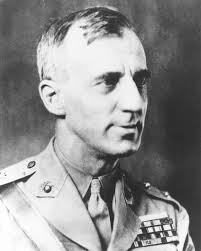
From 1898 to 1931, Smedley Darlington Butler was a member of the U.S. Marine Corps. By the time he retired he had achieved what was then the corps’s highest rank, major general, and by the time he died in 1940, at 58, he had more decorations, including two medals of honor, than any other Marine. During his years in the corps he was sent to the Philippines (at the time of the uprising against the American occupation), China, France (during World War I), Mexico, Central America, and Haiti.

In light of this record Butler presumably shocked a good many people when in 1935 — as a  second world war was looming — he wrote in the magazine Common Sense:

I spent 33 years and four months in active military service and during that period I spent most of my time as a high class muscle man for Big Business, for Wall Street and the bankers. In short, I was a racketeer, a gangster for capitalism [corporatism]. I helped make Mexico and especially Tampico safe for American oil interests in 1914. I helped make Haiti and Cuba a decent place for the National City Bank boys to collect revenues in. I helped in the raping of half a dozen Central American republics for the benefit of Wall Street. I helped purify Nicaragua for the International Banking House of Brown Brothers in 1902-1912. I brought light to the Dominican Republic for the American sugar interests in 1916. I helped make Honduras right for the American fruit companies in 1903. In China in 1927 I helped see to it that Standard Oil went on its way unmolested. Looking back on it, I might have given Al Capone a few hints. The best he could do was to operate his racket in three districts. I operated on three continents.

That same year he published a short book with the now-famous title War Is a Racket, for which he is best known today. Butler opened the book with these words:

War is a racket. It always has been.

It is possibly the oldest, easily the most profitable, surely the most vicious. It is the only one international in scope. It is the only one in which the profits are reckoned in dollars and the losses in lives.

He followed this by noting: “For a great many years, as a soldier, I had a suspicion that war was a racket; not until I retired to civil life did I fully realize it. Now that I see the international war clouds gathering, as they are today, I must face it and speak out.”

Butler went on to describe who bears the costs of war — the men who die or return home with wrecked lives, and the taxpayers — and who profits — the companies that sell goods and services to the military. (The term military-industrial complexwould not gain prominence until 1961, when Dwight Eisenhower used it in his presidential farewell address. See Nick Turse’s book The Complex: How the Military Invades Our Everyday Lives.)

Writing in the mid-1930s, Butler foresaw a U.S. war with Japan to protect trade with China and investments in the Philippines, and declared that it would make no sense to the average American:

We would be all stirred up to hate Japan and go to war — a war that might well cost us tens of billions of dollars, hundreds of thousands of lives of Americans, and many more hundreds of thousands of physically maimed and mentally unbalanced men.

Of course, for this loss, there would be a compensating profit — fortunes would be made.  Millions and billions of dollars would be piled up. By a few. Munitions makers. Bankers.  Ship builders. Manufacturers. Meat packers. Speculators. They would fare well.…

But what does it profit the men who are killed? What does it profit their mothers and sisters, their wives and their sweethearts? What does it profit their children?

What does it profit anyone except the very few to whom war means huge profits?

Noting that “until 1898 [and the Spanish-American War] we didn’t own a bit of territory outside the mainland of North America,” he observed that after becoming an expansionist world power, the U.S. government’s debt swelled 25 times and “we forgot George Washington’s warning about ‘entangling alliances.’ We went to war. We acquired outside territory.”

It would have been far cheaper (not to say safer) for the average American who pays the bills to stay out of foreign entanglements. For a very few this racket, like bootlegging and other underworld rackets, brings fancy profits, but the cost of operations is always transferred to the people — who do not profit.

Butler detailed the huge profits of companies that sold goods to the government during past wars and interventions and the banks that made money handling the government’s bonds.

The normal profits of a business concern in the United States are six, eight, ten, and sometimes twelve percent. But war-time profits — ah! that is another matter — twenty, sixty, one hundred, three hundred, and even eighteen hundred per cent — the sky is the limit. All that traffic will bear. Uncle Sam has the money. Let’s get it.

Of course, it isn’t put that crudely in war time. It is dressed into speeches about patriotism, love of country, and ‘we must all put our shoulders to the wheel,’ but the profits jump and leap and skyrocket — and are safely pocketed.

And who provides these returns? “We all pay them — in taxation.… But the soldier pays the biggest part of the bill.”

His description of conditions at veterans’ hospitals reminded me of what we’re hearing today about the dilapidated veterans’ health care system. Butler expressed his outrage at how members of the armed forces are essentially tricked into going to war — at a pitiful wage.

Beautiful ideals were painted for our boys who were sent out to die. This was the “war to end all wars.” This was the “war to make the world safe for democracy.” No one mentioned to them, as they marched away, that their going and their dying would mean huge war profits. No one told these American soldiers that they might be shot down by bullets made by their own brothers here. No one told them that the ships on which they were going to cross might be torpedoed by submarines built with United States patents. They were just told it was to be a “glorious adventure.”

Thus, having stuffed patriotism down their throats, it was decided to make them help pay for the war, too. So, we gave them the large salary of $30 a month.

Butler proposed ways to make war less likely. Unlike others, he had little faith in disarmament conferences and the like. Rather, he suggested three measures: (1) take the profit out of war by conscripting “capital and industry and labor” at $30 a month before soldiers are conscripted; (2) submit the question of entry into a proposed war to a vote only of “those who would be called upon to do the fighting and dying”; (3) “make certain that our military forces are truly forces for defense only.”

It’s unlikely that these measures would ever be adopted by Congress or signed by a president, and of course conscription is morally objectionable, even if the idea of drafting war profiteers has a certain appeal. But Butler’s heart was in the right place. He was aware that his program would not succeed: “I am not a fool as to believe that war is a thing of the past.”

Yet in 1936 he formalized his opposition to war in his proposed constitutional “Amendment for Peace.” It contained three provisions:

  • The removal of the members of the land armed forces from within the continental limits of the United States and the Panama Canal Zone for any cause whatsoever is prohibited.
  • The vessels of the United States Navy, or of the other branches of the armed service, are hereby prohibited from steaming, for any reason whatsoever except on an errand of mercy, more than five hundred miles from our coast.
  • Aircraft of the Army, Navy and Marine Corps is hereby prohibited from flying, for any reason whatsoever, more than seven hundred and fifty miles beyond the coast of the United States.

He elaborated on the amendment and his philosophy of defense in an article in Woman’s Home Companion, September 1936.

It’s a cliche of course to say, “The more things change, the more they stay the same,” but on reading Butler today, who can resist thinking it? As we watch Barack Obama unilaterally and illegally reinsert the U.S. military into the Iraqi disaster it helped cause and sink deeper into the violence in Syria, we might all join in the declaration with which Butler closes his book:

TO HELL WITH WAR!

Postscript: In 1934 Butler publicly claimed he had been approached by a group of businessmen about leading half a million war veterans in a coup against President Franklin D. Roosevelt with the aim of establishing a fascist dictatorship. This is known as the “Business Plot.” A special committee set up by the U.S. House of Representatives, which heard testimony from Butler and others, reportedly issued a document containing some confirmation. The alleged plot is the subject of at least one book, The Plot to Seize the White House, and many articles.

Saturday Matinee: Memorial Triple Feature

Today happens to be the day of two pivotal events in American history: the WACO massacre (1993) and the Oklahoma City bombing (1995). In both cases there’s much evidence pointing towards state terrorism and cover-up. Two of the best documentaries which build convincing cases in support of this are “WACO: Rules of Engagement” and “A Noble Lie: Oklahoma City 1995”, both presented here in their entirety.

Lastly, I have recently and belatedly heard the news that whistleblower, investigative journalist and author of “Crossing the Rubicon” Michael C. Ruppert is dead. He reportedly killed himself last Sunday shortly after his final broadcast. Given the nature of Ruppert’s research it would be natural to suspect foul play, but the story is supported by the following statement from a close friend:

Sunday night following Mike’s Lifeboat Hour radio show, he was found dead of a self-inflicted gunshot wound. This was not a “fake” suicide. It was very well planned by Mike who gave us few clues but elaborate instructions for how to proceed without him. His wishes were to be cremated, and as of this moment, there are no plans for a memorial service. However, I will be taking his show this coming Sunday night, April 20, and the entire show will be an In Memoriam show for Mike with opportunities for listeners to call in. It was my privilege to have known Mike for 14 years, to have worked with him, to have been mentored by him, and to have supported him in some of his darkest hours, including the more recent ones. I am posting this announcement with the blessing of his partner Jesse Re and his landlord, Jack Martin. Thank you Mike for all of the truth you courageously exposed and for the legacy of truth-telling you left us. Goodbye my friend. Your memory will live in hour hearts forever. I have no more details to share than I am posting here. We should have much more information by Sunday night.

Carolyn Baker

Many including myself discovered Ruppert’s work through his early independent 9/11 research on his From the Wilderness website. A few years ago his work on Peak Oil was brought to a larger audience through the critically acclaimed documentery “Collapse” (2009). Rest in peace, Mike Ruppert.