Two for Tuesday
Reply


“Sorry We Missed You”: Ken Loach Exposes the Holes in the Gig Economy
By Chuck Collins
Source: CounterPunch
Director Ken Loach has done it again. “Sorry We Missed You” is a family drama infused with a searing look at life in the “gig economy” with a frayed social safety net. Like his previous film, “I, Daniel Blake,” this movie is about working class people maintaining their dignity and humanity in the face of government austerity, privatization, and corporate greed.
“Sorry We Missed You” was just released in the U.S. through affiliated independent theaters, such as our Boston-area Coolidge Corner. A portion of the ticket price through virtual screenings support these theaters.
In the context of a pandemic, “Sorry” connects us to the frontline workers delivering packages and caring for the elderly and disabled — workers who are grossly underpaid while being at greatest risk.
Set in Newcastle, UK, the film takes its name from the package delivery slip that Ricky, the father in a family of four, leaves when no one is home to sign for a package.
Like most workers in the U.S. and UK, Ricky and his spouse Abbie are still struggling to get out of debt a decade after the 2008 economic meltdown. Abbie works as a home care nurse, hopping buses between visits to up to eight patients a day. Ricky takes a job as a driver with a package delivery service. Both work hard and with integrity. Abbie says she cares for her patients “how she’d like people to treat her own mother.”
Like workers at Uber, DoorDash, and other similar delivery services, Ricky’s employment status is in the limbo between employee and independent contractor. Maloney, the boss man who manages the package distribution facility, makes it clear: Ricky isn’t an employee, but a “franchisee,” a self-employed delivery driver. This status requires him to take on all the risks, including purchasing a van, leasing a delivery scanner, and toiling unlimited hours. The scanner serves as the symbol of the surveillance economy that enables the company to monitor Ricky’s every turn. Yet the company also fines him for late deliveries and, when robbers smash Ricky’s delivery scanner, they assess him a £1,000 charge.
Ricky and Abbie attempt to mind their two children, Seb and Lisa Jane, often via phone and text. The children absorb the stresses of their parents, who work 12 to 16 hour days to survive.
Director Loach balances a family story while dramatizing the structural forces that drive the gig economy and pit workers against each other. When one delivery driver struggles with family issues, the boss Maloney offers his route up to other drivers. Breaching the thin whisper of solidarity between the drivers, Ricky takes the other driver’s more lucrative route. Meanwhile, one of Abbie’s nursing patients shares photos and stories from her struggles as a labor union activist, a reminder of the past solidarity that existed among workers. “What happened to the eight-hour day?” she asks.
Maloney celebrates his own tough-guy unwillingness to bend to meet Ricky’s need for an emergency day off, saying the “shareholders of the trucking depot should build a [expletive] statue of me here.” Maloney also blames the customers, saying to Ricky, “do any of them ask you how you are? They just want their package delivered on time for as cheap as possible.” We have met the enemy, and it is in part the consumer who expects to pay less and get it now, with no understanding of the social costs of convenience.
In the midst of the Covid-19 pandemic, we are more dependent than ever on those who drive the delivery trucks, who bring the packages, who stock the shelves, and attend to those in need.
“Sorry We Missed You” dramatizes why we need a system where all workers have universal health insurance, living wages, and paid family leave. And we need stronger protections against employers who restructure their enterprises to extract more wealth, while shifting costs on to workers and the rest of us.
Watch the full film on Kanopy.

By Peter Sobczynski
Source: RogerEbert.com
According to IMDb, the seemingly inexhaustible Nicolas Cage has no fewer than six additional movies in various stages of production that are currently scheduled for release in 2020, ranging from high-profile studio outings to the kind of demented head-scratchers that he somehow manages to sniff out in the manner of a pig finding truffles. And yet, none of these films may be able to top his latest effort, “Color Out of Space,” in terms of sheer nuttiness. Considering that the film takes its inspiration from one of the most famous short stories by the legendarily weird H.P. Lovecraft, and was directed and co-written by Richard Stanley (making his first stab at narrative filmmaking since being fired from his remake of “The Island of Dr. Moreau” after only a few days of shooting), there was very little chance that it was every going to be just another run-of-the-mill project. However, the addition of Cage to the already heady cinematic brew definitively puts it over the top, making it the kind of cult movie nirvana that was its apparent destiny from the moment the cameras started rolling.
The film centers on the Gardner family, who have recently left the hustle and bustle of the city for a more bucolic life in a remote house near a lake in the deep woods of Massachusetts. While father Nathan (Cage) is gung-ho about becoming a farmer and raising alpacas (“the animal of the future”) despite no discernible talent for either, wife Theresa (Joely Richardson) is preoccupied with recovering from a recent mastectomy, eldest son Benny (Brendan Meyer) is off getting stoned most of the time, teen daughter Lavinia (Madeline Arthur) vents her annoyance at the move by dabbling in the black arts with her paperback copy of “The Necronomicon” and young son Jack (Julian Hilliard) more often than not simply gets lost in the shuffle. The Gardners are not crazy or hostile in any way, but it also becomes quickly obvious that their isolation has begun to drive them all a bit batty.
That weirdness escalates one night when the sky turns an almost indescribable shade of fuchsia, and a meteorite crashes into their front yard. Although the meteorite itself soon crumbles away, strange things begin happening in its wake. A batch of new and heretofore unseen flowers begin blooming while Nathan’s tomato crop comes in weeks ahead of schedule; the family’s phones, computers, and televisions are constantly being distorted by waves of static that render them all but useless. The Gardners themselves begin exhibiting signs of strange behavior as well: Nathan begins acting daffier than usual, flying off into rages at the drop of the hat; a seemingly dazed Theresa chops off the tops of a couple of her fingers while cutting carrots; Jack is constantly staring and whistling at a well that he claims contains a “friend.” Before long, everything in the area begins mutating in indescribable ways, and while Benny and Lavinia recognize what is happening around them, even they appear to be powerless to escape the grip of whatever is behind everything.
The stories of H.P. Lovecraft have inspired, directly or otherwise, any number of films over the years but with very few exceptions (chiefly Stuart Gordon’s cult classics “Re-Animator” and “From Beyond”), most of them have not been especially good. In most cases, the problem is that Lovecraft’s stories tended to focus on indescribable horrors and much of the impact for the reader came from taking the vague hints that he did parcel out and then picturing it in their own minds, where their imaginations had no limitations or budgetary restrictions. To successfully adapt one of his works, a filmmaker needs either an unlimited budget to try to bring his horrors fully to life, or the kind of unlimited imagination that allows them to take Lovecraft’s suggestions and go off in their own unusual directions. When these requirements are missing, the results can be fairly dire, as anyone who saw “The Curse,” a dire low-budget 1987 adaptation of Color of Outer Space, can attest.
In this case, the film works because it is clear that Stanley is not only working on the same wavelength as Lovecraft was when he wrote the original story, but has managed to transform the author’s decidedly purple prose into cinematic terms. Take the titular color, for example. In the original story, it is never properly described to us other than being of a shade never before seen on the typical color spectrum. That sort of non-description description can work on the page but isn’t especially helpful as a guide for someone who has to bring it to life. Stanley proves himself to be up to the challenge, and hits upon a wild color scheme that honors Lovecraft’s intentions by bathing everything in a genuinely otherworldly tinge. Not content to rest there, he builds upon that weirdness with an equally vivid soundscape, including a creepily effective score by Colin Stetson. Stetson’s score shifts levels of reality in aural terms and conjure up the kind of terrors that are even harder to shake than the numerous and undeniably eye-popping physical mutations on display.
Stanley also manages to work the film’s additional otherworldly element—Cage’s performance—organically into the material, without losing any of its total strangeness in the process. For fans of oddball cinema, a Cage-Stanley collaboration is the stuff dreams are made of. In that respect, it does not disappoint. Obviously, once things go crazy in the second half, Cage brings out the weirdness full force (even randomly employing the wheeling vocal tic that he used decades earlier in “Vampire’s Kiss”). But what is interesting is that, instead of making Nathan into a completely normal guy who does an immediate 180 as a result of the strange occurrences, he and Stanley instead see him as a guy who is already a bit off right from the start, albeit in endearingly oddball ways. As a result of his work in these early scenes, there is an unexpected degree of poignance that he brings to the proceedings later on even as things go fully gonzo.
The chief problem with “Color Out of Space” is that, at nearly two full hours, it is a little too much of a good thing at times, with some plot elements—chiefly one involving potentially shady dealings by the town’s mayor (Q’orianka Kilcher)—that could have easily been jettisoned. For the most part, however, the film is the kind of audacious and deliriously messed-up work that fans of Stanley, Cage, and cult cinema have been rooting for ever since the existence of the project became known. Both as an effective cinematic translation of Lovecraft’s particular literary skills, and as a freakout of the first order with sights and sounds that will not be easily forgotten, this is one of those films that I suspect is going to grow in significance and popularity in due time. Hopefully it will serve as just the first of many collaborations between Stanley and Cage, two decidedly kindred artistic spirits.
Watch Color Out of Space on Hoopla here: https://www.hoopladigital.com/title/13038495
Source: Open Culture
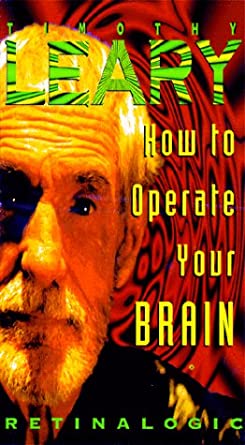
Speaking at the Human Be-In in January 1967, Timothy Leary uttered the famous phrase borrowed from Marshall McLuhan, “Turn on, tune in, drop out.” It was shorthand for saying experiment with psychedelics and achieve new levels of consciousness.
Almost 30 years later, Leary hadn’t lost his missionary zeal. In 1993 (and only a few years before his death), the former Harvard psychology professor recorded “a public service video” called How to Operate Your Brain. Here, Leary narrates an almost epileptic seizure-inducing video, providing what some consider “a guided meditation” of sorts. I’d prefer to call it an unorthodox “user manual” that tries to impart Leary’s unique sense of enlightenment:
The aim of human life is to know thyself. Think for yourself. Question authority. Think with your friends. Create, create new realities. Philosophy is a team sport. Philosophy is the ultimate, the ultimate aphrodisiac pleasure. Learning how to operate your brain, learning how to operate your mind, learning how to redesign chaos.
As you get deeper into the meditation, you’ll realize one thing. Three decades may have passed since Leary popularized the catchphrase of the counterculture. But he’s still getting his ideas from McLuhan. If you follow the video (or transcript) to the end, you’ll discover that ones and zeros have basically taken the place of LSD. Leary says:
Now we have digital communication. We can create our fantasies. We can create our rhythms, design on screen…. Anyone in any culture watching this screen will get the general picture. It’s one global village. It’s one global human spirit, one global human race. As we link up through screens, linked by electrons and photons, we will create for the first time a global humanity, not separated by words or minds or nationalities or religious biases.
You can find McLuhan meditating on the concept of an Electronic Global Village in another vintage clip.

“Taking Liberties” (2007) is a British documentary directed by Chris Atkins. Using a mix of animation, news footage and interviews, it examines how Labour has overreacted to the terror threat, using it as an excuse to weaken civil liberteis including the right to protest, right to freedom of speech, right to privacy, right not to be detained without charge, presumption of innocence until proven guilty, and protections against torture. In short, it’s a cinematic chronicle of the origin of the modern British surveillance state under the Blair ministry.
INDIAN COUNTRY NEWS
"It is the duty of every man, as far as his ability extends, to detect and expose delusion and error"..Thomas Paine
Human in Algorithms
From the Roof Top
I See This
blog of the post capitalist transition.. Read or download the novel here + latest relevant posts
अध्ययन-अनुसन्धानको सार
 After the Crash