Two for Tuesday
Reply

By Jason Hoffman
Source: The Third Eye
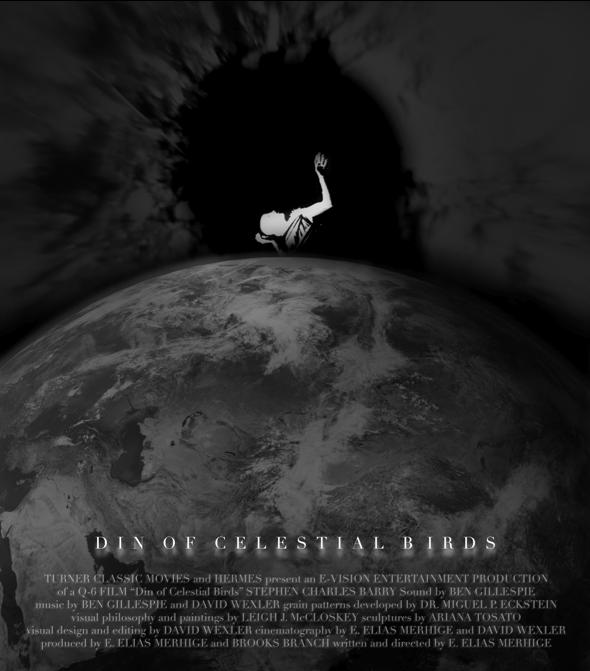
Din of Celestial Birds (2006) A film by E. Elias Merhige. Black and white, sound, 16mm, 14 mins.
American filmmaker E. Elias Merhige’s experimental film Din of Celestial Birds (2006) is the second part of an as yet unfinished trilogy of films, the first part being his bold and visionary debut feature Begotten. Most people coming to Din of Celestial Birds will have watched Begotten and are presumably expecting more of the gruesome and haunting imagery that distinguished the style of that feature, however as the movie begins, we are reassured to “Not be afraid … Be comforted … Remember … Our origin…”.
I came away from the film thinking of it as Begotten enacted on a microscopic scale: a depiction of the divine mystery of creation through an exploration of processes prior to it, but where Begotten did so as a metaphorical psychodrama, Din of Celestial Birds does this as if a nature documentary of life, in a style reminiscent of Man Ray and other Surrealists.
The opening credits actually attribute the film to Q6, a collective consisting of a visual philosopher (whatever that is), a computational visual neuroscientist, a multi-media performance artist, a composer, and a sculptor; all of whom Merhige collected around him to produce the movie in a hands-on fashion employing techniques used by the work of cinema pioneers like the Lumiere brothers, Fritz Lang, and Jean Cocteau, in addition to software and technology created specifically for the film.
Though Din of Celestial Birds arguably ploughs the same furrow as its conceptual predecessor, the film is nevertheless testament to a unique artistic vision, exploring representations of the fringes of consciousness by challenging the limits of cinema.

‘Perverse Preachers, Fascist Fundamentalists and Kristian Kiddie Kooks’: Insane Christian cult video
By Richard Metzger
Source: Dangerous Minds
“He’s a rewarder of those who seek him. Some say God is a punisher, but do you know what we do with child abusers today? We put child abusers in prison if we find out about ‘em. God is not a child abuser! God is a good god. Why don’t you just say that out loud with me right no? God is a good god, you always remember that! God is not gonna do you harm… (pause) There is a judgement coming someday…”
—“Mrs. Hook” from The Christian Pirates cable access show.
History will note that for a short period at the end of the 20th century, there was this “format” called “VHS” (“Video Home System” is what it stood for) that allowed people to do something called “videotaping” “off” their television sets (it didn’t work exactly like that, but it’s, you know, close enough). But what history might neglect to record is that certain things got passed around from hand to hand on this format samizdat style in what was then called the “VHS tape trading underground.” During the mid-1980s to the late 90s, traders and flea market dealers were making pirated copies of things like the banned Rolling Stones movie Cocksucker Blues, Heavy Metal Parking Lot, “Screaming Boy” (lunatic Dallas public access preacher Jonathan Bell, later made famous by The Daily Show), a tape of a groupie blowing out a candle with her pussy for guitarist Steve Vai and “The Great Satan At Large,” a satanic talk show, among hundreds of other things.
One of the most heavily circulated items during the “VHS tape trading underground” days was a synapse-frying excursion straight into the dark heart of the most deeply disturbed, bat-shit crazy 80s TV evangelism titled “Perverse Preachers, Fascist Fundamentalists and Kristian Kiddie Kooks.” When the tape began making the rounds in the early 90s, the jaw-dropping selection of low IQ buffoonery, superstitious insanity and wildly inappropriate kiddie shows made by people who should NEVER BE LEFT ALONE UNSUPERVISED WITH YOUNG CHILDREN was the centerpiece of many a weed and alcohol-fuelled viewing fest.
An unnamed Internet reviewer said this of “Perverse Preachers, Fascist Fundamentalists and Kristian Kiddie Kooks”:
Americans: See why the rest of the world thinks we’re a bunch of blithering idiots!
Rest of the world: See why Americans are a bunch of blithering idiots!
That pretty much sums it up in a nutshell.
One of the more perplexing things on exhibit in “Perverse Preachers, Fascist Fundamentalists and Kristian Kiddie Kooks” is the clips from the no budget “Christian Pirates” cable access show where godless children are forced to “walk the plank” by one-legged Captain Hook and they sing songs about hoping that Satan gets paralyzed and has to use a wheelchair. There’s Jimmy Swaggart’s tearful confession of whore mongering (a masterclass in fleecing the faithful with the “I have sinned” ploy). A Jim and Tammy Faye Bakker press conference. There’s a lot of asking for money, natch, some racist Bible prophecy, preaching against something one of them calls “Marxism” and a “joyous” man with hands growing from his shoulders who, er, counts his blessings. It’s not just Christianity that takes a beating here. New Age beliefs are lampooned and there’s even an appearance by Queen Uriel from the nutty Unarius Academy of Science.
“Perverse Preachers, Fascist Fundamentalists and Kristian Kiddie Kooks” was produced by a Boston-based zine called Zontar. It came with an attached pamphlet that you can see reproduced here. Aside from being a masterpiece of video folk art (YES, this should preserved and elevated to museum status) it’s one of the single best things ever to get stoned and watch. I guarantee you’ll be blown away by “Perverse Preachers, Fascist Fundamentalists and Kristian Kiddie Kooks” (and if you’re not, you’ll be issued a full refund…)
BONUS VIDEO: Disgraced—but still currently raking it in like a gangsta on BET—TV evangelist Robert Tilton in the infamous “Pastor Gas” video that has made the rounds on the Internet since the first days of MySpace. My VHS copy of “Perverse Preachers, Fascist Fundamentalists and Kristian Kiddie Kooks” included this:

By Chris Scullion
Source: That Was a Bit Mental
Director: James Fargo
Starring: Pia Zadora, Tom Nolan, Craig Sheffer, Michael Berryman, Ruth Gordon, Alison La Placa
“I still can’t believe you’re an alien. What a novelty act!” (Dee Dee, Voyage Of The Rock Aliens)
One day in the future, when I have children, there will come a day when I’m asked “dad, what were the ’80s like?”
I already know how I’ll respond. Without saying a single word I’ll gesture to the couch, insist they sit down, turn the telly on and make them watch Voyage Of The Rock Aliens. Just to fuck with them.
After all, as a massive fan of anything ’80s I reckon I’ve seen enough movies and TV shows to determine what best sums up the decade. And this, quite frankly, is the most ’80s thing I’ve ever seen by a long way.
And I’ve seen this photo:
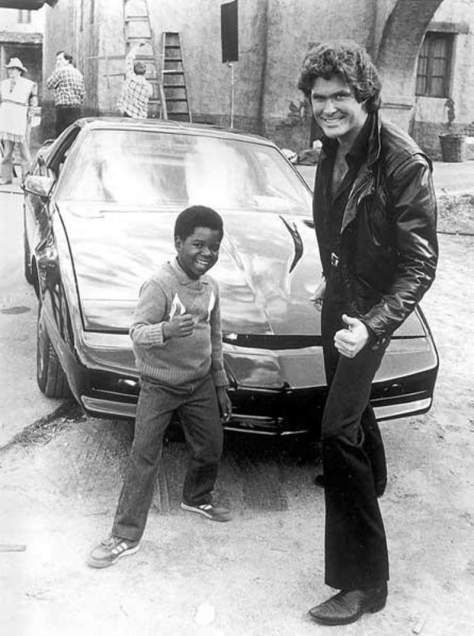
You see, what we have here, friends, is a sci-fi musical comedy in which all the songs are the catchiest, cheesiest ’80s pop you can imagine. And it’s brilliant.
It tells the story of a bunch of aliens, led by the super-serious ABCD (pronounced ‘Absid’, naturally), who fly around space in a ship shaped like a massive Flying V guitar.
These aliens are tasked with exploring the galaxy and studying anything they find in order to try to locate the source of Rock & Roll. Guess where they end up? That’s right, Venus Earth.

More specifically, they land in the town of Speelburgh (ahem), where local prettyboy Frankie rules his fellow teenagers with an iron fist.
As the lead singer of his band The Pack, he’s somehow managed to impose some sort of musical dictatorship banning anyone else in the town from playing instruments or singing.
This includes his girlfriend Dee Dee (singer Pia Zadora), who fancies herself as the next big musical sensation but is being held back by Frankie’s harsh singbargo.
Enter the Rock Aliens, who you’d better believe are going to ruddy well sing and dance all they want because it’s all they know. And once they do, the rest of the Speelburgh teens – Dee Dee included – are blown away by their new musical style (which is basically Devo).

ABCD quickly takes a shine to Dee Dee, by which I mean his head literally explodes and his limbs fall off the first time he sees her. That’s not a figure of speech, that actually happens.
For some reason this doesn’t put Dee Dee off and the two fall for each other, with ABCD asking Dee Dee to join his band.
Dee Dee is thrilled, but how will she react when she discovers that ABCD and his bandmates are aliens? And is Frankie really going to let this weird prick win his girlfriend over? Dramaaaaaa.
I genuinely uttered the phrase “what the fuck is this all about” five or six times throughout the course of Voyage Of The Rock Aliens. And that’s no bad thing.
For example, you’ve got the opening sequence, set on another planet, in which Pia Zadora (playing someone else) and Jermaine Jackson sing their new single for no reason at all: after which Jackson fucks off and is never seen again.

Then there’s the bizarre subplot involving two escaped mental patients, one of whom (The Hills Have Eyes‘ Michael Berryman) falls in love and sees the error of his ways.
These are but a few moments of madness: others include a robot helper (voiced by Peter ‘Optimus Prime’ McCulloch) disguising itself as a fire hydrant, an odd dance number set in a ladies’ toilet, and a giant mutant octopus thing which is sitting in the nearby lake waiting to take over the town.
Then there’s Ruth Gordon playing a bizarre sheriff who has a surprising lack of tact when phoning the families of accident victims:
“Am I speaking to the widow of John S. Lamont?”
“You must be mistaken, I’m not a widow.”
“The hell you’re not!”
This being a musical, the songs are naturally of great importance, and anyone into cheesy ’80s pop will be in heaven.
Each track is delightfully catchy and yet charmingly shit, with nonsensical lyrics all over the shop (“It’s the nature of the beast / I’m keeping up my status quota”) that often don’t have anything to do with the story. Which is sort of the point of songs in a musical, but fuck it, I’m giving it a pass.
The best of the bunch is definitely the opening track though (the one with Jermaine Jackson in it). Curious? Enjoy:
Of all the ’80s sci-fi musical comedies I’ve seen over the years, Voyage of The Rock Aliens is undoubtedly the best. It’s also undoubtedly the only, but let’s not try to ruin the mood.
Get some similarly ’80s-minded friends around, shit fancy dress optional, turn the volume as loud as it can go without the neighbours coming round to cave your face in, and enjoy a helping of delicious ’80s cheese so plentiful that you’ll having dreams about hairspray, synthesisers and robot fire hydrants for weeks to come.
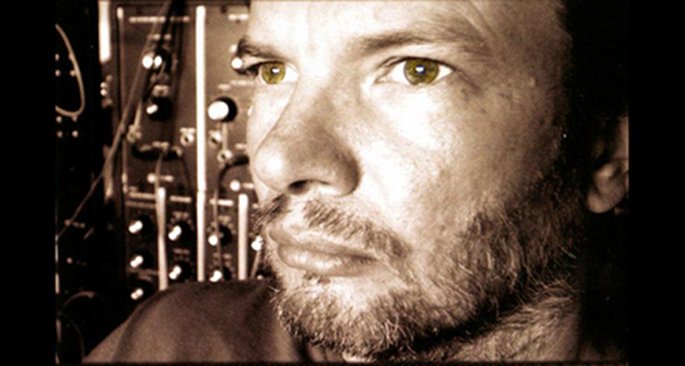
“Slices” is a German DVD magazine focusing on electronic music. In this segment from the 9/15/07 edition, legendary composer, producer, DJ and founder of record label FAX +49-69/450464, Pete Namlook (aka Peter Kuhlmann) is featured. Though not as well known as his contemporaries, he’s one of the most influential ambient artists of the 90s, having collaborated with Klaus Schulze, Bill Laswell, Dr. Atmo, Lorenzo Montanà, Jonah Sharp, Wolfram Spyra, Charles Uzzell-Edwards, Burhan Öçal, David Moufang, Mixmaster Morris, Higher Intelligence Agency, Gaudi, Atom Heart, Richie Hawtin and Tetsu Inoue among many others. At the age of 51, Pete Namlook died after a heart attack on November 8, 2012. Fortunately he was as prolific as he was gifted, and left the world a vast catalog of beautiful sonic explorations as his legacy. In this profile he describes the philosophy and some of the technical aspects behind his work.
INDIAN COUNTRY NEWS
"It is the duty of every man, as far as his ability extends, to detect and expose delusion and error"..Thomas Paine
Human in Algorithms
From the Roof Top
I See This
blog of the post capitalist transition.. Read or download the novel here + latest relevant posts
अध्ययन-अनुसन्धानको सार
 After the Crash