The Real Thanksgiving

Thanksgiving

It’s always nice to celebrate special occasions like holidays with loved ones, and while it’s good to be thankful for what one has, we should also feel discontent for what so many do not have or for what they’ve had taken away from them. Sometimes ignorance may seem like bliss, but the pain of reality is good for the soul, potentially liberating, and necessary to avoid sugarcoating or forgetting atrocities committed against any group of people (to hopefully prevent repeats in the future).

An excerpt from The Hidden History of Massachusetts by Dr. Tingba Apidta:

Much of America’s understanding of the early relationship between the Indian and the European is conveyed through the story of Thanksgiving. Proclaimed a holiday in 1863 by Abraham Lincoln, this fairy tale of a feast was allowed to exist in the American imagination pretty much untouched until 1970, the 350th anniversary of the landing of the Pilgrims. That is when Frank B. James, president of the Federated Eastern Indian League, prepared a speech for a Plymouth banquet that exposed the Pilgrims for having committed, among other crimes, the robbery of the graves of the Wampanoags. He wrote:

“We welcomed you, the white man, with open arms, little knowing that it was the beginning of the end; that before 50 years were to pass, the Wampanoag would no longer be a free people.”

But white Massachusetts officials told him he could not deliver such a speech and offered to write him another. Instead, James declined to speak, and on Thanksgiving Day hundreds of Indians from around the country came to protest. It was the first National Day of Mourning, a day to mark the losses Native Americans suffered as the early settlers prospered. This true story of “Thanksgiving” is what whites did not want Mr. James to tell.

What Really Happened in Plymouth in 1621?

According to a single-paragraph account in the writings of one Pilgrim, a harvest feast did take place in Plymouth in 1621, probably in mid-October, but the Indians who attended were not even invited. Though it later became known as “Thanksgiving,” the Pilgrims never called it that. And amidst the imagery of a picnic of interracial harmony is some of the most terrifying bloodshed in New World history.

The Pilgrim crop had failed miserably that year, but the agricultural expertise of the Indians had produced twenty acres of corn, without which the Pilgrims would have surely perished. The Indians often brought food to the Pilgrims, who came from England ridiculously unprepared to survive and hence relied almost exclusively on handouts from the overly generous Indians-thus making the Pilgrims the western hemisphere’s first class of welfare recipients. The Pilgrims invited the Indian sachem Massasoit to their feast, and it was Massasoit, engaging in the tribal tradition of equal sharing, who then invited ninety or more of his Indian brothers and sisters-to the annoyance of the 50 or so ungrateful Europeans. No turkey, cranberry sauce or pumpkin pie was served; they likely ate duck or geese and the venison from the 5 deer brought by Massasoit. In fact, most, if notall, of the food was most likely brought and prepared by the Indians, whose 10,000-year familiarity with the cuisine of the region had kept the whites alive up to that point.

The Pilgrims wore no black hats or buckled shoes-these were the silly inventions of artists hundreds of years since that time. These lower-class Englishmen wore brightly colored clothing, with one of their church leaders recording among his possessions “1 paire of greene drawers.” Contrary to the fabricated lore of storytellers generations since, no Pilgrims prayed at the meal, and the supposed good cheer and fellowship must have dissipated quickly once the Pilgrims brandished their weaponry in a primitive display of intimidation. What’s more, the Pilgrims consumed a good deal of home brew. In fact, each Pilgrim drank at least a half gallon of beer a day, which they preferred even to water. This daily inebriation led their governor, William Bradford, to comment on his people’s “notorious sin,” which included their “drunkenness and uncleanliness” and rampant “sodomy”…

The Pilgrims of Plymouth, The Original Scalpers

Contrary to popular mythology the Pilgrims were no friends to the local Indians. They were engaged in a ruthless war of extermination against their hosts, even as they falsely posed as friends. Just days before the alleged Thanksgiving love-fest, a company of Pilgrims led by Myles Standish actively sought to chop off the head of a local chief. They deliberately caused a rivalry between two friendly Indians, pitting one against the other in an attempt to obtain “better intelligence and make them both more diligent.” An 11-foot-high wall was erected around the entire settlement for the purpose of keeping the Indians out.

Any Indian who came within the vicinity of the Pilgrim settlement was subject to robbery, enslavement, or even murder. The Pilgrims further advertised their evil intentions and white racial hostility, when they mounted five cannons on a hill around their settlement, constructed a platform for artillery, and then organized their soldiers into four companies-all in preparation for the military destruction of their friends the Indians.

Pilgrim Myles Standish eventually got his bloody prize. He went to the Indians, pretended to be a trader, then beheaded an Indian man named Wituwamat. He brought the head to Plymouth, where it was displayed on a wooden spike for many years, according to Gary B. Nash, “as a symbol of white power.” Standish had the Indian man’s young brother hanged from the rafters for good measure. From that time on, the whites were known to the Indians of Massachusetts by the name “Wotowquenange,” which in their tongue meant cutthroats and stabbers.

Who Were the “Savages”?

The myth of the fierce, ruthless Indian savage lusting after the blood of innocent Europeans must be vigorously dispelled at this point. In actuality, the historical record shows that the very opposite was true.

Once the European settlements stabilized, the whites turned on their hosts in a brutal way. The once amicable relationship was breeched again and again by the whites, who lusted over the riches of Indian land. A combination of the Pilgrims’ demonization of the Indians, the concocted mythology of Eurocentric historians, and standard Hollywood propaganda has served to paint the gentle Indian as a tomahawk-swinging savage endlessly on the warpath, lusting for the blood of the God-fearing whites.

But the Pilgrims’ own testimony obliterates that fallacy. The Indians engaged each other in military contests from time to time, but the causes of “war,” the methods, and the resulting damage differed profoundly from the European variety:

o Indian “wars” were largely symbolic and were about honor, not about territory or extermination.

o “Wars” were fought as domestic correction for a specific act and were ended when correction was achieved. Such action might better be described as internal policing. The conquest or destruction of whole territories was a European concept.

o Indian “wars” were often engaged in by family groups, not by whole tribal groups, and would involve only the family members.

o A lengthy negotiation was engaged in between the aggrieved parties before escalation to physical confrontation would be sanctioned. Surprise attacks were unknown to the Indians.

o It was regarded as evidence of bravery for a man to go into “battle” carrying no weapon that would do any harm at a distance-not even bows and arrows. The bravest act in war in some Indian cultures was to touch their adversary and escape before he could do physical harm.

o The targeting of non-combatants like women, children, and the elderly was never contemplated. Indians expressed shock and repugnance when the Europeans told, and then showed, them that they considered women and children fair game in their style of warfare.

o A major Indian “war” might end with less than a dozen casualties on both sides. Often, when the arrows had been expended the “war” would be halted. The European practice of wiping out whole nations in bloody massacres was incomprehensible to the Indian.

According to one scholar, “The most notable feature of Indian warfare was its relative innocuity.” European observers of Indian wars often expressed surprise at how little harm they actually inflicted. “Their wars are far less bloody and devouring than the cruel wars of Europe,” commented settler Roger Williams in 1643. Even Puritan warmonger and professional soldier Capt. John Mason scoffed at Indian warfare: “[Their] feeble manner…did hardly deserve the name of fighting.” Fellow warmonger John Underhill spoke of the Narragansetts, after having spent a day “burning and spoiling” their country: “no Indians would come near us, but run from us, as the deer from the dogs.” He concluded that the Indians might fight seven years and not kill seven men. Their fighting style, he wrote, “is more for pastime, than to conquer and subdue enemies.”

All this describes a people for whom war is a deeply regrettable last resort. An agrarian people, the American Indians had devised a civilization that provided dozens of options all designed to avoid conflict–the very opposite of Europeans, for whom all-out war, a ferocious bloodlust, and systematic genocide are their apparent life force. Thomas Jefferson–who himself advocated the physical extermination of the American Indian–said of Europe, “They [Europeans] are nations of eternal war. All their energies are expended in the destruction of labor, property and lives of their people.”

Puritan Holocaust

By the mid 1630s, a new group of 700 even holier Europeans calling themselves Puritans had arrived on 11 ships and settled in Boston-which only served to accelerate the brutality against the Indians.

In one incident around 1637, a force of whites trapped some seven hundred Pequot Indians, mostly women, children, and the elderly, near the mouth of the Mystic River. Englishman John Mason attacked the Indian camp with “fire, sword, blunderbuss, and tomahawk.” Only a handful escaped and few prisoners were taken-to the apparent delight of the Europeans:

To see them frying in the fire, and the streams of their blood quenching the same, and the stench was horrible; but the victory seemed a sweet sacrifice, and they gave praise thereof to God.

This event marked the first actual Thanksgiving. In just 10 years 12,000 whites had invaded New England, and as their numbers grew they pressed for all-out extermination of the Indian. Euro-diseases had reduced the population of the Massachusett nation from over 24,000 to less than 750; meanwhile, the number of European settlers in Massachusetts rose to more than 20,000 by 1646.

By 1675, the Massachusetts Englishmen were in a full-scale war with the great Indian chief of the Wampanoags, Metacomet. Renamed “King Philip” by the white man, Metacomet watched the steady erosion of the lifestyle and culture of his people as European-imposed laws and values engulfed them.

In 1671, the white man had ordered Metacomet to come to Plymouth to enforce upon him a new treaty, which included the humiliating rule that he could no longer sell his own land without prior approval from whites. They also demanded that he turn in his community’s firearms. Marked for extermination by the merciless power of a distant king and his ruthless subjects, Metacomet retaliated in 1675 with raids on several isolated frontier towns. Eventually, the Indians attacked 52 of the 90 New England towns, destroying 13 of them. The Englishmen ultimately regrouped, and after much bloodletting defeated the great Indian nation, just half a century after their arrival on Massachusetts soil. Historian Douglas Edward Leach describes the bitter end:

The ruthless executions, the cruel sentences…were all aimed at the same goal-unchallengeable white supremacy in southern New England. That the program succeeded is convincingly demonstrated by the almost complete docility of the local native ever since.

When Captain Benjamin Church tracked down and murdered Metacomet in 1676, his body was quartered and parts were “left for the wolves.” The great Indian chief’s hands were cut off and sent to Boston and his head went to Plymouth, where it was set upon a pole on the real first “day of public Thanksgiving for the beginning of revenge upon the enemy.” Metacomet’s nine-year-old son was destined for execution because, the whites reasoned, the offspring of the devil must pay for the sins of their father. The child was instead shipped to the Caribbean to spend his life in slavery.

As the Holocaust continued, several official Thanksgiving Days were proclaimed. Governor Joseph Dudley declared in 1704 a “General Thanksgiving”-not in celebration of the brotherhood of man-but for [God’s] infinite Goodness to extend His Favors…In defeating and disappointing… the Expeditions of the Enemy [Indians] against us, And the good Success given us against them, by delivering so many of them into our hands…

Just two years later one could reap a ££50 reward in Massachusetts for the scalp of an Indian-demonstrating that the practice of scalping was a European tradition. According to one scholar, “Hunting redskins became…a popular sport in New England, especially since prisoners were worth good money…”

Origin of the Wal-Mart Workers’ Movement

walmart black friday strike

Wal-Mart’s unfair labor policies have been a concern of workers’ rights activists for decades but they managed to avoid a retail strike until last year. On October 4th 2012, 60 Wal-Mart employees struck in Los Angeles followed by strikes at 28 stores in 12 states five days later. Shortly after on October 10th, pressure was increased when more than 200 workers protested at Wal-Mart’s global headquarters in Bentonville, Arkansas, as executives met for its annual financial analyst meeting. More than 400 Wal-Mart strikers, mostly coordinated by Organization United For Respect at Wal-Mart (OUR Wal-mart) with support from the United Food and Commercial Workers Union, walked out on Black Friday, the day after Thanksgiving and traditionally Wal-Mart’s most profitable (and chaotic) day of the year.

Wal-Mart’s intimidation tactics have long suppressed employees’ attempts to organize but previous incidents reflecting growing collective outrage and urgency served as catalyst to make the wave of strikes inevitable. On June 4th 2012, eight Mexican guest workers at Wal-Mart supplier CJ’s Seafood went on strike and filed a complaint with the Labor Department and the Equal Opportunity Labor Commission. Plant managers had forced them to work 24 hour shifts with no overtime, locked employees inside the plant, threatened them with beatings and threatened violence against their families in Mexico. As a result of the strike, Wal-Mart was pressured into suspending CJ’s Seafood as a supplier.

In early September of 2012, around 30 temp workers at a warehouse storing goods for Wal-Mart went on strike without union backing. Conditions of the freight containers they worked in were becoming dangerously hot in the Summer. In addition, the underpaid workers had no access to clean water, were forced to use malfunctioning equipment, denied work breaks, and threatened by supervisors. The following week another 30 employees at a Wal-Mart distribution center in northeastern Illinois walked out after being retaliated against by supervisors for delivering a list of grievances to management. Their petition shared many of the same concerns listed by the strikers in California: dangerous working conditions, unsafe or insufficient equipment, lack of living wages, no overtime pay, benefits and job security, irregular schedules, work speed-ups and wage theft.

While exploitation and unjust treatment of workers are not unique to Wal-Mart and companies they subcontract to, the wild growth of the Wal-Mart empire can be largely attributed to their business model. Besides maintaining strict anti-union policies, by keeping tight control over their supply chain they force costs and responsibilities onto suppliers, squeezing their margins. Predictably, this results in the lowest paid laborers getting hit the hardest while the highest paid CEOs make obscenely inflated profits. According to Federal Reserve data analyzed by Sylvia Allegretto and Josn Bivens, between 2007 and 2010, while the average American family’s wealth decreased 38.8%, wealth of Wal-Mart heirs rose 22% to nearly $90 billion, equivalent to the wealth of 41.5 percent of American families combined. An article for the Progressive Change Campaign Committee by Zaid Jilani highlighted the fact that Wal-Mart CEO Mike Duke received compensation worth $18.1 million in 2011 while the average sales associate at the company was paid $8.81 an hour according to independent market research group IBIS World. Thus, Duke earned 1,167 times as much as his company’s average worker (average CEO-to-worker compensation ratio was 209.4-to-1 in 2011). A 2008 SweatFree Communities report brought to light horrendous working conditions at a Wal-Mart supplier in Bangladesh where sweatshop factory workers were forced to work up to 19-hour shifts, frequently subjected to verbal and physical abuse and paid as little as $20 a month.

Societal harm caused by Wal-Mart is hardly limited to poverty and sub-poverty wage employees, subcontractors, and their families. In 2010 Public Advocate for the City of New York Bill de Blasio and Hunter College Center for Community Planning and Development released “Wal-Mart’s Economic Footprint”, a comprehensive review of over fifty studies on Wal-Mart’s economic impact across the country. Among their findings:
-For every two low wage jobs Wal-Mart creates, three local jobs are eliminated.
-Wal-Mart stores have a strongly negative impact on a community’s existing retailers.
-Large chain stores such as Wal-Mart send most of their revenues out of communities.
-Wal-Mart has thousands of employees who qualify for Medicaid and other publicly subsidized care.
-Wal-Mart likely avoided paying $245 million in taxes 2008 by paying rent to itself and then deducting that rent from its taxable income.
-Wal-Mart has admitted a failure to pay $2.95 billion in taxes for fiscal year 2009.
-Wal-Mart’s average annual pay of $20,774 is below the Federal Poverty Level for a family of four.

Because Wal-Mart is now the largest food seller in the US, it has an outsized impact on our food system influencing which foods are made available, market prices of food and methods used by food producers. Continuing Wal-Mart’s trend of prioritizing profits over people, last year the company made a deal with Monsanto to sell unlabeled GM corn. This decision was made despite protests of 463,000 signatories of a petition from Food and Water Watch urging Wal-Mart not to carry the potentially harmful product.

The National Labor Relations Board recently decided that it will prosecute Wal-Mart for labor rights violations for firing and retaliating against striking workers and those who have been outspoken about working conditions at Wal-Mart. This case shows that actions over the past year and a half have had a significant impact. Nearly a year after the Tazreen factory fire in Bangladesh that killed at least 117 people, Wal-Mart has refused to contribute to a compensation program for survivors and families (55% of the factory’s production was for Wal-Mart contractors). Wal-Mart has also been in the media spotlight for promoting a holiday food drive for its own employees, many of whom are paid under $9 an hour.

To keep the pressure on Wal-Mart, many workers will be walking off the job again for this year’s Black Friday. Learn more about this year’s action and/or participate by visiting the ActionNetwork.org site.

Sources:

http://www.democracynow.org/2012/10/10/walmart_workers_in_12_states_stage#transcript

http://www.huffingtonpost.com/2012/09/17/warehouse-workers-strike-illinois_n_1891499.html

http://www.guardian.co.uk/business/2012/oct/18/walmart-supply-chain-agencies-accused-wage-theft

http://thinkprogress.org/economy/2012/07/17/534591/walmart-heirs-wealth-combined/

http://boldprogressives.org/why-they-strike-wal-marts-ceo-earns-1167-times-as-much-as-an-average-worker-at-the-company/

https://docs.google.com/file/d/0BwH0nSyYMDxtNzZlYTBkN2UtNDQyMS00MzhkLTlkZTctMGQ4NjQ5NGNlZTRj/preview?hl=en

http://advocate.nyc.gov/files/Walmart.pdf

http://www.commondreams.org/headline/2012/08/04-0

http://www.foodandwaterwatch.org/pressreleases/national-community-labor-and-food-leaders-explain-why-walmart-cant-fix-new-york-citys-food-system/

Judging from footage such as this compilation video of various Black Friday sales last year at Wal-Mart and other stores, many employees may also want to skip work that day for personal safety reasons:

Scientists Sign Declaration That Animals Have Conscious Awareness; Just Like Humans

Via: Higher Perspectives

An international group of prominent scientists has signed The Cambridge Declaration on Consciousness in which they are proclaiming their support for the idea that animals are conscious and aware to the degree that humans are — a list of animals that includes all mammals, birds, and even the octopus. But will this make us stop treating these animals in totally inhumane ways?

Prominent scientists sign declaration that animals have conscious awareness, just like us

While it might not sound like much for scientists to declare that many nonhuman animals possess conscious states, it’s the open acknowledgement that’s the big news here. The body of scientific evidence is increasingly showing that most animals are conscious in the same way that we are, and it’s no longer something we can ignore.

What’s also very interesting about the declaration is the group’s acknowledgement that consciousness can emerge in those animals that are very much unlike humans, including those that evolved along different evolutionary tracks, namely birds and some cephalopods.

“The absence of a neocortex does not appear to preclude an organism from experiencing affective states,” they write, “Convergent evidence indicates that non-human animals have the neuroanatomical, neurochemical, and neurophysiological substrates of conscious states along with the capacity to exhibit intentional behaviors.”

Consequently, say the signatories, the scientific evidence is increasingly indicating that humans are not unique in possessing the neurological substrates that generate consciousness.

Prominent scientists sign declaration that animals have conscious awareness, just like us

The group consists of cognitive scientists, neuropharmacologists, neurophysiologists, neuroanatomists, and computational neuroscientists — all of whom were attending the Francis Crick Memorial Conference on Consciousness in Human and Non-Human Animals. The declaration was signed in the presence of Stephen Hawking, and included such signatories as Christof Koch, David Edelman, Edward Boyden, Philip Low, Irene Pepperberg, and many more.

The declaration made the following observations:

  • The field of Consciousness research is rapidly evolving. Abundant new techniques and strategies for human and non-human animal research have been developed. Consequently, more data is becoming readily available, and this calls for a periodic reevaluation of previously held preconceptions in this field. Studies of non-human animals have shown that homologous brain circuits correlated with conscious experience and perception can be selectively facilitated and disrupted to assess whether they are in fact necessary for those experiences. Moreover, in humans, new non-invasive techniques are readily available to survey the correlates of consciousness.
  • The neural substrates of emotions do not appear to be confined to cortical structures. In fact, subcortical neural networks aroused during affective states in humans are also critically important for generating emotional behaviors in animals. Artificial arousal of the same brain regions generates corresponding behavior and feeling states in both humans and non-human animals. Wherever in the brain one evokes instinctual emotional behaviors in non-human animals, many of the ensuing behaviors are consistent with experienced feeling states, including those internal states that are rewarding and punishing. Deep brain stimulation of these systems in humans can also generate similar affective states. Systems associated with affect are concentrated in subcortical regions where neural homologies abound. Young human and nonhuman animals without neocortices retain these brain-mind functions. Furthermore, neural circuits supporting behavioral/electrophysiological states of attentiveness, sleep and decision making appear to have arisen in evolution as early as the invertebrate radiation, being evident in insects and cephalopod mollusks (e.g., octopus).
  • Birds appear to offer, in their behavior, neurophysiology, and neuroanatomy a striking case of parallel evolution of consciousness. Evidence of near human-like levels of consciousness has been most dramatically observed in African grey parrots. Mammalian and avian emotional networks and cognitive microcircuitries appear to be far more homologous than previously thought. Moreover, certain species of birds have been found to exhibit neural sleep patterns similar to those of mammals, including REM sleep and, as was demonstrated in zebra finches, neurophysiological patterns, previously thought to require a mammalian neocortex. Magpies in articular have been shown to exhibit striking similarities to humans, great apes, dolphins, and elephants in studies of mirror self-recognition.
  • In humans, the effect of certain hallucinogens appears to be associated with a disruption in cortical feedforward and feedback processing. Pharmacological interventions in non-human animals with compounds known to affect conscious behavior in humans can lead to similar perturbations in behavior in non-human animals. In humans, there is evidence to suggest that awareness is correlated with cortical activity, which does not exclude possible contributions by subcortical or early cortical processing, as in visual awareness. Evidence that human and nonhuman animal emotional feelings arise from homologous subcortical brain networks provide compelling evidence for evolutionarily shared primal affective qualia.

Read more about this here and here.

A short feature on the mysterious and amazing abilities of cephalopods:

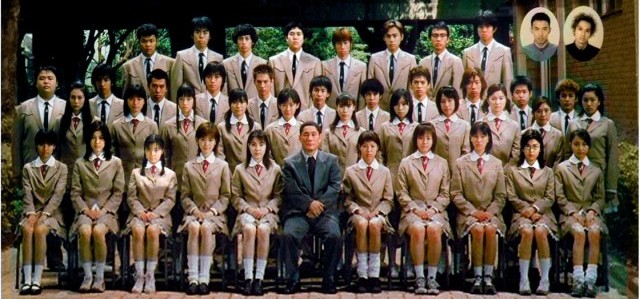
Saturday Matinee: Battle Royale

battleroyale_spotlight-e1293591661834

With the recent release of the Hunger Games sequel, it seems fitting to feature a cult classic that may have been the inspiration for that series: “Battle Royale”. Released in 2000, it was Kinji Fukasaku’s final film, a director previously best known for his “Battles Without Honor and Humanity” series of Yakuza films. Kinji died of cancer shortly after filming the first scene of the sequel, “Battle Royale 2: Requiem”, which was completed by his son Kenta in 2003. Battle Royale takes place in a dystopian society whose government regularly forces a class of high school students to participate in a deathmatch on a small island until just one survivor is left.  Each student is given a bag containing food, water, a compass, a map of the island, and a randomly selected weapon. The students are also outfitted with surveillance collars that can track their movements and detonate if they wander into “danger zones” or refuse to cooperate.

Though the film is at times physically and emotionally brutal, it works effectively as a parable for the way youth are cynically manipulated by society and the different approaches people take dealing with tyranny. When Kinji Fukasaku first read the novel his film was based on, it resonated with him because of traumatic personal experiences. As he related in a Director’s statement for Battle Royale:

I immediately identified with the 9th graders in the novel, Battle Royale. I was fifteen when World War II came to an end. By then, my class had been drafted and was working in a munitions factory.

In July 1945, we were caught up in artillery fire. Up until then, the attacks had been air raids and you had a chance of escaping from those. But with artillery, there was no way out. It was impossible to run or hide from the shells that rained down. We survived by diving for cover under our friends.

After the attacks, my class had to dispose of the corpses. It was the first time in my life I’d seen so many dead bodies. As I lifted severed arms and legs, I had a fundamental awakening … everything we’d been taught in school about how Japan was fighting the war to win world peace, was a pack of lies. Adults could not be trusted.

The emotions I experienced then–an irrational hatred for the unseen forces that drove us into those circumstances, a poisonous hostility towards adults, and a gentle sentimentality for my friends–were a starting point for everything since. This is why, when I hear reports about recent outbreaks of teenage violence and crimes, I cannot easily judge or dismiss them.

This is the point of departure for all my films. Lots of people die in my films. They die terrible deaths. But I make them this way because I don’t believe anyone would ever love or trust the films I make, any other way.

BATTLE ROYALE, my 60th film, returns irrevocably to my own adolescence. I had a great deal of fun working with the 42 teenagers making this film, even though it recalled my own teenage battleground.

Watch the full film here.

50 Years After JFK

AMERICAN ROYALTY JFK DALLAS 03

In the half century since JFK’s assassination researchers have yet to determine conclusively who did it, but what can be proven definitively is that the official story is a lie. Despite overwhelming evidence that Lee Harvey Oswald could not possibly have killed JFK in the way claimed by the Warren Commission Report, many in the corporate media still cling to the belief that he was the “lone gunman”. Most who have examined the assassination in-depth suspect the involvement of a cabal of different factions, which JFK himself referenced in his famous address to the American Newspaper Publishers Association in 1961.

Some of the people involved include those most opposed to the truth getting out. Documented evidence reveals the CIA was so threatened by independent researchers looking into JFK’s murder, they coined a new ad hominem attack to discredit them: “Conspiracy Theorists”. Worse than assassinating people’s character is actual assassination, which may have been behind the suspiciously large number witnesses holding important information for investigators who died in mysterious circumstances. Others involved in the “anti-conspiracy conspiracy” might include select heads of corporate news outlets who to this day continue to push the official story and discredit all information which contradicts it. Of course many people within groups involved in the cover-up had no direct role in the planning and execution of the assassination. Some might believe mass distrust of government would be too damaging were the truth to get out, others could be doing favors for powerful allies, were paid off, and/or pressured into cooperating.

As much as the establishment would like us to ridicule and dismiss those who believe anything other than the official story, more people than ever are open to alternative theories because so many have been proven to be true over time, there’s greater awareness that governments and corporations do lie, cheat, steal and kill, and the internet has empowered more people than ever to research on their own or at least cross-check information. Though it’s likely we will never see justice for JFK, because of the work of “conspiracy theorists” we are now more aware of the scope of government/corporate criminality and connections between government, wall street, war-profiteers, and the criminal underworld. Information uncovered related to the JFK assassination provides a glimpse into “deep politics” and an alternative historical narrative. Connections to JFK can be made to Watergate, Iran-Contra, and 9/11 (which is not too surprising because they benefit the same military-industrial geopolitical factions). As new evidence continues to expand our understanding of what took place on 11/22/63, such knowledge could also help us understand government/corporate crimes of the present and future.

On the Smells Like Human Spirit podcast, host Guy Evans interviews author and activist Dr. Michael Parenti and whistleblower/ex-secret service agent Abraham Bolden on the events of 11/22/63:

[audio http://traffic.libsyn.com/smellslikepodcast/SLHS111.mp3 ]

James Corbett on why JFK still matters:

Bill Hick’s irreverent take on the official story:

A short film on the JFK assassination:

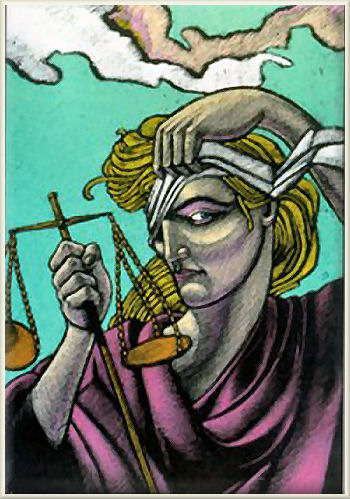
Justice System May Be Deaf & Dumb But Not Blind

blind_justice

Compare and contrast the following recent police encounters. In the first, a man who was reportedly behaving in a hostile and erratic manner rams his SUV into a police car before they have a chance to pull him over. He leads a second police car on a chase before ramming into a third police vehicle. He backs up the SUV and rams it a second time before being blocked in by the car behind him. The man continues to fight the police as they attempt to get him out of the SUV and is eventually tasered and arrested.

In the second case, a woman in a minivan with five kids on board as passengers are pulled over for going 71 in a 55 mph zone. She argues with the police over the ticket and drives off but is pulled over again shortly after. A police officer tries to pull the kids out of the van before being rushed by the driver’s 14 year son who is tasered. The officer begins smashing the van’s windows with his baton as backup arrives. The woman attempts to flee again and an officer fires three shots at her van. She leads the police on a chase before surrendering in front of a hotel.

There’s a number of different factors behind the approaches taken by the police in the two cases, but one can’t help but wonder if race and class may have played a part in the way the respective drivers were treated. The first case took place in Oregon and the driver was Dave Dahl, a white man and founder of a local bread company. The police knew who he was because they received a call from someone believing he was off his medication and suffering from a mental breakdown. Whether Oregon police are better trained and/or afraid of getting sued, they demonstrated that police can effectively stop potentially dangerous reckless drivers without resorting to guns.

In the second case the driver was Oriana Ferrell, a black woman from Memphis on vacation with her kids. Though she didn’t deal with the situation in the wisest manner, she was not trying to ram the police and the police officers were also at fault for escalating the situation. Because she was stopped in an isolated area and was no doubt aware of the reality of institutional racism, she may have felt a need to flee for the safety of her family. Such fear appears to have been justified by documented police actions such as shooting at her van full of kids.

Dash-cam footage of the incident:

Poor training and systemic corruption may also have been a factor. Just ten days after Ferrell and her family’s near-death experience, a New Mexico police officer shot and killed a woman after a high speed pursuit.

You can more about the contrasting police encounters here:

http://www.katu.com/news/local/Daves-Killer-Bread-founder-in-custody-after-three-deputies-cars-rammed-232046381.html

http://www.syracuse.com/news/index.ssf/2013/11/police_shoot_at_minivan_full_of_kids_after_traffic_stop_gets_heated.html