Activist/comedian Lee Camp, best known for his Moment of Clarity YouTube channel and podcasts (and who follows the fine tradition of stand-up social critics such as George Carlin or Bill Hicks), is host of the new RT program “Redacted Tonight”. Not surprisingly it’s an expert blend of humor and news, and you can watch the entire premier episode here:
If your life needs a little-seen dystopian ‘80s German film about Industrial music sparking revolutionary change in a society of fast food and cultivated complacency—and I believe it does—then your life needs Decoder. Largely illuminated in lurid reds and TV-tube blues, the 1984 film starred Einstürzende Neubauten’s then-percussionist F.M. Einheit as a sonic experimenter who discovers that playing back recordings of disturbances in public spaces can create actual disturbances among the public, a concept developed by William Burroughs in the “Electronic Revolution” essay found in some editions of the collection The Job. (In fact, Burroughs briefly appears in the film, as does Throbbing Gristle/Psychic TV’s Genesis P-Orridge.)
Einheit uses this esoteric knowledge to cultivate increasingly widespread defiance and mayhem, attracting the attention of a Muzak corporate hit-man (I love the conceit that Muzak would have an assassin in its employ) whose task is complicated by his crush on F.M.’s peep-show dancer/amateur herpetologist girlfriend, played by Christiane F. The film’s themes and inspirations are illuminated by its writer Klaus Maeck in this interview from Jack Sargeant’s Naked Lens: Beat Cinema, excerpted here from the film’s web site.
I wanted to realize Burroughs’ ideas and the techniques which he described in the ‘Electronic Revolution’, and in The Revised Boy Scout Manual and in The Job. These were my favorite books … And I loved Johnny Rotten for his revolution in show business (and I still do). I was convinced that the only valuable political work must use the enemy’s techniques. From the ‘Foreword’ of the Decoder Handbook: “It’s all about subliminal manipulation, through words, pictures and sound. It is the task of the pirates to understand these techniques and use them in their own interest. To spread information is the task of all media. Media is power. And nowadays (1984!) the biggest revolution happen at the market for electronic media. To spread information is also your task. And we should learn in time to use our video and tape recorders as Weapons. The fun will come by itself.”
Being in the music business and participating in the punk and new wave explosion I became more interested in music. Muzak was one thing I found. Subliminal music to influence people’s moods, to make them function better, or buy more. So my conclusion was similar to that of ‘bands’ like Throbbing Gristle; by turning around the motivation, by cutting up the sounds, by distorting them etc. one should be able to provoke different reactions. Make people puke instead of feeling well, make people disobey instead of following, provoke riots.
Though it deals thoughtfully with provocative ideas, the film is laden with Euro art-film pretense that feels like fit matter for a “Sprockets” gag. Early on there’s a montage of video games cut with military stock footage, and another that alternates gore and erotica while Soft Cell’s “Seedy Films” plays.
But as strange as it can be, Decoder still holds a coherent, if dreamy, narrative, filled with captivating imagery and a gorgeous soundtrack composed by Einheit, P-Orridge, and Soft Cell’s Dave Ball. You can watch it in its entirety right here. I’ll throw the trainspotters a bone: Burroughs’ cameo is in the scene that starts at about 37:30, and P-Orridge’s appearance is at about 49:00.
they sang and prayed,
naming that day in May,
Decoration day they dis-interred 257 Union men
mass graved, dumped, piled broken bodies twisted,
a Charleston North Carolina Guernica
forgotten men dug up, re-interred
with honor, memory, celebration
by 10,000 in 1866
that first Memorial Day
it is Memorial Day 2010
the Turkish flotilla
bringing aid to Gaza
the attack, nine dead,
Americans, Turks
no aid delivered
Memorial Day 1937,
steelworkers striking Little Steel,
strikers with families march toward the Republic steel mill gate
police-guards open fire
ten dead
thirty shot
one hundred clubbed
today we are at Jones beach
it is Memorial Day
we are fifty souls
remembering our dead, the dead
hundreds of Long Islanders
thousands of North Americans
more than a million Iraqis and Afghanis
families stroll past
some look, others see without vision
all have come to eat, drink
and celebrate that insatiable beast
today the Blue Angles
spin flip dive swoop
begging boys and girls to sign up
the navy, the marines want you
as we call out the named and nameless
let us remember these days
past, present, and future
Tom Karlson is founder of Poets for Peace, Long Island, NY.
It’s the third and final day of the Memorial Day weekend.
Millions of Americans are visiting friends and relatives, perhaps taking a three- or four-day mini-vacation. They may be at pool parties and grilling burgers, hotdogs, veggies, and whatever else appeals to them.
The nation’s politicians are going to Memorial Day rallies. There will be speeches and music. American flags and bunting will drape the stages. The politicians will tell us about the “ultimate sacrifices” American servicemen and women made. They will tell us how wonderful America is, how we are the best country in the world, how we defend freedom and remember those who put their lives on the line to do so. The crowds, whether a few or thousands, will applaud vigorously.
Some will even say that the VA hospitals need a complete overhaul, that Gen. Eric Shinseki–who was wounded and earned three Bronze Stars for bravery, should be fired. These are some of the same politicians who had attacked Shinseki when he was Army chief of staff who warned that it would take hundreds of thousands of Americans, not thousands as the Bush-Cheney cabal had claimed, to successfully invade and control Iraq. For his military knowledge, he was forced into an early retirement. These are the politicians who are outraged that America is treating veterans poorly.
Here’s what the politicians also won’t say. They won’t tell us that 41 Republican senators blocked legislation this past year to provide necessary funding for veterans health. They won’t tell us that during the first years of the Iraq War, the quality of American-based hospitals had deteriorated to the point that it took a major newspaper series to expose what had happened and, finally, with politicians forced to look at despicable conditions, and shamed by their ignorance, there were some measures to improve the care for wounded soldiers after their lives were saved by courageous battlefield medics.
They won’t tell us that members of Congress blocked significant increases in the foodstamp program or that governors and legislatures have not done what they should to care for the homeless. After all, the impoverished and homeless don’t contribute to political campaigns. Of course, the politicians won’t tell us that one-fourth of all adult homeless are veterans.
They won’t tell us about veterans who came home from war, and then lost their jobs or homes during the Great Recession that followed the fraud and greed committed by the bankers and industrial giants who were able to become rich because government did little to protect the people.
With crocodile tears and shallow words, recorded by the news media, the politicians will tell us how much they mourn–but they won’t tell us they are part of the problem, for proudly claiming they voted time after time to block necessary funding and for demanding government not intrude upon the free enterprise system.
The politicians will wave flags and say how much they believe in America and our veterans, and how much they mourn the loss of our soldiers. The crowds will enthusiastically agree–and then go to their barbeques and picnics.
No, they won’t tell us that if we want to reduce these problem–DON’T THUMP YOUR CHESTS, UNFURL YOUR FEATHERS, AND SEND THE YOUTH TO WARS THAT SHOULD NEVER BE FOUGHT.
During the Vietnam War, John Prine recorded “Your Flag Decal Won’t Get You Into Heaven Anymore.” It was true then. It is still true. Please listen.
David Cronenberg’s “Scanners” (1981) is infamous for a particular scene occurring less than 15 minutes into the film (and is likely still a shock for audiences today who have never seen it). The film’s notoriety (and comparatively wooden performance of the lead actor) may have caused most viewers to overlook some of the film’s better qualities such as an intelligent proto-cyberpunk storyline involving human drug experimentation, corporate espionage and backlash from a mutant terrorist underground. One particularly compelling plot element features an attack via psychic computer hacking. Scanners is surprisingly polished for its budget in terms of cinematography and special effects and is also notable for standout performances by Patrick McGoohan (creator and star of “The Prisoner” TV series) and Michael Ironside.
Ecological economists such as Herman Daly write that the more full the world becomes, the higher are the social or external costs of production.
Social or external costs are costs of production that are not captured in the price of the products. For example, dead zones in the Gulf of Mexico that result from chemicals used in agriculture are not included as costs in agricultural production. The price of food does not include the damage to the Gulf.
Food production is a source of large social costs. Indeed, it seems that the more food producers are able to lower the measured cost of food production, the higher the social costs imposed on society.
Consider the factory farming of animals. The density of operations results in a concentration of germs and in animals being fed antibiotics. Lowering the cost of food in this way contributes to the rise of antibiotic resistant superbugs that will impose costs on society that will more than offset the savings from lower food prices.
Monsanto has reduced the measured cost of food production by producing genetically modified seeds that result in plants that are pest and herbicide resistant. The result is increased yields and lower measured costs of production. However, there is evidence that the social or external costs of this approach to farming more than offsets the lower measured cost. For example, there are toxic affects on microorganisms in the soil, a decline in soil fertility and nutritional value of food, and animal and human infertility.
When Purdue University plant pathologist and soil microbiologist Don Huber pointed out these unintended consequences of GMOs, other scientists were hesitant to support him, because their careers are dependent on research grants from agribusiness. In other words, Monsanto essentially controls the research on its own products.
In his book, Genetic Roulette, Jeffrey M. Smith writes: “Genetically modified (GM) foods are inherently unsafe, and current safety assessments are not competent to protect us from or even identify most dangers.” The evidence is piling up against such foods; yet the US government is so totally owned by Monsanto that labeling cannot be required.
Pesticides damage birds and bees. Some years ago we learned that ingestion of pesticides by birds was bringing some species near to extinction. If we lose bees, we lose honey and the most important pollinating agent. The rapid decline in bee populations have several causes. Among them are the pesticides sulfoxaflor and thiamethoxam produced by Dow and Syngenta. Dow is lobbying the Environmental Protection Agency to permit sulfoxaflor residues on food, and Syngenta wants to be able to spray alfalfa with many times the currently allowed amount of thiamethoxam.
As the regulators are more or less in the industry’s pocket, the companies will likely succeed in their efforts to further contaminate the food of people and animals.
The profits of Monsanto, Dow, and Syngenta are higher, because many of the costs associated with the production and use of their products are imposed on third parties and on life itself.
Many countries have put restrictions on GMO foods. Lawmakers in Russia equate genetically engineered foods to terrorist acts and want to impose criminal penalties.
The French parliament has approved a ban on GMO cultivation in France. However, Washington lobbies foreign governments on behalf of its agribusiness and chemical donors. Dick Cheney used his two terms as vice president to staff up the environmental agencies with corporate friendly executives. Just as the political appointees at the SEC would not let SEC prosecutors bring cases against the big banks, environmental regulators have a difficult time protecting the environment and food supply from contamination. The way Washington works is that the regulators protect those they are supposed to regulate in exchange for big jobs when they leave government. The economist, George Stigler, made this clear several decades ago.
The public favors labeling of genetically engineered food, but Monsanto and the Grocery Manufacturers Association have so far been successful in preventing it. On May 8 the governor of Vermont signed a bill passed by the state legislature that requires labeling. Monsanto’s response is to sue the state of Vermont.
The opposition to labeling by agribusiness is suspicious. It creates the impression of hiding information from the public. Normally, this is not good public relations. Currently, foods are mislabeled when genetically engineered food is labeled “natural.”
Breakthroughs in science and technology allow mere humans to play God with insufficient information. The downsides of genetic engineering are unknown, and the costs could exceed the benefits. What economists term “low cost production” might turn out to be very high cost.
Neoclassical economists do not lose sleep over external costs, because they think that there is always a solution. They think that the way to deal with pollution is to price it so that the entity that most needs to pollute ends up with the right. Somehow this is thought to solve the problem of pollution. Neoclassical economists think that it is impossible to run out of resources, because they believe man-made capital is a substitute for nature’s capital. It is a fantasy world in which we become ever more productive and better off and never run out of anything.
Ecological economists see the world differently. Nature’s capital, such as mineral resources and fisheries, are being depleted, and the disposal sinks for wastes are filling up, with land, air, and water being polluted. Every act of production produces useful products and wastes. As external costs and the depletion of nature’s capital are not measured, we have no way of knowing whether an increase in output is economic or uneconomic. All we can tell is whether the costs that are measured are covered by the price of the product.
What this means is that in a full world, neoclassical economics becomes less meaningful and is less able to contribute to our understanding of problems. It cannot even tell us whether GDP is rising or falling as we do not have a measure of the full cost of production.
For further information on these issues, see my book, The Failure Of Laissez Faire Capitalism And Economic Dissolution Of The West, and the website: http://steadystate.org
Two Oregon Counties Vote to Ban Genetically Engineered Crops Despite Massive Contributions by Monsanto and Corporate Agribusiness
Wins for Community Rights in Jackson and Josephine Counties a Sign of Growing Momentum for Anti-GMO Movement
FINLAND, Minn. – On Wednesday, May 20, voters in two counties in Oregon passed ballot initiatives to ban the growing of genetically engineered crops.
Jackson County’s Measure 15-119 passed overwhelmingly, by 66 percent to 34 percent. Proponents of the ban raised only $375,000 compared with a record nearly $1 million raised by the opposition, which included agribusiness giants Monsanto, Syngenta and DuPont Pioneer.
Voters in Josephine County passed Measure 17-58 by a vote of 58 percent to 42 percent. However, the ban will be tested in court because the state passed a controversial law in October 2013, stripping counties of the right to pass GMO bans. The Jackson County measure is exempt from the state law because it had already qualified for the ballot prior to the passage of S.B. 863.
Ronnie Cummins, national director of the Organic Consumers Association (OCA), and the Organic Consumers Fund which mobilized its members and donated $50,000 to the Oregon campaigns, issued this statement today:
“The passing of these two GMO bans in Jackson and Josephine Counties should send a clear signal to politicians that citizens not only reject unregulated and hazardous GMOs, but are willing to defy the indentured politicians who pass laws, like Oregon’s S.B. 863, that take away county rights to ban GMOs and obliterate a 100-year tradition of home rule and balance of powers between counties and the state.
“This is a tremendous victory for the citizens of these two counties, and for the farmers who are determined to fight the threat of unwanted contamination by GMO crops. It is also a victory for the national anti-GMO movement as it builds momentum for similar bans in counties in other states.
“The margins of victory for these two measures also bode well for passing Oregon’s Ballot Initiative #44 in November 2014, a statewide ballot measure to require mandatory labeling of GMO foods and foods containing GMO ingredients, sold at retail.
“And finally, these victories make it clear to agribusiness giants like Monsanto and Dow that the day has come when they can no longer buy and lie their way to victory. By using the tools of democracy, such as ballot initiatives, citizens can overcome corporate and government corruption through honest campaigns, built on a foundation of truth, science and fair play.
“The OCA looks forward to helping the citizens of Josephine County defend their right to ban GMOs when they go to court to test the state’s new law, S.B. 863, and to helping the Oregon Right to Know campaign pass a strong GMO labeling law in November.”
The Organic Consumers Association (OCA) is an online and grassroots non-profit 501(c)3 public interest organization campaigning for health, justice, and sustainability. The Organic Consumers Fund is a 501(c)4 allied organization of the Organic Consumers Association, focused on grassroots lobbying and legislative action.
Just in case you’ve been living under a rock (or absorbing the limited range of carefully selected and controlled news reports from the corporate media), Monsanto is a sinister multinational with headquarters in Creve Coeur, Missouri, and it’s engaged in the production of seriously harmful chemicals and agricultural biotechnology.
It’s the largest manufacturer of products which include genetically engineered seed and herbicide glyphosate.
Apart from the genetically produced seed, they have also been known to produce chemicals such as DDT, PCBs, Agent Orange and bovine growth hormone among others. It has been given the name merchant of death by many groups that inform the sleepwalking masses about the dangers of using Monsanto products.
So let’s take a look at just 6 ways Monsanto are destroying humanity:
They produce genetically engineered seeds which are used to grow corn which is fed to cows with the intention of increasing their mass. GMO’s are harmful since they have been known to cause cancer therefore Monsanto has become a promoter of cancer.
Poisonous pesticides and other farm chemicals
They produce chemicals which are harmful and are sprayed on plants which eventually find their way on the tables of many families. These chemicals poison our body organs which eventually lead to death.
Promoters of Deforestation and desertification
Monsanto clears huge tracts of forest in order to set up their farms. This means they promote deforestation which eventually leads to desertification. As years go by with this kind of practice there will be no land to produce food which will lead to hunger and finally death.
They produce synthetic nitrogen fertilizer which when sprayed in their farms is absorbed by the soil making its way to the water table. This has poisoned over two thirds of US drinking water with nitrate poisoning. Apart from poisoning drinking water, the chemicals make their way to the oceans which has led to oceanic dead zones. Examples include the Gulf of Mexico and Chesapeake bay among others.
Wetland and Rainforest Destroyers
Monsanto model of draining wetlands and cutting down rainforests is a big promoter of destructive green house gases. Argentina is one of the victims of Monsanto’s rainforest destruction where they have planted genetically engineered soy. The destruction of the forest has led to destruction of animal and plant life that depend on the forest.
Generating new animal and human diseases
Glyphosate, one of the chemicals produced by Monsanto with the intention of killing pests has found to be a contributor to new diseases in both humans and animals. The chemical when sprayed on plants kills the useful bacteria and leads to formation of virulent pathogens which are introduced in the body when one consumes the food. These pathogens have led to infertility and miscarriages in animals and soon humans.
Russia has some of the most precious uncontaminated top soil on the planet and if it is rigorously controlled to stay GMO-free and free from chemicals its productivity would increase as Europe declines, geopolitical analyst William Engdahl told RT.
Russian PMs have pondered a draft bill outlawing GMOs. A draft bill submitted to the Russian parliament likens GMO production and distribution to terrorism. After entering the World Trade Organization, Russia was expected to allow GM food production and distribution within its market. However, in March Russia’s President Putin said the country would stay GM-free without violating its obligations to the WTO.
RT:What do you think about this latest bill in Russia’s parliament, which equates GM producers who flout the rules with terrorists. Is that a bit over the top?
William Engdahl: The language on Russian media blogs is [that] punishment for knowingly introducing GMO crops into Russia illegally should have a punishment comparable to that given to terrorists for knowingly hurting people. The direction of this is anything that stops, and puts the genie back in the bottle called genetic manipulation of plants and organisms is to the good for the future of the mankind. The comment about 20 percent of harvest increase in some GMOs is absolute rubbish. There is no long-term harvest gain that has been proven for GMO crops anywhere in the world because they are not modified to get harvest increases. So this is just soap bubbles that Monsanto, Syngenta and GMO giants are putting out to loll the public into thinking it is something good.
RT:Will this measure, if adopted, reduce the number of GM products on the market?
WE: I hope it does. I haven’t got access to the paragraphs of legislation but I think the direction that Prime Minister Medvedev indicated two-three months ago in terms of making this U-turn against GMO that seemed to have a green light after WTO. A year ago it was looking like GMO was a common thing in Russia which would be a catastrophe. I think the point is Russia has some of the most precious non-destroyed top soil on this planet and the richness of this top soil, if it is rigorously controlled to be GMO-free, to be free from chemicals, from Roundup or Atrazyne which is Syngenta’s favorite poison, and is marketed on the world markets as certified organic. Russia has a huge export market in Germany, in Western Europe, the European Union and elsewhere because there is a tremendous lack of it. So anything that Russia does to block GMO, keep in mind, the EU has not certified for commercial planting any GMO for years. There is such a great popular opposition in the EU that Monsanto, despite all the proclivities of the corrupt European Commission in Brussels to go with it, or even some people in the German government. The population is absolutely adamant here, they do not want this in their food.
RT:How can consumers be better protected from inadvertently buying genetically modified food?
WE: They can quite easily. First of all, they can do what the State of California tried, and Monsanto spent millions of dollars to block it and will try again. The State of Washington tried it and the same thing with Monsanto spending millions of dollars to create false lobbying campaigns [ensued]. The State of Vermont tried and succeeded in getting labeling on products that contain above 0.9 percent of GMO, which is similar to the EU. That is labeled on the shelves, when you buy this box of Kellogg’s Cornflakes you make sure to look and see if this is not GMO corn in my Cornflakes that my child is going to eat or is it this GMO garbage that Kellogg’s would so lovingly like to get rid of. That is one step. The other thing is for people to become informed about what we eat. Support local farmers, it is not against technology. I have seen it directly in Germany and elsewhere in Europe that properly done organic farming creates greater harvest yields than industrialized agriculture. The productivity is better, the quality is finer. The animals that are range fed, grass fed cows, chickens, they are real cows and chickens, they are not these synthetic pseudo-meat that we buy on the supermarket shelves in the big chains in Europe and in the US. So that is something that Russia has a great positive contribution to make.
William Engdahl is an award-winning geopolitical analyst and strategic risk consultant whose internationally best-selling books have been translated into thirteen foreign languages.


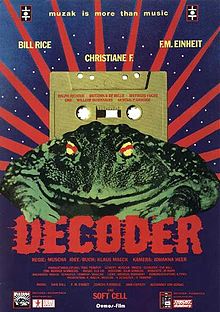
 . Largely illuminated in lurid reds and TV-tube blues, the 1984 film starred Einstürzende Neubauten’s then-percussionist F.M. Einheit as a sonic experimenter who discovers that playing back recordings of disturbances in public spaces can create actual disturbances among the public, a concept developed by William Burroughs in the “
 ” essay found in some editions of the collection
  . (In fact, Burroughs briefly appears in the film, as does Throbbing Gristle/Psychic TV’s Genesis P-Orridge.)
 , excerpted here from
  composed by Einheit, P-Orridge, and Soft Cell’s Dave Ball. You can watch it in its entirety right here. I’ll throw the trainspotters a bone: Burroughs’ cameo is in the scene that starts at about 37:30, and P-Orridge’s appearance is at about 49:00.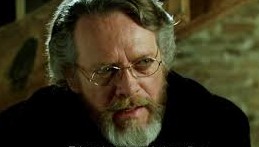

 After the Crash