“The Return of the Living Dead” (1985) was written and directed by Dan O’Bannon (writer of “Dark Star” and “Alien”), and remains among the all-time horror/comedy classics. Unlike typical zombie film scenarios, this one is set off by bumbling employees who release military-grade toxic waste inexplicably stored in the basement of a medical storage facility. The girlfriend of one of the employees and her punk rocker friends end up at the scene and find themselves under siege from reanimated bodies in the storage facility and the neighboring cemetery. While zombie apocalypse films are a dime a dozen today, Return of the Living Dead still has an edge thanks to it’s nihilistic slapstick humor and biting social satire. Four sequels followed Return of the Living Dead, none of them nearly as good.
Frankie’s having a terrible day. His wife and infant son are starving. He’s run out of money and food. Now he’s going to be evicted. He’s got a gun. Let’s hear it for Frankie…
If this sounds familiar, it’s because the story of the 1984 Troma movie Combat Shock bears a striking resemblance to that of Suicide’s harrowing song “Frankie Teardrop.” The movie concerns the struggle of a young man named Frankie to feed his wife and child in blighted Staten Island, and if you’ve heard the song, I don’t have to tell you that it ends pretty badly for Frankie, his family, you, me, and the entire human race.
Frankie isn’t a factory worker in this version of the story, but an unemployed Vietnam vet whose days and nights are continually interrupted by flashbacks of ‘Nam and the torture he suffered at the hands of the VC. These, in turn, lead to flashbacks within flashbacks where, for purposes of exposition, Frankie relives arguments with his father, now estranged because a) Frankie has refused to carry on the family legacy of race hate and b) Dad disapproves of Mrs. Frankie. Suffering through the exposition of any movie is itself a form of torture.
However, these gestures toward the conventions of plot are mercifully few and brief, and Combat Shock soon makes with the laffs and gasps you crave from late-night horror fare. Much of the pleasure of watching Combat Shock comes from the genre detail writer, director, producer and editor Buddy Giovinazzo adds to extend Suicide’s story to feature length. For instance, because of Frankie’s exposure to Agent Orange, and because this is a Troma movie, the child looks like a cross between the Eraserhead baby and Edvard Munch’s screamer.
Until the awful climax, the movie takes its time presenting a loser’s-eye view of urban anomie. If you’ve ever lived in a place that had a TV set, you already know all these characters: Frankie’s slow descent into madness involves demoralizing encounters with small-time hoods (Frankie’s creditors), child prostitutes, junkie thieves and social workers (one of whom is missing a Ronco Veg-O-Matic). There are also one or two thrilling surprises, even for the very jaded.
And in case you somehow feel cheated of your full share of human misery after watching Combat Shock, here’s a kind of sequel to “Frankie Teardrop,” Alan Vega’s 12-minute bum-out “Viet Vet.”
“Hearts and Minds” (1974) and “The Atomic Cafe” (1982) are two of the most chilling and persuasive anti-war documentaries ever made (at least for viewers who are not psychopaths). Though the editorial choices of both films clearly reflect an anti-war perspective, their messages are made more powerful by their lack of narration and abundance of archive footage, newsreels, and public statements from military and political officials. Both documentaries were years in the making with much time (nearly the entire time in the case of The Atomic Cafe) spent on research and editing, and the work clearly pays off by expanding the scope of the films to the political, cultural, and psychological factors behind wars. The filmmakers involved in Hearts and Minds and The Atomic Cafe, unlike most corporate news coverage of wars, both display great empathy in their inclusion of footage of “enemy” casualties of the war and “collateral damage” (ie. innocent victims caught in the crossfire). In the context of the current war-mongering from the Obama administration and corporate/government news media, Hearts and Minds and The Atomic Cafe are more relevant than ever and should be required viewing for everyone who values life.
The following essay is intended to provide a brief overview of topics addressed in a discussion graciously recorded by Julie Vivier at the offices of the Center for Research on Globalization in Montreal Canada on August 5, 2014.-JFT
Modern propaganda techniques utilized by the corporate state to enforce anti-democratic and destructive policies routinely entail the manufacture and manipulation of news events to mold public opinion and, as Edward Bernays put it, “engineer consent” toward certain ends.
Such events include not only overt political appeals, but also acts of seemingly spontaneous terrorism and militarism that traumatize the body politic into ultimately accepting false narratives as political and historical realities.
Western states’ development and utilization of propaganda closely parallels the steady decay of political enfranchisement and engagement throughout the twentieth century. Upon securing a second term in 1916, the Democratic administration of Woodrow Wilson plunged the United States into the most violent and homicidal war in human history. Wilson, a former Princeton University academician groomed for public office by Wall Street bankers, assembled a group of progressive-left journalists and publicists to “sell the war” to the American people.
George Creel, Walter Lippmann, Edward Bernays and Harold Lasswell all played influential roles in the newly-formed Committee on Public Information, and would go on to be major figures in political thought, public relations, and psychological warfare research.
The sales effort was unparalleled in its scale and sophistication. The CPI was not only able to officially censor news and information, but essentially manufacture these as well. Acting in the role of a multifaceted advertising agency, Creel’s operation “examined the different ways that information flowed to the population and flooded these channels with pro-war material.”
The Committee’s domestic organ was comprised of 19 subdivisions, each devoted to a specific type of propaganda, one of which was a Division of News that distributed over 6,000 press releases and acted as the chief avenue for war-related information. On an average week, more than 20,000 newspaper columns carried data provided through CPI propaganda. The Division of Syndicated Features enlisted the help of popular novelists, short story writers, and essayists. These mainstream American authors presented the official line in a readily accessible form reaching twelve million people every month. Similar endeavors existed for cinema, impromptu soapbox oratory (Four Minute Men), and outright advertising at home and abroad.[1]
With the experiences and observations of these war marketers variously recounted and developed throughout the 1920s (Lippmann, Public Opinion, The Phantom Public, Bernays, Propaganda, Crystallizing Public Opinion, Creel, How We Advertised America, Lasswell, Propaganda and the World War), alongside the influence of their elite colleagues and associates, the young publicists’ optimism concerning popular democracy guided by informed opinion was sobered with the realization that public sentiment was actually far more susceptible to persuasion than had been previously understood. The proposed solutions to guarantee something akin to democracy in an increasingly confusing world lay in “objective” journalism guided by organized intelligence (Lippmann) and propaganda, or what Edward Bernays termed “public relations.”
The argument laid out in Lippmann’s Public Opinion was partly motivated by the US Senate’s rejection of membership in the League of Nations. An adviser to the Wilson administration, a central figure behind intelligence gathering that informed postwar geopolitical dynamics laid out at the Paris Peace Conference, and an early member of the Council on Foreign Relations, Lippmann increasingly viewed popular democracy as plagued by a hopelessly ill-informed public opinion incapable of comprehending the growing complexities of modern society. Only experts could be entrusted with assessing, understanding, and acting on the knowledge accorded through their respective professions and fields.
Along these lines, journalism should mimic the then-fledgling social sciences by pursuing objectivity and deferring to the compartmentalized expertise of established authority figures. News and information could similarly be analyzed, edited, and coordinated to ensure accuracy by journalists exercising similar technocratic methods. Although Lippmann does not exactly specify what body would oversee such a process of “organized intelligence,” his postwar activities and ties provides a clue.
Edward Bernays’ advocacy for public opinion management is much more practical and overt. Whereas Lippmann suggests a regimented democracy via technocratic news and information processing, Bernays stresses a privileged elite’s overt manipulation of how the populace interprets reality itself. Such manipulation necessitates contrived associations, figures and events that appear authentic and spontaneous. “Any person or organization depends ultimately on public approval,” Bernays notes,
“and is therefore faced with the problem of engineering the public’s consent to a program or goal … We reject government authoritarianism or regimentation, but we are willing to be persuaded by the written or spoken word. The engineering of consent is the very essence of the democratic process, the freedom to persuade and suggest.[2]
Bernays demonstrates an affinity with Lippmann’s notion of elite expediency when pursuing prerogatives and decision-making the public at large cannot be entrusted to interpret. In such instances,
democratic leaders must play their part in leading the public through the engineering of consent to socially constructive goals and values. This role naturally imposes upon them the obligation to use educational processes, as well as other available techniques, to bring about as complete an understanding as possible.[3]
Written in the early 1950s, these observations become especially apt in the latter half of the twentieth century, where the US is typically a major aggressor in foreign (and eventually domestic) affairs. Yet what does Bernays mean by, for example, “educational processes”? An indication may be found by noting his central role in the promotion of tobacco use, municipal water fluoridation, and the overthrow of the democratically-elected Arbenz regime in Guatemala.[4]
With the advent of the national security state in 1947, secret programs emerge where the people are as a matter of course intentionally left unaware of the state’s true rationales and objectives.
Indeed, a wealth of contemporary historical examples suggest how the “engineering of consent” is wholly calculating and anti-democratic, and where the crises requiring such drastic and immediate public relations and military measures are themselves the result of the same leadership’s policies and actions. The US economic provocation of the Japanese attack on Pearl Harbor and the Tonkin Gulf incident precipitating US military occupation of Vietnam are obvious examples of such manufactured events.
Similar techniques are apparent in the major political assassinations of the 1960s, where to this day the public is prompted to partake in the false reality that Lee Harvey Oswald was the sole culprit in the murder of President John F. Kennedy, much as Sirhan Sirhan was responsible for the death of Senator Robert F. Kennedy.
In fact, in each instance overwhelming evidence points to Central Intelligence Agency involvement in orchestrating the assassinations while training and presenting Oswald and Sirhan as the would-be assassins.
The US government’s assassination of Dr. Martin Luther King Jr., probably the most influential African American public persona of the twentieth century, is not even open to debate, having been soundly proven in a court of law.[5] Yet as with the Kennedys, it is a genuine public relations achievement that much of the American population is oblivious to the deeper dynamics of these political slayings that are routinely overlooked or inaccurately recounted in public discourse.
Along these lines, in the historical context of Operation Gladio, the Oklahoma City Murrah Federal Building bombing, the events of September 11, 2001, the London 7/7/2005 bombings, and lesser episodes such as the “shoe” and “underwear” bombers, the engineering of consent has reached staggering new heights where state-orchestrated terrorism is used to mold public opinion toward acceptance of militarized policing operations, the continued erosion of civil liberties, and major sustained aggression against moderate Middle Eastern nations to cartelize scarce resources and politically reconfigure an entire region of the world.
Again, the public is essentially compelled to believe that political extremism of one form or another is the cause of each event, even in light of how the sophistication and scope of the Oklahoma City and 9/11 “attacks” suggest high-level forces at work. If one is to delve beneath the public relations narrative of each event, the recent Newtown massacre and Boston Marathon bombing likewise appear to have broader agendas where the public is again purposely misled.
Conventional journalists and academics are reluctant to publicly address such phenomena for fear of being called “conspiracy theorists.” In the case of academe this has severely curtailed serious and potentially crucial inquiry into such deep events and phenomena in lieu of what are often innocuous intellectual exchanges divorced from actually existing social and political realities that cry out for serious interrogation and critique.
The achievements of modern public relations are further evident in the Warren and 9/11 Commissions themselves, both of which have spun the fantastic myths of Allan Dulles and Peter Zelikow respectively, and that today maintain footholds in public discourse and consciousness.
Indeed, the “conspiracy theory” meme, a propaganda campaign waged by the CIA beginning in the mid-1960s to counter criticism of the Warren Commission report, is perhaps as little-known as Operation Mockingbird, the CIA program where hundreds of journalists and publishers actively devoted their services to spread Agency disinformation. The overall effect of these combined operations has been an immensely successful program continues to shape the contours of American political life and mediated reality.[6]
The present socio-political condition and suppression of popular democracy are triumphs of modern propaganda technique. So are they also manifest in the corporate state’s efforts to engineer public acquiescence toward such things as the colossal frauds of genetically modified organisms masquerading as “food,” toxic polypharmacy disguised as “medicine,” and the police state and “war on terror” seeking to preserve “national security.”
[2] Edward Bernays, Public Relations, Norman OK: University of Oklahoma Press, 1952, 159-160.
[3] Ibid. 160.
[4] “You can get practically any ideas accepted,” Bernays reflected on the campaign to fluoridate New York City’s water supply. “If doctors are in favor, the public is willing to accept it, because a doctor is an authority to most people, regardless of how much he knows, or doesn’t know … By the law of averages, you can usually find an individual in any field who will be willing to accept new ideas, and the new ideas then infiltrate the others who haven’t accepted it. Christopher Bryson, The Fluoride Deception, New York: Seven Stories Press, 2004, 159.
[5] William F. Pepper, An Act of State: The Execution of Martin Luther King, New York: Verso, 2003.
“The Saragossa Manuscript” (1965) is a Polish film directed by Wojciech Has and based on the novel “The Manuscript Found in Saragossa” (1815) by Jan Potocki. It is a long and complex film but endlessly fascinating for its humor and uniquely dreamlike narrative connecting numerous interrelated stories within stories. The film starts off in Spain during the Napoleonic Wars when soldiers from opposing armies find a manuscript in a deserted house which happens to tell the story of the Spanish officer’s grandfather. The film was a success in Poland in the 60s, is said to be a favorite of surrealist director Luis Bunuel, and was restored in the 90s with financial backing from Francis Ford Coppola, Martin Scorsese and Jerry Garcia. The original US release of The Saragossa Manuscript had nearly an hour cut from the film but the version posted below is the full three hour director’s cut.
To activate English subtitles, click on the “cc” button on the bottom right corner of the video window, click on the field that reads “French”, click “Translate Captions”, scroll down and click “English” and “OK”.


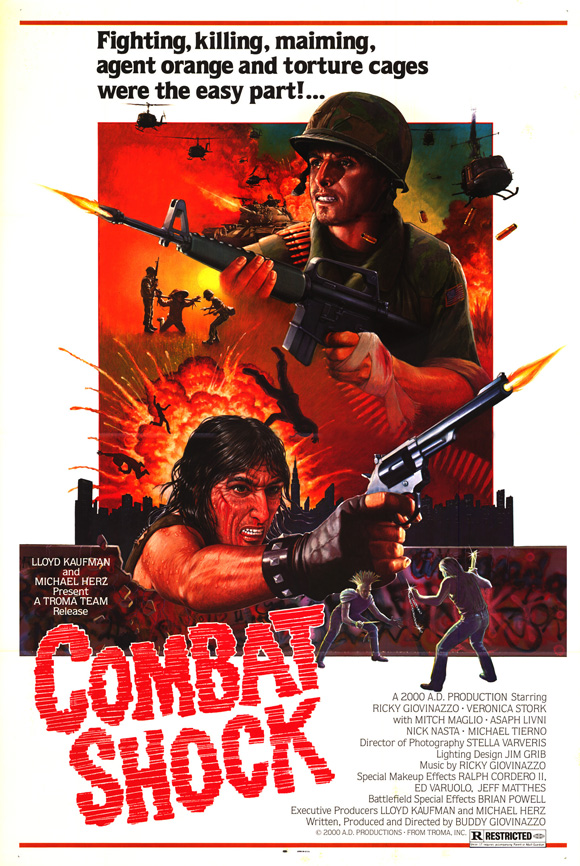
 bears a striking resemblance to that of Suicide’s harrowing song “Frankie Teardrop.” The movie concerns the struggle of a young man named Frankie to feed his wife and child in blighted Staten Island, and if you’ve heard the song, I don’t have to tell you that it ends pretty badly for Frankie, his family, you, me, and the entire human race.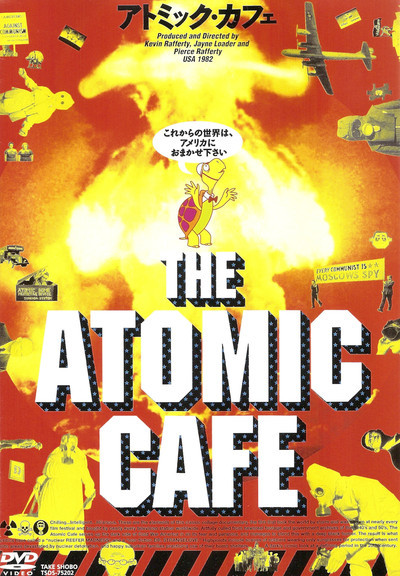


 After the Crash