Journey Back Inward

Though I can’t speak for everyone who has suffered spinal cord injury, my experience had destabilized every aspect of my life to the point where I questioned who I was. Delving into memories was one way to ground myself, but at the time more recent memories were all too painful reminders of what I had lost.

Another strategy which I gravitated towards intuitively was to create a narrative. I began thinking about how to put such an overwhelming experience into words as if it was a book or screenplay. My goal wasn’t to actually create media but to entertain myself during long sleepless nights, though some of these musings were memorized and included in these posts.

Creating a narrative also helped integrate pre and post-crash lives (which at times still seems as disconnected and dissociated as my mind from my body). Part of it involved making sense of the senseless, a struggle which also draws people towards religion and philosophy in times of crisis. I’ve had an interest in both for a long time, sparked in part by cannabis and entheogen experimentation throughout my early to mid 20s. However, the perspective provided by spinal cord injury opened up a deeper emotional and experiential appreciation.

Oddly, qualities which one might think would prepare me for my fate also presented unique challenges. For example, pre-injury I often felt I was “living in my head”, preoccupied by fictional, theoretical, and speculative topics. Much of my waking hours are now focused on pragmatic matters like correspondences and research related to health, bills, insurance, social security, etc. which is still in the mind but in a way not previously accustomed to. This is partly why my writing been more sporadic lately.

Similarly, pre-injury I was often immersed in multimedia of a wide variety of genres. While I fortunately still have access to electronic media, my interest in physical media has significantly decreased. I thought about my library of rare and obscure books collected over many years I was once so proud of. Not being able to read them without help nor able to enjoy the tactile pleasure of holding them, I lost interest in owning the books. I could only hope to get help selling them on Ebay or giving them to people who might value them as I once did.

I was and still am somewhat of a loner, though I can and do reach out to people when I want to via internet. Having “alone time” has always been important and I still get enough of it, but what’s different now is that activities that were previously private (ie. showers, bathroom, toothbrushing, etc.) are now shared with a caregiver out of necessity.

Prior to my injury I was fortunate to have never needed to be hospitalized for anything major other than a minor stroke in 2019 (which I completely recovered from within a month). I had long been semi-health-conscious, eating healthy most of the time and structuring my life to stay somewhat fit without having to go to the gym. My goal used to be longevity with a focus on quality of life. Now my goal is pain management, preventing my health from deteriorating, and regaining as much health as I once had as possible.

Even while relatively healthy, for some reason for much of my life I just didn’t feel comfortable in my skin. It seems humorous thinking back on it now because I’d do anything to feel as comfortable in my skin as anytime before the crash. Especially right after it happened, my body never felt so alien, hostile, and confining.

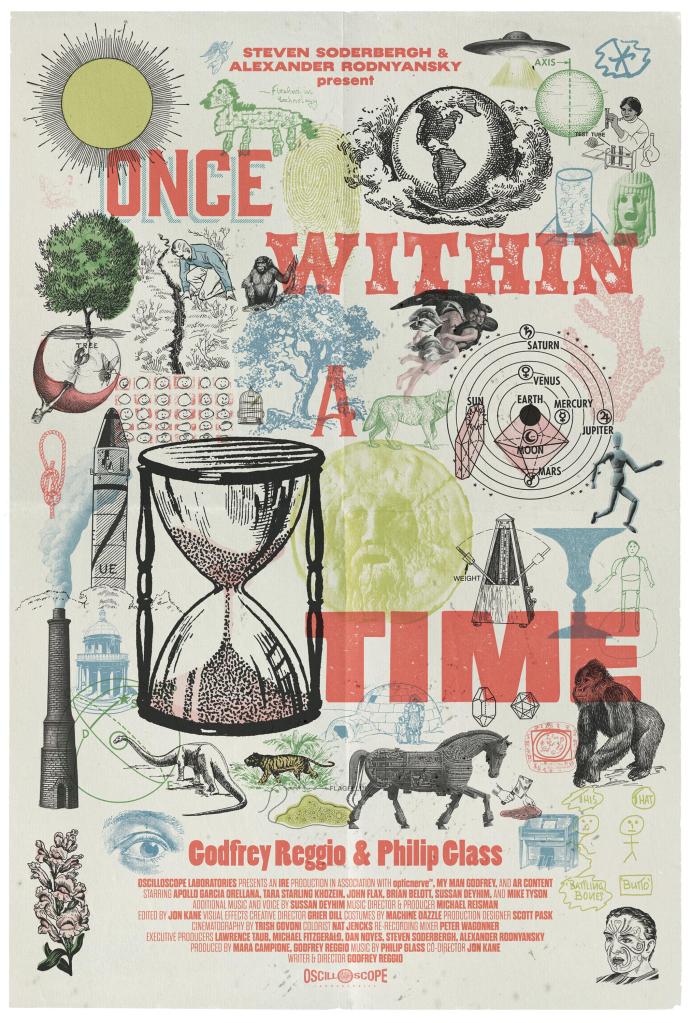
Saturday Matinee: Once Within a Time

By Sheila O’Malley

Source: RogerEbert.com

Beatrice Loayza’s fascinating New York Times article “When Did the Plot Become the Only Way to Judge a Movie?” examines films that eschew linear storytelling, films more interested in mood and emotional tones than plot points, breaking free from the “tyranny of story.” The article was fresh in my mind when I watched Godfrey Reggio’s whimsical-terrifying doomsday-fable “Once Within a Time.” Clocking in at 51 minutes, the film is all mood, all rhythm, with a kaleidoscope structure and undulating ever-shifting visuals in a constant state of flux. It’s not a “story” so much as a tone-poem collage about technology, knowledge, innocence/experience, and the potential end of the world. Maybe something new will be born from the ashes, although considering the evidence that something may very well be a monster.

It all started in the Garden of Eden, when curious Eve ate the apple, and “Once Within a Time” starts there, too, in the gentle framing device that opens it. An audience sits in a darkened theatre, a red velvet curtain rises, and the “show”—i.e., human life on the spinning planet—begins. Adam and Eve, holding hands, wander underneath a white cotton-ball tree with red hanging apples. Around them, children play and cavort. The same six or seven children are used throughout: we get to know their faces and their expressions. Behind them, a grand visual drama unfolds, made up of stop-motion animation figures, real humans, found footage, and eerie created images: solar systems, a giant hourglass in the desert, black and white newsreel footage of bomb blasts, spindly trees bending backward. The children look on with wonder, humor, interest, and sometimes concern. They are trying to understand. The apple is a portal to another world, another time. The apple is also directly linked to another 20th-century apple, the Mac apple. The garden path Adam and Eve walk down is made up of iPhone cobble stones. The meaning is obvious.

Technology is a blessing and a curse, yes, but more than that, it’s inevitable. It can’t be stopped. Nineteen-year-old Mary Shelley wrote one of the most prescient books of all time, her imagination stretching forward 200 years, its warning message still and always relevant. The obsessed maniac Frankenstein doesn’t know when to stop with his experiment. He has to see it through, even if it destroys his mind, his life, and the world as we know it. Mary Shelley saw it all. “Once Within a Time” has almost as bleak an outlook.

Reggio’s celebrated “Koyaanisqatsi,” the first of the Qatsi Trilogy, features a similar cascade of images placed in fluid shifting juxtaposition: power plants and rain forests, rush-hour highways and crashing ocean, pollution and clouds, modernity and its ruins. The images are often beautiful, but the overall effect is anxiety-provoking, sometimes even despairing. What have we done to our beautiful world? Music holds it all together. Philip Glass composed the main score, with additional music by Iranian composer Sussan Deyhim (who also plays a “muse” type character, half-woman, half-tree).

Reggio’s vision has three central figures, symbolic and archetypal, but with shifting meanings. An opera maestro declaims his incomprehensible song to the masses, his figure a towering monolith, his eyes wild and fanatical. Behind him looms the walls of a Coliseum, and his figure is threatening, a demi-god dictator, gesturing and bending the masses to his will. There’s a female figure, a living half-human Yggdrasill (Sussan Deyhim), whose song helps create—or at least sustain—the living world. In the final segment, a “mentor” appears (Mike Tyson, of all people!), who encourages the cowed lost children, acting as a sort of Pied Piper.

Once you leave Eden, of course, you can’t get back in. That’s the deal. At the end of the film, a question is asked in multiple languages: “Which age is this: the sunset or the dawn?” In the atom-bomb-haunted “Rebel Without a Cause,” Plato (Sal Mineo) asks Jim (James Dean) if he thinks the end of the world will come at night. Jim says, “No. At dawn.” Either way, it’s the end.


Watch Once Within a Time on Hoopla here: https://www.hoopladigital.com/movie/once-within-a-time-mike-tyson/17458850

Changing Relationships

As much as Danielle’s support motivated me and as fortunate as I was to have it, I couldn’t help but question whether I deserved it. Before the crash I was well aware that my job pulled in less income than her’s, so I compensated by doing chores she was less inclined to do such as vacuuming, fixing things, taking out the trash and recycling, anything dealing with technology, etc. I also took pride in providing at least a sense of security and stability. Now I’ve become a liability and source of instability, no longer being able to contribute economically other than disability claims and needing a lot more resources to sustain my health.

Just as my role in my marriage was altered, I thought about how all of my relationships would be fundamentally changed. I regretted never deepening any of the numerous workplace friendships I formed over the past few years. There were many coworkers I genuinely liked but never spoke to at greater length than sharing short anecdotes or trading compliments and pleasantries either because of social awkwardness or perceived lack of time. Now I know I should have made time because I’ll miss even those brief interactions and it’ll be just a matter of time before we fade out of each other’s lives.

I’ve never had a huge circle of friends but felt close to all of them, though I could have done more to express it. I’d make an effort to show up when invited to get-togethers and even organized my own, though in recent years such occasions became less frequent. I assumed most friends had become too busy with major life changes such as new jobs, new homes, kids, etc. When I saw all of them come out in support after my injury, I felt intense gratitude as well as regret for not reaching out more before.

Seeing my mother in Neuro ICU and the hazy memory of my father in Trauma ICU, while comforting, also reminded me of how relatively frail they now are compared to my childhood memories of the 70s and 80s. This should have been the time I started doing more to help them instead of needing more of their help. The same could be said for my in-laws, who continue to do so much to help Danielle and me despite having health issues of their own.

As an escape from the guilt and regret associated with others, my thoughts drifted further inward.

Grief and Gratitude

As much as I wanted to engage in magical thinking I knew it was a healthier choice to come to terms with my new life, as painful as it might be. In an attempt to provide some sense of acceptance and closure, I visualized places and activities that in all likelihood I would never go back to again. Examples included local mountain trails, snowshoe hikes, and kayak trips, paddle boarding above sea turtles in Hawaii, swimming with sea lions, exploring a cloud forest in Nicaragua, touring caves and castles in Slovenia, walks along beaches and sand dunes, etc. After a rapidfire flashback of countless memories, I gave thanks for having had the chance to experience them, then bid them farewell.

Most of those fond memories were with Danielle and many wouldn’t have happened without her careful planning. Because she’s a social worker and I was a mail courier, we never had an abundance of non-discretionary funds. Thanks to her research and strategic use of our resources, we shared many experiences that would normally be beyond our price range.

Though I never doubted she would stay with me through the ordeal, I worried about what would become of her. Even with insurance and social security my condition was likely to drain our savings. She would sacrifice not only future vacations but possibly retirement and health savings as well. As my primary caregiver, the physical toll and added stress would inevitably affect her health and quality of life. Realizing that in all likelihood I would be condemning her to a life of drudgery, I experienced a different form of “survivor’s guilt”.

As an alternative, I envisioned a transition from unconsciousness to death on the street at the site of the crash had first responders taken a little longer to arrive. Even though my life would end sooner, it’d be a relatively quick and painless death. Danielle would be grief-stricken for a time but at least she’d have a chance to lead a normal life again. That was how I honestly felt, but since then there have been moments we shared which approached the happiness and normalcy of our lives before my injury. Though such moments aren’t always without pain and stress, the sense of possibility and hope they present make me realize my new life is a blessing as well as a curse.

Some might view my surviving the crash as a miracle, but what I feel is the true miracle is that I was fortunate enough to marry someone who would sacrifice so much and fight tirelessly for my well-being and a future together. Mostly because of her I continue to struggle to regain health and adapt.

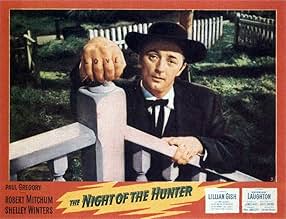
Saturday Matinee: Night of the Hunter

By Roger Ebert

Source: RogerEbert.com

Charles Laughton’s “The Night of the Hunter” (1955) is one of the greatest of all American films, but has never received the attention it deserves because of its lack of the proper trappings. Many “great movies” are by great directors, but Laughton directed only this one film, which was a critical and commercial failure long overshadowed by his acting career. Many great movies use actors who come draped in respectability and prestige, but Robert Mitchum has always been a raffish outsider. And many great movies are realistic, but “Night of the Hunter” is an expressionistic oddity, telling its chilling story through visual fantasy. People don’t know how to categorize it, so they leave it off their lists.

Yet what a compelling, frightening and beautiful film it is! And how well it has survived its period. Many films from the mid-1950s, even the good ones, seem somewhat dated now, but by setting his story in an invented movie world outside conventional realism, Laughton gave it a timelessness. Yes, the movie takes place in a small town on the banks of a river. But the town looks as artificial as a Christmas card scene, the family’s house with its strange angles inside and out looks too small to live in, and the river becomes a set so obviously artificial it could have been built for a completely stylized studio film like “Kwaidan” (1964).

Everybody knows the Mitchum character, the sinister “Reverend” Harry Powell. Even those who haven’t seen the movie have heard about the knuckles of his two hands, and how one has the letters H-A-T-E tattooed on them, and the other the letters L-O-V-E. Bruce Springsteen drew on those images in his song “Cautious Man”:

“On his right hand Billy’d tattooed the word “love” and on his left hand was the word “fear” And in which hand he held his fate was never clear”

Many movie lovers know by heart the Reverend’s famous explanation to the wide-eyed boy (“Ah, little lad, you’re staring at my fingers. Would you like me to tell you the little story of right-hand/left-hand?”) And the scene where the Reverend stands at the top of the stairs and calls down to the boy and his sister has become the model for hundred other horror scenes.

But does this familiarity give “The Night of the Hunter” the recognition it deserves? I don’t think so because those famous trademarks distract from its real accomplishment. It is one of the most frightening of movies, with one of the most unforgettable of villains, and on both of those scores it holds up as well after four decades as I expect “The Silence of the Lambs” to do many years from now.

The story, somewhat rearranged: In a prison cell, Harry Powell discovers the secret of a condemned man (Peter Graves), who has hidden $10,000 somewhere around his house. After being released from prison, Powell seeks out the man’s widow, Willa Harper (Shelley Winters), and two children, John (Billy Chapin) and the owl-faced Pearl (Sally Jane Bruce). They know where the money is, but don’t trust the “preacher.” But their mother buys his con game and marries him, leading to a tortured wedding night inside a high-gabled bedroom that looks a cross between a chapel and a crypt.

Soon Willa Harper is dead, seen in an incredible shot at the wheel of a car at the bottom of the river, her hair drifting with the seaweed. And soon the children are fleeing down the dream-river in a small boat, while the Preacher follows them implacably on the shore; this beautifully stylized sequence uses the logic of nightmares, in which no matter how fast one runs, the slow step of the pursuer keeps the pace. The children are finally taken in by a Bible-fearing old lady (Lillian Gish), who would seem to be helpless to defend them against the single-minded murderer, but is as unyielding as her faith.

The shot of Winters at the bottom of the river is one of several remarkable images in the movie, which was photographed in black and white by Stanley Cortez, who shot Welles’ “The Magnificent Ambersons,” and once observed he was “always chosen to shoot weird things.” He shot few weirder than here, where one frightening composition shows a street lamp casting Mitchum’s terrifying shadow on the walls of the children’s bedroom. The basement sequence combines terror and humor, as when the Preacher tries to chase the children up the stairs, only to trip, fall, recover, lunge and catch his fingers in the door. And the masterful nighttime river sequence uses giant foregrounds of natural details, like frogs and spider webs, to underline a kind of biblical progression as the children drift to eventual safety.

The screenplay, based on a novel by Davis Grubb, is credited to James Agee, one of the icons of American film writing and criticism, then in the final throes of alcoholism. Laughton’s widow, Elsa Lanchester, is adamant in her autobiography: “Charles finally had very little respect for Agee. And he hated the script, but he was inspired by his hatred.” She quotes the film’s producer, Paul Gregory: “. . . the script that was produced on the screen is no more James Agee’s . . . than I’m Marlene Dietrich.”

Who wrote the final draft? Perhaps Laughton had a hand. Lanchester and Laughton both remembered that Mitchum was invaluable as a help in working with the two children, whom Laughton could not stand. But the final film is all Laughton’s, especially the dreamy, Bible-evoking final sequence, with Lillian Gish presiding over events like an avenging elderly angel.

Robert Mitchum is one of the great icons of the second half-century of cinema. Despite his sometimes scandalous off-screen reputation, despite his genial willingness to sign on to half-baked projects, he made a group of films that led David Thomson, in his Biographical Dictionary of Film, to ask, “How can I offer this hunk as one of the best actors in the movies?” And answer: “Since the war, no American actor has made more first-class films, in so many different moods.” “The Night of the Hunter,” he observes, represents “the only time in his career that Mitchum acted outside himself,” by which he means there is little of the Mitchum persona in the Preacher.

Mitchum is uncannily right for the role, with his long face, his gravel voice, and the silky tones of a snake-oil salesman. And Shelly Winters, all jitters and repressed sexual hysteria, is somehow convincing as she falls so prematurely into, and out of, his arms. The supporting actors are like a chattering gallery of Norman Rockwell archetypes, their lives centered on bake sales, soda fountains and gossip. The children, especially the little girl, look more odd than lovable, which helps the film move away from realism and into stylized nightmare. And Lillian Gish and Stanley Cortez quite deliberately, I think, composed that great shot of her which looks like nothing so much as Whistler’s mother holding a shotgun.

Charles Laughton showed here that he had an original eye, and a taste for material that stretched the conventions of the movies. It is risky to combine horror and humor, and foolhardy to approach them through expressionism. For his first film, Laughton made a film like no other before or since, and with such confidence it seemed to draw on a lifetime of work. Critics were baffled by it, the public rejected it, and the studio had a much more expensive Mitchum picture (“Not as a Stranger”) it wanted to promote instead. But nobody who has seen “The Night of the Hunter” has forgotten it, or Mitchum’s voice coiling down those basement stairs: “Chillll . . . dren?”

Another Long Night

As Danielle and Florence prepared to go back home for the evening, they made sure a mouth-activated nurse-call button was within reach in case of an emergency. They both gave a farewell hug which, while emotionally comforting, was physically painful not unlike putting pressure on a bruise.

Danielle also set up a small bluetooth speaker connected to my phone. At home I’d occasionally listen to music or a podcast through an earpiece to be able to sleep through the noise of my c-pap machine. Since my mind was still too foggy to follow a podcast I opted for music on a Spotify playlist.

I started creating the playlist around 2022 and envisioned it as a sampling of songs for an imaginary pirate radio station (inspired by early 90s Radio Free Hawaii). It gradually grew to many hours of music and is the same playlist as the one on the Spotify widget on the bottom-left corner of this site. I hoped it’d be a distraction from obsessive thoughts, but it backfired initially.

In my fragile state of mind I felt highly attuned to the emotions of others including the musicians’. Any song performed with a modicum of authenticity (especially involving themes of heartbreak or loss) was enough to trigger a steady flow of tears. This was surprising at first because I normally wouldn’t be so moved by music, but of course my circumstances weren’t normal and I struggled to hold back tears for the sake of my visitors throughout the day.

Another characteristic of some of the triggering songs was their association with specific memories. I was transported to happier times with Danielle such as driving to a campsite, attending concerts, dinner parties with friends, even cooking breakfast at home on a random weekend. These memories led to a different train of thought which was all of the activities I could no longer do and places I could no longer see in person.

At this point I was well aware I was spiraling into depression but gave myself permission to continue. I’ve always had a tendency to suppress my feelings but I felt if I continued that pattern it would make the trauma worse.