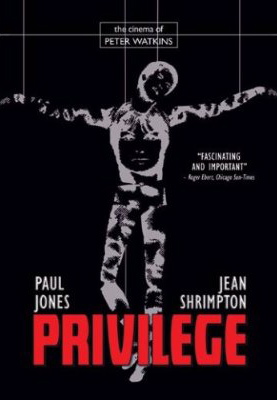
Saturday Matinee: Privilege

2647priv
Source: Dangerous Minds

‘Privilege’: Peter Watkins powerful antidote to 1960s pop hysteria

Set sometime in a none too distant future, Peter Watkins’ debut feature Privilege from 1967 told the story of god-like pop superstar Steven Shorter, who is worshiped by millions and manipulated by a coalition government to keep the youth “off the streets and out of politics.”

Inspired by a story from sitcom writer Johnny Speight (creator of Till Death Us Do Part which was remade in America as All in the Family), Privilege was an antidote to Swinging Sixties’ pop naivety. While Speight may have had a more biting satirical tale in mind, screenwriter Norman Bogner together with director Watkins made the film a mix of “mockumentary” and political fable, which was a difficult balance to maintain over a full ninety minutes without falling into parody.

Though it has its faults, Watkins succeeded overall, and presented the viewer with a selection of set pieces that later influenced scenes in Stanley Kubrick’s A Clockwork Orange, Lindsay Anderson’s O, Lucky Man! and Ken Russell’s Tommy.

Watkins also later noted how his film:

….was prescient of the way that Popular Culture and the media in the US commercialized the anti-war and counter-culture movement in that country as well. Privilege also ominously predicted what was to happen in Margaret Thatcher’s Britain of the 1980s – especially during the period of the Falkland Islands War.

On its release, most of the press hated it as Privilege didn’t fit with their naive optimism that pop music would somehow free the workers from their chains and bring peace and love and drugs and fairies at the bottom of the garden, la-de-da-de-dah, no doubt.

In fact Privilege was at the vanguard of a series of similarly styled films (see above) that would come to define the best of British seventies cinema. The movie would also have its fair share of (unacknowledged) influence on pop artists like David Bowie and Pink Floyd, while Patti Smith covered the film’s opening song “Set Me Free.”

What’s also surprising is how the film’s lead, Paul Jones (then better known as lead singer of Manfred Mann) never became a star. As can be seen from his performance here as Steven Shorter, Jones could have made a good Mick Travis in If…, or Alex in A Clockwork Orange.

Jones went onto make the equally good The Committee but (shamefully) little work came thereafter apart from reading stories on children’s TV.

Ah, the fickle nature of fame, but perhaps he should have known that from playing Steven Shorter.

Saturday Matinee: Get to Know Your Rabbit

MV5BMTYwODkxMjIxNF5BMl5BanBnXkFtZTYwNTU3NzM5._V1_SX214_AL_

“Get to Know Your Rabbit”(1972) is an offbeat comedy Brian DePalma directed early in his career about a successful but unsatisfied corporate executive Beeman (Tommy Smothers) who quits his job to become a tap dancing magician under the mentorship of Mr. Delesandro (Orson Welles). When his new venture becomes a successful corporation, Beeman finds his path has come full circle. The film features a brief uncredited cameo by cult character actor Timothy Carey as a cop.

Saturday Matinee: Quatermass

quatermass1979al

“Quatermass” (1979) (aka “The Quatermass Conclusion” and “Quatermass IV” is the fourth and final production written by Nigel Kneale featuring the character of Bernard Quatermass, a British space program scientist who seems to encounter extraterrestrial life forms on a regular basis.

In this last chapter of his story, Quatermass is struggling as a grandfather in post-collapse London desperately searching for his missing granddaughter. At the same time, he investigates an unusual signal from space and a cult-like nomadic community of young people traveling to various neolithic sites. Quatermass ultimately connects the various plot lines into a seemingly logical narrative, but the story is made more interesting if interpreted as a once-brilliant man’s descent into madness as he attempts to make sense of a decaying and chaotic society, inexplicable cosmic events, the loss of his relationship with his granddaughter and a vast generation gap. Though the film is stylistically dated and obviously low budget, it’s worth watching for its intelligent but deeply pessimistic screenplay and parallels with other dystopian visions.

Saturday Matinee: The Monitors

monitors

“The Monitors” (1969) is based on the novel of the same name by Keith Laumer and was the first film produced by the Second City comedy troupe. It’s an ambitious but low budget sci-fi satire about an invasion of aliens who oversee humanity in a manner similar to hall monitors (ie. Big Brother). Among the cast are a few familiar faces such as Guy Stockwell, Susan Oliver and Alan Arkin. The Monitors also features excellent cinematography by Vilmos Zsigmond.

Saturday Matinee: Ben X

index

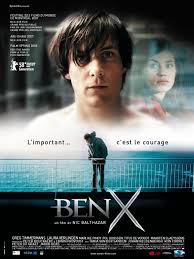
“Ben X” is a Dutch-Belgian drama directed by Nic Balthazar based on his novel “Nothing Was All He Said”. To escape the constant bullying at his school, Ben, a teenager with Asperger syndrome, immerses himself in the world of multiplayer rpg video games where he meets Scarlite, who gives him the inspiration and courage to stand up to the bullies. The film stands out for it’s realistic portrayal of autism, great acting all around, and a resolution much different from other films with a bullied protagonist (and unlike similar actual events that have made the headlines).

Saturday Matinee: Miami Connection

cc_miami-connection-e1355368492345

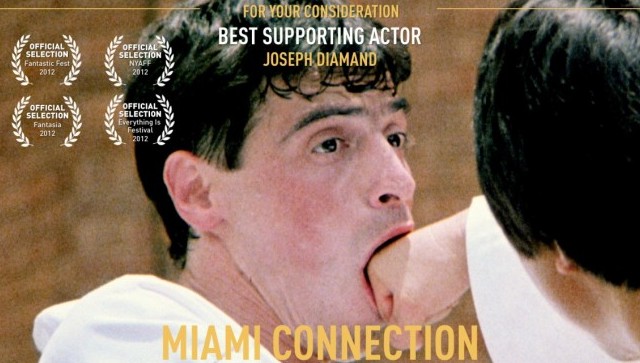
Synopsis by Drafthouse Films

The year is 1987.

Motorcycle ninjas tighten their grip on Florida’s narcotics trade, viciously annihilating anyone who dares move in on their turf. Multi-national martial arts rock band Dragon Sound have had enough, and embark on a roundhouse wreck-wave of crime-crushing justice. When not chasing beach bunnies or performing their hit song “Against the Ninja,” Mark (Tae Kwon Do master/inspirational speaker Y.K. Kim) and the boys are kicking and chopping at the drug world’s smelliest underbelly. It’ll take every ounce of their blood and courage, but Dragon Sound can’t stop until they’ve completely destroyed the dealers, the drunk bikers, the kill-crazy ninjas, the middle-aged thugs, the “stupid cocaine”…and the entire MIAMI CONNECTION!!!

Saturday Matinee: Like Stars on Earth

ishaan

“Like Stars on Earth” (2007), directed and produced by Aamir Khan is a critically acclaimed Bollywood film that has done much to raise awareness of the struggles of children with dyslexia. The film’s plot revolves around eight year old Ishaan, whose vivid imagination and difficulty with words and numbers cause him to get failing grades. His parents eventually send him to boarding school where a new art teacher recognizes Ishaan’s cognitive differences and devises strategies to help him succeed. Like Stars on Earth is notable for its inspiring storyline, great soundtrack and standout performances by Darsheel Safary as Ishaan and Aamir Khan as art teacher Ram Shankar Nikumbh.

To activate subtitles click the “cc” button on the bottom right corner of the video window.

Saturday Matinee: Documentary Double Feature

MV5BMTQxMjMzMTczM15BMl5BanBnXkFtZTcwNzg5MzUyMQ@@._V1_SY317_CR4,0,214,317_AL_MV5BMTM4Nzk5Mzk4N15BMl5BanBnXkFtZTcwNTk5OTgyMQ@@._V1_SY317_CR5,0,214,317_AL_

Today I’m featuring two classic political documentaries, both more than a decade old (from 2003) yet still equally topical and among the best films on their respective subject matters.

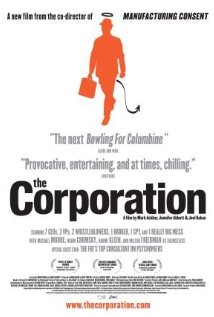
The first is Mark Achbar and Jennifer Abbott’s “The Corporation”, a comprehensive and well-researched film exploring the history of corporations, how they operate and how they’ve come to attain so much political power. Related topics they cover include the 1933 attempted corporate coup exposed by General Smedley Butler, the Fox news coverup of the dangers of Monsanto’s Bovine Growth Hormone, and the mass protests in Bolivia sparked by the attempted privatization of their water supply in 2000.

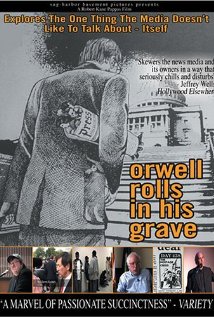
“Orwell Rolls in His Grave” directed by Robert Kane Pappas is possibly the best dissection of contemporary mass media propaganda yet, with a focus on corporate media consolidation and the role of corporate media in the controversial US presidential election of 2000. The film features interviews with Mark Crispin Miller, Bernie Sanders and Danny Schechter among others.