“Charly” (1968) is a film adaptation of Daniel Keyes’ classic novel “Flowers for Algernon” directed by Ralph Nelson and starring Cliff Robertson. Though stylistically dated at times, it remains relevant for it’s enduring philosophical issues such as the relationship between intellect and emotion, science and ethics, and the treatment of those who are cognitively different. The story arc of the film’s protagonist (depicted with heartbreaking realism by Cliff Robertson) also serves as a parable for the human condition.
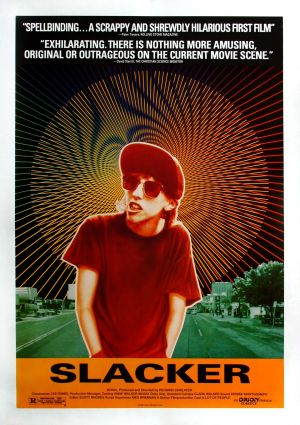
Slacker, directed by Richard Linklater, presents a day in the life of a loose-knit Austin, Texas, subculture populated by eccentric and overeducated young people. Shooting on 16 mm for a mere $3,000, writer-producer-director Linklater and his crew of friends threw out any idea of a traditional plot, choosing instead to create a tapestry of over a hundred characters, each as compelling as the last. Slacker is a prescient look at an emerging generation of aggressive nonparticipants, and one of the key films of the American independent film movement of the 1990s.
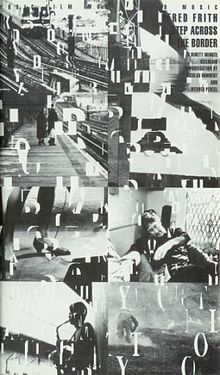
In “Step Across the Border” two forms of artistic expression, improvised music and cinema direct, are interrelated. In both forms it is the moment that counts, the intuitive sense for what is happening in a space. Music and film come into existence out of an intense perception of the moment, not from the transformation of a preordained plan. In improvisation the plan is revealed only at the end. One finds it. The other connection concerns the work method: the film team as band. Much as musicians communicate via the music, our work, too, was realized within a very small and flexible team of equals. What mattered was exchange. And movement. Sometimes we started filming in the middle of the night, responding to a new idea that had arisen only minutes before. We had a fundamental feeling for what we wanted to do, for what kind of film this should be. And we followed that feeling. It was all very instinctive…
Do you know a white rabbit who, playing trumpet, circles the world on his flying carpet?
May be you have met him somewhere already, in Zurich, London, Leipzig, Tokyo or New York. That at least was about the route we took and what resulted from it was the black-and-white wink of an eye at the symphonic connection between subways, storms and electric guitars.
An American critic wrote: ‘Fred Frith’s music makes your jaw drop, your feet dance, and your neighbours move.’
Also starring: several telephones, puddles, scarecrows, saxophones, orchestrated cities and motors.
A music film.
“Dust” (2001) is an audacious Southeastern European Western directed by Milcho Manchevski. The film’s narrative cross-cuts between two stories: one in which a thief is cornered at gunpoint in a New York apartment by an elderly woman and a second involving love and vengeance between two brothers caught up in a revolutionary struggle in Macedonia. The parallel narratives are unified by themes of greed, redemption, and the transformative power of storytelling.
Note: Video may not work on some portable devices.
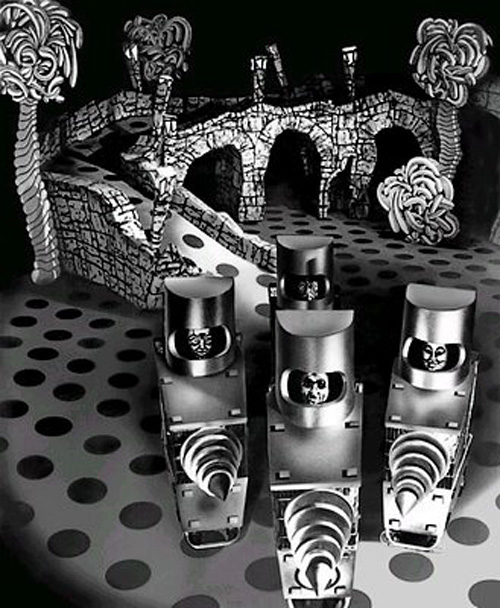
The Residents had begun a movie in 1972 called Vileness Fats. The concept of the movie was to shoot it on a new media form (reel-to-reel video) and tell most of the story through music. The story itself was about a village under siege by bandits stealing the meat supply, forcing the population to exist on vegetables. Unbeknownst to the population, the leader of the bandits is their own spiritual leader. To take care of things, the village hires Siamese twin tag-team wrestlers to be their saviors. Unfortunately their saviors also have other problems, including an Indian princess whose lovers always die.
The film itself, despite over 14 hours of footage, was never finished. In 1984 it was edited to approx. 32 minutes and released on a VHS videocassette titled Whatever Happened to Vileness Fats?; the companion soundtrack was also released the same year. Another re-edited version (approx. 17 minutes) of the footage was released on the Icky Flix DVD in 2002.
“Our False Reality” and “The Lie We Live”: two recent short videos with a thematic connection. The first was produced by Aaron Dykes and Melissa Melton of TruthstreamMedia.com and explores how those who seek power and control use technology to manipulate and engineer the masses right down to the perception of reality. The second film, produced by Spencer Cathcart, offers a brief but expansive overview of systems of control with a reminder of the positive potential of communications technology.
“When the Wind Blows” (1986) is a British apocalyptic drama directed by Jimmy Murakami based on the 1982 graphic novel of the same name by Raymond Biggs. Peggy Ashcroft and John Mills provide the voices of Hilda and James, an elderly couple whose previously happy and peaceful life in Sussex is shattered by nuclear war. The film is comparable to Grave of Fireflies in terms of themes and emotional impact and is notable for it’s soundtrack featuring David Bowie and Roger Waters and innovative animation technique combining hand-drawn images, live-action and stop-motion camera work.
Wheeler Dixon is an author, film historian and professor of film studies at the University of Nebraska. In the late 70s he wrote, produced and directed a series of mind-blowing psychotronic documentaries featuring narration often drifting off on unusual tangents. These films inspired contemporary experimental found footage artists such as Craig Baldwin and are precursors of countless independent conspiracy-related documentaries commonly found on YouTube today.