Saturday Matinee: Superstar

superstarweb

Is banned art-film, ‘Superstar: The Karen Carpenter Story,’ the weirdest music movie ever made?

By Amber Frost

Source: Dangerous Minds

Director Todd Haynes is well-known for his arty, fictionalized depictions of music iconography. Velvet Goldmine was a glam rock epic, with characters modeled after Bowie and Iggy, while I’m Not There features seven different actors portraying “fictional” facets of Bob Dylan’s personality or mystique. Both films blur reality with stylized interpretations, but neither takes even a fraction of the liberties Haynes exercised with his 1987 grad school student film, Superstar: The Karen Carpenter Story.

The film opens up on Karen’s death, then flashes back to narrate her rise to fame. It’s a spasmodic format—switching between interviews with peripheral music industry people, random footage and fascinatingly elaborate mise-en-scène reenactments staged with Barbie dolls and melodramatic voice-overs. In reference to Karen’s anorexia, Haynes actually whittled down her Barbie effigy with a knife for later scenes, mimicking the progressive emaciation of her body. It’s a dark portrayal of a slow death, Karen and Barbie, both icons of American perfection, wasting away before our eyes.

Superstar: The Karen Carpenter Story is technically illegal to exhibit, although since the advent of YouTube, it’s a bit of a moot point (the upload embedded below was posted in 2012). Karen’s brother Richard sued Haynes for copyright infringement. MOMA has a copy but even they aren’t allowed to screen it. Even if Haynes hadn’t used Carpenters songs, there’s a good chance Richard Carpenter would’ve found basis for a lawsuit. Haynes portrays Karen as the victim of her narcissistic and tyrannical family, even suggesting Richard was closeted.

It’s difficult not to be sympathetic to Richard Carpenter who probably viewed the film as mere ghoulish, exploitative sensationalism. It’s a strangely invasive and voyeuristic piece of art, and the argument could be made that it’s totally unethical in its ambiguous, semi-biographical fiction. It’s also totally hypnotic, with a compelling narrative and a pioneering experimentalism that makes it one of the great cult classics.

Saturday Matinee: Heaven and Earth

Heaven_&_Earth

“Heaven and Earth” (1993) was released at the height of director Oliver Stone’s popularity (made between JFK and Natural Born Killers) and is considered the final film of his “Vietnam Trilogy” following Platoon and Born on the Fourth of July. While Heaven and Earth is just as powerful and provocative (if not more so) than Stone’s other films, it has never received the popular and critical recognition it deserves. Unlike the other films of the Vietnam Trilogy (and most films about war) Heaven and Earth tells the story of an innocent civilian of a war-torn nation as well as the psychological impact of war on soldiers and their post-war life. The film features a remarkable debut performance by Hiep Thi Le and a career-best performance by Tommy Lee Jones.


Saturday Matinee: Versus

versus003

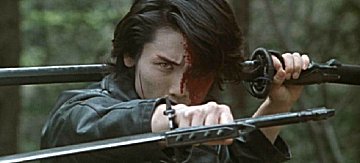
“Versus” (2000) is an action/horror/comedy directed by Ryuhei Kitamura about an escaped prisoner’s fight for survival against Yakuza gangsters and zombies in a forest containing an inter-dimensional portal. As the film’s title suggests, the main focus is on action scene setpieces which mash-up a wide range of genre tropes in an over-the-top style.

Obviously the film isn’t for everyone but if one happens to have intersecting interests in Yakuza, Samurai and zombie films, it doesn’t get much better than “Versus”. Even for those less fanatical about such genres it’s better than one might expect thanks to the enthusiasm and low-budget inventiveness of the filmmakers, athleticism of lead actor Tak Sakaguchi and the team of stuntmen, and a self-aware absurdist sense of humor.

Saturday Matinee: The Return of the Living Dead

The_Return_of_the_Living_Dead_(film)


“The Return of the Living Dead” (1985) was written and directed by Dan O’Bannon (writer of “Dark Star” and “Alien”), and remains among the all-time horror/comedy classics. Unlike typical zombie film scenarios, this one is set off by bumbling employees who release military-grade toxic waste inexplicably stored in the basement of a medical storage facility. The girlfriend of one of the employees and her punk rocker friends end up at the scene and find themselves under siege from reanimated bodies in the storage facility and the neighboring cemetery. While zombie apocalypse films are a dime a dozen today, Return of the Living Dead still has an edge thanks to it’s nihilistic slapstick humor and biting social satire. Four sequels followed Return of the Living Dead, none of them nearly as good.

Saturday Matinee: Combat Shock

combatshock

By Oliver Hall

Source: Dangerous Minds

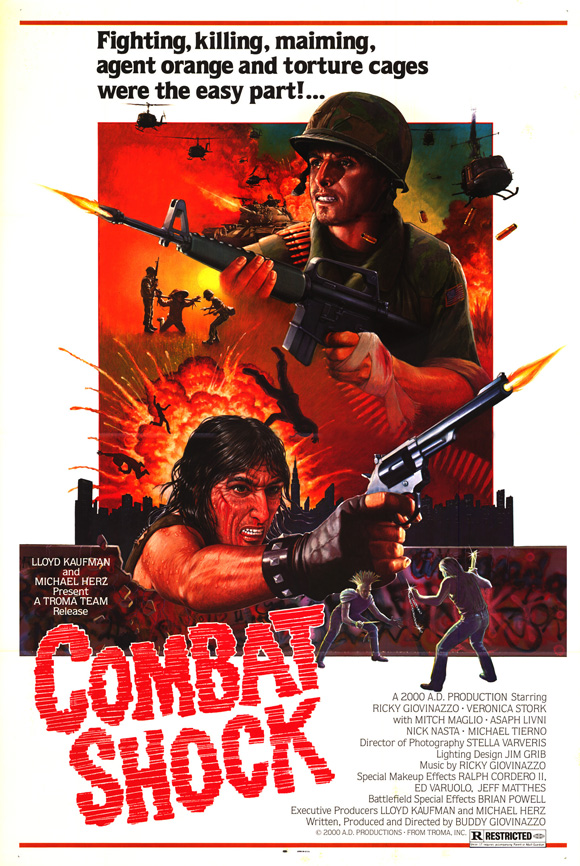
Frankie’s having a terrible day. His wife and infant son are starving. He’s run out of money and food. Now he’s going to be evicted. He’s got a gun. Let’s hear it for Frankie…

If this sounds familiar, it’s because the story of the 1984 Troma movie Combat Shock bears a striking resemblance to that of Suicide’s harrowing song “Frankie Teardrop.” The movie concerns the struggle of a young man named Frankie to feed his wife and child in blighted Staten Island, and if you’ve heard the song, I don’t have to tell you that it ends pretty badly for Frankie, his family, you, me, and the entire human race.
Frankie isn’t a factory worker in this version of the story, but an unemployed Vietnam vet whose days and nights are continually interrupted by flashbacks of ‘Nam and the torture he suffered at the hands of the VC. These, in turn, lead to flashbacks within flashbacks where, for purposes of exposition, Frankie relives arguments with his father, now estranged because a) Frankie has refused to carry on the family legacy of race hate and b) Dad disapproves of Mrs. Frankie. Suffering through the exposition of any movie is itself a form of torture.

However, these gestures toward the conventions of plot are mercifully few and brief, and Combat Shock soon makes with the laffs and gasps you crave from late-night horror fare. Much of the pleasure of watching Combat Shock comes from the genre detail writer, director, producer and editor Buddy Giovinazzo adds to extend Suicide’s story to feature length. For instance, because of Frankie’s exposure to Agent Orange, and because this is a Troma movie, the child looks like a cross between the Eraserhead baby and Edvard Munch’s screamer.

Until the awful climax, the movie takes its time presenting a loser’s-eye view of urban anomie. If you’ve ever lived in a place that had a TV set, you already know all these characters: Frankie’s slow descent into madness involves demoralizing encounters with small-time hoods (Frankie’s creditors), child prostitutes, junkie thieves and social workers (one of whom is missing a Ronco Veg-O-Matic). There are also one or two thrilling surprises, even for the very jaded.

And in case you somehow feel cheated of your full share of human misery after watching Combat Shock, here’s a kind of sequel to “Frankie Teardrop,” Alan Vega’s 12-minute bum-out “Viet Vet.”

Saturday Matinee: War Documentary Double Feature

large_fKiccFBjZwOKkmsDCQVVcuKgYbxhearts-and-minds

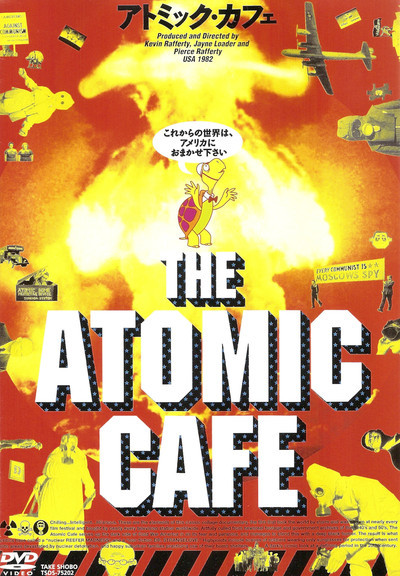
“Hearts and Minds” (1974) and “The Atomic Cafe” (1982) are two of the most chilling and persuasive anti-war documentaries ever made (at least for viewers who are not psychopaths). Though the editorial choices of both films clearly reflect an anti-war perspective, their messages are made more powerful by their lack of narration and abundance of archive footage, newsreels, and public statements from military and political officials. Both documentaries were years in the making with much time (nearly the entire time in the case of The Atomic Cafe) spent on research and editing, and the work clearly pays off by expanding the scope of the films to the political, cultural, and psychological factors behind wars. The filmmakers involved in Hearts and Minds and The Atomic Cafe, unlike most corporate news coverage of wars, both display great empathy in their inclusion of footage of “enemy” casualties of the war and “collateral damage” (ie. innocent victims caught in the crossfire). In the context of the current war-mongering from the Obama administration and corporate/government news media, Hearts and Minds and The Atomic Cafe are more relevant than ever and should be required viewing for everyone who values life.


Saturday Matinee: The Saragossa Manuscript

936full-the-saragossa-manuscript-poster

“The Saragossa Manuscript” (1965) is a Polish film directed by Wojciech Has and based on the novel “The Manuscript Found in Saragossa” (1815) by Jan Potocki. It is a long and complex film but endlessly fascinating for its humor and uniquely dreamlike narrative connecting numerous interrelated stories within stories. The film starts off in Spain during the Napoleonic Wars when soldiers from opposing armies find a manuscript in a deserted house which happens to tell the story of the Spanish officer’s grandfather. The film was a success in Poland in the 60s, is said to be a favorite of surrealist director Luis Bunuel, and was restored in the 90s with financial backing from Francis Ford Coppola, Martin Scorsese and Jerry Garcia. The original US release of The Saragossa Manuscript had nearly an hour cut from the film but the version posted below is the full three hour director’s cut.

To activate English subtitles, click on the “cc” button on the bottom right corner of the video window, click on the field that reads “French”, click “Translate Captions”, scroll down and click “English” and “OK”.

Saturday Matinee: Kontroll

kontro08“Kontroll” (2003) centers on Hungarian Metro ticket collector Bulcsú and his random encounters with neurotic colleagues, belligerent passengers, shadowy criminals, rival coworkers and a mysterious love interest. The film was an impressive debut for first-time writer/director Nimród Antal featuring great acting and cinematography, an interesting mix of genre elements and a darkly humorous screenplay.