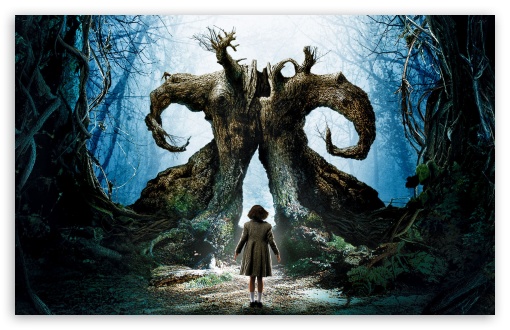
“Pan’s Labyrinth” (2006) is a modern parable written and directed by Guillermo del Toro. The film’s narrative seamlessly interweaves the horrors of the Franco regime with a coming of age story in which a young girl’s interactions with creatures in a parallel world teach her the importance of moral choices.
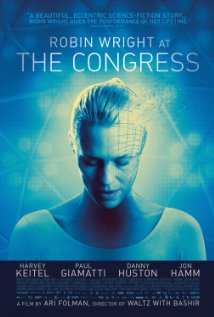
“The Congress” (2013) is a hallucinatory French-Israeli sci-fi drama written and directed by Ari Folman (Waltz With Bashir). Certain plot elements of the film were inspired by the science fiction novel “The Futurological Congress” by Stanisław Lem. Robin Wright stars as a fictionalized version of herself who reluctantly sells the film rights for her digital image in order to pay for her son’s medical treatment. Twenty years later she fully understands the repercussions of her decision in a dystopian society where the masses are addicted to an extreme form of “augmented reality” as drug-induced avatars while the ruling elite observe from above in airships.
Upon its release in 1991, Tribulation 99 became an instant counter-culture classic. Craig Baldwin‘s “pseudo-pseudo-documentary” presents a factual chronicle of US intervention in Latin America in the form of the ultimate far-right conspiracy theory, combining covert action, environmental catastrophe, space aliens, cattle mutilations, killer bees, religious prophecy, doomsday diatribes, and just about every other crackpot theory broadcast through the dentures of the modern paranoiac.
A delirious vortex of hard truths, deadpan irony, and archival mash-ups—industrials, graphs, cartoons, movies from Hollywood B to Mexican Z—Tribulation 99 constructs a truly perverse vision of American imperialism.
“Chicago 10” (2007) is a lively retelling of the Chicago 8 case in which Bobby Seale, Abbie Hoffman, Jerry Rubin, David Dellinger, Tom Hayden, Rennie Davis, John Froines, and Lee Weiner were charged with conspiracy to riot at the 1968 Democratic National Convention (the Chicago 10 of the title includes defense lawyers William Kunstler and Leonard Weinglass). The film’s colorful and fluid animation highlight the surreal and absurd aspects of the trial while interspersed live-action archival footage and a script based on transcripts and rediscovered audio recordings give it a documentary feel. Added realism is given by the excellent voice acting from Hank Azaria, Dylan Baker, Mark Ruffalo, Roy Scheider, Liev Schreiber and Jeffery Wright among others.
“Mr. Robot” is one of the rare shows to make it to mainstream cable television with a perspective which may worry corporate sponsors of cable television. It incorporates elements of hacker and anarchist subcultures within its narrative centering on a network security programmer who moonlights as a cyber-vigilante and hacktivist ringleader. Series such as this are all too rare but much needed for their ability to introduce and/or spread important information through the collective imagination. It’s also one of the first television shows to speak to and reflect segments of contemporary countercultures.
Given the nature of its format, an episodic series on the USA Network (though it is the network that produced Night Flight), it’s vulnerable to censorship and cooptation. However, as it stands now it’s a refreshingly subversive voice in the basic cable wilderness.
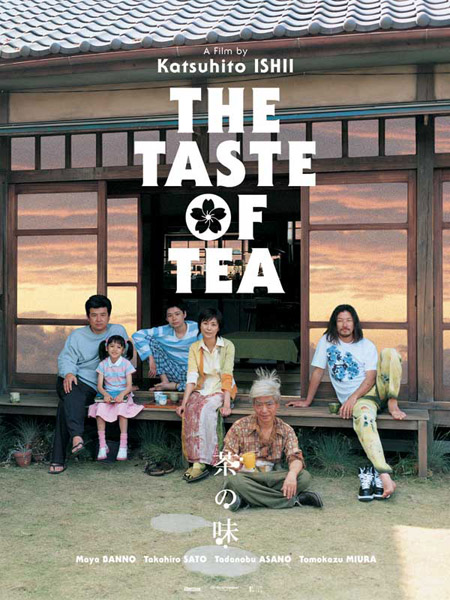
Meet the Harunos, a rather unconventional, but happy and loving family nonetheless. They live in a small town in the mountains just out of Tokyo where life is good and quiet – but that doesn’t mean they don’t have their own little problems.
As 8-year old Sachiko (Maya Banno) tries to get rid of a giant version of herself who seems to pop up everywhere, her older brother Hajime (Takahiro Sato), privately wrestles with his love-struck heart. Meanwhile, their mother Yoshiko (Satomi Tezuka) is working hard, coming out of retirement as an animator, as her husband and professional hypnotist Nobuo (Tomokazu Miura) watches on with slight apprehension. Yoshiko’s brother, Ayano (Tadanobu Asano) is just visiting his hometown and staying with the family, but also has a hidden agenda; he needs to come to terms with a romance that ended years ago. Even Nobuo’s brother and successful manga artist Todoroki has his problems. It’s his birthday soon and he wants to give himself something special. And lastly there’s Grandpa, the most bizarre and perhaps the most perceptive of all, who continues to search for a better way to live life to the full.
Written, directed and edited by Katsuhito ISHII, The Taste of Tea is a unique and gentle family portrait tackling the universal themes of time, people and their lives.
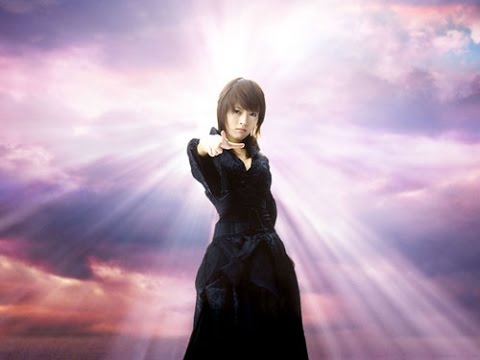
“Sky High” (2003) is a supernatural action thriller directed by Ryuhei Kitamura (“Versus” and “Godzilla: Final Wars”). It’s a prequel film for a television series of the same name in which the spirit of murder victim Mina must help her detective fiance catch her killer in order to find peace in the afterlife. It’s an interesting mash-up of genres elevated by above-average cinematography, acting and action set pieces.
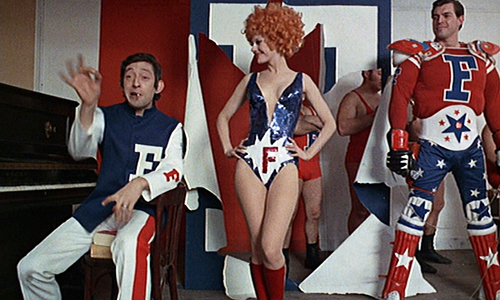
“Mr. Freedom” (1969) is a surreal polemic directed by William Klein skewering patriotism, imperialism and cold war scare-mongering by chronicling the idiotic exploits of an all-American superhero. What it lacks in plot and subtle acting it makes up for in audacious visuals and sadly still relevant yet deserving political jabs. The film is also notable for it’s soundtrack and cameo appearance by the great Serge Gainsbourg.



 After the Crash