Saturday Matinee: The Constant Gardner

“The Constant Gardner” (2005) is a conspiracy thriller directed by Fernando Meirelles (City of God) with a screenplay based on a John le Carré novel of the same name. Loosely based on a actual incident in Nigeria, the plot follows Justin Quayle (Ralph Fiennes), a British diplomat based in Kenya who while investigating the death of his activist wife Tessa (Rachel Weisz), uncovers criminal activities of a Big Pharma corporation with connections to the highest levels of power.

Saturday Matinee: Tomato Is Another Day

Un(der)seen Cinema: Tomato Is Another Day

By TNI AV

Source: The New Inquiry

James Sibley Watson, doctor and Western Union heir, will be famous to some as publisher and president of The Dial, the literary magazine which, more than any other publication, brought Modernism to America. Under Watson’s patronage, the magazine was the first to publish T.S Eliot’s The Waste Land stateside, brought the work of Picasso, Munch, Chagall and many others to a major American audience for the first time, and regularly featured D.H Lawrence, William Carlos Williams, Marianne Moore, Virginia Woolf, Edmund Wilson, Bertrand Russell, John Dos Passos, etc. etc.

To others, Watson will be known for directing The Fall of the House of Usher and Lot in Sodom, important early works in the American Avant-Garde. Heavily influenced by the poetic theories of Ezra Pound and E.E Cummings (Cummings worked with Watson on treatments for Usher) and the cinematic innovations of German Expressionism and Jean Cocteau, these films are literary, hallucinatory and often nightmarish experiments in film language and the unconscious.

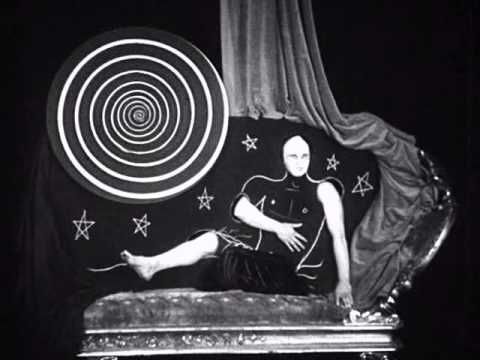
We here at A/V, however, prefer his even less well known Tomato is Another Day, which strikes us as an unparalleled bit of Dadaist pranksterdom and parody whose pun-heavy critique of Hollywood writing and directing styles, at six and a half minutes long and eighty-two years old, still resonates more forcefully and hilariously then most that have followed.

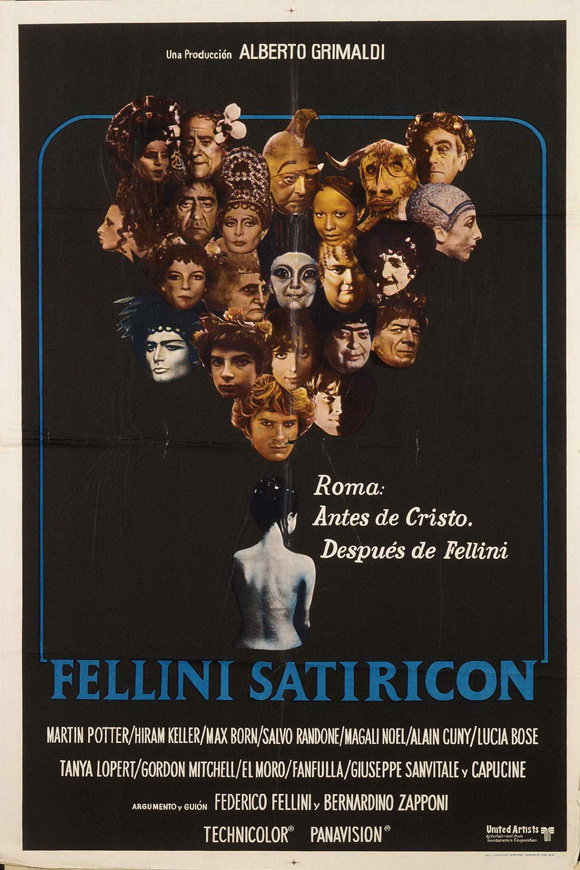
Saturday Matinee: Fellini Satyricon

“Fellini Satyricon” (1969) is a surreal fantasy written and directed by Federico Fellini and loosely based on Satyricon, written by Petronius during Nero’s reign over imperial Rome. The film’s episodic structure follows the scholar Encolpius and friend Ascyltus as they navigate a dreamlike and decadent Roman landscape.

An English subtitled version of the film can be found here.

Saturday Matinee: The Monkees (The Frodis Caper)

“The Frodis Caper” (aka Mijacogeo) was the final episode of the music/comedy series The Monkees, and originally aired on March 25th, 1968. Directed and co-written by Mickey Dolenz, the plot focuses on the Monkees’ efforts to thwart a conspiracy by the Wizard Glick (Rip Taylor) to control the minds of the masses via television hypnosis with the aid of an alien Frodis plant. Besides the episode’s thinly veiled critiques of mass media, The Frodis Caper is notable for its’ overt psychedelic references, anti-war Monkees song Zor and Zam, and a transcendent solo acoustic performance of Song of the Siren by Tim Buckley ( a song which was later popularized by an arguably superior version performed by Elizabeth Fraser).

Saturday Matinee: Good Morning Mr. Orwell

PETER GABRIEL, LAURIE ANDERSON, OINGO BOINGO, ALLEN GINSBERG, JOHN CAGE & OTHERS USHER IN 1984

By Martin Schneider

Source: Dangerous Minds

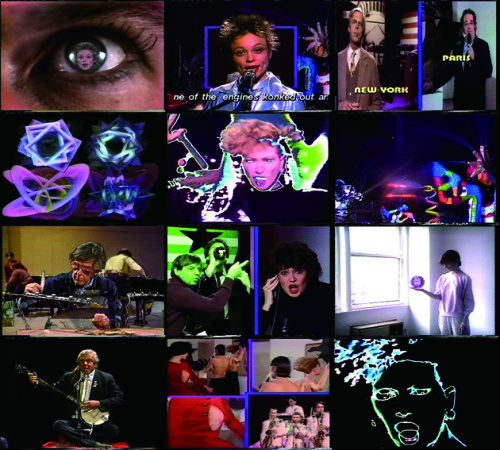
George Orwell’s sinister novel Nineteen Eighty-Four made it inevitable that the arrival of his eponymous year would be a media event. Decades after his death, Orwell made it onto the cover of Time magazine in late 1983, but on the big day itself—January 1, 1984—TV visionary Nam June Paik ushered in the year with an ambitious international video program called Good Morning, Mr. Orwell that was broadcast live simultaneously from New York (WNET public television), Paris, and San Francisco, with broadcasters in Germany and South Korea also carrying the transmissions if not contributing content.

According to Plimpton, Paik aptly referred to the project as a “global disco.” As the title suggested, Paik’s take on 1984 was considerably rosier than that of Orwell. In the spirit of Fluxus and/or technological optimism, as you please, Paik gathered a roster of artists with less inclination to lean on bleak themes such as Peter Gabriel, Laurie Anderson, John Cage, Allen Ginsberg, Merce Cunningham, Salvador Dalí, Oingo Boingo and many others for a stimulating showcase of art, music, theater, and video manipulation. One might imagine a band like DEVO being invited but it’s difficult to imagine Mark Mothersbaugh and Jerry Casale mustering up any enthusiasm for a project in which it was unironically asserted that technology is a boon to mankind.

The show was hosted by George Plimpton—the John Hodgman of his day, kind of—with assistance from the Centre Pompidou in Paris. In a move you can’t imagine happening today, Plimpton enthusiastically names the satellite—Bright Star—assisting with the remote sync-up. We would consider that akin to singling out the dedicated server permitting YouTube to bring you a video.

Among the performances: Gabriel and Anderson combine on a duet called “Excellent Birds”; a fitfully amusing comedy sketch called “Cavalcade of Intellectuals” in which a transatlantic discussion devolves into an interpersonal spat (a gag that worked better in Airplane! using airport PA announcers); a sprightly song by Yves Montand; John Cage plays “amplified cacti and plant materials” with a feather (so great); Oingo Boingo perform a song called “Wake Up (It’s 1984)”; Allen Ginsberg and Peter Orlovsky sing a little ditty about meditation to the cello stylings of Arthur Russell; and much more.


Saturday Matinee: David Lynch Presents the History of Surrealist Film (1987)

By Colin Marshall

Source: Open Culture

What living director has drawn the descriptor “surreal” more often than David Lynch? If you’ve seen, or rather experienced, a few of his films — particularly Eraserhead, Lost Highway, Mulholland Dr., or Inland Empire, or even the first half of his television series Twin Peaks — you know he’s earned it. Like any surrealist worth his salt, Lynch creates his own version of reality, with its own set of often unfathomable and inexplicably but emotionally and psychologically resonant qualities. In 1987, the year after his breakthrough Blue Velvet opened in theaters, the BBC apparently thought him enough of an authority on the matter of cinematic surrealism to enlist him to present an episode of Arena on the subject.

And so we’ve highlighted, just above in two parts, the fruit of their collaboration, with apologies for the straight-from-the-VHS quality of the video. (I just think of the slight muddledness as adding another welcome layer of unreality to the proceedings.)

Lynch’s duties on the broadcast include providing facts about the films and filmmakers excerpted throughout to tell the history of surrealist film. (He also provides several choice opinions, as when he calls Philadelphia “one of the sickest, most corrupt, decadent, fear-ridden cities that exists.”) We see bits and pieces of pictures like Luis Buñuel and Salvador Dali’s 1929 Un Chien Andalou, Jean Cocteau’s 1932 Blood of a Poet, Fernand Léger’s 1947 The Girl with the Prefabricated Heart, and Chris Marker’s 1962 La Jetée. Not only does Lynch contextualize them, he discusses their influence on his own work. Casual filmgoers who’ve caught a Lynch movie or two and taken them as the imaginings of an entertaining weirdo will, after watching this episode, come to understand how long a tradition they fit into — and they’ll no doubt want to see not just more of Lynch’s work, but his sources of inspiration as well. (They may, however, after hearing all he has to say here, still regard him as a weirdo.)

 

Saturday Matinee: Eraserhead

“Eraserhead” (1977) is an infamous cult classic and debut feature film written, produced, and directed by David Lynch. The majority of the plot involves the struggles of Henry (Jack Nance) as he cares for a severely deformed baby in an industrial, possibly post-apocalyptic wasteland. Like Tarkovsky’s Stalker, the film’s pace is slow, which is a good thing for those who appreciate its unforgettable atmosphere and immersiveness.

Watch the full film here.

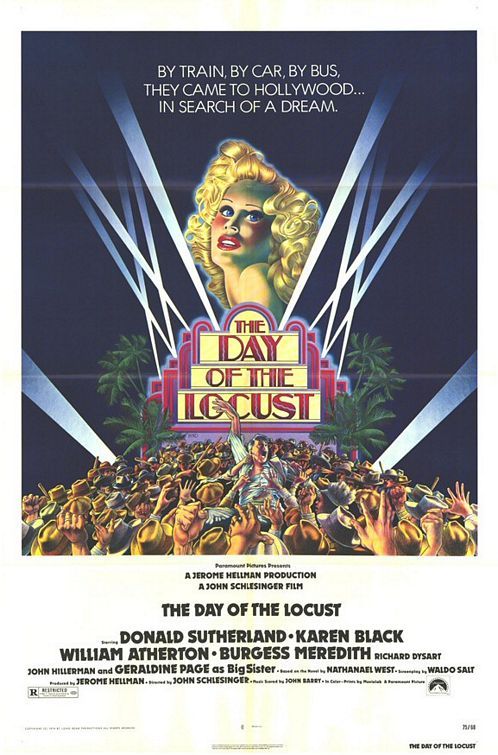
Saturday Matinee: Day of the Locust

“The Day of the Locust” (1975) is a dark historical drama directed by John Schlesinger (Midnight Cowboy) with a screenplay by blacklisted writer Waldo Salt based on a novel by Nathaniel West. The plot follows aspiring art director Tod (William Atherton) who, after moving to Hollywood, becomes entangled in a community of desperate and deluded dreamers. The film’s exploration of the dark side of Hollywood and human nature is a likely influence on David Lynch’s Mulholland Drive.

Watch the full film here.