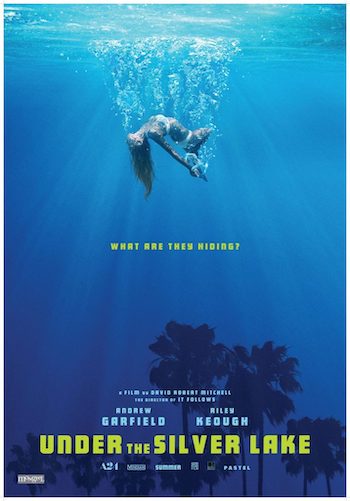
Saturday Matinee: Under the Silver Lake

By Michael Hewis

Source: Cinema of the Abstract

Director: David Robert Mitchell

Screenplay: David Robert Mitchell

Cast: Andrew Garfield as Sam, Riley Keough as Sarah, Topher Grace as the Man at the Bar, Laura-Leigh as Mae, Zosia Mamet as Troy, Jimmi Simpson as Allen, Patrick Fischler as the Comic Fan

Synopsis: Sam (Andrew Garfield) is a slacker who becomes fixated on his new female neighbour Sarah (Riley Keough), only for her to immediately vanish. His search for her across — Los Angeles will include the King of the Homeless, conspiracies, a serial killer of dogs, and codes in Nintendo games.

Well, at least David Robert Mitchell was ambitious, which is not something you say a lot when, frankly, most American directors (and some beyond the States) when they have just made something interesting now get sucked into blockbusters with no creative control in the slightest. It’s a view easily bias to how Under the Silver Lake is absolutely indulgent and not without faults, but God only knows how many filmmakers, when they’ve done well even in art house cinema, tend to now go for the blandest and predictable of routes with their newest films too. The comparisons to Richard Kelly have been apt – Kelly gained a reputation for Donnie Darko (2001), less when it actually debuted theatrically but from word of mouth, the follow up the notorious Southland Tales (2006)Tales was even more ambitious, comic book prologues and all tied in, and was also debuted at the Cannes Film Festival as Under the Silver Lake was, getting a good thrashing between them. Time is looking to potential give Southland Tales a chance, but Under the Silver Lake’s too young to start asking about this.

Mitchell’s journey is curious as, three films in when Kelly’s was just a debut before he got to Southland Tales, he started with an indie The Myth of the American Sleepover (2010), then suddenly got a surprise hit by entering the horror genre, It Follows (2014) getting a lot of traction. So he decides to take his chips accumulated and gamble them all on this two and a half hour neo-noir pastiche which gets through so many weird tangents I don’t know when to begin. Definitely, absolutely, the legacy of Thomas Pynchon is growing even outside of literature into cinema – amazingly, there’s only been one official Pynchon adaptation in Inherent Vice (2014), but filmmakers like Mitchell have instead appropriated his style of numerous tangents and conspiracies interweaving into each other, loose ends, eccentrics and a lot of pop culture. Under the Silver Lake, whether you like it or not, is surprisingly faithful to his style even if by accident, even the length befitting some of his monolithic tomes like Gravity’s Rainbow.

Mitchell’s film is strange, a farce to be honest whose central figure, an obsessive compulsive conspiracy nut and slacker, is inherently a dick, who indulges in his old Playboys and Nintendo Power magazines, and is a peeping tom who gets distracted by eyeing up women. Andrew Garfield imbues him with some charisma, but he’s having sex with an on-and-off-again girlfriend whilst having women’s tennis on the television at the same time, beating up children for vandalising his car the next. The voyeurism has put people off with the film, and I’ll admit that whilst we get to see Garfield’s bared arse a lot for balance, the amount of female nudity is not helped by how the female characters really blur into each other; its far more problematic than the nudity itself, or that our protagonist thinks with his smallest head too much, or that it’s roping in noir tropes of mysterious femme fatales. And Mitchell does make it clear he’s flawed, a little pathetic, even sprayed by a skunk for a lasting plot effect, even having a voyeuristic scene involving a drone deliberately being a challenge to the viewer when the woman being spied on in a screen on screen is in tears.

Sympathy is to be had for him as much as failure, the film a long journey for him to potentially grow. A weird journey, crammed to the point it’s wrong to follow the story as a concise one but, like Pynchon, a tangent factory. LA here is a place of odd events and mysteries, just from the outset with a squirrel dropping to its death off a tree in front of our lead and (visibly a puppet) gasping in a way that’s sickly humorous, an immediate warning Under the Silver Lake is going to get silly on purpose. Independent comics talk of a spate of dog serial killers and killer owl women, that the secrets of the city can be found in an old fifties cereal’s game on the box, or how the elite and rich are naturally getting up to hysterical hodgepodges out of boredom. The only sane ones, or in a way in control, are naturally the homeless or coyotes. The fact I first though the film was set in the nineties, because of the strange logic gap where our lead was able to see Kurt Cobain but is still young, does also suggest that, eventually, the nostalgia for the eighties is finally going to be punted off the throne in favour of a much more interesting and weirder nostalgia that is the nineties, where Cornershop is on the soundtrack side-by-side with R.E.M.

It’s also, dangerously, riffing on the past whilst constantly undercutting it as being merely a distraction. It’s an odd paradox that it gets a lot of humour from even a help guide for a video game being actually of importance, but that we also encounter a master songwriter who undercuts any sense even the most rebellious of pop culture is of actual subversion if it’s mainstream. It comes off as bleaker, as a film, than anything I’ve yet read of Thomas Pynchon, and does show the real issue I have about Under the Silver Lake for all my enjoyment of it, a second viewing allowing any clouding of judgement to take place, that Mitchell’s visibly crammed numerous obsessions together but the underlying idea that should tie it all together isn’t cognitive enough. Even a much weirder, scattershot experimental film would at least lean on atmosphere and dream logic more, whilst Under the Silver Lake still plays out as a quirky mystery.

This also includes some of the mysteries and conspiracies as well, playing off coincidence or just an insane amount of planning for a New World Order to make reality – it does make an argument that such a conspiracy doesn’t make sense in real life, due to how chaotic on a large scale it would be, unless one takes the idea that it’s as shambolic of everything on the surface or that some really coordinated calculations make us all sheep. Either way, going for the obvious like the sexual suggestions of advertisement and such parts are the weakest moments in Under the Silver Lake, “duh” moments no way near as simple and crisp as when They Live (1988) just had signs everywhere, black text on white, just telling us all to marry and procreate.

This is more so as a lot is brought in – silent cinema, Hollywood itself, hobo sign language, fifties culture, and poignantly sixties and seventies cults alongside the type of modern art performances you’d get now. The centre of this film is, arguably, that nothing is resolved, which is a huge risk to take – details, without spoiling anything, allow for interpretation, such as Sam carrying dog biscuits and having dreams of women literally barking at him, or how the owl woman’s identity is resolved. (Then there’s the caged bird whose one word he says everyone including the viewer is trying to figure out). It’s as much this why I liked Under the Silver Lake immensely, but I will be the first to throw out (if it hasn’t already) that even Southland Tales, the notorious film it’s compared to from a decade earlier, was at least circling the idea of how mad, chaotic and strange America had gotten and exaggerated it in terms of a plot. Whilst it took multiple viewings to get and love the film, which it at least went a direction with progression. Here, aware of its clear leanings to the idea of lack of resolution, or that the final scene at least has Sam finding a serenity seeing the apartment he’s about to be evicted from through a new light, it was a gamble that a few people didn’t like to be a lot more vaguer in terms of plot expectations.

A lot of this is as well why the languid pace and sense of nonsense is a good thing for Under the Silver Lake, less a mystery in the conventional sense but an Alex in Wonderland tale of Andrew Garfield encountering strange figures. A literal layabout, a semblance of (legitimate) skill to be a good detective when he’s actually focused, but he’s lead on a wild goose chase that we follow as confused as he is. This is the best way to view the film, and thankfully, it’s a well made accomplishment technically to work in this direction, right down to the funny end credits animation. Bright, colourful and vivid in a way that’s drastically different from It FollowsDisasterpiece, who made his name known to the public conscious through his score for that earlier work, comes with Mitchell here too and also takes a new direction, an orchestral score which does riff on Bernard Herrmann’s work with Alfred Hitchcock but has its own playful richness to it.

The resulting film’s a divisive one even for a defender like myself, just for the fact that it’s decision to be a maximalist work in detail, but ensue a primary theme, is going to cause a lot of misreading or confused ones over multiple viewings. There’s also just the fact it’s a director going into his foibles despite the mystery/noir genre suggesting there’ll be a conclusion at the end of everything.

What is there though, beyond this, is still a playful, very funny and sometimes poignant work. A brave risk which was worth taking, but what David Robert Mitchell is going to do next after this one is up in the air now.


Watch the full film on Hoopla here: https://www.hoopladigital.com/title/13468085
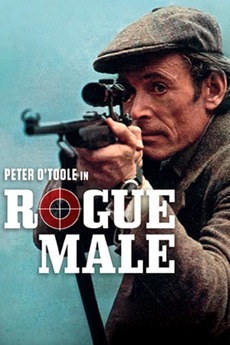
Saturday Matinee: Rogue Male

Gone to earth: Why Rogue Male belongs with the canon of cult 1970s British rural dramas

Peter O’Toole plays the huntsman who nearly shoots Hitler before the war and is forced on the run through rural Britain in the 70s TV film Rogue Male.

By Adam Scovell

Source: BFI

British TV films of the 1970s were obsessed with landscape. Getting their hands on 16mm cameras, directors gravitated towards rural realms in order to tell the most surreal and unusual of stories. Whether it be BBC Ghost Stories, Play for Today episodes or one-off films, the countryside never seemed so strange or omnipresent a setting as it did back then.

With a large part of its narrative set in the Dorset countryside, it’s unsurprising then to find Geoffrey Household’s tense 1939 novel, Rogue Male, adapted in this period. Clive Donner’s version, scripted by Frederic Raphael (Far from the Madding Crowd; Eyes Wide Shut) and now released on Blu-ray and DVD, is one of the strongest evocations of landscape of the time. The film shows how people must adapt to their role in an increasingly dangerous pre-war ecosystem, one that’s predicated on notions of survival of the fittest.

Broadcast on BBC2 on 22 November 1976, Rogue Male follows the misfortunes of sporting aristocrat Sir Robert Hunter (Peter O’Toole). On a suspiciously random trip to the continent, he is caught aiming his rifle at Adolf Hitler (Michael Sheard) and only misses by chance. Escaping the clutches of the Nazis after being caught and tortured by the Gestapo, Hunter makes his way slowly back to Britain, soon believing that he’s safe on his home turf. But, on finding that he has been followed by Nazi agents, and with little help from his politician uncle (Alastair Sim), he’s forced to flee from London to Dorset. Here he must confront his pursuers and the memories from his past that first motivated him to take aim at the Führer.

Household’s novel was first adapted by Fritz Lang as Man Hunt in 1941, with a screenplay by Dudley Nichols. But in Lang’s film, the landscape is less of a vital presence. Donner – known previously for the 1963 film of Harold Pinter’s The Caretaker and the swinging 60s romp Here We Go round the Mulberry Bush (1968) – is more aware of the inherent symbolism in Household’s original novel, and more concerned with the detail the author went into in describing the Dorset topography. His film matches this detail with a gritty but effective rendering of the hills and holloways where Hunter hides out, filling the scenes with sustained shots of the land: the only reliable constant in Hunter’s world.

Rogue Male’s script is filled with double entendres regarding the role of Hunter, who becomes more and more animalistic as the film progresses. His torment at the hands of the Gestapo turns him into a creature not unlike the animals he himself used to hunt. Even when he’s back in England, a country where we see walls scrawled with pro-fascist graffiti, he is “not out of the woods yet”. Later, he is described as having “gone to ground”, a fox-hunting term that implies he is no longer fleeing but in hiding.

All of these detail a subtle devolution in Hunter’s relationship with the land, from his mastery of it as a predator to scurrying with ingenuity as prey. He even wrote a book about the skill of hunting – much to his own misfortune, as it becomes the key that his chief pursuer, Quive-Smith (John Standing), uses to track him down.

With Hunter trapped underground in a warren of his own making, the imagery can’t help but remind us of the animated version of Richard Adams’ Watership Down (1978), with its equally subterranean battleground between the liberal and the totalitarian. Rogue Male’s very setting also recalls Mike Leigh’s Nuts in May, broadcast in January of the same year. Like a comedic inversion of Hunter, Leigh’s fastidious camper, Keith (Roger Sloman), also ends up foraging in the undergrowth after battling against ulterior – albeit antisocial – forces.

Unlike Keith, however, who never comes to terms with his lower placement in the Dorset landscape, Hunter adapts his way to freedom. Sir Robert knows, though, that for the next hunt he must be predator rather than prey, as the stakes will never be higher.


Watch the full film at the Anarchist Film Archive.

Saturday Matinee: Ro.Go.Pa.G.

Notes by Filmogs

4 short films by a quartet of directors.
1) Rosselini’s Illibatezza deals with an attractive air hostess who receives the unwelcome attentions of a middle aged American.
2) Godard’s Il Nuovo Mondo illustrates a post-apocalyptic world the same as the pre-apocalyptic one, but for an enigmatic change in attitude in most people, including the central character’s girlfriend.
3) Pasolini’s La Ricotta, a lavish film about the life of Jesus Christ is being made in a poor area. The people subject themselves to various indignities in the name of moviemaking (and to get some food). The central character’s hoisted up on a cross for filming, and dies there.
4) Gregoretti’s Il Pollo Ruspante in which a materialist family inadvertently shows the cynical, metallic-voiced doctrine of a top sales theorist.

Saturday Matinee: Peter and Ben

After 30 years of solitude, Peter forms an unlikely friendship with a fellow loner

By aeon

‘I had left my flock, and Ben had left his.’

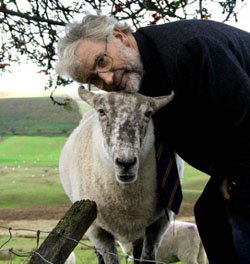
After taking a walk through a remote Welsh valley, Peter committed himself to a life there, and disconnected from the outside world. In doing so, he found a solitary inner peace – a peace he maintained for nearly three decades, until, one day, he stumbled upon a lamb that had been left for dead. Finding kinship with the fellow ‘dropout’, Peter took the abandoned creature home and named him Ben. The short Peter and Ben (2007) by the UK filmmaker Pinny Grylls captures the duo’s relationship three years after their chance meeting, as Peter attempts to return Ben to the wild. With a melancholic piano score and sweeping views of the Welsh countryside, her touching film lends a lyrical beauty to this tale of unlikely connection and camaraderie between outsiders.

Director: Pinny Grylls

Producer: Victoria Cameron

Score: Will Hood

Saturday Matinee: Afghanistan War Exposed: An Imperial Conspiracy

Every American Should Watch Abby Martin’s New Afghanistan War Documentary

Abby Martin’s new documentary, “Afghanistan War Exposed: An Imperial Conspiracy,” is a tour de force, a must watch for every American seeking a holistic understanding of American’s longest-running war.

By MintPress News Desk

The perpetual occupation of Afghanistan has become so normalized that it mostly serves as background noise to most Americans. It’s even jokingly referred to as the “Forever War,” accepted as just another constant reality. A soldier dies now and again, a couple of dozen civilians get killed in another bombing. It’s never enough to stir the population to pressure Washington enough to stop it. And the endless war drags on.

From George W. Bush to Barack Obama, to Donald Trump, every U.S. president has promised to end the war. But their plans to bring the troops home inevitably require first sending more troops to the country. You can’t look at all this rhetoric and reality and not conclude that the United States wants to stay in Afghanistan forever. And there is a reason, despite an unresolvable military quagmire, that the Empire won’t let go of Afghanistan.

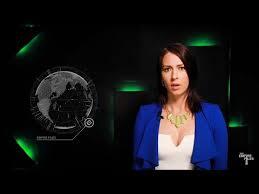
In this latest “Empire Files” documentary, journalist Abby Martin covers reveals the reality of  America’s Wars in Afghanistan, from the CIA construct of the 1980s through today’s senseless stalemate. MintPress brings you documentary in its entirety, published with permission from filmmaker Abby Martin.

Saturday Matinee: British Folk Horror Double Feature

Fire Beneath the Fen: The Wyrd and the Modern in ‘Robin Redbreast’ and ‘Penda’s Fen’

By Mark Sheridan

Source: We Are the Mutants

The 1970s have always occupied a grim place in the British imagination. Sandwiched between Harold Wilson’s utopian “Swinging Sixties” and Thatcher’s anti-social eighties, the decade represents a time of tremendous turbulence and change. With the empire in ruins, anti-colonial backlash came home to roost as Northern Ireland descended into civil war and the IRA began its bombing campaign in Britain. The naked enthusiasm of the post-war consensus dissipated, and the battle between labor and industry heated up. Bombs, blackouts, and shortages recalled war-like conditions during a time of supposed peace. Modern scholarship has pointed to an eerie style in British cultural output from the period. From its cinema to its television to its public information films, there pervades a gothic sensibility commonly identified with Mark Fisher’s concept of “hauntology,” the idea that the present state of cultural paralysis is a function of a collective mourning for futures that never materialized.

The dark and mystic sensibility that emerged from this disruptive and paranoid milieu, now called “folk horror,” manifests a fear of sublimation—the absorption of the individual into the mass, the human into the environment, modernity into the unknown. While the horror of Hammer Films and Roger Corman that had dominated the ‘50s and ‘60s was preoccupied with endless combinations of 19th century gothic, folk horror steps outside time as we understand it, beyond the scope of the human. In the 2010 documentary series A History of Horror, Mark Gatiss outlined a rough canon for this folk horror tradition based on the unholy trilogy of Witchfinder General (1968), The Blood on Satan’s Claw (1971), and The Wicker Man (1973). Intense ideological conflict pervades these stories: Witchfinder General is set in and around the Battle of Naseby, where Cromwell’s revolutionary New Model Army destroyed the veteran feudal forces of King Charles, and tells the story of a soldier who pursues a charlatan witch-hunter across the English countryside. And in The Blood on Satan’s Claw, set around the same time, a secular magistrate must slay a demon summoned from “the forest, from the furrows, from the fields” by the local pagan cult.

These historical tales come at us from the dawn of modern time, in the midst of feudal collapse and the emergence of capitalism. Our heroes are rational, secular agents of the state; our villains the ancient forces of paganistic superstition that batter at the door of our burgeoning technological world. It’s telling that the only film in Gatiss’s trilogy set in contemporary times, The Wicker Man, advances a very different view of the battle between the rational modern and the primordial other. Here, the heroic agent of the state, in this case a police officer, dies alone in the flames of the titular effigy, while the villagers dance in rings around him. Christopher Lee would go on to insist that The Wicker Man was not actually a horror film, an assertion that hints at the sublimation of genre itself, and how this paranoid affect had settled over the British imagination like an eerie fog.

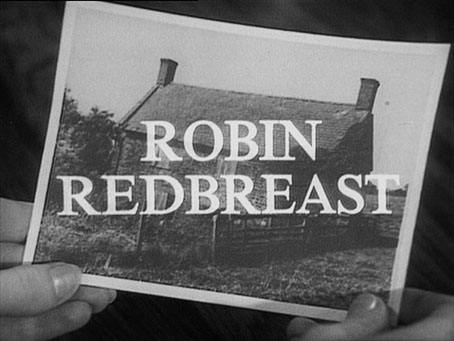
Well before The Wicker Man hit theaters, however, there was the television play Robin Redbreast (1970), which tells a similar story: middle-class metropolitan Norah Palmer (Anna Cropper) ventures into the English countryside only to find herself caught up in the fatal fertility rites of the polytheistic locals. Robin Redbreast is noteworthy for its appearance on Play for Today, a BBC anthology series typically reserved for kitchen-sink realist drama that has been described in posterity as everything from a “national theatre of the air” to an “[exercise] in viewer patronisation” (the latter quote coming from current Conservative Party MP and Boris Johnson ally, Michael Gove). Abrasive, polemical, socially conscious to a fault, its moral messaging embodied the paternalistic spirit of the ‘60s welfare state. If television was the medium of the masses, Play for Today was its conscience.

Set in the present day, Robin Redbreast inverts the conventional relationship between the modern and the un-modern, configuring our world as hopelessly encompassed by a dark architecture of the outside. From the moment Norah arrives in the village, she’s deprived of all agency. Everything she does is preempted, public and private spaces are intermeshed—the villagers always seem to know what she’s doing in advance, repeatedly wander onto her property without invitation, and even orchestrate events so that she ends up sleeping with Rob (Andy Bradford), an awkward local man who she first encounters practicing karate naked in the woods.

Norah can sense she’s being manipulated in some way but remains powerless to stop it. The menacing Mr. Fisher (Bernard Hepton), apparent leader of the community, even explains their sinister designs, albeit in elliptical language, at various junctures. Yet Norah is unable to resist literal and metaphorical seduction by the strange persuasions of the village folk. There’s a dark implication that in some respect Norah wants, or is at least allowing herself, to be trapped. The heightened emotions of country life contrast starkly against the bourgeois detachment of her conversations with city friends. To an extent, we get the impression that Norah’s volatile relationship with the villagers is a reaction to her own suppressed Dionysian impulses.

The shadowed social commentary is compounded when Fisher explains that the villagers are under no pretense of doing justice to the “old ways.” He admits the basis of the robin sacrifice could be Greek, Egyptian, even Mexican in origin. He mentions James George Frazer’s “The Golden Bough,” a largely discredited work of comparative mythology that serves as the basis for most popular representations of paganism. Historical authenticity is immaterial here. What scares us about paganism is what it tells us about ourselves, how it recalls our own innate strangeness.

After the ritual slaughter of Rob (short for Robin), a pregnant Norah flees the village, but her escape will never be complete. She knows that the same cycle will repeat itself when her baby, the new robin, comes of age. As she drives away, she looks back to find that the villagers, still watching from the cottage, have transformed into pagan deities. The fact that the villagers do nothing to stop her from returning to the city amplifies the play’s paranoid pessimism. As Fisher, having taken the form of Herne the Hunter, watches Norah disappear over the hill, the viewer is left with the horrible feeling that nothing Norah can do will have any impact on the ultimate fate of her unborn child. (The narrative is clearly inspired in part by Ira Levin’s Rosemary’s Baby).

Robin Redbreast’s horror is reactive, bird-brained—evoking the feeling of being cornered. The great fear is a lack of control, the feeling of being swept away by strange currents beyond the self. Even in her fleeing, Norah’s fate is ultimately foreclosed by forces that not only surround her but exist elementally within her. If Witchfinder General is set at the dawn of modernity, Robin Redbreast is set at modernity’s dusk, in a world that shrinks from itself as it feels the darkness loom ahead. The postponed reclamation of the robin proves a compelling metaphor for the hopeless uncertainty of a historical moment in which strange futures pounded on the door of the present, threatening to break in at any moment.

* * *

The first three years of the 1970s would see five states of emergency, each presided over by Ted Heath’s Conservative government following its surprise election in 1970, and each involving battles between Heath and what Thatcher would later refer to as “the enemy within”—the labor movement. Problems continued to pile up, each new disruption amplifying the last. The stock market crashed in January 1973, sending inflation soaring into double figures; then, in October, OPEC declared an oil embargo that set the western world reeling. Seeing an opportunity, the National Union of Mineworkers voted to go on strike in pursuit of fairer pay. Heath’s government responded by introducing the infamous Three-Day Week, in which consumption of electricity was to be limited to three non-consecutive days per week to conserve coal supplies. For two months, Britain was plunged into a cold, dark winter unlike anything it had seen since wartime.

Described by The Times as a “fight to the death between the government and the miners,” this was the second large-scale confrontation in as many years and one the government couldn’t afford to lose. Heath resolved to call an election to serve as a referendum on the issue of union power, with the Conservatives campaigning on the slogan “Who governs Britain?” The election of February 28, 1974 returned yet another dramatic development: despite the weight of the media and the state behind them, the Conservatives had in fact lost ground and handed the Labour Party a plurality in parliament. A settlement was soon reached in which the strikers secured a 35% pay-increase—the miners had won, at least for now.

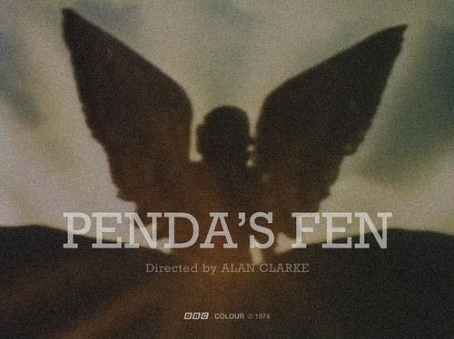
Two weeks after the lifting of restrictions, millions of Britons tuned in to BBC1 to watch the latest installment of Play for Today. That evening’s episode was Penda’s Fen, a fittingly unsettling exploration of unsettling times, the most developed folk horror film to date, and a triumph of public programming in its own right. Writer David Rudkin gives voice to the dark song of the fields with a visionary script about a devout young Christian who must confront both the unseen forces that stir beneath the village where he lives and the “unnatural” desires that emerge contrary to his pious pretensions.

Stephen Franklin (Spencer Banks) is a boy possessed by the “new gods”—he is ordered, anal, orthodox, patriotic, loyal to the structures of church and state. He’s the kind of kid that almost deserves the vicious bullying he gets from his grammar school classmates. As Stephen matures into his eighteenth year, however, things fall apart as he discovers that he’s both gay and adopted. Through the mentorship of his heretical parson father, a politically radical local playwright, and a series of disturbing apparitions, he begins to come to terms with his inner “ungovernableness.”

Director Alan Clarke, Britain’s mirror-holder-in-chief behind such brutal portraits as Elephant (1989) and Made in Britain (1982), presents an image of Britishness that’s wild, diverse, almost ethereal. Clarke, typically known for his uncompromising realism, adopts a more hallucinogenic style to portray the metaphysical turbulence of Stephen’s new understandings. The haunted, shifting landscapes of Worcestershire work as a kind of demonic mutation of Situationist psychogeography. Whereas the students of May 1968 were implored to uncover “the beach beneath the streets,” Clarke and Rudkin invite us to discover the flames beneath the fen.

Penda’s Fen stands apart from other artifacts of the “wyrd” in its overt politicization of strangeness. Almost immediately we meet the playwright Arne (Ian Hogg) as he puts up a one-man defense of the strikers at a town hall debate, while naïve Little Englander Stephen huffs and puffs in the audience. As Stephen begins to lose, or rather relinquish, control of himself, his grades suffer and his mother warns him not to fall foul of “the machine,” the inhuman conveyor belt of modernity and its cult of productivity. Later, the Reverend Franklin (John Atkinson) expounds on Moloch as the sun sets behind him, explaining to Stephen how the new gods of industry and institutions are perversions that have disfigured the message of the “revolutionary” Jesus. The Reverend speculates that the people may “revolt from the monolith and come back to the village,” noting that “pagan” means “of the village,” contrasting with what it means to be “of the city”—”bourgeois.”

The provisional nature of modernity is a key theme. Arne speaks of the urban behemoth swelling to a great city that will “[choke] the globe from pole to pole” but that will also “bear the seed of its own destruction.” We might imagine Hobbes’s Leviathan, bloated and turgid, decomposing back into the earth. Elsewhere, Stephen and his father discuss King Penda, the last pagan ruler of Britain. The Reverend reimagines the heretic as a transcendent symbol of resistance, wondering aloud what secrets he took with him when he fell. “The machine,” like the meaty bodies of its busy multitudes, is imagined as just one combination among an infinite number, an entirely temporary arrangement destined for the dirt.

Landscape is a focal point of the play but, unlike in our other examples, here serves as a vector of elemental truth rather than a source of corruption. Rudkin draws on the Gothic and Romantic traditions to conjure up an English countryside pregnant with ancient histories that lie unknown, hidden or forgotten. It was here, after all, in the 16th century, that the machine first emerged out of the fields and the fens and separated the peasantry from the land—the original trauma that encloses the margins of modern Western history. What lies beyond that temporal boundary is the vanishing realm of nightmare, of un-modernity, where yawns the black abyss of the unknown, the domain of animal and reigning wilderness. But, paradoxically, that abyss is essential to our nature—it’s where billions of lives were lived, where our minds and bodies were wrought and cultivated. Penda’s Fen considers the abyss for all its hidden potentials and reconfigures rupture as opportunity. The horror of recognizing the self in the other, or vice versa, is imagined as a route to emancipation.

In perhaps the most famous scene, Stephen awakes from a homoerotic dream to discover a demonic entity straddling him in his bed, which then takes the shape of the local milkman (Ron Smerczak). What haunts him is not his sexuality but his dedication to the authoritarian norms of middle-class Protestant England. As Arne prophecies in a later scene, the only way to purge ourselves of these demons and reach salvation is by way of “chaos” and “disobedience,” to summon our basest selves.

When we first find Stephen, he’s alone in his room, listening to his favorite composer Edward Elgar’s The Dream of Gerontius and reflecting on the moment when the protagonist meets God. Stephen is isolated from the world, only able to theorize obliquely about transcendent experiences. By contrast, the final sequence sees him meet his maker on an open hillside—not God, per se, but King Penda himself, the half-real spirit of “ungovernableness,” who tells him to go forth and “be strange.”

Much like its predecessors, the play makes no attempt at an authentic depiction of pre-Christian spirituality—we have no idea what the titular King Penda might have believed, what his traditions were, what cosmologies were lost when he was defeated all those years ago. But this is precisely the point. The last pagan king functions as an empty vector of “possibilities” and “unknown elements,” much like Stephen himself. Despite being an apparition of a long-dead historical figure, King Penda represents a haunting from the future, that dark domain of the beyond with which we are in contact every moment of our lives, full of unthinkable potential and inherent strangeness.

Penda’s Fen advances itself as the spiritual resolution to the folk horror cycle, a psychic exorcism of the demons that haunted the ‘70s. Rudkin’s play summons the future from the past, reconstituting the volatility of its day as a rite of passage into a new world. Horror in this sense denotes contact with new terrain, communion between the self and the beyond. To be comfortable is to live in fear of the strange invasions that confront us at every moment and in every thought and experience—to flee from ourselves. In a time when people want change without having to confront the proverbial milkman, the play enjoys continued relevance long after its first life.

Both Robin Redbreast and Penda’s Fen were aired only once more on British television, in 1971 and 1990 respectively, lending these tales the ephemeral quality of weird dreams dreamt long ago—and raising the question of why they’ve now returned to haunt us. The villagers never came to reclaim the robin in the end, yet still we see their shapes in the window and hear strange knocks at the door. Will we ever face up to the horrors that guard the margins of our world? Or are we, like Norah Palmer, doomed to retreat further and further into the city, to delay the inevitable day when the outside closes in? In the closing scene of Rudkin’s play, King Penda prophesies exile as the sun sets behind him: “Night is falling; your land and mine goes down into a darkness now… but the flame still flickers in the fen.” The future promised by that strange flame lies lost somewhere in that expanse of night. Only by embracing the dark might we find it again.