On Ourselves in the Othernets

52-psychedelic-art-300x289

Though a month old, this piece by Chris Arkenberg of URBEINGRECORDED was one I found to be nonetheless thought provoking (I’ve added my own commentary in italics following the original paragraphs):

Ourselves in the Othernets

So dig: in about 20 years we went from knowing rather little about the world beyond what we directly experienced and what we gleaned through books and pictures and the occasional documentary or foreign movie, to having immediate on-demand insight into any facet of the globe you could imagine.

True, though I miss the sense of community and unique curation of some of the old physical media brick and mortar establishments.

And many you couldn’t imagine. The sheer amount of visibility into humanity is simply astonishing. And it’s this informational shift, this too-much-bloody-perspective that is really amplifying the change and disruption and anxiety through which we grapple with the unfolding narrative of our species.

I would argue that the disruption is amplified not just from too many perspectives, but from the cognitive dissonance caused by conflicting data and the struggle to discern which has a closer correlation to reality.

You see, humans are still basically tribal animals. We like what we know and we fear what we do not. Geography, bloodlines, race, and class are among the sociocultural elements that bind us when we share them and separate us from those who fall onto a different end of the spectrum. We cast the differences and the things we do not understand into the Other. The Other becomes the boogeyman, the shadow, the unknown that is presumed to be a threat (because it’s safest to first assume that things are threats and then let information persuade us otherwise).

Good description of unfortunate xenophobic and threat response tendencies that are all too easy for manipulative leaders to exploit.

This innate fear of the Other makes it easier to wage economics and wars on those folks over the mountain or beyond the sea. You can much more easily demonize or dehumanize people who have no discernible face, casting them into the Other without further regard. They’re different from us. They don’t like the things we do or worship the same gods. It’s our right as better, more civilized beings to have their oil/water/food/women/etc. In general, this made it easier to get down to business without the impediment of worrying about our impact on the savages. [Insert any relevant aside about colonialism or how the prosperity of the West has been built on the backs of cheap resources and labor in the Third World.]

At the same time, fear of the Other can blind us from seeing psychopaths and sociopaths who may look no different from ourselves. In fact, since they tend to be more adept at blending in, manipulating others, and seeking personal gain at expense of others, it’s no surprise many such people end up in positions of power.

And then the steady march of trade made it incrementally easier and easier to see bits of the Other. Radio emerged, then the telephone and television. But even those were mostly local or regional. Globalization reinforced shipping lanes and supply chains and people started engaging the overseas Other to figure out how Toyota managed to bust the asses of US automakers or how the Chinese could subsidize western luxury with cheaper manufacturing. And meanwhile, creeping along the copper lines, the internet was starting to form.

Depictions of the Other in media doesn’t necessarily help when society is exposed to predominantly negative images of certain groups. And early forms of globalization have been around at least since the colonial era previously mentioned and the global slave trade of the 17th century. It seems government and big business have always welcomed the Other…as cheap labor.

The early adopters really started to engage the web around 1993-1995. A few years later you could buy a cell phone that wasn’t the size of a brick but still a lot of folks who needed mobile connectivity just used a more affordable pager – a one-way ping that sent you running for a pay phone to respond. But by 2000 a lot of people were online and within another 5 years many of them had cell phones. Apple landed the smart phone revolutions and now, as of 2013, it’s not hyperbole to say that *most* people in the world have cell phones and sms. Many of them have internet access – at least enough to fill add hubs to regions still mostly lacking. And this penetration of digital eyes is especially high amongst the western nations so adept at justifying imperialism by demonizing and dehumanizing the Other. Ahem.

It’s amazing how fast these changes occurred. Penetration of “digital eyes” may be high among imperialist nations yet demonization of the Other continues largely thanks to corporate/government influence of mass media. Fortunately independent/foreign news and media offer a counterbalance to increasing audiences as corporate media declines.

Any analysis of the contemporary context we live in must therefore consider this fundamental reframing of such a core psychological construct. [IMHO.] The Other is collapsing into the known. We now see so much of the people, cultures, and races and interests and classes and… and basically the Other looks a lot like us, doesn’t it? Consider for a moment what it means for borders and national identity when our affinities are inherently borderless; when we make Facebook friends with people scattered all across the globe; when the streets of Bagdad (pre-post-Saddam) surprisingly looked a lot like the streets of Northridge or Minneapolis; and when the art and music and writings and media blend more and more across frictionless digital channels, reconfiguring to speak about the shared lives of humanity more than any isms or schisms. Well, call me a global-mind liberal tree-hugging old softy but it actually makes me feel better to see the barriers of culture and nationalism crumble a bit under the weight of the innate human need to connect and share and collaborate and remix. We’re still tribal, sure, and culture is valuable but the tribes are getting bigger and more distributed, and at the same time there are more and more niches in the Long Tail waking up to assert their *own* culture, however deep it may be in the sub-genre taxonomy.

From my perspective it’s a little simplistic to say the Other looks like us. In some cases they may, but the internet can also expose the extremes of different cultures and subcultures as well. It’s often a positive trend to be able to relate more with the Other, but it’s also important to acknowledge differences. And even though the Other may look like us, they may not think like us. Case in point are political/economic elites and the top 1%, who more people used to identify more with. Whether because they’re more corrupt than ever because of greater political/economic power or because of greater awareness of their harmful policies revealed mostly through the internet and independent media, they’re increasingly recognized as a new type of Other.

The impact of this shift and the crazy pace at which it’s happened has injected a tremendous amount of instability into the global system. And it’s all been carried along the sudden Cambrian explosion of computation and connectivity spreading into every nook and cranny it can find, wiring it all up and transforming the layers above. The sense of rapid change and the exponentiation of technological progress is probably not going to be a temporary or transitional event. It’s looking more likely that we’re steaming up a steep curve that’s elevating change from a passage to a condition. It’s the new normal within which we live our lives.

Can’t argue with that.

This is why I’m a bit sanguine on fears of NSA totalitarianism or rumors of grand conspiracies slowly wrapping us all up for the impending boot on our necks. I don’t believe in monoliths. There’s too much instability in the system for any one controller to reign it all in. Instead we live in a world of too many competitors – governments, transnationals, corporate multinationals, NGO’s, ideological blocks, cartels, super-empowered individuals. Even within organizations it’s all Game of Thrones and balkanized silos. They’re all vying for control but the outcome will not be any single winner. It will be a dynamic patchwork of power structures that, like any good ecosystem, will mostly keep each other in check. Mostly. Sometimes some of them align around a goal, other times they break apart and fragment.

This is where I do disagree. The scenario described would be an improvement over our current situation and may be where we end up eventually, but we’re not there yet. There might seem to be many conflicting factions but a closer examination reveals them to be different cards held by a relatively small number of players, and why wouldn’t these players cheat or conspire to retain their positions of power? A couple years ago a study from the Swiss Federal Institute of Technology in Zurich did a comprehensive analysis of 37 million companies, 43,060 transnational corporations and share ownerships linking them. They discovered that global corporate control has a dominant core of 147 firms with interlocking stakes. Together they control 40% of the wealth in the network. A total of 737 control 80% of it all.

The dystopic (realist?) balance to this sanguinity moves among the machines and the algorithmic mycelium wending its way through our networks and our devices and more and more of our lives. The opportunities for embedded governance when we all have a chip and an IP and a personal node on the net are indeed considerable. A geofenced life is a fenced life nevertheless, even if the prison is invisible. We humans may overcome our prejudices just in time to unite against the emerging Other of machine intelligence. There may yet be a Matrix scenario ahead of us though I suspect it won’t be possible for quite some time. Humans are fallible and, for now, we fallibly program the machines, lending de-rezed bits of our slippery minds to their cognitive computation. But what is the logic, the perspective, when the machines wise up and suddenly our dissent is regarded as a malfunctioning program throwing up a little flag on the network that can then be dispatched without ever requiring that humanly-fallible oversight? Perhaps then they just crawl into your mindtank and intermediate your pathetic shreds of freewill.

Among the emerging “True Other” I would include along with machine intelligence psychopathic government and corporate systems and the individuals who flourish within such systems.

But, you know, this is why we write programs to protect us. And why there are teenagers who are better at cracking things open than any would-be monolith will ever be at keeping them closed. This is the generational dance of evolution. The young are always one step ahead. It’s like a failsafe built-in to the species. Some inchoate balancer that makes sure nature maintains the upper hand lest we slip up and give it all away to fascists and imperialists and corporations and algorithms. And I suppose this is my faith, after all. That there is a failsafe. That we won’t let it all slip into ruin. Or at least, if we do, it will be the ruin of nature asserting its claim on us all, consuming civilization back into the womb of the Mother to be reconsidered and redrawn for the next momentous round of parthenogenesis. Maybe a little better and a little more suited to this world. Hopefully the music will be as good.

I must admit I have no idea how the future will turn out, but this proposed possibility is more hopeful than a number of likely outcomes.

Unanswered Questions About Raids in Libya and Somalia

catch-and-release

Today marks the 12th anniversary of the Invasion of Afghanistan, so perhaps it’s no coincidence that there happens to be many news reports about two raids against alleged terrorists which took place over the weekend. The raid getting more attention took place in Libya and resulted in the capture of Abu Anas al-Liby, who is allegedly linked to the 1998 bombings of American embassies in Kenya and Tanzania. Interestingly, al-Liby was reported captured at least twice in the past, once in the late 90s and a second time in January 2002.

The goal of the raid in Somalia was to capture a man named Ikrimah who, according to anonymous U.S. senior officials, claimed responsibility for the Westgate Mall massacre in Kenya. The force carrying out the mission was SEAL Team Six, the same team that allegedly killed Osama Bin Laden and has had a string of suspiciously bad luck ever since. According to other anonymous officials interviewed by the Washington Post and NYT:

[…]troops retreated after an intense gunfight unfolded, fearing that escalating it could result in civilian casualties.

[…]Witnesses described a firefight lasting over an hour, with helicopters called in for air support.

Read the full article here: http://allafrica.com/stories/201310070803.html

An early leaked report posted at the New York Times website on Saturday stated the SEAL team had succeeded in seizing a “senior leader” of al Shabaab. But 45 minutes later, the Times said officials had “backed off” that report.

According to yet another anonymous senior official quoted in a CNN report with the headline Official: Navy SEAL team pulled out when it couldn’t capture suspect alive :

Their mission was to capture him. Once it became clear we were not going to [be] able to take him, the Navy commander made the decision to withdraw.

[…]Another U.S. official told CNN the Navy SEALs reported seeing children at the compound, part of the reason the mission was stopped during the firefight.

It seems unlikely they withdrew due to safety concerns, but it’s also unusual that they attempted a live capture, given how quick they were to drone bomb alleged terrorist leaders (and innocent civillians including children) in Afghanistan, Pakistan, Yemen, Sudan, Somalia, Libya, etc.

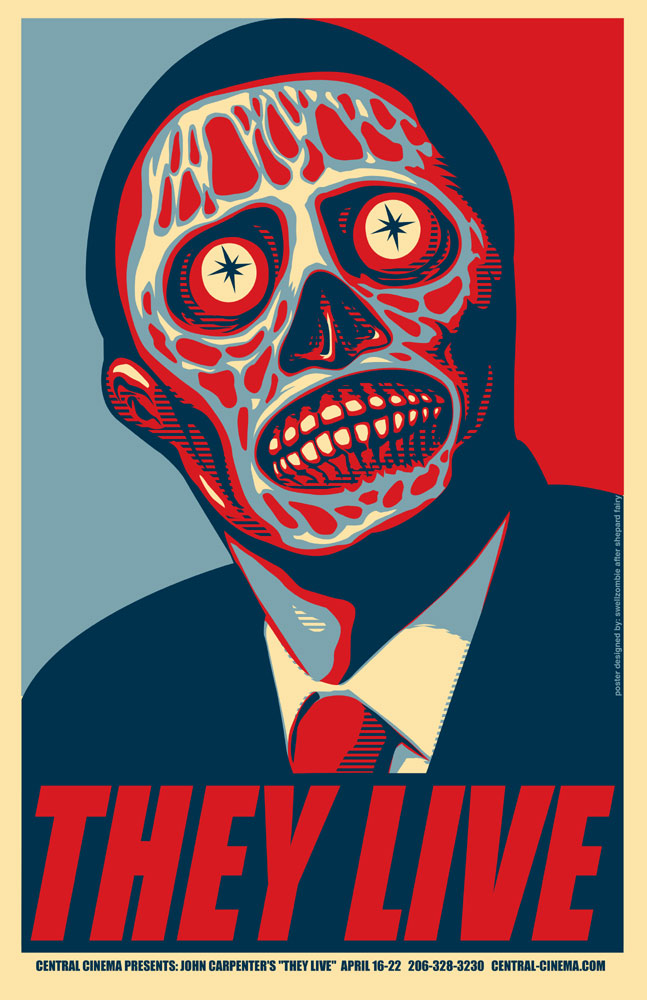
Life Imitates “They Live”

Obama-They-Live

Melissa Melton of Truthstream Media recently posted a story about former wrestler and actor Roddy Piper going public about his Libertarian and pro-Second Amendment beliefs via twitter. Quoting from the tweets:

They can’t have my Guns! Nobody! If you try and take my Gun, I’d be all out of Bubble Gum!

[…]I need to clean something up! When I say you take my gun I’m all out of gum….I’M NOT TRYING TO BE FUNNY!! It’s a FREEDOM STATEMENT!

[…]They Live is a documentary!!

For those who haven’t seen the film They Live, this is the famous “bubblegum scene” Piper is referencing:

They Live is a cult classic sci-fi/action buddy film based on the short story Eight O’Clock in the Morning by Ray Faraday Nelson (who happened to be one of Philip K. Dick’s closest friends). Roddy Piper plays Nada, a drifter searching for work during a recession who accidentally stumbles across an alien plot to take over the world by programming the masses to obey and consume using subliminal messages. Widely considered one of director John Carpenter’s best and smartest films, it was also part of a late 80s sub-genre of films containing as a subtext sharp critiques of U.S. government policies and the Reagan administration in particular. Other films include Wes Craven’s “The People Under the Stairs”, Paul Verhoeven’s “Robocop” and Dan O’Bannon’s “Return of the Living Dead”.

Just this past May, John Carpenter did a Q&A for a 25th anniversary screening of They Live as part of The Hero Complex Film Festival in Los Angeles. He had this to say about the film:

By the end of the ’70s there was a backlash against everything in the ’60s, and that’s what the ’80s were, and Ronald Reagan became president, and Reagonomics came in,” Carpenter told the sold-out theater at the Chinese 6 Theatres in Hollywood. “So a lot of the ideals that I grew up with were under assault, and something called a yuppie came into existence, and they just wanted money. And so by the late ’80s, I’d had enough, and I decided I had to make a statement, as stupid and banal as it is, but I made one, and that’s ‘They Live.’ … I just love that it was giving the finger to Reagan when nobody else would.

Read the full article here: http://herocomplex.latimes.com/movies/john-carpenter-they-live-was-about-giving-the-finger-to-reagan/#/0

Unfortunately, since the release of They Live, the state of the union has regressed to the point where the systemic criminality of the Reagan era seems mild and quaint in comparison. In certain ways, They Live does seem like a documentary because it contains images and ideas straight out of the headlines. Scenes of the protagonists’ tent city being bulldozed look exactly like the destruction of Occupy Movement encampments and forced closures of tent cities for the homeless across the country. Images of the aliens’ secret surveillance drones are prescient as well.

Melton’s Truthstream Media post also included this analysis of subliminal messages eerily reminiscent of They Live embedded in an old video clip used as nightly “sign-offs” for national television networks:

Read the full post here: http://truthstreammedia.com/?p=6717

Does the Government Only Label Bad Guys As Terrorists?

Perhaps, if one’s definition of a “bad guy” is so broad it becomes meaningless.

Among the findings in this must-read article recently posted at Washington’s Blog, Does the Government Only Label Bad Guys As Terrorists?, the following characteristics could get you labeled as a terrorist by the  government:

As you can see the list is pretty long, but sure to get longer as the government becomes even more corrupt, ineffectual, and fearful of revolt. Having such a loose definition of “terrorist” will do nothing to make anyone any safer (except perhaps the wealthy elite). In fact, it will only discourage dissent and encourage obedience to the corporate state which ultimately endangers the health of society.

fusion-center

Geopolitical Motives Behind Kenya Mass Shooting

Western corporate news has predictably portrayed the recent massacre in Kenya as a senseless terrorist attack by “Muslim fanatics” of Al Shabaab, a Somalian Al Qaeda franchise. If their motive was solely religious, perpetrating a large-scale slaughter drawing international condemnation would be a self-defeating act. Unfortunately, propaganda and mass social conditioning has led many in the West to accept that Muslim terrorists “hate us for our freedoms” and will do anything to wipe out everyone but themselves. Of course this is a stereotype and is no more true than saying fundamentalist Christian or Jewish terrorists want to kill all Muslims. The reality of terrorism is much more complex and convoluted (and often involves covert intelligence agencies).

Tony Cartalucci of Land Destroyer Report puts the Nairobi mall attack in context, describing how in 2011 the Kenyan military participated in attacks against Somalia with U.S. and French forces. But this wasn’t the first attack against Somalia the U.S. was involved in. According to Cartalucci:

Before using Kenya as a proxy for US aggression in Africa, and amidst two decades of unilateral, covert military operations, the US had backed two Ethiopian invasions into Somalia. The first US-backed invasion, under then US President George Bush, was carried out in 2006. USA Today reported in its 2007 article, “U.S. support key to Ethiopia’s invasion,” that:

The United States has quietly poured weapons and military advisers into Ethiopia, whose recent invasion of Somalia opened a new front in the Bush administration’s war on terrorism.

The second US-backed Ethiopian invasion of Somalia, under US President Barack Obama, was carried out in 2011 – coordinated with Kenya’s 2011 US-French-backed extraterritorial adventure into Somali territory. The UK Independent’s December 2011 article, “UN-backed invasion of Somalia spirals into chaos,” reported that:

Kenya’s invasion of Somalia, hailed by the West and the UN Security Council, was meant to deliver a knockout blow to the militant Islamist group al-Shabaab. Instead it has pulled Somalia’s regional rival Ethiopia back into the country, stirred up the warlords and rekindled popular support for fundamentalists whose willingness to let Somalis starve rather than receive foreign aid had left them widely hated.

It was in fact this US-backed military invasion that served as the alleged motivation of the Al Shabaab terrorists who attacked Kenya’s Westgate Mall this week.

In the same article, Cartalucci describes in detail how and why the same terrorists the U.S. is funding and arming in Syria are behind the massacre in Kenya. He also provides a concise description of what Al Qaeda really is and how they support the objectives of Western superpowers:

Al Qaeda: The Perfect Pretext to Invade, The Perfect Mercenary Army to Covertly Wage War

Al Qaeda, for the West, serves as the ultimate geopolitical tool. It can be used as a pretext to invade, as well as a nearly inexhaustible mercenary army to carry out ruthless terrorist campaigns and even full-scale war as seen in Syria and Libya, to achieve Western objectives. Additionally, the omnipresent, nebulous nature of Al Qaeda serves as justification to strip away the rights and liberties of people at home, across Western civilization – perpetuating a climate of fear within which the seeds of very profitable war can be sown and continuously reaped.

How profitable? A Harvard’s Kennedy School research paper titled, “The Financial Legacy of Iraq and Afghanistan,” places the total expenditures of the Afghanistan and Iraq wars alone somewhere between 4-6 trillion dollars. That isn’t 4-6 trillion dollars that went into a black hole. That is 4-6 trillion dollars that went to the Fortune 500 corporations that engineered and sold these conflicts to the American public in the first place.

Read the full article here: http://landdestroyer.blogspot.com/2013/09/kenyan-bloodbath-reaping-benefits-of-us.html#more

Suppressed Details of Navy Yard Shooting

Much information has already come out indicating the recent DC Navy Yard shooting follows a repeating pattern for such events including:

Other anomalies and discrepancies are noted at James Tracy’s “The Memory Hole” blog: http://memoryholeblog.com/2013/09/18/artifacts-from-the-dc-navy-yard-shooting/

A recent Washington Post article reported how shortly after Aaron Alexis started hearing voices and feeling vibrations sent through his hotel-room walls, :

On Aug. 23, he went to a VA hospital in Providence. Five days later, he went to another one in Washington, seeking a refill of the medication he had been prescribed in Rhode Island, according to the officials, who spoke on the condition of anonymity because the investigation is ongoing.

In both cases, doctors sent Alexis home with the medication, identified by law enforcement officials as Trazodone, a generic antidepressant that is widely prescribed for insomnia.

What are some of the side-effects of Trazodone listed at Drugs.com ?:

  • Burning, crawling, itching, numbness, prickling, “pins and needles”, or tingling feelings
  • confusion about identity, place, and time
  • trouble with sleeping
  • continuing ringing or buzzing or other unexplained noise in the ears

More troubling is the drug’s psychiatric warning:

Psychiatric side effects have been reported and include mania, paranoia, hypomania (during and following therapy), increased libido, delirium, agitation, psychosis, hallucinations and self- destructive behavior.

Though it seems adverse reactions to Trazodone may have been one factor leading to the shooting, it doesn’t rule out the possibility of electronic harassment (which may create similar symptoms) nor explain the para-political aspects of the case. To take us further down the rabbit hole, there’s this interesting piece by Clyde Lewis: http://www.groundzeromedia.org/away-team-the-cosmic-suicide-trope/

The shooter’s purported Facebook page mentioned in the article:

https://www.facebook.com/pages/Aaron-Alexis/488209661277662

Whether or not the profile was created by Aaron Alexis, it’s extremely odd. If it was created by someone other than Alexis, whether a handler or hoaxer, it reflects a pretty twisted mind not only for the cryptic poem, but because info on the site indicates it was created on April 15 in Boston, the day of the marathon bombing.

Pro-War “Expert” Gets Busted for Lying

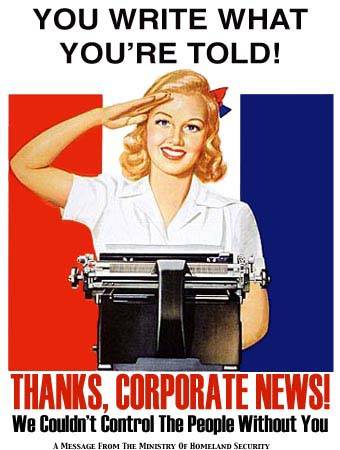
propaganda_corporatenews

All war mongers depend on lies and deception to rally public support. A classic example is the false testimony which helped trigger the first Iraq War. Elizabeth O’Bagy is another such shill who has been quoted by John Kerry and John McCain to support the case for war. Though the lie she got called out on was about academic credentials, not any of the lies to start another war, her background reveals some of the behind-the-scenes players influencing U.S. government policy. Among the findings uncovered by Patrick Henningsen of 21st Century Wire:

  • Before getting fired, O’Bagy was a “senior research analyst” at Washington’s heavily pro-Israeli and neoconservative think tank, the Institute for the Study of War (ISW).
  • The ISW was founded by Kimberly Kagan, a devout neocon, whose fellow experts elevate U.S. military intervention, and provide policy research back-up for U.S. State Department, CIA, AIPAC and large national security defense contractors. The ISW’s board of directors is led by William Kristol. This type of organisation is a nexus which brings together, among other things, support for the Syrian opposition, anti-Castro in Cuba, and pro-Israeli activities.
  • O’Bagy is also policy director at an even more questionable Washington DC outfit – a pro-rebel, money-raising and policy promoting nonprofit organisation known as the Syrian Emergency Task Force (SETF). Exactly how much money SETF has collected to date (or where it has been spent) is unknown, but following the O’Bagy incident, O’Bagy and the group’s Communications Director Cassie Chesley – have both been pulled down from the SETF website. According to the SETF, Syrian opposition agents have been coordinating with operatives in Washington through “field work” since November 2012, including building parallel government structures inside rebel-held areas in Syria.
  • O’Bagy was a key defender of alleged CIA American al Qaeda fighter recently detained by the FBI for working with al Qaeda in Syria, by working to shift opinion over his jihadist affiliations.
  • One of O’Bagy’s mentors is none other than Michael Weiss, Research Director at the British-based Henry Jackson Society, a key Israeli and neoconservative foreign policy think-tank.

Read the full article here: http://21stcenturywire.com/2013/09/14/kerry-and-mccains-fake-phd-syria-expert-obagy-is-neocon-and-israeli-linked-operative/

Though O’Bagy’s voice may be absent from the public discourse (at least for now), there are undoubtedly plenty of others like her who are well compensated by powerful think-tanks and special interest groups. Some might also be a part of government programs such as Operation Mockingbird.