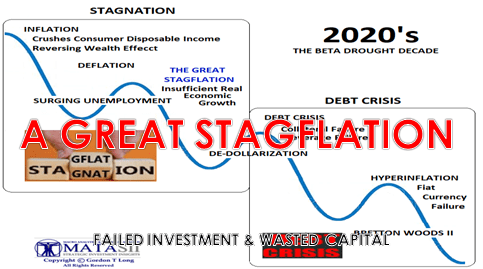
The Great Moderation of low inflation and soaring assets has ended. Welcome to the death by a thousand cuts of stagflation. It was all so easy in the good old days of the past 25 years: just keep pushing interest rates lower to reduce the cost of borrowing and juice credit expansion ((financialization) and offshore industrial production to low-cost nations with few environmental standards and beggar-thy-neighbor currency policies (globalization).
Both financialization and globalization are deflationary forces, as they reduce costs. They are also deflationary to the wages of bottom 90%, as wages are pushed down by cheap global labor and stripmined by financialization, which channels the vast majority of the economy’s gains into the top tier of the workforce and those who own the assets bubbling up in financialization’s inevitable offspring, credit-asset bubbles.
To keep the party going, central banks and governments pushed both forces into global dominance: hyper-financialization and hyper-globalization. Policy extremes were pushed to new extremes: “temporary” zero-rate interest policy (ZIRP) stretched on for 6 years as every effort was made to lower the cost of credit to bring demand forward and inflate yet another credit-asset bubble, as the “wealth effect” of the top 5% gaining trillions of dollars in unearned wealth as asset bubbles inflated pushed consumption higher.
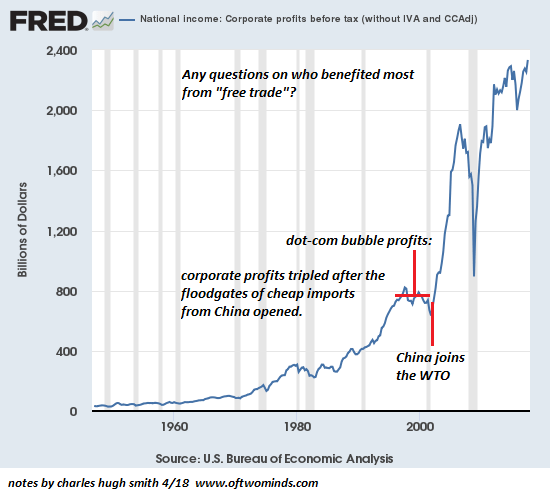
Corporate profits soared as credit became essentially free and super-abundant and globalization lowered costs and institutionalized planned obsolescence, the engineered replacement of goods and software that forces consumers to replace their broken / outdated products every few years.
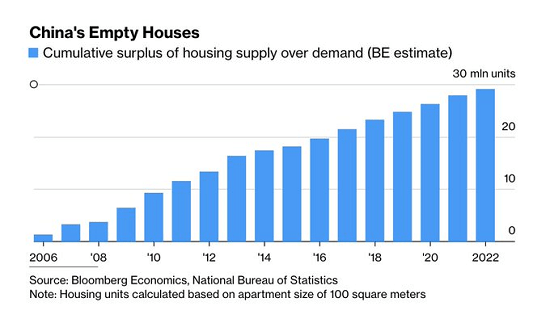
Every economic lever was pulled to extend the vast profits generated by hyper-financialization and hyper-globalization. Currencies were manipulated lower to boost exports, cheap credit kept zombie companies alive, bridges to nowhere and millions of empty flats were built to boost jobs and profits, and so on.
At long last, all these gimmicks have reversed or reached marginal returns: they no longer keep inflation suppressed, asset bubbles inflating and profits expanding. The malinvestment of global capital will be revealed and the costs of the policy gimmickry will be paid by years of stagflation: high inflation, low or negative growth and endless debt crises as the reliance on cheap credit to boost profits comes home to roost.
It turns out that the inevitable offspring of hyper-financialization and hyper-globalization are inflation, credit crises and the undermining of national security as the self-serving goal of pushing corporate profits higher via globalization led to fatal dependencies on competing powers for the essentials of modern life.
Correcting these decades-long extremes will take at least a decade as long-suppressed inflation becomes endemic, supply-chain disruptions become the norm and capital has to be invested in long-term national projects such as reshoring and the engineering of a new more efficient energy mix–projects that will only be expenses for many years.
The gains will not even be measured by our current outdated economic metrics of GDP and profits. The gains will be in the national security of essential supply chains and production and in the relocalizing of jobs and capital, not corporate profits.
Our reliance on the endless expansion of credit, leverage and credit-asset bubbles will have its own high cost: the collapse not just of the current Everything Bubble but of the engines that inflated one bubble after another.
Central bank and state authorities are thrashing about cluelessly, as all their gimmicks are now problems rather than solutions. The current policy gimmicks laid the foundations for a decade or more of high inflation, low growth and credit crises as the phantom “wealth” of credit-asset bubbles evaporates.
This will drive a reverse Wealth Effect as the top spenders are crushed by the collapse of asset bubbles. Long-term trends in demographics (shrinking workforces and the skyrocketing population of elderly) and depletion of resources will add fuel to the inflationary / low growth / credit crises bonfires.
Gordon Long and I discuss all these mutually reinforcing trends in A Great Stagflation (36 min). This is the culmination of our decade of programs about all the policy gimmicks that were pushed to extremes to maintain the illusion of stability and growth–an illusion that’s evaporating as it makes contact with stagflationary realities.
I don’t have to tell you that your money doesn’t go as far as it once did. You see it every time that you go shopping. Our leaders flooded the system with money and pursued highly inflationary policies for years, and now we are all paying the price. The cost of living has been rising much faster than our incomes have, and this is systematically destroying the middle class. Survey after survey has shown that a solid majority of the population is living paycheck to paycheck, and at this point most U.S. consumers are tapped out. In fact, one brand new survey just discovered that 57 percent of Americans cannot even afford to pay a $1,000 emergency expense…
According to Bankrate’s Annual Emergency Fund Report, 68% of people are worried they wouldn’t be able to cover their living expenses for just one month if they lost their primary source of income. And when push comes to shove, the majority (57%) of U.S. adults are currently unable to afford a $1,000 emergency expense.
When broken down by generation, Gen Zers (85%) and Millennials (79%) are more likely to be worried about covering an emergency expense.
These numbers are quite ominous, because they clearly demonstrate that we are completely and utterly unprepared for any sort of a major economic downturn.
And thanks to the rapidly rising cost of living, we are losing even more ground with each passing month.
Nearly three-quarters, or 72%, of middle-income families say their earnings are falling behind the cost of living, up from 68% a year ago, according to a separate report by Primerica based on a survey of households with incomes between $30,000 and $100,000. A similar share, 74%, said they are unable to save for their future, up from 66% a year ago.
We haven’t experienced anything like this in the United States in decades.
When I walked into a Walmart store the other day, I was shocked by how high the prices are now.
Isn’t Walmart supposed to be the place with “low prices every day”?
Well, the prices were certainly not “low” when I walked through the store.
And I was stunned to learn that McDonald’s is now selling one hash brown for three dollars.
I am sure that many of you can remember a time when they were 50 cents.
Sadly, those days are not coming back.
Food prices are going to continue to go up, and the CEO of Unilever recently admitted that his company has actually “been accelerating the rate of price increases that we’ve had to put into the market”…
“For the last 18 months we’ve seen extraordinary input cost pressure … it runs across petrochemical derived products, agricultural derived products, energy, transport, logistics,” he said.
“It’s been feeding through for quite some time now and we’ve been accelerating the rate of price increases that we’ve had to put into the market,” he added.
US retail sales continued their fall in December, dropping by 1.1% as inflation remained high, the Commerce Department reported Wednesday.
That’s the largest monthly decline since December 2021, and practically every category (except for building materials, groceries and sporting goods) saw sales drop from the prior month.
U.S. existing home sales slowed for the 11th consecutive month in December as higher mortgage rates, surging inflation and steep home prices sapped consumer demand from the housing market.
-More Americans than ever before are being forced to pay at least 30 percent of their incomes on rent…
The average US household is now considered ‘rent-burdened’ as a record-high number of people are spending more than 30 percent of their income on rent.
According to Moody’s Analytics’ latest affordability report, the national average rent-to-income (RTI) ratio reached 30 percent for the first time since the company began tracking the data more than 20 years ago.
U.S. consumers are being stretched financially like never before, and many are turning to debt to help them maintain their current lifestyles.
As a result, the savings rate has plunged to a historic low, credit card debt has surged to a record high, and the average rate of interest on credit card balances has also risen to a record high. As Zero Hedge has aptly noted, this is “nothing short of catastrophic”…
The combination of record high credit card debt and record high credit card interest is nothing short of catastrophic for both the US economy, and the strapped consumer who has no choice but to keep buying on credit while hoping next month’s bill will somehow not come. Unfortunately, it will and at some point in the very near future, this will also translate into massive loan losses for US consumer banks; that’s when Powell will finally panic.
For a long time, we have been warned that the very foolish economic policies that our leaders were implementing would have deeply tragic consequences.
And now it is starting to happen right in front of our eyes.
Sadly, the truth is that this is just the beginning.
The entire system is cracking and crumbling all around us, and there is much more pain ahead.
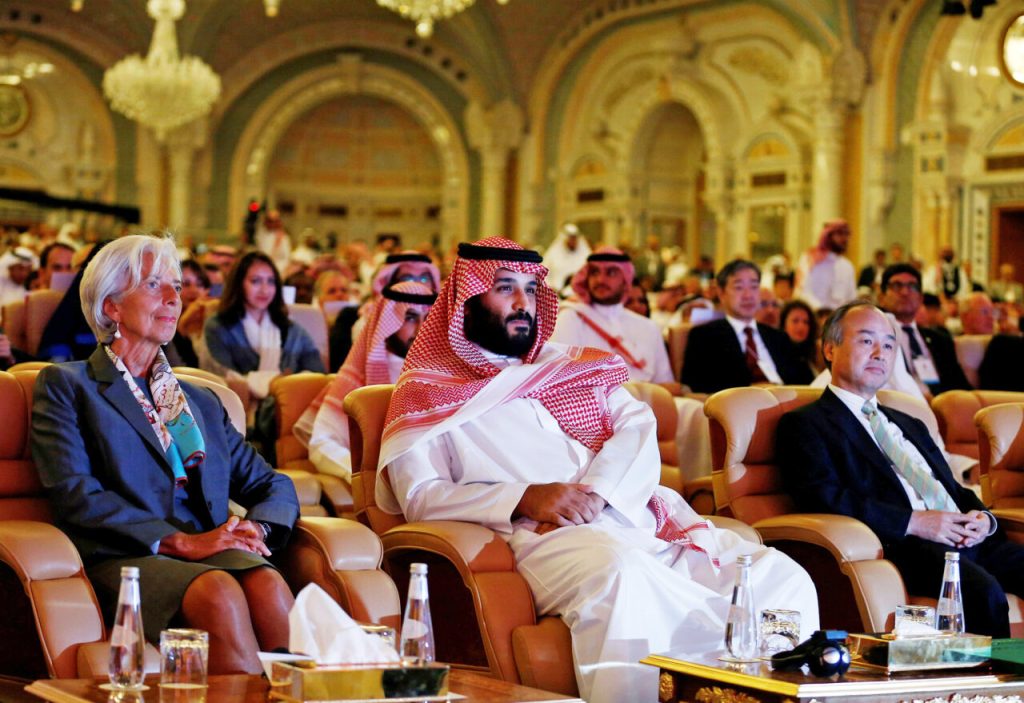
Saudi Crown Prince Mohammed bin Salman, Masayoshi Son, SoftBank Group Corp. Chairman and CEO, and Christine Lagarde, International Monetary Fund (IMF) Managing Director, attend the Future Investment Initiative conference in Riyadh, Saudi Arabia October 24, 2017. REUTERS/Faisal Al Nasser
The decline of a currency’s world reserve status is often a long process rife with denials. There are numerous economic “experts” out there that have been dismissing any and all warnings of dollar collapse for years. They just don’t get it, or they don’t want to get it. The idea that the US currency could ever be dethroned as the defacto global trade mechanism is impossible in their minds.
One of the key pillars keeping the dollar in place as the world reserve is its petro-status, and this factor is often held up as the reason why the Greenback cannot fail. The other argument is that the dollar is backed by the full force of the US military, and the US military is backed by the US Treasury and the Federal Reserve – In other words, the dollar is backed by…the dollar; it’s a very circular and naive position.
These sentiments are not only pervasive among mainstream economists, they are also all over the place within the alternative media. I suspect the main hang-up for liberty movement analysts is the notion that the globalist establishment would ever allow the dollar or the US economy to fail. Isn’t the dollar system their “golden goose”?
The answer is no, it is NOT their golden goose. The dollar is just another stepping stone towards their goal of a one-world economy and a one-world currency. They have killed the world reserve status of other currencies in the past, why wouldn’t they do the same to the dollar?
Globalist white papers and essays specifically outline the need for a diminished role for the US currency as well as a decline in the American economy in order to make way for Central Bank Digital Currencies (CBDCs) and a new global currency system controlled by the IMF. I warned about this years go, and my position has always been that the derailment of the dollar would likely start with the end of its petro status.
In 2017 I published an article titled ‘Saudi Coup Signals War And The New World Order Reset’. I noted at the time that the sudden power shift over to crown prince Mohammed Bin Salman indicated a change in Saudi Arabia’s relationship to the US. I stated that:
“To understand how drastic this coup has been, consider this — for decades Saudi Kings maintained political balance by doling out vital power positions to separate, carefully chosen successors. Positions such as Defense Minister, the Interior Ministry and the head of the National Guard. Today, Mohammed Bin Salman controls all three positions. Foreign policy, defense matters, oil and economic decisions and social changes are now all in the hands of one man.”
The rise of MBS was backed by the Public Investment Fund (PIF), a fund comprised of trillions of dollars supplied by globalists within Carlyle Group (Bush family, etc.), Goldman Sachs, Blackstone and Blackrock. MBS garnered the favor of the globalists for one specific reason – He openly supported their “Vision For 2030”, a plan for the dismantling of “fossil fuel” based energy and the implementation of carbon controls. Yes, that’s right, the head of Saudi Arabia is backing the eventual end of oil based energy, and part of that includes the end of the dollar as the petro currency.
In exchange for their cooperation, the Saudis are being given access to ESG-like funding as well as access to AI advancements and the so-called “digital economy.” It sounds crazy, but there is much talk of AI developments to cure numerous health problems and extend lifespan. With those kinds of promises, it’s not surprising that Saudi elites would be willing to dump the dollar and even oil.
In 2017 I noted that:
“I believe the next phase of the global economic reset will begin in part with the breaking of petrodollar dominance. An important element of my analysis on the strategic shift away from the petrodollar has been the symbiosis between the U.S. and Saudi Arabia. Saudi Arabia has been the single most important key to the dollar remaining as the petrocurrency from the very beginning.”
I believed that the threat to petro status would ultimately be spurred on by a proxy war between East and West:
“World economic war is the real name of the game here, as the globalists play puppeteers to East and West. It is a geopolitical crisis they will have created to engineer public support for a solution they predetermined.”
Back then I thought that such a proxy war would be initiated in the Middle East, possibly in Iran. However, it’s clear that Ukraine is the powderkeg the globalists have chosen, at least for now, with Taiwan being the next shoe to drop.
In the years since I made these predictions the relationship between Saudi Arabia, Russia and China has grown very close. Arms deals and energy deals are becoming a mainstay of trade and this has led to a quiet but steady distancing of the Saudis from the dollar. This past week, the dominoes were set in motion for dollar collapse when Saudi Arabia announced at Davos that they are now willing to trade oil in alternative currencies.
In response, Xi Jinping pledged to ramp up efforts to promote the use of the Chinese yuan in energy deals. This falls in line with another article I wrote in 2017 titled ‘The Economic End Game Continues,’ in which I described how conflict with Eastern nations (China and Russia) would be exploited to create a catalyst for the end of the dollar’s petro status.
The importance of the Saudi announcement cannot be overstated; this is the beginning of the end of the dollar. The dollar’s world reserve status is largely dependent on its petro-status. Without one, you cannot have the other. This is almost the exact same dynamic that led to the implosion of the British Sterling decades ago as the global petro currency which resulted in the rise of the dollar to take its place.
This time, though, it will not be a single foreign currency that takes on the role of world reserve, it will be a basket currency system controlled by the IMF called Special Drawing Rights, along with a single global digital currency that is yet to be named but is now under development.
The consequences of the loss of reserve status will be devastating to the US economy. It is the only glue holding our system together – The ability to defer inflation by exporting it overseas is a superpower only the US enjoys. The Fed can print money perpetually if it wants to in order to fund the government or prop up US markets, as long as foreign central banks and corporate banks are willing to absorb dollars as a tool for global trade. If the dollar is no longer the primary international trade mechanism, the trillions upon trillions of dollars the Fed has created from thin air over the years will all come flooding back to the US through various avenues, and hyperinflation (or hyperstagflation) will be the result.
This dynamic is already in play, as foreign holders of US debt and dollars have been dumping them at record pace since 2017. The process continues at a time when the Federal Reserve is cutting it’s balance sheet and raising interest rates, which means there is no longer a buyer of last resort.
This may be why multiple foreign central banks have renewed their purchases of gold reserves and are once again stockpiling precious metals. They seem to be well aware of what is about to happen to the dollar, while the American public is kept in the dark.
The effects of the decline of the dollar may not be immediately felt, or become obvious for another year or two. What will happen is consistent inflation on top of the high prices we are already dealing with. Meaning, the Federal Reserve will continue to hold interest rates higher and prices will barely budge or they may climb in spite of monetary tightening. Even in the face of a major recessionary contraction, which I predict will be triggered starting in April, prices will STILL remain higher.
All the while the mainstream media and government economists will say they have “no idea” why inflation is so persistent, and that “nobody could have seen this coming.” Some of us saw it coming, but only because we accept the reality that the dollar’s days are numbered.
The US is facing major moves by the global community to de-dollarize their economies. The reserve status of the US dollar will eventually come to an end, maybe not anytime soon, but sometime in the future as it is facing numerous challenges not only from major powers such as Russia and China who are actively trying to rid themselves of the toxic currency, but also countries with smaller economies who are based in the Southeast Asian region which includes Singapore, Malaysia, Indonesia, Cambodia, Thailand, and Laos. The globalist think tank, the Carnegie Endowment for International Peace (CEIP) published an article on August 22nd, 2022, on the US dollar’s waning influence in Southeast Asia titled ‘Southeast Asia’s Growing Interest in Non-dollar Financial Channels—and the Renminbi’s Potential Role’stated what was taking place between China and several Southeast Asian countries:
China’s central bank—announced the launch of a new emergency liquidity arrangement that can be funded using renminbi and tapped by participating central banks during times of market stress. Three of the five participating central banks are Singapore’s, Malaysia’s, and Indonesia’s, which eachrecentlyrenewed agreements with the PBOC implicitly aimed at reducing dollar usage in cross-border payments.This follows policymakers in Thailand, Laos, Cambodia, and Myanmar all announcing efforts to reduce dollar usage, as well as comments by Indonesia’s central bank head that consumers across five of Southeast Asia’s largest economies will soon be able to make intra-regional cross-border payments via linkages that avoid using the dollar as an intermediary, as is currently often the case
Interestingly, The CEIP listed several reasons why Southeast Asian countries want to dramatically reduce the use of US dollars are as follows:
Several factors are behind the various efforts aimed at reducing dollar usage in Southeast Asia. To begin with, many officials are concerned about the potential economic impacts of U.S. monetary policy tightening on the region given its high usage of the dollar; accordingly, some are seeking to reduce usage of the dollar in intra-regional trade payments as a means of curbing dollar reliance more broadly. Recent sanctions may also be spurring demand for alternative financial channels—for example, Myanmar’s military government is actively exploring how to circumvent EU and U.S. sanctions to transact with Russia
According to an article published by almayadeen.net‘Bank Indonesia calls against payments in US Dollars’who translated the report by an Indonesian news portal called Tempo.net on what Nugroho Joko Prastowo of the Solo Bank Indonesia Representative Office said regarding Indonesian businesses using national currencies to reduce its reliance on the US dollar:
Bank Indonesia has urged importers and exporters to use national currencies in international payments in order to reduce Indonesian financial markets’ reliance on the US dollar, according to Tempo.co, an Indonesian news portal. “About 90% of export-import payments are conducted in US dollars, while the share of Indonesian direct exports to the US is estimated at only 10%, and US imports account for 5%”
The report also mentioned that “China, Japan, Thailand, and Malaysia have already agreed to use the two-way payment mechanism, with Singapore and the Philippines planning to join the system, according to the economist.”
The yuan was included in the list of Myanmar’s official settlement currencies in January 2019. The move at that time was more symbolic, as all contracts and trade were still not settled in the Chinese currency. Zhou said that the move, in the long term, will help break the monopoly of the US dollar in Myanmar’s foreign currency reserves. The US has been abusing the dollar’s dominant status to impose arbitrary sanctions on other countries, and the yuan’s further expansion in Myanmar’s trade settlements may provide a shield against such a potential weapon, analysts said
Cambodia is on Board Dumping US Dollars
Why Cambodia with a population of close to 17 million people and a much smaller economic impact on the world’s economy is willing to drop US dollars is an important development. The Diplomat, a current-affairs magazine based on analysis and commentaries from various authors on developments throughout Asia and the rest of the world published an article by Luke Hunt on the case of Cambodia’s attempt to stop using US dollars titled ‘Cambodia Reduces its Dependency on the US Dollar’lays out the mood of the Cambodian government. “Ever since United Nations peacekeepers arrived in war-torn Cambodia to oversee elections held in 1993, the U.S. dollar has been a mainstay of the local economy with a dual currency system providing steady exchange rates in a volatile place” but there is a monumental shift taking place when the National Bank of Cambodia (NBC) announced that it “would phase-out small-denominated U.S. dollar bills – $1, $2, and $5 notes – following negotiations with banks and micro-finance institutions (MFIs).” Naturally it’s a step to reduce the dependency of the US dollar according to the NBC “Cambodia has to encourage the use of its riel, more. So, allowing the circulation of small U.S. bills is an obstacle in urging the use of the riel.”
There are several reasons for Cambodia’s move, one of them is to allow the use of digital currencies to “give the central bank more control over the Cambodian economy and bolster the local riel currency, which for decades suffered from a lack of confidence due to negative sentiment stemming from a 30-year war” in addition it will allow the central bank “control over monetary policy and interest rate settings and reduced costs in handling the sheer volume of $1 dollar notes circulating through the economy.” Hunt mentions the dark period of Cambodian history with the US-backed Pol Pot and the Khmer Rouge who destroyed Cambodia and it’s traditions and started a new revolution with a new culture that would begin on Year Zero, therefore everything before would be deemed irrelevant, “It’s a far cry from the late 1970s, when Khmer Rouge rule abandoned money, banks were abolished, and the NBC blown-up as Pol Pot tried to create a utopian, agrarian society that led to the deaths of an estimated 1.7 million Cambodians.” One of the darkest times in world history indeed. It is a positive development that the NBC is encouraging the use of the Cambodian Riel for its economy, so the future seems promising. NBC Governor Chea Chanto spoke at the 40th Anniversary of the re-establishment of the Riel “he said demand for the currency had increased by an average of 16 percent a year for the last 20 years amid annual average growth rates of 7.8 percent and inflation at around 2.5 percent.” Chanto said that “I firmly believe all ministries, institutions, companies, enterprises, and those who actively participate in the process of developing the banking system promote the use of the riel, which is our national currency.” According to an unidentified analyst “It’s also a matter of sovereignty and pride. It’s their country and they are entitled to have their own currency like anywhere else.”
Transitioning from the US dollar to the Cambodian Riel won’t be an easy task according to Michael Finn of the Khmer Times who authored ‘De-dollarisation: Views from Asia, US and Europe’claims that “Any reduction in the use of the dollar needs to be handled carefully, according to foreign chambers of commerce in Cambodia. They say the central bank is unlikely to fully phase-out the US currency and any sudden moves to end reliance on the dollar would be bad for business.” European Chamber of Commerce Advocacy Manager Noe Schellinck said that “To a certain extent, the dollarisation now can be ascribed to the success of the Cambodian economy, with a great influx of Foreign Direct Investment, compared to the historic context of when the dollarization came about.” But the Indonesian Chamber of Commerce President Dalton Wong disagrees with Schellinck’s assessment:
De-dollarisation is not a bad thing as it is a re-balancing of the fiscal and monetary policy tools. It is certainly not a complete displacement and substitution of the US dollar in favour of the Khmer Riel in trade and investment, which some observers and analysts seem to mischievously suggest, which is not so helpful. In fact, promoting a greater use of the Khmer riel will give greater monetary policy tools to the Cambodian author
The collapse of the US dollar is becoming a reality as China and Russia continue to buy gold and trade with their own currencies at an accelerated pace with many more countries around the world who are also racing to de-dollarize their economies. As we already know, several countries in Southeast Asia will soon make its move to rid itself of the toxic currency, but there are also other countries who are also making moves including India, Iran, South Africa, Syria, and Venezuela who are all motivated to drop the US dollar. One of the main reasons for these countries to move forward by eliminating the use of US dollar is because Washington uses its currency status as a weapon to impose harsh sanctions on countries they deem as enemies.
African countries are also starting to look for alternatives to the US dollar including Ghana according to a report published by Reuters on November 24th, 2022, ‘Ghana plans to buy oil with gold instead of U.S. dollars’said that “Ghana’s government is working on a new policy to buy oil products with gold rather than U.S. dollar reserves” Ghana’s reason slightly differs from other countries since “The move is meant to tackle dwindling foreign currency reserves coupled with demand for dollars by oil importers, which is weakening the local cedi and increasing living costs.” This means that the US dollar is causing inflation. The move is expected to take place in the first quarter of 2023 as Ghana’s Vice-President Mahamudu Bawumia said that the new policy “will fundamentally change our balance of payments and significantly reduce the persistent depreciation of our currency” as he explained that “using gold would prevent the exchange rate from directly impacting fuel or utility prices as domestic sellers would no longer need foreign exchange to import oil products.” Libya was one of the first countries in Africa to propose the idea of creating an alternative currency to bypass the US dollar called the African Dinar which would have been gold-backed but the Obama regime supported a violent coup to overthrow its president who suggested the idea, Muammar Ghaddafi who was tortured and then killed in the process making Libya a hotbed for terrorism and at the same time, re-creating the centuries-old industry of slavery.
The bottom line is that US dollar’s dominance in the global market will come to an end sometime in the foreseeable future. No one has a crystal ball of when it will happen, but it is certain. The world will experience an alternative economic reality that will change the dynamics of the US and its Western powers dominating the World’s economy with an outdated and flawed currency that will eventually have the same value as toilet paper.
A former US intelligence official has confirmed that the shambolic Maidan remix staged in Brasilia on 8 January was a CIA operation, and linked it to the recent attempts at color revolution in Iran.
On Sunday, alleged supporters of former right-wing President Jair Bolsonaro stormed Brazil’s Congress, Supreme Court, and presidential palace, bypassing flimsy security barricades, climbing on roofs, smashing windows, destroying public property including precious paintings, while calling for a military coup as part of a regime change scheme targeting elected President Luis Inacio “Lula” da Silva.
According to the US source, the reason for staging the operation – which bears visible signs of hasty planning – now, is that Brazil is set to reassert itself in global geopolitics alongside fellow BRICS states Russia, India, and China.
That suggests CIA planners are avid readers of Credit Suisse strategist Zoltan Pozsar, formerly of the New York Fed. In his ground-breaking 27 December report titled War and Commodity Encumbrance, Pozsar states that “the multipolar world order is being built not by G7 heads of state but by the ‘G7 of the East’ (the BRICS heads of state), which is a G5 really but because of ‘BRICSpansion’, I took the liberty to round up.”
He refers here to reports that Algeria, Argentina, Iran have already applied to join the BRICS – or rather its expanded version “BRICS+” – with further interest expressed by Saudi Arabia, Turkiye, Egypt, Afghanistan, and Indonesia.
The US source drew a parallel between the CIA’s Maidan in Brazil and a series of recent street demonstrations in Iran instrumentalized by the agency as part of a new color revolution drive: “These CIA operations in Brazil and Iran parallel the operation in Venezuela in 2002 that was highly successful at the start as rioters managed to seize Hugo Chavez.”
Enter the “G7 of the East”
Straussian neo-cons placed at the top of the CIA, irrespective of their political affiliation, are livid that the “G7 of the East” – as in the BRICS+ configuration of the near future – are fast moving out of the US dollar orbit.
Straussian John Bolton – who has just publicized his interest in running for the US presidency – is now demanding the ouster of Turkey from NATO as the Global South realigns rapidly within new multipolar institutions.
Russian Foreign Minister Sergey Lavrov and his new Chinese counterpart Qin Gang have just announced the merging of the China-driven Belt and Road Initiative (BRI) and the Russia-driven Eurasia Economic Union (EAEU). This means that the largest 21st century trade/connectivity/development project – the Chinese New Silk Roads – is now even more complex, and keeps expanding.
That sets the stage for the introduction, already being designed at various levels, of a new international trading currency aimed at supplanting then replacing the US dollar. Apart from an internal debate among the BRICS, one of the key vectors is the discussion team set up between the EAEU and China. When concluded, these deliberations will be presented to BRI-EAEU partner nations and of course the expanded BRICS+.
Lula at the helm in Brazil, in what is now his third non-successive presidential term, will offer a tremendous boost to BRICS+, In the 2000s, side by side with Russian President Putin and former Chinese President Hu Jintao, Lula was a key conceptualizer of a deeper role for BRICS, including trade in their own currencies.
BRICS as “the new G7 of the East,” as defined by Pozsar, is beyond anathema – as much for Straussian neo-cons as for neoliberal.
The US is being slowly but surely expelled from wider Eurasia by concerted actions of the Russia-China strategic partnership.
Ukraine is a black hole – where NATO faces a humiliation that will make Afghanistan look like Alice in Wonderland. A feeble EU being forced by Washington to de-industrialize and buy US Liquified Natural Gas (LNG) at absurdly high cost has no essential resources for the Empire to plunder.
Geoeconomically, that leaves the US-denominated “Western Hemisphere,” especially immense energy-rich Venezuela as the key target. And geopolitically, the key regional actor is Brazil.
The Straussian neo-con play is to pull all stops to prevent Chinese and Russian trade expansion and political influence in Latin America, which Washington – irrespective of international law and the concept of sovereignty, continues to call “our backyard.” In times where neoliberalism is so “inclusive” that Zionists wear swastikas, the Monroe Doctrine is back, on steroids.
All about the ‘strategy of tension’
Clues for Maidan in Brazil can be obtained, for instance, at the US Army Cyber Command at Fort Gordon, where it’s no secret the CIA deployed hundreds of assets across Brazil ahead of the recent presidential election – faithful to the “strategy of tension” playbook.
CIA chatter was intercepted at Fort Gordon since mid-2022. The main theme then was the imposition of the widespread narrative that ‘Lula could only win by cheating.’
A key target of the CIA operation was to discredit by all means the Brazilian electoral process, paving the way for a prepackaged narrative that is now unraveling: a defeated Bolsonaro fleeing Brazil and seeking refuge at former US president Donald Trump’s Mar-a-Lago mansion. Bolsonaro, advised by Steve Bannon, did flee Brazil, skipping Lula’s inauguration, but because he’s terrified he may be facing the slammer sooner rather than later. And by the way, he is in Orlando, not Mar-a-Lago.
The icing on the stale Maidan cake was what happened this past Sunday: fabricating a 8 January in Brasilia mirroring the events of 6 January, 2021 in Washington, and of course imprinting the Bolsonaro-Trump link on people’s minds.
The amateurish nature of 8 January in Brasilia suggests CIA planners got lost in their own plot. The whole farce had to be anticipated because of Pozsar’s report, which everyone-who-matters has read across the New York-Beltway axis.
What is clear, is that for some factions of the powerful US establishment, getting rid of Trump at all costs is even more crucial than crippling Brazil’s role in BRICS+.
When it comes to the internal factors of Maidan in Brazil, borrowing from novelist Gabriel Garcia Marquez, everything walks and talks like the Chronicle of a Coup Foretold. It is impossible that the security apparatus around Lula could not have foreseen these events, especially considering the tsunami of signs on social networks.
So there must have been a concerted effort to act softly – without any preventive big sticks – while just emitting the usual neoliberal babble.
After all, Lula’s cabinet is a mess, with ministers constantly clashing and some members supporting Bolsonaro even a few months ago. Lula calls it a “national unity government,” but it is more like a tawdry patchwork job.
Brazilian analyst Quantum Bird, a globally respected physics scholar who has returned home after a long stint in NATO lands, notes how there are “too many actors in play and too many antagonistic interests. Among Lula’s ministers, we find Bolsonarists, neoliberal-rentiers, climate interventionism converts, identity politics practitioners and a vast fauna of political neophytes and social climbers, all well aligned with Washington’s imperial interests.”
CIA-stoked ‘militants’ on the prowl
One plausible scenario is that powerful sectors of the Brazilian military – at the service of the usual Straussian neo-con think tanks, plus global finance capital – could not really pull off a real coup, considering massive popular rejection, and had to settle at best for a “soft” farce. That illustrates just how much this self-aggrandizing and highly corrupt military faction is isolated from Brazilian society.
What is deeply worrying, as Quantum Bird notes, is that the unanimity in condemning 8 January from all quarters, while no one took responsibility, “shows how Lula navigates virtually alone in a shallow sea infested by sharpened corals and hungry sharks.”
Lula’s position, he adds, “decreeing a federal intervention all by himself, without strong faces of his own government or relevant authorities, shows an improvised, disorganized and amateurish reaction.”
And all that, once again, after CIA-stoked “militants” had been organizing the “protests” openly on social media for days.
The same old CIA playbook though remains at work. It still boggles the mind how easy it is to subvert Brazil, one of the natural leaders of the Global South. Attempted old school coups cum regime change/color revolution scripts will keep being played – remember Kazakhstan in early 2021, and Iran only a few months ago.
As much as the self-aggrandizing faction of the Brazilian military may believe they control the nation, if Lula’s significant masses hit the streets in full force against the 8 January farce, the army’s impotence will be graphically imprinted. And since this is a CIA operation, the handlers will order their tropical military vassals to behave like ostriches.
The future, unfortunately, is ominous. The US establishment will not allow Brazil, the BRICS economy with the best potential after China, to be back in business with full force and in synch with the Russia-China strategic partnership.
Straussian neo-cons and neoliberals, certified geopolitical jackals and hyenas, will get even more ferocious as the “G7 of the East,” Brazil included, moves to end the suzerainty of the US dollar as imperial control of the world vanishes.
“What stands out for visitors?” I asked our guide during a Honolulu Chinatown tour with my out-of-town guests. “Always the same, the homeless. Even Mainlanders from big cities like San Francisco and New York are surprised how many we have here. I’m waiting to see how the Japanese and Korean guests respond when they start traveling again.”
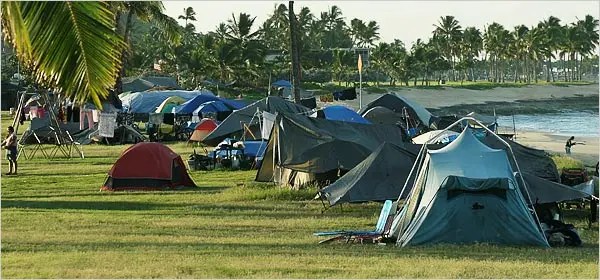
You can’t miss his point. During our brief walk through Chinatown’s markets we saw a disturbed man dressed only in his underwear touching himself, several seriously street-worn people begging, and watched the fire department respond to a prone homeless man who was dead or simply drugged into paralysis. When someone in our party needed the toilet, the shopkeeper apologized for having to keep it locked to prevent misuse by vagrants. Many places simply had signs saying “no public toilet.” Despite some great tasting food, it was hard to keep up a holiday spirit. Same for when we passed the tent cities and parks overtaken by homeless along a drive on the Windward side.
The numbers only begin to tell the story. Pre-COVID, there were an estimated 6,458 homeless in Hawaii. The Big Island saw the biggest jump in homelessness from 2019-2020, a 16 percent increase. On Oahu the homeless population is up 12 percent. San Francisco before COVID counted over 8,000 homeless persons, and while COVID-era numbers are hard to pin down, one measure is overdose deaths among the homeless, which have tripled. New York has the highest homeless population of any American metropolis, close to 80,000 and growing. The number of homeless there today is 142 percent higher than it was 10 years ago, and currently at the highest level since the Great Depression. Some 3,000 human beings make their full-time home in the subway.
Estimates for the United States as a whole run well over half a million people living homeless. The number shoots up dramatically if one includes people living in their cars, people on their way to exhausting the good will of friends who offered a couch, and those who slide in and out of motels as money ebbs and flows. Some 21 percent of American children live in poverty, homeless or not. In the end nobody actually knows how many people are living without adequate shelter except that it is a large number and it is a growing number and there is nothing in line to lower it, only to find new ways to tolerate it.
We have in many places already surrendered our public parks and libraries. The hostile architecture of protrusions and spikes which make it impossible to sleep on a park bench are pretty much sculpted into the architecture of the city, markers of the struggle for public space. The idea even has its own Instagram account. A security firm offers tips: restrict access to sidewalk overhangs protected from inclement weather, remove handles from water spigots, and keep trash dumpsters locked. If things get too bad, the company, for a price, will deploy “remote cameras with military-grade algorithms capable of detecting people in areas they shouldn’t be in.”
Keep in mind that all of these homeless people coexist in a United States whose wealthiest citizens have their own spaceships. NYC alone is home to 70 billionaires, more than any other American city. New York is also home to nearly one million millionaires, more than any other city in the world. How is it that the nation’s wealthiest city and poorest city are the same place?
All the solutions seem to fail. There are not enough shelters we are told but even when more shelters are built the homeless are too paranoid to move in,or the shelters become too dirty, too dangerous, chaos compacted, so the transition from an encampment to supportive housing isn’t easy. In ravaged San Francisco, one out of 10 of the city’s already existing supportive housing units are empty, with the director of the Department of Homelessness (!) placing the blame on individuals. So the homeless problem becomes a mental health problem which becomes a drug and alcohol problem which becomes a public health problem. Our society will not force people into care, and it will not deport the homeless against their will to desert camps. Instead we simply do nothing absent throwing a few bucks into food programs as an expedient over stepping around too many bodies in the street. Meanwhile nobody asks why nothing seems to work.
When you look at history with enough perspective you see very little happens without cause and effect. Things are connected. Casualty matters more than randomness. Answering the question of what to do about homelessness requires first answering the question of why we have the problem in the first place. Because while homelessness exists elsewhere in the developed world, you simply do not see it at pandemic proportions in equally-developed nations across Europe, and certainly not in the economic superstates like China, Japan, Singapore, et al. Scale and size matter and America wins on both. Why?
Because the American economic system requires homelessness. That’s why we can’t solve homelessness; no matter how much solving you do the system just makes more.
The Democratic arguments over raising the minimum wage are a smokescreen. As long there is a minimum wage and businesses do not have to compete for workers, there have to be homeless people. Think of the homeless as run-off, the unfortunate but necessary waste product of an economic system designed to exploit workers for the benefit of space-traveling overlords. The homeless — no wagers — are the endpoint of an economic spectrum dominated by the minimum wagers, people whose salary and hours, and thus whose chance at lifetime wealth status, are capped by agreement between the government and industry.
Until slavery ended, human beings were considered capital, just like stock today. Now we’re “human resources” so everything’s better. Bringing up race hides the real story of how long this has been going on and how deep a part of our way of life it is. The line between controlling someone with a whip and controlling someone through ever-lower wages gets finer and finer over time.
This is what “systematic” means: a system of public-private sector agreements codified as laws which push workers into a cesspool as grab-and-go disposable labor. Those who sink end up homeless. Those who tread water are guaranteed a life of maybe just enough, their place in society fixed for others’ goals, never their own. It also assures the sales of drugs, alcohol, and lottery tickets as the working poor try to convince themselves all this can’t be true. Can it?
The next step is clear. The working poor are allowed to exist at survival levels only because they are in jobs too expensive or difficult to automate. You think there are a lot of homeless now? Wait until self-driving vehicles click in and another job category simply disappears, leaving drivers and delivery people nowhere to go (there are more than 3.5 million truck drivers in the U.S., making driving one of the most popular occupations.) Same for fast food and other service jobs. Soon enough AI and/or remote online learning will make live teachers an expensive luxury for the children of the wealthy.
If you wanted a clever term about why we have and ignore and can’t address the homeless problem, you could call it systemic inequality in tune with the times’ nomenclature. A system designed to exploit will always exploit too much at its edges. It is supposed to, in order to keep driving the center downward, from 1950s middle class to 2022’s working poor.
But in the near term the issue isn’t confronting the reality of inequality, it is navigating the society it has created, much as my tour guide directed us around the homeless nests in Chinatown so we could sample the dim sum at leisure. “Don’t make eye contact” was some of his best advice.
Central bankers and international corporate financiers have long been pretending to hate the very concept of cryptocurrencies like Bitcoin and Etherium while at the same time investing heavily in blockchain technologies and infrastructure. The purpose of the ruse is not clear, but more than likely it was an attempt at mass reverse psychology – “We don’t like crypto and digital currencies because we supposedly have no control over them; free market proponents should embrace them blindly because that is how you will beat us.”
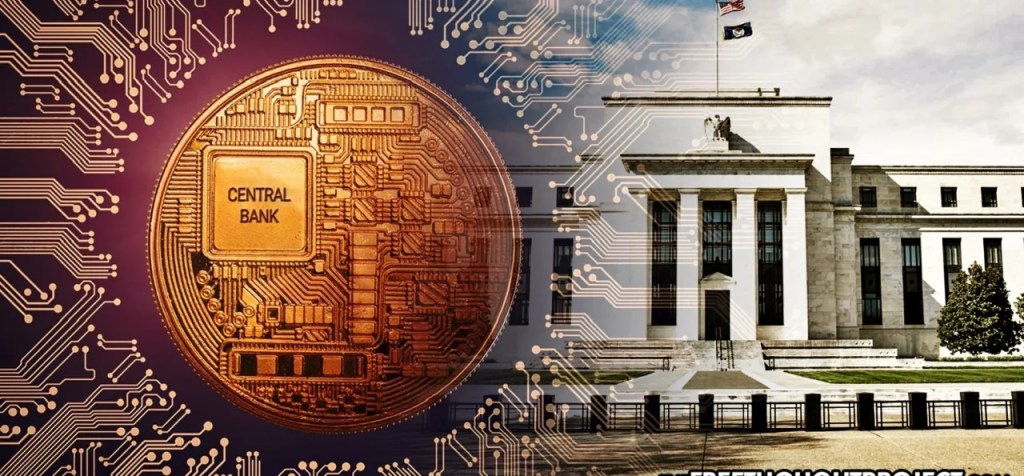
In the meantime, while major banking firms are investing billions into various blockchain products, central banks and global institutions like the BIS and IMF have been developing their own systems. In fact, the BIS notes with enthusiasm that around 90% of central banks around the world are already in the process of adopting CBDCs.
But why would anyone want to use government and establishment bank controlled cryptocurrencies when they have access to Bitcoin and dozens of other coins that are supposedly independent? Why trade freedom for more centralization?
First, existing cryptocurrencies are not as free as many people believe, with ample government tracking of blockchain transactions in place for years, the notion of the completely anonymous crypto user is a bit of a fantasy, and the idea that a product such as Bitcoin is going to “bring down” the central banks is becoming less realistic by the year.
Second, the crypto market is highly unstable in part because it is still very limited. While crypto use in America is higher than most other countries with around 12% of people using it as an investment (not as a currency), the rest of the world is mostly uninterested with an estimated global footprint of around 4%. Of that 4% only a handful of people actually own the majority of the market; these people are known as “whales” and they have the ability to tip the market up or down with little effort.
This happens in many other trade commodities and paper currencies also. The point is, crypto is not immune to manipulation.
Third, crypto is enticing to people because of the quick profits that can be had, but massive losses are also a danger. The overall crypto market has plunged by $2 trillion in the past year alone – Over 60% of its value. The implosion of huge trading companies like FTX also undermines the stability of the market and usually it’s the average investor that ends up suffering the consequences.
All of these factors and more can be used by banking elites as a rationale for the implementation of CBDCs and global regulation of crypto trading. And, if the bloodbath in existing coins continues, people may even welcome CBDCs as a “safe” investment or currency system.
The investment losses in blockchain products along with the scandals in exchanges is a rather convenient opportunity for the banking establishment to promote their own currencies as a replacement. In the wake of the FTX event, multiple international banks including JP Morgan and Goldman Sachs have called for government regulation and a shift over to CBDCs.
The US House has scheduled hearings on FTX with an emphasis on regulation. In Europe, globalist Christine Lagarde and the ECB are calling for global cooperation on monitoring and controlling cryptocurrencies. Lagarde wants a “digital Euro” to take the place of existing coins and blames FTX and the larger market losses on lack of oversight.
Numerous crypto analysts are also demanding regulation, calling crypto “broken and useless” until governments step in to mediate (control) trade. This is the exact opposite of what crypto activists originally intended over a decade ago when Bitcoin was in its infancy, and digital trade back then was sold as some kind of revolution against the banking oligarchy. However, it’s easy to see where this is all going.
It means even more pervasive centralization. With paper currencies at least there is true anonymity, but with CBDCs the existence of the blockchain ledger precludes any and all privacy in trade. Not only that, but the institutional ability to cut off people from their wealth and economic access is going to be profound. If you think corporate and government led cancel culture is bad now, just wait until they can freeze your digital accounts at a moment’s notice because of something you said on social media. And, in a cashless society there are few alternatives beyond some kind of black market.
CBDCs mean the total death of any economic freedom the public has left, and central banks are exploiting disasters like FTX to make that death happen even faster.
In Brave New World, author Aldous Huxley wrote that the slaves of the future are happy. Drugged and genetically modified, their personalities are blunted and their bodies and minds configured by a technocracy whose scientists design humans to maximise their outputs for the benefit of the ruling classes.
Outside the world of fiction, the World Economic Forum (WEF) is an umbrella of multibillion-dollar, mostly US-based corporations and billionaires; a think tank in which the rulers of the world meet to discuss and try to shape the general direction of the global order. With permanent strikers in the US, for instance, refusing to work in what the late anthropologist David Graeber eloquently called “bullshit jobs,” the WEF’s academics and researchers understand that they could lose their grip on power. Global financial inequalities are widening as anti-democratic sentiments grow within “democratic” societies, whose populations realise that they have no control over their lives.
Rather than risk revolutions in numerous countries from strikers – now called The Great Resignation – the WEF seeks to ideologically capture potential revolutionary leaders and re-programme them to favour the WEF system (e.g., Greta Thunberg’s platform at the annual conference). The businesses that fund and join WEF’s Davos meetings recognise that real estate remains the physical basis on which profitable assets are constructed. Under slogans like the Great Reset, the Fourth Industrial Revolution, and Build Back Better, WEF elites want to cement their new world order.
But what will that new order look like for non-elites? Unlike the present global malaise, the “new normal” – or “next normal” as WEF elites are calling it – aims to use hi-technology and data collection to tailor environments to the needs and wishes of the public who will be expected to participate in “sustainable” infrastructure and be data points for constant public health monitoring.
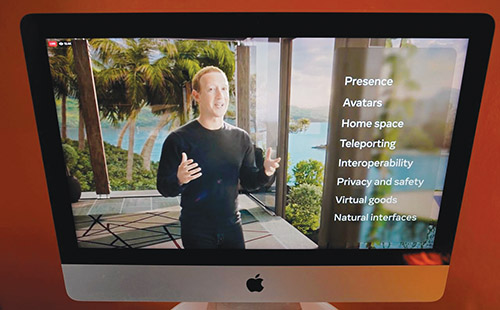
Like the hapless victims of Huxley’s dystopia, tomorrow’s society will be happily enslaved, at least in the minds of WEF planners. Workspaces will blur the lines between personalisation and professionalism, feelings of being cheated by the system will be reconceived as consuming less to help the environment, and the pains of reality will be soothed with immersion into joyous, incessant virtual reality like Facebook’s new Meta concepts.
Build Back Better
Mega-wealth in the global economy is a house of cards: it consists of digits on bank account computer screens that increase when the rich buy and sell repackaged debts to each other. When the gravy train derails every decade or so, the public bails out the perpetrators. Yet, the three main bases on which the intangible economy is constructed are tangible: precious metals, hydrocarbons, and real estate.
The new rulers of the world are the asset managers who hold the stocks, shares, bonds, and portfolios of the banks, hedge funds, insurers, pension companies, and real estate holdings. They include BlackRock, State Street, UBS, and Vanguard. Their fake wealth would not exist without the physical ownership of land. Real estate is the skin of the balloon in which they blow the hot air of money markets.
The WEF corporations understand the importance of real estate in relation to wealth inequality and uber-profits. They also understand that the younger generations are getting more and more desperate. In terms of size, housing quality is leading to mental health issues as younger people live and work in increasingly crowded and expensive cities. Not only is property ownership a dream for the majority of young westerners, renting is becoming harder as owners are reluctant to let their property to people in the insecure work of the expanding gig economy.
WEF corporations fear a brain and labour drain from cities as work-from-home youngsters flee to the countryside where dwellings are bigger and cheaper. The WEF notes that cities generate 80 per cent of global GDP, yet their revenues (e.g., from local taxes and property sales) are expected to fall as fewer people use public transport and reduced council budgets lead to disinvestment from public services. Asset companies want to keep workers locked into cities and are looking to redesign urban hellholes to make them more appealing: eco-friendly, health conscious, and tailored to the psychology of the individual.1
WEF authors say that the new agenda will take place via “an increase in public-private cooperation,” meaning the taxpayer foots the bill, as usual. New urban slums will be greenwashed and prettied via the harnessing of personalised big tech data collection for “customisation.” While the rich continue to plunder, the working classes will have to get used to “adaptive reuse”; an eco-friendly normalisation of second-hand products; or “pre-loved” as they now call them. The WEF says that, “The private sector can also play an instrumental role in helping the public sector craft legislation that is viable for business.” What could possibly go wrong?
WEF emphasises that a whole tenth of global GDP is concentrated in a single sector: real estate. Commenting on the above, Christian Ulbrich, Global Chief Executive Officer and President of the real estate services company JLL, confirms: “The world will look different in the coming years; our cities and urban centres especially so.”2
On greenwashing in response to public pressure, Ahmed Galal Ismail, Chief Executive Officer of the holding company Majid Al Futtaim Properties, says “global investors, pension funds and financial institutions are demanding that their investee companies incorporate, track and report ESG [environmental, social and governance] performance into the risk-adjusted returns that they deliver.”3
As we shall examine in more detail, artificial intelligence and the instantaneous advertising and automated services markets are exploding. In so-called smart homes, the wishes and intentions of the occupant will be sales opportunities for programmed machines, from fridges to heating systems, as the very biology of the tenant is tracked and analysed under the PR-friendly cover of public health monitoring.
Under counter-Covid biosurveillance, prospective AI in smart homes might also be tailored to provide commercial services. AI could, for instance, offer to adjust the solar-controlled room temperature if in-home cameras sense that the occupant might be too hot or cold. “Autonomous buildings autotune, adapting to dynamic indoor and outdoor conditions, create optimal working conditions.” Through bastardised communitarianism designed by WEF to prevent the poor from ever attaining wealth under the slogan of “equity,” the buildings will be designed with “cost-sharing mechanisms.”
Existing examples, not yet fully authoritarian like the above, include the hub at Causeway, Boston, Massachusetts: a mixed-use revitalisation project that includes heat-regulating glass, airflow-supported balconies, and local food production. Another is Hong Kong’s Taikoo Place: an interconnected business hub. Citing patents per head of population, the WEF notes that increased population density – i.e., big cities – is linked to increased creativity and productivity. But the people who do the hard work don’t share in the patent wealth. Taxpayers, for instance, funded the vaccines that low-paid nurses administer, yet big pharma reaps the rewards.
In other words, they want people crammed into cities to boost innovation, but they also want to polish the turd of urbanisation by making dystopian dives look like efficient, modern pockets of eco-friendly mingling.
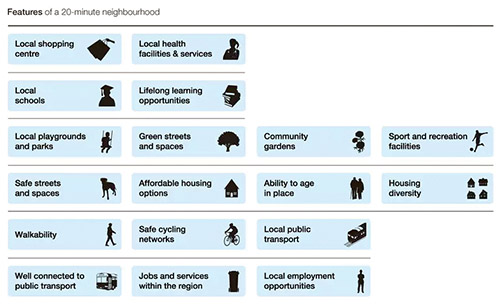
For instance, knowing that most people prefer the more relaxed atmosphere of villages to crowded and impersonal cities, the government of Victoria, Australia supports the 20 Minute City concept in which the village – grocer, butcher, baker, pharmacy, health clinic, bus stop – is integrated into the city.4
“Sustainable McDonald’s” is an oxymoron, yet Australia once again serves as a testbed for the Fourth Industrial Revolution (4IR) with “sustainable” fast-food outlets that allegedly cut CO2 emissions by a third. The solar-powered “smartly” ventilated takeaway/restaurant in Melton South is a prototype for other sites. Through Podium, Australia is also pioneering the end-to-end digitisation of real estate: from design, purchase, lease, and construction, to repurchase, letting, contract, and the new age of tailored living. This will create a new blockchain for real estate markets.
In this part of the new world order, constant labour is normalised. “From focus zones to work cafes, the space integrates ‘external’ elements such as coworking and the home office.” Happy slaves must also be healthy slaves. Design concepts include an “ergonomically supportive home office with limited distractions.” There will be a “blend of social spaces with productivity enablers,” such as colleagues who give unconscious prompts to others to work harder. This will be achieved through the design of the building itself. For instance, computers on which people work might be strategically placed near the coffee machine so that the idler sees their colleagues labouring and is prompted to return to work. Exercise machines might be placed near the snack bar so that workers tempted by candy are also guilted into doing a few minutes’ exercise before returning to their toil.
The Fourth Industrial Revolution
Covid has given WEF corporations the chance to integrate public health concepts via constant social biosurveillance in their existing 4IR agenda. Over the last few decades, the phrase “new normal” became normal as politicians, intellectuals, and the media sought to brainwash us into believing that terrorism would make total surveillance and travel restrictions a new normal, as would limitations on freedom and growth caused by anthropogenic climate change.
Since Covid, the WEF asks: “What will the ‘next normal’ look like?” (Emphasis added). WEF’s message is confused. On the one hand, its authors lessen mental health concerns by promoting community, but on the other, they note that the structure of the socioeconomic order will increase isolation. Facebook is notorious for keeping people isolated in echo chambers, but the new Meta rebranding, as we shall see, will blend isolation and community in augmented, virtual reality (VR) settings. The happy slave will be alone in their tiny, greenwashed hovel but feel emotionally connected with friends in a VR universe.
When it comes to online shopping, there will be less “face-to-face interaction.” The last-minute deliveries spurred by Covid “will persist beyond the pandemic”5 and be delivered by the kinds of people whom the WEF envisages occupying the above properties. Jab mandates for working people are part of the “next normal,” and patents on the vaccines are of primary interest to the mega-rich. But the WEF is less interested in ensuring the safety and efficacy of Covid vaccines and more concerned with bolstering “vaccine confidence.” Even though the jab appears to be effective only in reducing hospitalisations, the WEF was quick to ask how its thought leaders could work to promote “trust” in big pharma’s rushed products.6
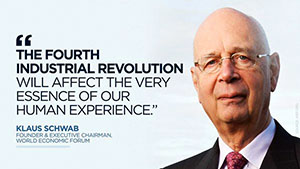
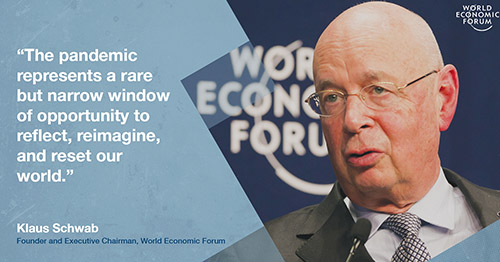
It is important to distinguish between words and actions. Sometimes, WEF founder and chairman Klaus Schwab speaks truth and horrifies those familiar with his words. Examples include references to microchipping the population and replacing humans with robots.7 At other times, Schwab seems to say the opposite, acknowledging that what is erroneously called “capitalism” – which actually means state-backed monopoly corporatism – has damaged the younger generations, stagnated the middle classes, and fuelled the climate crisis. In order to look good and paint the global elite’s WEF as some kind of progressive or “woke” (as the right-wing say) face of “capitalism,” Schwab points out that which is wrong with the “capitalist” order.
The reality is that pretty words and agreement with those injured by profit-driven corporatism is a cover. It is as if an abuser consoles their victim while continuing to abuse them. In his introduction to the WEF’s report on youth, Schwab plays this game, writing things many of us would agree with: that long-term planning is better than short-term profit and that intergenerational parity is better than growing inequality.8
As part of its pyramid structure, the WEF claims that its global reach on this issue was over two million people, the vast majority of whom were journalists, intellectuals, businesspeople, and community leaders; in other words, rungs on the ladder of hierarchy, not ordinary people. These so-called cultural leaders will shape the doctrines for those below them through entertainment, education, media, and the workplace.
The report pays lip service to getting corporations to disinvest from fossil fuels and working with Generation Z’s thought leaders to create a new agenda for sustainability. In reality, it is the same old monopoly corporatism in which ordinary people are the flotsam and jetsam in the plans of those higher than them in the social order. For example, one Lab held in Luxembourg concluded that the WEF should decide what is or is not ethical consumption: “It would be unfair and naïve to put all the burden on consumers having to educate themselves in order to avoid greenwashing.”9
If, for instance, someone decides not to buy the latest Apple gadget because ‘child mining’ in Congo extracted the device’s coltan, ‘forced labour’ in China created the product, ‘air miles’ brought the item to the West, and ‘tax avoidance’ enables the company to be a monopoly, a WEF messaging campaign might greenwash and claim that the gadget’s production was ethical and its carbon footprint neutral.
Another event in Australia concluded that the WEF should harness the wisdom of indigenous people when promoting the new agenda so that people resonate with ancient ways of living whilst continuing to work for corporate overlords.
This is a form of mind control in which the labouring masses have internal freedom and believe they participate in a spiritual society, when in fact the limits of their reality are set by superiors who pretend to consult with and gain the approval of those they are controlling. The Davos Lab’s Millennium Manifesto is jam-packed with empty verbiage such as, “We will ask big questions to advance bold solutions.”10
The Great Reset
Another aspect of the WEF agenda is what Schwab calls the Great Reset: a professed plan to promote economic and social equity while cementing the structures that guarantee worsening inequality. In addition to trapping working people in properties designed to enhance their productivity and monetise their idiosyncrasies (like the AI temperature control example above), the revolutionary potential of the exploited classes as well as their dissatisfaction will, if the WEF planners get their way, be quelled by the promotion of transhumanism and virtual reality, in which humanity is “reset” to begin anew with biological and digital enhancements.
One of the methods of control is trapping people in social media bubbles. After US President Donald Trump came to power (2017–21) and threatened the neoliberal agenda, ideological managers such as mainstream media, think tanks, and political unions, took action against what they call “fake news.” Fact-check organisations have morphed into the guardians of neoliberal elites. Often “populists” like Trump and his supporters lie, misreport, and publish fake news. Fact-checkers expose those lies, but they have a deeper agenda.
In most cases, so-called fact-checkers simply argue over interpretations of truth, which the fact-checkers then use to delegitimise real populism. The ideological basis from which they operate promotes the agenda of the World Economic Forum and others. But who fact checks the fact-checkers? Researchers have uncovered their connections to the political, corporate, and media establishment. In this revolving door system, former mainstream corporate media editors and journalists take up new roles as self-professed fact-checkers whose targets are those opposed to the neoliberal order.
In addition, social media have, for years, been on a deplatforming crusade as part of “woke washing” (while keeping oppressive and prejudicial structures in place) and under the influence of the intelligence services. In their evidence to US Congress after the 6 January Capitol insurrection, both Facebook co-founder Mark Zuckerberg and Twitter co-founder Jack Dorsey confirmed that because of “security” concerns, domestic US intelligence agencies advised (i.e., leaned on) them to deplatform accounts, including the President’s.
All of the above serves to blandify social media content and constrain users to the boundaries of what is acceptable within neoliberal culture. Anything too progressive (e.g., the World Socialist Web Site) or regressive (e.g., Breitbart News) is censored, pushing the entire user base of hundreds of millions of people into a giant corporate-approved echo chamber (e.g., CNN, New York Times).
This process is called “digital literacy” by the WEF and others. Without “digital literacy,” people might fall for dangerous “fake news” (i.e., news not approved by WEF corporations). But people might also create and share real news and real information that does not fall within the bounds of accepted neoliberal ideology, such as questioning the efficacy of big pharma-produced vaccines or pointing out the serious problems with the corporate-political elite. In making the world “digitally literate,” the WEF employs doublethink: “Steps must be taken to prevent abuse and harm while maintaining the freedom to openly exchange ideas.”11
Slaving for the ultra-rich in personally-tailored smart cities, the younger generations censored into the neoliberal sheep pen by social media will, according to the WEF model, augment their capacities with technology. The transhumanist agenda is specifically harnessed for the older, infirm generations who have gone from being useless eaters – from the WEF perspective – to potential data points for augmentative technologies. As part of the WEF propaganda campaign, the organisation is preparing to “Articulate the potential benefits of artificial intelligence,” particularly for the older generations.12
For “older” people, which we assume means the over-60s, WEF suggests placing representatives in the design process, the reasoning being that over-60s tend to have different aesthetic tastes, practical preferences, and physical and cognitive requirements to young people. The young are born into the new technological changes, and those changes become part of their environment. In contrast, the over-60s must adapt. Pursuing profit, companies are using the WEF as a vehicle to help turn the over-60s into transhumanist augmentation technology consumers: home-help robots, implants for better eyesight, time-released painkillers, etc. The WEF does not seek solutions for ending the collection and selling of personal data but rather for more transparency. This way companies can cheat consumers whilst being honest that they are cheating them. The aim is to make consumers feel less angry because they appreciate the honesty.
WEF suggests that companies “Disclose the data being collected.” They hope that older people will thus be more willing to have their information sold. The WEF also wants to “Obtain meaningful consent.” The clue is in the word “meaningful,” suggesting that up until now, consent has not been meaningful. One of the more insidious agendas is to “Design for appropriate trust.” Just as they seek to make the younger generations “digitally literate,” i.e., keep them in a mental prison, WEF corporations aim to protect the elderly from “deception,”13 but not the deceptions on which their system is built.
The WEF is aware that the general public might, if left on their own, form groups, communities, parties, and movements that spread an anti-“capitalist” message and develop new social models. If such a long-term grassroots revolution succeeded, it would not only hurt the profits of the owner-classes but threaten the system they spent so long developing. Repackaging profit-driven agendas as some form of third position between capitalism and socialism is achieved, in part, by rhetorically emphasising “corporate responsibility.”14
The WEF also seeks to capture potential revolutionaries by appealing to “social justice.” The WEF intellectuals are aware that young people tend to be driven more than old people by outrage. The right-wing dismisses these young, conscious activists as “social justice warriors.” Instead of encouraging people to change the system in their own image, WEF intellectuals want to make people feel like they have – without actually having – input into their conditions. “[R]ecognising, co-designing, partnering and learning with impacted stakeholders… must be at the centre of any corporate action on equity and social justice in our unequal world.”15
Another factor profitable to the corporate class is social impact bonds. Historically, the underclasses – those below the working classes – were a financial negative. They claimed benefits, needed free healthcare, public housing, etc. The working classes laboured, the middle classes paid the most relative taxes, and the rich lived off the labour of the poor, profits generated by the consuming middle classes, and hording through tax avoidance.
But over the last decades, banks figured out ways of profiting from the underclasses: social impact bonds. Under such systems, government cuts back on social welfare and relies instead on charities to keep offenders out of prison and reach homelessness reduction targets, etc. The banks that fund the charities are then reimbursed by government, and the loans of the banks are serviced by taxpayers. This social impact bond system creates an incentive to have a permanent underclass and champion the alleged virtues of “charity” instead of systemic change that brings genuine inclusivity and democratic empowerment.16 Gerbrand Haverkamp, Executive Director of the World Benchmarking Alliance, is quoted as saying: “[W]e need businesses that can profitably solve societal problems, without profiting from societal harms.”17 This model incentivises the creation of a permanent underclass.
Engineered ‘Life’ In Fake Worlds
There is a sinister, occultic element to the WEF’s agenda. Certain members who currently practice what they believe to be online “meme magic(k)” are also involved in the development of Facebook’s VR world: the Metaverse.
A near-billionaire developer and Trump supporter, Palmer Luckey, used social media to boost Trump’s profile and deflate his rival Hillary Clinton in the run-up to the 2016 US presidential election. Luckey made his fortune selling the Oculus VR headset to Zuckerberg. Luckey’s benefactor, a lobby called Nimble America, believed that “meme magic is real.” The Millennial generation started to use images with text circulated online to boost their agendas and attack their enemies (memes). One famous meme was Pepe the Frog, an innocent cartoon hijacked by racists and right-wingers (usually both) to signal their political allegiances. The cultists behind the spread of such memes believed that they could invoke spiritual power (“meme magic(k)” to vanquish enemies. Pepe, to give one of many examples, is drawn with light reflecting in both eyes in the shape of a Freemasonic dot-triangle.
Regardless of his involvement or lack of involvement in such practices, the executive director of Oculus, Jason Rubin, sent his 50-page report on the Metaverse to Zuckerberg. Just as US military planners devised a “shock and awe” terror campaign to inflict on the Iraqi people in 2003, Rubin said that “shock and awe” tactics would condition the user to accept their new digital life in the Metaverse. CNBC has seen leaked policy documents: “It imagined users floating through a digital universe of virtual ads, filled with virtual goods that people buy.”18
Chillingly (no pun intended), FB Oculus’s Michael Abrash says: “It all started with Snow Crash,” the futuristic ‘90s novel written by Neal Stephenson. The Guardian, which picked up the Abrash quote, conveniently omits a crucial detail about the novel: that the fictional online world on which the new scheme is based contains a mind virus that can infect users as they merely look at the screen. Likening it to Snow Crash, though providing no evidence, certain individuals claim that the Pepe meme that evolved into something else has, for many years, contained a hidden mind virus.
Whether the mind virus is real or not is beside the point. Certain online occultists, including Luckey, are using the fear of mind control, coupled with what Rubin calls “shock and awe,” to get users to submit to the dialectic: a “progressive” Zuckerberg world order of Joe “Build Back Better” Biden in a virtual reality, or a more overtly fascistic world order of “meme magic(k)” and mind warfare using Trump as a frontman.
Part of the Trump meme war and the fake news hysteria surrounding the President had the effect of making ‘truth’ a vague and flexible concept. As the concept of truth becomes fuzzy, that which is real is set to become fuzzier. WEF says of Meta: “This could manifest itself in several ways, but many experts believe that ‘extended reality’ (XR) – the combination of augmented, virtual and mixed reality – will play an important role.”19 The WEF hopes that once we have been bombarded into the new system, we will all be Huxleyan happy slaves in their Brave New World, playing with intangible VR toys and mingling with avatars of our loved ones.
About the Author
Dr T.J. Coles is an associate researcher at the Organisation for Propaganda Studies, a columnist with Axis of Logic, a contributor to numerous publications (including CounterPunch and Truthout) and the author of several books including Manufacturing Terrorism (Clairview Books), Human Wrongs (iff Books) and Privatized Planet (New Internationalist).
12. WEF,” Insight Report, August 2021, www3.weforum.org/docs/WEF_ Designing_Artificial_Intelligence_Technologies_for_Older_Adults_2021.pdf
13. Ibid.
14. WEF, Business for Social Responsibility and Laudes Foundation, Insight Report, September 2021, www3.weforum.org/docs/WEF_Lighthouse_ Action_Social_Justice_Stakeholder_Inclusion_2021.pdf




 After the Crash