Syria: New U.S. Air Support On Request Scheme For Al-Qaeda

Source: Moon of Alabama

On this day one hundred years ago the U.S. joined World War I. Last night the U.S. attacked a Syrian government airport in an openly hostile and intentional manner. The strike established a mechanism by which al-Qaeda can “request” U.S. airstrikes on Syrian government targets. It severely damaged the main support base for Syria’s fight against the Islamic State in eastern Syria. The event will possibly lead to a much larger war.

On April 4 Syrian airplanes hit an al-Qaeda headquarter in Khan Sheikoun, Idleb governate. Idleb governate is under al-Qaeda control. After the air strike some chemical agent was released. The symptoms shown in videos from local aid stations point to a nerve-agent. The release probably killed between 50 and 90 people. It is unknown how the release happened.

It is unlikely that the Syrian government did this:

  • In 2013 the Syrian government had given up all its chemical weapons. UN inspectors verified this.
  • The target was militarily and strategically insignificant.
  • There was no immediate pressure on the Syrian military.
  • The international political atmosphere had recently turned positive for Syria.

Even if Syria had stashed away some last-resort weapon this would have been the totally wrong moment and totally wrong target for using it. Over the last six year of war the Syrian government army had followed a political and militarily logical path. It acted consistently. It did not act irrational. It is highly unlikely that it would have now take such an illogical step.

The chemical used, either Sarin or Soman, was not in a clean form. Multiple witnesses reported of a “rotten smell” and greenish color. While the color would point to a mixture with Chlorine the intense smell of Chlorine is easily identifiable, covers up most other odors and would have been recognized by witnesses. Both Sarin and Soman are in pure form colorless, tasteless and odorless. The Syrian government once produced nerve agents on a professional, large scale base. Amateurishly produced nerve-gases are not pure and can smell (example: Tokyo subway incident 1995). It is unlikely that the Syrian government experts would produce a “rotten smelling”, dirty, low quality stuff in an unprofessional and dangerous process.

The nerve agents in Khan Sheikoun, should they be confirmed, came either from stashed ammunition at the place attacked by the Syrian government or it was willfully released by the local ruling terrorist groups -al-Qaeda and Ahrar al-Sham- after the strike to implicate the Syrian government. The relatively low casualty numbers of mostly civilians point to the second variant.

Several reports over the years confirm that Al-Qaeda in Syria has the precursors and capabilities to produce and use Sarin as well as other chemical agents. This would not be their first use of such weapons. Al-Qaeda was under imminent pressure. It was losing the war. It is therefor highly likely that this was an intentional release by al-Qaeda to create public pressure on the Syrian government.

For a release incident of powerful chemical weapons the casualty numbers were low, lower than the casualty numbers of recent conventional U.S. air strikes in Syria and Iraq. Despite that fact a huge international media attack wave, seemingly prepared in advance, against the Syrian government was released. No evidence was presented that the incident was caused by the Syrian government. The only pictures and witness reports from the ground came from or through elements, like the White Helmets, who are known to by embedded with al-Qaeda and ISIS (video) and are acting as their propaganda arm.

Last night U.S. president Trump “responded” to the incident by ordering the launch of 59 cruise missiles on the Syrian military airport Al Syairat (vid). The cruise missiles were launched from sea in a volley designed to overwhelm air defenses. According to the Syrian and Russian military only 23 cruise missiles reached the airport. The others were shut down or failed. Six Syrian soldiers were Killed, nine civilians in a nearby village were killed or wounded and nine Syrian jets were destroyed. The airport infrastructure was severely damaged. The Syrian and Russian governments had been warned before the strikes hit and evacuated most men and critical equipment. (Was the warning part of a deal?) The air attack coincided with an Islamic State ground attack east of the airport.

The Pentagon alleges, without any evidence, that Sarin had been stored at the airport and a chemical attack launched from it. Both seems highly unlikely. The airport was accessible for UN inspectors. It is not as well covered by air defenses as other Syrian airports, for example in Latakia governate. Its ground approaches are not completely secured. Some medium range air defense system near al Syairat was recently used against Israeli planes attacking Syrian forces fighting ISIS near Palmyra.

Al Syairat lies in Homs governate, 150 km south of Khan Sheikoun in Idleb governate. It is the main support and supply airport for the besieged Syrian government enclave in Deir Ezzor which will now again be in even more serious trouble. It was also used to launch attacks on the Islamic State which fights the Syrian government troops in east Homs.

Al-Qaeda and its sidekick Ahra al-Sham welcomed the U.S. strikes and Abu Ivanka al Amriki on their side. The theocratic dictatorship of Saudi Arabia offered its full support as did its British creators.

The U.S. airstrike delivers a message to al-Qaeda. Whenever under military pressure al-Qaeda can now stage or fake a “chemical attack” and the U.S. will act to destroy its enemy, the Syrian government. Acts as the one last night are then direct military support by the U.S. on al-Qaeda’s request.

A similar scheme had earlier been established on the Golan heights. Al-Qaeda, fighting against Syrian government positions, would launch a mortar round that would land within Israeli controlled territory. Israel would then launch artillery strikes against Syrian government positions because “the Syrian government is responsible for what happens in the area”. Al-Qaeda then used the battle field advantage created by the Israeli strike. The scheme and the Israeli military “reasoning” was published several times in Israeli media:

A number of mortars have landed in Israeli territory as a result of spillover fighting over the last several years, raising fears among residents near the border.The IDF often responds to fire that crosses into Israel by striking Syrian army posts.

Israel maintains a policy of holding Damascus responsible for all fire from Syria into Israel regardless of the source of the fire.

The U.S. administration has now established a similar mechanism, on a larger scale, of direct military U.S. support for al-Qaeda and the Islamic State in Syria.

The Trump presidency had been held hostage by unfounded allegation of “Russian interference” in the U.S. elections in support of the Trump candidacy. The air strikes on Syria might have been the ransom that was demanded for the release of the hostage. His opponents are now gushing about him. The allegation of any Trump-Russia connections may now die down.

Yesterday major Democratic leaders in Congress supported strikes on Syria. Despite that they are also likely to attack Trump over them. The strikes are a “strong man” gamble. As Trump said when Obama ordered strikes such are a desperate move. Most parts of the State Department and the NSC were not consulted about them. The chances that these will “blow back” politically as well as strategically are high.

Trump is the third U.S. president in a row who promised less belligerence during his campaign only to deliver more after the election. The “democratic” veil of the U.S. oligarchic rule thus rips further apart.

Open U.S.-Russian cooperation in Syria will now cease. U.S. planes in Syrian airspace are from now on constantly under imminent danger. There will also be some larger revenge against the U.S. for last night’s strikes. Likely not in Syria but in Iraq, Afghanistan or at sea. A “message” will be send. The U.S. reaction to that “message” will be a decision over a much larger war.

Related Articles

US Missiles Strike Syrian Forces Fighting Al Qaeda

Syria’s alleged gas attack: An imperialist provocation

Putin believes US attack on Syria violates international law – spokesman

Top 10 Lies, Damn Lies, and Lies About Syria

Related Video:

The Duran’s Alex Christoforou: Treating Russia As The ‘Bogeyman’ Has Failed

russia_wants_war_look_how_closely_they_put_country_to_our_military_bases

By

Source: MintPress News

ATHENS — So-called “fake news” has been in the news in recent months, and this debate over what is and what isn’t legitimate news reflects the political divisiveness that is increasingly prevalent in the United States and in Europe.

Like MintPress News, another website which was accused of purveying “fake news” is The Duran, a recently-launched website which offers perspectives and analysis on geopolitical issues which are frequently not found in mainstream U.S. and European media.

As the news cycle moved at lightning speed in recent months, MintPress had the opportunity to conduct a series of interviews with Alex Christoforou, one of the co-founders and writers for The Duran. In this wide-ranging interview, Christoforou discusses Trump’s election, foreign policy rhetoric and maneuvers thus far, the Russian reaction to the NATO buildup along its border, the anti-Russian sentiment in the U.S. political arena and mass media, developments in Syria and the Ukraine, the recent Cyprus reunification talks which were held in Geneva, the role of Turkey in the region and Turkish relations with the U.S. and Russia, the Trump administration’s support for “Brexit” and the possibility of a “Grexit,” the accusations of “fake news,” and more. These interviews first aired on Dialogos Radio in January and February.

MintPress News (MPN): President Trump has spoken out in favor of improved U.S. relations with Russia and with Vladimir Putin. Do you believe that Trump will make good on this pledge, in light of the challenges he is facing?

Alex Christoforou (AC): That’s an interesting question, and I think that’s something that everyone’s debating right now, how sincere he is in creating an atmosphere of detente between the U.S. and Russia. The first thing is that Obama was absolutely terrible for U.S.-Russia relations. He pretty much threw the whole relationship back into the Cold War era. Trump has got a lot of ground to cover, and there’s a lot of forces at work right now which are adamant about not having Trump create an atmosphere of detente with Russia. So Trump is really in a tough position here, especially given the initiatives that the Obama administration took up, which was really an effort by the outgoing administration to box Trump in.

They’ve created a hysteria of Russian hacking which has no evidence whatsoever, no evidence has been presented to the public at all. You have various media outlets really publishing a lot of fake news about Trump’s relationship with Putin and Russia. The fact is that Trump has never even met Vladimir Putin. So you have this interesting dynamic; if Trump does approach Russia with a much friendlier foreign policy and a much more workable foreign policy, right away Trump is going to be labeled by the mainstream media, the establishment media as a Putin stooge, as a Kremlin stooge, as a Russian “useful idiot,” and they’re going to point fingers and say, “Look, we told you so, Trump is the Manchurian candidate of the Kremlin.” It’s all absolutely ridiculous, to be honest.

My opinion is, sure the Kremlin was relieved to have Trump win the presidency, but not for the reasons that people think. Putin has made no secret of the fact that he wants a good partner in the United States and that the last eight years, especially the second term of Obama, have been very tense between Russia and the U.S. So Putin is probably looking forward to having a world leader that he can speak with on equal terms. Obama definitely was not that world leader. Without a doubt, Obama and Putin did not get along.

I think from that standpoint, Russia understands that in Trump they may have a leader that they can speak with. On the other hand, there’s this misconception that Russia was happy to see Hillary Clinton lose. This is false. Yes, Hillary Clinton was a dangerous prospect for a U.S. president. She was very bullish, very much a war hawk on Russia, especially with regard to Syria and the Ukraine, which are two geopolitical regions that are extremely important to Russia. But saying that, Putin definitely got the best of Obama on just about every single foreign policy initiative that the two countries faced in the last eight years. So the Kremlin pretty much knew that it if was going to be four years of Hillary Clinton, it would be a very easy go as to dealing with the U.S. on various challenges that the two countries faced.

On the one hand, I think they’re looking forward to Trump, and speaking with a world leader that they could work with. On the other hand, I think there’s a big part of Russia and a big part of the Kremlin that says, “We really ran over Obama pretty easily,” as far as geopolitics is concerned, and Hillary Clinton likely would have been a lot easier of an opponent to deal with. Will Trump stand by his word? I think he will. He’s a negotiator and I think he’s going to want to do deals.


MPN: The Trump administration’s foreign policy could be characterized as contradictory thus far, with this opening toward warmer relations with Russia on the one hand and an increased rhetoric against Iran on the other hand. Where do you believe these foreign policy contradictions can lead?

AC: I don’t think anybody knows yet where it could lead. Certainly we are seeing a change. On the one hand, we see that Trump would like better relations with Russia, which is what he was saying during his campaign as well. However, the mass media and most politicians from both sides of the aisle are quite hostile toward Russia. Trump has continued to maintain, however, that he desires good relations with Putin’s government. On the other hand, we see that Iran has taken over the “bogeyman” role which Russia held during the Obama administration, and it is evident that the Trump administration wants to do something about Iran. What this something will be, we don’t know just yet. The Trump administration is acting in a hostile manner toward Iran, including President Trump himself and [Secretary of Defense James] Mattis. Until now, we haven’t seen any concrete actions, other than a reinstatement of certain sanctions. But I do fear what action the Trump administration might decide to take against Iran. We will just have to see.

I do think that Trump, so far, is testing the waters, and it is clear that he does want better relations with Russia, while with Iran he is not following the same path as Obama. What these changes will be though and what policies will be adopted is not yet certain. It is still early, though, and much can change.

I think you definitely have a Cabinet that’s got mixed feelings about Russia, a Cabinet that’s very deep in its military experience. That could be seen as a good thing or a bad thing. One thing that military people seem to understand is the price of war and the risks of war, and that’s a good thing. They’re just not flippant about going into war because they understand what’s at stake and the human tragedy of war. On the other hand, military Cabinet picks tend to be a lot more hawkish and a lot more eager to project America’s military superiority.

I don’t agree with all of Trump’s Cabinet selections, but I think the most significant selection of all is that of Secretary of State Rex Tillerson. The Obama administration and Hillary Clinton and John Kerry left behind so much chaos, so many problems that Tillerson really has his work cut out for him. It’s not just Russia, but Syria, the Ukraine, Libya, ISIS, China, and Iran. For the first time, though, a successful businessperson will be in charge of the State Department, and it will be interesting to see which policies he will enforce.

I think at the end of the day, Trump will await people’s opinions, but I think the buck will stop with him. At least that’s the impression that I get as to what type of leader he will be. I think all the decisions will begin and end with his final word. It’s going to be a wait-and-see, but all signs show that he’s going to take a very CEO type of approach to running the country.


MPN: Do you believe that the fierce backlash that the Trump administration has faced is precisely a result of this desire for developing better relations with Russia?

AC: Yes, of course. That’s part of it. This panic over Russia began with Obama, continued with Hillary Clinton, and it seems that all of Washington, all of the advisers and certainly all of the media, are trying to undermine any efforts toward achieving detente between the two countries. My opinion is that this is an effort to smear Trump and to claim that he is unfit for the presidency.

For the time being, I don’t think we will see a significant shift in U.S.-Russia relations. I think we’ll be in a better position to judge things after six months or a year of the new administration. For now, the Russia hysteria has been thrust to the forefront to cast a negative cloud over Trump. However, the average American does not care about what’s happening with Russia. They are concerned with jobs, jobs, jobs. That is how they will evaluate the Trump administration and the new president. I think that this tactic of blaming Russia for everything and casting Putin as the bogeyman has failed, as proven by the election result itself, and I think it will continue to fail. The American people don’t care about what’s happening with Russia. They care about what’s happening at home.


MPN: Where do you believe all of the anti-Russian fearmongering can ultimately lead?

AC: It can lead to a hot war. It definitely has led to a cold war. The last thing we want is a hot war. You have two nuclear powers who are inching closer to each other in conflict, and I think that needs to be scaled back, and scaled back right away. I think we’ve already seen various proxy wars between the U.S. and Russia take place. We saw it in the Ukraine, we saw it in Syria. We already see the two sides engaging with each other, though they’re not engaging directly with each other. NATO troops moving up to Russia’s border is very provocative. We should never forget that the last time forces amassed on Russia’s border was during World War II, and during that war we cannot forget that Russia lost 28 million people. They paid a very, very heavy price for defeating Nazi Germany on the Eastern Front. So if there’s one thing that there’s any red lines that Russia is very firm about, it’s about having troops amassed on their border, and the other red line was about having any countries that are bordering them, for example the Ukraine, be integrated into NATO. These are red lines that Russia has been very firm in saying may not be crossed.

Saying that, Trump has really got to scale back the aggressive posturing of Obama. The media has helped to portray Russia as the aggressor, but when you take a step back and see who has provoked all the conflict in the various hot spots of the world, Russia has been very reactionary. The Ukraine was a coup d’etat. The U.S. and the European Union overthrew a democratically-elected government. That’s a fact. It’s indisputable, and that coup d’etat was initiated by [Assistant Secretary of State] Victoria Nuland and Ambassador [Geoffrey] Pyatt in Athens. This coup d’etat was instigated by a neoconservative faction in Washington. They put in place a far-right government, and some factions of that far-right party are openly fascist and neo-Nazi, and Russia reacted. Syria is the same thing. In Syria, you see a situation where the United States, with the help of Turkey, Saudi Arabia, and Qatar, went to overthrow a secular sovereign leader, once again, internationally recognized by the United Nations. They went to overthrow that leader, and they created chaos. Russia, once again, reacted to that, to the facts on the ground, and you have what’s been a complete disaster in Syria.

You have a very deep state and neocon faction in the U.S. that’s combined forces with this Hillary Clinton-neoliberal faction to create a lot of tension between U.S.-Russia relations. You have the mainstream media, which was in the tank with the neoliberal Hillary cabal from the get-go, fueling the fires of Russian hysteria, but the situation is anything but Russia being the aggressor. Russia has actually reacted to the facts being created by these neoconservatives and neoliberals that have really just run roughshod over the world disastrously, in Syria, in Libya, in Somalia, in Iraq, in Afghanistan, in the Ukraine. It’s been one disaster after another, and Putin has been very correct in really castigating the United States and saying, during his U.N. speech, “Do you realize what you’ve done?” That’s a profound statement, in telling the world this cannot continue, this regime change policy, this constant war-like attitude toward the Middle East has to stop, otherwise we’re going to turn a cold war and various proxy wars into hot war. The mainstream media is not helping, that’s for sure.


MPN: Recently, NATO forces have been mobilized in Germany and in Eastern Europe, the Russian ambassador to Turkey was murdered and the Russian ambassador to Greece lost his life under unclear circumstances. We had the Russian diplomats that were expelled from Washington in the final days of the Obama administration, and of course the accusations of Russian hacking and meddling in the U.S. elections. How has Vladimir Putin responded to all of this, in your view?

AC: Brilliantly, I think. Vladimir Putin’s response to all of this has really been wait-and-see. He was well within his diplomatic range and his diplomatic standing to retaliate against Obama’s kicking out of the 35 diplomats and the closing down of the two Russian locations in the U.S., but he didn’t. He took a very smart attitude of “Obama is gone in two or three weeks, let’s wait and see what Trump says and what Trump does when he comes into office.”

It was, in my opinion, such childish behavior from Obama toward Trump and toward the transition. Obama should not have been doing these things. It was very childish of him, and I think he lost a lot of respect from a lot of people on the world stage, as just being a very spiteful and childish world leader. He should not have taken these actions against Russia with only two, three weeks left in office. He should not have tried to sabotage Trump’s transition, and he should have really worked with the Trump administration to create a smooth transition.

The diplomat that died in Greece was actually a very underreported news story. Very, very few mainstream media outlets even picked up on that story, and it was, from what I’m seeing in the Greek media that’s reporting on it, under very unclear, very suspicious circumstances. No one really knows much about it. So that was an interesting story that was not picked up.


MPN: On the part of Russia, we have not seen much of a response to new Ukrainian attacks against the Donbass. What is the Ukraine trying to achieve, and why has Russia seemingly not responded?

AC: It’s very simple. The Ukraine is one of the problems that was created by Obama, Hillary Clinton, John Kerry, Victoria Nuland, and the EU. Let’s not forget that they overthrew the Ukrainian government. This was an illegal and provocative action, and in any event, the Ukraine was scheduled to hold elections the following year. There was no need for the U.S. and the EU to undertake this action against the Ukraine, the Ukrainian people, and against Russia, but they did so.

Now, I believe that the Ukraine is trying to start a new conflict and to once again draw attention to itself, because Kiev fears that Trump does not care much about the Ukrainian issue. I think Trump has shown this thus far. Trump recently spoke with Ukrainian President [Petro] Poroshenko, and it was the first time that the U.S. president did not use the phrase “Russian aggression toward the Ukraine,” which Obama would repeatedly state. Trump said that a solution has to be found for the Ukraine, that the two sides need to sit at the same table. This rhetoric was much different from that which was employed by Obama all these years, and I think the Ukrainian authorities are in shock. I detect some panic on their part, but instead of trying to find a solution to this problem, they are going in the opposite direction and trying to provoke a new conflict, hoping that the U.S. will intervene and side with them and that this will undermine the positive relations that Trump is seeking to develop with Putin. This is an incorrect strategy and it will not succeed. Europe cannot handle a war in the Ukraine. I think German Chancellor Angela Merkel understands this and Putin clearly stated this to her, that the Ukrainian government must halt these actions and sit at the negotiating table again and enforce the Minsk Protocol.

For the time being, I think Russia is holding steady with regard to the Ukraine and won’t make a move, because Russia knows, as does the EU, Merkel, and Trump, that the Ukraine is in a difficult situation. It’s a failed state. The efforts of the Obama administration and the EU in the Ukraine have failed, the Ukraine can’t handle any more. It is a corrupt state, its people are suffering, their current government is facing tremendous difficulties, and I think it’s a matter of time before we see major changes in the Ukraine.


MPN: What is the situation on the ground in Syria presently, how is Russia currently involved, and what might we expect to see from the Trump administration with regard to its policy toward Syria?

AC: In Syria you had a situation where Russia came in and they pounded the hell out of ISIS and al-Qaida. Al-Qaida, a.k.a. al-Nusra [Jabhat al-Nusra, the former name of the group now known as Jabhat Fateh al-Sham], a.k.a. the “moderate rebels” that the mainstream media seems to love, were lumped in along with ISIS as terrorist groups, which they are. Russia did not separate the two, and they took over military operations within that country along with Iran and the Syrian army. They defeated these terrorist organizations in Aleppo, and they liberated and gained control of the city. The people in Aleppo were extremely happy, they were celebrating. These are things that were not reported in the establishment media. All the reports were saying that [Syrian President Bashar] Assad was going to Aleppo and burning people. These reports have been proven to be 100 percent false. Aleppo is now under the sovereign, internationally-recognized control of the Syrian government, and now that they have control of the major cities in Syria, you’re going to see a campaign to push ISIS, al-Qaida, and al-Nusra out of the country.

Russia has now worked with Turkey to hammer out a ceasefire plan and a plan toward peace. Interestingly enough, the United States was left out of this deal. This was a huge blotch on Obama’s foreign policy record. Here, you have for the first time other powers in the region — Russia, Turkey, Iran — actually hammering out a peace deal without the United States. For Obama and John Kerry, this was probably the lowest point in their foreign policy record over the past eight years. Not only did they destroy a secular, internationally-recognized country, a secular nation that gave women rights, that gave freedom of religion to the all the people, that had health care, that had university education for all, they destroyed that country by trying to move it into the hands of al-Qaida/al-Nusra. But they also were pushed out of the peace plan for that country.

After Aleppo was liberated, I don’t see many people talking about Syria any longer. This was followed by Russia, Iran, and Syria working together to draft a new constitution, without American input, and to try to achieve a solution for Syria, again without U.S. involvement. This is significant. Now, with Trump, we just have to wait and see what his stance toward Syria will be. One thing is certain, though: Trump does not view Assad as the problem. He views ISIS as the problem, and I believe he will be able to collaborate with Russia to fight ISIS wherever it exists. For the time being, I wouldn’t say that the situation in Syria has calmed, it is still an ugly situation there, but there are efforts being made to find a solution. I think this solution will come from the defeat of ISIS and from Assad staying in power. This is clear. Assad is going nowhere.

I just want to make one more note, as far as the way that the press and the media has been covering this war. It was not a civil war. What happened in Syria was an invasion. It was an invasion of foreign jihadist, Wahhabi, ISIS, al-Qaida, al-Nusra forces, and they destabilized the nation and destroyed what was one of the few secular, stable nations in the region. This is a huge point. It’s very, very good that Syria did not go the way of Libya. Hopefully, the Syrian people can get rid of ISIS, can get rid of al-Qaida’s foreign invaders, and can get back to being the secular and peaceful nation that they were. It’s been a disastrous six years for the Syrian people.


MPN: In the closing days of the Obama administration, outgoing Assistant Secretary of State Victoria Nuland was dispatched to broker a solution regarding the divided island of Cyprus. Who is Victoria Nuland and what was her role in the Ukraine?

AC: She overthrew the government, plain and simple. I mean, we have it on tape. Do we not have her calling the ambassador to the Ukraine at that time, Geoffrey Pyatt, pretty much telling him who’s going to be in government? They were going over all the government appointees, they said the famous words about the EU, and the people that they talked about being placed into government were the people, in fact, that were placed into government. Victoria Nuland overthrew a democratically-elected government.

The previous government, as corrupt as it may have been or as unpopular as it may have been by 50 percent of the population that saw it in unfavorable terms, was still a democratically-elected government. Ukraine was going to have elections in a years’ time anyway, so what happened in the Ukraine was extremely regretful. It was the most blatant and obvious coup d’etat that has happened in probably the last 100 years.

[Author’s Note: The husband of Victoria Nuland, Robert Kagan, is a senior fellow with the Project on International Order and Strategy in the Foreign Policy program at the Brookings Institution, and the self-described “liberal interventionist” is widely regarded as a leading neoconservative.]


MPN: Victoria Nuland was one of the major players in these talks, which were held in Geneva in January, regarding the potential reunification in Cyprus. What was the outcome of these talks?

AC: If there’s one person that has taken the Cyprus reunification talks very seriously from the U.S. side, it has been Joe Biden. He’s shown a very big interest in solving the Cyprus problem. Joe Biden, as a politician, has always historically been very warm with the Greek-American population, and he seems to take Greek foreign policy issues very much to heart. Victoria Nuland has shown an interest in solving the Cyprus problem, though I would caution that Victoria Nuland does not seek a solution because she wants to create peace within the island of Cyprus. She sees things more from a geopolitical standpoint, of making sure that Cyprus is aligned with Western Europe, with NATO, and used as very much a geopolitical tool against Russian influence within the region.

The players involved in solving the Cyprus issue are, of course, the Greek Cypriots and the Turkish Cypriots, and along with them are the three guarantor states, which are the United Kingdom, Greece, and Turkey. For this solution to crystallize, it’s my belief that the framework of having a “guarantor nation,” in other words, to guarantee the peace on the island between the two communities, those guarantor nations have to be removed. That means that the 40,000 Turkish soldiers stationed on the island obviously have to leave, the Greek soldiers that are stationed on the island have to leave, and Cyprus has to find its path toward being a unified nation.

The negotiations right now are taking place between the two communities, the U.N. is very actively involved, and we’re very close to hammering out a deal between the two communities. The guarantor nations — Turkey, Greece, and the United Kingdom — will most likely be called in to oversee and to weigh in on whatever deal is finalized between the two sides. I believe that the concept of having “guarantor states” of a sovereign nation is going to be a thing of the past, and I think Cyprus will be a sovereign nation, not a divided island anymore. Victoria Nuland is out, so whatever influence she had in the negotiation process is all but over. Rex Tillerson, as the new Secretary of State, will take over from here on out, and we’ll see how engaged [the U.S. is] or how disengaged it is. We’re very close, and we’ll see how things play out. There’s a few issues at hand that they have to hammer out, very sticky issues, very tough issues, but we’re very, very close to seeing a unified Cyprus.

Saying that, what you’re looking at is a bi-zonal, bi-communal federal state, so you’ll have one country, but you’ll have a two-state solution. Each state will have its laws and certain powers to govern their side of the island, but you will also have one executive branch, which will also govern the island as a whole; a whole member of the international community, of the EU, of the U.N. You’re really looking at a “United States of Cyprus,” and that’s the solution that will most likely be brought to the table.

Regarding the talks, I think that Turkey got what it was looking for — namely, for nothing significant to happen with the Cyprus issue until the Turkish constitutional reforms have been passed. Until then, I believe talks will proceed slowly, step by step, but we won’t see any significant developments until Turkey is ready. Until then, we will only see minor developments. I foresee we will see more developments toward the summer, beginning in May and June and thereafter. Everything, however, will depend on Turkey, and I think that Turkey is not yet ready to express a clear position on the Cyprus issue.


MPN: Where do things stand at the present time with regard to Russian-Turkish relations? Is Turkish president Recep Tayyip Erdogan once again turning away from the U.S./NATO/EU sphere and moving toward Russia?

AC: That’s a good question. Erdogan, he’s something else. I think Erdogan is a survivor, he’s extremely controversial, he’s a very tough person to deal with both for the Russians and for the Americans. There’s no doubt that Erdogan has been hot and cold with Russia. They’ve had huge moments of disparity and very tense moments in recent months, but they’ve also found ways to bridge those gaps and to move past those tense moments. The same holds true with the United States. Erdogan has been playing the U.S. hot and cold as well for the past six months to a year.

I would say, two or three years ago, Erdogan had a vision of a “grand Ottoman resurgence,” a grand Ottoman empire in which Turkey would have influence over Syria, over Iraq, etc. I think now Erdogan has been forced to scale that vision down, and I would say that now Erdogan’s number one concern is the Kurds in the north of Syria. His number one foreign policy initiative is that he cannot allow a Kurdish state to form in the north of Syria and the north of Iraq. That would be disastrous for Turkey and would probably lead to the breakup of Turkey, given that Turkey has, I believe, an estimated 15 million Kurds who reside in the borders of the Turkish state. Having any type of autonomous Kurdish region in the north of Syria and the north of Iraq would be a red line that Erdogan would caution both the United States and Russia cannot be crossed.

Erdogan has scaled back his grand Ottoman vision and is now looking more to consolidating his power in Turkey and making sure that the Turkish state remains intact, without any Kurdish interference. Russia, with regard to Turkey, it’s been hot and cold in recent months, but they keep the channels of communication open. The relations are not the same as they were five to ten years ago, but they are steady, and Russia and Turkey are collaborating on Syria and have found some common ground on this issue. The same holds true for the United States. Erdogan is not an easy world leader to deal with. That’s just a fact.

I believe that Turkey is waiting for the constitutional reforms to pass, so that Erdogan attains absolute power. Until then I don’t believe we’ll see significant developments coming out of Turkey, and I think everyone is waiting to see what policy Trump and Rex Tillerson will adopt toward Turkey. I think we’ll see Turkey take an active role again in about six months. It will not make any moves until Erdogan attains absolute power. We will likely see some adverse developments, perhaps even some positive ones, but we will just have to wait and see.


MPN: Recently, we have seen an increase in Turkish belligerence toward Greece. Do you believe that Erdogan is angling toward fueling a conflict with Greece?

AC: No. There is no chance of such a development. I don’t believe we’ll see anything happen with Turkey. Erdogan, of course, will remain Erdogan. He’ll do what he does, he’ll be provocative toward Greece, Syria, NATO, and Cyprus. But I do not think we’ll see anything major happen until Erdogan attains full control. Turkey is slated to hold a referendum on constitutional reform in April, and in the new system the president will hold absolute power. In other words, we’ll be talking about “Sultan Erdogan” in a couple months’ time. Until this happens, nothing of significance will come out of Turkey. Erdogan will continue to be provocative, that’s his style, but we won’t see anything more until the constitution is changed and power is concentrated in his hands.


MPN: The Trump administration seems to have adopted a positive stance toward Brexit, while Trump’s nominee for the U.S. ambassadorship to the EU, Ted Malloch, has made a series of interesting statements recently, stating that the eurozone is headed toward collapse and predicting that Greece will unilaterally depart from the eurozone. What position do you believe we will see from the Trump administration going forward with regard to the EU, the euro, and issues like Brexit and Grexit?

AC: I think that Malloch and the Trump administration view Brexit positively. I believe that following Brexit, Trump will draw Britain closer to the U.S. sphere and put them against EU interests. Let’s not forget that Trump is a businessman and he is looking for certain things from Europe and from NATO members. He’s been clear about this, and I think he will use the United Kingdom, post-Brexit, to get what he wants from Europe, and in a manner which favors the interests of the United States. That’s how Trump operates; he’s a businessman above all.

Regarding Europe, the EU is doing a fine job destroying itself without the assistance of the United States, Trump, or Brexit. The EU, on its own, has managed to be a dysfunctional institution and European officials are performing a “miracle” in managing to destroy the EU from within. It’s nonsense for Brussels to blame Trump and Brexit for the EU’s problems, when Brussels is managing quite nicely on its own to destroy the EU. The EU has no one to blame but itself.


MPN: It’s been two years since the Syriza government took over power in Greece. How do you evaluate the current situation in the country and the first two years of Syriza’s reign in office?

AC: I think that it’s been terrible. Greece has been in an eight or nine year period of slow suffering. We’ve seen the country hollowed out economically and socially. It’s been just an economic crisis that seems to be never-ending, and you see it on the ground when you’re in Athens. The shops are closing, the people really have very, very few options as far as employment and earning an income. The Syriza government, in my opinion, has done everything in its power to make sure that the public sector is okay but the private sector is just marginalized and, I would say, almost demolished. The taxes have just become so sky high that it’s just destroyed any form of entrepreneurship, any form of desire within the people to start businesses, to run a business, because you just can’t pay the high taxes to keep that business open.

It’s not looking good for Greece, and they definitely need to figure out a way to either remove themselves from the euro and find a way to get back to some sort of economic sustainability, or they need to find a way to get that €350 billion debt wiped off the books, and that’s not going to happen. Germany has been very firm on their stance over the debt. But as long as that debt is hanging over the Greeks’ heads, that situation will never improve. It just cannot, it’s fiscally impossible.


MPN: Let’s talk about the site you write for, The Duran. This is a new online news initiative and you are one of its co-founders. Share with us a few words about it.

AC: The Duran is a publication that we started about eight or nine months ago. Myself, Peter Lavelle, Alexander Mercouris and Vladimir Rodzianko are the co-founders of The Duran, and we take an approach to geopolitics and news from a realpolitik standpoint. In other words, we try to see things from a very logical standpoint. The site is not about feel-good values and what should be right and what should be wrong. It takes a look at news from a perspective of how the world is and from the perspective that nation-states have interests, nation-states approach each other with those interests in mind, some states are big and powerful, some states are not big and powerful. The way the world works is not so much through what I would say has been, the last eight years, a value-based kind of outlook, that our values are morally superior to your values. We take an approach that each nation-state has certain interests and they’re going to deal with each other with those interests in mind and create a realpolitik type of an approach to world order.

The Duran is definitely not looking at things from the left, but we’re also not looking at things from the right. We try to take a much more balanced approach and just look at things from a very logical standpoint in terms of how we cover the news. We’re 100 percent independent. We’ve been accused of being Kremlin or Russia stooges. That’s not the case. We’re very transparent and open with our readers, we have live events with our readers where they can ask us questions via Facebook Live. We don’t try to hide our positions as to how we see geopolitics and the news that’s coming out of the U.S., Europe, etc., and we challenge people and leaders to give us their leaders and to engage in debate. That’s the only way we’re going to understand what has become a very complicated world, and it’s not going to get easier. There’s a lot of moving parts, and we’re moving away from U.S. hegemony to a more multipolar type of world order, where China has become a world power, where Russia has become a world power, where the EU is in a bit of disarray, where the United States with Trump and the election [are going through] a very divisive period, so it’s a very challenging time to cover news, but it’s also a very interesting time to cover news.

Why Do “Progressives” Like War?

kelly-cold-war

By Philip Giraldi

Source: Unz Review

Liberals are supposed to be antiwar, right? I went to college in the 1960s, when students nationwide were rising up in opposition to the Vietnam War. I was a Young Republican back then and supported the war through sheer ignorance and dislike of the sanctimoniousness of the protesters, some of whom were surely making their way to Canada to live in exile on daddy’s money while I was on a bus going to Fort Leonard Wood for basic combat training. I can’t even claim that I had some grudging respect for the antiwar crowd because I didn’t, but I did believe that at least some of them who were not being motivated by being personally afraid of getting hurt were actually sincere in their opposition to the awful things that were happening in Southeast Asia.

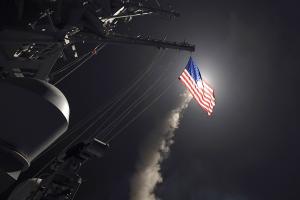
As I look around now, however, I see something quite different. The lefties I knew in college are now part of the Establishment and generally speaking are retired limousine liberals. And they now call themselves progressives, of course, because it sounds more educated and sends a better message, implying as it does that troglodytic conservatives are anti-progress. But they also have done a flip on the issue of war and peace. In its most recent incarnation some of this might be attributed to a desperate desire to relate to the Hillary Clinton campaign with its bellicosity towards Russia, Syria and Iran, but I suspect that the inclination to identify enemies goes much deeper than that, back as far as the Bill Clinton Administration with its sanctions on Iraq and the Balkan adventure, which resulted in hundreds of thousands of deaths and the creation of a terror-narco state in the heart of Europe. And more recently we have seen the Obama meddling in Libya, Yemen and Syria in so called humanitarian interventions which have turned out to be largely fraudulent. Yes, under the Obama Dems it was “responsibility to protect time” (r2p) and all the world trembled as the drones were let loose.

Last Friday I started to read an op-ed in The Washington Post by David Ignatius that blew me away. It began “President Trump confronts complicated problems as the investigation widens into Russia’s attack on our political system.” It then proceeded to lay out the case for an “aggressive Russia” in the terms that have been repeated ad nauseam in the mainstream media. And it was, of course, lacking in any evidence, as if the opinions of coopted journalists and the highly politicized senior officials in the intelligence community should be regarded as sacrosanct. These are, not coincidentally, the same people who have reportedly recently been working together to undercut the White House by leaking and then reporting highly sensitive transcripts of phone calls with Russian officials.

Ignatius is well plugged into the national security community and inclined to be hawkish but he is also a typical Post politically correct progressive on most issues. So here was your typical liberal asserting something in a dangerous fashion that has not been demonstrated and might be completely untrue. Russia is attacking “our political system!” And The Post is not alone in accepting that Russia is trying to subvert and ultimately overthrow our republic. Reporting from The New York Times and on television news makes the same assumption whenever they discuss Russia, leading to what some critics have described as mounting American ‘hysteria’ relating to anything coming out of Moscow.

Rachel Maddow is another favorite of mine when it comes to talking real humanitarian feel good stuff out one side of her mouth while beating the drum for war from the other side. In a bravura performance on January 26th she roundly chastised Russia and its president Vladimir Putin. Rachel, who freaked out completely when Donald Trump was elected, is now keen to demonstrate that Trump has been corrupted by Russia and is now controlled out of the Kremlin. She described Trump’s lord and master Putin as an “intense little man” who murders his opponents before going into the whole “Trump stole the election with the aid of Moscow” saga, supporting sanctions on Russia and multiple investigations to get to the bottom of “Putin’s attacks on our democracy.” Per Maddow, Russia is the heart of darkness and, by way of Trump, has succeeded in exercising control over key elements in the new administration.

Unfortunately, people in the media like Ignatius and Maddow are not alone. Their willingness to sell a specific political line that carries with it a risk of nuclear war as fact, even when they know it is not, has been part of the fear-mongering engaged in by Democratic Party loyalists and many others on the left. Their intention is to “get Trump” whatever it takes, which opens the door to some truly dangerous maneuvering that could have awful consequences if the drumbeat and military buildup against Russia continues, leading Putin to decide that his country is being threatened and backed into a corner. Moscow has indicated that it would not hesitate use nuclear weapons if it is being confronted militarily and facing defeat.

The current wave of Russophobia is much more dangerous than the random depiction of foreigners in negative terms that has long bedeviled a certain type of American know-nothing politics. Apart from the progressive antipathy towards Putin personally, there is a virulent strain of anti-Russian sentiment among some self-styled conservatives in congress, best exemplified by Senators John McCain and Lindsey Graham. Graham has recently said “2017 is going to be a year of kicking Russia in the ass in Congress.”

It is my belief that many in the National Security State have convinced themselves that Russia is indeed a major threat against the United States and not because it is a nuclear armed power that can strike the U.S. That appreciation, should, if anything constitute a good reason to work hard to maintain cordial relations rather than not, but it is seemingly ignored by everyone but Donald Trump.

No, the new brand of Russophobia derives from the belief that Moscow is “interfering” in places like Syria and Ukraine. Plus, it is a friend of Iran. That perception derives from the consensus view among liberals and conservatives alike that the U.S. sphere of influence encompasses the entire globe as well as the particularly progressive conceit that Washington should serve to “protect” anyone threatened at any time by anyone else, which provides a convenient pretext for military interventions that are euphemistically described as “peace missions.”

There might be a certain cynicism in many who hate Russia as having a powerful enemy also keeps the cash flowing from the treasuring into the pockets of the beneficiaries of the military industrial congressional complex, but my real fear is that, having been brainwashed for the past ten years, many government officials are actually sincere in their loathing of Moscow and all its works. Recent opinion polls suggest that that kind of thinking is popular among Americans, but it actually makes no sense. Though involvement by Moscow in the Middle East and Eastern Europe is undeniable, calling it a threat against U.S. vital interests is more than a bit of a stretch as Russia’s actual ability to make trouble is limited. It has exactly one overseas military facility, in Syria, while the U.S. has more than 800, and its economy and military budget are tiny compared to that of the United States. In fact, it is Washington that is most guilty of intervening globally and destabilizing entire regions, not Moscow, and when Donald Trump said in an interview that when it came to killing the U.S. was not so innocent it was a gross understatement.

Ironically, pursuing a reset with Russia is one of the things that Trump actually gets right but the new left won’t give him a break because they reflexively hate him for not embracing the usual progressive bromides that they believe are supposed to go with being antiwar. Other Moscow trashing comes from the John McCain camp which demonizes Russia because warmongers always need an enemy and McCain has never found a war he couldn’t support. It would be a tragedy for the United States if both the left and enough of the right were to join forces to limit Trump’s options on dealing with Moscow, thereby enabling an escalating conflict that could have tragic consequences for all parties.

Noseblind to Odors in Your Empire?

quigley_us_empire_cartoon

By John Rohn Hall

Source: Axis of Logic

Using metaphor or analogy as a creative aid is especially useful when venturing journalistically into uncomfortable, foreign territory, and Trump’s new version of Amerika is indeed uncomfortable and foreign territory. Gotta admit to a serious case of writer’s block for the last couple weeks since The Donald’s coronation fiasco. Where to begin? All my go-to sources came up cold as January days in Jackson Hole…dried up like puddles after a Mohave Desert rainstorm. The Wizard of Oz, Alice in Wonderland, and The Matrix all seemed irrelevant.  George Carlin, Kurt Vonnegut, or Mark Twain quotes weren’t caustic enough to cut through the slime, nor offer adequate support for a conversation on the subject. But then the Heavens opened up and, through the miracles of Madison Avenue, there was a vehicle available to begin writing anew. A Febreze commercial on HGTV threw a left jab that hit me right between the eyes. Right there on my 46′ Magnavox, a kitchen island in a typical Amerikan home morphed into a back-alley dumpster, complete with roaches, flies, rats, alley cats, garbage, and stench. “Have you gone noseblind to the odors in your home?” the announcer asked. Perhaps, but more importantly, I’d guess that most Amerikans have gone noseblind to odors in their Empire.

And now Donald Trump’s in charge, and he leaves me longing for the pleasant sight of Obama’s smile, that soothing voice, and comforting demeanor. The familiar, believable, lovable, family man. A guy who never lost his cool. When Barack Obama stepped up to the microphone, the sweet, fresh scent of familiarity filled the air. Like the caustic but lively chemical fragrance of Febreze, Obama casually and effortlessly lulled Amerika into dumb insouciance. When Trump takes charge of the same microphone, the resulting clamor smells like a rat-infested dumpster. But then, beauty is in the olfactory receptors of the beholder. In truth, my nose is no more talented than those which decorate the faces of the sea of deplorables, sporting “Make America Great Again!” caps. We’ve all gone noseblind to the stench of Empire. If the truth be told, Amerika stinks under Trump’s watch, it stank during Obama’s eight year reign, it certainly reeked under the orchestration of Bush/Cheney, and the offensive smell lingers in the air just about as far back into the last 500 years of European occupation of The Western Hemisphere as you’d care to go.

Seriously, which odor is more offensive? Trump’s seemingly racist, xenophobic Muslim ban, or Obama’s record of bombing most of the same countries into oblivion? Trump’s signature on a document or Obama’s deadly drone assassination program? All seven Muslim-intensive countries on Trump’s justice-offensive Keep Out List have been subject to invasion or economic sanctions under Obama’s reign. Seems that Obama created the flow of refugees who fear for the lives of their children, and Trump has put out the No Trespassing sign, leaving a sea of desperate people with nowhere to go. The whole thing stinks, and has always stunk. Death and destruction never smell good.

The foul stench emanating from Trump’s Mexican Border Wall Plan is about enough to bring on a case of reverse peristalsis. Taking advantage of Mexico’s weakened condition following three centuries of Spanish occupation, the U.S.A. swooped in and confiscated the entire northern half of that country during The Mexican War. Since then, poor Mexicans have always come in our back door, doing the jobs U.S. Citizens find beneath their dignity, and doing so for slave wages. Obama threw the “illegals” a few bones during his tenure, but managed to deport a record-breaking 2 & 1/2 million of them while he was at it. Trump promises to lock the border and throw away the key. Smells like they’ve both been playing the same nasty game. The stench which filled the air while Obama sat on the throne has neither intensified nor diminished. If you haven’t noticed, you just might be noseblind to the odors of Empire.

We U.S. Citizens shoulder much of the blame for the stinking shenanigans of Empire. We believe the incessant lies of politicians over and over again. Fool us once, shame on you. Fool us 45 times, shame on us. We basked in the foul stench of Obama’s promises to end the wars in the Mideast, only to watch as he authorized the invasions of even more helpless, hapless populations. We cheered when he said he’d shut down Guantanamo. It’s a good thing we didn’t hold our breath. More recently, Trump seemed to be making peace with Russia, announced that the U.S.A. should stop attacking other countries, and seemed to be a good option over Hillary NevermetawarIdidntlike Clinton. In his next breath he beat the war drums, promised even more “defense” spending, and pointed a finger of blame and doom at China and Iran. While he was at it, he reaffirmed that along with maintaining a strong presence at Guantanamo, he’d reopen Black Sites abroad, and ramp up our lagging enhanced interrogation program. Ya gotta love torture. Only time will tell when or where our current loose cannon will fire his next stinking verbal barrage.

As a U.S. Citizen, I know a few things (almost) for sure about the Empire I call home. It is on the march, has been on the march since the penning of The Constitution, and will continue its foul, rancid march until somebody breaks both of its legs, and it can march no more. Empire devours everything in its path, then defecates broken countries and peoples into reeking mounds of destruction and death. The path of Empire’s march does not depend upon who holds its highest office and appears to be making all of the important decisions. While such apparent opposites as Obama and Trump appear to be at odds, they both play the game as they’re instructed. ‘Tis a grand illusion. Voting is an act of complete futility, and American Democracy is a lie. Our leaders are selected and assigned from above. As U.S. Citizens, we are no more than resources to be harvested, then cast aside as our utility diminishes and evaporates, our broken, decaying bodies becoming just another layer in the stench of death permeating the skies over the land of the free and home of the brave.

Propaganda Techniques of Empire

index

By James Petras

Source: Axis of Logic

Introduction
Washington’s quest for perpetual world power is underwritten by systematic and perpetual propaganda wars. Every major and minor war has been preceded, accompanied and followed by unremitting government propaganda designed to secure public approval, exploit victims, slander critics, dehumanize targeted adversaries and justify its allies’ collaboration.

In this paper we will discuss the most common recent techniques used to support ongoing imperial wars.

Propaganda Techniques of Empire

Role Reversal
A common technique, practiced by the imperial publicists, is to accuse the victims of the same crimes, which had been committed against them.  The well documented, deliberate and sustained US-EU aerial bombardment of Syrian government soldiers, engaged in operations against ISIS-terrorist, resulted in the deaths and maiming of almost 200 Syrian troops and allowed ISIS-mercenaries to overrun their camp.   In an attempt to deflect the Pentagon’s role in providing air cover for the very terrorists it claims to oppose, the propaganda organs cranked out lurid, but unsubstantiated, stories of an aerial attack on a UN humanitarian aid convoy, first blamed on the Syrian government and then on the Russians.  The evidence that the attack was most likely a ground-based rocket attack by ISIS terrorists did not deter the propaganda mills.  This technique would turn US and European attention away from the documented criminal attack by the imperial bombers and present the victimized Syrian troops and pilots as international human rights criminals.

Hysterical Rants
Faced with world opprobrium for its wanton violation of an international ceasefire agreement in Syria, the imperial public spokespeople frequently resort to irrational outbursts at international meetings in order to intimidate wavering allies into silence and shut down any chance for reasonable debate resolving concrete issues among adversaries.

The current ‘US Ranter-in-Chief’ in the United Nations, is Ambassador Samantha Power, who launched a vitriolic diatribe against the Russians in order to sabotage a proposed General Assembly debate on the US deliberate violation (its criminal attack on Syrian troops) of the recent Syrian ceasefire.  Instead of a reasonable debate among serious diplomats, the rant served to derail the proceedings.

Identity Politics to Neutralize Anti-Imperialist Movements
Empire is commonly identified with the race, gender, religion and ethnicity of its practioners.  Imperial propagandists have frequently resorted to disarming and weakening anti-imperialist movements by co-opting and corrupting black, ethnic minority and women leaders and spokespeople.  The use of such ‘symbolic’ tokens is based on the assumption that these are ‘representatives’ reflecting the true interests of so-called ‘marginalized minorities’ and can therefore presume to ‘speak for  the oppressed peoples of the world’.  The promotion of such compliant and respectable ‘minority members’ to the elite is then propagandized as a ‘revolutionary’, world liberating historical event – witness the ‘election’ of US President Barack Obama.

The rise of Obama to the presidency in 2008 illustrates how the imperial propagandists have used identity politics to undermine class and anti-imperialist struggles.

Under Obama’s historical black presidency, the US pursued seven wars against ‘people of color’ in South Asia, the Middle East and North Africa.  Over a million men and women of sub-Saharan black origin, whether Libyan citizens or contract workers for neighboring countries, were killed, dispossessed and driven into exile by US allies after the US-EU destroyed the Libyan state – in the name of humanitarian intervention.  Hundreds of thousands of Arabs have been bombed in Yemen, Syria and Iraq under President Obama, the so-called ‘historic black’ president.  Obama’s ‘predator drones’ have killed hundreds of Afghan and Pakistani villagers.  Such is the power of ‘identity politics’ that ignominious Obama was awarded the ‘Nobel Peace Prize’.

Meanwhile, in the United States under Obama, racial inequalities between black and white workers (wages, unemployment, access to housing, health and educational services) have widened.  Police violence against blacks intensified with total impunity for ‘killer cops’.  Over two million immigrant Latino workers have been expelled – breaking up hundreds of thousands of families– and accompanied by a marked increase of repression compared to earlier administrations.  Millions of black and white workers’ home mortgages were foreclosed while all of the corrupt banks were bailed out – at a greater rate than had occurred under white presidents.

This blatant, cynical manipulation of identity politics facilitated the continuation and deepening of imperial wars, class exploitation and racial exclusion.  Symbolic representation undermined class struggles for genuine changes.

Past Suffering to Justify Contemporary Exploitation
Imperial propagandists repeatedly evoke the victims and abuses of the past in order to justify their own aggressive imperial interventions and support for the ‘land grabs’ and ethnic cleansing committed by their colonial allies – like Israel, among others. The victims and crimes of the past are presented as a perpetual presence to justify ongoing brutalities against contemporary subject people.

The case of US-Israeli colonization of Palestine clearly illustrates how rabid criminality, pillage, ethnic cleansing and self-enrichment can be justified and glorified through the language of past victimization.  Propagandists in the US and Israel have created ‘the cult of the Holocaust’, worshiping a near century-old Nazi crime against Jews (as well as captive Slavs, Gypsies and other minorities) in Europe, to justify the bloody conquest and theft of Arab lands and sovereignty and engage in systematic military assaults against Lebanon and Syria.  Millions of Muslim and Christian Palestinians have been driven into perpetual exile.  Elite, wealthy, well-organized and influential zionist Jews, with primary fealty to Israel, have successfully sabotaged every contemporary struggle for peace in the Middle East and have created real barriers for social democracy in the US through their promotion of militarism and empire building.  Those claiming to represent victims of the past have become among the most oppressive of contemporary elites.  Using the language of ‘defense’, they promote aggressive forms of expansion and pillage.  They claim their monopoly on historic ‘suffering’ has given them a ‘special dispensation’ from the rules of civilized conduct:  their cult of the Holocaust allows them to inflict immense pain on others while silencing any criticism with the accusation of ‘anti-Semitism’ and relentlessly punishing critics.  Their key role in imperial propaganda warfare is based on their claims of an exclusive franchise on suffering and immunity from the norms of justice.

Entertainment Spectacles on Military Platforms
Entertainment spectacles glorify militarism.  Imperial propagandists link the public to unpopular wars promoted by otherwise discredited leaders.  Sports events present soldiers dressed up as war heroes with deafening, emotional displays of ‘flag worship’ to celebrate the ongoing overseas wars of aggression.  These mind-numbing extravaganzas with crude elements of religiosity demand choreographed expressions of national allegiance from the spectators as a cover for continued war crimes abroad and the destruction of citizens’ economic rights at home.

Much admired, multi-millionaire musicians and entertainers of all races and orientations, present war to the masses with a humanitarian facade. The entertainers smiling faces serve genocide just as powerfully as the President’s benign and friendly  face accompanies his embrace of militarism.  The propagandist message for the spectator is that ‘your favorite team or singer is there just for you… because our noble wars and valiant warriors have made you free and now they want you to be entertained.’

The old style of blatant bellicose appeals to the public is obsolete:  the new propaganda conflates entertainment with militarism, allowing the ruling elite to secure tacit support for its wars without disturbing the spectators’ experience.

Conclusion
Do the Imperial Techniques of Propaganda Work?

How effective are the modern imperial propaganda techniques?  The results seem to be mixed.  In recent months, elite black athletes have begun protesting white racism by challenging the requirement for choreographed displays of flag worship. . . opening public controversy into the larger issues of police brutality and sustained marginalization.  Identity politics, which led to the election of Obama, may be giving way to issues of class struggle, racial justice, anti-militarism and the impact of continued imperial wars.  Hysterical rants may still secure international attention, but repeated performances begin to lose their impact and subject the ‘ranter’ to ridicule.

The cult of victimology has become less a rationale for the multi-billion dollar US-tribute to Israel, than the overwhelming political and economic influence and thuggery of billionaire Zionist fundraisers who demand US politicians’ support for the state of Israel.

Brandishing identify politics may have worked the first few times, but inevitably black, Latino, immigrant and all exploited workers, all underpaid and overworked women and mothers reject the empty symbolic gestures and demand substantive socio-economic changes – and here they find common links with the majority of exploited white workers.

In other words, the existing propaganda techniques are losing their edge – the corporate media news is seen as a sham.  Who follows the actor-soldiers and flag-worshipers once the game has begun?

The propagandists of empire are desperate for a new line to grab public attention and obedience.   Could the recent domestic terror bombings in New York and New Jersey provoke mass hysteria and more militarization? Could they serve as cover for more wars abroad . . .?

A recent survey, published in Military Times, reported that the vast majority of active US soldiers oppose more imperial wars. They are calling for defense at home and social justice.  Soldiers and veterans have even formed groups to support the protesting black athletes who have refused to participate in flag worship while unarmed black men are being killed by police in the streets.   Despite the multi-billion dollar electoral propaganda, over sixty percent of the electorate reject both major party candidates.  The reality principle has finally started to undermine State propaganda!


Nationalist Propaganda has Many Progressives Demonizing ‘The Russians’

79deb5d0f06719de3743bb630d314563

By Robert Barsocchini

Source: Washington’s Blog

Neocon and neoliberal war propaganda, as exhibited in the Washington Post, New York Times, etc., “has turned much of the liberal/progressive community” in the US “into a pro-New Cold War constituency willing to engage in a new breed of McCarthyism”, Robert Parry notes today.  (This author has personally witnessed similar displays.)

Leading Russia expert Stephen Cohen, a professor at Princeton, observes there has been a possibly ‘unprecedented’ ‘propaganda’ ‘tsunami’ occurring in the US targeting Russia and Putin and increasing the already high risk of nuclear war. (The Nation)  This predates the election and the “unproven allegations that Putin had intervened … to put Trump in the White House”, and largely stems from Russia’s intervention at the behest of the Syrian government to prevent the Western-sponsored overthrow of the Syrian state by what US officials privately say is an insurgency dominated by Islamic terrorists being funded by US-backed Saudi dictator Salman bin Abdulaziz’s cadre and similar parties.

Jeff McMahan, a philosopher at Rutgers, notes of the kind of propaganda observed by Cohen that “the powerful sense of collective identity within a nation is often achieved by contrasting an idealized conception of the national character with caricatures of other nations, whose members are regarded as less important or worthy or, in many cases, are dehumanized and despised as inferior or even odious.”  As Parry noted last week, another example of this is the Washington establishment doctrine, partially a holdover from eugenics scholarship and largely a PR tactic serving overtly stated goals of hegemonic expansion, that Russia as a nation is so inferior that any “equivalence” between it and the US is impossible.

However, the world outside the US doctrinal system sees the matter somewhat differently.  In a Western-run global poll taken during the height of the ongoing Ukraine crisis, the international community considered both Russia and the US, along with other countries, for the title of “greatest threat to world peace”.  The US was voted greatest threat by far, receiving twelve times more votes than Russia and three times more votes than the runner-up, Pakistan.

As author David Swanson recently noted in Foreign Policy Journal, in the 95% of the world that is not the US, it is scarcely a secret “that the United States is (as that Putin stooge Martin Luther King Jr. put it) the greatest purveyor of violence on earth. The United States is the top weapons dealer, the top weapons buyer, the biggest military spender, the most widespread imperial presence, the most frequent war maker, the most prolific overthrower of governments, and from 1945 to 2017 the killer of the most people through war.”

McMahan continues: “When nationalist solidarity is maintained” through the type of nationalism described above (which includes keeping much of what Swanson describes secret from or distorting it for the domestic population) “the result is often brutality and atrocity on an enormous scale.”  The Bulletin of Atomic Scientists, which includes respected thinkers and sponsors such as Stephen Hawking, notes the world is at an extremely dangerous moment in terms of the potential for nuclear war, and has set its “doomsday clock” to three minutes to midnight.

Somewhat similar to gang membership, nationalism, McMahan concludes, provides people with “a sense of security and belonging and, by merging their individual identities into the larger national identity, enables them to expand the boundaries of the self, thereby enhancing their self-esteem.

“[W]hile nationalist sentiment may have beneficial effects within the nation, these are greatly outweighed from an impartial point of view by the dreadful effects that it has on relations between nations.”*


Robert J. Barsocchini is an independent researcher and reporter whose interest in propaganda and global force dynamics arose from working as a cross-cultural intermediary for large corporations in the film and Television industry. His work has been cited, published, or followed by numerous professors, economists, lawyers, military and intelligence veterans, and journalists. Updates on Twitter.

*McMahan, Jeff. The Ethics of Killing: Problems at the Margins of Life. 6th ed. New York: Oxford University Press, 2002. Pp 221. Print.

If Americans Truly Cared About Muslims, They Would Stop Killing Them by the Millions

index

By Glen Ford

Source: Black Agenda Report

In the most dramatic expression of insider opposition to a sitting administration’s policies in generations, over 1,000 U.S. State Department employees signed on to a memo protesting President Donald Trump’s temporary ban on people from seven predominantly Muslim countries setting foot on U.S. soil. Another recent high point in dissent among the State Department’s 18,000 worldwide employees occurred in June of last year, when 51 diplomats called for U.S. air strikes against the Syrian government of President Bashar al Assad.

Neither outburst of dissent was directed against the U.S. wars and economic sanctions that have killed and displaced millions of people in the affected countries: Iran, Iraq, Libya, Somalia, Sudan, Syria and Yemen. Rather, the diplomatic “rebellion” of last summer sought to pressure the Obama administration to join with Hillary Clinton and her “Big Tent” full of war hawks to confront Russia in the skies over Syria, while the memo currently making the rounds of State Department employees claims to uphold “core American and constitutional values,” preserve “good will towards Americans” and prevent “potential damage to the U.S. economy from the loss of revenue from foreign travelers and students.”

In neither memo is there a word of support for world peace, nor a hint of respect for the national sovereignty of other peoples — which is probably appropriate, since these are not, and never have been, “core American and constitutional values.”

Ironically, the State Department “dissent channel” was established during one of those rare moments in U.S. history when “peace” was popular: 1971, when a defeated U.S. war machine was very reluctantly winding down support for its puppet regime in South Vietnam. Back then, lots of Americans, including denizens of the U.S. government, wanted to take credit for the “peace” that was on the verge of being won by the Vietnamese, at a cost of at least four million Southeast Asian dead. But, those days are long gone. Since 2001, war has been normalized in the U.S. — especially war against Muslims, which now ranks at the top of actual “core American values.” Indeed, so much American hatred is directed at Muslims that Democrats and establishment Republicans must struggle to keep the Russians in the “hate zone” of the American popular psyche. The two premiere, officially-sanctioned hatreds are, of course, inter-related, particularly since the Kremlin stands in the way of a U.S. blitzkrieg in Syria, wrecking Washington’s decades-long strategy to deploy Islamic jihadists as foot soldiers of U.S. empire.

The United States has always been a project of empire-building. George Washington called it a “nascent empire,” Thomas Jefferson bought the Louisiana Territory from France in pursuit of an “extensive empire,” and the real Alexander Hamilton, contrary to the Broadway version, considered the U.S. to be the “most interesting empire in the world.” The colonial outpost of two million white settlers (and half a million African slaves) severed ties with Britain in order to forge its own, limitless dominion, to rival the other white European empires of the world. Today, the U.S. is the Mother of All (Neo)Colonialists, under whose armored skirts are gathered all the aged, shriveled, junior imperialists of the previous era.

In order to reconcile the massive contradiction between America’s predatory nature and its mythical self-image, however, the mega-hyper-empire must masquerade as its opposite: a benevolent, “exceptional” and “indispensible” bulwark against global barbarism. Barbarians must, therefore, be invented and nurtured, as did the U.S. and the Saudis in 1980s Afghanistan with their creation of the world’s first international jihadist network, for subsequent deployment against the secular “barbarian” states of Libya and Syria.

In modern American bureaucratese, worrisome barbarian states are referred to as “countries or areas of concern” — the language used to designate the seven nations targeted under the Terrorist Travel Prevention Act of 2015 signed by President Obama. President Donald Trump used the existing legislation as the basis for his executive order banning travelers from those states, while specifically naming only Syria. Thus, the current abomination is a perfect example of the continuity of U.S. imperial policy in the region, and emphatically not something new under the sun (a sun that, as with old Britannia, never sets on U.S. empire).

The empire preserves itself, and strives relentlessly to expand, through force of arms and coercive economic sanctions backed up by the threat of annihilation. It kills people by the millions, while allowing a tiny fraction of its victims to seek sanctuary within U.S. borders, based on their individual value to the empire.

Donald Trump’s racist executive order directly affects about 20,000 people, according to the United Nations High Commissioner on Refugees. President Obama killed an estimated 50,000 Libyans in 2011, although the U.S. officially does not admit it snuffed out the life of a single civilian. The First Black President is responsible for each of the half-million Syrians that have died since he launched his jihadist-based war against that country, the same year. Total casualties inflicted on the populations of the seven targeted nations since the U.S. backed Iraq in its 1980s war against Iran number at least four million — a bigger holocaust than the U.S. inflicted on Southeast Asia, two generations ago — when the U.S. State Department first established its “dissent channel.”

But, where is the peace movement? Instead of demanding a halt to the carnage that creates tidal waves of refugees, self-styled “progressives” join in the macabre ritual of demonizing the “countries of concern” that have been targeted for attack, a process that U.S. history has color-coded with racism and Islamophobia. These imperial citizens then congratulate themselves on being the world’s one and only “exceptional” people, because they deign to accept the presence of a tiny portion of the populations the U.S. has mauled.

The rest of humanity, however, sees the real face of America — and there will be a reckoning.


American Pravda: How the CIA Invented “Conspiracy Theories”

index

By Ron Unz

Source: The Unz Review

A year or two ago, I saw the much-touted science fiction film Interstellar, and although the plot wasn’t any good, one early scene was quite amusing. For various reasons, the American government of the future claimed that our Moon Landings of the late 1960s had been faked, a trick aimed at winning the Cold War by bankrupting Russia into fruitless space efforts of its own. This inversion of historical reality was accepted as true by nearly everyone, and those few people who claimed that Neil Armstrong had indeed set foot on the Moon were universally ridiculed as “crazy conspiracy theorists.” This seems a realistic portrayal of human nature to me.

Obviously, a large fraction of everything described by our government leaders or presented in the pages of our most respectable newspapers—from the 9/11 attacks to the most insignificant local case of petty urban corruption—could objectively be categorized as a “conspiracy theory” but such words are never applied. Instead, use of that highly loaded phrase is reserved for those theories, whether plausible or fanciful, that do not possess the endorsement stamp of establishmentarian approval.

Put another way, there are good “conspiracy theories” and bad “conspiracy theories,” with the former being the ones promoted by pundits on mainstream television shows and hence never described as such. I’ve sometimes joked with people that if ownership and control of our television stations and other major media outlets suddenly changed, the new information regime would require only a few weeks of concerted effort to totally invert all of our most famous “conspiracy theories” in the minds of the gullible American public. The notion that nineteen Arabs armed with box-cutters hijacked several jetliners, easily evaded our NORAD air defenses, and reduced several landmark buildings to rubble would soon be universally ridiculed as the most preposterous “conspiracy theory” ever to have gone straight from the comic books into the minds of the mentally ill, easily surpassing the absurd “lone gunman” theory of the JFK assassination.

Even without such changes in media control, huge shifts in American public beliefs have frequently occurred in the recent past, merely on the basis of implied association. In the initial weeks and months following the 2001 attacks, every American media organ was enlisted to denounce and vilify Osama Bin Laden, the purported Islamicist master-mind, as our greatest national enemy, with his bearded visage endlessly appearing on television and in print, soon becoming one of the most recognizable faces in the world. But as the Bush Administration and its key media allies prepared a war against Iraq, the images of the Burning Towers were instead regularly juxtaposed with mustachioed photos of dictator Saddam Hussein, Bin Laden’s arch-enemy. As a consequence, by the time we attacked Iraq in 2003, polls revealed that some 70% of the American public believed that Saddam was personally involved in the destruction of our World Trade Center. By that date I don’t doubt that many millions of patriotic but low-information Americans would have angrily denounced and vilified as a “crazy conspiracy theorist” anyone with the temerity to suggest that Saddam hadnot been behind 9/11, despite almost no one in authority having ever explicitly made such a fallacious claim.

These factors of media manipulation were very much in my mind a couple of years ago when I stumbled across a short but fascinating book published by the University of Texas academic press. The author of Conspiracy Theory in America was Prof. Lance deHaven-Smith, a former president of the Florida Political Science Association.

Based on an important FOIA disclosure, the book’s headline revelation was that the CIA was very likely responsible for the widespread introduction of “conspiracy theory” as a term of political abuse, having orchestrated that development as a deliberate means of influencing public opinion.

During the mid-1960s there had been increasing public skepticism about the Warren Commission findings that a lone gunman, Lee Harvey Oswald, had been solely responsible for President Kennedy’s assassination, and growing suspicions that top-ranking American leaders had also been involved. So as a means of damage control, the CIA distributed a secret memo to all its field offices requesting that they enlist their media assets in efforts to ridicule and attack such critics as irrational supporters of “conspiracy theories.” Soon afterward, there suddenly appeared statements in the media making those exact points, with some of the wording, arguments, and patterns of usage closely matching those CIA guidelines. The result was a huge spike in the pejorative use of the phrase, which spread throughout the American media, with the residual impact continueing right down to the present day. Thus, there is considerable evidence in support of this particular “conspiracy theory” explaining the widespread appearance of attacks on “conspiracy theories” in the public media.

But although the CIA appears to have effectively manipulated public opinion in order to transform the phrase “conspiracy theory” into a powerful weapon of ideological combat, the author also describes how the necessary philosophical ground had actually been prepared a couple of decades earlier. Around the time of the Second World War, an important shift in political theory caused a huge decline in the respectability of any “conspiratorial” explanation of historical events.

For decades prior to that conflict, one of our most prominent scholars and public intellectuals had been historian Charles Beard, whose influential writings had heavily focused on the harmful role of various elite conspiracies in shaping American policy for the benefit of the few at the expense of the many, with his examples ranging from the earliest history of the United States down to the nation’s entry into WWI. Obviously, researchers never claimed that all major historical events had hidden causes, but it was widely accepted that some of them did, and attempting to investigate those possibilities was deemed a perfectly acceptable academic enterprise.

However, Beard was a strong opponent of American entry into the Second World War, and he was marginalized in the years that followed, even prior to his death in 1948. Many younger public intellectuals of a similar bent also suffered the same fate, or were even purged from respectability and denied any access to the mainstream media. At the same time, the totally contrary perspectives of two European political philosophers, Karl Popper and Leo Strauss, gradually gained ascendancy in American intellectual circles, and their ideas became dominant in public life.

Popper, the more widely influential, presented broad, largely theoretical objections to the very possibility of important conspiracies ever existing, suggesting that these would be implausibly difficult to implement given the fallibility of human agents; what might appear a conspiracy actually amounted to individual actors pursuing their narrow aims. Even more importantly, he regarded “conspiratorial beliefs” as an extremely dangerous social malady, a major contributing factor to the rise of Nazism and other deadly totalitarian ideologies. His own background as an individual of Jewish ancestry who had fled Austria in 1937 surely contributed to the depth of his feelings on these philosophical matters.

Meanwhile, Strauss, a founding figure in modern neo-conservative thought, was equally harsh in his attacks upon conspiracy analysis, but for polar-opposite reasons. In his mind, elite conspiracies were absolutely necessary and beneficial, a crucial social defense against anarchy or totalitarianism, but their effectiveness obviously depended upon keeping them hidden from the prying eyes of the ignorant masses. His main problem with “conspiracy theories” was not that they were always false, but they might often be true, and therefore their spread was potentially disruptive to the smooth functioning of society. So as a matter of self-defense, elites needed to actively suppress or otherwise undercut the unauthorized investigation of suspected conspiracies.

Even for most educated Americans, theorists such as Beard, Popper, and Strauss are probably no more than vague names mentioned in textbooks, and that was certainly true in my own case. But while the influence of Beard seems to have largely disappeared in elite circles, the same is hardly true of his rivals. Popper probably ranks as one of the founders of modern liberal thought, with an individual as politically influential as left-liberal financier George Soros claiming to be his intellectual disciple. Meanwhile, the neo-conservative thinkers who have totally dominated the Republican Party and the Conservative Movement for the last couple of decades often proudly trace their ideas back to Strauss.

So, through a mixture of Popperian and Straussian thinking, the traditional American tendency to regard elite conspiracies as a real but harmful aspect of our society was gradually stigmatized as either paranoid or politically dangerous, laying the conditions for its exclusion from respectable discourse.


By 1964, this intellectual revolution had largely been completed, as indicated by the overwhelmingly positive reaction to the famous article by political scientist Richard Hofstadter critiquing the so-called “paranoid style” in American politics, which he denounced as the underlying cause of widespread popular belief in implausible conspiracy theories. To a considerable extent, he seemed to be attacking straw men, recounting and ridiculing the most outlandish conspiratorial beliefs, while seeming to ignore the ones that had been proven correct. For example, he described how some of the more hysterical anti-Communists claimed that tens of thousands of Red Chinese troops were hidden in Mexico, preparing an attack on San Diego, while he failed to even acknowledge that for years Communist spies had indeed served near the very top of the U.S. government. Not even the most conspiratorially minded individual suggests that all conspiracies are true, merely that some of them might be.

Most of these shifts in public sentiment occurred before I was born or when I was a very young child, and my own views were shaped by the rather conventional media narratives that I absorbed. Hence, for nearly my entire life, I always automatically dismissed all of the so-called “conspiracy theories” as ridiculous, never once even considering that any of them might possibly be true.

To the extent that I ever thought about the matter, my reasoning was simple and based on what seemed like good, solid common sense. Any conspiracy responsible for some important public event must surely have many separate “moving parts” to it, whether actors or actions taken, let us say numbering at least 100 or more. Now given the imperfect nature of all attempts at concealment, it would surely be impossible for all of these to be kept entirely hidden. So even if a conspiracy were initially 95% successful in remaining undetected, five major clues would still be left in plain sight for investigators to find. And once the buzzing cloud of journalists noticed these, such blatant evidence of conspiracy would certainly attract an additional swarm of energetic investigators, tracing those items back to their origins, with more pieces gradually being uncovered until the entire cover-up likely collapsed. Even if not all the crucial facts were ever determined, at least the simple conclusion that there had indeed been some sort of conspiracy would quickly become established.

However, there was a tacit assumption in my reasoning, one that I have since decided was entirely false. Obviously, many potential conspiracies either involve powerful governmental officials or situations in which their disclosure would represent a source of considerable embarrassment to such individuals. But I had always assumed that even if government failed in its investigatory role, the dedicated bloodhounds of the Fourth Estate would invariably come through, tirelessly seeking truth, ratings, and Pulitzers. However, once I gradually began realizing that the media was merely “Our American Pravda” and perhaps had been so for decades, I suddenly recognized the flaw in my logic. If those five—or ten or twenty or fifty—initial clues were simply ignored by the media, whether through laziness, incompetence, or much less venal sins, then there would be absolutely nothing to prevent successful conspiracies from taking place and remaining undetected, perhaps even the most blatant and careless ones.

In fact, I would extend this notion to a general principle. Substantial control of the media is almost always an absolute prerequisite for any successful conspiracy, the greater the degree of control the better. So when weighing the plausibility of any conspiracy, the first matter to investigate is who controls the local media and to what extent.

Let us consider a simple thought-experiment. For various reasons these days, the entire American media is extraordinarily hostile to Russia, certainly much more so than it ever was toward the Communist Soviet Union during the 1970s and 1980s. Hence I would argue that the likelihood of any large-scale Russian conspiracy taking place within the operative zone of those media organs is virtually nil. Indeed, we are constantly bombarded with stories of alleged Russian conspiracies that appear to be “false positives,” dire allegations seemingly having little factual basis or actually being totally ridiculous. Meanwhile, even the crudest sort of anti-Russian conspiracy might easily occur without receiving any serious mainstream media notice or investigation.

This argument may be more than purely hypothetical. A crucial turning point in America’s renewed Cold War against Russia was the passage of the 2012 Magnitsky Act by Congress, punitively targeting various supposedly corrupt Russian officials for their alleged involvement in the illegal persecution and death of an employee of Bill Browder, an American hedge-fund manager with large Russian holdings. However, there’s actually quite a bit of evidence that it was Browder himself who was actually the mastermind and beneficiary of the gigantic corruption scheme, while his employee was planning to testify against him and was therefore fearful of his life for that reason. Naturally, the American media has provided scarcely a single mention of these remarkable revelations regarding what might amount to a gigantic Magnitsky Hoaxof geopolitical significance.

To some extent the creation of the Internet and the vast proliferation of alternative media outlets, including my own small webzine, have somewhat altered this depressing picture. So it is hardly surprising that a very substantial fraction of the discussion dominating these Samizdat-like publications concerns exactly those subjects regularly condemned as “crazy conspiracy theories” by our mainstream media organs. Such unfiltered speculation must surely be a source of considerable irritation and worry to government officials who have long relied upon the complicity of their tame media organs to allow their serious misdeeds to pass unnoticed and unpunished. Indeed, several years ago a senior Obama Administration official argued that the free discussion of various “conspiracy theories” on the Internet was so potentially harmful that government agents should be recruited to “cognitively infiltrate” and disrupt them, essentially proposing a high-tech version of the highly controversial Cointelpro operations undertaken by J. Edgar Hoover’s FBI.

Until just a few years ago I’d scarcely even heard of Charles Beard, once ranked among the towering figures of 20th century American intellectual life. But the more I’ve discovered the number of serious crimes and disasters that have completely escaped substantial media scrutiny, the more I wonder what other matters may still remain hidden. So perhaps Beard was correct all along in recognizing the respectability of “conspiracy theories,” and we should return to his traditional American way of thinking, notwithstanding endless conspiratorial propaganda campaigns by the CIA and others to persuade us that we should dismiss such notions without any serious consideration.