Ukraine and Palestine: A double threat to US hegemony

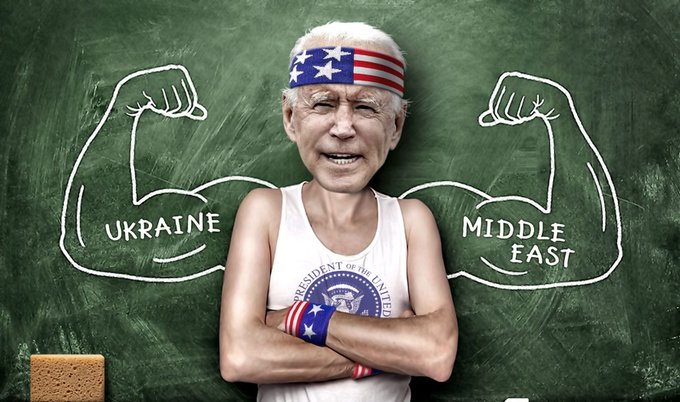
The outcome of US-led conflicts in Ukraine and West Asia will have a profound impact on the developing world order. Washington has already lost the former, and its major adversaries are vested in making sure it loses the latter too.
By MK Bhadrakumar

Source: The Cradle

Geopolitical analysts broadly agree that the war in Ukraine and the West Asian crisis will dictate the trajectory of world politics in 2024. But a reductionist thesis appears alongside that views the Israel-Palestine conflict narrowly in terms of what it entails for the resilience of the US proxy war in Ukraine – the assumption being that the locus of world politics lies in Eurasia.

The reality is more complex. Each of these two conflicts has a raison d’être and dynamics of its own, while at the same time also being intertwined.

Washington’s neck-deep involvement in the current phase of the West Asian crisis can turn into a quagmire, since it is also tangled up with domestic politics in a way that the Ukraine war never has been. But then, the outcome of the Ukraine war is already a foregone conclusion, and the US and its allies have realized that Russia cannot be defeated militarily; the endgame narrows down to an agreement to end the conflict on Russia’s terms.

To be sure, the outcome of the Ukraine war and the denouement of the Israel-Palestine conflict, which is at the root of the West Asian crisis, will have a profound impact on the new world order, and the two processes reinforce each other. 

Russia realizes this fully. President Vladimir Putin’s stunning ‘year-enders’ in the run-up to the New Year speak for themselves: daylong visits to Abu Dhabi and Riyadh (watched by a shell-shocked US President Joe Biden), followed by talks with Iran’s president and rounded off with a telephone conversation with the Egyptian president. 

In the space of 48 hours or so, Putin touched base with his Emirati, Saudi, Iranian, and Egyptian colleagues who officially entered the portals of the BRICS on 1 January.

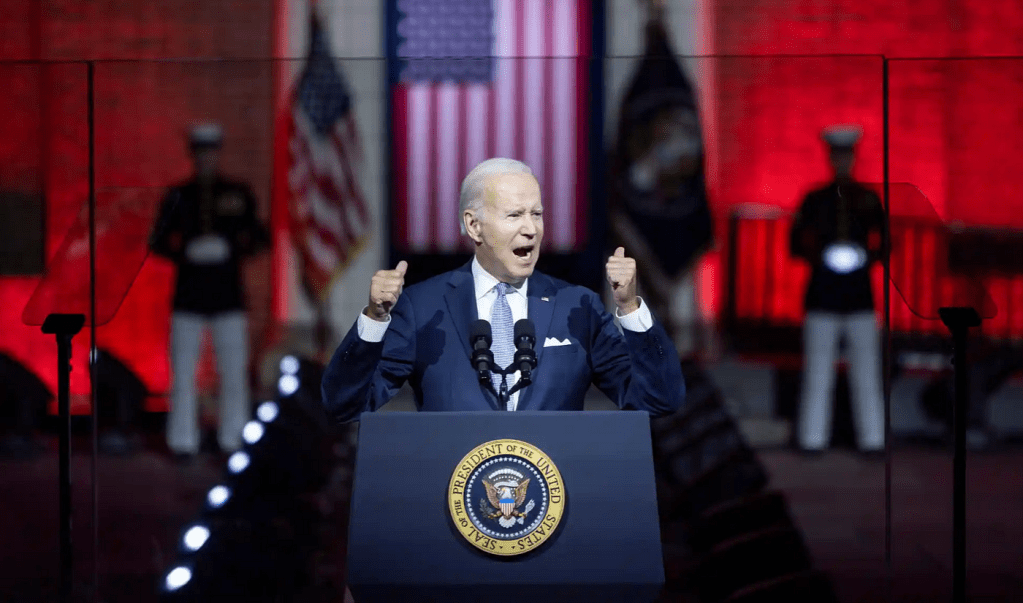
The evolving US intervention in the West Asian crisis can be understood from a geopolitical perspective only by factoring in Biden’s visceral hostility toward Russia. BRICS is in Washington’s crosshairs. The US understands perfectly well that the extra large presence of West Asian and Arab nations in BRICS — four out of ten member states — is central to Putin’s grand project to re-structure the world order and bury US exceptionalism and hegemony.

Saudi Arabia, the UAE, and Iran are major oil producing countries. Russia has been rather explicit that during its 2024 chairmanship of BRICS, it will push for the creation of a currency to challenge the petrodollar. Without doubt, the BRICS currency will be at the center stage of the grouping’s summit due to be hosted by Putin in Kazan, Russia in October.

In a special address on 1 January, marking the start of Russia’s BRICS Chairmanship, Putin stated his commitment to “enhancing the role of BRICS in the international monetary system, expanding both interbank cooperation and the use of national currencies in mutual trade.”

If a BRICS currency is used instead of the dollar, there could be significant impact on several financial sectors of the US economy, such as energy and commodity markets, international trade and investment, capital markets, technology and fintech, consumer goods and retail, travel and tourism, and so on. 

The banking sector could take the first hit that might eventually spill over to the markets. And if Washington fails to fund its mammoth deficit, prices of all commodities could skyrocket or even reach hyperinflation triggering a crash of the US economy.

Meanwhile, the eruption of the Israel-Palestine conflict has given the US an alibi — ‘Israel’s self-defense’ — to claw its way back on the greasy pole of West Asian politics. Washington has multiple concerns, but at its core are the twin objectives of resuscitating the Abraham Accords (anchored on Saudi-Israeli proximity) and the concurrent sabotage of the Beijing-mediated Saudi-Iranian rapprochement.

The Biden administration was counting on the fact that an Israeli-Saudi deal would provide legitimacy to Tel Aviv and proclaim to the Islamic world that there was no religious justification for hostility towards Israel. But Washington senses that post-7 October it would not be able to secure a Saudi-Israel deal during this Biden term, and all that could be coaxed out of Riyadh is a door left ajar for future discussion on the topic. No doubt, it is a major blow to the US strategy to liquidate the Palestinian question.

In a medium term perspective, if the Russian-Saudi mechanism known as OPEC+ liberates the world oil market from US control, BRICS drives a dagger into the heart of US hegemony which is anchored on the dollar being the ‘world currency.’ 

Saudi Arabia recently signed a currency swap deal worth $7 billion with China in an attempt to shift more of their trade away from the dollar. The People’s Bank of China said in a statement that the swap arrangement will “help strengthen financial cooperation” and “facilitate more convenient trade and investment” between the countries.

Going forward, sensitive Saudi-Chinese transactions in strategic areas such as defense, nuclear technology, among others, will henceforth take place below the US radar. From a Chinese perspective, if its strategic trade is sufficiently insulated from any US-led program of anti-China sanctions, Beijing can position itself confidently to confront US power in the Indo-Pacific. This is a telling example of how the US strategy for the Indo-Pacific will lose traction as a result of its waning influence in West Asia.

The conventional wisdom is that preoccupation in volatile West Asia distracts Washington from paying attention to the Indo-Pacific and China. In reality, though, the waning influence in West Asia is complicating the capacity of the US to counter China both in the region as well as in the Indo-Pacific. The developments are moving in a direction where the credentials of the US as a great power are at an inflection point in West Asia – and that realization has leaked into other geographic regions around the world.

Way back in 2007, the distinguished political scientists John Mearsheimer of the University of Chicago and Stephen Walt of the John F. Kennedy School of Government at Harvard, wrote with great prescience in their famous 34,000-word essay entitled The Israel Lobby and US Foreign Policy that Israel has become a ‘strategic liability’ for the United States, but retains its strong support because of a wealthy, well-organized, and bewitching lobby that has a ‘stranglehold’ on Congress and US elites.

The authors warned that Israel and its lobby bear outsized their responsibility for persuading the Bush Administration to invade Iraq and, perhaps one day soon, to attack the nuclear facilities of Iran. 

Interestingly, on New Year’s Eve, in a special report based on extensive briefing by top US officials, the New York Times highlighted that “No other episode [as the war in Gaza] in the past half-century has tested the ties between the United States and Israel in such an intense and consequential way.”

Clearly, even as Israel’s barbaric actions in Gaza and its colonial project in the occupied West Bank are exposed and laid bare, and the Israeli state’s campaign to force Palestinian population migration are in full view, two of the US strategic objectives in the region are unravelling: first, the restoration of Israel’s military superiority in the balance of forces regionally and vis-a-vis the Axis of Resistance, in particular; and second, the resuscitation of the Abraham Accords where the crown jewels would have been a Saudi-Israeli treaty.

Viewed from another angle, the directions in which West Asia’s crisis unfolds are being keenly watched by the world community, especially those in the Asia-Pacific region. Most notable here is that Russia and China have given the US a free hand to navigate its military moves – unchallenged, so far, in the Red Sea. This means that any conflagration in the region will be synonymous with a catastrophic breakdown of US strategy.

Soon after the US defeat in Afghanistan in Central Asia, and coinciding with an ignominious ending of the US-led proxy war by NATO against Russia in Eurasia, a violent, grotesque setback in West Asia will send a resounding message across all of Asia that the US-led bandwagon has run out of steam. Among the end users of this startling message, the countries of ASEAN stand at the forefront. The bottom line is that the overlapping tumultuous events in Eurasia and West Asia are poised to coalesce into a climactic moment for world politics.
Something Lost, Never to Be Found Again

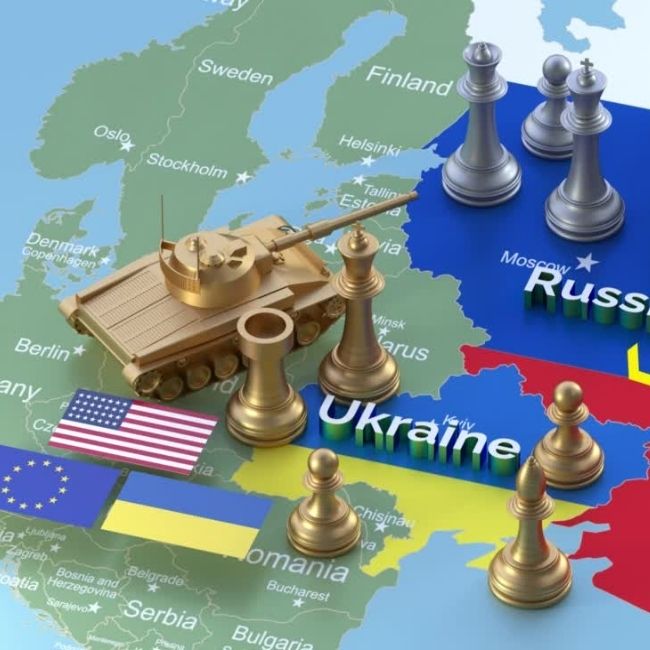
Defeat in Ukraine may be but one part to an accumulation of western ‘defeats’. Defeat in Israel would strike at the very core of U.S. political being.

By Alastair Crooke

Source: Strategic Culture Foundation

A strange ennui and distracted attention envelops the West today.

Hat-tip to Simplicius’ Bones of Tomorrow, in which he reflects on a Culture that has become debased; its lures that used to trap us into the ‘Myth of the West’ lie withered, as patently false idols. The dimming fire has squandered any sense of ‘magic’ in the guttering West, or indeed of hope to recoup this something ‘lost’. It is the wistful realisation that – as it stands – the myth is never likely to offer anything of lasting value again.

The figments of a utopian future once promised, nonetheless continue their seductive hold on our psyche, but only on attention-hopping, hypnotic touch-screens. Cultural touchstones crumble around us like rotting edifices one after another. Yet, we are too distracted to take real notice, or to absorb the significance. Counter ‘currents’ in the shadows gleefully applaud.

Where we stand now is where we’ve always stood – in the quicksands of time. A passing of the guard; one world fading, deep into the slow, declining burnout phase, the natural process of decay and renewal, whilst taking us forward towards some next, still-to-sprout, green shoots. A sense of something lost and never to be found again, which we all endure these days.

The ‘Elect’ though, have deliberately raised the stakes. They do not want to ‘let go’. They have determined that, with the western train wrecked on its own cultural ‘wall’, the ‘End of Time’ story of convergence on a common future is ‘over’ too.

And along with it, the claimed western mandate to dictate the ‘direction forward’ is over also.

Beneath the gimcrack and baubled veneer, the western meta-narrative “from Plato to NATO, that superior ideas and practices whose origins lie in ancient Greece, and have been transmitted down the ages so that those in the West today, are the lucky inheritors of a superior cultural DNA” has transpired to be nothing more than the faded tinselry of hollow narrative.

This is the deep fear of western political leaders – they know the ‘Narrative’ to be a fiction. Nonetheless, they go on telling it to themselves, despite knowing that our era has been made increasingly and dangerously contingent on this meta-myth. Absent the Myth, they sense, the western project, and western prosperity, could disintegrate utterly.

The ‘Elect’ hoped that the dredged-up, chimeric dreams of material prosperity and western savoir faire could still prop the Myth ‘aloft’, but only (and only if) the West possessed the better narrative. The right narrative was everything. It had to outmatch and outshine the ‘clunky narratives’ of adversaries. This deceptive covenant had to endure at all costs, lest the baubled veneer of the Myth come undone.

So the narrative ‘factory’ is put hard to work. The kinetic war in Ukraine is settled in an evident and overwhelming Russian victory – albeit without it yet being ‘over’. Of course not: Ukraine was but one single battlescape in the wider struggle to force the ‘Rimland’ (the Atlanticist world) to accept an agreed upon frontier between it and the ‘Heartland’ (Russia, China and their Asian depth), and gracefully to renounce its claim to exceptionality in determining our global future.

The MSM media therefore is abuzz with analysis of how to define a ‘western win’: Is it possible to ‘flip’ the narrative of Ukraine, they ponder, to being ‘another’ western win? They want to continue to feed Ukraine into the grinder – to persist in the fantasy of ‘total win’: “There is no other way than a total win – and to get rid of Putin … We have to take all risks for that. No compromise is possible, no compromise”.

Call the Ukraine conflict a ‘stalemate’, and insist that it represents a ‘defeat’ for Putin and a ‘win’ for Biden, since Russia was unable to seize the whole of Ukraine (falsely imputing this to have been Moscow’s objective, from the start). This approach is thought rather ‘cool’ by western analysts: Frame the narrative of a ‘win’ and ensure that from top-to-bottom of society, all adhere to the correct narrative without demur.

But this is little more than a simple projection from the YouTube ‘influencer’ culture, by which random individuals earn ‘street cred’, (and lots of cash), by curating slick narratives – whether about fashion, or political events. It may work insofar as the addled western public is concerned, but it has limited traction beyond western cultural tinselry.

The flaw when ‘flip-narratives’ are weaponised geo-politically, however, is that propaganda which is so divorced from a reality that is evident simply is not a winning narrative (except in the most fleeting of ways). Plainly said, it leads to the self-isolation of its authors.

The glee with which evident western ‘reverses’ seemingly can be narratively ‘flipped’ by Intelligence ‘leaks’ propagating rank lies to support a narrative has become a contagion amongst western intelligence services. Yet rather, this ‘deceptive covenant’ is a poisoned chalice.

If the West had any remaining sense, it would concentrate more on setting a ‘narrative of western defeat’ in Ukraine, rather than promulgating yet another rotting ‘narrative of victory’.

Why so?

Because a wise leadership would be preparing its people for defeat. Unlikely and false stories of glory on the battlefield come back to bite the perpetrators, as (metaphorically) the wounded and dead return to contradict visibly the tale of victory.

The West, by contrast, is still fed on stories of western leadership, election, innate qualities and exceptionalism. Put simply, this ‘influencer’ fad signally is failing to help westerners cope with the tectonic shifts occurring across the globe. Its peoples are wholly unprepared for the ‘Winter that is Coming’.

Yet, the purveyors of ‘winning’ hug themselves in sheer glee as their ‘flipped’ delusions are relayed through a compliant MSM.

Childish propaganda and lying however will only serve to make the new era all the more painful. A ‘narrative of defeat’, told with integrity, by contrast, is one that helps a people to understand how a particular crisis arose and came to afflict them. It should also signal a way forward. In Iran this was understood: ‘Ashura’ gave the key to understanding the pain and crisis Iranians had been enduring, and the Mahdi signalled a future that lay beyond immediate crisis.

The need for a return to an integrity of messaging is all the more pressing as attempts to repair one reversal, with a false narrative – inverting realities to achieve the putative ‘win’ – will only lead to further losses.

Deceit is exposed in the instant. Trust takes a decade to build. Does the West really believe it can recoup in this way? Nobody beyond their authors believes these western Intelligence narratives, post- Ukraine. They are now tainted for the long run. In the end, military facts are more powerful than political waffle.

There is another factor at play here too. EU spokesman on foreign affairs, Peter Stano, when asked this month by TASS about the Ukrainian missile strikes on the Russian city of Belgorod, resulting in over two dozen civilian casualties, said: “Regarding the specific incident in Belgorod, no information that comes from Russia can be considered trustworthy”, the spokesman added, accusing Moscow of “constant lies, manipulation and propaganda”.

Here lies the dark underside to ‘Win Narratives’ that become unyoked from the facts on the ground: The EU spokesman is compelled to affirm the mandatory narrative of Ukraine’s “right to defend itself … from aggression” – but then to nix anything and everything that Russia may say.

Put plainly, ‘win narratives’ kill empathy; they kill active listening and understanding. Diplomats are supposed to practice deep listening. If what they hear jars with what they expect, or want to hear, they are supposed to listen harder, and try to run-down what it is that lies out-of-sight, behind what they hear, so to understand what was intended, and to better understand their interlocutor. The West does not practice this now.

People often ask why is there so little empathy evident today? Why do states talk past each other? Why are channels of communication jammed? Well, that’s why: Flipped narratives based on easily exposed untruths.

Yet the western defeat in Ukraine may be but one part to an accumulation of western ‘defeats’. Defeat in Israel, for one, would strike at the very core of U.S. political being – too close to the quick to be lightly brushed aside. And there may be more hurts to come in the Middle East.

Just to be clear: the spinning of a fabric of delusion, unfaithful to the granular truth lurking beneath, ultimately hurts its authors. It leaves people disorientated, insecure, kicking at the loose gravel of the past, rummaging for some understanding of the crashing defeat, for which they are wholly unprepared.

The risk is then of a nation being swept off-course to ultimate catastrophe by the romance of ‘winning’ slogans such as ‘together we will win’ (heard all across Israel today): “Anyone who has studied German history and watched Goebbels’ career, sees what a dangerous instrument propaganda is – one that can lead to a [catastrophic] national loss of way.”

Fake Intellectuals Working For Think Tanks Funded By the Arms Industry Are Driving Support For War After War After War

By Jeremy Kuzmarov

Source: Covert Action

A few days after the October 7 attacks in northern Israel, The Atlantic Council ran an inflammatory article on its website by Jonathan Panikoff, a former deputy national intelligence officer, entitled “It doesn’t matter whether Iran planned the Hamas attack—Tehran is still to blame.”[1]

The article referenced a Wall Street Journal article that claimed unfoundedly that Iran was responsible for planning the attacks, and expressed belief that even if Iran didn’t directly plan it, Iran was still responsible because it had supported Hamas in the past.

The article went on to support an aggressive military response by the U.S. and Israel that could potentially entail bombing Iran. The latter was a long-held dream of neoconservatives who have wanted to overthrow the regime of the Ayatollahs since it took over from the Shah, a U.S. and Israeli client, in a 1979 revolution.

Glenn Diesen, The Think Tank Racket: Managing the Information War With Russia (Clarity Press, 2023) looks at the influence of think tanks like The Atlantic Council in driving gargantuan U.S. military budgets and endless wars that have no end in sight.

The Atlantic Council has been particularly hawkish with regards to Russia, helping to fuel a proxy war between the U.S. and Russia in Ukraine that has decimated a generation of Ukrainian and Russian youth and left us on the threshold of World War III.

Diesen is an associate professor at the University of Southeast Norway and an associate editor of the journal Russia in Global Affairs.

His book emphasizes the undue influence that think tank pseudo-intellectuals play because of their ubiquitous presence in the mainstream media as well as academia and because of their authorship of policy reports that often guide government policy.

Rather than being even-handed or in any way objective in their analysis, the think tank fellows follow a preordained narrative.

According to Diesen, their job is to manufacture consent for the goals of their paymasters—weapons manufacturers and oil companies who profit off of war along with foreign governments courting more U.S. military aid.

Diesen writes that “think-tanks have become a symptom of hyper-capitalism in which all aspects of society have become an appendage to the market. Even political influence is regulated by the free-market, in which think tanks are an important component.”

Diesen notes that a brilliant achievement of propaganda has been to convince the population that propaganda is only an instrument of authoritarian states—that the U.S. is supposedly combating—and not liberal democracies.

The think tanks help condition the public to fear foreign threats and support wars of aggression under the veneer of providing independent expert analysis.

Paul Craig Roberts, the Assistant Secretary of the Treasury for Economic Policy under Ronald Reagan, has called The Atlantic Council the “marketing arm of the military-security complex,” while Diesen calls it “NATO’s Propaganda Wing.”

The Atlantic Council’s financial report from 2019/2020 reveals that it received over $1 million from the United Arab Emirates (UAE), according to Diesen. It also received major contributions from the British Foreign and Commonwealth Office, Facebook, Goldman Sachs, The Rockefeller Foundation, the National Endowment for Democracy (NED), U.S. State Department, a Saudi oil billionaire (Bahaa Hariri), Ukrainian oligarch Viktor Pinchuk, Crescent Petroleum, and Burisma, an energy company owned by Ukrainian oligarchs which appointed Hunter Biden to its board along with former CIA counter-terrorism director Cofer Black.

The Atlantic Council’s close ties to the CIA were further evident when its former executive vice-president, Damon Wilson, was appointed CEO of the NED, a CIA offshoot that promotes propaganda and supports dissidents in countries whose governments have been targeted by the U.S. for regime change.

Former CIA Director James R. Woolsey is listed as a lifetime director of the Atlantic Council, while former CIA Directors Leon Panetta, Robert Gates and David Petraeus are listed on its Board, along with such war criminals as Henry Kissinger, and Condeleezza Rice.

Over the past decade, the Atlantic Council has published countless reports on Russia’s kleptocracy and disinformation being spread allegedly by Vladimir Putin, and has hosted anti-Russian dissidents and Belarusian opposition figures such as Svetlana Tikhanovskaya, who called for more aggressive intervention by the U.S. in Belarusian politics

One of The Atlantic Council’s fellows, Michael Weiss, spreads his anti-Russia invective as an editor at the popular online media outlet, The Daily Beast. He helps run a neo-McCarthyite website, PropOrNot that promotes the worst kind of fear mongering imaginable, attacking independent media outlets, including the Ron Paul Institute, for allegedly advancing Russian propaganda.

In 2015, the Atlantic Council helped prepare a proposal for arming the Ukrainian military with offensive weaponry like Javelin anti-tank missiles—the same year that it presented its Distinguished Leadership Award to Marillyn Adams Hewson, then the CEO of Lockheed Martin, which produces Javelin missiles and many other lethal weapons.

Since the commencement of Russia’s special military operation in Ukraine, The Atlantic Council has doubled down on its long-standing Russophobia, calling for bombing Russia and starting World War III.

Last February, Matthew Kroenig, the Deputy Director of the Atlantic Council’s Scowcroft Center for Strategy and Security, argued for consideration of the U.S. preemptive use of ’tactical’ nuclear weapons.[2] This would not only kill thousands of people directly but likely cause what scientists characterize as a “nuclear winter” by injecting so much smoke and debris into the air that it will block sunlight and cause a precipitous drop in global temperatures, affecting food production across the globe.

Triggering New Cold and Hot Wars

The Atlantic Council’s support for war with Russia is characteristic of think tanks which played a crucial role in pushing the decision to expand NATO after the Cold War.

George F. Kennan and other foreign policy experts had warned against this because NATO was perceived as a hostile military alliance by Russia and it would undermine new European security initiatives involving Russia. Vietnam War architect Robert S. McNamara at the time also called for a new “peace dividend” by which the U.S. would reduce its military budget and address social needs with taxpayer dollars.

The overriding imperative of the weapons industry, however, was to revitalize cold war thinking to ensure continuously high military budgets and the expansion of NATO and the think-tanks were enlisted to fulfill that end.

Diesen points out that the Brookings Institute, one of the oldest American think tanks, played an instrumental role in the Russia Gate hoax, which greatly contributed to the spread of Russophobia underlying the U.S. proxy war against Russia in Ukraine.

A primary researcher and contributor to the Steele dossier, the seminal document in Russia Gate which spread false information about Donald Trump being blackmailed because of an alleged encounter with Russian prostitutes, was an employee of the Brookings Institute named Igor Danchenko, who was indicted by Special Counsel John Durham for lying to the FBI.

Working under Fiona Hill, a senior fellow at the Brookings Institute and renowned anti-Russian hawk, Danchenko claimed to have accrued incriminating information against Trump from a meeting with Russian-American Chamber of Commerce President Sergey Millian, who said that this meeting never actually took place.[3]

The Atlantic Council was another false purveyor of Russia Gate whose revenues increased tenfold from 2006-2016 when it began demonizing Vladimir Putin and smearing politicians like Tulsi Gabbard who advocated for cooperative diplomacy between the U.S. and Russia.

Leaving out the fact that Putin revitalized Russia’s economy after the failed privatization and shock therapy initiatives of the 1990s, The Atlantic Council made people believe that Putin invaded Ukraine on a whim and would destabilize all of Europe if he was not stopped.

This kind of analysis obscures the true origins of the conflict in Ukraine and the Western role in supporting NATO expansion and a 2014 coup against Ukraine’s legally elected government led by Viktor Yanukovych, which led to the outbreak of civil war.

The Atlantic Council continues today along with other think-tanks to whitewash Ukrainian war crimes, corruption and close ties with the far-right and neo-Nazis.

Michael McFaul of the Hoover Institute even celebrates Ukrainian President Volodymyr Zelensky’s crackdown on opposition politicians and media, while hypocritically framing the struggle against Russia as one of authoritarianism versus democracy.

McFaul and others have made clear that a primary U.S. foreign policy goal is to try and delink Ukraine and the rest of Europe from Russia while expanding U.S. natural gas sales in Europe.

In 2019, the RAND Corporation, the think tank of the intelligence agencies, issued a report calling for threatening NATO expansion and the arming of Ukraine in order to draw Russia into a conflict that would facilitate its overextension militarily and economically and cause the Russian government to lose domestic and international support.

The same report advocated for intensifying the ideological and information war against Russia to weaken the legitimacy and stability of its government, and voiced support for the anti-corruption crusade of opposition leader Alexei Navalny, whom Diesen identifies as a British intelligence asset supportive of policies designed to weaken the Russian Federation.

RAND earlier had advocated for provoking civil war within Syria through covert action and informational warfare and by capitalizing on the sustained Shia-Sunni conflict in order to undermine the nationalist Assad regime and draw Russia into the conflict there.

RAND also advocated for the destabilization of the Caucuses in order to cause a fissure between Russia and its traditional ally, Armenia, hence weakening Russia.

This latter goal was achieved when Armenia’s Prime Minister Nikol Pashinyan expressed no-confidence in Russia’s ability to protect it after Azerbaijan—heavily armed by the U.S. and Israel—invaded the Armenian enclave of Nagorno-Karabakh.

RAND had also issued policy recommendations for reducing Russian influence in Moldova and undercutting Russian trade with Central Asia and promoted regime change in Belarus to destabilize a Russian ally and alter the country’s orientation westward.

Following this prescription, the NED and other U.S. agencies provoked an uprising in 2020 against Belarus’ socialist leader Alexander Lukashenko, who was demonized in western media though he helped curb inequality and poverty considerably while resisting the rapid privatization initiatives carried out by other post-Soviet leaders.

CNAS and Team Biden

One of the most influential think tanks today is the Center For a New American Security (CNAS), which received huge sums from oil companies like Chevron and BP, financial giants like Bank of America, and J.P. Morgan Chase, and Amazon and Google from Big Tech.

CNAS’s former CEO, Victoria Nuland, was a former adviser to Dick Cheney and a key architect behind the 2014 coup in Ukraine.[4]

CNAS’ founder, Michèle Flournoy, was a board member of the defense contractor Booz Allen Hamilton who as the Under Secretary of Defense for Policy helped develop counterinsurgency policy for Afghanistan and contributed to convincing Barack Obama to invade Libya. More recently, she has advocated for an aggressive military buildup in the South China Sea to counter a rising China.

When Joe Biden became president, at least 16 CNAS alumni were selected for foreign policy positions. CNAS had pushed heavily for making Kamala Harris Vice President as her foreign policy team consisted of an army of CNAS think-tankers—including Flournoy.

The appointment of CNAS alumni to prestigious positions and their lobbying influence epitomizes the so-called revolving door in which high level White House and Pentagon officials who serve corporate-military interests while in power are rewarded with lucrative paying jobs in which they continue to serve the same underlying interests.

Diesen emphasizes at the end of his book that think tanks in the modern U.S. have helped to subvert democracy and obstruct U.S. foreign policy in the interests of wealthy corporations that profit from endless wars. He sees as a solution more public disclosures about the sources of think tank funding and public pressures that could help reduce their influence.

Another more radical solution is a socialist revolution that would result in the nationalization of the weapons industry, taking profit out of war, and reorganizing research, development and production toward fulfilling human needs.


  1. Panikoff is the Atlantic Council’s Director of the Scowcroft Middle East Security Initiative. 
  2. In John Bellamy Foster, John Ross, and Deborah Veneziale, Washington’s New Cold War: A Socialist Perspective (New York: Monthly Review Press, 2023), 42. 
  3. The New Knowledge think-tank fabricated a story of Russian interference in the 2017 Alabama state election with the intent of causing the defeat of Republican candidate Roy Moore. 
  4. Nuland was also a fellow at the Brookings Institute. 

Western War Machine is in Panic Mode

By Salman Rafi Sheikh

Source: New Eastern Outlook

The sheer inability of the collective West to force Russia into submission in Ukraine plus the fast-changing global opinion about the West in the context of the latter’s support for Israel’s brutal war on the Gazans has put the so-called ‘liberal-democratic’ world into a panic mode. The White House has already said that it will run out of money to fund Ukraine into 2024 unless the US Congress gives approval for more funding. This has led the Western war machine – primarily led by the US – to anticipate a possible defeat. “There is no guarantee of success with us, but they are certain to fail without us”, a senior US military official told CNN recently. Without the military support, US officials now estimate, Ukraine would fall by the summer of 2024. But, in Western calculations, Ukraine’s fall does not just mean Russia’s victory; it also implies a possible collapse of NATO and the eventual downfall of the Western-dominated global political, economic, and security order.

recent piece in the Wall Street Journal said,

“Even more important, Russia’s success in Ukraine would increase a threat to NATO’s Eastern flank—in particular the Baltic states and Poland. Outside of Europe it would embolden Moscow’s allies Iran and North Korea and provide a template for China for the military solution of the Taiwan dispute. In all those cases, the U.S. and NATO troops could find themselves in the midst of a military conflict of the sort that Ukraine fights today without direct involvement of NATO”.

Such prospects are causing severe problems. Germany, for instance, is considering shelving voluntary force and making a return to conscription. “I believe that a nation that needs to become more resilient in times like these will have a higher level of awareness if it is mixed through with soldiers,” said Jan Christian Kaack, the chief of the German Navy. This is in addition to the fact that the German army is too small to defend itself against any threat; hence, the renewed emphasis on conscription.

But Germany is not an exceptional case. In fact, it mirrors developments in the rest of Europe.  The UK, otherwise known to possess one of the best fighting forces in the world, is running into some problems of a fundamental nature. The Sky News reported earlier in the year that, a senior US general “privately told Defence Secretary Ben Wallace the British Army is no longer regarded as a top-level fighting force”. It was further reported that the “The armed forces would run out of ammunition in a few days if called upon to fight” and that “The UK lacks the ability to defend its skies against the level of missile and drone strikes that Ukraine is enduring”.

On top of it is the fact that the Russian military position in Ukraine remains strong, making it a lot harder for the West to provide enough funding. The Biden administration is facing its own challenges vis-à-vis more funding for Ukraine. As far as Europe is concerned, a recent report showed that pledges for funding made in August 2023 fell by almost 90 percent compared to the same period last year.

This is war fatigue that is being compounded by a well-sustained Russian resolve to achieve its objectives. For the West, Vladimir Putin remains “stubborn”. As Putin recently reiterated, “There will be peace when we achieve our goals… Now let’s return to these goals – they have not changed. I would like to remind you how we formulated them: denazification, demilitarisation, and a neutral status for Ukraine.”

Speaking from a position of strength – and keeping in mind the war fatigue in the West – Putin further said that Russian forces are “improving their position almost along the entire line of contact. Almost all of them are engaged in active combat. And the position of our troops is improving along [the entire line of contact.]”. This being the case, Putin conveyed no ideas of making a compromise with the West over Ukraine. Speaking from the Russian perspective, it would make no sense to offer negotiations and, thus, turn Russian tactical victories into unsustainable settlements.

Clearly, Russia has no intention of withdrawing from its victories, which is why there is a panic, especially in Europe. If Russia continues to win and the US funding stalls, Europe will be left to fend for itself. Germany’s defence minister minced no words to express this fear last Saturday when he said that the US “was losing interest in European affairs and that security tensions in the Pacific would likely leave the European Union having to fend for itself”, adding that “One can assume that the USA will be more involved in the Pacific region in the next decade than it is today – regardless of who becomes the next president,” he said. His conclusion is: “This means that we Europeans must increase our commitment to ensure security on our continent.”

In a nutshell, for the US, if the war in Ukraine was to unify the West, it is beginning to have an exactly opposite effect. There lies a very strong reason for the US to reconsider its strategy. This reconsideration can go in two directions. First, the US can withdraw from its obsession with expanding NATO to include Ukraine. Second, the US can make one last push and make Ukraine fight for as long as it can, hoping that this might break Russia. The Biden administration favours the second option, which is why it is pushing for the US$61 billion aid package. But will a Republican victory allow this to happen? A Republican victory could not only end support for Ukraine but also leave Europe in a total lurch. Tough times ahead.

Righting a wrong: Burying decades of US-led wars

Today’s global conflicts – whether in Eastern Europe, West Asia, or East Asia – are spawned by a fading US hegemon desperately clinging to power.

By Mohamad Hasan Sweidan

Source: The Cradle

“One era is ending, a new one is beginning, and the decisions that we make now will shape the future for decades to come.”

With these words, US Secretary of State Antony Blinken defined the “turning point” of the American era, the transition from one world order to another. 

“In this pivotal time, America’s global leadership is not a burden. It’s a necessity to safeguard our freedom, our democracy, and our security,” Blinken said in his address to the Johns Hopkins School of Advanced International Studies (SAIS) in September. 

Official US documents, including last year’s National Security Strategy, underscore Washington’s conviction that waiting is a luxury it cannot afford; that it “will act decisively” to maintain its global leadership. As such, the US involvement in conflicts in Ukraine and Gaza, as well as the militarization in Southeast Asia, must be seen through this lens of international dynamics.

Broadly, tensions in Africa and Asia are interconnected with the west’s frenzied initiatives to maintain a dominant position and decisive role in the new multipolar order.

From Eastern Europe to West Asia 

Since the outbreak of war in Ukraine, the US has strategically tied its support for Kyiv to the defense of the “rules-based order.”

With clichéd sound bites, President Joe Biden characterized the conflict as “a battle between democracy and autocracy, between liberty and repression, between a rules-based order and one governed by brute force.”

Many Atlanticist leaders echo the sentiment that unwavering support for Ukraine aims to deter Russia from challenging a world order where the west holds sway.

Most prominently, German Chancellor Olaf Scholz articulated this perspective in his Foreign Affairs article published in early 2023 titled The Global Zeitenwende, (“an epochal tectonic shift”) in which he posits that Russian President Vladimir Putin is challenging a world order where Washington is a decisive power.

Scholz emphasizes the need for collective action by those who believe in a rules-based world order, even cooperating with countries that do not embrace democratic institutions but endorse the US-led principles for global governance. That western rules-based paradigm, it should be noted, is one in which international law and the UN Charter have long been discarded in favor of power and advantage.

Today, those dueling visions are playing out in the Ukraine war: a confrontation between the west seeking to maintain its global superiority and Russia striving to disrupt this dominance. Moscow’s rationale for the war is to prevent NATO from expanding to Russia’s borders, as confirmed by the western military alliance’s Secretary-General Jens Stoltenberg.

Similarly, the war in Gaza must be seen through this international lens, with Israel representing western interests in West Asia and any harm to the occupation state viewed inherently as a blow to US influence in the region. 

As Washington stands at this crucial turning point, according to Blinken, the cost of a blow to Israel is deemed too high, underscoring the resolute US defense of its global influence in the devastated towns and cities of Gaza.

Neo-colonial maneuvers

There are important nuances between these two US-backed wars, however: Ukraine is seen as a tool used by Washington to achieve its interests, while Israel is considered an American interest in itself. That Biden once famously asserted that the US would need to create an Israel if it did not exist illustrates its status as a neo-colonial outpost, protecting western interests in the region. 

This also explains the noticeable shift in US interest away from Eastern Europe to West Asia after the Palestinian resistance breached the occupied territories on 7 October to target military personnel and take prisoners. The deliberate shift of American attention from one war zone to the other was neatly exemplified by the Washington Post’s swift removal of the ‘War in Ukraine’ tab from its homepage. 

As previously mentioned by The Cradle, “Israel’s ongoing war on the Gaza Strip is best understood to be a US-backed one,” one that is being fought to safeguard US influence and interests in West Asia. However, the maneuvering room for Washington’s allies is shrinking dramatically. Unlike the diverse strategic options West Asian countries explored during the Ukraine war, Gaza offers no such latitude. It is fundamentally Washington’s war, demanding collective mobilization to defend the US position.

It is also telling that the US-led multination task force, Operation Guardian of Prosperity in the Red Sea, is already facing major set-backs since its recent inception, with some members pulling out and others choosing to remain unnamed.

White House National Security Council Strategic Communications Coordinator John Kirby had to awkwardly caveat the secrecy like this: “There are some countries that have agreed to participate and be part of the operation in the Red Sea, but they have to decide how much they want that to be public. And I’m going to leave it to them so that they can describe it somehow, because not everyone wants to be public.”

For example, the role of NATO member Turkiye has transformed into that of an energy transmission station for Israel, while the UAE, Saudi Arabia and Jordan serve as a transit bridge for goods bound for the occupation state that Yemen prevents from passing through the Red Sea.

Notably, shipments from Turkiye to Israel surged to 355 after 7 October, with many linked to the Justice and Development Party (AKP) and individuals close to Turkish President Recep Tayyip Erdogan, including his son Buraq. Even Egypt, restricted to allowing aid trucks through the Rafah crossing, could not facilitate aid to Palestinians without US approval.

How conflict spreads

In international relations, there are two main theories that address the relationship between power and the spread of peace. The first is the hegemonic stability theory which posits that the international order is likely to remain stable when one country is the dominant global power. The proponents of this theory believe that the existence of a single hegemon deters all powers in the world and prevents them from spreading tension.

However, given the reality that the United States has dominated a conflict-ridden global order for four decades, it can be argued that the presence of the hegemon did not lead to global stability. Rather, the dominant was the major source and catalyst for spreading tension around the world. It is sufficient to look at the distribution of US bases in the world and the proliferation of military agreements signed by Washington to understand how the US consistently provokes rivals and challengers, and creates strife.

The second is the balance of power theory, in which states seek to protect themselves by preventing any country from acquiring enough military power to control all other nations. If one power dominates – such as the United States – the theory predicts that weaker countries will unite in a defense alliance. 

According to this theory, a balance of power between competing states or alliances raises the cost of tension for everyone and ensures stability in the world. Thus, achieving peace today requires a rise in the level of power among Washington’s rivals, power which will provide the deterrence required to limit the spread of tensions around the world. Increasing the capabilities of Washington’s rivals is now a key requirement for all peaceful peoples and nations. And according to the balance of power theory, uniting against Israel is the most successful way to stabilize West Asia and its environs today.

Post-unipolar realities 

As the war in Gaza is unequivocally an American war, a vertical division emerges in West Asia, dividing those siding with Palestine and the Resistance Axis from those aligning with Israel and the Zionist project. Washington’s allies cannot stay neutral as the US leads the battle directly. 

This clarifies the positions of Saudi Arabia, Jordan, the UAE, Egypt, Turkiye, and other West Asian countries choosing to align with the US at the expense of Palestinian interests.

Observing Washington’s policies reveals global tensions spurred on by the pursuit of US influence. From Eastern Europe to West Asia and Southeast Asia, the US works to counter Eurasian powers Russia and China, and other influential countries, such as Iran and North Korea.

Since the end of the Cold War, Washington’s unipolar moment has resulted in more wars and destruction imaginable in decades often characterized as ones marked by peace. A more stable world order necessitates the achievement of a global balance of power by weakening the US and empowering new rising powers. Thus, peace and stability in West Asia hinges on the weakening of Israel, a colonial project so intricately tied to Washington’s hegemonic agenda.

IN 2023, THE WEST HAS PROVEN WEAKER THAN EVER

By Lucas Leiroz

Source: South Front

In 2023, the West was unable to contain the advance of multipolarity. Despite continuing to finance aggression against Russia and fomenting chaos in several regions to avoid the geopolitical transition process, the US and its allies are weakened in the current world scenario and have not been able to make their projects successful.

On the Russian-Ukrainian battlefield, Kiev was unable to achieve any significant victory throughout the entire year. Since late 2022, the neo-Nazi regime has been betting on the possibility of launching a major “counteroffensive” in the spring-summer season of 2023. According to Western media, this counterattack would be strong enough to retake all the territories claimed by Kiev, including Crimea.

However, the Ukrainian measures have absolutely failed. Neo-Nazi forces were unable to inflict damage on the strong Russian defense lines and thus failed to achieve territorial gains. The Ukrainians’ focus then shifted from the battlefield to the media, with the launch of a series of terrorist attacks on demilitarized Russian territory with the aim of showing Western public opinion that at least some harm was being inflicted on the Russians – thus justifying continued military support.

Russian strong defense capabilities and high-precision strikes, however, disrupted Ukrainian plans once again and neutralized all terrorist incursions. In the end, the Ukrainians had no more arguments to disguise their failures and publicly admitted that the counteroffensive was not successful. As a result, the situation on the front lines became even more disadvantageous for NATO’s proxy forces. With more than half a million Ukrainians dead – tens of thousands of them in the failed “counteroffensive” alone – and with increasingly greater territorial losses, Ukraine already appears to be a “lost battle” in the West, having a growing critical opinion regarding the support for the regime.

Some other relevant military events also took place in 2023, such as a new war in the Nagorno-Karabakh region. In September, Azerbaijani forces launched a series of attacks against the Armenian resistance in the former separatist republic and achieved a quick military victory, gaining complete territorial control over the region. Without support from Armenia or sufficient military force to resist Azerbaijani aggression, the separatist government declared the extinction of the Republic of Artsakh, formally handing over the territory to Baku.

Since 2018, Armenia has been governed by a pro-Western regime that has moved it away from Russia and closer to the US and EU. Local politicians were led to believe that with such an approach it would be possible to contain the Azerbaijani advance, but indeed they got precisely the contrary. NATO is interested in generating as much instability as possible in the Russian [and Iranian] strategic environment and therefore encourages the worsening of crises in the Caucasus.

The scenario in the region now is one in which on one side there are Azerbaijani forces supported by the Turks and on the other Americans and Europeans backing Armenia. Both sides share common anti-Russian interests and want to make the region a NATO occupation zone. In this scenario, Moscow only tries to avoid new conflicts and works diplomatically so that peace between the parties is achieved as quickly as possible.

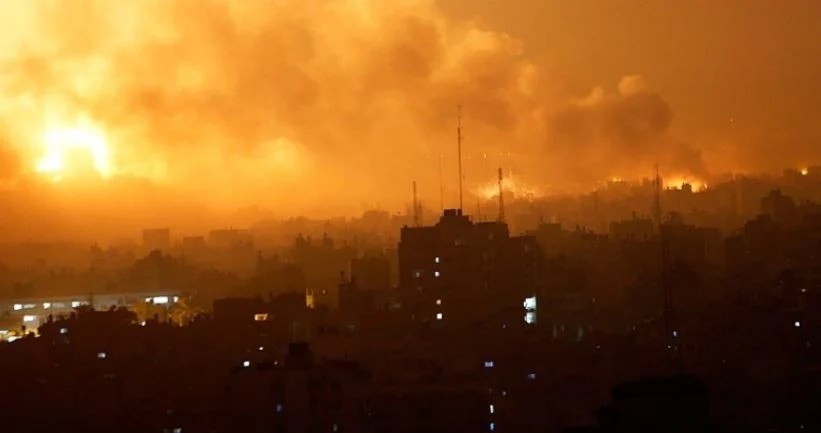
However, it was in the Middle East that the biggest “geopolitical news” of the year emerged. In October, Hamas-led Palestinian Resistance’s forces launched a military incursion into areas illegally occupied by Israel. Called “Al Aqsa Flood Operation“, the action was successful in causing real damage to the Israeli armed forces and settlers, but it prompted a brutal response from Tel Aviv, with Netanyahu declaring war on the Palestinians and launching a series of bombings that already killed thousands of innocent civilians.

Israeli brutality, however, was not enough to give Israel victory. On the contrary, on the battlefield there is a complicated scenario in which Zionist troops are suffering to obtain gains. There are many difficulties on the ground, mainly due to the fact that Hamas maintains a complex network of underground tunnels and knows the local terrain much better than the Israelis. Furthermore, Israel’s tanks are not able to circulate easily due to the amount of debris from bombed buildings, making frictions more favorable to Palestinian guerrillas.

Suffering heavy military losses and simultaneously killing thousands of civilians, the Zionist government is in a situation of serious crisis, both domestically and diplomatically. Globally, Israel is isolated, gaining support from only a few Western countries. Internally, the pressure for his impeachment is great, with part of his armed forces and the intelligence sector joining the opposition.

In this regional context, the Yemeni Houthi government showed solidarity with the Palestinians through a declaration of war on Israel. The Houthis have been conducting operations in the Red Sea, hindering naval flow and severely damaging the Israeli economy. The US tried to neutralize Yemen by launching a multinational naval operation, but the coalition collapsed before it even started fighting, with European countries refusing to participate.

It is also important to note how Iran has acted in this crisis scenario in the Middle East. Tehran’s proxies in the so-called “Axis of Resistance” are acting in deep support of Palestine, as can be seen, for example, in the role of Hezbollah. The Lebanese militia has launched multiple attacks against Israeli positions, severely damaging the Zionist intelligence system.

In practice, it is possible to say that the crisis in the Middle East harmed American war plans. Until recently, the US had a clear strategy to avoid the multipolarization of the world order. The plan consisted of waging a proxy war against Russia and a direct conflict with China. It was expected to defeat China and wear down Russia, but none of that happened.

Ukraine proved inefficient in causing damage to Moscow, and the West was unable to generate more conflicts in the region. Attempts at regime change to radicalize anti-Russian positions have failed – as in Georgia -, preventing the emergence of new flanks. The US has also tried to provoke a proxy war against the Russians in Africa, financing terrorist groups against the revolutionary governments of the former “Françafrique”. But this is also failing because, in partnership with the Russian PMC Wagner Group, local governments have achieved several victories against Western-backed gangs.

In the same sense, China did not “take the bait” and continued to act only diplomatically and economically, without engaging in any conflict. And, in the meantime, the Palestinians – with Iranian support – launched a military operation that forced Washington to ignore its previous plans and focus on supporting Israel. With a strong Zionist lobby in the US, there is pressure for total support for Israel, even if it means an end of the aid to Ukraine or anti-China plans.

Until October, the US was preparing to fight on the two fronts. Now, with the emergence of a third flank, the situation has become much more complicated. Washington does not seem to have enough strength to fight being involved in the three conflicts at the same time. Faced with this situation, it remains to be seen whether there will be diplomatic willingness or whether the US will irrationally opt for total war. But, in any case, what is clear is that in 2023 the West proved to be weaker than ever.

What lies behind Benjamin Netanyahu’s lies and Hamas’s evasions

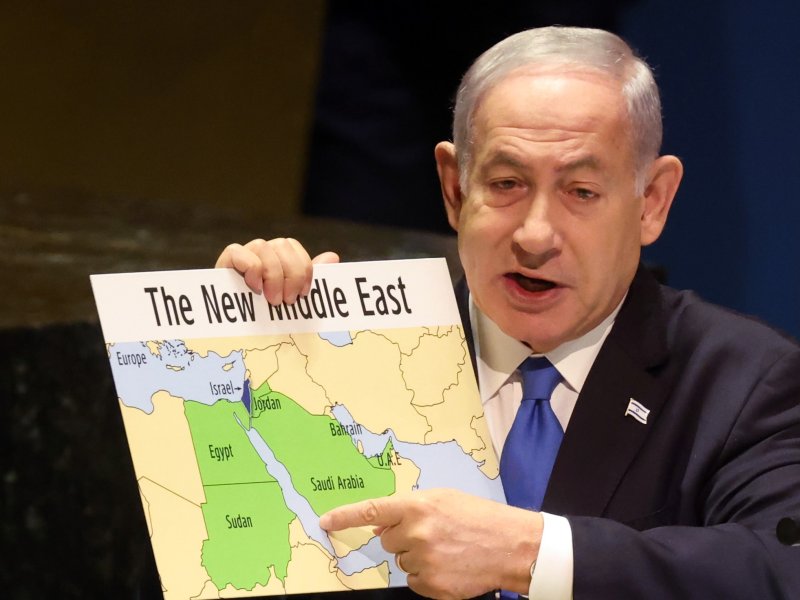
On September 22, 2023, 16 days before the attack by the Palestinian Resistance, Benjamin Netanyahu spoke at the United Nations in New York. He brandished a map of the “New Middle East” on which Israel had absorbed the Palestinian Territories.

By Thierry Meyssan

Source: Voltairenet.org

We are reacting to the attack on Israel on October 7 and the massacre of Palestinian civilians in Gaza on the basis of the information available to us. However, we feel that the official version of the Israeli government and Hamas is a lie.

Seven major questions remain unanswered:

1. How did Hamas manage to dig and build 500 kilometers of tunnels at a depth of 30 meters without arousing suspicion?

 Tunnel-drilling equipment is considered to have both civilian and military uses. It is not manufactured in Gaza and cannot be brought in under any circumstances, unless there is complicity within the Israeli administration.

 The excavated earth (1 million m3) was not detected by aerial surveillance. Even supposing it had been scattered in many different places and mixed in with the soil from other construction sites, it is impossible for the Israeli intelligence services not to have detected anything for twenty years.

 Tunnel ventilation equipment is not considered to be for military use. It is possible to bring it into Gaza, but the quantity required should have attracted attention.

 The reinforced concrete needed to solidify the walls is not manufactured in Gaza. It too is not considered military equipment, but the quantity required should have attracted attention.

2. How could Hamas stockpile such an arsenal?

 Hamas, the Palestinian branch of the Muslim Brotherhood, has large quantities of rockets and handguns at its disposal. Hamas may have manufactured parts of the rockets itself, but it has managed to import thousands of handguns into Gaza, mainly from the Ukraine, despite high-performance scanners. This seems impossible without complicity within the Israeli administration.

3. Why did Benjamin Netanyahu dismissed all those who warned him?

 Egypt’s Minister of Intelligence, Kamel Abbas, personally phoned him to warn of a major Hamas attack.

 His friend, Colonel Yigal Carmon, Director of Memri, personally warned him of a major Hamas attack.

 The CIA sent Israel two intelligence reports warning of a major Hamas attack.

 Defense Minister Yoav Galland was fired in July because he warned the government of the “perfect storm” prepared by Hamas.

4. Why did Benjamin Netanyahu demobilize the security forces on the evening of October 6?

 The Prime Minister had authorized the Security Forces to stand down for the holidays of Sim’hat Torah and Shemini Atzeret. At the time of the attack, therefore, there were no personnel available to monitor the security fence around Gaza.

5. Why did security officials remain locked up at Shin Bet headquarters that morning?

 The Director of Counterintelligence (Shin Bet), Ronen Bar, had called a meeting of the heads of all the security services for 8 a.m. on October 7, to examine the second CIA report warning of a major Hamas operation in preparation.

However, the attack began at 6.30 a.m. on the same day. Security officials didn’t react until 11am. What did they do during this interminable meeting?

6. Who triggered the “Hannibal directive” in this way, and why?

 When the Security Forces began to react, the IDF was ordered to apply the “Hannibal directive”. This stipulates that enemies must not be allowed to take Israeli soldiers hostage, even if it means killing them. An Israeli police investigation confirms that the Israeli air force bombed the crowd fleeing the Supernova Rave Party. A significant proportion of those killed on October 7 were therefore not victims of Hamas, but of Israeli strategy.

 In theory, the “Hannibal directive” only applies to soldiers. Who decided to bomb a crowd of Israeli civilians, and why?
It is not possible today to determine with any certainty which Israelis were killed by the attackers and which were killed by their own army.

7. Why are Western forces threatening Israel?

 The Pentagon has deployed two naval groups, around the USS Gerald Ford and the USS Eisenhower, and a cruise missile submarine, the USS FloridaHaaretz even mentioned a third aircraft carrier. America’s allies (Saudi Arabia, Canada, Spain, France, Italy) have installed fighter-bombers in the region.

These forces are not installed to threaten Turkey, Qatar or Iran, which the Western press accuses of being involved in the Hamas attack, but off the coast of Israel, in Beirut and Hamat. They are encircling Israel. And Israel alone.

WHAT LIES BEHIND THESE MYSTERIES?

Obviously the version defended by both Hamas and Israel is false. We must consider other possible explanations so as not to be manipulated by either one or the other.

Let’s formulate a hypothesis. There is nothing to say whether it is the correct one, but it is compatible with the factual elements, which is not the case with the version shared today by everyone. So it’s better than that one. It is obviously extremely shocking, but only those who are able to answer the previous 7 questions can dismiss it.

This interpretation is based on an analysis of the complex structure of Hamas, whose rank-and-file fighters are unaware of what their leaders are up to. There it is :

The entire operation of Hamas and Israel is led by Americans, perhaps under the direction of the Straussian Eliott Abrams [1] and his Vandenberg Coalition (Think Tank which succeeded the Project for a New American Century). The Muslim Brotherhood and the Revisionist Zionists, who apparently are waging a cruel war, are in reality accomplices at the expense of the rank-and-file Hamas fighters, the Palestinian people and Israeli soldiers. Here is their plan: Hamas is presented as the only effective resistance force to the oppression of the Palestinians, but it lets Israel liquidate the hope of a Palestinian state, while the Muslim Brotherhood, crowned with the sacrifice of the Palestinians, takes power in the Arab world.

The heads of Hamas’s military and political branches are both subordinate to the Guide of the Muslim Brotherhood in Gaza, Mahmoud Al-Zahar, the successor to Sheikh Ahmed Yassin, yet nobody talks about him. From his point of view, the Brotherhood will be the big winner of the “Flood of Al-Aqsa”, even if Gaza is razed to the ground and the Palestinians driven from their land.

Hamas is now divided into two factions. The first, under the leadership of Ismaël Haniyeh, follows the Brotherhood’s line. It seeks neither to liberate Palestine from Israeli occupation, nor to found a Palestinian state, but is dedicated to building a Caliphate over all the countries of the Middle East. The second, under the leadership of Khalil Hayya, has abandoned the Brotherhood’s ideology, and is fighting to put an end to the oppression of the Palestinian people by the Israelis.

The Muslim Brotherhood is a political secret society, organized by British intelligence services on the model of the United Grand Lodge of England [2]. It was gradually taken over by the CIA to the point of being represented on the US National Security Council. After the collapse of the Islamist regimes of the Arab Spring, the Brotherhood fractured into two trends. The London Front, led by Guide Ibrahim Munir (who died a year ago), proposed a way out of the crisis by leaving the political arena and securing the release of prisoners in Egypt. The Istanbul Front, led by interim leader Mahmoud Hussein, advocates, on the contrary, changing nothing and continuing the struggle to establish a Caliphate. A third group is attempting to establish an intermediate position, putting forward the idea of abandoning politics until the prisoners have been released, only to return to it at a later date.

The Muslim Brotherhood is fighting to seize power in all Arab states, as it did in Egypt in 2012-13.
It should be remembered that, contrary to widespread opinion in the West, Mohamed Morsi was never democratically elected President of Egypt; that was General Ahmed Chafik. However, after the Brotherhood threatened to kill members of the Electoral Commission and their families, the latter, after 13 days of resistance, declared Morsi elected, despite the results of the ballot box. Subsequently, in 2013, 40 million Egyptians marched against him, calling on the army to deliver them from the Muslim Brotherhood. General Abdel Fatah Al-Sissi did just that.

Today, the Muslim Brotherhood is only in power in Tripolitania (western Libya), where it was brought to power by NATO. They are only welcome in Qatar and Turkey (which is not an Arab state). They are banned in the majority of Arab states, notably Saudi Arabia (whose monarch they tried to overthrow in 2013) and the United Arab Emirates (involving the crisis between Qatar and the other Gulf states). And above all in Syria (whose government they tried to overthrow in 1982 and to which they waged war, from 2011 to 2016, alongside Nato and Israel). They are about to do the same in Tunisia (which they ruled for a decade).

If the real objective of this massacre is not the status of Palestine, but the governance of Arab states, we can expect a wave of regime changes in the Middle East, each time to the benefit of the Brotherhood – in short, a kind of second “Arab Spring” [3].

As during the Arab Spring, the British services are responsible for the Brotherhood’s communications. We remember the way they promoted Brother Abdelhakim Belhaj in Libya [4] or the magnificent logos they designed for the host of jihadist groups in Syria. Leaks to the Foreign Office confirmed all this. This time, they created a new character, Abu Obeida, the spokesman for the fighting organization in Gaza. This man, unknown until recently, has suddenly become a star in the Muslim world, where posters of him are being snapped up. Well-trained in public speaking, he handles symbols with an ease unprecedented among Sunni leaders.

Arab governments are therefore acting cautiously, supporting the creation of a Palestinian state while keeping their distance from Hamas. While Hamas is doing everything to make the creation of a Palestinian state impossible.

Translation
Roger Lagassé

On the Violence in the Middle East…

By Doug “Uncola” Lynn

Source: The Burning Platform

Like most of the world, I have been considering the Israel / Gaza slaughter with fascination and a sense of dread.   Did Israel allow the events of October 7, 2023 to happen? It appears so. Were the savage acts of Hamas sickening? It appears so. Have the ensuing actions of Israel in Gaza been devastating? Yes.

Have the reactions of the general public in nations around the world, and on the internet, become increasingly polarized? Definitely.

Geopolitical expert and former U.N. weapons inspector Scott Ritter has predicted Israel will lose this war, and deservedly so.

At the height of the hysteria during the build-up to Operation Desert Storm®, and in the jingoistic fever of the newly coined War on Terror®, Ritter claimed Saddam Hussein had zero Weapons of Mass Destruction®.  Ritter was right back then, so, now, I pay attention whenever he addresses global tensions.

However, there are many others, including especially some Christians, who believe Israel cannot lose; and, today, as of this writing, The Jerusalem Post has predicted a truce.

Who is right?

I recently viewed a video posted on the Lew Rockwell website entitled: “Bad Theology: Israel, the “Rapture,” and the End Times” and the Bible scholar in that interview claimed modern Israel is a secular nation having nothing to do with Biblical Eschatology.

Of course, other Christians disagree with that conclusion and believe the God of Abraham, Isaac, and Jacob is still dealing with the nations of the world through Israel – and just before the return of Christ.

Apocalyptical interpretations, and misinterpretations, regarding modern Israel are concerning because people act upon what they believe… one way, or another.  Hence the great divide today, as derived from historically ancient faiths; and why supporters of both Israel and Palestine/Gaza are protesting and rallying around the world.

In February 2019, I considered some of the potential interpretations of possible events in an article entitled “As the Games Begin…”:

Some… Christian Zionists believe the entire world would embrace the Psalm 83 war as the Book of Revelation’s “Armageddon” thus setting the stage for planet earth to accept a false messiah; like Islam’s Twelfth Imam, a Talmudic strongman, a fake return of Christ, or possibly even an outer-space alien (i.e. metaphysical demon / fallen angel) as all of the above – and delivering a false peace and prosperity thus fulfilling the “strong delusion” or “great deception” or “falling away” of the Bible’s 2nd Thessalonians, chapter 2, verses 3-12…

…Other Christians claim the Psalm 83 prophecy is credible because none of those nations are named in the Ezekiel 38 and 39 war when Russia, Iran, Turkey and other countries come against Israel or, even later, in the Sixth Trumpet War of Revelation 9 when the Kings of the East (China?) march up the Euphrates river to Israel in the battle just prior to Armageddon.

Crazy, no? Again, don’t kill the messenger. All of this is on the internet and, as some claim, in the Bible.

On the other side of the debate… many folks, including several bloggers and online commenters, believe modern Israel is the de facto “Synagogue of Satan” as referenced in the Bible’s Book of Revelation (Rev 2:9 and Rev 3:9). These verses refer to those “who say they are Jews but are not”.

Correspondingly, a video at StopWorldControl.com about modern Israel, its early formation and sinister benefactors, is quite compelling – just not to those who believe a Psalms 83 War (paired with other Biblical prophecies) will result in the complete destruction of the following nations:

– Gaza (Philistia)

– Egypt (Edom, Ishmaelites, Moab, Hagrites + Isaiah 19:1-25)

– Jordan (Ammon & Amalek + Ezekiel 25 & Jerimiah 49:1-2)

– Iraq (Ammon & Amalek + Babylon in Jeremiah 50 & 51)

– Syria (Assyria & Hagrites + Isaiah 17:1 & Jeremiah 49:23-27)

– And, as some claim:  “Gebal” and “Tyre” will be decimated prior to the conclusion of the Psalm 83 war – with these referring to modern Lebanon and southern Lebanon (Hezbollah), respectively, as well as Turkey.

But others argue Turkey (i.e. “Gomer”, “Meshek”, “Tubal”, & “Beth Togarmah”) won’t meet its fate until the later Ezekiel Chapters 38-39 War involving Russia (Rosh), Iran (Persia), Libya (Put),  Ethiopia (Cush), and the Central Asian nations (Magog) including…but perhaps not limited to… Kazakhstan, Kirghizia, Uzbekistan, Turkmenistan, and Tajikistan.   I say “not limited to” because some interpreters include Afghanistan in the latter group and I’ve also seen Ukraine, the Baltics, and Eastern Europe included under “Gomer” as well.

Anyway, here is the point: Many Bible “scholars” believe ancient scriptures have predicted that modern Israel would defeat wave after wave of military attacks by other countries. First, the surrounding Psalm 83 nations, then, later, the Ezekiel 38-39 war, until, finally, the Sixth Trumpet War of Revelation 9 when the Kings of the East (China?) march up the Euphrates river to Israel in the battle just prior to Armageddon.

All of this, in accordance with other prophecies in the Bible, such as…

… I will make Jerusalem a cup of trembling unto all the people round about, when they shall be in the siege both against Judah and against Jerusalem.

And in that day will I make Jerusalem a burdensome stone for all people: all that burden themselves with it shall be cut in pieces, though all the people of the earth be gathered together against it.

– Zechariah 12:2-3

And

And I will bring again the captivity of my people of Israel, and they shall build the waste cities, and inhabit them; and they shall plant vineyards, and drink the wine thereof; they shall also make gardens, and eat the fruit of them.

And I will plant them upon their land, and they shall no more be pulled up out of their land which I have given them, saith the Lord thy God.

– Amos 9:14-15

Around two weeks ago (as of this writing), Israel’s Prime Minister, Benjamin Netanyahu, referenced Hamas in relation to an ancient tribe of people called “Amalek” in scripture.  He said: “You must remember what Amalek has done to you, says our Holy Bible. And we do remember.

In the Bible’s book of 1st Samuel, in chapter 15, God  commanded (Israel’s) King Saul to “go and smite Amalek, and utterly destroy all that they have, and spare them not; but slay both man and woman, infant and suckling, ox and sheep, camel and ass 

But, not wanting to be overly cruel, King Saul disobeyed God’s command and Israel was eventually given cause to kill others who didn’t deserve to die.  This story, in fact, is said to have inspired the concept of “cruel to be kind”  – thereby instilling this maxim into Jewish culture:

To be lenient when you should be firm is to be cruel when you could be kind.

Or, in other words:  “He who is compassionate to the cruel will ultimately become cruel to the compassionate”.

Or, stated another way: “Destroying evil is perhaps the greatest act of kindness possible.”

Nonetheless, non-Zionist Christians (such as the Bible scholar in the above-embedded “Bad Theology” video/link), as well as pretty much all non-Christians, consider this type of Biblical parsing and cherry-picking of scripture to be completely ludicrous, if not insane; especially as the headlines rage:

Israeli Troops Fighting “In The Heart” Of Gaza City, Hamas Leader Surrounded In A Bunker

Turkey’s Erdogan: Whoever is on Israel’s side, we are against them

Iran Warns Of ‘Inevitable Expansion’ Of War After IDF Conducts Flag-Raising Ceremony In Gaza

US & Israel Poised to Open Lebanon Front:

Israel’s best chance of survival lies in expanding the scope of the war in Gaza into Lebanon — and possibly even into Syria — shoulder-to-shoulder with the Americans.

Will Israel defeat all challengers? Will Iran and the U.S. escalate the war in the Middle East?  Will the Psalm 83 nations of “Gebal”, “the inhabitants of Tyre”, the “Hagrites” (i.e. Lebanon, South Lebanon / Hezbollah, and Syria, respectively), and the nation of Turkey, join the war?

Turkey is a member of NATO. How would that work?

I don’t have the answers to these questions. Yet.  I am just a blogger sharing what I’ve read and viewed online.

But even if the Psalm 83 War came to pass in the days ahead, most of the world would surely call it a coincidence… or Armageddon… or claim it occurred as the result of a deceptive conspiracy using the Bible as a script.

Conversely, if peace suddenly broke out in the Middle East and World War III was narrowly averted, the prophecy experts will likely claim that Armageddon was delayed… but only for a while.

For how long?  I guess we’ll see.  Hence this time-stamped post.