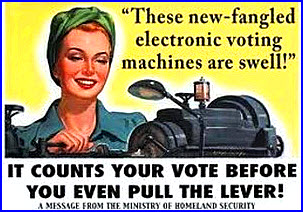
How Does Corporate Media Manufacture False Narratives?

aa-corporate-media-very-good-poster

By Nauman Sadiq

Source: RINF

What bothers me is not that we are unable to find the solution to our problems, what bothers me more is the fact that neoliberals are so utterly unaware of the real structural issues that their attempts to sort out the tangential issues will further exacerbate the main issues. Religious extremism, militancy and terrorism are not the cause but the effect of poverty, backwardness and disenfranchisement.

Empirically speaking, if we take all the other aggravating factors out: like poverty, backwardness, illiteracy, social injustice, disenfranchisement, conflict, instability, deliberate training and arming of certain militant groups by the regional and global players, and more importantly grievances against the duplicitous Western foreign policy, I don’t think that Islamic State, al-Qaeda and the likes would get the abundant supply of foot soldiers that they are getting now in the troubled regions of Middle East, North Africa and South Asia.

Moreover, I do concede that the rallying cry of “Jihad in the way of God” might have been one reason for the abundant supply of foot soldiers to the jihadists’ cause, but on an emotional level it is the self-serving and hypocritical Western interventionist policy in the energy-rich Middle East that adds fuel to the fire. When Muslims all over the Islamic countries see that their brothers-in-faith are dying in Palestine, Syria, Iraq, Libya, Yemen and Afghanistan, on an emotional level they feel outraged and seek vengeance and justice.

This emotional outrage, in my opinion, is a far more potent factor than the sterile rational argument of God’s supposed command to fight holy wars against the infidels. If we take all the other contributing factors, that I have mentioned in the second paragraph out of the equation, I don’t think that Muslims are some “exceptional” variety of human beings who are hell-bent on killing the heretics all over the world.

Notwithstanding, it’s very easy to distinguish between the victims of structural injustices and the beneficiaries of the existing neocolonial economic order all over the world. But instead of using words that can be interpreted subjectively I’ll let the figures do the talking. Pakistan’s total GDP is only $270 billion and with a population of 200 million it amounts to a per capita income of only $1400. While the US’ GDP is $18 trillion and per capita income is in excess of $50,000. Similarly the per capita income of most countries in the Western Europe is also around $40,000. That’s a difference of 40 to 50 TIMES between the incomes of Third World countries and the beneficiaries of neocolonialism, i.e. the Western powers.

Only the defense budget of the Pentagon is $600 billion, which is three times the size of Pakistan’s total GDP. A single multi-national corporation based in the Wall Street and other financial districts of the Western world owns assets in excess of $200 billion which is more than the total GDP of many developing economies. Examples of such business conglomerates are: Investment banks – JP Morgan, Goldman Sachs, Barclays, HSBC, BNP Paribas; Oil majors – Exxon Mobil, Chevron, BP, RDS, Total, Vitol; Manufacturers – Apple, Microsoft and Google.

On top of that, semi-legit wealth from all over the world flows into the Western commercial and investment banks: last year there was a report that the Russian oligarchs have deposited $800 billion in the Western banks, while the Chinese entrepreneurs have deposited $1.5 trillion in the Western financial institutions.

Moreover, in April this year the Saudi finance minister threatened that the Saudi kingdom would sell up to $750 billion in Treasury securities and other assets if Congress passed a bill that would allow the Saudi government to be held responsible for any role in the September 11, 2001 terror attacks. And $750 billion is only the Saudi investment in the US, if we add up Saudi investment in Western Europe, and the investments of UAE, Kuwait and Qatar in the Western economies, the sum total would amount to trillions of dollars of Gulf’s investment in the US and Western Europe.

The first and foremost priority of the Western powers is to save their Corporate Empire, and especially their financial institutions, from collapsing; everything else like eliminating terrorism, promoting democracy and “responsibility to protect” are merely arranged side shows to justify their interventionist foreign policy, especially in the energy-rich Middle East.

Additionally, the irony is that the neoliberal dupes of the mainstream media justify and validate the unfair practices of the neocolonial powers and hold the victims of structural injustices responsible for their misfortunes. If a Third World’s laborer has been forced to live on less than $5 a day and a corporate executive sits in the Wall Street on top of $18 trillion business empire, neoliberals are okay with this travesty.

However, we need to understand that how does a neoliberal mindset is structured? As we know that mass education programs and mass media engender mass ideologies. We like to believe that we are free to think, but we aren’t. Our narratives aren’t really “our” narratives. These narratives of injustice and inequality have been constructed for the public consumption by the corporate media, which is nothing more than the mouthpiece of the Western political establishments and the business interests.

Media is our eyes and ears through which we get all the inputs and it is also our brain through which we interpret raw data. If media keeps mum over some vital structural injustices and blows out of proportion some isolated incidents of injustice and violence, we are likely to forget all about the former and focus all of our energies on the tangential issues which the media portrays as the “real” ones.

Monopoly capitalism and the global neocolonial economic order are the real issues while Islamic radicalism and terrorism are the secondary issues and itself an adverse reaction to the former. That’s how the mainstream media constructs artificial narratives and dupes its audience into believing the absurd: during the Cold War it created the “Red Scare” and told us that communism is an existential threat to the free world and the Western way of life. We bought this narrative.

Then the West and its Saudi and Pakistani collaborators financed, trained and armed the Afghan so-called “freedom fighters” and used them as their proxies against the Soviets. After the collapse of the Soviet Union they declared the former “freedom fighters” to be terrorists and another existential threat to the “free world” and the Western way of life. We again bought this narrative.

And finally, during the Libyan and Syrian proxy wars the former terrorists once again became freedom fighters – albeit in a more nuanced manner, this time around the corporate media sells them as “moderate rebels.” And the lobotomized neoliberal audience of the mainstream media is once again willing to buy this narrative, how ironic?


Nauman Sadiq is an Islamabad-based attorney, columnist and geopolitical analyst focused on the politics of Af-Pak and MENA regions, neocolonialism and Petroimperialism.

The Imperial President’s Toolbox of Terror: A Dictatorship Waiting to Happen


pimps-inc-improved_presidential_seal_by_sharpwriter-d486y6m_zps3hnflawe

By John W. Whitehead

Source: Waking Times

“When the President does it, that means that it is not illegal.”~Richard Nixon

Presidents don’t give up power.

Executive orders don’t expire at the end of each presidential term.

And every successive occupant of the Oval Office since George Washington, who issued the first executive order, has expanded the reach and power of the presidency.

The Constitution invests the President with very specific, limited powers: to serve as Commander-in-Chief of the military, grant pardons, make treaties (with the approval of Congress), appoint ambassadors and federal judges (again with Congress’ blessing), and veto legislation.

In recent years, however, American presidents have anointed themselves with the power to wage war, unilaterally kill Americans, torture prisoners, strip citizens of their rights, arrest and detain citizens indefinitely, carry out warrantless spying on Americans, and erect their own secretive, shadow government.

These are the powers that will be inherited by the next heir to the throne, and it won’t make a difference whether it’s a President Trump or a President Clinton occupying the Oval Office.

The powers amassed by each successive president through the negligence of Congress and the courts—powers which add up to a toolbox of terror for an imperial ruler—empower whomever occupies the Oval Office to act as a dictator, above the law and beyond any real accountability.

Consider some of the presidential powers—which have been acquired through the use of executive orders, decrees, memorandums, proclamations, national security directives and legislative signing statements and can be activated by any sitting president—that have allowed past presidents to operate above the law and beyond the reach of the Constitution.

The power to kill. As the New York Times concluded, “President Obama, who came to office promising transparency and adherence to the rule of law, has become the first president to claim the legal authority to order an American citizen killed without judicial involvement, real oversight or public accountability.” Obama’s kill lists—signature drone strikes handpicked by the president—have been justified by the Justice Department as lawful because they are subject to internal deliberations by the executive branch. “In other words,” writes Amy Davidson for the New Yorker, “it’s due process if the President thinks about it.”

The power to wage war. Ever since Congress granted George W. Bush the authorization to use military force in the wake of 9/11, the United States has been in a state of endless war without Congress ever having declared one. Having pledged to end Bush’s wars, Barack Obama has extended them. As the New York Times notes, “He has now been at war longer than Mr. Bush, or any other American president… he will leave behind an improbable legacy as the only president in American history to serve two complete terms with the nation at war.” More than that, as the Atlantic makes clear, “Obama is inaugurating an era of unbridled war-making by the commander in chief, without any of the checks and balances contemplated by the American constitutional system.”

The power to torture. Despite the fact that the Bush Administration’s use of waterboarding as a torture tactic was soundly criticized by Obama, the Obama Administration refused to hold anyone accountable for participating in the rendition and torture programs. In the absence of any finding of criminality, the authorization of such torture tactics remain part of the president’s domain—should he or she ever choose to revive it.

The power to spy on American citizens. In the wake of the 9/11 terror attacks, President Bush secretly authorized the National Security Agency to carry out surveillance on Americans’ phone calls and emails. The Bush Administration claimed that the Constitution gives the president inherent powers to protect national security. The covert surveillance has continued under Obama.

The power to indefinitely detain American citizens. In 1942, President Franklin D. Roosevelt issued an executive order requiring that all Japanese-Americans be held in internment camps. While that order was later rescinded, the U.S. Supreme Court declared it to be constitutional. The ruling has never been overturned. Pointing out that such blatantly illegal detentions could happen again—with the blessing of the courts—Justice Scalia warned, “In times of war, the laws fall silent.” In fact, each National Defense Authorization Act enacted since 2012 has included a provision that permits the military to detain individuals—including Americans citizens—indefinitely without trial.

The power to strip American citizens of their constitutional rights. The Bush Administration claimed it could strip American citizens of their constitutional rights, imprison them indefinitely, and deny them legal representation simply by labeling them as enemy combatants. While the Obama Administration jettisoned the use of the term “enemy combatant,” it has persisted in defending the president’s unilateral and global right to detain anyone suspected of supporting terrorist activities.

The power to secretly rewrite or sidestep the laws of the country. Secret courts, secret orders, and secret budgets have become standard operating procedure for presidential administrations in recent years. A good case in point is Presidential Policy Directive 20, a secret order signed by President Obama as a means of thwarting cyberattacks. Based on what little information was leaked to the press about the clandestine directive, it appears that the president essentially put the military in charge of warding off a possible cyberattack. A FOIA request by the Electronic Privacy Information Center (EPIC) seeking more details on the directive was allegedly denied because doing so could cause “exceptionally grave damage to the national security.” However, EPIC believes the order allows for military deployment within the United States, including the ability to shut off communications with the outside world if the military believes it is necessary.

The power to transform the police into extensions of the military and indirectly institute martial law. What began in the 1960s as a war on drugs transitioned into an all-out campaign to transform America’s police forces into extensions of the military. Every successive president since Nixon has added to the police’s arsenal, tactics and authority. In fact, the Obama Administration has accelerated police militarization by distributing military weapons and equipment to police and incentivizing SWAT team raids and heavy-handed police tactics through the use of federal grants and asset forfeiture schemes.

The power to command the largest military and intelligence capabilities in the world and, in turn, “wag the dog.”As law professor William P. Marshall points out:

In his roles as Commander-in-Chief and head of the Executive Branch, the President directly controls the most powerful military in the world and directs clandestine agencies such as the Central Intelligence Agency and National Security Agency. That control provides the President with immensely effective, non-transparent capabilities to further his political agenda and/or diminish the political abilities of his opponents. Whether a President would cynically use such power solely for his political advantage has, of course, been the subject of political thrillers and the occasional political attack. President Clinton, for one, was accused of ordering the bombing of terrorist bases in Afghanistan to distract the nation from the Lewinsky scandal, and President Nixon purportedly used the Federal Bureau of Investigation to investigate his political enemies. But regardless whether such abuses actually occurred, there is no doubt that control of covert agencies provides ample opportunity for political mischief, particularly since the inherently secretive nature of these agencies means their actions often are hidden from public view. And as the capabilities of these agencies increase through technological advances in surveillance and other methods of investigation, so does the power of the President.

Thus, it doesn’t matter what the pundits predict, the candidates promise, and the people decree.

It doesn’t even matter whether the people elect Trump or Clinton. After all, politicians sing a different tune once elected. For instance, the Chicago Tribune editorial board observed that although Barack Obama opposed the imperial tendencies of George W. Bush, once in office, Obama “wound up behaving as if he had a scepter and throne.”

What matters is that the damage has already been done.

As Professor Marshall explains, “every extraordinary use of power by one President expands the availability of executive branch power for use by future Presidents.” Moreover, it doesn’t even matter whether other presidents have chosen not to take advantage of any particular power, because “it is a President’s action in using power, rather than forsaking its use, that has the precedential significance.”

In other words, each successive president continues to add to his office’s list of extraordinary orders and directives, granting him- or herself near dictatorial powers.

So let’s not have any more talk of which candidate would be more dangerous with these powers.

The fact that any individual—or branch of government—is empowered to act like a dictator is danger enough.

This abuse of presidential powers has been going on for so long that it has become the norm and it will continue no matter which corporate puppet wins the election. The Constitution be damned.

The government of laws idealized by John Adams has fallen prey to a government of men.

As a result, we no longer have a system of checks and balances.

“The system of checks and balances that the Framers envisioned now lacks effective checks and is no longer in balance,”concludes Marshall. “The implications of this are serious. The Framers designed a system of separation of powers to combat government excess and abuse and to curb incompetence. They also believed that, in the absence of an effective separation-of-powers structure, such ills would inevitably follow. Unfortunately, however, power once taken is not easily surrendered.”

The solution is far from simple but it’s time, as Marshall suggests, to recalibrate the balance of power. This will mean putting an end to the use of executive orders, decrees, memorandums, proclamations, national security directives and legislative signing statements as a means of getting around Congress and the courts. It will mean that Americans will have to stop letting their politics blind them to government wrongdoing. And it will mean holding all three branches of government accountable to the Constitution (i.e., if they abuse their powers, vote them out of office).

Thus far, Congress, with little spine, less integrity and too busy running for re-election, has offered little attempt at oversight, enabling the president to ride roughshod over the Constitution. The media—the perfect accomplice in this stealthy, bloodless coup—continues to inundate us with the latest celebrity scandal, says virtually nothing about these burgeoning powers. All the while, most Americans continue to operate in blissful near-ignorance, unaware or uncaring that the republic is about to fall.

Yet as I point out in my book Battlefield America: The War on the American People, it will be “we the people”—not the president, the politicians, the corporate elite or the media—who will suffer the consequences when freedom falls and tyranny rises. They may justify violating our freedoms in the name of whatever phantom menace-of-the-month threatens “national security,” but we will always be the ones to pay the price.


Distrust of 2016’s Hackable Election Is a Media Landslide With Just One Solution: Hand-counted Paper Ballots

jf-7

By Bob Fitrakis and Harvey Wasserman

Source: FreePress.org

Finally, the major for-profit media is approaching consensus that it’s easy to hack U.S. political elections. Even candidates Hillary Clinton and Donald Trump are raising unprecedented doubts – from very different directions – about the reliability of the upcoming vote count.

Ultimately, there is just one solution: universal hand-counted paper ballots, with carefully protected voter registration rolls, and a transparent chain of custody.

The corporate media and the Democrats are obsessed with the “Russians.” Donald Trump rants about a mythological army of voters voting multiple times.

But the real threat to our election system comes from private for-profit corporations that register voters, control voter databases, then count and report the vote with secret proprietary software and zero transparency, accountability, or recourse.

After ignoring or attacking the reportage since Florida 2000 of Bev Harris, Greg Palast, freepress.org and numerous others, the corporate media seems finally to be getting the message: under the current system, any American election – even the one for president – can be stripped and flipped by a tiny handful of electronic hackers working anywhere from the Kremlin to a party HQ to a state governor’s office to a teenager’s garage.

Here is some of what the mainstream media is finally admitting. In an article posted on July 28, 2016, NBC News pointed out that our elections are vulnerable to hacking because they “are not part of the vast ‘critical infrastructure protection’ safety net set up by the Department of Homeland Security.”

CBS News wrote August 10, 2016, about “the hackers at Symantec Security Response” who demonstrated how “Election Day results could be manipulated by an affordable device you can find online.”

Former national coordinator for counter-terrorism Richard Clarke, reporting for ABC News on August 19, 2016, analyzed the particular security problems related to battleground states like Ohio and Florida: “In 2000 and 2004, there were only a handful of battleground states that determined which presidential candidate had enough Electoral College votes to win. A slight alteration of the vote in some swing precincts in swing states might not raise suspicion. Smart malware can be programmed to switch only a small percentage of votes from what the voters intended. That may be all that is needed, and that malware can also be programmed to erase itself after it does its job, so there might be no trace it ever happened.” Clarke was on the White House National Security Council during both Bill Clinton’s and George W. Bush’s administrations.

Zeynep Tufekci, an associate professor at the North Carolina School of Information and Library Science, in his August 12, 2016 New York Times op-ed “The Election Won’t Be Rigged but It Could Be Hacked,” wrote: “The mere existence of this discussion is cause for alarm. The United States needs to return, as soon as possible, to a paper-based, auditable voting system in all jurisdictions that still use electronic-only, unverifiable voting machines.”

On August 30, 2016, the Washington Post wrote: “Deleting or altering data on voter rolls could cause mayhem on Election Day disenfranchising some voters. Many voting machines themselves also are vulnerable, especially touch-screen systems that do not create a paper record as a guard against fraud or manipulation.” The Post also supplied a list of the 15 states with the most vulnerable voting systems.

The list of those now admitting the obvious includes the Boston Globe, The Atlantic, USA Today, The Guardian, Mother Jones, and Politico, some of which have previously mocked those of us reporting on this issue. Most important has been the highly influential The Hill, which weighed in on May 2, 2016 with “Election fraud feared as hackers target voter records.” The lede was straightforward: “A series of data breaches overseas are spurring concerns that hackers could manipulate elections in the United States.”

Trump advisor Roger Stone wrote a column in The Hill with the headline: “Can the 2016 Elections Be Rigged? You Bet.” He also referred to our latest summary volume, “The Strip & Flip Selection of 2016: Five Jim Crows & Electronic Election Theft,” as “a must-read book on the strip and flip techniques used to rig these machines.”

But in the 2016 primary election, there are other must-reads as well. Perhaps the most important is Election Justice USA’s report entitled “Democracy Lost: A Report on the Fatally Flawed 2016 Democratic Primaries.” This report cites six major areas of election irregularities in this year’s 26 primary elections:

1) Targeting voter suppression

2) Registration tampering

3) Illegal voter purges

4) Exit poll discrepancies

5) Evidence for voting machine tampering

6) The security (or lack thereof) of various voting machines types.

In their 96-page report, Election Justice researchers documented how Hillary Clinton’s campaign benefited from these “various types of fraud.” Their conclusion: “Based on this work, Election Justice USA has established an upper estimate of 184 pledged delegates lost by Senator Bernie Sanders as a consequence of specific irregularities and instances of fraud.”

Election Justice’s well-documented estimate that Sanders lost 184 delegates means that if the election had been conducted fairly, the Senator from Vermont would now be the Democratic nominee.

Another document essential to understanding election irregularities that allowed Hillary Clinton to capture the Democratic Party nomination is a paper co-authored by Axel Geijsel of Tilburg University in the Netherlands and Rodolfo Cortes Barragan of Stanford University. Their analysis found that primary election results in states with the most vulnerable and hackable voting machines and without a paper trail overwhelmingly favored Hillary Clinton 65 percent to 35 percent. Sanders led Clinton 51 percent to 49 percent in states where the vote count could be verified with a paper trail.

The correlation between the increased Clinton vote and the increased vulnerability of the voting machines has been avoided like the plague by the corporate media.

Equally important to read is mathematician Richard Charnin’s blog. Charnin is a man the mainstream media often attacks – but not with mathematical formulas to rebut Charnin’s detailed analysis. Rather they attack him because, like the vast majority of Americans, he believes that John F. Kennedy was not killed by a lone gunman. In 2016, official Democratic primary vote counts compared to exit poll results were significantly outside the margin of error in 12 of 26 states. Charnin concluded that the probability of those official vote tallies being correct are one in 78 billion. There were no such discrepancies in this year’s Republican primaries.

Now 16 years after the theft of the presidency in Florida 2000, and a dozen since it was done again in Ohio 2004, the corporate media are approaching consensus that it is indeed very easy to strip millions of legitimate citizens from the voting rolls, and then to hack electronic voting machines and computerized central tabulators to flip the official final outcome.

The threat to this year’s election does not come from non-existent armies of mythological hordes voting multiple times. It comes from the private partisan companies with their secret proprietary software that control the voter rolls, the electronic machines, and ultimately the final outcome at all levels of government. The mega-corporations are the ones that flipped George W. Bush into the White House and Hillary Clinton into the Democratic nomination, not to mention manipulating countless Senate, House, and state and local elections along the way.

For a hopelessly vulnerable electronic election system which is flawed, hackable and riggable from top to bottom, there is just one solution: transparent unhackable voter rolls, and universal hand-counted paper ballots open to public scrutiny from the precinct level to the final official tallies, as dutifully reported by our slowly awakening corporate media.


Bob Fitrakis & Harvey Wasserman are co-authors of The Strip & Flip Selection of 2016: Five Jim Crows & Electronic Election Theft, available at www.freepress.org and www.solartopia.org, where Bob’s Fitrakis Files and Harvey’s Solartopia! can also be found.

Rigged

delegates

By David Swanson

Source: Let’s Try Democracy

The 2016 Republican presidential primary was rigged. It wasn’t rigged by the Republicans, the Democrats, Russians, space aliens, or voters. It was rigged by the owners of television networks who believed that giving one candidate far more coverage than others was good for their ratings. The CEO of CBS Leslie Moonves said of this decision: “It may not be good for America, but it’s damn good for CBS.” Justifying that choice based on polling gets the chronology backwards, ignores Moonves’ actual motivation, and avoids the problem, which is that there ought to be fair coverage for all qualified candidates (and a democratic way to determine who is qualified).

The 2016 Democratic presidential primary was rigged. It wasn’t rigged by bankers, misogynists, Russians, Republicans, or computer hackers. It was rigged by the Democratic National Committee and its co-conspirators in the media, many of whom have helpfully confessed (in case it wasn’t obvious) in emails leaked from the DNC and from John Podesta. The DNC chose Hillary Clinton and worked hard to make sure that she “won.” Nobody has produced a hint of evidence as to who leaked the emails that added unnecessary confirmation of this rigging, but they should be thanked for informing us, whoever they are.

The FBI investigation of Hillary Clinton’s misuse of email was as rigged as the non-prosecution of the CEO of Wells Fargo. The U.S. political system is bought and paid for. Without millions of dollars to funnel to television networks for advertising, any candidate is rigged right out of participating. This rigging of the system is not fixed by someone like Donald Trump pretending for a while that he won’t take bribes, that he’ll spend only his own money, because most people don’t have that kind of money to spend. This rigging is not fixed by making someone like Hillary Clinton take her bribes through her family foundation or requiring that her political action committees remain theoretically separate from the campaign they are collaborating hand-in-glove with, because money buys power.

The debates are rigged by a private entity with no official status that calls itself the Commission on Presidential Debates and transforms open debates among multiple candidates into exclusively bipartisan joint appearances with many large and fine points negotiated beforehand.

Actual governance of the United States is rigged. Congress plans to attempt to ram through a number of intensely unpopular measures just after the election, including a supplemental spending bill for more wars and including the Trans-Pacific Partnership. The hope is that most people will have tuned out after the election circus, and that most of them will forget what happened 2 or 4 years later.

The demonization of Vladimir Putin is rigged. Nobody has seen evidence that he or his government did us the favor of informing us of the DNC’s corruption. He proposed a ban on cyber “war” that was rejected by the United States, for goodness sake. There’s no evidence that Russia shot down an airplane in Ukraine or invaded Ukraine or seized Crimea or plotted attacks on the United States. The United States pulled out of the ABM treaty, expanded NATO to Russia’s border, built missile bases, arranged military “exercises,” facilitated a Ukrainian coup, and pushed a string of hostile lies. Russia has shown even more restraint than your typical U.S. voter (who usually sits home and does not vote, especially in primaries).

Military spending is rigged. Nobody knows it amounts to over half of U.S. discretionary spending.  Nobody knows it’s as much in the U.S. as in the rest of the world (allies and otherwise) combined. Nobody pays attention to the bribes from war profiteers, or to the threats held over Congress members to pull weapons jobs out of districts or states. Supporters of both big candidates claim their candidate plans to cut military spending. Both candidates have said the exact opposite. The debates and interviews steer clear of the whole topic.

The shapes of the districts are blatantly rigged by gerrymandering. The existence of the Senate, in which Rhode Island and Wyoming each have as much say as California is rigged against the popular will. The electoral college is rigged against the popular will and in favor of concentrating national campaigns in a handful of “swing states.”

Voter registration is rigged. A handful of states have now made it automatic, as most states have long-since done for military draft registration. In the rest of the country, thousands of young people run around registering voters, imagining they are engaged in “activism.” Meanwhile, the right to vote can be denied to anyone by claiming they aren’t registered.

People’s names are stripped from voting rolls through a so-called justice system that brands them as felons, and through the careful rigging of those rolls by corrupt and partisan state governments that intentionally strip out people likely to vote for a particular party. This includes racial profiling. Bob Fitrakis, Harvey Wasserman, Greg Palast and others have reported extensively on these practices.

Election day is rigged as well. It’s not a holiday. Most people have to work. Poor districts and racial minority districts tend to have fewer machines and longer lines. ID requirements are used to deny people the right to vote. Intimidation and racial profiling by partisan activists serve the same function of rigging the election. The myths and lies about the virtually nonexistent phenomenon of “voter fraud” also serve to rig the election.

The election machines are also rigged. That is to say: instead of verifiable paper ballots publicly hand-counted in front of observers from all interested parties in each polling place, we have a faith-based system of voting on black-box machines that can never, even in theory, be checked for accuracy. These machines have been very easily hacked in demonstrations. These machines have visibly flipped votes before the eyes (and cameras) of countless voters. These machines have almost certainly played a key role in flipping the results of numerous elections.

Now, the wider the margin of victory, the less likely an electronic flipping. And the fact that machines can easily be used to steal an election does not mean that they always will be. But it was very odd during the late summer of 2016 to watch the U.S. media announce that these machines were totally unreliable — just what many of us had been saying for years. But the media said this in order to accuse Russia of planning to sabotage the coming U.S. election, or in order to accuse Russia of exactly what these media reports themselves did: plant seeds of doubt in U.S. minds.

Those doubts should be there. People should watch for visible problems with machines and with partisan and racist intimidators, and report all such to 1-866-OUR-VOTE, to county clerks, to secretaries of state, and to corporate and independent media. Then we should work for necessary reforms, including a respectful cessation of the U.S. government’s routine practice of interfering in elections and overthrowing governments in other people’s countries — a practice that has clearly resulted in the U.S. media projecting such behavior on others.

Ultimately, an unrigging of the U.S. system might take the form of amending the U.S. Constitution to slip in words like these:

The rights protected by the Constitution of the United States are the rights of natural persons only.

Artificial entities, such as corporations, limited liability companies, and other entities, established by the laws of any State, the United States, or any foreign state shall have no rights under this Constitution and are subject to regulation by the People, through Federal, State, or local law. The privileges of artificial entities shall be determined by the People, through Federal, State, or local law.

The judiciary shall not construe the spending of money to influence elections to be speech under the First Amendment.

All elections for President and members of the United States House of Representatives and the United States Senate shall be entirely publicly financed. No political contributions shall be permitted to any federal candidate, from any other source, including the candidate. No political expenditures shall be permitted in support of any federal candidate, or in opposition to any federal candidate, from any other source, including the candidate. The Congress shall, by statute, provide limitations on the amounts and timing of the expenditures of such public funds and provide criminal penalties for any violation of this section.

State and local governments shall regulate, limit, or prohibit contributions and expenditures, including a candidate’s own contributions and expenditures, for the purpose of influencing in any way the election of any candidate for state or local public office or any state or local ballot measure.

The right of the individual U.S. citizen to vote and to directly elect all candidates by popular vote in all pertinent local, state, and federal elections shall not be violated. Citizens will be automatically registered to vote upon reaching the age of 18 or upon becoming citizens at an age above 18, and the right to vote shall not be taken away from them. Votes shall be recorded on paper ballots, which shall be publicly counted at the polling place. Election day shall be a national holiday.

Nothing contained in this amendment shall be construed to abridge the freedom of the press. During a designated campaign period of no longer than six months, free air time shall be provided in equal measure to all candidates for federal office on national, state, or district television and radio stations, provided that each candidate has, during the previous year, received the supporting signatures of at least five percent of their potential voting-age constituents. The same supporting signatures shall also place the candidate’s name on the ballot and require their invitation to participate in any public debate among the candidates for the same office.

The Age of Disintegration

images

Neoliberalism, Interventionism, the Resource Curse, and a Fragmenting World

By Patrick Cockburn

Source: TomDispatch.com

We live in an age of disintegration. Nowhere is this more evident than in the Greater Middle East and Africa. Across the vast swath of territory between Pakistan and Nigeria, there are at least seven ongoing wars — in Afghanistan, Iraq, Syria, Yemen, Libya, Somalia, and South Sudan. These conflicts are extraordinarily destructive. They are tearing apart the countries in which they are taking place in ways that make it doubtful they will ever recover. Cities like Aleppo in Syria, Ramadi in Iraq, Taiz in Yemen, and Benghazi in Libya have been partly or entirely reduced to ruins. There are also at least three other serious insurgencies: in southeast Turkey, where Kurdish guerrillas are fighting the Turkish army, in Egypt’s Sinai Peninsula where a little-reported but ferocious guerrilla conflict is underway, and in northeast Nigeria and neighboring countries where Boko Haram continues to launch murderous attacks.

All of these have a number of things in common: they are endless and seem never to produce definitive winners or losers. (Afghanistan has effectively been at war since 1979, Somalia since 1991.) They involve the destruction or dismemberment of unified nations, their de facto partition amid mass population movements and upheavals — well publicized in the case of Syria and Iraq, less so in places like South Sudan where more than 2.4 million people have been displaced in recent years.

Add in one more similarity, no less crucial for being obvious: in most of these countries, where Islam is the dominant religion, extreme Salafi-Jihadi movements, including the Islamic State (IS), al-Qaeda, and the Taliban are essentially the only available vehicles for protest and rebellion. By now, they have completely replaced the socialist and nationalist movements that predominated in the twentieth century; these years have, that is, seen a remarkable reversion to religious, ethnic, and tribal identity, to movements that seek to establish their own exclusive territory by the persecution and expulsion of minorities.

In the process and under the pressure of outside military intervention, a vast region of the planet seems to be cracking open. Yet there is very little understanding of these processes in Washington. This was recently well illustrated by the protest of 51 State Department diplomats against President Obama’s Syrian policy and their suggestion that air strikes be launched targeting Syrian regime forces in the belief that President Bashar al-Assad would then abide by a ceasefire. The diplomats’ approach remains typically simpleminded in this most complex of conflicts, assuming as it does that the Syrian government’s barrel-bombing of civilians and other grim acts are the “root cause of the instability that continues to grip Syria and the broader region.”

It is as if the minds of these diplomats were still in the Cold War era, as if they were still fighting the Soviet Union and its allies. Against all the evidence of the last five years, there is an assumption that a barely extant moderate Syrian opposition would benefit from the fall of Assad, and a lack of understanding that the armed opposition in Syria is entirely dominated by the Islamic State and al-Qaeda clones.

Though the invasion of Iraq in 2003 is now widely admitted to have been a mistake (even by those who supported it at the time), no real lessons have been learned about why direct or indirect military interventions by the U.S. and its allies in the Middle East over the last quarter century have all only exacerbated violence and accelerated state failure.

A Mass Extinction of Independent States

The Islamic State, just celebrating its second anniversary, is the grotesque outcome of this era of chaos and conflict. That such a monstrous cult exists at all is a symptom of the deep dislocation societies throughout that region, ruled by corrupt and discredited elites, have suffered. Its rise — and that of various Taliban and al-Qaeda-style clones — is a measure of the weakness of its opponents.

The Iraqi army and security forces, for example, had 350,000 soldiers and 660,000 police on the books in June 2014 when a few thousand Islamic State fighters captured Mosul, the country’s second largest city, which they still hold. Today the Iraqi army, security services, and about 20,000 Shia paramilitaries backed by the massive firepower of the United States and allied air forces have fought their way into the city of Fallujah, 40 miles west of Baghdad, against the resistance of IS fighters who may have numbered as few as 900. In Afghanistan, the resurgence of the Taliban, supposedly decisively defeated in 2001, came about less because of the popularity of that movement than the contempt with which Afghans came to regard their corrupt government in Kabul.

Everywhere nation states are enfeebled or collapsing, as authoritarian leaders battle for survival in the face of mounting external and internal pressures. This is hardly the way the region was expected to develop. Countries that had escaped from colonial rule in the second half of the twentieth century were supposed to become more, not less, unified as time passed.

Between 1950 and 1975, nationalist leaders came to power in much of the previously colonized world. They promised to achieve national self-determination by creating powerful independent states through the concentration of whatever political, military, and economic resources were at hand. Instead, over the decades, many of these regimes transmuted into police states controlled by small numbers of staggeringly wealthy families and a coterie of businessmen dependent on their connections to such leaders as Hosni Mubarak in Egypt or Bashar al-Assad in Syria.

In recent years, such countries were also opened up to the economic whirlwind of neoliberalism, which destroyed any crude social contract that existed between rulers and ruled. Take Syria. There, rural towns and villages that had once supported the Baathist regime of the al-Assad family because it provided jobs and kept the prices of necessities low were, after 2000, abandoned to market forces skewed in favor of those in power. These places would become the backbone of the post-2011 uprising. At the same time, institutions like the Organization of Petroleum Exporting Countries (OPEC) that had done so much to enhance the wealth and power of regional oil producers in the 1970s have lost their capacity for united action.

The question for our moment: Why is a “mass extinction” of independent states taking place in the Middle East, North Africa, and beyond? Western politicians and media often refer to such countries as “failed states.” The implication embedded in that term is that the process is a self-destructive one. But several of the states now labeled “failed” like Libya only became so after Western-backed opposition movements seized power with the support and military intervention of Washington and NATO, and proved too weak to impose their own central governments and so a monopoly of violence within the national territory.

In many ways, this process began with the intervention of a U.S.-led coalition in Iraq in 2003 leading to the overthrow of Saddam Hussein, the shutting down of his Baathist Party, and the disbanding of his military. Whatever their faults, Saddam and Libya’s autocratic ruler Muammar Gaddafi were clearly demonized and blamed for all ethnic, sectarian, and regional differences in the countries they ruled, forces that were, in fact, set loose in grim ways upon their deaths.

A question remains, however: Why did the opposition to autocracy and to Western intervention take on an Islamic form and why were the Islamic movements that came to dominate the armed resistance in Iraq and Syria in particular so violent, regressive, and sectarian? Put another way, how could such groups find so many people willing to die for their causes, while their opponents found so few? When IS battle groups were sweeping through northern Iraq in the summer of 2014, soldiers who had thrown aside their uniforms and weapons and deserted that country’s northern cities would justify their flight by saying derisively: “Die for [then-Prime Minister Nouri] al-Maliki? Never!”

A common explanation for the rise of Islamic resistance movements is that the socialist, secularist, and nationalist opposition had been crushed by the old regimes’ security forces, while the Islamists were not. In countries like Libya and Syria, however, Islamists were savagely persecuted, too, and they still came to dominate the opposition. And yet, while these religious movements were strong enough to oppose governments, they generally have not proven strong enough to replace them.

Too Weak to Win, But Too Strong to Lose

Though there are clearly many reasons for the present disintegration of states and they differ somewhat from place to place, one thing is beyond question: the phenomenon itself is becoming the norm across vast reaches of the planet.

If you’re looking for the causes of state failure in our time, the place to start is undoubtedly with the end of the Cold War a quarter-century ago. Once it was over, neither the U.S. nor the new Russia that emerged from the Soviet Union’s implosion had a significant interest in continuing to prop up “failed states,” as each had for so long, fearing that the rival superpower and its local proxies would otherwise take over. Previously, national leaders in places like the Greater Middle East had been able to maintain a degree of independence for their countries by balancing between Moscow and Washington. With the break-up of the Soviet Union, this was no longer feasible.

In addition, the triumph of neoliberal free-market economics in the wake of the Soviet Union’s collapse added a critical element to the mix. It would prove far more destabilizing than it looked at the time.

Again, consider Syria. The expansion of the free market in a country where there was neither democratic accountability nor the rule of law meant one thing above all: plutocrats linked to the nation’s ruling family took anything that seemed potentially profitable. In the process, they grew staggeringly wealthy, while the denizens of Syria’s impoverished villages, country towns, and city slums, who had once looked to the state for jobs and cheap food, suffered. It should have surprised no one that those places became the strongholds of the Syrian uprising after 2011. In the capital, Damascus, as the reign of neoliberalism spread, even the lesser members of the mukhabarat, or secret police, found themselves living on only $200 to $300 a month, while the state became a machine for thievery.

This sort of thievery and the auctioning off of the nation’s patrimony spread across the region in these years. The new Egyptian ruler, General Abdel Fattah al-Sisi, merciless toward any sign of domestic dissent, was typical. In a country that once had been a standard bearer for nationalist regimes the world over, he didn’t hesitate this April to try to hand over two islands in the Red Sea to Saudi Arabia on whose funding and aid his regime is dependent. (To the surprise of everyone, an Egyptian court recently overruled Sisi’s decision.)

That gesture, deeply unpopular among increasingly impoverished Egyptians, was symbolic of a larger change in the balance of power in the Middle East: once the most powerful states in the region — Egypt, Syria, and Iraq — had been secular nationalists and a genuine counterbalance to Saudi Arabia and the Persian Gulf monarchies. As those secular autocracies weakened, however, the power and influence of the Sunni fundamentalist monarchies only increased. If 2011 saw rebellion and revolution spread across the Greater Middle East as the Arab Spring briefly blossomed, it also saw counterrevolution spread, funded by those oil-rich absolute Gulf monarchies, which were never going to tolerate democratic secular regime change in Syria or Libya.

Add in one more process at work making such states ever more fragile: the production and sale of natural resources — oil, gas, and minerals — and the kleptomania that goes with it. Such countries often suffer from what has become known as “the resources curse”: states increasingly dependent for revenues on the sale of their natural resources — enough to theoretically provide the whole population with a reasonably decent standard of living — turn instead into grotesquely corrupt dictatorships. In them, the yachts of local billionaires with crucial connections to the regime of the moment bob in harbors surrounded by slums running with raw sewage. In such nations, politics tends to focus on elites battling and maneuvering to steal state revenues and transfer them as rapidly as possible out of the country.

This has been the pattern of economic and political life in much of sub-Saharan Africa from Angola to Nigeria. In the Middle East and North Africa, however, a somewhat different system exists, one usually misunderstood by the outside world. There is similarly great inequality in Iraq or Saudi Arabia with similarly kleptocratic elites. They have, however, ruled over patronage states in which a significant part of the population is offered jobs in the public sector in return for political passivity or support for the kleptocrats.

In Iraq with a population of 33 million people, for instance, no less than seven million of them are on the government payroll, thanks to salaries or pensions that cost the government $4 billion a month. This crude way of distributing oil revenues to the people has often been denounced by Western commentators and economists as corruption. They, in turn, generally recommend cutting the number of these jobs, but this would mean that all, rather than just part, of the state’s resource revenues would be stolen by the elite. This, in fact, is increasingly the case in such lands as oil prices bottom out and even the Saudi royals begin to cut back on state support for the populace.

Neoliberalism was once believed to be the path to secular democracy and free-market economies. In practice, it has been anything but. Instead, in conjunction with the resource curse, as well as repeated military interventions by Washington and its allies, free-market economics has profoundly destabilized the Greater Middle East. Encouraged by Washington and Brussels, twenty-first-century neoliberalism has made unequal societies ever more unequal and helped transform already corrupt regimes into looting machines. This is also, of course, a formula for the success of the Islamic State or any other radical alternative to the status quo. Such movements are bound to find support in impoverished or neglected regions like eastern Syria or eastern Libya.

Note, however, that this process of destabilization is by no means confined to the Greater Middle East and North Africa. We are indeed in the age of destabilization, a phenomenon that is on the rise globally and at present spreading into the Balkans and Eastern Europe (with the European Union ever less able to influence events there). People no longer speak of European integration, but of how to prevent the complete break-up of the European Union in the wake of the British vote to leave.

The reasons why a narrow majority of Britons voted for Brexit have parallels with the Middle East: the free-market economic policies pursued by governments since Margaret Thatcher was prime minister have widened the gap between rich and poor and between wealthy cities and much of the rest of the country. Britain might be doing well, but millions of Britons did not share in the prosperity. The referendum about continued membership in the European Union, the option almost universally advocated by the British establishment, became the catalyst for protest against the status quo. The anger of the “Leave” voters has much in common with that of Donald Trump supporters in the United States.

The U.S. remains a superpower, but is no longer as powerful as it once was. It, too, is feeling the strains of this global moment, in which it and its local allies are powerful enough to imagine they can get rid of regimes they do not like, but either they do not quite succeed, as in Syria, or succeed but cannot replace what they have destroyed, as in Libya. An Iraqi politician once said that the problem in his country was that parties and movements were “too weak to win, but too strong to lose.” This is increasingly the pattern for the whole region and is spreading elsewhere. It carries with it the possibility of an endless cycle of indecisive wars and an era of instability that has already begun.


Patrick Cockburn is a Middle East correspondent for the Independent of London and the author of five books on the Middle East, the latest of which isChaos and Caliphate: Jihadis and the West in the Struggle for the Middle East(OR Books).

American Psycho: Sex, Lies and Politics Add Up to a Terrifying Election Season

hillary-trump

By John W. Whitehead

Source: The Rutherford Institute

“I have all the characteristics of a human being: blood, flesh, skin, hair; but not a single, clear, identifiable emotion, except for greed and disgust. Something horrible is happening inside of me and I don’t know why. My nightly bloodlust has overflown into my days. I feel lethal, on the verge of frenzy. I think my mask of sanity is about to slip.”—Patrick Bateman in American Psycho

When it comes to sexual predators, there should be no political bright line test to determine who gets a free pass and who goes to jail based on which candidate is better suited for office.

Yet almost 20 years after Bill Clinton became the first and only sitting president to be sued for sexual harassment and impeached for lying under oath about his sexual escapades while in office, the Left and the Right are still playing politics with women’s rights.

I should know.

As one of Paula Jones’ lawyers in her sexual harassment lawsuit against Bill Clinton (Hillary Clinton infamously and erroneously accused me of being part of a “vast right-wing conspiracy”), I saw first-hand how quickly Hillary Clinton and the nation’s leading women’s rights groups demonized any woman who dared to accuse Bill Clinton of sexual misconduct while turning a blind eye to a long list of incidents involving groping, propositioning, and pressuring women for sexual favors.

Trust me, it was a very long list.

As journalist Marjorie Williams documented in “Clinton and Women” for Vanity Fair:

“The man in question [Bill Clinton] has been sued for sexual harassment over an episode that allegedly included dropping his trousers to waggle his erect penis at a woman who held a $6.35-an-hour clerical job in the state government over which he presided. Another woman has charged that when she asked him for a job he invited her into his private office, fondled her breasts, and placed her hand on his crotch. A third woman confided to friends that when she was a 21-year-old intern she began an affair with the man… Actually, it was less an affair than a service contract, in which she allegedly dashed into his office, when summoned, to perform oral sex on him… Let us not even mention the former lover who was steered to a state job; or the law-enforcement officers who say the man used them to solicit sexual partners for him; or his routine use of staff members, lawyers, and private investigators to tar the reputation of any woman who tries to call him to account for his actions.”

I also witnessed first-hand the hypocrisy of the Religious Right, which was eager to stand in judgment over Clinton for his marital infidelity, while at the same time turning a blind eye to the indiscretions of other conservative politicians in their midst.

Fast forward 20 years, and the women’s rights groups that were silent when Bill Clinton was being outed as a sexual predator have suddenly found their voice and their outrage in the face of accusations that Donald Trump groped and kissed women without their consent. Likewise, the religious groups that were aghast over Clinton’s sexual immorality have somehow created a sliding scale of sin that allows them to absolve Trump of his own indiscretions.

It’s like being in the Twilight Zone.

Only instead of Rod Serling’s imaginary “land of both shadow and substance, of things and ideas,” we’re trapped in an all-too-real land of politics and lies, where freedom and integrity play second fiddle to ambition and greed.

Nothing is real.

This year’s presidential contest and its candidates have, through their double-talking and lies, pulled back the curtain to reveal that what we see is all part of an elaborate hoax, a cruel game where “we the people” are just pawns to be used, abused, discarded and demonized when convenient.

Consider if you will: Bill Clinton was accused of using various and sundry women for sex. For years, he lied about his affairs and accused his accusers of smear campaigns. Only when caught red-handed, did he finally admit—sort of—to having sexual relations with certain women. At no time did he ever apologize for abusing his authority and disrespecting women.

Trump not only is accused of making sexual advances on various women, but he also used Clinton’s sexual victims to score points off Hillary.

And Hillary, in turn, has used and abused both Clinton and Trump’s sexual victims in order to advance her own political ambitions.

As Melinda Henneberger and Dahlia Lithwick wrote for Slate back in 2008:

Hillary Clinton the candidate has largely benefited from her husband’s extracurricular activities… Sure, her husband’s behavior has humiliated her. But she has also helped him humiliate the women he’s been involved with… One of the most troubling things about Hillary Clinton is that she is never above cashing in on [the politics of victimization].

Are you starting to get it yet?

All this talk about sexual predators is just so much political maneuvering to score points off one another. Neither Hillary Clinton nor Donald Trump care one whit about the victims of sexual harassment.

Frankly, they don’t seem to care much about the rest of the populace, either.

For all intents and purposes, we’re all victims of a perverse, perverted, psychotic mindset that views the citizenry as lesser beings: lacking in value, unworthy of respect, and completely undeserving of the legal rights and protections that should be afforded to all Americans.

In the eyes of Bill, Hillary, Donald and the powers-that-be, we’re all little more than “bimbos,” “trailer trash,” “nuts and sluts,” “loony toons,” “fat pigs, dogs, slobs and disgusting animals.”

In other words, we’re all Paula Jones. And Gennifer Flowers. And Juanita Broaddrick.  And Kathleen Willey. And Eileen Wellstone. And Cristy Zercher. And Connie Hamzy. And Monica Lewinsky. For that matter, we’re all Jill Harth. And Cassandra Searles. And Jessica Leeds. And Kristin Anderson, too

This is what happens when politics is allowed to trump principle: “we the people” lose.

The women’s movement lost when it chose politics over principle, then and now.

Women have been suffering because of that choice ever since. As feminist Jessica Valenti acknowledged in the Washington Post, “For women in America, equality is still an illusion. We’re basking in a ‘girl power’ moment that doesn’t exist—it’s a mirage of equality that we’ve been duped into believing is the real thing. Because despite the indisputable gains over the years, women are still being raped, trafficked, violated and discriminated against—not just in the rest of the world, but here in the United States… It’s time to stop fooling ourselves. For all our ‘empowered’ rhetoric, women in this country aren’t doing nearly as well as we’d like to think.”

The Religious Right lost when it chose politics over principle, then and now.

By compromising their values, they have made themselves completely irrelevant in matters of public policy. “As an organized and potent force in national politics, the Christian right has faded into nothingness,” policy analyst Paul Waldman concluded for the Washington Post. “It now exists for nothing more than to be patted on the head and sent on its way with an encouragement to vote in November.”

The media—through its careful crafting of news stories to advance one politician over another—chose politics over principle, then and now. Barring a few exceptions, they have become little more than mouthpieces for the corporate elite.

The citizenry is faced with a choice right now: to be distracted by mudslinging and circus politics or to forge a new path for the nation that rejects politics in favor of locally-based, transformative grassroots activism.

“Perhaps you think that by voting at least you’re doing your small part, making your small contribution. But contributing toward what?” asks commentator Dan Sanchez.

Sanchez continues:

Candidates are package deals. Any candidate will violate the rights of some, even if they respect or defend the rights of others. Objectors say it’s about going in the general right direction, making choices out of which the good outweighs the bad, that do a net amount of good, that is good “on balance.” But that is collectivist speak. There is no “good on balance” for the people whose lives are run over by the candidate you empowered: for the child who is bombed by Hillary’s foreign policy, for the man who is shot by Trump’s police state, or the people Gary Johnson and Bill Weld kept in cages when they were governors.

Sanchez is right: the act of voting is indeed futile.

Voting in this political climate merely advances the agenda of the police state and affirms the government’s pillaging, raping, killing, bombing, stealing, shooting and many acts of tyranny and injustice.

Mark my words: no matter who wins this election, the predators of the police state will continue to wreak havoc on our freedoms, our communities, and our lives.

After all, police officers are still shooting unarmed citizens. Government agents—including local police—are still being armed to the teeth and encouraged to act like soldiers on a battlefield. Bloated government agencies are still fleecing taxpayers. Government technicians are still spying on our emails and phone calls. And government contractors are still making a killing by jailing Americans for profit and waging endless wars abroad.

Are any of these issues being discussed right now? Not a single one.

It boggles the mind.

How is it possible that out of 318 million Americans in this country, we have been saddled with two candidates whose personal baggage and troubled histories make them utterly unfit for office anywhere but in the American police state?

We need to stop being victimized by these political predators.

As I make clear in my book Battlefield America: The War on the American People, I’m not just talking about the ones running for office, but the ones who are running the show behind the scenes—the shadow government—comprised of unelected government bureaucrats whose powers are unaffected by elections, unaltered by populist movements, and beyond the reach of the law.

Stop voting for their puppet candidates. Stop tolerating their long list of abuses. Stop making excuses for a system that long ago ceased to be legitimate. Most of all, stop playing by their rules and make them start playing by ours.

My fear is that we are nearing the point of no return.

“We the people”—men and women alike— have been victims of the police state for so long that not many Americans even remember what it is to be truly free anymore. Worse, few want to shoulder the responsibility that goes along with maintaining freedom.

Yet as John Adams warned, “A government once changed from Freedom, can never be restored. Liberty, once lost, is lost forever.

There is no way to erase the scars left by the government’s greed for money and power, its disregard for human life, its corruption and graft, its pollution of the environment, its reliance on excessive force in order to ensure compliance, its covert activities, its illegal surveillance, and its blatant disdain for the rule of law.

Still, we can forge a new path.

There is so much work to be done in order to right what is wrong with our nation, and there is so little time to fix what has been broken.

Let’s not waste any more time on predator politics. Let’s get to work.

Washington moves to silence WikiLeaks

germanywikileaks-12d90

By Bill Van Auken

Source: WSWS.org

The cutting off of Internet access for Julian Assange, the founder of WikiLeaks, is one more ugly episode in a US presidential election campaign that has plumbed the depths of political degradation.

Effectively imprisoned in the Ecuadorian embassy in London for over four years, Assange now is faced with a further limitation on his contact with the outside world.

On Tuesday, the Foreign Ministry of Ecuador confirmed WikiLeaks’ charge that Ecuador itself had ordered the severing of Assange’s Internet connection under pressure from the US government. In a statement, the ministry said that WikiLeaks had “published a wealth of documents impacting on the US election campaign,” adding that the government of Ecuador “respects the principle of non-intervention in the internal affairs of other states” and “does not interfere in external electoral processes.” On that grounds, the statement claimed, the Ecuadorian government decided to “restrict access” to the communications network at its London embassy.

This statement from the bourgeois government of Ecuadorian President Rafael Correa is a study in hypocrisy and cowardice. By abetting the US government’s suppression of WikiLeaks, Quito has intervened in the US elections on the side of the ruling establishment and against the rights of the American people. If Correa expects that his professed sensitivity toward the “principle of non-intervention” will be reciprocated, he should recall the fate of Honduran President Manuel Zelaya, who was toppled in a coup orchestrated by then-Secretary of State Hillary Clinton in 2009.

WikiLeaks cited reports that Secretary of State John Kerry had demanded that the government of Ecuador carry out the action “on the sidelines of the negotiations” surrounding the abortive Colombian peace accord last month in Bogota. The US government intervened to prevent any further exposures that could damage the campaign of Clinton, who has emerged as the clear favorite of the US military and intelligence complex as well as the Wall Street banks.

Whether the State Department was the only entity placing pressure on Ecuador on behalf of the Clinton campaign, or whether Wall Street also intervened directly, is unclear. The timing of the Internet cutoff, in the immediate aftermath of the release of Clinton’s Goldman Sachs speeches, may be more than coincidental.

In the spring of 2014, the government of Ecuador agreed to transfer more than half of its gold reserves to Goldman Sachs Group Inc. for three years, in an attempt to raise cash to cover a growing deficit brought on by the collapse in oil prices. It reportedly sent 466,000 ounces of gold to Goldman Sachs, worth about $580 million at the time, in return for “high security” financial instruments and an anticipated profit on its investment. It is hardly a stretch of the imagination to believe that such a relationship would give Goldman Sachs considerable leverage in relation to the Ecuadorian government.

In any case, it is evident that the US ruling establishment is growing increasingly desperate to stanch the flow of previously secret emails and documents that are exposing the real character not only of Clinton, but of capitalist politics as a whole. While WikiLeaks has released over 17,000 emails from the account of Clinton campaign manager and top establishment Democrat John Podesta, it is believed that there are more than 33,000 still to come.

The transcripts of Clinton’s speeches to Goldman Sachs and other top banks and employers’ groups, for which she was paid on average $200,000 per appearance, are the most incriminating. They expose the workings of the oligarchy that rules America and the thinking and actions of a politician prepared to do anything to advance the interests of this ruling stratum, while simultaneously accruing ever greater riches and power for herself.

While on the campaign trail, Clinton has postured as a “progressive,” determined to hold Wall Street’s feet to the fire. But in her speeches to Goldman Sachs, she made clear her unconditional defense of the banks and financial houses. Under conditions of popular outrage against the bankers and their role in dragging millions into crisis in the financial meltdown of 2008, Clinton gave speeches praising the Wall Street financiers and insisting that they were best equipped to regulate themselves. She apologized to them for supporting the toothless Dodd-Frank financial regulatory law, saying that it had to be enacted for “political reasons.”

In front of her Wall Street audiences, Clinton made clear she had no inhibitions about ordering mass slaughter abroad. While telling her public audiences that she supports a “no-fly zone” in Syria as a humanitarian measure to save lives, she confidentially acknowledged to her Goldman Sachs audience that such an action is “going to kill a lot of Syrians” and become “an American and NATO involvement where you take a lot of civilians.” In the same speech she declared her willingness to bomb Iran.

The emails have laid bare the nexus of corrupt connections between the State Department, the Clinton Foundation, her various campaigns and her network of financial and corporate donors, which together constitute a quasi-criminal influence-peddling enterprise that could best be described as “Clinton, Inc.”

The revelations contained in the WikiLeaks material have been ignored or downplayed by the corporate media, which instead has focused unrelentingly on the charges of sexual misconduct leveled against Clinton’s Republican rival, Donald Trump.

The Clinton camp itself has sought to deflect any questions regarding what the candidate said in her speeches or the corrupt operations of her campaign by claiming, with no evidence whatsoever, that the material released by WikiLeaks had been hacked by the Russian government and therefore cannot be trusted.

This line of argumentation serves not only to divert attention from the WikiLeaks material, but also to further the Clinton campaign’s neo-McCarthyite claims of Kremlin intervention on behalf of Trump and advance a propaganda campaign aimed at preparing popular opinion for a direct military confrontation with Russia.

There is an air of desperation in the attempt to quash the WikiLeaks material. CNN news anchor Chris Cuomo, an open supporter of Clinton, went so far as to lie to his audience, claiming it was illegal for them to access the emails and insisting they could obtain any information on them only through the filter of the corporate media.

Well before the release of documents related to the Democratic Party, the determination of ruling circles to suppress WikiLeaks had found repeated and violent expression. State Department officials have come forward with a report that in 2010, in the midst of WikiLeaks’ mass release of State Department cables exposing US imperialist operations around the world, Clinton, then secretary of state, asked subordinates, “Can’t we just drone this guy?” She recently said she could not remember the remark, but if she made it, it was a joke.

During the same period, however, Clinton supporter and longtime Democratic campaign operative Bob Beckel declared in a television interview in relation to Assange: “A dead man can’t leak stuff. This guy’s a traitor, he’s treasonous, and he has broken every law of the United States… there’s only one way to do it: illegally shoot the son of a bitch.”

To this point, the American ruling class has limited itself to judicial frame-ups and character assassination, counting on the help of its servants within both the media and the pseudo-left, large sections of which have either joined the witch-hunt against Assange or downplayed his victimization.

The principal vehicle for this campaign of persecution had been fabricated allegations of sexual misconduct pursued by Swedish authorities acting in league with the US and British governments. Earlier this year, the UN’s Working Group on Arbitrary Detention issued findings that Assange had been “deprived of his liberty in an arbitrary manner,” meaning the body had reached the conclusion that the Swedish case constituted a politically motivated frame-up.

In the midst of the current attempt to silence Assange, an even more bizarre and filthy frame-up has been concocted, attempting to smear the WikiLeaks founder with charges of taking Russian money as well as pedophilia.

At the center of these allegations is a little known online dating service, Toddandclare.com, which first attempted to lure Assange into a supposed deal to film an ad for the site, for which he supposedly would be paid $1 million, to be provided by the Russian government. When WikiLeaks rejected this preposterous provocation, the same site claimed that Assange had been charged with inappropriate contact through the site with an eight-year-old Canadian child visiting the Bahamas. This accusation was then invoked in an attempt to pressure the UN to drop its demand for an end to the persecution of Assange.

Even a cursory investigation makes clear that these allegations constitute a grotesque fabrication. Bahamian police have stated that there are no charges or any case whatsoever against Assange. The dating service has no business address, working phone number or corporate presence anywhere in the US, having all the earmarks of a dummy company created by US intelligence for the purpose of hounding Assange.

The use of such tactics is a measure of how terrified the US ruling class has become in the face of growing mass hostility to both major political parties and their two abhorrent candidates. Their fear is that the relentless exposure of the inner workings of a government of the rich, by the rich and for the rich is robbing the existing political setup of what little legitimacy it had left within the population, and creating the conditions for a political radicalization within the working class and social upheavals, whoever is elected on November 8.


Related Article:

Real Reason Trump’s Being Treated Like He’s Crazy for Refusing to Accept Election Results by Rob Kall

The Cyber-War on Wikileaks

By

Source: CounterPunch

When the ruling class is in panic, their first reaction is to hide the panic.

They react out of cynicism: when their masks are revealed, instead of running around naked, they usually point the finger at the mask they wear. These days the whole world could witness a postmodern version of the infamous quote “Let them eat cake”, attributed to Marie-Antoinette, queen of France during the French Revolution.

As a reaction to WikiLeaks publishing his emails, John Podesta, the man behind Hillary Clinton’s campaign, posted a photo of a dinner preparation, saying “I bet the lobster risotto is better than the food at the Ecuadorian Embassy”.

A similar version of vulgar cynicism emerged earlier this month when Hillary Clinton reacted to the claim that she reportedly wanted to “drone” WikiLeaks founder Julian Assange (“Can’t we just drone this guy?”) when she was the US Secretary of State. Instead of denying her comments, Clinton said that she doesn’t recall any such joke, “It would have been a joke if it had been said, but I don’t recall that”.

One doesn’t have to read between the lines to understand that if Hillary Clinton had said that, she would have considered it a joke. But when emperors joke, it usually has dire consequences for those who are the objects of their “humor.”

Cyber-war Not with Russia…but WikiLeaks

During the last few months I have visited Julian Assange in the Ecuadorian Embassy in London several times and each time I came out of the Embassy, where he is spending his fifth year in political asylum under legitimate fear he might be extradited to the US, my thought was the following one: although he lives, without his family, in a postmodern version of solitary confinement (even prisoners are allowed to walk for up to one hour a day), although he has no access to fresh air or sunlight for more than 2000 days, although the UK government recently denied him safe passage to a hospital for an MRI scan, if his access to the internet would be cut off this would be the most severe attack on his physical and mental freedom.

The last time I saw him, which was only two weeks ago, he expressed the fear that, because he had already published leaks concerning US elections and with more to come, the US might find various ways to silence him, including pressuring Ecuador or even shutting down the internet.

What seemed a distant possibility only two weeks ago, soon became a self-fulfilling prophecy.

When the Obama administration recently announced that it is, as Biden said, planing an “unprecedented cyber covert action against Russia”, the first victim was not Putin, but precisely Julian Assange whose internet was cut off just a day after Biden’s self-contradictory proclamation.

No wonder Edward Snowden reacted immediately by saying that “nobody told Joe Biden what ‘covert operation’ means.

According to the U.S. Department of Defense’s Dictionary of Military and Associated Terms, a covert operation is “an operation that is so planned and executed as to conceal the identity of or permit plausible denial by the sponsor.”

It is no secret anymore that the Ecuadorian government has come under extreme pressure since Assange leaked the Democratic National Committee email database. We don’t know yet whether the US pressured Ecuador to shut down the internet, but it is clear that the present US government and the government to come is fighting a war with WikiLeaks which is all but “covert”. Is it really a coincidence that Julian Assange’s internet access was cut off shortly after publication of Clinton’s Goldman Sachs speeches?

If at the beginning we still had a “soft” version of postmodern McCarthyism, with Hillary calling everyone opposed to her campaign a Russian spy (not only Assange, but also Donald Trump and Jill Stein), then with Obama’s recent intervention it became more serious.

With Obama’s threat of a cyber-war, the “soft” McCarthyism didn’t only acquire geopolitical significance, but at the same time a new mask was revealed: Obama is obviously trying to cement the public debate and make the Russian threat “real”, or at least to use it as a weapon in order to help Clinton to get elected. Moreover, this new twist in something that has already become much more than only US elections (US elections are never only US elections!), shows not only how Obama is ready to strengthen Hillary’s campaign, but it also reveals that a cyber war is already in the making.

It is not a cyber war with Russia, but with WikiLeaks.

And it is not the first time.

What would Clausewitz say?

In 2010, when the Collateral Murder video was published, the Afghan and Iraq war logs were released, and we witnessed one of the most sinister attacks on freedom of speech in recent history. VISA, Mastercard, Diners, American Express and Paypal imposed a banking blockade on WikiLeaks, although WikiLeaks had not been charged with any crime at either state, federal or international level. So if the US government successfully convinced payment companies representing more than 97% of the global market to shut down an independent publisher, why wouldn’t they pressure Ecuador or any other state or company to cut off the internet?

The US is not only rhetorically trying to “get” Assange (it is worth to check out the Assassinate Assange video for evidence of the verbal masturbation of US officials), he poses a serious threat to the major elite factions in the US to remain in power. No wonder panic is rising in the US, which is now going even so far that a 16-year-old boy in Britain has been arrested on criminal charges related to the alleged hacking of email accounts used by CIA director John Brennan, which WikiLeaks published in October 2016.

What WikiLeaks obviously successfully challenged–and maybe one day (“history is written by the victors”, remember?) it will be learned in military strategy– is what the Prussian general and military theorist Carl von Clausewitz would call the “centre of gravity” (Schwerpunkt), which is the “central feature of the enemy’s power”.

Instead of speaking about the Russians, we should start speaking about the Schwerpunkt of the actual leaks, their real essence. Just take the following quotes by Hillary Clinton exposed by WikiLeaks, which reveal her true nature and the politics behind her campaign: “We are going to ring China with missile defence”, “I want to defend fracking” and climate change environmentalists “should get a life”, “you need both a public and a private position”, “my dream is a hemispheric common market, with open trade and open borders”.

What WikiLeaks has shown is not only that Hillary is a hawkish war-monger, first it was Libya (over 1,700 of the 33,000 Clinton emails published by WikiLeaks reference Libya), then it was Syria (at a Goldman Sachs conference she explicitly stated she would like to intervene in Syria), tomorrow it will be another war.

It is now clear – and this is the real “centre of gravity” where we should focus our attention – that the future Clinton cabinet may already been filled with Wall Street people like Obama’s was. No wonder WikiLeaks revelations create utter panic not only in the Democratic Party itself but also the Obama administration.

One question remains, isn’t WikiLeaks, by leaking all these dirty secrets, influencing the US elections? Yes, it certainly is, but the current criticism misses its point: isn’t the very point of organisations such as WikiLeaks to publish the material they have and to influence public opinion?

The question should finally be turned around: isn’t the US mainstream media the one influencing the US elections? And isn’t Obama, by announcing a cyber-war with Russia, influencing the elections?

WikiLeaks is not only influencing the US elections, but transforming the US elections – as they should have been from the very beginning – into a global debate with serious geopolitical consequences at stake. What WikiLeaks is doing is revealing this brutal fight for power, but, as the old saying goes, “when a wise man points at the Moon, the idiot looks at the finger”. Instead of looking at the finger pointing to Russia, we should take a look at the leaks themselves.

If democracy and transparency means anything today, we should say: let them leak!


Srećko Horvat is a philosopher and activist. He is co-author, with Slavoj Žižek, of What Does Europe Want? (Columbia University Press, 2014) and author of The Radicality of Love (Polity Press, 2015). Together with Yanis Varoufakis he co-created the movement DiEM 25. https://diem25.org/