Seymour Hersh Succumbs To Disinformation

fake_bin-laden

By Paul Craig Roberts

Source: PaulCraigRoberts.org

Seymour Hersh has published a long account of the homicide of Osama bin Laden:
http://www.lrb.co.uk/v37/n10/seymour-m-hersh/the-killing-of-osama-bin-laden
Hersh concludes that the Obama regime’s account of the killing of bin Laden is a total fabrication except for the fact that bin Laden was killed.

I do not believe Hersh’s story for three reasons. One reason is that bin Laden was suffering from disease that no one can survive for a decade. His death was widely reported in 2001. One reason is that even Hersh’s “true” account of “what really happened” is contradicted by eye witnesses and the initial Pakistani TV interviews of eye witnesses. One reason is that Hersh’s story is too convoluted for an assassination raid, a routine event. He exposes lies within lies, indecision within decision, payoffs within payoffs, and reports such a huge number of people with advance knowledge of the raid that it cannot possibly have been kept a secret.

I could add a fourth reason–the US government’s lack of credibility. Washington lies about everything. For example: Saddam Hussein’s weapons of mass destruction, Assad’s use of chemical weapons, Iranian nukes, Russian invasion of Ukraine. If, as Hersh reports, lies comprise 99% of Washington’s tale of the raid in Abbottabad, why believe that 1% of the story is true and that bin Laden was killed. It is difficult to have murder without a body. The only evidence that bin Laden was killed is the government’s claim.

In my opinion, Washington’s disinformation agencies have finally managed to deceive Seymour Hersh with a concocted “inside story” that saves Washington’s claim of having murdered bin Laden by proving that the US government is an extraordinary liar and violator of law.

Hersh’s story does prove that the US government is a liar, but it does not prove that a
SEAL team murdered Osama bin Laden.

Related Article: Osama bin Laden: A dead nemesis perpetuated by the US government

Bush-Clinton Mafia Dynasties Merry-Go-Round

The_Godfather_LogoBy Gilbert Mercier

Source: News Junkie Post

If a space or a time traveler would set his time ship’s dial to 2015, with the United States as its destination, one could think that a mandatory preparation for the journey to understand the US’ political system would be an attentive study of the Constitution. After all, the document, drafted in 1787 by the so called “founding fathers” and finally ratified three later in 1790 in its original form, is supposed to be the foundation of the US’ political edifice. Two hundred and twenty-five years later, the document has been so much thoroughly gutted of its substantial original merits, at least in its spirit if not its letter, that the foundation of the building has become a superfluous architectural ornament. While the US Constitution was far from being revolutionary and granted equal rights only to white male landowners, it marked, in conjunction with the French revolution of 1789, a resolute break from the European kingdoms. No kings or queens could ever claim this land again, under any circumstance. A republic, ruled by a meritocracy of well-educated Anglo-Saxon patrician men, was born. Since 190 years after the US Constitution’s ratification, however, which is exactly since 1980, the country has been ruled by two dynasties or their surrogates: the Bushes and the Clintons.

American royal mafia and co: organized crime as political model

To understand the undemocratic and extremely seedy side of US modern-day politics, it would be imperative for our time traveler, de Tocqueville in training, to watch two classics of American cinema: “The Godfather” and “The Godfather Part II”. Director Francis Ford Coppola, in his fictional, yet extremely well-researched and documented films, invited us inside the US’ underbelly. During the 19th century and up to the early 20th century, a massive numbers of poor immigrants, mainly Italians, Irish and Jews from eastern Europe, were lured to the Americas largely to escape economic hardship. Those who landed in the US quickly understood that they were excluded from or at best marginalized in this promised land run by white Anglo-Saxon Protestants. The more ambitious ones, unencumbered by moral boundaries, developed their own form of government and social code of conduct in the form of a tightly knit family-like structure that usually strictly followed ethnic lines. The birth of organized crime in the US, either Italian, Jewish or Irish, was a direct consequence of the fight for survival of communities that were deliberately excluded from power or even any political discourse.

Mafia families had a strictly enforced code of conduct and precise hierarchy, with a Don (boss) at the top; a Consiglierie (adviser to the head of the family) directly picked by the Don; an Under-Boss who was usually groomed to be the Don’s successor; Capos (the lieutenants), and “soldiers”. In the 1930s, under the supervision of Lucky Luciano, the Don of all Dons, not only the five Italian mafia families worked together, but they also collaborated on many occasions with the Jewish and Irish mafia. In this parallel brand of power and economy, mafia families extracted contributions (a primitive form of taxation of usually 10 percent of income) from businesses, ironically to protect them from random criminal activity. By the mid-1930s mafia families controlled large sections of the US economy. The prohibition of alcoholic beverages, which spanned from 1920 to 1933, marked the apogee of the mafia families, either Italian, Jewish or Irish. The mob controlled the flow of liquor, and Americans were thirsty.

During the prohibition era, Joe Kennedy (father of John F. Kennedy and Robert F. Kennedy), the patriarch of a family that passed for being true US aristocracy although he had been the grandson of a dirt-poor potato-famine Irish immigrant, substantially increased his vast fortune by importing, from the UK and Canada, and selling illicit liquor in association with Italian-American don Frank Costello and Jewish gangster Meyer Lansky. Joe Kennedy had an edge on the competition: he went into the prohibition era in 1920 with large stocks of booze from his father’s own stores. In what cannot be a coincidence, on the day prohibition ended 13 years later, Joe Kennedy had three exclusive deals to import British whiskey and gin, as well as a extensive network of retailers already in place. Kennedy understood that his political ambitions for his sons would require vast amounts of money. Like any mafia bosses, don Joe Kennedy wanted to start a dynasty at any cost and regardless of moral or even legal considerations. In the US, money meant power, and this is a notion that was the motto for both supposed blue-blood patriarch Kennedy and don Lucky Luciano.

Bush mafia vs Clinton mafia: Defining US politics from 1980 to 2016

Arguably, the first term of George H. Bush, founder of the Bush dynasty, started in 1980 when he officially became Vice President or, to use the mafia term, super under-boss to Ronald Reagan, an aging actor, perhaps already senile, hired to perform the role of global don: “Leader of the free world” and most powerful man on earth, according to US mainstream media propaganda. Bush Sr. had previously run the Central Intelligence Agency. During the two terms of the Reagan administration (1980 to 1988), it was common knowledge that he was the boss who led US policy. He officially became the don in 1988, and ran his own operation with pretty much the same crew until 1992. James Baker was the key consigliere to don Bush Sr, but he also listened closely to the Talleyrand of US politics, consigliere extraordinaire Henri Kissinger. Bush Sr’s under-boss was Donald Rumsfeld who picked his capo in the person of Dick Cheney. George W. Bush or Bush Jr, when his turn came, kept most of the old don’s crew with some minor changes and additions. Cheney became the under-boss, while Rumsfeld took the vital Pentagon portfolio.

Before George W. Bush’s turn, the Clinton dynasty came along in 1992, courtesy of WallMart, and with the firm intention, as an obligation to their sponsors, to facilitate a global corporate imperialist agenda. With the North American Free Trade Agreement (NAFTA), don Bill Clinton went the extra mile for the benefit of his friends in transnational corporations. Bill Clinton became a favorite of Wall Street’s investment banks, such as Goldman Sachs, by being instrumental in the repeal of the Glass-Steagall Act which was voted in 1933 during the Great Depression in the aftermath of the 1929 Wall Street crash. The Glass-Steagall Act limited commercial banks securities activities, and it clearly separated commercial banking from investment banking, to curtail speculation. The repeal of this Act allowed Wall Street investment banks to gamble money that was held in commercial banks, and this was arguably one of the lead systemic factors in the 2008 global financial-market crash.

Don Clinton’s consigliere was mainly first-lady Hillary, but he also took the advice of the other super-consigliere, beside Kissinger: Polish born Zbigniew Brzezinski. Consigliere Brzezinski started his career in 1966 when he advised Lyndon B. Johnson. He returned in the late 1970s to advise Jimmy Carter. When he was Carter’s consigliere, Brzezinski came up with the idea to finance and arm the Mujahideen in Afghanistan to fight the Soviet Union. Don Clinton’s under-boss was Leon Panetta, and the lead capo was Rahm Emanuel. When dona Hillary Clinton lost what she viewed as being her turn in the driver’s seat, both the Clinton and Bush mafias made sure that young capo Barack Obama, who had not patiently waited for his turn in the limelight, was surrounded by trusted hands. One can imagine the deal imposed on Obama by Bill and Dick. The Bush mafia would keep the Pentagon for the time being; Hillary would run US foreign policy from the State Department; don Bill’s under-boss Leon Panetta would become Obama’s CIA director (2009 to 2011) and boss of the Pentagon (2011 to 2013). Clinton’s trusted lead capo Rahm Emanuel became Obama’s under-boss. Don Bill did not stay idle after the 2008 election, he became Obama’s lead consigliere, with the occasional help on geopolitical dossiers such as Ukraine of… Brzezinski of course. The 88-year-old anti-Russian Democrat uber-consigliere’s latest contribution has been to bring back the Cold War into international affairs. Bill Clinton’s main task was to replenish the family coffers through the Clinton Global Initiative, a fund raising operation disguised as being humanitarian. After the 2010 earthquake, Haiti became don Bill’s pet project and personal fiefdom.

Is there anyway off this sinister merry go round?

By now, our time-traveler hero realizes that the premise of the upcoming 2016 US presidential  election “fight” is already set. It will be a rematch of an old time classic: Bush against Clinton, dona Hillary versus don Jeb. For good measure, and to give American consumers of elections a sense that their democracy is not an illusion, there will be unelectable challengers in the fake primaries. This will be strictly for entertainment purposes and to indulge the so-called American left. On a short list of likely seat warmers for Hillary are Elizabeth Warren, Bernie Sanders, perhaps even Joe Biden. On the Bush side of the ring, the supposed primary challengers will be harder to find: perhaps Mitt Romney again or phony Libertarian Rand Paul. But let us listen to what Consigliere extraordinaire Henry Kissinger recently said on the issue, after all he has advised more US presidents than anyone else alive. In a September 6, 2014 interview with NPR‘s Scott Simon, when asked if Hillary Clinton would make a good president, Kissinger said:“I know Hillary as a person, and as a personal friend. I would say, yes she would be a good president. But that would put me under a great conflict of interest if she were a candidate, because I intend to support the Republicans….Yes I would be comfortable with her as a president.” Our time traveler, de Tocqueville in training, is dazed, confused and disgusted by what the US has grown into: in this display of vile and raw power for power’s sake, the sort of charade that notions like democracy, the common good and morality have become.


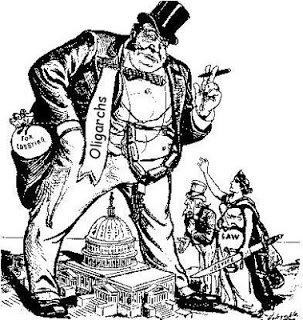
How America Became an Oligarchy

OLIGARCHY

By Ellen Brown

Source: Counterpunch

“The politicians are put there to give you the idea that you have freedom of choice. You don’t. . . . You have owners.”

— George Carlin, The American Dream

According to a new study from Princeton University, American democracy no longer exists. Using data from over 1,800 policy initiatives from 1981 to 2002, researchers Martin Gilens and Benjamin Page concluded that rich, well-connected individuals on the political scene now steer the direction of the country, regardless of – or even against – the will of the majority of voters. America’s political system has transformed from a democracy into an oligarchy, where power is wielded by wealthy elites.

“Making the world safe for democracy” was President Woodrow Wilson’s rationale for World War I, and it has been used to justify American military intervention ever since. Can we justify sending troops into other countries to spread a political system we cannot maintain at home?

The Magna Carta, considered the first Bill of Rights in the Western world, established the rights of nobles as against the king. But the doctrine that “all men are created equal” – that all people have “certain inalienable rights,” including “life, liberty and the pursuit of happiness” – is an American original. And those rights, supposedly insured by the Bill of Rights, have the right to vote at their core. We have the right to vote but the voters’ collective will no longer prevails.

In Greece, the left-wing populist Syriza Party came out of nowhere to take the presidential election by storm; and in Spain, the populist Podemos Party appears poised to do the same. But for over a century, no third-party candidate has had any chance of winning a US presidential election. We have a two-party winner-take-all system, in which our choice is between two candidates, both of whom necessarily cater to big money. It takes big money just to put on the mass media campaigns required to win an election involving 240 million people of voting age.

In state and local elections, third party candidates have sometimes won. In a modest-sized city, candidates can actually influence the vote by going door to door, passing out flyers and bumper stickers, giving local presentations, and getting on local radio and TV. But in a national election, those efforts are easily trumped by the mass media. And local governments too are beholden to big money.

When governments of any size need to borrow money, the megabanks in a position to supply it can generally dictate the terms. Even in Greece, where the populist Syriza Party managed to prevail in January, the anti-austerity platform of the new government is being throttled by the moneylenders who have the government in a chokehold.

How did we lose our democracy? Were the Founding Fathers remiss in leaving something out of the Constitution? Or have we simply gotten too big to be governed by majority vote?

Democracy’s Rise and Fall

The stages of the capture of democracy by big money are traced in a paper called “The Collapse of Democratic Nation States” by theologian and environmentalist Dr. John Cobb. Going back several centuries, he points to the rise of private banking, which usurped the power to create money from governments:

The influence of money was greatly enhanced by the emergence of private banking. The banks are able to create money and so to lend amounts far in excess of their actual wealth. This control of money-creation . . . has given banks overwhelming control over human affairs. In the United States, Wall Street makes most of the truly important decisions that are directly attributed to Washington.

Today the vast majority of the money supply in Western countries is created by private bankers. That tradition goes back to the 17th century, when the privately-owned Bank of England, the mother of all central banks, negotiated the right to print England’s money after Parliament stripped that power from the Crown. When King William needed money to fight a war, he had to borrow. The government as borrower then became servant of the lender.

In America, however, the colonists defied the Bank of England and issued their own paper scrip; and they thrived. When King George forbade that practice, the colonists rebelled.

They won the Revolution but lost the power to create their own money supply, when they opted for gold rather than paper money as their official means of exchange. Gold was in limited supply and was controlled by the bankers, who surreptitiously expanded the money supply by issuing multiple banknotes against a limited supply of gold.

This was the system euphemistically called “fractional reserve” banking, meaning only a fraction of the gold necessary to back the banks’ privately-issued notes was actually held in their vaults. These notes were lent at interest, putting citizens and the government in debt to bankers who created the notes with a printing press. It was something the government could have done itself debt-free, and the American colonies had done with great success until England went to war to stop them.

President Abraham Lincoln revived the colonists’ paper money system when he issued the Treasury notes called “Greenbacks” that helped the Union win the Civil War. But Lincoln was assassinated, and the Greenback issues were discontinued.

In every presidential election between 1872 and 1896, there was a third national party running on a platform of financial reform. Typically organized under the auspices of labor or farmer organizations, these were parties of the people rather than the banks. They included the Populist Party, the Greenback and Greenback Labor Parties, the Labor Reform Party, the Antimonopolist Party, and the Union Labor Party. They advocated expanding the national currency to meet the needs of trade, reform of the banking system, and democratic control of the financial system.

The Populist movement of the 1890s represented the last serious challenge to the bankers’ monopoly over the right to create the nation’s money. According to monetary historian Murray Rothbard, politics after the turn of the century became a struggle between two competing banking giants, the Morgans and the Rockefellers. The parties sometimes changed hands, but the puppeteers pulling the strings were always one of these two big-money players.

In All the Presidents’ Bankers, Nomi Prins names six banking giants and associated banking families that have dominated politics for over a century. No popular third party candidates have a real chance of prevailing, because they have to compete with two entrenched parties funded by these massively powerful Wall Street banks.

Democracy Succumbs to Globalization

In an earlier era, notes Dr. Cobb, wealthy landowners were able to control democracies by restricting government participation to the propertied class. When those restrictions were removed, big money controlled elections by other means:

First, running for office became expensive, so that those who seek office require wealthy sponsors to whom they are then beholden. Second, the great majority of voters have little independent knowledge of those for whom they vote or of the issues to be dealt with. Their judgments are, accordingly, dependent on what they learn from the mass media. These media, in turn, are controlled by moneyed interests.

Control of the media and financial leverage over elected officials then enabled those other curbs on democracy we know today, including high barriers to ballot placement for third parties and their elimination from presidential debates, vote suppression, registration restrictions, identification laws, voter roll purges, gerrymandering, computer voting, and secrecy in government.

The final blow to democracy, says Dr. Cobb, was “globalization” – an expanding global market that overrides national interests:

[T]oday’s global economy is fully transnational. The money power is not much interested in boundaries between states and generally works to reduce their influence on markets and investments. . . . Thus transnational corporations inherently work to undermine nation states, whether they are democratic or not.

The most glaring example today is the secret twelve-country trade agreement called the Trans-Pacific Partnership. If it goes through, the TPP will dramatically expand the power of multinational corporations to use closed-door tribunals to challenge and supersede domestic laws, including environmental, labor, health and other protections.

Looking at Alternatives

Some critics ask whether our system of making decisions by a mass popular vote easily manipulated by the paid-for media is the most effective way of governing on behalf of the people. In an interesting Ted Talk, political scientist Eric Li makes a compelling case for the system of “meritocracy” that has been quite successful in China.

In America Beyond Capitalism, Prof. Gar Alperovitz argues that the US is simply too big to operate as a democracy at the national level. Excluding Canada and Australia, which have large empty landmasses, the United States is larger geographically than all the other advanced industrial countries of the OECD (Organization for Economic Cooperation and Development) combined. He proposes what he calls “The Pluralist Commonwealth”: a system anchored in the reconstruction of communities and the democratization of wealth. It involves plural forms of cooperative and common ownership beginning with decentralization and moving to higher levels of regional and national coordination when necessary.

Dr. Alperovitz is co-founder of an initiative called The Next System Project, aimed at defining the issues in a national political debate as a first step to realizing the possible. He quotes Prof. Donald Livingston, who asked in 2002:

What value is there in continuing to prop up a union of this monstrous size? . . . [T]here are ample resources in the American federal tradition to justify states’ and local communities’ recalling, out of their own sovereignty, powers they have allowed the central government to usurp.

Taking Back Our Power

If governments are recalling their sovereign powers, they might start with the power to create money, which was usurped by private interests while the people were asleep at the wheel. State and local governments are not allowed to print their own currencies; but they can own banks, and all depository banks create money when they make loans, as the Bank of England recently acknowledged.

The federal government could take back the power to create the national money supply by issuing its own Treasury notes as Abraham Lincoln did. Alternatively, it could issue some very large denomination coins as authorized in the Constitution; or it could nationalize the central bank and use quantitative easing to fund infrastructure, education, job creation, and social services, responding to the needs of the people rather than the banks.

The freedom to vote carries little weight without economic freedom – the freedom to work and to have food, shelter, education, medical care and a decent retirement. President Franklin Roosevelt maintained that we need an Economic Bill of Rights. If our elected representatives were not beholden to the moneylenders, they might be able both to pass such a bill and to come up with the money to fund it.

Ellen Brown is an attorney, founder of the Public Banking Institute, and author of twelve books including the best-selling Web of Debt. Her latest book, The Public Bank Solution, explores successful public banking models historically and globally. Her 300+ blog articles are at EllenBrown.com. Listen to “It’s Our Money with Ellen Brown” on PRN.fm.

 

Garland Shooter Elton Simpson ‘Handled’ By Paid FBI Informant

indexSource: 21st Century Wire

In our story released late last night, we posed this question to our readers:

“Were these supposed ‘dead gunmen’ part of the drill, or were they patsies handled by a counter-terrorism federal ‘informant’?

We didn’t know it at the time, but it turns out that we were right.

Last night in the Dallas suburb of Garland, Texas, at Pam Geller’s “Muhammad Art Exhibit and Cartoon Contest”, two alleged “gunmen” were shot and killed by a Special Ops paramilitary ‘SWAT’ unit hired by the city of Garland to provide security for the controversial event.

It’s now been revealed that “gunman”, Elton Simpson, was already under surveillance by the FBI and was even the subject of a terror investigation. More importantly, we can also confirm Simpson was being handled by an FBI informant. Court papers filed in Arizona name the FBI undercover informant as Mr. Daba Deng, a Kenyan and who, from 2007, was paid $132,000 by the FBI to “become friends with Mr. Simpson”, and who appears to have groomed Simpson through a local mosque, and helped to develop Simpson’s ideas about “jihad”. Deng also helped to catch ‘Islamic convert’ Simpson on tape saying he wanted to travel to Somalia to join the terror orgaization al Shabaab. That recording was made on May 29, 2009, which shows Simpson telling his handler Deng, “It’s time to go to Somalia, brother… we gonna make it to the battlefield… it’s time to roll.” This recording was the basis for Simpson’s later FBI arrest, after which time he was ‘let off’ with 3 years probation.

The official misdirect device for this story can be found in a recent article from the Israeli-owned soft propaganda outlet, Vocativ, whose headline reads, “How Texas Terror Shooter Elton Simpson Avoided Prison In 2011″, which appears to be designed to pollute any inquiry by attempting to rationalize that Elton Simpson had avoided jail because a Judge was too lenient on this potential terrorist, furthering the popular talking point that somehow “the Feds dropped the ball.”

It is unknown exactly how far Deng had led Simpson in relation to yesterday’s attack, or if Simpson was assigned a new handler, but the revelation clearly demonstrates that not only have the FBI been aware of Simpson’s activities and movements for many years, but that the FBI has also had a hand in ‘managing’ Simpson. This fact should cast serious doubts on the official narrative being constructed about the Garland event being carried out by a bonafide and organic “home-gown jihadist” in America.

Authorities in Texas have identified the second “gunman” as Nadir Hamid Soofi (photo, above). It’s claimed that Soofi was Elton Simpson’s roommate and that they both shared an apartment in Phoenix, Arizona, and also attended the same mosque – the Islamic Center of North Phoenix. It is fairly certain that FBI informant Deng also knew and was interacting with Soofi as well.
We’re also meant to believe that just minutes before Simpson and Soofi launched their failed “terror attack”, they both posted Twitter messages and that ISIS Tweeters then joined-in to cheer them on, albeit, virtually.

SEE ALSO: Hebdo Redux in Garland, TX? ‘Mohammed Cartoon’ Shooting Reeks of a Staged False Flag

Not coincidentally, this is nearly the identical M.O. to the two dead ‘gunmen’ in the Charlie Hebdo shooting incident that took place in Paris earlier this year. 21WIRE reported back in January:

“At least one of the suspects was already “under surveillance” by French anti-terror authorities, and that his file was “shared with US security officials” as well. If this is indeed the case, then it’s highly improbable that the suspect would have staged his attack so easily. Once again, official admissions practically cancel out the official narrative.”

In addition to similarities to the Hebdo attack, it’s worth pointing out that in every high-profile US ‘terror bust’, the assailants had some connection beforehand to federal authorities. Only days after the media was beginning to close-out their round-the-clock Hebdo coverage, FBI agents concluded the frame-up of 20 year old Christopher Lee Cornell from Cincinnati, Ohio, claiming the youth was planning a “pipe bomb attack” against the nation’s Capitol in Washington DC, and that he was “linked to ISIS”, and that this was somehow an “ISIS-inspired attack”, only no attack actually took place.

The Guardian reported on the scale and scope of this trend in 2014:

“In some cases the FBI may have created terrorists out of law-abiding individuals by suggesting the idea of taking terrorist action or encouraging the target to act.”

The list of FBI-related ‘terrorist’ incidents inside the US is a long one. The formula for creating a ‘terror icon’ required a confidential informant to guide and manage the future “suspect” right up to the point of arrest, or in some cases, like the World Trade Center Bombing in 1993, the FBI have even allowed the terrorist incident to take place.

Other high-profile terror icons with informant and patsy stories include the other ‘Paris Shooter’, Amedi Coulibaby (see his compelling patsy-informant case here), ‘Ottawa Shooter’ Zehaf-Bibeau (see his patsy story here), ‘Boston Bomber’ Tamerlan Tsarnaev (see his FBI recruitment story here), ‘The Underwear Bomber’ Umar Farouk Abdulmutallab (see his patsy story here), Buford Rogers (read his patsy-informant story here), Jerad Miller (read his patsy-informant story here), Naji Mansour (read his informant story here), Quazi Mohammad Nafis (read his informant story here), Mohamed Osman Mohamud (read his informant story here), ‘OKC Bomber’ Timothy McVeigh (read his informant story here).

In addition to these examples, we could also include last month’s ‘Queens of Brooklyn’ terror plot, Washington Metro bomb plot, the New York City subway bomb plot, as well as the Sears Tower bomb plot in Chicago, and last but certainly not least – the attacks of 9/11… where the alleged hijackers lived with an FBI informant.

Just a few reasons to question the official narrative in Garland, Texas.

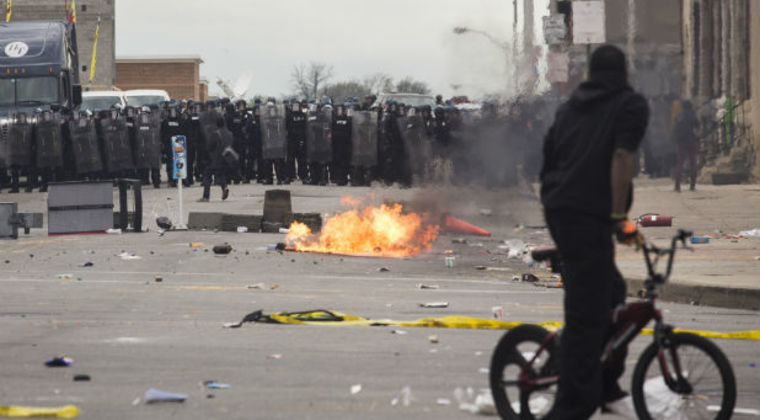
Baltimoreans Pushed to Their Limits

Suspect_Dies_Baltimore.JPEG-01b3c_c0-199-4709-2943_s561x327

By David S. D’Amato

Source: Center for a Stateless Society

We speak of the blowback that results from American foreign policy, the senseless, heinous acts of terror that represent an unfocused and irrational rebellion against American imperialism. We understand that calling it what it is, blowback — pointing out the causal relationship between American foreign policy and terrorism — is not an attempt to exculpate the people who commit these crimes. Looking for a motive that may aid in explaining these horrors is not looking for an excuse.

Similarly, the Baltimore rioters have found themselves on the losing end of a set of government policies that have consolidated wealth and foreclosed economic opportunities for independence and self-sufficiency. While so many Americans have been railing against welfare recipients, worried about the effects of food stamps on the federal budget, top American companies have worked closely with government for generations, guaranteeing the corporate welfare and special privileges that define the U.S. economic system.

The truth is that corporate capitalism has hung these rioting Baltimoreans out to dry, the American Dream being to them no more than a cruelly sarcastic joke, forever out of reach, mocking them. The prevailing story depicts the urban poor largely as the victims of “the free market,” dependent on a helping hand from government, be it education, job training, or just the bare necessities. In this story, government intervenes to file the sharp edges off of unbridled free market competition.

The problem with this story is that is recasts government in a role it has never actually played for poor and working class people — least of all black Americans. In real life, the state has intervened not to protect the economically powerless and penniless, but to serve to the needs of capital, to fence off resources and restrict opportunities in order to subject people to the control of a few giant employers. This coercive, state-driven process has nothing to do with a principled, libertarian free market today, and it never has in the past.

The result has been a permanent underclass, condemned to live in ghettos under quasi-military occupation, surrounded by violent crime that is the direct product of a failed war on drugs. And while the people who live in these communities are demonstrably no more likely to possess contraband than anyone else, they are far more likely to be stopped and frisked, arrested, and even murdered by increasingly militarized police officers.

The problems in Baltimore are historical and systemic. Everyone agrees that rioting, looting, and the wanton destruction of private property are senseless acts that ultimately can’t help anyone or create positive social change. We must nevertheless ask why these people in Baltimore feel so helpless, so abandoned and frustrated by the “proper channels,” that they find it is necessary to lash out and express themselves in this way.

Systematic state violence has left Baltimore communities barren, crying out for justice and opportunity. Anarchists believe that the dormant power of self-organization, cooperation and trade, once truly freed from aggression and meddling, is all the poor need to thrive. Through the anger and sadness coming out of Baltimore, it’s important not to lose sight of the larger, underlying issues.

Saturday Matinee: Dust

220px-Dust2“Dust” (2001) is an audacious Southeastern European Western directed by Milcho Manchevski. The film’s narrative cross-cuts between two stories: one in which a thief is cornered at gunpoint in a New York apartment by an elderly woman and a second involving love and vengeance between two brothers caught up in a revolutionary struggle in Macedonia. The parallel narratives are unified by themes of greed, redemption, and the transformative power of storytelling.

Note: Video may not work on some portable devices.

http://www.hulu.com/watch/316653

MAY DAY – The International Labor Day

crane13

Source: The Anarchist International

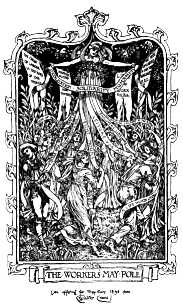
May 1st, International Workers’ Day, commemorates the historic struggle of working people throughout the world, and is recognized in most countries. The United States of America and Canada are among the exceptions. This despite the fact that the holiday began in the 1880s in the USA, linked to the battle for the eight-hour day, and the Chicago anarchists.

The struggle for the eight-hour day began in the 1860s. In 1884, the Federation of Organized Trades and Labor Unions of the United States and Canada, organized in 1881 (and changing its name in 1886 to American Federation of Labor ) passed a resolution which asserted that “eight hours shall constitute a legal day’s work from and after May 1, 1886, and that we recommend to labor organizations throughout this district that they so direct their laws as to conform to this resolution”. The following year the Federation repeated the declaration that an eight-hour system was to go into effect on May 1, 1886. With workers being forced to work ten, twelve, and fourteen hours a day, support for the eight-hour movement grew rapidly. In the months prior to May 1, 1886, thousands of workers, organized and unorganized, members of the organization Knights of Labor and of the federation, were drawn into the struggle. Chicago was the main center of the agitation for a shorter day. The anarchists were in the forefront of the Central Labor Union of Chicago, which consisted of 22 unions in 1886, among them the seven largest in the city.

During the Railroad strikes of 1877, the workers had been violently attacked by the police and the United States Army. A similar tactic of state terrorism was prepared by the bureaucracy to fight the eight-hour movement. The police and National Guard were increased in size and received new and powerful weapons financed by local business leaders. Chicago’s Commercial Club purchased a $2000 machine gun for the Illinois National Guard to be used against strikers. Nevertheless, by May 1st, the movement had already won gains for many Chicago workers. But on May 3, 1886, police fired into a crowd of strikers at the McCormick Harvester Machine Company, killing at least one striker, seriously wounding five or six others, and injuring an undetermined number. Anarchists called for a mass meeting the next day in Haymarket Square to protest the brutality.

The meeting proceeded without incident, and by the time the last speaker was on the platform, the rainy gathering was already breaking up, with only about two hundred people remaining. It was then a police column of 180 men marched into the square and ordered the meeting to disperse. At the end of the meeting a bomb was thrown at the police, killing one instantly, six others died later. About seventy police officers were wounded. Police responded by firing into the crowd. How many civilians were wounded or killed from police bullits never was ascertained exactly. Although it was never determined who threw the bomb, the incident was used as an excuse to attack anarchists and the labor movement in general. Police ransacked the homes and offices of suspected radicals, and hundreds were arrested without charge. A reign of police terror swept over Chicago. Staging “raids” in the working-class districts, the police rounded up all known anarchists and other socialists. “Make the raids first and look up the law afterward!” publicly counseled the state’s attorney.

Anarchists in particular were harassed, and eight of Chicago’s most active were charged with conspiracy to murder in connection with the Haymarket bombing. A kangaroo court found all eight guilty, despite a lack of evidence connecting any of them to the bomb-thrower, and they were sentenced to die. In October 9, 1886, the weekly journal Knights of Labor published in Chicago, carried on page 1 the following announcement: “Next week we begin the publication of the lives of the anarchists advertised in another column.”

The advertisement, carried on page 14, read: The story of the anarchists, told by themselves; Parsons, Spies, Fielden, Schwab, Fischer, Lingg, Engle, Neebe. The only true history of the men who claim that they are condemned to suffer death for exercising the right of Free Speech: Their association with Labor, Socialistic and Anarchistic Societies, their views as to the aims and objects of these organizations, and how they expect to accomplish them; also their connection with the Chicago Haymarket Affair. Each man is the author of his own story, which will appear only in the “Knights of Labor” during the next three months, – the great labor paper of the United States, a 16-page weekly paper, containing all the latest foreign and domestic labor news of the day, stories, household hints, etc. A co-operative paper owned and controlled by members of the Knights of Labor, and furnished for the small sum of $1.00 per annum. Adress all communications to Knights of Labor Publishing Company, 163 Washington St., Chicago, Ill. Later this journal and the paper Alarm published the autobiographies of the Haymarket men.

Albert Parsons, August Spies, Adolf Fischer and George Engel were hanged on November 11, 1887. Louis Lingg committed suicide in prison. The authorities turned over the bodies to friends for burial, and one of the largest funeral processions in Chicago history was held. It was estimated that between 150,000 to 500,000 persons lined the route taken by the funeral cortege of the Haymarket martyrs. A monument to the executed men was unveiled June 25, 1893 at Waldheim Cemetery in Chicago. The remaining three, Samuel Fielden, Oscar Neebe and Michael Schwab, were finally pardoned in 1893.

On June 26, 1893, the governor of Illinois, John Peter Altgeld, issued the pardon message in which he made it clear that he was not granting the pardon because he believed that the men had suffered enough, but because they were innocent of the crime for which they had been tried, and that they and the hanged men had been the victims of hysteria, packed juries and a biased judge. He noted that the defendants were not proven guilty because the state “has never discovered who it was that threw the bomb which killed the policeman, and the evidence does not show any connection whatsoever between the defendants and the man who threw it.”

International Workers’ Day is the commemoration of the Haymarket Event in Chicago in 1886. In 1889, the first congress of the Second International, meeting in Paris for the centennial of the French Revolution and the Exposition Universelle (1889), following an initiative from the American Federation of Labor, called for international demonstrations on the 1890 anniversary of the Chicago protests. These were so successful that May Day was formally recognized as an annual event at the International’s second congress in 1891.

It is not surprising that the state, business leaders, mainstream union officials, and the media would want to hide the true history of May Day. In its attempt to erase the history and significance of May Day, the United States government declared May 1st to be “Law Day”, and gave the workers instead Labor Day, the first Monday of September – a holiday devoid of any historical significance.

Nevertheless, rather than suppressing the labor and anarchist movements, the events of 1886 and the execution of the Chicago anarchists, spokesmen of the movement for the eight-hour day, mobilized many generations of radicals. Emma Goldman, a young immigrant at the time, later pointed to the Haymarket affair as her political birth. Instead of disappearing, the anarchist movement only grew in the wake of Haymarket.

As workers, we must recognize and commemorate May Day not only for it’s historical significance, but also as a time to organize around issues of vital importance of today for the working-class broadly defined, i.e. the grassroots – the people seen as a class in contrast to the superiors in income and/or rank – economically and/or political/administrative.

The May Day Manifestos of the International Workers of the World affiliated to the Anarchist International, from the latest years are published on its Webpage, click here!

Baltimore and the Human Right to Resistance: Rejecting the Framework of the Oppressor

Baltimore-Riots.jpg_23790e32da49a4d09d45db82b7634b69To hear President Obama and Baltimore mayor Rawlings tell it, politeness, nonviolence and respect for law and property are the fundamental obligations of those confronting the brazen and lawless violence of police in Baltimore and beyond. This is a truly upside-down reality.

By Ajamu Baraka

Source: Black Agenda Report

Anti-Black racism, always just beneath the surface of polite racial discourse in the U.S., has exploded in reaction to the resistance of black youth to another brutal murder by the agents of this racist, settler-colonialist state. With the resistance, the focus shifted from the brutal murder of Freddie Gray and the systematic state violence that historically has been deployed to control and contain the black population in the colonized urban zones of North America, to the forms of resistance by African Americans to the trauma of ongoing state violence.

The narrative being advanced by corporate media spokespeople gives the impression that the resistance has no rational basis. The impression being established is that this is just another manifestation of the irrationality of non-European people – in particular, Black people – and how they are prone to violence. This is the classic colonial projection employed by all white supremacist settler states, from the U.S., to South Africa and Israel.

The accompanying narrative is that any kind of resistance that does not fit the narrow definition of “non-violent” resistance is illegitimate violence and, therefore, counter-productive because – “violence doesn’t accomplish anything.”  Not only does this position falsely equate resistance to oppression as being morally equivalent to the violence of the oppressor, it also attempts to erase the role of violence as being fundamental to the U.S. colonial project.

The history of colonial conquest saw the U.S. settler state shoot and murdered its’ way across the land mass of what became the U.S. in the process of stealing indigenous land to expand the racist White republic from “sea to shining sea.”  And the marginalization of the role of violence certainly does not reflect the values of the Obama administration that dutifully implements the bi-partisan dictates of the U.S. strategy of full spectrum dominance that privileges military power and oppressive violence to protect and advance U.S. global supremacy. The destruction of Libya; the reinvasion of Iraq; the civil war in Syria; Obama’s continued war in Afghanistan; the pathological assault by Israel on Palestinians in Gaza and the U.S. supported attack on Yemen by the Saudi dictatorship, are just a few of the horrific consequences of this criminal doctrine.

Race and oppressive violence has always been at the center of the racist colonial project that is the U.S. It is only when the oppressed resist — when we decide, like Malcolm X said, that we must fight for our human rights — that we are counseled  to be like Dr. King, including by war mongers like Barack Obama. However, resistance to oppression is a right that the oppressed claim for themselves. It does not matter if it is sanctioned by the oppressor state, because that state has no legitimacy.

No rational person exalts violence and the loss of life. But violence is structured into the everyday institutional practices of all oppressive societies. It is the deliberate de-humanization of the person in order to turn them into a ‘thing’ — a process Dr. King called “thing-afication.” It is a necessary process for the oppressor in order to more effectively control and exploit. Resistance, informed by the conscious understanding of the equal humanity of all people, reverses this process of de-humanization. Struggle and resistance are the highest expressions of the collective demand for people-centered human rights – human rights defined and in the service of the people and not governments and middle-class lawyers.

That resistance may look chaotic at this point – spontaneous resistance almost always looks like that. But since the internal logic of neoliberal capital is incapable of resolving the contradiction that it created, expect more repression and more resistance that will eventually take a higher form of organization and permanence. In the meantime, we are watching to see who aligns with us or the racist state.

The contradictions of the colonial/capitalist system in its current expression of neoliberalism have obstructed the creation of decent, humane societies in which all people are valued and have democratic and human rights. What we are witnessing in the U.S. is a confirmation that neoliberal capitalism has created what Chris Hedges called “sacrificial zones” in which large numbers of black and Latino people have been confined and written off as disposable by the system. It is in those zones that we find the escalation of repressive violence by the militarized police forces. And it is in those zones where the people are deciding to fight back and take control of their communities and lives.

These are defining times for all those who give verbal support to anti-racist struggles and transformative politics. For many of our young white comrades, people of color and even some black ones who were too young to have lived through the last period of intensified struggle in the 1960s and ‘70s and have not understood the centrality of African American resistance to the historical social struggles in the U.S., it may be a little disconcerting to see the emergence of resistance that is not dependent on and validated by white folks or anyone else.

The repression will continue, and so will the resistance. The fact that the resistance emerged in a so-called black city provides some complications, but those are rich and welcoming because they provide an opportunity to highlight one of the defining elements that will serve as a line of demarcation in the African American community – the issue of class.  We are going to see a vicious ideological assault by the black middle class, probably led by their champion – Barack Obama – over the next few days. Yet the events over the last year are making it more difficult for these middle-class forces to distort and confuse the issue of their class collaboration with the white supremacist capitalist/colonialist patriarchy. The battle lines are being drawn; the only question that people must ask themselves is which side they’ll be on.

Ajamu Baraka is a human rights activist, organizer, geo-political analyst and editor and contributing columnist for the Black Agenda Report. Baraka serves as the Public Intervenor for Human Rights as a member of the Green Shadow Cabinet and coordinates the International Affairs Committee of the Black Left Unity Network. He is also an Associate Fellow at the Institute for Policy Studies (IPS) in Washington, D.C.