McDonald’s cringe-inducing “Signs” ad receives richly deserved parody

img-thing

By Joe Blevins

Source: Onion AV Club

In a development that should surprise no one with reliable Internet access and at least intermittent contact with the real world, McDonald’s suddenly-ubiquitous “Signs” ad campaign has met with immediate, strong backlash across social media from critics who accuse the struggling fast food behemoth of tastelessly capitalizing on various national tragedies, including 9/11 and the Boston Marathon bombings, in order to sell McWraps, McBites, McNuggets, and other McMenu items to jaded millennials. The offending ad, for those who have been away from their televisions lately, is simply a montage of McDonald’s signs bearing theoretically inspiring messages (including “Keep Jobs In Toledo,” “God Protect The USA,” and “Pray For Drew”), all set to a saccharine children’s choir version of “Carry On” by Fun. The intended message is that, through bad times and even worse times, the one constant in this crazy, mixed-up world is the ubiquitous, clown-centric hamburger chain. And now, just surely as smoke follows a fire, the treacly original commercial has inspired a sardonic YouTube parody. Credited only to the enigmatic Signlover 15, “McDonald’s: Signs (fo real)” closely follows the form of its predecessor, right down to the music. This time, however, the messages that flash on the screen are significantly less guilt-inducing. Among them: “Now Hiring Losers,” “Try Our New Crap,” and, of course, “Extra McRib With Proof Of Boner.”

Meanwhile the AV Club’s sister site offers a glimpse into McDonalds’ upcoming “brand transformation” to win over the millenial demographic.

Bonus clips:

The Pro-GMO Lobby: Anti-science and a Politically Motivated Agenda

gmo_crops_genfood_735_350-400x190

By Colin Todhunter

Source: RINF

The pro-GMO lobby claims that there is a scientific consensus on the safety of GM food and therefore the GMO debate is over. It claims that GMOs guarantee higher yields and less pesticide/herbicide use. The claim is also made that GM agriculture has no adverse impact on soil, the nutritional value and health of crops or biodiversity. The industry and its supporters claim that the ‘scientific community’ believes GMOs can only have positive effects and point to research to back this up.

These claims are bogus. Many analyses have highlighted the inadequacies of the research cited by the pro-GMO lobby, not least in terms of methodology, the glossing over of the significance of certain findings and conclusions that do not necessarily fit the evidence provided [1-3]. Moreover, numerous studies demonstrate the often worrying physiological abnormalities derived from ingesting GMOs as well as poor/falling yields, increased pesticide use, lower nutritional values and degraded soil and plant health (etc) associated with GM agriculture [4].

When certain pro-GMO figures proclaim that the debate over GMOs is over, their proclamations are based on propaganda, not science. They say that people who challenge their views are anti-science, politically motivated and are mounting a ‘campaign’ against the industry. Like all good propagandists, this is doublespeak.

Given the existing scientific evidence that challenges the claims of the pro-GMO lobby, a rational and reasonable response would involve applying a precautionary approach to GMOs [5] because there is clearly no scientific consensus. Yet public safety concerns are regarded by the GMO lobby as a barrier to bringing its products to the commercial market and are to be sidelined by all means possible [6-9]. To justify this, it promotes the falsehood that GMOs are ‘substantially equivalent’ to non-GMO products, which is certainly not the case [10].

It is therefore with good reason that concerned people have organised to ensure the precautionary principle is adopted or strengthened and to challenge the industry and officials that are driving the GMO agenda.

It is the GMO sector itself that is politically motivated, anti-science and mounting a campaign in favour of its products. Its faulty science has been challenged, and as a result it is unable to produce the evidence that would convince us that GMOs are safe and provide the benefits claimed. Little wonder the industry hides behind the notion of ‘commercial confidentiality’ to maintain a veil of secrecy over its own research that regulators too often accept at face value [11].

Having failed to win the day with science, it resorts to placing restrictions on independent research into its products, censors findings, intimidates, smears, bribes, uses fakery and has successfully used its wealth and power to hijack regulatory bodies and co-opt bodies and officials who propagate lies on its behalf [12-15]. Yet it is those who highlight and challenge such tactics who are attacked for attempting to derail an industry which likes to portray itself as working for the public interest.

One of the main PR weapons used by the sector is that anti-GMO campaigners are taking food from the mouths of the hungry [16]. Let’s get one thing clear: GMOs are not the answer to feeding the world [17-22] and that type of emotional blackmail will only ever work on the ignorant, misinformed and those who believe the industry’s propaganda.

There is enough scientific evidence to warrant serious concern over GMOs. After all, evidence is mounting that some of these companies may have already been poisoning us for decades with their cocktail of agricultural inputs [23,24].

However, it is easy for the layperson to become confused by an endless parade of studies claiming to back up one or other side of the debate. For that reason, sometimes they have to look beyond science to sharpen their focus. They have to look at motives. They must ask who is controlling the GMO agenda? For what purpose? What is the track record of those involved? Should we ever in a million years trust certain players given their criminal record [25]?

Commercial concerns are driven by profit. Capitalism compels companies to capture and maintain market shares. However, cartels, price rigging, threats, cronyism and having politicians in your back pocket are a much better guarantee to seize and dominate markets than any economic model taught in textbooks and based on the ‘free’ market being determined by supply and demand. Such economic theory is the smokescreen that modern day neoliberalism tries (but fails) to hide behind [26]. As far as the GMO issue is concerned, however, there is much more to it than the need to make a fast buck.

There is a reason why well-known proponents (Rockefeller, Gates) of depopulation and eugenics are involved with the GMO sector; there is a reason why these very people have funded a giant seed bank on an island in the Arctic [27,28]. There is a sinister side to this industry, which points to a heady mix of US geopolitical hegemony based on the global control of agriculture, the hijack of the world’s seeds and food supply and depopulation [29].

If the science around GMOs is confusing to some, then ambiguity is what powerful corporations want: the tobacco industry was happy for the waters to be muddied for decades over the link to lung cancer. But if ambiguity over the efficacy of GMOs does indeed reign, the underlying politics is much clearer to grasp.

colintodhunter.com 

Notes

1] http://gmwatch.org/index.php/news/archive/2014/15669-why-jon-entine-s-trillion-meal-study-won-t-save-us-from-gmo-dangers

2] http://gmwatch.org/index.php/news/archive/2014/15618-biology-fortified-misleads-the-public-on-gmo-safety

3] http://rightbiotech.tumblr.com/post/103665842150/correlation-is-not-causation

4] http://gmomythsandtruths.earthopensource.org/

5] http://www.theguardian.com/science/political-science/2013/jul/08/precautionary-principle-science-policy

6] http://corporateeurope.org/pressreleases/2014/07/agribusiness-biggest-lobbyist-eu-us-trade-deal-new-research-reveals

7] http://corporateeurope.org/trade/2013/05/open-door-gmos-take-action-eu-us-free-trade-agreement

8] http://www.gmfreeze.org/actions/42/

9] http://corporateeurope.org/food-and-agriculture/2014/05/biotech-lobbys-fingerprints-over-new-eu-proposal-allow-national-gmo

10] http://www.i-sis.org.uk/Substantial_Non-Equivalence.php

11] http://gmwatch.org/index.php/news/archive/2014/15519-the-glyphosate-toxicity-studies-you-re-not-allowed-to-see

12]http://indiatoday.intoday.in/story/Monsanto+’faked’+data+for+approvals+claims+its+ex-chief/1/83093.html

13] http://www.globalresearch.ca/gmo-scandal-the-long-term-effects-of-genetically-modified-food-on-humans/14570

14] http://www.gmwatch.org/latest-listing/1-news-items/12715-seralini-vs-fellous-a-gmo-libel-case-over-independent-expertise-and-science

15] http://www.globalresearch.ca/gmo-researchers-attacked-evidence-denied-and-a-population-at-risk/5305324

16] http://www.globalresearch.ca/the-gmo-biotech-lobbys-emotional-blackmail-and-bogus-claims-monsantos-genetically-modified-crops-will-not-feed-the-world/5407080

17] http://www.cban.ca/Resources/Topics/Feeding-the-World

18]http://www.srfood.org/images/stories/pdf/officialreports/20110308_a-hrc-16-49_agroecology_en.pdf

19] http://vivakermani.blogspot.in/2014/07/gm-food-crops-why-india-must-say-no.html

20] http://www.globalresearch.ca/india-genetically-modified-seeds-agricultural-productivity-and-political-fraud/5328227

21] http://unctad.org/en/PublicationsLibrary/tdr2013_en.pdf

22]http://www.unep.org/dewa/agassessment/reports/IAASTD/EN/Agriculture%20at%20a%20Crossroads_Global%20Report%20(English).pdf

23] http://naturalsociety.com/americans-suffering-chronic-disease-due-glyphosate-herbicides-new-study/

24] http://www.tonu.org/2013/12/03/shivchopra_squamish/

25] http://www.wakingtimes.com/2014/06/20/complete-history-monsanto-worlds-evil-corporation/

26] http://www.washingtonsblog.com/2013/05/is-every-market-rigged.html

27] http://www.naturalnews.com/034468_doomsday_seed_vault_secrets.html#

28]http://www.naturalnews.com/035105_bill_gates_monsanto_eugenics.html

29] http://www.globalresearch.ca/menace-on-the-menu-development-and-the-globalization-of-servitude/5416488

Maui is winning the war against Monsanto

hawaiians_against_gmo_720_375

By Michelle Kennedy Hogan

Source: Inhabitat

Maui is winning the war against Monsanto, according to an attorney for the Sustainable Hawaiian Agriculture for the Keiki and the Aina (SHAKA) Movement. On November 4, Maui voters approved a measure that would ban GMOs in Maui County. But earlier this year, Hawaii Judge Barry Kurren ruled that only states, not counties, can ban GMOs, saying that county laws are pre-empted by state law so they are “invalid.” Monsanto, Dow and others sued to stop the legislation, hoping that Kurren would rule the same after the Maui initiative passed, but Kurren decided to pass the case onto Chief Judge Susan Oki Mollway after public pressure mounted against him. Now the Maui ban on GMOs can move forward, marking a definitive win for the people of Maui.

According to the Natural Society, “until at least the fall of 2011, Judge Kurren’s wife, Faye, was a trustee of The Nature Conservancy (TNC), a 6-billion-dollar environmental group.” TNC specializes in working with mega-corporations, who donate major money, in return for receiving TNC’s “good housekeeping seal of approval” as friends of the environment. “In 2011, TNC leveraged a blockbuster deal with Dow Chemical. Dow pledged a $10 million donation. In exchange, Dow could forthwith use the TNC logo on its site and all its products. Among TNC’s council are businesspersons from Monsanto, Coca Cola, and of course, Dow. Among TNC’s corporate funders are again – Dow, Coke, DuPont, and Pepsi,” according to Natural Society.

In addition to striking down GMO bans, Kurren also recently struck down Ordinance 960 – a pesticide and GMO regulatory bill – in Kauai. Kurren was to be the presiding judge in the Maui County case, but knowing that Kurren has multiple ties to Big Agriculture, the people of Maui County pushed back. Many thought that the case could not be won, given Kurren’s past rulings and Big-Ag ties, and that Maui county would not be able to uphold the ban on GMOs on their island.

RELATED: How Monsanto is turning an island paradise into a GMO wasteland

Originally, the SHAKA Movement agreed to allow a magistrate judge to preside over the case – in this case, it was Kurren. Once the SHAKA Movement found out Kurren would be in charge of their case, they withdrew their approval. Kurren then relinquished the position to Chief Judge Susan Oki Mollway.

Having a different judge – a judge without known ties to the financial dealings of Monsanto and Dow Chemical – could have huge implications for the GMO ban and lead Maui to a win over Monsanto. The ruling further allows Maui County to file their own motions and respond to motions filed by the plaintiffs, according to SHAKA attorney Michael Carroll. If the law stands as voted, only the Maui County Council will be able to lift the ban on GMOs in their county.

E-Cig Users and Vapers Need to Join Anti-Drug War Movement

IMG_5220-e1408753980206

By Tony Newman

Source: Drug Policy Alliance

New Year’s Eve is around the corner and no doubt millions of smokers will make resolutions to quit.

Many smokers would love to give up the habit. But smoking is an incredibly hard addiction to quit. Many heroin users say it is harder to quit smoking than quitting heroin.

Thankfully, there is an exciting new tool that is helping millions give up on smoking: e-cigs and vaping. Stand on the streets of most major U.S. cities for five minutes and you will see people walking by with an e-cig instead of a cigarette hanging from their mouth.

It is encouraging how fast e-cigs and vaping have taken off. Smokers aren’t stupid. When offered a safer alternative, millions have chosen it. The fact that e-cigs can be purchased at most delis and stores makes it easy for those who want to reduce the harms associated with smoking.

Instead of praising the great news that millions have stopped smoking, too many in the health and anti-smoking fields beat the drums against e-cigs and vaping. Opportunistic politicians and anti-smoking lobbyists ignore emerging evidence that vaping is vastly safer than smoking, and instead are trying to equate the two activities.

City after city has passed anti-vaping laws akin to anti-smoking statues. Cities have prohibited where people can vape, and are currently trying to ban flavors that vapers say helps them quit. Legislation is also in the works to raise the age so people under 21 can’t use e-cigs.
E-cig users should be worried and they should be pissed.

They should be worried because people are going make it harder and harder to vape. And vapers should be pissed because these “health” advocates are trying to take away their tools that can literally help save their life.

It is time for smokers and vapers to join the growing anti-drug war movement. Smokers and vapers may not think about it, but they are also drug users and they are being demonized and threatened like other drug users. And vapers may not know it, but they are also harm-reductionists.

Harm reduction is a major philosophy of the drug reform movement. Thanks to harm-reduction activists we have clean syringe programs that have prevented hundreds of thousands of people from getting HIV.  We have passed laws that allow people to call 911 when witnessing an overdose without fear of being arrested.  And have expanded access to naloxone, that reverses overdose.

But there are too many backward-thinking politicians and uninformed folks who have tried to block such programs by using the same flawed logic that it sends the “wrong message.”

E-cigs and vaping is the most mainstream example of harm reduction in our society right now. It’s something that can save more lives than any other harm reduction practice in our society.

But there will be reactionary folks who will try to ban vaping and e-cigs like they tried to ban clean syringes.

Vapers need to fight for their rights and their lives. They need to join our movement and say we are not going to allow misinformed, judgmental folks to take away their e-cigs. There are millions of vapers who could be a powerful political voice.

Ethan Nadelmann, of the Drug Policy Alliance has a powerful message when he talks about the cost of a slow learning curve. It took the U.S. 20 years to get behind syringe exchange programs, even though much of the rest of the world had embraced it and the evidence was crystal clear that syringes reduced HIV while not increasing drug use. Because of this slow learning curve, 100’000’s of people needlessly got HIV and died.

This is our moment to organize and fight for e-cigs and vaping as a life-saving harm-reduction practice.

A slow learning curve is not something we can accept.

Tony Newman is the director of media relations for the Drug Policy Alliance.

Internationally Banned Tear Gas: For Domestic Use Only

19-ferguson-gas.w529.h352.2x

By Abby Martin

Source: Media Roots

As unrest erupts from Oakland to Egypt, there’s one weapon of war that has come to define the militarized police state: tear gas.

And while a St. Louis judge ruled recently that limits must be placed on the use of tear gas in Ferguson, he didn’t rule that tear gas should only be implemented as a last resort.

Around the country, contingents of peaceful protesters are being confronted by assemblies of heavily militarized police officers that regularly use chemical agents to disperse crowds. But usually the act of getting doused with chemicals is so infuriating that it only incites chaos.

People have a good reason to be afraid of tear gas, considering it’s a banned agent of war under the 1993 Chemical Weapons Convention. Here’s the catch – there’s a clause in the treaty that includes an exception for domestic use. Yes, it’s illegal for the US military to use tear gas against ISIS, but cool to use against American citizens.

The US ensured the exception, claiming it was afraid the convention may prohibit lethal injection. Because of this caveat for riot control, countries around the world regularly and irresponsibly use chemical agents against their own populations. In American cities like Ferguson, police deploy tear gas at the drop of a hat, often at cameramen and journalists.

Despite all of the apocalyptic imagery associated with the weapon, government officials maintain tear gas is perfectly safe, including Ferguson police chief Tom Jackson, who said ”There are complaints about the response from some people… but to me, nobody got hurt seriously, and I’m happy about that.”

He forgot to say yet, considering how Ferguson police are using tear gas canisters from the Cold War era and are so old, there’s a severe risk of shrapnel flying into crowds. Make no mistake, this “less than lethal” weapon can actually be quite deadly. Look no further than Palestine, where a man was killed from a tear gas canister hitting him at close range in 2011. Or in Egypt, when a policeman shot tear gas into a caravan holding  37 protesters, choking and killing them all.

Horrifyingly, tear gas also causes amputations and miscarriages. In Bahrain, Physicians for Human Rights reported that many pregnant women had miscarriages after exposure with the chemical agent. Officials assure there are no long term health effects, but that hasn’t been proven given the lack of long term studies. Sven-Eric Jordt, a leading expert in tear gas, says

“I frankly think that we don’t know much about the long-term effects, especially in civilian exposure…There’s very few follow-up studies. These are very active chemicals that can cause quite significant injury. I’m very concerned that, as use has increased, tear gas has been normalized. The attitude now is like, this is safe and we can use it as much as we want.”

And boy, do we. As the world’s leading military and arms supplier, the US is also the biggest producer of less than lethal weaponry. During Egypt’s revolution, while police gunned down protesters and made mass arrests, they liberally used tear gas that read “Made in the USA” (at a little place called Combined Systems International of Jamestown, Pennsylvania). According to VisionGain, the non-lethal weapons market has exploded over the last decade, and is worth a whopping 1.6 billion dollars this year.

Somehow the government has convinced the American people that using tear gas is perfectly harmless, despite stark evidence to the contrary. So, next time it tries to sell us another war because *this leader gasses his own people*, remember that claim isn’t so far from home.

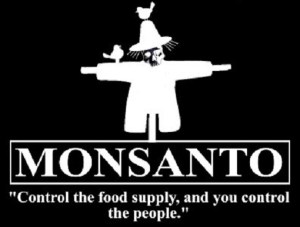
Genetically Modified Organisms (GMO): Profit, Power and Geopolitics

monsanto

By Colin Todhunter

Source: GlobalResearch.ca

Genetically modified organisms (GMOs) are not essential for feeding the world [1,2], but if they were to lead to increased productivity, did not harm the environment and did not negatively impact biodiversity and human health, would we be wise to embrace them anyhow?

The fact is that GMO technology would still be owned and controlled by certain very powerful interests. In their hands, this technology is first and foremost an instrument of corporate power, a tool to ensure profit. Beyond that, it is intended to serve US global geopolitical interests. Indeed, agriculture has for a long time been central to US foreign policy.

“American foreign policy has almost always been based on agricultural exports, not on industrial exports as people might think. It’s by agriculture and control of the food supply that American diplomacy has been able to control most of the Third World. The World Bank’s geopolitical lending strategy has been to turn countries into food deficit areas by convincing them to grow cash crops – plantation export crops – not to feed themselves with their own food crops.” Professor Michael Hudson [3].

The Project for a New American Century and the Wolfowitz Doctrine show that US foreign policy is about power, control and ensuring global supremacy at any cost [4,5]. Part of the plan for attaining world domination rests on the US controlling agriculture and hijacking food sovereignty and nations’ food security.

In his book ‘Seeds of Destruction’, William Engdahl traces how the oil-rich Rockefeller family translated its massive wealth into political clout and set out to capture agriculture in the US and then globally via the ‘green revolution’ [6]. Along with its big-dam, water-intensive infrastructure requirements, this form of agriculture made farmers dependent on corporate-controlled petroproducts and entrapped them and nations into dollar dependency and debt. GMOs represent more of the same due to the patenting and the increasing monopolization of seeds by a handful of mainly US companies, such as Monsanto, DuPont and Bayer.

In India, Monsanto has sucked millions from agriculture in recent years via royalties, and farmers have been compelled to spend beyond their means to purchase seeds and chemical inputs [7]. A combination of debt, economic liberalization and a shift to (GMO) cash crops (cotton) has caused hundreds of thousands of farmers to experience economic distress, while corporations have extracted huge profits [8]. Over 270,000 farmers in India have committed suicide since the mid to late nineties [9].

In South America, there are similar stories of farmers and indigenous peoples being forced from their lands and experiencing violent repression as GMOs and industrial-scale farming take hold [10]. It is similar in Africa, where Monsanto and The Gates Foundation are seeking to further transform small-scale farming into a corporate controlled model. They call it ‘investing’ in agriculture as if this were an act of benevolence.

Agriculture is the bedrock of many societies, yet it is being recast for the benefit of rich agritech, retail and food processing concerns. Small farms are under immense pressure and food security is being undermined, not least because the small farm produces most of the world’s food [11]. Whether through land grabs and takeovers, the production of (non-food) cash crops for export, greater chemical inputs or seed patenting and the eradication of seed sharing among farmers, profits are guaranteed for agritech corporations and institutional land investors.

The recasting of agriculture in the image of big agribusiness continues across the globe despite researchers saying that this chemical-intensive, high-energy consuming model means Britain only has 100 harvests left because of soil degradation [12]. In Punjab, the ‘green revolution’ model of industrial scale, corporate dominated agriculture has led to a crisis in terms of severe water shortages, increasing human cancers and falling productivity [13]. There is a global agrarian crisis. The increasingly dominant corporate-driven model is unsustainable.

More ecological forms of agriculture are being called for that, through intelligent crop management and decreased use of chemical inputs, would be able to not only feed the world but also work sustainably with the natural environment. Numerous official reports and scientific studies have suggested that such policies would be more appropriate, especially for poorer countries [14-16].

When on occasion the chemical-industrial model indicates that it does deliver better yields than more traditional methods (a generalization and often overstated [17]), even this is a misrepresentation. Better yields but only with massive chemical inputs from corporations and huge damage to health and the environment as well as ever more resource-driven conflicts to grab the oil that fuels this model. Like the erroneous belief that economic ‘growth’ (GDP) is stimulated just because there becomes greater levels of cash flows in an economy (and corporate profits are boosted), the notion of improved agricultural ‘productivity’ also stems from a set of narrowly defined criteria.

The dominant notions that underpin economic ‘growth’, modern agriculture and ‘development’ are based on a series of assumption that betray a mindset steeped in arrogance and contempt: the planet should be cast in an urban-centic, ethnocentric model whereby the rural is to be looked down on, nature must be dominated, farmers are a problem to be removed from the land and traditional ways are backward and in need of remedy.

“People are perceived as ‘poor’ if they eat food they have grown rather than commercially distributed junk foods sold by global agri-business. They are seen as poor if they live in self-built housing made from ecologically well-adapted materials like bamboo and mud rather than in cinder block or cement houses. They are seen as poor if they wear garments manufactured from handmade natural fibres rather than synthetics.” Vandana Shiva [18]

Western corporations are to implement the remedy by determining policies at the World Trade Organization, IMF and World Bank (with help from compliant politicians and officials) in order to  depopulate rural areas and drive folk to live in cities to then strive for a totally unsustainable, undeliverable, environment-destroying, conflict-driving, consumerist version of the American Dream [19,20].

It is interesting (and disturbing) to note that ‘developing’ nations account for more than 80% of world population, but consume only about a third of the world’s energy. US citizens constitute 5% of the world’s population, but consume 24% of the world’s energy. On average, one American consumes as much energy as two Japanese, six Mexicans, 13 Chinese, 31 Indians, 128 Bangladeshis, 307 Tanzanians and 370 Ethiopians [21].

Despite the environmental and social devastation caused, the outcome is regarded as successful just because business interests that benefit from this point to a growth in GDP. Chopping down an entire forest that people had made a living sustainably from for centuries and selling the timber, selling more poisons to spray on soil or selling pharmaceuticals to address the health impacts of the petrochemical food production model would indeed increase GDP, wouldn’t it? It’s all good for business. And what is good for business is good for everyone else, or so the lie goes.

“Corporations as the dominant institution shaped by capitalist patriarchy thrive on eco-apartheid. They thrive on the Cartesian legacy of dualism which puts nature against humans. It defines nature as female and passively subjugated. Corporatocentrism is thus also androcentric – a patriarchal construction. The false universalism of man as conqueror and owner of the Earth has led to the technological hubris of geo-engineering, genetic engineering, and nuclear energy. It has led to the ethical outrage of owning life forms through patents, water through privatization, the air through carbon trading. It is leading to appropriation of the biodiversity that serves the poor.” [22]

The ‘green revolution’ and now GMOs are ultimately not concerned with feeding the world, securing well-rounded nutritious diets or ensuring health and environmental safety. (In fact, India now imports foods that it used to grow but no longer does [23]; in Africa too, local diets are becoming less diverse and less healthy [24].) Such notions are based on propaganda or stem from well-meaning sentiments that have been pressed into the service of corporate interests.

Biotechnological innovations have always had a role to play in improving agriculture, but the post-1945 model of agriculture has been driven by powerful corporations like Monsanto, which are firmly linked to Pentagon and Wall Street interests [25]. Motivated by self-interest but wrapped up in trendy PR about ‘feeding the world’ or imposing austerity to ensure prosperity, the publicly stated intentions of the US state-corporate cabal should never be taken at face value [26,27].

In India, Monsanto and Walmart had a major role in drawing up the Knowledge Initiative on Agriculture [28]. Monsanto now funds research in public institutions and its presence and influence compromises what should in fact be independent decision and policy making bodies [29,30]. Monsanto is a driving force behind what could eventually lead to the  restructuring and subjugation of India by the US [31]. The IMF and Monsanto are also working to ensure Ukraine’s subservience to US geopolitical aims via the capture of land and agriculture [32]. The capture of agriculture (and societies) by rich interests is a global phenomenon.

Only the completely naive would believe that rich institutional investors in land and big agribusiness and its backers in the US State Department have humanity’s interests at heart. At the very least, their collective aim is profit. Beyond that and to facilitate it, the need to secure US global hegemony is paramount.

The science surrounding GMOs is becoming increasingly politicized and bogged down in detailed arguments about whose methodologies, results, conclusions and science show what and why. The bigger picture however is often in danger of being overlooked. GMO is not just about ‘science’. As an issue, GMO and the chemical-industrial model it is linked to is ultimately a geopolitical one driven by power and profit.

Notes

1] This report indicates the root causes for global food shortages:  http://www.cban.ca/Resources/Topics/Feeding-the-World/Will-GM-Crops-Feed-the-World

2] Citing official reports and data sources, references in this article indicate agricultural productivity in India was better in 1760 and 1890 and that India does not require chemical-industrial agriculture let alone GMOs: http://www.globalresearch.ca/india-genetically-modified-seeds-agricultural-productivity-and-political-fraud/5328227

3] http://michael-hudson.com/2014/10/think-tank-memories/

4] http://www.informationclearinghouse.info/article1665.htm

5] http://www.informationclearinghouse.info/article40093.htm

6] Arun Shrivastava reviews and summarizes Engdahl’s book here: http://www.globalresearch.ca/seeds-of-destruction-the-hidden-agenda-of-genetic-manipulation-2/9379

7] http://www.countercurrents.org/shiva180614.htm

8]  Based on the findings of a report by researchers at Cambridge University in the UK: http://www.cam.ac.uk/research/news/new-evidence-of-suicide-epidemic-among-indias-marginalised-farmers

9] Official figure quoted by the BBC as of 2013: http://www.bbc.co.uk/news/magazine-21077458

10]http://www.theecologist.org/News/news_analysis/2267255/gm_crops_are_driving_genocide_and_ecocide_keep_them_out_of_the_eu.html

11] Official report released by GRAIN: http://www.grain.org/article/entries/4929-hungry-for-land-small-farmers-feed-the-world-with-less-than-a-quarter-of-all-farmland

12] Farmers Weekly quotes a report by researchers at the University of Sheffield in the UK: http://www.fwi.co.uk/news/only-100-harvests-left-in-uk-farm-soils-scientists-warn.htm

13] Newspaper report quoting official statistics and research findings: http://www.deccanherald.com/content/337124/punjab-india039s-grain-bowl-now.html

14] Official UN report: http://unctad.org/en/PublicationsLibrary/tdr2013_en.pdf

15]http://www.srfood.org/en/official-reports# and http://www.plantpartners.org/agroecology-reports.html

16] http://www.tandfonline.com/doi/full/10.1080/14735903.2013.806408#tabModule

17] http://phys.org/news/2014-12-crops-industrial-agriculture.html

18] http://www.organicconsumers.org/btc/shiva112305.cfm

19] Food policy analyst Devinder Sharma outlines the motives of Western corporations in India: http://www.bhoomimagazine.org/article/cash-food-will-strike-very-foundation-economy

20] Arundhati Roy discusses the erroneous notion of ‘progress’ being applied in India and the conflict and violence that has followed: http://www.guernicamag.com/features/we-call-this-progress/

21] http://public.wsu.edu/~mreed/380American%20Consumption.htm

22] http://www.spaziofilosofico.it/numero-07/2959/economy-revisited-will-green-be-the-colour-of-money-or-life/

23] Vandana Shiva describes how the ‘green revolution’ and ‘free trade’ have turned India into a net importer of foods it used to be self sufficient in: http://www.aljazeera.com/indepth/opinion/2013/09/201398122228705617.html

24] Article describing the plight of agriculture in Africa: http://www.globalresearch.ca/behind-the-mask-of-altruism-imperialism-monsanto-and-the-gates-foundation-in-africa/5408242

25] http://www.globalresearch.ca/monsantos-gmo-food-and-its-dark-connections-to-the-military-industrial-complex/5389708

26] Article providing factual historical insight into Monsanto and its wrongdoings: http://www.globalresearch.ca/the-complete-history-of-monsanto-the-worlds-most-evil-corporation/5387964

27] Analysis of Wall Street’s fraudulent practices in recent times and the complicity of the entire political and economic system: http://www.wsws.org/en/articles/2012/03/pers-m15.html

28]http://www.democracynow.org/2006/12/13/vandana_shiva_on_farmer_suicides_the

29]  http://dissidentvoice.org/2009/07/monsanto-a-contemporary-east-india-company-and-corporate-knowledge-in-india/

30] http://www.thehindu.com/opinion/lead/nip-this-in-the-bud/article5012989.ece

31] http://www.countercurrents.org/todhunter031114.htm

32] http://www.oaklandinstitute.org/food-security-hostage-wall-street-and-us-global-hegemony

Hawaii County Officials Will Appeal Monsanto Court Ruling

P1120628

Source: Inquisitr

In a 5 to 4 decision, Hawaii County Council voted yesterday to appeal the decision of a U.S. Magistrate Judge who has ruled to protect Monsanto and GMO’s testing and production on the Big Island and will continue their battle in a higher court.

Recently, an overwhelmingly popular vote of direct democracy in Hawaii County chose to ban the cultivation of GMO (genetically modified organisms) in their communities. However, genetic engineering giant Monsanto, refused to accept the law, or the will of the people, and sued Hawaii County over the new law.

U.S. Magistrate Judge Barry Kurren, ruled in favor of Monsanto and ordered the Hawaii County Council to stop any enforcement of the law. However, some questions have been raised about the judge who may have Monsanto ties through his wife. This, along with the type of political and financial pressure that Monsanto wields, has called into question whether or not Judge Kurren was able to be unbiased in this decision. Judge Kurren also has an established history of ruling in favor to protect Monsanto’s interest over that of the people. In August of this year, he also struck down Kaua’i’s Pesticide Reform Act claiming there that it was pre-empted by state law denying local government right to pass it’s own regulations; this is the same tactic that he used in this ruling as well. Regardless, the Hawaii County Officials will appeal in higher court to keep the Big Island GMO free.

Of course, this is not the first time that Monsanto has sought to over ride the will of the people and force GMO crops on those who clearly do not want them. Monsanto and its partner companies have spent millions to fight measures to label products containing GMO’s across the country including in Oregon, California, and now Vermont. Top Monsanto officials also end up serving in key governmental positions with the FDA, EPA, or other government posts including current Supreme Court Justice, Clarence Thomas who is the former legal council for Monsanto.

These heavy government ties further complicates matters for those trying to deal with the ecological fall out and health implications of GMO’s. In India there have been over 290,000 farmers who have committed suicide because of GMO’s crops leading most to call Monsanto (or Monsatan as many not so affectionately call it) “the most evil company in the world“.

Monsanto has done much to earn that title as well, beyond their “round up ready” seeds and massively polluting pesticides, Monsanto was also convicted in 2002 in Alabama for “knowingly contaminated their community for decades with PCBs, chemicals used as an insulating fluid in electrical capacitors and transformers.” In 2012 a French court ruled that Monsanto was guilty of chemical poisoning and in Brazil courts found Monsanto guilty of false advertising for claiming that their products were environmentally safe. And in Haiti, farmers there chose to burn the free GMO seeds from Monsanto rather than allow them to infect their nation even in the wake of disaster.

Monsanto and it’s company Dow Chemical were also responsible for Agent Orange which lead to the death of half a million civilians in Vietnam, left over 3 million people contaminated and was responsible for birth defects of half a million Vietnamese children. The U.S. Military did not escape the wrath of Ancient Orange either and many who survived continued to be ill for the rest of their lives.

Monsanto has not been at all shy about their agenda and have accepted no responsibility for any of the problems associated with their global lab experiment. In 1998, Monsanto’s director of corporate communications, Phil Angell made their views on safety clear.

“Monsanto should not have to vouchsafe the safety of biotech food. Our interest is in selling as much of it as possible.”

It is the that very lack of any safety testing and the havoc that GMO crops and accompanying Round Up pesticides may be causing to the food chain, natural plants, and the pollinator’s the keep it all working is one of the key reasons why so many nations, states, and activists are moving to have GMO’s labeled or out right banned all together. But this does not seem to phase the global giant; their spokesman for Britain who had this to say in 1999.

“People will have Roundup Ready soya whether they like it or not”

Many will be watching the battle in Hawaii very closely. It is of monumental importance because not only is it a part of American’s battle for safe food, to protect bees, and insure the survival of natural plants, but it is also critical in the abilities of local government to operate and if Hawaii County loses this battle it could cripple local law makers everywhere and give unprecedented power to those in the corporate world, like Monsanto, to operate above the law and the will of the people.


Consciousness & The Art of Loving Our Experience

Brain waves

By Phil Watt

Source: Waking Times

The usual tendency in our modern secular thinking is to view the outer world as separate from ourselves, but really it is just a partial reflection of what we fundamentally are. Objective reality is one of two pieces. Both pieces make up one whole. The other part is our subjective world, which are our feelings, thoughts and beliefs.

In this ancient and rebirthed understanding, we are realizing we are both the inner and outer worlds.

Now I could go into why quantum physics specifies that these two portions are inseparable, or why ancient wisdom and modern mystics say the same thing, but if we’re on this path we intuitively and possibly even logically know this already.

Instead, here I’m going to focus on what actually makes up our experience, as well as ways to find our peace by loving our experience, because it’s not always easy to accept and embrace all of what we perceive in life.

Some of it is simply hard for our hearts to take and challenging for our minds to fathom. But our experience is much like an intimate relationship: it has its ups and downs, there are things that need to change, there are things that we wouldn’t change for the world and there are hard lessons involved which hopefully inspire us to develop ourselves. And just like we love our partner regardless of their positives and negatives, we should also love our experience, irrespective of its strengths and weaknesses.

Another way to begin to look at it is by considering how we love ourselves. Just as we don’t condone everything about our partner, yet we still love them, we still love ourselves, even if sometimes we’re not proud of all our feelings, thoughts and actions. After all, we make mistakes, learn and navigate our entire lives growing into our new, more developed selves.

But our experience is much bigger than our ego, or our perception and the ingredients of our ‘illusory separate’ selves. It’s also the objects of our experience, because if we change the objects, we also change the experience. Therefore, it is the two realities combined; it’s an intimate interconnection between the inner and outer worlds.

Let’s put it in a simple model:

Subjective world = feelings, thoughts, beliefs, actions
Objective world = body, people, earth, universe.
Experience = the interconnected total of our subjective and objective worlds.

This means that there is something which is the bridge between or the basis of these two seemingly separate realities.

Both pioneer scientists and contemporary spirituality view consciousness (or something like consciousness) as the ground of all being and therefore the bridge of these realms. Though to be clear: it’s not our individual consciousness but the whole of consciousness which is the unifying factor.

One way to illustrate this is through the analogy of a fire. The whole of consciousness is the fire, the objective world including our brain is a flame in the fire and our subjective world is our flame’s heat. All are the fire. All are consciousness.

One common assumption about our individual consciousness is that it is generated by the big brain (containing 100 billion neurons), the second brain (100 million neurons embedded in the walls of our gut) and the heart (which contains 40,000 neurons); much like a generator creates electricity. Even though this is voiced by some materialists as being a proven scientific fact, it’s not – it’s speculation based primarily on the evidence that if we tamper with the brains (particularly the big brain) in certain ways, it tampers with our awareness in particular ways too.

But just as all scientists and laymen alike should know – correlation does not imply causation. Just because our individual consciousness changes when we alter our brain does not mean that the brain created the consciousness in the first place.

The alternative to this explanation, one that is receiving support from emerging scientific evidence, is that the brain receives or tunes into consciousness, much like a radio or television tunes into signals. If we tamper with our radio or TV set, then it will no doubt have an associated impact on the way the signal is received, without actually changing the signal itself. Therefore, just because modifying our brain can alter our experience, does not inherently mean that we have changed consciousness itself. We have simply changed our experience of consciousness.

This makes sense when we acknowledge how our experience is influenced by what’s happening both inside and outside of us. We’re tuning into particular frequencies of consciousness to have an experience which is co-created by both our inner and outer worlds.

When we begin to meditate this point becomes even clearer. Think of our conscious awareness as the light from a torch and the darkness as our subconscious mind. When we meditate, we can navigate through our subconscious mind by making it conscious with our light. Meditation is the act of navigating our awareness through our subconscious mind. The more skilled we become at expanding our mind with meditation, the deeper we go into the darkness of our subconscious. Then suddenly – as many experienced meditators agree – we potentially reach beyond our subconscious mind.

In other words – advanced meditation can craft our individual awareness into a cosmic consciousness or even consciousness itself. This is also a common experience when taking a psychedelic substance. Over and over again, through countless individuals and a wide array of tribal, traditional and current cultures, it is believed that during a psychedelic trip (or other trance-induced activity) the mind becomes one with the whole of reality.

The line between the internal and external worlds has become reverently blurred. This is a big concept to entertain, but once we do, we arrive at an inevitable conclusion. If our experience is a melting between two interconnected worlds, and we love our experience, then we love both worlds. We therefore have a solid foundation to establish and maintain our inner peace.

That isn’t to say that we like everything within it – such as war, murder, emotional dysfunction, suffering etc. – just that we embrace it for what it is. We’re at peace because we understand it as a manifestation of what we fundamentally are: consciousness (or the more traditional term of God). The way we then operate through our lives is based on love, because we view our experience as a reflection of ourselves and we love it as we would love ourselves, and all humanity.

This is when loving our experience becomes an art because we learn to consciously co-create our experience in a way that is beautiful, inspiring and above all loving. Ultimately, you should love your experience like you love yourself, because it is you. It’s a sure-fire way to be at peace.