Whistleblowers in the United States military exposed a strike in Syria that resulted in the massacre of around 70 women and children, according to an investigation by the New York Times.
The command responsible for the strike conceded a war crime may have taken place, but a report by the Office of the Inspector General for the Defense Department removed this opinion.
Officials in the Pentagon impeded an investigation and ensured no one would ever be held accountable for the civilian deaths. They also turned on one of the whistleblowers, forcing them out of their position in the I.G.’s office.
What happened proves once again that going through proper channels can be a fruitless and risky career-ending effort.
Lisa Ling, a former tech sergeant who worked on drone surveillance systems and is a known whistleblower, reacted, “Again, the public is notified of a ‘possible’ war crime by a brave whistleblower who was eventually forced out of their job.”
“This is a pattern that exemplifies the need for robust whistleblower protections especially for the intelligence community so often carved out of them. We need more light shined in these secret spaces so that this doesn’t happen again, and again, and again, without the public knowing what is done in our name.”
As the Times reported, on March 18, 2019, “In the last days of the battle against the Islamic State in Syria, when members of the once-fierce caliphate were cornered in a dirt field next to a town called Baghuz, a U.S. military drone circled high overhead, hunting for military targets. But it saw only a large crowd of women and children huddled against a river bank.”
U.S. military forces launched a double tap strike. An American F-15E “attack jet” dropped a 500-pound bomb. As survivors scrambled for cover, another jet dropped a 2,000-pound bomb that killed “most of the survivors.” A “high-definition drone” recorded the scene prior to the bombing. Two or three men were near a compound. Though they had rifles, neither engaged coalition forces. Women and children were observed in the area.“
At nearly every step, the military made moves that concealed the catastrophic strike. The death toll was downplayed. Reports were delayed, sanitized, and classified,” and the Times added, “Coalition forces bulldozed the blast site.”
The strike was the work of a classified U.S. special operations unit known as Task Force 9. They were responsible for the third-worst “casualty event” in Syria. According to the Times, an unnamed Air Force intelligence officer in the Combined Air Operations Center at Al Udeid Air Base in Qatar contacted Lieutenant Colonel Dean Korsak, who was an Air Force lawyer. They were ordered to preserve video and other evidence from the “F-15E squadron and drone crew.”
Korsak concluded a “possible war crime” was committed that required an independent investigation. He noted that Task Force 9 was “clearly seeking to cover up” incidents like this strike by logging false entries after the fact—for example, the man had a gun.
The Air Force’s Office of Special Investigations was notified. However, as the Times recalled, a major refused to investigate because civilian casualties were only investigated if there was a “potential for media attention, concern with outcry from local community/government, [and/or] concern sensitive images may get out.”
In other words, if the Pentagon needed to get ahead of a potential scandal, they would investigate and craft a narrative that could tamp down outrage. But they did not believe the Baghuz strike would ever make headlines.
Korsak tried once more to convince his superiors to investigate in May 2019. They still refused. So Korsak filed a “hotline complaint” with the I.G.’s office in August 2019.
Gene Tate, a “former Navy officer who had worked for years as a civilian analyst with the Defense Intelligence Agency and the National Counterterrorism Center before moving to the inspector general’s office,” told the Times, “When [Korsak] came to us, he wanted to make it very clear he had tried everything else first. He felt the I.G. hotline was the only option remaining.”
Roadblocks prevented Tate from having any success. He could not find the footage from the task force drone that called in the strike. U.S. Central Command (CENTCOM) removed the war crime finding from a report on the massacre.
In January 2020, according to the Times investigation, the deputy inspector general refused to sign off on a memo that would have alerted authorities to the war crime.
Tate did not hesitate to criticize leadership in the I.G.’s office, and by October 2020, he was forced out of the office.
In May 2021, Tate contacted the Senate Armed Services Committee and sent a 10-page letter that detailed the Baghuz strike. However, as of November 13, he was still waiting for any member of the committee to call him back.
*
To further illustrate how stunning it is that senators on the committee ignored what Tate shared, CIA officers in Syria were so alarmed by the conduct of Task Force 9 that they complained to the I.G.’s office for the Defense Department.
“CIA officers alleged that in 10 incidents the secretive task force hit targets knowing civilians would be killed,” according to one former task force officer quoted by the Times.
The New York Times shared their reporting with CENTCOM prior to publication and asked for official comment. CENTCOM acknowledged “80 people were killed” but insisted the strike was justified.
“The bombs killed 16 fighters and four civilians.”“As for the other 60 people killed, the statement said it was not clear that they were civilians, in part because women and children in the Islamic State sometimes took up arms,” according to CENTCOM.
This is part of the legacy of President Barack Obama’s administration. He developed a method of counting civilian casualties that would not “box him in.”
In 2012, the Times reported all “military-age males in a strike zone” found dead were presumed to be “combatants” unless there was “explicit intelligence posthumously proving them innocent.”
If commanding officers refuse to support an investigation into a massacre, then they never have to worry about an investigation moving deaths in the “combatant” column to the “civilian” column, which would make them look bad.
On November 3, the Air Force released the findings of the investigation into the U.S. drone strike in Kabul on August 29 that killed Zemerai Ahmadi, an aid worker and father, his three sons, two of his nephews, and three girls who were toddlers. They exonerated themselves.
“The investigation found no violation of law including the law of war,” Air Force Inspector General Sami Said declared. “We did find execution errors.” Combined with “confirmation bias” and “communication breakdowns,” that “regrettably led to civilian casualties.”
But Said is undoubtedly implicated in the coverup of countless war crimes committed by Task Force 9 and various other special operations units, which engage in similar bombing attacks.
Meanwhile, drone whistleblower Daniel Hale is in a communications management unit (CMU) at a medium-security federal prison in Marion, Illinois. He is closely monitored by the FBI and Bureau of Prisons officials so they can prevent him from further commenting on the bloodshed caused by U.S. drone strikes.
Reflecting on how the cycle of violence with militant groups continues, Ling stated, “They don’t hate our way of life. They rightfully hate our way of killing. Seventy innocent women and children were needlessly killed in Syria, 10 killed in Afghanistan, and plenty more we will never know about.”
“These are human beings, and we took their lives while using sanitized words with fancy legal footwork to get away with breaking international law. It is wrong. It is terror, and I believe Americans are complicit as long as we remain silent about what is being done in our name.”
“We cannot fight a war on terror with more terror,” Ling concluded.
Yesterday [11/26/21] the WHO labelled the sars-cov-2 variant B.1.1.529 as a “variant of concern” and officially named it “Omicron”.
This was as entirely predictable as it is completely meaningless. The “variants” are just tools to stretch the story out and keep people on their toes.
The Omicron variant is more transmissable, but they don’t know if it’s more dangerous yet (keeping their options open).
It originated in Africa, possible mutating in an “untreated AIDS patient” (sick people are breeding grounds for dangerous “mutations”).
“it has more than double the mutations of Delta…scientists anticipate that the virus will be more likely to infect – or reinfect – people who have immunity to earlier variants. (undermining natural immunity, selling more boosters, keeping the scarefest going).
“Scientists are concerned” that current vaccines may not be as effective against the new strain, they may need to be “tweaked” (get your boosters, and the new booster we haven’t invented yet)
“Scientists expect that recently approved antiviral drugs, such as Merck’s pill, will work as effectively against the new variant” (more on this later)
It’s already spreading around the world, and travel bans may be needed to prevent the need for another lockdown
We’re already seeing preparations for more “public health measures”, with the press breathlessly quoting “concerned” public health officials. We’re being told that a new lockdown won’t be necessary…as long as we remember to get boosted and wear masks and blah blah blah.
Generally speaking, it’s all fairly boilerplate scary nonsense. Although it is quite funny that the Biden administration has already put a bunch of African nations on a travel ban list, when Biden called Trump a racist for doing the same thing in 2020.
It’s interesting that the new variant has allegedly come from Africa, perhaps “mutating in the body of an AIDS patient”, since Africa has been the biggest hole in the Covid narrative for well over a year.
Africa is by far the poorest continent, it is densely populated, malnourishment and extreme poverty are endemic across many African nations, and it is home to more AIDS patients than the entire rest of the world combined. And yet, no Covid crisis.
This is a weak point in the story, and always has been.
Last Summer, the UK’s virus modeller-in-chief Neil Ferguson attempted to explain it by arguing that African nations have, on average, younger populations than the rest of the world, and Covid is only a threat to the elderly. But five minutes of common sense debunks that idea.
The reason Africa has a younger population, on average, is that – on average – they are much sicker.
There are diseases endemic to large parts of Africa that are all but wiped out in most of the Western world. Cholera, typhus, yellow fever, tuberculosis, malaria. Access to clean water, and healthcare are also much more limited.
And while it has been nailed into the public mind that being elderly is the biggest risk factor for Covid, that is inaccurate. In fact, the biggest risk factor for dying “of Covid” is, and always has been, already dying of something else.
The truth is that any REAL dangerous respiratory virus would have cut a bloody swath across the entire continent.
Instead, as recently as last week, we were getting articles about how Africa “escaped Covid”, and the continent’s low covid deaths with only 6% of people vaccinated is “mystifying” and “baffling” scientists.
Politically, African nations have shown themselves far less likely to buy into the “pandemic” narrative than their European, Asian or American counterparts. At least two “Covid denying” African presidents – Pierre Nkurunziza of Burundi and John Magufuli of Tanzania – have died suddenly in the last year, and seen their successors immediately reverse their covid policies.
So maybe the Omicron Variant is a way of trying to fold Africa into the covid narrative that the other continents have already fully embraced. That will become clear as the story develops.
Of course, it’s also true that being “African” is media shorthand for being scary, relying on the deeply-seated xenophobia of Western audiences. See: “Africanized killer bees”.
But, either way, Africa is the long game. There’s a more obvious, and more cynical, short term agenda here.
THE MAGIC PILLS
Let’s go back to the Guardian’s “Omicron” bullet points, above:
Scientists are concerned by the number of mutations and the fact some of them have already been linked to an ability to evade existing [vaccine-created] immune protection.
Scientists expect that recently approved antiviral drugs, such as Merck’s pill, [will work effectively] against the new variant
The “new variant” is already being described as potentially resistant to the vaccines, but NOT the new anti-viral medications.
Pharmaceutical giants Merck and Pfizer are both working on “Covid pills”, which as recently as three days ago, were being hyped up in the press:
US may have a ‘game changer’ new Covid pill soon, but its success will hinge on rapid testing
In the US, an emergency use authorisation can only be issued if there is no effective medication or treatment already available, so the vaccines not being proof against Omicron would be vital to rushing the pills onto the US market, at least.
If Omicron is found to be “resistant to the vaccines”, but NOT the pills, that will give governments an excuse to rush through approving the pills on an EUA, just as they did with the vaccines.
So, you bet your ass that testing is gonna be “rapid”. Super rapid. Blink-and-you’ll-miss-it rapid. Rapid to the point you’re not even sure it definitely happened. And now they have an excuse.
Really, it’s all just more of the same.
A scare before the new year. An excuse to make people believe their Christmas could be in peril. An exercise in flexing their control muscles a bit, milking even more money out of the double-jabbed and boosted crowd, now newly terrified of the Omicron variant, and a nice holiday bump to Pfizer’s ever-inflating stock price.
At this point either you can see the pattern, or you can’t. You’re free of the fear machinery, or you’re not.
There is one potential silver lining here: It feels rushed and frantic. Discovered on Tuesday, named on Friday, travel bans on Saturday. It is hurried, and maybe that’s a reaction to feeling like the “pandemic” is losing its grip on the public mind.
Hopefully, as the narrative becomes more and more absurd, more and more people will wake up to reality.
The UK government’s Behavioural Insights Team helped to push the public towards accepting the COVID narrative, restrictions and lockdowns. It is now working on ‘nudging’ people towards further possible restrictions or at least big changes in their behaviour in the name of ‘climate emergency’. From frequent news stories and advertisements to soap opera storylines and government announcements, the message about impending climate catastrophe is almost relentless.
Part of the messaging includes blaming the public’s consumption habits for a perceived ‘climate emergency’. At the same time, young people are being told that we only have a decade or so (depending on who is saying it) to ‘save the planet’.
Setting the agenda are powerful corporations that helped degrade much of the environment in the first place. But ordinary people, not the multi-billionaires pushing this agenda, will pay the price for this as living more frugally seems to be part of the programme (‘own nothing and be happy’). Could we at some future point see ‘climate emergency’ lockdowns, not to ‘save the NHS’ but to ‘save the planet’?
A tendency to focus on individual behaviour and not ‘the system’ exists.
But let us not forget this is a system that deliberately sought to eradicate a culture of self-reliance that prevailed among the working class in the 19th century (self-education, recycling products, a culture of thrift, etc) via advertising and a formal school education that ensured conformity and set in motion a lifetime of wage labour and dependency on the products manufactured by an environmentally destructive capitalism.
A system that has its roots in inflicting massive violence across the globe to exert control over land and resources elsewhere.
In his 2018 book The Divide: A Brief Guide to Global Inequalities and its solutions, Jason Hickel describes the processes involved in Europe’s wealth accumulation over a 150-year period of colonialism that resulted in tens of millions of deaths.
By using other countries’ land, Britain effectively doubled the size of arable land in its control. This made it more practical to then reassign the rural population at home (by stripping people of their means of production) to industrial labour. This too was underpinned by massive violence (burning villages, destroying houses, razing crops).
Hickel argues that none of this was inevitable but was rooted in the fear of being left behind by other countries because of Europe’s relative lack of land resources to produce commodities.
This is worth bearing in mind as we currently witness a fundamental shift in our relationship to the state resulting from authoritarian COVID-related policies and the rapidly emerging corporate-led green agenda. We should never underestimate the ruthlessness involved in the quest for preserving wealth and power and the propensity for wrecking lives and nature to achieve this.
Commodification of nature
Current green agenda ‘solutions’ are based on a notion of ‘stakeholder’ capitalism or private-public partnerships whereby vested interests are accorded greater weight, with governments and public money merely facilitating the priorities of private capital.
A key component of this strategy involves the ‘financialisation of nature’ and the production of new ‘green’ markets to deal with capitalism’s crisis of over accumulation and weak consumer demand caused by decades of neoliberal policies and the declining purchasing power of working people. The banking sector is especially set to make a killing via ‘green profiling’ and ‘green bonds’.
According to Friends of the Earth (FoE), corporations and states will use the financialisation of nature discourse to weaken laws and regulations designed to protect the environment with the aim of facilitating the goals of extractive industries, while allowing mega-infrastructure projects in protected areas and other contested places.
Global corporations will be able to ‘offset’ (greenwash) their activities by, for example, protecting or planting a forest elsewhere (on indigenous people’s land) or perhaps even investing in (imposing) industrial agriculture which grows herbicide-resistant GMO commodity crop monocultures that are misleadingly portrayed as ‘climate friendly’.
Offsetting schemes allow companies to exceed legally defined limits of destruction at a particular location, or destroy protected habitat, on the promise of compensation elsewhere; and allow banks to finance such destruction on the same premise.
This agenda could result in the weakening of current environmental protection legislation or its eradication in some regions under the pretext of compensating for the effects elsewhere. How ecoservice ‘assets’ (for example, a forest that performs a service to the ecosystem by acting as a carbon sink) are to be evaluated in a monetary sense is very likely to be done on terms that are highly favourable to the corporations involved, meaning that environmental protection will play second fiddle to corporate and finance sector return-on-investment interests.
As FoE argues, business wants this system to be implemented on its terms, which means the bottom line will be more important than stringent rules that prohibit environmental destruction.
Saving capitalism
The envisaged commodification of nature will ensure massive profit-seeking opportunities through the opening up of new markets and the creation of fresh investment instruments.
Capitalism needs to keep expanding into or creating new markets to ensure the accumulation of capital to offset the tendency for the general rate of profit to fall (according to writer Ted Reese, it has trended downwards from an estimated 43% in the 1870s to 17% in the 2000s). The system suffers from a rising overaccumulation (surplus) of capital.Reese notes that, although wages and corporate taxes have been slashed, the exploitability of labour continued to become increasingly insufficient to meet the demands of capital accumulation. By late 2019, the world economy was suffocating under a mountain of debt. Many companies could not generate enough profit and falling turnover, squeezed margins, limited cashflows and highly leveraged balance sheets were prevalent. In effect, economic growth was already grinding to a halt prior to the massive stock market crash in February 2020.
In the form of COVID ‘relief’, there has been a multi-trillion bailout for capitalism as well as the driving of smaller enterprises to bankruptcy. Or they have being swallowed up by global interests. Either way, the likes of Amazon and other predatory global corporations have been the winners.
New ‘green’ Ponzi trading schemes to offset carbon emissions and commodify ‘ecoservices’ along with electric vehicles and an ‘energy transition’ represent a further restructuring of the capitalist economy, resulting in a shift away from a consumer oriented demand-led system.
It essentially leaves those responsible for environmental degradation at the wheel, imposing their will and their narrative on the rest of us.
Global agribusiness
Between 2000 and 2009, Indonesia supplied more than half of the global palm oil market at an annual expense of some 340,000 hectares of Indonesian countryside. Consider too that Brazil and Indonesia have spent over 100 times more in subsidies to industries that cause deforestation than they received in international conservation aid from the UN to prevent it.
These two countries gave over $40bn in subsidies to the palm oil, timber, soy, beef and biofuels sectors between 2009 and 2012, some 126 times more than the $346m they received to preserve their rain forests.
India is the world’s leading importer of palm oil, accounting for around 15% of the global supply. It imports over two-thirds of its palm oil from Indonesia.
Until the mid-1990s, India was virtually self-sufficient in edible oils. Under pressure from the World Trade Organization (WTO), import tariffs were reduced, leading to an influx of cheap (subsidised) edible oil imports that domestic farmers could not compete with. This was a deliberate policy that effectively devastated the home-grown edible oils sector and served the interests of palm oil growers and US grain and agriculture commodity company Cargill, which helped write international trade rules to secure access to the Indian market on its terms.
Indonesia leads the world in global palm oil production, but palm oil plantations have too often replaced tropical forests, leading to the killing of endangered species and the uprooting of local communities as well as contributing to the release of potential environment-damaging gases. Indonesia emits more of these gases than any country besides China and the US, largely due to the production of palm oil.
The issue of palm oil is one example from the many that could be provided to highlight how the drive to facilitate corporate need and profit trumps any notion of environmental protection or addressing any ‘climate emergency’. Whether it is in Indonesia, Latin America or elsewhere, transnational agribusiness – and the system of globalised industrial commodity crop agriculture it promotes – fuels much of the destruction we see today.
Even if the mass production of lab-created food, under the guise of ‘saving the planet’ and ‘sustainability’, becomes logistically possible (which despite all the hype is not at this stage), it may still need biomass and huge amounts of energy. Whose land will be used to grow these biomass commodities and which food crops will they replace? And will it involve that now-famous Gates’ euphemism ‘land mobility’ (farmers losing their land)?
Microsoft is already mapping Indian farmers’ lands and capturing agriculture datasets such as crop yields, weather data, farmers’ personal details, profile of land held (cadastral maps, farm size, land titles, local climatic and geographical conditions), production details (crops grown, production history, input history, quality of output, machinery in possession) and financial details (input costs, average return, credit history).
Is this an example of stakeholder-partnership capitalism, whereby a government facilitates the gathering of such information by a private player which can then use the data for developing a land market (courtesy of land law changes that the government enacts) for institutional investors at the expense of smallholder farmers who find themselves ‘land mobile’? This is a major concern among farmers and civil society in India.
Back in 2017, agribusiness giant Monsanto was judged to have engaged in practices that impinged on the basic human right to a healthy environment, the right to food and the right to health. Judges at the ‘Monsanto Tribunal’, held in The Hague, concluded that if ecocide were to be formally recognised as a crime in international criminal law, Monsanto could be found guilty.
The tribunal called for the need to assert the primacy of international human and environmental rights law. However, it was also careful to note that an existing set of legal rules serves to protect investors’ rights in the framework of the WTO and in bilateral investment treaties and in clauses in free trade agreements. These investor trade rights provisions undermine the capacity of nations to maintain policies, laws and practices protecting human rights and the environment and represent a disturbing shift in power.
The tribunal denounced the severe disparity between the rights of multinational corporations and their obligations.
While the Monsanto Tribunal judged that company to be guilty of human rights violations, including crimes against the environment, in a sense we also witnessed global capitalism on trial.
Global conglomerates can only operate as they do because of a framework designed to allow them to capture or co-opt governments and regulatory bodies and to use the WTO and bilateral trade deals to lever influence. As Jason Hickel notes in his book (previously referred to), old-style colonialism may have gone but governments in the Global North and its corporations have found new ways to assert dominance via leveraging aid, market access and ‘philanthropic’ interventions to force lower income countries to do what they want.
The World Bank’s ‘Enabling the Business of Agriculture’ and its ongoing commitment to an unjust model of globalisation is an example of this and a recipe for further plunder and the concentration of power and wealth in the hands of the few.
Brazil and Indonesia have subsidised private corporations to effectively destroy the environment through their practices. Canada and the UK are working with the GMO biotech sector to facilitate its needs. And India is facilitating the destruction of its agrarian base according to World Bank directives for the benefit of the likes of Corteva and Cargill.
The TRIPS Agreement, written by Monsanto, and the WTO Agreement on Agriculture, written by Cargill, was key to a new era of corporate imperialism. It came as little surprise that in 2013 India’s then Agriculture Minister Sharad Pawar accused US companies of derailing the nation’s oil seeds production programme.
Powerful corporations continue to regard themselves as the owners of people, the planet and the environment and as having the right – enshrined in laws and agreements they wrote – to exploit and devastate for commercial gain.
Partnership or co-option?
It was noticeable during a debate on food and agriculture at the United Nations Climate Change Conference in Glasgow that there was much talk about transforming the food system through partnerships and agreements. Fine-sounding stuff, especially when the role of agroecology and regenerative farming was mentioned.
However, if, for instance, the interests you hope to form partnerships with are coercing countries to eradicate their essential buffer food stocks then bid for such food on the global market with US dollars (as in India) or are lobbying for the enclosure of seeds through patents (as in Africa and elsewhere), then surely this deliberate deepening of dependency should be challenged; otherwise ‘partnership’ really means co-option.
Similarly, the UN Food Systems Summit (UNFSS) that took place during September in New York was little more than an enabler of corporate needs. The UNFSS was founded on a partnership between the UN and the World Economic Forum and was disproportionately influenced by corporate actors.
Those granted a pivotal role at the UNFSS support industrial food systems that promote ultra-processed foods, deforestation, industrial livestock production, intensive pesticide use and commodity crop monocultures, all of which cause soil deterioration, water contamination and irreversible impacts on biodiversity and human health. And this will continue as long as the environmental effects can be ‘offset’ or these practices can be twisted on the basis of them somehow being ‘climate-friendly’.
Critics of the UNFSS offer genuine alternatives to the prevailing food system. In doing so, they also provide genuine solutions to climate-related issues and food injustice based on notions of food sovereignty, localisation and a system of food cultivation deriving from agroecological principles and practices. Something which people who organised the climate summit in Glasgow would do well to bear in mind.
Current greenwashed policies are being sold by tugging at the emotional heartstrings of the public. This green agenda, with its lexicon of ‘sustainability’, ‘carbon neutrality’, ‘net-zero’ and doom-laden forecasts, is part of a programme that seeks to restructure capitalism, to create new investment markets and instruments and to return the system to viable levels of profitability.
A tacit agreement between the government and Facebook appears to have been made: you can keep the profits, but we control the message. As such, a cynic might wonder what functional difference there is between Facebook and the national security state.
MANAGUA, NICARAGUA — Less than a week before Nicaragua’s presidential election, social media giant Facebook deleted the accounts of hundreds of the country’s top news outlets, journalists and activists, all of whom supported the ruling left-wing Sandinista government, a top Washington target for regime change.
Facebook claims that these accounts were bots engaged in “inauthentic behavior.” Considering that around half of the country uses the platform for news and entertainment, the decision could barely have been more heavy-handed and intrusive. However, early reports show that if their goal was to swing the result, it has failed badly and the Sandinistas have achieved an overwhelming victory.
“This is appalling interference by Facebook in particular (which is the most popular social media outlet in Nicaragua). They allege that they’ve stopped a government-deployed troll farm but what they have actually done is to close accounts of ordinary Sandinista activists, particularly young people, often with many followers,” John Perry, a journalist living in the city of Masaya, told MintPress.
Worse still, after dozens of Sandinistas took to Twitter to record video messages proving they were real people being censored, their accounts were systematically deleted as well, in what Managua-based journalist Ben Nortondescribed as a Silicon Valley “double-tap strike.”
“These are accounts that average Nicaraguans have come to count on for news and communicating with each other about current events and, in this case, about the election. So it is very troubling that it was obviously targeted against one political group: the Sandinistas,” said Daniel Kovalik, a human-rights lawyer and an observer of this weekend’s elections.
Both Perry and Kovalik were of the opinion that it was no coincidence that Facebook had taken action against precisely the group the U.S. government is trying to overthrow.
Facebook as security-state beard
Perhaps even more worrying from a freedom-of-speech viewpoint is who made the decision at Facebook. The 11-page report detailing the company’s supposed evidence of inauthentic behavior has just two contributors: Luis Fernando Alonso and Ben Nimmo, individuals with deep and long-lasting ties to Western military intelligence. According to his biography on LinkedIn, Alonso was, until last year, working for Booz Allen Hamilton, a shadowy corporation situated in the area around Washington, D.C. colloquially known as “Raytheon Acres.” The national security state farms out much of its most controversial work to the firm, which is technically a private company (and therefore not subject to the same oversight and scrutiny as public agencies). Edward Snowden, for instance, actually worked for Booz Allen Hamilton, not the NSA. Before that, Alonso directly worked for the government at the William J. Perry Center for Hemispheric Defense Studies, a Department of Defense-controlled institution that trains top military and intelligence leaders.
Nimmo’s background is equally spooky. Between 2011 and 2014, he served as NATO’s press officer, moving the next year to the Institute for Statecraft, a U.K. government-funded propaganda operation aimed at spreading misleading information about enemies of the British state. The Institute for Statecraft established a secret network of journalists across Europe who were used to push anti-Russia and pro-establishment talking points, all in coordination.
In 2019, Nimmo played a key role in downplaying the bombshell news that the Conservative government was quietly negotiating to sell off key parts of Great Britain’s National Health Service (NHS) to foreign plutocrats. When the Labour Party publicized this information just days before the election, Nimmo jumped into action, immediately announcing, without evidence, that the documents in question “closely resemble … a known Russian operation.” His supposedly expert conjecture — together with help from allied journalists in the Integrity Initiative — allowed the story to become “Labour’s links to Russia” rather than “Tories privatizing the NHS in secret,” helping the Conservatives make huge electoral gains.
Nimmo also became a senior fellow at the Atlantic Council, NATO’s semi-official think tank.
Facebook — now officially called “Meta” — is extremely secretive about who actually works at their intelligence department. Nowhere can one find a list of names of key figures. However, going back through months of reports and blog posts for names reveals a veritable revolving door between big tech and big government. In short, Facebook is strewn with spies.
For example, a document published in May, entitled “The State of Influence Operations, 2017-2020,” lists five author names in addition to Nimmo’s, at least four of whom have long histories as senior agents in the national security state.
In order, they are:
Nathaniel Gleicher, Head of Security Policy: Gleicher spent two and a half years at the White House as the National Security Council’s Director of Cyber Security Policy. Before that he also spent five years at the Department of Justice.
David Agranovich, Head of Security Communications: Agranovich worked for more than six years in a senior role at the Department of Defense, before, in 2017, moving on to become the Director for Intelligence for the National Security Council at the White House.
Olga Belogolova, Influence Operations Product Policy Manager: The most academic of the authors, Belogolova teaches cybersecurity and influence operations to students at Georgetown University, an institution notorious as America’s spy school. Before that, she worked at the State Department’s Bureau of European and Eurasian Affairs and on Russian, Ukrainian and Eurasian policy at the Office of the Secretary of Defense. She has also served on several working groups at government- and military-funded think tanks like The Center for New American Security, The Center for Strategic and International Studies, and The Atlantic Council.
Mike Torrey, Threat Intelligence Analyst: From 2010 until 2018, Torrey was a high-level CIA agent, specializing in cyberwarfare against China. Before that, he worked as a global network intelligence analyst for the NSA.
Of the six authors listed, only one, Margarita Franklin, comes from a non-governmental background.
Looking further into Facebook’s official blog, Mike Dvilyanski is described as the company’s Head of Cyber Espionage Investigations. From 2005 until 2018, Dvilyanski was an FBI agent in Washington and New York City, rising to the rank of Supervisory Special Agent, leading teams investigating cyberwafare.
Another official Facebook report from April was authored by the company’s Technical Threat Investigator, Michael Flossman, who spent nearly six years in the Australian Department of Defense.
In 2018, Facebook announced a partnership with The Atlantic Council, whereby it gave an undisclosed amount of control over users’ news feeds to the group, allowing it to help them decide what posts users saw and which ones were suppressed. Given that the council’s board features a plethora of military generals, former cabinet members, and no fewer than seven former CIA directors, this is tantamount to state censorship on a global level. A tacit agreement between the government and Facebook appears to have been made: you can keep the profits, but we control the message. As such, a cynic might wonder what functional difference there is between Facebook and the national security state.
Silicon Valley: tip of US imperial spear
It might be unfair, however, to single Facebook out. Other large platforms are similarly stocked with government plants. Reddit’s Director of Policy, for instance, was formerly a Deputy Director of The Atlantic Council’s Middle East Task Force. Meanwhile, a senior Twitter executive is also an active duty officer in the British Army’s psychological warfare and online propaganda brigade.
Silicon Valley has not only made their peace with this relationship; they actively court it. “What Lockheed Martin was to the twentieth century, technology and cyber-security companies will be to the twenty-first,” wrote Google executives Eric Schmidt and Larry Cohen in their book, “The New Digital Age,” laying out how they saw Silicon Valley becoming the tip of the American empire’s spear.
Washington has already used social media as a weapon aimed at its enemies. In July, Americans in Miami used Facebook to organize an attempted color revolution in Cuba, while Twitter ignored blatantly obvious bots boosting the anti-government message, even choosing to put it at the top of its “what’s happening” sidebar for 36 hours, meaning every user in the world was alerted to the news. Individuals inside Cuba complained to MintPress that the endless supply of fake news citizens receive from the U.S. via Facebook and WhatsApp is spreading disinformation and rotting Cubans’ brains.
Meanwhile, in 2009, the U.S. government persuaded Twitter to delay scheduled maintenance of its app because of widespread protests it was fomenting in Iran, knowing the platform was being used to coordinate anti-government forces. Last year, Facebook banned all positive references to Iranian general Qassem Soleimani in the wake of his assassination by the Trump administration. “We operate under U.S. sanctions laws, including those related to the U.S. government’s designation of the Iranian Revolutionary Guard Corps and its leadership,” the company said in a statement. Despite the fact that over 80% of the country held positive views towards the general (even before his killing), this meant that even Iranians speaking Farsi with other Iranians online in Iran could not share an overwhelmingly held view. This is but one example of the extraordinary power the U.S. national security state now holds over the means of communication worldwide.
Ineffective interference
The United States has a long history of interfering in Nicaragua, from invasions to propping up the 40-year Somoza family dictatorship. When Sandinista rebels ran them out of town in 1979, Washington began a long campaign of terror against the Sandinistas, including funding, training and arming the infamous Contra death squads. After more than a decade of interference, U.S.-backed candidate Violeta Chamorro won the 1990 election. However, after Daniel Ortega and the Sandinistas returned to power in 2006, the U.S. once again began trying to undermine their rule through sanctions and by supporting a 2018 coup attempt. Washington has also unleashed an army of NGOs into the country, each attempting to foment discontent with the ruling government.
In September, Secretary of State Anthony Blinken met in New York with the foreign ministers of Mexico and every other Central American country in an attempt to organize a united front against Nicaragua. Last week, the U.S. also announced new sanctions on the country. Kovalik told MintPress:
This is clearly punishment for the fact that they’re going to vote [the wrong way]. And meanwhile, of course the U.S. is putting millions into the country in terms of supporting opposition groups and different propaganda sources. So that continues. Again, what passes for alleged foreign interference in the U.S. …. is nothing compared to what the U.S. is doing here.
Western journalists and election observers whose opinions the U.S. government would rather not be shared have also been targeted. British journalist Steve Sweeney was detained in Mexico en route to Nicaragua. “It is no coincidence that it came just weeks after my ban from the U.S. I fully believe my detention is political and an attack on press freedom,” he wrote, after being released. Meanwhile, Canadian observer Dr. Timothy Bood was barred from sharing his experiences on Facebook, the platform blocking him immediately after he made a comment about U.S. interference in the election.
Perry suggested, however, that if Washington thinks that sanctions sanctions or other new measures will dislodge the government and break the people’s will, they are mistaken, and that the plan could backfire:
We had the approval in the U.S. Congress of the RENACER Act a few days ago, which is another threat of U.S. interference during and after the election process. I think opinion polls show that most people reject U.S. interference very strongly. I think in most cases it will strengthen people’s desire to vote and probably to vote for the Sandinista government. So it could have the opposite effect to the one that the U.S. wants to achieve.
Judging by the jubilant Sandinista parades in Managua and other cities today, coupled with the announcement that Ortega won an estimated three-quarters of the vote on a 65% turnout rate, Perry might have been proved right.
The Global Public-Private Partnership (GPPP) is a world-wide network of stakeholder capitalists and their partners.
This collective of stakeholders (the capitalists and their partners) comprises global corporations (including central banks), philanthropic foundations (multi-billionaire philanthropists), policy think-tanks, governments (and their agencies), non-governmental organisations, selected academic & scientific institutions, global charities, the labour unions and other chosen “thought leaders.”
The GPPP controls global finance and the world’s economy. It sets world, national and local policy (via global governance) and then promotes those policies using the mainstream media (MSM) corporations who are also “partners” within the GPPP.
Often those policies are devised by the think-tanks before being adopted by governments, who are also GPPP partners. Government is the process of transforming GPPP global governance into hard policy, legislation and law.
Under our current model of Westphalian national sovereignty, the government of one nation cannot make legislation or law in another. However, through global governance, the GPPP create policy initiatives at the global level which then cascade down to people in every nation. This typically occurs via an intermediary policy distributor, such as the IMF or IPCC, and national government then enact the recommended policies.
The policy trajectory is set internationally by the authorised definition of problems and their prescribed solutions. Once the GPPP enforce the consensus internationally, the policy framework is set. The GPPP stakeholder partners then collaborate to ensure the desired policies are developed, implemented and enforced. This is the oft quoted “international rules based system.”
In this way the GPPP control many nations at once without having to resort to legislation. This has the added advantage of making any legal challenge to the decisions made by the most senior partners in the GPPP (it is an authoritarian hierarchy) extremely difficult.
The GPPP has traditionally been referenced in the context of public health and specifically in a number of United Nation’s (UN) documents, including those from their agencies such as the World Health Organisation (WHO).
In their 2005 document Connecting For Health, the WHO, in noting what the Millennium Development Goals meant for global health, revealed the emerging GPPP:
These changes occurred in a world of revised expectations about the role of government: that the public sector has neither the financial nor the institutional resources to meet their challenges, and that a mix of public and private resources is required……Building a global culture of security and cooperation is vital….The beginnings of a global health infrastructure are already in place. Information and communication technologies have opened opportunities for change in health, with or without policy-makers leading the way…….Governments can create an enabling environment, and invest in equity, access and innovation.”
The revised role of governments meant that they were no longer leading the way. The traditional policymakers weren’t making policy anymore, other GPPP partners were. National government had been relegated to creating the GPPP’s enabling environment by taxing the public and increasing government borrowing debt.
This is a debt owed to the senior partners in the GPPP. They are also the beneficiaries of the loans and use this comically misnamed “public investment” to create markets for themselves and the wider the GPPP.
The researchers Buse & Walt 2000 offers a good official history of the development of the GPPP concept. They suggest it was a response to the growing disillusionment in the UN project as a whole and the emerging realisation that global corporations were increasingly key to policy implementation. This correlates to the development of the stakeholder capitalism concept, first popularised in the 1970s.
Buse & Walt outlined how GPPP’s were designed to facilitate the participation of new breed of corporations. These entities had recognised the folly of their previously destructive business practices. They were ready to own their mistakes and make amends. They decided they would achieve this by partnering with government to solve global problems. These existential threats were defined by the GPPP and the selected scientists, academics and economists they funded.
The two researchers identified a key Davos address, delivered by then UN Secretary General Kofi Annan to the WEF in 1998, as marking the transition to a GPPP based global governance model:
The United Nations has been transformed since we last met here in Davos. The Organization has undergone a complete overhaul that I have described as a ‘quiet revolution’…A fundamental shift has occurred. The United Nations once dealt only with governments. By now we know that peace and prosperity cannot be achieved without partnerships involving governments, international organizations, the business community and civil society…The business of the United Nations involves the businesses of the world.”
Buse & Walt claimed that this signified the arrival of a new type of responsible global capitalism. As we shall see, that is not how the corporations viewed this arrangement. Indeed, Buse and Walt acknowledged why the GPPP was such an enticing prospect for the global giants of banking, industry, finance and commerce:
Shifting ideologies and trends in globalization have highlighted the need for closer global governance, an issue for both private and public sectors. We suggest that at least some of the support for GPPPs stems from this recognition, and a desire on the part of the private sector to be part of global regulatory decision-making processes.”
The conflict of interest is obvious. We are simply expected to accept, without question, that global corporations are committed to putting humanitarian and environmental causes before profit. Supposedly, a GPPP led system of global governance is somehow beneficial for us.
Believing this requires a considerable degree of naivety. Many of the stakeholder corporations have been convicted, or publicly held accountable, for the crimes they have commited. These include war crimes. The apparent passive agreement of the political class that these “partners” should effectively set global policy, regulations and spending priorities seems like infantile credulity.
This naivety is, in itself, a charade. As many academics, economists, historians and researchers have pointed out, corporate influence, even dominance of the political system had been increasing for generations. Elected politicians have long-been the junior partners in this arrangement.
With the arrival of GPPP’s we were witnessing the birth of the process to formalise this relationship, the creation of a cohesive world order. The politicians have simply stuck to the script ever since. They didn’t write it.
It is important to understand the difference between government and governance in the global context. Government claims the right, perhaps through a quasi-democratic mandate, to set policy and decree legislation (law.)
The alleged western representative democracies, which aren’t democracies at all, are a model of national government where elected representatives form the executive who enact legislation. For example, in the UK this is achieved through the parliamentary process.
Perhaps the closest thing to this form of national government on an international scale is the United Nations General Assembly. It has a tenuous claim to democratic accountability and can pass resolutions which, while they don’t bind member states, can create “new principles” which may become international law when later applied by the International Court of Justice.
However, this isn’t really world “government.” The UN lacks the authority to decree legislation and form law. The only way its “principles” can become law is via judicial ruling. The non-judicial power to create law is reserved for governments and their legislative reach only extends to their own national borders.
Due to the often fraught relationships between national governments, world government starts to become impractical. With both the non-binding nature of UN resolutions and the international jockeying for geopolitical and economic advantage, there isn’t currently anything we could call a world government.
There is the additional problem of national and cultural identity. Most populations aren’t ready for a distant, unelected world government. People generally want the political class to have more democratic accountability, not less.
The GPPP would certainly like to run a world government, but imposition by overt force is beyond their capability. Therefore, they have employed other means, such as deception and propaganda, to promote the notion of global governance.
Former Carter administration advisor and Trilateral Commission founder Zbigniew Brzezinski recognised how this approach would be easier to implement. In his 1970 book Between Two Ages: Americas Role In The Technetronic Era, he wrote:
Though the objective of shaping a community of the developed nations is less ambitious than the goal of world government, it is more attainable.”
The last 30 years have seen numerous GPPP’s form as the concept of global governance has evolved. A major turning point was the WEF’s conspectus of multistakeholder governance. With their 2010 publication of Everybody’s Business: Strengthening International Cooperation in a More Interdependent World, the WEF outlined the elements of GPPP stakeholder’s form of global governance.
They established their Global Agenda Councils to deliberate and suggest policy covering practically every aspect of our existence. The WEF created a corresponding global governance body for every aspect of our society. From our values and economy, through to our security and public health, our welfare systems, consumption, access to water, food security, crime, our rights, sustainable development and the global financial and monetary system, nothing was left untouched.
The executive chairman of the WEF, Klaus Schwab, spelled out what the objective of global governance was:
Our purpose has been to stimulate a strategic thought process among all stakeholders about ways in which international institutions and arrangements should be adapted to contemporary challenges…the world’s leading authorities have been working in interdisciplinary, multistakeholder Global Agenda Councils to identify gaps and deficiencies in international cooperation and to formulate specific proposals for improvement…
These discussions have run through the Forum’s Regional Summits during 2009 as well as the Forum’s recent Annual Meeting 2010 in Davos-Klosters, where many of the emerging proposals were tested with ministers, CEOs, heads of NGOs and trade unions, leading academics and other members of the Davos community…
The Global Redesign process has provided an informal working laboratory or marketplace for a number of good policy ideas and partnership opportunities…We have sought to expand international governance discussions…to take more pre-emptive and coordinated action on the full range of risks that have been accumulating in the international system.
By 2010 the WEF had taken it upon themselves to begin the Global Redesign process. They defined the international challenges and they proposed the solutions. Fortunately for the GPPP, their proposals meant more control and partnership opportunities for them. The WEF sought to spearhead the expansion of this international governance.
In just one example, in 2019 the UK Government announced its partnership with the WEF to develop future business, economic and industrial regulations. The UK government were committed to supporting a regulatory environment created by the global corporations who would then be regulated by the same regulations they had designed.
The WEF do not have an electoral mandate of any kind. None of us have any opportunity to influence or even question their judgments and yet they are working in partnership with our supposedly democratically elected governments, and other GPPP stakeholders, to redesign the planet we all live on.
Stakeholder capitalism lies at the heart of the GPPP. Essentially it usurps democratic government (or indeed government of any kind) by placing global corporations at the centre of decision making. Despite deriving authority from no one but themselves, the leaders of the GPPP assume their own modern interpretation of the “divine right of kings” and rule absolutely.
The most important characteristic of the stakeholder model today is that the stakes of our system are now more clearly global.. What was once seen as externalities in national economic policy making and individual corporate decision making will now need to be incorporated or internalized in the operations of every government, company, community, and individual. The planet is.. the center of the global economic system, and its health should be optimized in the decisions made by all other stakeholders.”
The GPPP will oversee everything. Every government, all business, our so-called communities (where we live) and each of us individually. We are not the priority. The priority is the planet. Or so the WEF claim.
Centralised control of the entire planet, all its resources and everyone that lives on it is the core ethos of the GPPP. There is no need to interpret GPPP intentions, we don’t have to read between the lines. It is stated plainly in the introduction to the WEF’s Great Reset initiative:
To improve the state of the world, the World Economic Forum is starting The Great Reset initiative.. The Covid-19 crisis.. is fundamentally changing the traditional context for decision-making. The inconsistencies, inadequacies and contradictions of multiple systems –from health and financial to energy and education – are more exposed than ever.. Leaders find themselves at a historic crossroads.. As we enter a unique window of opportunity to shape the recovery, this initiative will offer insights to help inform all those determining the future state of global relations, the direction of national economies, the priorities of societies, the nature of business models and the management of a global commons.”
It should be noted that the WEF are just one partner organisation among many in the GPPP. However, they have been perhaps the most influential in terms of public relations throughout the pseudopandemic. Contrary to the hopes of Buse & Walt, we see an emergent global, corporate dictatorship, not caring stewardship of the planet.
The GPPP will determine the future state of global relations, the direction of national economies, the priorities of societies, the nature of business models and the management of a global commons. There is no opportunity for any of us to participate in either their project or the subsequent formation of policy.
While, in theory, governments do not have to implement GPPP policy, the reality is that they do. Global policies have been an increasing facet of our lives in the post WW2 era. The mechanism of translating GPPP policy initiatives, first into national and then regional and eventually local policy, can be clearly identified by looking at sustainable development.
In 1972 the privately funded, independent policy think-tank the Club of Rome (CoR) published the Limits of Growth. As we saw with the roll-out out of the pseudopandemic, the CoR used computer models to predict what they decreed were the complex problems faced by the entire planet: the “world problematique.”
Their offered opinions derived from the commissioned work of the Massachusetts Institute of Technology’s (MIT’s) system dynamic “World3 model.” This assumed global population would deplete natural resources and pollute the environment to the point where “overshoot and collapse” would inevitably occur.
This is not a scientific “fact” but rather a suggested scenario. So far, none of the predictions made have come to pass.
The scientific and statistical to-and-fro on the claims made in the Limits to Growth has been prolific. However, ignoring all doubts, the World3 model was firmly planted at the centre of the sustainable development policy environment.
In 1983 the Brundtland Commission was convened by former Norwegian Prime Minister Gro Harland Brundlandt and then Secretary General of the UN Javier Pérez de Cuéllar. Both were Club of Rome members. Based upon the highly questionable assumptions in the World3 model, they set about uniting governments from around the world to pursue sustainable development policies.
In 1987 the Commission published the Brundtland Report, also known as Our Common Future. Central to the idea of sustainable development, outlined in the report, was population control (reduction.) This policy decision, to get rid of people, won international acclaim and awards for the authors.
The underlying assumptions for these policy proposals weren’t publicly challenged at all. The academic and scientific debate raged but remained almost completely unreported. As far as the public knew, scientific assumption and speculation was a proven fact. It is now impossible to question these unproven assumptions and obviously inaccurate models without being accused of “climate denial.”
This resulted in the Millenium Development Goals and eventually, in 2015, they gave way to the United Nation’s full adoption of Sustainable Development Goals (SDGs), In turn, these have been translated into government policy. For example, the UK government proudly announced their Net Zero policy commitment to sustainable development goals in 2019.
SDGs were already making an impact at the regional and local level in counties, cities, towns and boroughs across the UK. Nearly every council across the country has a “sustainable development plan.”
Regardless of what you think about the global threats we may or may not face, the origin and the distribution pathway of the resultant policy is clear. A privately funded, globalist think-tank was the driver of a policy agenda which led to the creation of a global policy framework, adopted by governments the world over, which has impacted communities in nearly every corner of the Earth.
SDGs are just one among numerous examples of GPPP global governance in action. The elected politician’s role in this process is negligible. They merely serve to implement and sell the policy to the public.
It doesn’t matter who you elect, the policy trajectory is set at the global governance level. This is the dictatorial nature of the GPPP and nothing could be less democratic.
During the last eighteen months, I think I’ve stood nearly alone on the Internet in arguing that the late 2019 Covid outbreak that began in Wuhan, China was probably the result of an American biowarfare attack conducted by rogue elements of our own national security establishment.
The individual articles in my long series have been viewed some 350,000 times, but with rather few exceptions almost no one has publicly endorsed such an extremely controversial hypothesis, and almost as few of the multitude of readers have even been willing to acknowledged its existence.
However, that unfortunate situation may now be starting to change. Just a couple of days ago, an influential MAGA/Trumpist website called The Conservative Treehousepublished a 1,400 word piece strongly suggesting that America’s “Fourth Branch of Government,” namely our intelligence services, were quite possibly responsible for the Covid epidemic, and even concurring with me that former Secretary of State and CIA Director Mike Pompeo seems the individual most likely to know who was really responsible.
The motives suggested are somewhat different from my own, with the alleged goal being to help ensure Trump’s defeat for reelection, and other details are also at variance with my analysis. But these are secondary matters of little importance compared to general agreement on the overriding question of “Who Did It?” and I have anyway never claimed much certainty in my speculations about “Why?”
To the extent that America’s enormous number of still-fervent Trump supporters begin moving in the direction suggested by this piece, the likelihood of our being able to firmly answer both “Who?” and “Why?” will be greatly enhanced. Given the deaths of so many hundreds of thousands of American citizens and the severe disruption to the daily lives of our entire population, these seem very important questions to be asking.
With fortuitous timing, I had recently created a separate section on our website Sidebar providing convenient access to all my major Covid/Biowarfare articles as well as freely downloadable eBook containing them, and I append the contents below:
Based upon excess death totals, the Covid epidemic has probably killed more than 15 million people worldwide, and also greatly disrupted the lives of many billions more. For these reasons, it probably already ranks as the most important global event since World War II, with an impact easily exceeding the collapse of the Soviet Union or the 9/11 Attacks and the Middle Eastern wars they unleashed.
Since April 2020 I have published a long series of articles arguing the the Covid outbreak was due to an American biowarfare attack against China (and Iran), and have been almost unique in publicly taking this extremely controversial position. I have also placed it within the context of the hidden history of America’s longstanding biological warfare programs.
Taken together, these articles run more than 50,000 words and have been viewed some 350,000 times, while provoking almost 9,000 comments totaling more than 1.2 million words. Aside from being available on this website, they have also been collected into a freely downloadable ebook, available both in EPub and Mobi/Kindle formats.
Although the articles make a lengthy and detailed case for my remarkable claims, some of the strongest evidence may easily be summarized in just the following few paragraphs, extracted from these much longer works:
But with the horrific consequences of our own later governmental inaction being obvious, elements within our intelligence agencies have sought to demonstrate that they were not the ones asleep at the switch. Earlier this month, an ABC News story cited four separate government sources to reveal that as far back as late November, a special medical intelligence unit within our Defense Intelligence Agency had produced a report warning that an out-of-control disease epidemic was occurring in the Wuhan area of China, and widely distributed that document throughout the top ranks of our government, warning that steps should be taken to protect US forces based in Asia. After the story aired, a Pentagon spokesman officially denied the existence of that November report, while various other top level government and intelligence officials refused to comment. But a few days later, Israeli television mentioned that in November American intelligence had indeed shared such a report on the Wuhan disease outbreak with its NATO and Israeli allies, thus seeming to independently confirm the complete accuracy of the original ABC News story and its several government sources.
It therefore appears that elements of the Defense Intelligence Agency were aware of the deadly viral outbreak in Wuhan more than a month before any officials in the Chinese government itself. Unless our intelligence agencies have pioneered the technology of precognition, I think this may have happened for the same reason that arsonists have the earliest knowledge of future fires.
According to these multiply-sourced mainstream media accounts, by “the second week of November” our Defense Intelligence Agency was already preparing a secret report warning of a “cataclysmic” disease outbreak taking place in Wuhan. Yet at that point, probably no more than a couple of dozen individuals had been infected in that city of 11 million, with few of those yet having any serious symptoms. The implications are rather obvious. Furthermore:
As the coronavirus gradually began to spread beyond China’s own borders, another development occurred that greatly multiplied my suspicions. Most of these early cases had occurred exactly where one might expect, among the East Asian countries bordering China. But by late February Iran had become the second epicenter of the global outbreak. Even more surprisingly, its political elites had been especially hard-hit, with a full 10% of the entire Iranian parliament soon infected and at least a dozen of its officials and politicians dying of the disease, including some who were quite senior. Indeed, Neocon activists on Twitter began gleefully noting that their hatred Iranian enemies were now dropping like flies.
Let us consider the implications of these facts. Across the entire world the only political elites that have yet suffered any significant human losses have been those of Iran, and they died at a very early stage, before significant outbreaks had even occurred almost anywhere else in the world outside China. Thus, we have America assassinating Iran’s top military commander on Jan. 2nd and then just a few weeks later large portions of the Iranian ruling elites became infected by a mysterious and deadly new virus, with many of them soon dying as a consequence. Could any rational individual possibly regard this as a mere coincidence?
Congresswoman Alexandria Ocasio-Cortez and other so-called progressives exemplify the dangers of depending on the Democratic Party to enact any meaningful change.
Since the election of Barack Obama in 2008, Black Agenda Report has been the most consistent voice on the Left sounding the alarm about Democratic Party bankruptcy. The late founder and executive editor of the publication, Glen Ford, rightly called the Democratic Party the more effective evil serving the Lords of Capital in their reign of terror against the working class and oppressed masses. Late managing editor of BAR, Bruce Dixon, routinely pointed out that the Democratic Party made tepid promises to get elected but refused to enact a progressive policy agenda once in possession of majorities in Congress.
It was impossible to predict, however, that the reign of Barack Obama would precipitate a crisis of legitimacy in the two-party duopoly after his diligent service to the Lords of Capital had reduced much of the Left in the United States to a state of political stagnation. The economic discontent expressed in the Occupy Wall Street movement gave rise to Bernie Sanders’s presidential campaign in 2016. Thus began the ongoing split within the Democratic Party between an ever-consolidating establishment and a growing cohort of left-ish “democratic socialists.” The Democratic National Committee’s deliberate takedown of Bernie Sanders’ initial bid for the Democratic Party nomination gave rise to “the Squad,” a group of four women of color who adopted the Sanders agenda and successfully won Congressional seats in 2018.
One member of the Squad who has ripped whatever mask was left hanging on the Democratic Party is Alexandria Ocasio-Cortez (AOC). AOC has done a masterful job bursting asunder whatever illusions existed that the Democratic Party can operate as anything other than an engine for war and austerity. AOC attended the $30,000 per ticket Met Gala event in mid-September wearing a dress draped with the message, “tax the rich.” This eye-grabbing moment prompted a good number of liberals to applaud AOC for bringing a progressive message on taxation into an elite space. However, others on the Left questioned why the self-described “democratic socialist” would tout a message already popular with majorities of the country instead of expressing solidarity with Black Lives Matter activists protesting outside of the Gala or, better yet, taking more meaningful action to pressure Medicare for All and the rest of the Squad’s so-called progressive agenda.
AOC followed up this act by changing her vote on $1 billion in additional U.S. funding for Israel’s Iron Dome from “nay” to “present.” The sudden decision appeared to be encouraged by House speaker Nancy Pelosi. Photos went viral of AOC visibly in tears following an encounter with Pelosi on the floor of the House. AOC has routinely coined herself a champion of human rights for the Palestinian people yet abdicated her responsibility to oppose additional funding to the settler colonial regime currently colonizing Palestine. To make matters worse, AOC painted herself as the victim in her response to the backlash by insinuating that a climate of “volatility” forced her to make a decision in haste. She did not, however, apologize to the Palestinian people and their allies for the vote.
While AOC has received her fair share of bad-faith criticism from the political right, she has yet to answer any of her good-faith critics from the left. It is thus quite easy to dismiss her most recent errors as worthy of criticism but not total condemnation. However, history is a stubborn thing. History says that AOC is not an innocent bystander in the establishment’s ongoing effort to sheep-dog the Left into the Democratic Party on the one hand and satisfy the interests of the rich on the other. In 2018, AOC called the deceased warmongering Republican John McCain an “unparalleled example of human decency” and expressed admiration for Nancy Pelosi’s activist credentials . She then collaborated with Republican Senator Ted Cruz in 2019 on a letter demanding that the National Basketball Association (NBA) pledge support for the U.S. color revolution in Hong Kong.
AOC has tacitly supported imperialism by regurgitating the State Department’s narrative of humanitarian imperialism on nearly every major instance of U.S. aggression. She has labeled Venezuela a “failed state” but has yet to demand an end to U.S. sanctions under Joe Biden. On Palestine, AOC has offered a variety of word salads when questioned on her opposition to Israeli colonialism . She has also professed her loyalty to the CIA-backed Dalai Lama . These instances of capitulation to imperialism have only aggravated frustrations held by progressives and leftists who rebuke her tendency to privilege spectacle over meaningful political action in the fight for a so-called “progressive” agenda.
AOC has recently been thrown praise by supporters for standing up to establishment Democrats seeking to tank Biden’s “Build Back Better” spending plan. Yet neither AOC, the Squad, nor the rest of the Progressive Caucus has been willing to take the political action necessary to meet the moment of crisis. AOC refused to force a vote on Medicare for All in exchange for Nancy Pelosi’s House Speaker vote and even suggested that Jimmy Dore and others who demanded that she do so were engaging in violence . AOC and the Squad’s so-called protest against the removal of the eviction moratorium did not include demands for universal housing, healthcare, or income during a deadly pandemic. Furthermore, AOC and the rest of the Democratic Party has been unwilling to take the streets to oppose the Biden administration’s mass deportation of undocumented immigrants , privatization of the Postal Service , and abandonment of police reform but has been more than willing to call Joe Biden a “good faith” partner in the Democratic Party.
AOC offers a particularly difficult but useful lesson on the need to dump the duopoly. In the final analysis, no member of the Democratic Party is equipped to lead the United States out of the abyss of its systemic decline. For successive administrations, progressives and leftists across the political spectrum have allowed the Democratic Party’s massive escalation of war and austerity to go unchallenged. While support for progressive policies has risen among the impoverished majority in tandem with a new wave of “left” sounding politicians, none of this has changed the overall character of the Democratic Party. The Democratic Party remains the more effective evil of U.S. imperialism—a system which only independent, grassroots political organization can defeat.
On October 18, 2019, i.e. before the alert was issued against Covid-19, a few personalities participated in a role-playing game simulating this epidemic. This event was funded by the Bill & Melinda Gates Foundation.
The world is changing very fast. During the Covid epidemic, money has been concentrated in a few hands. The new oligarchs are transhumanists. Without realising it, we have already accepted their ideology and are beginning to put it into practice. Western doctors have given up trying to cure this disease and it seems obvious to us to bet everything on messenger RNA. It does not matter that this strategy is fatal. Henceforth, this is how we think.
The containment, due to the political reaction to Covid-19, favoured a global redistribution of wealth in favour of a few Internet players (Microsoft, Alphabet…). At the same time, investment funds (Vanguard, Blackrock, etc.), which were already managing astronomical sums and could impose their interests on states, became the property of a few families. There are now stratospheric wealth gaps between a few super-billionaires and the people.
The middle classes, which had been slowly eroding since the fall of the USSR and the beginning of economic globalisation, are gradually disappearing. In practice, democratic systems cannot withstand these sudden and gigantic wealth gaps.
As always in periods of change in political systems, the social class that aspires to power imposes its point of view. In this case, transhumanism. The idea that scientific progress will enable a transformation of human biology to the point of overcoming death. Almost all of the world’s fifty largest fortunes seem to subscribe to this fantasy. For them, technology will replace many people in the same way that science has replaced superstition.
In order to impose their new Doxa, these very large fortunes are starting to control what we think and to force us to act according to this new ideology. The most recent phenomenon is precisely our reaction to the Covid-19 pandemic. Historically, in all previous epidemics without exception, doctors sought to cure the sick. That was the old world. In the new transhumanist world, no one is to be cured, all are to be protected with a new technology, messenger RNA. Most developed states forbid their doctors to treat their patients and their pharmacists to sell drugs that might help them (hydroxychloroquine, ivermectin, etc.). A leading medical journal, The Lancet, even published an article claiming that an old drug used by millions of people was killing Covid patients who took it. The Internet giants censor accounts that promote it. Everything must be done to make messenger RNA the one and only option.
I am not a doctor. I don’t know what these products are worth. I’m just a man who observes the way in which a debate is closed before it has begun. I am not interfering in the scientific debate, but I am observing the closure of the debate.
The messenger RNA case against doctors is not over, however. President Joe Biden held a virtual global summit on September 22, 2021 to distribute 500 million packets of messenger RNA ’vaccine’. To everyone’s surprise, the states that were to be the recipients of this gift boycotted the summit. They do not believe that messenger RNA is a solution for them [1].
To understand them, all you need is a calculator: the states that went all in on messenger RNA had 20 to 25 times more deaths per million population than those that allowed care by doctors.
Transhumanism already fascinates us because we don’t ask about the ban on Covid care. It does not have the same influence outside the West.
In the past, vaccination consisted of inoculating a small portion of a disease so that the body learns to defend itself against it. Since Covid-19, messenger RNA has been equated with vaccination, yet it is not a vaccine in the classical sense.
PROPAGANDA
History has shown us that in order to impose a new regime, you must first get people to act in accordance with a new ideology. Once the subjects have started to comply, it becomes very difficult for them to back down. The game is up. This is called propaganda. Propaganda is not about controlling discourse, but about using it to change behaviour [2].
As we have all given up on experimenting with Covid care, we have all signed up to messenger RNA and now the health pass. We are ripe to enter this new regime. It is absurd to call it a “dictatorship”; an old world concept. We do not yet know what this new regime will be, yet we are already building it.
States are threatened by the very large fortunes mentioned above, which are generally much more powerful than they are. States have mainly fixed costs and very little room for manoeuvre. On the contrary, the new very large fortunes can withdraw their investments here at any time and take them there. Very few Sovereign Wealth Funds can compete with them and thus still be independent of them.
The corporate media refuse to question the ban on care for Covid-19. They devote all their energy to promoting messenger RNA.
THE CORPORATE MEDIA
The corporate media have been very active in this project. For a long time, but especially since the end of the Cold War, journalism has defined itself as a search for ’objectivity’, even though it is known to be impossible.
In court, witnesses are not asked to be ’objective’. But they are required to “tell the Truth, the whole Truth and nothing but the Truth”. It is known that each person has only perceived a part of the Truth according to his or her own condition. Thus, in an accident involving a pedestrian and a car, most of the pedestrian witnesses agree with the pedestrian, while most of the motorist witnesses say that the car was in the right. It is only the sum of the evidence that tells us what happened.
The corporate media reacted to the influx of new actors into their profession (blogs and social networks) first by trying to disqualify them: these people are touching, but they are not trained enough to compare themselves to us. Professional journalists have made a distinction between freedom of expression (for all) and freedom of the press (for them alone). One thing leading to another, they have set themselves up as schoolmasters, the only ones capable of giving good and bad marks to those who try to imitate them. To do this, they imagined that they would check their assertions (fact check) as if their work were comparable to a television game show.
Worried that politicians would side with their constituents rather than the very rich, the corporate media have extended fact checking to their political guests. There are countless programmes where a leader is subjected to editorial fact-checking. Political discourse, which should be an analysis of society’s problems and how to solve them, is reduced to a series of figures that can be checked against statistical yearbooks.
The corporate media have asserted themselves first as a ’Fourth Estate’ and then, after absorbing the others, as the main Estate. This notion comes from the 18th century British politician and philosopher, Edmund Burke. The ’Fourth Estate’ was constituted alongside the Spiritual, the Temporal and the Commons (the simple people). Burke, in the name of his liberal conservatism, did not dispute its legitimacy. Today everyone can see that it is not based on a value, but on the money of its owners.
The choice of subjects covered by the corporate media is constantly shrinking. It is slowly moving away from analysis and concentrating on verifiable data only.
Twenty years ago, for example, newspapers that challenged my work would present it summarily and then immediately disqualify it as ’conspiratorial’. Today, they no longer dare to summarise my theses, because they have no way of ’fact-checking’ them. So they just classify me as ’unreliable’. Faced with younger, non-professional journalists, the corporate media limit themselves to insults. As a result, there is a growing gap between them.
This phenomenon is particularly evident with the ’yellow vests’, ordinary citizens who were protesting against this sociological evolution of the world even before containment allowed it to triumph. I remember a debate on a 24-hour news channel where a member of parliament asked a yellow vest what allowance would satisfy the protesters, while the yellow vest replied, “We don’t need allowances, we want a fairer system.” The corporate media quickly removed individuals who, like this lady, were thinking about the problems of society and replaced them with others who were making concrete and immediate demands. They did everything to censor their thinking.
In the past, the Church published a list of books that were forbidden to the faithful. Today, on the contrary, they try to publish a list of reliable sources, even to determine a priori the Truth.
GOOD AND BAD GRADES
Another solution envisaged by the new ruling elite is to re-establish the Index librorum prohibitorum. In the past, the Church – which was not only a community of believers but also a political power – published a list of books that were censored for all but its clerics. It wanted to protect the People from the errors and lies of the protesters. This only lasted for a while. In the backlash, the believers deprived the Church of its political power.
Former Nato and Bush Administration officials set up a New York-based company, NewsGuard, to compile a list of unreliable websites (including ours) [3]. Or NATO, the European Union, Bill Gates and a few others have created CrossCheck, which finances, among other things, Les Décodeurs du Monde [4]. It seems that the exponential multiplication of information sources has ruined this project.
A more recent method consists in defining a priori, not who is reliable, but what the Truth is.
The French president, Emmanuel Macron, has just set up a “Mission against disinformation and conspiracy”, its president, the sociologist Gérald Bronner, considers that the State should set up a body to establish the Truth on the basis of “scientific consensus”. He considers it unacceptable that the word of “a university professor is equivalent to that of a yellow vest” [5].
This method is not new. In the 17th century, Galileo claimed that the Earth revolved around the Sun and not the other way round. Gérald Bronner’s predecessors opposed him with various passages from the Holy Scriptures, which were then considered a revealed source of knowledge. Then the ’scientific consensus’ led to his condemnation by the Church.
The history of science is full of examples of this type: almost all the great discoverers were opposed by the ’scientific consensus’ of their time. Most of the time their ideas were not able to triumph with demonstrations, but with the death of their opponents: the leaders of the “scientific consensus”.



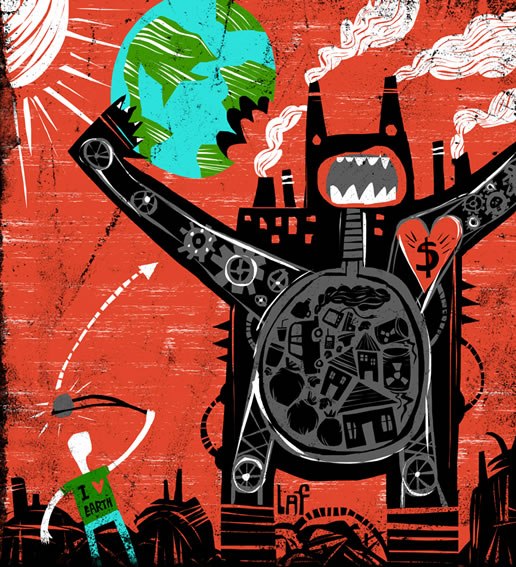
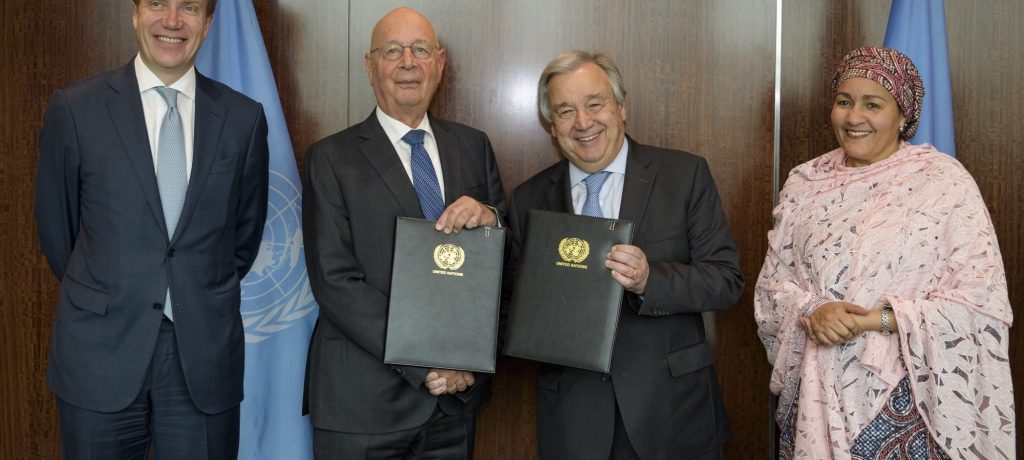
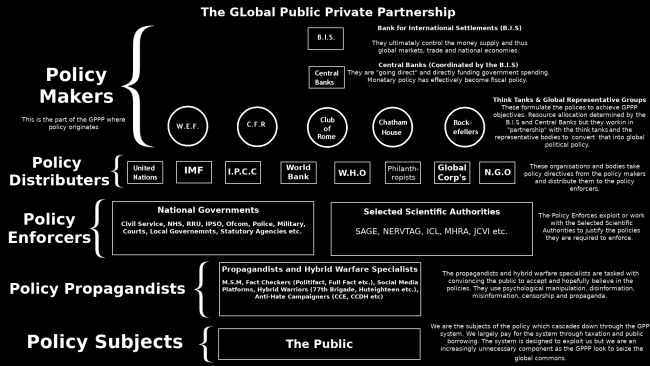
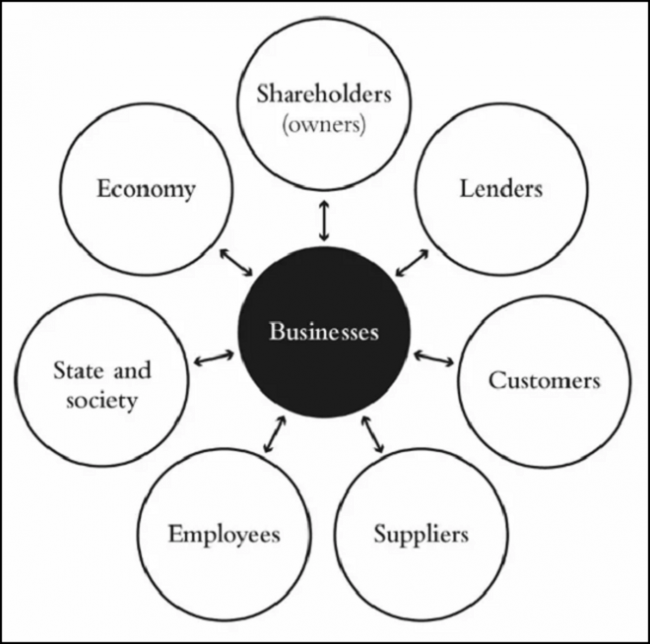

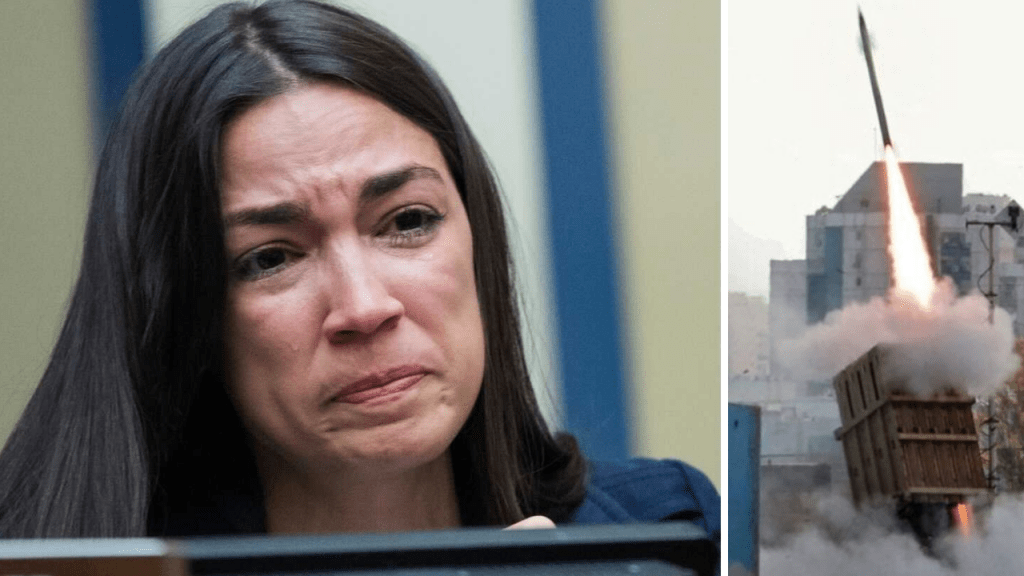




 After the Crash