With lines scripted for him to recite via teleprompter, crib notes, and an earpiece for instructions, the fake Biden mumbled and bumbled through the regime’s Tuesday state of the union (SOTU) address for 72 painful-to-hear minutes.
It came at a time when undemocratic Dems are waging war at home on Americans targeted for elimination by kill shots and abroad against militarily, morally and ethically superior Russia — what risks humanity-destroying nuclear war if push things too far.
The fake Biden is an embarrassment to what leadership is supposed to be, what’s absent with undemocratic Dems in charge — especially with an imposter, a detached from reality buffoon in the White House.
This year’s SOTU came at a time of hegemon USA’s war against invented enemy Russia, a must-win conflict it’s losing to a superior foe.
Throughout the post-WW II period, the empire of lies and mass-deception always picked fights with militarily inferior nations free from its control — until overstepping by challenging Russia belligerently in support of Nazi-infested Ukraine, a major strategic blunder for which it’s paying dearly.
Separately in response to international community calls for the Biden regime to aid rescue work in earthquake-devastated northern Syria by lifting illegally imposed sanctions, interventionist Blinken’s so-called spokesman, Price, showed contempt for its people in need by the following perversion of reality remarks, saying:
“It would be…counterproductive for us to reach out to a government” on the US target list for regime change for not subordinating its sovereignty and rights of its people to a higher power in Washington.
And this perversion of reality from Price, falsely claiming that the empire of lies and forever wars on invented enemies provided “more humanitarian assistance to the people of Syria than any other country (sic)” — a bald-faced Big Lie by a regime waging all-out war on nations free from its diabolical control.
Following Obama/Biden regime aggression against Syria in 2011, the empire of lies continued waging war on the country and its people by hot and other means.
At this time, hegemon USA illegally controls about one-third of Syrian territory, including its oil-rich areas and most fertile agricultural land.
Hegemon USA’s so-called 2020 Caesar Act is all about wanting 17 million Syrians starved into submission for failure of Damascus to bend to the will of the empire of lies and forever wars.
At the time of its enactment into US law, Syrian envoy to Russia, Riyad Haddad, explained that threatened US sanctions under the measure “not only target Syria, they directly or indirectly jeopardize all its allies and are also aimed against Persian Gulf countries, so that none of these countries dares to invest in” the Syrian Arab Republic.
“And each party that will say it wants to invest, must get permission from the US.”
The measure is similar to US state terror and illegal sanctions war on Russia, China, Iran, North Korea, Venezuela, Cuba, and other countries free from its control, what aims to inflict enormous harm on their people.
At this time, US hostility toward sovereign independent nations is a sideshow compared to its aggression against Russia, what poses an ominous risk of humanity-destroying nuclear war.
As in virtually all his public remarks, the fake Biden’s SOTU trampled on truth by a litany of pre-scripted bald-faced Big Lies.
It’s how the empire of lies operates on the world stage, treating truth and full disclosure of major issues as mortal enemies.
On March 11, 2022, the fake Biden called tanks to Nazi-infested Ukraine “WW III.”
Launched preemptively by the empire of lies against nonthreatening Russia, it’s been raging long before the fake Biden “announc(ed) that (hegemon USA) will be sending ‘Abram’ tanks to Ukrain(ian)” Nazis days earlier.
Will F-16 or other US warplanes follow — for Russia to target and destroy in flight?
The Russian Federation controls Ukrainian airspace and offshore waters.
Its high-precision hypersonic missiles can target and destroy anything threatening its security.
Sounding detached from reality and delusional, the fake Biden ignored reality about more monster than nation-state USA.
He ignored how Russia is outgunning, outmaneuvering, outwitting and defeating Nazi-infested Ukraine and the empire of lies at the same time.
And at a time of perpetual wars by hot and/or other means on invented enemies, soaring inflation and deepening economic weakness, the fake Biden pretended that Americans never had things better than since undemocratic Dems usurped power in 2020 by brazen election rigging.
And once again he ignored that what’s called covid is seasonal flu renamed, that kill shots are designed to destroy health, that democracy in the US/West exists in fantasy form alone — the real thing not tolerated at home or abroad.
What he called “the great American story” is a humanity-destroying monster.
Tucker Carlson is an exception to dominant fourth estate rubbish.
Commenting on the fake Biden’s Tuesday night SOTU before delivered, he said:
“(I)t would take a lot of brass to stand up on live television and claim that the (empire of lies and forever wars) is better off than it was when you took over” when reality is worlds apart different.
As long as undemocratic Dems run things, the ominous risk of nuclear war will threaten humanity’s survival.
Carlson correctly expected not “a single honest word” from the White House imposter in his SOTU address.
Instead of truth and full disclosure, he recited a litany of bald-faced Big Lies about all things domestic and geopolitical.
He didn’t run for president.
He was installed unelected to serve wealth, power and privileged interests exclusively at the expense of peace and beneficial social change.
At the same time, the regime he represents is waging war on Russia and losing badly to its military and tactical superiority.
On the home front, real inflation as calculated pre-1990 is 16.2%.
Most jobs created are rotten part-time ones paying poverty or sub-poverty wages with few or no benefits.
What the fake Biden called “near record low unemployment for Black and Hispanic workers” is pure fiction.
At a time when the nation’s industrial base operates in low-wage countries, he lied claiming that the empire of lies “created 800,000 good-paying manufacturing jobs, the fastest growth in 40 years (sic).”
He compounded his Big Lie by falsely claiming that “we’re exporting American products and creating American jobs (sic).”
He turned truth on its head and trampled on it by falsely blaming Russia for made-in-the-USA inflation, a fake pandemic and perpetual war-making on invented enemies.
Virtually every positive claim he made was a bald-faced Big Lie — reflecting his detachment from reality.
The empire of lies and perpetual wars on invented enemies is declining because of its imperial arrogance, its endless wars against invented enemies, and unwillingness to change its wicked ways.
The fake Biden is symbolic of hegemon USA’s nonexistent exceptionalism, its illusory moral superiority and fantasy military supremacy.
It’s the same dynamic that doomed other empires in world history.
The long ago founded US republic no longer exists, replaced by the imperial state and ruinous military Keynesianism while vital homeland needs go begging.
China, Russia and other independent nations are rising in preeminence on the world stage at a time of hegemon USA’s fall from grace with no prospect of turning things around.
The nation I grew up in long ago no longer exists.
A humanity-destroying monster replaced it.
If not effectively challenged and changed, US-launched nuclear war may kill us all.
A Final Comment
The fake Biden lied and mass-deceived by pretending to represent “all Americans.”
He was installed unelected to wage perpetual wars by hot and/or other means on invented enemies to serve wealth, power and privileged interests exclusively.
The regime he represents is an unparalleled menace to humanity at home and worldwide.
As long as it’s empowered, we’re more greatly endangered than ever before in world history because of its contempt for peace in favor of perpetual war-making on invented enemies.
The U.S. Navy’s Diving and Salvage Center can be found in a location as obscure as its name—down what was once a country lane in rural Panama City, a now-booming resort city in the southwestern panhandle of Florida, 70 miles south of the Alabama border. The center’s complex is as nondescript as its location—a drab concrete post-World War II structure that has the look of a vocational high school on the west side of Chicago. A coin-operated laundromat and a dance school are across what is now a four-lane road.
The center has been training highly skilled deep-water divers for decades who, once assigned to American military units worldwide, are capable of technical diving to do the good—using C4 explosives to clear harbors and beaches of debris and unexploded ordinance—as well as the bad, like blowing up foreign oil rigs, fouling intake valves for undersea power plants, destroying locks on crucial shipping canals. The Panama City center, which boasts the second largest indoor pool in America, was the perfect place to recruit the best, and most taciturn, graduates of the diving school who successfully did last summer what they had been authorized to do 260 feet under the surface of the Baltic Sea.
Last June, the Navy divers, operating under the cover of a widely publicized mid-summer NATO exercise known as BALTOPS 22, planted the remotely triggered explosives that, three months later, destroyed three of the four Nord Stream pipelines, according to a source with direct knowledge of the operational planning.
Two of the pipelines, which were known collectively as Nord Stream 1, had been providing Germany and much of Western Europe with cheap Russian natural gas for more than a decade. A second pair of pipelines, called Nord Stream 2, had been built but were not yet operational. Now, with Russian troops massing on the Ukrainian border and the bloodiest war in Europe since 1945 looming, President Joseph Biden saw the pipelines as a vehicle for Vladimir Putin to weaponize natural gas for his political and territorial ambitions.
Asked for comment, Adrienne Watson, a White House spokesperson, said in an email, “This is false and complete fiction.” Tammy Thorp, a spokesperson for the Central Intelligence Agency, similarly wrote: “This claim is completely and utterly false.”
Biden’s decision to sabotage the pipelines came after more than nine months of highly secret back and forth debate inside Washington’s national security community about how to best achieve that goal. For much of that time, the issue was not whether to do the mission, but how to get it done with no overt clue as to who was responsible.
There was a vital bureaucratic reason for relying on the graduates of the center’s hardcore diving school in Panama City. The divers were Navy only, and not members of America’s Special Operations Command, whose covert operations must be reported to Congress and briefed in advance to the Senate and House leadership—the so-called Gang of Eight. The Biden Administration was doing everything possible to avoid leaks as the planning took place late in 2021 and into the first months of 2022.
President Biden and his foreign policy team—National Security Adviser Jake Sullivan, Secretary of State Tony Blinken, and Victoria Nuland, the Undersecretary of State for Policy—had been vocal and consistent in their hostility to the two pipelines, which ran side by side for 750 miles under the Baltic Sea from two different ports in northeastern Russia near the Estonian border, passing close to the Danish island of Bornholm before ending in northern Germany.
The direct route, which bypassed any need to transit Ukraine, had been a boon for the German economy, which enjoyed an abundance of cheap Russian natural gas—enough to run its factories and heat its homes while enabling German distributors to sell excess gas, at a profit, throughout Western Europe. Action that could be traced to the administration would violate US promises to minimize direct conflict with Russia. Secrecy was essential.
From its earliest days, Nord Stream 1 was seen by Washington and its anti-Russian NATO partners as a threat to western dominance. The holding company behind it, Nord Stream AG, was incorporated in Switzerland in 2005 in partnership with Gazprom, a publicly traded Russian company producing enormous profits for shareholders which is dominated by oligarchs known to be in the thrall of Putin. Gazprom controlled 51 percent of the company, with four European energy firms—one in France, one in the Netherlands and two in Germany—sharing the remaining 49 percent of stock, and having the right to control downstream sales of the inexpensive natural gas to local distributors in Germany and Western Europe. Gazprom’s profits were shared with the Russian government, and state gas and oil revenues were estimated in some years to amount to as much as 45 percent of Russia’s annual budget.
America’s political fears were real: Putin would now have an additional and much-needed major source of income, and Germany and the rest of Western Europe would become addicted to low-cost natural gas supplied by Russia—while diminishing European reliance on America. In fact, that’s exactly what happened. Many Germans saw Nord Stream 1 as part of the deliverance of former Chancellor Willy Brandt’s famed Ostpolitik theory, which would enable postwar Germany to rehabilitate itself and other European nations destroyed in World War II by, among other initiatives, utilizing cheap Russian gas to fuel a prosperous Western European market and trading economy.
Nord Stream 1 was dangerous enough, in the view of NATO and Washington, but Nord Stream 2, whose construction was completed in September of 2021, would, if approved by German regulators, double the amount of cheap gas that would be available to Germany and Western Europe. The second pipeline also would provide enough gas for more than 50 percent of Germany’s annual consumption. Tensions were constantly escalating between Russia and NATO, backed by the aggressive foreign policy of the Biden Administration.
Opposition to Nord Stream 2 flared on the eve of the Biden inauguration in January 2021, when Senate Republicans, led by Ted Cruz of Texas, repeatedly raised the political threat of cheap Russian natural gas during the confirmation hearing of Blinken as Secretary of State. By then a unified Senate had successfully passed a law that, as Cruz told Blinken, “halted [the pipeline] in its tracks.” There would be enormous political and economic pressure from the German government, then headed by Angela Merkel, to get the second pipeline online.
Would Biden stand up to the Germans? Blinken said yes, but added that he had not discussed the specifics of the incoming President’s views. “I know his strong conviction that this is a bad idea, the Nord Stream 2,” he said. “I know that he would have us use every persuasive tool that we have to convince our friends and partners, including Germany, not to move forward with it.”
A few months later, as the construction of the second pipeline neared completion, Biden blinked. That May, in a stunning turnaround, the administration waived sanctions against Nord Stream AG, with a State Department official conceding that trying to stop the pipeline through sanctions and diplomacy had “always been a long shot.” Behind the scenes, administration officials reportedly urged Ukrainian President Volodymyr Zelensky, by then facing a threat of Russian invasion, not to criticize the move.
There were immediate consequences. Senate Republicans, led by Cruz, announced an immediate blockade of all of Biden’s foreign policy nominees and delayed passage of the annual defense bill for months, deep into the fall. Politico later depicted Biden’s turnabout on the second Russian pipeline as “the one decision, arguably more than the chaotic military withdrawal from Afghanistan, that has imperiled Biden’s agenda.”
The administration was floundering, despite getting a reprieve on the crisis in mid-November, when Germany’s energy regulators suspended approval of the second Nord Stream pipeline. Natural gas prices surged 8% within days, amid growing fears in Germany and Europe that the pipeline suspension and the growing possibility of a war between Russia and Ukraine would lead to a very much unwanted cold winter. It was not clear to Washington just where Olaf Scholz, Germany’s newly appointed chancellor, stood. Months earlier, after the fall of Afghanistan, Scholtz had publicly endorsed French President Emmanuel Macron’s call for a more autonomous European foreign policy in a speech in Prague—clearly suggesting less reliance on Washington and its mercurial actions.
Throughout all of this, Russian troops had been steadily and ominously building up on the borders of Ukraine, and by the end of December more than 100,000 soldiers were in position to strike from Belarus and Crimea. Alarm was growing in Washington, including an assessment from Blinken that those troop numbers could be “doubled in short order.”
The administration’s attention once again was focused on Nord Stream. As long as Europe remained dependent on the pipelines for cheap natural gas, Washington was afraid that countries like Germany would be reluctant to supply Ukraine with the money and weapons it needed to defeat Russia.
It was at this unsettled moment that Biden authorized Jake Sullivan to bring together an interagency group to come up with a plan.
All options were to be on the table. But only one would emerge.
PLANNING
In December of 2021, two months before the first Russian tanks rolled into Ukraine, Jake Sullivan convened a meeting of a newly formed task force—men and women from the Joint Chiefs of Staff, the CIA, and the State and Treasury Departments—and asked for recommendations about how to respond to Putin’s impending invasion.
It would be the first of a series of top-secret meetings, in a secure room on a top floor of the Old Executive Office Building, adjacent to the White House, that was also the home of the President’s Foreign Intelligence Advisory Board (PFIAB). There was the usual back and forth chatter that eventually led to a crucial preliminary question: Would the recommendation forwarded by the group to the President be reversible—such as another layer of sanctions and currency restrictions—or irreversible—that is, kinetic actions, which could not be undone?
What became clear to participants, according to the source with direct knowledge of the process, is that Sullivan intended for the group to come up with a plan for the destruction of the two Nord Stream pipelines—and that he was delivering on the desires of the President.
THE PLAYERS Left to right: Victoria Nuland, Anthony Blinken, and Jake Sullivan.
Over the next several meetings, the participants debated options for an attack. The Navy proposed using a newly commissioned submarine to assault the pipeline directly. The Air Force discussed dropping bombs with delayed fuses that could be set off remotely. The CIA argued that whatever was done, it would have to be covert. Everyone involved understood the stakes. “This is not kiddie stuff,” the source said. If the attack were traceable to the United States, “It’s an act of war.”
At the time, the CIA was directed by William Burns, a mild-mannered former ambassador to Russia who had served as deputy secretary of state in the Obama Administration. Burns quickly authorized an Agency working group whose ad hoc members included—by chance—someone who was familiar with the capabilities of the Navy’s deep-sea divers in Panama City. Over the next few weeks, members of the CIA’s working group began to craft a plan for a covert operation that would use deep-sea divers to trigger an explosion along the pipeline.
Something like this had been done before. In 1971, the American intelligence community learned from still undisclosed sources that two important units of the Russian Navy were communicating via an undersea cable buried in the Sea of Okhotsk, on Russia’s Far East Coast. The cable linked a regional Navy command to the mainland headquarters at Vladivostok.
A hand-picked team of Central Intelligence Agency and National Security Agency operatives was assembled somewhere in the Washington area, under deep cover, and worked out a plan, using Navy divers, modified submarines and a deep-submarine rescue vehicle, that succeeded, after much trial and error, in locating the Russian cable. The divers planted a sophisticated listening device on the cable that successfully intercepted the Russian traffic and recorded it on a taping system.
The NSA learned that senior Russian navy officers, convinced of the security of their communication link, chatted away with their peers without encryption. The recording device and its tape had to be replaced monthly and the project rolled on merrily for a decade until it was compromised by a forty-four-year-old civilian NSA technician named Ronald Pelton who was fluent in Russian. Pelton was betrayed by a Russian defector in 1985 and sentenced to prison. He was paid just $5,000 by the Russians for his revelations about the operation, along with $35,000 for other Russian operational data he provided that was never made public.
That underwater success, codenamed Ivy Bells, was innovative and risky, and produced invaluable intelligence about the Russian Navy’s intentions and planning.
Still, the interagency group was initially skeptical of the CIA’s enthusiasm for a covert deep-sea attack. There were too many unanswered questions. The waters of the Baltic Sea were heavily patrolled by the Russian navy, and there were no oil rigs that could be used as cover for a diving operation. Would the divers have to go to Estonia, right across the border from Russia’s natural gas loading docks, to train for the mission? “It would be a goat fuck,” the Agency was told.
Throughout “all of this scheming,” the source said, “some working guys in the CIA and the State Department were saying, ‘Don’t do this. It’s stupid and will be a political nightmare if it comes out.’”
Nevertheless, in early 2022, the CIA working group reported back to Sullivan’s interagency group: “We have a way to blow up the pipelines.”
What came next was stunning. On February 7, less than three weeks before the seemingly inevitable Russian invasion of Ukraine, Biden met in his White House office with German Chancellor Olaf Scholz, who, after some wobbling, was now firmly on the American team. At the press briefing that followed, Biden defiantly said, “If Russia invades . . . there will be no longer a Nord Stream 2. We will bring an end to it.”
Twenty days earlier, Undersecretary Nuland had delivered essentially the same message at a State Department briefing, with little press coverage. “I want to be very clear to you today,” she said in response to a question. “If Russia invades Ukraine, one way or another Nord Stream 2 will not move forward.”
Several of those involved in planning the pipeline mission were dismayed by what they viewed as indirect references to the attack.
“It was like putting an atomic bomb on the ground in Tokyo and telling the Japanese that we are going to detonate it,” the source said. “The plan was for the options to be executed post invasion and not advertised publicly. Biden simply didn’t get it or ignored it.”
Biden’s and Nuland’s indiscretion, if that is what it was, might have frustrated some of the planners. But it also created an opportunity. According to the source, some of the senior officials of the CIA determined that blowing up the pipeline “no longer could be considered a covert option because the President just announced that we knew how to do it.”
The plan to blow up Nord Stream 1 and 2 was suddenly downgraded from a covert operation requiring that Congress be informed to one that was deemed as a highly classified intelligence operation with U.S. military support. Under the law, the source explained, “There was no longer a legal requirement to report the operation to Congress. All they had to do now is just do it—but it still had to be secret. The Russians have superlative surveillance of the Baltic Sea.”
The Agency working group members had no direct contact with the White House, and were eager to find out if the President meant what he’d said—that is, if the mission was now a go. The source recalled, “Bill Burns comes back and says, ‘Do it.’”
THE OPERATION
Norway was the perfect place to base the mission.
In the past few years of East-West crisis, the U.S. military has vastly expanded its presence inside Norway, whose western border runs 1,400 miles along the north Atlantic Ocean and merges above the Arctic Circle with Russia. The Pentagon has created high paying jobs and contracts, amid some local controversy, by investing hundreds of millions of dollars to upgrade and expand American Navy and Air Force facilities in Norway. The new works included, most importantly, an advanced synthetic aperture radar far up north that was capable of penetrating deep into Russia and came online just as the American intelligence community lost access to a series of long-range listening sites inside China.
In return, the Norwegian government angered liberals and some moderates in its parliament last November by passing the Supplementary Defense Cooperation Agreement (SDCA). Under the new deal, the U.S. legal system would have jurisdiction in certain “agreed areas” in the North over American soldiers accused of crimes off base, as well as over those Norwegian citizens accused or suspected of interfering with the work at the base.
Norway was one of the original signatories of the NATO Treaty in 1949, in the early days of the Cold War. Today, the supreme commander of NATO is Jens Stoltenberg, a committed anti-communist, who served as Norway’s prime minister for eight years before moving to his high NATO post, with American backing, in 2014. He was a hardliner on all things Putin and Russia who had cooperated with the American intelligence community since the Vietnam War. He has been trusted completely since. “He is the glove that fits the American hand,” the source said.
Back in Washington, planners knew they had to go to Norway. “They hated the Russians, and the Norwegian navy was full of superb sailors and divers who had generations of experience in highly profitable deep-sea oil and gas exploration,” the source said. They also could be trusted to keep the mission secret. (The Norwegians may have had other interests as well. The destruction of Nord Stream—if the Americans could pull it off—would allow Norway to sell vastly more of its own natural gas to Europe.)
Sometime in March, a few members of the team flew to Norway to meet with the Norwegian Secret Service and Navy. One of the key questions was where exactly in the Baltic Sea was the best place to plant the explosives. Nord Stream 1 and 2, each with two sets of pipelines, were separated much of the way by little more than a mile as they made their run to the port of Greifswald in the far northeast of Germany.
The Norwegian navy was quick to find the right spot, in the shallow waters of the Baltic sea a few miles off Denmark’s Bornholm Island. The pipelines ran more than a mile apart along a seafloor that was only 260 feet deep. That would be well within the range of the divers, who, operating from a Norwegian Alta class mine hunter, would dive with a mixture of oxygen, nitrogen and helium streaming from their tanks, and plant shaped C4 charges on the four pipelines with concrete protective covers. It would be tedious, time consuming and dangerous work, but the waters off Bornholm had another advantage: there were no major tidal currents, which would have made the task of diving much more difficult.
After a bit of research, the Americans were all in.
At this point, the Navy’s obscure deep-diving group in Panama City once again came into play. The deep-sea schools at Panama City, whose trainees participated in Ivy Bells, are seen as an unwanted backwater by the elite graduates of the Naval Academy in Annapolis, who typically seek the glory of being assigned as a Seal, fighter pilot, or submariner. If one must become a “Black Shoe”—that is, a member of the less desirable surface ship command—there is always at least duty on a destroyer, cruiser or amphibious ship. The least glamorous of all is mine warfare. Its divers never appear in Hollywood movies, or on the cover of popular magazines.
“The best divers with deep diving qualifications are a tight community, and only the very best are recruited for the operation and told to be prepared to be summoned to the CIA in Washington,” the source said.
The Norwegians and Americans had a location and the operatives, but there was another concern: any unusual underwater activity in the waters off Bornholm might draw the attention of the Swedish or Danish navies, which could report it.
Denmark had also been one of the original NATO signatories and was known in the intelligence community for its special ties to the United Kingdom. Sweden had applied for membership into NATO, and had demonstrated its great skill in managing its underwater sound and magnetic sensor systems that successfully tracked Russian submarines that would occasionally show up in remote waters of the Swedish archipelago and be forced to the surface.
The Norwegians joined the Americans in insisting that some senior officials in Denmark and Sweden had to be briefed in general terms about possible diving activity in the area. In that way, someone higher up could intervene and keep a report out of the chain of command, thus insulating the pipeline operation. “What they were told and what they knew were purposely different,” the source told me. (The Norwegian embassy, asked to comment on this story, did not respond.)
The Norwegians were key to solving other hurdles. The Russian navy was known to possess surveillance technology capable of spotting, and triggering, underwater mines. The American explosive devices needed to be camouflaged in a way that would make them appear to the Russian system as part of the natural background—something that required adapting to the specific salinity of the water. The Norwegians had a fix.
The Norwegians also had a solution to the crucial question of when the operation should take place. Every June, for the past 21 years, the American Sixth Fleet, whose flagship is based in Gaeta, Italy, south of Rome, has sponsored a major NATO exercise in the Baltic Sea involving scores of allied ships throughout the region. The current exercise, held in June, would be known as Baltic Operations 22, or BALTOPS 22. The Norwegians proposed this would be the ideal cover to plant the mines.
The Americans provided one vital element: they convinced the Sixth Fleet planners to add a research and development exercise to the program. The exercise, as made public by the Navy, involved the Sixth Fleet in collaboration with the Navy’s “research and warfare centers.” The at-sea event would be held off the coast of Bornholm Island and involve NATO teams of divers planting mines, with competing teams using the latest underwater technology to find and destroy them.
It was both a useful exercise and ingenious cover. The Panama City boys would do their thing and the C4 explosives would be in place by the end of BALTOPS22, with a 48-hour timer attached. All of the Americans and Norwegians would be long gone by the first explosion.
The days were counting down. “The clock was ticking, and we were nearing mission accomplished,” the source said.
And then: Washington had second thoughts. The bombs would still be planted during BALTOPS, but the White House worried that a two-day window for their detonation would be too close to the end of the exercise, and it would be obvious that America had been involved.
Instead, the White House had a new request: “Can the guys in the field come up with some way to blow the pipelines later on command?”
Some members of the planning team were angered and frustrated by the President’s seeming indecision. The Panama City divers had repeatedly practiced planting the C4 on pipelines, as they would during BALTOPS, but now the team in Norway had to come up with a way to give Biden what he wanted—the ability to issue a successful execution order at a time of his choosing.
Being tasked with an arbitrary, last-minute change was something the CIA was accustomed to managing. But it also renewed the concerns some shared over the necessity, and legality, of the entire operation.
The President’s secret orders also evoked the CIA’s dilemma in the Vietnam War days, when President Johnson, confronted by growing anti-Vietnam War sentiment, ordered the Agency to violate its charter—which specifically barred it from operating inside America—by spying on antiwar leaders to determine whether they were being controlled by Communist Russia.
The agency ultimately acquiesced, and throughout the 1970s it became clear just how far it had been willing to go. There were subsequent newspaper revelations in the aftermath of the Watergate scandals about the Agency’s spying on American citizens, its involvement in the assassination of foreign leaders and its undermining of the socialist government of Salvador Allende.
Those revelations led to a dramatic series of hearings in the mid-1970s in the Senate, led by Frank Church of Idaho, that made it clear that Richard Helms, the Agency director at the time, accepted that he had an obligation to do what the President wanted, even if it meant violating the law.
In unpublished, closed-door testimony, Helms ruefully explained that “you almost have an Immaculate Conception when you do something” under secret orders from a President. “Whether it’s right that you should have it, or wrong that you shall have it, [the CIA] works under different rules and ground rules than any other part of the government.” He was essentially telling the Senators that he, as head of the CIA, understood that he had been working for the Crown, and not the Constitution.
The Americans at work in Norway operated under the same dynamic, and dutifully began working on the new problem—how to remotely detonate the C4 explosives on Biden’s order. It was a much more demanding assignment than those in Washington understood. There was no way for the team in Norway to know when the President might push the button. Would it be in a few weeks, in many months or in half a year or longer?
The C4 attached to the pipelines would be triggered by a sonar buoy dropped by a plane on short notice, but the procedure involved the most advanced signal processing technology. Once in place, the delayed timing devices attached to any of the four pipelines could be accidentally triggered by the complex mix of ocean background noises throughout the heavily trafficked Baltic Sea—from near and distant ships, underwater drilling, seismic events, waves and even sea creatures. To avoid this, the sonar buoy, once in place, would emit a sequence of unique low frequency tonal sounds—much like those emitted by a flute or a piano—that would be recognized by the timing device and, after a pre-set hours of delay, trigger the explosives. (“You want a signal that is robust enough so that no other signal could accidentally send a pulse that detonated the explosives,” I was told by Dr. Theodore Postol, professor emeritus of science, technology and national security policy at MIT. Postol, who has served as the science adviser to the Pentagon’s Chief of Naval Operations, said the issue facing the group in Norway because of Biden’s delay was one of chance: “The longer the explosives are in the water the greater risk there would be of a random signal that would launch the bombs.”)
On September 26, 2022, a Norwegian Navy P8 surveillance plane made a seemingly routine flight and dropped a sonar buoy. The signal spread underwater, initially to Nord Stream 2 and then on to Nord Stream 1. A few hours later, the high-powered C4 explosives were triggered and three of the four pipelines were put out of commission. Within a few minutes, pools of methane gas that remained in the shuttered pipelines could be seen spreading on the water’s surface and the world learned that something irreversible had taken place.
FALLOUT
In the immediate aftermath of the pipeline bombing, the American media treated it like an unsolved mystery. Russia was repeatedly cited as a likely culprit, spurred on by calculated leaks from the White House—but without ever establishing a clear motive for such an act of self-sabotage, beyond simple retribution. A few months later, when it emerged that Russian authorities had been quietly getting estimates for the cost to repair the pipelines, the New York Times described the news as “complicating theories about who was behind” the attack. No major American newspaper dug into the earlier threats to the pipelines made by Biden and Undersecretary of State Nuland.
While it was never clear why Russia would seek to destroy its own lucrative pipeline, a more telling rationale for the President’s action came from Secretary of State Blinken.
Asked at a press conference last September about the consequences of the worsening energy crisis in Western Europe, Blinken described the moment as a potentially good one:
“It’s a tremendous opportunity to once and for all remove the dependence on Russian energy and thus to take away from Vladimir Putin the weaponization of energy as a means of advancing his imperial designs. That’s very significant and that offers tremendous strategic opportunity for the years to come, but meanwhile we’re determined to do everything we possibly can to make sure the consequences of all of this are not borne by citizens in our countries or, for that matter, around the world.”
More recently, Victoria Nuland expressed satisfaction at the demise of the newest of the pipelines. Testifying at a Senate Foreign Relations Committee hearing in late January she told Senator Ted Cruz, “Like you, I am, and I think the Administration is, very gratified to know that Nord Stream 2 is now, as you like to say, a hunk of metal at the bottom of the sea.”
The source had a much more streetwise view of Biden’s decision to sabotage more than 1500 miles of Gazprom pipeline as winter approached. “Well,” he said, speaking of the President, “I gotta admit the guy has a pair of balls. He said he was going to do it, and he did.”
Asked why he thought the Russians failed to respond, he said cynically, “Maybe they want the capability to do the same things the U.S. did.
“It was a beautiful cover story,” he went on. “Behind it was a covert operation that placed experts in the field and equipment that operated on a covert signal.
“Ukraine will now push for Western fourth generation fighter jets such as the U.S. F-16 after securing supplies of main battle tanks, an adviser to Ukraine’s defence minister said on Wednesday.
Ukraine won a huge boost for its troops as Germany announced plans to provide heavy tanks for Kyiv on Wednesday, ending weeks of diplomatic deadlock on the issue. The United States is poised to make a similar announcement.
Just in time for the good news, Lockheed Martin has announced that the arms manufacturing giant happens to be all set to ramp up production of F-16s should they be needed for shipment to Ukraine.
“Lockheed Martin has said that it’s ready to meet demands for F-16 fighter jets if the US and its allies choose to ship them to Ukraine,” Antiwar’s Dave DeCamp reports. “So far, the US and its allies have been hesitant to send fighter jets to Ukraine due to concerns that they could be used to target Russian territory. But the Western powers seem less and less concerned about escalation as the US and Germany have now pledged to send their main battle tanks.”
The New York Times has a new article out titled “How Biden Reluctantly Agreed to Send Tanks to Ukraine,” subtitled “The decision unlocked a flow of heavy arms from Europe and inched the United States and its NATO allies closer to direct conflict with Russia.” It’s authors David E. Sanger, Eric Schmitt and Helene Cooper write:
President Biden’s announcement Wednesday that he would send M1 Abrams tanks to Ukraine came after weeks of tense back-channel negotiations with the chancellor of Germany and other European leaders, who insisted that the only way to unlock a flow of heavy European arms was for the United States to send tanks of its own.
His decision, however reluctant, now paves the way for German-made Leopard 2 tanks to be delivered to Ukraine in two or three months, provided by several European nations. While it is unclear whether it will make a decisive difference in the spring offensive that President Volodymyr Zelensky is now planning to take back territory seized by Russia, it is the latest in a series of gradual escalations that has inched the United States and its NATO allies closer to direct conflict with Russia.
When even the myopic empire simps at The New York Times are acknowledging that western powers are escalating aggressions in a very dangerous direction, you should probably sit up and pay attention.
In a recent article for Responsible Statecraft titled “Mission Creep? How the US role in Ukraine has slowly escalated,” Branko Marcetic outlines the ways the US empire has “serially blown past their own self-imposed lines over arms transfers,” over and over again relenting to war hawks and requests from Ukrainian officials to supply weapons which it had previously refrained from supplying for fear that they would be too escalatory and lead to hot warfare between nuclear superpowers. Marcetic notes the way previously unthinkable aggressions like NATO spy agencies conducting sabotage operations on Russian infrastructure are now accepted, with more escalations being called for as soon as the previous one was made.
"…NATO arms transfers have now escalated well beyond what governments had worried just months ago could draw the alliance into direct war with Russia…" https://t.co/NKbMdVuxnY
Toward the end of his article, Marcetic drives home a very important point which needs more attention: that the western alliance has established a policy of continually escalating every time Russia doesn’t react forcefully to a previous western escalation, which necessarily means Russia is being actively incentivized to react forcefully to those escalations.
“By escalating their support for Ukraine’s military, the U.S. and NATO have created an incentive structure for Moscow to take a drastic, aggressive step to show the seriousness of its own red lines,” Marcetic writes. “This would be dangerous at the best of times, but particularly so when Russian officials are making clear they increasinglyview the war as one against NATO as a whole, not merely Ukraine, while threatening nuclear response to the alliance’s escalation in weapons deliveries.”
“Moscow keeps saying escalatory arms transfers are unacceptable and could mean wider war; US officials say since Moscow hasn’t acted on those threats, they can freely escalate. Russia is effectively told it has to escalate to show it’s serious about lines,” Marcetic added on Twitter.
A good recent example of this dynamic is the recent New York Times report that the Biden administration is considering backing a Ukrainian offensive on Crimea, which many experts agree is one of the most likely ways this conflict could lead to nuclear warfare. The article reports that the Biden administration has assessed that Russia is unlikely to reciprocate an escalatory aggression, but the basis for that assessment apparently comes from nothing other than the fact that Russia hasn’t done so yet.
“Crimea has already been hit many times without a massive escalation from the Kremlin,” the Times quotes a RAND Corporation think tanker as saying in explanation for the Biden administration’s belief that it can get away with backing a Crimea offensive. But as Dave DeCamp explained at the time, that’s not even true; Russia did significantly escalate its aggressions in response to strikes on Crimea, beginning to target critical Ukrainian infrastructure in ways it previously had not.
In this article about how the US is “warming” to the idea of helping Ukraine strike Crimea, RAND lady says Russia didn’t massively escalate in response to other attacks on Crimea. But the major strikes on Ukrainian infrastructure didn’t start until after the Kerch bridge bombing! pic.twitter.com/p4pHxs6xFB
So Russia has in fact been escalating its aggressions in response to attacks on Crimea; it just hasn’t been escalating them against NATO powers. As long as Russia is only escalating in ways that hurt Ukrainians, the US-centralized power structure does not regard them as real escalations. The take-home message to Moscow being that they’re going to get squeezed harder and harder until they attack NATO itself.
And of course that won’t de-escalate things either; it will be seized on and spun as evidence that Putin is a reckless madman who is attacking the free world completely unprovoked and must be stopped at all cost, even if it means risking nuclear armageddon. Russia would of course be aware of this obvious reality, so the only way it takes the bait is if the pain of not reacting gets to a point where it is perceived as outweighing the pain of reacting. But judging by its actions the empire seems determined to push them to that point.
It really is spooky how much de-escalation and detente have been disappeared from public discourse about Russia. People genuinely don’t seem to know it’s an option. They really do think the only option is continually escalating nuclear brinkmanship, and that anything else is obsequious appeasement. They think that because that’s the message they are being fed by the imperial propaganda machine, and they’re being fed that message because that is the empire’s actual position.
I’ve been warning about the increasing risk of nuclear armageddon for as long as I’ve been publicly engaged in political commentary, and people have been calling me a hysterical idiot and a Putin puppet the entire time even as we’ve moved closer and closer to the exact point I’ve been screaming about at the top of my lungs all these years. Now there’s not a whole lot closer it can get without being directly upon us. I deeply, deeply hope we turn this thing around before it’s too late.
“Ingsoc. The sacred principles of ingsoc. Newspeak, double-speak, the mutability of the past.” – George Orwell, 1984
As today dawned, I was looking out the window into the cold grayness with small patches of snow littering the frozen ground. As light snow began to fall, I felt a deep mourning in my soul as a memory came to me of another snowy day in 1972 when I awoke to news of Richard Nixon’s savage Christmas bombing of North Vietnam with more than a hundred B-52 bombers, in wave after wave, dropping death and destruction on Hanoi and other parts of North Vietnam. I thought of the war the United States is now waging against Russia via Ukraine and how, as during the U.S. war against Vietnam, few Americans seem to care until it becomes too late. It depressed me.
Soon after I was greeted by an editorial from The New York Times’ Editorial Board, “A Brutal New Phase of the War in Ukraine.” It is a piece of propaganda so obvious that only those desperate to believe blatant lies would not fall down laughing. Yet it is no laughing matter, for The N.Y. Times is advocating for a wider war, more lethal weapons for Ukraine, and escalation of the fighting that risks nuclear war. So their title is apt because they are promoting the brutality. This angered me.
The Times’ Editorial Board tells us that President Putin, like Hitler, is mad. “Like the last European war, this one is mostly one man’s madness.” Russia and Putin are “cruel”; are conducting a “regular horror” with missile strikes against civilian targets; are “desperate”; are pursuing Putin’s “delusions”; are waging a “terrible and useless war”; are “committing atrocities”; are responsible for “murder, rape and pillaging,” etc.
On the other hand, “a heroic Ukraine” “has won repeated and decisive victories against Russian forces” who have lost “well over 100,000 Russian soldiers killed and wounded,” according to the “reliable” source, chairman of the U.S. Joint Chief of Staff, Gen. Mark A. Milley. To add to this rosy report, the Ukrainians seem to have suffered no causalities since none are mentioned by the cozy Times’ Editorial Board members from their keyboards on Eighth Avenue. When you support a U.S. war, as has always been TheTimes’ modus operandi as a stenographer for the government, mentioning the dead pawns used to accomplish the imperialists’ dreams is bad manners. So are the atrocities committed by those forces, so they too have been omitted. Neo-Nazis, the Azov Battalion? They too must never have existed since they are not mentioned.
But then, according to the esteemed editorial writers, this is not a U.S. proxy war waged via Ukraine by U.S./NATO “to strip Russia of its destiny and greatness.” No, it is simply Russian aggression, supported by “the Kremlin’s propaganda machinery” that has churned “out false narratives about a heroic Russian struggle against forces of fascism and debauchery.” U.S./NATO were “horrified by the crude violation of the postwar order,” so we are laughingly told, and so came to Ukraine’s defense as “Mr. Putin’s response has been to throw ever more lives, resources and cruelty at Ukraine.”
Nowhere in this diatribe by the Times’ Board of propagandists – and here the whole game is given away for anyone with a bit of an historical sense – is there any mention of the U.S. engineered coup d’état in Ukraine in 2014. It just didn’t happen. Never happened. Magic by omission. The U.S., together with the Ukrainian government “led” by the puppet-actor “President Volodymyr Zelensky,” are completely innocence parties, according to the Times.(Note also, that nowhere in this four page diatribe is President Putin addressed by his title, as if to say that “Mr. Putin” is illegitimate and Zelensky is the real thing.)
All the problems stem from when “Mr. Putin seized Crimea and stirred up a secessionist conflict in eastern Ukraine n 2014.”
Nowhere is it mentioned that for years on end U.S./NATO has been moving troops and weapons right up to Russia’s borders, that George W. Bush pulled the U.S. out of the Anti-Ballistic Missile Treaty and that Trump did the same with the Intermediate-Range Nuclear Forces Treaty, that the U.S. has set up so-called anti-ballistic missile sites in Poland and Rumania and asserted its right to a nuclear first-strike, that more and more countries have been added to NATO’s eastern expansion despite promises to Russia to the contrary, that 15,000 plus mostly Russian-speaking people in eastern Ukraine have been killed by Ukrainian forces for years before February 2022, that the Minsk agreements were part of a scheme to give time for the arming of Ukraine, that the U.S. has rejected all calls from Russia to respect its borders and its integrity, that the U.S./NATO has surrounded Russia with military bases, that there was a vote in Crimea after the coup, that the U.S. has been for years waging economic war on Russia via sanctions, etc. In short, all of the reasons that Russia felt that it was under attack for decades and that the U.S. was stone deaf to its appeals to negotiate these threats to its existence. It doesn’t take a genius to realize that if all were reversed and Russia had put troops and weapons in Mexico and Canada that the United States would respond forcefully.
This editorial is propaganda by omission and strident stupidity by commission.
The editorial has all its facts “wrong,” and not by accident. The paper may say that its opinion journalists’ claims are separate from those of its newsroom, yet their claims echo the daily barrage of falsehoods from its front pages, such as:
Ukraine is winning on the battlefield.
“Russia faces decades of economic stagnation and regression even if the war ends soon.”
That on Jan.14, as part of its cruel attacks on civilian targets, a Russian missile struck an apartment building in Dnipro, killing many.
Only one man can stop this war – Vladimir Putin – because he started it.
Until now, the U.S. and its allies were reluctant to deploy heavy weapons to Ukraine “for fear of escalating this conflict into an all-in East-West war.”
Russia is desperate as Putin pursues “his delusions.”
Putin is “isolated from anyone who would dare to speak truth to his power.”
Putin began trying to change Ukraine’s borders by force in 2014.
During the last 11 months Ukraine has won repeated and decisive victories against Russian forces …. The war is at a stalemate.”
The Russian people are being subjected to the Kremlin’s propaganda machinery “churning out false narratives.”
This is expert opinion for dummies. A vast tapestry of lies, as Harold Pinter said in his Nobel Prize address. The war escalation the editorial writers are promoting is in their words, “this time pitting Western arms against a desperate Russia,” as if the U.S./NATO does not have CIA and special forces in Ukraine, just weapons, and as if “this time” means it wasn’t so for the past nine years at least as the U.S. was building Ukraine’s military and arms for this very fight.
It is a fight they will lose in the days to come. Russia was, is, and will triumph.
Everything in the editorial is disingenuous. Simple propaganda: the good guys against the bad guys. Putin another Hitler. The good guys are winning, just as they did in Vietnam, until reality dawned and it had to be admitted they weren’t (and didn’t). History is repeating itself.
Little has changed and so my morning sense of mourning when I remembered Nixon and Kissinger’s savagery at Christmas 1972 was appropriate. As then, so today, we are being subjected to a vast tapestry of lies told by the corporate media for their bosses, as the U.S. continues its doomed efforts to control the world. It is not Russia that is desperate now, but propagandists such as the writers of this strident and stupid editorial. It is not the Russian people who need to wake up, as they claim, but the American people and those who still cling to the myth that The New York Times Corporation is an organ of truth. It is the Ministry of Truth with its newspeak, double-speak, and its efforts to change the past.
The crimes of the United States have been systematic, constant, vicious, remorseless, but very few people have actually talked about them. You have to hand it to America. It has exercised a quite clinical manipulation of power worldwide while masquerading as a force for universal good. It’s a brilliant, even witty, highly successful act of hypnosis.
The Bulletin of the Atomic Scientists has moved its symbolic Doomsday Clock to ninety seconds to midnight, the closest it has ever been set since its founding after the second world war. Chief among their reasons for doing so is the increasingly dangerous war in Ukraine.
A statement authored by the Bulletin’s editor John Mecklin is as biased against Russia as any mainstream western punditry today and makes no mention of the US empire’s role in provoking, prolonging and benefiting from this conflict, yet it still provides a fairly reasonable appraisal of the magnitude of the threat we’re staring down the barrel of at this point in history:
This year, the Science and Security Board of the Bulletin of the Atomic Scientists moves the hands of the Doomsday Clock forward, largely (though not exclusively) because of the mounting dangers of the war in Ukraine. The Clock now stands at 90 seconds to midnight—the closest to global catastrophe it has ever been.
The war in Ukraine may enter a second horrifying year, with both sides convinced they can win. Ukraine’s sovereignty and broader European security arrangements that have largely held since the end of World War II are at stake. Also, Russia’s war on Ukraine has raised profound questions about how states interact, eroding norms of international conduct that underpin successful responses to a variety of global risks.
And worst of all, Russia’s thinly veiled threats to use nuclear weapons remind the world that escalation of the conflict—by accident, intention, or miscalculation—is a terrible risk. The possibility that the conflict could spin out of anyone’s control remains high.
Mecklin encourages dialogue between Russia, Ukraine and NATO powers in order to de-escalate tensions in “this time of unprecedented global danger.” He quotes UN Secretary-General Antonio Guterres, who warned last August that the world has entered “a time of nuclear danger not seen since the height of the Cold War.”
The Doomsday Clock is now at 90 seconds to midnight, meaning the world is closer than ever to global catastrophe. Isn't this enough reason to call for negotiations in Ukraine??? #peaceinUkrainehttps://t.co/HvZPjmvRfI
We came a hair’s breadth from nuclear annihilation during the chaotic and unpredictable brinkmanship at the height of the last cold war, and in fact had numerous close calls that could have easily wound up going another way. As former Secretary of State Dean Acheson put it, humanity survived the Cuban Missile Crisis by “plain dumb luck”.
There’s no logical basis for the belief that we’ll get lucky again. Believing nuclear war won’t happen because it didn’t happen last time is a type of fallacious reasoning known as normalcy bias; it’s as rational as believing Russian roulette is safe because the man handing you the pistol didn’t blow his head off when he pulled the trigger.
But that’s the kind of sloppy thinking you’ll run into when you try to discuss this subject in public; I’m always encountering arguments that there’s no risk of nuclear war because we’ve gone all this time without disaster. One of the reasons I engage so much on social media is that I find it’s a good way of keeping tabs on the dominant propaganda narratives in our civilization and understanding what people are thinking and believing about things, and nowhere have I been met with more fuzzbrained comments than the times I’ve written about the need to prevent an entirely preventable nuclear holocaust.
The most common response I get is something along the lines of “Well if there is a nuclear war it will be Putin’s fault,” as though whose “fault” it is will matter to us while we’re watching the world end, along with the related “Well Russia shouldn’t have invaded then” and “Well Russia should stop threatening to use nukes then.” People genuinely don’t seem to understand that in the event of a full-scale nuclear war, it will really be the end of everyone. They still kind of imagine everyone still being there and shaking their fists at Russia afterward, and themselves sitting there feeling self-righteous and vindicated for correctly saying what a bad, bad man Vladimir Putin is.
They don’t understand that there will be no pundits discussing the nuclear armageddon on Fox and MSNBC, arguing about whose fault it was and which political party is to blame. They don’t get that there won’t be any war crimes tribunals in the radioactive ashes as the biosphere starves to death in nuclear winter. They don’t understand that once the nukes start flying, nobody’s shoulds or shouldn’ts about it will matter at all, and neither will your political opinions about Putin. All that will matter is that it happened, and that it can’t be taken back.
US May Help Ukraine Launch An Offensive On Crimea
"Are US officials willing to bet the life of every terrestrial organism that the course of action they're considering won't trigger a chain of events leading to the end of the world?"https://t.co/IeBQlmKhnO
Another common response when I talk about the looming threat of nuclear war is, “Oh so you just don’t care about Ukrainians and you want them all to die.” The other day some lady responded to a Twitter thread I made about the need to avoid nuclear armageddon by saying that I must love rape and war crimes. People sincerely believe that’s a valid response to a discussion about the need to prevent the single worst thing that could possibly happen from happening. It really doesn’t seem to occur to them that they’re not actually engaging the subject at hand in any real way.
Slightly more perceptive interlocutors will argue that if we back down to tyrants just because they have nuclear weapons then everyone will try to get nukes and those who have them will become more belligerent, which will end up making nuclear war more likely in the long run. This response is a straw man fallacy because it misrepresents the argument as “just back down” rather than a call to engage in diplomacy and dialogue to de-escalate and begin sincerely negotiating toward detente, none of which is happening to any meaningful extent in this conflict. More importantly, it pretends that Russia is just invading its neighbor out of the blue instead of the well-documented reality that it is in fact responding to provocations by the US empire. The US has a moral obligation to de-escalate a conflict it knowingly provoked to advance its own interests, especially when that conflict could kill everyone in the world.
The whole “We can’t just back down to bullies like Putin” line of argumentation is further invalidated by the fact that it’s one thing to draw a line in the sand that must never be crossed — even if in the face of armageddon — but it’s quite another to say that line should be over something as small as who governs Crimea. This planet is populated with eight billion humans and countless other sentient creatures, very few of whom care one way or another who governs Crimea and almost none of whom would be willing to watch their loved ones die over it. Wanting to draw the line there is obnoxious, arrogant, and absurd.
And that’s just the shoddy brainwork of the rank-and-file public; the thinking of those who actually got us into this situation is surely just as dogshit. From what I can tell standing on this side of the thick veils of government secrecy which separate us from the truth, it appears to arise predominantly from a combination of immense hubris and zealous groupthink; hubris to think they can control all possible outcomes in a game of brinkmanship with so many small, unpredictable moving parts, and zealous groupthink in mindlessly adhering to the imperial doctrine that US unipolar planetary hegemony must be secured at all cost. They’re playing games with the life of every creature on this planet, and anyone who thinks that’s smart or wise should be as far from such decisions as possible.
The Huge Gap Between How Serious Nuclear War Is And How Seriously It's Being Taken
"Sometimes I'm not sure what presents a greater threat to humanity, nuclear war or the colossal stupidity that has made it possible."https://t.co/3zq8EprE9d
The logical faceplants I’m describing here seem to arise partly from the fact that our civilization is completely inundated with empire propaganda about this conflict, and partly from the fact that people just haven’t thought terribly hard about nuclear war and what it would mean. The latter is probably because the prospect of everyone dying horrifically is such a huge, heavy, uncomfortable subject to sit down and deeply grapple with to the extent that it demands. For most people it’s just this vague, blurry mass in the periphery of their awareness, because they’ve been doing all these weird mental gymnastics to squirm and compartmentalize away from this thing rather than facing it.
But if ever there was a time to start doing some rigorous independent thinking and stop trusting the authorities to sort things out, it would be now. They’re showing us every sign that they’re just going to keep ramping up these games of nuclear chicken until they either fill their bottomless need for more complete global control or get us all killed trying. People need to start waking up to what’s going on and start making things uncomfortable for the people who are driving our world toward total destruction.
It does not need to be this way. Peace talks are possible. Diplomacy, de-escalation and detente are possible. Anyone who says otherwise is lying. We need to start building some public pressure to end this madness, because if the mushroom clouds ever show up, there is not one person alive who in that moment will believe that it was worth it.
Saudi Crown Prince Mohammed bin Salman, Masayoshi Son, SoftBank Group Corp. Chairman and CEO, and Christine Lagarde, International Monetary Fund (IMF) Managing Director, attend the Future Investment Initiative conference in Riyadh, Saudi Arabia October 24, 2017. REUTERS/Faisal Al Nasser
The decline of a currency’s world reserve status is often a long process rife with denials. There are numerous economic “experts” out there that have been dismissing any and all warnings of dollar collapse for years. They just don’t get it, or they don’t want to get it. The idea that the US currency could ever be dethroned as the defacto global trade mechanism is impossible in their minds.
One of the key pillars keeping the dollar in place as the world reserve is its petro-status, and this factor is often held up as the reason why the Greenback cannot fail. The other argument is that the dollar is backed by the full force of the US military, and the US military is backed by the US Treasury and the Federal Reserve – In other words, the dollar is backed by…the dollar; it’s a very circular and naive position.
These sentiments are not only pervasive among mainstream economists, they are also all over the place within the alternative media. I suspect the main hang-up for liberty movement analysts is the notion that the globalist establishment would ever allow the dollar or the US economy to fail. Isn’t the dollar system their “golden goose”?
The answer is no, it is NOT their golden goose. The dollar is just another stepping stone towards their goal of a one-world economy and a one-world currency. They have killed the world reserve status of other currencies in the past, why wouldn’t they do the same to the dollar?
Globalist white papers and essays specifically outline the need for a diminished role for the US currency as well as a decline in the American economy in order to make way for Central Bank Digital Currencies (CBDCs) and a new global currency system controlled by the IMF. I warned about this years go, and my position has always been that the derailment of the dollar would likely start with the end of its petro status.
In 2017 I published an article titled ‘Saudi Coup Signals War And The New World Order Reset’. I noted at the time that the sudden power shift over to crown prince Mohammed Bin Salman indicated a change in Saudi Arabia’s relationship to the US. I stated that:
“To understand how drastic this coup has been, consider this — for decades Saudi Kings maintained political balance by doling out vital power positions to separate, carefully chosen successors. Positions such as Defense Minister, the Interior Ministry and the head of the National Guard. Today, Mohammed Bin Salman controls all three positions. Foreign policy, defense matters, oil and economic decisions and social changes are now all in the hands of one man.”
The rise of MBS was backed by the Public Investment Fund (PIF), a fund comprised of trillions of dollars supplied by globalists within Carlyle Group (Bush family, etc.), Goldman Sachs, Blackstone and Blackrock. MBS garnered the favor of the globalists for one specific reason – He openly supported their “Vision For 2030”, a plan for the dismantling of “fossil fuel” based energy and the implementation of carbon controls. Yes, that’s right, the head of Saudi Arabia is backing the eventual end of oil based energy, and part of that includes the end of the dollar as the petro currency.
In exchange for their cooperation, the Saudis are being given access to ESG-like funding as well as access to AI advancements and the so-called “digital economy.” It sounds crazy, but there is much talk of AI developments to cure numerous health problems and extend lifespan. With those kinds of promises, it’s not surprising that Saudi elites would be willing to dump the dollar and even oil.
In 2017 I noted that:
“I believe the next phase of the global economic reset will begin in part with the breaking of petrodollar dominance. An important element of my analysis on the strategic shift away from the petrodollar has been the symbiosis between the U.S. and Saudi Arabia. Saudi Arabia has been the single most important key to the dollar remaining as the petrocurrency from the very beginning.”
I believed that the threat to petro status would ultimately be spurred on by a proxy war between East and West:
“World economic war is the real name of the game here, as the globalists play puppeteers to East and West. It is a geopolitical crisis they will have created to engineer public support for a solution they predetermined.”
Back then I thought that such a proxy war would be initiated in the Middle East, possibly in Iran. However, it’s clear that Ukraine is the powderkeg the globalists have chosen, at least for now, with Taiwan being the next shoe to drop.
In the years since I made these predictions the relationship between Saudi Arabia, Russia and China has grown very close. Arms deals and energy deals are becoming a mainstay of trade and this has led to a quiet but steady distancing of the Saudis from the dollar. This past week, the dominoes were set in motion for dollar collapse when Saudi Arabia announced at Davos that they are now willing to trade oil in alternative currencies.
In response, Xi Jinping pledged to ramp up efforts to promote the use of the Chinese yuan in energy deals. This falls in line with another article I wrote in 2017 titled ‘The Economic End Game Continues,’ in which I described how conflict with Eastern nations (China and Russia) would be exploited to create a catalyst for the end of the dollar’s petro status.
The importance of the Saudi announcement cannot be overstated; this is the beginning of the end of the dollar. The dollar’s world reserve status is largely dependent on its petro-status. Without one, you cannot have the other. This is almost the exact same dynamic that led to the implosion of the British Sterling decades ago as the global petro currency which resulted in the rise of the dollar to take its place.
This time, though, it will not be a single foreign currency that takes on the role of world reserve, it will be a basket currency system controlled by the IMF called Special Drawing Rights, along with a single global digital currency that is yet to be named but is now under development.
The consequences of the loss of reserve status will be devastating to the US economy. It is the only glue holding our system together – The ability to defer inflation by exporting it overseas is a superpower only the US enjoys. The Fed can print money perpetually if it wants to in order to fund the government or prop up US markets, as long as foreign central banks and corporate banks are willing to absorb dollars as a tool for global trade. If the dollar is no longer the primary international trade mechanism, the trillions upon trillions of dollars the Fed has created from thin air over the years will all come flooding back to the US through various avenues, and hyperinflation (or hyperstagflation) will be the result.
This dynamic is already in play, as foreign holders of US debt and dollars have been dumping them at record pace since 2017. The process continues at a time when the Federal Reserve is cutting it’s balance sheet and raising interest rates, which means there is no longer a buyer of last resort.
This may be why multiple foreign central banks have renewed their purchases of gold reserves and are once again stockpiling precious metals. They seem to be well aware of what is about to happen to the dollar, while the American public is kept in the dark.
The effects of the decline of the dollar may not be immediately felt, or become obvious for another year or two. What will happen is consistent inflation on top of the high prices we are already dealing with. Meaning, the Federal Reserve will continue to hold interest rates higher and prices will barely budge or they may climb in spite of monetary tightening. Even in the face of a major recessionary contraction, which I predict will be triggered starting in April, prices will STILL remain higher.
All the while the mainstream media and government economists will say they have “no idea” why inflation is so persistent, and that “nobody could have seen this coming.” Some of us saw it coming, but only because we accept the reality that the dollar’s days are numbered.
On January 20th, the great American military and geostrategic analyst Brian Berletic, who has had a stunningly high percentage of his predictions turning out to have been 100% accurate, did a youtube at his “The New Atlas” Website, headlining “US, Allies Send More Weapons to Ukraine in Absence of Real Solution”, and it had been sparked by Berletic’s advance knowledge that America and its allies would probably decide to send to Ukraine some of the German-manufactured Leopard tanks and some of the U.S.-manufactured Abrams tanks. Near the end of his video, at 25:24 in it, he summarized what the prior portion had already documented to be the case: that these tanks will be useless to turning the tide of this war away from a Russian victory, and into a U.S.-and-allied victory.
Then, on January 25th, came the announcements that America, Germany, and Poland, had, in fact, decided to do this (send those tanks to Ukraine), and the BBC reported that, “Germans endured months of political debate about concerns that sending tanks would escalate the conflict and make Nato a direct party to the war with Russia.” The reason why Germany’s leaders ultimately decided to go along with these supplies to Ukraine isn’t that they had concluded that doing so wouldn’t “escalate the conflict and make Nato a direct party to the war with Russia” (and that’s oblique terminology for “globalize the war in Ukraine and turn it into a very hot WW III between NATO (the U.S.) and Russia”) but was instead that “The US and Germany had resisted internal and external pressure to send their tanks to Ukraine for some time.” The BBC, being an extension of Britain’s own military contractors — such as the world’s 7th-largest weapons-manufacturer, BAE Systems — many of which had been lobbying heavily for this decision, refused to define, or to say anything about, what stood behind that amorphous phrase “external pressure”; and, so, as usual, what was causing what was happening here was being ignored; only the result was being reported. Its cause (source) was banned from being even discussed in the ‘news’-media. However, on Tuesday, January 24th, Politico bannered “U.S. closer to approving ‘significant number’ of Abrams tanks to Ukraine”, and reported that, “On Tuesday, shortly after news broke of the possible U.S. move, POLITICO reported that German Chancellor Olaf Scholz also plans to announce that German Leopards are heading to Ukraine. Last week, Scholz told U.S. lawmakers [in Switzerland, at the pro-imperialist WEF in Davos, where many billionaires and U.S.-and-allied Governments meet privately each year and which has increasingly come to replace the United Nations that the anti-imperialist FDR had initiated to serve as the basis for international laws, and for these imperialists to come to replace those international laws, by imposing America’s “rules-based international order”] that Berlin would approve the transfer only if the U.S. donated its own tanks first.” But, still, the key individuals who stood behind this supposedly crucial international agreement, to possibly start what could quickly become a nuclear World War Three, wasn’t, at all, being indicated; it was, instead, hidden, and that question wasn’t mentioned, at all — as-if it didn’t ‘really’ matter who, or how, and why, this decision to “escalate the conflict and make Nato a direct party to the war with Russia” had been made — what had caused it to be made.
Sending these additional armaments to Ukraine runs exactly opposite to public opinion in at least the imperial country itself.
As Russia’s war against Ukraine approaches its one-year mark, 33 percent of Americans think the United States is doing too much to help Ukraine, 21 percent think the U.S. is doing too little, and 38 percent think the U.S. is doing about the right amount to help Ukraine. This compares to a Quinnipiac University poll on February 28, 2022 after the war started, when 7 percent of Americans thought the U.S. was doing too much to help Ukraine, 45 percent thought the U.S. was doing too little, and 37 percent thought the U.S. was doing about the right amount to help Ukraine.
So: Why is America’s NATO driving its members to shovel yet more weaponry into Ukraine? Is it because these countries are “democracies”? Brian Berletic has a different answer — and, unlike the propagandized one, it recognizes that that is a pure scam excuse (like the invasion and occupation of Iraq used in 2003). The “MIC” Military-Industrial Complex (and that’s controlled by the leading stockholders in the top-100 ‘Defense’ firms) is behind it. NATO is the trade-organization for those international corporations, and it (especially in the U.S. and UK) runs their Governments. That’s why this is being done.
Now that Ukraine’s government will be receiving those tanks, Ukraine is expecting ultimately to receive American jet fighters and missiles that will enable Ukraine to invade Russia at least as far as Moscow — which is only 300 miles away from Ukraine. On the afternoon of January 25th, Reuters headlined “Ukraine sets sights on fighter jets after securing tank supplies”, and reported that Yuriy Sak, who advises Ukraine’s Defence Minister Oleksiy Reznikov, told Reuters, “They didn’t want to give us heavy artillery, then they did. They didn’t want to give us Himars systems, then they did. They didn’t want to give us tanks, now they’re giving us tanks. Apart from nuclear weapons, there is nothing left that we will not get.” If they get nuclear weapons, those will certainly be operated by Americans. And, of course, that has been the U.S. goal ever since Obama started by no later than June of 2011 to plan his coup to take Ukraine.
Investigative historian Eric Zuesse’s new book, AMERICA’S EMPIRE OF EVIL: Hitler’s Posthumous Victory, and Why the Social Sciences Need to Change, is about how America took over the world after World War II in order to enslave it to U.S.-and-allied billionaires. Their cartels extract the world’s wealth by control of not only their ‘news’ media but the social ‘sciences’ — duping the public.
Economic sanctions and blackmail have long been the preferred methods of conducting foreign policy and advancing the United States’ own geopolitical interests.
In 2018, the US withdrew from the agreement on Iran’s nuclear program signed in May 2015, following which Washington began to implement the “maximum pressure” strategy on Iran.
In 2019, the US government imposed a slew of restrictions on the Chinese firm Huawei, which is widely regarded as a leader in digital technologies, particularly in the deployment of 5G networks. Following that, Washington began to intercept Huawei’s foreign market as a result of an open competitive struggle.
And Russia’s gas squeeze in Europe, orchestrated by the US, exacerbated an already obvious economic and financial crisis for Europeans, resulting in total population impoverishment against the backdrop of America reaping additional superprofits from the sale of expensive American LNG instead of cheap Russian gas to Europe.
Sanctions, including secondary ones, become a tool for seizing funds and assets and bankrupting competitors, and are used by the United States to strengthen its global dominance.
Although the definition of extortion as a common law crime in US criminal law varies across states, both in wording and substance, it is nevertheless recognized everywhere as a serious offense and prosecuted under domestic law. In recent years, in an effort to introduce “rules” unilaterally favorable to the United States in place of international law, Washington’s policy has begun to carry the principle of “extraterritorial” sanctions into the international arena when the United States imposes them and openly extorts not only US legal subjects but also foreign ones, including independent states.
The fact that under these conditions, the US uses the dominant role of the US dollar, blackmail, and economic sanctions as the main instruments of foreign policy (the use of sanctions almost tripled in 2009-2019 alone) makes many countries think about possible alternatives. One of them is already the increasing use of national currencies in bilateral trade.
Washington’s abuse of such criminal policies and blatantly illegal pressures are causing resentment even among the United States’ allies. It is no coincidence that in 2019 the chairman of the United Kingdom’s central bank, Mark Carney, called for the creation of an international digital currency that would weaken the dominant role of the US dollar in international trade.
Washington is increasingly using outright blackmail, not just in the political, economic, and trade spheres. It is also used in the military sphere, with the sale and subsequent use of American weapons directly threatening the national security of countries that purchase US weapons.
And one of the many egregious examples of this is the events of 2016, when the US attempted to stage a coup in Turkey by killing President Erdoğan with American weapons and preventing Turkish authorities from using US air defenses to prevent them from shooting down F-16 aircraft flying from the US military base at Incirlik. And it was only thanks to the intervention of Russian politician Alexander Dugin (against whom, by the way, Ukrainian accomplices of the United States committed an act of terrorism in 2022 and killed his daughter) and the Russian military at the behest of President Vladimir Putin that this sinister plan of Washington was foiled. The arrested Turkish coup plotters themselves have given detailed accounts of it. In particular, about how the Russian military, using seven Russian fighter jets and two S-400 missile systems in northern Syria, warned the coupist aircraft that if the radar showed any indication of their suspicious or improper actions, they would be hit directly. As a result, the Turkish F-16s could only track Erdoğan’s plane and not attack it. In addition to the testimony of the Turkish participants in this failed American coup attempt, those interested can learn more from a Turkish report published on Odatv.com on September 21, 2016.
This blackmail of Ankara with US weapons continues even now, as pointed out in particular by Bloomberg the other day, which reported that the US will not supply Turkey with F-16s until it agrees to admit Sweden to NATO.
Even if Turkey, under pressure from Washington, agrees to admit Finland and Sweden to NATO, which the United States is trying hard to push into the alliance, Turkey will never be able to use those aircraft or other American weapons unless such use would be advantageous to the White House.
And the US decision in April 2021 to withdraw US Patriot air defense batteries from the Persian Gulf region after the White House deteriorated relations with the Saudi monarchy is proof of that.
The threat from Washington to restrict the use of purchased US weapons has become increasingly serious for many countries recently. Especially considering that it is the US that sells twice as many weapons as Russia and six times as many as China, thus dominating the market for weapons of death, destruction and protection of many states from external threats, the vast majority of which are also initiated by Washington. Here one can also see the recent White House game of supplying Greece with more and more offensive weapons against Turkey, whose relations with both Athens and Washington have recently deteriorated significantly.
Washington has made similar attempts at blackmail in its arms supplies to the other two rival parties to the conflict in South Asia – Pakistan and India. Therefore, despite Washington’s blatant blackmail and intimidation of New Delhi, India continues to focus on buying arms from Russia rather than the United States. In the meantime, India has two important defense needs: the availability of weapons and their quality. In its preferential treatment of Russia on this issue, Indian leaders assume that if the country begins to buy weapons from the West, it will strengthen its autonomy but sacrifice these two needs, since Western systems are many times more expensive but inferior to Russian ones.

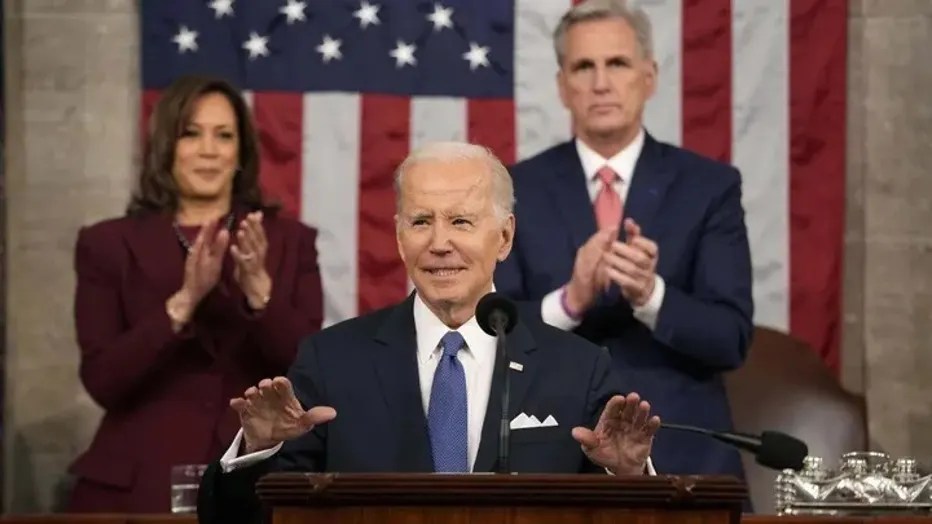
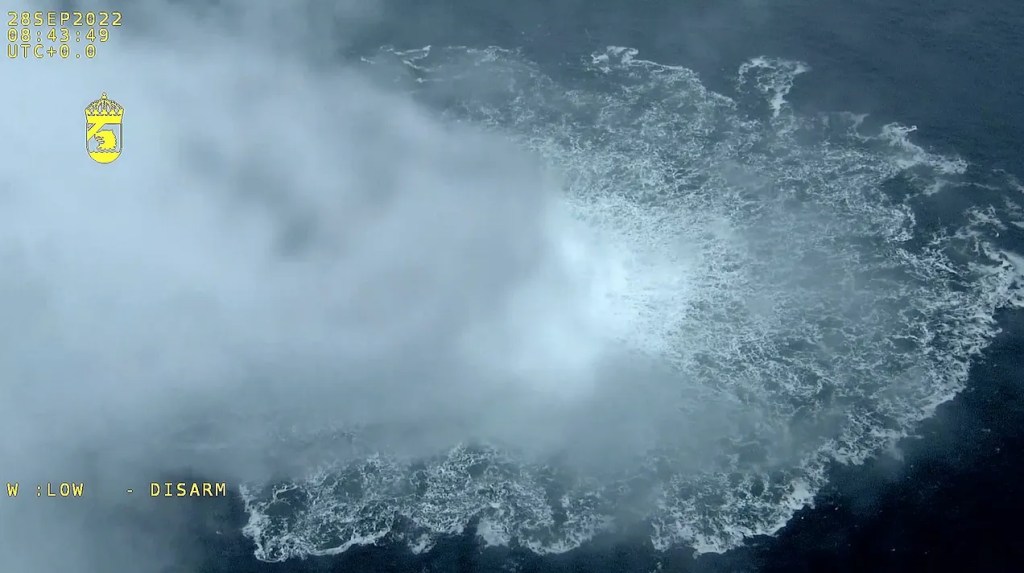
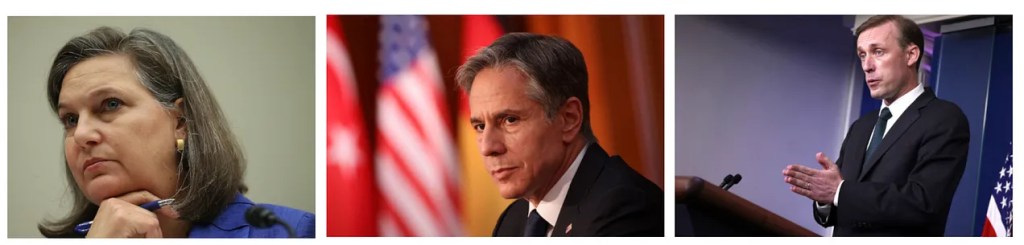
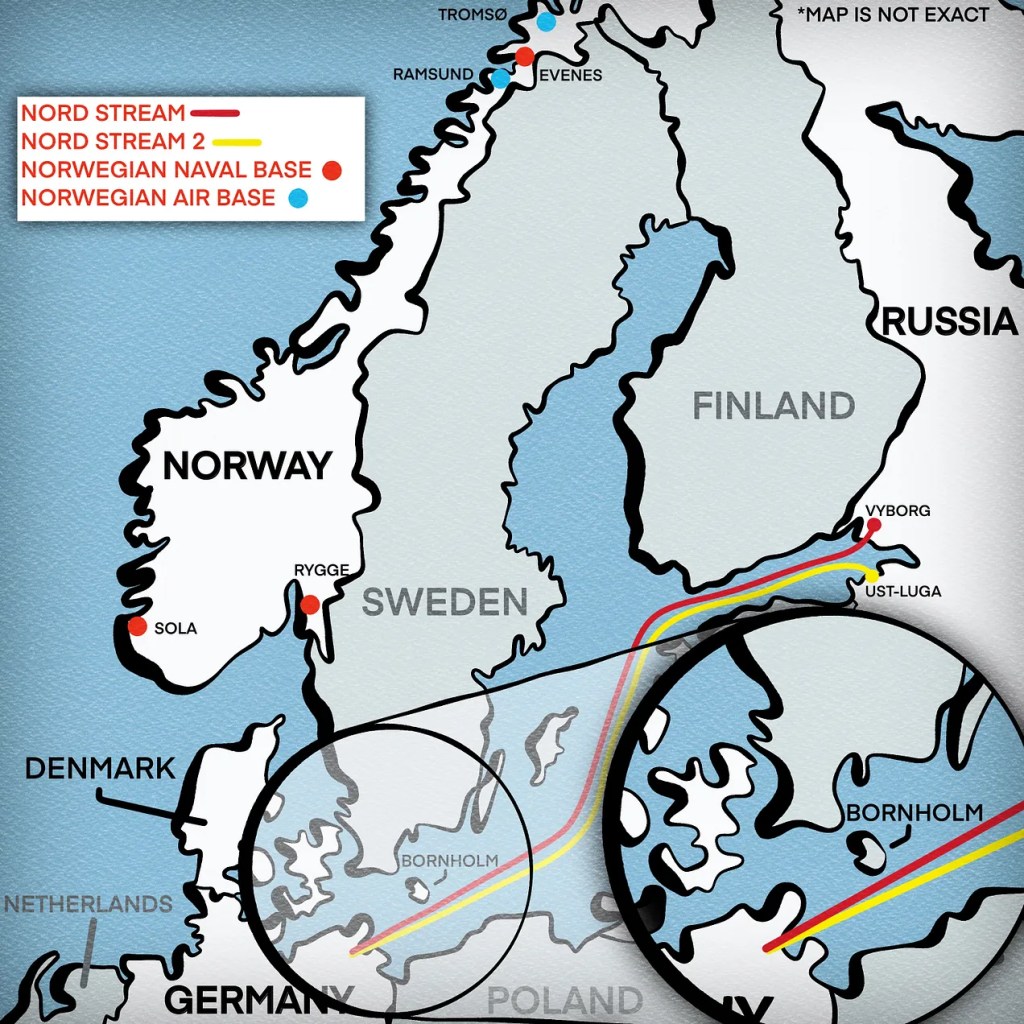
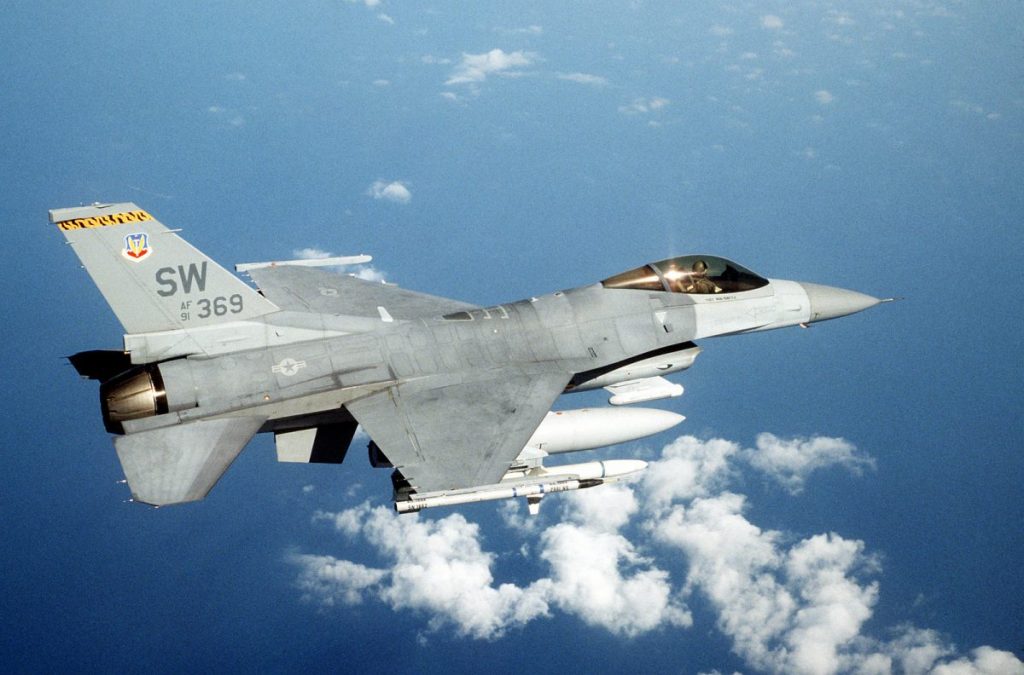


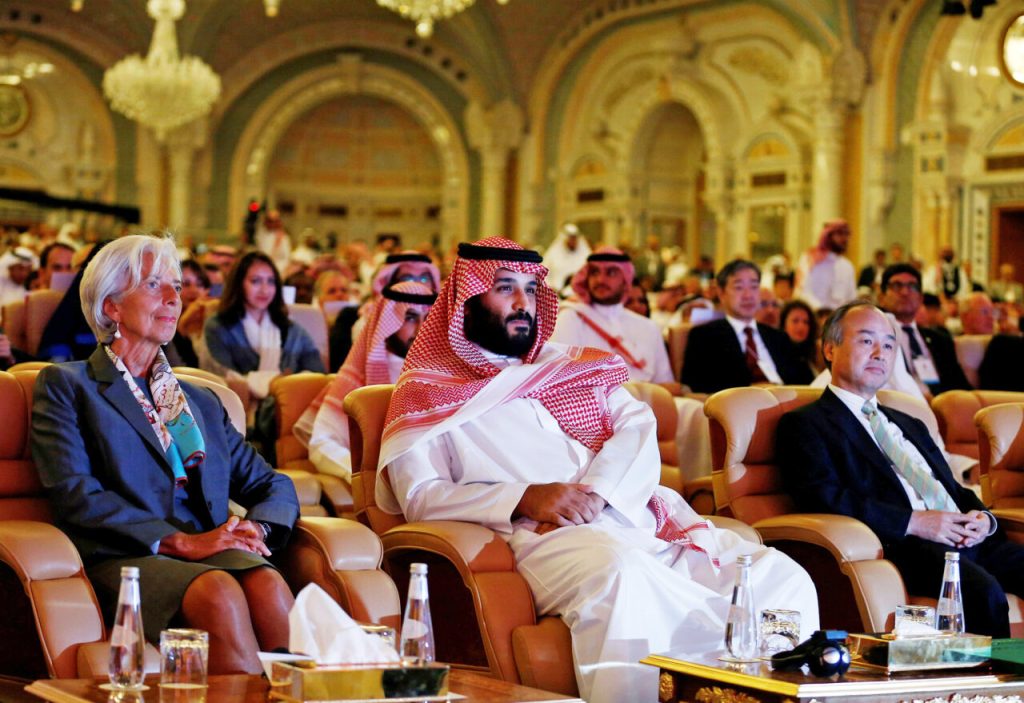

 After the Crash