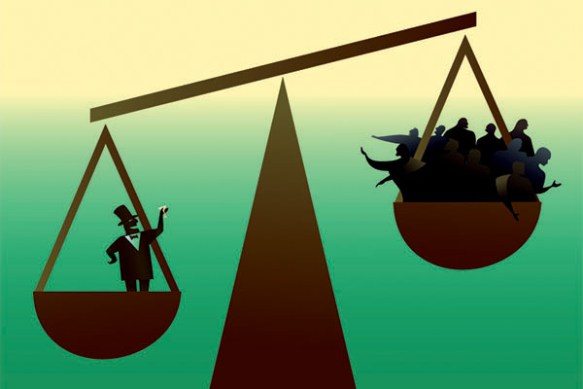
The New Economy: Unemployment and the Return of the American Hobo

By Sheldon Greaves

Source: Cogito!

A few years ago I read somewhere about a trend in the “gig economy” in which people who had been reduced to living in their cars or RVs roamed the country by the thousands; homeless, nomadic workers driving from one temporary job to another. It painted a tragic picture; underpaid, overworked, often lacking health insurance, men and women, many of whom ought to be enjoying retirement but were working in warehouses filling orders for Amazon (“Camperforce”) or stocking shelves in a big-box store.

It sharply reminded me of the Great Depression, another time when mobile workers moved from place to place across the country in search of work. Thinking about this I realized that what we were seeing was the return of the migrant worker apart from the seasonal farm worker, i.e., the Hobo. Also called Tramps, Bums and other less charitable names, these men were the displaced detritus of the Great Depression who wandered the country looking for any jobs that would help them survive and, if there was any left over, to send home to their families. It was a dangerous life; travelling by hopping freight trains or hitchhiking on the highways wasn’t the safest way to get around. Many hobos were maimed or killed in accidents travelling this way, or were victims of violence. Loren Eisley’s wonderful memoir All the Strange Hours recalls his days as a young hobo with all of the dangers and troubles that went with being a hobo. They also faced hostility from towns naturally suspicious of outsiders, especially if there wasn’t any work even for the locals.

But the hobos also became a part of American folklore. The music of Woody Guthrie, who spent quite a bit of time on freight trains himself, helped to make the plight of these unemployed workers known to the rest of the country. Government programs found ways to harness this pool of labor and skill, pouring it into vast projects, many of which continue to contribute to national economy today.

There was, however, another side to hobo life. It became a sort of counter-culture, a rebellion of sorts against a social order that had unfairly cast aside decent, hard-working people for the sake of profit. Hobo life in some cases became a form of dropout culture, mainly, I suspect, as a way of embracing what apparently could not be avoided. An old professor of mine, who spent some of his youth as a tramp, recalled how some of his tramping companions actually knew more about science and literature than his college professors, but preferred tramping as a better way to enjoy God’s creations. Dropouts indeed.

I have been fascinated by American dropout culture as a response to moments when society becomes economically, intellectually, morally, and spiritually intolerable and so, like a few Biblical figures, one leaves, going out of bondage, but into the wilderness for whatever it may bring one. Historically, I’ve noticed that from Roanoke to the 1960’s and 70’s, the dropouts generally seemed to have a point, even if it wasn’t clear at the time. Sometimes the dropouts used their unique viewpoint to inform changes for the better, or became part of grander projects as happened with the government work projects of the New Deal.

So it is with some bemusement that I have noticed an interesting trend when it comes to the mobile temp workers, hobos with RVs or living out of their cars. Over the last seven or so years a small body of literature has emerged celebrating the homeless, wandering worker. Getting out of debt is a common reason for ditching less settled living, and as a rejection of consumerism (Ironic, given how many of these mobile temp jobs are serving precisely that consumer economy). The whole thing has a Small is Beautiful/Voluntary Simplicity vibe to it. Three of the six or so book titles of the last few years even reference “living in a van down by the river” in homage to a classic SNL skit.

So which is it? Is the new hobo a national tragedy in slow-motion, or rebellion against consumer culture, a new manifestation of the All-American dropout? I think it’s too early to tell. This may be nothing more or less than trying to make the best of a bad situation. I hope it’s more than that.

Famed American author and philosopher Eric Hoffer, himself a long-time migrant worker, had some remarkable insights into the responsibility of a nation to do right by such men and women. In his essay, “The Role of the Undesirables”, based on his own experience in government work camps in the early 1930’s. He draws some interesting and telling comparisons between the “human junk pile” that made up the bulk of his fellow workers and the early American pioneers–themselves undesirables from Europe–who built the nation. He points out that these pioneers craved change, much like the RV hobos of today. Hoffer writes: “…the quality and destiny of a nation are determined to a considerable extent by the nature and potentialities of its inferior elements.” He further argues that the quality of a nation is likewise manifest by how those at the bottom rise to the top. And that, I submit, is the problem. Is there an endgame to the RV hobo life that involves a chance to settle back down, to enjoy some of the fruits of one’s labor in security and dignity? Certainly a life on the road can be exciting. I find the idea compelling myself. But the other kind of mobility–upward mobility–has all but ceased to exist in this country. I cannot yet say whether these economic rebels of the road are truly making a new way of living, or accepting the unacceptable.

“The Richest Nation On Earth” Why Are Many Americans Broke?

By Timothy Gatto

Source: OpEdNews.com

I’m going to talk about some things that many people take for granted and that most writers not will write about. I’m going to throw a lot of information and figures out in this article and I really hope that people start to think about what these facts and figures really mean.

I want to preface this that I am not a mathematician nor am I an economist. I am however, someone who can read and the figures on going to give you come directly from the government. I didn’t make these numbers up.

Many people have read some of my articles know that I detest the fact that 55% of our national budget is comprised of our so-called “defense budget”. Many Americans have written and talked about the fact that this nation is involved “in endless war”. What most people don’t realize is how much of our national treasure is devoted to our military.

Let me start by telling how much this nation spends on our so-called “defense budget”. This money that we spend isn’t to defend people of the United States, these funds go to enrich the defense contractors and the people who fund our politicians in Congress.

This is the part where I throw the amounts that fund our so-called “defense budget”:

$2,988,083.00 is the total amount for the US budget. Out of this almost $3 trillion, $582 billion dollars go to the Department of Defense. This doesn’t include all the money that goes to the defense investigative agency the DIA, or to the CIA, or to the NSA, or to the FBI or any other intelligence agencies.

The number of people in the United States in 2017 is 326,474,083. If Congress cut the defense budget for 25% by closing overseas bases and cutting the number military that serve in our endless war machine, we would save $145 billion dollars. If you divide that number by the number of people living in the United States, every man woman and child, it would come out to almost $485,260,952. If Congress only returned 5% of that money “as a dividend” to the American people that would mean a windfall of almost $25,000. A family of four would receive hundred thousand dollars.

I’m not supposing that the government would do anything of the sort, I’m just throwing some numbers around to make people think. We always hear the United States is the richest nation on earth, and this just illustrates where all our wealth is going. Many people explain that the defense industry and shore up our economy and we stop producing arms and having a large military it would hurt the United States economically. What I’m saying is that if we cut the military spending by 25% we would not only give a windfall to the American people, but we could also rebuild our infrastructure and pay down our national debt.

If people honestly looked at those numbers, it should make them angry. How many aircraft carriers do we need to defend the people of the United States? How many cruise missiles do we need to protect the people of the United States? How many spy agencies do we need to protect us from our so-called enemies? We have an ocean on each side of the United States. We have enemies across the world that we ourselves have created. One only must look at the demonization of Russia to understand how United States makes an enemy. The United States needs an enemy to justify the amount of money spent on the military. We are all being sold a giant bill of goods that is unjustifiable and really is criminal when you look at how much money we spend.

I am not isolationist nor my pacifist, I’m just someone who holds citizenship in a country that has lost its perspective.

I would also like to point out that the recent fires in California should be looked at by every citizen in the United States. There are anomalies about these fires vaporizing brick, melting glass and vaporizing steel. There also anomalies where houses were demolished by this fire, yet trees next to these houses were not touched by fire. There also videos on YouTube that showed a tree burning from the inside out. What disturbs me is that many of the videos I looked at looked much like the anomalies that happened at the World Trade Center. I’m not explaining the fires, but I would like people to look at these videos and judge for yourself. I wasn’t going to write about this, but I felt an obligation to at least mention it.

Instead of just accepting the way America puts its money into our war Department, we should demand accountability and justification for all that they do. As a retired servicemember with over 20 years in the United States Army I feel that the military is out of control. Never in my lifetime have I seen military spending on the scale with no discernible enemy creeping up on our shores. As citizens I believe that every American should hold count Congress accountable for this wasteful military spending that should really go to rebuilding United States infrastructure and creating an economy that consumes things instead of just treading water to stay alive. “As the richest nation on earth” we should be helping our citizens instead of interfering in the affairs of other nations. As an American citizen I am angry as hell and I believe that every citizen should feel the same anger that I feel.


Tim Gatto is Ret. US Army and has been writing against the Duopoly for the last decade. He has two books on Amazon, “Kimchee Days, or Stoned-Cold Warriors” and “Complicity to Contempt”.

It’s time to call the housing crisis what it really is: the largest transfer of wealth in living memory

By Laurie Macfarlane

Source: OpenDemocracy.net

One of the basic claims of capitalism is that people are rewarded in line with their effort and productivity. Another is that the economy is not a zero sum game. The beauty of a capitalist economy, we are told, is that people who work hard can get rich without making others poorer.

But how does this stack up in modern Britain, the birthplace of capitalism and many of its early theorists? Last week, the Office for National Statistics (ONS) released new data tracking how wealth has evolved over time. On paper, the UK has indeed become much wealthier in recent decades. Net wealth has more than tripled since 1995, increasing by over £7 trillion. This is equivalent to an average increase of nearly £100,000 per person. Impressive stuff. But where has all this wealth come from, and who has it benefitted?

Just over £5 trillion, or three quarters of the total increase, is accounted for by increase in the value of dwellings – another name for the UK housing stock. The Office for National Statistics explains that this is “largely due to increases in house prices rather than a change in the volume of dwellings.” This alone is not particularly surprising. We are forever told about the importance of ‘getting a foot on the property ladder’. The housing market has long been viewed as a perennial source of wealth.

But the price of a property is made up of two distinct components: the price of the building itself, and the price of the land that the structure is built upon. This year the ONS has separated out these two components for the first time, and the results are quite astounding.

In just two decades the market value of land has quadrupled, increasing recorded wealth by over £4 trillion. The driving force behind rising house prices — and the UK’s growing wealth — has been rapidly escalating land prices.

For those who own property, this has provided enormous benefits. According to the Resolution Foundation, homeowners born in the 1940s and 1950s gained an unearned windfall of £80,000 between 1993 and 2014 alone. In the early 2000s, house price growth was so great that 17% of working-age adults earned more from their house than from their job.

Last week The Times reported that during the past three months alone, baby boomers converted £850 million of housing wealth into cash using equity release products – the highest number since records began. A third used the money to buy cars, while more than a quarter used it to fund holidays. Others are choosing to buy more property: the Chartered Institute of Housing has described how the buy-to-let market is being fuelled by older households using their housing wealth to buy more property, renting it out to those who are unable to get a foot on the property ladder. And it is here that we find the dark side of the housing boom.

As house prices have continued to increase and the gap between house prices and earnings has grown larger, the cost of homeownership has become increasingly prohibitive. Whereas in the mid-1990s low and middle income households could afford a first time buyer deposit after saving for around 3 years, today it takes the same households 20 years to save for a deposit. Many have increasingly found themselves with little choice but to rent privately. For those stuck in the private rental market, the proportion of income spent on housing costs has risen from around 10% in 1980 to 36% today. Unlike homeowners, there is no asset wealth to draw on to fund new cars or holidays.

In Britain, we have yet to confront the truth about the trillions of pounds of wealth amassed through the housing market in recent decades: this wealth has come straight out of the pockets of those who don’t own property.

When the value of a house goes up, the total productive capacity of the economy is unchanged because nothing new has been produced: it merely constitutes an increase in the value of the land underneath. We have known since the days of Adam Smith and David Ricardo that land is not a source of wealth but of economic rent — a means of extracting wealth from others. Or as Joseph Stiglitz puts it “getting a larger share of the pie rather than increasing the size of the pie”. The truth is that much of the wealth accumulated in recent decades has been gained at the expense of those who will see more of their incomes eaten up by higher rents and larger mortgage payments. This wealth hasn’t been ‘created’ – it has been stolen from future generations.

House prices are now on average nearly eight times that of incomes, more than double the figure of 20 years ago. It’s unlikely that house prices will be able to outpace incomes at the same rate for the next 20 years. The past few decades have spawned a one-off transfer of wealth that is unlikely to be repeated. While the main beneficiaries of this have been the older generations, eventually this will be passed on to the next generation via inheritance or transfer. Already the ‘Bank of Mum and Dad’ has become the ninth biggest mortgage lender. The ultimate result is not just a growing intergenerational divide, but an entrenched class divide between those who own property (or have a claim to it), and those who do not.

Misleading accounting and irresponsible economics have provided cover for this heist. The government’s national accounts record house price growth as new wealth, ignoring the cost it imposes on others in society – particularly young people and those yet to be born. Economists still hail house price inflation as a sign of economic strength.

The result is a world which is rather different to that described in economics textbooks. Most of today’s ‘wealth’ isn’t the result of entrepreneurialism and hard work – it has been accumulated by being idle and unproductive. Far from the positive sum game capitalism is supposed to be, we have a system where most wealth is gained at the expense of others. As John Stuart Mill wrote back in 1848:

“If some of us grow rich in our sleep, where do we think this wealth is coming from?  It doesn’t materialise out of thin air. It doesn’t come without costing someone, another human being. It comes from the fruits of others’ labours, which they don’t receive.”

Britain’s housing crisis is complicated mess. Fixing it requires a long-term plan and a bold new approach to policy. But in the meantime let’s start calling it what it really is: the largest transfer of wealth in living memory.

The social and economic roots of the attack on democratic rights

Inequality and the American oligarchy

By Eric London

Source: WSWS.org

A report published September 27 by the US Federal Reserve, the Survey of Consumer Finances, shows that the top 10 percent of Americans now own 77 percent of all wealth. The top 1 percent increased its share of wealth from 35.5 percent in 2013 to 38.5 in 2016. The share of the bottom 90 percent declined from 25 percent to 22.9 percent over the same period.

These percentages show a transfer of trillions of dollars from the working class to the rich and affluent in just three years.

The bottom three quarters of the population, some 240 million people, now own less than 10 percent of the wealth. That is, if the United States were a 10-storey apartment building with 100 people, the richest person would be living on the top four floors, the nine next wealthiest people on the next four floors, fifteen on the second floor, and 75 people cramped at the bottom level.

Wealth share by wealth decile, Credit: People’s Policy Project

The Federal Reserve data demonstrates, in empirical terms, profound changes in social relations that affect hundreds of millions of people, touching all aspects of political, cultural and intellectual life. The US is an oligarchy in which the government, trade unions, media, universities, and major political parties are instruments used by the ruling class to manipulate the population, mask its own wealth, and crush social opposition from below.

The figures expose the material basis for the emergence of a campaign in the ruling class to block access to the World Socialist Web Site and other left-wing sites in the guise of combatting “Russian aggression.”

In an oligarchy, social inequality is incompatible with democratic rights. Incapable of and unwilling to address the social needs of the masses of people, the government turns to censorship, surveillance, blacklisting, and violence as its preferred methods for defending unprecedented levels of wealth monopolized by the ruling class.

The data shows that the main dividing line is between the top 10 percent and the bottom 90 percent that comprise the working class. The Federal Reserve figures expose as lies the claims by politicians and media pundits that the bulk of the US population belongs to the “middle class.”

Below the aristocracy and the affluent—concentrated in certain neighborhoods of major centers like New York, the San Francisco Bay Area, Los Angeles, Chicago, Houston, and other cities—the United States is a country dominated by tremendous economic hardship. The data shows that while different strata of the population face economic insecurity at different levels of urgency, decades of social counterrevolutionary policies by both parties are bringing them closer together, marking all with the same scars of class exploitation.

The poorest ten percent of the population, some 32 million people, possess negative wealth. They include the homeless and the hopelessly in debt. For this section of the population, roughly equal to the populations of Texas and New York combined, life expectancy, disease rates, and living standards resemble third world conditions.

The next poorest ten percent have no wealth, between $0 and $5,000 per family, less than the value of a 10-year-old used car. The combined wealth possessed by this layer is not significant as a proportion of overall wealth.

Roughly the lower-middle third of the population, from the 20th to 50th percentile, control just 1.6 percent of total wealth. A family of four with two parents working full-time at the minimum wage with one average-priced vehicle and no other assets would fall in the middle of this broad category of workers.

The 64 million people in the 50 to 70 percent range control just 5.1 percent of the wealth. A family with a below average-priced home worth $150,000, plus a vehicle and $0 in savings would be above the 60th percentile in wealth. A family with two working adults making between $40,000 and $50,000 each would find itself in the 70 to 80 percentile, perhaps possessing two cars, a home valued just above the national average of $175,000, a life insurance policy and $10,000 in savings.

The 80 to 90th percentile owns 11.2 percent of the wealth. Two skilled workers with incomes of $60,000 to $80,000 each, one pension, a $300,000 home, and two vehicles would find themselves in this decile. This section is slightly more comfortable, but by no means financially secure.

The chasm separating the top 10 percent from the working class has widened in recent years. From 2004 to 2016, the working class saw its wealth decline precipitously across all strata. The median family in the poorest fifth lost 29.5 percent of its wealth over this period, followed by 24.7 percent for the median family in the 20th-39th percentile, 10.8 percent in the 40th-59th percentile, 17.3 percent in the 60th-79th percentile, and 1.3 percent in the 80th-89th percentile. This wealth went to the top 10 percent, where median family wealth rose by 38.7 percent over the same period.

As a result of this massive transfer of wealth, median family wealth in the top 10 percent is nearly triple that of the 80 to 90 percent, 20 times greater than a family in the 50th percentile, and 254 times more than the median family net worth in the poorest 20 percent.

The political establishment that has overseen this transfer systematically ignores and aggravates the urgent social problems confronting the vast majority of the population.

Footage of Trump flipping paper towel rolls to victims of the storm in Puerto Rico epitomizes the callous and insulting response of the oligarchy to the problems of the working class. But sanctimonious claims by Democrats that Trump’s actions were “insensitive” ignore the fact that the entire ruling class is responsible for the social catastrophe. After all, it was Barack Obama who travelled to Flint, Michigan and told a crowd of people to “drink the water.” Nobody in the Democratic or Republican parties has made any real effort to address the opioid crisis, homelessness, declining life expectancy, storm protection and disaster infrastructure, skyrocketing student debt and the health care crisis.

The three branches of government, largely comprised of millionaires and billionaires, focus exclusively on the interests and social demands of the top 1, and, more broadly, the top 10 percent of society. A key concern of the affluent 10 percent is blocking the growth of social opposition and protecting their own wealth and privileges. In recent years, the American ruling class has become more aware of the growth of social opposition within the population to war, inequality and poverty.

Fearful that the technological advances of the Internet and social media platforms can increase access to alternative political viewpoints, the oligarchy has initiated a campaign to censor left-wing websites and crack down on social media platforms in the name of blocking “Russian interference” in the US political system. Without a shred of credible evidence to back their claims, newspaper editors, TV talking heads, Senate and House committee members, corporate executives, trade union leaders and academics are engaged in a mad rush to censor the Internet and protect the population from “fake news.”

The anti-fake news censorship and blacklisting initiative is an escalation of a years-long campaign by the ruling class to create the framework for police state methods of rule. At the same time, the growth of social inequality revealed in the Federal Reserve figures points to the inexorable intensification of social and class conflict in the United States, the objective foundation for socialist revolution.

And empires die

Source: Intrepid Report

Nothing ever seems to last, everybody changes oh so fast,
promises made promises lost and pride is kept at any cost,
And flowers die, and children cry, and lonely people carry on.
—Palermo & Farruggio 1970

That was from the song And Flowers Die, by prolific composer Michael Palermo and this writer as lyricist. How appropriate to compare this song with the ‘death song’ of our Military-Industrial Amerikan Empire, now in only its 72nd year of prominence. How great and powerful our empire was for so long. We controlled the economies and governments of so many countries, even continents. Now it is the autumn of our status as Number One. The Asian rim, as many refer to it, being led by China and all those other nations in that region, will become the future economic powerhouse of this planet.

This writer will leave it to the many progressive scholars out there for the explanation of the how and why of this equation. Let me just say that we all, from grade school on, have been fed the pabulum of America as a democracy, benevolent to the entire world. Many sadly still believe that lie, and that strengthens the reason why this empire is in freefall.

Since we became the preeminent world empire at the end of WW2, two things held the greedy ones who run things in we’ll say half check: The progressive federal tax rate and the union movement. The top tax rate from 1953 to 1963 was 91%. Now, we know that the super rich did not pay at that rate, but even after their accountants sharpened a few pencils, many still had to pay at least 50%, for argument sake. Today’s top rate is 39.6%, meaning that folks like mega millionaire Mitt Romney pay at around 15%-20%. Do the math and see how much more went into the treasury then as opposed to now. The second factor that held this empire in half check was the stronger union movement in the ‘50s, ‘60s and ‘70s. In the 1950s, about 35% of American workers belonged to unions. In 1983, it went down to around 20%. Now, the percentage is around 12%. So, that means that three times more working stiffs in the recent past had the protection of a union, however weak or compliant that union may have been. Today, this empire can breathe easily as fewer and fewer working stiffs even have a union!

To this writer, with all the many factors that have contributed to the demise of our nation via this Military-Industrial Empire, the number one factor is our foreign policy. When over half of your spending goes for military reasons, how can a nation sustain itself at home? When you have over 1,000 military bases in over 100 countries, and you consistently are involved in these phony wars, the home front must feel the strain. Our myriad of domestic bleeding is so obvious . . . yet so few here will acknowledge it. Our infrastructure is crumbling, our health care is a mess, too many mediocre paying jobs (with too many being part time with NO benefits), our political system is controlled by Big Money, our media is controlled by the same Big Money . . . and the fools still fight amongst each other over the Two Party/One Party con job.

Let’s face it: All the major industrialized nations are controlled by their super rich. There are really few exceptions. Sadly, with over 99+ % of the populace in all these countries being just simple working stiffs, it is time for a change of mindset. The mindset must be simple: The super rich need to go back to paying their fair share, and government needs to become what Mark Twain prescribed: ‘To protect us from the crooks and scoundrels.’

5 Reasons why donations to the poor may bring bad results!

By John Hawthorne

Source: Business Connect

Does donating to poor countries actually help? Keep in mind there is a big difference between disaster response and longer term, more effective and sustainable development.  Much of the time outside assistance and donations do not have much impact and in the long term, can be harmful.

When people see images of impoverished countries and situation, our first thought is, I should donate something.

This is noble  and shouldn’t be dismissed. However, many people fail to realize that donating to the poor often makes them more poor. It creates a vicious, unintended cycle.

This isn’t an anecdotal argument either. More and more research is showing that donations have long term consequences that end up hurting more than helping.

In this post, we’re going to lay out five reasons why donating to the poor often hurts more than it helps, and then pose a possible solution. Our goal is to convince you that there is a better way.

Reason #1: The Communities Can’t Sustain The Things Donated To Them

It’s an idea that sounds great on paper and makes for ovation-garnering speeches. Go into an impoverished community, help them create life-giving resources (like a well), and then let the community reap the benefits.

It sounds so noble. Enlightened. The wealthy westerners coming into rescue the poor and the impoverished who can’t survive on their own. Knights in shining armor delivering those imprisoned by their own poverty.

This mentality is incredibly shortsighted and even insulting to the recipients of that charity.

It’s shortsighted because it fails to consider one massive problem: how will impoverished communities continue to support and maintain the created resources? A drilled well may function effectively for several years, but it won’t be long before it starts to break down.

Where will they get the parts to repair it? Will they have the necessary technical expertise to maintain the well? These aren’t hypothetical questions.

This does not mean you should do nothing. But it does mean that any solution must involve, at the minimum, the following components: time, education, partnership, a champion, and accountability.

As Jamie Skinner comments:

There is no point an external agency coming in, putting in a drill-hole and then passing it over to the local community if they can’t afford to maintain it over the next 10 or 20 years. There needs to be a proper assessment of just how much local people are able to finance these water points. It’s not enough to just drill and walk away.

What happens if this kind of support is not offered? Annie Kelly notes:

In 2007, before the African Medical and Research Foundation and Farm-Africa began their development work in Katine, worms were found in the polluted water supply at the village of Abia, next to the Emuru swamp. A badly constructed and poorly maintained shallow well, dug by a charity, was full of soil and animal faeces and was making local people sick.

That well that you helped dig on your church mission trip? How are they going to maintain that? Are you going back every three months to fix it? Are you going to stay in constant contact to make sure they always have the supplies they need? Those parts are probably only available in other countries, so how in the world are you going to get them to those who need them?

It’s easy to feel good about yourself but you probably just made things worse.

Reason #2: It’s Misguided And Doesn’t Solve The Problem

Too often, remedies and relief are donated without considering whether they solve the problem. Take water disinfection treatments. Many organizations and donors assume that supplying water treatments is an effective solution for polluted water.

And so they distribute water disinfectants in great number, feeling good about how they are fixing the problem.

But they’re NOT necessarily fixing the problem. In fact, there is debate over whether some of (not all) these disinfectants actually produce real, lasting change.

As microbiologist Paul Hunter notes:

Disinfection household water treatments don’t seem to have any public health benefit. I’d be more than happy to change my mind if someone comes up with some good evidence, but it would have to be a large double-blinded study.

In other words, a solution that is taken as gospel by many organizations may not add much benefit at all to impoverished communities.

Don’t assume that every solution is equally good. Sure, you paid for some malaria nets to be given to a village. Is that what they need? Will that solve the most pressing problems they have? It’s easy to feel good about yourself for donating something, but you may be trying to solve the wrong problem.

Reason #3: The Solutions Aren’t Fully Developed

More and more, tech companies are trying to step into underdeveloped countries and offer solutions that will “solve” all their problems. They distribute tablets and apps and internet kiosks, believing that these will help people elevate themselves out of poverty.

And while this is a noble notion, it fails the majority of the time. Why? Because the tech companies haven’t fully developed the solutions in conjunction with local governments and businesses. If the underlying infrastructure isn’t in place, these tech solutions are like a band aid on a cannon ball wound. They may stop the bleeding for a few minutes, but they don’t solve the problem.

One of the very first learnings a donor agency or new volunteer learns is that poverty issues are never in isolation. Everything is connected, integrated, and often, complex.  For example, lack of adequate income is tied to lack of education, poor infrastructure, public policy, access to capital, inferior quality water which means poor health, community loyalties, and on and on. Every initiative needs to be evaluated in terms of the multiple relationships between other issues.

Speaking of tech companies attempting to “upgrade” India, Eric Bellman writes:

A $40 tablet that was supposed to revolutionize education has not been getting the government orders it expected. The national networks of Internet kiosks that were supposed to empower farmers have largely shut down. The $2,000 Tata Nano minicar that was supposed to allow millions of people upgrade from the dangerous family motorcycle was not popular and anti-rape apps which were supposed to use mapping and automatic SMS to protect women were never connected to the country’s police force.

You simply can’t put high-tech equipment into a country that doesn’t have the infrastructure for it. It would be like giving the Pilgrims automatic machine guns or airplanes. All chaos would break loose.

Tech nonprofits are big these days. You donate some money and they import computers into impoverished countries. But can those computers even be used, or are they going to collect dust in a warehouse? Can the country even handle this type of computer? Can it be hooked up to the internet? This is a ready, fire, aim strategy that usually hits the wrong target.

Reason #4: Donors Don’t Have A Sustainable Plan

Too often, donors come into help without any real plan for how to sustain things after they’ve left. They assume that their work is done once they’ve implemented the initial solution, not realizing that without a plan for the future things will quickly fall apart.

Too often the support structures for success are not even considered whether it be government policies, ongoing encouragement, mentoring, or something as simple as adequate financial support.  Many of us live in the fantasy world that people who have lived their entire life surviving the harsh reality of poverty, doing what it takes to live with so little, suddenly can embrace and understand the values and resources that make the new intervention possible.

A prime example of this is World Bank’s billion dollar effort to bring improved water access to the country of Tanzania. While it was certainly a noble goal, it generated a stunning lack of success.

The Global Post reports:

In 2007 [before the project], only 54 percent of Tanzanians had access to what is called an improved water source — a water point, like a well or water pump, that is protected from contamination. By 2012, that figure had actually decreased to 53 percent, according to the latest available World Bank Data. Coupled with Tanzania’s rising population, 3.5 million more Tanzanians lacked access to improved water than did before the project began.

The problem? The lack of a sustainable plan. Over time, the water sources begin to fail and become polluted, and the local communities didn’t have the finances or resources to fix them. Suddenly, the communities are worse off than when they started.

Herbert Kashililah makes this damning statement: “If I am from the World Bank, it is easier to count new projects than try to ensure people are running their own systems.”

A problem is not a problem to be addressed by good hearted outsiders unless identified and owned by the local population, and there are champions, local people who are committed, to work and address it.

To put it into practical terms, maybe you financed a cow for a family through a charity. That’s great, but what will that cow actually do for the family? Do they even have the land necessary to pasture it? How will they afford the food? Do the people even know what’s required to raise a cow?

Reason #5: It Kills Local Economies

Several years ago, Jason Sadler had the idea to collect and donate 1 million t-shirts to Africa. Now, besides obvious questions like, “Is that what they really need?” Sadler failed to consider one enormous factor: the impact on the local economy.

What so many donors fail to realize is that their giving can actually kill a local business.

Disaster response efforts especially must be careful about destroying local businesses.  It would be so much wiser to further develop the capacity of local entrepreneurs to meet the local needs. This is also true when hunger is prevalent. Buy local food first, create initiatives to produce more, purchase relief supplies locally. Organizations need to deeply consider the economic impact of their actions. Will this help or hurt the economy? Will it create or kill jobs? Will it ultimately provide self-generated income for the residents? A failure to weigh these things results in the poor becoming poorer.

Let’s say an individual had a thriving t-shirt business. He makes his livelihood and supports his family by making and selling t-shirts. What happens when a million shirts are suddenly dropped into his country? No one will buy from him. Why would they? They can get shirts for free. Suddenly the t-shirt economy is destroyed and the business goes under.  What happens when the donated t-shirts wear out?  There is no local business to fill the void and another donation is needed; dependency is created.  All this because of the well-intentioned efforts of a donor.

The Solution?

Business Connect embraces the concept that self-sustaining business solutions will have more longer lasting impact for the alleviation of poverty than a thousand give away products. Every donation we receive or facilitate goes through a local entrepreneur, who then gets a commission of the sale. That entrepreneur is then there to support the product for its lifespan, including maintenance and parts.

By empowering entrepreneurs, we are lifting an entire economy and helping build strong local businesses where green, life-improving products can be purchased.  In the process we pay duties and the fees so that the entire economy is boosted.

This is our mission. We’re passionate about helping local communities thrive, rather than simply dropping supplies on them. It’s simply a better way.

 

8 Critical Factors Behind Every Food Crisis

FILE – In this Monday, Aug. 15, 2011 file photo, children from southern Somalia hold their pots as they line up to receive cooked food in Mogadishu, Somalia. A report by two U.S. government-funded famine and food agencies gives the highest death toll yet, estimating that 260,000 people died – more than double previous estimates. (AP Photo/Farah Abdi Warsameh, File)

By John Hawthorne

Source: Business Connect

From the beginning of time, their have been food crises in one form or another. Ancient books such as the Bible have records of various famines devastating portions of the world.

And while it’s easy to attribute these crises to a single cause, such as war or drought, the causes are usually much deeper and much more complex.

Nelson Mandela said, “Overcoming poverty is not an act of charity, it is an act of justice.”

In order for us to achieve the kind of justice envisioned by Mandela, it’s essential that we first understand the underlying causes of food crises. Only after we have understood can we then begin creating meaningful solutions.

With that in mind, here are 8 primary factors behind almost every global food crisis. While not all 8 of these will be present at a time, you will almost always find several of these at work.

Factor #1 – Poverty

One of the greatest factors in every food crisis is stark and abject poverty. This isn’t surprising. With enough money, anyone can ensure they have enough food. But with many developing nations sitting well below the poverty line, the population simply can’t afford the food they so desperately need.

Additionally, poverty has a distinct effect on food output. In Africa, for example, many farmers can’t afford proper irrigation and fertilizer. This, in turn, leads to lower yields, which then reduces the overall amount of food available to the population.

The population of the Sub-Saharan region of Africa is expected to grow at an astronomical rate, topping out at 2.4 billion by 2050. This will continue to exacerbate the poverty issue, which will then continue to drive the lack of sufficient food in the area.

Factor #2 – Drought and Desertification

Widespread droughts, leading to the desertification of particular locations also causes huge disruptions to food production. For example, leading up to and during the global food crisis of 2008, 110 countries experienced significant droughts. This caused even the most well-irrigated, fertile areas to become arid deserts, making it impossible to grow crops.

As Mark Hughes noted:

Australia is normally the second largest exporter of grain, after the U.S. The continent, though, is experiencing an ongoing drought that has been described as the worst in a century. Grain yields have shrunk and many silos remain empty. Australia’s drought is a major factor in global wheat stocks being at their lowest since 1979. In fact, many wheat and rice farmers are switching to crops that demand less water, such as wine grapes.

Additionally, farmers often let animals over-graze on their land, reducing the amount of vegetation and increasing desertification. If the soil becomes dry enough, it is ruined and unable to support any crops at all.

Finally, as populations grow, deforestation occurs at an increased rate, which then leads to less vegetation and more desertification.

Factor #3 – Political Pressure

In the past, the International Monetary Fund has pressured small farmers, particularly in impoverished African countries, to abandon agricultural farming in favor of industrial work. The money generated from this practice would be used to pay off debt and import food.

While it may sound like a working strategy, it has created catastrophic results.

As Eric Holt-Giménez noted:

The urban population increased seven-fold, swelling from 18% to 33% of the population. Millions of poor and unemployed workers have swelled the cities—with two-thirds of them living in slums. The manufacturing and industrial sector did not “take off” in African countries; the percent of the GDP coming from industry was 30% in 1961 and 32% in 2000. In the countryside, as plantations for agro-exports expanded, food production plummeted and poverty grew. Though the rural population, density increased by 180% as more farmers were crowded onto smaller plots.

Factor #4 – Increased Consumption of Meat and Dairy

Many countries have begun adopting a more Western diet, which includes eating significantly more meat and dairy. To make this happen, farmers have been forced to raise more cattle, and more cattle means more grain being consumed.

The problem, however, is that this causes a significant deficiency in terms of calories consumed versus calories available. A cow consumes approximately 700 calories worth of grain to produce a piece of meat containing only 100 calories. When this happens on a massive scale, an enormous shortage of food is the end result. The longer this deficit continues, the greater the imbalance will become.

Factor #5 – Increased Oil and Transportation Costs

When the price of oil goes up, the energy cost for planting and transporting foods goes through the roof. When food costs more to grow, it then costs more to sell. These rising costs then make it more difficult for the local population to purchase crops as well as for farmers to export their crops to industrialized nations.

Additionally, increased oil costs has led many countries to invest heavily in the development of agro-fuels. More agro-fuels always means less food available.

As Esther Vivas helpfully puts it:

The increase in the price of oil, which doubled in 2007 and 2008 and caused a big rise in the price of fertilizers and transport related to the food system, has resulted in increasing investment in the production of alternative fuels such as those of plant origin. Governments in the United States, the European Union, Brazil and others have subsidized production of agro-fuels in response to the scarcity of oil and global warming. But this green fuel production comes into direct competition with the production of food. To give just one example, in 2007 in the United States 20% of the total cereal harvest was used to produce ethanol and it is calculated in the next decade that this figure will reach 33%. We can imagine the situation in the countries of the South.

Factor #6 – Falling World Aid

At the peak of the 2007-2008 food crisis, food aid was at it’s lowest point since 1961. This is one of the oddities about the national food market. When cereal prices are low, countries look to sell their food through international aid. However, when food prices are high, they prefer to sell them on the open market for increased profits.

In other words, during food crises, when food is scarcest and at it’s highest prices, it isn’t available for international aid. When the bottom falls out of world aid, food crises grow in magnitude.

Factor #7 – International Conflicts

International conflicts are a particularly visible factor behind many food crises. During conflicts, it’s common for one country to restrict exports to another country, which then reduces the amount of food available to the general population.

Or, even worse, dictators will intentionally isolate their countries, refusing foreign aid that is desperately needed. Aid workers may be blocked from entering the country, making it difficult for the citizens to receive needed help. If foreign aid does come, they seize it for themselves, depriving the population of desperately needed sustenance.

Factor #8 – Disease

If a country experiences a particularly violent outbreak of a disease, it can completely disrupt the overall food supply. For example, the HIV/AIDS crisis in Africa has killed farmers, which in turn pushes families deep into poverty.

When a population is undernourished, drugs become less effective and can at times create intense hunger pains. These two factors combined create a vicious cycle of death, poverty, and hunger.

Additionally, certain highly contagious diseases can restrict the amount of aid available to a country. For example, during the 2014 Ebola epidemic in West Africa, aid workers were restricted from traveling to the region due to fear of spreading the disease.

Perfect Storms

Most food crises aren’t the result of a single factor. Rather, they are caused by a perfect storm of events that coalesce into a deadly storm.

For example, in 2011, Somalia was devastated by a drought that caused widespread crop failure. The food crisis was made even worse by a non-functioning government as well as a national conflict. All these forces combined to make it difficult for aid workers to reach those who so desperately needed help.

The result was that approximately 260,000 people died.

Because the problems are almost always complex and multi-layered, the solutions must be equally multi-faceted. Simple solutions typically exacerbate the problem at the expense of the local population.

The best solutions are those that involve numerous parties working together to create a tangible, workable solution.

There will always be food crises to one degree or another. But as we grow in our understanding of what causes them, we can also grow in our ability to bring them to an end.

What Happened to All Those Foreclosed Houses?

Wall Street bought them — and is now leasing them out and driving up rents.

By Jim Hightower

Source: OpEdNews.com

We know that millions of American families lost their homes after Wall Street’s 2007 financial crash. But where did all those houses go?

It turns out that Wall Streeters themselves formed profiteering investment groups that rushed out to scoop up tens of thousands of those foreclosed properties, usually grabbing them on the cheap at courthouse auctions in suburban metro areas that were hard-hit by the crash.

These moneyed syndicates have deep, deep pockets, so they easily outbid local buyers to take possession of the majority of the single-family homes being sold off in many distressed places.

Why are they buying? To turn the homes into rental properties and become the dominant suburban landlord, controlling the local market and constantly jacking up rents.

For example, the Wall Street Journal found that in Nashville’s suburb of Spring Hill, just four of these predatory giants own 700 houses — giving this oligopoly of absentee investors ownership of three-fourths of all rental houses in town.

One of these bulk buyers is an arm of Blackstone, the world’s largest private equity firm. Another is an equity outfit that was spun out of the housing speculation department of Goldman Sachs. And still another is a billionaire whose investors include the Alaska state oil fund.

Not only do rents jump dramatically when such outfits seize a market, but Wall Street’s intention is to impose “a new way” on housing America: They’re pushing a cultural shift in which homeownership is no longer part of the American Dream, and tenants are taught to accept annual rent increases as the price of having a home.

So the banksters crash the economy, you lose income and your home, they buy your house at auction, then they rent it to you at an ever-increasing price. The “new way” is the same old story: The rich robbing the rest of us.