Saturday Matinee: The Laughing Prisoner

“The Laughing Prisoner” (1987) is a parody of the 60’s cult programme The Prisoner, starring Jools Holland and Stephen Fry. This was shown as part of The Tube programme in 1987, and was repeated on 1st January 1993 as a stand-alone feature. John Peel appeared in the original version introducing a performance from a band. However the 1993 version cut him out for unknown reasons. Features appearances by Hugh Laurie, Siouxsie and the Banshees, Magnum and XTC.

Watch the original version of “The Laughing Prisoner” here.

Saturday Matinee: Z

Review by Roger Ebert

Source: RogerEbert.com

There are some things that refuse to be covered over. It would be more convenient, yes, and easier for everyone if the official version were believed. But then the facts begin to trip over one another, and contradictions emerge, and an “accident” is revealed as a crime.

The film “Z” is about one of these things: about the assassination, six years ago, of a leader of the political opposition in Greece. It is also about all the rest of them. For Americans, it is about the My Lai massacre, the killing of Fred Hampton, the Bay of Pigs. It is no more about Greece than “The Battle of Algiers” was about Algeria. It is a film of our time. It is about how even moral victories are corrupted. It will make you weep and will make you angry. It will tear your guts out.

It is told simply, and it is based on fact. On May 22, 1963, Gregorios Lambrakis was fatally injured in a “traffic accident.” He was a deputy of the opposition party in Greece. The accident theory smelled, and the government appointed an investigator to look into the affair.

His tacit duty was to reaffirm the official version of the death, but his investigation convinced him that Lambrakis had, indeed, been assassinated by a clandestine right-wing organization. High-ranking army and police officials were implicated. The plot was unmasked in court and sentences were handed down — stiff sentences to the little guys (dupes, really) who had carried out the murder, and acquittal for the influential officials who had ordered it.

But the story was not over. When the Army junta staged its coup in 1967, the right-wing generals and the police chief were cleared of all charges and “rehabilitated.” Those responsible for unmasking the assassination now became political criminals.

These would seem to be completely political events, but the young director Costa-Gravas has told them in a style that is almost unbearably exciting. “Z” is at the same time a political cry of rage and a brilliant suspense thriller. It even ends in a chase: Not through the streets but through a maze of facts, alibis and official corruption.

Like Gillo Pontecorvo, who directed “Battle of Algiers,” Costa-Gravas maintains a point of view above the level of the events he photographs. His protagonist changes during the film as he leads us from an initial personal involvement to the indictment of an entire political system. At first, we are interested in Yves Montand, the wise and gentle political leader who is slain. Then our attention is directed to the widow (Irene Papas) and to the opposition leaders who will carry on (Charles Denner and Bernard Fresson).

And then, in the masterful last third of the film, we follow the stubborn investigator (Jean-Louis Trintignant) as he resists official pressure to conceal the scandal. He puts together his evidence almost reluctantly; he has no desire to bring down the government, but he must see justice done if he can. His sympathies are neutral, and a truly neutral judge is the most fearsome thing the Establishment can imagine. What good is justice if it can be dealt out to the state as well as to the people? (The implications here for Chicago’s conspiracy trial are obvious.)

The movie at first seems to end with triumph. The rotten core of the government is exposed. The military men and the police chief are indicted for murder, official misconduct, obstructing justice. One of the assassinated leader’s young followers races to bring the widow the good news. He finds her waiting by the seashore. He is triumphant; justice will be done; the government will fall. Irene Papas hears his news silently and then turns and looks out to sea. Her face reflects no triumph; only suffering and despair. What is really left for her to say?

Nothing, as we know now. The right wing won in the long run and controls Greece today. This film’s director, writer, composer and Miss Papas are all banned in Greece (“banned” — that terrible word we heard from Russia and South Africa, and now from Greece). Even the letter “Z” (which means “he is alive”) is banned in Greece.

When this film was shown at the San Francisco Film Festival, it was attacked in some quarters as being anti-American, but does it not tell the simple truth? We do support the Greek junta. We do recognize the government that murdered Lambrakis. We did permit the junta to prevent free elections in Greece. And in Vietnam, the candidate who placed second in the “free elections” we sponsored sits in a Saigon jail today. His name is also banned.

Watch the full film here: https://christiebooks.co.uk/anarchist_films/z-1969-costa-gavras/

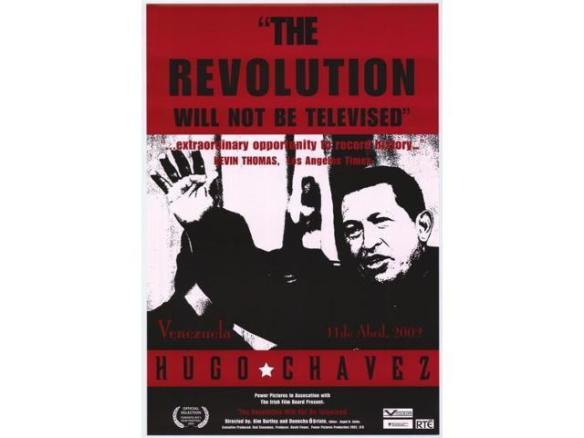
Saturday Matinee: The Revolution Will Not Be Televised

Source: Top Documentary Films

The Revolution Will Not Be Televised (a.k.a. Chavez: Inside the Coup) is a 2002 documentary about the April 2002 Venezuelan coup attempt which briefly deposed Venezuelan President Hugo Chávez.

A television crew from Ireland’s Radio Telifís Éireann happened to be recording a documentary about Chávez during the events of April 11, 2002.

Shifting focus, they followed the events as they occurred. During their filming, the crew recorded images of the events that they say contradict explanations given by Chávez opposition, the private media, the US State Department, and then White House Press Secretary Ari Fleischer.

The documentary says that the coup was the result of a conspiracy between various old guard and anti-Chávez factions within Venezuela and the United States.

What Are We Working For? The Economic System is a Labyrinthine Trap

By Edward Curtin

Source: Global Research

One also knows from his letters that nothing appeared more sacred to Van Gogh than work.” – John Berger, “Vincent Van Gogh,” Portraits

Ever since I was a young boy, I have wondered why people do the kinds of work they do.  I sensed early on that the economic system was a labyrinthine trap devised to imprison people in work they hated but needed for survival.  It seemed like common sense to a child when you simply looked and listened to the adults around you.  Karl Marx wasn’t necessary for understanding the nature of alienated labor; hearing adults declaim “Thank God It’s Friday” spoke volumes.

In my Bronx working class neighborhood I saw people streaming to the subway in the mornings for their rides “into the city” and their forlorn trundles home in the evenings. It depressed me.  Yet I knew the goal was to “make it” and move away as one moved “up,” something that many did.  I wondered why, when some people had options, they rarely considered the moral nature of the jobs they pursued.  And why did they not also consider the cost in life (time) lost in their occupations?  Were money, status, and security the deciding factors in their choices?  Was living reserved for weekends and vacations?

I gradually realized that some people, by dint of family encouragement and schooling, had opportunities that others never received.  For the unlucky ones, work would remain a life of toil and woe in which the search for meaning in their jobs was often elusive.  Studs Terkel, in the introduction to his wonderful book of interviews, Working: People Talk About What They Do all Day and How They Feel About What They Do, puts it this way:

This book, being about work, is, by its very nature, about violence – to the spirit as well as to the body.  It is about ulcers as well as accidents, about shouting matches as well as fistfights, about nervous breakdowns as well as kicking the dog around.  It is, above all (or beneath all), about daily humiliations. To survive the day is triumph enough for the walking wounded among the great many of us.

Those words were confirmed for me when in the summer between high school and college I got a job through a relative’s auspices as a clerk for General Motors in Manhattan.  I dreaded taking it for the thought of being cooped up for the first time in an office building while a summer of my youth passed me by, but the money was too good to turn down (always the bait), and I wanted to save as much as possible for college spending money.  So I bought a summer suit and joined the long line of trudgers going to and fro, down and up and out of the underground, adjusting our eyes to the darkness and light.

It was a summer from hell. My boredom was so intense it felt like solitary confinement.  How, I kept wondering, can people do this?  Yet for me it was temporary; for the others it was a life sentence.  But if this were life, I thought, it was a living death.  All my co-workers looked forward to the mid-morning coffee wagon and lunch with a desperation so intense it was palpable.  And then, as the minutes ticked away to 5 P.M., the agitated twitching that proceeded the mad rush to the elevators seemed to synchronize with the clock’s movements.  We’re out of here!

On my last day, I was eating my lunch on a park bench in Central Park when a bird shit on my suit jacket.  The stain was apt, for I felt I had spent my days defiling my true self, and so I resolved never to spend another day of my life working in an office building in a suit for a pernicious corporation, a resolution I have kept.

“An angel is not far from someone who is sad,” says Vincent Van Gogh in the new film, At Eternity’s Gate. For some reason, recently hearing these words in the darkened theater where I was almost alone, brought me back to that summer and the sadness that hung around all the people that I worked with.  I hoped Van Gogh was right and an angel visited them from time to time. Most of them had no options.

The painter Julian Schnabel’s moving picture (moving on many levels since the film shakes and moves with its hand-held camera work and draws you into the act of drawing and painting that was Van Gogh’s work) is a meditation on work.  It asks the questions: What is work?  What is work for?  What is life for?  Why paint? What does it mean to live?  Why do you do what you do?  Are you living or are you dead?  What are you seeking through your work?

For Vincent the answer was simple: reality.  But reality is not given to us and is far from simple; we must create it in acts that penetrate the screens of clichés that wall us off from it.  As John Berger writes,

One is taught to oppose the real to the imaginary, as though the first were always at hand and the second, distant, far away.  This opposition is false.  Events are always to hand.  But the coherence of these events – which is what one means by reality – is an imaginative construction.  Reality always lies beyond – and this is as true for materialists as for idealists. For Plato, for Marx.  Reality, however one interprets it, lies beyond a screen of clichés.

These screens serve to protect the interests of the ruling classes, who devise ways to trap regular people from seeing the reality of their condition.  Yet while working can be a trap, it can also be a means of escape. For Vincent working was the way.  For him work was not a noun but a verb. He drew and he painted as he does in this film to “make people feel what it is to feel alive.”  To be alive is to act, to paint, to write.  He tells his friend Gauguin that there’s a reason it’s called the “act of painting, the “stroke of genius.”  For him painting is living and living is painting.

The actual paintings that he made are almost beside the point, as all creative artists know too well. It is the doing wherein living is found. The completed canvas, essay, or book are what is done.  They are nouns, still lifes, just as Van Gogh’s paintings have become commodities in the years since his death, dead things to be bought and sold by the rich in a culture of death where they can be hung in mausoleums isolated from the living. It is appropriate that the film ends with Vincent very still in his coffin as “viewers” pass him by and avidly now desire his paintings that encircle the room that they once rejected. The man has become a has-been and the funeral parlor the museum.

“Without painting I can’t live,” he says earlier.  He didn’t say without his paintings.

“God gave me the gift for painting,” he said.  “It’s the only gift he gave me.  I am a born painter.”  But his gift has begotten gifts that are still-births that do not circulate and live and breathe to encourage people to find work that will not, “by its very nature, [be] about violence,” as Terkel said. His works, like people, have become commodities, brands to be bought and sold in a world where the accumulation of wealth is accomplished by the infliction of pain, suffering, and death on untold numbers of victims, invisible victims that allow the wealthy to maintain their bad-faith innocence. This is often achieved in the veiled shadows of intermediaries such as stock brokers, tax consultants, and financial managers; in the liberal and conservative boardrooms of mega-corporations or law offices; and in the planning sessions of the world’s great museums. Like drone killings that distance the killers from their victims, this wealth accumulation allows the wealthy to pretend they are on the side of the angels.  It’s called success, and everyone is innocent as they sing, “Hi Ho, Hi Ho, it’s off to work we go.”

“It is not enough to tell me you worked hard to get your gold,” said Henry Thoreau, Van Gogh’s soul-mate. “So does the Devil work hard.”

A few years ago there was a major exhibit of Van Gogh’s nature paintings at the Clark Museum in Williamstown, Massachusetts – “Van Gogh and Nature” – that aptly symbolized Van Gogh in his coffin.  The paintings were exhibited encased in ornate gold frames. Van Gogh in gold. Just perfect.  I am reminded of a scene in At Eternity’s Gatewhere Vincent and Gauguin are talking about the need for a creative revolution – what we sure as hell need – and the two friends stand side by side with backs to the camera and piss into the wind.

But pseudo-innocence dies hard.  Not long ago I was sitting in a breakfast room in a bed-and-breakfast in Houston, Texas, sipping coffee and musing myself awake.  Two men came in and the three of us got to talking.  As people like to say, they were nice guys.  Very pleasant and talkative, in Houston on business. Normal Americans.  Stressed.  Both were about fifty years old with wives and children.

One sold drugs for one of the largest pharmaceutical companies that is known for its very popular anti-depressant drug and its aggressive sales pitches.  He travelled a triangular route from Corpus Christi to Austin to Houston and back again, hawking his wares.  He spoke about his work as being very lucrative and posing no ethical dilemmas.  There were so many depressed people in need of his company’s drugs, he said, as if the causes of their depression had nothing to do with inequality and the sorry state of the country as the rich rip off everyone else.  I thought of recommending a book to him – Deadly Medicines and Organized Crime: How big pharma has corrupted health care by Peter Gotzsche – but held my tongue, appreciative as I was of the small but tasteful fare we were being served and not wishing to cause my companions dyspepsia.  This guy seemed to be trying to convince me of the ethical nature of the way he panned gold, while I kept thinking of that quote attributed to Mark Twain: “Denial ain’t just a river in Egypt.”

The other guy, originally from a small town in Nebraska and now living in Baton Rouge, was a former medevac helicopter pilot who had served in the 1st Gulf War.  He worked in finance for an equally large oil company.  His attitude was a bit different, and he seemed sheepishly guilty about his work with this company as he told me how shocked he was the first time he saw so many oil, gas, and chemical plants lining the Mississippi River from Baton Rouge to New Orleans and all the oil and chemicals being shipped down the river. So many toxins that reminded him of the toxic black smoke rising from all the bombed oil wells in Iraq.  Something about it all left him uneasy, but he too said he made a very good “living” and that his wife also worked for the oil company back home.

My childish thought recurred: when people have options, why do they not choose ethical work that makes the world more beautiful and just?  Why is money and so-called success always the goal?

Having seen At Eternity’s Gate, I now see what Van Gogh was trying to tell us and Julian Schnabel conveys through this moving picture.  I see why these two perfectly normal guys I was breaking bread with in Houston are unable to penetrate the screen that lies between them and reality.  They have never developed the imaginative tools to go beyond normal modes of perception and conception. Or perhaps they lack the faith to dare, to see the futility and violence in what they are working for and what their companies’ products are doing to the world.  They think of themselves as hard at work, travelling hither and yon, doing their calculations, “making their living,” and collecting their pay.  It’s their work that has a payoff in gold, but it’s not working in the sense that painting was for Vincent, a way beyond the screen.  They are mesmerized by the spectacle, as are so many Americans.  Their jobs are perfectly logical and allow them a feeling of calm and control.

But Vincent, responding to Gauguin, a former stock broker, when he urged him to paint slowly and methodically, said, “I need to be out of control. I don’t want to calm down.”  He knew that to be fully alive was to be vulnerable, to not hold back, to always be slipping away, and to be threatened with annihilation at any moment. When painting, he was intoxicated with a creative joy that belies the popular image of him as always depressed.  “I find joy in sorrow,” he said, echoing in a paradoxical way Albert Camus, who said, “I have always felt that I lived on the high seas, threatened, at the heart of a royal happiness.”   Both rebels, one in paint, the other in words: “I rebel: therefore we exist,” was how Camus put it, expressing the human solidarity that is fundamental to genuine work in our ephemeral world. Both nostalgic in the present for the future, creating freedom through vision and disclosing the way for others.

And although my breakfast companions felt safe in their calmness on this side of the screen, it was an illusion. The only really calm ones are corpses. And perhaps that’s why when you look around, as I did as a child, you see so many of the living dead carrying on as normal.

“I paint to stop thinking and feel I am a part of everything inside and outside me,” says Vincent, a self-described exile and pilgrim.

If we could make working a form of such painting, a path to human solidarity because a mode of rebelling, what a wonderful world it might be.

That, I believe, is what working is for.

Saturday Matinee: The Minds of Men

By By Aaron and Melissa Dykes

Source: TruthstreamMedia.com

“The Minds of Men” is a 3+ year investigation into the experimentation, art, and practice of social engineering and mind control during the Cold War – a mind-bending journey into the past that gives startling insight into the world we are living in today.

Saturday Matinee: Repo Man

By Alex Cox

Source: AlexCoxFilms

HOW DID REPO MAN OCCUR?

After I left UCLA I was hired to write a script for United Artists about the British World War One deserter and agitator, Percy Topliss.  When I delivered the screenplay it was rejected as “too English, too expensive, and too anti-war.”

Shortly thereafter I met the British director, Adrian Lyne.  He had directed one feature, FOXES, and he wanted his next to be about what he felt was the most important issue of the day:  the imminent possibility of a nuclear war.  I scouted Seattle and Vancouver as locations, and wrote him a script called THE HAPPY HOUR.

Adrian read it and went off to direct FLASHDANCE.   And I ran into two old chums from UCLA – Jonathan Wacks and Peter McCarthy.   They had been in the Production programme;  Jon had directed a documentary, Pete a drama.   Now they had a company, and even more impressive, an office in Venice, California, where they were making commercials (“Gene Kelly assures the public the MGM Grand is safe again!”) and public service announcements.    I suggested to them that they should also be feature film producers, and hire me as a director.   They agreed to consider this, but instructed me to come up with a script.

The first one I wrote for them was called THE HOT CLUB (a comedy about nuclear blast veterans and nerve gas thieves set in the early years of the 21st century).   They budgeted and Marie Canton (also ex-UCLA) budgeted it; it turned out to be rather expensive.    So I went off and wrote another screenplay instead: REPO MAN. This was based on my own personal Los Angeles horrors and the tutelage of Mark Lewis, a Los Angeles car repossessor and my neighbour in Venice, CA..  When the screenplay was published, Dick Rude and I interviewed Mark for the introduction:  his take on the repo trade and the movie can be found at pscweb.com/repo/whatever.

To make the package more interesting to investors, I drew four pages of a comic book based on the script and we included them with the screenplay.   I had planned at one stage to do an entire comic book, but it is too much work:  a page a day at the very most, and hard on the eyes.    Michael Nesmith, the former Monkee, saw the script/comic package, became interested, and took it to Bob Rehme at Universal.

WHAT WAS THE RESPONSE TO REPO MAN?

REPO MAN was made as a “negative pickup” by Universal at the time when Bob Rehme was head of the studio.    At the time, the big deal over there was STREETS OF FIRE, and nobody really noticed our film at all.   Which was lucky for us, since Bob Rehme had “green-lighted” a film which was quite unusual by studio standards.   Unfortunately, just before we were completely done, Rehme was ousted from his post, and a new boss came in.   It is, we quickly discovered, the primary task of a new boss  to make an old boss look bad, and so as much of Rehme’s product as possible was quickly junked.   That which was already made, or almost complete – REPO MAN and RUMBLEFISH, for instance – was swiftly consigned to the Chute of No Return.

We took out an ad in Variety, reprinting a good review we got there (we also got a very bad one – in the weekly edition – but we didn’t reprint that) as a challenge to Universal to get the picture out into the theatres.

The studio’s response was to lean on the head of public relations at Pan American World AIrlines, Dick Barkle, to condemn the film.   Mr Barkle declared himself shocked by REPO MAN, adding, “I hope they don’t show this film in Russia.” It is the world of DILBERT there.

The theatrical life of the film was prolonged by Kelly Neal at Universal, who went out of his way to support both REPO MAN and RUMBLEFISH.   And, even more, the record was a major element in promoting the film;  it was popular with the punk rock community and that got the word around.  And rightly so.  I was an enthusiast, and the film has a major punk influence – in addition to the protagonists Otto, Duke, Debbi, Archie and Kevin, there’s a tailor-made hardcore score by Los Plugz, Circle Jerks, Fear, Suicidal Tendencies, Black Flag, and Juicy Bananas, and a title song by Iggy Pop, who suffers under the sobriquet of The Godfather of Punk. 

DID YOU HAVE ANYTHING TO DO WITH THE TV VERSION?

Yes.    Because the film REPO MAN had so much swearing and a scene of speed-snorting, the studio made their own re-edited video version.   It was very  odd.   In an effort to “explain” the film, someone had gone and shot an insert of the license plate of the Chevy Malibu, and made the Hopi symbol dissolve into the HEAD OF THE DEVIL!

YOU’RE JOKING.

No, this is really true.    It made me wonder, could it be that the Christian Fundamentalists are right, and that the multinationals and Hollywood are controlled by Satanists?   I cannot say.  It seems so, most of the time.  But  perhaps those executives were just confused by the film, and trying to explain, in their own innocent, satanistic way, what it was about.   “Whut the heck is in that trunk?”   “Gee I don’t know.”   “Maybe it’s the… Devil  hisself!”    They were just trying to improve it in their own way, and make it clearer.

WEREN’T YOU HORRIFIED THAT THEY WERE BUTCHERING YOUR FILM?

I was a bit alarmed, yes.   They’d intercut static shots of this license plate with shots of the car moving, and it looked completely cheesy, worse than an Ed Wood film.     But the thing was, they weren’t really bad guys:  they knew what they’d done was a mistake, and now they were looking for the filmmaker to fix it.
They knew they had done wrong.

In the end I removed their strange insertions, and included two funny scenes which hadn’d made it into the theatrical version:    the one with Jac MacInally shaving (where Harry Dean says his name is “I.G.Farben”) and the the one where Harry Dean smashes the phone booth with his baseball bat.

BUT WHAT ABOUT CUTTING OUT ALL THE SWEARING?

And who cares.   By then I’d made SID & NANCY and I was sick of swearing.   It was fun coming up with synonyms for the swear words – “Melon Farmers” was a particular favourite.

Sometimes, for television and aeroplane screening, or for a film to play in prisons or at children’s tea-parties, changes need to be made.    It is always better for the filmmaker to be invited to participate than to be excluded.    Excluding the filmmaker results in what in Liverpool is called a dog’s breakfast.

WHAT WAS REPO MAN ABOUT – REALLY?

Nuclear War.  Of course. What else could it be about?  And the demented society that contemplated the possibility thereof.  Repoing people’s cars and hating alien ideologies were only the tip of the iceberg.  The iceberg itself was the maniac culture  which had elected so-called “leaders” named Reagan and Thatcher, who were  prepared to sacrifice everything — all life on earth — to a gamble based on the longevity of the Soviet military, and the whims of their corporate masters.   J. Frank Parnell – the fictitious inventor of the Neutron Bomb – was the central character for me.  He sets the film in motion, on the road from Los Alamos, and, as portrayed by the late great actor, Fox Harris, is the centrepoint of the film.

Fourteen years later, I had a call from one Sam Cohen, who announced himself the father of the Neutron Bomb.  I imagined  a cross between Jack D. Ripper and Edward Teller in a dark Brentwood apartment, raging because there hadn’t been an intercontinental thermonuclear war…

The following week Sam Cohen and I had lunch in Venice, California.  Sam had lived in LA since 1923 – “Grew up in the Jewish ghetto of East LA – grew up knowing all your locations.”   His daughter saw REPO MAN when it came out in 1984 and took him to see it.  He’s seen the video “a couple of dozen times”.

“It starts off with nostalgia for me…  the map at the beginning, I spent World War Two at Los Alamos, working on the Fat Man device.  My job was to study what the neutrons did.  I know more about neutrons than you would ever want to ask.

“My daughter took me to see this film, and here was this nutcake, our hero, lobotomized, head bobbing.  A cop stops him, opens the trunk, and — voila!  He’s neutronized!”   Sam had no doubt there was a Neutron Bomb in Otto’s trunk.
“It was the quintessential neutron bomb in the trunk… what we call a SADM – a Strategic Area Denial Munition.”  He and the Russian politician General Lebed gave press conferences a couple of years ago to draw attention to the number of ex-Soviet SADMs which had gone missing — hundreds of them, sold on the black market to whoever was buying.  He thinks a SADM may have levelled the Federal Building  in Oklahoma.

Sam’s next destination was Washington, DC.  “I’ve got a grand bash to attend: two friends of mine, aged 87 and 90, both four-star Air Force generals, are having a birthday party.  One of them is General Schraber.  Perhaps you’ve heard of him.   He put together the ICBM program.”

Later he reconsidered, and called me again.   “It wasn’t a Neutron Bomb in the trunk – it was an enormous concentration of nuclear material – it was gamma rays that killed the cop.”

Sam had one more observation, re. his contribution to thermonuclear devastation:  “The Neutron Bomb was the most moral weapon ever devised… it was a weapon for good Christians… a defensive weapon, it spares innocents, keeps war to the warriors, doesn’t damage the economy, has no hideous, crippling, lasting effects as in conventional warfare…  if you survive, a lot of the victims will recover…  no significant level of radiation is produced… it disappears very rapidly.  My friends Graves and Slotin were in just such an accident.  Slotin died horribly;  Graves had a fifty-fifty chance of dying, but recovered, and in a few months was playing handball.”

I asked if he meant his Bomb was intended as a battlefield (“theater” in the vernacular) weapon.  He insisted that was its only possible application:  “The Neutron Bomb totally conformed to the so-called Christian principles of a Just War.   I got a medal from the Pope in Rome, in 1979.”

WILL THERE BE A REPO MAN SEQUEL?

I would be delighted.   But Universal have already released a faux-sequel, “REPO MEN” and don’t seem interested in pursuing the real McCoy. So the sequel will have to wait till March 2019, when the rights to the original script revert to me.

THE RIGHTS TO REPO MAN REVERT TO YOU?

To the screenplay, yes. So if you are a wealthy patron of the fine arts, seeking to see a sequel, or a remake, or a REPO MAN series, just get in touch.


Saturday Matinee: Happiness (Short Film)

Happiness – by Steve Cutts

Can we buy happiness? Are we really trapped? An economic textbook about our contemporary society

By Chiara Pascali

Source: GoodShortFilms

Try to google the word Happiness, the first (sponsored) result of your search will be shophappiness.com. Happiness can be bought. This is a plus point for the British animator and artist Steve Cutts, director of the short film Happiness.

Cutts imagines humanity as a horde of rats, adored by the marketing god, bewitched by Black Friday or Cyber ​​Monday. Loose cannon looking for the last offer. Happiness is the penny that is always missing at the prices of super discount products.  Happiness is a commodity exchange of the new capitalism.

Happiness, by definition, is the moment in which all one’s desires are satisfied, but humanity always wants more. Like so many rats, we are looking for compulsive crumbs of happiness. Producers sow these crumbs on online and offline advertisements.

There are products that answer any type of question, even for the inability to endure frustration of being constantly dissatisfied.

This limitless race is rendered in an excellent way by the images of Happiness, full of details and oversized information. Chaos. Steve Cutts describes the irrepressible frenzy of modern society, the compulsive and often illogical search to possess new objects, and lastly, the money, motor that moves the world.

Happiness is a short economic textbook and an explicit critique of contemporary society. The final question does not spare anyone – are we trapped?