“Biden was personally engaged in corruption in Ukraine”
Viktor Shokin – The Ukrainian Prosecutor Joe Biden BRAGGED about getting FIRED speaks out
SHOKIN: "The fact that Joe Biden gave away one billion dollars – in exchange for my dismissal, my firing. – Is that alone a case of corruption?" pic.twitter.com/gy3VCc6JqE
The former Ukrainian prosecutor who was fired at the insistence of then-Vice President Joe Biden in 2016 after investigating Burisma, claimed that Biden treated Ukraine like his “own backyard,” according to comments made during an interview with Fox News’ Brian Kilmeade on Saturday.
Viktor Shokin was fired by Ukrainian President Petro Poroshenko in 2016 after Biden — who was in charge of Ukrainian policy during the Obama administration — gave him an ultimatum, saying that Ukraine would not receive $1 billion dollars in aid until Shokin was dismissed. In an interview with Brian Kilmeade on “One Nation” on Saturday, Shokin claimed that Biden treated Ukraine as if it were his “own backyard.”
“I developed a very firm understanding of the fact that the vice president was only acting in his own interest. He, generally speaking, handled Ukraine like it was his own backyard,” Shokin told Kilmeade. “The office of Poroshenko, the president, was humiliated, but the entire country was humiliated,” Shokin added, describing Biden’s ultimatum that he be dismissed, which Biden publicly boasted about at a Council on Foreign Relations event on Jan. 23, 2018.
“I’m going to be leaving here in six hours. If the prosecutor is not fired, you’re not getting the money. Well, son of a bitch, he got fired and they put in place someone who was solid,” Biden said at the event.
At the time of Shokin’s firing, his office was investigating Burisma, a Ukrainian energy company that had hired Biden’s son, Hunter, to join its board. FBI documents released by Congress in July suggested that Hunter was hired to enable Burisma to utilize his father’s political influence and avoid threats to the company.
Shokin also suggested that Biden was personally engaged in corruption in Ukraine, citing his firing as one instance. “They were being bribed. The fact that Joe Biden gave away $1 billion in U.S. money in exchange for my dismissal, my firing, isn’t that alone a case of corruption?” he said.
“For years, these false claims have been debunked, and no matter how much air time Fox gives them, they will remain false,” said White House spokesperson Iam Sams in a statement to the Daily Caller News Foundation. “Fox is giving a platform for these lies to a former Ukrainian prosecutor general whose office his own deputy called a hotbed of corruption, drawing demands for reform not only from then-Vice President Biden but also from U.S. diplomats, international partners, and Republican Senators like Ron Johnson.”
Economic issues are some of the most politically abused issues often because the data politicians exploit is easy to present out of context. The vast majority of the public doesn’t spend their time immersed in the intricacies of monetary policy, unemployment stats and the processes of inflation vs deflation. They hear a soundbite on the news or social media once in a while, assume it must be true and then go on with their day.
This is how economic crisis events always seem to take the population by surprise – The establishment tells people all is well and no one questions the narrative in the face of numerous warning signs. Sometimes, the populace continues to believe that everything is fine despite the financial framework burning down around them, all because the “experts” continue to convince them that recovery is “right around the corner.”
There are numerous incentives for government officials and mainstream economists to mislead the citizenry with tales of imminent prosperity in the midst of instability. Primarily, the goal is to keep the middle-class population as docile as possible so that they don’t revolt until it’s too late (the middle class being predominantly conservative, and the greatest threat to any corrupt regime). Understand that economics is the root of power, and economic perception is the key to influencing the masses.
Hidden Indicators And Rampant Money Printing
The reality is that the US was hurtling towards stagflationary disaster ever since the crash of 2008, when Barack Obama and Joe Biden (with the help of the Federal Reserve) oversaw the near doubling of the national debt from $10 trillion to almost $20 trillion – The most egregious abuse of monetary policy that the US had ever seen.
And, keep in mind this was only the officially reported cash. Because of pressure brought by people like Ron Paul in 2011, the government was forced to pursue a limited audit of the Federal Reserve bailouts at that time. This revealed at least $16 trillion created from nothing by the Fed to prop up the failing system.
In 2006, right before the derivatives collapse, the Federal Reserve conveniently and abruptly ended their M3 money supply report. They now only report the M2 money supply, which does not include the vast assets held in corporate coffers, large time deposits in banks, institutional money market funds, short-term repurchase agreements (repo), and larger liquid assets. It was as if they knew an inflationary event was about to take place and they needed to obscure the evidence.
In other words, in economics there is the “official government data” and then there is the REAL data, which is sometimes so hidden it is impossible to quantify.
Even if we only go by the M2 report, the money supply skyrocketed starting in 2020, and rose exponentially through 2021 and 2022 – It jumped by 40% in only two years. This is why the cost of most necessities has risen 25% or more.
I’m sure most readers have noticed that inflation is not going away despite Joe Biden’s claims that he has “cut inflation in half” under his “Bidenomics” plan. This is because inflation is cumulative. The CPI might fluctuate, but the effects of inflation remain as prices tend to increase and stay high perpetually.
There Is No Such Thing As “Bidenomics”
The supposed financial progress that Biden is trying to take credit for has nothing to do with Biden’s policies. Not a thing. Unless, of course, you count market manipulation as a positive.
For example, the reduction in CPI is directly related to the continuous interest rate hikes of the Federal Reserve, which Biden has zero control over. The Fed is autonomous and makes its decisions independent of the White House or government. This is a fact openly admitted by former chairman Alan Greenspan. When the fed raises rates, debt becomes more expensive, lending slows down and thus the economy slows down.
One of the only ways that Biden can influence CPI is through artificial deflation of energy prices. The Biden Administration has been dumping US strategic oil reserves on the market for the past year as a means to suppress oil prices, thereby directly and indirectly keeping the CPI numbers down. This is not progress, it’s economic fraud.
The misuse of stats extends to other sectors, such as Biden’s attempt to take credit for the recent reduction in the US deficit. Again, this has nothing to do with Biden; the Fed’s interest rate hikes make it more expensive for the government to take on debt, therefore, debt spending drops.
It’s also not a situation that signals a recovery in the economy – The Fed continues to hike rates supposedly to stall inflation, but higher rates in a debt heavy environment lead to inevitable deflationary upheaval. As I predicted a year ago, the Fed is continuing to increase interest rates until this happens.
Employment Miracle Or Employment Scam?
This issue has been brought up by many analysts but I’ll touch on it again here because Biden is relentless in his falsehoods when it comes to employment data. FACT: 72% of all “new jobs” Biden takes credit for were originally lost during the pandemic lockdowns. The very lockdowns which Democrats avidly enforced and tried to keep in place perpetually. You can’t take credit for “creating” jobs that you are responsible for destroying.
In terms of higher labor demand, the pressure is in low wage service sector jobs and these are the majority of jobs added since Biden took office. And, this rush into retail/service was purchased with $8 trillion+ in covid stimulus cash along with a moratorium on rent and student loan payments. That much extra money in circulation buys at least a few years of consumer spending, propping up jobs numbers.
Throughout history, such gains from inflationary actions and government interventions are always short term, and they always end with a dramatic plunge in employment once the effects subside.
Biden’s Fake Manufacturing Boom
Biden has recently touted a jump in US manufacturing as the latest achievement of Bidenomics, but like every other claim he makes, you have to look at the context. These are not free market manufacturing facilities built according to market demand. Rather, Biden is pumping billions of taxpayer dollars into green tech, once again artificially engineering a “manufacturing boom” through government subsidies for products that have limited demand.
Biden wants to rig the demand, too, by enforcing climate laws which make gas, oil and coal sources too expensive and solar panels and wind turbines cheaper by comparison. For example, Biden is increasing costs for oil and gas exploration on federal lands, while greatly lowering the prices for building solar farms on federal lands. In other words, the government uses your money to create factories for green tech and then creates laws which force people to use that green tech.
In the meantime, Joe’s manufacturing “boom” paid for with tax dollars also comes at the cost of America’s oil, gas and coal industries, not to mention less energy freedom for the general public. It’s socialism, not a revolution in domestic manufacturing.
For Biden, The Key Is To Create As Many Government Cash Injections As Possible Until 2025
You want to know why Democrats are so angry that the Supreme Court blocked Biden’s plan to make taxpayers cover student loan debts? It’s not because they care about naive college kids who paid too much money for garbage degrees – It’s because student debt relief would immediately add trillions more in spending in the short term to the US economy.
An interesting side effect of the college loan moratorium is the surprising credit boost – As soon as college loan payments were put on hold, millions of former students had their credit ratings increase by default. Meaning, they could now hike their credit limits and spend MORE money they don’t have. It’s an incredibly sneaky way to artificially prop up the system WITHOUT using direct stimulus measures that rely on the central bank. This false boost will disappear by October of this year.
Biden’s constant attempts to introduce infrastructure programs are another way the government can create the illusion of recovery by using debt spending as a means to mitigate the signals of greater fiscal decline. Without Fed stimulus it’s the only option Biden has, and as rates rise it becomes costly.
The bottom line is this – The US economy is on a short timetable as long as the Fed continues to raise interest rates into weakness as a means to suppress inflation. As we witnessed in the spring, higher rates are already breaking the back of mid-tier banks across the western world and the Fed’s backstop funds are only enough to stall the debt crisis for a time. I continue to predict that once the Fed Funds Rate is raised to 6% or more, we will once again see a banking calamity similar to the 2008 crash, but this time if the Fed steps in with a bailout hyperinflation will be the immediate result.
Bidenomics is a sham in every respect. Anything that could be considered an economic improvement is due to the Federal Reserve playing the odds with interest rates. A massive 40% increase in the money supply sure helps in obscuring fiscal weakness as well. Luckily, nearly 60% of Americans in recent polls say they aren’t buying the Bidenomics fairytale – They see the dangers around them every day.
The covid event was a catalyst that revealed all the weaknesses of the US system that many of us in alternative economics have been warning about for years. And now it seems as if the establishment is trying to drag things along for just a little while longer. The reason why is up for speculation, but the fact remains that a broken structure cannot be propped up with stop gaps. I’m doubtful that Biden will be able to ride the wave created by covid stimulus until the end of 2024. Something has to give.
There are two approaches to analyzing a situation:
1. Choose the desired outcome–generally the one that doesn’t require any major changes, sacrifices or downward mobility 2. Identify the initial conditions and systemic dynamics and then follow these to a conclusion back-tested by comparisons with historical outcomes.
Our default setting as humans is 1: select the outcome we want and then find whatever bits and pieces supports that conclusion. Cherry-pick data, draw false analogies–the field is wide open.
This is why we get so upset when our “analysis” is challenged: we’re forced to ask what happens to us if our desired outcome doesn’t transpire, and since the answer might be something less than optimal, we violently reject any data or analogies that conflict with our carefully curated “analysis.”
A great deal of what passes for analysis today is cherry-picked bits and pieces that support a happy story of endlessly expanding prosperity–AI, fusion, etc.–with no mention of limits, constraints, costs or worst-case outcomes rather than best-case outcomes.
Let’s start with an historical analogy most reject: the Great Depression of 1929 to 1942. The conventional account claims that the Depression was the result of a “Federal Reserve policy error”: the Fed tightened credit when it should have loosened it.
This is nonsense. What actually happened was credit expanded rapidly in the Roaring 1920s, which is why they were Roaring. Farmers could borrow money to buy prairie land to put under the plow, speculators could borrow $9 on margin to play the stock market with $1 in cash, and so on.
In other words, what happened was a gigantic credit bubble inflated that pushed stocks and other assets to unsustainable heights of over-valuation, valuations based on the Roaring 20s expansion of credit and consumption continuing forever.
But all bubbles pop, and so the weather changed for the worse and newly plowed prairie turned into a Dust Bowl, wiping out heavily leveraged farmers. Since there was no federal bank deposit guarantee (no FDIC), the bankruptcies of overleveraged borrowers wiped out thousands of small banks, wiping out the savings of prudent depositors.
So even prudent savers got wiped out in the crash of the credit bubble.
Stock speculators gambling on margin (i.e. borrowed money) were quickly wiped out, and the selling became self-reinforcing, accelerating the cascading crash.
The real policy error was protecting the wealthy who owned the debt from a debt-clearing write-down. The wealthy own debt, the non-wealthy owe debt. When the debt is defaulted on, the lender / owner of the debt has to absorb the loss. The debtor is freed of the burden. In a debt-clearing event driven by defaults, insolvencies and bankruptcies, the wealthy are the losers and the debtors are freed of the burden of debt.
Various programs were implemented to stave off the consequences of default, as if pushing losses into the future would somehow enable the credit bubble to reinflate. That’s not how it works: the financial system is like a forest, and if the dead wood of bad debt piles up and isn’t allowed to burn, then the forest cannot foster new growth.
Economies that refuse to accept the wealth destruction that results from credit bubbles popping stagnate. This is the story of Japan from 1990 to the present: the status quo in Japan refused to accept the losses, hiding bad debt (i.e. non-performing loans) behind artifices such as new loans that covered the interest due, listing the non-performing loans in “zombie” categories, i.e. as assets that were still on the books at full value even though they were essentially worthless, and so on.
The net result was 33 years of stagnation and social decay as young people gave up on owning homes and having families.
Now the US has inflated another “debt super-cycle” credit bubble that has pushed assets into over-valuation. Once again the goal is to avoid handing the wealthy owners of all this debt the enormous losses that must be accepted to clear the dead wood of bad debt, money lent to borrowers and projects that were not creditworthy except in a bubble.
The lesson the status quo took from the Great Depression is to cover up private-sector over-valuations and bad debts with vast expansions of credit via the Federal Reserve and the federal government. Please look at these four charts below: 1. total credit (TCMDO) 2. the Federal Reserve balance sheet (2 charts) 3. federal debt
All are in visibly unsustainable parabolic ascents.
Predictably, the status quo will refuse to accept the necessity of clearing the dead wood and accepting the trillions of dollars in losses that will accrue to those who own the unpayable debts.
Consider CRE, commercial real estate. Office towers are now worth one-third of their pre-pandemic valuations, the valuations on which their mortgages were based. There is no way these properties can be magically restored to their previous over-valuation. Massive losses must be accepted by the owners of the debt. If those losses make them insolvent, so be it. That is unacceptable in a system geared to protect the wealthy at all costs.
But bubbles pop anyway, regardless of policy tweaks. Consider these stock market charts of the Roaring 20s and the Great Depression and the present (below). The similarity is remarkable–possibly even eerie.
The big difference between the Great Depression of the 1930s and the Depression we’re entering is the world still had enormous reserves of resources to tap and a (by today’s standards) modest population in the resource-consuming developed nations.
Recall that a developed-world consumer uses up to 100 times more energy and resources than a poor person in a rural undeveloped nation. Recycling a few bottles doesn’t change this.
This means the planet’s “savings account” of abundant, cheap-to-access resources has been depleted. Yes, there is still oil and copper, etc., but it’s of far lower quality and much harder to get now. The rich ores have been mined and the shallow super-giant oil fields have all been tapped long ago. Now the Saudis must pump stupendous quantities of seawater into their oil wells to maintain production. All these technologies consume vast quantities of energy.
The inevitable result is the energy efficiency–how much energy is required to access, process and transport the energy–has plummeted even as consumption has soared.
The outcome many hope for is some new miraculously cheap and abundant sources of energy such as fusion. But fusion is far more complicated and tricky than pumping oil, and oil is a high-energy-density fuel that can be stored rather easily. All the electricity generated by various technologies can’t be stored easily or cheaply, and so the happy story is that a new miraculous battery technology is just around the corner.
But batteries are also complicated and resource-dense, so they’ll always be as expensive as the materials needed to fabricate them. There will never be “low-cost” batteries if the materials needed to make them are scarce and expensive to dig out of the ground, process and transport.
So the policy choices are simple: either protect the wealthy from write-downs of bad debt and the collapse of asset bubbles and usher in decades of stagnation, or force the wealthy to take the losses and clear away the dead wood.
But either choice will be constrained by the reality that humanity has already drained the easy-to-get “savings account” of global resources.
I get emails from readers who say things like “mining techniques are far more efficient now.” That’s fine, but most of these new mines are often thousands of kilometers away from railways or seaports, and thousands of kilometers away from the processing plants that turn the ore into useful metals.
Recall the enormity of the cost and effort required to build a single two-lane highway thousands of kilometers to a new mine, and the oceans of diesel fuel needed to power the mining equipment and trucks hauling the ore to railways or seaports. Recall the immense amounts of energy required to smelt / process these ores, and the near-zero percentage of lithium-ion batteries that are currently being recycled.
Batteries are difficult to recycle because they’re not manufactured to be recycled, and they’re not manufactured to be recycled because that would raise costs considerably, reducing profits.
So on the present course, the idea is to manufacture billions of batteries, throw them all in the landfill in 10 years, and then mine enough minerals to build another couple billion batteries and then repeat the cycle of throwing them away in 10 years forever.
That isn’t realistic, so the status quo will have to adjust to this unwelcome reality.
This is why I keep writing books about relocalizing, degrowth, using less rather than more to yield a higher level of well-being. The resource “savings account” won’t support fantasies of endlessly expanding consumption of hard-to-get resources.
But the status quo has much to unlearn, and it seems the only pathway to a new understanding is a Great Depression that won’t end with a new expansion of credit because the resources required for that new expansion simply won’t be available or affordable.
Reducing our exposure to avoidable risks is a key strategy of Self-Reliance.
No one but the terminally naïve should be surprised that security services lie – and that they are all but certain to cover their tracks when they carry out operations that either violate domestic or international law or that would be near-universally rejected by their own populations.
Which is reason enough why anyone following the fallout from explosions last September that ripped holes in three of the four Nord Stream pipelines in the Baltic Sea supplying Russian gas to Europe should be wary of accepting anything Western agencies have to say on the matter.
In fact, the only thing that Western publics should trust is the consensus among “investigators” that the three simultaneous blasts deep underwater on the pipelines – a fourth charge apparently failed to detonate – were sabotage, not some freak coincidental accident.
Someone blew up the Nord Stream pipelines, creating an untold environmental catastrophe as the pipes leaked huge quantities of methane, a supremely active global-warming gas. It was an act of unrivaled industrial and environmental terrorism.
If Washington had been able to pin the explosions on Russia, as it initially hoped, it would have done so with full vigor. There is nothing Western states would like more than to intensify world fury against Moscow, especially in the context of NATO’s express efforts to “weaken” Russia through a proxy war waged in Ukraine.
But, after the claim made the rounds of front pages for a week or two, the story of Russia destroying its own pipelines was quietly shelved. That was partly because it seemed too difficult to maintain a narrative in which Moscow chose to destroy a critical part of its own energy infrastructure.
Not only did the explosions cause Russia great financial harm – the country’s gas and oil revenues regularly financed nearly half of its annual budget – but the blasts removed Moscow’s chief influence over Germany, which had been until then heavily dependent on Russian gas. The initial media story required the Western public to believe that President Vladimir Putin willingly shot himself in the foot, losing his only leverage over European resolve to impose economic sanctions on his country.
But even more than the complete lack of a Russian motive, Western states knew they would be unable to build a plausible forensic case against Moscow for the Nord Stream blasts.
Instead, with no chance to milk the explosions for propaganda value, official Western interest in explaining what had happened to the Nord Stream pipelines wilted, despite the enormity of the event. That was reflected for months in an almost complete absence of media coverage.
When the matter was raised, it was to argue that separate investigations by Sweden, Germany and Denmark were all drawing a blank. Sweden even refused to share any of its findings with Germany and Denmark, arguing that to do so would harm its “national security.”
No one, again including the Western media, raised an eyebrow or showed a flicker of interest in what might be really going on behind the scenes. Western states and their compliant corporate media seemed quite ready to settle for the conclusion that this was a mystery cocooned in an enigma.
Isolated and friendless
It might have stayed that way forever, except that in February, a journalist – one of the most acclaimed investigative reporters of the past half-century – produced an accountthat finally demystified the explosions. Drawing on at least one anonymous, highly placed informant, Seymour Hersh pointed the finger for the explosions directly at the US administration and President Joe Biden himself.
Hersh’s detailed retelling of the planning and execution of the Nord Stream blasts had the advantage – at least for those interested in getting to the truth of what took place – that his account fitted the known circumstantial evidence.
At a Senate hearing, top US diplomat Victoria Nuland celebrated the Nord Stream 2 pipeline bombing:
"Senator Cruz, like you, I am, and I think the administration is, very gratified to know that Nord Stream 2 is now, as you like to say, a hunk of metal at the bottom of the sea." pic.twitter.com/KS5OM4N165
Key Washington figures, from President Biden to Secretary of State Anthony Blinken and his senior neoconservative official Victoria Nuland – a stalwart of the murky US, anti-Russia meddling in Ukraine over the past decade – had either called for the destruction of the Nord Stream pipelines or celebrated the blasts shortly after they took place.
If anyone had a motive for blowing up the Russian pipelines – and a self-declared one at that – it was the Biden administration. They opposed the Nord Stream 1 and 2 projects from the outset – and for exactly the same reason that Moscow so richly prized them.
My latest: If, as seems likely, the US was behind the pipeline blasts, it shows it's ready to turn the whole of Europe into a battlefield – and bully, betray and potentially sacrifice the continent’s population as cruelly as it has treated the Global South https://t.co/cIN1INfiOQ
In particular, the second pair of pipelines, Nord Stream 2, which was completed in September 2021, would double the amount of cheap Russian gas available to Germany and Western Europe. The only obstacle in its path was the hesitancy of German regulators. They delayed approval in November 2021.
Nord Stream meant major European countries, most especially Germany, would be completely dependent for the bulk of their energy supplies on Russia. That deeply conflicted with US interests. For two decades, Washington had been expanding NATO as an anti-Moscow military alliance embracing ever more of Europe, to the point of butting up aggressively against Russia’s borders.
The Ukrainian government’s covert efforts to become a NATO member – thereby destroying a long-standing mutual and fragile nuclear deterrence between Washington and Moscow – were among the stated reasons why Russia invaded its neighbor in February last year.
Nearly a year into the Ukraine war, the western narrative of an 'unprovoked attack' by Moscow has become impossible to sustain https://t.co/xTaHEibKax
Washington wanted Moscow isolated and friendless in Europe. The goal was to turn Russia into Enemy No. 2 – after China – not leave Europeans looking to Moscow for energy salvation.
The Nord Stream explosions achieved precisely that outcome. They severed the main reason European states had for cozying up to Moscow. Instead, the US started shipping its expensive liquified natural gas across the Atlantic to Europe, both forcing Europeans to become more energy dependent on Washington and, at the same time, fleecing them for the privilege.
But even if Hersh’s story fitted the circumstantial evidence, could his account stand up to further scrutiny?
Peculiarly incurious
This is where the real story begins. Because one might have assumed that Western states would be queuing up to investigate the facts Hersh laid bare, if only to see if they stacked up or to find a more plausible alternative account of what happened.
Dennis Kucinich, a former chair of a US Congressional investigative subcommittee on government oversight, has noted that it is simply astonishing no one in Congress has been pushing to use its powers to subpoena senior American officials, such as the secretary of the Navy, to test Hersh’s version of events. As Kucinich observes, such subpoenas could be issued under Congress’s Article One, Section 8, Clause 18, providing “constitutional powers to gather information, including to inquire on the administrative conduct of office.”
Similarly, and even more extraordinarily, when a vote was called by Russia at the United Nations Security Council late last month to set up an independent international commission to investigate the blasts, the proposal was roundly rejected.
If adopted, the UN Secretary-General himself would have appointed expert investigators and aided their work with a large secretariat.
Three Security Council members, Russia, China and Brazil, voted in favor of the commission. The other 12 – the US and its allies or small states it could easily pressure – abstained, the safest way to quietly foil the creation of such an investigative commission.
Excuses for rejecting an independent commission failed to pass the sniff test. The claim was that it would interfere with the existing investigations of Denmark, Sweden and Germany. And yet all three have demonstrated that they are in no hurry to reach a conclusion, arguing that they may need years to carry out their work. As previously noted, they have indicated great reluctance to cooperate. And last week, Sweden once again stated that it may never get to the bottom of the events in the Baltic Sea.
As one European diplomat reportedly observed of meetings between NATO policymakers, the motto is: “Don’t talk about Nord Stream.” The diplomat added: “It’s like a corpse at a family gathering. It’s better not to know.”
It may not be so surprising that Western states are devoted to ignorance about who carried out a major act of international terrorism in blowing up the Nord Stream pipelines, considering that the most likely culprit is the world’s only superpower and the one state that can make their lives a misery.
But what should be more peculiar is that Western media have shown precisely no interestin getting to the truth of the matter either. They have remained completely incurious to an event of enormous international significance and consequence.
It is not only that Hersh’s account has been ignored by the Western press as if it did not even exist. It is that none of the media appear to have made any effort to follow up with their own investigations to test his account for plausibility.
‘Act of war’
Hersh’s investigation is filled with details that could be checked – and verified or rebutted – if anyone wished to do so.
He set out a lengthy planning stage that began in the second half of 2021. He names the unit responsible for the attack on the pipeline: the US Navy’s Diving and Salvage Center, based in Panama City, Florida. And he explains why it was chosen for the task over the US Special Operations Command: because any covert operation by the former would not need to be reported to Congress.
In December 2021, according to his highly placed informant, National Security Adviser Jake Sullivan convened a task force of senior administration and Pentagon officials at the request of Biden himself. They agreed that the explosions must not be traceable back to Washington; otherwise, as the source noted: “It’s an act of war.”
The CIA brought in the Norwegians, stalwarts of NATO and strongly hostile to Russia, to carry out the logistics of where and how to attack the pipelines. Oslo had its own additional commercial interests in play, as the blasts would make Germany more dependent on Norwegian gas, as well as American supplies, to make up the shortfall from Nord Stream.
By March last year, shortly after Russia’s invasion of Ukraine, the precise site for the attack had been selected: in the Baltic’s shallow waters off Denmark’s Bornholm Island, where the sea floor was only 260ft below the surface, the four pipelines were close together and there were no strong tidal currents.
A small number of Swedish and Danish officials were given a general briefing about unusual diving activities to avoid the danger that their navies might raise the alarm.
The Norwegians also helped develop a way to disguise the US explosive charges so that, after they were laid, they would not be detected by Russian surveillance in the area.
The story no one wanted told. Seymour Hersh reveals how the US blew up the Nordstream gas pipelines, one of the great environmental disasters of our time. I'm guessing Hersh published on Substack because no establishment media outlet dared touch his expose https://t.co/B2IxQj5kuh
Next, the US found the ideal cover. For more than two decades, Washington has sponsored an annual NATO naval exercise in the Baltic every June. The US arranged that the 2022 event, Baltops 22, would take place close to Bornholm Island, allowing the divers to plant the charges unnoticed.
The explosives would be detonated through the use of a sonar buoy dropped by plane at the time of President Biden’s choosing. Complex arrangements had to be taken to make sure the explosives would not be accidentally triggered by passing ships, underwater drilling, seismic events or sea creatures.
Three months later, on September 26, the sonar buoy was dropped by a Norwegian plane, and a few hours later three of the four pipelines were put out of commission.
Disinformation campaign
The Western media’s response to Hersh’s account has perhaps been the most revealing aspect of the entire saga.
It is not just that the establishment media have been so uniformly and remarkably reticent to dig deeper into making sense of this momentous crime – beyond making predictable, unevidenced accusations against Russia. It is that they have so obviously sought to dismiss Hersh’s account before making even cursory efforts to confirm or deny its specifics.
The knee-jerk pretext has been that Hersh has only one anonymous source for his claims. Hersh himself has noted that, as with other of his famous investigations, he cannot always refer to additional sources he uses to confirm details because those sources impose a condition of invisibility for agreeing to speak to him.
That should hardly be surprising when informants are drawn from a small, select group of Washington insiders and are at great risk of being identified – at great personal cost to themselves, given the US administration’s proven track record of persecuting whistleblowers.
But the fact that this was indeed just a pretext from the establishment media becomes much clearer when we consider that those same journalists dismissive of Hersh’s account happily gave prominence to an alternative, highly implausible, semi-official version of events.
In what looked suspiciously like a coordinated publication in early March, The New York Times and Germany’s Die Zeit newspapers printed separate accounts promising to solve “one of the central mysteries of the war in Ukraine.” The Times headline asked a question it implied it was about to answer: “Who Blew Up the Nord Stream Pipelines?”
Instead, both papers offered an account of the Nord Stream attack that lacked detail, and any detail that was supplied was completely implausible. This new version of events was vaguely attributed to anonymous American and German intelligence sources – the very actors, in Hersh’s account, responsible both for carrying out and covering up the Nord Stream blasts.
In fact, the story had all the hallmarks of a disinformation campaign to distract from Hersh’s investigation. It threw the establishment media a bone: the chief purpose was to lift any pressure from journalists to pursue Hersh’s leads. Now they could scurry around, looking like they were doing their job as a “free press” by chasing a complete red herring supplied by U.S. intelligence agencies.
Which is why the story was widely reported, notably far more widely than Hersh’s much more credible account.
So what did the New York Times’ account claim? That a mysterious group of six people had hired a 50ft yacht and sailed off to Bornholm Island, where they had carried out a James Bond-style mission to blow up the pipelines. Those involved, it was suggested, were a group of “pro-Ukrainian saboteurs”– with no apparent ties to President Volodymyr Zelenskiy – who were keen to seek revenge on Russia for its invasion. They used fake passports.
The Times further muddied the waters, reporting sources that claimed some 45 “ghost ships” had passed close to the site of the explosion when their transponders were not working.
The crucial point was that the story shifted attention away from the sole plausible possibility, the one underscored by Hersh’s source: that only a state actor could have carried out the attack on the Nord Stream pipelines. The highly sophisticated, extremely difficult operation needed to be concealed from other states, including Russia that were closely surveilling the area.
Now the establishment media was heading off on a completely different tangent. They were looking not at states – and most especially not the one with the biggest motive, the greatest capability and the proven opportunity.
Instead, they had an excuse to play at being reporters, visiting Danish yachting communities to ask if anyone remembered the implicated yacht, the Andromeda, or suspicious characters aboard it, and trying to track down the Polish company that hired the sailing boat. The media had the story they preferred: one that Hollywood would have created, of a crack team of Jason Bournes giving Moscow a good slapping and then disappearing into the night.
Welcome mystery
A month on, the media discussion is still exclusively about the mysterious yacht crew, though – after reaching a series of dead-ends in a story that was only ever meant to have dead-ends – establishment journalists are asking a few tentative questions. Though, let us note, most determinedly not questions about any possible US involvement in the Nord Stream sabotage.
Britain’s Guardian newspaper ran a story last week in which a German “security expert” wondered whether a group of six sailors was really capable of carrying out a highly complex operation to blow up the Nord Stream pipelines. That is something that might have occurred to a less credulous newspaper a month earlier when the Guardian simply regurgitated the Times’ disinformation story.
But despite the security expert’s skepticism, the Guardian is still not eager to get to the bottom of the story. It conveniently concludes that the “investigation” conducted by the Swedish public prosecutor, Mats Ljungqvist, will be unlikely ever to “yield a conclusive answer”.
Or as Ljungqvist observes: “Our hope is to be able to confirm who has committed this crime, but it should be noted that it likely will be difficult given the circumstances.”
Hersh’s account continues to be ignored by the Guardian – beyond a dismissive reference to several “theories” and “speculation” other than the laughable yacht story. The Guardian does not name Hersh in its report or the fact that his highly placed source fingered the US for the Nord Stream sabotage. Instead, it notes simply that one theory – Hersh’s – has been “zeroing on a Nato Baltops 22 wargame two months before” the attack.
It’s all still a mystery for the Guardian – and a very welcome one by the tenor of its reports.
The Washington Post has been performing a similar service for the Biden administration on the other side of the Atlantic. A month on, it is using the yacht story to widen the enigma rather than narrow it down.
The paper reports that unnamed “law enforcement officials” now believe the Andromeda yacht was not the only vessel involved, adding: “The boat may have been a decoy, put to sea to distract from the true perpetrators, who remain at large, according to officials with knowledge of an investigation led by Germany’s attorney general.”
The Washington Post’s uncritical reporting surely proves a boon to Western “investigators”. It continues to build an ever more elaborate mystery, or “international whodunnit,” as the paper gleefully describes it. Its report argues that unnamed officials “wonder if the explosive traces – collected months after the rented boat was returned to its owners – were meant to falsely lead investigators to the Andromeda as the vessel used in the attack.”
The paper then quotes someone with “knowledge of the investigation”: “The question is whether the story with the sailboat is something to distract or only part of the picture.”
How does the paper respond? By ignoring that very warning and dutifully distracting itself across much of its own report by puzzling whether Poland might have been involved too in the blasts. Remember, a mysterious Polish company hired that red-herring yacht.
Poland, notes the paper, had a motive because it had long warned that the Nord Stream pipelines would make Europe more energy dependent on Russia. Exactly the same motive, we might note – though, of course, the Washington Post refuses to do so – that the Biden administration demonstrably had.
The paper does inadvertently offer one clue as to where the mystery yacht story most likely originated. The Washington Post quotes a German security official saying that Berlin “first became interested in the [Andromeda] vessel after the country’s domestic intelligence agency received a ‘very concrete tip’ from a Western intelligence service that the boat may have been involved in the sabotage”.
The German official “declined to name the country that shared the information” – information that helpfully draws attention away from any US involvement in the pipeline blasts and redirects it to a group of untraceable, rogue Ukraine sympathizers.
The Washington Post concludes that Western leaders “would rather not have to deal with the possibility that Ukraine or allies were involved”. And, it seems the Western media – our supposed watchdogs on power – feel exactly the same way.
‘Parody’ intelligence
In a follow-up story last week, Hersh revealed that Holger Stark, the journalist behind Die Zeit’s piece on the mystery yacht and someone Hersh knew when they worked together in Washington, had imparted to him an interesting additional piece of information divulged by his country’s intelligence services.
Hersh reports: “Officials in Germany, Sweden, and Denmark had decided shortly after the pipeline bombings to send teams to the site to recover the one mine that has not gone off. [Holger] said they were too late; an American ship had sped to the site within a day or two and recovered the mine and other materials.”
Holger, Hersh says, was entirely uninterested in Washington’s haste and determination to have exclusive access to this critical piece of evidence: “He answered, with a wave of his hand, ‘You know what Americans are like. Always wanting to be first.’” Hersh points out: “There was another very obvious explanation.”
Hersh also spoke with an intelligence expert about the plausibility of the mystery yacht story being advanced by the New York Times and Die Zeit. He described it as a “parody” of intelligence that only fooled the media because it was exactly the kind of story they wanted to hear. He noted some of the most glaring flaws in the account:
‘Any serious student of the event would know that you cannot anchor a sailboat in waters that are 260 feet deep’ – the depth at which the four pipelines were destroyed – ‘but the story was not aimed at him but at the press who would not know a parody when presented with one.’
Further:
‘You cannot just walk off the street with a fake passport and lease a boat. You either need to accept a captain who was supplied by the leasing agent or owner of the yacht, or have a captain who comes with a certificate of competency as mandated by maritime law. Anyone who’s ever chartered a yacht would know that.’ Similar proof of expertise and competence for deep sea diving involving the use of a specialized mix of gases would be required by the divers and the doctor.
And:
‘How does a 49-foot sailboat find the pipelines in the Baltic Sea? The pipelines are not that big and they are not on the charts that come with the lease. Maybe the thought was to put the two divers into the water’– not very easy to do so from a small yacht – ‘and let the divers look for it. How long can a diver stay down in their suits? Maybe fifteen minutes. Which means it would take the diver four years to search one square mile.’
The truth is that the Western press has zero interest in determining who blew up the Nord Stream pipelines because, just like Western diplomats and politicians, media corporations don’t want to know the truth if it cannot be weaponized against an official enemy state.
The Western media are not there to help the public monitor the centers of power, keep our governments honest and transparent, or bring to book those who commit state crimes. They are there to keep us ignorant and willing accomplices when such crimes are seen as advancing on the global stage the interests of Western elites – including the very transnational corporations that run our media.
Which is precisely why the Nord Stream blasts took place. The Biden administration knew not only that its allies would be too fearful to expose its unprecedented act of industrial and environmental terrorism but that the media would dutifully line up behind their national governments in turning a blind eye.
The very ease with which Washington has been able to carry out an atrocity – one that has caused a surge in the cost of living for Europeans, leaving them cold and out of pocket during the winter, and added considerably to existing pressures that have been gradually de-industrializing Europe’s economies – will embolden the US to act in equally rogue ways in the future.
In the context of a Ukraine war in which there is the constant threat of a resort to nuclear weapons, where that could ultimately lead should be only too obvious.
The future of humanity will be decided on a battlefield in Ukraine. That’s no exaggeration. The conflict between the United States and Russia will determine whether global economic integration will expand within an evolving multi-polar system or if the “rules-based order” will succeed in crushing any opponent to its Western-centric model. This is what’s taking place in Ukraine today, in fact, all of the recent government-prepared documents related to national security identify Russia and China as the greatest threats to US hegemony. For example, take a look at this brief clip from the 2021 Congressional Research Service Report titled Renewed Great Power Competition: Implications for Defense—Issues for Congress:
The U.S. goal of preventing the emergence of regional hegemons in Eurasia… is a policy choice reflecting two judgments: (1) that given the amount of people, resources, and economic activity in Eurasia, a regional hegemon in Eurasia would represent a concentration of power large enough to be able to threaten vital U.S. interests….
From a U.S. perspective on grand strategy and geopolitics, it can be noted that most of the world’s people, resources, and economic activity are located not in the Western Hemisphere, but in the other hemisphere, particularly Eurasia. In response to this basic feature of world geography, U.S. policymakers for the last several decades have chosen to pursue, as a key element of U.S. national strategy, a goal of preventing the emergence of regional hegemons in Eurasia.” (“Renewed Great Power Competition: Implications for Defense—Issues for Congress”, US Congress)
That sums up US foreign policy in a nutshell; “prevent the emergence of a regional hegemon” at all cost. Now check out this summary of the 2022 US National Defense Strategy by Andre Damon at the World Socialist Web Site:
These documents, which were not seriously discussed in the US media, make clear the fundamental falsehood that the massive US military buildup this year is a response to “Russian aggression.” In reality, in the thinking of the White House and Pentagon war planners, the massive increases in military spending and plans for war with China are created by “dramatic changes in geopolitics, technology, economics, and our environment.”
These documents make clear that the United States sees the economic rise of China as an existential threat, to be responded to with the threat of military force. The United States sees the subjugation of Russia as a critical stepping stone toward the conflict with China.” (“Pentagon national strategy document targets China”, Andre Damon, World Socialist Web Site)
These two excerpts are by no means a comprehensive summary of US foreign policy objectives, but they are a pretty effective thumbnail sketch. Bottom line: The war in Ukraine is not about Ukraine. America’s clearly articulated strategic objectives are as follows: To weaken Russia, topple its leader, take control of its vast natural resources and move on to containing China. Simply put, Washington’s escalating aggression in Ukraine is a Hail Mary pass aimed at containing emerging centers of economic power in order to preserve its waning position in the global order.
This is the geopolitical chess match that is being played behind the cover of “a war against Russia’s unprovoked aggression.” People should not be hoodwinked by that absurd deception. This war was concocted as a desperate attempt for the United States to defend its flickering global hegemony. That’s what Ukraine is really all about. It’s a clash between the warmongering western oligarchs who have a stranglehold on the US media and political establishment and the emerging economies that are using the market system to link their resources and manufactured goods to countries around the world through “high-speed” infrastructure and cooperative development.
So, the question everyone must ask themselves is this: Do you want to see more economic integration, lower prices, more shared prosperity and less war or another 80 years of onerous and arbitrary sanctions, color-coded revolutions, regime change operations, genocidal interventions and bioweapon warfare (Covid-19)? Which do you want?
Perhaps, you are one of the millions of Americans who believe that China is an enemy of the United States. Perhaps, you are also unaware of the role the US played in creating modern China. Here’s a question for you: Did the US and western corporations move their operations en masse to China to escape the high costs of production in the US?
answer– Yes, they did.
And, did they betray US workers because they didn’t want a fair wage to interfere with their excessive profit-making?
answer– Yep.
And, did they offshore their businesses, outsource their product manufacturing and do everything in their power to make themselves winners while robbing American workers of the opportunity of making a decent wage so they could put food on the table?
answer– They sure did.
Then who is actually responsible for the rise of China?
answer– Western corporations are responsible. If Americans want to blame someone, blame them!
But now the corporate mandarins and other elites are unhappy with China because China will not allow them to take control over their markets, financial system and currency as they have in America. So now these same cutthroat corporations want us to fight a war with the monster that they created?
Can you see that? Can you see that the relentless provocations against China have nothing to do with US national security or US interests. We are being led by the nose to fight and die for the cadres of voracious western oligarchs who have settled on China as the next target of their grand looting operation.
But let’s forget the past for a minute and focus on the future, after all, that’s what really matters, right?
Well then, which country has a more “positive vision” for the future: China or the United States?
Have you ever heard of China’s Belt and Road Initiative, the massive, multi trillion-dollar infrastructure plan that is the centerpiece of China’s foreign policy? It is the biggest infrastructure program in history and more 150 countries have invested in the plan already. It is a development-oriented project aimed at increasing connectivity through high-speed rail, shipping lanes and ports, skyscrapers, railroads, roads, bridges, airports, dams, power stations, and railroad tunnels. By increasing the speed of travel, China’s products and merchandise will get to markets faster generating greater prosperity for itself and for the other countries involved. And, keep in mind, the BRI will link countries around the world in a high-speed system that will not require its participants to follow a specific economic model dictated by Beijing. In other words, the Belt and Road Initiative is free market economics without the politics. It’s a “win-win” situation for everyone, a guarantee of mutual prosperity absent political manipulation, coercion or exploitation.
The venal oligarchs that run the US can’t even imagine a project of this scale or potential. In fact, they can’t even pony-up enough money to keep the trains on the rails in America. The profits these billionaire parasites extract from their activities invariably come from stock buybacks, tax evasion, and other sleight-of-hand, debt-layering ponzi-scams that benefit no one and merely shift more of the nation’s wealth into their own bulging bank accounts. Of course, ripping off the country would be bad enough, but now we see how this same class of miscreants have settled on public health as a means for amplifying their political power so they can impose repressive, police-state measures that greatly curtail the freedom of the entire population. In short, they want absolute social control and they aren’t going to let-up until they get it.
Where is the “positive vision” in this behavior?
There isn’t one. America used to be a country of ideas, ideals and vision. Now it is an oligarch-run detension center in which all hope for the future has been ruthlessly extinguished by a handful of mercenary billionaires.
At least, in the case of China, we can imagine a better, more prosperous world that is interconnected and more accessible to everyone. But what about the United States? Are we supposed to believe that fighting a war in eastern Europe is going to improve our lives? Are we supposed to believe that the only way “we can stay on top” is by pushing everyone else down? Are we expected to hate China and Russia even while our own government demonizes 80 million of us for voting for the wrong presidential candidate or for not supporting the terrorists who burn and loot our cities or for believing that the people in East Palestine are more deserving of our support and assistance than the Nazi stormtroopers in Kiev?
The fact is, our leaders cannot imagine devoting public resources to a giant interconnected infrastructure project like BRI, because that would mean less lucre for themselves. So, they’ve decided to destroy it just like they destroyed Nord Stream. Just read the press reviews on this groundbreaking project. Western journalists can’t find a ‘good word’ to say about it. A vast area in the center of America was fiendishly nuked with vinyl chloride, butyl acrylate and isobutylene, but the western media would rather criticize China’s ambitious BRI project than hold their paymasters accountable. Go figure.
The same rule applies to Russia. The Biden team and their wealthy allies don’t want closer relations between Germany and Russia because closer relations mean more prosperity for both countries, and Washington can’t have that, which is why they blew up the pipeline that was Germany’s lifeline to cheap fuel. That’s how Washington solved the problem. It pushed Germany and Russia down so the US could remain on top. Who doesn’t see this?
In contrast, the Belt and Road Initiative provides a positive vision for the future, which is an idea that the majority of the world supports. It puts us on a path to an interconnected world in which people can raise their standards of living, make a meaningful contribution to their communities, and enjoy their own culture and traditions without fear of being sanctioned, incarcerated or bombed to death. This is an excerpt from China’s Global Times:
The China-proposed Belt and Road Initiative (BRI) has already become a well-received international public good and an important platform for international cooperation…
“BRI transcends the outdated mentality of geopolitical games, and created a new model of international cooperation. It is not an exclusive group that excludes other participants but an open and inclusive cooperation platform. It is not just China’s solo effort, but a symphony performed by all participating countries….
Since the Belt and Road Initiative (BRI) was proposed in 2013, the initiative has always been development-oriented, and consistent efforts have been made to ensure that it is high-standard, sustainable and people-centered….
By August, China’s goods trade with countries participating in the BRI had reached around $12 trillion and the country’s non-financial direct investment in those countries surpassed $140 billion. … By the end of 2021, Chinese enterprises had invested $43 billion in the construction of economic and trade cooperation zones in BRI countries, creating more than 340,000 local jobs, official data showed…
China is open to other countries’ and regions’ participation in the BRI and is considering connecting with infrastructure initiatives proposed by other nations to provide more good-quality public goods for the world…. China hopes to join hands with all partners to advance the high-quality development … stressing that China aims to strive for global connection rather than fragmentation, for mutual opening-up rather than shutting doors, for mutual integration rather than zero-sum games. (“BRI remains open, inclusive for all, transcends the outdated mentality of geopolitical games“, Global Times)
What is the American-led project that rivals the Belt and Road Initiative?
There isn’t one. The US allocates over $1 trillion per year for lethal weaponry and war-making, and trillions more to bail out the Wall Street banksters, and trillions more to shut down all the businesses across the country that were forced to comply with the diktats of billionaire elites who wanted to inject the population with their toxic slurry, but zero for any global infrastructure project that would peacefully bring the world’s people closer together through commerce and recreation.
No one is saying that China is perfect, at least, I’m not. Nor do I want to live in China. I don’t. I’m an American and I plan to die here.
But I’m not blind. It’s easy to see that this war with Russia has nothing to do with “unprovoked aggression.” That is merely a smokescreen that’s being used to conceal the real objective, which is to preserve America’s global hegemony. What we need to do now, is honestly analyze ‘what is happening’; try to understand ‘why it is happening’, and, then, figure out what the outcome will be if the United States prevails. In other words, do we want to perpetuate an oligarch-controlled system that crushes Russia, contains China, starves Europe of the energy it needs, sabotages the Belt and Road infrastructure plan and reinforces the same failed policies that brought us Afghanistan, Libya, Syria and Iraq?
Do we want that? Do YOU want that?
The American people want their government to cooperate with other nations in order to create a more prosperous and peaceful world. They don’t want a new world order and they certainly don’t want a Third World War.
A respected investigative journalist explains how the U.S. sabotaged the Nord Stream pipelines. But corporate media working in service to the state ignore the story and endanger the world.
“If a tree falls in the forest and no one is around to hear it, does it make a sound?” The idea behind this old thought experiment should not be relegated to the realm of philosophy. Present day reality can be used in place of hypothetical falling trees. If the United States blows up the Nord Stream pipelines but the media ignores it, did the attack ever happen?
Seymour Hersh has all of the credentials that usually give one gravitas in the world of journalism. As a freelance reporter he exposed the U.S. army’s 1969 massacre of Vietnamese civilians at My Lai and won a Pulitzer Prize for his efforts. He later worked at the New York Times and reported on high profile stories such as the Watergate revelations, and the CIA coup against the government of Chile. In 2004 Hersh exposed torture of Iraqis at Abu Ghraib prison for The New Yorker.
None of these accomplishments helped Hersh when he recently provided evidence of what had long been obvious, that the Biden administration blew up the Nord Stream pipelines on September 26, 2022. In a 5,200 word article published on his Substack entitled How America Took Out the Nord Stream Pipeline , Hersh utilized highly placed sources who presented as one might say the “receipts” of how the deed was done.
Joe Biden and his foreign policy team at the State Department, National Security Agency, and the Central Intelligence Agency first discussed the operation one year before carrying it out, and months before Russia’s special military operation in Ukraine began. The fear of deepening integration between Russia and Germany was the cause of alarm. They wanted to end Europe’s resource and financial connections to Russia, and decided that exploding the means of transporting natural gas was a good idea. According to Hersh’s source(s) the plot was carried out with help from Norway, a NATO member nation that made itself the sole source of natural gas in the region by helping in the attack. The current Secretary General of NATO, Jens Stoltenberg, was formerly a prime minister of Norway.
The U.S. had the motive, means, and opportunity and spent many months confessing to the plot and then to the crime after it took place. In February 2022 Biden pledged to stop the Nord Stream 2 project and added for good measure, “I promise you we’ll be able to do it.” After the explosion Secretary of State Antony Blinken said , “It’s a tremendous opportunity to once and for all end the dependence on Russian energy.” Under Secretary of State Victoria Nuland smugly said at a Senate hearing, “Senator Cruz, like you I am and I think the administration is very gratified to know that Nord Stream 2 is now as you like to say, a hunk of metal at the bottom of the sea.”
Hersh’s article was a sensation online when it was published on February 8, 2023 but it has been ignored by major corporate media ever since. One has to ask if it really happened when the New York Times, Washington Post and television networks ignore what ought to be a huge news story.
It isn’t hard to understand why the same individuals and institutions who act as state mouthpieces would want to sweep Hersh’s reporting under the rug. For months they have acted as scribes instead of as journalists. The days when they would compete to break a scoop that a president wanted covered up are long gone. They now go along with establishment narratives, and promote imperialism as much as the people they are tasked with covering and confronting. Not one person asked about Hersh’s revelations at the daily white house press briefing the day after it was published.
Not only have the media ignored what Hersh reported but Republicans who claim to oppose Biden and the Democrats have also been silent. There are impeachable offenses committed in Hersh’s account but the people who should be asking questions have demurred. Republicans were as eager as Democrats to end Nord Stream’s existence. The word collusion which was bandied about so much in recent years is apropos here and that means the Hersh story is now at the bottom of the sea politically.
Biden is the fox in charge of the hen house, preparing to ask congress for the biggest defense budget in history, in large part to replenish the weapons used in Ukraine. The people who are asked to accept austerity for themselves are largely ignorant of how the conflict started and why their money is used for every purpose except for those that benefit them.
The Nord Stream sabotage is not the only news story which has been deep sized. The decision to sabotage Nord Stream was very reckless, and a sign that Biden and his team are willing to risk a wider war in order to do what they cannot, weaken Russia or get Vladimir Putin out of office, or destroy Russia economically. At the very moment that people in this country need to know the hard truth, it is being kept from them.
So complete is the indoctrination that Biden’s obvious instability is never discussed, even when the public see it for themselves unfiltered. At the State of the Union address he made this odd remark , “Name me a world leader who’d change places with Xi Jinping! Name me one! Name me one!” The strange outburst was never given the attention that it deserved.
The media are behaving in a manner that violates their own ethics and that may in fact be criminal. Lest anyone forget, the post-World War II Nuremberg trials charged the German press with committing “propaganda as an instrument of war.” Now in the nuclear age the media in what is known as the “collective west” are acting in a similar fashion, covering up crimes and repeating lies as truth in the name of making and continuing war.
The Biden administration did sabotage Nord Stream whether the media say so or not. Their lack of attention doesn’t change facts, but it does disappear them and that is incredibly dangerous to the entire world.
In 1935, Major General Smedley Butler’s seminal book “War Is A Racket” warned of the dangers of the US military-industrial complex, more than 25 years before the outgoing US President Eisenhower implored the world to “guard against” the same thing.
One of the most decorated soldiers in US military history, Butler knew what he was talking about, famously writing that war is “…conducted for the benefit of the very few, at the expense of the very many.”
While he lamented the loss of his fallen comrades and despite the gongs he received for defending his country, Butler came to understand that he was actually a “high class muscle man for big business, for Wall Street and the bankers.” Later, the historian Antony C. Sutton proved that Butler was right.
When the US administration of George Bush passed its Foreign Operations Appropriation Law in 1991, it ended all US credit to the former, thriving socialist republic of Yugoslavia. At the time the perception on the Hill was that Yugoslavia was no longer required as a buffer zone between the NATO states and their former Warsaw Pact adversaries, so its independent socialism was no longer tolerated.
The US military industrial complex, that Butler and Eisenhower told everyone to tackle, effectively destabilised the entire Balkan region, destroyed hitherto relatively peaceful countries and then fuelled the resultant wars with its pet Islamist terrorists. Ably assisted by the World Bank and the IMF.
So-called “assistance,” via the Train and Equip Program, gave US taxpayers the opportunity to funnel $500M to private security contractors like DynCorp. DynCorp put taxpayer’s money to use, seemingly by training terrorists and child trafficking to paedophiles.
The US and its Western allies’ military industrial complex pulled off more or less the same trick in Iraq, Libya and nearly in Syria. In hindsight this doesn’t appear to have been a very good idea. That is, if you think wars are fought for the reasons we are told.
Having bombed Iraq into the stone age, to stop its regime producing the WMDs it didn’t have, the US then “rescued” the country, from the horrific violence and starvation sanctions the US government itself visited upon the Iraqi people, by establishing the US led coalition’s puppet Coalition Provisional Authority (CPA) government. Once installed, the CPA did things like award US engineering firm Kellogg Brown & Root (KBR) a ‘sole source contract’ to fix and operate all of Iraq’s oil wells.
That US Vice President Dick Cheney, who lied passionately about Iraqi WMD, was also in receipt of an annual $2M stipend from KBR was just a coincidence. As was the massive boost to the value of his Halliburton shareholdings as a direct result of the war he was instrumental in starting.
When the former UK Prime Minister Teresa May OK’d missile trikes upon Syrian civilians, the fact that her husband made millions out of it, as his investments in missile manufactures went through the roof, was also just a coincidence. In no way did she personally profit from killing children and the fact that her family continues to make a fortune by killing more children in Yemen does not undermine Theresa’s very public profile as a champion of good causes. Although, it appears, not killing children isn’t one of them.
So we shouldn’t be surprised when, once again, we discover that war, far from an impediment to business, actually improves operational margins, increases production, boosts markets and offers white collar criminal enterprises industrial scale profits.
Sure, people, including children, die in huge numbers but so what? Where there’s muck there’s brass. War certainly is a racket.
The Russian energy giant Lukoil, whose former CEO Ravil Maganov accidentally fell out of a window a few months ago—a common problem for the wrong Russian executives—has been shipping Russian oil to its refinery in the Bulgarian port city of Burgas. The Burgas refinery is the only one in Bulgaria and the largest in the Balkans. From there the refined gas-oil (red diesel) is exported to Russia’s supposed enemy, Ukraine.
This was all being done in secret, says the Russian MSM, although this is just perception management, pro-war propaganda. There has also been a lot of nonsense written by the Western MSM, alleging that Bulgaria has been illicitly circumnavigating EU “sanctions.” Regardless of the fact that this too is monumental tripe.
There isn’t anything “secret” about it. In truth, the door was left open for Russia and Bulgaria to continue this trade, at least until the end of 2024, because the EU inserted a loophole to ensure that they could. Presumably, the Russian government knew nothing about the massive oil shipments, which is why it remained a “secret,” according to Russian MSM.
Given that the “secrecy” narrative is total claptrap, why would both the Western and the Russian MSM want to peddle essentially the same disinformation? Let’s spend a moment to reflect upon the EU’s non-sanction sanctions shall we?
It means that third party non-EU trading nations, like Kazakhstan for instance, can ship Russian oil to the EU unhindered by the inconvenience of alleged sanctions. The sanctions are for reordering global energy flows, not ending them.
While the switch-over has plunged European citizens into an energy crisis, that’s OK. It is essential for the future of the planet that Europeans are convinced to accept ever increasing energy prices. Otherwise they might not welcome the transition to the “sustainable energy” that will make their lives much worse.
Red diesel in Ukraine is used for industrial and heavy machinery, in agriculture and manufacturing for example. It is also used for, oh I don’t know, fuelling tanks and armoured personnel carriers, mobile artillery units and stuff like that.
Stories from European news outlets that Bulgaria provides nearly 40% of Ukrainian military fuel are all nonsense because reasons. Officials have denied the evidence, such as confirmation from the former Bulgarian President, so it isn’t “officially approved” evidence. Consequently, it can safely be discounted by anyone gullible enough to do so.
Don’t forget, according to Western and Russian MSM outlets, it’s all a secret. Which may come as a relief to some, because otherwise the Russian government would have been colluding with the EU to ensure that the Ukrainian military could stay in the fight wouldn’t it?
Recently, despite apparently running out of weaponry, if you believe Western propaganda that is, Russia has launched a massive missile strike on Ukraine, targeting Ukraine’s energy infrastructure. According to Russian MSM this is part of the Russian governments efforts to undermine Ukraine’s “military capabilities.”
The fact that it ensures that Ukraine will need to be rebuilt by borrowing enormous sums from international financiers, with the diligent assistance of Gazprom investors BlackRock, is not relevant. So ignore this too please.
Gazprom sells gas to Moldova which is now going to provide gas to Ukraine via the Ukrainian transit gas pipelines that Russian bombing has accidentally missed entirely. The Moldovan government is keen to stress that this is not the gas it buys from Gazprom but is rather the gas it buys from somewhere else it hasn’t specified despite admitting that it is completely reliant upon Russian energy.
If the energy and the fuel from countries like Moldova, Bulgaria and Kazakhstan is used by the Ukrainian government’s military, which it won’t under any official circumstances whatsoever, and Gazprom gas helps keep Ukrainian’s lights on, despite the missile strikes, it looks like the Russian government’s objective is to keep Ukraine at war while hobbling it just enough to ensure it can’t win.
This can’t be true because NATO appears to be doing exactly the same thing and Russia and NATO are enemies. Although NATO’s not quite enough assistance differs from the Russian governments not quite enough aggression, it essentially amounts to the same thing.
The piddly number of tanks offered to Ukraine by its NATO “partners,” the reluctance from NATO to give Ukraine military aircraft and the tepid reception for Ukraine’s more recent pleas to join NATO, appears to signal that NATO isn’t prepared to provide, or perhaps isn’t capable of providing, the military support Ukraine would need for victory. But it is seemingly willing to give it just enough old used scrap to keep it loosing.
This means Ukrainians, the new Russian populations in the Donbas, and troops on both sides, though primarily the Ukrainians, will continue to die while the geopolitical landscape continues to shift around them. Meanwhile the military industrial complex and the billionaires it enriches, such as Elon Musk, are making a fortune. When the conflict is concluded, multinational corporations on both sides will be awarded the contracts to rebuild the stuff their government partners have just destroyed.
Butler wrote:
Let the officers and the directors and the high-powered executives of our armament factories and our munitions makers and our shipbuilders and our airplane builders and the manufacturers of all the other things that provide profit in war time as well as the bankers and the speculators, be conscripted.
While some might think it wise to add politician’s to that list, for some unfathomable reason, far more people seem to think this is a good point but that it isn’t a serious proposal. Why not? Do they not get it, do they not understand what Butler, Eisenhower, Sutton and many more like them have been trying to tell them for nearly a century?
What is it about the military industrial complex that they assume to be inevitable? Why on Earth do they think it is a “necessary evil?”
It is only necessary because millions, perhaps billions, of us accept that war is the “failure” of foreign policy and diplomacy, instead of understanding the obvious fact that it is the extension of foreign policy. As we are seeing right now with the warmongering posturing of the West and China, war is the intended product of foreign policy and sledgehammer diplomacy.
Wars don’t just “happen” by accident. They are planned, engineered and delivered as required. Our’s and our children’s deaths mean nothing to the people who we allow to lead us into war. They don’t have skin in the game but they should and we have the power to make sure that they do. All we have to do is refuse to fight. It really isn’t rocket science. Obedience is not a virtue.
But we won’t because we continue to fall for the same old lies, time and time again. We continue to imagine, like amnesiac slaves, that we can only be led to a better future by following another bunch of parasitic criminals.
Around and around we go: blowing up and starving children to death, condemning pensioners to freezing fuel poverty and accepting that we might just have to sacrifice ourselves and our loved ones along the way.
When the warmongers next press gang our sons and daughters into dying for their ambitions, we will again say it is in a good cause: for the defence of our country, our culture or our way of life.
It isn’t, it never was and it never will be as long as we continue to go along with it.
The U.S. Navy’s Diving and Salvage Center can be found in a location as obscure as its name—down what was once a country lane in rural Panama City, a now-booming resort city in the southwestern panhandle of Florida, 70 miles south of the Alabama border. The center’s complex is as nondescript as its location—a drab concrete post-World War II structure that has the look of a vocational high school on the west side of Chicago. A coin-operated laundromat and a dance school are across what is now a four-lane road.
The center has been training highly skilled deep-water divers for decades who, once assigned to American military units worldwide, are capable of technical diving to do the good—using C4 explosives to clear harbors and beaches of debris and unexploded ordinance—as well as the bad, like blowing up foreign oil rigs, fouling intake valves for undersea power plants, destroying locks on crucial shipping canals. The Panama City center, which boasts the second largest indoor pool in America, was the perfect place to recruit the best, and most taciturn, graduates of the diving school who successfully did last summer what they had been authorized to do 260 feet under the surface of the Baltic Sea.
Last June, the Navy divers, operating under the cover of a widely publicized mid-summer NATO exercise known as BALTOPS 22, planted the remotely triggered explosives that, three months later, destroyed three of the four Nord Stream pipelines, according to a source with direct knowledge of the operational planning.
Two of the pipelines, which were known collectively as Nord Stream 1, had been providing Germany and much of Western Europe with cheap Russian natural gas for more than a decade. A second pair of pipelines, called Nord Stream 2, had been built but were not yet operational. Now, with Russian troops massing on the Ukrainian border and the bloodiest war in Europe since 1945 looming, President Joseph Biden saw the pipelines as a vehicle for Vladimir Putin to weaponize natural gas for his political and territorial ambitions.
Asked for comment, Adrienne Watson, a White House spokesperson, said in an email, “This is false and complete fiction.” Tammy Thorp, a spokesperson for the Central Intelligence Agency, similarly wrote: “This claim is completely and utterly false.”
Biden’s decision to sabotage the pipelines came after more than nine months of highly secret back and forth debate inside Washington’s national security community about how to best achieve that goal. For much of that time, the issue was not whether to do the mission, but how to get it done with no overt clue as to who was responsible.
There was a vital bureaucratic reason for relying on the graduates of the center’s hardcore diving school in Panama City. The divers were Navy only, and not members of America’s Special Operations Command, whose covert operations must be reported to Congress and briefed in advance to the Senate and House leadership—the so-called Gang of Eight. The Biden Administration was doing everything possible to avoid leaks as the planning took place late in 2021 and into the first months of 2022.
President Biden and his foreign policy team—National Security Adviser Jake Sullivan, Secretary of State Tony Blinken, and Victoria Nuland, the Undersecretary of State for Policy—had been vocal and consistent in their hostility to the two pipelines, which ran side by side for 750 miles under the Baltic Sea from two different ports in northeastern Russia near the Estonian border, passing close to the Danish island of Bornholm before ending in northern Germany.
The direct route, which bypassed any need to transit Ukraine, had been a boon for the German economy, which enjoyed an abundance of cheap Russian natural gas—enough to run its factories and heat its homes while enabling German distributors to sell excess gas, at a profit, throughout Western Europe. Action that could be traced to the administration would violate US promises to minimize direct conflict with Russia. Secrecy was essential.
From its earliest days, Nord Stream 1 was seen by Washington and its anti-Russian NATO partners as a threat to western dominance. The holding company behind it, Nord Stream AG, was incorporated in Switzerland in 2005 in partnership with Gazprom, a publicly traded Russian company producing enormous profits for shareholders which is dominated by oligarchs known to be in the thrall of Putin. Gazprom controlled 51 percent of the company, with four European energy firms—one in France, one in the Netherlands and two in Germany—sharing the remaining 49 percent of stock, and having the right to control downstream sales of the inexpensive natural gas to local distributors in Germany and Western Europe. Gazprom’s profits were shared with the Russian government, and state gas and oil revenues were estimated in some years to amount to as much as 45 percent of Russia’s annual budget.
America’s political fears were real: Putin would now have an additional and much-needed major source of income, and Germany and the rest of Western Europe would become addicted to low-cost natural gas supplied by Russia—while diminishing European reliance on America. In fact, that’s exactly what happened. Many Germans saw Nord Stream 1 as part of the deliverance of former Chancellor Willy Brandt’s famed Ostpolitik theory, which would enable postwar Germany to rehabilitate itself and other European nations destroyed in World War II by, among other initiatives, utilizing cheap Russian gas to fuel a prosperous Western European market and trading economy.
Nord Stream 1 was dangerous enough, in the view of NATO and Washington, but Nord Stream 2, whose construction was completed in September of 2021, would, if approved by German regulators, double the amount of cheap gas that would be available to Germany and Western Europe. The second pipeline also would provide enough gas for more than 50 percent of Germany’s annual consumption. Tensions were constantly escalating between Russia and NATO, backed by the aggressive foreign policy of the Biden Administration.
Opposition to Nord Stream 2 flared on the eve of the Biden inauguration in January 2021, when Senate Republicans, led by Ted Cruz of Texas, repeatedly raised the political threat of cheap Russian natural gas during the confirmation hearing of Blinken as Secretary of State. By then a unified Senate had successfully passed a law that, as Cruz told Blinken, “halted [the pipeline] in its tracks.” There would be enormous political and economic pressure from the German government, then headed by Angela Merkel, to get the second pipeline online.
Would Biden stand up to the Germans? Blinken said yes, but added that he had not discussed the specifics of the incoming President’s views. “I know his strong conviction that this is a bad idea, the Nord Stream 2,” he said. “I know that he would have us use every persuasive tool that we have to convince our friends and partners, including Germany, not to move forward with it.”
A few months later, as the construction of the second pipeline neared completion, Biden blinked. That May, in a stunning turnaround, the administration waived sanctions against Nord Stream AG, with a State Department official conceding that trying to stop the pipeline through sanctions and diplomacy had “always been a long shot.” Behind the scenes, administration officials reportedly urged Ukrainian President Volodymyr Zelensky, by then facing a threat of Russian invasion, not to criticize the move.
There were immediate consequences. Senate Republicans, led by Cruz, announced an immediate blockade of all of Biden’s foreign policy nominees and delayed passage of the annual defense bill for months, deep into the fall. Politico later depicted Biden’s turnabout on the second Russian pipeline as “the one decision, arguably more than the chaotic military withdrawal from Afghanistan, that has imperiled Biden’s agenda.”
The administration was floundering, despite getting a reprieve on the crisis in mid-November, when Germany’s energy regulators suspended approval of the second Nord Stream pipeline. Natural gas prices surged 8% within days, amid growing fears in Germany and Europe that the pipeline suspension and the growing possibility of a war between Russia and Ukraine would lead to a very much unwanted cold winter. It was not clear to Washington just where Olaf Scholz, Germany’s newly appointed chancellor, stood. Months earlier, after the fall of Afghanistan, Scholtz had publicly endorsed French President Emmanuel Macron’s call for a more autonomous European foreign policy in a speech in Prague—clearly suggesting less reliance on Washington and its mercurial actions.
Throughout all of this, Russian troops had been steadily and ominously building up on the borders of Ukraine, and by the end of December more than 100,000 soldiers were in position to strike from Belarus and Crimea. Alarm was growing in Washington, including an assessment from Blinken that those troop numbers could be “doubled in short order.”
The administration’s attention once again was focused on Nord Stream. As long as Europe remained dependent on the pipelines for cheap natural gas, Washington was afraid that countries like Germany would be reluctant to supply Ukraine with the money and weapons it needed to defeat Russia.
It was at this unsettled moment that Biden authorized Jake Sullivan to bring together an interagency group to come up with a plan.
All options were to be on the table. But only one would emerge.
PLANNING
In December of 2021, two months before the first Russian tanks rolled into Ukraine, Jake Sullivan convened a meeting of a newly formed task force—men and women from the Joint Chiefs of Staff, the CIA, and the State and Treasury Departments—and asked for recommendations about how to respond to Putin’s impending invasion.
It would be the first of a series of top-secret meetings, in a secure room on a top floor of the Old Executive Office Building, adjacent to the White House, that was also the home of the President’s Foreign Intelligence Advisory Board (PFIAB). There was the usual back and forth chatter that eventually led to a crucial preliminary question: Would the recommendation forwarded by the group to the President be reversible—such as another layer of sanctions and currency restrictions—or irreversible—that is, kinetic actions, which could not be undone?
What became clear to participants, according to the source with direct knowledge of the process, is that Sullivan intended for the group to come up with a plan for the destruction of the two Nord Stream pipelines—and that he was delivering on the desires of the President.
THE PLAYERS Left to right: Victoria Nuland, Anthony Blinken, and Jake Sullivan.
Over the next several meetings, the participants debated options for an attack. The Navy proposed using a newly commissioned submarine to assault the pipeline directly. The Air Force discussed dropping bombs with delayed fuses that could be set off remotely. The CIA argued that whatever was done, it would have to be covert. Everyone involved understood the stakes. “This is not kiddie stuff,” the source said. If the attack were traceable to the United States, “It’s an act of war.”
At the time, the CIA was directed by William Burns, a mild-mannered former ambassador to Russia who had served as deputy secretary of state in the Obama Administration. Burns quickly authorized an Agency working group whose ad hoc members included—by chance—someone who was familiar with the capabilities of the Navy’s deep-sea divers in Panama City. Over the next few weeks, members of the CIA’s working group began to craft a plan for a covert operation that would use deep-sea divers to trigger an explosion along the pipeline.
Something like this had been done before. In 1971, the American intelligence community learned from still undisclosed sources that two important units of the Russian Navy were communicating via an undersea cable buried in the Sea of Okhotsk, on Russia’s Far East Coast. The cable linked a regional Navy command to the mainland headquarters at Vladivostok.
A hand-picked team of Central Intelligence Agency and National Security Agency operatives was assembled somewhere in the Washington area, under deep cover, and worked out a plan, using Navy divers, modified submarines and a deep-submarine rescue vehicle, that succeeded, after much trial and error, in locating the Russian cable. The divers planted a sophisticated listening device on the cable that successfully intercepted the Russian traffic and recorded it on a taping system.
The NSA learned that senior Russian navy officers, convinced of the security of their communication link, chatted away with their peers without encryption. The recording device and its tape had to be replaced monthly and the project rolled on merrily for a decade until it was compromised by a forty-four-year-old civilian NSA technician named Ronald Pelton who was fluent in Russian. Pelton was betrayed by a Russian defector in 1985 and sentenced to prison. He was paid just $5,000 by the Russians for his revelations about the operation, along with $35,000 for other Russian operational data he provided that was never made public.
That underwater success, codenamed Ivy Bells, was innovative and risky, and produced invaluable intelligence about the Russian Navy’s intentions and planning.
Still, the interagency group was initially skeptical of the CIA’s enthusiasm for a covert deep-sea attack. There were too many unanswered questions. The waters of the Baltic Sea were heavily patrolled by the Russian navy, and there were no oil rigs that could be used as cover for a diving operation. Would the divers have to go to Estonia, right across the border from Russia’s natural gas loading docks, to train for the mission? “It would be a goat fuck,” the Agency was told.
Throughout “all of this scheming,” the source said, “some working guys in the CIA and the State Department were saying, ‘Don’t do this. It’s stupid and will be a political nightmare if it comes out.’”
Nevertheless, in early 2022, the CIA working group reported back to Sullivan’s interagency group: “We have a way to blow up the pipelines.”
What came next was stunning. On February 7, less than three weeks before the seemingly inevitable Russian invasion of Ukraine, Biden met in his White House office with German Chancellor Olaf Scholz, who, after some wobbling, was now firmly on the American team. At the press briefing that followed, Biden defiantly said, “If Russia invades . . . there will be no longer a Nord Stream 2. We will bring an end to it.”
Twenty days earlier, Undersecretary Nuland had delivered essentially the same message at a State Department briefing, with little press coverage. “I want to be very clear to you today,” she said in response to a question. “If Russia invades Ukraine, one way or another Nord Stream 2 will not move forward.”
Several of those involved in planning the pipeline mission were dismayed by what they viewed as indirect references to the attack.
“It was like putting an atomic bomb on the ground in Tokyo and telling the Japanese that we are going to detonate it,” the source said. “The plan was for the options to be executed post invasion and not advertised publicly. Biden simply didn’t get it or ignored it.”
Biden’s and Nuland’s indiscretion, if that is what it was, might have frustrated some of the planners. But it also created an opportunity. According to the source, some of the senior officials of the CIA determined that blowing up the pipeline “no longer could be considered a covert option because the President just announced that we knew how to do it.”
The plan to blow up Nord Stream 1 and 2 was suddenly downgraded from a covert operation requiring that Congress be informed to one that was deemed as a highly classified intelligence operation with U.S. military support. Under the law, the source explained, “There was no longer a legal requirement to report the operation to Congress. All they had to do now is just do it—but it still had to be secret. The Russians have superlative surveillance of the Baltic Sea.”
The Agency working group members had no direct contact with the White House, and were eager to find out if the President meant what he’d said—that is, if the mission was now a go. The source recalled, “Bill Burns comes back and says, ‘Do it.’”
THE OPERATION
Norway was the perfect place to base the mission.
In the past few years of East-West crisis, the U.S. military has vastly expanded its presence inside Norway, whose western border runs 1,400 miles along the north Atlantic Ocean and merges above the Arctic Circle with Russia. The Pentagon has created high paying jobs and contracts, amid some local controversy, by investing hundreds of millions of dollars to upgrade and expand American Navy and Air Force facilities in Norway. The new works included, most importantly, an advanced synthetic aperture radar far up north that was capable of penetrating deep into Russia and came online just as the American intelligence community lost access to a series of long-range listening sites inside China.
In return, the Norwegian government angered liberals and some moderates in its parliament last November by passing the Supplementary Defense Cooperation Agreement (SDCA). Under the new deal, the U.S. legal system would have jurisdiction in certain “agreed areas” in the North over American soldiers accused of crimes off base, as well as over those Norwegian citizens accused or suspected of interfering with the work at the base.
Norway was one of the original signatories of the NATO Treaty in 1949, in the early days of the Cold War. Today, the supreme commander of NATO is Jens Stoltenberg, a committed anti-communist, who served as Norway’s prime minister for eight years before moving to his high NATO post, with American backing, in 2014. He was a hardliner on all things Putin and Russia who had cooperated with the American intelligence community since the Vietnam War. He has been trusted completely since. “He is the glove that fits the American hand,” the source said.
Back in Washington, planners knew they had to go to Norway. “They hated the Russians, and the Norwegian navy was full of superb sailors and divers who had generations of experience in highly profitable deep-sea oil and gas exploration,” the source said. They also could be trusted to keep the mission secret. (The Norwegians may have had other interests as well. The destruction of Nord Stream—if the Americans could pull it off—would allow Norway to sell vastly more of its own natural gas to Europe.)
Sometime in March, a few members of the team flew to Norway to meet with the Norwegian Secret Service and Navy. One of the key questions was where exactly in the Baltic Sea was the best place to plant the explosives. Nord Stream 1 and 2, each with two sets of pipelines, were separated much of the way by little more than a mile as they made their run to the port of Greifswald in the far northeast of Germany.
The Norwegian navy was quick to find the right spot, in the shallow waters of the Baltic sea a few miles off Denmark’s Bornholm Island. The pipelines ran more than a mile apart along a seafloor that was only 260 feet deep. That would be well within the range of the divers, who, operating from a Norwegian Alta class mine hunter, would dive with a mixture of oxygen, nitrogen and helium streaming from their tanks, and plant shaped C4 charges on the four pipelines with concrete protective covers. It would be tedious, time consuming and dangerous work, but the waters off Bornholm had another advantage: there were no major tidal currents, which would have made the task of diving much more difficult.
After a bit of research, the Americans were all in.
At this point, the Navy’s obscure deep-diving group in Panama City once again came into play. The deep-sea schools at Panama City, whose trainees participated in Ivy Bells, are seen as an unwanted backwater by the elite graduates of the Naval Academy in Annapolis, who typically seek the glory of being assigned as a Seal, fighter pilot, or submariner. If one must become a “Black Shoe”—that is, a member of the less desirable surface ship command—there is always at least duty on a destroyer, cruiser or amphibious ship. The least glamorous of all is mine warfare. Its divers never appear in Hollywood movies, or on the cover of popular magazines.
“The best divers with deep diving qualifications are a tight community, and only the very best are recruited for the operation and told to be prepared to be summoned to the CIA in Washington,” the source said.
The Norwegians and Americans had a location and the operatives, but there was another concern: any unusual underwater activity in the waters off Bornholm might draw the attention of the Swedish or Danish navies, which could report it.
Denmark had also been one of the original NATO signatories and was known in the intelligence community for its special ties to the United Kingdom. Sweden had applied for membership into NATO, and had demonstrated its great skill in managing its underwater sound and magnetic sensor systems that successfully tracked Russian submarines that would occasionally show up in remote waters of the Swedish archipelago and be forced to the surface.
The Norwegians joined the Americans in insisting that some senior officials in Denmark and Sweden had to be briefed in general terms about possible diving activity in the area. In that way, someone higher up could intervene and keep a report out of the chain of command, thus insulating the pipeline operation. “What they were told and what they knew were purposely different,” the source told me. (The Norwegian embassy, asked to comment on this story, did not respond.)
The Norwegians were key to solving other hurdles. The Russian navy was known to possess surveillance technology capable of spotting, and triggering, underwater mines. The American explosive devices needed to be camouflaged in a way that would make them appear to the Russian system as part of the natural background—something that required adapting to the specific salinity of the water. The Norwegians had a fix.
The Norwegians also had a solution to the crucial question of when the operation should take place. Every June, for the past 21 years, the American Sixth Fleet, whose flagship is based in Gaeta, Italy, south of Rome, has sponsored a major NATO exercise in the Baltic Sea involving scores of allied ships throughout the region. The current exercise, held in June, would be known as Baltic Operations 22, or BALTOPS 22. The Norwegians proposed this would be the ideal cover to plant the mines.
The Americans provided one vital element: they convinced the Sixth Fleet planners to add a research and development exercise to the program. The exercise, as made public by the Navy, involved the Sixth Fleet in collaboration with the Navy’s “research and warfare centers.” The at-sea event would be held off the coast of Bornholm Island and involve NATO teams of divers planting mines, with competing teams using the latest underwater technology to find and destroy them.
It was both a useful exercise and ingenious cover. The Panama City boys would do their thing and the C4 explosives would be in place by the end of BALTOPS22, with a 48-hour timer attached. All of the Americans and Norwegians would be long gone by the first explosion.
The days were counting down. “The clock was ticking, and we were nearing mission accomplished,” the source said.
And then: Washington had second thoughts. The bombs would still be planted during BALTOPS, but the White House worried that a two-day window for their detonation would be too close to the end of the exercise, and it would be obvious that America had been involved.
Instead, the White House had a new request: “Can the guys in the field come up with some way to blow the pipelines later on command?”
Some members of the planning team were angered and frustrated by the President’s seeming indecision. The Panama City divers had repeatedly practiced planting the C4 on pipelines, as they would during BALTOPS, but now the team in Norway had to come up with a way to give Biden what he wanted—the ability to issue a successful execution order at a time of his choosing.
Being tasked with an arbitrary, last-minute change was something the CIA was accustomed to managing. But it also renewed the concerns some shared over the necessity, and legality, of the entire operation.
The President’s secret orders also evoked the CIA’s dilemma in the Vietnam War days, when President Johnson, confronted by growing anti-Vietnam War sentiment, ordered the Agency to violate its charter—which specifically barred it from operating inside America—by spying on antiwar leaders to determine whether they were being controlled by Communist Russia.
The agency ultimately acquiesced, and throughout the 1970s it became clear just how far it had been willing to go. There were subsequent newspaper revelations in the aftermath of the Watergate scandals about the Agency’s spying on American citizens, its involvement in the assassination of foreign leaders and its undermining of the socialist government of Salvador Allende.
Those revelations led to a dramatic series of hearings in the mid-1970s in the Senate, led by Frank Church of Idaho, that made it clear that Richard Helms, the Agency director at the time, accepted that he had an obligation to do what the President wanted, even if it meant violating the law.
In unpublished, closed-door testimony, Helms ruefully explained that “you almost have an Immaculate Conception when you do something” under secret orders from a President. “Whether it’s right that you should have it, or wrong that you shall have it, [the CIA] works under different rules and ground rules than any other part of the government.” He was essentially telling the Senators that he, as head of the CIA, understood that he had been working for the Crown, and not the Constitution.
The Americans at work in Norway operated under the same dynamic, and dutifully began working on the new problem—how to remotely detonate the C4 explosives on Biden’s order. It was a much more demanding assignment than those in Washington understood. There was no way for the team in Norway to know when the President might push the button. Would it be in a few weeks, in many months or in half a year or longer?
The C4 attached to the pipelines would be triggered by a sonar buoy dropped by a plane on short notice, but the procedure involved the most advanced signal processing technology. Once in place, the delayed timing devices attached to any of the four pipelines could be accidentally triggered by the complex mix of ocean background noises throughout the heavily trafficked Baltic Sea—from near and distant ships, underwater drilling, seismic events, waves and even sea creatures. To avoid this, the sonar buoy, once in place, would emit a sequence of unique low frequency tonal sounds—much like those emitted by a flute or a piano—that would be recognized by the timing device and, after a pre-set hours of delay, trigger the explosives. (“You want a signal that is robust enough so that no other signal could accidentally send a pulse that detonated the explosives,” I was told by Dr. Theodore Postol, professor emeritus of science, technology and national security policy at MIT. Postol, who has served as the science adviser to the Pentagon’s Chief of Naval Operations, said the issue facing the group in Norway because of Biden’s delay was one of chance: “The longer the explosives are in the water the greater risk there would be of a random signal that would launch the bombs.”)
On September 26, 2022, a Norwegian Navy P8 surveillance plane made a seemingly routine flight and dropped a sonar buoy. The signal spread underwater, initially to Nord Stream 2 and then on to Nord Stream 1. A few hours later, the high-powered C4 explosives were triggered and three of the four pipelines were put out of commission. Within a few minutes, pools of methane gas that remained in the shuttered pipelines could be seen spreading on the water’s surface and the world learned that something irreversible had taken place.
FALLOUT
In the immediate aftermath of the pipeline bombing, the American media treated it like an unsolved mystery. Russia was repeatedly cited as a likely culprit, spurred on by calculated leaks from the White House—but without ever establishing a clear motive for such an act of self-sabotage, beyond simple retribution. A few months later, when it emerged that Russian authorities had been quietly getting estimates for the cost to repair the pipelines, the New York Times described the news as “complicating theories about who was behind” the attack. No major American newspaper dug into the earlier threats to the pipelines made by Biden and Undersecretary of State Nuland.
While it was never clear why Russia would seek to destroy its own lucrative pipeline, a more telling rationale for the President’s action came from Secretary of State Blinken.
Asked at a press conference last September about the consequences of the worsening energy crisis in Western Europe, Blinken described the moment as a potentially good one:
“It’s a tremendous opportunity to once and for all remove the dependence on Russian energy and thus to take away from Vladimir Putin the weaponization of energy as a means of advancing his imperial designs. That’s very significant and that offers tremendous strategic opportunity for the years to come, but meanwhile we’re determined to do everything we possibly can to make sure the consequences of all of this are not borne by citizens in our countries or, for that matter, around the world.”
More recently, Victoria Nuland expressed satisfaction at the demise of the newest of the pipelines. Testifying at a Senate Foreign Relations Committee hearing in late January she told Senator Ted Cruz, “Like you, I am, and I think the Administration is, very gratified to know that Nord Stream 2 is now, as you like to say, a hunk of metal at the bottom of the sea.”
The source had a much more streetwise view of Biden’s decision to sabotage more than 1500 miles of Gazprom pipeline as winter approached. “Well,” he said, speaking of the President, “I gotta admit the guy has a pair of balls. He said he was going to do it, and he did.”
Asked why he thought the Russians failed to respond, he said cynically, “Maybe they want the capability to do the same things the U.S. did.
“It was a beautiful cover story,” he went on. “Behind it was a covert operation that placed experts in the field and equipment that operated on a covert signal.



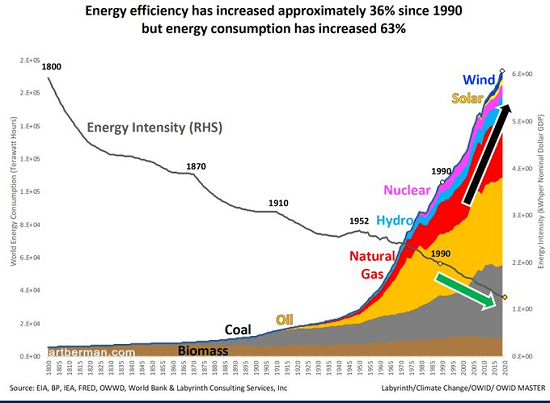
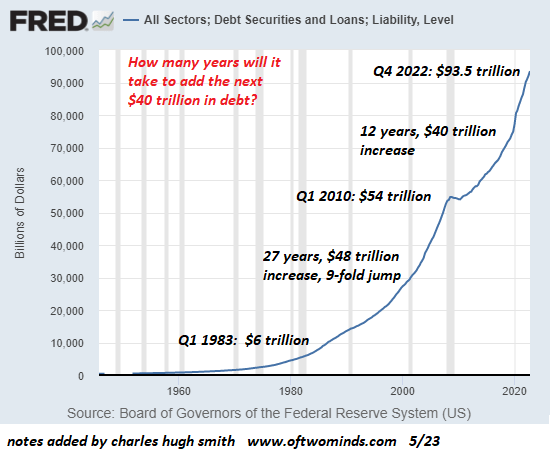
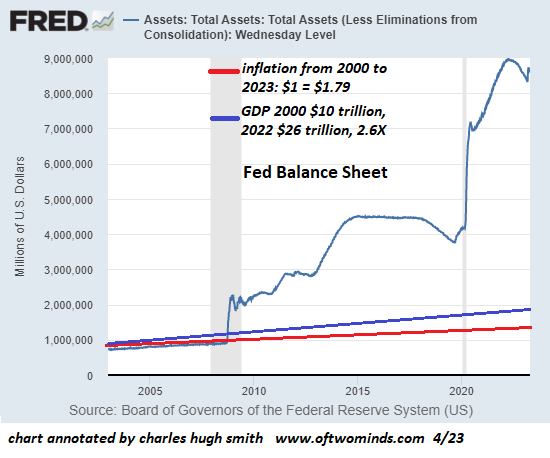
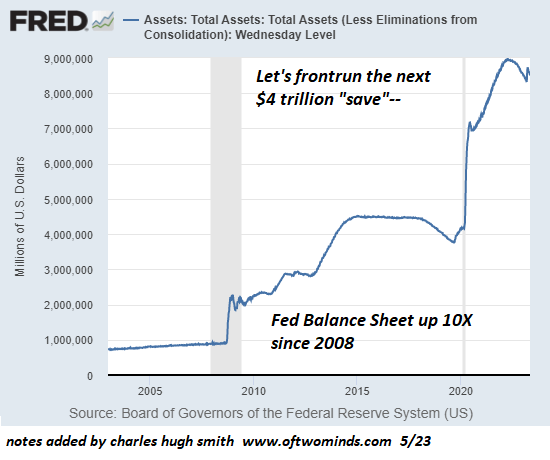
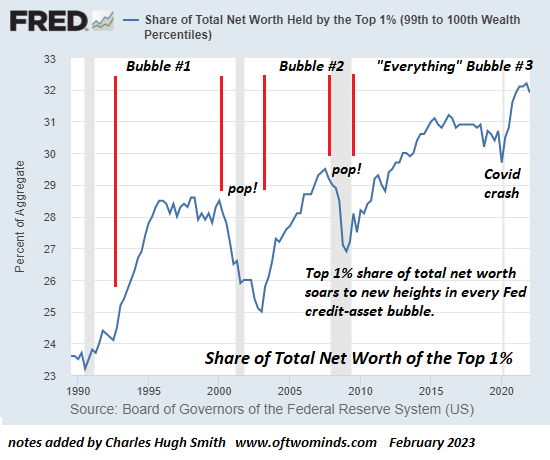
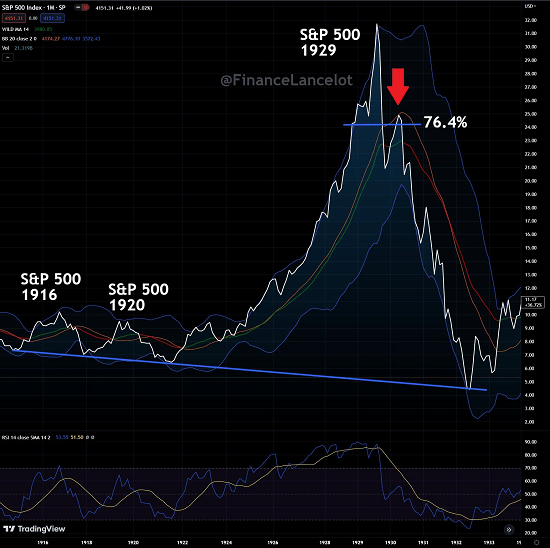

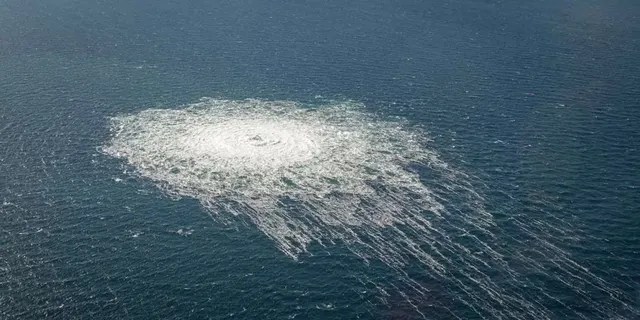
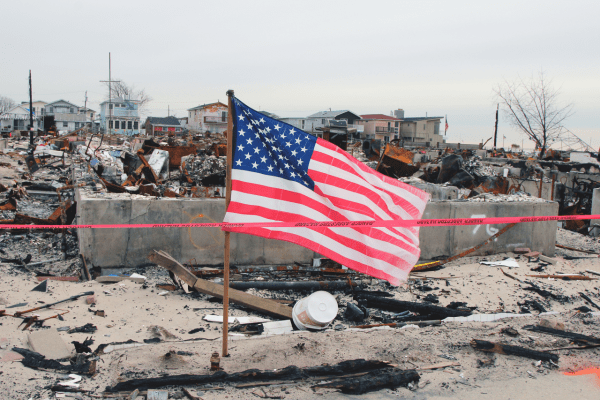
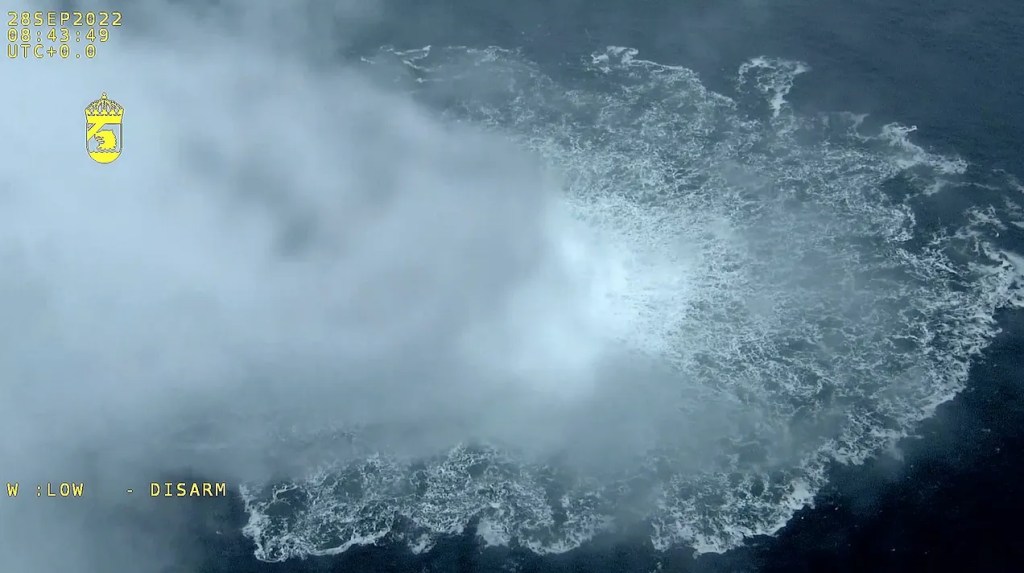
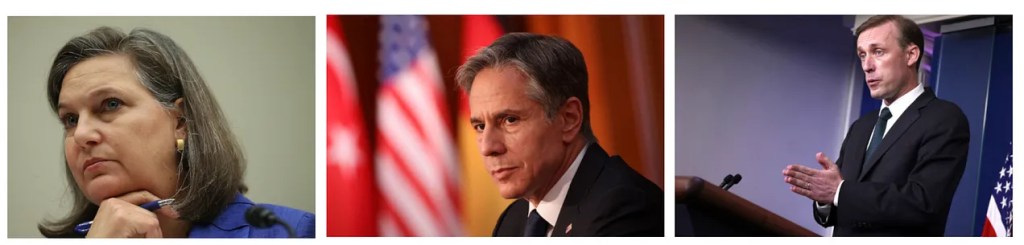
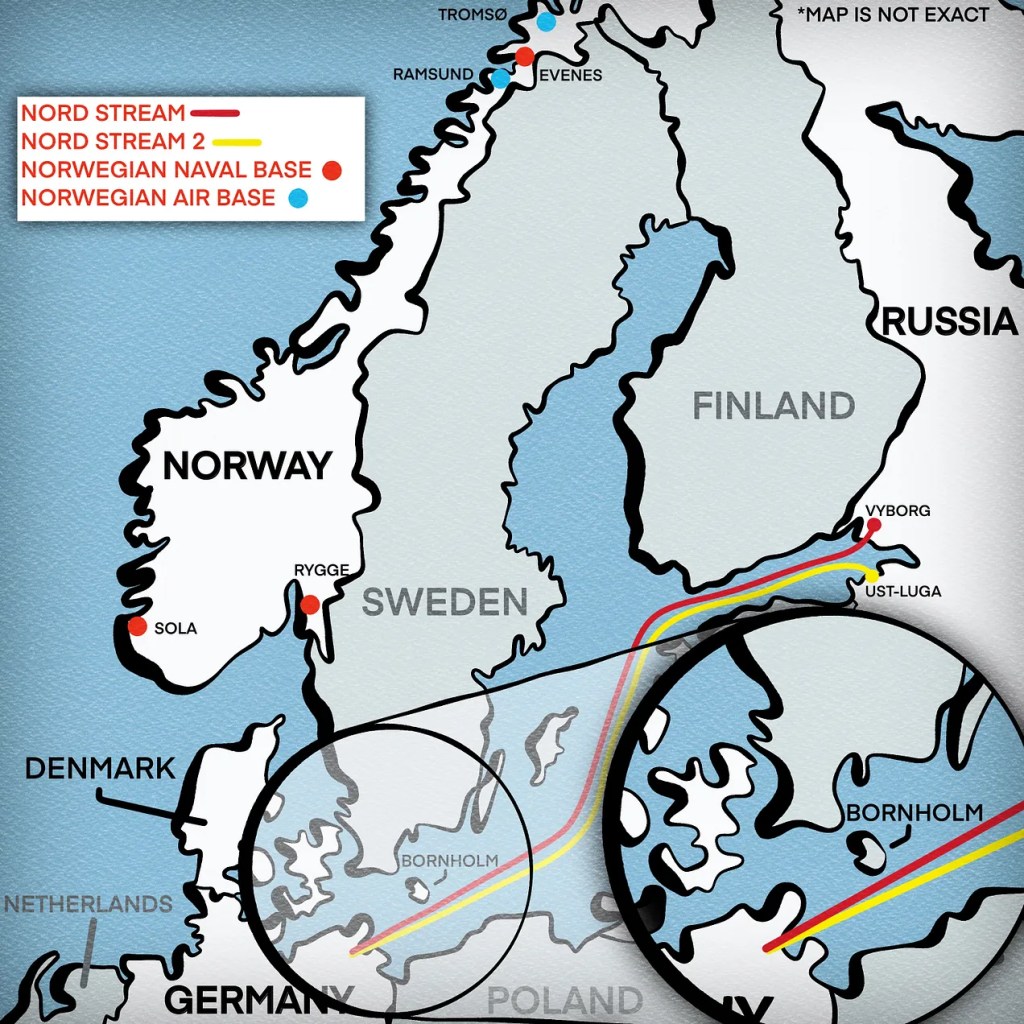
 After the Crash