The Real American Exceptionalism

6834773008_e885e32526_b-700x394

From Torture to Drone Assassination, How Washington Gave Itself a Global Get-Out-of-Jail-Free Card

By Alfred W. McCoy

Source: TomDispatch.com

“The sovereign is he who decides on the exception,” said conservative thinker Carl Schmitt in 1922, meaning that a nation’s leader can defy the law to serve the greater good. Though Schmitt’s service as Nazi Germany’s chief jurist and his unwavering support for Hitler from the night of the long knives to Kristallnacht and beyond damaged his reputation for decades, today his ideas have achieved unimagined influence. They have, in fact, shaped the neo-conservative view of presidential power that has become broadly bipartisan since 9/11. Indeed, Schmitt has influenced American politics directly through his intellectual protégé Leo Strauss who, as an émigré professor at the University of Chicago, trained Bush administration architects of the Iraq war Paul Wolfowitz and Abram Shulsky.

All that should be impressive enough for a discredited, long dead authoritarian thinker. But Schmitt’s dictum also became a philosophical foundation for the exercise of American global power in the quarter century that followed the end of the Cold War. Washington, more than any other power, created the modern international community of laws and treaties, yet it now reserves the right to defy those same laws with impunity. A sovereign ruler should, said Schmitt, discard laws in times of national emergency. So the United States, as the planet’s last superpower or, in Schmitt’s terms, its global sovereign, has in these years repeatedly ignored international law, following instead its own unwritten rules of the road for the exercise of world power.

Just as Schmitt’s sovereign preferred to rule in a state of endless exception without a constitution for his Reich, so Washington is now well into the second decade of an endless War on Terror that seems the sum of its exceptions to international law: endless incarceration, extrajudicial killing, pervasive surveillance, drone strikes in defiance of national boundaries, torture on demand, and immunity for all of the above on the grounds of state secrecy. Yet these many American exceptions are just surface manifestations of the ever-expanding clandestine dimension of the American state. Created at the cost of more than a trillion dollars since 9/11, the purpose of this vast apparatus is to control a covert domain that is fast becoming the main arena for geopolitical contestation in the twenty-first century.

This should be (but seldom is considered) a jarring, disconcerting path for a country that, more than any other, nurtured the idea of, and wrote the rules for, an international community of nations governed by the rule of law. At the First Hague Peace Conference in 1899, the U.S. delegate, Andrew Dickson White, the founder of Cornell University, pushed for the creation of a Permanent Court of Arbitration and persuaded Andrew Carnegie to build the monumental Peace Palace at The Hague as its home. At the Second Hague Conference in 1907, Secretary of State Elihu Root urged that future international conflicts be resolved by a court of professional jurists, an idea realized when the Permanent Court of International Justice was established in 1920.

After World War II, the U.S. used its triumph to help create the United Nations, push for the adoption of its Universal Declaration of Human Rights, and ratify the Geneva Conventions for humanitarian treatment in war. If you throw in other American-backed initiatives like the World Health Organization, the World Trade Organization, and the World Bank, you pretty much have the entire infrastructure of what we now casually call “the international community.”

Breaking the Rules

Not only did the U.S. play a crucial role in writing the new rules for that community, but it almost immediately began breaking them. After all, despite the rise of the other superpower, the Soviet Union, Washington was by then the world sovereign and so could decide which should be the exceptions to its own rules, particularly to the foundational principle for all this global governance: sovereignty. As it struggled to dominate the hundred new nations that started appearing right after the war, each one invested with an inviolable sovereignty, Washington needed a new means of projecting power beyond conventional diplomacy or military force. As a result, CIA covert operations became its way of intervening within a new world order where you couldn’t or at least shouldn’t intervene openly.

All of the exceptions that really matter spring from America’s decision to join what former spy John Le Carré called that “squalid procession of vain fools, traitors… sadists, and drunkards,” and embrace espionage in a big way after World War II. Until the creation of the CIA in 1947, the United States had been an innocent abroad in the world of intelligence. When General John J. Pershing led two million American troops to Europe during World War I, the U.S. had the only army on either side of the battle lines without an intelligence service. Even though Washington built a substantial security apparatus during that war, it was quickly scaled back by Republican conservatives during the 1920s. For decades, the impulse to cut or constrain such secret agencies remained robustly bipartisan, as when President Harry Truman abolished the CIA’s predecessor, the Office of Strategic Services (OSS), right after World War II or when President Jimmy Carter fired 800 CIA covert operatives after the Vietnam War.

Yet by fits and starts, the covert domain inside the U.S. government has grown stealthily from the early twentieth century to this moment. It began with the formation of the FBI in 1908 and Military Intelligence in 1917. The Central Intelligence Agency followed after World War II along with most of the alphabet agencies that make up the present U.S. Intelligence Community, including the National Security Agency (NSA), the Defense Intelligence Agency (DIA), and last but hardly least, in 2004, the Office of the Director of National Intelligence. Make no mistake: there is a clear correlation between state secrecy and the rule of law — as one grows, the other surely shrinks.

World Sovereign

America’s irrevocable entry into this covert netherworld came when President Truman deployed his new CIA to contain Soviet subversion in Europe. This was a continent then thick with spies of every stripe: failed fascists, aspirant communists, and everything in between. Introduced to spycraft by its British “cousins,” the CIA soon mastered it in part by establishing sub rosa ties to networks of ex-Nazi spies, Italian fascist operatives, and dozens of continental secret services.

As the world’s new sovereign, Washington used the CIA to enforce its chosen exceptions to the international rule of law, particularly to the core principle of sovereignty. During his two terms, President Dwight Eisenhower authorized 104 covert operations on four continents, focused largely on controlling the many new nations then emerging from centuries of colonialism. Eisenhower’s exceptions included blatant transgressions of national sovereignty such as turning northern Burma into an unwilling springboard for abortive invasions of China, arming regional revolts to partition Indonesia, and overthrowing elected governments in Guatemala and Iran. By the time Eisenhower left office in 1961, covert ops had acquired such a powerful mystique in Washington that President John F. Kennedy would authorize 163 of them in the three years that preceded his assassination.

As a senior CIA official posted to the Near East in the early 1950s put it, the Agency then saw every Muslim leader who was not pro-American as “a target legally authorized by statute for CIA political action.” Applied on a global scale and not just to Muslims, this policy helped produce a distinct “reverse wave” in the global trend towards democracy from 1958 to 1975, as coups — most of them U.S.-sanctioned — allowed military men to seize power in more than three-dozen nations, representing a quarter of the world’s sovereign states.

The White House’s “exceptions” also produced a deeply contradictory U.S. attitude toward torture from the early years of the Cold War onward. Publicly, Washington’s opposition to torture was manifest in its advocacy of the U.N. Universal Declaration of Human Rights in 1948 and the Geneva Conventions in 1949. Simultaneously and secretly, however, the CIA began developing ingenious new torture techniques in contravention of those same international conventions. After a decade of mind-control research, the CIA actually codified its new method of psychological torture in a secret instructional handbook, the “KUBARK Counterintelligence Interrogation” manual, which it then disseminated within the U.S. Intelligence Community and to allied security services worldwide.

Much of the torture that became synonymous with the era of authoritarian rule in Asia and Latin America during the 1960s and 1970s seems to have originated in U.S. training programs that provided sophisticated techniques, up-to-date equipment, and moral legitimacy for the practice. From 1962 to 1974, the CIA worked through the Office of Public Safety (OPS), a division of the U.S. Agency for International Development that sent American police advisers to developing nations. Established by President Kennedy in 1962, in just six years OPS grew into a global anti-communist operation with over 400 U.S. police advisers.  By 1971, it had trained more than a million policemen in 47 nations, including 85,000 in South Vietnam and 100,000 in Brazil.

Concealed within this larger OPS effort, CIA interrogation training became synonymous with serious human rights abuses, particularly in Iran, the Philippines, South Vietnam, Brazil, and Uruguay. Amnesty International documented widespread torture, usually by local police, in 24 of the 49 nations that had hosted OPS police-training teams. In tracking torturers across the globe, Amnesty seemed to be following the trail of CIA training programs. Significantly, torture began to recede when America again turned resolutely against the practice at the end of the Cold War.

The War on Terror 

Although the CIA’s authority for assassination, covert intervention, surveillance, and torture was curtailed at the close of the Cold War, the terror attacks of September 2001 sparked an unprecedented expansion in the scale of the intelligence community and a corresponding resurgence in executive exceptions.  The War on Terror’s voracious appetite for information produced, in its first decade, what the Washington Post branded a veritable “fourth branch” of the U.S. federal government with 854,000 vetted security officials, 263 security organizations, over 3,000 private and public intelligence agencies, and 33 new security complexes — all pumping out a total of 50,000 classified intelligence reports annually by 2010.

By that time, one of the newest members of the Intelligence Community, the National Geospatial-Intelligence Agency, already had 16,000 employees, a $5 billion budget, and a massive nearly $2 billion headquarters at Fort Belvoir, Virginia — all aimed at coordinating the flood of surveillance data pouring in from drones, U-2 spy planes, Google Earth, and orbiting satellites.

According to documents whistleblower Edward Snowden leaked to the Washington Post, the U.S. spent $500 billion on its intelligence agencies in the dozen years after the 9/11 attacks, including annual appropriations in 2012 of $11 billion for the National Security Agency (NSA) and $15 billion for the CIA. If we add the $790 billion expended on the Department of Homeland Security to that $500 billion for overseas intelligence, then Washington had spent nearly $1.3 trillion to build a secret state-within-the-state of absolutely unprecedented size and power.

As this secret state swelled, the world’s sovereign decided that some extraordinary exceptions to civil liberties at home and sovereignty abroad were in order. The most glaring came with the CIA’s now-notorious renewed use of torture on suspected terrorists and its setting up of its own global network of private prisons, or “black sites,” beyond the reach of any court or legal authority. Along with piracy and slavery, the abolition of torture had long been a signature issue when it came to the international rule of law. So strong was this principle that the U.N. General Assembly voted unanimously in 1984 to adopt the Convention Against Torture. When it came to ratifying it, however, Washington dithered on the subject until the end of the Cold War when it finally resumed its advocacy of international justice, participating in the World Conference on Human Rights at Vienna in 1993 and, a year later, ratifying the U.N. Convention Against Torture.

Even then, the sovereign decided to reserve some exceptions for his country alone. Only a year after President Bill Clinton signed the U.N. Convention, CIA agents started snatching terror suspects in the Balkans, some of them Egyptian nationals, and sending them to Cairo, where a torture-friendly autocracy could do whatever it wanted to them in its prisons. Former CIA director George Tenet later testified that, in the years before 9/11, the CIA shipped some 70 individuals to foreign countries without formal extradition — a process dubbed “extraordinary rendition” that had been explicitly banned under Article 3 of the U.N. Convention.

Right after his public address to a shaken nation on September 11, 2001, President George W. Bush gave his staff wide-ranging secret orders to use torture, adding (in a vernacular version of Schmitt’s dictum),“I don’t care what the international lawyers say, we are going to kick some ass.” In this spirit, the White House authorized the CIA to develop that global matrix of secret prisons, as well as an armada of planes for spiriting kidnapped terror suspects to them, and a network of allies who could help seize those suspects from sovereign states and levitate them into a supranational gulag of eight agency black sites from Thailand to Poland or into the crown jewel of the system, Guantánamo, thus eluding laws and treaties that remained grounded in territorially based concepts of sovereignty.

Once the CIA closed the black sites in 2008-2009, its collaborators in this global gulag began to feel the force of law for their crimes against humanity. Under pressure from the Council of Europe, Poland started an ongoing criminal investigation in 2008 into its security officers who had facilitated the CIA’s secret prison in the country’s northeast. In September 2012, Italy’s supreme court confirmed the convictions of 22 CIA agents for the illegal rendition of Egyptian exile Abu Omar from Milan to Cairo, and ordered a trial for Italy’s military intelligence chief on charges that sentenced him to 10 years in prison. In 2012, Scotland Yard opened a criminal investigation into MI6 agents who rendered Libyan dissidents to Colonel Gaddafi’s prisons for torture, and two years later the Court of Appeal allowed some of those Libyans to file a civil suit against MI6 for kidnapping and torture.

But not the CIA. Even after the Senate’s 2014 Torture Report documented the Agency’s abusive tortures in painstaking detail, there was no move for either criminal or civil sanctions against those who had ordered torture or those who had carried it out. In a strong editorial on December 21, 2014, the New York Times asked “whether the nation will stand by and allow the perpetrators of torture to have perpetual immunity.” The answer, of course, was yes. Immunity for hirelings is one of the sovereign’s most important exceptions.

As President Bush finished his second term in 2008, an inquiry by the International Commission of Jurists found that the CIA’s mobilization of allied security agencies worldwide had done serious damage to the international rule of law. “The executive… should under no circumstance invoke a situation of crisis to deprive victims of human rights violations… of their… access to justice,” the Commission recommended after documenting the degradation of civil liberties in some 40 countries. “State secrecy and similar restrictions must not impede the right to an effective remedy for human rights violations.”

The Bush years also brought Washington’s most blatant repudiation of the rule of law. Once the newly established International Criminal Court (ICC) convened at The Hague in 2002, the Bush White House “un-signed” or “de-signed” the U.N. agreement creating the court and then mounted a sustained diplomatic effort to immunize U.S. military operations from its writ. This was an extraordinary abdication for the nation that had breathed the concept of an international tribunal into being.

The Sovereign’s Unbounded Domains

While Presidents Eisenhower and Bush decided on exceptions that violated national boundaries and international treaties, President Obama is exercising his exceptional prerogatives in the unbounded domains of aerospace and cyberspace.

Both are new, unregulated realms of military conflict beyond the rubric of international law and Washington believes it can use them as Archimedean levers for global dominion. Just as Britain once ruled from the seas and postwar America exercised its global reach via airpower, so Washington now sees aerospace and cyberspace as special realms for domination in the twenty-first century.

Under Obama, drones have grown from a tactical Band-Aid in Afghanistan into a strategic weapon for the exercise of global power. From 2009 to 2015, the CIA and the U.S. Air Force deployed a drone armada of over 200 Predators and Reapers, launching 413 strikes in Pakistan alone, killing as many as 3,800 people. Every Tuesday inside the White House Situation Room, as the New York Times reported in 2012, President Obama reviews a CIA drone “kill list” and stares at the faces of those who are targeted for possible assassination from the air.  He then decides, without any legal procedure, who will live and who will die, even in the case of American citizens. Unlike other world leaders, this sovereign applies the ultimate exception across the Greater Middle East, parts of Africa, and elsewhere if he chooses.

This lethal success is the cutting edge of a top-secret Pentagon project that will, by 2020, deploy a triple-canopy space “shield” from stratosphere to exosphere, patrolled by Global Hawk and X-37B drones armed with agile missiles.

As Washington seeks to police a restless globe from sky and space, the world might well ask: How high is any nation’s sovereignty? After the successive failures of the Paris flight conference of 1910, the Hague Rules of Aerial Warfare of 1923, and Geneva’s Protocol I of 1977 to establish the extent of sovereign airspace or restrain aerial warfare, some puckish Pentagon lawyer might reply: only as high as you can enforce it.

President Obama has also adopted the NSA’s vast surveillance system as a permanent weapon for the exercise of global power. At the broadest level, such surveillance complements Obama’s overall defense strategy, announced in 2012, of cutting conventional forces while preserving U.S. global power through a capacity for “a combined arms campaign across all domains: land, air, maritime, space, and cyberspace.” In addition, it should be no surprise that, having pioneered the war-making possibilities of cyberspace, the president did not hesitate to launch the first cyberwar in history against Iran.

By the end of Obama’s first term, the NSA could sweep up billions of messages worldwide through its agile surveillance architecture. This included hundreds of access points for penetration of the Worldwide Web’s fiber optic cables; ancillary intercepts through special protocols and “backdoor” software flaws; supercomputers to crack the encryption of this digital torrent; and a massive data farm in Bluffdale, Utah, built at a cost of $2 billion to store yottabytes of purloined data.

Even after angry Silicon Valley executives protested that the NSA’s “backdoor” software surveillance threatened their multi-trillion-dollar industry, Obama called the combination of Internet information and supercomputers “a powerful tool.” He insisted that, as “the world’s only superpower,” the United States “cannot unilaterally disarm our intelligence agencies.” In other words, the sovereign cannot sanction any exceptions to his panoply of exceptions.

Revelations from Edward Snowden’s cache of leaked documents in late 2013 indicate that the NSA has conducted surveillance of leaders in some 122 nations worldwide, 35 of them closely, including Brazil’s president Dilma Rousseff, former Mexican president Felipe Calderón, and German Chancellor Angela Merkel. After her forceful protest, Obama agreed to exempt Merkel’s phone from future NSA surveillance, but reserved the right, as he put it, to continue to “gather information about the intentions of governments… around the world.” The sovereign declined to say which world leaders might be exempted from his omniscient gaze.

Can there be any question that, in the decades to come, Washington will continue to violate national sovereignty through old-style covert as well as open interventions, even as it insists on rejecting any international conventions that restrain its use of aerospace or cyberspace for unchecked force projection, anywhere, anytime? Extant laws or conventions that in any way check this power will be violated when the sovereign so decides. These are now the unwritten rules of the road for our planet.  They represent the real American exceptionalism.

Alfred W. McCoy is professor of history at the University of Wisconsin-Madison. A TomDispatch regular, he is the author of Torture & Impunity: The U.S. Doctrine of Coercive Interrogation, among other works.
The Real Story Behind the Republicans’ Iran Letter

images

By Gareth Porter

Source: Middle East Eye

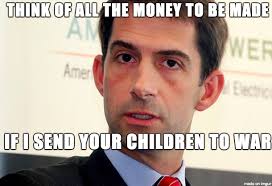
The “open letter” from Senator Tom Cotton and 46 other Republican Senators to the leadership of Iran, which even Republicans themselves admit was aimed at encouraging Iranian opponents of the nuclear negotiations to argue that the United States cannot be counted on to keep the bargain, has created a new political firestorm. It has been harshly denounced by Democratic loyalists as “stunning” and “appalling”, and critics have accused the signers of the letter of being “treasonous” for allegedly violating a law forbidding citizens from negotiating with a foreign power.

But the response to the letter has primarily distracted public attention from the real issue it raises: how the big funders of the Likud Party in Israel control Congressional actions on Iran.

The infamous letter is a ham-handed effort by Republican supporters of the Netanyahu government to blow up the nuclear negotiations between the United States and Iran. The idea was to encourage Iranians to conclude that the United States would not actually carry out its obligations under the agreement – i.e. the lifting of sanctions against Iran. Cotton and his colleagues were inviting inevitable comparison with the 1968 conspiracy by Richard Nixon, through rightwing campaign official Anna Chenault, to encourage the Vietnamese government of President Nguyen Van Thieu to boycott peace talks in Paris.

But while Nixon was plotting secretly to get Thieu to hold out for better terms under a Nixon administration, the 47 Republican Senators were making their effort to sabotage the Iran nuclear talks in full public scrutiny. And the interest served by the letter was not that of a possible future president but of the Israeli government.

The Cotton letter makes arguments that are patently false. The letter suggested that any agreement that lacked approval of Congress “is a mere executive agreement”, as though such agreements are somehow of only marginal importance in US diplomatic history. In fact, the agreements on withdrawal of US forces from both the wars in Vietnam and in Iraq were not treaties but executive agreements.

Equally fatuous is the letter’s assertion that “future Congresses could modify the terms of the agreement at any time”. Congress can nullify the agreement by passing legislation that contradicts it but can’t renegotiate it. And the claim that the next president could “revoke the agreement with the stroke of a pen”, ignores the fact that the Iran nuclear agreement, if signed, will become binding international law through a United Nations Security Council resolution, as Iranian Foreign Minister Mohammad Javad Zarif has pointed out.

The letter has provoked the charge of “treason” against the signers and a demand for charges against them for negotiating with a foreign government in violation of the Logan Act. In a little over 24 hours, more than 200,000 people had signed a petition on the White House website calling such charges to be filed.

But although that route may seem satisfying at first thought, it is problematic for both legal and political reasons. The Logan Act was passed in 1799, and has never been used successfully to convict anyone, mainly because it was written more than a century before US courts created legal standards for the protection of first amendment speech rights. And it is unclear whether the Logan Act was even meant to apply to members of Congress anyway.

AIPAC marching orders

The more serious problem with focusing on the Logan Act, however, is that what Cotton and his Republican colleagues were doing was not negotiating with a foreign government but trying to influence the outcome of negotiations in the interest of a foreign government. The premise of the Senate Republican reflected in the letter – that Iran must not be allowed to have any enrichment capacity whatever – did not appear spontaneously. The views that Cotton and the other Republicans have espoused on Iran were the product of assiduous lobbying by Israeli agents of influence using the inducement of promises of election funding and the threat of support for the members’ opponents in future elections.

Those members of Congress don’t arrive at their positions on issues related to Iran through discussion and debate among themselves. They are given their marching orders by AIPAC lobbyists, and time after time, they sign the letters and vote for legislation or resolution that they are given, as former AIPAC lobbyist MJ Rosenberg has recalled. This Israeli exercise of control over Congress on Iran and issues of concern to Israel resembles the Soviet direction of its satellite regimes and loyal Communist parties more than any democratic process, but with campaign contributions replacing the inducements that kept its bloc allies in line.

Cotton’s loyalty to Israel

Rosenberg has reasoned that AIPAC must have drafted the letter and handed it to Senator Cotton. “Nothing happens on Capitol Hill related to Israel,” he tweets, “unless and until Howard Kohr (AIPAC chief) wants it to happen. Nothing.” AIPAC apparently supported the letter, but there may be more to the story. Senator Cotton just happens to be a protégé of neoconservative political kingpin Bill Kristol, whose Emergency Committee on Israel gave him nearly a million dollars late in his 2014 Senate campaign and guaranteed that Cotton would have the support of the four biggest funders of major anti-Iran organisations.

Cotton proved his absolute fealty to Likudist policy on Iran by sponsoring an amendment to the Nuclear Iran Prevention Act of 2013 that would have punished violators of the sanctions against Iran with prison sentences of up to 20 years and extended the punishment to “a spouse and any relative, to the third degree” of the sanctions violator. In presenting the amendment in the House Foreign Affairs Committee, Cotton provided the useful clarification that it would have included “parents, children, aunts, uncles, nephews, nieces, grandparents, great grandparents, grandkids, great grandkids”.

That amendment, which he apparently believed would best reflect his adoption of the Israeli view of how to cut Iran down to size, was unsuccessful, but it established his reliability in the eyes of the Republican Likudist kingmakers. Now Kristol is grooming him to be the vice-presidential nominee in 2016.

So the real story behind the letter from Cotton and his Republican colleagues is how the enforcers of Likudist policy on Iran used an ambitious young Republican politician to try to provoke a breakdown in the Iran nuclear negotiations. The issue it raises is a far more serious issue than the Logan Act, but thus far major news organisations have steered clear of that story.

– Gareth Porter is an independent investigative journalist and winner of the 2012 Gellhorn Prize for journalism. He is the author of the newly published Manufactured Crisis: The Untold Story of the Iran Nuclear Scare.


The Lies End Now: “Most Transparent Administration Ever” Is No More: White House To Delete Its FOIA Regulations

corporate_obama32

By Tyler Durden

Source: Zero Hedge

Back on October 28, 2009, then White House press secretary Robert Gibbs said the following:

… understanding what this President has done is institute the very toughest ethics and transparency rules of any administration in history…  I think the President has returned to a stance of transparency and ethics that hasn’t been matched by any other White House.

… the President believes strongly in transparency… that transparency in that way in the best policy

… understand that what the President campaigned on – toughening our ethics rules, making more transparent our transparency policy – was something that he was passionate about and is proud of the progress that we’ve made in ensuring that.

And here is the president himself: “We have put in place the toughest ethics and transparency laws of any administration in history.”

Lies, lies, and nothing but lies. The lies end now.

As reported moments ago, the White House is voiding a federal regulation that subjects its Office of Administration to the Freedom of Information Act, or FOIA  (incidentally the same act that discovered none of Hillary Clinton’s “personal” government-business emails since they were not even stored on government property!) which as USA Today explains, makes “official a policy under Presidents Bush and Obama to reject requests for records to that office.”

And just like that the lie of Obama’s transparency is over, and it couldn’t come at a worse time for the democratic party, just as its top contender for the 2016 presidential race is struggling to emerge from a cover-up scandal which reeks of intentional hiding of classified documentation from the public (or worse). Going forward it will no longer be Hillary Clinton who will be mocked and ridiculed for her total impunity when it comes to public accountability and transparency, but the “most untransparent” president as well.

The White House said the cleanup of FOIA regulations is consistent with court rulings that hold that the office is not subject to the transparency law. The office handles, among other things, White House record-keeping duties like the archiving of e-mails.

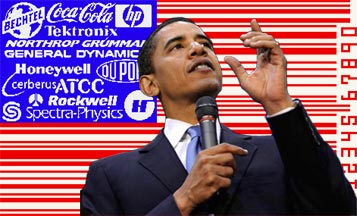
Actually, Obama really couldn’t have picked worse timing because not only does it come hot on the heels of clintonemail.com, but the announcement also is taking place on National Freedom of Information Day and during a national debate over the preservation of Obama administration records. It’s also Sunshine Week, an effort by news organizations and watchdog groups to highlight issues of government transparency. Almost as if the president of the US is openly mocking the public, making it clear he is accountable to no one (except of course for a few mega corporations: see: The Best “Democracy” Money Can Buy: For Every Dollar Spent Influencing US Politics, Corporations Get $760 Back)

“The irony of this being Sunshine Week is not lost on me,” said Anne Weismann of the liberal Citizens for Responsibility and Ethics in Washington, or CREW.

“It is completely out of step with the president’s supposed commitment to transparency,” she said. “That is a critical office, especially if you want to know, for example, how the White House is dealing with e-mail.”

But who wants to know that? Can’t the peasants just pay attention to the rigged all time high in the Apple Sachs Non-industrial Average and just leave the troubled leader of the free world alone?

The irony here is that with this act, Obama is now becoming even less transparent than the loathed by the left Bush dynasty:

Unlike other offices within the White House, which were always exempt from the Freedom of Information Act, the Office of Administration responded to FOIA requests for 30 years. Until the Obama administration, watchdog groups on the left and the right used records from the office to shed light on how the White House works.


“This is an office that operated under the FOIA for 30 years, and when it became politically inconvenient, they decided they weren’t subject to the Freedom of Information Act any more,” said Tom Fitton of the conservative Judicial Watch.


That happened late in the Bush administration, when CREW sued over e-mails deleted by the White House — as many as 22 million of them, by one accounting. The White House at first began to comply with that request, but then reversed course.


“The government made an argument in an effort to throw everything and the kitchen sink into the lawsuit in order to stop the archiving of White House e-mails,” said Tom Blanton, the director of the National Security Archive at George Washington University, which has used similar requests to shed light on foreign policy decisions.

As USA Today further explains, the rule change means that there will no longer be a formal process for the public to request that the White House voluntarily disclose records as part of what’s known as a “discretionary disclosure.” Records released by the Office of Administration voluntarily include White House visitor logs and the recipe for beer brewed at the White House.

“You have a president who comes in and says, I’m committed to transparency and agencies should make discretionary disclosures whenever possible, but he’s not applying that to his own White House,” Weismann said.

Why wait until now? The White House did not explain why it waited nearly six years to formally acknowledge the court ruling in its regulations.

Because accountability, that’s why. No really: “In the notice to be published Tuesday, the White House said it was not allowing a 30-day public comment period, and so the rule will be final.

Well, at least Obama has a sense of humor as he brings the country ever closer to the police state so well forecast by George Orwell: “It’s a little tone deaf to do this on Sunshine Week, even if it’s an administrative housecleaning,” said Rick Blum, coordinator of the Sunshine in Government initiative for the Reporters Committee for Freedom of the Press.”

And the punchline: the notice that will be published in Tuesday’s Federal Register, and in which the White House says it’s removing regulations on how the Office of Administration complies with Freedom of Information Act Requests based on “well-settled legal interpretations” is hosted on a cloud server run… by Amazon.

Colluders in Crude: The Oily Politics of How the Obama Administration Sided with BP Over the American People

gulf-oil-spill17

By Stuart H. Smith

Source: WhoWhatWhy

The explosion and sinking of the Deepwater Horizon oil rig on April 21, 2010,  was the largest accidental marine oil spill in the history of the petroleum industry. The resulting devastation to human health and the environment continues to this day. A new Florida State University study, published on Jan. 20 in the journal Environmental Science & Technology, reports that up to 10 million gallons of crude oil “missing” from the spill settled at the bottom of the Gulf of Mexico, imperiling wildlife and marine ecosystems.

Stuart H. Smith, an environmental plaintiff attorney who served as lead counsel on more than 100 oil pollution cases and has won major litigation against oil giants Chevron and ExxonMobil, came to represent thousands of claimants against BP. He saw from the inside how BP and the American government really responded to the crisis. This article is adapted from his book, Crude Justice: How I Fought Big Oil and Won, and What You Should Know about the New Environmental Attack on America (BenBella Books, 2015). 

I am a first-hand witness to the Obama administration’s complicity in putting the interests of a foreign company above and beyond the health and safety of American workers.

The tragedy began on April 21, 2010, with the explosion and fire on British Petroleum’s Deepwater Horizon oil rig in the Gulf of Mexico off the Louisiana coast. It killed 11 workers and caused a leak that would ultimately spew nearly five million barrels of oil into the Gulf.

Denying Workers Protective Gear

BP hired workers to clean up the spill, but no one was publicly addressing what the prolonged exposure to oil—which is laden with carcinogens such as benzene—might do to them. There was little talk about the threat of volatile organic compounds (VOCs) in the air along the Gulf Coast, even for workers traveling to the edge of the spill in boats and removing oil from the beaches. Cleanup crews were attaching oil-catching booms to their shrimp boats and driving their boats directly through the oil slicks to corral and collect the oil spilling from BP’s broken well—and largely tackling their jobs without serious protective gear, because BP had not supplied it.

“BP knew that providing protective equipment would be an admission that the oil exposure was dangerous and sought to avoid that at all costs,” says Marylee Orr, the founder and longtime executive director of the Louisiana Environmental Action Network (LEAN), a leading environmental group in the state.

It wasn’t long before the fishermen began reporting headaches, vomiting, nausea, dizziness, and chest pains.

In early June, two key Democratic members of Congress—Minnesota Representative James Oberstar, then-chairman of the House Transportation and Infrastructure Committee, and New York Representative Jerrold Nadler, a senior committee member—sent a letter to the EPA and the Department of Labor demanding that Gulf workers be provided with “proper protective equipment, including respirators.”

Incredibly, the Obama administration said “no.”

David Michaels, assistant secretary in the Labor Department, who oversaw the Occupational Safety and Health Administration, told the Wall Street Journal that their tests showed “minimal” risk from exposure to airborne toxins—despite the fact that EPA’s air monitors along the Gulf Coast were picking up substantial airborne VOC readings from the spill, and despite scores of alarming medical reports from cleanup workers.

Protecting BP Stockholders

Around the same time, President Barack Obama was on the phone to the British prime minister. David Cameron was in a tizzy because so many English pensioners had their retirement money tied up in BP stock.

“The president made clear that he had no interest in undermining BP’s value,” Cameron’s office announced after the phone call.

Indeed, on June 16, 2010—one month before the leaking well had been capped and the full extent of the damage could be investigated—the White House announced an unprecedented deal with BP in which the oil company would finance a relief fund of up to $20 billion.

This escrow fund was good politics—$20 billion sounded impressive to the average voter—but would prove to be music to the ears of BP’s board. Historically, such escrow funds had been effective means for companies to limit their liability. They were tools for persuading vulnerable people in desperate need to sign away their legal rights to recover full compensation for the damages they’d suffered.

Sure enough, just before Christmas 2010, Kenneth Feinberg, who’d been appointed to oversee the fund, made a blatant attempt to boost the number of cases the fund could say were “settled” by offering the spill’s victims one-time bonus payments of $5,000 for individuals and $25,000 for businesses, contingent upon his settlement terms.

In fact, the $20 billion fund had set a preliminary target for damage claims that would turn out to be tens of billions of dollars less than the actual damages. Moreover, the agreement allowed BP to secure the fund using future productions from its leases in the Gulf of Mexico as collateral, exempting all of BP’s holdings elsewhere.  This locked the federal government into a partnership with BP, forcing it to continue to allow its offshore drilling in the Gulf to pay back the claims.

Hiding the Oil, Spreading the Toxins

In the early days of the spill, BP began unleashing gallons of a toxic chemical called Corexit.  Corexit was able to get rid of the thick black oily plumes on the water’s surface that had been visible for miles across the Gulf and were becoming such a public relations disaster on the nightly TV news.

But Corexit wasn’t solving the oil problem, only the PR problem.  Corexit was merely hiding the oil and spreading toxins over a larger area. This created even greater risks for the cleanup workers—risks they had not been trained to deal with.

Weeks after the spill, LEAN’s Marylee Orr pressed for admission to the main command centers, to which her NGO was supposed to have access. Eventually she and other Gulf environmental activists got a private meeting with a top federal official—EPA administrator and Louisiana native Lisa Jackson. They argued that the feds needed to force BP to stop spraying Corexit in the Gulf and produced evidence that Corexit was merely masking the oil and dispersing toxins over a bigger area.

(Hugh Kaufman, longtime EPA employee and whistleblower, said government officials were well aware of the hazards of Corexit, telling an interviewer that “in the Exxon Valdez case, people who worked with dispersants, most of them are dead now.  The average death age is around 50.”)

At first it seemed like Jackson was listening to their plea. A short time later, in late May, the EPA and the Coast Guard issued a joint order to BP telling the company to “eliminate” surface spraying of Corexit—unless the firm got a waiver from the Coast Guard because of exceptional circumstances.

You can guess how that all played out. BP asked for and routinely got a waiver from the Coast Guard to spray Corexit—day after day, including nine days in a row immediately after Lisa Jackson’s “order,” and ultimately 74 times over 54 days. An estimated million gallons of the toxic dispersant were deployed in the Gulf after the government’s supposed command to eliminate much of its use.

Later, independent laboratory tests performed for me confirmed what the experts had feared about the Corexit spraying: dispersing the oil actually meant taking the toxic elements of the oil from the surface, where they were highly concentrated but weren’t harming marine life below, and spreading them deep into Gulf waters.  Our lab tests showed toxic pollution of water at levels 35 times higher than before the oil was dispersed.

Claiming “Gulf Seafood Is Safe”

Early on, the federal government’s public relations initiative was in full gear. On June 14—54 days into the crisis of the oil spill—President Obama came down to the Florida Panhandle and decreed that he was launching “a comprehensive, coordinated, and multiagency initiative” to make sure the catch from the Gulf waters was safe to eat.  “Now,” he said into the bank of cameras, “I had some of that seafood for lunch, and it was delicious….So let me be clear. Seafood from the Gulf today is safe to eat.  But we need to make sure that it stays that way.”

In essence, Obama was telling Americans to eat first and ask questions later.  But how could the president assure the public that seafood was safe to eat when, as he acknowledged, in-depth testing hadn’t yet even been carried out?”

At the Pentagon, a massive order for shrimp, crab cakes, and pre-packaged jambalaya was placed and sold at base commissaries around the world.  The executive chef at the White House bought and served more than 2,000 pounds of shrimp and other Gulf goodies at an array of holiday parties for Barack and Michelle Obama and their guests, commenting: “We at the White House are so happy to play our part in reminding Americans that Gulf seafood is not only safe but delicious.”

Around the Gulf, news accounts quoted fishermen who were reeling in red snapper with sores and lesions—some the size of a 50 cent piece—the likes of which they had never seen before.  Crab fishermen were reporting that their hauls had dropped by 70% and that the few crabs they did pull up suffered similar lesions and disease.  It made sense. Red snapper were bottom feeders—eating the shrimp and crabs that live on the sea floor—and independent scientists had already shown that oil from the leaking BP rig was coating the bottom of the Gulf.

Practicing Faulty and Deceptive Testing

In late 2010, the government stated that it had tested more than 10,000 seafood samples from the Gulf and found no evidence of problems. But the vast majority of those tests were what the National Oceanic and Atmospheric Administration called “sensory testing,” and what you and I might call a smell test. This test was hardly adequate for finding traces of hydrocarbons that are odorless, yet highly toxic.

Moreover, in conducting the smell tests, specimens that were clearly oiled in the spill or possibly diseased were tossed aside, skewing the lab results. When the seafood that would have produced the worst numbers was transferred to trash buckets, the polynuclear aromatic hydrocarbon numbers looked a lot better.

In addition, according to the government testing structure, the “safe” consumption level for a grown man is four shrimp a week.  Who the hell living on the Gulf of Mexico eats only four shrimp per week?

Conducting his own test analysis, Paul Orr, Marylee’s son and the unofficial river keeper for the lower Mississippi, gathered samples of shrimp, crab, and finfish from 20 different locations in the Gulf off the Louisiana and Mississippi coastlines. His results showed high levels of total petroleum hydrocarbons, including in seafood from areas that had been declared safe for fishing. Testing by other independent environmentalists showed high levels of cadmium, a long-lasting carcinogen.

Alleging “Swimming Is Safe”

The seafood shilling was just the beginning.

The government also issued reports that beaches were safe for swimming. President Obama dramatized this, allowing a photo of him swimming with his daughter—in an unimpacted bay, of course—along the Florida Panhandle coast.

The passage of time did not diminish the assault on the beaches.  Tropical Storm Lee washed tar balls and patches of asphalt-like gunk up and down the Gulf in 2011, as did Hurricane Isaac in the summer of 2012.  In 2013, more than three years after the BP catastrophe, a blob of oil from the Macondo field that was roughly half the size of a football field came ashore in Grand Terre Island off the coast of Louisiana.

Attempting to Bar Independent Testing

The U.S. government seemed to have two agendas—both of them bad.  One was siding with large commercial fishing operations in the Gulf, whose livelihood depended on public confidence in the safety of their catch, and not with the broader U.S. public of seafood consumers.  The other was to get the PR nightmare of BP out of the headlines.

Almost immediately after the spill, the FAA implemented a temporary flight restriction across the entire eastern Gulf of Mexico that continued for months.  They refused to let the media get anywhere close to the offshore slicks. The Coast Guard turned the entire zone over to private security goons hired by BP who would not let anyone near the spill to photograph and take samples. BP’s guards blocked many of the roads leading to oil-gunked beaches. Never before had America ceded its sovereign police power to a corporation, and a foreign one at that.

Key governmental agencies involved in the Gulf Coast recovery seemed to be working harder to prevent independent scientists from doing their own testing than they were in conducting their own rigorous studies.

As a Big Oil litigator, I knew that the fastest way to lose an environmental law case was to rely on industry or government data, which rarely painted the full picture. It was critical to perform your own testing using your own experts.  I’d never had an environmental case where the government was on the side of the victim.

***

To prove toxic exposure and resulting damages in the BP disaster, I hired Dr. William Sawyer, a top Florida-based research toxicologist with 30 years of experience, and Worcester Polytechnic civil engineer Marco Kaltofen, considered one of the top engineers in the field, who described himself as “specializing in when things go really bad.”

Marco and William decided that the best approach to overcoming the restricted access was simply to look and act like they belonged.  “We dressed the way the BP guys dressed,” Marco told me later.   “We had the story, we had the business cards and lab notebook and all the equipment.  And you just go out there and you mix it up.”

Soon the BP cleanup contractors were giving Marco and his coworker access to their refreshment tent.

“I got a Louisiana oysterman’s license,” Marco said. “I would get out to these sites and they would say, ‘I’m sorry—you can’t be collecting specimens out here.’  I’d say, ‘I got a Louisiana scientific collection permit,’ and I would get BP escorts when I produced this document.  It looked really official—it said I could collect oysters around this area….It had dates, stamps….”

From that, Marco collected a treasure trove of shellfish and marine life, as well as water, sand, and spilled oil.

Marco and William’s initial data showed alarming levels of toxic hydrocarbons, first in the Gulf water columns, and then in seafood. Even before they issued a formal report, they posted some of their raw data on the Internet.

That’s when they started receiving phone calls from staffers on the president’s commission investigating the oil spill.

“There was a grave concern as to why we were finding contamination,” William recalled, “and then the questions were geared toward whether we had sampling permits.”

Instead of expressing concern about the danger that might be posed to American consumers from eating oil-contaminated seafood, federal investigators were questioning whether Marco and William had permits to collect the samples.

It was only after a TV news crew investigated the calls and a New Orleans-area congressman called for a full-blown investigation that the Oil Spill Commission pulled a 180-degree turn.  One staffer even tried to explain that the calls to Marco and his associate had gone out because the commission had been impressed with their work.

Much later, our team learned about some of the intense pressure that was taking place behind the scenes.  At the same time that we were pressing for a more open investigation of environmental impact, in-fighting was ensuing between other independent scientists, who were finding equally troubling data, and government officials, who were finding ways to cover up the discoveries. The Reuters news agency learned that wildlife biologists who’d been hired by the National Marine Fisheries Service to document an “unusual marine event”—the dramatic rise in dolphin deaths—were told they couldn’t make their findings known because it was part of a law enforcement probe into the BP spill.

Denying Evidence

Mounting evidence revealed that oil-spill cleanup workers and other Gulf residents were suffering respiratory illnesses, skin rashes, and other more serious maladies.  But federal authorities insisted that the rise in such ailments was merely a coincidence. Donald Boesch, a member of Obama’s Oil Spill Commission, summed up their response: “We were charged with being evidence-driven, and the fact is, we’ve asked for and sought out evidence that the oil spill is the proximate cause of these health problems, and we just haven’t found it.”

But all Boesch had to do was walk into any of the doctors’ crowded waiting rooms and health clinics scattered across the Gulf region.

Dr. Michael Robichaux of Mathews, Louisiana, on the Gulf Coast, was among those examining the ailing cleanup workers and other coastal residents. At first the doctor was dubious that the ailments were linked to the workers’ and residents’ exposure to BP’s oil and Corexit. But after he began treating them, he converted and became an evangelist for their cause.  Of the 113 patients he treated who had been exposed to toxic pollution, he wrote that about 100 of them had severe chronic health effects, to the point that many were unable to work. “It appears that the interests of a large, foreign corporation have superseded the needs of thousands of Americans who reside along the coast of the Gulf of Mexico,” Dr. Robichaux told U.S. District Judge Carl Barbier.

Settlement Deals

In May 2012, BP announced that it had reached a settlement deal—estimated at the time to be worth $7.8 billion—with a circle of well-connected tort lawyers called the Plaintiffs Steering Committee on behalf of the Gulf Coast residents and small businesses.  Joining a handful of other lawyers, I appeared before Judge Barbier that September to object to the proposed deal.  How, we asked, could a proper price be fixed on the damage caused by BP when new oil kept coming ashore, as had happened when Hurricane Isaac hit the Gulf Coast just days before the courtroom arguments?  We also argued that the deal was woefully inadequate, both for those who had been made ill and for many coastal businesses.

We didn’t win that skirmish, but other penalties for the British oil giant are finally adding up. In early 2015, a federal judge was nearing a final ruling on civil penalties against BP under the federal Clean Water Act, which could reach some $13.7 billion.

To date, my firm has successfully handled claims against BP for about three quarters of our thousands of clients.  Hundreds of them remain, fighting for their fair share.

The extreme efforts of a Big Oil giant to avoid liability for its actions have been sadly familiar to me.  But the actions of the U.S. government to side with a huge multinational corporation against the health and safety of American workers are unconscionable.

Adapted from CRUDE JUSTICE:  How I Fought Big Oil and Won, And What You Should Know About the New Environmental Attack on America by Stuart H. Smith (BenBella Books, 2015). 

Podcast Roundup

3/11: Srini Rao has an interesting conversation with animal rights activist Peter Young covering community activism, communication, survival tips, and his former life as a fugitive on the “Unmistakable Creative” podcast.

https://sitebuilderio.s3.amazonaws.com/unmistakablecreative/audios/012b5fac-3695-42b3-9a2d-ffd7d4d7f213/lessons-in-communication-from-a-fugitive-peter-young.mp3

3/11: On the latest “Guns and Butter”, Bonnie Faulkner interviews John Whitehead of  the Rutherford Institute. They discuss aspects of  “Police State America” including the Corporate State, American Legislative Exchange Council (ALEC), Offices of Inspector General (OIG), SWAT Teams, No-Knock Raids, the Schoolhouse to Jailhouse Track, the New York Prototype, MRAPs, Operation Vigilant Eagle, Atlas Four Androids, TSA and VIPR Teams, the Google/NSA connection and Fusion Centers.

http://archives.kpfa.org/data/20150311-Wed1300.mp3

3/11: Host Dave Lindorff discusses the recent coup plan disrupted by police in Venezuela with veteran journalist Alfredo Lopez — a story largely blacked out or mocked as bogus by the US corporate media despite solid evidence of a plot, and of US involvement in that plot on “This Can’t Be Happening”. Lindorff and Lopez, who are colleagues on the news site thiscantbehappening.net, also talk about why President Obama on Tuesday declared Venezuela an “unusual and extraordinary national security threat” to the US, and what that declaration means to Venezuela and Latin America.

http://s36.podbean.com/pb/0c1337348a3a2a92b0bdb73308121756/5503328c/data1/blogs18/661545/uploads/ThisCantBeHappening_031115.mp3

3/12: On the first of their recent “Media Roots” podcasts, Robbie and Abby Martin discuss the ending of the RT program “Breaking the Set”, the establishment’s Cold War resurrection, and the splintering of the left over Obama’s military policies. The second program features an interview with Mark Weisbrot, co-director of the Center for Economic and Policy Research, on current U.S. government actions against Venezuela.

From White Sheets to Spreadsheets

DieboldKeys

By Greg Palast

Source: GregPalast.com

I hate to spoil a happy ending.

The movie “Selma,” like this week’s commemorations of Martin Luther King Jr.’s march from Selma, Ala., 50 years ago, celebrates America’s giant leap from apartheid.

Half a century ago Alabama state troopers and a mob of racist thugs beat African-Americans and others as they marched across the Edmund Pettus Bridge, demanding no more than the right to vote. By the time King led 25,000 demonstrators singing “We Shall Overcome” into Montgomery, the state capital, on March 24, the president of the United States had introduced the Voting Rights Act. Free at last—to vote. Roll credits.

Yet, just a few months ago, Martin Luther King asked me, “How long until African-American citizens of Alabama—and Mississippi and Georgia—get the unimpeded right to vote?”

Obviously I was not speaking with King Jr.—a bullet stole him from us in 1968. The question was posed by his son, Martin Luther King III. I spent an afternoon at his home in Atlanta, where we pored over the latest evidence that Americans of color were blocked at the doors to the polls in the 2014 midterm elections—by the hundreds of thousands.

As King’s 6-year-old daughter serenaded us with her toy drum set, we dived into a massive, secretive database used by elections officials—almost all of them Republicans—in 28 states. The scheme, called “Interstate Crosscheck,” threatens to disqualify the ballots of over a million voters, overwhelmingly citizens of color.

It took six months for my investigations team, in coordination with Al-Jazeera America, to get its hands on the names of those tagged for the voting rights slaughter.

According to the GOP officials, these citizens had voted twice in the same election, in two different states—a federal crime. As punishment, their mail-in ballots would be junked and their registrations annulled. But no reporters had seen (or, for that matter, asked for) the lists. State officials, the modern-day equivalents of Bull Connor, refused our requests on grounds that these Americans were all suspects in a criminal investigation and therefore the files were confidential.

Nevertheless, we managed to get hunks of the lists—2.1 million names of a total 3.5 million “suspected double voters.”

Who are these criminal voters? A typical example: Kevin Antonio Hayes of Durham, N.C., allegedly voted a second time in Virginia as Kevin Thomas Hayes. The Durham Hayes, however, swears to me that he has never used the alias Thomas or set foot in Virginia. Another: James Elmer Barnes Jr. of Georgia allegedly voted a second time as James Cross Barnes III of Arlington, VA.

The lists go on like that: huge numbers accused solely on the basis of sharing a first and last name with a voter in another state.

It is clear what attracts Republican Katherine Harris wannabes to this absurd method of identifying fraudulent voters. The prevalence of name-sharing among black Americans is a legacy of slavery. The “Crosscheck” name-match game is also a darn good way of knocking off Hispanic voters. (According to the national census, at least 91.5 percent of Americans named Aguirre are Hispanic and, according to Gallup, two out of three vote Democratic).

I was suspicious—if Kevin Hayes really voted twice, authorities should have arrested him. They should have arrested 589,393 “criminal double voters” in North Carolina alone. But they busted none. Nevertheless, the officials got what they wanted: For example, enough voters of color were blocked, purged and disqualified to help knock a Democrat out of the U.S. Senate this past November.

This situation deeply concerns Martin Luther King III, founder of the Realizing the Dream Foundation. Fifty years after Bloody Sunday and the Voting Rights Act, he said, “The irony is that when you look at Mississippi, Georgia, Alabama, North Carolina, South Carolina, where you have significant African-American populations—Mississippi close to 50 percent—those states still have leadership that is totally Republican.”

The black vote should have turned those states solid Democratic blue. What happened?

Meet the New Jim Crow. Fifty years ago, African-Americans were kept from the polls by the threat of beatings and lynchings. Today, Jim Crow has traded in his white sheets for spreadsheets. He’s Dr. James Crow, systems analyst. His method is lynching by laptop.

At the end of the film “Selma” we are told that the brutal, racist county sheriff was tossed out of office by newly enfranchised black voters. True. But today, Dr. James Crow has a magic machine that can reverse the Voting Rights Act.

Here’s one example uncovered by Robert F. Kennedy Jr.: On the night of Nov. 5, 2002, it appeared that Democrat Gov. Don Siegelman, the favorite of the African-American voters, had won re-election. But at 11 p.m., the white, Republican elections officials of Baldwin County declared they needed to recount the ballots. The county courthouse doors were locked. No press (or black Democrats) were allowed inside. By dawn, the white officials announced they had corrected a “glitch” in the count. Upon recounting, the tally for Siegelman dropped miraculously by 6,334 votes, handing the race to his opponent.

Could we see the ballots? Of course not; they were simply tallies on computer files. The files had been “corrected”—and Siegelman, the choice of the black voter, was gone.

(Siegelman was warned not to complain. He did—and before long he was imprisoned on corruption charges that Kennedy dismisses as “laughable, ginned up by a cast of crooked GOP attorneys.”)

Purging phantasmagorical “double voters” and finding thousands of votes in magical computer systems are but two of the methods at Dr. James Crow’s disposal. Working with Kennedy, I’ve counted nine sophisticated, racially dubious methods for blocking the black vote, costing—by a conservative estimate—5.9 million Americans their voting rights.

Despite the glorious story of the Selma march, the truth is that the USA and Old Dixie in particular are marching backward over the bridge. Disenfranchisement—a fancy word for ballot-box apartheid—is worsening, especially since June 2013 when the U.S. Supreme Court nullified key provisions of the Voting Rights Act.

It would be wrong and demeaning to the memories of those who gave their lives to this cause—including the fathers of King and Kennedy—to say that we’ve won no voting rights victories. This weekend we can congratulate ourselves on America’s great strides against racism at the ballot box. But let’s remember that Dr. King had to lead a dangerous march from Selma for voting rights that were supposedly guaranteed a century earlier by the 15th Amendment to the Constitution—rights won after 600,000 Americans fought to their deaths between Bull Run and Gettysburg.

The struggle for civil and human rights did not begin 50 years ago, and it will not end in another 50. It is a centuries-long story of advance and retreat.

And that’s the lesson. The movie’s over, but not The Movement. It is left to us to march over the bridge again. And again. And again.

*   *   *   *   *

Greg Palast is the author of the New York Times bestsellers Billionaires & Ballot Bandits, The Best Democracy Money Can Buy, Armed Madhouse and Vultures’ Picnic. Palast’s writings on racially-biased vote suppression tactics received the December 2014 Sidney Hillman award for investigative reporting.

Support Palast’s renewed investigation into the return of Jim Crow voting tactics.


New Analysis Shatters Narrative of Charter School Success

Common_Core_585x585

In Minnesota, ‘new information is fueling critics who say the charter school experiment has failed to deliver.’

By Deirdre Fulton

Source: CommonDreams.org

Public schools are outperforming charter schools in Minnesota, in some cases “dramatically,” according to a new analysis by the state’s Star-Tribune newspaper.

In addition, many charter schools fail to adequately support minority students, close examination of the data revealed.

Journalist Charlene Briner, the Minnesota Department of Education looked at 128 of the state’s 157 charter schools and found “that the gulf between the academic success of its white and minority students widened at nearly two-thirds of those schools last year. Slightly more than half of charter schools students were proficient in reading, dramatically worse than traditional public schools, where 72 percent were proficient.”

Between 2011 and 2014, McGuire reported, 20 charter schools failed to meet the state’s expectations for academic growth each year, “signaling that some of Minnesota’s most vulnerable students had stagnated academically.”

Charlene Briner, the Minnesota Department of Education’s chief of staff, told the newspaper that she was troubled by the information, “which runs counter to ‘the public narrative’ that charter schools are generally superior to public schools.”

“Minnesota is the birthplace of the charter school movement and a handful of schools have received national acclaim for their accomplishments, particularly when it comes to making strong academic gains with low-income students of color,” the Star-Tribune claims. “But the new information is fueling critics who say the charter school experiment has failed to deliver on teaching innovation.”

Education analyst Diane Ravitch notes: “Minnesota was the home of the charter movement, which began with high expectations as a progressive experiment but has turned into a favorite mechanism in many states to promote privatization of public education and to generate profits for charter corporations like Imagine, Charter Schools USA, and K12. Today, charter advocates claim that their privately managed charters will ‘save low-income students from failing public schools,’ but the Minnesota experience suggests that charters face the same challenges as public schools, which is magnified by high teacher turnover in charter schools.”

The findings back up a report (pdf) put out last fall by the Institute on Metropolitan Opportunity at the University of Minnesota Law School, which examined the success and failures of the charter school system in Chicago, Illinois.

That study concluded:

Sadly the charters schools, which on average score lower that the Chicago public schools, have not improved the Chicago school system, but perhaps made it even weaker. Further charters, which are even more likely to be single race schools than the already hyper segregated Chicago school system, have not increased interracial contact, an often-stated goal of charter systems. Finally, the fact that Chicago charters use expulsion far more often that public schools deserves further study. In the end it is unlikely that the Chicago charter school experience provides a model for improving urban education in other big city school districts.

Meanwhile, in Philadelphia, the School Reform Commission plans to vote on no fewer than 39 charter school applications at a special meeting starting Wednesday afternoon. There will be opportunity for final statement by applicants and public commenting by just 39 speakers who registered in advance.

Earlier this month, a pro-charter, non-profit organization offered the cash-strapped city school district up to $35 million to help defray the costs of enrolling an additional 15,000 students in new charter schools.